National News

Three Marines Killed In Shooting At Base In Virginia

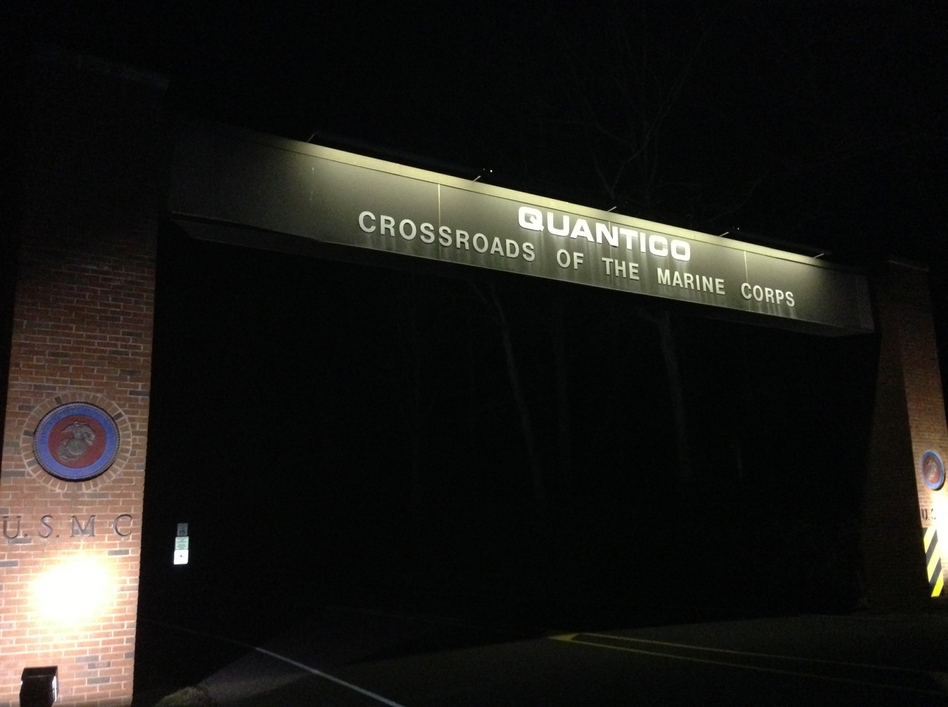
The entrance to the U.S. Marine Corps Base Quantico on Friday. Matthew Barakat/AP

A Marine opened fire at a Virginia base Thursday night, killing two other Marines before turning the gun on himself.

Quoting Marine Base Quantico spokesman Lt. Agustin Solivan, the AP reports the shootings happened after 11 p.m. near the Officer Candidate School. The AP adds:

“Authorities entered the barracks early Friday and found the suspect dead of a self-inflicted gunshot wound along with a second victim. Solivan could not say what prompted authorities to enter the barracks, which are at the base’s officer candidate school.

“No names were immediately released but Solivan said the suspect and both victims were Marines. Authorities believe the suspect was a staff member at the officer candidate school, Solivan said.”

In a post on Facebook, the base described the incident as an “isolated shooting.” A press release issued earlier this morning, described the alleged shooter as “an active-duty Marine” who was pronounced dead at the scene.

“Two other victims, also active-duty Marines, were pronounced dead at the scene,” the base said in the statement.

We’re expecting a press conference any minute. We’ll update when we have more information.

Update at 8:32 a.m. ET. ‘A Tragic Loss’:

During a press briefing, base commander Col. David W. Maxwell said the three Marines were staffers at the school. All other officers are safe, he said.

The Washington Post adds:

“‘This is truly a tragic loss for the Marine Corps, which has had a number of tragic losses in the last couple of weeks,’ Maxwell said in a seven-minute news briefing. He took no questions afterward.

“‘It’s been a long night,’ the commander said.

“Defense Secretary Chuck Hagel ‘was saddened to learn of the shootings at Marine Corps Base Quantico,’ Pentagon spokesman George Little said in a statement. ‘This tragedy, as well as the tragedy in Nevada earlier this week, took the lives of Marines who volunteered to serve their nation. His heart and his prayers are with them and their families. He believes that the legendary strength of the United States Marine Corps will ensure that they are forever remembered.'”


Read original article

Three Marines Killed In Shooting At Base In Virginia

‘Endless Wreckage’: Blizzard Triggers Huge Canadian Traffic Pileup

A blizzard traps cars, trucks and even a cattle car on a Canadian highway, causing dozens of mild injuries. Derek Fildebrandt/Twitter

A quick moving blizzard plowed through the central Canadian plains province of Alberta this week, triggering a massive vehicle pileup on Thursday; scores of motorists were stranded near the provincial capital of Edmonton.

A car crash in the town of Leduc, on the main road between Edmonton and Calgary further south, turned into an enormous pileup of more than one hundred cars, tractor trailers, a bus and at least one truck filled with cattle. At first, emergency responders believed as many as 300 people were hurt, but the Edmonton Journal says that number was substantially lowered to about 100 people with minor to moderate injuries. Most people were treated at the scene, when authorities could finally reach them, but 22 people needed to be hospitalized.

The blizzard was so blinding that Edmonton police briefly closed the entire highway that rings the city, called Anthony Henday Drive. Derek Fildebrandt was on a bus near the freeway, enroute to an Edmonton conference, when he got stuck in the wreck and tweeted his adventures:

Fildebrandt told the National Post as he slowly passed through the huge accident scene, there were damaged vehicles every 200 yards or so: “It was just endless wreckage.”


Read original article

‘Endless Wreckage’: Blizzard Triggers Huge Canadian Traffic Pileup

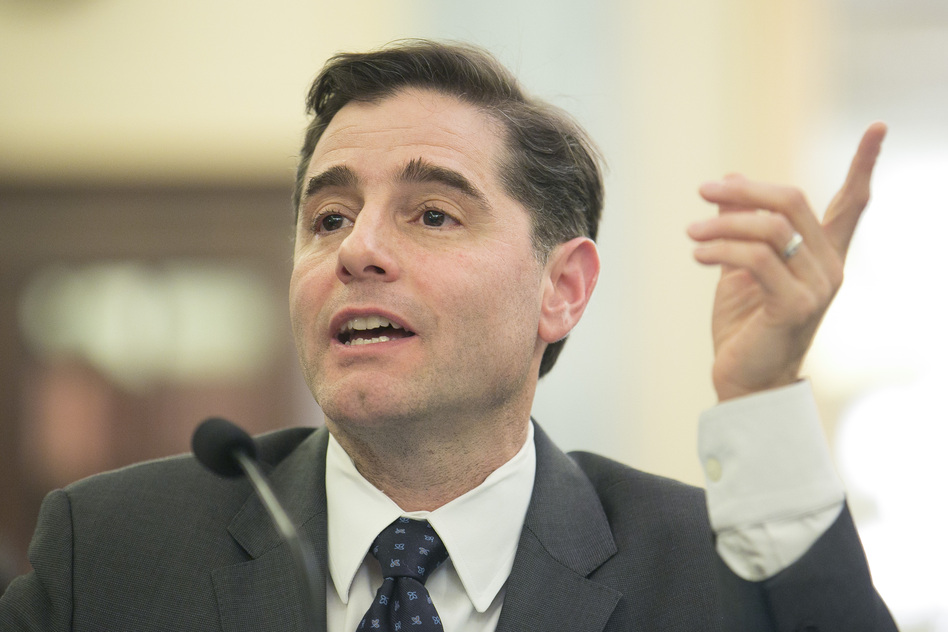
FCC Chairman Julius Genachowski Says He Will Step Down

Federal Communications Commission Chairman Julius Genachowski testifies before a Senate committee in March of 2013. T.J. Kirkpatrick/Getty Images

The chairman of the Federal Communication Commission announced during a staff meeting on Friday that he intends to step down “in the coming weeks.”

Julius Genachowski’s resignation comes just a day after Commissioner Robert McDowell announced his plans to step down.

The New York Times reports the Obama administration has not settled on a replacement for Genachowski. It reports:

“Both resignations had been widely expected since the re-election of President Obama, although the timing had been in doubt because of the chairman’s desire not to leave the commission with a 2-to-2 split between Republicans and Democrats.

“Mr. Genachowski leaves a number of his highest priorities unfinished, if well under way. The F.C.C. is in the process of drawing up an ambitious plan to make additional high-value airwaves, or spectrum, available for sale to mobile phone companies for use in wireless broadband Internet service.”

Time Magazine has a bit of a retrospective on Genachowski’s time at the FCC. He has been chairman since June of 2009:

“Throughout his tenure, he has tried to thread a centrist needle on issues like broadband policy, industry competition, and media consolidation. In doing so, he has managed to annoy almost every constituency, from public interest groups that have pushed for a more activist FCC, to industry giants who have bristled at some of his decisions.

“For example, Genachowski’s decision to approve Comcast’s purchase of NBCUniversal dismayed media reform advocates. On the other side of the ledger, his rejection of AT&T’s proposed purchase of T-Mobile infuriated AT&T CEO Randall Stephenson. One might say that the fact that he’s displeased two historically opposed forces — public interest groups and industry titans — suggests that he’s actually done a relatively balanced job, but there is no doubt that he is not the most popular official in Washington, D.C.”

Read more: http://business.time.com/2013/02/21/as-fcc-chiefs-term-nears-end-speculation-mounts-over-possible-successor/#ixzz2OHL2M01G


Read original article

FCC Chairman Julius Genachowski Says He Will Step Down

Harvard Stuns New Mexico, And 4 Other Need-To-Knows From The NCAA Tournament

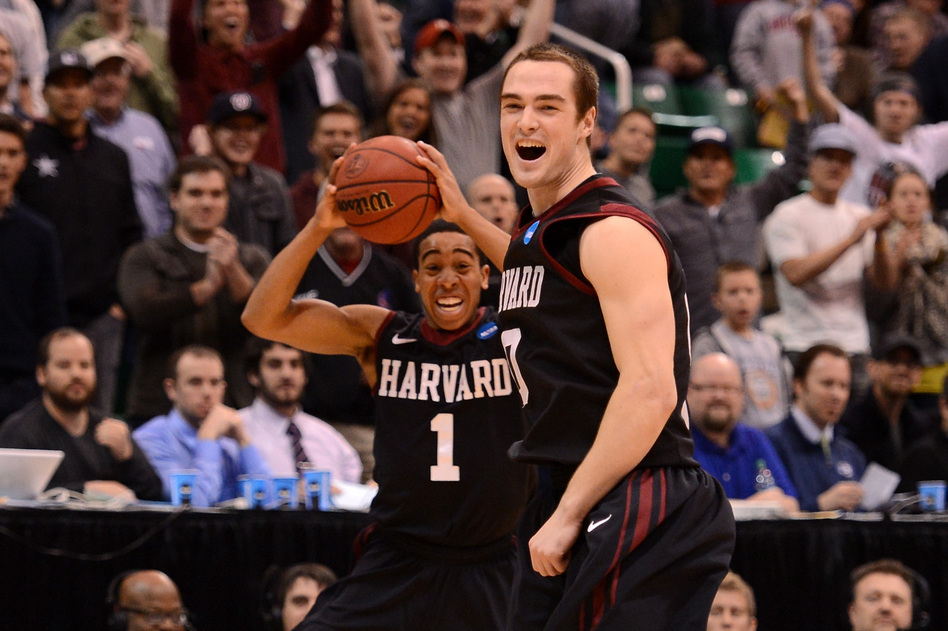
Siyani Chambers and Laurent Rivard of the Harvard Crimson celebrate as the Crimson defeat the New Mexico Lobos 68-62 during the the 2013 NCAA Men's Basketball Tournament on Thursday in Salt Lake City, Utah. Harry How/Getty Images
Siyani Chambers and Laurent Rivard of the Harvard Crimson celebrate as the Crimson defeat the New Mexico Lobos 68-62 during the the 2013 NCAA Men’s Basketball Tournament on Thursday in Salt Lake City, Utah. Harry How/Getty Images

he NCAA tournament got off to a stunning start on Thursday: Harvard, known more for its brains and seeded No. 14, sent No. 3 New Mexico packing with a 62-68 win.

This was Harvard’s first-ever victory in an NCAA tournament. As CBS Sports reports, Harvard stunned “even itself.” The Los Angeles Times reports on reaction to Thursday’s game:

“Last year, the Crimson made the tournament for the first time since 1946, losing to Vanderbilt.

“‘We’re still in disbelief,’ senior guard Christian Webster said. ‘This is as good as it gets right now.’

“Laurent Rivard, a junior guard from Quebec, said it was something he dreamed about as a little kid.

“‘To do it with Harvard on our chest, it can’t get better than this,’ Rivard said.”

We’ll leave you with four other moments you need to know if you want to at least pretend to be keeping up with the tournament:

ESPN reports: “Since seeding began in 1979, the 46-point victory by 5-seed Virginia Commonwealth over No. 12 Akron was the largest margin of victory ever by any team seeded lower than 2. That record lasted for about an hour. Syracuse, a 4-seed, broke it with a 47-point win over Montana.”

— Butler, a Cinderella team in 2010 and 2011, advanced with a 68-56 win against Bucknell. The big deal here is that five of Butler’s top seven players are NCAA tournament newbies. But as ESPN points out, the Butler character hasn’t changed.

The Indianapolis Star reports that coach Brad Stevens:

“is 12-4 (.750) in NCAA tourney games. The only coaches that began this tournament with higher percentages are Mike Krzyzewski (.767) and Roy Williams (.753).”

— The most devastating defeat goes to No. 14 Davidson, which fell 59-58 to No. 3 Marquette. It was a cruel loss because Davidson was seconds from a tremendous upset.

The New York Times reports:

“When it was over Thursday night, after 39 bracket-busting minutes and one of pure mayhem, the Davidson Wildcats sat on their chairs, as if unwilling — or, perhaps, unable — to move. It was still all too fresh for them, how defeat was snatched from the jaws of victory, another monumental upset in the N.C.A.A. tournament filched with a second to spare.

“‘It was just like, ‘How did that happen?’ Davidson guard Tyler Kalinoski said.”

— Two-Way readers, who are incredibly smart, correctly predicted that the most likely upset would happen between Oregon and Oklahoma State. Oregon, seeded 12, beat Oklahoma State, seeded 5th, by a score of 68-55.


Read original article

Harvard Stuns New Mexico, And 4 Other Need-To-Knows From The NCAA Tournament

CIA Drone Operations Could Be Handed To Pentagon

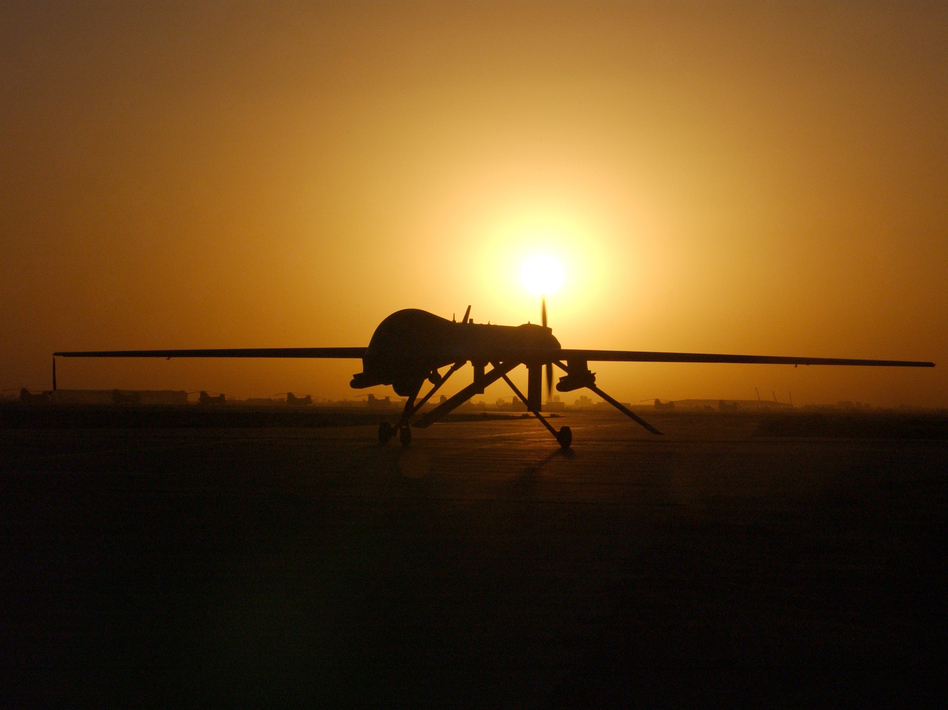
A Predator drone taxis in after a sortie over Iraq in 2004. U.S. Air Force/Getty Images

The responsibility for counterterrorism operations involving unmanned drones could soon begin shifting from the CIA to the Pentagon as part of Obama administration efforts to mollify critics who say the program lacks transparency, says NPR’s Tom Gjelten.

A senior U.S. official tells NPR that while no decision has been made, the change is a “distinct possibility.” The Daily Beast broke the story on Wednesday.

The move would come in response to a bruising confirmation fight for John O. Brennan to become the new head of the Central Intelligence Agency. Republicans and Democrats alike used Brennan’s confirmation hearings to criticize the administration for not being more open about the drone program, especially when it has, on rare occasions, targeted U.S. citizens.

“The Obama administration basically had to promise to come clean on the drone program in order to get Brennan approved,” Gjelten says.

Also, last week the U.S. Court of Appeals for the District of Columbia Circuit ruled that the CIA could no longer deny the existence of the program, because so much had come out about it already.

For years, the CIA has been using unmanned aircraft to target suspected terrorists — first under President George W. Bush and then under President Obama. A CIA drone was used in Yemen to kill an American citizen, Anwar al-Awlaki, after he became a key operative in the al-Qaida network.

Under the aegis of the CIA, the program has enjoyed a considerable degree of secrecy and flexibility because under U.S. law is not subject to the same restrictions as a traditional military operation carried out by the Pentagon, Gjelten says. The president can authorize the CIA to carry out the operation outside the normal military chain of command, where it can remain covert and deniable.

From the administration’s standpoint, such a shift would occur at a time when the drone program is not quite as high of a priority as it once was, Gjelten says.

“To be brutal, they’ve killed most of the really bad guys they’ve been after,” he says. “They lately have been going after second- or third-tier al-Qaida operatives.”

Gjelten says that in his new post, Brennan also wants to demilitarize the CIA.

If a decision is made, shifting responsibility for the program would occur gradually as “a phased approach” of operations in individual countries.

“It would be easiest to do it in Yemen, because the drone strikes there are already being carried out jointly by the Pentagon and the CIA,” he says. “Pakistan would be the big change. The drone strikes there have been almost entirely directed by the CIA.”

In an interview with NBC last month, outgoing Secretary of Defense Leon Panetta hinted at the change and suggested that even if most of the drone operations were moved to the military, some of them might remain covert.

“I think a lot more of this can be put under Title 10 [military operations] and that on Title 50 [intelligence operations] we always ought to have that capability to use a covert effort if we have to,” he said. “But I would limit that.”


Read original article

CIA Drone Operations Could Be Handed To Pentagon

Gaza Militants Fire Rockets, As Obama Heads To West Bank

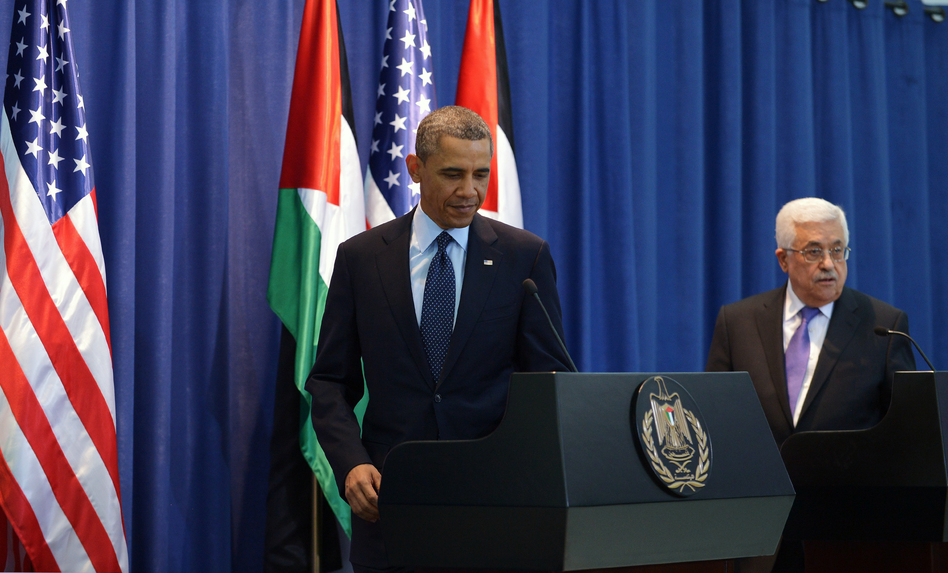
President Barack Obama arives for a joint press conference with Palestinian president Mahmoud Abbas at the Muqataa, the Palestinian Authority headquarters, in the West Bank city of Ramallah. Mandel Ngan /AFP/Getty Images

Militants in Gaza fired rockets into Israel on Thursday, just as President Obama travelled from Israel to the West Bank, where he met with Palestinian President Mahmoud Abbas.

NPR’s Larry Abramson filed this report for our Newscast unit:

“Two of the rockets reached the southern town of Sderot, but one fell in an open area. The other caused some damage to a building, according to Israeli police.”

“This is only the second incident of rocket launchings from Gaza since a ceasefire was reached between Hamas and Israel in November. President Obama, who spent last night in Jerusalem, is to meet with Palestinian President Mahmoud Abbas in Ramallah today.”

“Parts of the city have been blocked off and schools have been closed. In recent days, Palestinians have staged a series of small but vocal demonstrations against U.S. support for Israel.”

The New York Times reached a spokesman for Hamas, who did not take responsibility for the rocket launch. Salah al-Bardawil told the paper that in November, Obama had given Israel a “green light to destroy Gaza.” Obama, he told the paper, “speaks in the language of Israel.”

The Wall Street Journal adds a bit more background on the Palestinian Authority, which is facing tough times. The Journal reports:

“The Palestinian Authority is short on cash and has struggled to pay its 150,000 public servants on time in recent months fueling popular discontent with the leadership. In addition to seeking financial aide, Mr. Abbas is expected to ask Mr. Obama to pressure Israel to make some confidence building measures to strengthen his domestic political standing, which many believe is at an all-time low, and allow him to resume peace talks without appearing to have caved.

“For Mr. Obama, the visit with Palestinian leaders is a tricky diplomatic balancing act in which he must show support for the Palestinians without undercutting his message to Israelis.”

Update at 8:03 a.m. ET. ‘Peace Is Necessary’:

During a joint press conference, President Obama and Palestinian President Mahmoud Abbas said both countries were committed to peace.

“We believe peace is necessary and inevitable,” Abbas said.

But that talk quickly dissipated into reality. Obama first condemned the rocket attacks from Gaza and then went on to criticize Hamas, whom he said is more interested in “destroying Israel,” than in bringing prosperity to Palestinians. Remember, the Palestinian Authority and Hamas are rivals. Abbas controls the West Bank and Hamas has controlled Gaza since 2007, a year after it swept into power through elections.

Obama was asked if after talking to leaders from both sides, he still believed a two-state solution was possible.

“I absolutely believe that it’s still possible, but it is difficult,” Obama said.

One of the big issues that has kept leaders from direct negotiations is that Israel has continued expanding its settlements. Obama said he has been clear with Netanyahu that continued settlement activity is neither “constructive” nor “appropriate.”

But Obama said both sides need to ditch any preconditions and begin direct negotiations that adress the core two issues in this conflict: Palestinian sovereignty and Israeli security.

“We cannot give up on our search for peace,” Obama said. At one point, he got personal. Palestinians deserve dignity and a sovereign state, he said. Look at the United States. At one point in American history, his daughters would not have had the opportunities they have now.

Change is hard, he said, but it is possible.


Read original article

Gaza Militants Fire Rockets, As Obama Heads To West Bank

Site notifications
Update notification options
Subscribe to notifications