National News

Alaska’s Drue Pearce and Kara Moriarity join Interior to work on ‘unleashing’ state’s energy

Kara Moriarity, left, and Drue Pearce have taken new Alaska-focused jobs at the U.S. Interior Department. (Photo by Liz Ruskin/Alaska Public Media)

WASHINGTON — Drue Pearce, a former president of the Alaska Senate, has taken a new job in the U.S. Interior Department.

I’m counselor to the assistant secretary in the Land and Minerals hallway,” she said in an interview from her new office.

“Hallway” is not actually part of her title, but it does describe how the Interior Department’s D.C. headquarters is organized. The assistant secretary Pearce will work under is charged with implementing the Trump administration’s orders to unleash Alaska’s energy potential.

Pearce has worked for decades in this arena, as a federal appointee during the George W. Bush administration and the first Trump presidency, and most recently as a consultant and lobbyist at the firm Holland & Hart.

She calls some issues she’ll be working on, like opening the Arctic National Wildlife Refuge to oil development, old friends.

“I think I had my first ANWR briefing when I was first elected, but not yet sworn in, all the way back in 1984,” she said. “And we’re still at it.”

The Interior Department has also hired Kara Moriarity, president of the Alaska Oil and Gas Association. Her exact title hasn’t been announced, and she didn’t respond to an interview request Friday. Moriarity has worked for the industry trade association for 20 years.

News that Moriarty will have an important role in managing federal land in Alaska sparked criticism from the Sierra Club. The environmental group issued a statement saying an oil and gas lobbyist should not be in charge of treasured landscapes.

The Interior Department manages more than 200 million acres in Alaska, some of it in national parks and wildlife refuges.

Jury finds ‘The New York Times’ did not libel former Alaska Gov. Sarah Palin

Former Alaska Gov. Sarah Palin leaves Manhattan federal court on Tuesday in New York. A jury has concluded The New York Times did not libel Palin in a 2017 editorial that contained an error that she says damaged her reputation.
Former Alaska Gov. Sarah Palin leaves Manhattan federal court on Tuesday in New York. A jury has concluded The New York Times did not libel Palin in a 2017 editorial that contained an error that she says damaged her reputation. (Larry Neumeister/AP)

NEW YORK — The New York Times did not libel former Alaska Gov. Sarah Palin in a 2017 editorial that contained an error she claimed had damaged her reputation, a jury concluded Tuesday.

The jury deliberated a little over two hours before reaching its verdict. A judge and a different jury had reached the same conclusion about Palin’s defamation claims in 2022, but her lawsuit was revived by an appeals court.

Palin was subdued as she left the courthouse and made her way to a waiting car, telling reporters: “I get to go home to a beautiful family of five kids and grandkids and a beautiful property and get on with life. And that’s nice.”

Later, she posted on the social platform X that she planned to “keep asking the press to quit making things up.”

Danielle Rhoades Ha, a Times spokesperson, said in a statement that the verdict “reaffirms an important tenet of American law: publishers are not liable for honest mistakes.”

Palin, who earned a journalism degree in college, sued the Times for unspecified damages in 2017, about a decade after she burst onto the national stage as the Republican vice-presidential nominee.

Her lawsuit stemmed from an editorial about gun control published after U.S. Rep. Steve Scalise, a Louisiana Republican, was wounded in 2017 when a man with a history of anti-GOP activity opened fire on a Congressional baseball team practice in Washington.

In the editorial, the Times wrote that before the 2011 mass shooting in Arizona that severely wounded former U.S. Rep. Gabby Giffords and killed six others, Palin’s political action committee had contributed to an atmosphere of violence by circulating a map of electoral districts that put Giffords and 19 other Democrats under stylized crosshairs.

The Times corrected the article less than 14 hours after it was published, saying it had “incorrectly stated that a link existed between political rhetoric and the 2011 shooting” and that it had “incorrectly described” the map.

During the trial, former Times editorial page editor James Bennet tearfully apologized to Palin, saying he was tormented by the error and worked urgently to correct it after readers complained to the newspaper.

Palin testified Monday that death threats against her increased and her spirits fell after the editorial was published.

In his closing argument Tuesday, Palin’s attorney, Kenneth Turkel, had urged the jury to find the Times liable for defamation on the grounds that Bennet either knew what he was publishing was wrong or acted with “reckless disregard” for the truth.

He asked the jury to award Palin compensatory damages for the harm done to her reputation and private mental anguish, adding that they should “find a number and let her get some closure to this thing.”

“To this day, there been no accountability,” he said. “That’s why we’re here.”

He told jurors not to be deceived by Palin’s “bouncy” persona on the witness stand.

“She doesn’t cry a lot,” Turkel said. “It may have been to them an honest mistake. For her, it was a life changer.”

Felicia Ellsworth, an attorney for the Times, told jurors in her closing that there was not “one shred of evidence showing anything other than an honest mistake.”

Ellsworth said Bennet and the Times “corrected the record loudly, clearly and quickly” once the error was discovered.

The lawyer pointed out that several Times editors testified consistently about the effort to correct the error and the importance they placed on accuracy while Palin’s claims were “supported by nothing other than her say so.”

“To Gov. Palin, this is just another opportunity to take on fake news. To James Bennet, the truth matters,” Ellsworth said.

In February 2022, Judge Jed S. Rakoff rejected Palin’s claims in a ruling issued while a jury deliberated. The judge then let jurors deliver their verdict, which also went against Palin.

The 2nd U.S. Circuit Court of Appeals in Manhattan restored the case last year.

The appeals court said Rakoff’s dismissal ruling improperly intruded on the jury’s work. It also cited flaws in the trial, saying there was erroneous exclusion of evidence, an inaccurate jury instruction and a mistaken response to a question from the jury.

Turkel said as he left the courthouse that the legal team will evaluate whether to appeal again.

Lyrissa Lidsky, a University of Florida constitutional law professor, told The Associated Press that the verdict Tuesday “was certainly not a sure thing” amid widespread distrust of news media.

And, Lidsky added, Palin put the newspaper’s mistake in the public eye.

“Even if Sarah Palin didn’t win a jury verdict, she did, by bringing suit, achieve some likely goals,” Lidsky said.

Trump administration says Alaska gas line investment could ward off tariffs

A man talks to reporters outside the White House
Treasury Secretary Scott Bessent spoke to reporters outside the White House on April 9, 2025. (Screenshot from C-SPAN2)

If countries want to keep the Trump administration from imposing tariffs on their exports to the United States, Treasury Secretary Scott Bessent suggests they invest in Alaska’s proposed Liquified Natural Gas project.

Bessent spoke Wednesday outside the White House, after President Trump announced he would pause reciprocal tariffs for 90 days to allow countries to negotiate. A reporter asked Bessent what it would take for a country to block the imposition of tariffs beyond three months.

That’s when Bessent raised the Alaska project as a possible deal-maker.

“These are trade negotiations, but if countries want to come and offer other things — so I talked about yesterday that we are thinking about a big LNG project in Alaska, that South Korea, Japan (and) Taiwan are interested in financing and taking a substantial portion of the off-take,” Bessent said.

A country’s investment and purchase of Alaska’s natural gas would help reduce its trade imbalance with the United States, he said.

The State of Alaska has tried for years to secure investment in the project, particularly from potential customers in Asia. Cost remains a high hurdle. It would take an estimated $44 billion or more to build an 800-mile pipeline from the North Slope to the Kenai Peninsula, with a processing plant at the north end and a liquefaction plant at the terminus. From there, LNG tankers would take the fuel across the Pacific.

Countries might have more incentive to invest in Alaska LNG with the threat of tariffs hanging over them. But Trump’s tariff announcements have caused global economic shocks, which could hinder investment in big projects.

Transfer to Alaska? Offer to health leaders called ‘insult’ to Indian Health Service

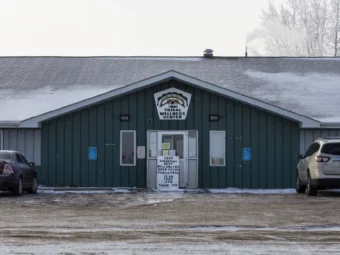
The exterior of a health clinic
The Cheyenne River Sioux Tribe Wellness Center is an Indian Health Service facility in Eagle Butte, South Dakota. This picture was taken in 2021 when the area was hard hit by the pandemic. (Dawnee Lebeau/Bloomberg via Getty Images)

The emails started arriving late on a Monday night.

“The Department of Health and Human Services (HHS) proposes to reassign you as part of a broader effort to strengthen the department and more effectively promote the health of American people,” the email read. “One critical area of need is in the American Indian and Alaskan Native communities.”

Amid the Trump administration’s massive layoffs at HHS, these reassignment emails accelerated an apparent purge of leadership at federal health agencies. Top officials in different parts of HHS were put on administrative leave with the option of relocating to a new job in Alaska, Montana, New Mexico or other postings within the Indian Health Service (IHS).

“I did not see this coming at all,” a senior executive at the Department of Health and Human Services told NPR. The executive asked not to be identified for fear of retribution from the administration.

William “Chief Bill” Smith chairs an organization that advocates for the IHS on behalf of tribes, the National Indian Health Board. “Any major leadership changes within IHS should be made in full consultation with Tribal Nations, as required by law,” Smith wrote in a statement to NPR. “Tribal Consultation is not just a procedural step—it is a fundamental responsibility of the federal government.”

“Utmost disrespect”

The number of health leaders who got the emails and the reasons for who was picked remain unclear. The email doesn’t specify what will happen to those placed on administrative leave if they don’t accept the offer.

HHS did not respond to NPR’s questions about the scope of the reassignment offers. NPR has confirmed nine leaders got the reassignment email; there may be more.

“The move displays the utmost disrespect for public service. It is clearly designed to force talented scientists and health experts to leave government,” says Richard Besser, CEO of the Robert Wood Johnson Foundation, a nonprofit philanthropy focused on health. “It is also an insult to those health care professionals in the Indian Health Service who dedicate their lives to providing health care services on tribal lands.”

It is unclear if anyone took the offer or plans to take it.

“I’m a career public servant. I’ve worked for Republicans and Democrats,” the HHS executive told NPR. “Public service is noble work and the ability to serve our country and impact entire populations just by coming to work is a gift. So there’s a sadness that comes with this.”

Connections to Fauci

At the National Institutes of Health (NIH), some sources who spoke to NPR suspect the targets were picked as retribution dating back to the pandemic.

Dr. Jeanne Marrazzo, who took over as the director of the National Institute of Allergy and Infectious Diseases after Dr. Anthony Fauci departed, got the offer, according to an email obtained by NPR.

So did Fauci’s wife, Christine Grady, the top bioethicist at NIH, along with two others close to Fauci, according to a source who was not authorized to speak about the situation.

Fauci, who left the NIH in 2022, became a hero to many during the pandemic, but has also been vilified by critics of the government’s response. Dr. Francis Collins, who also worked closely with Fauci as NIH director, was recently forced out of the agency.

The offer appears to be “an opportunity to try and say they’re not being let go, they’re being offered a new opportunity,” said Susan Polan, associate executive director of the American Public Health Association. But that “does not seem to be the ultimate goal. The goal really does seem to be to undermine the leadership in these agencies.”

IHS used as “a pawn”

Polan spoke during a briefing last week by public health advocates and officials decrying cuts of about 10,000 workers at the Centers for Disease Control and Prevention, the Food and Drug Administration, the NIH and other agencies.

“IHS needs are not being met and it is being used as a pawn in the game of forcing HHS staff to resign instead of being fired,” Polan added later in an email to NPR.

“It’s a way to try to get people to quit,” added Dr. Phillip Huang, director of Dallas County Health and Human Services, at the briefing.

The Indian Health Service provides crucial services and deserves to be adequately staffed with the most qualified workers, Huang and others at the briefing said.

The officials, who got the offer on Monday, March 31 or Tuesday, April 1 had until 5 p.m. on Wednesday, April 2, to respond to the offer, according to the email obtained by NPR.

The email reads: “This underserved community deserves the highest quality of services, and HHS needs individuals like you to deliver that service.” It is from Thomas J. Nagy Jr., deputy assistant secretary for human resources at HHS.

Reassignment locations

Nagy’s email gives the officials the options of working in a variety of places that are a mix of states, cities and reservations. They appear to correspond to IHS areas, an official designation, with some exceptions. This is the list from the email:

  • Alaska
  • Albuquerque [New Mexico]
  • Bemidji [Minnesota]
  • Billings [Montana]
  • Great Plains [South Dakota, North Dakota, Nebraska, Iowa]
  • Navajo [Arizona, New Mexico, Utah]
  • Oklahoma

“We would like to understand your preference across these potential reassignment opportunities,” the email says.

“Specifically, we would like to know which regions you would accept a voluntary reassignment and the order of your preference, if any, across the regions,” it states.

Health leaders offered transfer

According to sources who shared information with NPR on the condition of anonymity because they are not authorized to speak to the press, officials in addition to Marrazzo and Grady who received the IHS reassignment offer include:

– Dr. H. Clifford Lane, deputy director for clinical research at the National Institute of Allergy and Infectious Diseases, who had long worked with Fauci.

– Dr. Emily Erbelding, director of the division of microbiology and infectious diseases at the National Institutes of Allergy and Infectious Diseases.

– Renate Myles, director of communications for NIH;

– Dr. Eliseo J. Pérez-Stable, director of the National Institute on Minority Health and Health Disparities;

– Dr. Shannon Zenk, director of the National Institute of Nursing Research;

– Dr. Diana Bianchi, the director of the Eunice Kennedy Shriver National Institute of Child Health and Human Development.

– Brian King, director of the Food and Drug Administration’s Center for Tobacco Products.

IHS is a priority for RFK Jr.

The Indian Health Service was an early target of Elon Musk’s DOGE cuts, when 950 employees were fired in February. But HHS Secretary Robert F. Kennedy Jr. quickly intervened and said all of those staff should be rehired. “The Indian Health Service has always been treated as the redheaded stepchild at HHS,” Kennedy said at the time in a written statement to ICT, a nonprofit news organization that covers Indigenous people.

People i high-vis vests and masks speak to people waiting in cars.
A COVID-19 vaccination event organized by the Navajo area Indian Health Service in Gallup, New Mexico in March 2021. (Cate Dingley/Bloomberg via Getty Images)

Kennedy announced he would be visiting the Navajo Nation in a western trip Monday through Wednesday. Kennedy dubbed it a “MAHA tour” — referring to his Make America Healthy Again slogan. He will also go to Arizona and Utah and meet with tribal leaders, though HHS did not share a precise itinerary in a press release on the trip.

Indian Health Service and all HHS divisions have been ordered to cut contract spending by 35%, HHS spokesman Andrew Nixon confirmed to NPR.

Georges Benjamin, executive director of the American Public Health Association, says broader cuts to federal health programs affect tribal communities, too. “When they cut grants or close down CDC programs they also directly and indirectly cut IHS programs,” he says.

Benjamin says he doesn’t think the intent of the NIH reassignment offers was to “hurt or demean” IHS, but to “take a person trained in clinical skills that has not been practicing clinically is usually not helpful if the job is a clinical one or even a clinical manager job.” He added: “The most cynical view is this is a way to get senior people to quit.”

Smith, who is from Valdez in Alaska and who chairs the National Indian Health Board, says tribal leaders need the chance to weigh in on any changes.

“We urge the Department of Health and Human Services (HHS) to uphold this obligation and engage in meaningful Tribal Consultation before moving forward with any reassignments,” Smith wrote in the statement.

Other top federal health officials who have been recently forced out include Dr. Peter Marks, who was the top vaccine regulator at the FDA.

Thousands of fired federal workers must be offered reinstatement, a judge rules

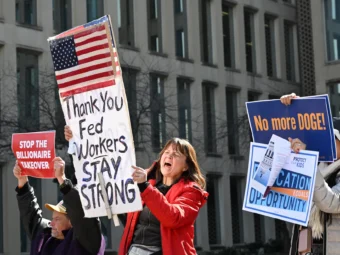
Protesters hold signs in solidarity at a rally in support of federal workers at the Office of Personnel Management in Washington, D.C., on March 4. (Alex Wroblewski/AFP via Getty Images)

Updated March 13, 2025 at 14:40 PM ET

Thousands of federal employees fired by the Trump administration must be offered job reinstatement within the next week, a U.S. district judge in San Francisco has ruled, because he said they were terminated unlawfully.

“It is a sad day when our government would fire some good employee and say it was based on performance when they know good and well that is a lie,” Judge William Alsup, an appointee of former President Bill Clinton, said before issuing his ruling from the bench.

The Thursday decision marks a significant stand against President Trump’s sweeping efforts to remake the federal government. An appeal is likely.

The administration’s job cuts targeted federal workers with probationary status, which usually means newer workers, and makes them easier to let go. Employees recently promoted into a new position can also be considered probationary.

Many probationary employees were fired for “performance reasons,” according to their termination notices, even though many employees had received positive feedback from supervisors.

“It was a sham in order to try to avoid statutory requirements,” Alsup said.

The judge also ordered the U.S. Office of Personnel Management (OPM) to prove within seven days that it had offered reinstatement to all fired probationary employees at the Departments of Agriculture, Defense, Energy, Interior, Treasury and Veterans Affairs.

Requests for comment were submitted to OPM and the agencies affected by the judge’s ruling. Spokespeople for the VA and the Interior Department said they don’t comment on pending litigation.

The decision comes as a result of a lawsuit brought by a group of unions and civic groups on behalf of workers fired from a host of agencies and sub-agencies.

In a charged, sometimes confrontational court hearing on Thursday, Judge Alsup challenged the government’s argument that OPM, which acts as the government’s HR department, had not directly ordered the termination of probationary employees but had left that decision to individual federal agencies and served merely as a coordinating body.

“The court rejects the government’s attempt to use these press releases and to read between the lines to say the agency heads made their own decision with no direction from OPM,” Alsup said.

The judge also bridled that OPM’s acting director, Charles Ezell, and his senior adviser, Noah Peters, did not attend the hearing.

“You will not bring the people in here to be cross-examined. You’re afraid to do so because you know cross-examination would reveal the truth,” Alsup said, addressing OPM’s legal team. “I tend to doubt that you’re telling me the truth.”

The American Federation of Government Employees is one of the plaintiffs in the case, and its president, Everett Kelley, said in a statement that AFGE is pleased with the reinstatement of “probationary federal employees who were illegally fired from their jobs by an administration hellbent on crippling federal agencies and their work on behalf of the American public.”

Earlier this month, the same judge issued a temporary restraining order in the same case, saying the firings were illegal but noted many federal agencies had yet to rehire probationary workers. “Maybe that’s why we need an injunction that tells them to rehire them,” he said Thursday.

Judge Alsup did make it clear that agencies are allowed to reduce their workforce, as long as it’s done legally.

NPR’s Andrea Hsu contributed to this report.

Alaska prosecutor describes alleged abuse by former Judge Joshua Kindred

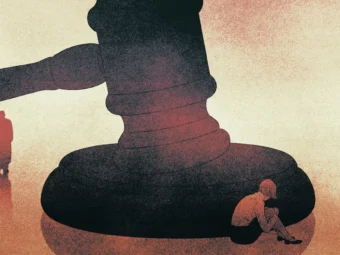
An NPR investigation finds federal judges have enormous influence with few checks on their power. Law clerks and other judicial employees are vulnerable to mistreatment and have few job protections. (Isabel Seliger/NPR)

This story includes descriptions of sexual abuse.

In 2020, as the coronavirus pandemic began its rampage, a recent law school graduate started a new job in Alaska.

She hoped the coveted post – as law clerk to a federal judge – would jump-start her career. Instead, it was almost derailed by harassment and abuse.

“The judge was the HR department, the judge was my boss, the judge was a colleague,” she said. “The judge was everything, he had all the power.”

The power imbalance between judges with lifetime tenure and the young law clerks who work alongside them is both vast and unique to the judiciary. People in the federal court system don’t have the same kind of job protections enshrined in law that most other Americans do.

The courts largely police themselves. That’s because judicial independence – and protecting the balance of power – give judges a tremendous amount of sway over their own workplace rules. At the same time, federal judges have emerged in recent weeks as the lone check on employment abuses elsewhere in the federal government.

A nearly year-long NPR investigation has found problems with the courts’ internal system – and a pervasive culture of fear about blowing the whistle. Forty-two current and former federal judicial employees spoke to NPR about their experience working for judges appointed by presidents from both major political parties.

One of them is the former clerk in Alaska. She’s not being named because she alleges she’s the survivor of sexual assault.

Early in her clerkship, the judge started testing her boundaries, with inappropriate conversations about his personal relationships. She thought it was part of her job to listen and help with anything in his life, she said.

“He had told me that I was a confidante and he had given me the title of career clerk and, you know, he had spoken to me about what an honor that was and… I mean this is ridiculous, but I thought I was doing a public service,” she said.

As the judge’s marriage came apart, he began to text her constantly, to the point where her phone felt like an “electric leash.” In one message, he said she looked like a “f****** Disney princess.” In another, he told her he liked her blue pants.

Things got worse by the summer of 2022, so she found a new job, as a federal prosecutor in Alaska.

About a week after she left the judge’s chambers, she ran into him at a party. He tried to get her to sit next to him on the couch there. Eventually she left, but she got a text from him saying he needed to talk to her.

It was cold that night, so the judge suggested they chat inside his apartment. Then, he insisted she come to the bedroom. At first, she sat on the corner of the bed, but he wanted her to lay down. Then, she told investigators, he grabbed her breast. She tried to pull his arm off, she says, but he was really strong.

“I just remember thinking like there’s nothing I can do about this,” she told the investigators. “This is about to happen.” The judge later told investigators it was consensual.

He took off her pants and performed oral sex on her.

‘No Legal Recourse’

Law clerks and other judicial employees are vulnerable to mistreatment and have few job protections.
Law clerks and other judicial employees are vulnerable to mistreatment and have few job protections. (Isabel Seliger/NPR)

A judge’s control over the future of a young lawyer in his or her chambers is real—and lasting. With only a phone call, a judge can open doors to a lucrative job at a law firm or shut them permanently.

Unlike people who work for private companies, nonprofit groups or Congress, the 30,000 employees of the federal courts usually cannot sue for mistreatment.

“The federal judiciary is outrageously exempt from Title VII of the Civil Rights Act of 1964,” said Aliza Shatzman, who launched The Legal Accountability Project to offer clerks a way to share feedback about their experiences on the job. “That means that if you are a law clerk and you are sexually harassed, fired, retaliated against by a federal judge, you have no legal recourse.”

Since 2017, when the #MeToo movement swept the country, the federal courts say they’ve done a lot to make sure workers are treated with dignity and respect.

“We believe that the changes put in place over the past seven years have had a positive impact on the Judiciary workplace, a belief that was validated by two independent studies,” a spokesperson for the Administrative Office of the U.S. Courts told NPR in a written statement. “We continue to make improvements as part of our efforts to foster an exemplary workplace for our employees.”

Court administrators said employees now have several ways to report problems. And, when it comes to abusive or hostile behavior, they said federal judiciary workers have more leeway to complain about their bosses than people who work outside.

But the clerk in Alaska never used the judiciary’s internal system to report the judge. She didn’t know it existed.

And that’s not uncommon. A study last year by the Federal Judicial Center and the National Academy of Public Administration found many federal courts failed to put required information on reporting misconduct on their websites. About one in 10 court websites have no information about workplace conduct.

People walk toward the James M. Fitzgerald U.S. Courthouse and Federal Building in downtown Anchorage, Alaska, on July 10, 2024.
People walk toward the James M. Fitzgerald U.S. Courthouse and Federal Building in downtown Anchorage, Alaska, on July 10, 2024. (Mark Thiessen/AP)

A person who once served as a resource for court employees seeking advice or information about filing complaints told NPR there are a lot of people trying to do the right thing. This person spoke anonymously, afraid of reprisal for talking about the system. They said it was a struggle just to get information updated on the court’s website, so clerks could find out whom they can talk to, if they had the courage to speak.

A widespread culture of fear surrounds talking about what happens in a judge’s chambers, from cases and decision-making to abuse and misconduct. And there’s a good reason for that.

James Baker is a former judge who also worked in the White House and the military.

“The location where I found the power differential the most distinct was when I was serving as a judge with law clerks, and I think that’s something worth noting,” said Baker, who worked on last year’s NAPA judiciary study.

Not only is the relationship between judges and clerks fraught, it often comes with a huge age gap; the average age of a federal judge is in the mid to late 60s, while law clerks tend to be in their mid to late 20s.

Here’s the way the system works now.

If a clerk has a problem, their first option is something called informal advice.

“Informal advice could be anything like, you know, talk to the judge, write down your thoughts,” said Gabe Roth, who pushes the courts to be more accountable through his group, Fix the Court. “It can be a lot of different sort of basic HR things that we’ve all spoken to HR people about.”

The next step, called an assisted resolution, is a little more serious. The courts say there are about 500 people across the system who are designated to hear about problems and offer advice. Much happens informally through mediation, where a clerk or other court employee can raise concerns and get an apology or even a job transfer.

Then, there’s the most serious option: making a formal complaint. Staying anonymous is not guaranteed. That’s a big problem for many of the clerks and law students who reach out to Aliza Shatzman. She operates a database where clerks can share honest feedback about judges: the good and the bad.

“I don’t take it lightly when I say the federal judiciary is the most dangerous white-collar workplace in America,” Shatzman said.

Hard data about misconduct in the court system isn’t easy to come by. For example, no one tracks the most commonly used way that clerks and other workers raise an alarm, that option to seek informal advice.

“There’s tons of stats; you want to know the birth year of some random judge in Missouri from 1897,” said Roth, of Fix the Court. “They have that. But the idea that they … have not successfully captured the most common type of complaint is very frustrating.”

The courts unveiled their first annual workplace conduct report last November. That report showed more court employees are using the dispute resolution process. But few of them are law clerks.

There are more than 1,400 federal judges with life tenure – and they each have at least two clerks. Just seven complaints came from law clerks between 2021 and 2023.

“The actual number of complaints that flow out of chambers misconduct is a very small number,” Judge Robert Conrad of the Administrative Office told reporters last year. “Wherever misconduct occurs in the judiciary, we need to be ready to address it in a serious way. But the notion that this is primarily a judge problem seems to be dispelled by the findings of the report.”

Shatzman, of the Legal Accountability Project, interprets those numbers very differently.

“When you see a low number of harassment and misconduct complaints in a workplace, typically that does not signal that it is a safe workplace,” she said. “Typically, it signals that the reporting mechanisms are broken and law clerks do not feel comfortable filing complaints.”

Sexual Harassment, Bullying, and Discrimination

Over nearly a year, NPR heard the stories of people whose self-confidence was shattered by judges who screamed so loudly others could hear from the hallways, and people who were fired after only a few weeks on the job, for no clear reason.

Some described sexual harassment, like in the case of the Alaska clerk. Many more shared episodes of bullying. Others said they faced discrimination or harsh treatment because they had a disability or were pregnant.

Jessica Horton is one of them.

When she graduated from law school, at age 24, she felt lucky to get a job as a law clerk to a new federal judge.

Horton said she disclosed her pregnancy a couple of months before she started work. And at the time it didn’t seem like it would be much of a problem for the judge who was herself a mom.

“She told me that she took off two weeks when she had each of her children,” Horton said. “And so she said, ‘You can expect the same.’ And at the time, I had no context for how little that is.”

Inside those chambers, the judge’s word is law. And Horton fell in line.

Several clerks shared they faced discrimination or harsh treatment because they had a disability or were pregnant.
Several clerks shared they faced discrimination or harsh treatment because they had a disability or were pregnant. (Isabel Seliger/NPR)

She worried so much about missing work that she told the doctor she wanted to avoid a C-section, because of the recovery time. She refused an epidural too, because she had read about complications with them.

“My judge at one point asked me how dilated I was,” Horton recalled. “And so she’s like, well, maybe when you go to your appointment, the doctor should check. I had no idea. Like, I mean, at the time, like I knew that that was wrong. Looking back, that is so incredibly inappropriate.”

Horton ended up back at a work event 11 days after her first child was born, still bleeding from birth, leaking milk, and completely miserable. She fought infections and bullying from another clerk.

The clerkship lasted a year — and to leave would be “career suicide,” she said. She started counting down the days on the calendar.

Starting out, Horton had been excited about learning from the judge, having a mentor, maybe someday even becoming a judge herself.

“But after this experience, I changed my mind and it, I think, kind of put the nail in the coffin of my legal career pretty early,” she said.

Her son is now 9 years old. Sometimes they drive by the courthouse and she reminds him, that’s where he slept underneath her desk as a baby.

Horton decided to talk on the record, in part because she’s left the legal profession.

Things can get pretty tough for clerks who speak out.

When the Alaska clerk reported the assault, she told a colleague in the U.S. attorney’s office who had been assigned to mentor her.

“When I reported to my mentor, she was also the person that had been sending him nude photos and immediately told him that I reported the sexual assault,” the clerk said.

The mentor later said in court papers that she also felt pressured to share nude pictures with the judge, given his power and authority, and because he told her he would have sway over a job she wanted.

The former clerk heard from friends that the judge was furious she’d told anyone. When she ran into him, in the hallway at the courthouse, she said he warned her to keep her head down and shut up. (The judge denied that.)

“The actual sexual assault was awful…completely awful and you know I’ve since sought therapy for that, and help. But what happened next was almost worse,” she said.

The court system ultimately launched an investigation into the judge, Joshua Kindred. What followed were multiple rounds of interviews with investigators who cross-examined her and stress-tested her credibility. The court investigation took more than a year, and all the while two other young women clerks in the judge’s chambers continued to work by his side.

Alaska lawyer Joshua Kindred speaks during a judicial nomination hearing at the U.S. Senate Committee on the Judiciary in Washington, D.C., in 2019.
Alaska lawyer Joshua Kindred speaks during a judicial nomination hearing at the U.S. Senate Committee on the Judiciary in Washington, D.C., in 2019. (U.S. Senate Committee on the Judiciary via Reuters)

At first, Kindred told investigators nothing sexual had happened between them. Much later, he said the experience was consensual and that he had no “sinister intent.”

Last July, a special committee for the U.S. Court of Appeals for the Ninth Circuit found the judge had deliberately lied. But the court committee found the judge did not retaliate against the former clerk and did not reach a conclusion about whether the judge sexually assaulted her.

Kindred resigned shortly before the report about his misconduct became public.

He did not respond to phone calls or messages to an email address and a phone number associated with him, or to messages sent to relatives.

A Patchwork Reporting System

Before the courts started to develop more formal systems for reporting abuse seven years ago, clerks sometimes had to figure out a solution for themselves — something that continues to this day.

That’s what happened with a woman we’re calling S, who worked for Judge José Antonio Fusté in Puerto Rico, just out of law school.

Chief U.S. District Court Judge José Fusté attends a press conference in San Juan, Puerto Rico in 2009.
Chief U.S. District Court Judge José Fusté attends a press conference in San Juan, Puerto Rico in 2009. (Andres Leighton/AP)

“We were working together on a very high-profile, high-stakes death penalty case,” she said. “I remember that I was in his chambers and we were sitting next to each other. And I remember that he put his hand on my thigh and I remember moving it off of my thigh and just being shocked.”

Things like that happened quite a few times, she said, including an incident when the judge returned from a trip and tried to kiss her on the lips. He also copied down a love poem and left it at her desk, she said.

S said she struggled with her options, including whether to leave the job early. Eventually, a new law clerk arrived, and S said the judge made advances on her too.

“This wasn’t about me personally. This was just a pattern and practice of behavior,” S said.

Together she and the other clerk developed some strategies for handling the judge, their boss. They never went into his chambers on their own, for starters.

“Kind of just tried to stay away from him as much as we could, which is a very unfortunate situation, because part of the reason one might choose to work for a federal judge is because you want to be able to interact with a federal judge,” she said. “So we just…got very cold to him and I guess strength in numbers is how it turned out.”

S said she and her fellow clerk — diligent young attorneys just out of law school — dug into legal research about sexual harassment and the ramifications of making a complaint about a federal judge.

Ultimately, they reached out to administrators in the Appeals Court for the First Circuit but S said they were told “there wasn’t anything that could be done.”

Fusté remained on the bench for years, until 2016, when he resigned after another clerk reported him to administrators.

A widespread culture of fear surrounds talking about what happens in a judge's chambers, from cases and decision-making to abuse and misconduct.
A widespread culture of fear surrounds talking about what happens in a judge’s chambers, from cases and decision-making to abuse and misconduct. (Isabel Seliger/NPR)

NPR attempted to reach Judge Fusté for comment, but he did not respond to phone calls or messages to an email address and a phone number associated with him, or to messages sent to relatives.

S knows Fusté has retired. But she’s still afraid of the damage it could cause her career if she identifies herself by name.

“He was able to retire with all of his federal benefits,” she said. “So I thought, ‘Well, this doesn’t really seem fair that all he has to do is kind of, you know, walk away and …he could have been ready to retire in any case.'”

Retirement stops any court investigation in its tracks. Often a judge under scrutiny will keep their benefits and sometimes still show up at the courthouse.

That’s how things went down in the most notorious case in recent years.

Sexual misconduct allegations against Judge Alex Kozinski shook the federal courts in 2017, after #MeToo complaints hit Hollywood, the business world, media and politics.

Ninth Circuit Appeals Court Judge Alex Kozinski attends a House Judiciary Committee hearing on March 16, 2017 in Washington, D.C.
Ninth Circuit Appeals Court Judge Alex Kozinski attends a House Judiciary Committee hearing on March 16, 2017 in Washington, D.C. (Justin Sullivan / Getty Images)

Kozinski apologized to his former clerks for making them feel uncomfortable. He said he had a “broad sense of humor.”

But even after he retired, Kozinski kept working in the law. He’s even filed court papers for clients with cases before the 9th Circuit, the same one he left amid a national outcry.

The Administrative Office of the Courts pointed out in a statement to NPR that three judges named in this story — Kozinski, Fusté and Kindred — are off the bench, and that two of them left before the #MeToo scandals erupted, and before the courts created a better reporting system.

A Push for Accountability 

For most people, the courts are where they turn for accountability when they have problems at work. But for the people who work in those very courts, their rights are not that clear. Protections for them are not set out under law, and a judge’s colleagues and friends can be the deciders.

Congresswoman Norma Torres, a Democrat from California, is trying to change that.

Last fall, she convened a group of experts on Capitol Hill to draw attention to the problem.

“I don’t need to be a lawyer to know that people in power with no oversight get to sweep people and problems under the rug,” she said.

Torres says the majority of judges behave properly, but the ones who don’t face little accountability. The courts operate in a patchwork, so no one is in charge of overseeing all the systems that employees use to report misconduct. Torres pushed for Congress to set aside money for two research studies to understand the holes in the system.

Gretta Goodwin led one of those efforts, for the Government Accountability Office. But Goodwin found she didn’t have the access to properly do her job.

“This report is about workplace misconduct,” Goodwin said at the congressional roundtable. “And we were not really allowed to talk to employees or get perspectives from employees. We were allowed to speak to one current and one former employee.”

The federal courts said the study validates the steps they’ve already taken to improve conditions for workers there.

But Torres said that’s not good enough. She’s committed to using the power of the purse — the appropriations power — to try to get the judiciary to do more.

California Democratic Rep. Norma Torres speaks during a press conference on Capitol Hill on June 13, 2024.
California Democratic Rep. Norma Torres speaks during a press conference on Capitol Hill on June 13, 2024. (Anna Rose Layden / Getty Images)

She and Georgia Democrat Hank Johnson also introduced the Judiciary Accountability Act. The bill would make clear that the civil rights laws — the protections against discrimination on the basis of race, gender, disability and other protected characteristics, as well as against sexual harassment and retaliation — apply to the 30,000 people who work for the federal courts.

“This is just one small step, but a very important step to bring about some accountability,” Johnson said.

Senator Lisa Murkowski, of Alaska, helped sponsor a companion bill in the Senate. But neither piece of legislation got a hearing before Congress left town last year. Republicans now control both chambers of Congress and reforms to the judicial branch are not expected to be a priority for them this year.

As for other avenues of accountability, the people who work for federal judges, probation departments and public defenders can’t go to the executive branch for help. And it’s not clear they can sue in the courts either.

In fact, NPR heard from a dozen current and former employees that it’s hard to even find a lawyer to give advice because these systems are so hard to understand, and because the lawyers worry about getting on the bad side of a federal judge who may decide their own cases someday.

Pressure to Remain Silent

Executives in the federal court system said they’re committed to improving the work environment and they’ve taken concrete steps to demonstrate that.

“This is not the systemic failure that some critics stuck in a six-year time warp have used to describe the judiciary’s efforts,” Conrad, of the Administrative Office of the Courts, said last year.

But clerks told NPR that people who run into trouble on the job still face tremendous pressure to remain silent. A negative reference from a judge can detonate a clerk’s career, while judges serve for life.

Judges who behave badly can be an open secret in a courthouse: NPR heard over and over again that the court security officers know, the longtime clerks know, their colleagues know. But a new batch of clerks, just out of law school, may not have heard those whispers.

“I can handle a tough boss,” said a former clerk who spoke anonymously for fear of reprisal. “I can’t handle an abusive boss. I just wish more people would talk about it.”

Were you harassed or bullied by a federal judge or do you know someone who was? We want to hear about your experience. Your name will not be used without your consent, and you can remain anonymous. Please contact NPR by clicking this link.

Barrie Hardymon, Monika Evstatieva and Krishnadev Calamur edited this story with help from Anna Yukhananov and Robert Little. Research from Barbara Van Woerkom, with art direction and photo editing by Emily Bogle. Production support from Casey Morell and Margaret Luthar.

Site notifications
Update notification options
Subscribe to notifications