
Pew Charitable Trusts

Some States Help College Students Avoid Unplanned Pregnancies

Donyell Hollins, 18, holds a picture of her daughter. Mississippi’s teen birth rate is highest among 18- and 19-year-olds, and the state wants colleges to address it. AP

At 10 a.m. on Wednesday, the 11 students in Carol Jussely’s “Essential College Skills” class were talking about sex.

Crammed into school chairs and clustered in groups of three or four, they leaned together to confer and then shouted out answers to trivia questions like, “Fact or fiction: You can’t get pregnant from having sex in a hot tub.”

Mississippi has among the highest teen-pregnancy rates in the country, and the teens most likely to get pregnant are college-age. So in 2014, the state passed a law that requires public colleges like Hinds Community College here to teach students how to avoid unplanned pregnancies. Arkansas passed a similar law last year.

Lawmakers in both conservative, Bible Belt states have fought for years over whether and how high schools should teach students about sex. Yet the new laws, which affect legal adults, were surprisingly uncontroversial.

And amid a national push to increase the share of Americans who have a postsecondary certificate or degree, other states and college systems are paying attention. Seven percent of community college dropouts leave because of an unplanned pregnancy, according to the American Association of Community Colleges.

Like most community colleges, Hinds doesn’t collect data on why students stop showing up for class, and it’s not clear if unplanned pregnancies are widespread or a major risk factor for dropping out.

But young mothers can be found all over Hinds’ six campuses. As students settled into their seats in Jussely’s classroom, a pony-tailed 21-year-old stood up and grimaced. “He’s kicking,” she said apologetically, putting her hand on her belly.

A Different Conversation

Mississippi state Sen. Sally Doty said she couldn’t believe it when Gov. Phil Bryant — “our Republican, tea party governor” — said in his 2012 inaugural address that he wanted to reduce teen pregnancies.

Doty, also a Republican, joined Bryant’s teen pregnancy task force and started doing research. “I realized that 70 percent of our [teen] pregnancies were 18- and 19-year-olds,” she said. “They may not even think of themselves as teenagers.”

There were 5,644 teen pregnancies in Mississippi in 2012, according to state records, and 3,913 were among older teens. Although the state’s teen pregnancy and birth rates have fallen steeply over the past 20 years, Mississippi’s rates were among the highest in the nation in 2014, according to the nonprofit National Campaign to Prevent Teen and Unplanned Pregnancy.

When teenagers have kids, they and their children often struggle. Teen mothers are less likely to pursue further education and get good jobs, and the children of teenage mothers are more likely to drop out of high school, experience health problems, go to jail and face unemployment as adults, according to the Centers for Disease Control and Prevention.

Yet Mississippi lawmakers have been reluctant to require public schools to teach comprehensive sex education.

“Any time that you talk about sex ed, it seems to be a volatile issue,” Doty said. Mississippi only started requiring high schools to teach such classes in 2011, with a focus on abstinence.

With advice from the National Campaign and the Women’s Foundation of Mississippi, Doty wrote a bill to require colleges to come up with a plan for addressing “the prevention of unintended and unmarried pregnancies among older teens.”

The measure, which Bryant signed into law in March 2014, describes steps colleges could take, from giving students unplanned pregnancy prevention information to working with community health centers. And it suggests that colleges identify barriers single parents face, such as lack of access to child care.

Although Mississippi’s law doesn’t limit the discussion to abstinence, it didn’t ruffle many feathers.

Arkansas — which also has a high pregnancy rate among older teens — passed asimilar law in 2015, and it didn’t stir much controversy there, either.

Doty noted that a lot of college students, particularly at community colleges, can be in their late 20s or 30s.

And many lawmakers consider unplanned pregnancy, at the college level, to be a workforce issue. “This is all about college retention,” said Republican state Rep. Robin Lundstrum, a co-sponsor of the Arkansas bill.

Most governors, including Arkansas Gov. Asa Hutchinson, a Republican, want more residents to earn postsecondary credentials that will prepare them for high-skilled jobs.

“We’ve got to get students to stay in school and finish their degree or certificate or whatever program they’re in, because we want them to be contributing members of society, we want them to be successful, we want the incomes in Arkansas to go up,” said Angela Lasiter of the Arkansas Department of Higher Education.

Delen Lee Jr., a 28-year-old who attends Hinds’ Jackson campus, knows how hard it is to stay in school when you have a new baby at home. “I want to be there for the mother of my child,” Lee said. For a while that meant nights spent filling bottles for his son, on top of working as a dishwasher and going to class. Overwhelmed, he took last semester off.

Getting Students Talking

In a way, the Mississippi and Arkansas laws extend services public colleges and universities already provide, like teaching students about sexual harassment.

Community colleges have historically paid less attention to students’ health than residential four-year colleges. At the University of Mississippi, for example, students can head to the campus health center to be tested for sexually transmitted diseases and get birth control prescriptions. Hinds can’t afford that kind of on-campus amenity.

Yet CDC statistics show that groups more likely to attend community college — low-income, African-American, Hispanic and Native American youth — are also more likely to experience a teen pregnancy.

Hinds began working on its pregnancy prevention and sexual health initiative before Mississippi passed its law, thanks to a small grant from the National Campaign. The initiative, branded “Back Off Baby, I’m in School,” uses materials and strategies developed by the nonprofit.

Mississippi lawmakers appropriated $250,000 for college unplanned pregnancy prevention efforts in 2015. Hinds has mostly spent its portion of the state funds on promotional materials and faculty stipends, according to Mary Lee McDaniel, the head of counseling and testing.

McDaniel arrived in Jussely’s cinderblock-walled classroom last week with a PowerPoint presentation full of trivia questions and a basket of chocolate chip cookies decorated with Back Off Baby tags. The trivia contest’s winning team got pens emblazoned with the Back Off Baby logo.

Teachers like Jussely have received $250 stipends to come up with lessons that incorporate family planning. The ideas range from the obvious — using teen pregnancy statistics in a statistics class — to the creative, such as teaching the scientific method by asking students to test the strength of different brands of condoms.

Hinds also requires students to take online lessons on unplanned pregnancy prevention during orientation; includes Back off Baby information at campus health fairs; and invites officials from the Health Department to campus to talk about safe use of contraceptives. Hinds’ rural Utica, Mississippi, campus is planning seminars this month on healthy relationships and communicating with someone you’re dating.

Daphine Ndishabandi, an 18-year-old freshman at the Utica campus, said she’s learned pretty much everything she knows about sex and its dangers from the Bible and Back off Baby.

“I think it’s really cool,” she said of the initiative. “Because being away from home, you don’t really have that mother to give you advice.” (Unlike most community colleges, Utica is a residential campus; about 80 percent of its students live in dorms, according to McDaniel.)

What Do Students Need?

Although Hinds has partnered with the state Health Department, access to health care remains a challenge. To buy condoms, students on the Utica campus would have to drive to the Dollar General store, 3 miles away.

Mississippi didn’t expand Medicaid under the Affordable Care Act, so many community college students across the state lack health insurance. Mississippi does offer family planning services to low-income residents, but many people don’t know that, said Jamie Bardwell, deputy director of the Women’s Foundation of Mississippi.

And while a focus on colleges helps further state workforce goals, colleges may not be the best place to reach 18- and 19-year-olds at risk of an accidental pregnancy. “For sure, the most high-risk population, most likely in the deepest poverty, are not going to be in college,” Bardwell said.

That said, community colleges like Hinds serve a range of students, including high school students earning college credits and young adults studying for their GED. And the Mississippi and Arkansas laws encourage colleges and student groups to reach out to local K-12 schools.

Jussely said that in her remedial class, it’s not unusual for her to teach students who dropped out of high school because of a pregnancy.

After the trivia contest, McDaniel and a visiting Stateline reporter got the students talking. Of the 11 students — all African-American — two were pregnant. One had a baby at home. (The mother and soon-to-be mothers were all on the winning trivia team.)

An older student said some women get pregnant to prevent their partners from leaving. A pregnant 22-year-old said most people in exclusive relationships don’t use condoms because they trust each other.

Everyone seemed to know someone who had dropped out of high school or college because of a baby. The 22-year-old said she planned to stay enrolled once she’d had her child. After her first baby was born prematurely and died, she and her husband spent a year trying to conceive again, she said.

About 10 percent of female community college students in Mississippi plan to have a child while they’re in college, according to a 2014 survey of about 550 women commissioned by the Women’s Foundation. Forty-six percent don’t use birth control or contraception.

After the students took their cookies and trooped out, Jussely and McDaniel talked about the Back off Baby exercise. Jussely said, emphatically: “You need the program in the high school.”

Read original article
Some States Help College Students Avoid Unplanned Pregnancies

What Does It Take to End a Teacher Shortage?

Kelci Gouge teaches third-graders at a summer reading academy in Oklahoma City. Oklahoma is one of several states grappling with a severe teacher shortage. AP

Prairie View Elementary School doesn’t usually have trouble attracting new teachers. It’s one of the more affluent schools in rural Enid, Oklahoma, housed in the district’s newest building, which looks out on to wheat fields.

“When I started having trouble hiring teachers — I can only imagine what the other principals are doing,” said Prairie View’s principal, Clark Koepping.

Schools nationwide are reporting teacher shortages that go beyond the chronic struggle to fill positions at low-income schools and in subjects such as science and special education. Oklahoma, where education funding has been slashed, may be the hardest hit state.
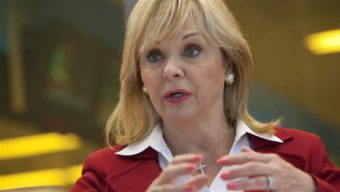
Like many of her counterparts, Republican Gov. Mary Fallin has focused on one solution: giving teachers a raise. Her latest budget proposal finds money for teacher pay increases despite declining revenue and a projected $1.3 billion deficit for fiscal 2017.

In South Dakota this week, the House approved Republican Gov. Dennis Daugaard’s plan to raise the state sales tax to fund teacher pay increases. New Mexico’s Republican Gov. Susana Martinez has proposed raising entry-level teacher salaries and expanding student loan repayment and scholarships. Washington’s Democratic Gov. Jay Inslee has also called for increasing teacher compensation.

Raising teacher pay is a simple policy lever for lawmakers to pull — most states have increased K-12 spending in recent years, including spending on teacher compensation. But there are other things states can do to close the gap, such as establishing residency programs, akin to those for young doctors, to give new teachers more support.

“The solution is to improve the job,” said Richard Ingersoll, a professor at the University of Pennsylvania Graduate School of Education. Some approaches, such as raising teacher salaries and reducing class sizes, cost a lot of money. Others, such as giving teachers a bigger role in how classrooms are run, do not.

Is Low Pay a Driving Factor?

When this school year started, about 1,000 teaching positions across Oklahoma weren’t yet filled. Schools there have canceled courses, crammed more children into classrooms, and hired more teachers on emergency licenses as the shortage has worsened over the past few years.

Enid’s hiring problems now go beyond a longtime difficulty finding math, science, foreign language and special education teachers, said Amber Graham Fitzgerald, director of human resources for the school district.

To Shawn Hime, head of the Oklahoma State School Boards Association, the reason is clear: Oklahoma teachers haven’t had a pay raise since 2008. Oklahoma teachers new to the profession earn about $31,600 a year, less than they could earn in cities in neighboring states.

Although $31,600 is higher than the average private sector salary for a new college graduate in Oklahoma, after 10 years private sector workers earn 37 percent more than teachers do, according to an analysis commissioned by the School Boards Association and the Oklahoma Business and Education Coalition.

Fallin’s budget would spend $178 million to raise every teacher’s salary by $3,000. “The education of our students remains my biggest priority in my budget, even in fiscal climates like this,” she said in her State of the State address this month.

State legislators have put forward their own proposals for raising teacher pay. Meanwhile, David Boren, president of the University of Oklahoma and a former Democratic governor and U.S. senator, is leading a drive for a ballot initiative that would raise money for schools (including teacher salaries) through a $0.01 sales tax increase.

The ballot initiative could also fund additional pay for highly skilled teachers and science, technology, engineering and math teachers, Boren says.

Many Oklahoma teachers are already eligible for additional compensation, in the form of federal loan forgiveness for working in a designated shortage area. Last year, the Legislature passed bills that allow districts to offer one-time bonus payments to attract rookie teachers.

A Broader Focus on Recruitment and Retention

Low pay may not be Oklahoma’s only problem, however. Teacher shortages involve many factors, including teacher retirements, a growing school-age population, and efforts to reduce class sizes. Educators, advocates and researchers nationwide have different theories about why schools may have trouble recruiting qualified teachers.

Koepping, the elementary school principal, said he thinks there’s a supply problem: Fewer young people are getting bachelor’s degrees in education. Nationally, college education programs are producing fewer graduates than they used to, and it’s not clear why.

But Ingersoll says that focusing on college graduates misses the point. Public schools hire teachers of all ages, including people who enter the profession through an alternate route, such as the Teach for America program. In any case, students will return to education programs once the economy improves and teacher hiring picks up, he said.

“The problem isn’t shortages, so much as it is too much turnover,” he said. The latest federal survey data shows that 17 percent of new teachers leave the profession in five years or less.

New teachers are more likely to stay in the profession if they’re connected with mentors and additional training, Ingersoll said. As of 2012, a majority of states required such a program; Oklahoma suspended its statewide mentoring program in 2010 but reinstated it in 2014.

In California, a Senate bill would put a twist on the idea by giving money to districts, counties and charter school operators to establish a residency program for trainee teachers working toward their teaching credentials.

Lawmakers also are removing regulatory barriers that keep out some qualified teachers. In Oklahoma, a 2015 law made it easier for teachers certified elsewhere to work in the state. Lawmakers are considering a bill that would allow retired teachers to return to the classroom and earn $18,000 a year without losing their retirement benefits.

Lawmakers can also consider scaling back the bureaucratic rules and paperwork that teachers find frustrating once they’re in the classroom. The latest federal K-12 education law, which gives states more control over their schools, could provide an opportunity for rethinking requirements placed on teachers, Hime said.

Enid’s Path Forward

Schools and districts can also take steps to address local teacher shortages. Enid matched new teachers with mentors even when the state didn’t require it. The high school offers a teaching career training course. A partnership with a local university helps get student teachers into Enid’s pre-K classrooms.

But all those efforts are up against years of education funding cuts. Since 2008, Oklahoma has cut per-pupil education funding by 24 percent, the deepest reduction in the country, according to the Center on Budget and Policy Priorities.

The Enid school district anticipates a 15 to 18 percent reduction this year, and eliminated 20 positions last year to get ready. “The crisis that we’re facing is so large — it’s hard to be prepared for it,” Fitzgerald said.

With schools under so much stress, teacher salary increases aren’t enough, education advocates say. The ballot initiative in Oklahoma would create a constitutionally protected education fund for schools, higher education, career education and early childhood education. According to organizers, the proposal would raise about $615 million per year.

Further funding cuts aren’t inevitable, said Republican state Sen. David Holt. He hasproposed raising teacher pay by $10,000 over several years, by eliminating tax breaks and funneling new revenue into education — once the state budget recovers.

Oklahoma lawmakers have to find a way to protect education funding and deal with teacher pay, Holt said. “If we don’t figure out this issue this year, even with the budget shortfall, I think Republicans will pay a political price — and deservedly so.”

Read original article – Published February 25, 2016
What Does It Take to End a Teacher Shortage?

As Nation Moves to a Service Economy, States Look to Tax It More

Republican Gov. Mary Fallin of Oklahoma has proposed expanding the sales tax to services that are currently exempt. Other states also are considering taxing services. Getty Images

As sales tax collections slow and the nation becomes a service-based economy, many states are considering expanding the universe of goods and, especially, services that are subject to the sales tax.
For some states, expanding the sales tax is a straightforward way to get more revenue amid a budget crunch. For others, it’s a way to replace revenue lost in a political and philosophical decision to reduce personal income and corporate business taxes in an attempt to free capital to create more jobs.

Further down the line, some states are looking at taxing new or different endeavors in the face of a changing economy.

In states from Arizona to Oklahoma and West Virginia, lawmakers are considering bills that would impose the sales tax on services ranging from beauty salons to funeral homes; from telephone land lines to cellphones. In Pennsylvania, the governor’s budget calls for an expansion of the state’s sales tax — to include movie tickets, cable service and digital downloads — that he expects to raise about $415 million.

The sales tax has long been a staple of state and local finances. Sales taxes accounted for 34 percent of state and local revenue in 2010, according to the Tax Foundation, a nonprofit group that analyzes state taxes. Revenue from personal income taxes, meanwhile, accounted for 20 percent and corporate taxes accounted for 3 percent. Other taxes and fees made up the balance.

But revenue from the sales tax is slowing. According to the Rockefeller Institute’s “State Revenue Report” issued in November, sales tax collections in the second quarter of last year grew 3.2 percent from the same period in 2014 — significantly weaker growth than reported in the previous four quarters and “low by historical standards.”

The erosion is expected to continue. Shoppers now do more business online, where collecting sales taxes is less reliable. And many people are simply paying for services rather than buying the taxable goods to do the work themselves — think of hiring a lawn service as opposed to buying a mower.

And it’s coming at a time that many states have sought to reduce their reliance on personal and business income taxes because they have become overly dependent on them; revenue from them is more volatile and harder to forecast; or because they think income taxes stifle job creation.

“Over the past four or five years, there has been increasing interest in sales tax base expansion,” together with the rise in Republican state legislators, said Joseph Crosby, a principal at MultiState Associates and a former executive with the Council on State Taxation. “There is a natural, strong instinct to reduce income taxes in favor of consumption.”

There are downsides to that, however. Sales taxes tend to be regressive in that they dent the pocketbooks of lower-income families more than upper-income families with more disposable income (though taxes on services like landscaping and health clubs may hit more affluent folks). And unless the sales tax is extended to all goods and services, it plays favorites on whom and what gets taxed.

If legislators exempt some services — such as health care and educational services — from the tax, as they tend to do, Crosby said, then the tax base is undermined. And, he said, a question of fairness arises.

Oklahoma’s Hole

Some states, such as Oklahoma, are considering sales tax expansion out of dire necessity.

To help close a projected $1.3 billion budget deficit in fiscal 2017, largely resulting from tumbling oil prices and exacerbated by a cut in personal income taxes that took effect this year, Republican Gov. Mary Fallin proposed a $200 million expansion of the state sales and use tax. She hasn’t enumerated specific services to be taxed, but has left no doubt that taxing services will need to be evaluated.

“If you never looked at any of your sales tax exemptions, particularly in a service economy, it makes sense to look at that,” Fallin said, adding that there are probably some “antiquated exemptions put on 50 or 60 years ago.”

Ultimately, Fallin said, she’d like to lower Oklahoma’s sales tax rate of 4.5 percent if its base can be expanded enough. But she doesn’t underestimate the political difficulty in expanding it to cover currently untaxed goods or services. “It’s hard to move the old dinosaurs.”

Other states also are driven to look at expanding the sales tax by dire finances.

In Louisiana, faced with a budget deficit of at least $870 million this year and projected at $2.2 billion in fiscal 2017, Democratic Gov. John Bel Edwards has proposed a 1 cent hike in the 4 percent sales tax rate. He would also extend the sales tax to Internet sales; lodging booked through online travel companies; and personal home rental services such as Airbnb.

Democratic Gov. Gov. Tom Wolf’s proposal to expand Pennsylvania’s 6 percent sales tax comes as he and the Legislature try to come to grips with a deficit that is expected to surpass $500 million this fiscal year and to balloon to $2 billion the next.

Trade-offs

Lawmakers in other states are eyeing a sales tax expansion as a way to pay for cuts in income taxes.

A bill in the Arizona House, for instance, would lower personal income tax rates and make up the lost revenue by broadening the sales tax base to a laundry list of services: beauty salon services, funeral homes, dry cleaners, shoe repair, carpet cleaning, pet grooming and boarding, parking, and cleaning and repair services.

North Carolina has made the trade-off already, and Republican Gov. Pat McCrory said it has been an economic success.

In 2013, he signed a bill that cut North Carolina’s personal income tax rate from 6 to 5.8 percent and cut business taxes from 6.9 to 6 percent. In 2015, while the state built on that plan and cut other taxes, it added insulation repair and maintenance to the list of services subject to the sales tax.

According to the Tax Foundation, tax revenue in North Carolina exceeded projections by $400 million in 2015. Unemployment dropped, although a direct correlation is often hard to track and can be attributed to the improving economy nationally.

McCrory, however, has no doubt about the results: “Our income tax revenue has increased by 5 percent this year, and our job creation has been the best in the nation. There’s a direct correlation. You could keep doing the same thing and get the same result, or you could try something new.”

California Conundrum

California’s budget situation could not be more different from Oklahoma’s. Gov. Jerry Brown’s proposed budget estimates more than $10 billion in reserves by the end of fiscal 2017, and the debate is mostly over whether to spend or save the extra cash.

But a leading member of the Legislature says now may be a good time to look at restructuring the state’s tax system, including shifting the sales tax structure, precisely because the state is not cash-strapped and can evaluate proposals without the deficit sword hanging over its head.

Democratic state Sen. Robert Hertzberg, a former speaker of the California Assembly, is preparing legislation that would add services to the sales tax base as part of a larger tax restructuring package. Although he is still working out the details, his plan is similar to legislation that he introduced last year and did not pass. That bill called for extending the sales tax to services, without specifying which ones.

Hertzberg wants to cover services because they comprise an increasing share of the economy. He acknowledges sales taxes can be regressive, but said they can be less so by exempting rent, utilities, education, child care and health care.

“You have to make the rate low enough so it doesn’t have that much effect on poor people,” he said.

Brown, a Democrat, who has not taken a position on Hertzberg’s reform efforts, has called for putting more money into California’s rainy day fund to guard against revenue volatility and the likelihood of another recession.

Exemptions

Six states — Delaware, Hawaii, New Mexico, South Dakota, Washington and West Virginia — tax services broadly. And some, such as South Dakota, have for many years. But even in those states, there are routine calls for exemptions.

Republican Gov. Dennis Daugaard, who is seeking a half-cent increase in South Dakota’s 4-cents-on-the-dollar sales tax to pay for teachers’ salaries this year, recently wrote an op-edcolumn opposing lobbyists who each year “argue for a tax exemption on their particular goods or services.”

Daugaard vetoed an effort last year to exempt hay for livestock bedding. And he vowed to oppose efforts this year to exempt rodeo admissions and used truck tires.

Elsewhere in the country, advocates lay out many reasons they want exemptions.

For example, legislatures in four states — California, Michigan, Virginia and Wisconsin — are considering bills to lift the sales tax on all feminine hygiene products, including tampons. Backers say the goods are “essential” by any definition and should not be taxed by states that have exempted other essentials such as groceries. (A similar bill has already failed in Utah. Five states — Maryland, Massachusetts, Minnesota, New Jersey and Pennsylvania — exempt tampons from tax.)

Other states are dealing with other proposed exemptions: The Idaho House has approved a bill taking sales taxes off Girl Scout Cookies, Boy Scout popcorn and other food products sold by the scouts. And Georgia is considering removing its sales tax from Super Bowl tickets as an incentive to bring the NFL’s big game to Atlanta in 2019 or 2020. The NFL will choose the sites in May from among Atlanta, Miami, New Orleans and Tampa.

Read original article – February 26, 2016
As Nation Moves to a Service Economy, States Look to Tax It More

States, Cities Tackle Housing Crisis for Low, Moderate Income Families

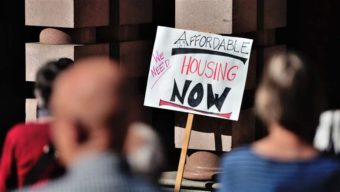
A group rallies for affordable housing outside City Hall in Portland, Oregon. States and cities are looking for ways to ease the housing crunch. AP

In Roseau, Minnesota, there are good-paying jobs at the Polaris snowmobile factory. But a dearth of moderately priced housing means there are few places for the company’s managers and engineers to live.

Without more affordable housing, Polaris will have trouble growing in this northern Minnesota city of 2,600. The company won’t disappear, said Todd Peterson, a community development coordinator in Roseau, but it cannot add new jobs without more housing, and is likely to expand elsewhere.

“We’re competing as a community to say we’re a viable place for Polaris to do business, but we can’t provide housing for the people they need to work,” he said. “That’s a hard sell.”

As affordable housing vanishes for low- and middle-income Americans, lawmakers in Minnesota and other states are being forced to look for ways to encourage new construction and ease a housing crunch that increasingly eats up more of people’s income.

Last week, Virginia Democratic Gov. Terry McAuliffe allocated $6.9 million in grants and loans to nonprofit developers to build affordable apartments. Earlier in month, Maryland Republican Gov. Larry Hogan committed nearly $700 million to address blight in Baltimore, and said some of the money would go toward rental assistance.

Legislation in California would impose a fee on real estate transactions that could generate between $300 million and $500 million annually to support the state’s affordable housing, redevelopment and homeownership programs. And in Minnesota, lawmakers are being urged to authorize state income tax credits that could be used by developers in places like Roseau.

The country’s lowest earners are increasingly at risk because the private sector cannot meet their need for housing without government aid, said Chris Herbert, director for Harvard’s Joint Center for Housing Studies.

On top of that, he said, a housing shortage for people with moderate salaries threatens to drive the middle class from cities and dampen local economies.

“Where can any private developer build, own and operate and charge only $500 in rent and be able to make a go of it?” Herbert said. “We have to think of ways that public subsidies can close the gaps.”

Cause of the Crisis

Stagnant federal funding for low-income housing programs; the lingering effects of the Great Recession, when millions lost their homes to foreclosure; and growing income disparity have left many states and cities with an influx of people in search of affordable homes.

Rents rose by as much as 7 percent between 2001 and 2014, according to the Harvard Center’s study on rental housing. In that time, wages also fell by as much as 9 percent, squeezing Americans’ budgets.

This has affected the three-quarters of low-income people who qualify for — but do not receive — most types of federal housing assistance, as well as middle-class Americans.

Herbert’s team found that more than 80 percent of renters who earn $15,000 or less spend over 30 percent of their income on housing and are considered “cost burdened.” More than two-thirds of renters in that income range spend more than half.

“What are they not spending money on? They’re not spending their money on food,” he said. “They’re not spending their money on health care.”

Housing costs are growing quickly for middle-class households, too. From 2003 to 2013, the share of renters earning between $30,000 and $45,000 who were considered cost-burdened increased from 38 to 45 percent. Among those earning between $45,000 and $75,000, it increased 6 points, to 20 percent, according to the Harvard Center.

New Ways to Pay

Sixteen states give tax credits to developers who build affordable housing; most have some sort of housing trust fund for low-income housing supported by real estate taxes.

But housing advocates say states and cities need to do more to ease the housing crunch, such as finding new ways to finance construction or demanding that developers price some of their new apartment units below market value.

Some have been responding in novel ways. In Portland, Oregon, where the mayor declared a housing state of emergency in the fall, the city has gone to a source of the housing scarcity to help finance new housing: the sharing economy.

Kurt Creager, director of the city’s housing bureau, estimates between 800 and 1,000 units of affordable housing have been taken out of the Portland rental market because owners are using homes and apartments for short-term, hotel-style rentals through websites like Airbnb.

So the city established a transient lodging tax that charges 11.5 percent per Airbnb reservation and funnels that money into a housing trust fund that can be used for land acquisition and other capital costs. The tax has raised $1.2 million for housing projects since 2014, he said.

In October, the city also increased the share of certain property taxes that goes to affordable housing programs. The move is expected to generate $68 million.

Some cities and states, such as New Jersey and Massachusetts, require developers to price some new units below market rates through inclusionary zoning policies.

But others, such as Oregon and Texas, prohibit the practice, although lawmakers in Oregon plan to introduce legislation this year to reverse that state’s law.

In Tennessee, state lawmakers similarly want to block officials in Nashville and other cities from passing inclusionary zoning measures. One of them, Republican Rep. Glen Casada, said that if there is a need for affordable housing, it will naturally be met as a result of market forces.

“I have found that any time the government mandates anything, it drives up the price and makes that resource more scarce,” he said.

Instead, he said, local governments should lower taxes, fees and requirements on homebuilders to ensure affordable housing stays on the market, he said.

But officials in Montgomery County, Maryland, say inclusionary zoning programs work. The county has the country’s oldest inclusionary zoning law, which was established in 1974 and requires that 12.5 percent of new housing developments be affordable.

The county, home to about a million people just outside Washington, D.C., has established 12,500 affordable housing units since the program was created. Most of the units are no longer covered by the zoning law, but about 5,000 are still required to be priced affordably, said Stephanie Killian, who manages the program.

“It prevents concentrations of poverty,” she said. “It allows access to housing for people who work here and live here.”

Some cities, such as Seattle, have sought rent controls that prevent landlords from raising rents in exorbitant fashion. But those efforts ran up against opposition at the state level and have gone nowhere.

City council members in Alameda, California, recently extended a moratorium on rent increases but haven’t moved on a proposed rent control ordinance.

Rural Housing

Housing hardship is commonly found in big cities with high costs of living. But rural Minnesota has experienced a crisis in towns like Roseau, with big manufacturers in place and little investment in housing.

The towns have grown with businesses, hospitals and schools, but the rental housing markets have not responded with homes for people making enough money to afford middle-priced units, said Chip Halbach, director of the Minnesota Housing Project, an advocacy group.

Developers are unwilling to commit to these towns, Halbach said. “They’re saying this is just too risky, even though the company can show these people wanting to move in.”

Housing advocates worry these small towns will suffer economically because companies will eventually want to relocate to bigger markets where workers can secure housing, he said.

Last year, the Minnesota Legislature created a workforce housing grant program to pay for housing for workers in rural areas. To make sure the homes serve moderate-income earners, the lawmakers stipulated that the money could not be put toward projects required to have low-cost units.

There’s also a push for the Legislature to create a state tax credit to support building more housing for workers in towns like Roseau.

The proposal, spearheaded by the nonprofit Greater Minnesota Partnership, would authorize state income tax credits that could be used by developers who build housing in those towns. The idea, Halbach said, is that companies will buy into housing projects to guarantee homes for their employees and get the tax credits.

Read original article
States, Cities Tackle Housing Crisis for Low, Moderate Income Families

States Strive to Eliminate Costly Construction Delays

Newly built roads in Fairfax County. Virginia and other states are trying new ways to cut down on costly transportation project delays. AP

Once it’s done, the 52-mile Northern Beltline in central Alabama will allow interstate travelers to avoid Birmingham traffic. But the $5.3-billion project has been controversial since planning began in the late 1980s.

Supporters say the project is essential to the state’s economy, while opponents decry its environmental impact. But Beltline boosters and critics agree on one thing: The project is taking a long, long time.

A road like the Beltline typically would take 15-20 years to build, according to Ronnie Baldwin, the recently retired chief engineer for the Alabama Department of Transportation. But the Federal Highway Administration recently predicted it won’t be finished until 2054 — six years later than was projected two years ago, and 65 years after funds were earmarked for a project feasibility study in 1989. So far, work has begun on less than 2 miles of the highway.

Baldwin realizes he’s not likely to live to see the project completed. “I’m 63 right now,” he said. “There are a lot of things that will happen when I’m up in heaven.”

The Alabama road is an extreme example of a common problem: Transportation projects often are completed years or even decades late. The reasons range from environmental lawsuits and bureaucratic wrangling to recalcitrant property owners and combative utility companies.

Some states, recognizing the economic and environmental costs of such delays, are starting to use financial incentives, heightened public scrutiny and “design-build” strategies to increase the likelihood that projects will come in on time and on budget.

Moving Targets

Each year, the Federal Highway Administration updates Congress on transportation projects that cost more than $500 million. Most, but not all, use federal funding. There are 101 active projects on the latest list. Of the 57 projects with completion dates that were set before 2013, 25 are behind schedule by a year or more.

Generally speaking, the longer a project drags on, the bigger the price tag. More money is spent on contracting costs, machinery, staff time, rent and fuel. Inflation takes a toll, as does the need to pay for temporary repairs to existing routes.

There are costs to the local economy, when ongoing construction makes it more difficult for commuters to get to work and prevents businesses from delivering goods and services. The environmental impact is also significant: When construction makes traffic worse, it adds to air pollution. Stopping and starting burns fuel at a higher rate than driving on the open highway, boosting emissions.

A delay is “bad for the environment. It’s bad for the economy. It’s bad for jobs. It’s bad for global competitiveness. There’s nothing good about it,” said Philip Howard, founder and chairman of Common Good, a nonpartisan group focused on good government.

Moreover, with a delayed project, “you delay the benefit the project was supposed to deliver,” said Bill Reinhardt, editor of a monthly newsletter called Public Works Financing. “If the project was supposed to be delivered in 2012 and it isn’t delivered until 2022, then you delay all that economic benefit, the lifestyle benefit and the employment benefit. If you don’t deliver the public good, the public suffers.”

Holding Contractors Accountable

Some states are pursuing various strategies to avoid such pitfalls. One is simply to require that transportation officials provide regular — and public — progress reports.

The Florida Transportation Commission produces quarterly reviews of Transportation Department spending and annual progress reports on ongoing projects. The commission has been overseeing the transportation agency since the late 1980s, but advances in information technology have allowed it to sharpen its focus. In the late 1990s, Florida transportation projects took on average 34 percent longer than expected to complete. By 2015, the average delay was down to 7 percent.

Virginia also has been aggressive about tracking projects and making the progress reports public. The state began doing so in 2000, after it became clear it would cost more — much more — than was projected in 1994 ($350 million) to widen lanes and add new bridges and ramps to a heavily traveled interchange in Fairfax County, about 15 miles from Washington, D.C. The state increased the project budget to about $676 million in 2003, and it was completed on budget in 2007.

In the second quarter of 2004, 29 percent of Virginia transportation projects were on time and 70 percent were on budget. In the fourth quarter of 2015, 84 percent were on time and 89 percent were on budget.

Many states now reward or penalize contractors depending on whether they complete a project within a set number of days. California, for example, has used incentives and penalties to accelerate the completion of projects and minimize traffic delays.

“I may pay a slight premium and that’s transparent in the contract. The time component translates to a dollar amount and that determines the working days. If they go over, there’s a penalty,” said Malcolm Dougherty, the state’s transportation chief.

A.J. de Moya, vice president of the Florida-based de Moya Group, a highway and bridge design and construction firm, has worked on many state jobs that included incentives or penalties. He says they are effective — as long as they are substantial. “The bonus has to be large enough to make it worthwhile.”

John Porcari of WSP Parsons Brinckerhoff, one of the world’s largest design, engineering and construction companies, said states are using incentives more frequently, particularly in congested urban areas.

Porcari was deputy secretary of transportation during President Barack Obama’s first term and headed Maryland’s transportation agency under two governors. He said incentives are attractive to both transportation officials and contractors.

Construction creates “huge disruptions to the traveling public, and every day you can avoid that closure means less impact on people,” he said. For contractors, “if there is a significant incentive for delivering early, they’ll do all kinds of things to get that incentive payment.”

Other states are withholding any payments until the project is close to completion.

The Port Authority of New York and New Jersey will not start paying NYNJ Link Developer LLC until its $1.5 billion Goethals Bridge reconstruction project is 70 percent complete, so the firm has a clear financial interest in keeping the work on schedule. Project completion is scheduled for late 2018, and the payout to the firm will continue for the next 35 years, during which time the private company will also take care of capital maintenance.

Design-Build

Many states are beginning to contract with a single entity to handle both the design and construction of a project. “There’s an overlap and that’s one way to compress the schedule,” Porcari said, adding that many contractors like the strategy, which increases their risk but also their profits.

Some state officials like design-build because it eliminates strife between contractors. “Instead of everyone shooting at each other, they’re all sitting around a table,” said Dougherty of California.

In 2005, the Missouri Legislature approved design-build contracting for a road reconstruction project on 12 miles of Interstate 64 near St. Louis. Without a design-build approach, it was once estimated that the project could take up to 16 years and $675 million to complete, according to the state Department of Transportation.

A flexible and innovative design-build contract contributed to the success of the project, according to King Gee, a director at the American Association of State Highway and Transportation Officials.

In 2006, a contractor signed on to design and build the road in four years. Its fee was $420 million of the final $535 million cost of the project. The construction phase took three and a half years and it was completed for $11 million less than was budgeted.

Read original article
States Strive to Eliminate Costly Construction Delays

Is Medicaid Expansion Near a Tipping Point?

Supporters of Republican Gov. Gary Herbert's Medicaid expansion plan rally at the Utah State Capitol. Legislators rejected his plan last year. This year, Herbert and other proponents of expansion may wait out the presidential election before pushing the issue again. AP
Supporters of Republican Gov. Gary Herbert’s Medicaid expansion plan rally at the Utah State Capitol. Legislators rejected his plan last year. This year, Herbert and other proponents of expansion may wait out the presidential election before pushing the issue again. AP

Louisiana this month became the first state in the Deep South to make the politically charged decision to expand Medicaid health insurance to low-income adults under the Affordable Care Act.

At least one other state — South Dakota — is expected to extend Medicaid coverage this year. But in the lead up to the November presidential election, supporters of the ACA aren’t holding out much hope that more states will join in extending Medicaid coverage to more people — although the governors of Alabama, Virginia and Wyoming say they want to, as do key legislators in Maine and Nebraska.

Meanwhile, newly elected Republican Gov. Matt Bevin in Kentucky and Republican lawmakers in Arkansas are threatening to roll back or modify their states’ existing expansion programs.

After a new president is elected, the situation could change and more states could join in expanding coverage, predicted Joan Alker, executive director of Georgetown University’s Center for Children and Families, which advocates for greater health care coverage for the poor.

Ever since the Supreme Court’s 2012 decision making Medicaid expansion a state option, the issue has been more political than practical. Many Republican governors and lawmakers have rejected the deal, fearing they would lose their jobs if they were seen cooperating with President Barack Obama on a law most conservatives abhor.

With Obama out of office, that could change. “The ideological opposition to the president will have to start fading when he’s out of office,” Alker said. “At that point, the facts and the evidence will start to matter more.”

Matt Salo, executive director of the National Association of Medicaid Directors, agrees. If a Democrat is elected president, the new administration could be expected to continue the Obama administration’s approach of approving proposals from Republican-governed states to shape expanded Medicaid programs to fit their individual state needs and politics.

Even greater flexibility could come if a Republican is elected president, Salo said. In that case, the GOP-led states that have so far shunned expansion would likely seek authority to revamp their programs more radically than the Obama administration has allowed. Until then, Salo said, “Governors are probably thinking, ‘Maybe I’ll just keep my powder dry.’ ”

Congress voted 60 times on repealing the ACA before successfully passing legislation earlier this month to undermine the law and phase out Medicaid expansion. Obama vetoed it. Would a newly elected Republican president instead sign it and eliminate health coverage now extended to millions more poor people? Most analysts doubt it and predict expansion will endure, even if other parts of the ACA are changed.

Hard to Take Back

So far, 31 states and the District of Columbia have taken the federal government up on its offer to fund all but a fraction of the cost of providing health care to about 8 million low-income adults not previously eligible for the federal-state program. Of them, 10 states were run by Republican governors at the time of expansion.

Is Medicaid Expansion Near a Tipping Point?

Defunding or eliminating Medicaid expansion would mean taking away billions of federal dollars from the states and their ability to provide health care for their residents. It also would mean cancelling health coverage for millions of people, many of whom could be sick and in need of immediate care. That’s not something any administration is likely to do, Salo said.

For similar reasons, it will be difficult for Arkansas and Kentucky to roll back their Medicaid coverage. Kentucky’s Bevin promised during his fall campaign to dismantle the state’s Medicaid expansion, which is among the nation’s most successful at reducing the uninsured rate and cutting state health care costs.

But in December, Bevin changed his mind and announced he would not eliminate the expansion, but instead transform the way Medicaid is delivered. Without providing details, Bevin said a new system would be in place by the beginning of 2017.

In Arkansas, Republican Gov. Asa Hutchinson, who was elected in 2014, has supported the state’s expansion, but said he was willing to make changes to the program to satisfy critics in the GOP-dominated Legislature. Because of Arkansas unique requirement that at least 75 percent of lawmakers must approve any appropriation and its conservative legislative majority, the future of the state’s Medicaid expansion has been shaky from the start.

Greater Flexibility

Under the Medicaid expansion, the federal government pays the full price of covering newly eligible adults with incomes up to 138 percent of the federal poverty level ($16,242) through 2016 and then gradually lowers its share to 90 percent in 2020 and beyond.

Is Medicaid Expansion Near a Tipping Point?

Opponents of expansion in the states say they fear the 10 percent share states will have to pay will burden their budgets over the long run and force them to neglect other priorities. They also argue the federal government can’t afford higher Medicaid costs and could eventually renege on its promise to pay 90 percent of the bill.

To entice more states to expand, President Obama asked Congress in his 2017budget proposal this month to allow states to get a full three years of 100 percent federal funding if they take up the option this year or next. The Republican-controlled Congress is not expected to approve the proposal.

In general, the Obama administration has been lenient in approving state requests to modify traditional Medicaid rules. Six states — Arkansas, Iowa, Indiana, Michigan, Montana and New Hampshire — have expanded their Medicaid programs under so-called waivers to federal rules.

The states have sought approval for a combination of changes that would allow Medicaid enrollees to purchase private policies on a state exchange, while requiring them to pay small copayments and premiums, engage in healthy behavior, seek employment and, in Indiana’s case, contribute to a health savings account. The federal government has approved most requests, but has drawn a line at allowing states to cancel a Medicaid enrollee’s policy for failure to meet any of the requirements.

Some Republican-led states want to go further. Salo predicted that Texas, for example, might ask a Republican president’s administration for permission to operate an expanded Medicaid program much like a block grant, in which the federal government provides the money and the state sets most of the rules.

The Issue Won’t Go Away

Whether to expand coverage has been a contentious point between not only Democratic governors and Republican-led legislatures, but between GOP governors and Republican legislatures. And some governors have sidestepped legislators to do it.

After replacing Republican Bobby Jindal this month as governor of Louisiana, Democrat John Bel Edwards signed an executive order extending Medicaid to nearly 300,000 poor residents effective July 1. So far, the Republican-led Legislature has not pushed back.

Governors in four other states — Alaska, Kentucky, Ohio and West Virginia — have approved Medicaid expansion without legislative consent. In Ohio it was Republican Gov. John Kasich, a presidential candidate.

In South Dakota, second-term Republican Gov. Dennis Daugaard is asking the GOP Legislature to approve extending Medicaid to as many as 55,000 poor residents, including Native Americans. His proposal, which is contingent on federal approval, would for the first time allow Medicaid coverage for Indian health services both on and off the reservation.

In Virginia, Democratic Gov. Terry McAuliffe is seeking expansion. So is RepublicanGov. Matt Mead in Wyoming. But their Republican legislatures have rejected it before and are likely to again. Alabama Republican Gov. Robert Bentley has declared support for expansion but is not expected to push the GOP-dominated Legislature to approve it this year.

Republican Govs. Gary Herbert of Utah and Bill Haslam of Tennessee pushed for it last year but ran into opposition from their Republican legislatures — an obstacle that remains this year.

In some states, the opposition shoe is on the other foot. In Nebraska, a bipartisan bill was introduced last week that would expand Medicaid using the so-called “private option” pioneered by Arkansas, in which newly eligible beneficiaries would receive private insurance on the exchange rather than under the existing Medicaid plan. So far, Republican Gov. Pete Ricketts has opposed expansion.

In Maine, two Republican senators — Roger Katz and Tom Saviello — have sponsored a bill to extend Medicaid. But Republican Gov. Paul LePage, who already has already vetoed five attempts to enact Medicaid expansion, vowed to do it again.

Facts and Evidence

Research shows that major fiscal and health benefits have accrued to states that have expanded Medicaid, and contrary to claims from opponents, job losses have not occurred. Hospitals also reported fewer unreimbursed expenses.

A study published in the journal Health Affairs this month concluded that more patients got care for chronic illnesses and fewer residents said they skipped medications or had problems paying medical bills in states that expanded, compared to nearby non-expansion states.

More than 6 million more people would become eligible to receive coverage under the health law’s Medicaid expansion if all remaining states opt in to the program, according to an analysis by Families USA, which advocates for expansion. But states like Florida and Texas, with the highest uninsured rates and the most to gain, continue to reject federal funding.

Historically, health care has been a bipartisan issue, George Mason University professor of health economics Len Nichols said. And it could be again.

“Once Obama is gone, it’s not ‘Obamacare’ anymore,” Nichols said. “It’s American law.” At that point, he said, it will be hard for any state to reject a deal that is “good for their budget, good for their economy and good for the health of their residents.”

Read original article
Is Medicaid Expansion Near a Tipping Point?

Site notifications
Update notification options
Subscribe to notifications