Syndicated

Kids learn the lost art of tinkering

A weekly program of the Juneau Economic Development Council called “The Saturday Thing” aims to help kids rediscover the lost art of tinkering. Casey Kelly has more.

Ethan Madsen is seven years old – almost eight – and a regular at “the Saturday Thing.”

Ethan Madsen (right) and father Andy tinker with stuff at JEDC's Saturday Thing. Click to enlarge. (Photo by Casey Kelly/KTOO)

“I built a rocket. I kind of mess around with recycling and put it together and see what I can build,” he says.

On a recent weekend Madsen is busy building a robotic arm that will be powered by four separate motors.

“The one is for the fingers to open and close, the other is for the wrist, the next is for the elbow joint, and the last is the base motor that will allow it to move,” Madsen explains.

Since September JEDC has offered “the Saturday Thing” every weekend at its STEM Education office. STEM stands for Science Technology Engineering and Math. JEDC

JEDC's Bob Vieth. Click to enlarge. (Photo by Casey Kelly/KTOO)

Education Specialist Bob Vieth says the kids who attend the program are exposed to a little bit of everything.

“We do chemistry we do force and motion, physics, magnetism, electricity, optics, engineering – how things go together – gear ratios, it’s just across the board,” Vieth says.

Every week Vieth comes up with a different scientific concept to explore, but mostly “the Saturday Thing” is opportunity for kids to tinker with things.

“It’s kind of a lost art. And you can learn so much through tinkering. You can learn about how things work, why things work, explore scientific questions, phenomena,” he says.

What is tinkering, exactly? Vieth says it involves building things and taking things apart.

“We’ve got vacuum cleaners for kids to take apart and look at how they work. Kids can take apart computers and look at how they work. Just taking apart stuff is a learning experience in and of itself,” says Vieth.

So what’s the plan for Ethan Madsen’s robotic arm when he’s done building it?

“Mr. Bob he wants to put it in the window and just have it move around, maybe pick up a few things and move them around,” says Madsen.

Ethan’s dad, Andy – an electrical engineer – says “the Saturday Thing” has been a great opportunity for the whole family to experiment, learn and of course tinker.

“He’s learned how to solder down here, and they build rockets, and Bob has a launcher, so we’ve gone next door and launched the rockets,” says Andy Madsen. “My two year old daughter even comes down with us and she sits and works on Legos and so everybody is invited. Nobody is turned away.”

“The Saturday Thing” is free. Because Vieth is the only staff member there, it’s limited to 10 kids per week. Vieth says donations of items for kids to tinker with are always appreciated.

Kookesh challenges Stedman for Senate seat

A pair of powerful Southeast lawmakers will face off in the 2012 election. Angoon’s Albert Kookesh and Sitka’s Bert Stedman will both run to represent a Senate district newly configured by redistricting.

Earlier this year, Kookesh predicted reapportionment would merge part of his Senate district into another one in Southeast.

The Angoon Democrat, Sealaska board chairman and Alaska Federation of Natives leader told a public forum in Juneau that the change would leave him little choice about his political future.

Sen. Albert Kookesh

“For me, if that’s what happens, it’s time for me to ride off into the sunset and say goodbye to everybody,” he said.

Reapportionment is taking away most of the 130 communities in his current Senate district, which stretches from Southeast, through Prince William Sound, and up into the Interior.

What’s left is combined with about three quarters of Sitka Republican Stedman’s existing district. But Kookesh has decided to run in 2012.

“You know what? I’m not going to roll over and just go away. I’ve been in the Legislature for 16 years, eight in the House and eight in the Senate. And I think that I’ve developed a wealth of information and a good background,” he says. “I don’t want to quit being in the Legislature. I enjoy it, it’s something I really have fun with, so I decided I’d give it a shot.”

In addition to Angoon and Sitka, the new district includes Ketchikan, Wrangell, Saxman, Metlakatla, Haines, Hoonah and Prince of Wales Island.

Sen. Bert Stedman

Stedman, who’s served in the Senate since 2003, faces a smaller challenge.

“So there’s about 26 percent of people that will be new. And I‘ll be spending a considerable amount of time going out and meeting with them and getting detailed understandings of their issues and try to resolve some of their stuff,” he says.

Stedman and Kookesh have worked together as members of the Senate’s bipartisan majority organization. Stedman co-chairs the chamber’s budget-writing Finance Committee. Kookesh heads up its transportation panel.

Both say they plan a clean campaign.

“I just want to concentrate on the merits of myself and I don’t intend to be negative at all. I have nothing negative to say about him. He’s a good guy,” Kookesh says.

“It always seems in politics in the end it gets a little bit messy with whoever happens to be behind, walking into the election the last few weeks,” Stedman says. “But I’m hoping this election will stay at the high road the whole way through. I fully intend to talk about the merits of my tenure in the Senate and not concentrate so much on my opponent.”

Stedman says he’ll campaign on his efforts to fund numerous projects throughout Southeast. That includes hydropower facilities and transmission line work.

He’ll also continue pushing for in-state construction of new Alaska Class Ferries.

“Expansion of Alaska Ship and Drydock in Ketchikan so we can build those vessels in Ketchikan. Along with working with the need for another 10 megawatts of power for the Niblack mine on south Prince of Wales. If we can do those two things, we’ll be looking at 200 to 300 jobs,” he says.

Kookesh says he’ll cite his relationships with community leaders. But he understands that means reaching out to new communities.

“I expect that I’m going to have to do a lot of door-to-door work. Especially in Sitka and Ketchikan and Wrangell where people haven’t had the occasion to get to know me. I don’t want to take any of the communities I’ve represented in the past for granted either. I’m going to have to do some campaigning there. I just think that’s going to be a lot of work, but a lot of fun,” he says.

Before facing each other, Stedman and Kookesh will have to clear their party primaries. So far, no one else has filed for what’s now called Senate District Q.

All but one of Southeast’s other six lawmakers have filed for re-election.

Redistricting, which still faces court challenges, is costing Southeast one House seat and half a Senate seat.

Hear a report on Stedman’s last campaign.

Listen to a report on Kookesh’s last campaign.

Arne Fuglvog sentencing delayed

A former U.S. Senate fisheries expert – who falsely reported his own catch – will now be sentenced in February.

Arne Fuglvog’s sentencing in U.S. District Court was previously scheduled for Friday, November 18. Judge H. Russell Holland on Thursday approved the latest delay, proposed earlier in the week by Fuglvog’s attorney Jeffrey Feldman.

The hearing scheduled for Friday had already been postponed to December 7 because Feldman had a scheduling conflict this week with clients in another case out-of-state. The latest continuance moves it to February 7, according to electronic federal court records.

Fuglvog pled guilty in August to one count of violating the federal Lacey Act for falsifying catch records of sablefish intended for interstate commerce.

The Petersburg fisherman had worked as a fisheries aide for U.S. Sen. Lisa Murkowski from 2006 until July of this year. He resigned the day before the charges became public and details of a plea agreement were released.

Fuglvog broke the commercial fishing laws before he took the Senate job.

Under his plea agreement, he is to be sentenced to ten months in prison and a $50,000 fine. He also will be required to give $100,000 to the National Fish and Wildlife Foundation. The non-profit was created by Congress in 1984 and directs public conservation funds to preservation and restoration projects for wildlife species and habitats.

Thomas calls for more cooperation between tribes and ANCs

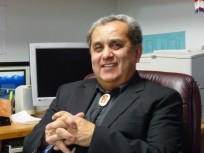
Ed Thomas. Click to enlarge. (Photo by Casey Kelly/KTOO)

Rural Alaska’s economic and social problems require greater cooperation between Native Corporations and federally recognized tribes, says Tlingit and Haida Central Council President Ed Thomas.

“We have very weak rural economies, we have high cost of energy that leads to high cost of living, higher cost of survival in our communities,” he says.

Thomas says past conflicts between Native tribes and corporations have largely risen from the belief by some that the Alaska Native Claims Settlement Act was a termination policy. That is, an act designed to make Native people assimilate into American society.

“Some of those folks that were anti-ANCSA felt that, well if we get rid of ANCSA then the land probably would go to the tribes,” says Thomas. “That really is very far-fetched, if not impossible.”

For one thing, Thomas says there’s no political will to take land from ANCSA corporations and give them to tribes. For another, corporate land is very different from tribal land, which is usually locked up in some sort of trust.

Subsistence is another issue that has divided tribes and corporations. ANCSA basically extinguished Alaska Native hunting and fishing rights, which Congress tried to address with the Alaska National Interest Lands Conservation Act. But Thomas says there are still those who think doing away with ANCSA is the way to restore full subsistence rights.

“While I generally agree that we can probably get rid of that one provision and it would improve things. I don’t agree that you have to throw everything out in order to accomplish that issue with subsistence,” he says.

Rather than debate the merits of the 30- and 40-year-old laws, Thomas says tribes and corporations should work together to accomplish what’s best for Native communities. It won’t always be easy, he says, but it’s essential for those communities to survive.

“We are a broad state, we have a lot of differences geographically and culturally, and lifestyle. So, it’s in our best interest to try to find areas of commonality and agree upon it. And where we disagree, agree to disagree and move on,” he says.

Thomas spoke yesterday (Thursday) at Sealaska Heritage Institute’s annual Native American Heritage Month lecture series.

The Tlingit and Haida Central Council is the sovereign tribal government for more than 27-thousand Southeast Alaska Natives worldwide.

Former mall managers indicted for theft

A Juneau husband and wife, who formerly managed the Airport Mini Mall and Apartments as a couple, are being accused of theft.

Paul E. Hansen, 63, and Cheryl L. Hansen, 67, are each being charged with one count of first degree felony theft. Charging documents essentially allege that over $50,000 of deposits, or money belonging to the Mall, was kept by the Hansens.

Paul Hansen did the maintenance. Cheryl Hansen did the bookkeeping. They say they worked as managers for nine years, getting use of the manager’s house near the mall and a $1,000 a month when they left in May 2010. An indictment handed up by a Juneau grand jury on November 4th alleges that the theft happened sometime between May and June of last year.

The Hansens do not have attorneys yet. But Cheryl Hansen spoke to reporters after Wednesday afternoon’s arraignment hearing. She predicted that everybody that they know or have worked with “would be dumbfounded” once they found out about the charges.

Right now, Cheryl Hansen says she “feels overwhelmed.” Her husband Paul suffers from a variety of severe medical ailments and she says they were just at the hospital emergency room Tuesday night – the night before arraignment.

The couple is on a fixed income, their $2200 in combined monthly social security and disability benefits largely going to apartment rent and basic expenses. Cheryl Hansen told Superior Court Judge Louis Menendez during the hearing that they do not currently have any debt, but a collection agency is after them for old medical expenses. Paul Hansen says he cannot afford to hire a lawyer. Public defense attorneys are being assigned to each of them.

If convicted, the Hansens would – as first time offenders – likely be sentenced to as much as three years in prison. The maximum sentence for felony theft in the first degree is ten years in prison, $100,000 dollar fine, and 25 years on probation.

Menendez carefully repeated explanations of court proceedings for the Hansens and entered a ‘not guilty’ plea on their behalf.

Their next hearing is November 28th.

Charges filed against Juneau and Sitka guides

Three Southeast men currently faces charges related to guided fishing violations in Alaska.

Michael W. Duby of Juneau, 61, has already run afoul of Montana Fish and Game authorities for poaching there. His son, Michael Patrick Duby, 37, was also convicted on the Montana charges, and is currently awaiting sentencing on federal charges related to shooting migratory birds in Alaska and selling their parts on the internet.

Now, Alaska Wildlife Troopers have charged the elder Duby with providing guide services without a license. According to charging documents, Duby was working for his son’s company Fish Hunter Charters as a licensed guide in 2007. Investigators say he then guided a saltwater sport fish charter April 28, 2008 while on his son’s boat the ‘Brody.’ He did not have a valid license in his possession and listed his 2007 license number in the vessel’s logbook.

Michael W. Duby then allegedly told investigators that his 2008 license was late in coming and he guided on a temporary license. But investigators allege that he didn’t even apply for a 2008 license until April 30th, two days after the charter trip.

The charging documents, filed last week, specifically mention that Michael Patrick Duby was also under investigation for illegal guiding activity. But state prosecutors have not yet filed any charges against him.

Arraignment of Michael W. Duby is planned for December 8th in Juneau District Court.

In Sitka, Alaska Wildlife Troopers allege that four clients were taken out on a chartered trip on a vessel that was not registered to sportfish guide.

Robert L. Warren, 34, was charged for failing to register the vessel and failing to obtain a sportfish guide logbook. Michael R. Keating, 55, was charged with two counts of sportfish guide operator assisting in a violation.

Troopers believe that Keating, owner of Big Blue Fisheries, had Warren take out the clients on a boat that Keating knew was unregistered and did not have logbooks assigned.

Both men were charged Tuesday, but it’s unclear when the alleged violations actually occurred.

Their arraignment is scheduled for November 29th.

Site notifications
Update notification options
Subscribe to notifications