Juneau

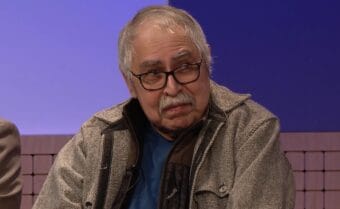
‘These Birds’ relies on real-life Juneau stories of death and dying

(Photo courtesy of Theater Alaska)

A new play, “These Birds: A play inspired by death, flowers, and Farkle,” opened in Juneau Jan. 29. The show was born from interviews and conversations with local residents about death and dying.

The Theater Alaska play is written by Juneau playwright Merry Ellefson. But the seed for the project started with hospice chaplain Claire Richardson. 

Richardson wanted to find a way to inspire people to talk about death. She said creating a play from community-based interviews was a vehicle to ground stories of death and dying in Juneau. 

“I kept thinking, there has to be a way to have people to be able to have conversations about death. It’s so challenging, even with all the books and web resources and everything that we can offer. It’s that personal connection,” she said during a recent Juneau Afternoon interview on KTOO

Richardson contacted Ellefson, who has previously written plays based on interviews with Juneau residents and Alaskans across the state. 

The women conducted about 25 interviews and Ellefson said it was a profound journey. Though death can be a somber topic, Ellefson said there’s so much life in connecting through stories. 

She said she’s grateful for everyone they interviewed, as well as for the eight performers and other artists who transformed the script into a theatrical experience, honoring all the conversations and interviews. 

“These stories live in our community. They are part of us. They are of us. We hear ourselves here, whether that’s a whale breaching or someone talking about a tragedy,” Ellefson said. 

“These Birds: A play inspired by death, flowers, and Farkle” runs through Feb. 15, with two performances this Friday and Saturday at Ḵunéix̱ Hídi Northern Light United Church, and four shows next week at various locations.

Theater Alaska offers ticketed and free performances. Find details and the full schedule of performances and post-show conversations at theateralaska.org.

Editor’s note: KTOO is a media sponsor for “These Birds: A play inspired by death, flowers, and Farkle.”

Coast Guard’s new Juneau base may not be complete until 2029, commandant says

U.S. Sen. Dan Sullivan stands with acting Coast Guard Commandant Adm. Kevin Lunday during the after the commissioning ceremony for the Coast Guard icebreaker Storis on Sunday, Aug. 10, 2025, in Juneau, Alaska. (Photo by James Brooks/Alaska Beacon)

A $300 million project to build a new Coast Guard base in Juneau for the icebreaker Storis likely will not be complete until at least 2029, the service’s top admiral said in a U.S. Senate hearing last week.

The Commandant of the Coast Guard, Adm. Kevin Lunday, testified Thursday in front of the U.S. Senate’s subcommittee on Coast Guard, Maritime, and Fisheries, chaired by Sen. Dan Sullivan, R-Alaska.

During the hearing, Sullivan pushed Lunday on his timeline for work in Alaska. Congress approved almost $25 billion earlier this year for new Coast Guard construction, including hundreds of millions for work in Alaska.

In August, the Coast Guard commissioned the icebreaker Storis, a converted oilfield services ship, at a ceremony in Juneau. The Storis will be based in Juneau, the Coast Guard has said, but not until new facilities are built.

“Are we on time, on schedule?” Sullivan asked.

“We’re moving quickly to be able to execute that funding and have that pier and infrastructure there ready by 2029,” Lunday said.

The Coast Guard had previously said its target was 2028.

“They’ve talked about 2028 before with regard to Juneau and the Storis,” Sullivan said in a phone call with reporters afterward. “He did mention 2029, but part of my job is to make sure we have the money, make sure they make the decisions early, and impress them in oversight hearings like this, to get them to keep their timelines if they put them out there, but also try to move them closer in.”

Lunday was only recently confirmed to his position after President Donald Trump controversially fired Adm. Linda Fagan after the start of his term.

Sullivan said it’s only natural for a new appointee to play it safe.

“I think the default position is to be a little conservative on the timelines,” Sullivan said.

Sullivan also pressed Lunday on his plans for a series of new icebreakers the Coast Guard intends to build in coming years.

Sullivan has been campaigning to have several medium icebreakers based in Alaska in addition to the Storis. Lunday was evasive when Sullivan asked him when he would make a decision and whether he would choose Alaska.

“As (my team) develop options, one of the first ones that I want them to present among a range of options for consideration … is for homeporting of up to four icebreakers in Alaska,” Lunday said. “Although we are still pending a decision, that’s clear guidance I’ve given to the team.”

Afterward, Sullivan said he tried to pin Lunday down on the issue because he sees it as important.

“I love the Coast Guard, but I have had real issues with how slow they are,” he said.

While Lunday didn’t make a firm commitment, Sullivan said he viewed the day as “progress.” Sullivan said he wants to see the ships in Alaska because basing them here has an economic benefit that he termed “a virtuous cycle” — the ships create demand for local shipyard work and stores to sell things to the Coast Guard, members of the Coast Guard and their families.

Housing any new arrivals remains an unsolved issue, he noted. Communities throughout Alaska are experiencing critical shortages of housing and child care.

“In almost every community, housing is an issue, and it’s an issue throughout the whole state,” he said.

“This is where we need to get the state, the cities, the boroughs also, to come to the table and say, ‘Hey, we have land here that we can provide. … We have financing that we can help incentivize housing,’” Sullivan said.

He said the Coast Guard is contributing financially for housing, but that he has encouraged elected officials to look for ways to ease the issue.

North Douglas boat launch to reopen later this week following sinkhole closure

Water fills a sinkhole in the North Douglas Boat Launch parking lot on Monday, Feb. 2, 2026. (Photo by Clarise Larson/KTOO)

The North Douglas boat launch will soon reopen to the public after being closed for more than two weeks due to damage to its parking lot. 

In mid-January, Juneau Docks and Harbors staff closed off a portion of the launch’s parking lot on North Douglas Highway that provides access to the boat ramp. That’s after they discovered a large sinkhole that developed near the entrance.

Matt Creswell, Juneau’s harbormaster, said the closure was made out of an abundance of caution. 

“Luckily, this did happen in January instead of in the middle of the busy summer boating season,” he said. “The use is fairly minimal out at North Douglas. However, there are some die-hards that are out there quite often, and it’s used as a cabin access point as well.”

Sonny Mauricio, a spokesperson for the Alaska Department of Transportation and Public Facilities, said the damage was likely caused by erosion to a culvert pipe that runs beneath the highway, which the state maintains. The state is handling the sinkhole repairs.

He said the department plans to temporarily repair the damage and reopen the launch to the public by the end of this week. He said it’s still unclear how extensive the damage is to the area.

“We plan on going out this week to cover it with big metal plates that will stay there until the spring allows us to go out and do some more permanent repairs,” he said. 

Mauricio said the department will share details about a more permanent fix in the coming months.

Juneau’s emergency manager talks planning, response and recovery in wake of local disaster

Ryan O’Shaughnessy, Juneau’s emergency manager, displays a flood informational door hangar at a press briefing on Monday, Aug. 11, 2025. (Photo by Clarise Larson/KTOO)

As the city’s Emergency Programs Manager, Ryan O’Shaughnessy leads emergency planning, response and recovery for the City and Borough of Juneau.

KTOO’s Mike Lane recently caught up with O’Shaughnessy to talk about lessons learned from the major storm events in December and January and how the department operates.

Listen:

The following transcript has been lightly edited for clarity.

Mike Lane: Ryan, what is your vision for CBJs Emergency Management Department and how did these new roles, avalanche advisor and tech fit into that vision?

Ryan O’Shaughnessy: Yeah, that’s a great question, Mike. My vision for CBJs emergency programs is really one of whole community engagement. our team really relies on strong partnerships with all kinds of different agencies for avalanche specifically, as well as for, you know, the flooding we experience in the summertime and any other hazard that we may face. You know, Juneau is an islanded community, and it really takes all of us – the public, our government agencies, our nonprofits, our private sector – to participate in emergency management.

Mike Lane: Right. Okay. Do you think you’ll be hiring for more roles in your department soon, like a geo hazard or landslide specialist, climate adaptation specialist, etc?

Ryan O’Shaughnessy: Those are great questions, Mike. I can’t speak for the Assembly on the allocation of funding for our division, but you know, we have a lot of work cut out for us. There’s, there’s no shortage of hazards in our community, our hazard mitigation plan cites many, many hazards ranging from everything from downtown fire to tsunami and earthquake, glacial lake outburst flooding, regular flooding. So there’s no shortage of hazards. And you know, we have identified in our hazard mitigation plan a lot of actions that we can take to mitigate those. But those do come with, you know, staff requirements.

Mike Lane: How do you see this past disaster declaration went? How do you think it it all unfolded? Was it organized? Was it chaos? What was it?

Ryan O’Shaughnessy: Organized chaos is where we like to live. You know, the practice of emergency management is taking those emergency scenarios and trying to bring some order to them. So, you know, I think we accomplished the objectives that we set out with which, you know, as always, we’re going to prioritize preservation of life, life/safety for the public, and protecting critical infrastructure. So always, always learning, right? There’s always things that we can do better. And we are continuing to reflect on this most recent event with our partners and internally and try to enact some lessons, some lessons learned.

Mike Lane: Excellent. Speaking of lessons learned: what did you see in this last episode of disasters that you’re now reevaluating how you’re going to do it later? Was there something that you went, “Oh, we got to change this.”

Ryan O’Shaughnessy: Yeah, I think there’s, there’s lots of stuff. A lot of, a lot of takeaways specific to avalanche. But, you know, we’re constantly looking for those things in emergency management, right? We’re training, we’re preparing, we’re executing and responding to disasters, and then the next phase of that cycle is to reflect and evaluate. Based on that evaluation, we again, we train and we plan. And you know, this disaster specifically, I think one of the core challenges was it affected everything about our community. You know, a lot of times when we see stuff like the flooding in the summer is a great example. It’s localized to an area. Whereas this disaster, it literally blanketed our community. People were tired. Both the people affected by it, the people working to respond to it, were tired from shoveling at their own homes. Everybody was exhausted. It impacted travel and the facilities we were able to use. So it was a challenging one, and some some unique and interesting lessons being learned for sure.

Mike Lane: Is there anything you’d like to add to this?

Ryan O’Shaughnessy: I never miss an opportunity to plug emergency alerts. Signing up for emergency alerts is absolutely the best way to stay informed and up to date on on anything going on related to this hazard and other hazards in our community. 

Mike Lane: How would one do that?

Ryan O’Shaughnessy: The easiest way to sign up for emergency alerts is to text “CBJ” to the number 38276. 

Mike Lane: 38276.

Ryan O’Shaughnessy: Yep. And you just type and just the in the message, just send “CBJ” and that’ll sign you up for emergency alerts. 

Mike Lane: Awesome. 

Ryan O’Shaughnessy: Alternatively, you can go to the CBJ website. Right there on the homepage, there’s a button that’ll get you signed up. 

Juneau School Board seeks feedback for superintendent search

Juneau School District Superintendent Frank Hauser talks during an Assembly committee of the whole meeting on Monday, Jan. 29, 2024. (Clarise Larson/KTOO)

The Juneau School Board is quickly moving through the search process for a new superintendent. And it’s working with a search firm to collect feedback from the community before it makes a hiring decision.

Board Member David Noon said at a super site council meeting last week that the board plans to hire a superintendent in March.

“It’s an aggressive horizon,” he said. “But we’re pretty sure we can do it.”

Current Superintendent Frank Hauser announced his resignation in October.

The board in December approved a $29,000 contract with national search firm McPherson & Jacobson LLC to recruit candidates for the position. The job post lists characteristics the board is looking for in a new superintendent, which Noon said includes being able to work with local stakeholders and look at “new educational pathways.”

“We want someone who can, you know, create and sustain a positive educational environment, someone who has a record of advocacy for families, for students,” Noon said.

The application for the position closes on Feb. 5.

Noon said consultants with the firm are also meeting with staff, administrators, students, families and businesses to get information on what they are looking for in a superintendent.

In addition to meetings and interviews, community members can fill out a survey by Feb. 13. According to the district’s website, the board plans to make an offer to a new superintendent in March, with a July 1 start date.

Some small businesses in Juneau speak out against ICE amid nationwide strike

Alaska Robotics Gallery closed Jan. 30, 2026 as part of the nationwide general strike. (Photo by Alix Soliman/KTOO)

Some storefront owners in Juneau spoke out against U.S. Immigration and Customs Enforcement or shuttered their doors Friday as part of the nationwide general strike following recent killings in Minneapolis. 

Downtown, small businesses including Drip Drop Wonder Shop, Liaise Studio and Alaska Robotics Gallery closed, joining businesses across the country protesting ICE. 

Aaron Suring is co-owner of Alaska Robotics Gallery, a game and book shop. He said he participated in the strike because he wants to see ICE defunded. 

“There’s limited things that we can do so far away from what’s happening in Minneapolis, and we wanted to show our support in what way we could,” he said. 

He said he thinks joining the nationwide response can raise awareness and lead to action. Across the country, people are refraining from attending school, going to work or spending money in solidarity with those impacted by ICE. 

Some Juneau stores that remained open took a stance against ICE in other ways. 

Kindred Post, a gift shop and post office downtown, posted on social media that 25% of its revenue between Friday and Sunday will be donated to the International Rescue Committee in support of immigrants and refugees. 

Travis Smith, co-owner of The Rookery Cafe and In Bocca al Lupo, said he decided to keep the restaurants open because he can’t afford to close. But he encouraged patrons to pay in cash. 

“We’re going to basically take what would have been the credit card processing fees that we’re not paying, since people are paying in cash, and then we’re going to match that amount as a donation,” he said. 

He said that will amount to 6% of their sales from the day, which they plan to donate to funds on Stand With Minnesota, a directory aimed at supporting people impacted by ICE in the state. 

“The reality is that our businesses both rely upon immigrants, our communities are built on them,” he said. 

Travis Smith owns The Rookery Cafe and decided to donate a portion of sales on Jan. 30, 2026 to support the community response to ICE in Minnesota. (Photo by Alix Soliman/KTOO)

Smith called the ICE raids “atrocious” and said the U.S. should not allow masked officers to kill people. 

Across the street, a chalkboard sign stands in front of Bustin’ Out Boutique.

“It says, ‘fight fascism, not your bra.’ We’re just a full-service bra-fitting store,” said Hollis Kitchin, owner of the boutique. She said she’s been using the sign to speak out against the current administration since President Donald Trump’s inauguration last year. 

A sign outside of Bustin’ Out Boutique on Jan. 30, 2026. (Photo by Alix Soliman/KTOO)

She said she couldn’t afford to close for the day, but set up a snack and tea station in her shop to create a welcoming space for protestors. 

Kitchin said she’s a descendant of people who immigrated to the U.S. to escape fascism before World War II and the issue is close to her heart. 

“I have friends in Minnesota that are afraid to leave their houses because they’re not white, they’re carrying their passports and stuff with them,” she said. “It’s just disturbing and horrifying.”

The response from local business owners comes after organizers hosted an anti-ICE rally Thursday and a recent vigil remembering Alex Pretti and Renee Good Sunday. Another anti-ICE is planned for Friday evening starting at 5 p.m. at the whale statue. 

Correction: This story has been updated to correct when Hollis Kitchin’s family migrated. 

Site notifications
Update notification options
Subscribe to notifications