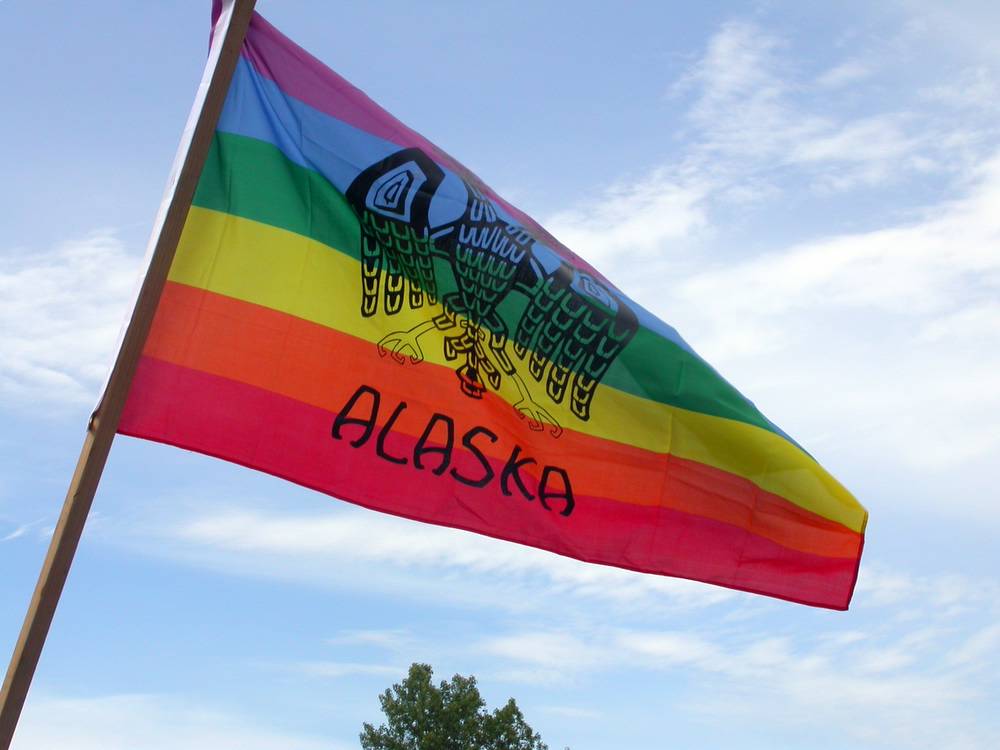
An Alaska Pride flag. The image is based on a double-faced eagle design from Alaska before Russian contact. (Creative Commons photo by Mel Green)
Last Wednesday, the University of California, Los Angeles, published a report on employment discrimination in Alaska based on sexual orientation and gender identity. Alaska is home to more than 19,000 lesbian, gay, bisexual and transgender adults, according to a Gallup poll.
The report, published by UCLA’s Williams Institute found that 17 out of Alaska’s 25 largest employers have corporate policies that prohibit discrimination based on sexual orientation. At least 11 of them list gender identity as a protected class. Some of these employers include Providence Health and Services, Wal-Mart, Fred Meyer and the Arctic Slope Regional Corporation.
Christy Mallory co-authored the report, and says it took about a month to compile.
The report predicts that if non-discrimination laws were expanded, approximately six complaints of sexual orientation or gender identity employment discrimination would be filed annually in Alaska.
“So, six complaints is pretty low,” Mallory said, “that’s mostly because there’s a smaller population in Alaska than many other states.”
The report also cites a 2012 web survey on LGBT discrimination in Anchorage.
According to the Anchorage survey, 44 percent of the respondents had experienced harassment and nearly a fifth had been turned down for a job or promotion. The survey found that transgender people are more at risk for housing and employment discrimination.
The report found that straight male workers’ income was 30 percent higher than gay male workers.
Mallory says their reports focus on the 28 states that don’t offer LGBT legal protection in the workplace.
In a 2011 poll, nearly 80 percent of Alaskans said Congress should pass a law to prohibit LGBT employment discrimination.
In 2002, Gov. Tony Knowles issued an administrative order protecting state employees from employment discrimination and harassment. There are no restrictions on the private sector.
Neither the Alaska State Commission for Human Rights or the Anchorage Equal Rights Commission processes discrimination claims based on sexual orientation or gender identity. But the Williams Institute says that this discrimination does take place, citing legislative testimony.
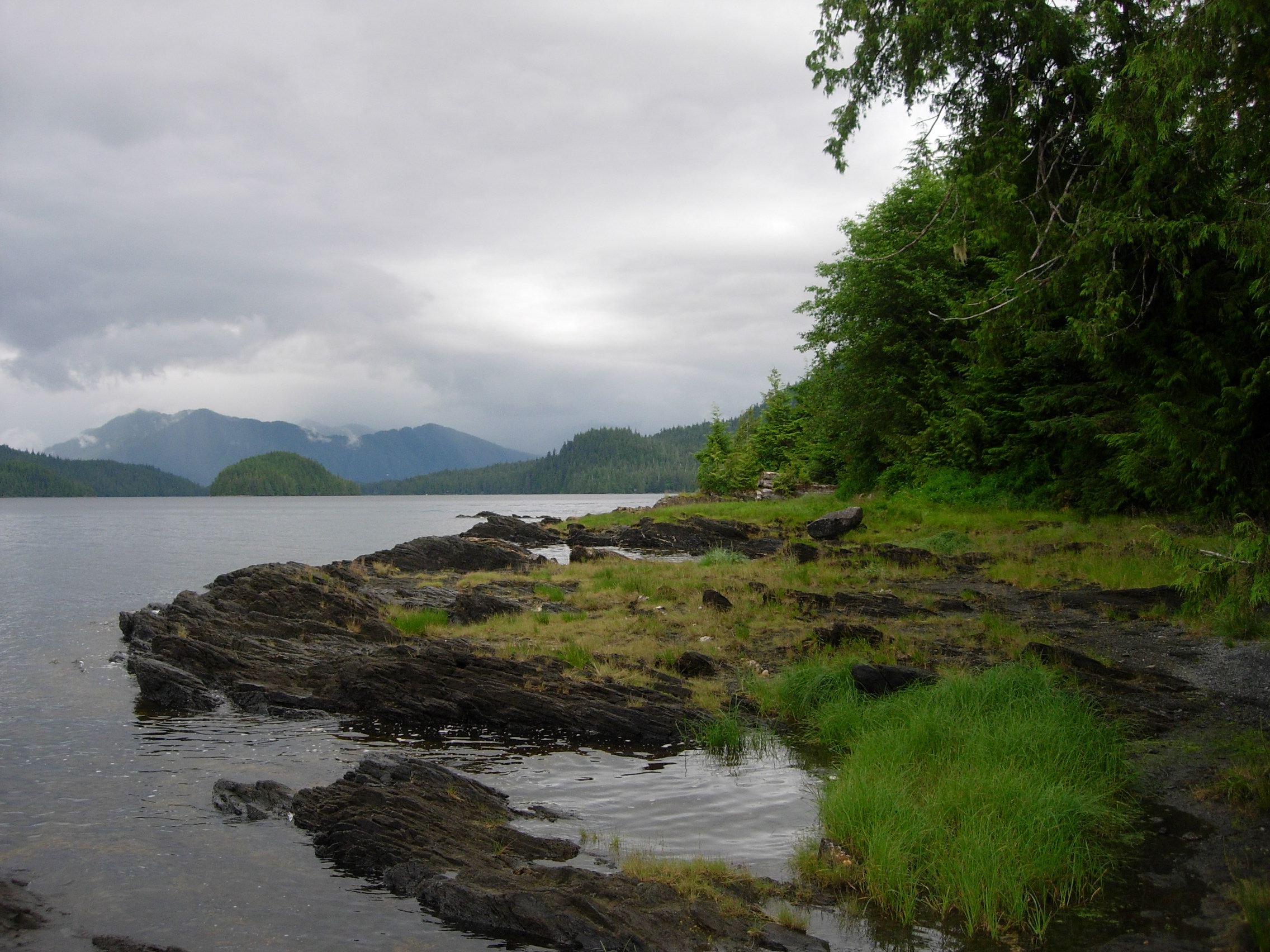
The 9th Circuit Court of Appeals struck down a 2003 exemption Wednesday that would have made it possible to build roads through the Tongass National Forest.
Malena Marvin, Director of the Southeast Alaska Conservation Council, says this decision underscores management that’s already happening.
“The Forest Service is already not planning sales in roadless areas and proceeding in the same direction as the rest of the country in preserving these areas for future generations,” Marvin says. “So we’re really seeing the final legal decision just guaranteeing that direction.”
Tongass National Forest near Ketchikan, Alaska. (Creative Commons photo by Mark Brennan)
“Roadless areas” are habitat for endangered species, subsistence hunting and fishing, outdoor recreation and sacred sites.
In 2001, the Department of Agriculture created the Roadless Rule, which limits road construction and logging on nearly 50 million acres of wilderness. The Tongass National Forest was exempted two years later when George W. Bush was in office. “Economic hardship” for timber-dependent Southeast communities was given as the reason.
Earthjustice attorney Eric Jorgensen says a coalition of conservation groups and Alaska Native tribes challenged that ruling. Earthjustice provided legal representation.
“(We) argued that the agency hadn’t adequately explained its rationale for reversing course and deciding to exempt the Tongass from the protection,” Jorgensen says.
In a press release, Sen. Lisa Murkowski called the ruling a “setback for the economies of Southeast Alaska.”
Owen Graham of the Alaska Forest Association echoed that sentiment. He believes the Forest Service has a “monopoly supply” over the timber industry in the region.
“They won’t allow enough timber sales to keep our industry alive and we’re dying,” Graham says. “It’s hindering all kinds of development for no good reason other than pacifying environmental groups but we hope to get it overturned eventually.”
The state could still petition the Supreme Court to exempt the Tongass from the Roadless Rule. The Supreme Court, however, declined to hear an appeal of the rule in 2012 when the State of Wyoming and the Colorado Mining Association challenged it.
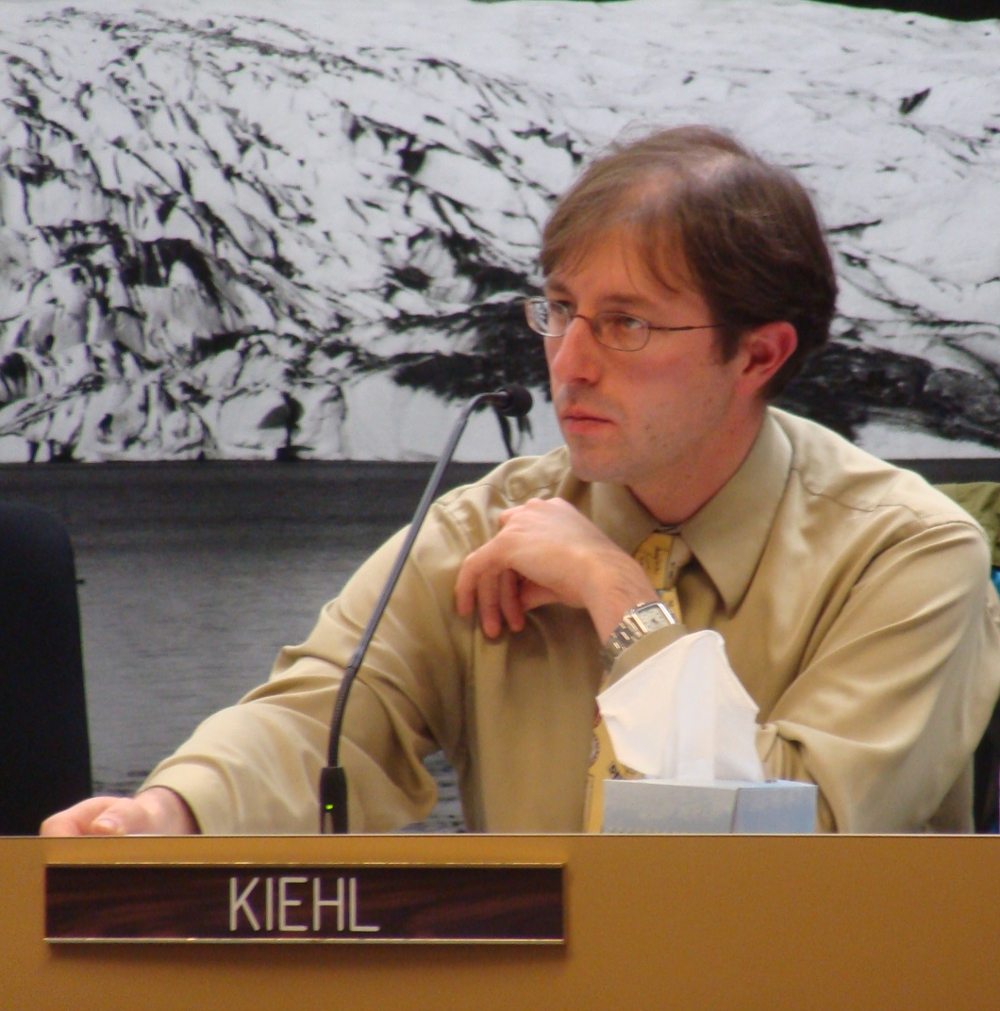
Juneau Assemblyman Jesse Kiehl is drafting a city ordinance that would prohibit discrimination based on sexual orientation or gender identity in the private sector, including public accommodations and housing. He says he decided to work on the ordinance after local residents discussed the issue with him.
“The recent recognition of marriage equality in all 50 states is a wonderful step forward,” Kiehl says,” but some of these folks were particularly worried that a person could get married on Saturday and show off the photos and be fired on Monday.”
Kiehl thinks broader discrimination protection would be better for everyone involved.
“Those items being included would help us to make Juneau both a welcoming and prosperous community, as folks can live and work here based on their contributions,” he says.
Juneau Rep. Cathy Munoz, a Republican, is sponsoring a bill that would add sexual orientation and gender identity as protected classes, requiring the state commission to handle those complaints. Similar bills have failed twice before.
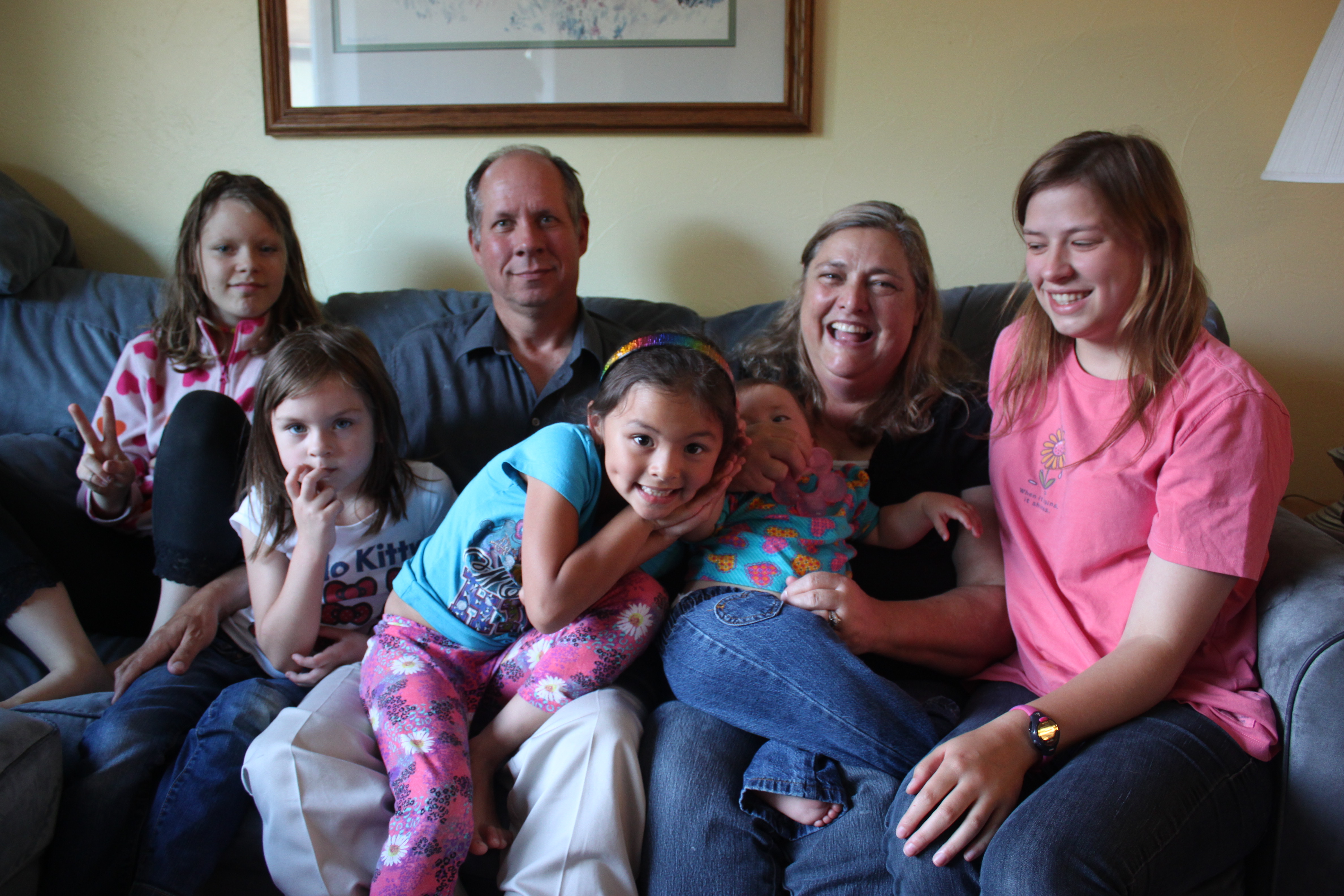
The Lohrey family. From left to right: Elena, Kylie, John, Kristyanna, Diane (holding a foster child) and Emilyanne. Elena, Kylie and Kristyanna have all been diagnosed with FASD. (Photo by Lisa Phu/KTOO)
Not many people wish to raise a child with a fetal alcohol spectrum disorder, or FASD. Diane Lohrey is no different. But when she and her husband adopted three children, all later diagnosed with an FASD, they accepted the hardships and the rewards.
When you walk into the Lohrey household, kids seem to materialize out of thin air.
“We have five of our own and one foster, so six kids right now,” says the mom, Diane Lohrey.
“And they just called us a few minutes ago to see if we would take an 8-year-old boy, but we have no room right now,” Lohrey says.
They’ve already converted their garage into a comfortable bedroom. At least a dozen foster children have passed through the four-bedroom house since 2005, staying anywhere from one night to 18 months.
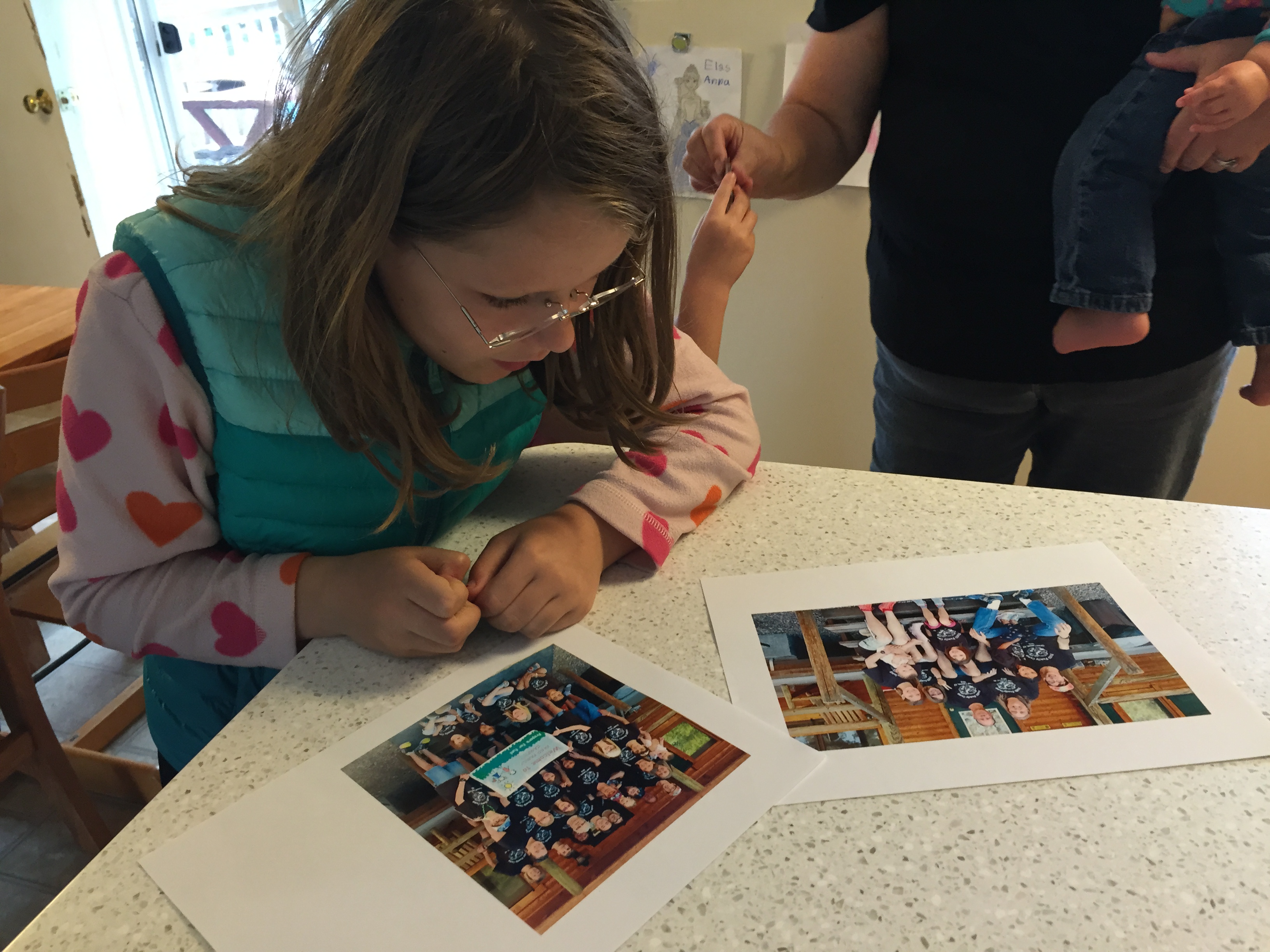
Elena Lohrey, 12, looks at pictures from an FASD Family Camp her family attended in Arizona earlier this summer. (Photo by Lisa Phu/KTOO)
The Lohreys’ first adoption was Elena from Russia in 2004.
“Within two days, I knew something was wrong,” she says.
Elena was 21 months old. Lohrey says she was different than the other Russian infants getting adopted.
“She would stare at things. She didn’t know how to play with toys. She would play with a little piece of lint more than she would a toy,” Lohrey explains.
Years later, the Lohreys adopted biological sisters Kylie and Kristyanna from Juneau through OCS.
They receive a stipend from the state for the two girls, who are now ages 5 and 6, and any foster children that pass through. Lohrey is a stay-at-home mom and her husband is a highway engineer.
All three adopted kids were diagnosed with fetal alcohol spectrum disorders at the FASD clinic in Juneau. Medical professionals at the clinic require some kind of evidence that the biological mother drank during pregnancy in order to do the diagnosis.
That was hard for Lohrey. She pleaded with Kylie and Kristyanna’s biological mom, “‘Go to OCS and write down that you drank or that you drank before you knew you were pregnant. That is the greatest gift you can give these children,’ and she did it,” says Lohrey, crying.
Emilyanne, 21, is one of Lohrey’s biological children. She says the diagnosis opens the doors for getting help, “and for, like, other people to understand, they’re not just bad kids. There’s a logical explanation for why they are the way they are, and how to give more ideas how to help them and not discard them like trash.”
The Lohreys converted the garage into a bedroom that Kristyanna, 6, and Kylie, 5, share. (Photo by Lisa Phu/KTOO)
FASD is an umbrella term that’s used to describe a range of disabilities, minor to severe. Lohrey says each of her three adopted kids falls in different areas. Issues include short attention spans, disorganization and being overly trusting. One of her kids has a tendency to lie and steal.
Elena, who’s also been diagnosed with an autism spectrum disorder, doesn’t communicate her own needs.
“She won’t voluntarily say, ‘I need something,’ or ‘I need help,’ or ‘I’m lost.’ So one of the things they told us is that she might need long-term care, that she might not be able to live on her own. And that was like – that hurt,” Lohrey says.
It’s tough to accept that your child has a lifetime disability for which there’s no cure, Lohrey says. In most cases, you can’t tell by looking that someone has an FASD.
“A lot of times, you’re out in the community and your kids are doing something stupid and you’re embarrassed and some people will say really rude things to you, like ‘You need to control your child,’ and you’re like, ‘Wait a minute, I’m doing the best I can. You have no idea.’ And sometimes I would love to wear a shirt that says, ‘My child has FASD. Don’t judge us,'” Lohrey says.
The Lohreys did not set out to adopt three kids with fetal alcohol spectrum disorders.
“And there are days when I’m like, ‘Oh, I wish I had never adopted.’ I think that’s with your typical family, too. I think there are days where parents say, ‘I wish I didn’t have any kids.’ I think that’s normal,” Lohrey says.
She admits she may say it more than other parents, but there are times when she can’t imagine not adopting.
“Each little child that you adopt, each little child that you foster, hopefully you’re giving them something that will make this world a better place and better understanding and teach more empathy,” Lohrey says.
Lohrey sometimes blames the biological parents, but she knows that’s pointless. She says you can’t change the past. You can only focus on the here and now, and the future.
Dr. Greg Salard during a Wrangell Medical Center Board of Directors meeting in December 2012. (Photo courtesy of Wrangell Sentinel)
Former Wrangell Dr. Greg Salard has been found guilty of distributing and receiving child pornography. The 12-person jury returned Tuesday with a verdict in U.S. District Court after an hour and a half of deliberations.
A third, lesser charge for possession was set aside, because receipt and possession of child pornography would essentially amount to double jeopardy, Assistant U.S. Attorney Kyle Reardon said. Consideration of the “lesser-included” possession charge was dependent on a not guilty verdict on receipt.
Reardon said they were happy with the verdict. He said they felt they had a strong case with overwhelming evidence of Salard’s file sharing.
He said it’s not unusual for such cases to be built on circumstantial evidence rather than catching the perpetrator red-handed with the images still on their computer.
“We’re seeing more cases in which people download, view and delete,” Reardon said afterward. “High speed internet makes it practical along with the ubiquitousness of the images. They’re not hard to find.”
“We use fragments and footprints to build cases,” said Reardon, explaining how investigators dive deeper into a computer’s operating system to find a circumstantial trail of pornography sharing over peer-to peer networks.
Over the course of the trial that started last week, jurors received a crash course in peer-to-peer file sharing, data files, hash values, IP addresses, jump lists, program registries, temporary files, the resilience of deleted files and unallocated space on a hard drive. Jurors last week were briefly shown child pornography images that corresponded with video hash values found on Salard’s computer.
Jurors began deliberations after closing arguments at 11:45 a.m. Tuesday and returned with a verdict at 1:15 p.m.
Salard will be extradited to Louisiana to face a charge of aggravated rape after his sentencing in Juneau on Oct. 9. He faces a sentence of 5 to 20 years in prison and a $250,000 fine for each child pornography charge. He could be on supervised release the rest of his life or for as little as 5 years.
Closing arguments
Salard was arrested Oct. 15, 2014, after officers searched his Wrangell home and seized his laptop computer. Investigators never found child porn in the form of videos or images on his computer. Salard started a program to wipe the computer’s hard drive when agents arrived at his house.
Instead, federal prosecutors said there’s an extensive digital trail showing how Salard downloaded child porn through various peer-to-peer file sharing programs like Ares, and played them within Ares, Windows or VLC media players before deleting the files. He also used various disk wiping programs like CCleaner multiple times to erase all traces of those deleted files.
Assistant U.S. Attorney Kyle Reardon said during closing arguments Tuesday that the evidence is overwhelming. He pointed to a series of important digital breadcrumbs that chronicle hundreds of pieces of pornography that Salard downloaded or shared between February and October of last year, or show how some of the files were interrupted during download. They even indicate the very last video that he played on his computer, less than two hours before agents executed a search warrant at his house.
“Be careful not to get run over by the freight train of evidence,” Reardon told the jury. “Be careful to not get to steamrolled by PTHC,” he said, referring to the pre-teen hard core acronym found in a key Ares data listing of downloaded files.
Reardon started his closing arguments in absolute silence that lasted three and a half minutes. He started the timer on his phone, gathered his notes, got up and slowly walked to turn off courtroom lights and then to the podium to put on a microphone. He then deleted some stock photos on a laptop he’d been using for the trial, shut down a trial presentation program and then started up a PowerPoint presentation for his closing argument.
He finally broke his silence by saying if he could do all that in less than 4 minutes, then it’s not unreasonable to think that Greg Salard spent 8 minutes destroying evidence and purging his computer before opening the door to federal agents on the day he was arrested.
During her closing argument, Assistant Federal Public Defender Cara McNamara never explicitly denied that there was ever pornography on Salard’s computer. However, she did emphasize that no pornography of any kind was ever found on Salard’s computer when it was seized by the FBI.
Instead, McNamara continued with her theme made during opening statements that questioned the qualifications of the case’s principal investigator, FBI Special Agent Anthony Peterson. She said he had no previous knowledge or experience in the interpretation of information.
McNamara believed that Peterson failed to follow best practices by immediately stopping the hard drive wipe and beginning an on-site examination of the computer, possibly altering the data. McNamara also said Peterson failed to properly document his human role in the investigation, such as not getting screenshots of a largely automated file sharing program and losing an important report from a forensic examination of Salard’s computer after a thumbdrive was corrupted.
“The Government is asking: ‘Well, just trust us,'” McNamara said. “That’s not good enough.”
An instructor uses a propane torch to light straw and cardboard for one of the scenarios. The room has been modified with added drywall and metal siding. (KTOO photo)
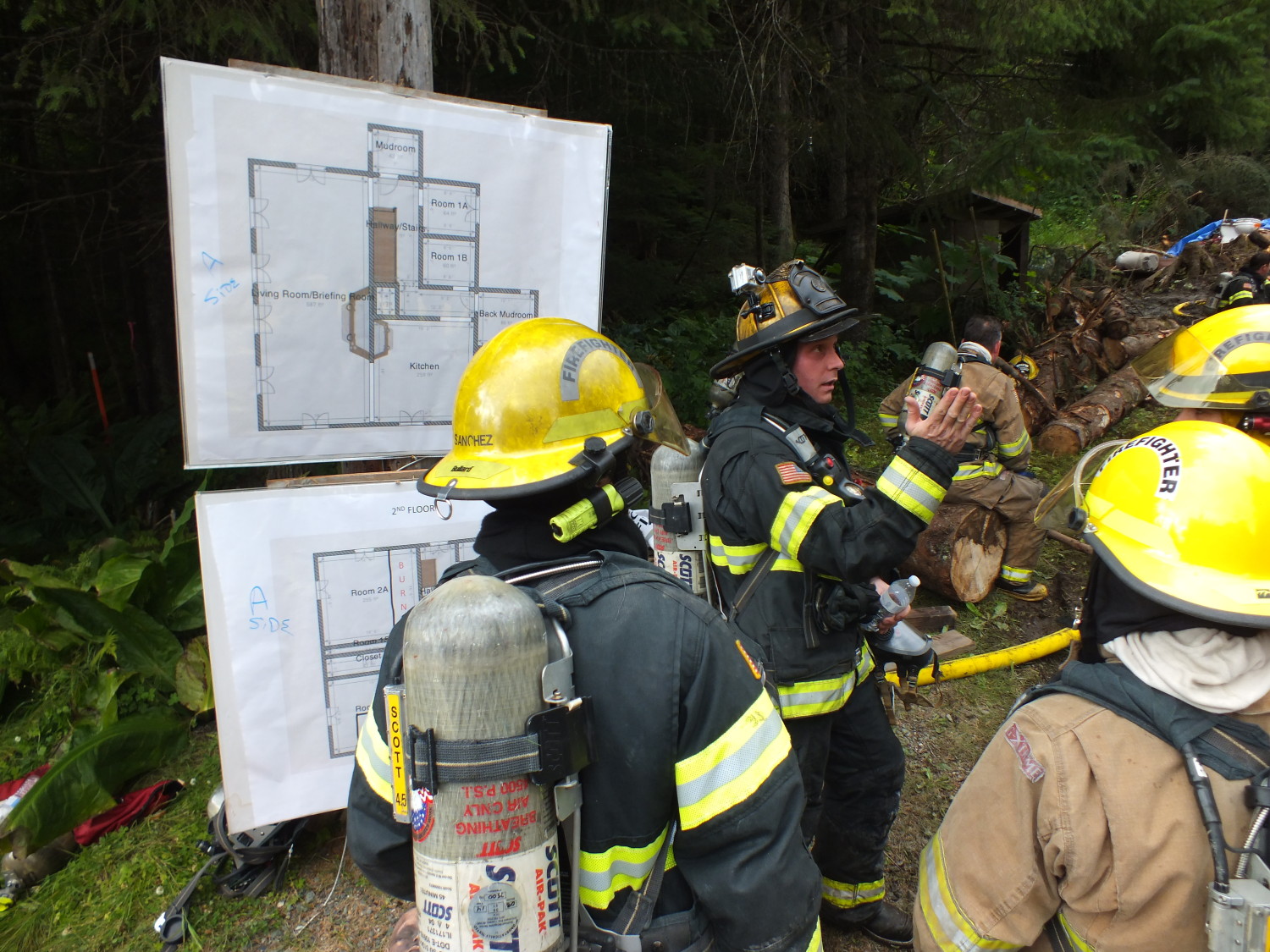
Floor plan and scenario briefing. (Photo by Matt Miller/KTOO)
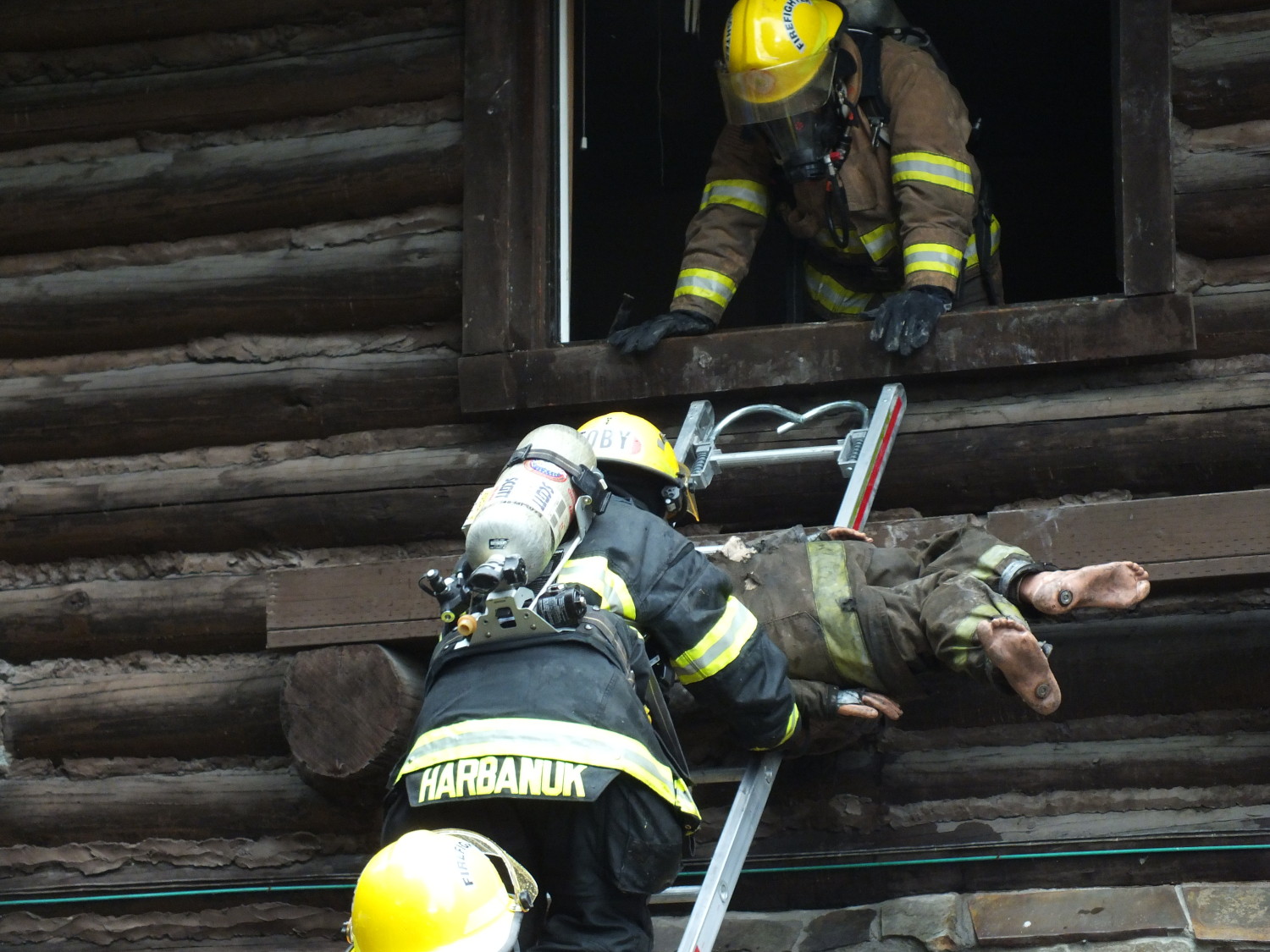
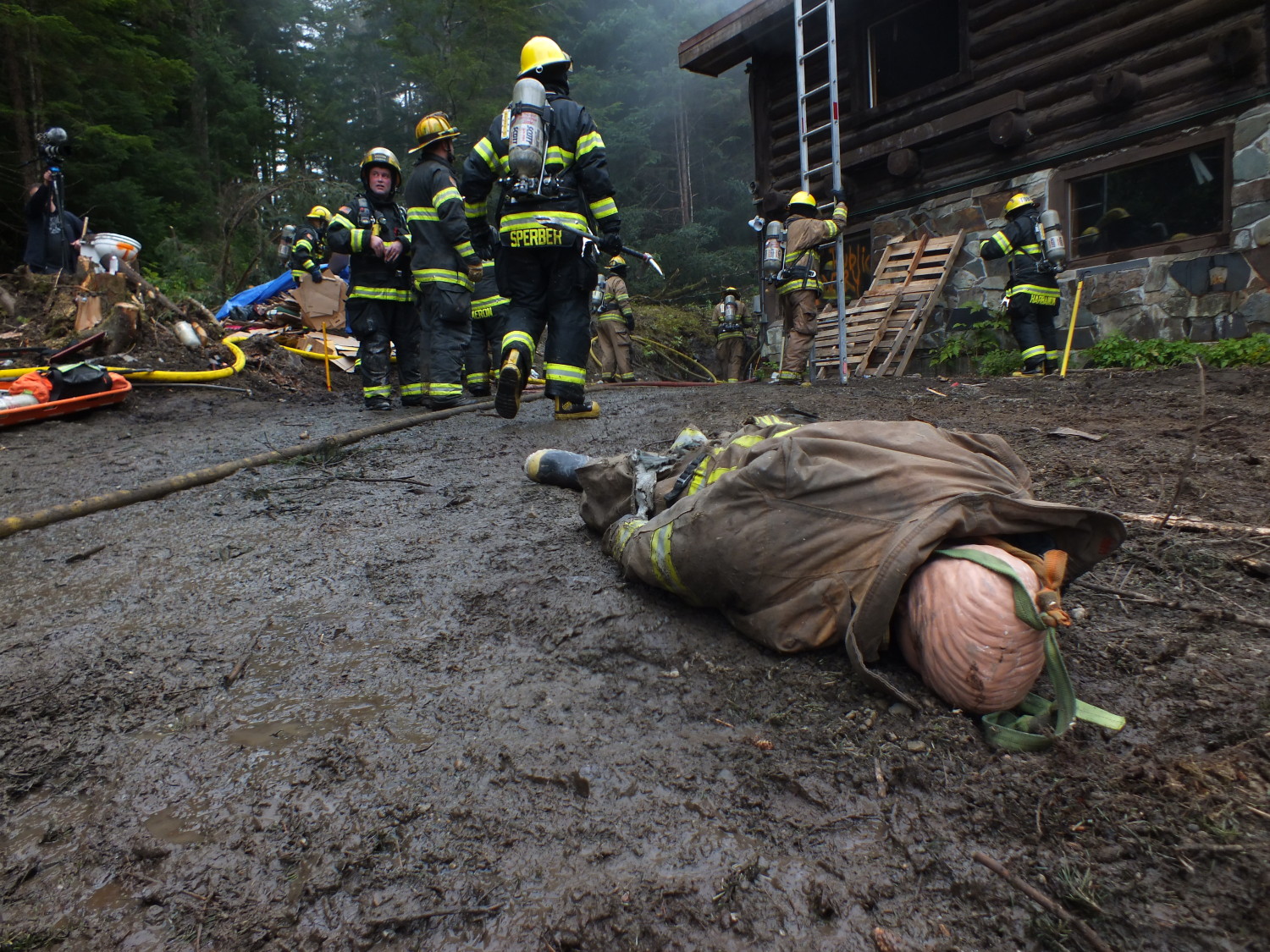
Search and rescue of 180 pound dummy. (Photo by Matt Miller/KTOO)
Firefighter Sean Rhea briefs training participants before the next entry of the cabin. (Photo by Matt Miller/KTOO)
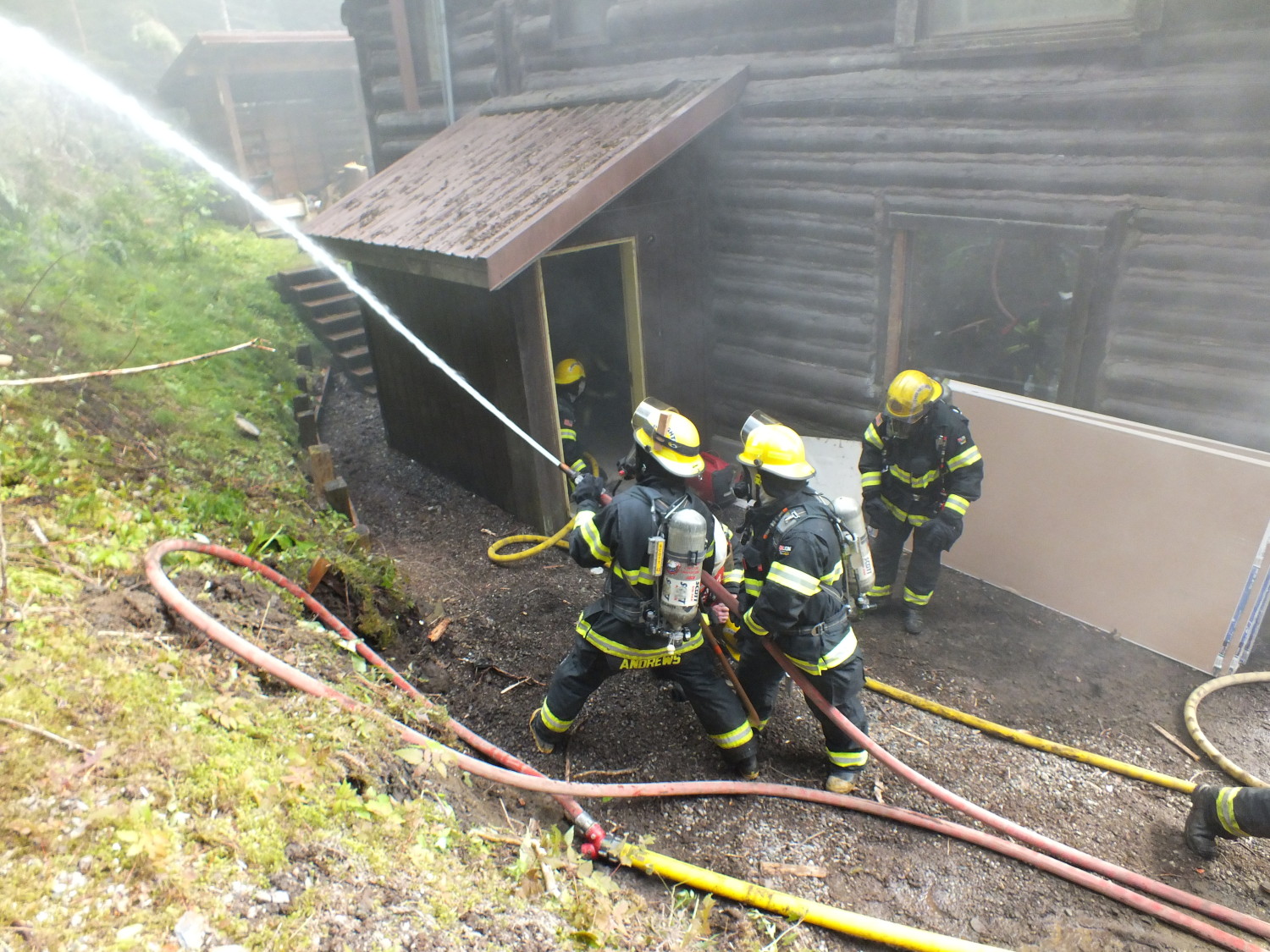
Nozzle test by hose team. (Photo by Matt Miller/KTOO)
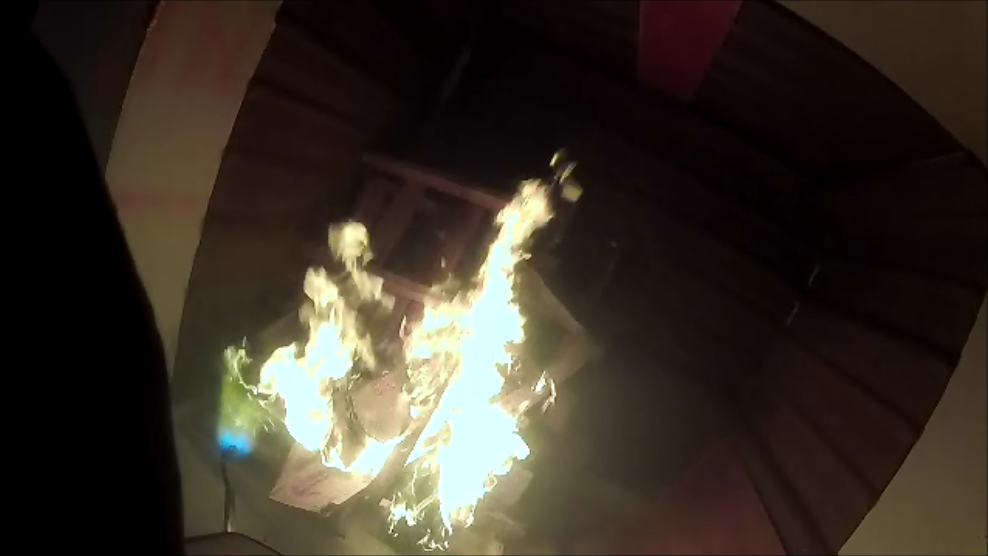
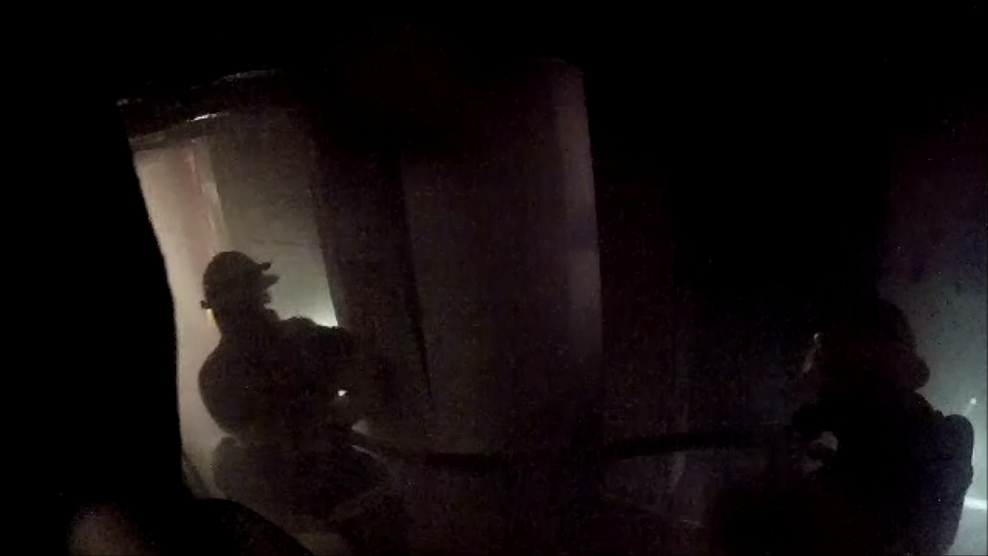
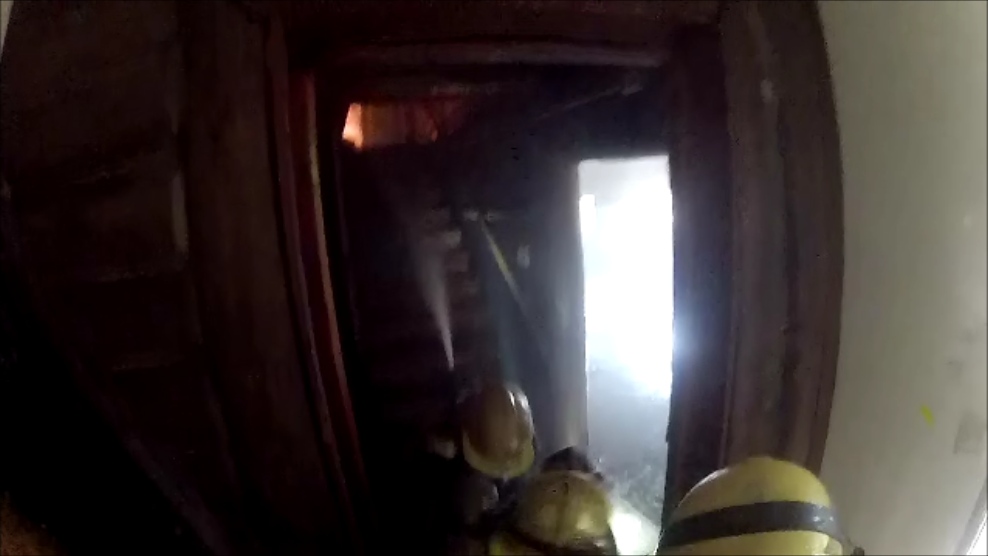
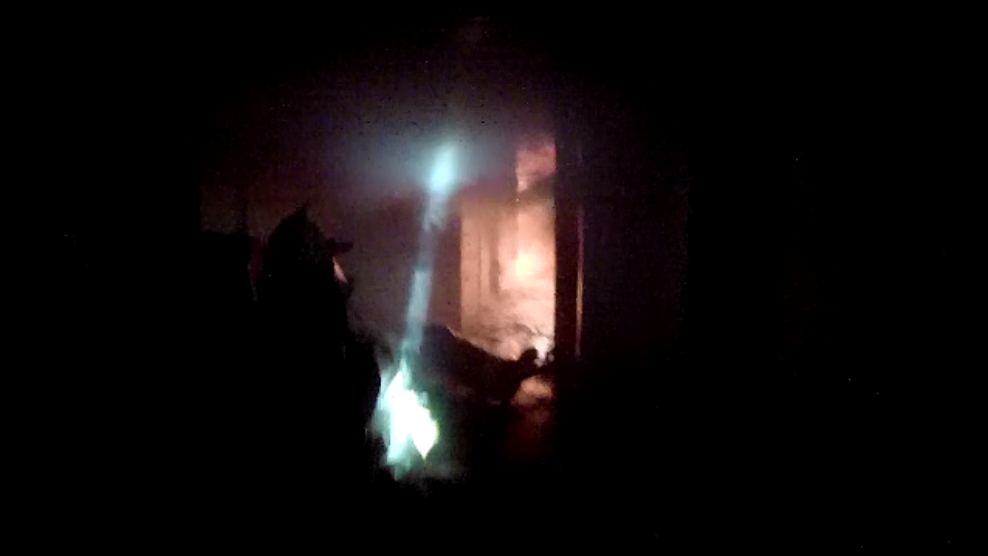
Helmet-mounted camera shows hose team entering a room. (KTOO photo)
(Photo by Matt Miller/KTOO)
Put water on it! (KTOO photo)
(Photo by Matt Miller/KTOO)
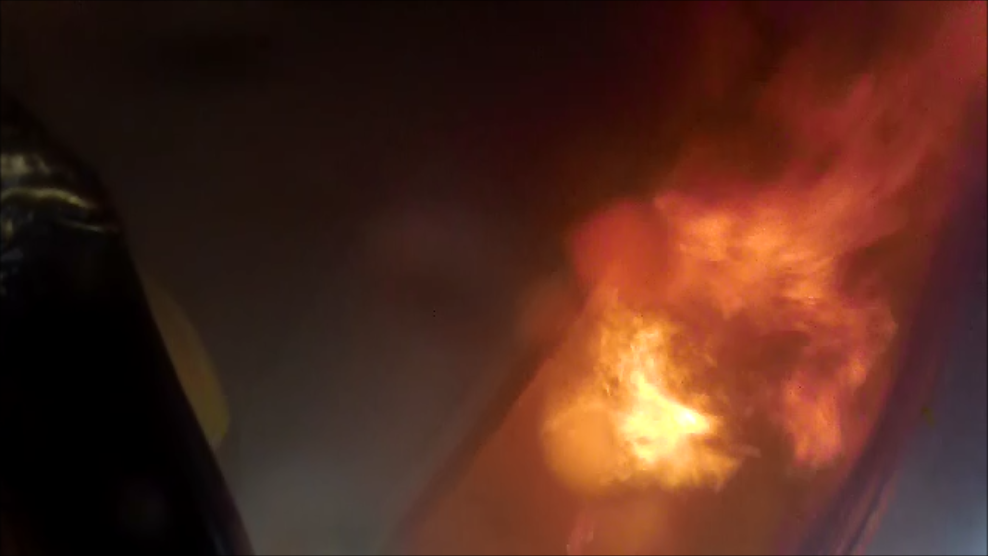
Fire lashes out at a firefighter before a hose team enters a room. (KTOO photo)
Rescued victim is awaiting treatment by EMTs. (Photo by Matt Miller/KTOO)
(Photo by Matt Miller/KTOO)
Hose team attacks a fire on the second floor. (KTOO photo)
(Photo by Matt Miller/KTOO)
(Photo by Matt Miller/KTOO)
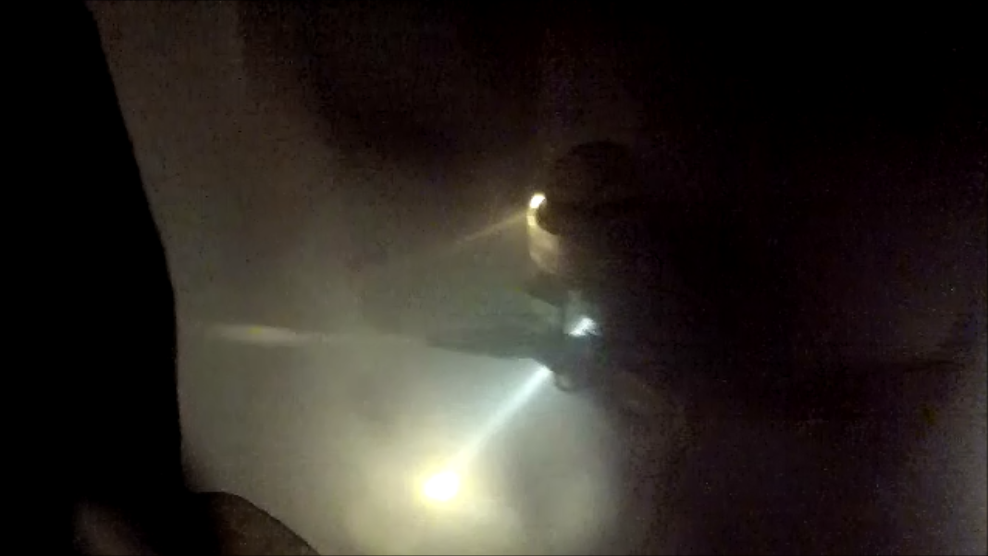
Helmet-mounted camera shows a firefighter investigating a fire in an upper bedroom. (KTOO photo)
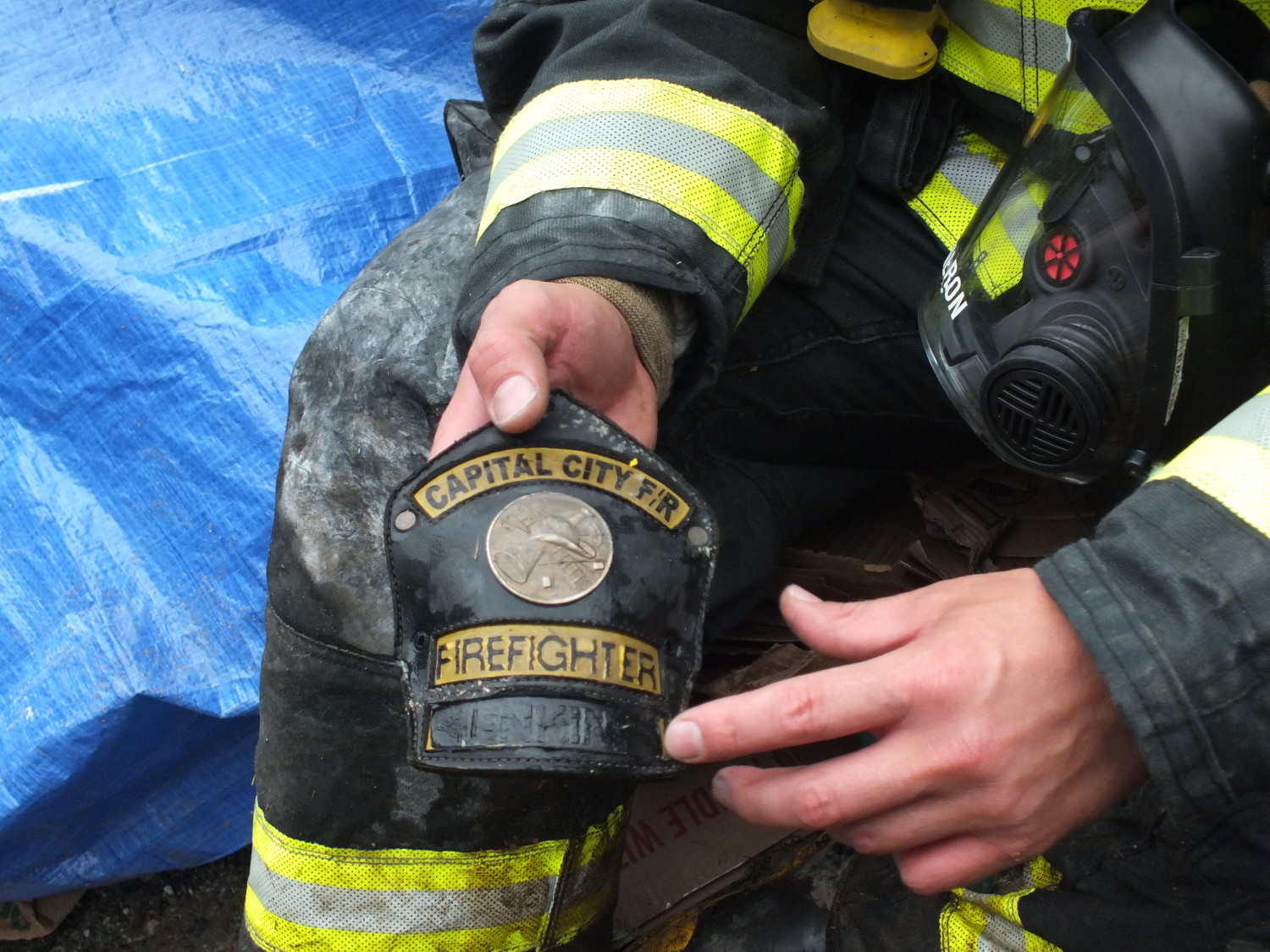
One firefighter has lost his leather nameplate for his helmet. (Photo by Matt Miller/KTOO)
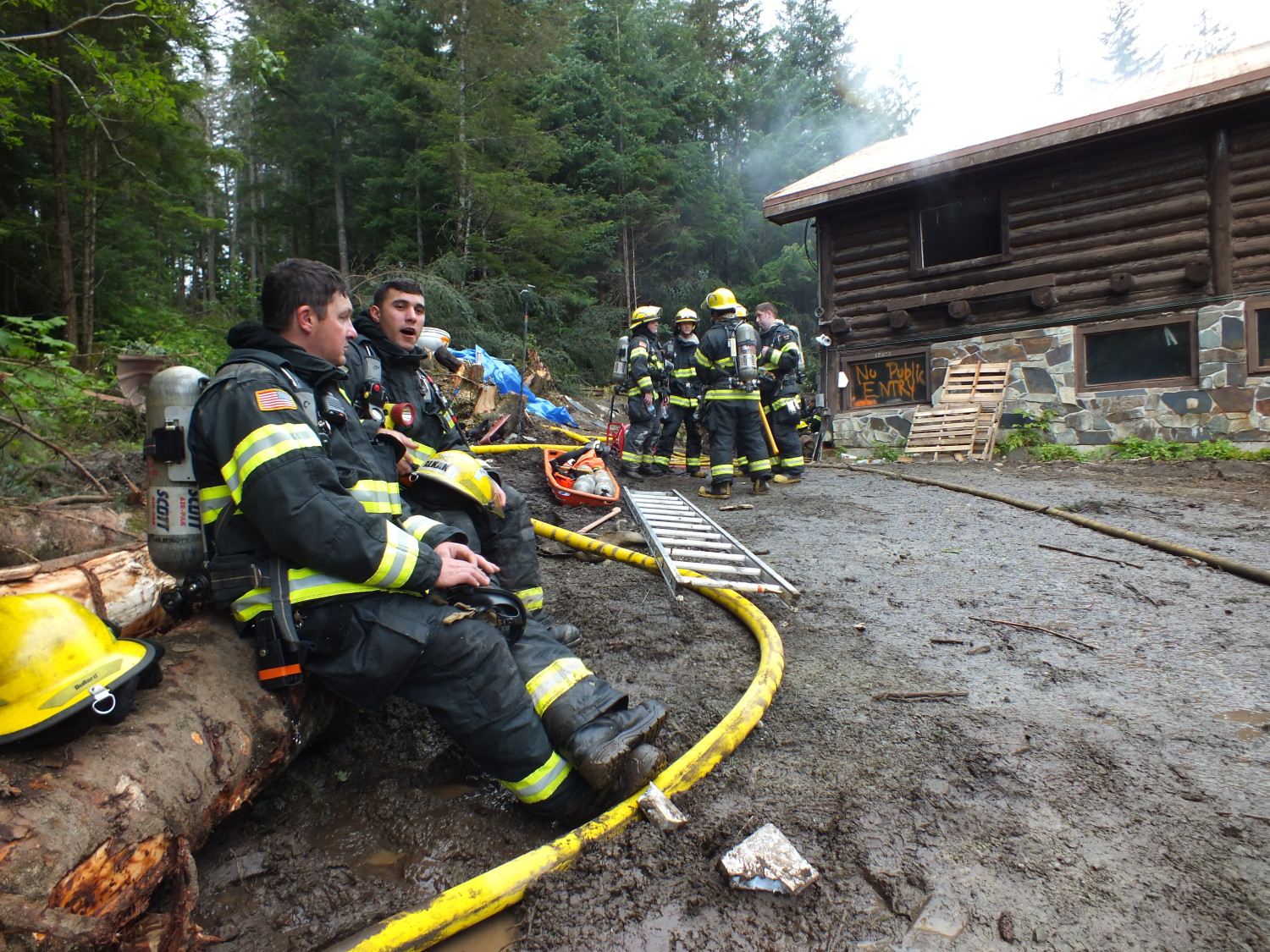
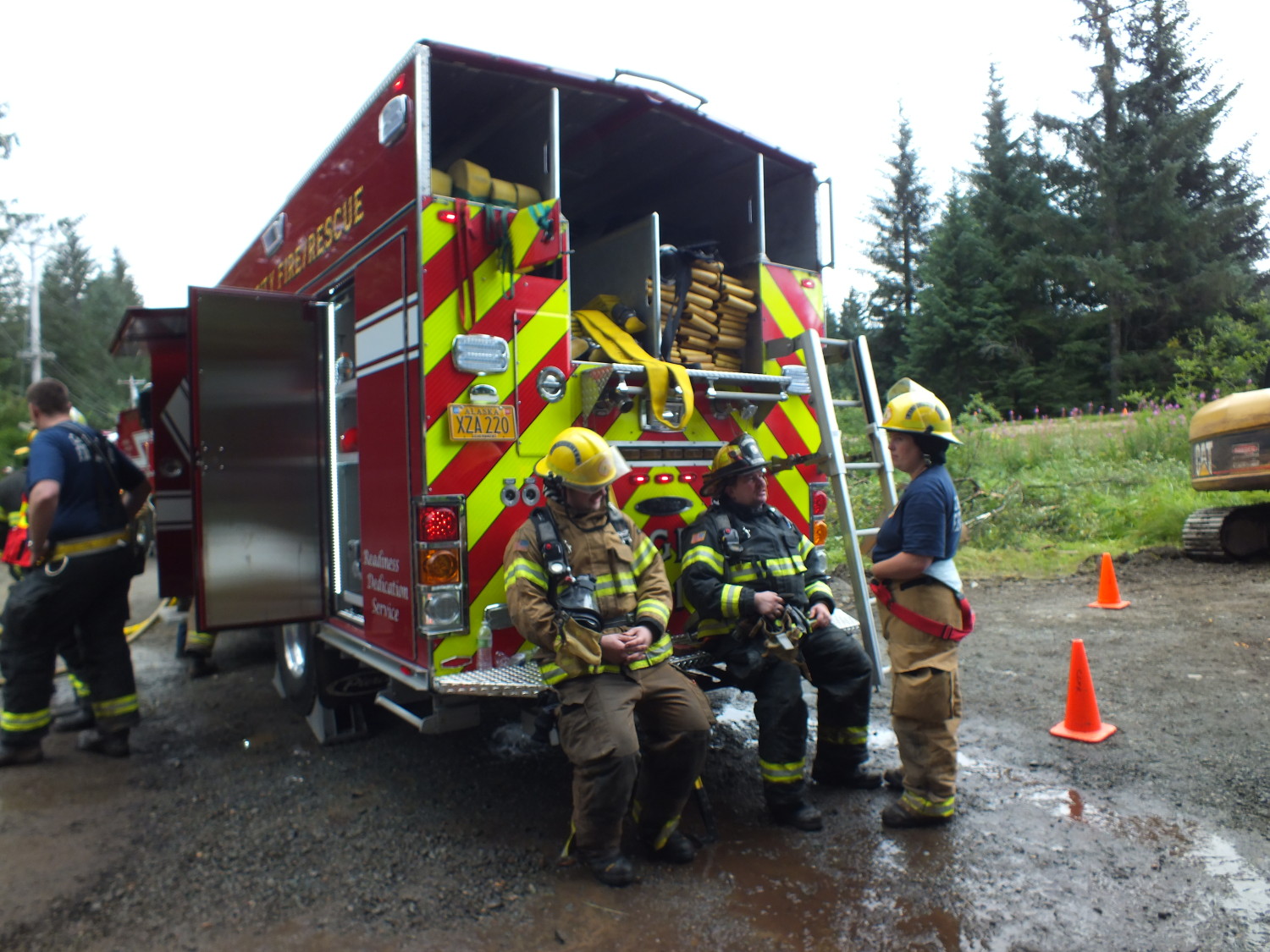
Rest before the next entry. (Photo by Matt Miller/KTOO)
Water and air are important components for a firefighter's stamina. (Photo by Matt Miller/KTOO)
Rest and rehab. (Photo by Matt Miller/KTOO)
(Photo by Matt Miller/KTOO)
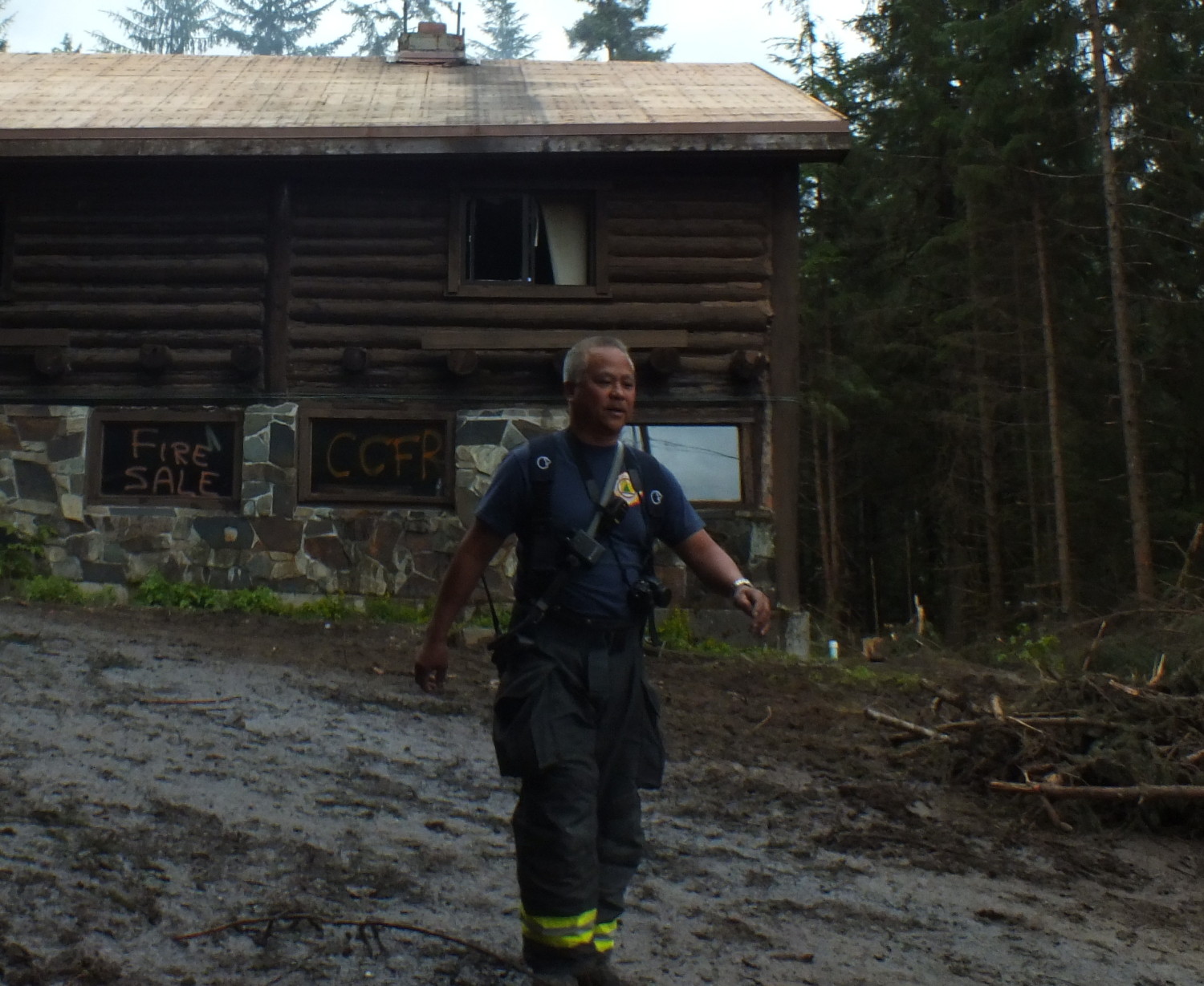
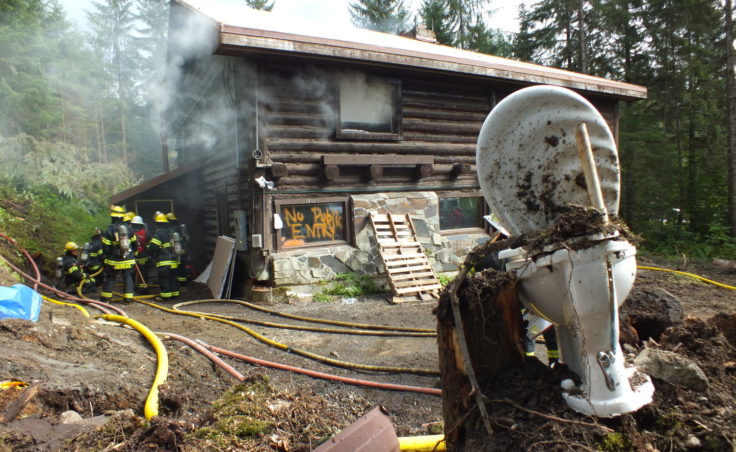
For sale, below assessed value. Get it now before it goes for good! (Photo by Matt Miller/KTOO)
(Photo by Matt Miller/KTOO)
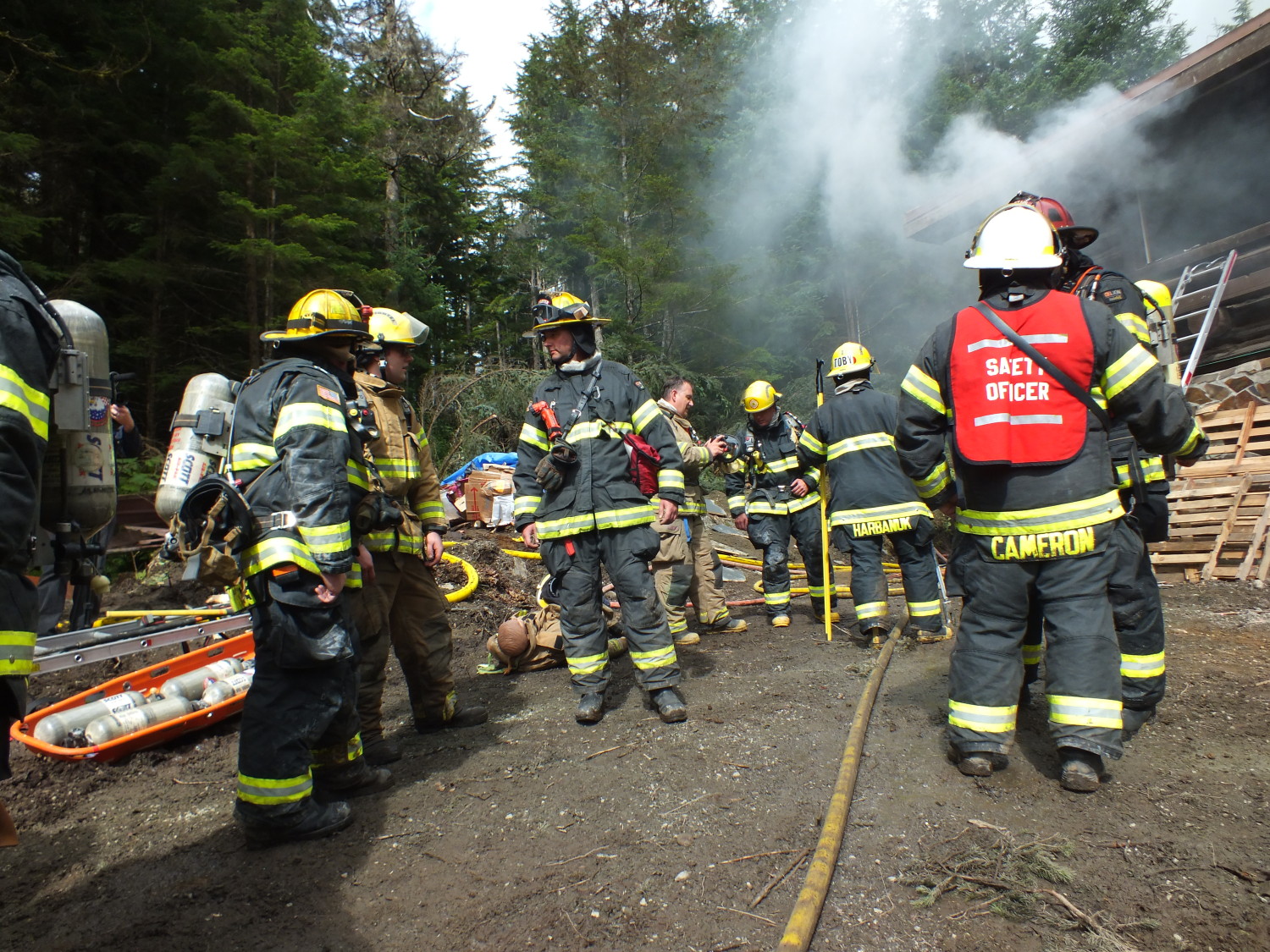
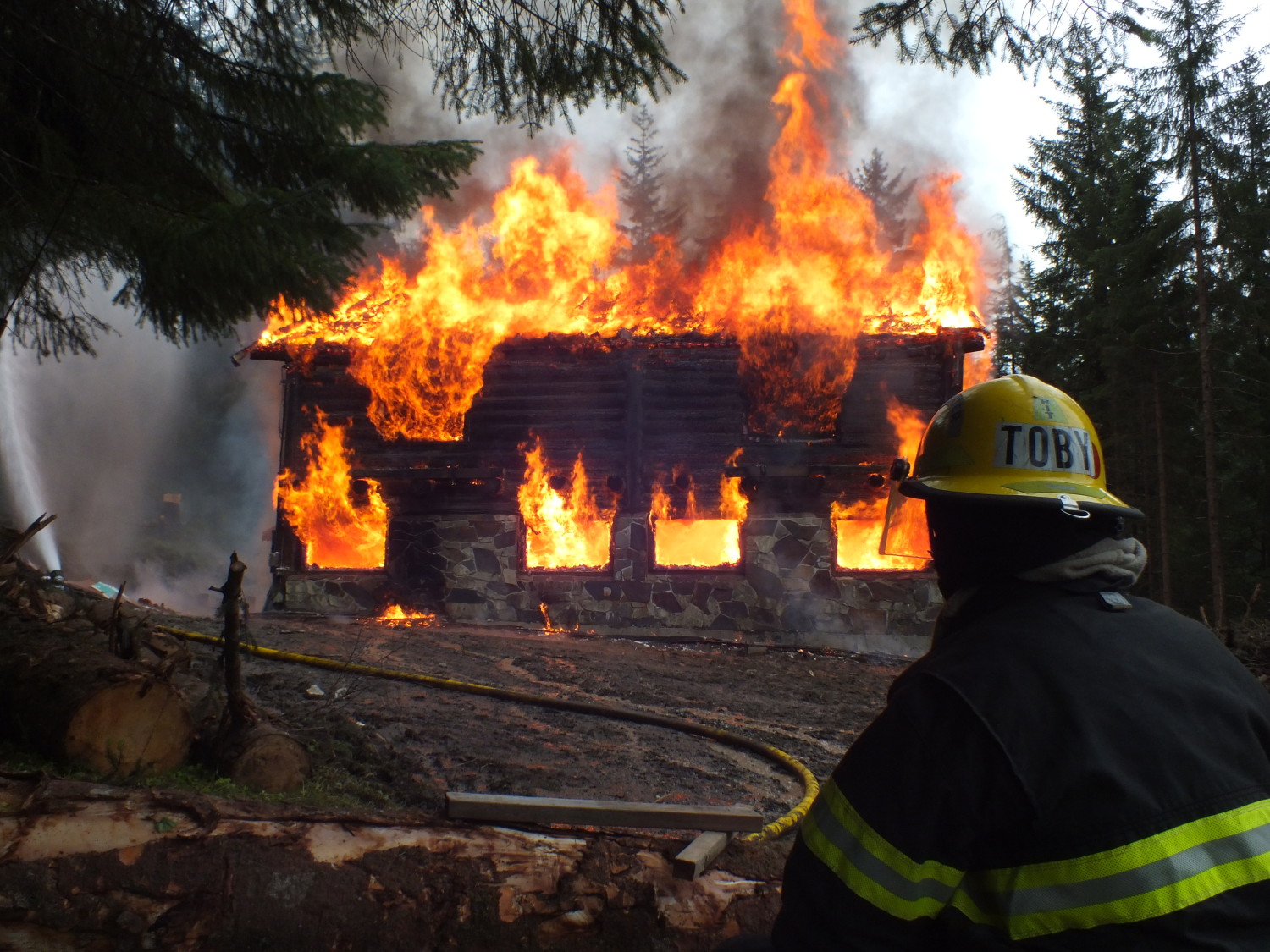
Firefighter Toby Harbanuk stands by during the final burn of the cabin. (Photo by Matt Miller/KTOO)
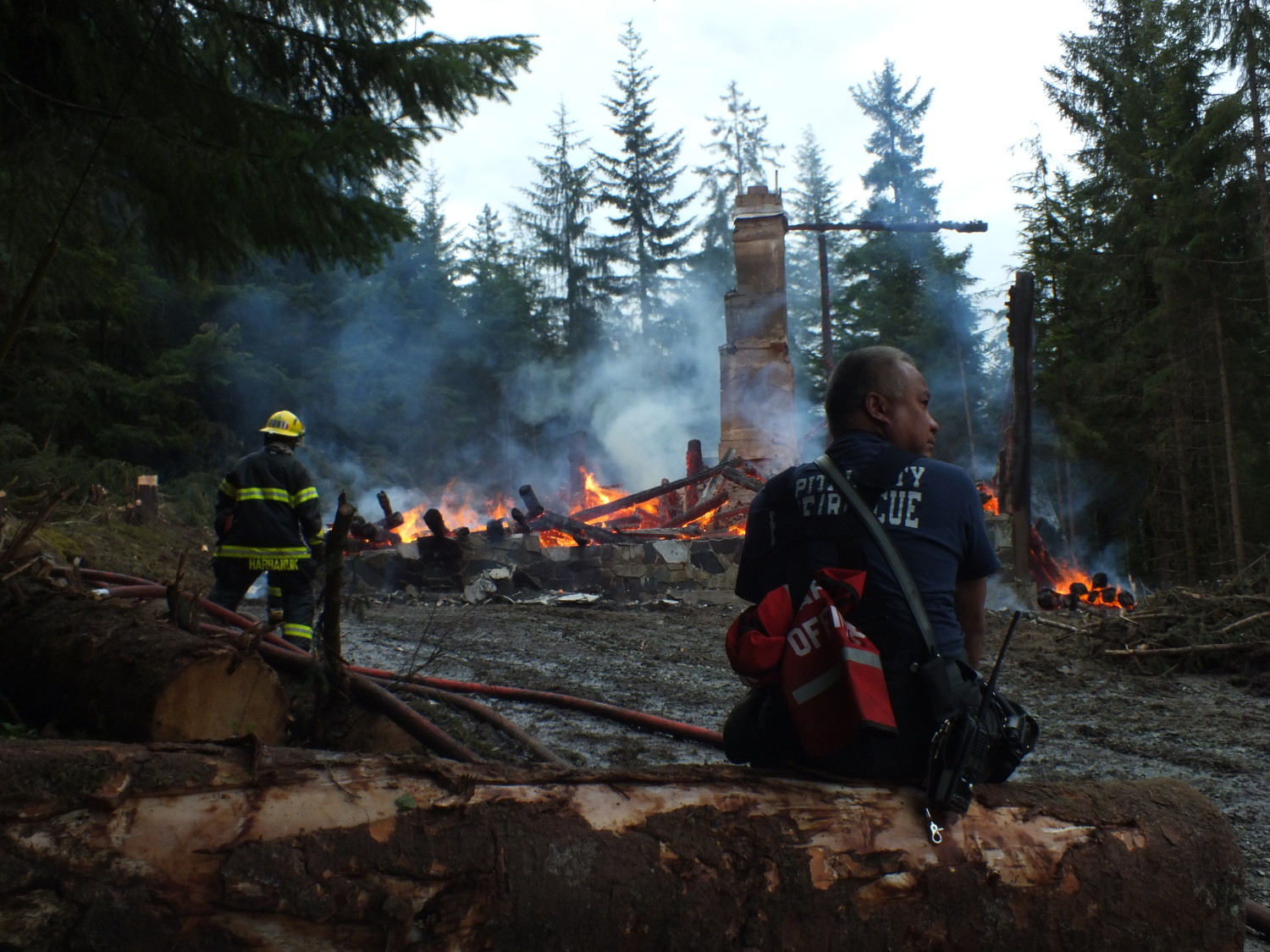
End of day for Assistant Chief Ed Quinto and other firefighters. (Photo by Matt Miller/KTOO)
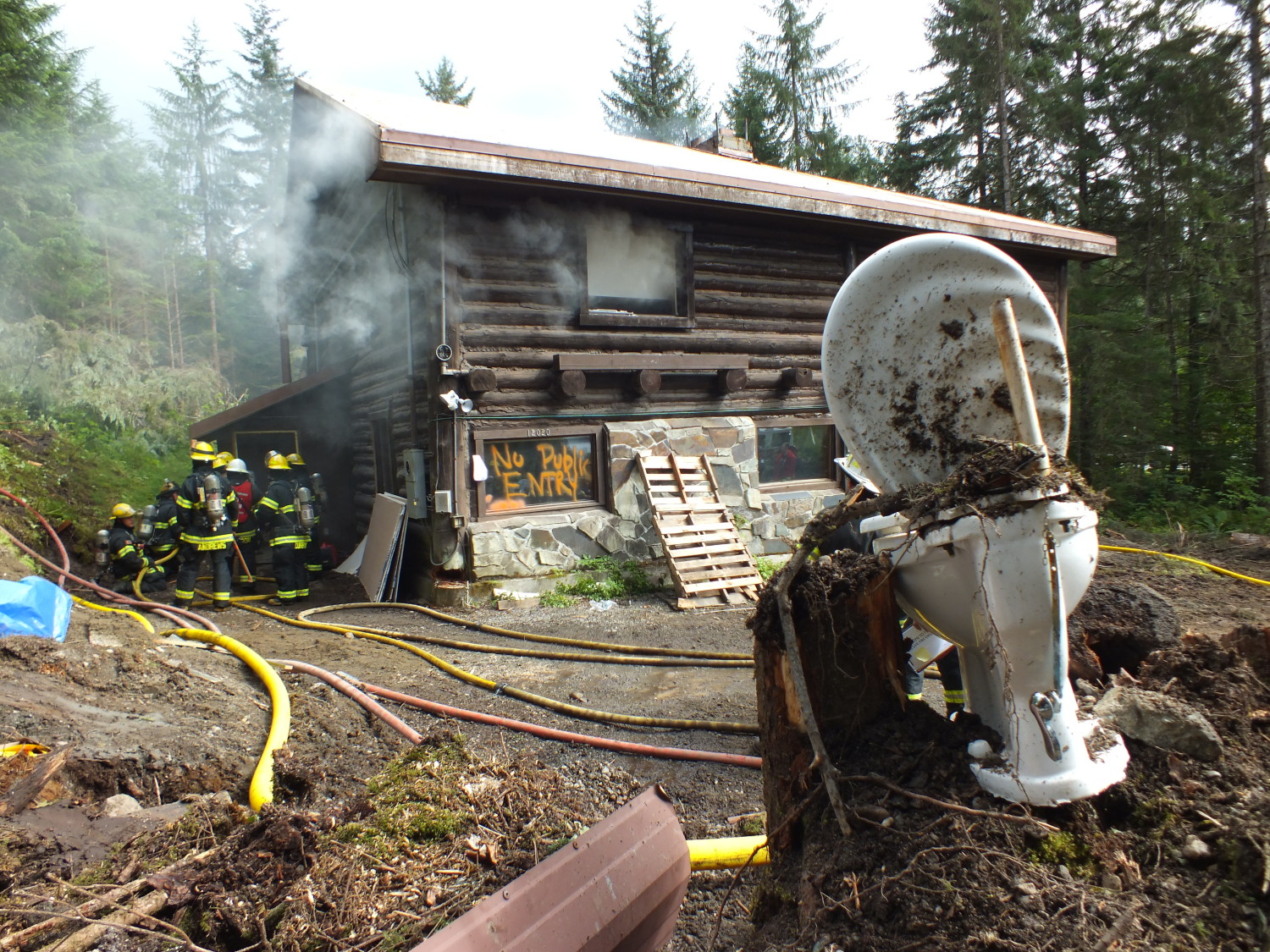
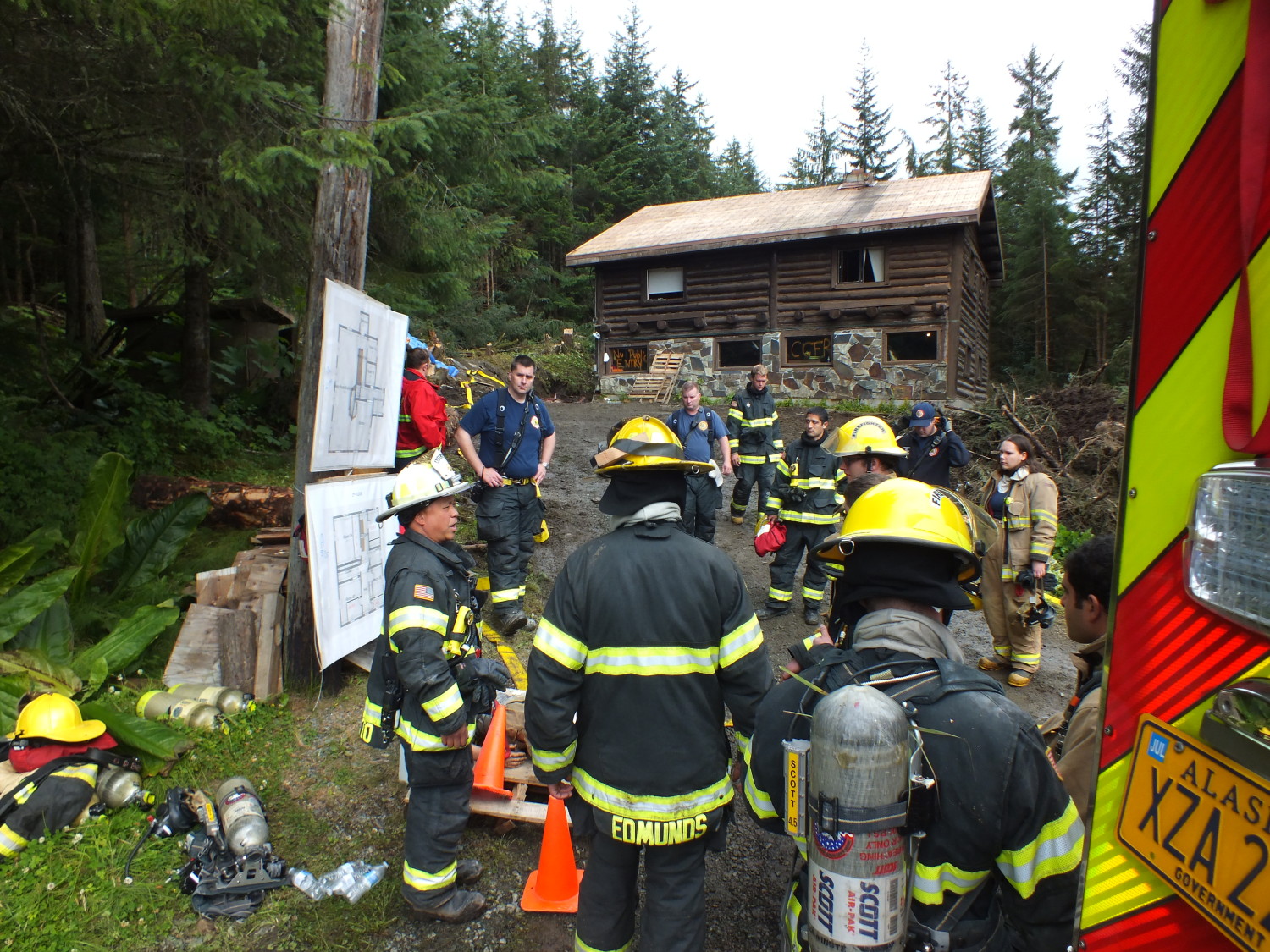
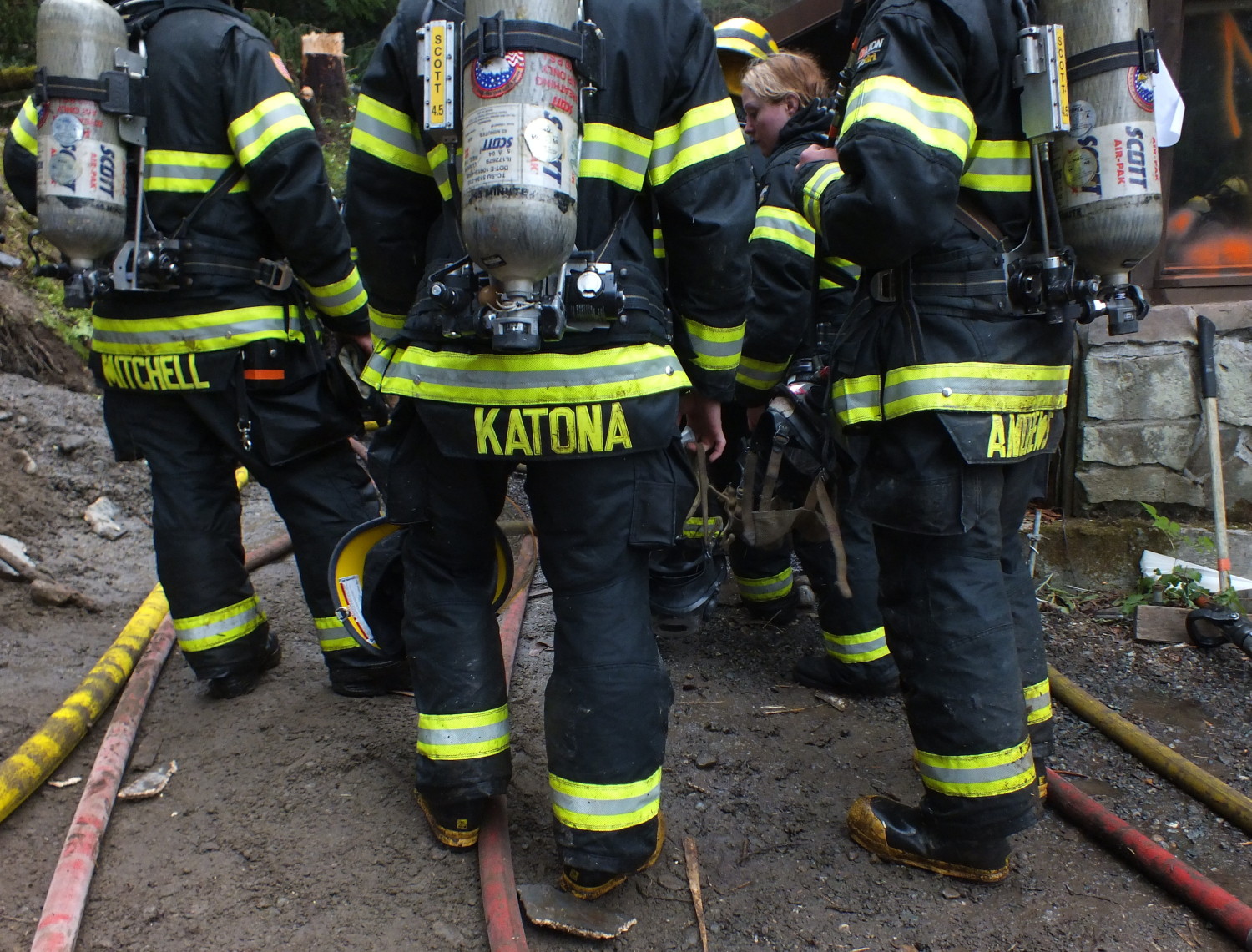
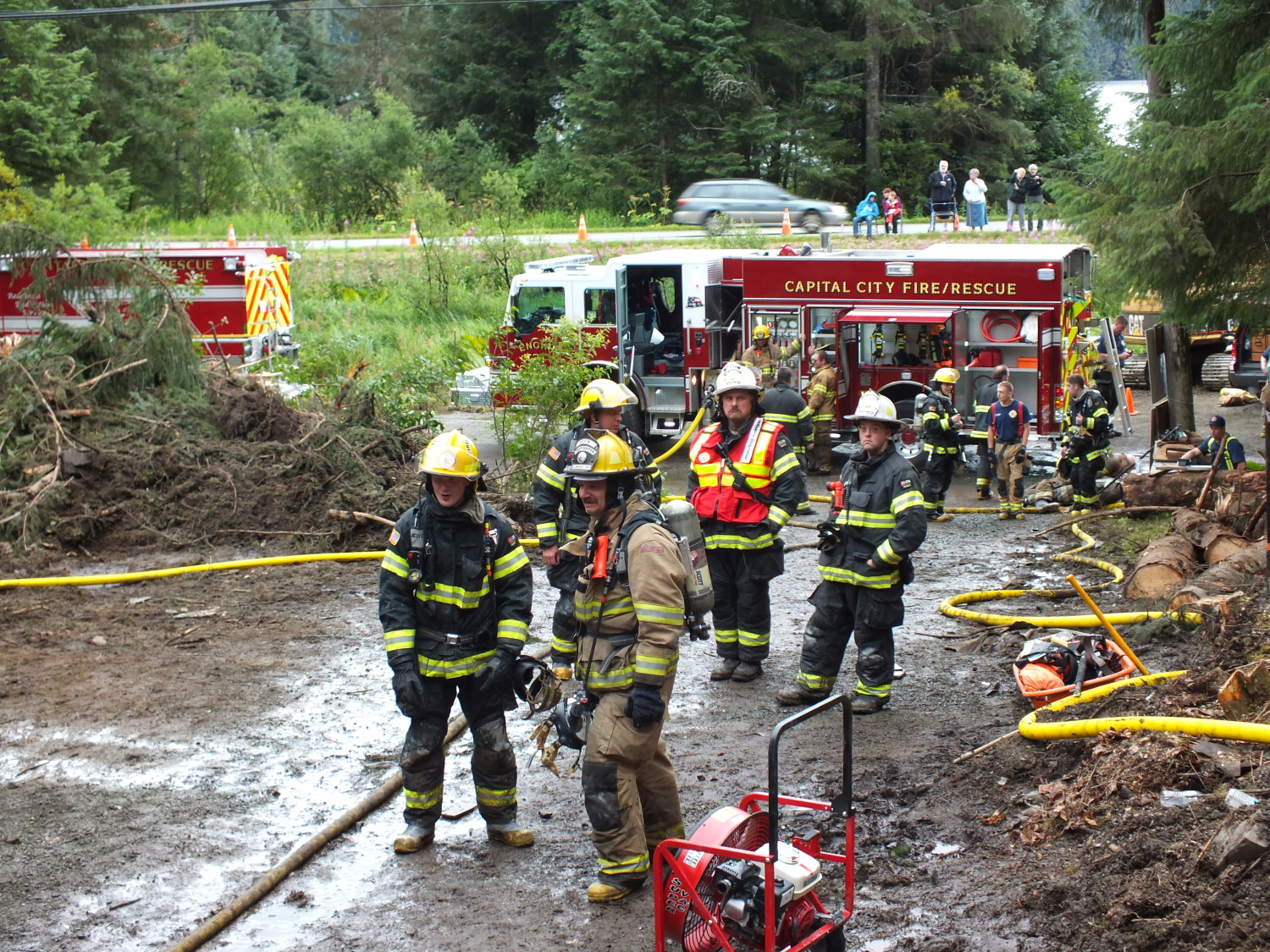
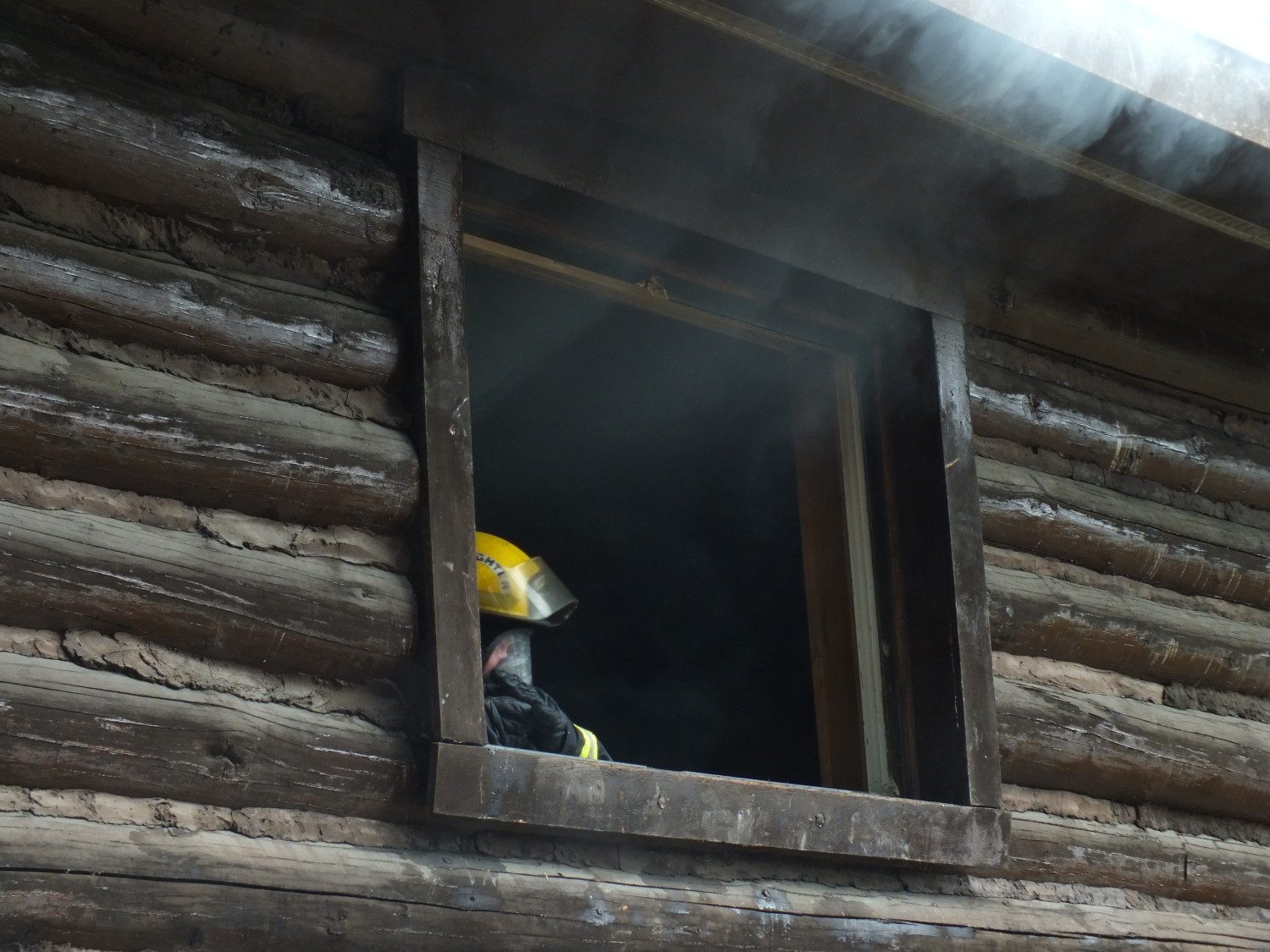
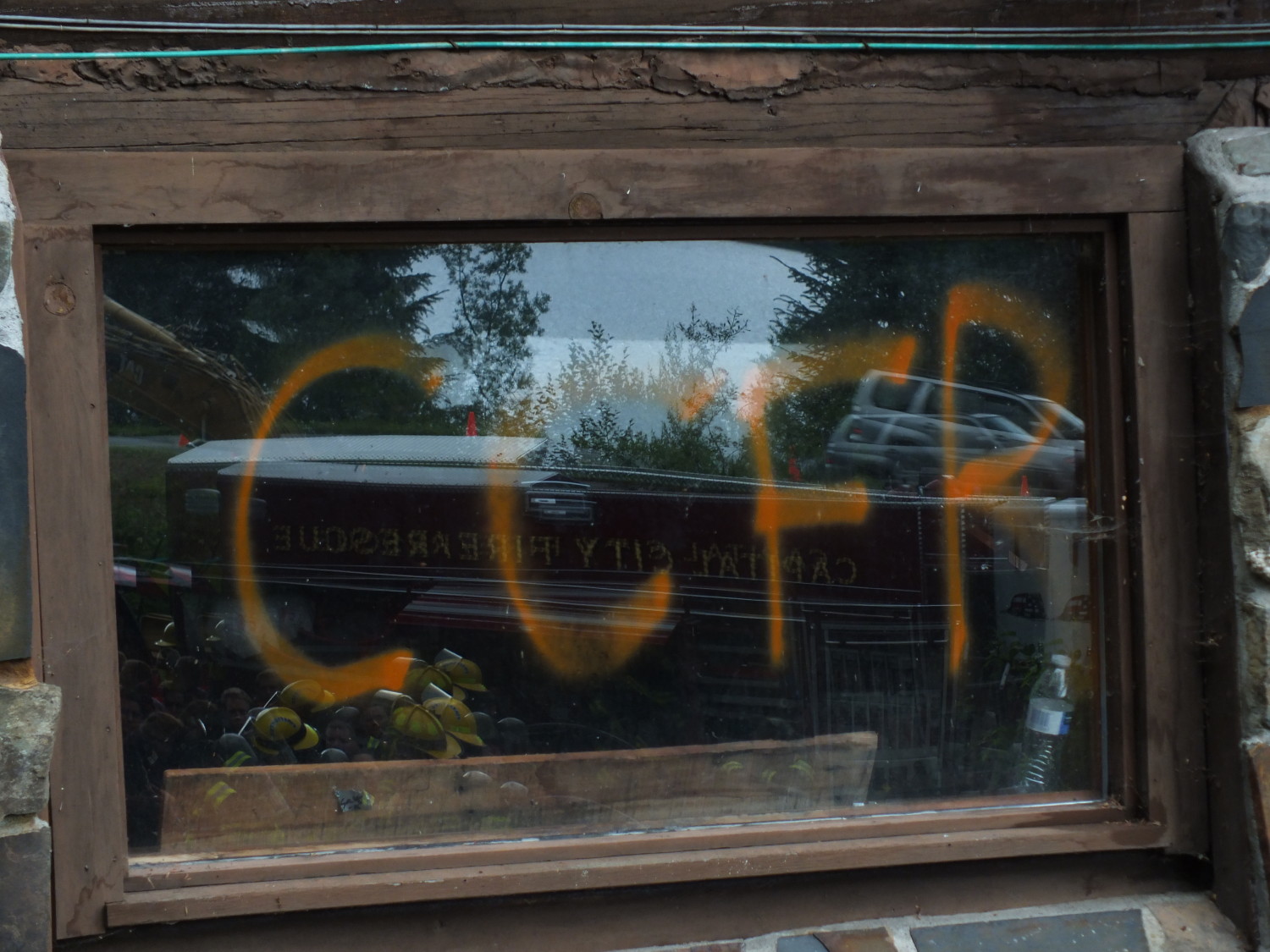
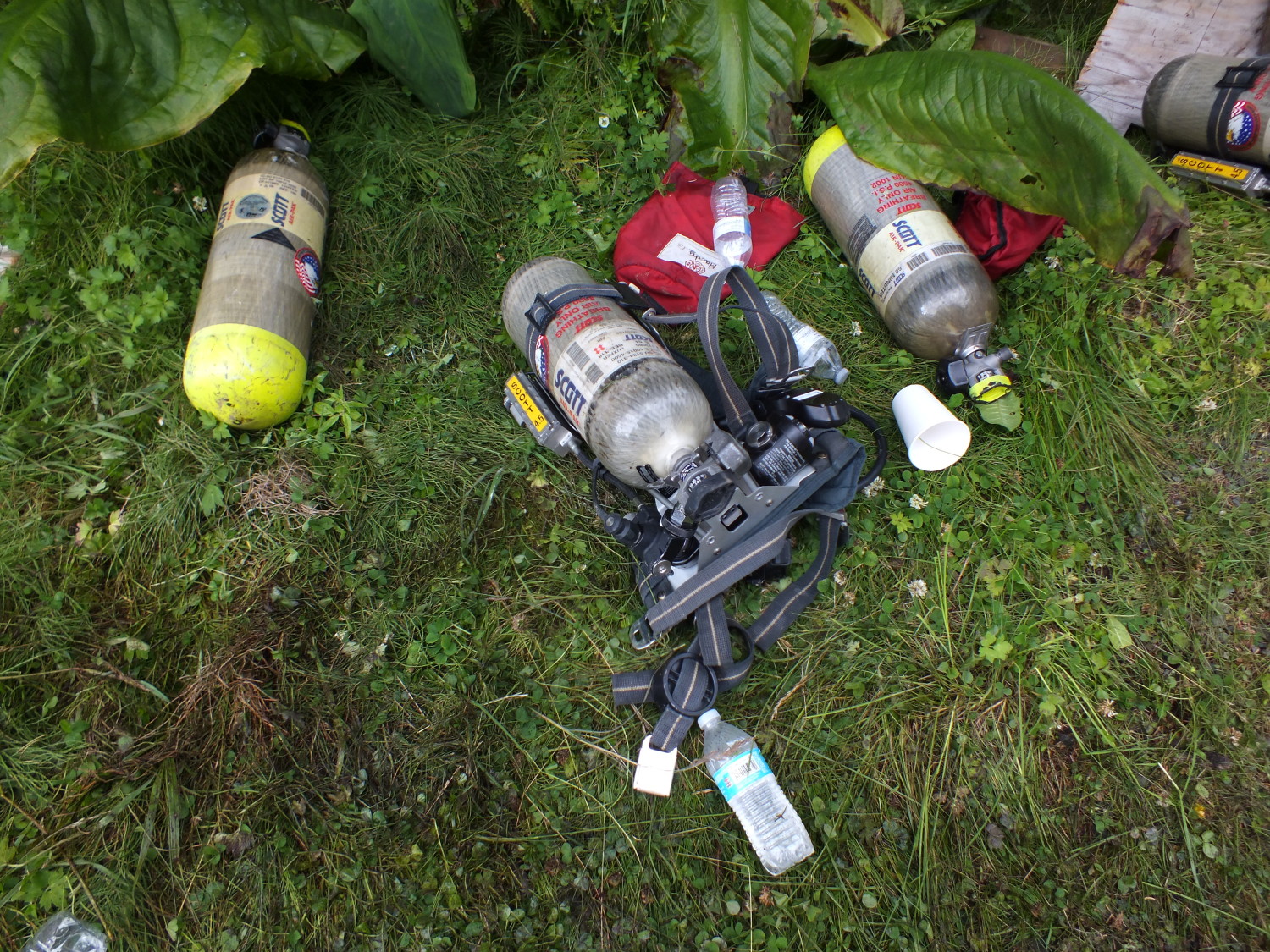
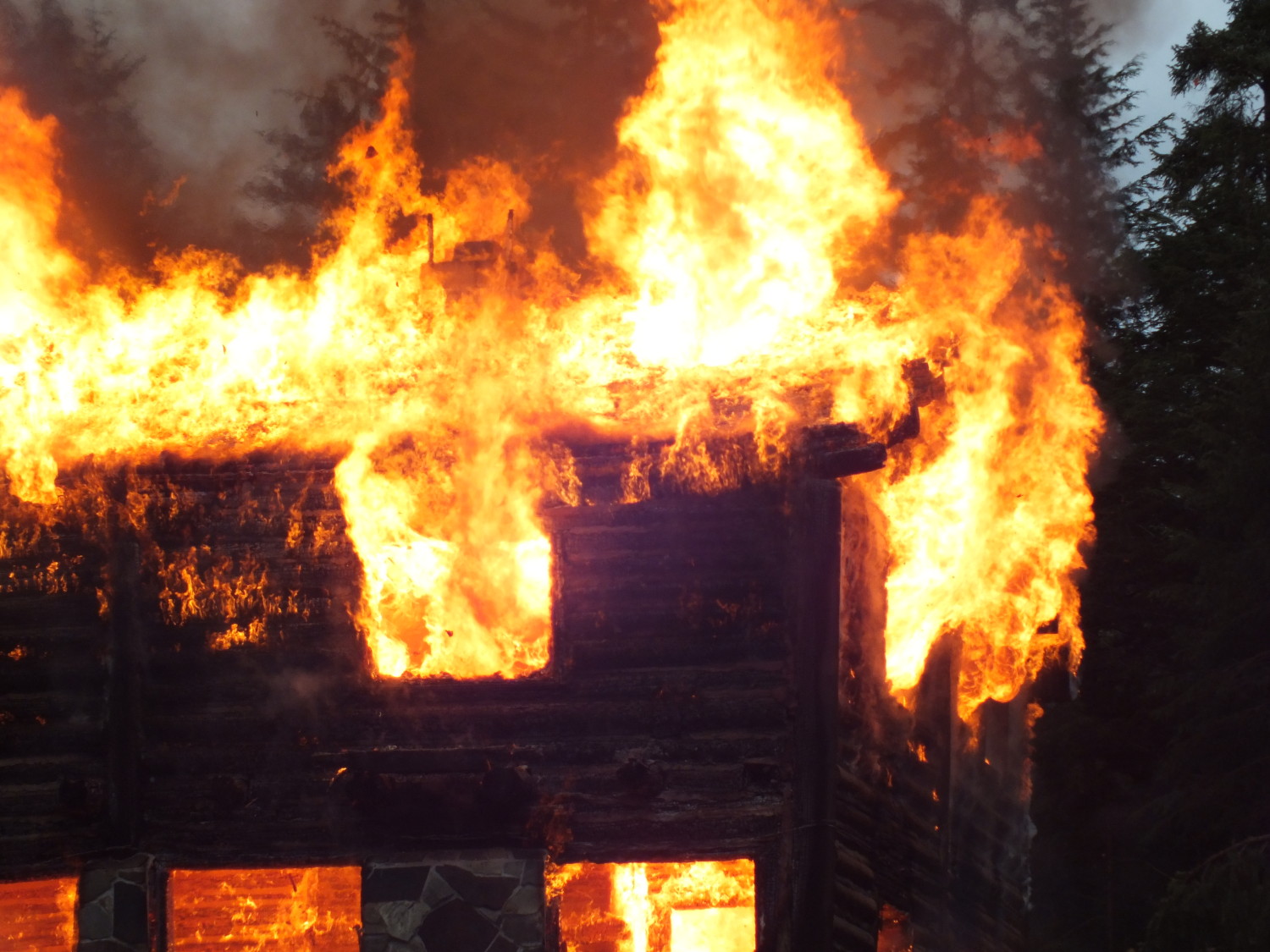
Capital City Fire/Rescue held a live fire structure drill on Saturday at an old log cabin on Mendenhall Loop Road. The cabin’s foundation timbers were partially rotted and the entire structure was leaning over and considered beyond repair.
For career and volunteer firefighters, it was a unique opportunity to hone their skills and train inside a structure that was different from the Hagevig Fire Training Center. Firefighters went through multiple scenarios of entering the structure, attacking the fire, and searching for and rescuing any victims who may be trapped inside.
The structure, owned by University of Alaska Southeast, was demolished with one final burn at the end of the day.
Firefighters Sean Rhea and Noah Jenkins, who acted as instructors during Saturday’s exercise, wore KTOO’s helmet-mounted camera that provided some of the still pictures for the slideshow above.
Close
Update notification options
Subscribe to notifications
Subscribe
Get notifications about news related to the topics you care about. You can unsubscribe anytime.