Juneau

Jury deliberations in Wrangell doc’s child porn case expected to begin Tuesday

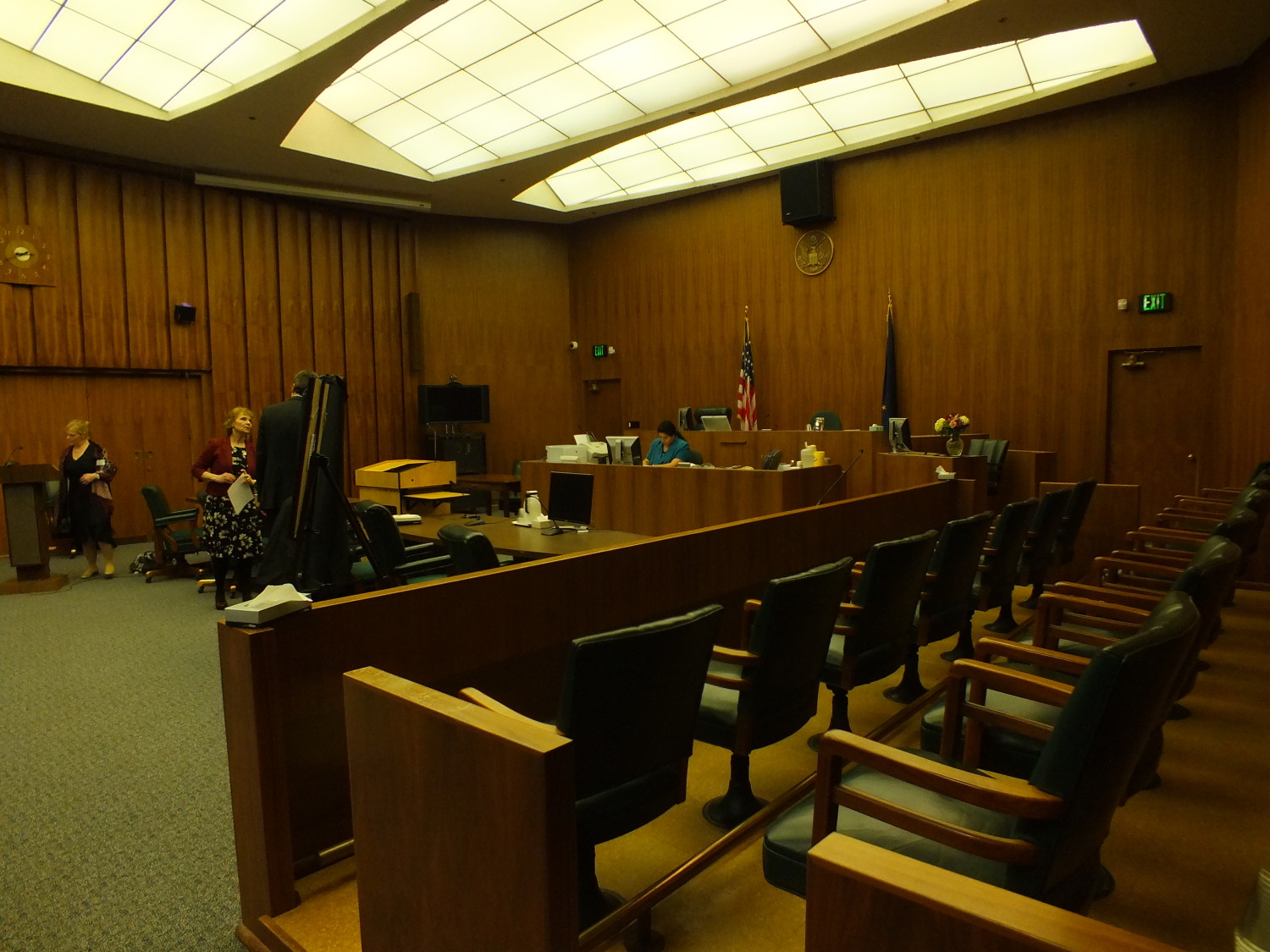
View from near jury box of the courtroom that is part of the Robert Boochever U.S. Courthouse. (Photo by Matt Miller/KTOO)

Closing arguments are scheduled for Tuesday morning in U.S. District Court in Juneau in the case of a Wrangell doctor accused of downloading, possessing, and distributing child pornography. Then, the case against Greg Alan Salard will be in the hands of a jury.

The prosecution presented the last of their witnesses and rested their case on Monday.

Salard’s defense team did not put on a defense. They did not offer any witnesses or present any evidence of their own, and Salard declined to testify on his own behalf.

Earlier on Monday, FBI Special Agent Anthony Peterson retook the witness stand so Assistant Federal Public Defender Cara McNamara could resume her cross examination from Thursday. Peterson testified that he did not see any evidence of a virus or malware, or a remote access program that could allow someone to deposit files on Salard’s computer without his knowledge.

But Peterson said his “thumbdrive became corrupted and (he) lost everything on it.” The thumbdrive contained a report that was generated after Peterson used a forensic program to examine a hard drive from Salard’s laptop.

Juneau-based FBI Special Agent Matthew Judy testified he drove by Salard’s house at least three times the morning of Oct. 15, 2014, to determine who was there before arriving with other officers to execute a search warrant. Judy also noted that 8 minutes passed between the time they arrived and when Salard finally came down the stairs in his robe to open the door. Prosecutors believe that during that 8 minutes Salard started running a program that could destroy evidence of child porn on his laptop. Peterson testified that he stopped the program after it had partially wiped the hard drive.

After the prosecution rested its case, defense attorney Dan Poulson moved for acquittal on the possession charge and referred to court precedent regarding a file that had been deleted from a computer hard drive. Even when a video has been deleted, traces remain in so-called “unallocated space” until it’s been written over or the drive has been wiped clean. Higher courts have ruled that just presenting images stored in unallocated space is not enough to establish knowing possession. More evidence has to be presented to demonstrate a defendant’s knowledge of the files and their control of the computer.

Poulson also noted that there was no date or time listed for the alleged playback of the most recently played video on Windows Media Player, nor was there a specified hash value that could definitively link Salard to playback of a specific video. A hash value is a unique, traceable digital fingerprint for a file.

U.S. District Court Judge Tim Burgess, however, determined there was sufficient evidence for the return of a guilty verdict on the possession charge. He noted that Peterson — through another computer at the Wrangell Police Department — saw Salard offer the same video through the Ares peer-to-peer sharing program. An examination of the program’s history data on Salard’s laptop also revealed that the video was one of 83 child pornography files and 525 files of other pornography that Salard had downloaded.

Jury deliberations begin after closing arguments Tuesday morning.
Elections director resigns abruptly at Mallott’s request, Nome city manager to take over

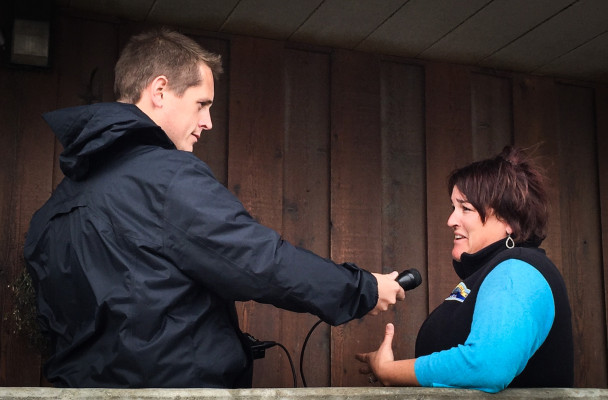
KNOM reporter Matthew Smith interviews Nome City Manager Josephine Bahnke earlier this month. Bahnke will step in as the Division of Elections Director in October. (Photo by John Handeland)

A veteran election official resigned abruptly on Friday at Lt. Gov. Byron Mallott’s request. The Walker-Mallott administration was Gail Fenumiai’s third as head of the state Division of Elections.

“There’s nothing personal in the request,” says Claire Richardson, special assistant to Lt. Gov. Byron Mallott. She says they accepted Fenumiai’s resignation on Friday.

“The lieutenant governor would like to move in some new directions with the Division of Elections and it was felt that it was time for different leadership,” Richardson says.

Gail Fenumiai (Photo by Liz Ruskin/APRN)

Fenumiai has been director of elections since 2008, and has 10 years of earlier experience in the division. She didn’t return calls for comment.

She’s being replaced by Nome City Manager Josephine Bahnke, who’ll start in October. In the meantime, election supervisor Lauri Wilson is acting director.

Richardson says Mallott hasn’t worked closely with Fenumiai since he and Gov. Bill Walker took office, but they’ve had meetings about the Tyokuk v. Treadwell case, which is in settlement negotiations. A federal judge ruled last year the state doesn’t do enough to serve voters who speak Native languages.

Richardson says there was no particular issue that led to Fenumiai’s resignation request. Rather, she characterized it as the prerogative of the administration to bring in new people.

“I think it’s just that the lieutenant governor would like to move forward and reach his goal of having the best elections division in the country,” Richardson says.

That means being customer service-oriented and “the ability for Alaskans to register and vote,” according to Richardson.

“We’re excited to have her move to Juneau and to really take a look at elections from a different perspective,” Richardson says.

Bahnke was born and raised in Nome. She says she was contacted by the lieutenant governor’s office sometime in the past month and has been going through a vetting process. Bahnke says it’ll be hard to leave Nome. She’s been city manager for 7 years.

“I did let the governor know, I love my job, I love Nome, but I think our philosophies are aligned and so I feel very honored to be asked to be a part of this administration,” Bahnke says.

Prior to her city manager role, Bahnke was a local government specialist in the Bering Strait region for the state. She was also a program director for Kawerak Inc., according to her resume. Bahnke has a master’s degree in public administration from Portland State University and a bachelor’s in political science from Fort Hays State University in Kansas.

“For the past 15 years working with tribal, state and local government and my management experience will help greatly in my new job. I haven’t gotten really into the weeds on elections. This is going to be a steep learning curve for me, but like any challenge, I’m up for it,” Bahnke says.

Bahnke plans to travel to regional election offices at the end of August.

Bahnke contributed $500 to Bill Walker’s gubernatorial campaign. After he merged with Mallott, she gave another $200, according to campaign finance disclosures.

The Division of Elections is the only division under the lieutenant governor’s office. Mallott is in Canada this week and could not be reached for comment.

KNOM’s Matthew F. Smith contributed reporting.

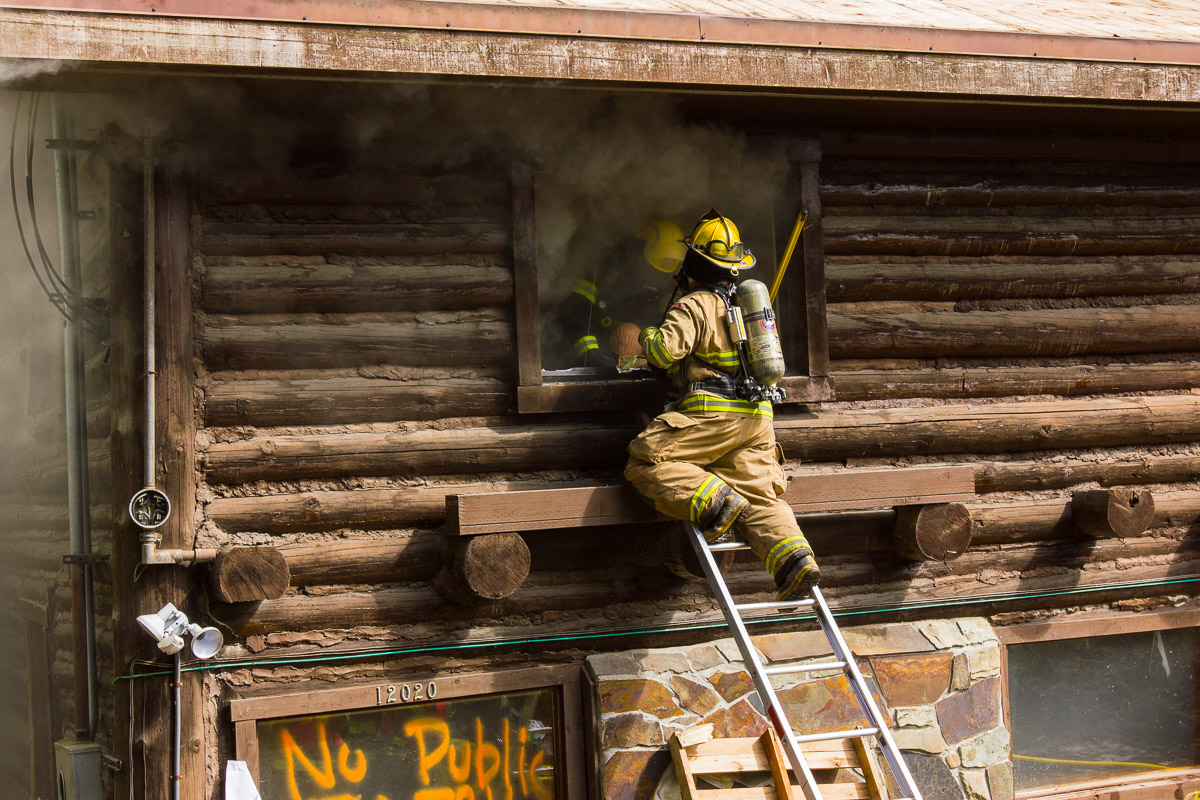
Live burn training with Capital City Fire/Rescue

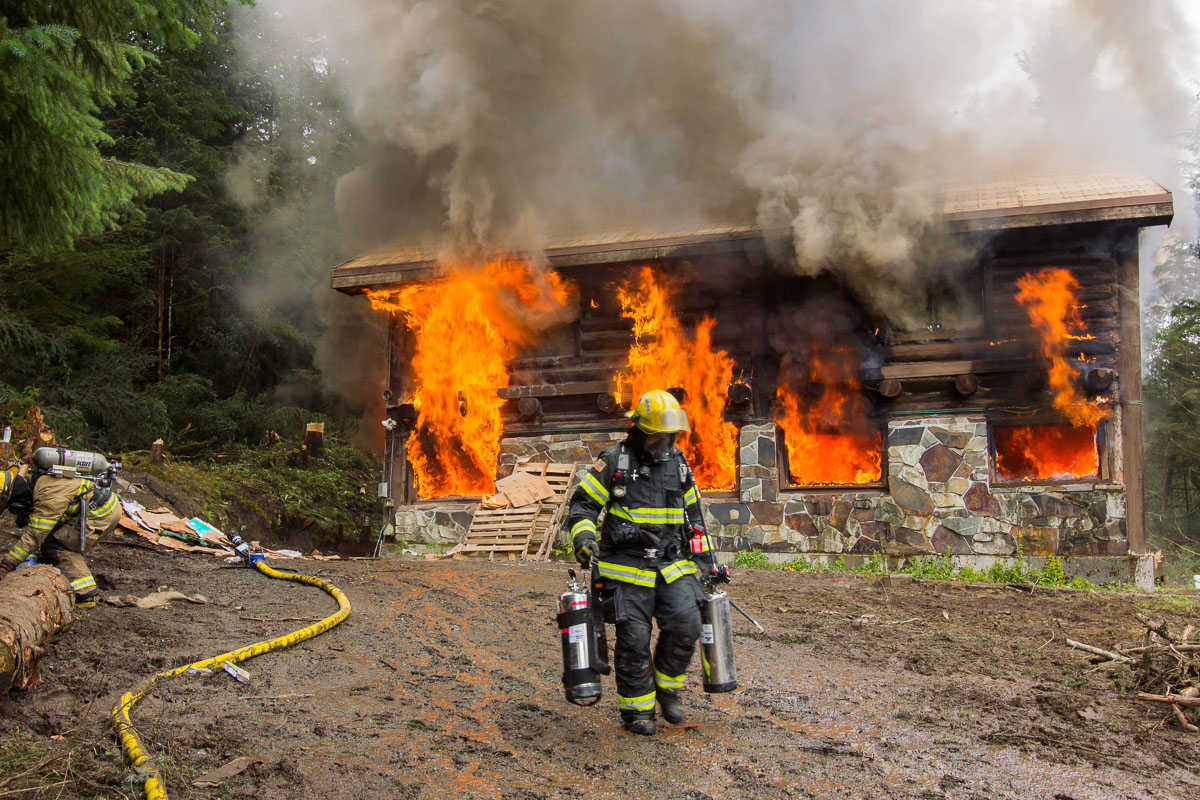
Firefighters move training equipment away from the fire. (Photo by David Purdy/KTOO)

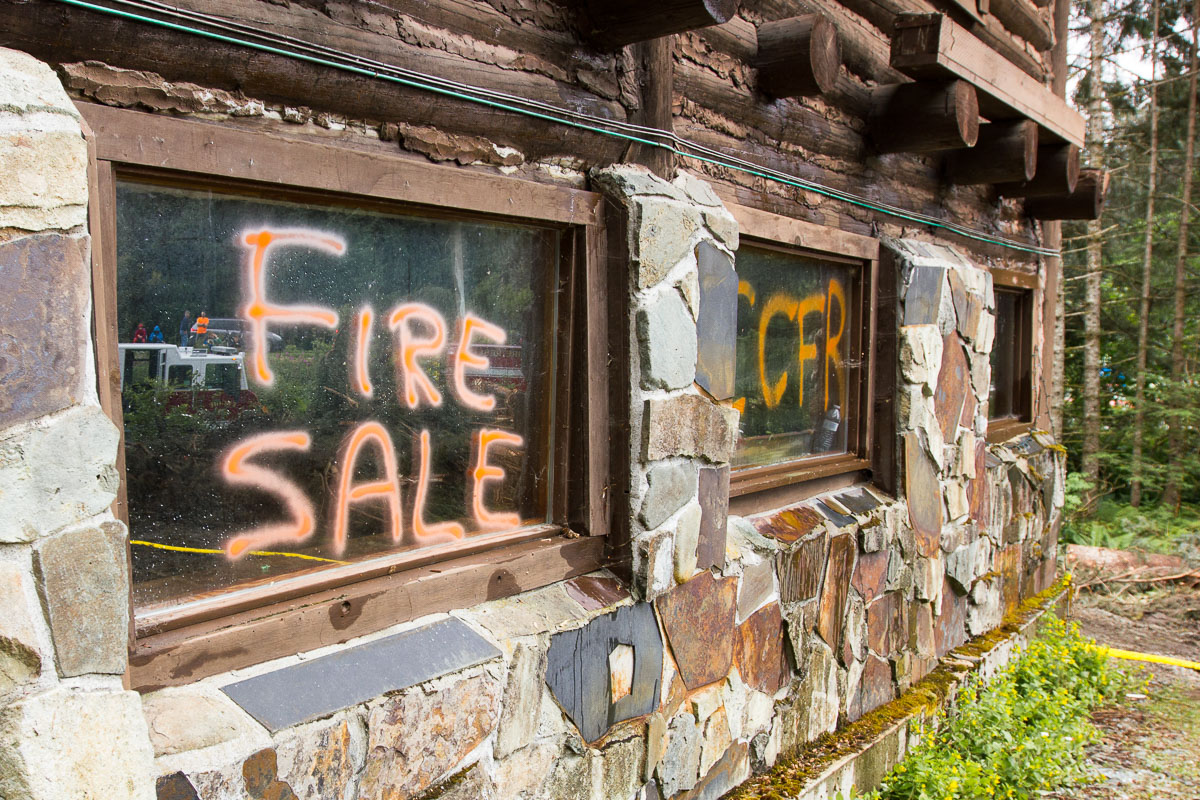
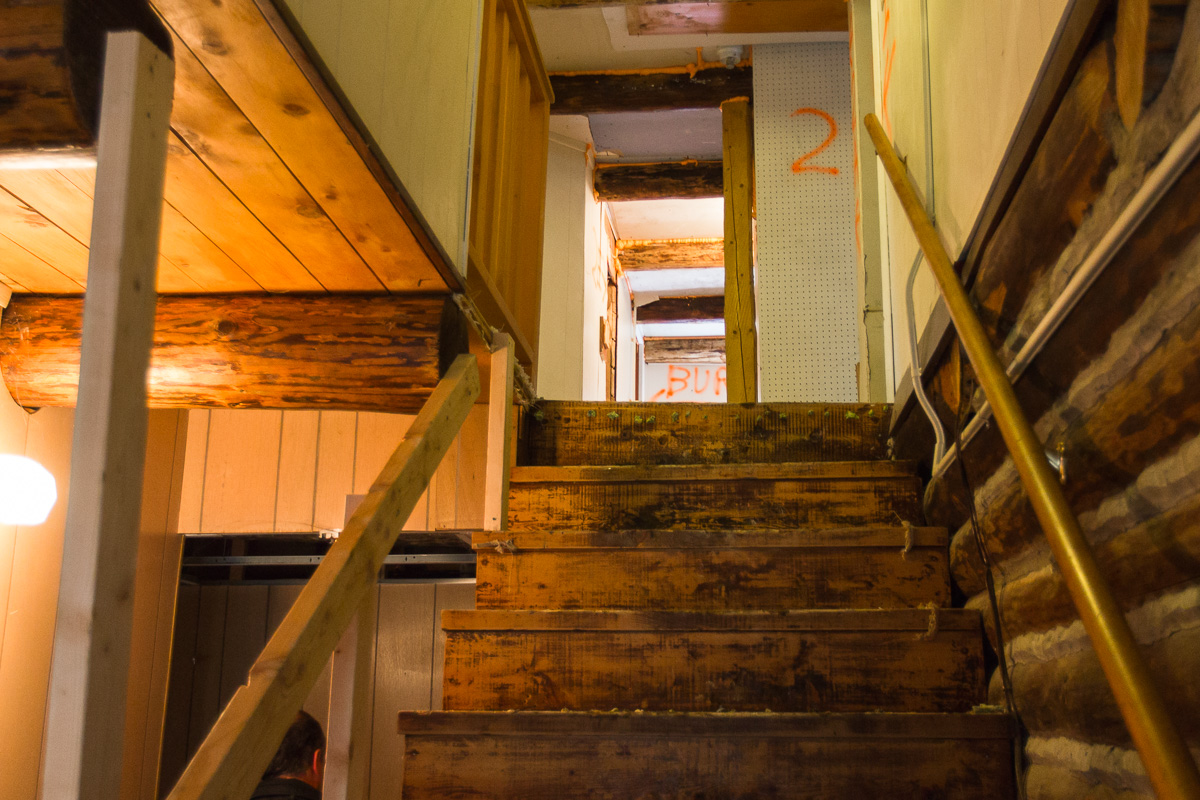
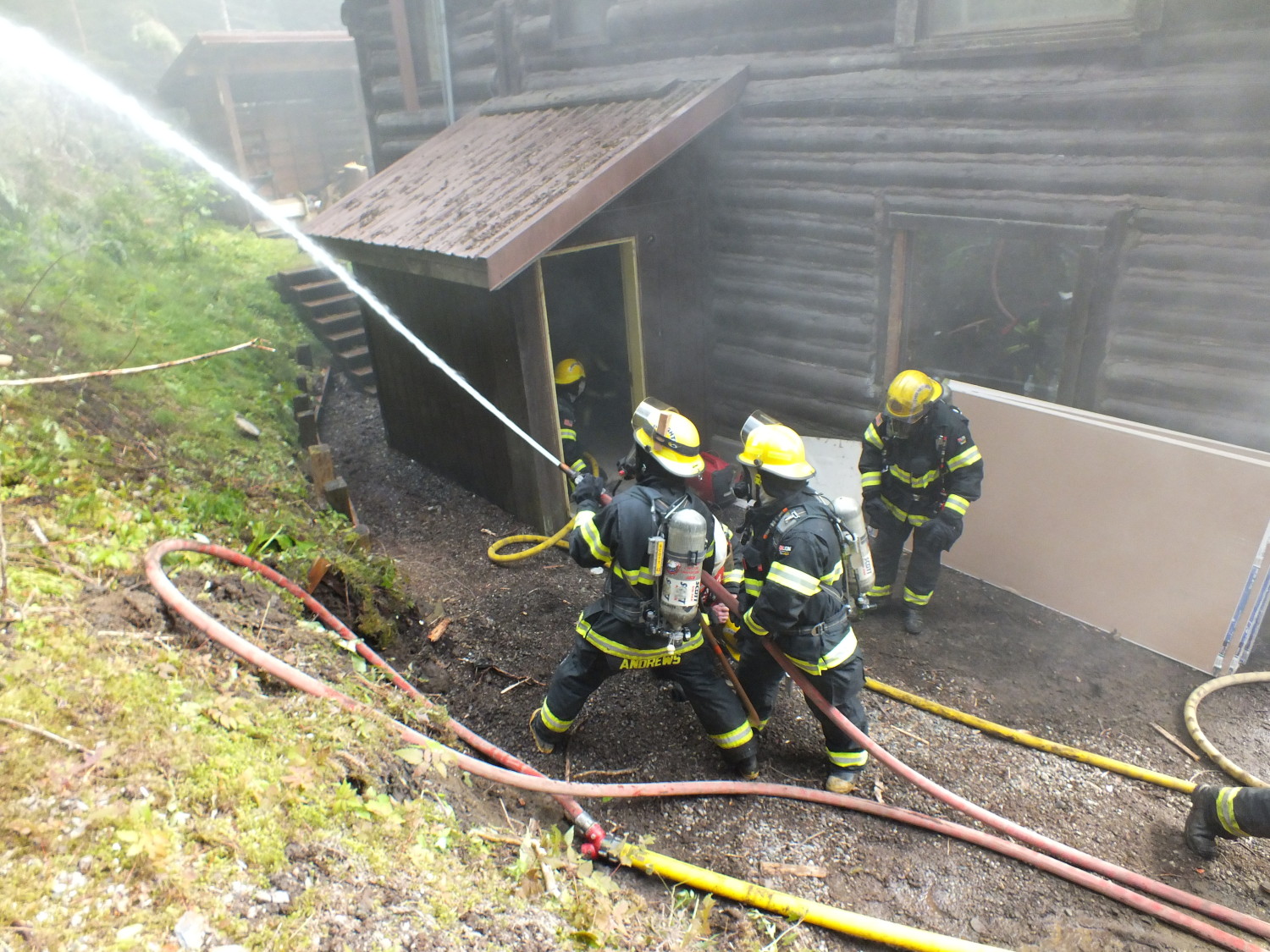
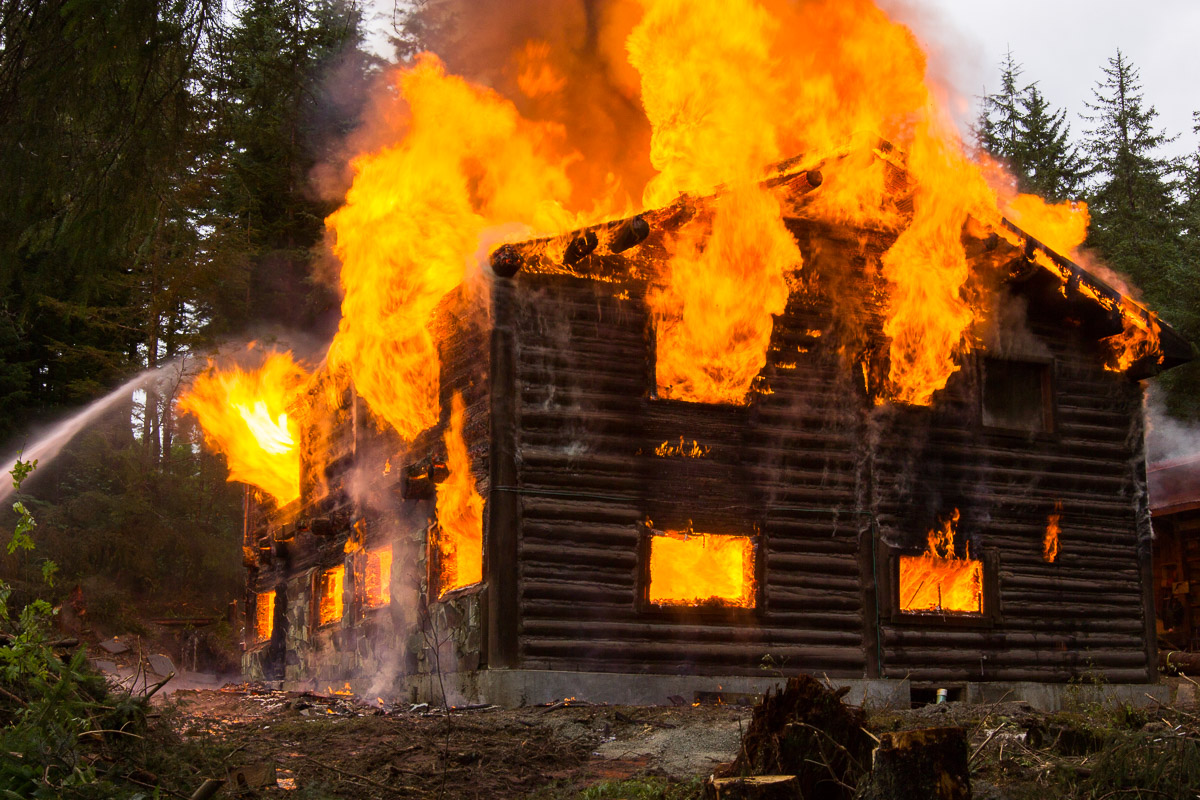
Capital City Fire/Rescue held a drill Saturday with a live fire at an old log cabin on Mendenhall Loop Road. The cabin was considered beyond repair. Its foundation timbers were partially rotted and the entire structure was leaning over.

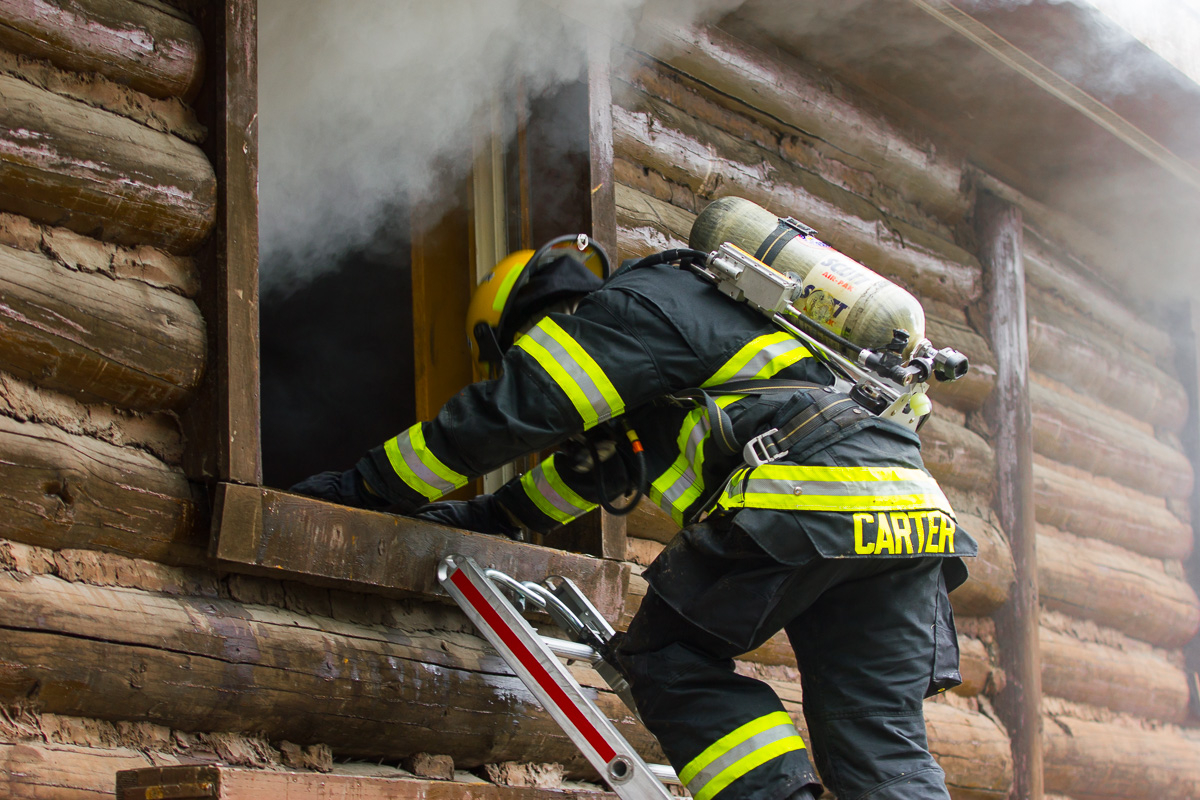
For career and volunteer firefighters, it was a unique opportunity to hone their skills and train outside the Hagevig Fire Training Center. Firefighters practiced entering the structure, attacking the fire, searches and rescues.

The structure, owned by University of Alaska Southeast, was demolished with one final burn at the end of the day.

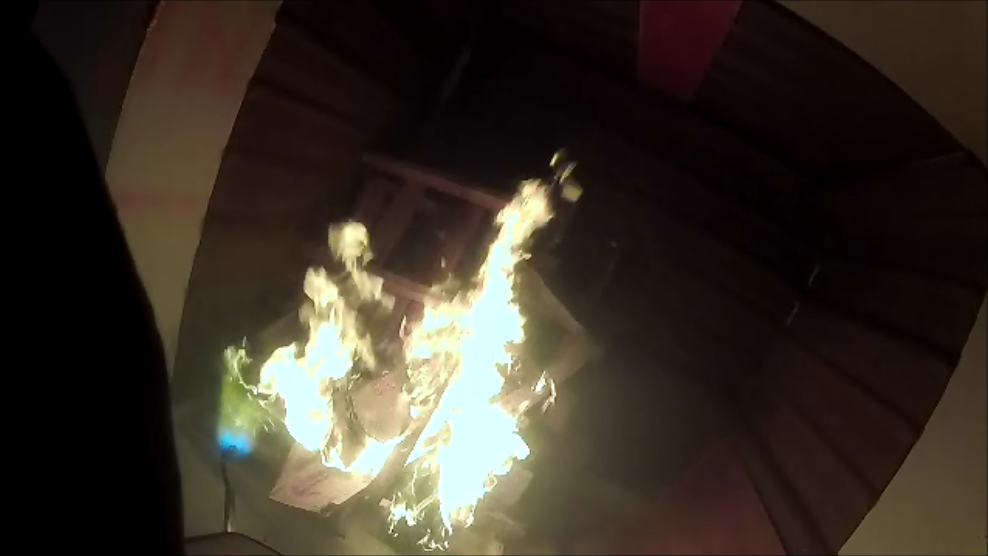
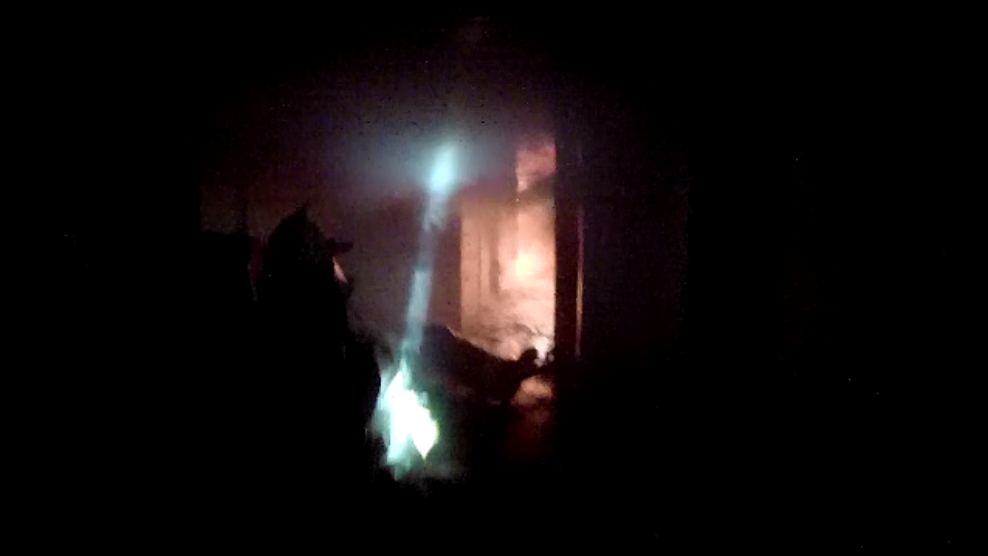
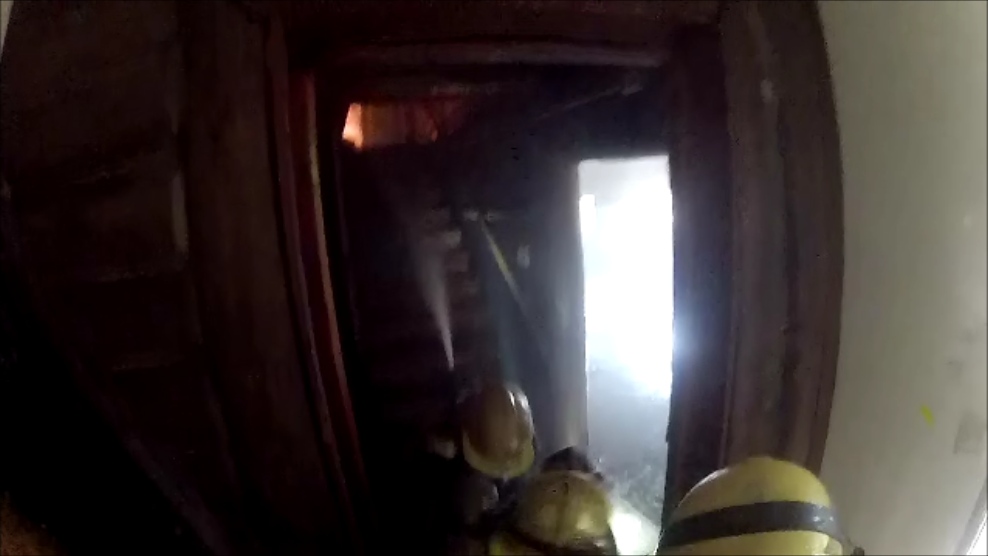
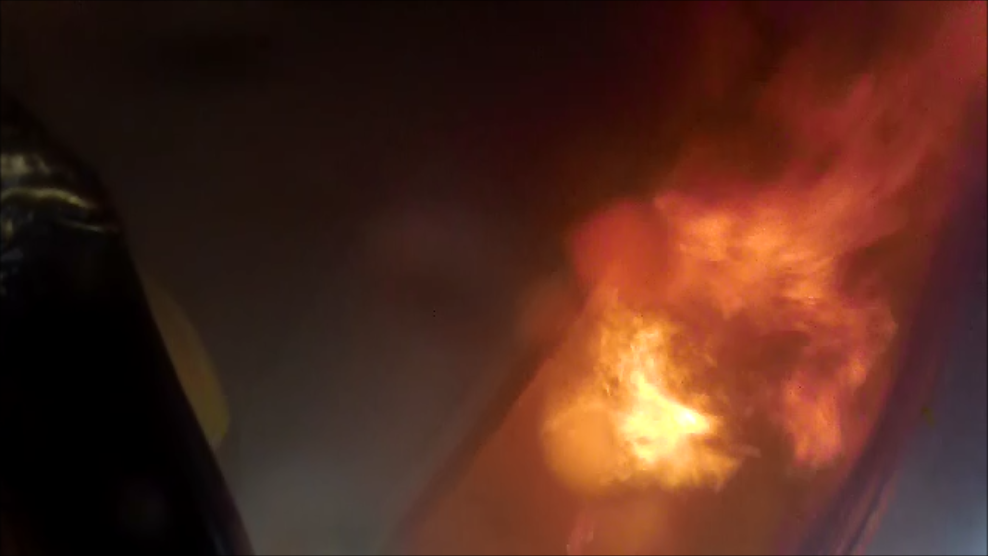
Firefighters Sean Rhea and Noah Jenkins, who acted as instructors during Saturday’s exercise, wore KTOO’s helmet-mounted video camera that provided some of these stills.

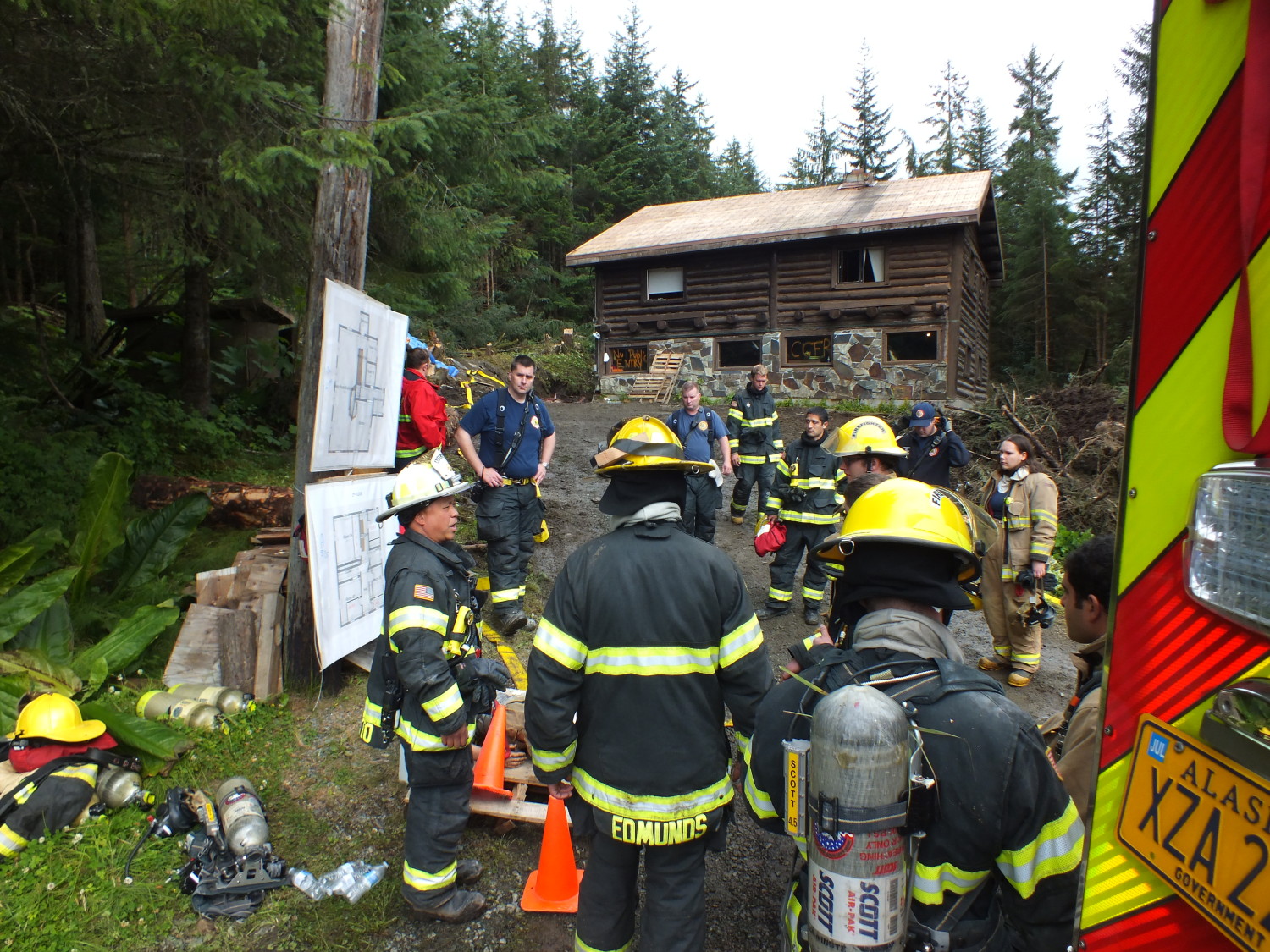
Floor plan and scenario briefing. (Photo by Matt Miller/KTOO)

(Photo by David Purdy/KTOO)

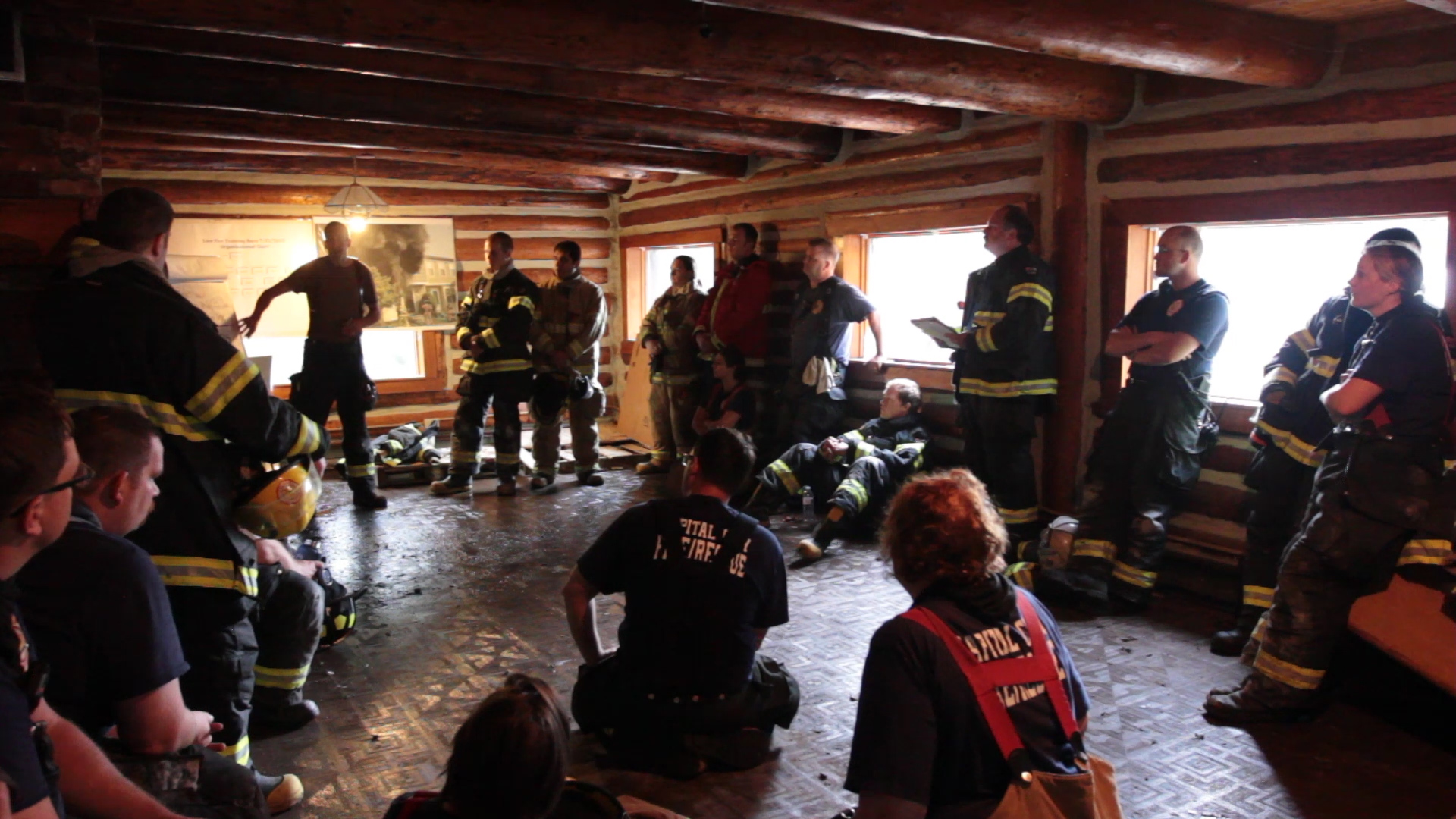
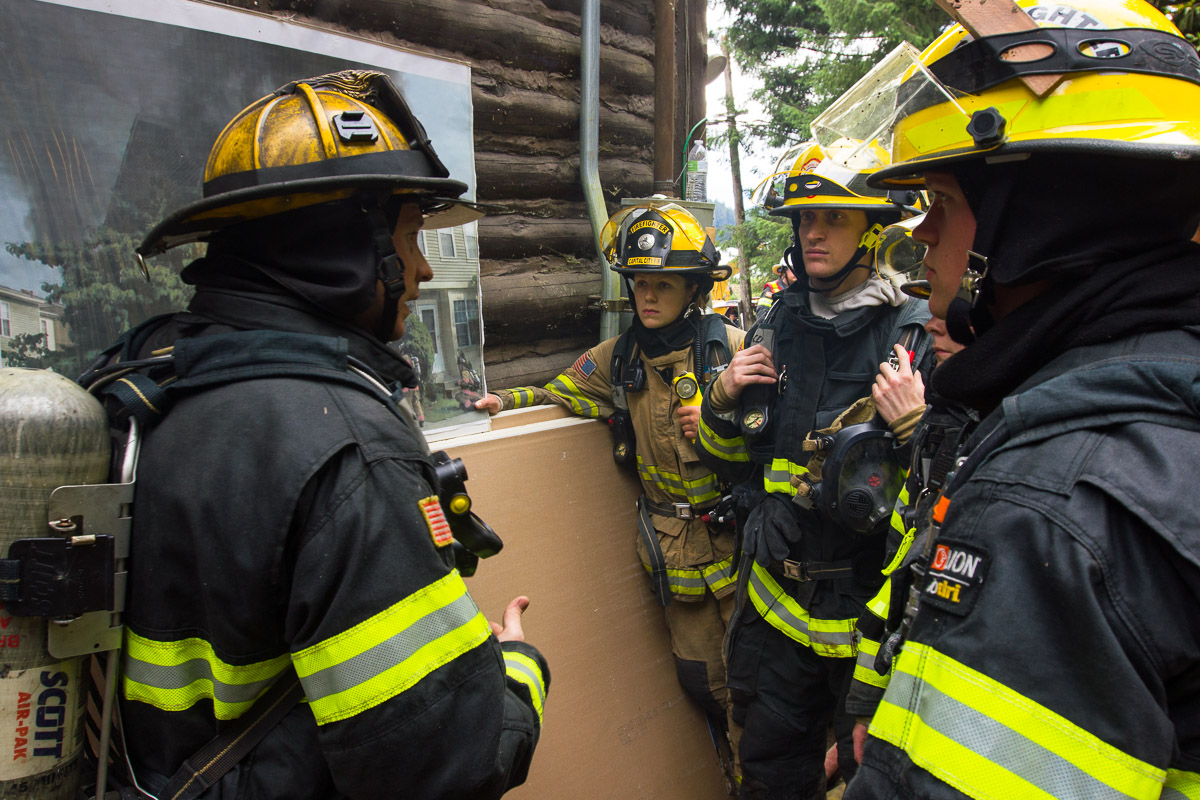
Firefighters are briefed on the plan for the day. (Photo by David Purdy/KTOO)

In the weeks before the training day, firefighters cleaned out the cabin and installed additional drywall to control the fire during training. (Photo by David Purdy/KTOO)

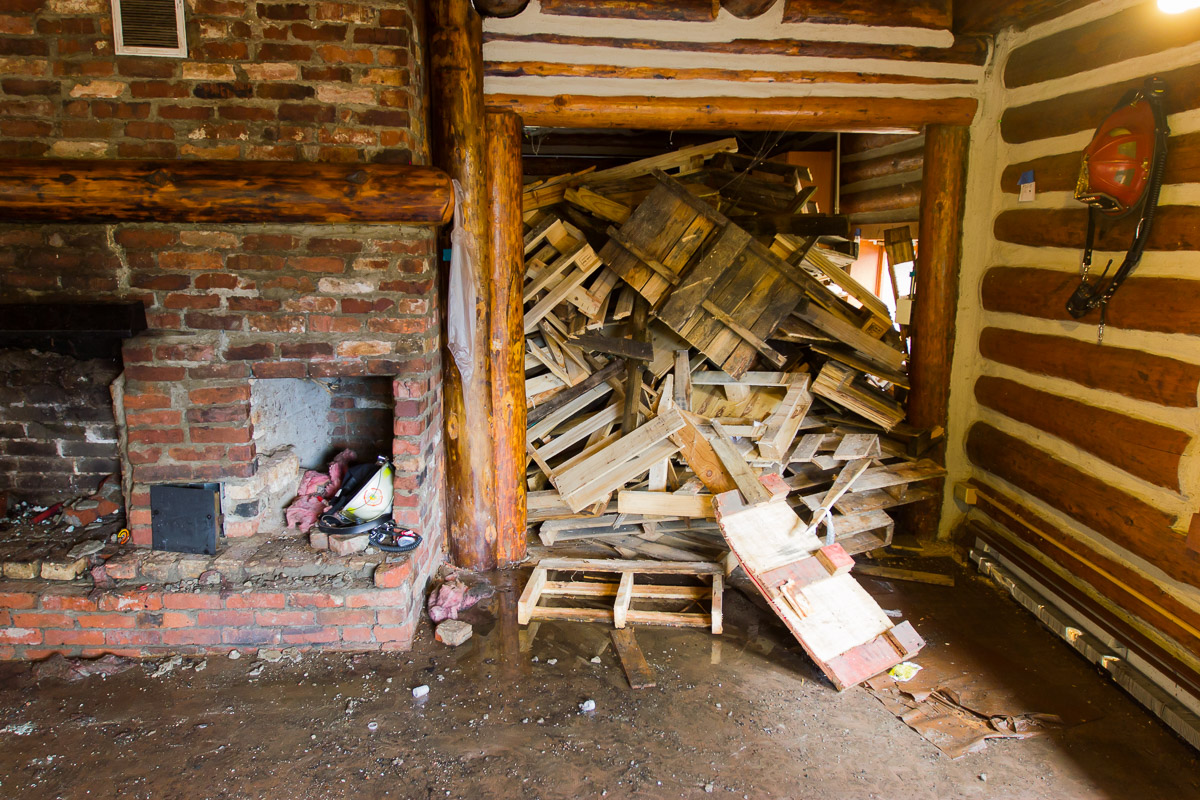
Pallets were used for kindling for the training fires. (Photo by David Purdy/KTOO)

An instructor uses a propane torch to light straw and cardboard for one of the scenarios. The room has been modified with added drywall and metal siding.

A firefighter investigates a fire in an upper bedroom.

A hose team attacks a fire on the second floor.

Fire lashes out at a firefighter before a hose team enters a room.

(KTOO video stills)

Briefing just before beginning a training exercise in the cabin. (Photo by David Purdy/KTOO)

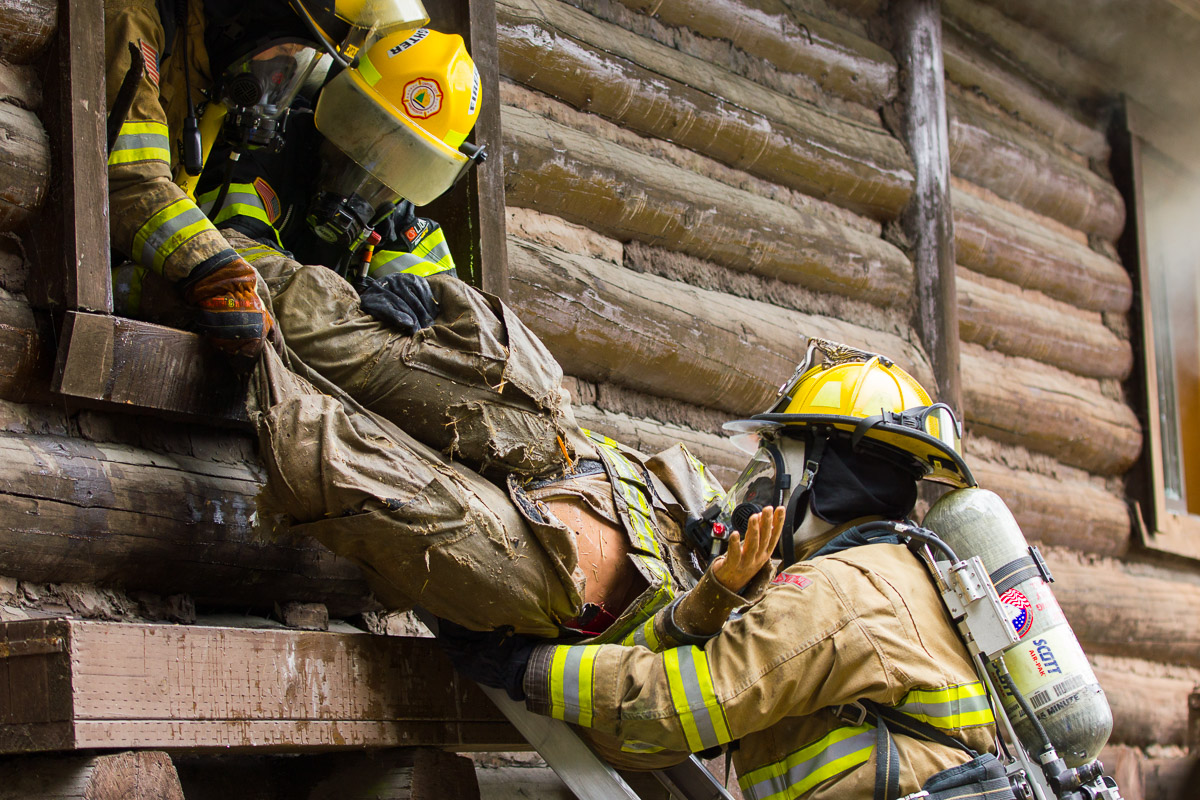
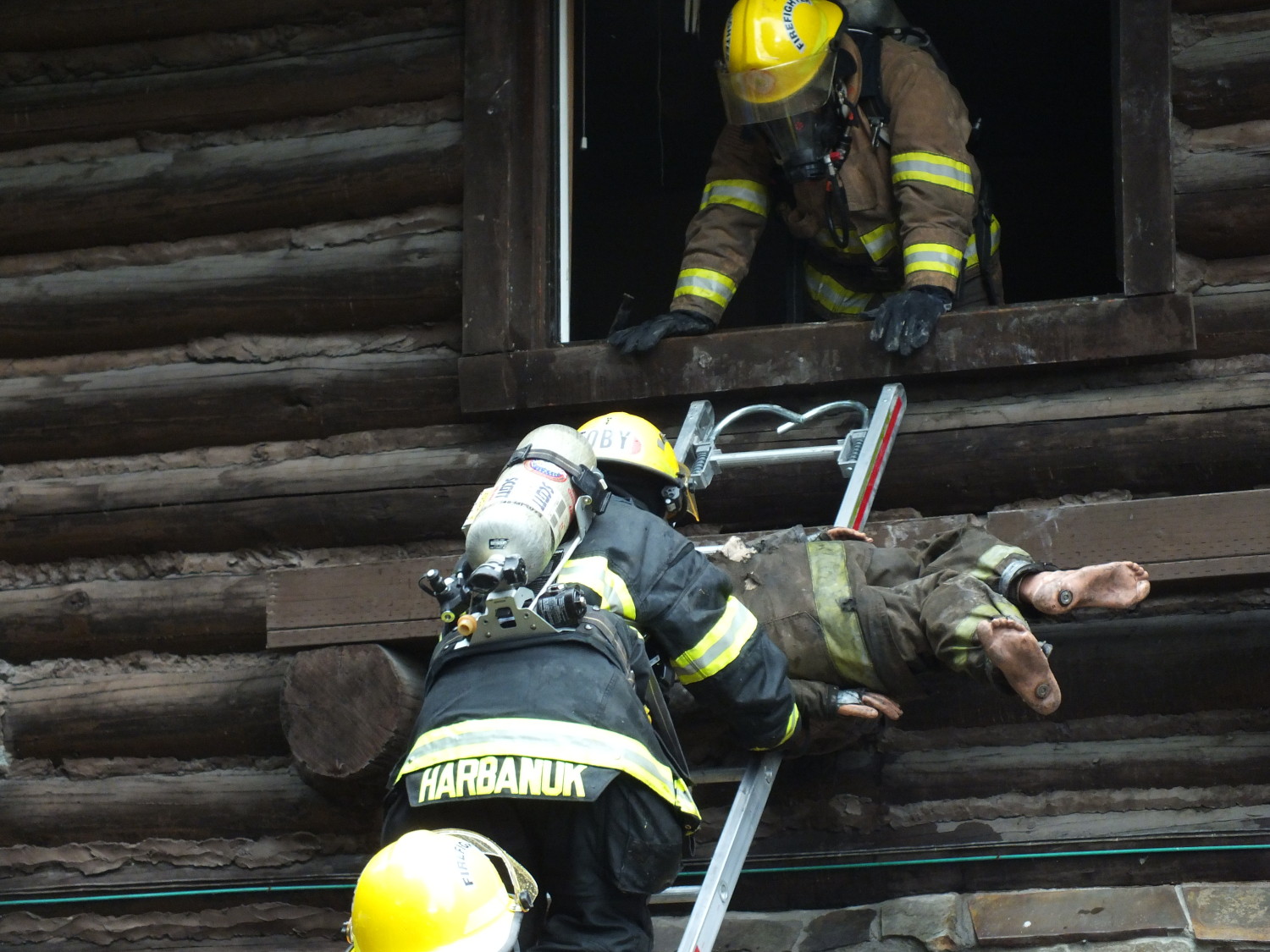
Firefighters practice a second-floor rescue with a dummy. (Photos by David Purdy/KTOO)

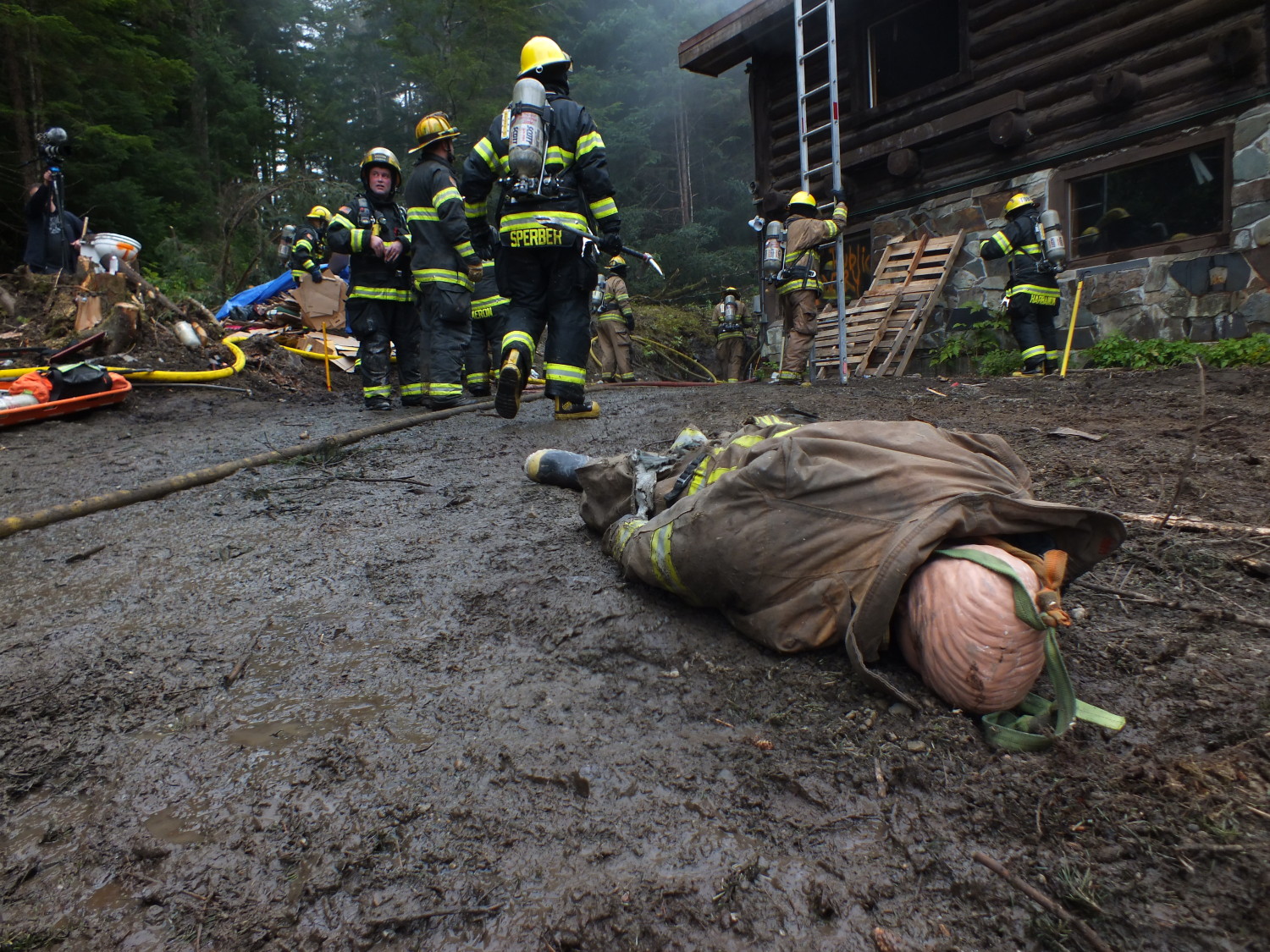
The dummy weighs 180 pounds. (Photo by Matt Miller/KTOO)

The victim awaits treatment by EMTs. (Photo by Matt Miller/KTOO)

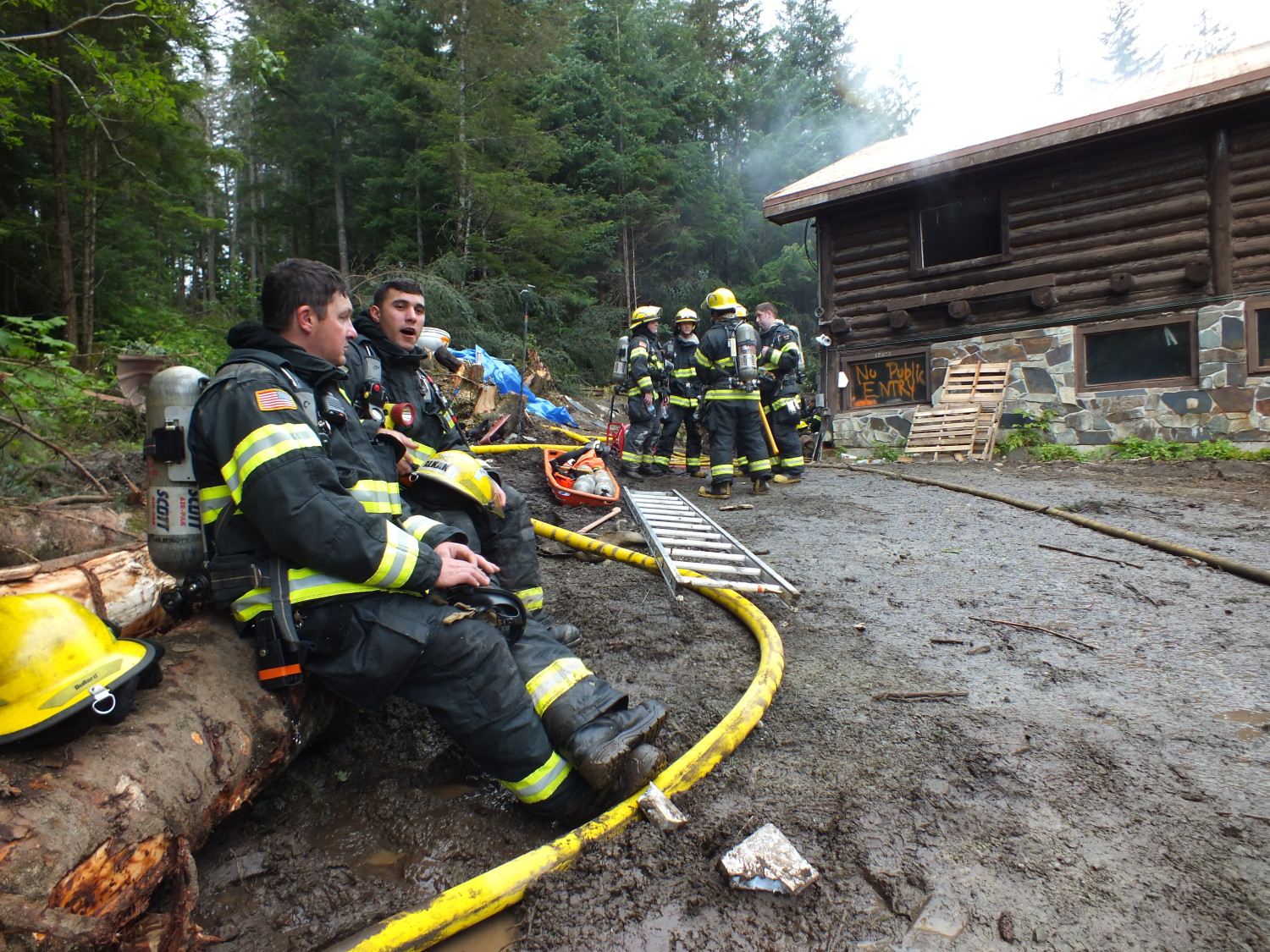
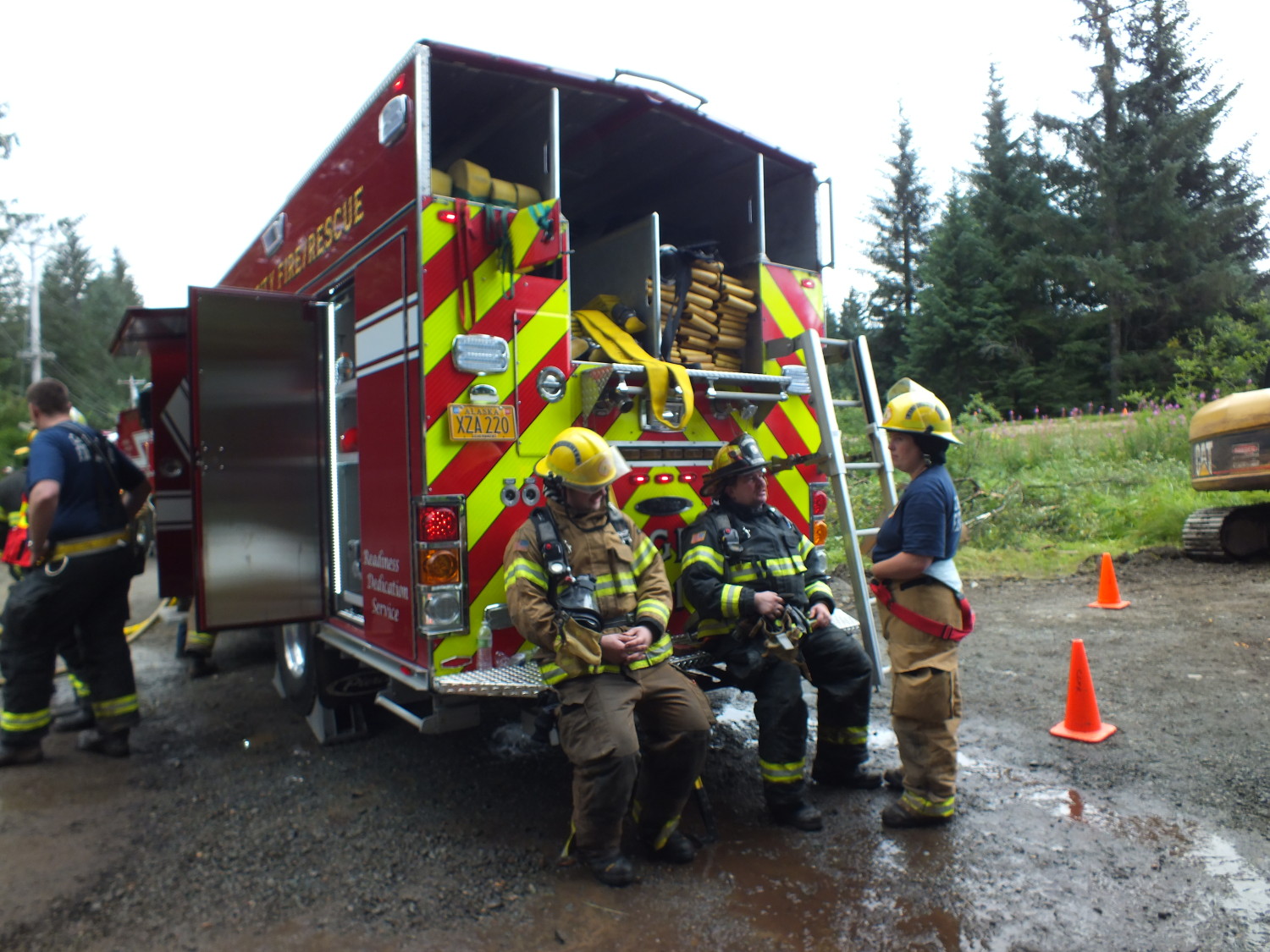
Rest before the next entry. (Photo by Matt Miller/KTOO)

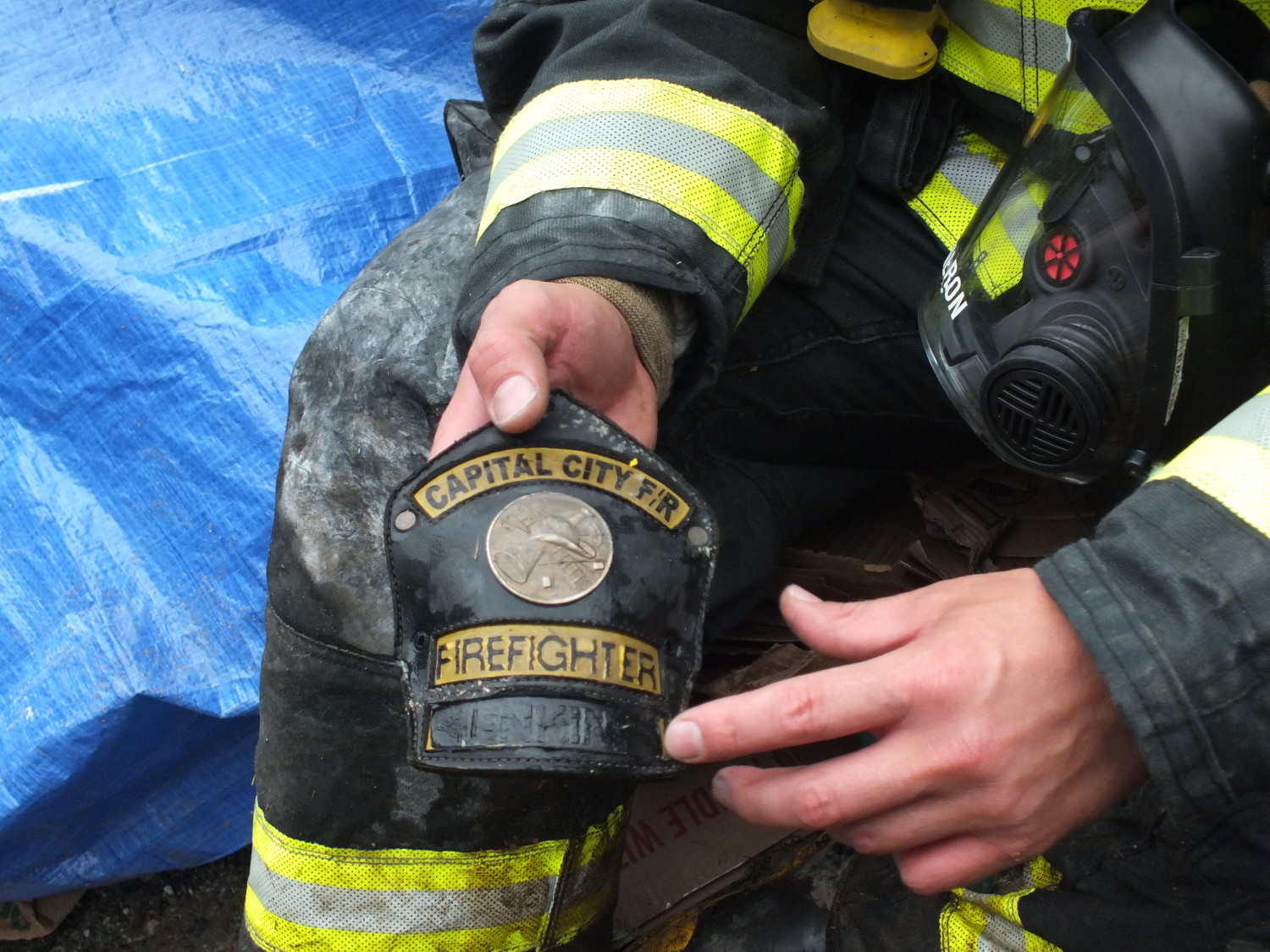
One firefighter has lost his leather nameplate for his helmet. (Photos by Matt Miller/KTOO)

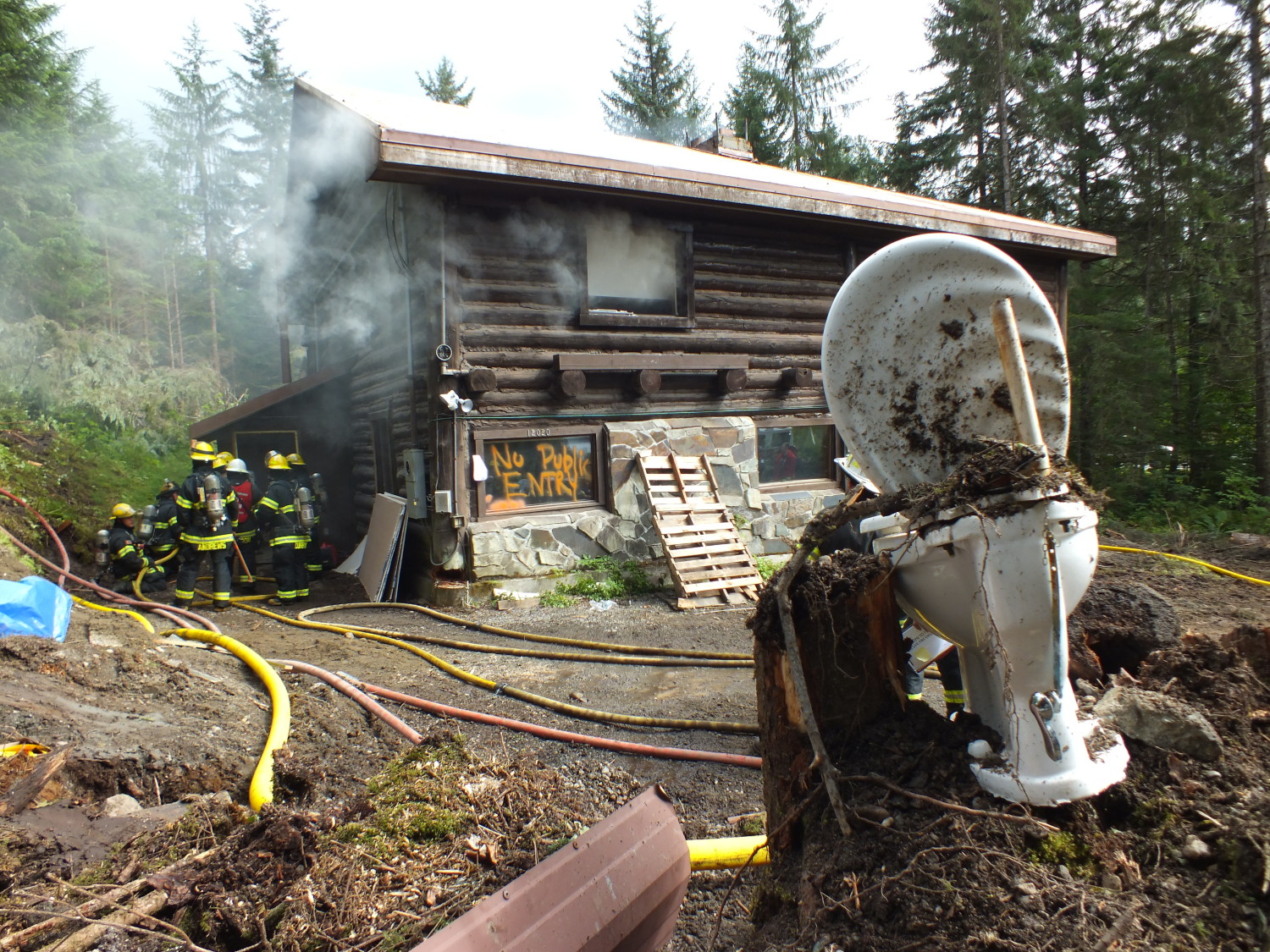
Who left the lid up? (Photo by Matt Miller/KTOO)

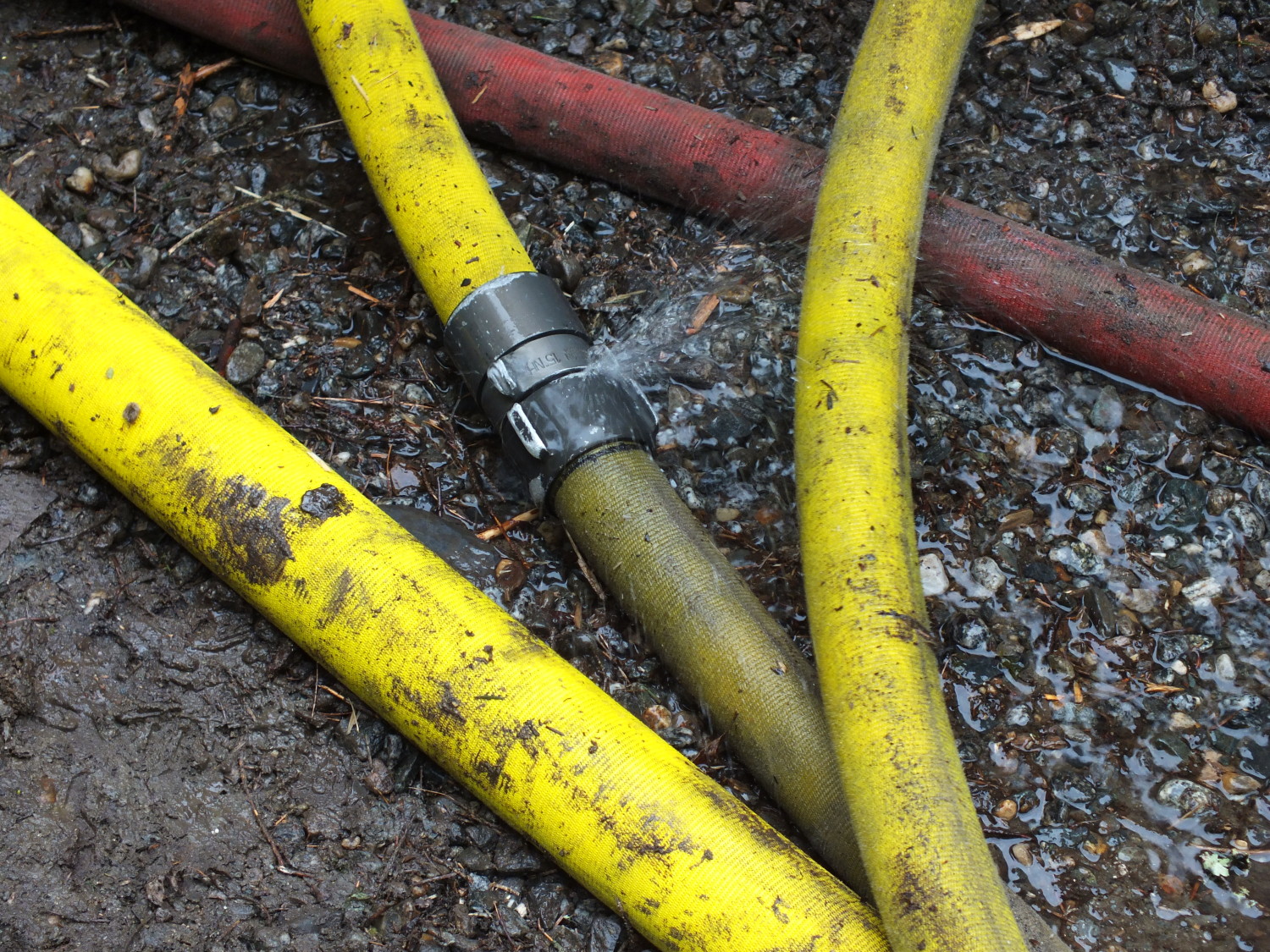
Nozzle test by hose team. (Photo by Matt Miller/KTOO)

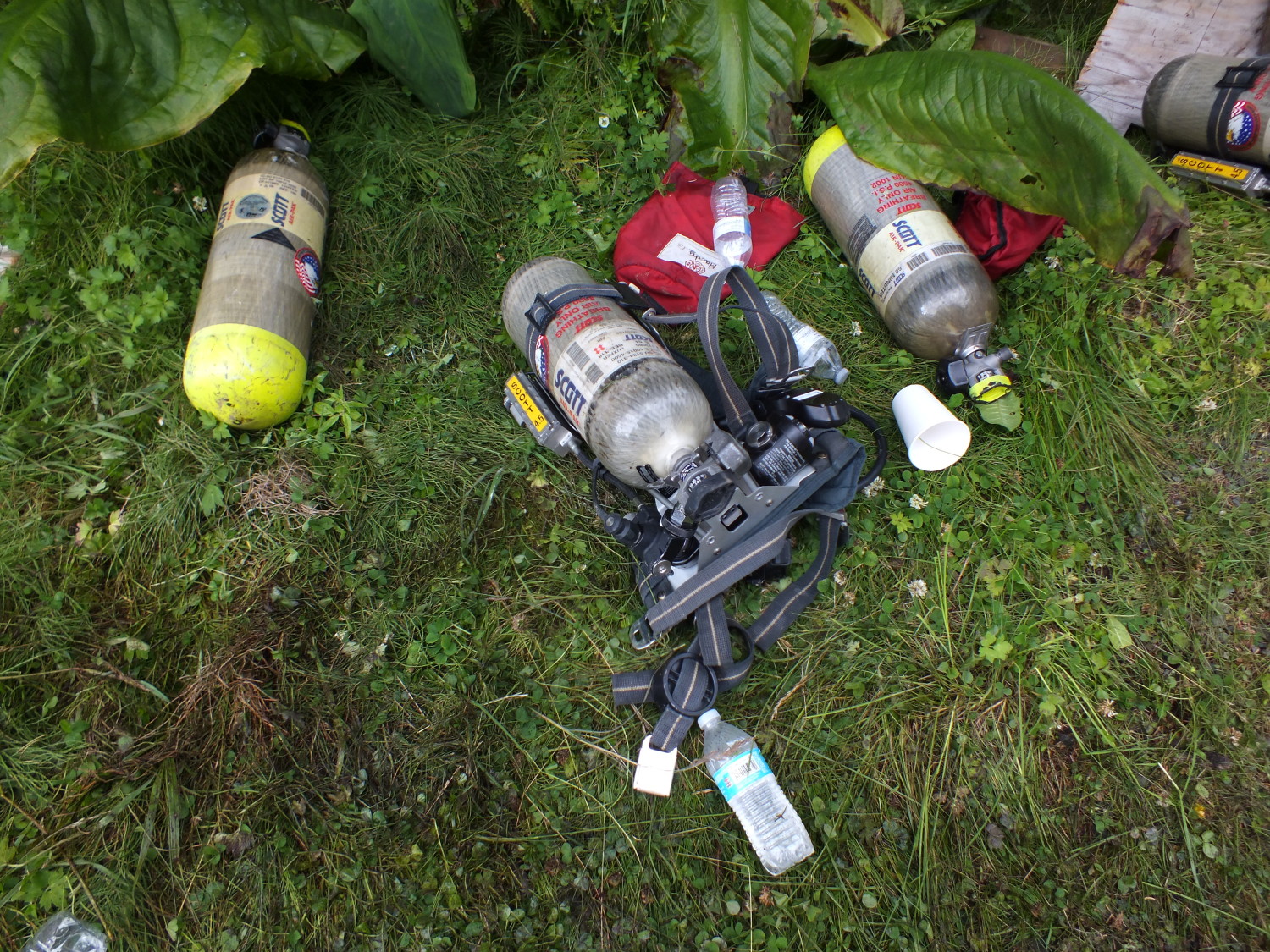
Water and air are important components for a firefighter’s stamina. (Photos by Matt Miller/KTOO)

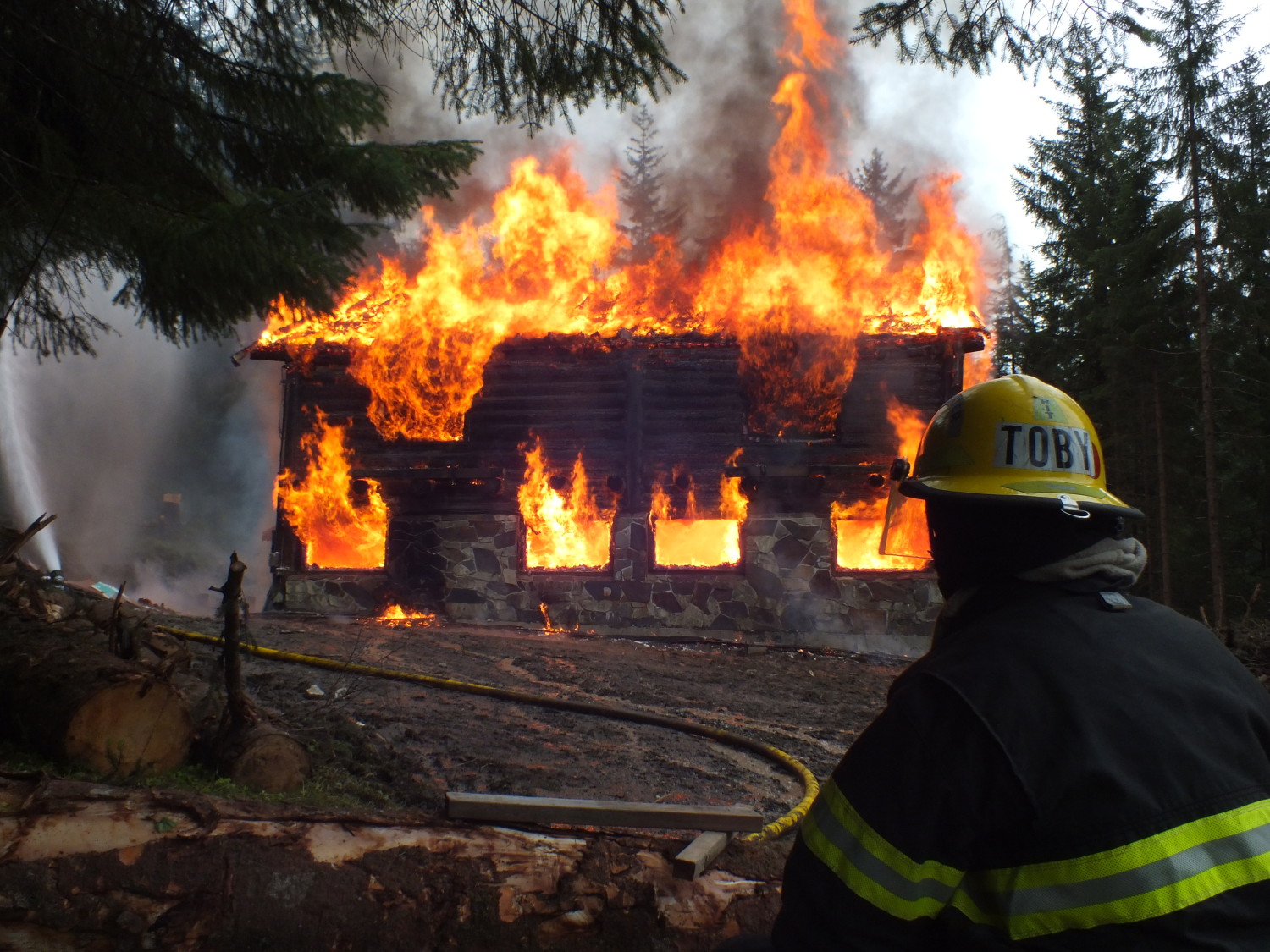
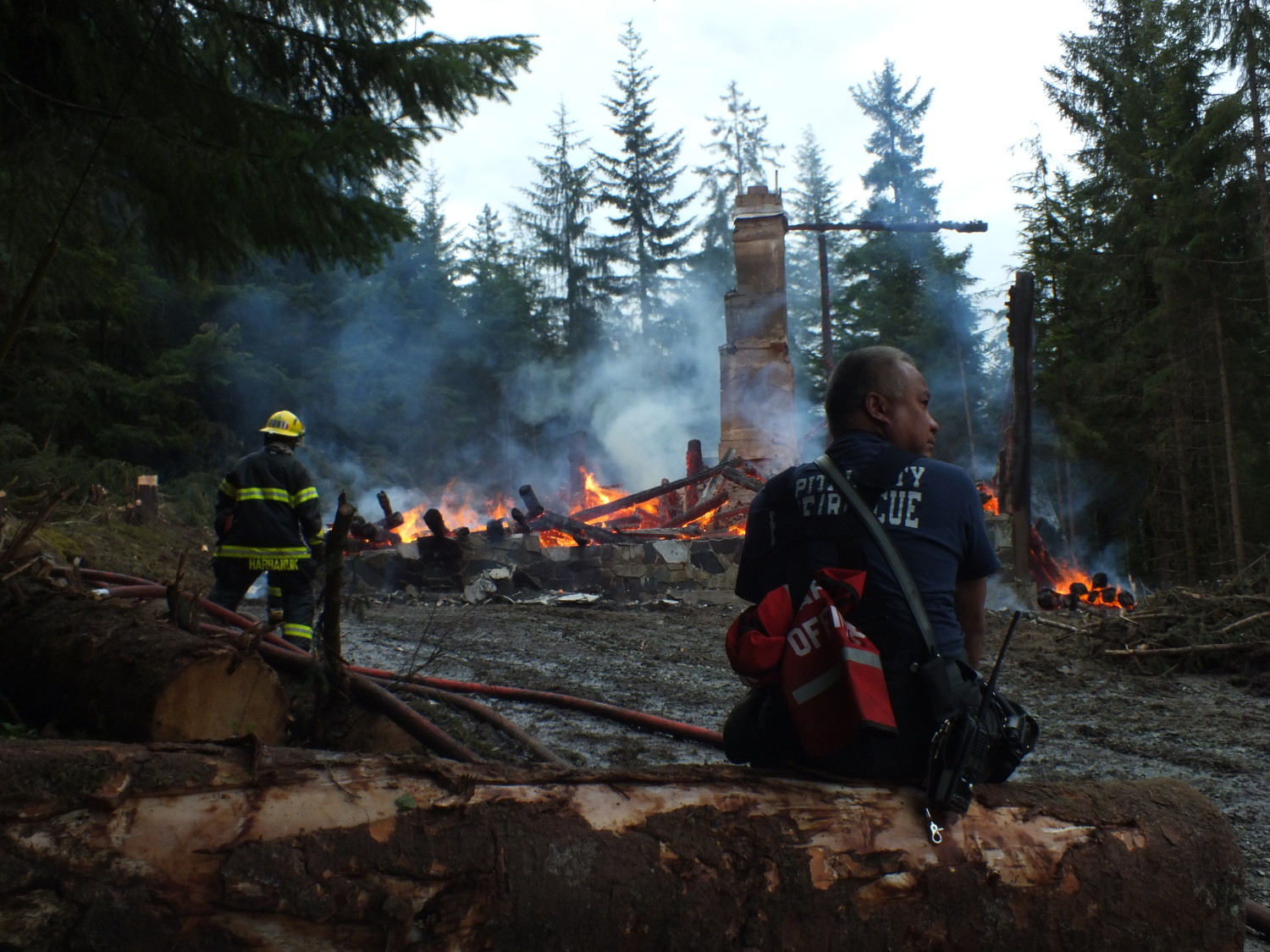
Firefighter Toby Harbanuk stands by during the final burn of the cabin. (Photo by Matt Miller/KTOO)

Fire engulfs the cabin while firefighters spray the vegetation behind it to keep the fire from spreading. (Photo by David Purdy/KTOO)

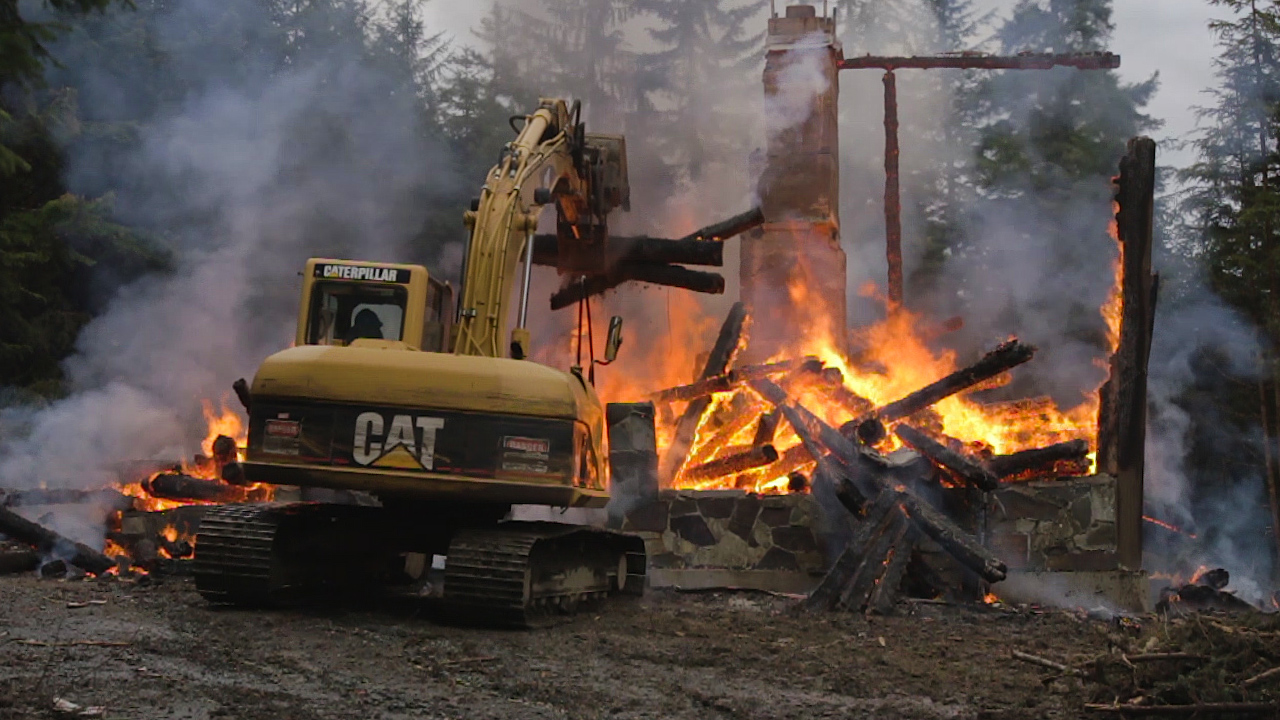
Debris is added back on to the main fire to keep it contained. (Photo by David Purdy/KTOO)

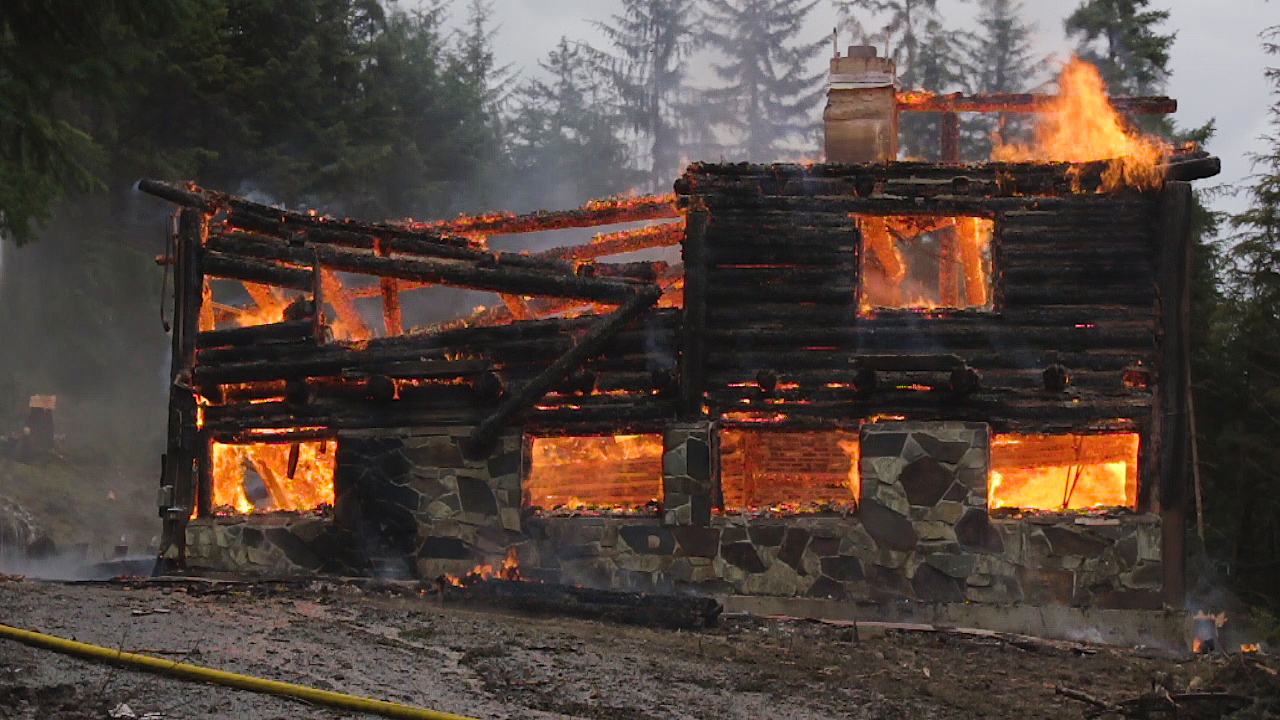
The cabin collapses as the fire burns. (Photo by David Purdy/KTOO)

End of the day for Assistant Chief Ed Quinto and other firefighters. (Photo by Matt Miller/KTOO)

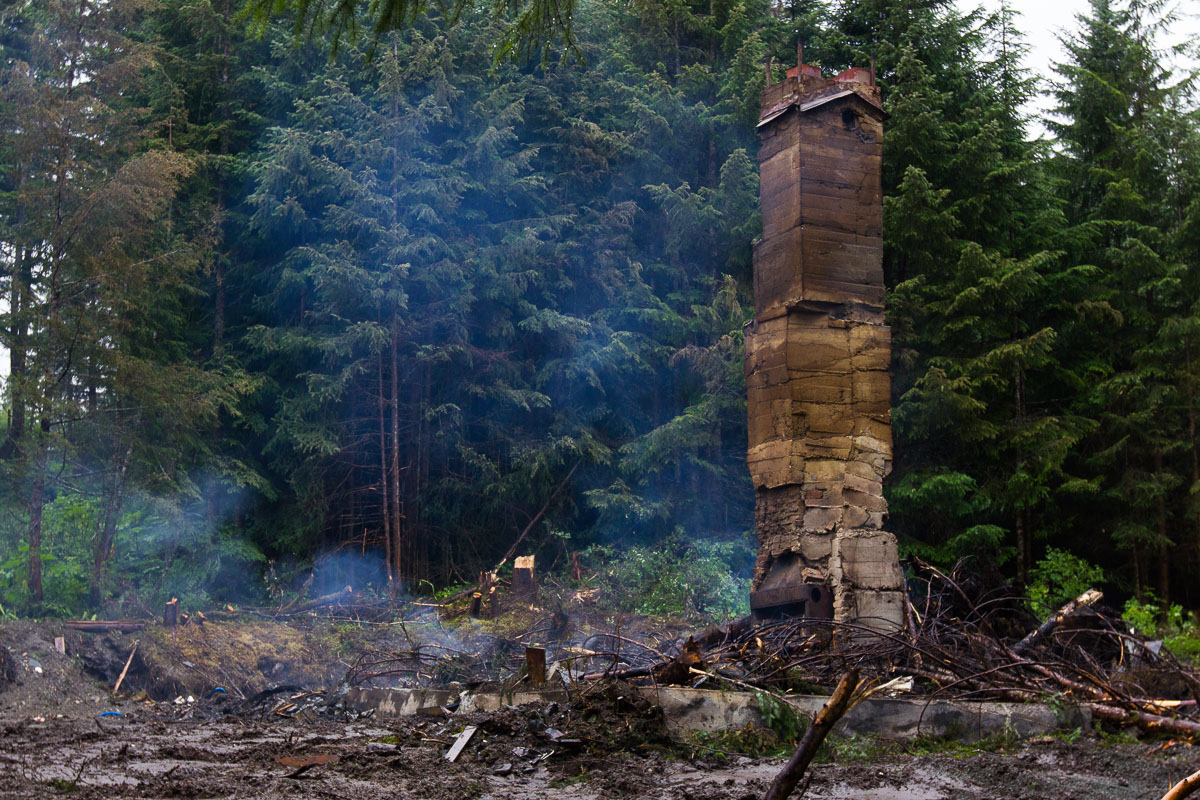
The ruins still smolder the day after the fire (Photo by David Purdy/KTOO)

Gardentalk – We’re jamming!

Yum! Fresh homemade salmonberry jam is delicious! (Photo by Matt Miller/KTOO)

During the July 23 edition of Gardentalk on KTOO’s Morning Edition, Master Gardener Ed Buyarski provided a primer on making freezer jam and cooked, jarred jam.

Buyarski suggests making freezer jam rather than the traditional cooked jam because of the difference in flavor.

“Of course, you’ve got to have space in your freezer.” Buyarski says.

He also recommends checking out the UAF Cooperative Extension Service and their publications on jam making.

Where’s the trail? Boy Scout hopes to curb West Glacier rescues

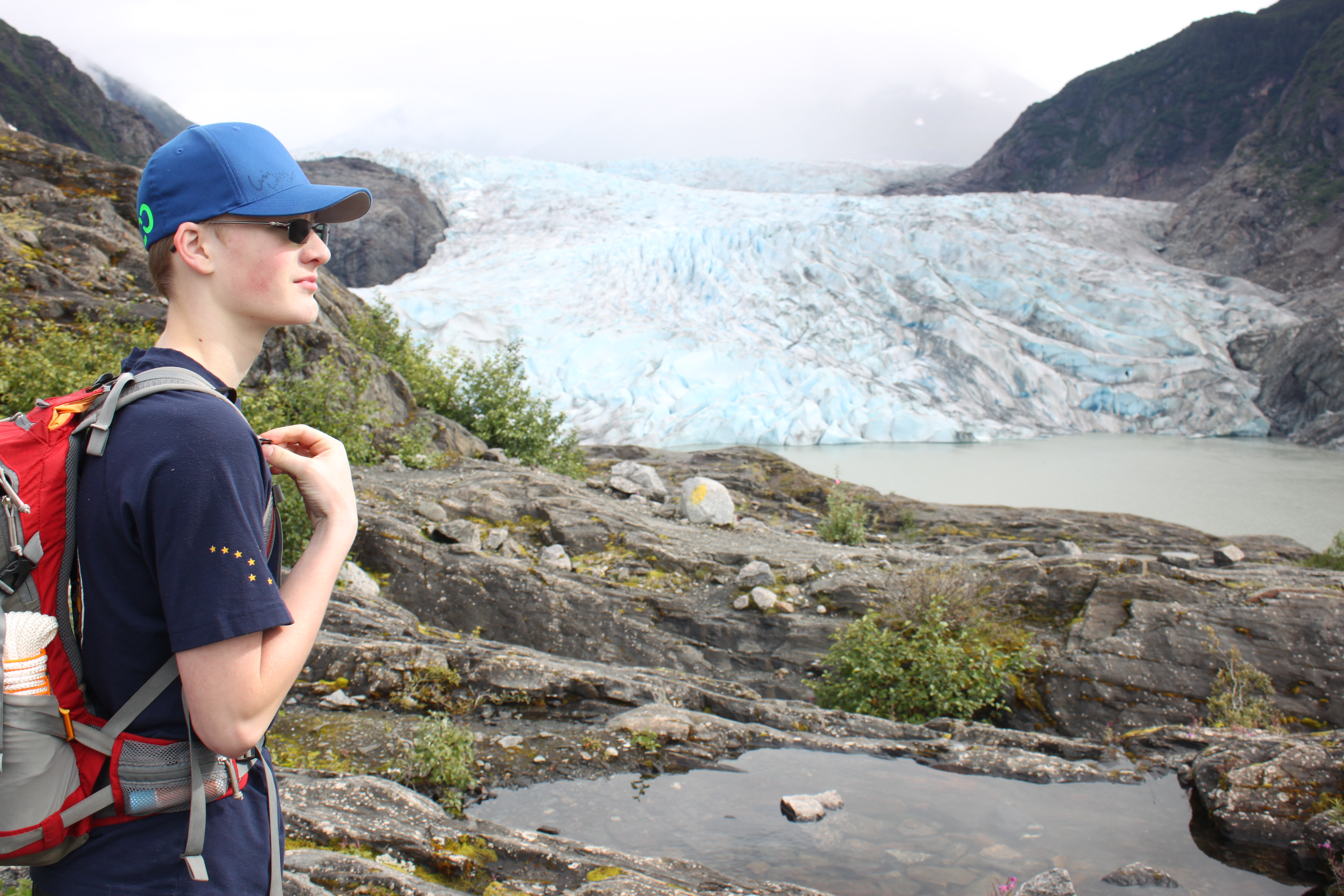
Colton Tersteeg, 15, hopes his Eagle Scout project will help keep hikers safe. (Photo by Lisa Phu/KTOO)

Up to 12 times a year, search and rescue agencies send crews out to the West Glacier trail area to find lost and stranded hikers.

A Boy Scout is trying to fix that problem, and teach about the glacier’s history at the same time.

Colton Tersteeg, 15, grew up down the street from the West Glacier Trail.

“This is where I’ve hiked most of my life,” Tersteeg says.

When he was an infant, his father walked the trail carrying him on his back. As Tersteeg got older, he’d hike the trail about a dozen times a year. Then, about two years ago, his family adopted a blue heeler.

“Ever since we got Buddy, I’m pretty sure I’ve gone almost every day, whether it’s biking or hiking,” he says.

Tersteeg is in the process of making his favorite trail safer and more educational. He’s been a Boy Scout since he was 6. For his Eagle Scout project, Tersteeg is organizing and plotting a series of 15 signs. Each one will say “Glacier was here” with the date.

“And it’ll be a big reflective sign and we’re hoping to put a bar code on it so that if you have your phone, you can scan it and you’ll be able to see a picture of where the glacier was,” he says.

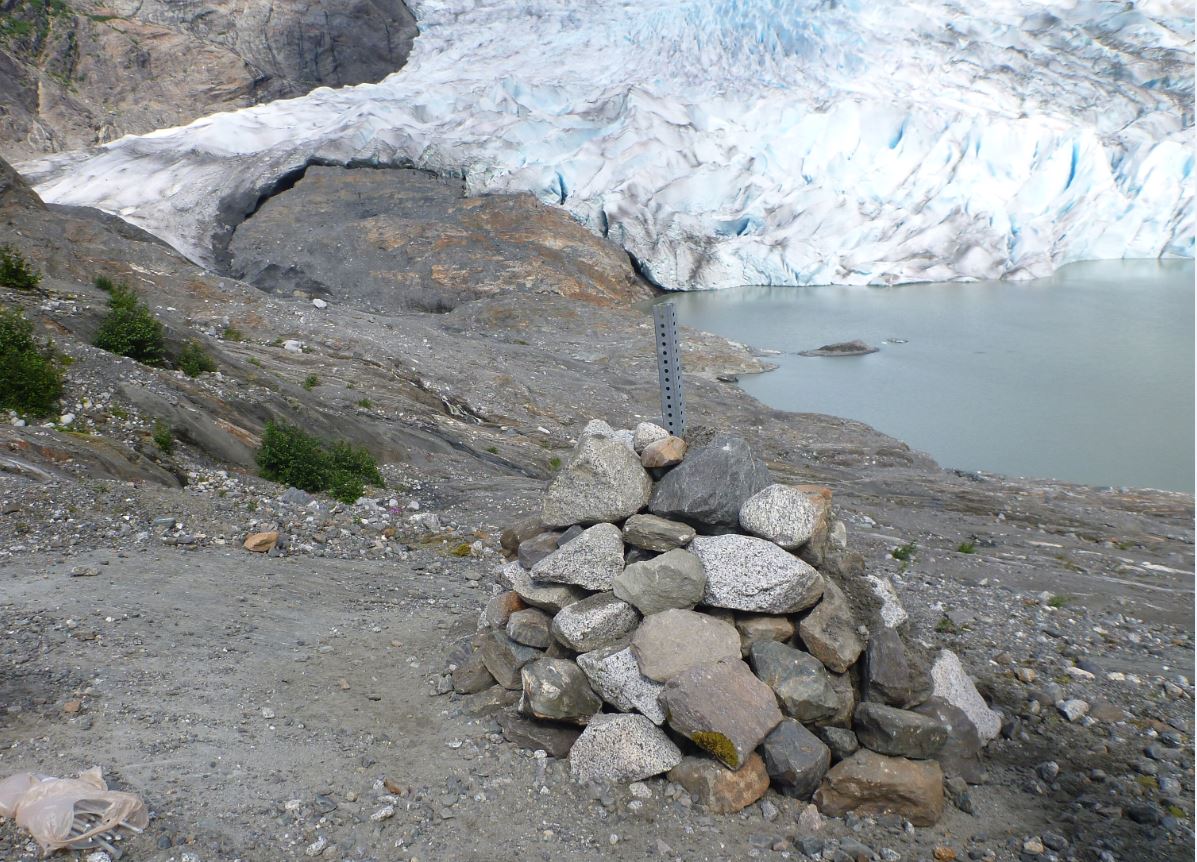
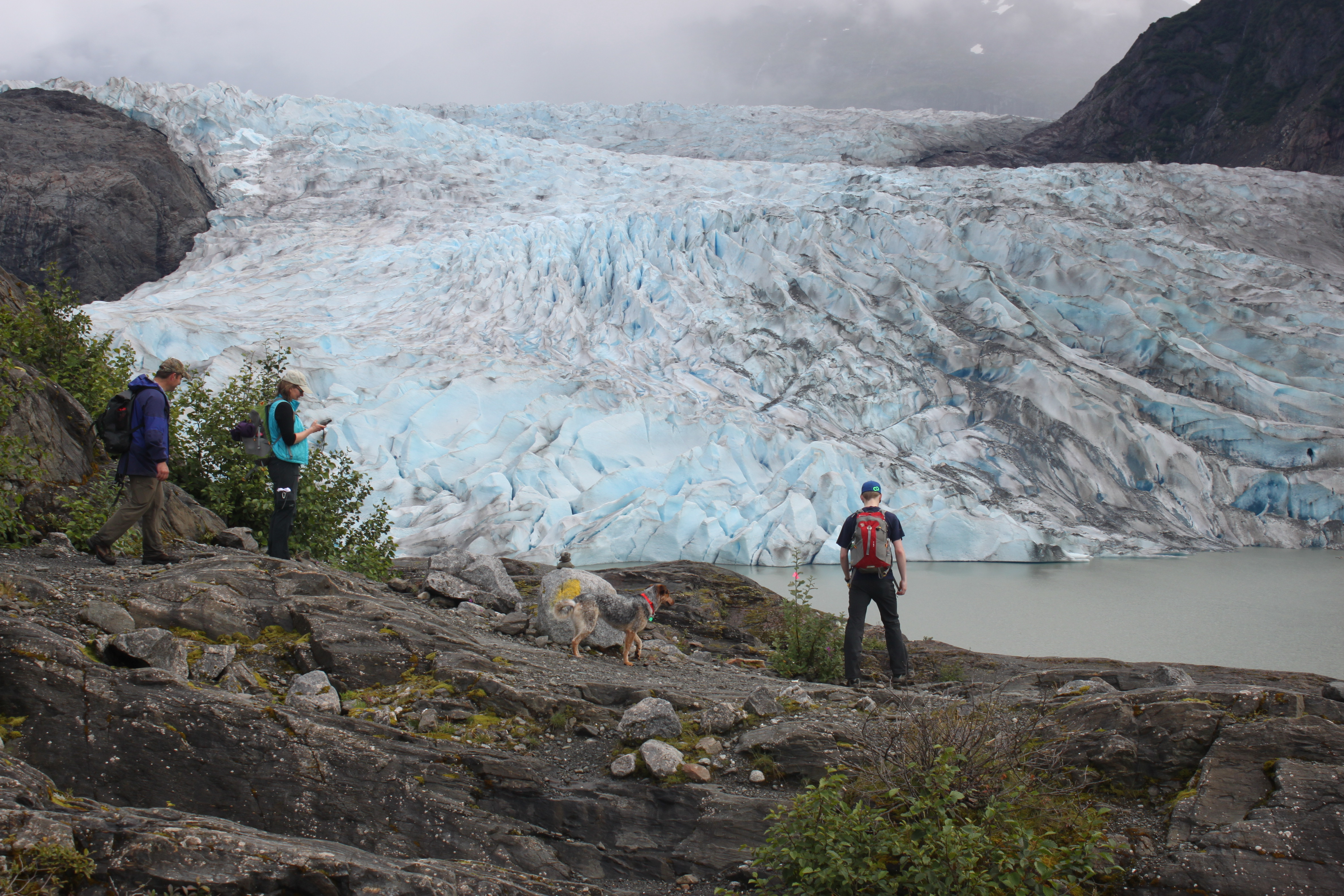
Colton Tersteeg, his parents Jeff and Diana, and their dog Buddy hiked to the glacier on Friday and built some of the rock cairns that the signs will be planted in. (Photo by Lisa Phu/KTOO)

The signs could serve another purpose as well. Tersteeg hopes it’ll cut down on the search and rescue efforts that take place in the area.

The West Glacier Trail is maintained by the U.S. Forest Service. But many people hike off the main trail to access the Mendenhall Glacier. They often end up on a rocky peninsula.

“A lot of the terrain looks very similar so it’s easy to get disoriented,” says Rich Etheridge, chief of Capital City Fire/Rescue. He says the city department is one of about a half dozen agencies that respond to emergencies in that area.

“It’s one of our most frequent spots for search and rescues in Juneau,” Etheridge says.

He says visitors to Juneau and locals go unprepared for the weather or the rough terrain, which can be very slippery and poorly defined. People get lost and injured. Etheridge has seen everything from an ankle sprain to a skull fracture. Rescue crews have airlifted, boated and walked hikers out of the area.

“We’ve had rescue crews where they’ve had to spend the night on the trail with the victim. It’s not pleasant for anybody,” Etheridge says.

He says Tersteeg’s sign project could help.

“I think it’ll speed up the time for locating victims and hopefully it’ll also make people a little bit more aware of their surroundings,” Etheridge says. “Yes, the Mendenhall Glacier is in our backyards, but it is still the wilds of Alaska.”

Tersteeg says volunteers will help build 11 more rock cairns. (Photo courtesy Colton Tersteeg)

Tersteeg has been organizing the project all summer and has gotten a lot of help from community members. On Friday he and his parents hiked out to near the face of the glacier. They piled up a bunch of large rocks in four spots where signs will be planted.

That leaves 11 more trail markers to be built. Tersteeg says the signs will come later.

Editor’s note: A previous version of this story misidentified Colton Tersteeg’s rank in the Boy Scouts. Tersteeg is pursuing the Eagle Scout rank, but has yet to attain it. The headline and story have been corrected.

Forgiving without forgetting: A Tlingit village up in smoke

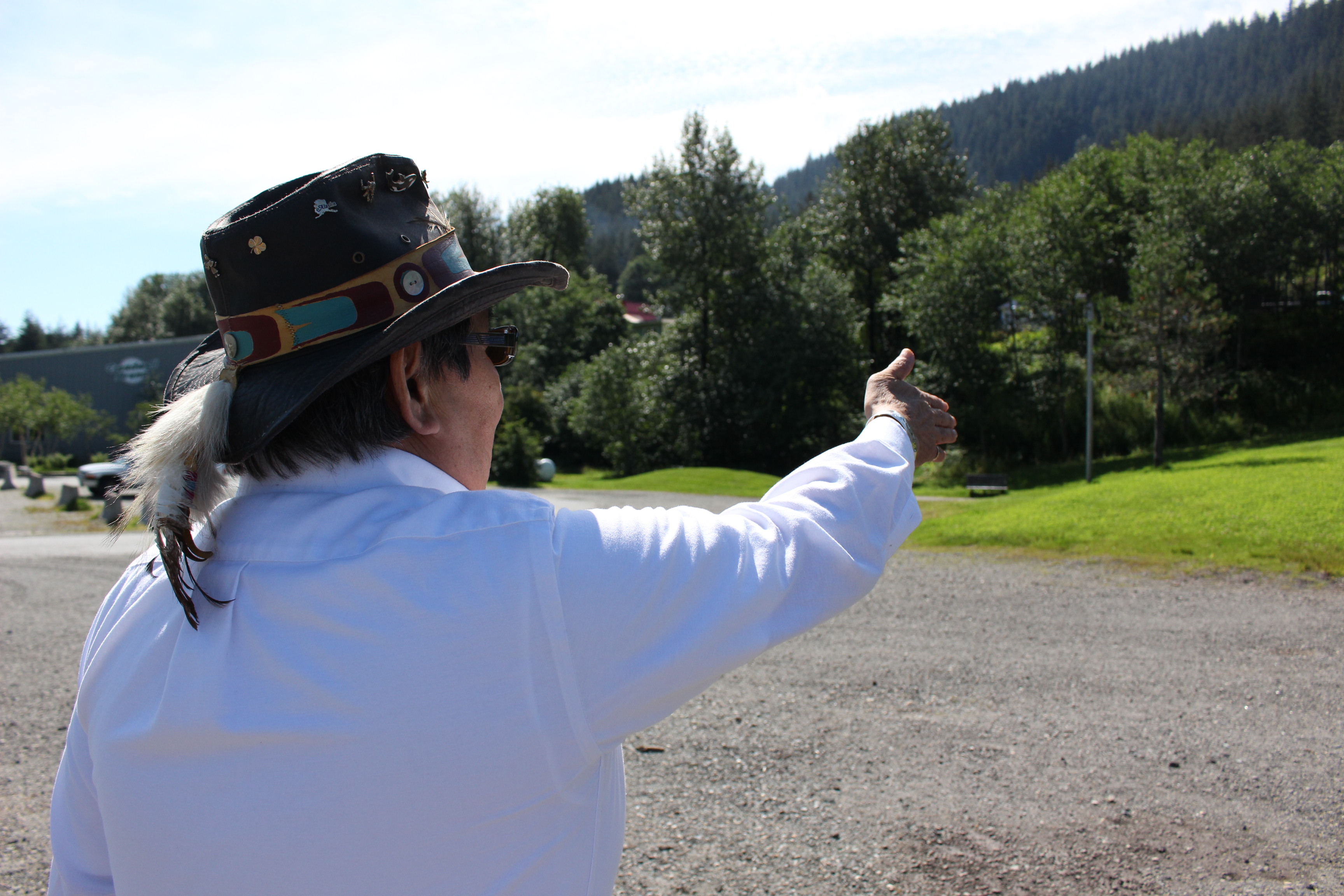
John Morris remembers the spot where his house once stood. (Photo by Elizabeth Jenkins/KTOO)

In 1962, the Douglas Indian Village was set ablaze to make way for a new harbor. This month marks 53 years since the city displaced households of Tlingit T’aaku Kwáan families. Little to no restitution has ever been offered.

The Douglas Indian Village was a winter spot for the T’aaku Kwáan people. Water flowed underneath a row of about 20 structures on pilings. There was a saying, “this was where the sun rays touched first.”

The village had no running water or electricity. But to John Morris it was home.

“That was the trail I used to walk to go to school right here. But my house was right where that truck is right now,” he says.

Where we’re standing has been filled with gravel. The water no longer comes up to this point. It’s been turned into Savikko Park, a place where children play Little League and families grill out hamburgers.

Morris remembers seeing his childhood home here going up in smoke.

“We left everything as is in the house with the thought that if they saw that we hadn’t moved anything out that they would maybe prolong the burning. It didn’t stop them.”
Fishing nets, clothing, dishes–everything.
“There are no pictures of my childhood. It was all burned up in that house,” he says.

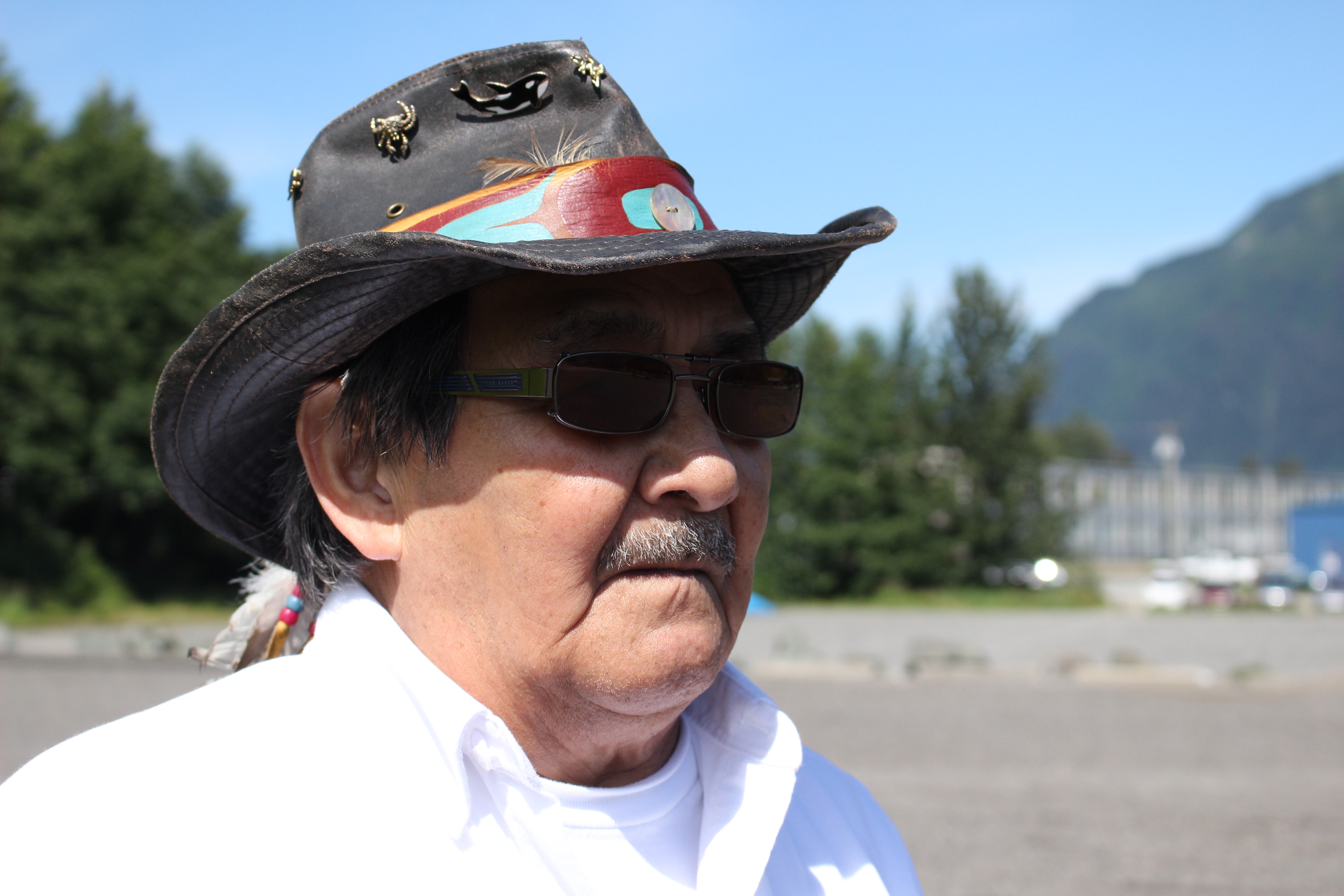
Morris is a carver, teacher and tribal leader. At 75 years-old, he’s also one of the last living members of the tribe to witness the burning of the village in 1962. He remembers, back then, racial tensions were high. He delivered newspapers as a kid.

“And I had a paper sack that had Juneau Empire on it. And as long as I had that paper sack I could go anywhere in Douglas. Once I took that sack off people would tell me, ‘Get down to your village.’”

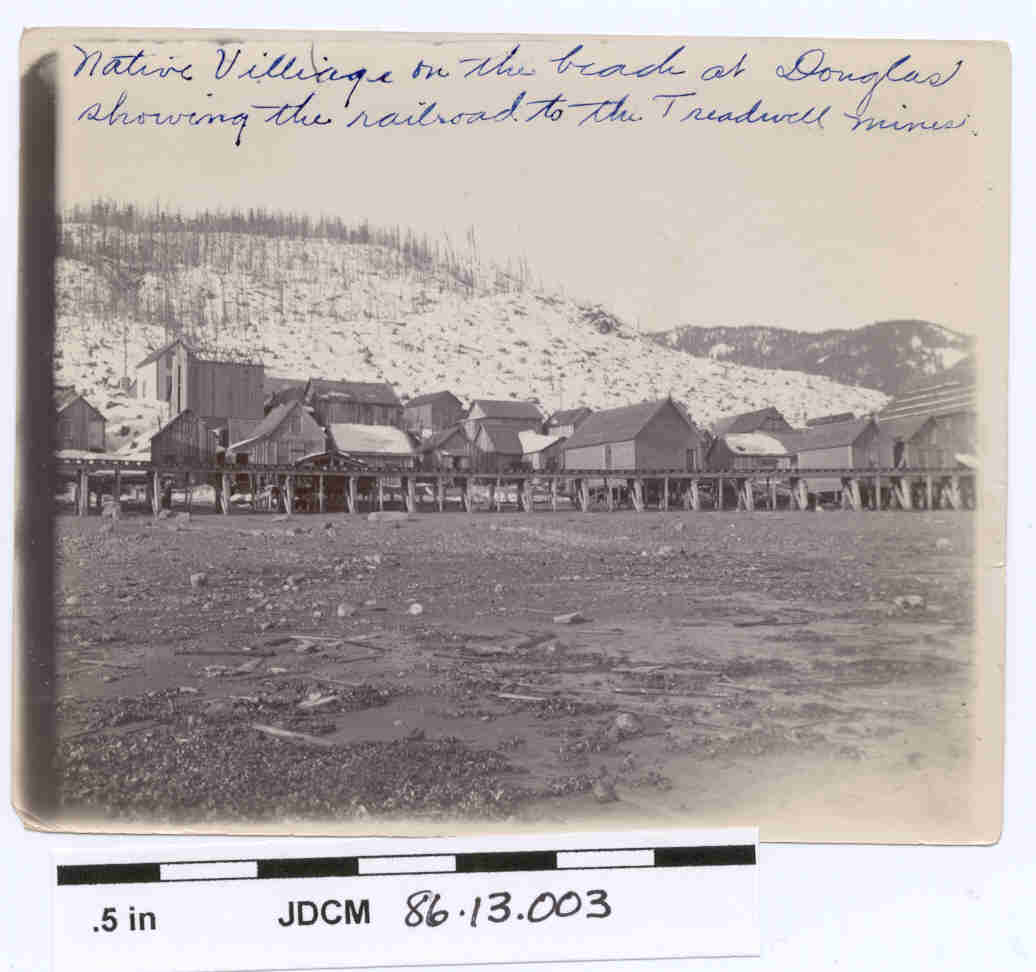
This photo shows the Douglas Indian Village and railroad to the Treadwell mines in 1900.
This photo shows the Douglas Indian Village and railroad to the Treadwell mines in 1900. (Courtesy Juneau-Douglas City Museum)

In 1946, the Douglas Indian Association was looking for boat loans. At the time, boats were kept under the house. But that wasn’t deemed suitable. So the city and the Army Corps of Engineers were asked to build a harbor where the village stood–with the understanding the village would be rebuilt.

That plan didn’t go anywhere.

“But the plan for the harbor stayed on the books and in 1962, the City of Douglas destroyed the Indian village to build that,” says attorney Andy Huff. He put together a formal report in 2002 on what happened for the Montana Indian Law Resource Center.

Back in the 60s, the City of Douglas found a loophole to condemn the Native village: Most of its occupants were gone to fish camps in summer.

“Even so, the city didn’t have jurisdiction over the houses in the first place. It was a federally protected enclave.”

Huff  says when he was doing his research, two more red flags stood out. One was the Bureau of Indian Affairs, the agency that’s supposed to help, did nothing to intervene.

“They just flatly refused to get involved even though there was this plan to kind of destroy the village,” Huff says.

The other red flag was a possible conspiracy.

“I found that two members on the city of Douglas zoning commission, which was the entity in charge of destroying this village, were also members of the Bureau of Indian Affairs at the same time. ”

They were Charles Jones and A.W. Bartlett. Both men resigned from the zoning and planning committee citing conflict of interest. But the plans to burn the village were already underway. Huff says that’s an obvious breach of trust. When he put the report together 13 years ago, he thought it would affect change but no restitution has been offered. He thinks, even after all this time, there’s still a legal case.

“I don’t think the federal government can argue it doesn’t know exactly what happened and what the issues are in light of the report coming out and being released by the tribes,” he says. “Something should have happened by now.”

The Bureau of Indian Affairs could not be reached for comment.

Morris says his uncle wasn't going to leave. He had to pull him out before the fire began. (Photo by Elizabeth Jenkins/KTOO)
Morris says his uncle wasn’t going to leave. He had to pull him out before the fire began. (Photo by Elizabeth Jenkins/KTOO)

After the controlled burn in 1962, the village was never rebuilt. The Douglas Harbor and eventually the park were constructed in its place. Morris, who was on military leave at the time, says he went back to Fort Hood, Texas, changed.

“I went back with a bitterness. A bitterness that I’m not going to have anything to come back to. I don’t have a home. The people I grew up with, I got to see firsthand, how they treated us people, us Natives,” Morris says.

It took years for him to come back to the Juneau-Douglas area but he did. He says sometimes friends tell him he should file a lawsuit; he could be a millionaire.

“My response is that’s not what I’m after. I do want to see that corrected but it will never leave me. It will never leave me. It lays dormant and I don’t like to touch it unless I have to,” he says.

Morris says he forgives but he doesn’t forget. He would like to see restitution for the T’aaku Kwáan people.

Site notifications
Update notification options
Subscribe to notifications