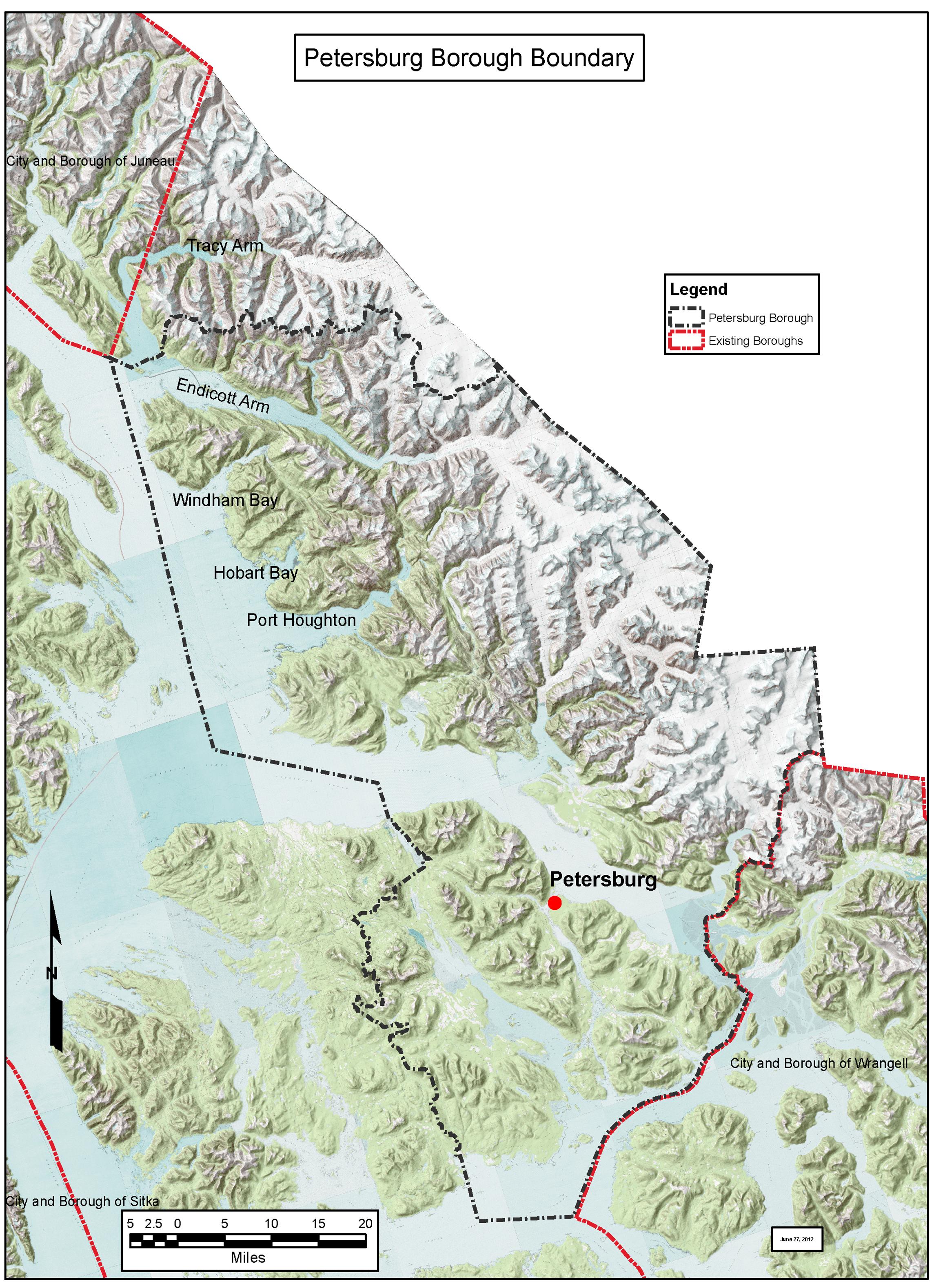
Attorneys for the State and two Southeast communities argued in court on Wednesday afternoon on whether the right procedure was followed when drawing up a potential boundary between the municipalities.
The City and Borough of Juneau says that the Local Boundary Commission did not consider their evidence or properly process its annexation petition for contested land between Holkham Bay and Cape Fanshaw.
The LBC argues that they considered all of the evidence when the Petersburg Borough incorporation petition was approved last year, while Petersburg argues that there was already substantial presented evidence which demonstrated their ties to the disputed area.
Here’s a sample of the arguments:
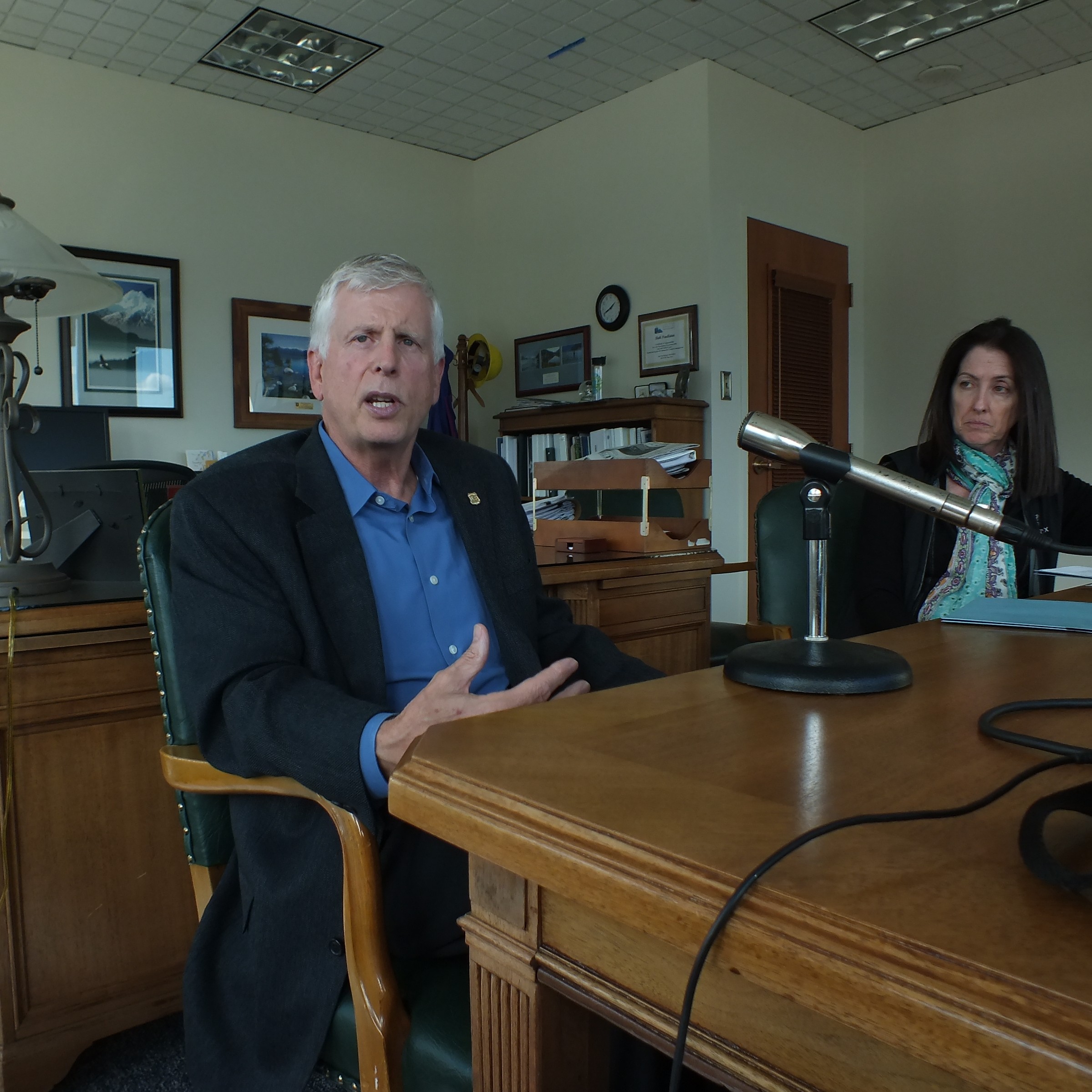
Those are the voices of state attorney Erling Johansen who represented the Local Boundary Commission, Jim Brennan representing the Petersburg Borough, and Amy Mead who is the attorney for the City and Borough of Juneau.
Juneau Superior Court Judge Louis Menendez listened for about an hour-and-fifteen minutes on Wednesday on the CBJ’s appeal of the LBC decision on the Petersburg Borough incorporation petition. He may issue an opinion anytime within the next six months.
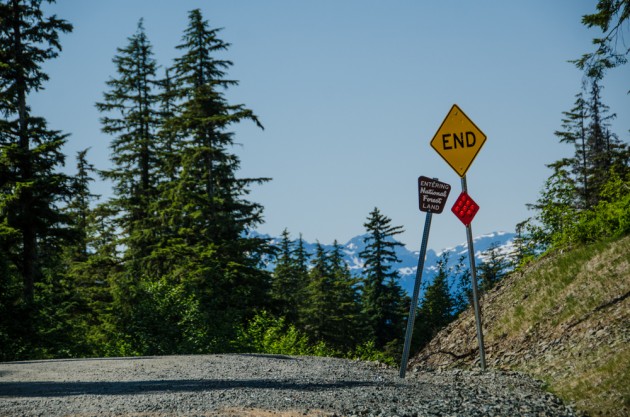
The current end of Veterans’ Memorial Highway, also known as Glacier Highway. Photo by Heather Bryant / KTOO.
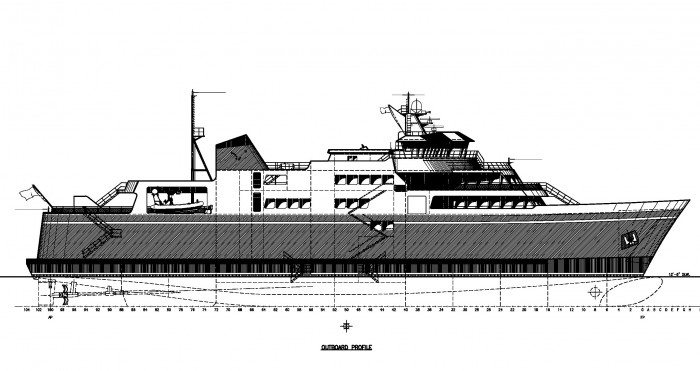
Proposed Alaska Marine Highway day boats are now included in the Juneau Access road project.
The state transportation department recently updated the Supplemental Environmental Impact Statement to reflect how the new Alaska Class shuttle ferries would be used if a road out of Juneau is built.
In public comments about the new ferry plan, some Southeast residents worry the state is trying to make the two projects dependent on each other. That’s because the state’s preferred road alternative along the east side of Lynn Canal would stop just north of the Katzehin River, where motorists would board shuttle ferries for Haines and Skagway.
While DOT officials maintain there is no connection, spokesman Jeremy Woodrow said the state needs to keep both in mind during the planning stages.
“It would be irresponsible for us to not include the Alaska Class Ferry Project as part of the Juneau Access Project since it’s a project the department is working on. So we can’t ignore either situation,” Woodrow said.
Shuttle ferry drawing by Eliott Bay Design Group. Courtesy Day Boat ACF Design Study Report.
A day before the updated alternatives were released, Gov. Sean Parnell insisted his decision to change the Alaska Class Ferry project from a mainliner to day-time shuttle boats was independent of his push for a road up Lynn Canal.
“Certainly, they can be connected in a person’s mind, but when I made the decision to go from a 350-foot vessel, that was done at the time because that design had driven costs up from $120 million to $167 million and it was still going up,” Parnell said. “That’s where we got two, smaller Alaska ferry designs, from that calculation.”
The revised Juneau Access alternatives include a highway ending at Sawmill Cove in Berners Bay, where a new terminal would be constructed for ferries north. That alternative incorporates a road along the west shore of Lynn Canal from William Henry Bay to Haines.
Marine alternatives in the SEIS include mainline, day boat and fast ferry service in Lynn Canal.
The Federal Highway Administration is expected to issue a final Supplemental Environmental Impact Statement and Record of Decision next year, kicking off public hearings in Juneau, Haines and Skagway.
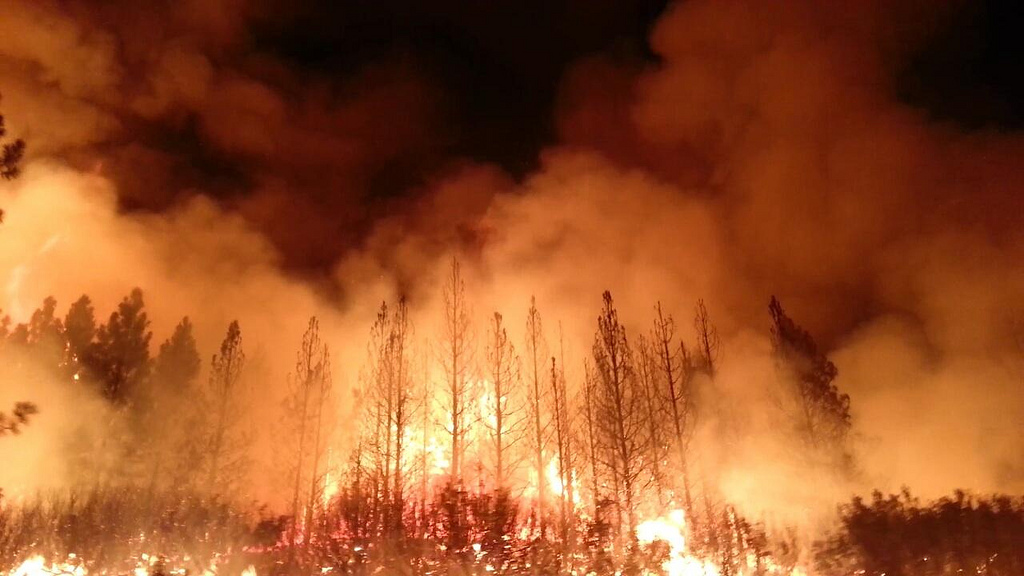
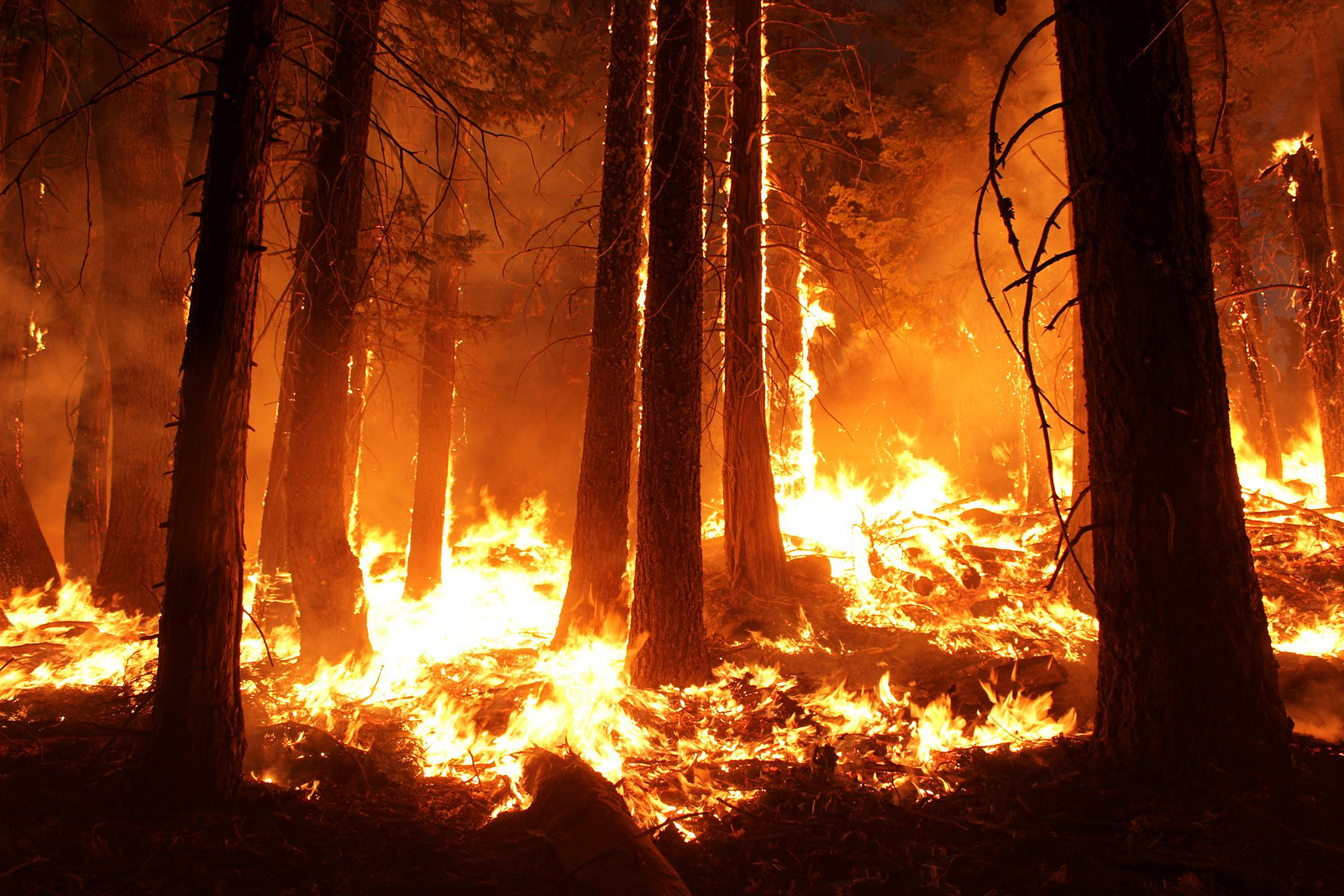
The Rim Fire in the Stanislaus National Forest near in California began on Aug. 17, 2013 and is under investigation. U.S. Forest Service photo via Flickr Creative Commons
The head of the U.S. Forest Service says fire suppression efforts are putting such an enormous budgetary pressure on the agency that other programs and activities, even staffing levels, are being limited or cut back.
We’re having another challenging fire season.”
Chief Tom Tidwell stopped in Juneau last week for a Chief’s Review of area facilities. He had just visited the Stanislaus National Forest, the site of the Yosemite Rim Fire.
U.S. Forest Service Chief Tom Tidwell answers a reporter’s question as Associate Chief Mary Wagner listens during their visit of Forest Service facilities in Juneau. Photo by Matt Miller/KTOO News
Tidwell said staffing levels have declined at least 33-percent for both the Alaska Region and the entire Forest Service over the last decade.
Over the last ten years, we’ve had to, every year, shift more and more of our budget to fire suppression.”
He said that responding to fires with essentially a flat budget over the last decade has affected forest management, recreation, and responding to land use requests.
So, how do we gain more capacity to meet the needs from the public? Because even though our capacity has gone down over the last ten years, the demands from the public have not gone down at all. In fact, from everything I see and hear, they are higher, much higher today than a decade ago.”
Tidwell said Congress, through sequestration, had reduced the Forest Service’s initial request and allocated a total of $950-million dollars for Forest Service fire suppression efforts around the nation.
During an interview on Thursday, Tidwell said that they planned to transfer funds from other Forest Service programs to pay for this season’s fire suppression costs.
One of the results of all this has been the need for us to transfer potentially up to $600 million this year to pay for the cost of suppressing these fires. So, it’s going to have impacts on our ability over the next four weeks to be able to carry our the rest of our programs, and we’ll do everything we can to mitigate that. But there’s no question that’s going to slow down some of the work and really postpone work that normally would be continuing into October and November because things will be delayed. As you well know, especially up here, our field seasons for the most of our National Forests are not twelve months.”
Tidwell reports that places like California are experiencing record temperatures and record low moisture levels. Nationwide, he said the fire season is actually below a ten-year average for acreage and number of fires. The difference, he said, is that some of this year’s fires are near population centers and require a concentrated and deliberate response with a lot of resources. He also said that most of the media rarely recognize that they put out hundreds of fires every day or about 98-percent of all fires during their initial response.
Additional coverage on September 4, 2013 at 11:37 am
Forest Service Chief Tom Tidwell said his agency will continue to rely on the support of conservation groups to perform forest restoration, as long as federal dollars for the work continue to dwindle. Tidwell was in Southeast Alaska last week for a review of the Forest Service’s regional operations. The hands-on review by agency officials takes place about once every seven years.
Original story on August 30, 2013 at 9:01 am
The Rim Fire in the Stanislaus National Forest near in California began on Aug. 17, 2013 and is under investigation. The fire has consumed approximately 199,237 acres and is 32% contained. U.S. Forest Service photo by Mike McMillan via Flickr Creative Commons
The head of the U.S. Forest Service toured facilities and met employees in the Capital City on Thursday.
Chief Tom Tidwell is making the rounds as part of a Chief’s Review.
He said it’s intended to get a sense of the challenges that the Alaska Region and communities are facing.
To gain the insight to make sure that we’re doing everything we can in the Washington office to be able to support the Region with their efforts. And also to ensure that we have a good understanding of some of the things that we need to work on that will help us a better job to deliver our programs. A lot of the review has been sitting down and having discussions with our partners and with community leaders.”
Chief Tidwell is accompanied by the Associate Chief of the Forest Service Mary Wagner.
Some of the scheduled activities on Thursday included a Budget and Talent Management Panel and a visit of the new Juneau Forestry Sciences Laboratory at Auke Lake. He was scheduled to wrap up his visit to Juneau on Friday.
Chief Tidwell said he had just arrived in Juneau from the Stanislaus National Forest and Yosemite National Park, site of the devastating Rim Fire.
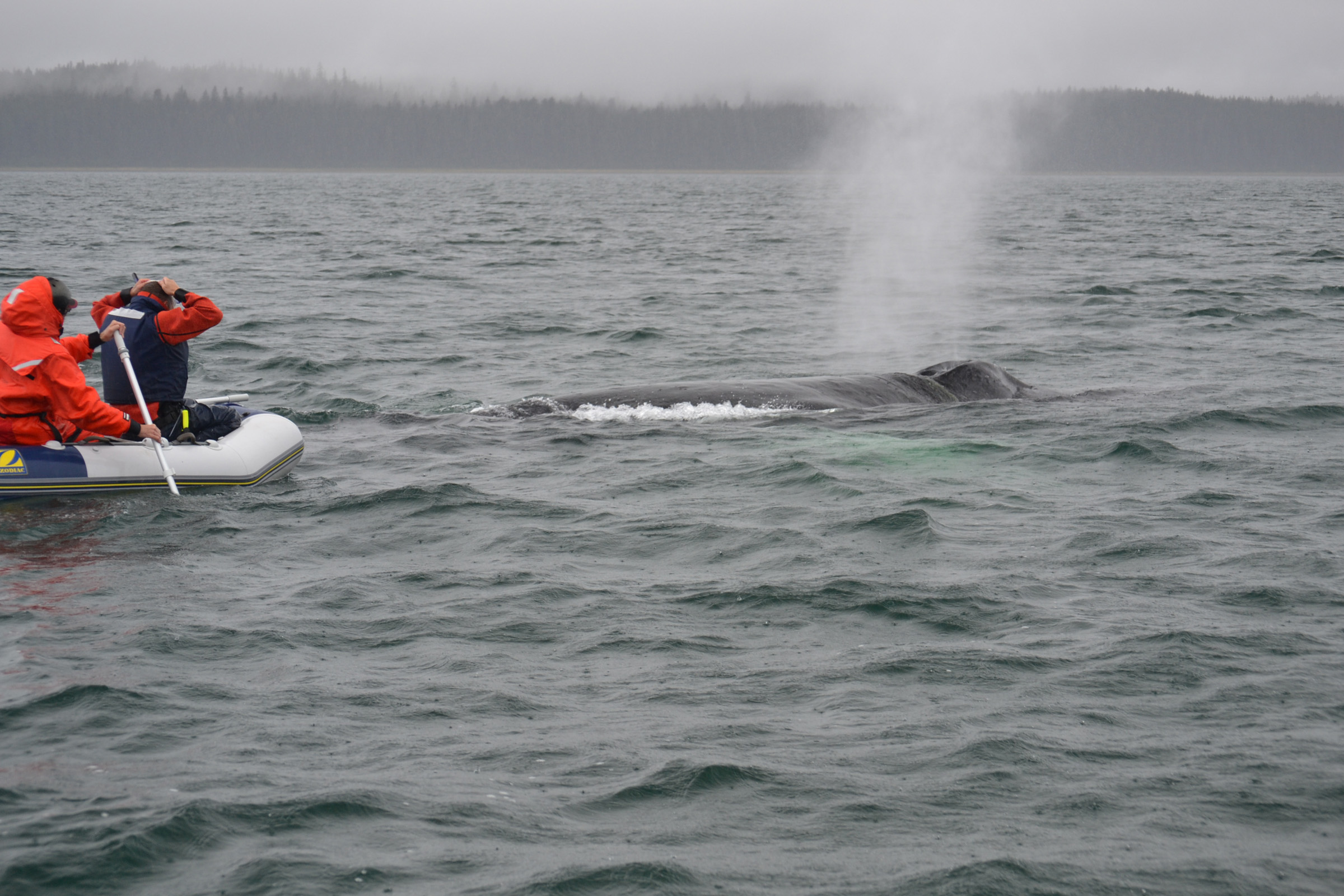
Efforts to cut a humpback whale free of gill netting it has been dragging around Southeast Alaska for the last 12 days continue to fail.
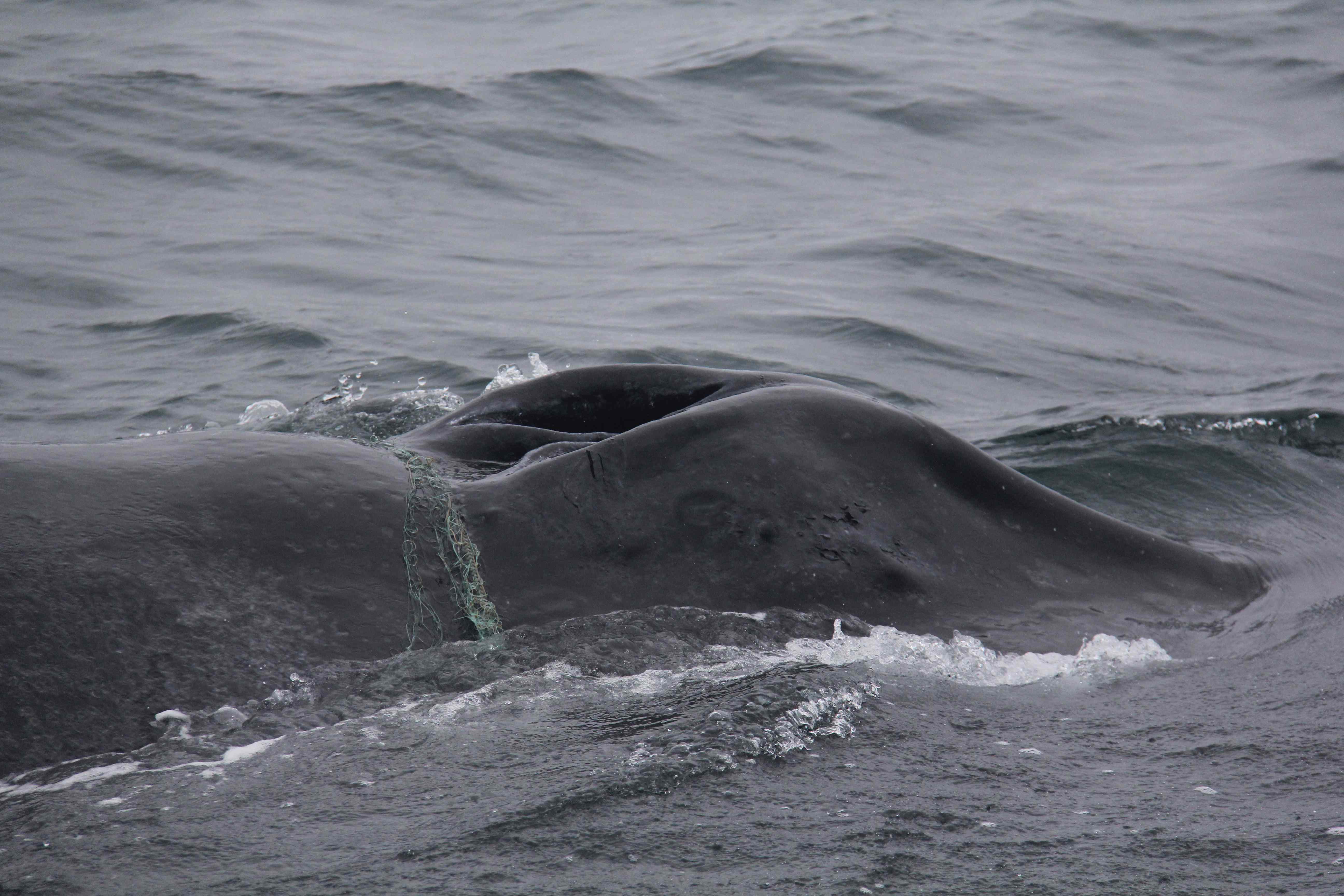
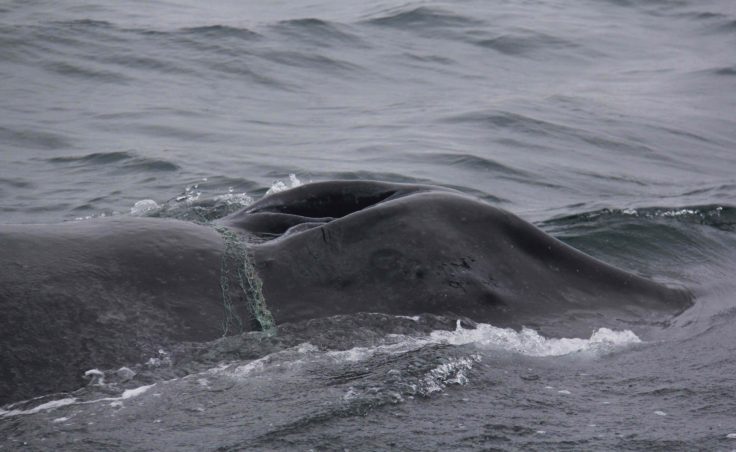
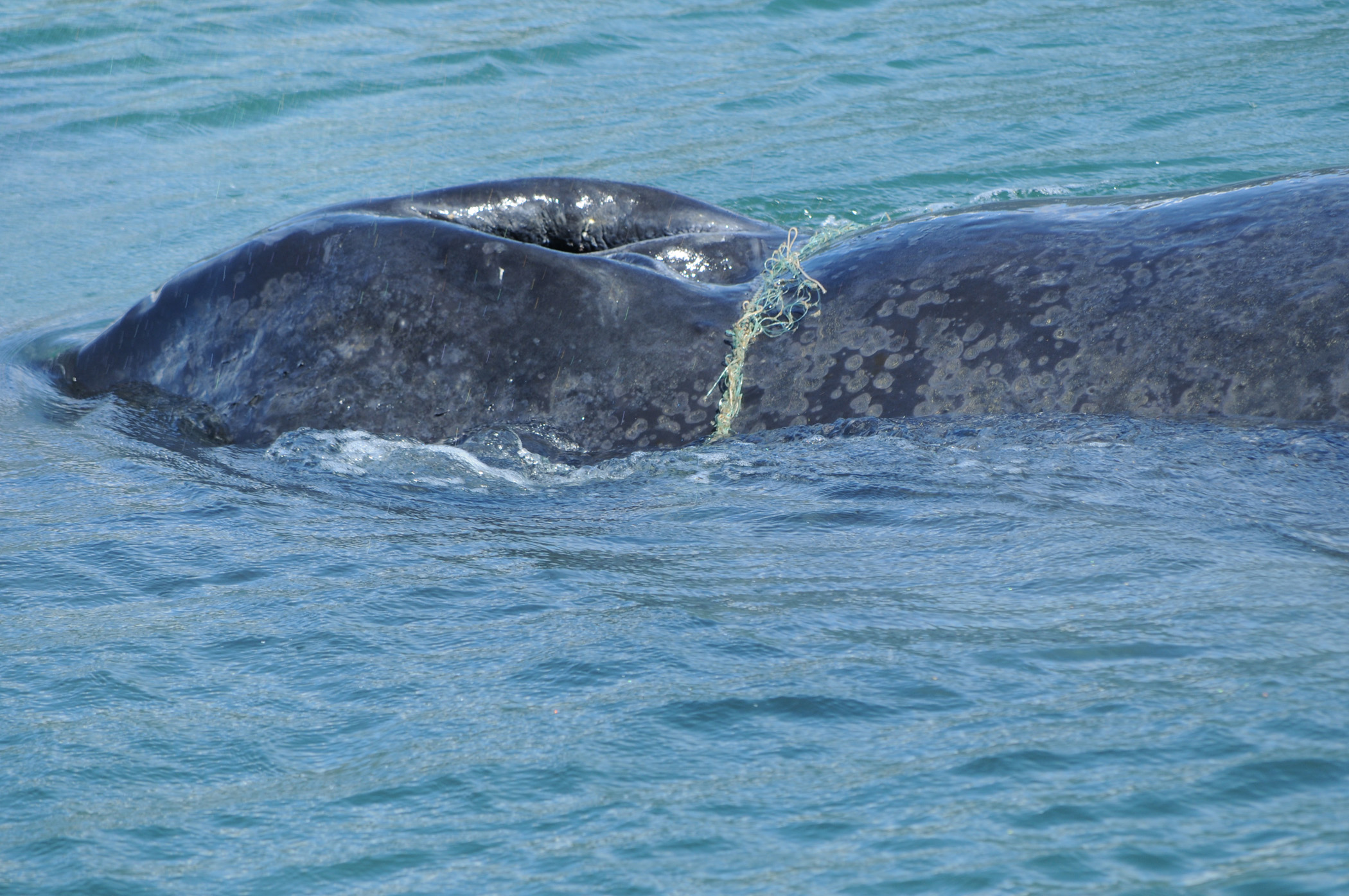
The humpback whale on Friday. The line is wrapped near the blowhole; most of the gill net fishing gear is underneath the animal. (Courtesy NOAA)
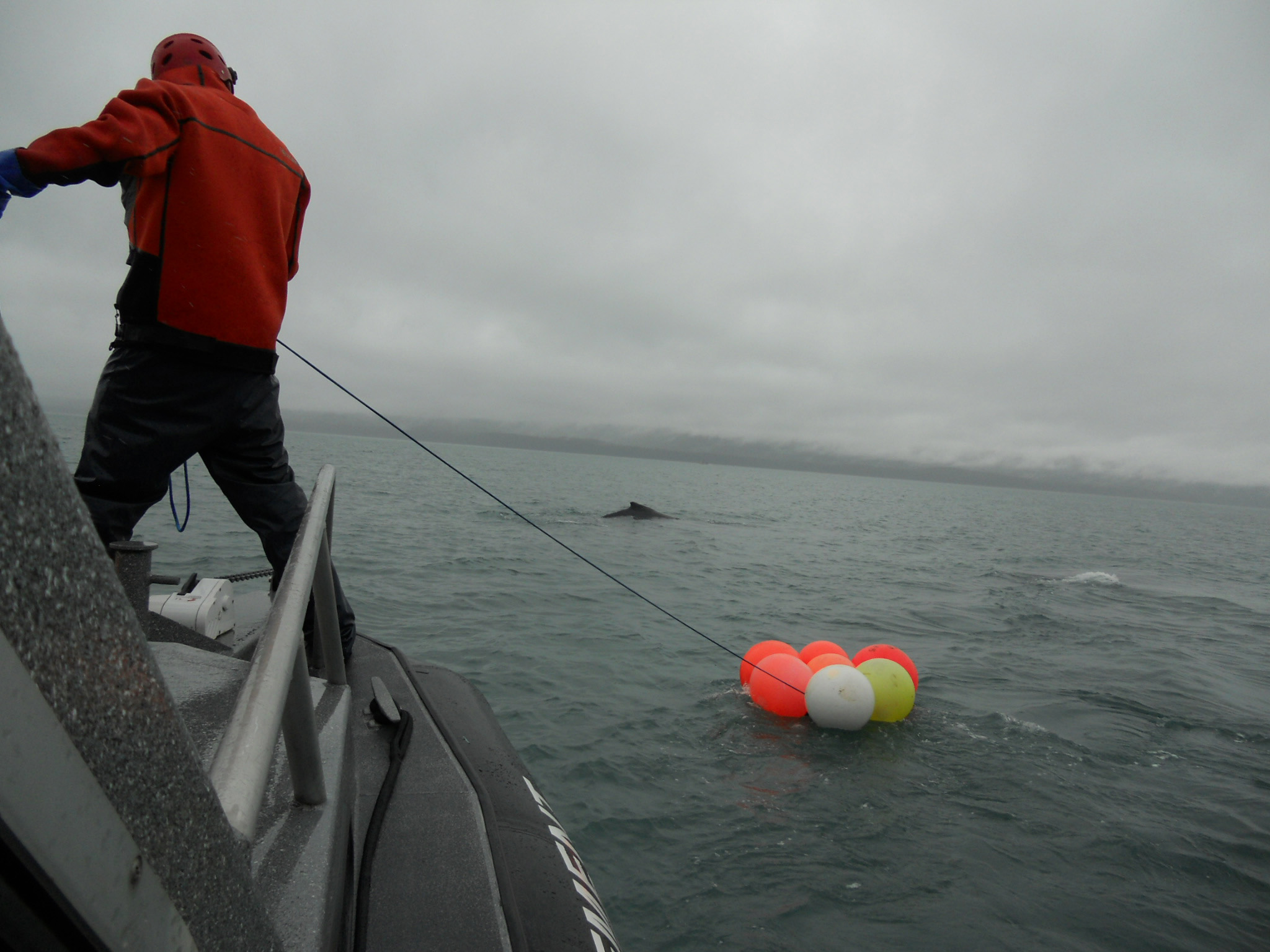
A marine mammal response team member prepares on Saturday to attach polyball floats to the fishing gear tangled on the whale. The floats are intended to lift the weighted fishing gear, making it easier to work on. (Courtesy NOAA)
Response team members Fred Sharpe of the Alaska Whale Foundation, and Kirk Hardcastle, a fisherman, move towards the entangled whale on Saturday in an attempt to cut some of the gear loose. (Courtesy NOAA)
Teams from Juneau have made several unsuccessful attempts to cut the fishing gear free from the whale over the weekend. Some gear has been removed, but a “significant” amount remains, according to the National Oceanic and Atmospheric Administration.
The agency says the whale can breathe and isn’t in immediate danger.
Disentanglement teams are waiting for calmer waters before trying again later this week. A satellite tag that a team in Petersburg attached lets officials track the whale.
Team members say it’s been challenging because the weighted gear is beneath the whale, and because the whale has been evasive.
NOAA spokeswoman Julie Speegle says the whale is in Chatham Strait.
Johan Dybdahl, Icy Strait Point director of special projects, talks about the area’s history as a cruise ship is anchored behind him. Huna Totem Corp. owns the attraction.
Hoonah’s village Native corporation may build its own cruise-ship dock, bypassing a city effort funded by the Legislature.
Huna Totem Corp. executives say it won’t use a berthing facility planned by the city, because cruise lines don’t like the location.
It prefers a different spot, closer to its Icy Strait Point renovated cannery attraction, which brings the ships to town.
CEO Larry Gaffaney posted a letter to shareholders recently saying the corporation will pursue funding and construction of its own pier, without city involvement.
Gaffaney also wrote that the city’s preferred site, called Shaman Point, should be protected for its cultural values. He could not be immediately reached for further comment.
The Legislature several years ago awarded the city a grant – now $15 million – to build a multipurpose dock. Lawmakers said cruise ships would be its main customers.
The state Division of Community and Regional Affairs recently suspended that grant, meaning none of it can be spent.
Director Scott Ruby says the state will take it away entirely, if the city proceeds with its plans.
“Regardless of what the state thinks about whether it’s a good location or a bad location, if the cruise-ship industry is saying ‘We will not use it,’ then there’s a problem there,” Ruby says.
He met with Hoonah officials Thursday. He says there was a good discussion, but no resolution.
Hoonah Interim City Administrator Bob Prunella says his delegation gave the state new research backing its dock location.
“The city feels like it’s (done) lots of study, geo-tech study and wind and waves on all three sites. And this one comes out looking like, by far, a preferred site for an operation like this,” Prunella says.
He says a site preferred by Huna Totem and the cruise lines would face rough winter weather. That could prevent other uses, such as commercial fishing boats or barges.
Prunella remains optimistic, even though there have been no recent meetings with the corporation or the cruise lines.
“We will move forward and see how this pans out. Give it another try, make some more effort. I’d like to see effort on both sides to come to something that everyone can live with,” he says.
Community and Regional Affairs Director Ruby also hopes the parties can come to an agreement. But that has to be soon.
His boss, Commerce Commissioner Susan Bell, recently gave the city of Hoonah notice that it would lose the dock grant if no compromise was reached. The deadline is in a week or so.
Hoonah is 40 air miles west of Juneau. It has around 800 residents, including many Huna Totem shareholders.
The humpback whale is tangled in a tight wrap of netting, visible behind the blowhole. This photo was taken Wednesday in Juneau waters. (Photo courtesy John Moran/ NOAA)
National Marine Fisheries Service spokewoman Julie Speegle said a disentanglement team was out Wednesday observing the whale. Today, the three person team is out trying to cut it free.
The whale has a buoy attached to it for spotting, as well as a tracker. It was in Stephens Passage on Thursday. Speegle didn’t want to disclose its specific location, for fear of people chasing it.
But with the Labor Day weekend, sightings are especially likely. Officials are asking boaters not to intervene and to stay clear of the whale, both for its well-being and their own.
“There is also a large amount of gill net in the water that’s attached to the whale,” Speegle said. “And that could pose a hazard to vessels as well. So if you spot this whale, you’ll want to keep your distance.”
As of last report this morning, the whale had turned and was headed south.
(Check back later for updates.)
Close
Update notification options
Subscribe to notifications
Subscribe
Get notifications about news related to the topics you care about. You can unsubscribe anytime.