

Alaska

Front Street Clinic on the chopping block

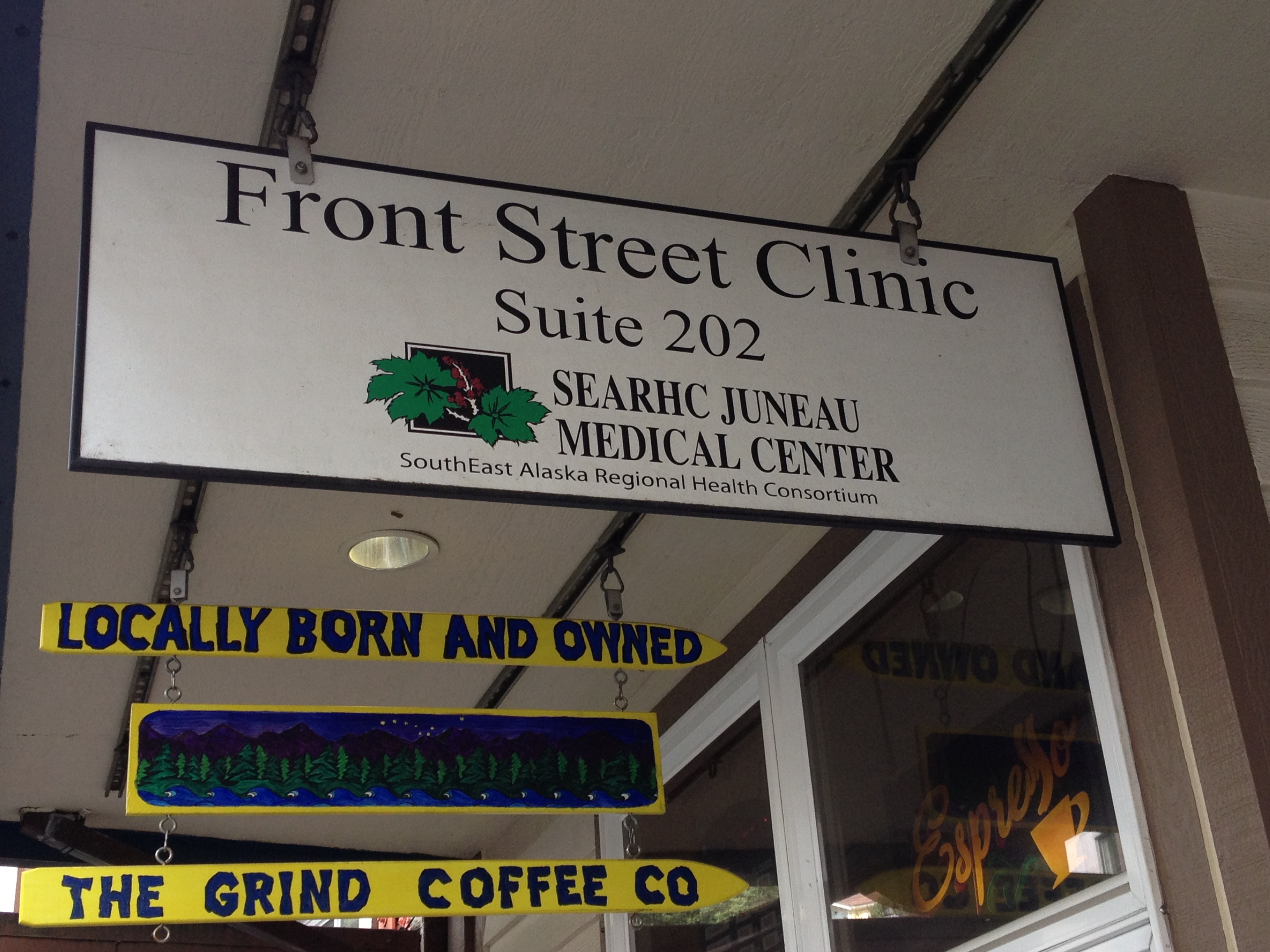
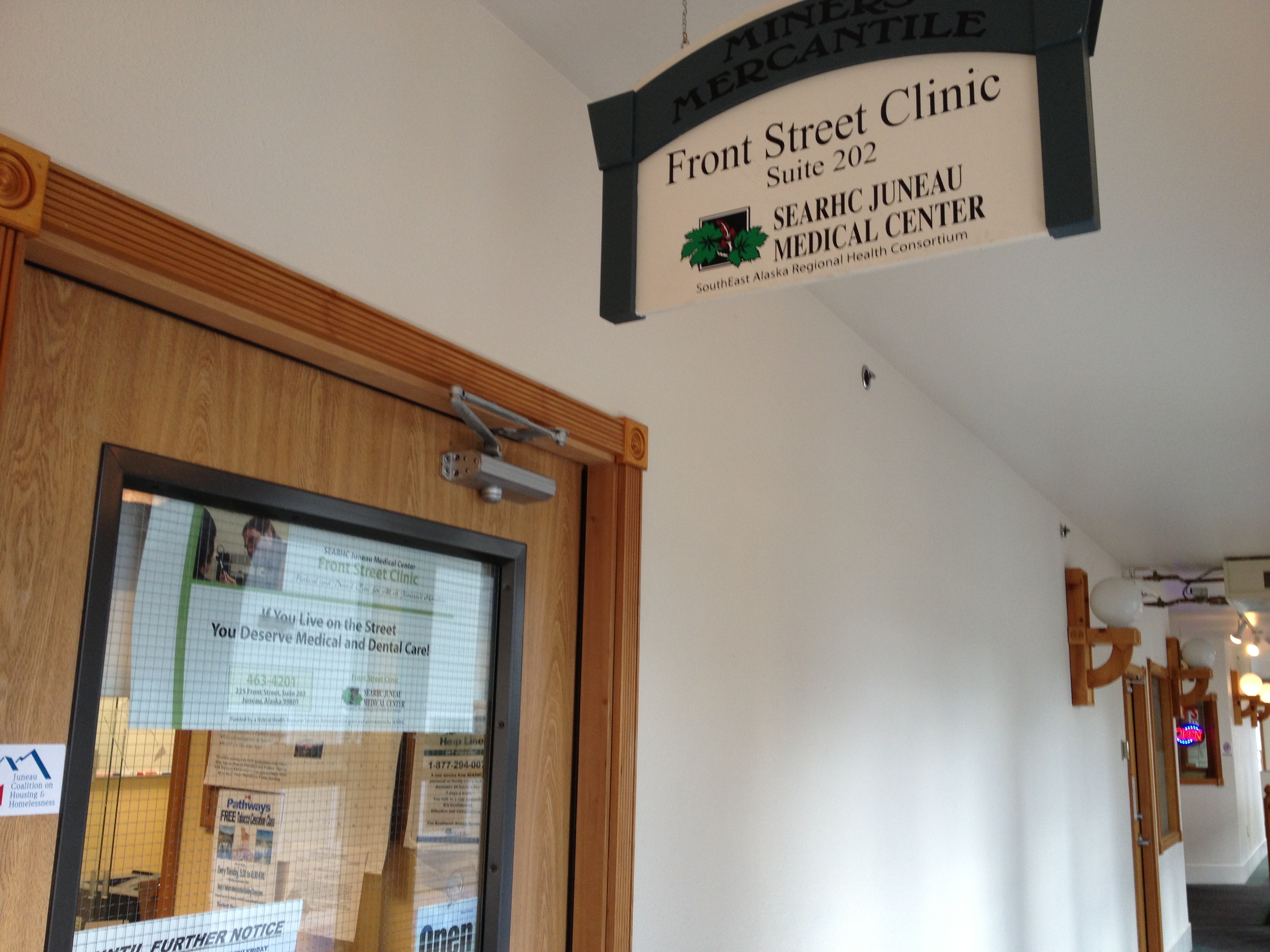
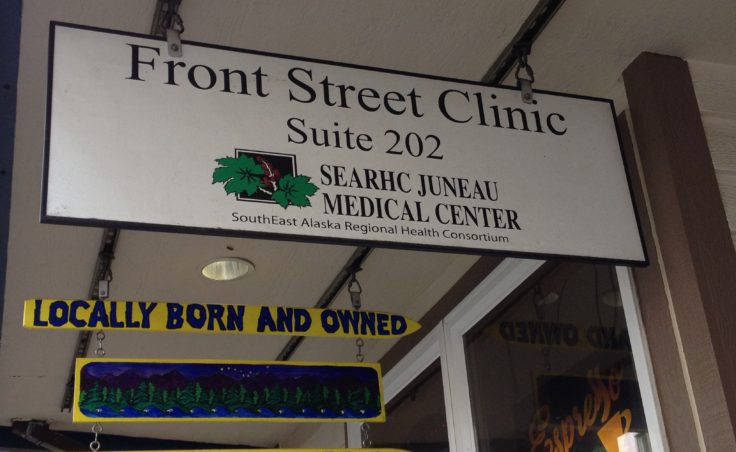
Juneau’s Front Street Clinic is in danger of shutting down due to fiscal reasons.

The public health facility, run by the Southeast Alaska Regional Health Consortium, caters to the capital city’s homeless and low-income residents.

Up to 25 people a day visit Front Street Clinic to receive medical, dental, and behavioral health services. 59-year-old veteran Michael Needham is one of them.

He’s having impressions made for dentures. “They’re very thorough with what they’re doing and I thank god every day for them,” Needham says.

Needham has been going to the clinic for three years and likes the way the staff treats him.

“Like I’m special right now, this is your time. That’s just what it’s all about. They don’t get interrupted or nothing. It’s really cool the way they do that,” he says.

Needham also has cancer, “See these things, little red dots are all cancer spots and I’ve been coming here for them.”

Janna Brewster is Front Street Clinic manager and medical provider. She says the health condition of clinic patients range. Some of them are very ill with diabetes, high blood pressure, lung disorders, cancer.

“Without Front Street, undoubtedly, some of these folks will die because they’re not going to have the day-to-day care that we can help them with.”

SEARHC communications director Michael Jenkins says the possibility of shutting the clinic down is based on federal budget cuts, including sequestration, as well as a reorganization of the regional health consortium.

Ten percent of Front Street patients are Alaska Native. They can go to SEARHC’s Ethel Lund Medical Center if the clinic closes. Brewster doesn’t know where the others will go.

“We have a very small number of patients that do have full disability services; we’ll be able to find other doctors in town that can take them. The largest portion will end up with no medical care at all,” Brewster says.

Dentist Ed Linsell has been practicing at the clinic for nearly all ten years of its operation. He says Front Street staff members are determined to do what it takes it keep the clinic open.

“I’m pretty outraged at how a whole population is going to be – they’re on the street to begin with but they’re going to be thrown out even deeper,” says Linsell.

The group of SEARHC employees has taken their fight to various people and organizations, including the Juneau Coalition on Housing and Homelessness. Dan Austin is a founding member.

“We consider this to be the most important, immediate issue for us. And so we will play whatever role we possibly can to keep Front Street Clinic open, whatever it takes,” he says.

Austin says closing the centrally located Front Street Clinic would take away more than just medical services.

“It serves as one of the main portals in this community to link homeless people on the street to possible services that might be available to them to help make positive changes in their lives. It’s a critical doorway for us.”

Clinic manager Janna Brewster says it’s her duty to tell the patients about Front Street’s possible closure. As soon as patient James Bouschor heard, he immediately started a petition. Within a week, he already has 500 signatures.

“I’m going to try and gather as many signatures as I can because you know not only me who’s needed help, but people that require daily medications and stuff that won’t be able to get it if Front Street closes,” he says.

SEARHC’s Michael Jenkins says the Board of Directors will decide whether Front Street Clinic will stay open or shut down at an upcoming meeting.


Editor’s note:  This sentence has been updated – “Up to 25 people a day visit Front Street Clinic to receive medical, dental, and behavioral health services.” The original story had cited the number of patients as being ten, but that only accounted for medical patients. The updated number of 25 includes dental and behavioral health patients as well. 

Democrats sue Redistricting Board over new map

Multiple maps were available during the last public comment period.
Multiple versions of maps were considered during the last public comment period.

A new lawsuit has been filed against the state redistricting board. This time, it’s by the Alaska Democratic Party.

In a couple of ways, the redistricting process is sort of like solving a Rubik’s Cube: It can be really frustrating, and every time you try to fix a part, you run the risk of messing up something else.

From the perspective of the Alaska Democratic Party, the map used for the last election was:

McKinnon: Outrageous.

But the newest version?

McKinnon: Is just bad.

Joe McKinnon is the party’s attorney. He says that while the redistricting board’s newest map solves some constitutional problems, it creates a few others. That’s why the party — along with Katie Hurley and Warren Keogh — filed a lawsuit against the board on Tuesday. There’s already another group based in Fairbanks that’s suing the board for different reasons concerning the Senate pairings of certain districts, and it’s possible this new lawsuit could be rolled in with that one.

McKinnon says his clients have a handful of concerns with the new map. They think the board, which is mostly made up of Republicans, took extra voters from the conservative Mat-Su region to make other seats more secure for their party.

“The Mat-Su has exactly enough population for five seats, and yet the board only put four seats within the borough and then split the other population, putting part in with Valdez and then part in with Anchorage.”

McKinnon says the way the lines were drawn in the Kenai Peninsula and Fairbanks are similarly problematic. He also says the state’s rural districts should have been better drawn to match Native corporation boundaries.

Now, McKinnon wants the courts to say the redistricting board has had enough chances to produce a constitutional map.

“The remedy we want is for the court to draw the final map, to appoint a master.”

Michael White is the redistricting board’s attorney, and he thinks the lawsuit is being brought more for political reasons than constitutional ones.

“I guess if I’m a betting man, I would say what they’re trying to do is blow up the plan with anything they possibly can in the hopes that they would get a master appointed, and that would somehow benefit the Democrats.”

White says he was surprised that the Democrats filed their own suit against the redistricting board, and that he doesn’t think their case has any merit. When it comes to the Mat-Su region, he says the decision to take some population from that area was necessary to pad surrounding districts that didn’t have enough voters.

“It isn’t just a simple matter of ‘Let’s draw this in isolation.’ There’s a ripple effect that you have whenever you move a single person — you start moving several hundred people.”

White adds that he doesn’t see basis for a complaint about rural districts. The map the redistricting board adopted was partially based on a plan offered by Calista, an Alaska Native corporation.

“If they don’t match Alaska Native lines, how come there is not a single Alaska Native interest that is making a challenge?”

The redistricting board is arguing that all legal challenges against the redistricting board be dismissed.

The courts are hearing the lawsuits on an expedited basis in an effort to finalize the state’s political boundaries before the 2014 election. It’s been three years since the redistricting process first started.

This story has been updated to include comment from the redistricting board.

Eight people rescued after separate sinkings

Updated story August 15, 2013 at 5:37 pm

A 71-foot tender that sank southwest of Petersburg early Wednesday morning has leaked some fuel.

During a helicopter flyover later that day, the Coast Guard spotted an oily sheen near the mouth of Duncan Canal. That’s where the Pacific Queen sank.

State officials monitoring the situation say a small amount of diesel escaped from the vessel. But they say fuel vents were secured before it sank, limiting the potential for a larger spill.

The Coast Guard says the Pacific Queen had the capacity to carry 3,000 gallons of diesel. But the skipper told officials the tanks held only 1,000 gallons.

A Department of Environmental Conservation situation report says the tender hit a rock before sinking. The skipper and two crewmembers were picked up by another fishing boat and taken to Petersburg.

An oil spill response vessel from Juneau is on the scene. DEC says it’s carrying 2,500 feet of containment boom, plus oil-skimming equipment.

The ship sank near Lung Island, about two miles east of Kah Sheets Bay, recognized as a sensitive environmental area. Officials say they’re planning for a possible larger spill.

The Coast Guard said the tender sunk in 40 fathoms of water. But state officials say the depth is unknown.

The state lists Joseph Lykken of Wrangell as the Pacific Queen’s owner. It was tendering for SeaLevel Seafoods, based in Wrangell. The company won’t comment on the sinking.


Updated story August 14, 2013 at 2:54 pm

A world-famous crabber rescued five people from a sinking seiner near Prince of Wales Island early Wednesday morning.

The Homer-based fishing vessel Time Bandit is known for its role in the “Deadliest Catch” reality TV series, which focuses on Bering Sea fisheries.

But right now, it’s in southern Southeast fishing for salmon, according to the vessel’s Facebook page.

The Time Bandit was near Dall Island, on the outer coast of southern Prince of Wales island, about 4:30 this morning. That’s when the 56-foot seiner Coral Sea ran aground.

It picked up the skipper and four crewmembers, who had gotten into a life raft.

At last report, the Coral Sea was partially underwater.

In a separate incident, the Pacific Queen sunk around midnight Tuesday near Lung Island, southwest of Petersburg and west of Wrangell.

Coast Guard spokesman Jonathan Klingenberg says the 75-foot tender’s crew asked for help after it began taking on water.

That vessel is sunk in about 40 fathoms of water. The cause of the sinking is still under investigation.”

He says the skipper and crewmembers abandoned ship and escaped in a life raft.

The Coast Guard dispatched a helicopter from Sitka. But the three on board were picked by the fishing vessel Windham Bay and taken into Petersburg.

This crew that was forced to abandon ship, they were prepared for a worse case scenario. They had a life raft that they could get on to, and they had an EPIRB which allowed them to be located in a timely manner.”

Klingenberg says the Pacific Queen had about 1,000 gallons of diesel on board. The Coral Sea had about 500.

He says the Coast Guard will monitor both sinkings for fuel leaks. So far, no sheen has been spotted.


Updated story August 14, 2013 at 12:32 pm

A Coast Guard H-60 helicopter is flying over the sites of two sinkings on Wednesday to check for any pollution.

The 75-foot tender Pacific Queen, homeported out of Wrangell, took on water and sank near Lung Island south of Petersburg early Wednesday morning. A thousand gallons of fuel were reported on board.

Later, the 56-foot seiner Coral Sea ran aground and was partially submerged off Gourd Island. That’s a small island off Dall Island in southern Southeast Alaska. Five-hundred gallons of fuel was reported on board. The Coast Guard says the Coral Sea is owned by a Sitka fisherman.

The Pacific Queen’s three crew were picked up by the fishing vessel Windham Bay while the Coral Sea’s five crew were picked by the fishing vessel Time Bandit.

Coast Guard Lieutenant Bernard Auth says the Time Bandit is the same one frequently seen on the ‘Deadliest Catch’ television show, though likely with an alternative crew.

No injuries reported among any of the eight rescued crewmembers.


View Sinkings in a larger map
 

Original story August 14, 2013 at 6:42 am

The Coast Guard reports that a total of eight people are safe with no reported injuries after two separate sinkings on Wednesday morning.

The first incident started just before midnight Tuesday night near Lung Island south of Petersburg when the 75-foot tender Pacific Queen reported that they were taking on water.

Three people on board donned survival suits and abandoned ship into a life raft. They were picked by another fishing vessel, the Windham Bay, and they were last reported headed into Petersburg.

The Coast Guard had dispatched an H-60 helicopter from Sitka to help with possible evacuation of the Pacific Queen’s crew.

It’s unclear what exactly happened aboard the Pacific Queen. Crew initially reported water coming into the engine room.

Coast Guard search and rescue controller Vince Grochowski says they have not had a chance to debrief the crew yet.

Approximately a thousand gallons of fuel was reported on board the Pacific Queen.

The second incident happened about 4:30 a.m. Wednesday when the 56-foot seiner Coral Sea ran aground on Gourd Island which is on the outside shore of Dall Island in southern southeast Alaska. Five people on that vessel abandoned ship into a life raft and were picked up by another nearby fishing vessel, the Time Bandit.

The Coral Sea is reportedly only partially sunk, possibly on its side.

About 500 gallons of fuel reported on board the Coral Sea.

It’s not immediately clear where both the Pacific Queen and Coral Sea are homeported.

The Coast Guard says they’ll be monitoring both sinkings on Wednesday for any possible pollution.

Southeast shipping merger proposal released

A proposed marine shipping buyout of Northland Services by Lynden Inc. is one step closer to approval.

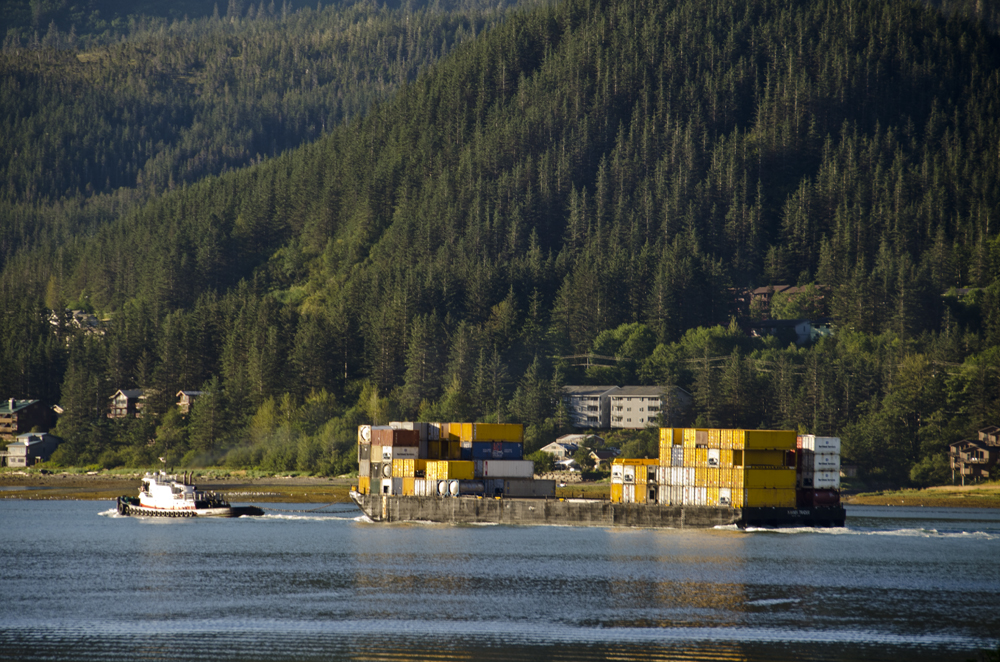
A tug boat hauls a barge laden with containers down Gastineau Channel in August 2012. (Photo by Heather Bryant/ KTOO)

Though the two companies have third party competition elsewhere, Northland and Lynden subsidiary Alaska Marine Lines handle virtually all commercial marine shipping in Southeast. If they merged as-is, Lynden would have an illegal monopoly in Southeast, according to the Department of Law.

The department’s lawyers have  filed a plan in court that would leave Southeast Alaska with two competing carriers, but their operations would be intertwined.

The plan requires AML to assist Sitka-based Samson Tug and Barge with an expansion into Southeast. The specifics are confidential, but Samson would buy assets from AML, lease space aboard AML barges, have a guaranteed barge charter from AML during peak shipping seasons, and have the option to rent AML terminal facilities and storage in Southeast and in Seattle.

The filing opened a comment period that ends Sept. 27. After that, a superior court judge in Anchorage must decide if the deal can go forward.

Southeast divers must travel far for emergency care

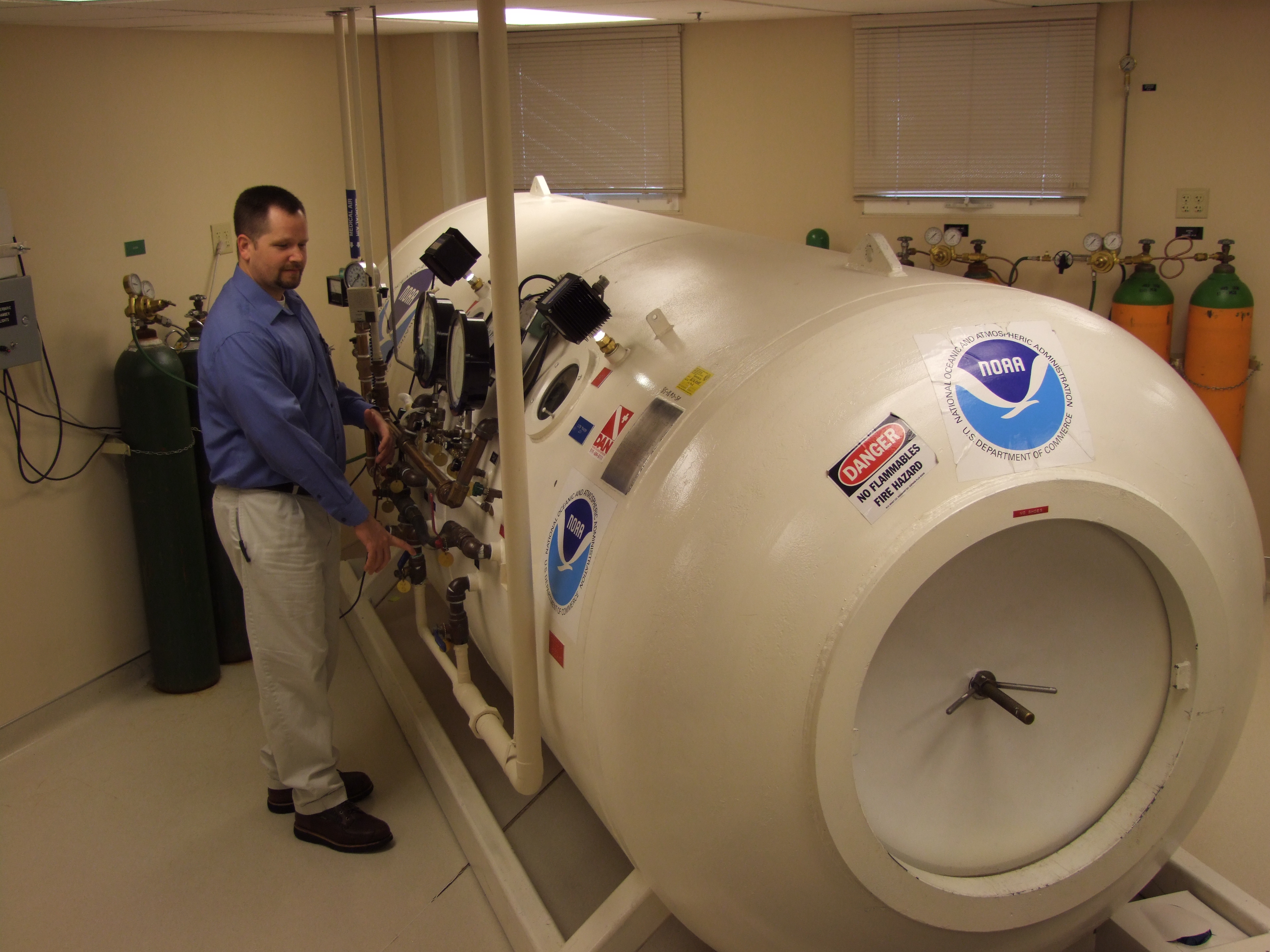
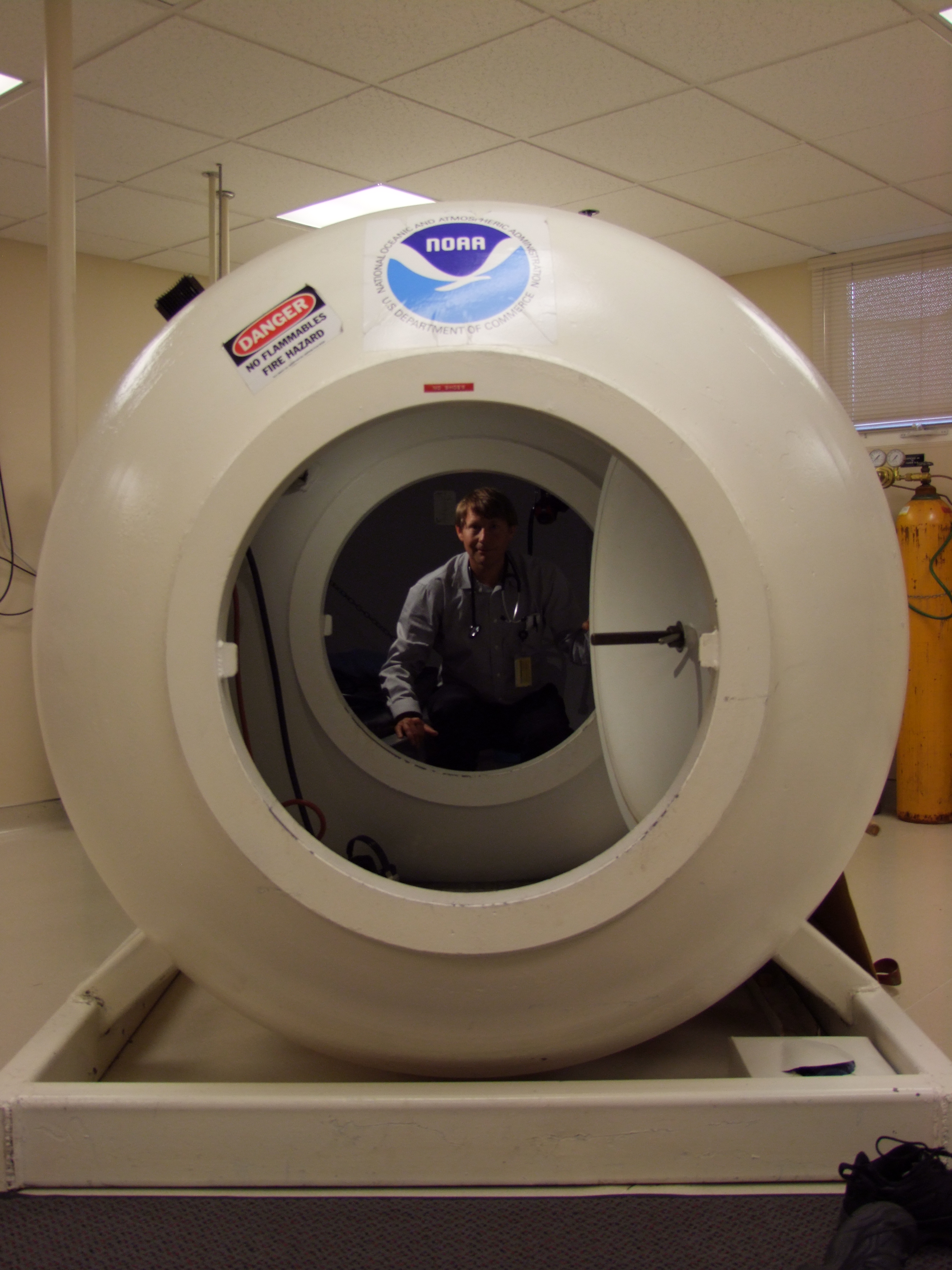
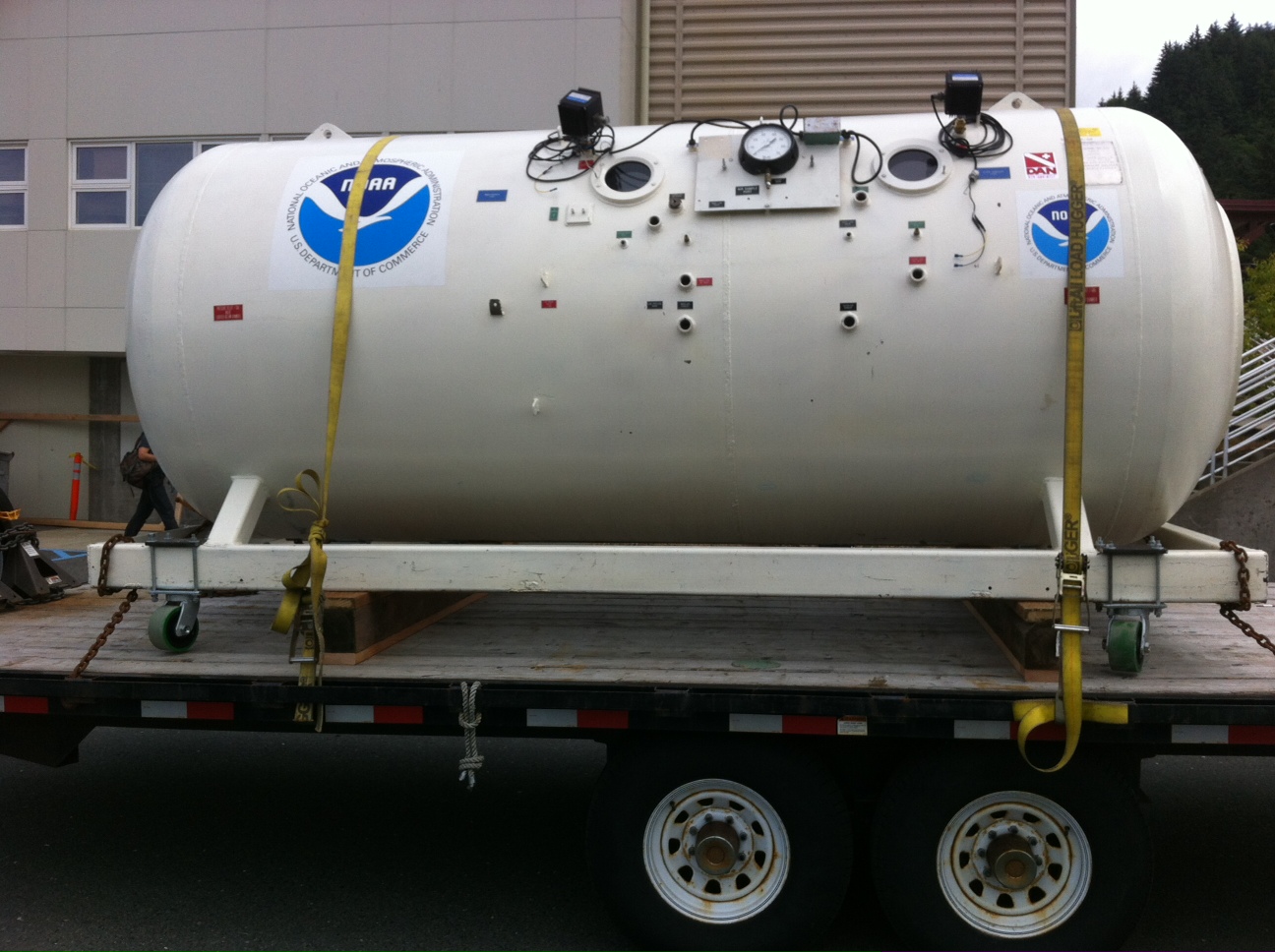
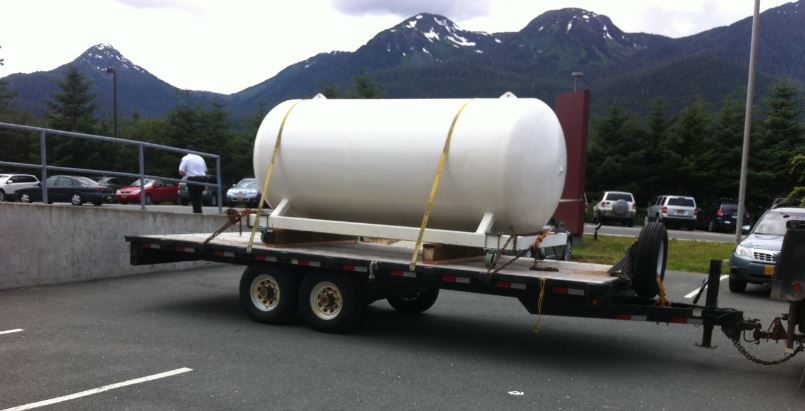
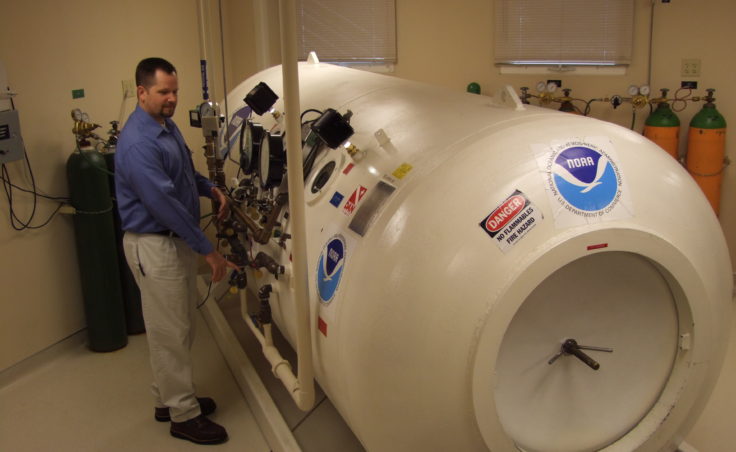
Scuba diving emergencies can no longer be treated at Bartlett Regional Hospital in Juneau. After more than 30 years, the facility discontinued its hyperbaric chamber program and recently removed the 13-foot chamber.

Now, the closest chambers for public use are in Anchorage or Seattle.

Recently retired physician William Palmer remembers when the hyperbaric chamber came to Juneau.

“I was diving with some of the divers from the NOAA lab and it came up in discussion that if there was a dive accident of any significance in the local waters, there was no backup whatsoever,” Palmer recalls.

Palmer was sent to Florida in the late 1970s to study undersea medicine and hyperbaric chamber operation. The National Oceanic and Atmospheric Administration signed a memorandum of understanding with the city and borough of Juneau in 1980, and loaned a chamber to Bartlett Regional Hospital.

Douglas Schleiger is the dive center manager for NOAA.

“Our interest was to have a chamber there so if something were to happen, our people could get treated there, that was our own vested interest in it. It was also a service to the community and local divers,” he says.

Scuba divers are at risk of decompression illness, also known as the bends, which can be caused by a fast ascent, a deep dive, or a long dive. Pressurized oxygen is pumped into a hyperbaric chamber to recreate the underwater environment. Over a period of time, pressure in the chamber is brought to a normal atmospheric level.

Without immediate treatment, a serious case of decompression illness could lead to paralysis or death.

Over the decades, the chamber at the hospital was also used for carbon monoxide poisoning and healing wounds. Dr. Palmer says within the first six months of its arrival, the chamber was used to treat ten cases of monoxide poisoning.

Robyn Free is the director of diagnostic imaging and respiratory therapy at Bartlett Regional Hospital. She says in recent years, use of the chamber dropped. It was last used in December 2011 for wound care, which requires 20 sessions in the chamber.

“And prior to that it was 12 months since they had anyone in the chamber.”

That’s one of the reasons the hospital decided to discontinue the program. Another is cost.

The federal agency Centers for Medicare and Medicaid Services surveyed the hospital last June and said a fire suppression system had to be put in place to continue running the chamber.

“That was going to be $30,000 to $50,000,” Free explains.

The hospital was in charge of maintaining the chamber. But regulations changed, requiring the work be done by NOAA-certified technicians three times a year. Each visit would cost the hospital $3,400.

“We tried to talk to NOAA and say, ‘Hey, it’s your chamber. If you want it compliant and run a certain way, then we need some help from you,’ and they were like, ‘Well, we can’t do that,’ so there was nowhere to go with that,” says Free.

Dr. Alan McPherson works in Bartlett’s Emergency Department. When the program was still running, he was the main provider of hyperbaric care. He says running the chamber required a crew of five individuals.

“There would be the doctor who had some training or experience in hyperbaric medicine and that generally would be me. There would be the dive supervisor. You’d have a time keeper. You’d have an outside tender to run the levers, and an inside tender to watch the patient.”

Dr. Palmer worked at the hospital when the chamber program started and when it ended.

“I thought it was really, really sad to see, even though infrequently used, this very high tech, unusual emergency facility just fall away,” he says. “The point is really that when you need it, you need it.”

NOAA dive center manager Schleiger says he would prefer to keep the chamber in Juneau.

“If there was a way to work it out where it could be up there and operated by trained, certified folks, and liabilities issues are all worked out, certainly I would do that if it’s feasible because our divers have not gone away. They are still there.”

Currently, there are seven NOAA divers in Juneau. State of Alaska agencies have about 30 divers in southeast. According to the state’s Commercial Fisheries Entry Commission website, there are over 430 active permits for Southeast dive fisheries. And there’s diving for recreation, commercial work, and search and rescue.

Kyle Hebert is the dive safety officer for the department of fish and game. Bartlett’s chamber was once part of the state’s safety plan. Now that includes a flight transfer to Virginia Mason hospital in Seattle. Hebert doesn’t know how much money that would cost the state.

“We’re probably more concerned about the cost in terms of likelihood of serious injury or death,” Hebert says.

The hyperbaric chamber was moved out of Bartlett Regional Hospital three weeks ago, and now sits in NOAA storage in Juneau waiting to be shipped to Seattle.


USCG celebrates 223rd birthday

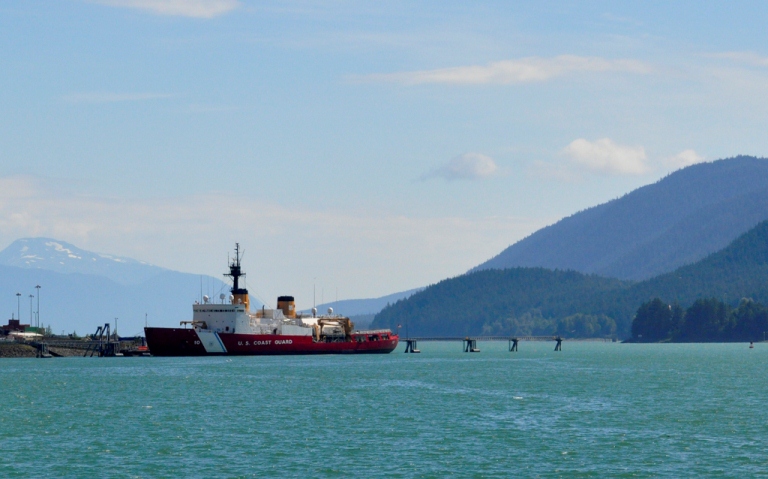
The U.C. Coast Guard heavy ice breaker Polar Star pulled into Juneau’s AJ cruise ship dock on Friday. The ship was open to the public on Saturday and left Sunday morning for Seattle. Photo by Dick Isett.

The U.S. Coast Guard is 223 years old.  The maritime service was created on Aug. 4, 1790 as the Revenue Cutter Service under the U.S. Department of Treasury.

Juneau is headquarters of the 17th Coast Guard District, which includes the Arctic.

Part of Juneau’s weekend celebration included a visit by the heavy ice breaker Polar Star, on its way to its Seattle home port after conducting ice tests in the Bering Sea.

The ship has been rebuilt and is the Coast Guard’s only heavy ice breaker in operation.   The Polar Star was open to visitors on Saturday.

Polar Star Executive Officer Kenneth Boda was one of the tour guides and offered a Coast Guard history lesson without prompting.

“We were built to basically collect customs and taxes, collect tariffs of vessels coming into port.  Over the years, we absorbed the Lighthouse service and the Life Saving Service, the Bureau of Steamboat Inspections as well.  Along the way along we were part of the armed forces,” he said.

The modern Coast Guard was created in 1915 as the fifth military uniformed service.

“Our vessels are fully compatible with all the Navy standards so we can operate in conjunction with the Navy,” Boda said, “but we also have the law enforcement side, the Homeland Security side, as well.”  

Boda called the Coast Guard a unique entity of the federal government. Its presence is local, regional, national and international, from the North Pole to the South Pole.

Most coastal Alaskans are familiar with the Coast Guard missions of safety, security and stewardship.

“Saving people’s lives is one of the big responsibilities of the Coast Guard,” Boda said. “Making sure that the ships that leave port are safe, we do vessel inspections.  Making sure that foreign ships that arrive have been inspected and have cleared all the U.S. regulations before they come into U.S. ports.” 

In 2012, according to the Coast Guard website, more than 436,000 vessels and their 29 and a half-million crewmembers and passengers were screened prior to arrival in U.S. ports.

The Coast Guard is the only military organization within the U.S. Department of Homeland Security.  Boda said that means it is responsible for ensuring U.S. harbors and ports are secure from any kind of threat.

“When I say threats, people think terrorist threats, but it’s not always terrorism that’s a threat, sometimes just a hazard to navigation.  For instance, a vessel that might wander out of the shipping lane and lose situational awareness.  In some other ports like Valdez, for instance, we have a vessel traffic service, you know that basically monitors ships as they come in and out and make sure everyone’s safe,” he said.

While enforcing U.S. fisheries laws is one of the most visible roles of the Coast Guard in Alaska, stewardship is protecting the oceans.

“Stewardship is environmental pollution response, so that the Coast Guard is called out to an Exxon Valdez or a Deep Water Horizon as well,” Boda said.

The Coast Guard is still investigating Royal Dutch Shell’s 2012 Alaska drilling operations after some vessels failed inspections, the oil rig Kulluk ran aground, and the company had other safety and environmental violations.

During the Polar Star’s brief stop in Juneau, KTOO had the opportunity to speak with Commanding Officer George Pellissier about its Arctic and Antarctic missions.  Check back for those stories.

Site notifications
Update notification options
Subscribe to notifications