Southeast

Skagway mayor causes ‘consternation’ with refusal to sign Assembly correspondence

Skagway’s Mayor Sam Bass from his official Facebook page. (Courtesy photo)

Skagway’s Borough Assembly meeting last Thursday was overshadowed by a topic not on the agenda. Mayor Sam Bass announced he had not – and would not – sign correspondence that was approved at the previous Assembly meeting. The correspondence included letters concerning recent federal firings and tariffs with Canada.

Skagway’s mayor said his decision not to sign his name on the dotted line is simply a change in how correspondence is handled. However, some constituents and Assembly members see it as politically divisive, and a dereliction of duty.

A heated exchange between Skagway Mayor Sam Bass and Assembly member Alex Weddell took place during the March 6 meeting.

“My question was, do you support the content of the last three letters that went out?” Weddell said.

“Assembly member Weddell, I’m not going to discuss that with you,” Bass said. “I’ve told you my reasons for making these decisions. You can accept that or not.”

“I do not accept it,” Weddell replied.

“Okay. Well, thank you,” Bass said.

The Skagway Borough Assembly approved three letters at their Feb. 20 meeting. The first letter was to Alaska’s congressional delegation, expressing the town’s reliance on Whitehorse for supplies, and how a proposed 25% tariff could harm the local economy.

The second letter, also to the delegation, highlights the importance of the Klondike Gold Rush National Historical Park. The federal park is a cultural draw for tourists and one of the town’s few year-round employers. Skagway lost its Park Service historic preservationist amid the nationwide probationary terminations.

The third letter was sent to the premier of Yukon, and reiterates the partnership and friendship between Skagway and its neighboring country.

The Assembly first learned that the mayor would not be signing the approved letters on Feb. 28. Borough Clerk Steve Burnaham sent an email to Assembly members informing them that the mayor had declined to sign the correspondence and that the letters would be signed by the clerk if there were no objections. All three letters were sent with the clerk’s signature.

On March 6, Bass addressed the signature issue for the first time on his official Mayor Sam Bass Facebook page. He said that he was misquoted in a CBC North article regarding the tariffs letter.

Bass stated on his Facebook page that he “did not write nor sign the letter from which these quotes are extracted from.” It also said he would work with Canadian officials to help mitigate tariff effects and he believes that more needs to be done to stop the fentanyl crisis.

Comments to the Facebook page have been disabled.

The mayor told the Assembly at the March 6 regular meeting that correspondence from the mayor and the Assembly should be separate.

“I have taken this action because I feel at the Assembly, the legislative branch of our local government should sign the correspondence it generates,” he said. “And at the mayor’s office, the executive branch should sign correspondence it generates. This method increases the validity and impact of the correspondence and allows the different branches to express themselves with a different perspective and voice.”

Bass said that city code dictates the mayor signs ordinances, contracts and deeds, but he didn’t believe that Assembly correspondence was under his purview.

Former Mayor Tim Bourcy strongly disagreed with Bass’ interpretation and said that state code, particularly Title 29, requires Bass’ signature on Assembly correspondence.

“When this body approved a letter to send, you as the mayor, are required to sign that,” Bourcy said. “The moment you step up on that floor, you represent us. And the fact that you usurped the governing body’s ability and had the clerk send this out, what message does this send?”

Bourcy questioned why Bass didn’t bring up any concerns at the last meeting – when the letters were approved – or use his veto power.

Another former mayor, Andrew Cremata, also criticized Bass’ actions.

“​​This is a reason to censure somebody,” he said. “… You don’t get to unilaterally decide what you like and what you don’t. Hell, I had multiple occasions when I was mayor where I had to vocally support something that I did not like, and I did it. I saved the conversation about I didn’t like it for the bar.”

The issue came up again during the March 6 meeting when the Assembly approved a letter of support for the Skagway Child Care Council, which is attempting to open a summer day camp to ease the child care crisis. Assemblymember Alex Weddell questioned the mayor’s new protocol.

“My question was, who would sign this letter?” she asked. “If this is a letter on behalf of the assembly, typically, these are signed by the mayor. His statement earlier stated that he had some difference of opinion than that. And my question was directly to the mayor, who would be signing this letter?”

Bass agreed to sign that particular correspondence.

Bass was elected mayor in 2023. He was appointed by Gov. Mike Dunleavy to the Alaska Royalty Oil & Gas Development Advisory Board in 2022.

Regarding his decision to sign or not sign letters, Bass says it was not his intention to cause “consternation.”

“I do apologize for not letting this body be aware of my intentions before not signing,” he said.

The procedure will be examined by the borough’s attorney.

Alaska woman submits Guinness bid for world’s largest mouth

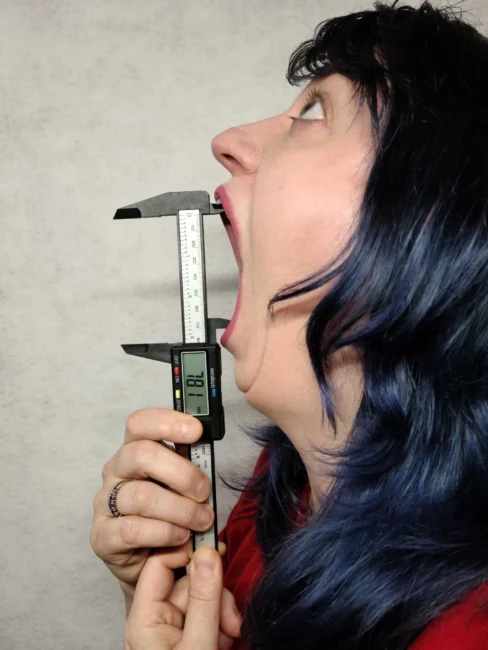
Marie Pearl Zellmer Robinson’s open jaw clocks in at roughly three inches. (Photo courtesy of Marie Pearl Zellmer Robinson)

For most people, being told you have a big mouth is fighting words. But for one Alaskan, it could mean a world record.

Marie Pearl Zellmer Robinson of Ketchikan is going for the Guinness record for “largest mouth gape (female).” That’s how wide you can open your mouth vertically. Robinson says she’s wanted to be in the Guinness Book of World Records for a long time.

“Every time I see somebody do something amazing, I’m like, ‘Well, I can’t do that,’” she said. “But this one was one that I could do, and I surprised myself even.”

With her mouth closed, Robinson looks like anyone else. But not when she tilts her head back and opens wide. Robinson can easily fit a 12-oz. aluminum can between her teeth.

The current record, set by Samantha Ramsdell of Connecticut, is 6.52 centimeters. Ramsdell also holds the record for “world’s widest mouth” — she’s popular on social media for pushing things like wine bottles and Pringles cans past her shockingly wide-spread lips.

But when Robinson saw the height of Ramsdell’s open mouth, she thought she could do better. So she submitted an application to Guinness, and they accepted it.

But then she had to prove it. According to Robinson, there’s a very strict verification process. When she first went for the record over a year ago, she didn’t get the witness statements and the filming quite to Guinness’s exacting standards.

When she tried again, her gaping mouth had grown by a couple millimeters, which she attributes to practice. With her husband recording and local dentist David Albertson measuring with a set of steel calipers, Robinson’s open jaw clocked in at 7.62 centimeters. That’s about three inches — more than a centimeter larger than Ramsdell’s. The video and the numbers have been submitted to Guinness World Records.

Marie Pearl Zellmer Robinson’s open jaw clocks in at roughly three inches.
(Photo courtesy of Marie Pearl Zellmer Robinson)

Robinson has known she has a world-class mandible since she was a kid.

“I used to, as a child, shove large objects in my mouth for fun because, you know, when you have siblings you tend to stick stuff in your mouth,” she said. “To show off.”

Robinson said she doesn’t think the skill runs in the family, but it still may be genetic.

“I’m pretty sure what happened is my jaw is just positioned in such a way that it’s just slightly further back, like I can feel my jaw in my ear canal. Which most people apparently don’t,” she said.

Robinson and her husband co-founded a local delivery service called Ketch-A-Courier. Their white cars with a halibut on the side are hard to miss around town. But she says she was inspired to reach for fame by an earlier Ketchikan record.

A little over a decade ago, nearly 2,000 Ketchikan residents broke the world record for “largest rainboot race,” donning rainboots and marching across the Third Avenue Bypass. They were soon dethroned by an athletic club in Ireland.

Now it’s a waiting game for Robinson. She is hoping to see herself flexing her wide open mouth in the world record book by next year, if not sooner.

Juneau nonprofit aims to hire fired Forest Service staff to maintain local trails, if it can raise the money  

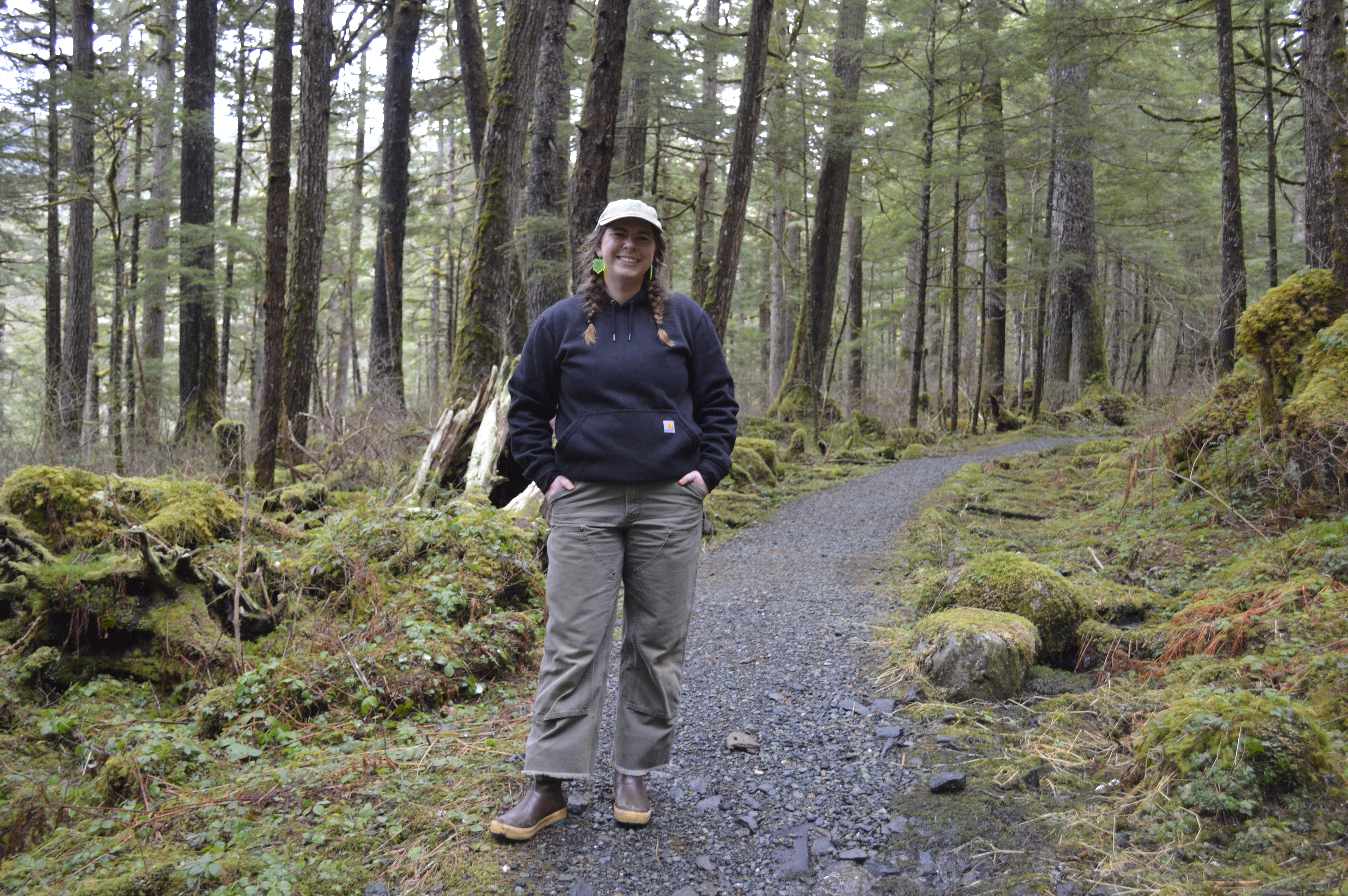
Trail Mix Inc. Director Meghan Tabacek stands on a recently-improved portion of Peterson Lake Trail in Juneau on Feb. 27, 2025. (Photo by Yvonne Krumrey/KTOO).

Juneau’s Peterson Lake trail is known for being a bit wet. It winds through muskeg to a lake, where a U.S. Forest Service cabin hosts overnight visitors. 

“The trail over time has just gotten soggier and soggier,” Trail Mix, Inc. Director Meghan Tabacek said. 

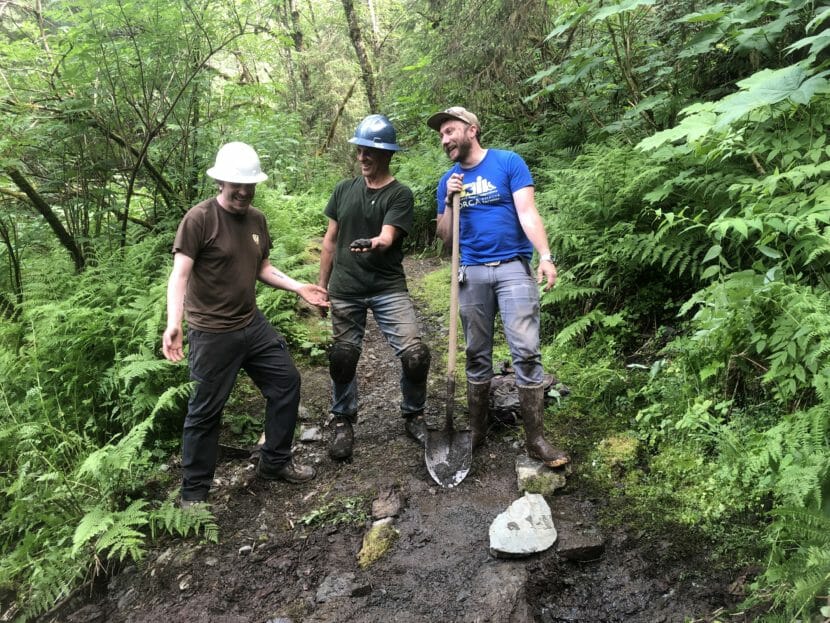
Trail Mix is Juneau’s trail maintenance nonprofit. While making her way down the part of the trail that her crews have been tending to, Tabacek pointed to some of the changes they’ve made. 

“The great thing about this job is there’s always no shortage of trails that need love,” she said.

The trail can be slow going on a rainy day — or most days in Juneau — with deep pools of rain and mud in between tree roots. There are sections of wood planks that have eroded and rotted in the 10 years since they were installed. Trail Mix has been replacing those with gravel. 

Peterson Lake Trail is one of many that Trail Mix’s trail crews have spent countless hours improving for Juneau residents. Now, the work may be on pause due to federal funding and job cuts. 

But Juneau’s trail maintenance nonprofit wants to hire fired U.S. Forest Service staff to make a new trail crew — if it can raise enough money to pay them.

The plan would allow skilled trail workers to continue their work this summer, after half of the Forest Service trail crews were fired last month by the Trump administration.

In the past, the organization partnered with Forest Service trail crews and had two of its own crews funded by the federal government dedicated to working on Tongass National Forest trails. 

In the recent federal firings, Juneau’s Forest Service crews were halved. And Trail Mix isn’t planning on being reimbursed for its work on Forest Service trails. 

Tabacek wants to keep those fired employees’ trail work skills in Juneau, and she said Trail Mix can be a landing place for those who lost their jobs. 

Still, she said, those jobs should be reinstated. 

“This is not an ideal situation for us, for anyone,” she said. “We understand and we know that the best place for federal workers is to continue being with the Forest Service.” 

Tabacek said, as she understands it, the Forest Service is planning to keep all remaining trail crews on cabin maintenance, leaving Trail Mix to maintain Juneau’s 250 miles of trail.  

But the organization’s remaining funding sources are funding city trails, not national forest ones. 

So Trail Mix is campaigning to fundraise $170,000 dollars — enough to hire five trail crew staff for the season. As of Thursday, community members have donated just under $12,000. Tabacek said she knows they have a long way to go, but she’s optimistic.

Nearly 90% of Juneau residents use the trails throughout the year, according to a 2016 City and Borough of Juneau survey

Juneau’s nine Forest Service cabins also see heavy use. After last month’s Forest Service firings, Quinton Woolman-Morgan’s crew is down to one person.

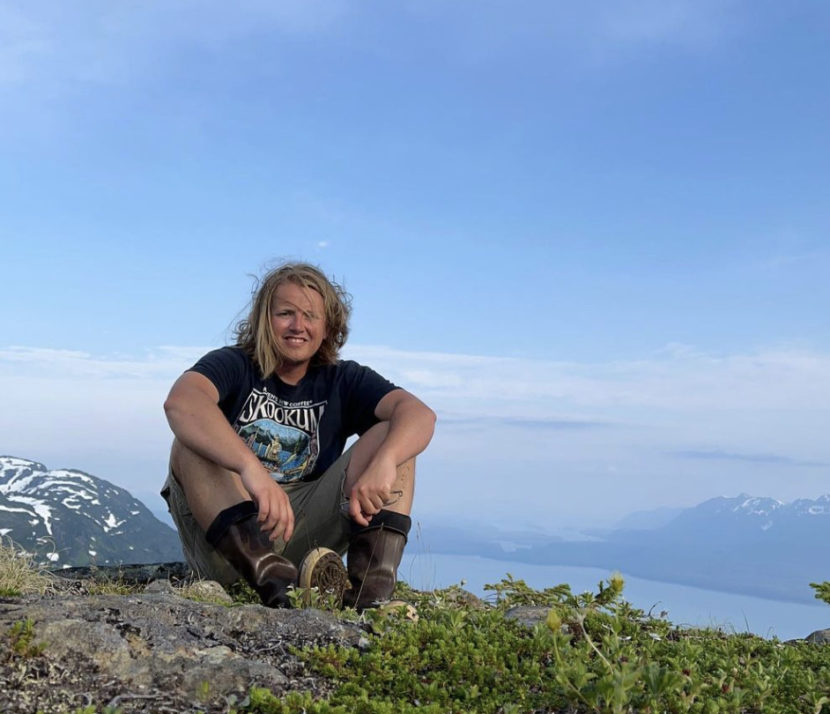
Quinton Woolman Morgan was fired from his U.S. Forest Service job in February, in a wave of federal firings. (Photo courtesy of Quinton Woolman Morgan).

“And you can’t do it by yourself,” he said. “The projects are just far too big.”

He maintained Juneau’s cabins for three seasons. He was fired last month, in a wave that suddenly left dozens of Juneau-based federal workers without a job. 

Woolman-Morgan said the job involves a lot of pumping out the bathrooms, among other maintenance.

“If a bunk bed is not fixed, or a staircase isn’t fixed, it’s kind of an unsafe thing,” Woolman-Morgan said. “And we’re always out there replacing windows, painting. Everything gets really weathered.”

The Forest Service hasn’t released a plan for how the work that was done by fired staff will be maintained. 

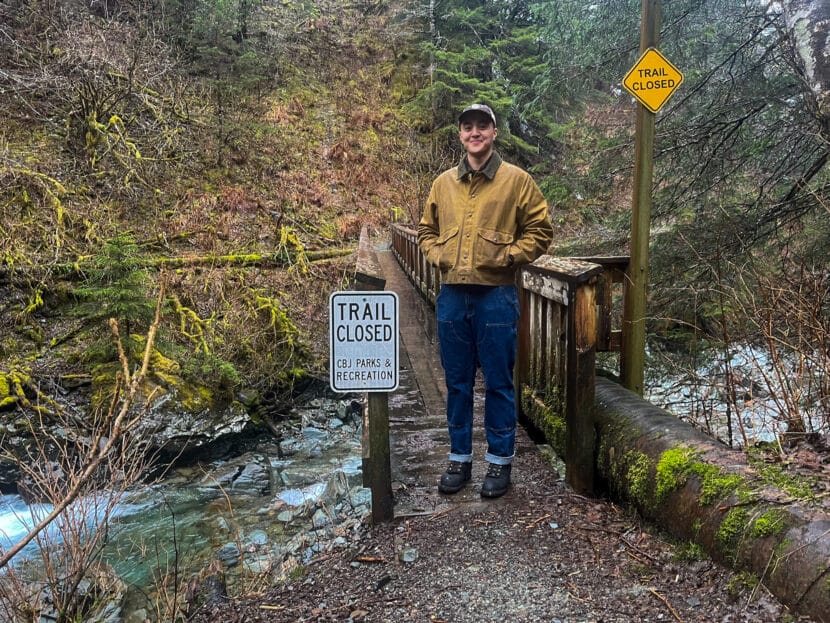
Out on the Christopher Trail near Gold Creek, Gooshdeihéen Ricardo Worl surveys the work he and his Trail Mix crew did last summer. He said the Tongass is an especially challenging place to build trails. 

“Southeast Alaska is both a beautiful and a really unforgiving and challenging place to build and maintain trail,” he said.

He’s an avid trail user in Juneau who’s worked on trails with Trail Mix for the past two summers.

Gooshdeihéen Ricardo Worl at the base of a closed bridge on the old Christopher Trail in Juneau on Feb. 28, 2025. Worl’s Trail Mix crew spent last summer building a new trail that will replace the bridge. (Photo by Yvonne Krumrey/KTOO)

But Worl said that hard work isn’t always noticeable to the people who regularly use the trails. 

“You know it’s done right when people don’t notice it,” he said. “When you can go about your daily life like, ‘Oh, let’s go into a cabin this weekend,’ and not have to second guess it.”

Worl grew up in Juneau — hiking, biking and skiing local trails  — and he said they are an integral part of Juneau’s community and culture. 

And trail work, he said, is essential. He hopes residents will step up to support it.

AIDEA plans to end agreement with operator of state-owned Ketchikan Shipyard

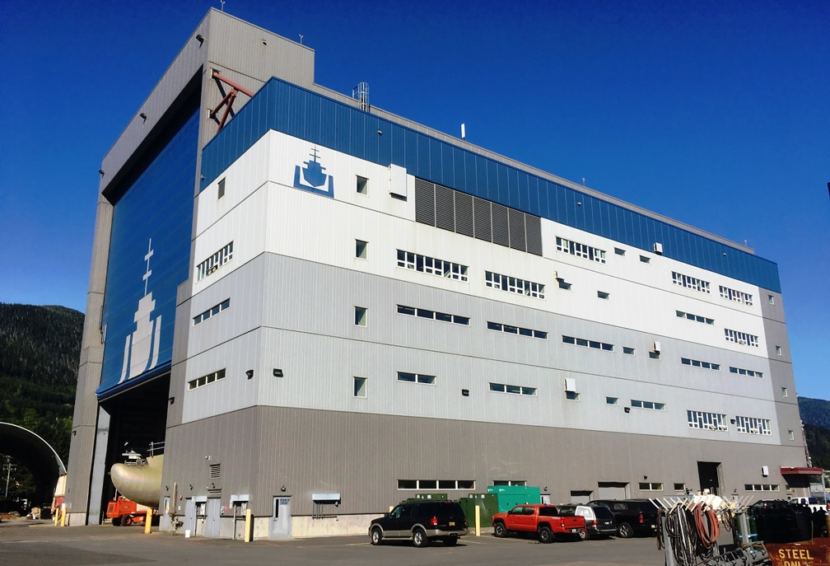
Part of the ferry Hubbard sticks out of the Vigor Alaska shipyard assembly hall in Ketchikan on May 16, 2018.
Part of the ferry Hubbard sticks out of the Vigor Alaska shipyard assembly hall in Ketchikan on May 16, 2018. (Photo by Leila Kheiry/KRBD)

Alaska’s state development agency is ending a two-decade partnership with the operator of the Ketchikan Shipyard, throwing into question the future of the multimillion-dollar state facility.

The Alaska Industrial Development and Export Authority notified Vigor Alaska last week that it would not exercise the final ten-year extension to its public-private partnership with the company. AIDEA cited poor performance by the operator as its reason for ending the agreement in a four-page letter to Vigor dated February 28.

“After reviewing Vigor’s long-term economic performance, projections, extensive studies, repair budgets, and other documentation relating to the Shipyard, AIDEA has reasonably determined that Vigor has not demonstrated its ability to fully utilize all of the Shipyard’s economic capabilities,” AIDEA Executive Director Randy Ruaro wrote. He also cited “inadequate” contributions to a repairs and maintenance account.

Vigor’s agreement with AIDEA will expire at the end of November, though Ruaro said AIDEA was “willing to discuss” extending the end date to March 1, 2026.

Ruaro and AIDEA’s deputy director did not respond to interview requests. The Ketchkan Shipyard is one of six projects the agency owns outright. The federal and state governments have spent a combined $80.1 million on the facility, according to AIDEA.

Vigor took over operations when it acquired Alaska Ship & Drydock in 2012, later overseeing construction of the state’s two so-called Alaska Class ferries, the Hubbard and the Tazlina. The yard also maintained state, local and federal government vessels.

The news came as a surprise to Vigor, a spokesperson said in a statement.

“AIDEA’s unexpected announcement impacts nearly 100 family-wage jobs in Ketchikan, with no clear understanding of who might take over or whether the facility will even continue to operate as a shipyard,” Vigor Public Affairs Director Benton Strong wrote.

Local officials in Ketchikan say the news took them by surprise, too — but they say tensions between AIDEA and Vigor have been simmering for some time.

“There’s been a lot of conversation over the years about the performance from the yard,” Rep. Jeremy Bynum, R-Ketchikan, said in an interview.

The AIDEA letter cites declining employment at the shipyard as evidence the facility was operating below its full potential. Despite what the agency describes as an “uptick” in staffing last year, over the past decade, the number of full-time jobs at the yard dropped from more than 150 in the mid-2010s, while the Tazlina and Hubbard were under construction, to less than 80 in the early 2020s, according to the letter.

“Halving the number of jobs at the Shipyard over a decade is strong evidence that Vigor is not fully utilizing the Shipyard’s economic capabilities,” Ruaro wrote.

AIDEA also takes issue with the shipyard’s poor financial performance and large maintenance and rehabilitation backlog, according to the letter. The agency says it has seen a payment in only two of the nine years that a profit-sharing agreement has been in place, despite what Ruaro called “significant tax and utility subsidies, and a major advantage in the structure of the Agreement itself.”

Still, Vigor argues it did a better job running the yard than any operator before it.

“Vigor has been a strong operator of the Ketchikan Shipyard, investing millions in the facility, employing more people and generating more revenue than any previous operator, and triggering profit-sharing with AIDEA for the first time in the yard’s history,” said Strong, the Vigor spokesperson.

What the future holds for the shipyard, a major employer in Ketchikan and the only facility of its kind in Southeast Alaska, is uncertain. Ketchikan Gateway Borough Mayor Rodney Dial said in a phone interview he hoped to “make the best of a bad situation.”

“We’ll do everything we can to assure there’s an orderly transition and that the jobs are protected,” Dial said. “We’ll also push for whoever comes in behind Vigor to really have a plan to expand that facility and maximize its use and return on investment for the community.”

Whether nine months — or a year, if the agreement is extended — is enough time to find a new operator to take over the industrial facility is unclear. But Doug Ward, a former Vigor Alaska executive who worked to expand the facility and is the namesake of the shipyard’s assembly hall, said in a phone interview that he’s optimistic a new operator will be able to take over the facility without a significant interruption to the shipyard’s operations.

“We have some very capable operators in the state that are Alaska businesses and would make outstanding operators of the Ketchikan Shipyard,” he said.

In Alaska border towns, Trump’s tariffs are fueling fears about higher prices and travel boycotts

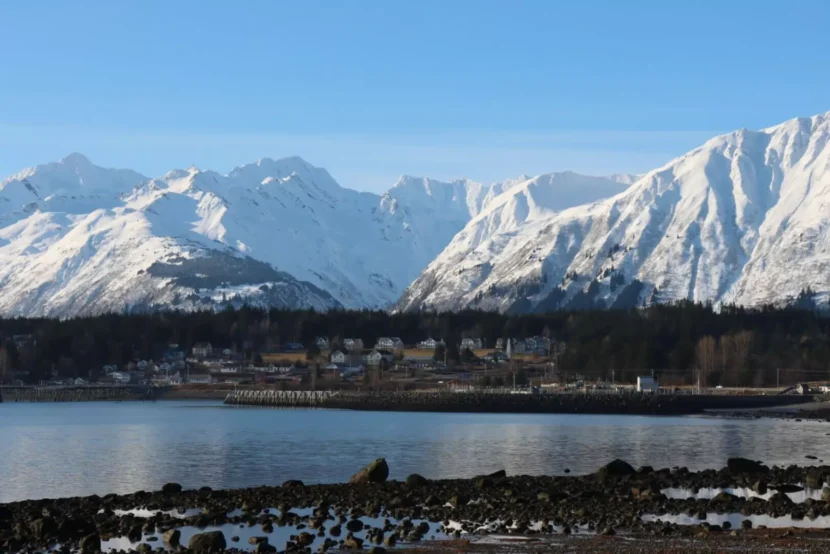
The Trump administration’s tariffs on goods imported from Canada, Mexico and China are sparking fear and uncertainty in the border communities of Haines (pictured above) and Skagway. (Avery Ellfeldt/KHNS)

Alaskans are bracing for impact as the White House rolls out steep tariffs on goods imported from Canada, China and Mexico.

President Donald Trump first announced his proposed tariffs in early February, when he said the U.S. would slap 25% tariffs on goods imported from Canada and Mexico and 10% tariffs on goods from China. The administration then paused the policy after Canada and Mexico agreed to take steps to crack down on border security.

The tariffs took effect on Tuesday and included a higher tax on Chinese goods. The move immediately sparked retaliatory tariffs from China and Canada. Mexican President Claudia Sheinbaum said she would respond later this week.

In Alaska, the news reignited concerns about the policy’s potential to send prices skyward – and to damage the state’s relationship with Canada.

Those concerns are especially acute in the border towns of Haines and Skagway. Mike Healy owns Skagway Brewing Company. It’s the biggest restaurant in the small, coastal tourist town – and one of the few that’s open right now.

He said tariffs on Canadian and Mexican goods could hit his operation in a range of ways. The obvious one is food prices.

“We know that our food costs are going to go up, our purveyors have indicated so. Much of our produce comes from Mexico,” Healy said. “So that’s going to be for Skagway Brewing company but also just [the] general public.”

But an even bigger concern, he said, is that the Trump administration’s policy could blunt the flow of visitors from the town’s nearest neighbor, Canada. Healey said Canadians may take into consideration that towns like Haines and Skagway have no control over the policy. But there’s no guarantee.

“There’s a movement in a lot of Canada to boycott travel to the U.S. as a result of the tariffs and a couple other things,” Healy said. “And we don’t know how that’s going to play out.”

The trend already appears to be hitting Haines.

The borough’s tourism director, Rebecca Hylton, was not available for an interview. But she said in a text message that she’s spent the weekend at an outdoor adventure and travel show in Vancouver, where she spoke with at least a dozen people who said they were sympathetic to the two communities. But they have still chosen not to travel to Alaska this year.

“People were kind but also steadfast in their position,” Hylton said.

Also top of mind for many residents in the area is how the tariffs might affect local businesses or residents who travel to Canada to purchase groceries or other goods.

Agents at the U.S. Customs and Border Protection stations in Haines, Skagway and Anchorage said they could not comment on how the tariffs will be enforced at the Canadian border. They directed KHNS to other contacts within the agency, who have not responded to requests for comment.

But locals have started contacting the Skagway Port of Entry themselves – with mixed results.

Skagway resident Deb Boettcher said she spoke with agents at the border twice on Tuesday. The first time, an agent told her a 25% tax would be applied to all Canadian goods brought through the border. The second time, an agent said their understanding was that anyone who purchases Canadian products for personal use and brings them back into Alaska would not be subject to the tariffs. But businesses likely would be.

Gregory Wolf, the president of the Alaska International Business Center, said in an interview last month that trade policies do not typically target residents crossing the border with groceries or other goods. He said the tariffs might affect local businesses, depending on what products they buy in Canada and how much they cost.

“The idea is more for large scale importers, exporters, where you’re talking about millions of dollars — in some cases, hundreds of millions of dollars,” Wolf said. “That’s where the tariffs will really have an impact.”

Alaskan officials at the state and local levels have scrambled to preserve Alaska’s long standing relationship with the neighboring country.

That includes a resolution moving through the state legislature that emphasizes the importance of the relationship between Alaska and Canada – and signals opposition to trade policies that would disrupt it. The resolution, which cleared the Senate Special Committee on Arctic Affairs last week, notes that Alaska imports more than $750 million in Canadian goods each year.

Trump’s statement on Monday that the tariffs would take effect Tuesday came amid speculation that he might soften the policy – or reverse it – in response to negotiations with Mexico and Canada.

Juneau’s Forest Service trails may be without maintenance this year

John Muir Cabin near Auke Bay on Sept. 16, 2022. (Photo by Yvonne Krumrey/KTOO)

Juneau’s trail maintenance nonprofit won’t be maintaining Forest Service trails this season, unless it can crowd-source funding for a new trail crew. 

That includes maintenance on access trails to heavily-used cabins at Peterson Lake, Dan Moller and Windfall Lake. 

Leaders of Trail Mix, Inc. made the decision to reallocate their Forest Service crews to other work, because they say they may lose the federal funding that pays them.

Half of the organization’s summer trail crews are funded by Forest Service grants. With instability at the federal level, Executive Director Meghan Tabacek said she doesn’t want to risk not being able to pay those workers. 

“I don’t ever want to be in a situation where we can’t pay our employees,” she said. “That’s just not how we do business here.”

Trail Mix usually gets about $420,000 annually in federal funding. Usually, the Forest Service pays Trail Mix during or after the season.

Tabacek says the funding comes from two sources: the Great American Outdoors Act, a 2020 act that funds improvements to recreation areas on federal land, and Alaska Forest Service fees from the Mendenhall Glacier Visitor Center and cabin use that get deposited back into trail work.

The city has long partnered with Trail Mix for trail upkeep. George Schaaf leads the City and Borough of Juneau’s Parks and Recreation department and said they are one of Juneau’s greatest assets. 

“The trails make Juneau, Juneau,” he said. “It’s a huge reason I think a lot of us chose to come here, chose to stay and a lot of why people who grew up here also stay or come back.”

And, he said, the federal funding cuts could mean Juneau has to spend a lot more money in the future to maintain certain trails.

“If you keep up on the periodic maintenance, your cost over the lifetime is going to be a lot lower,” he said. “But if you don’t maintain what you have, you’re going to end up spending a lot of money all at once to try to get it back.”

Trail Mix, Inc. staff member Laib Allensworth and volunteers Dave Haas and Dan Parks working on Lemon Creek Trail. June 4 2022. Photo by Yvonne Krumrey/KTOO

Trail Mix’s Tabacek said the federal funding agreements haven’t been canceled yet. But she fears they could be because federal funding across the U.S. has been slashed, leaving many nonprofits without previously-guaranteed money to operate.  

“We’re just incredibly nervous to have the federal government as a business partner right now,” Tabacek said. “Agreements and grants that people thought were set in stone are being lost, left and right.”

Trail Mix has already hired its crews. Tabacek said Trail Mix now has to find other ways to pay for about half of its staff, and hopes to secure funding from the city. But she said those funding sources would pay only for work on city trails, not Forest Service trails.

That’s why the nonprofit is raising funds to hire a new crew made up of fired Forest Service staff. That crew could be tasked with maintaining Forest Service trails – roughly 40% of Juneau’s trails, she said. 

“It’s the people who use trails that are going to feel this, you know,” Tabacek said. “And obviously our staff are feeling it, and the staff of the Juneau Ranger District are feeling it as well. But this really has eliminated a lot of ways we work on Forest Service trails and to maintain these trails that we love.”

The fundraiser’s goal is $170,000, and Tabacek said the organization has about a month to raise that amount before trail work begins. And she said this year is a good year to volunteer. 

Site notifications
Update notification options
Subscribe to notifications