Southeast

Sitka veterinarians call for change after police shoot shelter animals

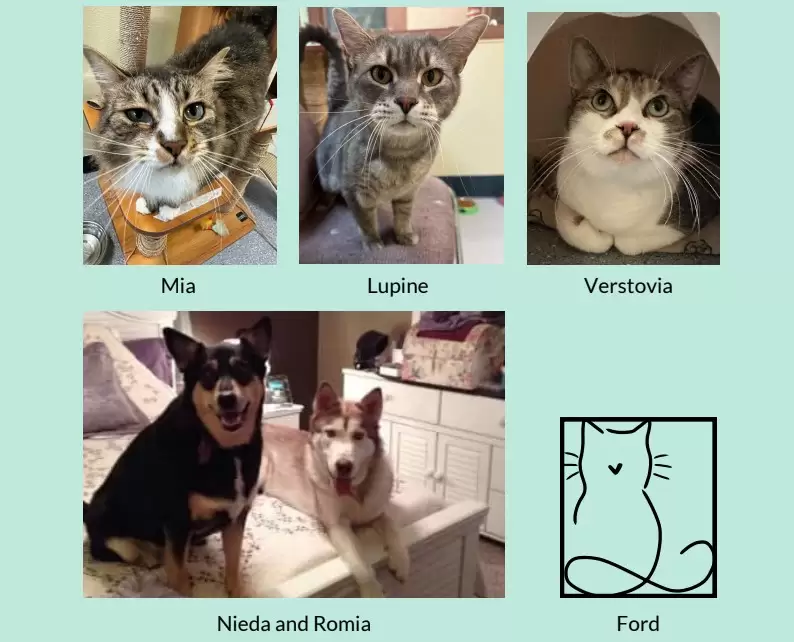
Pictured: The six shelter pets that were euthanized last September, according to the internal investigation from the City and Borough of Sitka. (Courtesy of FOSAS Newsletter)

The City and Borough of Sitka’s admission that a police officer euthanized several animals by gunshot at the local shelter last summer has generated a strong response from the community’s veterinarians.

Seven vets in the Southeast Alaska town – both practicing and retired – dispute the administration’s claim that shooting the dogs and cats was an acceptable practice under guidelines of the American Veterinary Medical Association.

In the meantime, everyone involved is hoping to ensure that the episode is never repeated.

Earlier this month Sitka’s municipal administrator, John Leach, published an investigation into animal shelter operations. It revealed that local police euthanized two dogs and four cats by gunshot last September after taking over day-to-day management of the shelter.

Sitka’s animal shelter is under the umbrella of the police department, but in years past, day-to-day operations have been managed by an animal control officer with the support of volunteers. But last July, the volunteer group, Friends of Sitka Animal Shelter or FOSAS, was barred from the building. When then-animal control officer Olivia Magni went missing in late August and did not return to work, pets were left in the care of police.

FOSAS President Kristina Tirman says the administrator’s investigation confirmed what her group feared.

“We had suspected that gunshot was the method of euthanasia for the dogs based on information we heard from community members, but we did not have confirmation on that until this report was released,” Tirman said. “Seeing that in writing was difficult, and we also did not have any information regarding the cats, so that was also new, and again, very hard to read.”

What frustrates Tirman and the volunteers is how preventable the situation was. She says when they found out Magni was not managing the shelter, they reached out to offer police their help, but the offer was declined.

“We had volunteers there ready to help,” Tirman said. “If we had known that this was going to be the outcome, and the police department didn’t have the time to care for these animals, we would have done everything we could to get them out of the shelter (and) adopted into homes. I think many people would have adopted them if they had known that this was going to be the outcome.”

Leach’s report was also hard to read for Sitka’s veterinary community – none of whom were consulted before the animals were euthanized. Like Tirman, Dr. Toccoa Wolf said if any of them had been contacted by police ahead of time, things would have been different.

“There’s practicing veterinarians that have always been available for help, we’re always here to support the city. We’re always here to support our community,” Wolf said. “And so I wonder why none of us were asked to help, and why that relationship has been, you know, severed?”

Wolf said she’s glad the report was released to the public and appreciates the transparency, but disagrees with some of its findings. Wolf and six other vets in Sitka penned a letter to the local Assembly on Thursday. The vets say the investigation’s conclusion that the pets were euthanized following AVMA guidelines is incorrect.

The association’s guidelines say (on page 42) that gunshot can be considered an acceptable form of euthanasia under some circumstances. But Arleigh Reynolds, another vet who signed the letter, says the Sitka situation never qualified.

“Those limited circumstances are if the animal is an immediate threat to someone,” Reynolds said. “Like if it’s aggressive or is a rabies suspect, or if it’s so injured that moving it would cause more harm than euthanizing it in place. But other than those two instances, it’s not okay.”

The vets’ letter points to another section of the AVMA regulations (on page 44) that says gunshot should not be used for routine euthanasia of animals in municipal pounds or shelters. A second letter from a local attorney also calls the legality of the euthanasia into question.

Reynolds has spent years working in rural communities around the state with limited access to veterinary care where the practice is more common.

“They call it culling, where they actually have dog kill days, and they will send a notice out to everybody, either tie up your dogs or put them inside, and any dog that’s found unattached is shot,” Reynolds said.

But in those remote communities, according to Reynolds, it takes a toll.

“And that is incredibly traumatic, of course to the dogs, but to the people doing the shooting,” Reynolds said. “A lot of those village safety officers leave their job because of that. It’s also really traumatic to the communities, you know, for just hearing the shots and knowing this is going on. And in several communities, there have been some really bad outcomes afterwards because of things like this.”

While the local vets disagree with the administrator’s interpretation of AVMA euthanasia guidelines, they do agree that Sitka is due for a code change and a restructuring of Sitka’s animal services.

“This was a house ready to crumble to begin with, because our code is so outdated,” Wolf said. “The city administrator does highlight in his report that code needs to change, I think that is one of the most urgent things. I think that a code needs to change that will prevent these from happening in the future.”

“The city has supported the shelter, but it’s not an official thing. It’s not in their code, and and the code was written back in the ’70s, right? So it’s 50 years old,” Reynolds said. “Times have changed. Our values have changed, and our ability to take care of animals has changed during that period of time. And so I think we need to update the code to really cover the way that folks here in Sitka would like to see animals cared for.”

In response to the vet’s letter and widespread concern over how police handled the euthanasia, Leach said he’s open to reinvestigating – and ensuring that the treatment of animals is consistent with community standards.

“If the Assembly desires to put an independent investigator on it, in terms of whether or not the AVMA standards were followed, that’s fine. We’re very open to that,” Leach said. “But my overall message is moving forward and making sure it doesn’t happen again. That’s really my focus at this point.”

Changing city code will take some time. In the interim, the city and FOSAS have reached a tentative agreement on shelter operations for the next year, pending Assembly approval. The timing lines up with the hiring of Sitka’s new animal control officer who starts work this month.

A cannery in Southeast Alaska is at the forefront of America’s tinned fish renaissance

Owner Mathew Scaletta stands in front of Wildfish Cannery in the village of Klawock on Prince of Wales Island. (Bethany Sonsini Goodrich)

Wildfish Cannery was founded in Klawock, Alaska in the late 1980s by a school teacher named Phyllis Mueller. Her grandson Mathew Scaletta is at the helm these days.

Scaletta is passionate about food. He spent summers cutting fish at the cannery as a kid and then cut his teeth in the culinary world in Chicago and Portland. While working everywhere from bars to fine dining restaurants, he noticed something.

“Places were importing Spanish and Portuguese canned fish. It was kind of quietly becoming a thing,” Scaletta said. At the time, he said, canned salmon stateside was cheap – probably better for stocking a fallout shelter than a charcuterie board.

Then, Scaletta said he saw something that changed everything: an episode of Anthony Bourdain’s show “No Reservations.”

In the episode, Bourdain visits Espinaler Taverna, a tavern in the Spanish seaside town of Vilassar de Mar. The bartop is lined with dozens of bowls of oily little fish, smoked oysters, and cured seafoods.

Bourdain samples a can of razor clams that his guide tells him costs more than $150 USD.

‘Rest assured this stuff bears no resemblance to the can of smoked oysters you ate stoned and desperate back in college,’ Bourdain narrates over the din of the packed tapas bar. ‘This is the world’s best seafood and here’s what’s so mind blowing: it only gets better in the can.’

“It kind of blew my mind to see that, right? And it stuck with me,” said Scaletta.

In 2015, Scaletta’s grandmother Phyllis was diagnosed with cancer. He came home to Alaska and took over the cannery.

Scaletta said he saw a hole in the market.

“So I set out to be the first U.S.-based highend craft cannery. And we’re still there,” he said. “I’m still working on that.”

Wildfish’s garlic sumac rockfish or smoked coho go for about $10-$14 a can. The most expensive offering is a $40 can of fried king salmon cheeks. Since Scaletta started smoking salmon for the slightly spendier masses, tinned fish is officially on the map in the U.S. But he doesn’t take credit for that.

“There were other companies who came in after us, who, frankly, just had a lot more money,” he laughed.

According to Scaletta, the business – and tinned fish in general – really took off in the United States in 2020. The Wall Street Journal reported that in 2022, U.S. sales of canned seafood rose by nearly $3 billion and are still growing annually. Scaletta said he hopes to soon expand to a second cannery in Klawock. He said it’s hard to keep his more popular products in stock, nowadays, maybe partly due to some significant national attention on his company.

Marguerite Preston edits the kitchen section of Wirecutter, a product review outlet from the New York Times. As the editor, Preston doesn’t normally do the actual reviewing, but she said she really wanted to write a guide to tinned fish.

“Obviously, tinned fish has been around in all kinds of forms for centuries. In many cultures, it’s never gone out of style. But in America, it’s becoming trendy,” she said, adding that she’d been seeing sleek new brands of canned seafood everywhere. “I would say in the past maybe three years, maybe a little bit longer, we’ve just seen this growing interest, these trendy new brands, this beautiful packaging.”

Preston and her team collected over 100 different tins, jars, and cans of fish from Europe, Asia and the U.S. and laid them all out on the counter of their office in Brooklyn. They grouped the fish into categories and split up the tasting over three days.

“And then we just kind of went at it and felt really pretty ill at the end of each day to be honest,” she laughed.

Preston published her findings on Wirecutter’s website in December. The guide is like an Olympics for tinned fish, with each category crowning a world champion. Preston said when it came to sampling salmon, the unanimous favorite was Wildfish Cannery.

“I think the thing that stood out the most was the texture, it just had the most buttery, meaty, succulent texture. And then the flavor was really good too – the level of smoke. You can tell just by looking at them. They have this beautiful, kind of burnished look on top,” Preston said of Wildfish’s smoked king and sockeye salmon.

Scaletta said it was thrilling to see his small cannery getting national press. The art of canned fish isn’t a “new trend” to an Alaskan though. The state’s culture of home canning was a major inspiration for Wildfish.

“One of the most precious things an Alaskan has in your pantry is your home-pack – like your smoked and jarred salmon, right?” Scaletta said. “This is about taking what we already had, which was this culture of home-pack, and the idea of a jar of smoked salmon being elevated, and kind of bringing that to the masses.”

As tinned fish solidifies itself as a high class snack, Wildfish is going to continue to do what Alaska canneries have always done according to Scaletta – buying high-quality fish from local fishermen and canning it for the masses.

Federal workers in Juneau face terminations, uncertainty as government downsizing continues

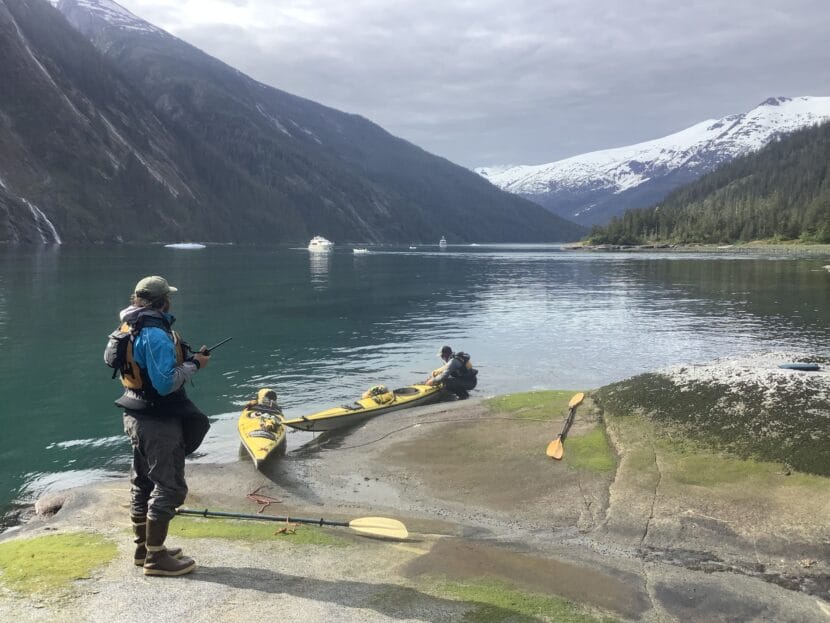
Former U.S. Forest Service employee Matthew Brodsky radios with boats that are about to pass through the Narrows in Ford’s Terror in the summer of 2023. As a wilderness ranger, Brodsky would provide mariners with information about hazards and conditions in Tracy Arm Fjord during the busy summer season. (Photo courtesy of Matthew Brodsky)

Matthew Brodsky got his dream job in 2023. 

As a wilderness ranger for the Tongass National Forest, he patrolled Tracy Arm Fjord by kayak in the summer season, monitoring environmental data and providing information to mariners and visitors aboard cruise ships.

But last week, Brodsky says he and other U.S. Forest Service staff in Juneau were called into a meeting. 

“The bomb was dropped that nine people were getting fired that day in Juneau, and it was the first wave of, you know, an indefinite amount of waves,” Brodsky said. “And when it was all said and done, that basically every single probationary employee in the Forest Service was going to be fired for the exact same reason, which was poor performance.”

His termination letter arrived on Sunday. The letter from the Forest Service director of human resources in Washington, D.C. reads in part: “The Agency finds, based on your performance, that you have not demonstrated that your further employment at the Agency would be in the public interest.”

“Even knowing that was going to come, seeing that language show up, and knowing for a month that I’m probably going to lose my job, it didn’t really dampen how that read, and what a slap in the face that was to actually see it in writing from some person I’ve never met and who has no idea, like the work I’ve done, or my coworkers either,” he said.

Most federal employees must complete a one-year probationary period after they’re hired. But Brodsky was hired under a Forest Service program aimed at recruiting people already in Alaska that included a two-year probationary period. For him, that period ends in June. He says some of his coworkers had just a few weeks left in theirs. Many of them are now struggling with whether to stay in Juneau. 

“I don’t want to leave this community,” he said. “I know people that probably will have to – a lot of young people who, you know, saw themselves living here and starting a life here, or they did start a life here … not just for Juneau, but for other communities around Alaska.”

U.S. Forest Service Juneau Ranger District headquarters on Backloop Road. (Photo by Heather Bryant/KTOO)

Shortly after President Donald Trump took office last month, more than two million federal employees received an email from the Office of Personnel Management offering full pay and benefits through September in return for their resignation. 

Brodsky and many of his coworkers didn’t actually have access to the email when it was first sent out – they’re seasonal, and didn’t return to pay status until this month. Nationally, some federal employees have reported being fired even after accepting the offer, though the Trump Administration said Sunday that was a mistake.

Requests for information about the total number of firings within the Tongass region were directed to the Forest Service’s Washington, D.C. office, which has not responded to KTOO. But a local union representative said 124 Forest Service employees across the state had been terminated as of Tuesday. 

According to a report from the Juneau Economic Development Council, Juneau had roughly 700 federal civilian employees as of 2023. In the Southeast region, more than 1,300 people were federally employed.

Across the state, about 15,000 people work for the federal government. 

The layoffs weren’t limited to the Forest Service – the National Park Service and Federal Highway Administration were also affected. National Oceanic and Atmospheric Administration employees in Juneau have been told to expect layoffs too.

The anxiety Brodsky talked about doesn’t just affect workers on probation. Several federal employees shared their concerns with KTOO anonymously because they were afraid of losing their jobs.

One NOAA employee said the atmosphere at work is grim. He said the federal government’s actions show that probationary workers are being targeted regardless of their performance, and he doesn’t know who will be next.

“I didn’t really think that the administration would break the law in that way. So, yeah, the fear of that went from a scare tactic to more of a reality,” he said. 

He said the unilateral decisions make federal workers like him feel powerless. 

“I’m really sad for people who have lost their jobs, and I’m really sad for America … I don’t think this is what Americans wanted when they chose Trump as president, and don’t think anyone who’s making these decisions actually knows the impact, and that feels like a huge waste.”

Another federal employee in natural resources management said the threat of a layoff meant she had cut back on spending. 

“I’ve spent close to 30 years serving my country and protecting the environment and thinking I was responsible and had a good plan, and now I don’t know if I can rely on that anymore, And I don’t know what I’m going to do,” she said.

She called the emails from the federal government “emotional terrorism” and said she didn’t think it will end with federal employees.

“We’re the targets now, but I don’t even, I don’t know who it’ll be next,” she said. “Who would have ever thought that federal employees would be targeted as the enemy?”

In a social media statement on Friday, U.S. Sen. Lisa Murkowski criticized the terminations, which her office estimated could be anywhere from dozens to more than a hundred.

“Many of these terminations will do more harm than good, stunting opportunities in Alaska and leaving holes in our communities,” the statement reads.

She wrote that she shared the administration’s goal of downsizing the government, but took issue with the execution.

“Indiscriminate workforce cuts aren’t efficient and won’t fix the federal budget, but they will hurt good people who have answered the call to public service to do important work for our nation.”

More than 500 people rallied against the layoffs and other Trump administration actions outside the Capitol in Juneau on Monday as part of nationwide protests. Among them were recently terminated federal workers, and federal workers who feared for their jobs.

One NOAA employee, who didn’t give her name because she is afraid of retaliation, said workers received an email over the weekend that said it is likely that all probationary employees in her office will be let go.

“Alaska has a lot of subsistence people that need to understand how their weather and their climate and their environment’s changing, and if we lose employees in NOAA, or we cut back NOAA’s power, they’re not going to have those services,” she said. 

But the loss of federal workers in Juneau ripples out into the private sector, too. Especially for the approaching tourism season. Mike Hekkers, a local guide in the summers, said he’s upset about the layoffs.

“I’ve heard a lot of the staff at the Mendenhall Glacier Visitor Center have lost their jobs or won’t be there. There’s going to be about 900,000 people coming to the Mendenhall Glacier visitor center area this summer, and there may be no services, nobody patrolling for bear issues, managing the buses and the taxis and the people.”

Looking around at the dispersing rally, he said it was great to see so many people outraged, even as a torrent of changes come from the Trump administration.

“It’s discouraging, but we’re going to keep fighting,” he said. “We’ll see what tomorrow brings, but I’m going to stay the course.”

Brodsky, the former wilderness ranger, says he has no plans to leave Juneau at the moment. He’s looking for other jobs, and he hopes he’ll find something he loves as much as the last one.

Are you a federal worker in Juneau? Share your perspective with KTOO. 

Haines’ unusual letter to the Yukon meant as a reminder of friendship

George Bahm and Vanessa Aegirsdottir of Wild Yukon Furs in their Skagway shop. As store owners in both Skagway and Whitehorse, Yukon, they’re closely following possible Canadian tariffs and customer sentiment. (Melinda Munson/KHNS)

The Haines Assembly last week voted to send a friendly letter to its Canadian neighbors. That’s following U.S. President Donald Trump’s threats of tariffs and his musings that Canada could become the 51st state.

Haines Junction, Yukon is about 150 miles from Haines, Alaska. And Whitehorse is just 100 miles further. Although not in the same country, they’re Haines’ closest neighbors by road.

That’s one reason for sending them a conciliatory letter, according to Haines Mayor Tom Morphet.

“Reassuring them that we appreciate and reaffirm our long relationship of friendship, cooperation and mutual assistance,” Morphet said. “Everyone probably remembers when we had our slide event here in 2020. Whitehorse, I believe, sent us $15,000. The folks from Canada look after us, and we try to look after them.”

Another reason to reach out is economics.

Alaska’s Haines, dubbed the Adventure Capital of Alaska, relies on Canadian tourists as part of its independent traveler model.

Before approving the letter, assembly members shared stories of concern.

Assemblymember Kevin Forster said he spent the weekend with friends from Whitehorse for his wife’s birthday.

“And they said that even they themselves had received pressure to not come to Haines right now, and that amongst their friends, they have discussions about not buying American booze and not visiting” Forster said. “And so at least anecdotally, I think that this potentially is an issue.”

Assembly member Richard Clement, who is on the board of the Kluane Chilkat International Bike Relay, said he is seeing negative effects from new federal policies.

“Half our board is Canadians, and half Americans,” he said. “And we had a meeting last night, and there was some animosity. You know, as mentioned, Canadians may be reluctant to come here with all this talk that’s going on.”

Haines Tourism Director Reba Hylton told KHNS that she too is observing some pushback from northern neighbors.

“We have received one email at our Visit Hanes email address from a Canadian that lives in the Yukon, that specifically said they wouldn’t be visiting until the national situation kind of calms down a little bit,” she said. “That’s the consensus on the dozen or so comments that I have deleted off of our social media posts on Instagram and on Facebook.”

She said she’s occasionally seeing a similar sentiment on RV and cruise travel pages. While it’s not keeping her up at night, she says she’ll be paying attention.

Vanessa Aegirsdottir is also keeping a close watch. She’s a Canadian citizen who owns a business in Whitehorse, with a second location across the border in Skagway. She said when the news broke about a 25% tariff on Canadian goods, she nearly had a heart attack.

“I spent my entire day in front of my computer researching alternate suppliers … Meals were brought to me at the table. I barely even left to go to the bathroom,” she said. “I was, you know, researching manufacturers in India and China, desperately trying to find alternatives so that I could switch gears, like tomorrow, if I needed to.”

While Aegirsdottir is also seeing posts on Facebook encouraging Canadians to boycott American brands, she’s not sure the frustration will carry over into a significant decline of Yukon visits to Skagway and Haines.

“The general feeling is that we don’t hold individuals in Alaska responsible for all of the craziness,” she said. “And even predating this drama, I think a lot of us don’t actually characterize our friends and neighbors in Alaska as Americans. We actually see you guys in a more intimate, neighborly, familial kind of context. We see you as Alaskans.”

Trump’s tariffs are on a 30-day pause while the two countries negotiate around his concerns about border security and drug trafficking.

Alaska’s tourist season is just two months away.

Love language: How to say you care for someone in Lingít

Xeetli.éesh Lyle and Daxkilatch Kolene James pose for a selfie. (Courtesy photo)

It’s Valentine’s Day in Lingít Áaní and two local Lingít language learners shared their love language and the story of how it began. 

Xeetli.éesh Lyle and Daxkilatch Kolene James almost met at a party. Lyle led a group of dancers in, and Kolene was impressed.

“I claimed at the table, ‘There’s my husband,’” she said.

She approached his father at the party and asked if he was single. Lyle’s father went and told him. 

“And I never saw him,” she said.

Lyle said he lost his nerve. 

“And then I almost got the nerve to go up to her table and talk to her, but as soon as I got close, I got scared and I walked out,” Lyle said. “So I actually didn’t get to meet her that evening.”

Lyle’s father went back to Kolene and told her his son was too nervous. She said at the time, she was busy with work, school and raising her kids. She told herself she didn’t have time for romance, anyway. 

“Couple months passed,” she said. “My best friend invited me out to go dancing, and so I did, and we ran into each other again on the dance floor, and I gave him my number, and the rest is history.”

Now, after decades of being together, they use Lingít to show their love for each other. 

“When I’m at work, I’ll send her a text of ‘Ḵúnáx̱ ix̱six̱án ax̱ sháawadi á!’” Lyle said. “And what that translates to is, ‘I love you very much, my precious wife.’ And to translate it even more is, ‘You are the one I choose to stand with very much.’”

Kolene said messages like that, in their Indigenous language, make her feel precious. 

“[It] made me feel special,” she said “I know that it’s authentic. It feels really beautiful.”

A group of University of Alaska Southeast students in Ḵaakal.áat Florence Marks Sheakley’s class saw the value of saying you care for someone in Lingít, too. They made a list of other terms of endearment. 

Lingít terms of endearment. (Courtesy of Ḵaakal.áat Florence Marks Sheakley)

To express care for the people you love outside of romantic relationships, Lyle has some phrases, too. 

“‘I éek’ ax̱aaheen!’ means like ‘I believe in you.’ And then ‘I tóo yei yatee!’ ‘It’s in you,’” he said. 

Kolene says those affirmations apply to anyone learning Lingít, too. She echoed the words of her teacher, who says the language belongs to everybody. 

“It’s been part of the land and part of who we are since time immemorial, and that feels really good. So keep trying,” she said.

Lyle agreed. It’s good advice in language learning, and in love.

“Don’t be afraid to make mistakes,” he said. 

Sagu ix̱six̱áni yágiyee — happy Valentines Day! 


A Lingít Valentine from KTOO. (Graphic by Adelyn Baxter/KTOO)

Investigation confirms Sitka police euthanized six pets by gunshot last year

Pictured: The six shelter pets that were euthanized last September, according to the internal investigation from the City and Borough of Sitka. (Courtesy of FOSAS Newsletter)

Four cats and two dogs were euthanized by the Sitka Police Department following a break-down of shelter operations last summer that left police supervising the facility without an animal control officer or volunteers. These details were included in an internal investigation emailed to the Sitka Assembly last weekend.

KCAW obtained a copy of the report from Municipal Administrator John Leach through a public records request.

The city’s operation of its animal shelter has been under scrutiny since July. That’s after the volunteer group, Friends of Sitka Animal Shelter, or FOSAS, was abruptly barred from entering the facility due to what police have called “security concerns” which the volunteer group has denied. A month later, the city’s animal control officer went missing for two days while looking for her dog on Katlian Bay Road. She was found safe, but had an accident on the trail and did not return to work.

Police then assumed animal care responsibilities at the shelter. The city’s investigation revealed that all six of the pets were euthanized by gunshot in September, confirming rumors that led to public outcry late last year. The euthanasia was carried out by Lt. John Achee under the direction of Police Chief Robert Baty, who was also present.

While the administrator found that the euthanasia was legal under Sitka General Code and carried out by trained personnel, the investigation noted that the, “lack of transparency, consultation, and clear policies regarding shelter operations contributed to significant public concern and eroded trust” between the city, police, shelter volunteers, and the public.

The release of the investigation comes as the city is continuing to negotiate a contract with animal shelter volunteers that would allow them back in the building. A draft contract is currently under review by FOSAS and will be presented at the February 25 assembly meeting.

In the report, Leach makes several recommendations, including establishing formal policies and communication structures between volunteers, police and the city, restoring volunteer access, and evaluating whether the city can ultimately transition shelter management to the volunteer group under a lease agreement.

Editor’s Note: This is a developing story and will be updated.

Site notifications
Update notification options
Subscribe to notifications