Southeast

Sitka residents to vote on cruise limits in special election

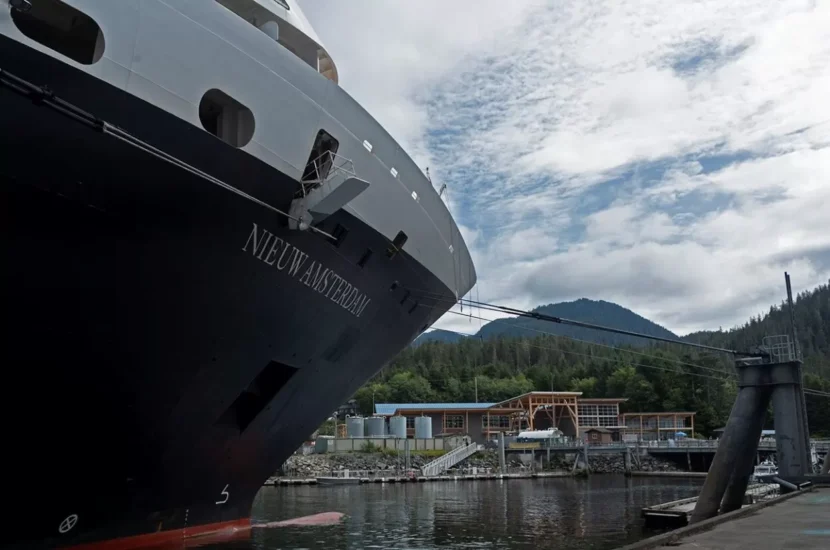
In May, Sitkans will vote on a ballot measure to limit cruise tourism in Sitka. Pictured: the Nieuw Amsterdam ties up in Sitka. (Tash Kimmell/KCAW)

Enough signatures have been gathered to put a cruise limit ballot out to Sitka voters in a special election this spring.

If approved by the voters, the ordinance would set an annual cap of 300,000 cruise passengers, a daily cap of 4,500 passengers, and limit port calls to six days a week. It would also require permits for cruise ships and require the city to administer permits and fine cruise ships for violating the new rules.

Municipal Clerk Sara Peterson said her office certified the petition on Thursday afternoon. The city’s charter says that if enough signatures are gathered, a special election must be called within 40 to 90 days.

“So the 40 to 90-day clock starts as of yesterday,” she said. “In order to have that special election according to the charter, 613 valid signatures were required, and they did get more than 613.”

The special election will be similar to a typical municipal election, with both precincts voting at Harrigan Centennial Hall and the same early and absentee voting options available.

Peterson has tentatively set the date for the election for Friday, May 30, pending Sitka Assembly approval. She said she chose that date because it works for code, and she worked with building staff to find a day when Harrigan Centennial Hall would be less busy. The building also serves as the delivery point for cruise ship passengers in the summer months.

“Both of our voting precincts are at Harrigan Centennial Hall, and in looking at all of this, I was looking at voter accessibility — where our voters are used to voting in Sitka,” she said. “Obviously, for the regular election each year, I’m reserving those rooms and everything. As soon as we’ve certified the October election, I’m already planning for the next one. So obviously, with this, we didn’t have any rooms reserved at Harrigan, and so I worked with staff there, we determined some dates that might work, and ultimately, the driving force behind choosing May 30 was to ensure that we could have the greatest voter accessibility at Harrigan Centennial Hall.”

In a press release Friday, the petition organizers said they were unclear whether the May 30 date aligned with charter requirements and said they were “looking to clarify” the city’s interpretation of code.

The initiative to limit cruise tourism was the fourth proposed by a local advocacy group, Small Town SOUL, in December. The first three failed to make it through the city’s legal review process.

Sitka has seen record numbers of cruise passengers over the last three years. With the unprecedented growth have come community frustrations over congestion, safety, and environmental impact.

The industry growth also brought an economic boom – new businesses have cropped up in response to the growth, and the city’s sales tax revenue is up. In response to the initiative, a pro-tourism group, Safeguard Sitka’s Future, formed, ran a “Decline to Sign” campaign, and hosted information sessions throughout the signature-gathering process.

Until now, those groups have been advocating without the requirement to register with the state. Now that the election is certified, any advocacy group must register with the Alaska Public Offices Commission.

The assembly will hold a special meeting on Tuesday, March 18 to consider approving the ballot ordinance, which will require two readings.
Haines Assembly affirms Canada’s sovereignty

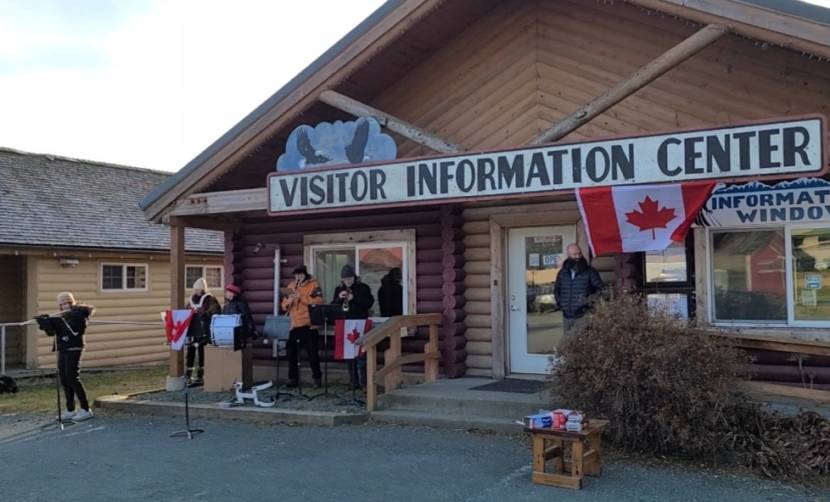
The Haines community marching band plays ‘O Canada’ in November 2021 to welcome the first Canadian visitor to town since the COVID pandemic began. (Corinne Smith/KHNS)

The Haines Borough Assembly sent a letter three weeks ago to their international neighbor, Haines Junction, Yukon.

The letter expressed friendship amid growing political tension. The Canadian mayor responded with a request that Haines publicly support Canada’s sovereignty. The Haines Assembly voted to approve a resolution that recognizes that sovereignty at its last meeting.

Haines Mayor Tom Morphet and Assembly member Craig Loomis recently crossed the border and drove 150 miles north to Haines Junction in Canada. They brought a gift basket full of local treats like smoked salmon and whiskey. At their March 11 meeting, the Assembly offered another show of solidarity when they passed legislation affirming Canada’s sovereignty.

“There’s no question that Canada is incredibly important to this community,” said Assembly member Kevin Forster. “And I spent the last week in Canada … and the conversations that I had with almost every Canadian I interacted with, they are very, very, very concerned. And I think that the more that we can express solidarity with our friends and neighbors, the better.”

The move comes after tariffs were imposed on Canadian goods by President Donald Trump. He has made repeated statements that Canada should become the 51st state and took to calling then Canadian Prime Minister Justin Trudeau, Governor Trudeau. More recently, Trump reiterated this message in a meeting with the chief of NATO. NATO is an international military alliance with 32 members.

Haines relies on Canadian tourists to support their economy. The Haines Visitor Center and local businesses have received notice of individuals boycotting their town, which is nicknamed The Adventure Capital of Alaska.

Mayor Morphet hopes the town’s outreach helps soften the anger and that Canadians acknowledge his town isn’t responsible for national politics.

“There was one individual who said I am boycotting America, but I’m going to make an exception for Haines and Skagway,” Morphet said. “What we’re trying to do here is create an allowance where we don’t jeopardize the millions and millions of dollars this community has spent since 1987 promoting regional marketing.”

Haines Tourism Director Reba Hylton got a taste of what might be coming this summer when she attended an adventure travel show in Vancouver, British Columbia two weeks ago. She said that normally, her voice is hoarse by the end of the first day, and they run out of printed materials to hand out. But this time, the U.S. aisle was empty. She said the rest of the convention center was full of attendees.

“I could hear their conversations or read their body language,” Hylton said. “And you know, it wasn’t anything personal. It was just like they are taking this stance against visiting our country…”

Assembly member Cheryl Stickler voted for the sovereignty measure but had concerns about potential repercussions.

“The idea that there’s even a request for our small town of Haines to make a statement that says Canada is a sovereign nation blows my mind,” she said. “My reservation again, was the timing. Because we have these requests in for federal funding, and we know we don’t have the money to do these projects.”

Assembly member Mark Smith was the only no vote. He didn’t want the assembly getting involved in national politics.

“This is a request for the assembly to approve a resolution recognizing the sovereignty of a country that is already sovereign,”  he said.

Smith raised concerns that the resolution would violate the 1799 Logan Act, which prohibits U.S. citizens from conducting private diplomacy.

Morphet said the borough attorney concluded the resolution would not violate the act.

Still, the increasing disputes between the U.S. and Canada continue to have Haines’ leaders worried.

“What we do know is that our town, being a border town, has close ties with Haines Junction and Whitehorse,” Stickler said. “And we know that we have to cross the border to get to other parts of our state … I feel like we’re between a rock and a hard place.”

After failing to receive the required four votes to pass because an assembly member was absent, the issue was reconsidered and passed four to one.

AIDEA, Vigor announce talks to resolve dispute over future of Ketchikan Shipyard

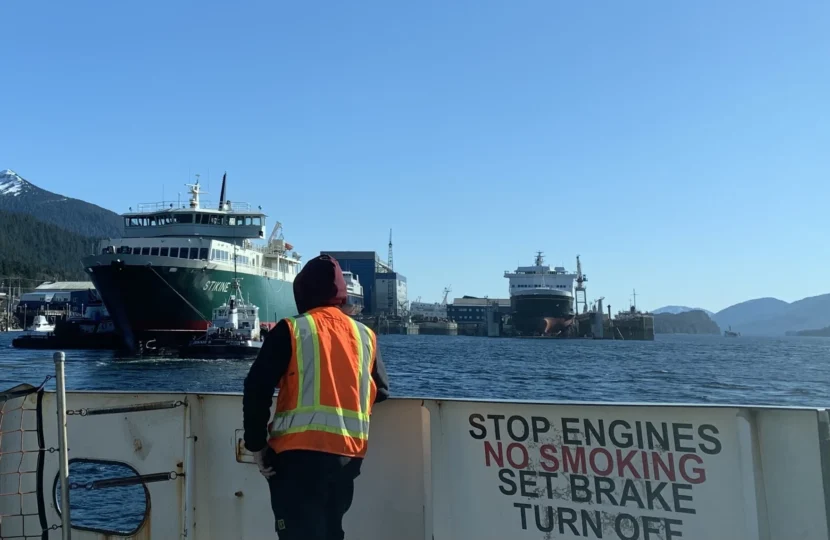
A deckhand aboard Ketchikan’s airport ferry watches as tugs maneuver the Inter-Island Ferry Authority’s M/V Stikine outside the Ketchikan Shipyard on March 8, 2022. (Eric Stone/KRBD)

Alaska’s state development agency says it’s in talks with the operator of the Ketchikan Shipyard to resolve a dispute that threatens the future of the key local employer.

The announcement comes about two weeks after the Alaska Industrial Development and Export Authority told shipyard operator Vigor it would not renew its contract to run the multimillion-dollar state facility. AIDEA said Vigor had not supported enough jobs, made enough money for the state or adequately contributed to repairs and maintenance. The agency said the operator’s time at the yard would end Nov. 30.

Now, though, tensions appear to be easing. A joint statement from AIDEA and Vigor dated March 13 commends the operator’s “stewardship” of the Ketchikan Shipyard.

“AIDEA and Vigor are united in their commitment to preserving this essential shipyard as a cornerstone of opportunity for the community and the state,” the statement said. “Both organizations are working together on potential opportunities to extend our working relationship by exploring new opportunities and partnerships to improve the shipyard’s ability to serve Alaska’s maritime needs.”

Neither side offered any details on what had changed in the meantime.

Previously, AIDEA said it was willing to discuss extending the end of the contract to March of next year. But there’s no mention of the March deadline in Thursday’s statement, indicating the pair may be negotiating a longer-term deal.

“Looking ahead, AIDEA and Vigor remain optimistic about the Ketchikan Shipyard’s future and its enduring role in the region,” Vigor and AIDEA said. “Further updates will be provided as negotiations advance, and we anticipate sharing additional developments in the near future.”

Vigor is a significant employer in Ketchikan, with roughly nearly 100 direct employees and dozens of additional contractors. It’s also the only major shipyard in Southeast Alaska, and it’s where many of the state’s Marine Highway System ferries, among other government vessels, go for maintenance and overhaul work.

Trump’s executive orders to stimulate logging could fall flat in the Tongass

The Tongass is the country’s largest national forest at 17 million acres, and it’s one of the last protected temperate rainforests in the world. (Photo by Alix Soliman/KTOO)

Listen to this story:

President Trump issued two new executive orders on March 1 to expand logging in national forests. They come after he suspended the Roadless Rule, which banned the construction of new roads in undeveloped wilderness and has flip-flopped with each presidency. Together, the orders could increase timber harvest in Tongass National Forest, but some locals aren’t so sure that will happen. 

One order aims to get forestry projects approved more quickly, even if it means scraping out exemptions under the National Environmental Policy Act and the Endangered Species Act. The other order directs the U.S. Department of Commerce to investigate whether importing lumber is a national security risk, and how the government could step in to address that. 

The Tongass National Forest is the country’s largest national forest at 17 million acres, and it’s one of the last protected temperate rainforests in the world. Locals say it has environmental value, but the main reason the orders probably won’t lead to more logging is that much of the industry has moved out. 

Joel Jackson is president of the Organized Village of Kake, a tribe based on Kupreanof Island, and has seen logging come and go. 

In economic terms, Jackson said that the real value of the forest is in tourism. 

“People don’t want to come from down south and look at a scarred landscape,” he said. “They come up here because they like to look at the Tongass — the wildness of it.”

Millions of tourists travel to Southeast Alaska each year to experience the environment Jackson’s village depends on. 

“The berries and medicinal plants and just everything it provides out there, and the animals — the deer, moose, bears — the shade from those old-growth trees along our streams that the salmon return to every year,” he said. 

Now, since most lumber yards and pulp mills have closed shop, it’s costly for loggers to come harvest the trees and ship them out, Jackson said. He believes Trump’s orders won’t change the financial constraints of logging in this rugged and remote region. 

Gordon Chew runs Tenakee Logging Company, a small father-son timber operation on Chichagof Island. He echoes Jackson’s sentiment, and said the industry would have to be completely redeveloped for the Tongass to deliver more timber. 

“We don’t have people sitting on their hands that can’t wait to get into the forest and mow down all the trees,” he said. 

Chew said he’s an environmentalist and his company sustainably harvests about 100 trees each year. They’re second growth — young trees that have grown back in areas that were heavily logged in the past. 

“We live here in the heart of the Tongass National Forest, and don’t want to be a part of any deforestation or destruction. So we’ve always only purchased selective timber sales,” he says.  

The Forest Service marks one out of no more than three trees in the selected tract, then Chew and his son carefully fell them by hand. He’s not convinced that Trump’s executive orders will accelerate logging in the Tongass, since the U.S. Forest Service is likely overwhelmed due to recent firings.

“They’re dealing with distraught human beings that have been cast aside,” Chew said. “So I know the hope was efficiency, but you don’t get more efficient with fewer people doing more work.”

If the administration is serious about increasing timber production, Chew suggests they go through Congress to streamline the approval process under the National Environmental Protection Act for small, sustainable operations like his. 

“You can still have industry and do it responsibly,” he said, adding that environmental laws should be geared toward preventing wreckage, not preventing a couple of guys from thinning the over-crowded second-growth forest to build local cabins, boats and musical instruments. 

Viking Lumber, a well-known logging company in the region, did not respond to a request for comment.

Robert Venables is the executive director of Southeast Conference, an organization that advocates for economic interests in the region. He said that there is room in the Tongass for additional logging, especially in second-growth areas, but it’s unlikely that the industry would scale up to the behemoth it once was.

“I believe it’s more likely to colonize the moon,” he said. 

Because of the way the timber market has changed, Venables said that the past isn’t able to inform the future of the industry here.

The U.S. Forest Service declined an interview, but a spokesperson wrote that the agency will “continue to meet its commitments to protecting vulnerable wildlife while also meeting the President’s directive to provide the nation with abundant domestic timber, unhampered by burdensome, heavy-handed policies.”

Legal battles over logging in the Tongass roiled during Trump’s first term, and more could be on the way. 

Correction: A previous version of this story misidentified the name of the National Environmental Policy Act.

Alaska fisher gets six months in federal prison for attempting to kill endangered whale

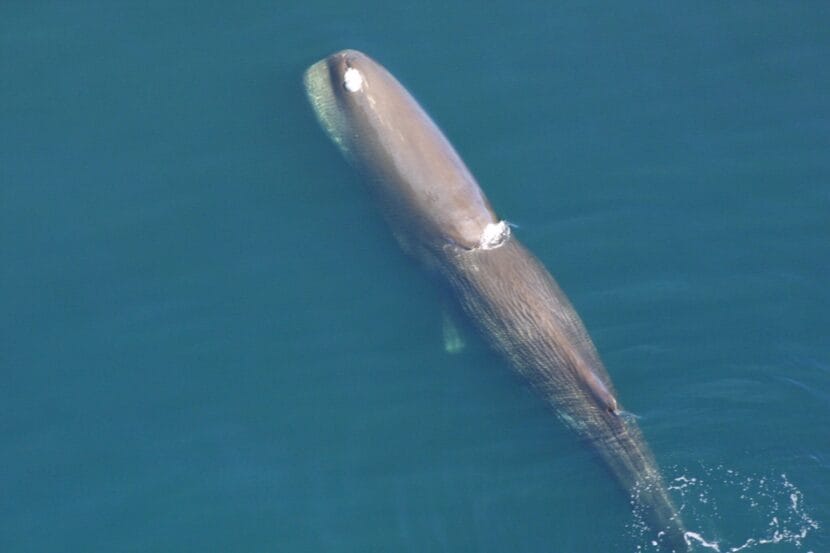
A sperm whale is seen in an undated photo published by the National Oceanic and Atmospheric Administration. (NOAA photo)

A federal judge in Juneau has sentenced a Southeast Alaska fisher to six months in federal prison after pleading guilty last year to one count of misreporting a fish catch and one count of violating the Endangered Species Act for directing his crew to kill a sperm whale.

Dugan Paul Daniels had previously agreed to the sentence as part of a plea agreement, and Judge Timothy Burgess confirmed the imposition of sentence in a hearing Monday morning.

The six-month sentence was at the top of the sentencing range allowed by the plea deal and in line with what prosecutors had requested.

While it isn’t clear whether Dugan Paul Daniels’ crew successfully killed the whale after Daniels ordered them to shoot it, federal law prescribes the same punishment for an attempted kill and an actual one.

In addition to the prison sentence, Daniels will pay a $25,000 fine and be banned from commercial fishing for one year. He also must perform 80 hours of community service.

According to court filings by prosecutors, Daniels was fishing in Southeast Alaska waters in March 2020 when a whale began taking fish from his fishing gear, damaging it. Similar behavior has been seen up and down Alaska’s coast, but prosecutors believe this is the first time that a fisher has tried to kill a whale in retaliation.

According to messages sent via his GPS unit, Daniels directed a crew member to shoot the whale, tried to ram it with his fishing boat, then tried to kill it by reeling in his fishing gear while the whale was trapped in it.

In a written statement about the sentencing, newly appointed Alaska U.S. Attorney Michael Heyman said, “Let this sentence serve as an example that these violations will not go unpunished.”

Once again, Alaska will study building a road to Juneau

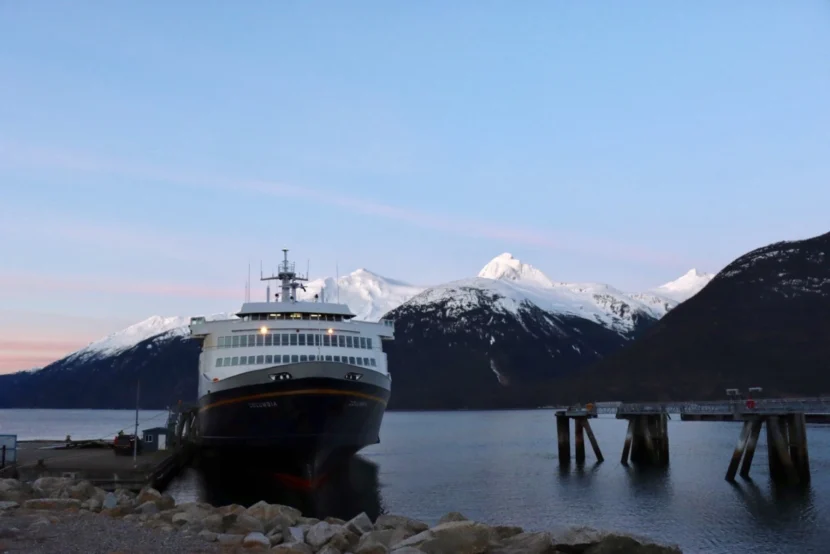
The Columbia, a mainliner in the Alaska Marine Highway System, docked in Skagway in early March. The state is again exploring whether to build a road and other infrastructure in an aim to ease travel in the upper Lynn Canal — potentially decreasing the need for ferry service. (Avery Ellfeldt/KHNS)

A decades-old proposal to build a controversial road between Juneau and the communities of Haines and Skagway was put to rest in 2016.

But that just changed. The state Department of Transportation and Public Facilities unveiled plans last week to launch a new study to examine the feasibility of building a road – and other infrastructure – that it says could create more cost effective and reliable transportation for the region. It plans to pay a firm at least $1 million for the study, due at the end of the year.

According to agency spokesperson Sam Dapcevich, the road could help Haines residents get to Juneau and back in one day, reducing the need for mainliner ferries in the region.

“If you knock 14 hours or more out of the mainliner schedule on Lynn Canal, you can do a lot better for some of the other communities in southeast, while even improving the service to Haines and Skagway,” Dapcevich said.

Whether such a road would achieve those goals has been debated for decades.

The state has repeatedly studied and pitched proposals, including in the 1990s2000s2010s – and now.

This time, the state is looking at the west side of Lynn Canal. Supporters say the terrain on that side is less avalanche-prone than on the east side. They also say it would open more of Haines to recreation and provide a more reliable way to get to Juneau, which is only accessible by boat or airplane.

“In the years when we first came here, in the 70s, the ferry was dependable. It was very dependable, you could almost set your clocks by it,” said long-time Haines resident Jerry Lapp, a former mayor and assembly member who supports the road. “But it’s become so undependable, in the winter time, you don’t know if you’re going to get to Juneau and back.”

Many see it differently. Critics have argued the road would be extremely costly to build and maintain, in part because each version that’s been proposed over the years would have required new bridges, ferry terminals and shuttles. State officials estimated that the version that died in 2016 would have cost upwards of $570 million.

That hasn’t changed this time around. Dapcevich, of the Transportation Department, said the new study will focus on a west-side road that would need a ferry across Lynn Canal near Juneau and bridge across the Chilkat River near Haines. Another possibility would be to extend the road further, roughly 25 miles past Haines, where it could connect with Chilkat Lake Road near Mosquito Lake. That route would require a bridge across the Tsirku River.

Maggie Rabb, the executive director of Southeast Alaska Conservation Council, said she’s interested to see the proposal.

“I’m very skeptical that they’re going to learn anything new, other than the price has gone up significantly in the last decade, and the potential environmental impacts have not gone down,” Rabb said. “But we’ll spend money to confirm that, apparently.”

Others say the money put toward the study and potentially the road would be better spent on fixing the ferry system itself.

“The road that’s made out of water works year-round. And it costs us nothing to build, nothing to maintain, nothing to pave, nothing to plow,” said Haines Mayor Tom Morphet. “If you just stop and think about it for about 10 minutes, the economics become pretty clear.”

The state will accept bids through March 25 from consulting firms interested in conducting the study, according to an agency document.

Correction: An earlier version of this story excluded a second route the road could take. The study will focus on a road that would require a bridge across either the Chilkat River or Tsirku River near Haines. A typo was also corrected in Dapcevich’s first quote. 

Site notifications
Update notification options
Subscribe to notifications