Southwest

Two Chevak men use a dose of laughter to heal

Cody Pequeño (left), 24, and Cody Ferguson, 26, spell out their name for their Facebook page, “Can I Borrow.” (Photo Cody Pequeño and Cody Ferguson)

Two men are using social media to celebrate Cup’ik and Yup’ik culture in the form of comedic videos.

Their Facebook page, “Can I Borrow,” has nearly 5,000 likes. They started it almost a year ago and made it home to videos celebrating traditions and customs, with the goal of “healing through laughter.”

Cody Ferguson and Cody Pequeño, more popularly known as “Cody & Cody,” are the duo behind the popular page.

The page features videos poking fun at Cup’ik and Yup’ik culture and traditions. Cup’ik is similar to Yup’ik culture, but the language features a different dialect.

One of their most popular videos mimics the voice inflection some women use when gossiping. It received more than 2,000 likes and shares on Facebook.

Ferguson, 26 and Pequeño, 24, and grew up together in the small Southwestern village of Chevak. They used to race each other to school when they were younger.

REEEAAALLLY??? GAAAAAA

Posted by Can I Borrow – Cody&Cody on Saturday, June 27, 2015

In some ways, the men are opposites. Ferguson is a bit more soft-spoken and reserved while Pequeño is more outgoing. Despite their differences early on, they eventually found a common interest in humor.

One day, they decided to take their jokes to the next level and start a Facebook page. Pequeño and Ferguson say the decision was spontaneous, but they wanted the page to have a deeper purpose.

“We decided that the page would help heal people through laughter,” Ferguson said.

The young men said they learned the traditional ways of using humor from their elders. In Cup’ik culture, humor is used to teach unforgettable life lessons.

“There was an elder from Hooper Bay who said that crying and laughter are similar – they both heal people,” Ferguson said.

It’s a mantra the men use in their personal lives, as well. For Ferguson, who has suffered from depression and is recovering from alcoholism, he’s leaned on Pequeño’s humor to get through tough times.

“I’d just feel better instantly because we’d just laugh for hours and it really helped me continue to push forward,” Ferguson said.

Recently, their videos have focused mental health awareness.

Chevak is located about 20 miles east of Hooper Bay, and the cluster of suicides in the village last month impacted the men as well.

“These are our people, our own people,” Pequeño said, “and just to see and hear to that they’re hurting so much they want to take their own lives, just breaks my heart. I’m living in the same place as they are.”

At the Alaska Federation of Natives Conference earlier this month, Ferguson rallied up people to produce motivational videos using the hashtag “choose life.” The video features a lot of notable people from the YK Delta and officials like Republican Sen. Lisa Murkowski and Gov. Bill Walker.

“I just wanted to make a different for what was going on at the time,” Ferguson said, “and try to help people realize suicide isn’t the answer.”

The men said they’ve received praise for the video from fans everywhere, from the Anchorage airport to Greece. The videos provide a little bit of home for people who are far away from theirs.

Although Ferguson recently moved from Chevak to Anchorage, the men have no plans to stop the page anytime soon.

They plan to continue making videos individually until they can meet in person again.

Toksook Bay singing and drumming phenom releases first album

Byron Nicholai’s Yup’ik songs have been popular in the Yukon-Kuskokwim Delta ever since he started uploading his performances to his Facebook page. Now they’re available on a variety of common online music sites.

Toksook Bay's Byron Nicolai recently released his first album "I Sing, You Dance."
Toksook Bay’s Byron Nicolai recently released his first album “I Sing, You Dance.”

Nicholai, who’s from Toksook Bay, recently recorded a 12 track album now available on Play, Spotify, Amazon and most recently iTunes under the album name “I Sing, You Dance.”

Nicholai says he first got the idea to record and sell his songs from the comments on his ‘I Sing. You Dance” Facebook page.

“People wanting to buy CD’s, ‘Where can I buy a CD?’ ‘Where do you sell your CD’s?’ and I told them that I don’t have a CD yet, and then they were saying, ‘Well, you need to make one because I want to buy one,” said Nicholai.

Nicholai says the opportunity to professionally record his music arose after he was introduced to Frozen Whitefish band member Mike McIntyre who is also the owner of a new business, Yuk Media.

McIntyre founded the company in June with the mission of bringing Yup’ik culture into the mainstream media as a means of preserving the culture for future generations. Nicholai became the first client. McIntyre says their project started under a pressing deadline; the Alaska Federation of Natives convention in mid-October.

McIntyre says they discussed business over pizza and were able to record the songs in about five hours. Nicholai recorded some traditional songs passed down from family, friends and teachers; like the song called ‘Tarvautnauramken,’ or “Let me bless you.” It’s a song about performing a blessing to drive away evil spirits or sickness. Another song fans will notice is his signature song called ‘I Am Yup’ik.’

They say the album also features three new songs Nicholai came up with during the recording.

“One of my favorites is Ellu’urtaataunga,” said McIntyre. “We were sitting there and he starts singing something and I’m like, ‘what was that?’”

“Yeah I just made that up,” said Nicolai.  “Mike’s like we need to put that in the album you should record it and sing it again.”

After that Nicholai freestyled a couple more songs. Some of his sillier performances still can be found on Facebook.

And I, Byron Nicholai, will always love…..

Posted by I Sing. You Dance. on Wednesday, May 13, 2015

While the album is available online they haven’t produced CD’s yet but McIntyre says they hope to order a thousand to sell by Christmas.

Nicholai performed for Secretary of State John Kerry and other dignitaries at the White House in Washington D.C. over the summer. But he says now he’s focusing on his schooling. He’s turned down a few requests for performances. He is in his senior year in high school and wants to finish school on time so he can get back to traveling and performing. He plans on going to college at the University of Alaska Anchorage. He says the location will make it easier to travel for performances. He plans to major in education and minor in Alaska Native studies.

Kuskokwim village could serve as model for community development in rural Alaska

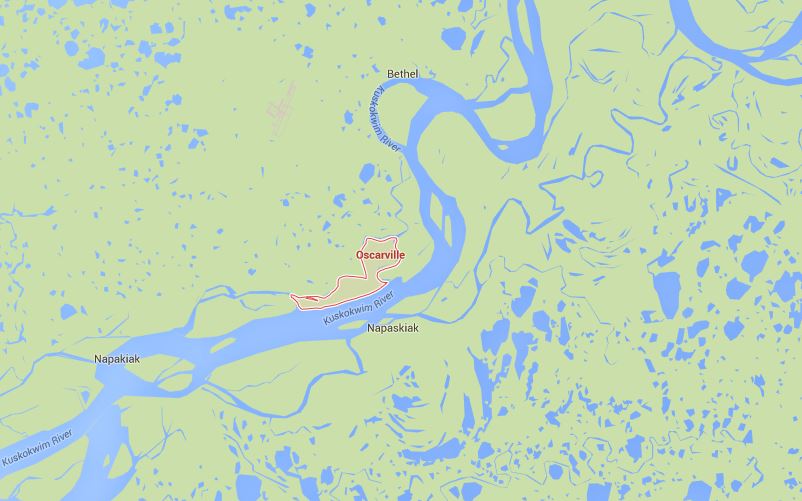
Oscarville is a short trip down river from Bethel. (Google Maps screenshot)

Over a decade ago, Oscarville’s community well broke down. Then, this summer, the school well failed too. Residents in the small Kuskokwim village have reverted to using rain and river water. Last week the community landed a major grant to fix that. The funding is part of a larger vision for rural Alaska and could pave the way for additional infrastructure.

In August, the Oscarville school staff showed up at school, ready to begin the semester, and found the building’s well had collapsed.

“Basically this metal pipe, quote unquote, went back to nature,” said James Mikesell, plant facilities manager for the Lower Kuskokwim School District.

“We have very ferrous, iron-bearing soil all throughout Alaska, so you put a piece of metal in the ground, and it’s going to rust away.”

To prevent the school from shutting down, Mikesell and his crew mobilized. They emergency shipped a 500-gallon tank and a high-volume pump from Anchorage and loaded it all on the LKSD boat. It’s called The Ark. They’d drive it to Napaskiak, located across the Kuskokwim, and back to Oscarville.


“And that had to be done on a daily basis. At least one or two trips a day,” Mikesell said.

Meanwhile, the school was limiting its water use, and Mikesell and company were rigging an alternative solution.

The village has two wells — the community well and the school well.

The community well collapsed in the early ‘90s, and residents have been using rain and river water ever since. The school well water is restricted to school use. The community and school district have never merged resources to fund and manage one water well, so the community and school have never shared a water source.

That might change. Oscarville recently landed a federal grant of almost a half million dollars to rebuild their water system.

“What this has done is opened the opportunity for the school to share their watering point with the whole community, which has not happened in the past,” Mikesell said.

Jackie Schaeffer is a project specialist with design company WH Pacific and is helping facilitate what’s being called “The Oscarville Pilot Project.”

Last year, about a dozen organizations from across the state came together to figure out how to make life better in rural Alaska — this means safer, more comfortable and less expensive. They want to see how community development can happen as a whole instead of through siloed projects and how that process can empower communities. Ultimately, they want to replicate this system across the state.

The team designated Oscarville, located five miles from Bethel, as their test case.

“The holistic approach is really to change the perspective of how we do community development, and allowing the community to start seeing how these components all tie together,” Schaeffer said.

Those components include power, housing, transportation, waste and water.

“So it’s everything that binds that community together,” she said.

This recent grant is bigger than just water, because it could help develop additional infrastructure by acting as a match to future grants.

But before any of that can happen, the school needed to fix its water issue.

Mikesell and his team salvaged the old community well and stretched a 400-ft. pipe from that well to the school’s water treatment plant to provide the school and two faculty houses with water for the winter.

The solution is temporary. The well could breakdown and the line could freeze.

“We’ve done everything we can think to do to insulate that line from cold temperatures. But there’s no guarantee with Mother Nature how cold it’s going to get,” Mikesell said.

If the well fails this winter, then it’s back to hauling water from Napaskiak.

The school district and community have from now until spring thaw to figure out how to merge water systems. Meanwhile, the pilot project crew will be working in Oscarville this winter, increasing energy efficiency in the town’s 20 buildings, changing electric meters to deliver lower cost electricity, and hoping the school’s water pipe doesn’t freeze.

Southwest school districts team up to cut costs

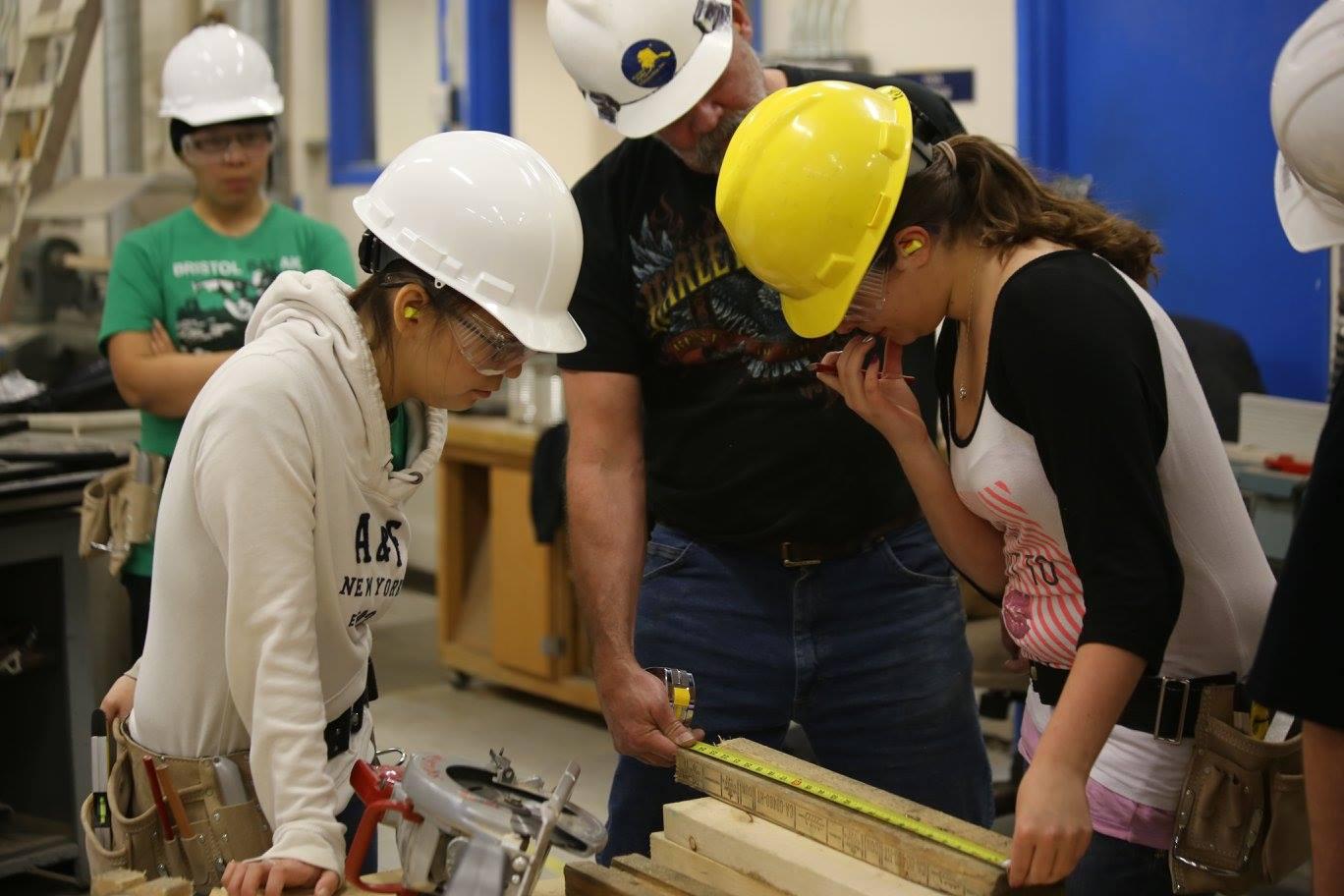
In October 2015, students from Lake and Peninsula and Bristol Bay Borough schools gathered in Naknek for a week of career and technical education (CTE) courses. (Photo courtesy Lake and Peninsula School District)
In October 2015, students from Lake and Peninsula and Bristol Bay Borough schools gathered in Naknek for a week of career and technical education courses. (Photo courtesy Lake and Peninsula School District)

With more state budget cuts on the horizon, schools districts are under pressure to keep educating students while squeezing into smaller budgets. Two districts on the east side of Bristol Bay have been cutting costs by teaming up.

Bill Hill, superintendent for the Bristol Bay Borough School District, has long heard cries for more vocational training in his community. Students wanted to learn engine repair, web design, welding — courses that were in demand in the neighboring Lake and Peninsula Borough Schools, too. But, Hill said, neither district could make it happen alone.

“So we joined forces, and went out and looked for funding together,” Hill said. “And we developed a program that brings basically a 50-50 mix of students from Lake and Peninsula and the Bristol Bay Borough to the Bristol Bay Borough campus.”

Last fall, the two districts began offering a Career and Technical Education program. Several times a year, students travel to Naknek to complete a week of vocational courses for high school or college credit.

“We keep them really busy from morning to night, and they get a lot out of that time together,” Hill said. “We see this as a win-win. We have a program that Bristol Bay can house, and Lake and Pen(insula) can help organize, and it provides a wide array of courses that are very responsive to industry needs in our area.”

This fall the CTE program even expanded to include a handful of students from a third district, Southwest Region Schools.

And the CTE program is just one of the ways that Lake and Peninsula and Bristol Bay save costs by teaming up.

They also co-host sports events and teacher in-services. And they’ve been sharing staff members.

“One of them, of course, is our federal programs person, Jim Dube,” explained Hill. “He works for both districts and is very highly qualified person. He’s able to bring a very high level of service to our district at a reduced cost. So we get a lot of bang for our buck.”

The district now spends less than two-thirds of what it used to on the federal programs position.

And while cost-sharing efforts have created strong ties between the Bristol Bay and Lake and Peninsula, Hill is quick to quell any fears that the two might lose their identities as independent districts.

“We’re not talking about consolidation, we’re talking about cooperation, we’re talking about to send more resources to our classrooms, and less for instance on district office,” Hill said. “You know, the heart and soul (are) the school board and community. It’s not necessarily some of the functional pieces like the superintendent or a business manager.”

Hill said it’s hard to put a number on the savings the district has reaped through various cost-sharing efforts. But he’ll continue to look for ways to save by working together.

Crew melts 100 feet of ice to reach Bethel schools’ well

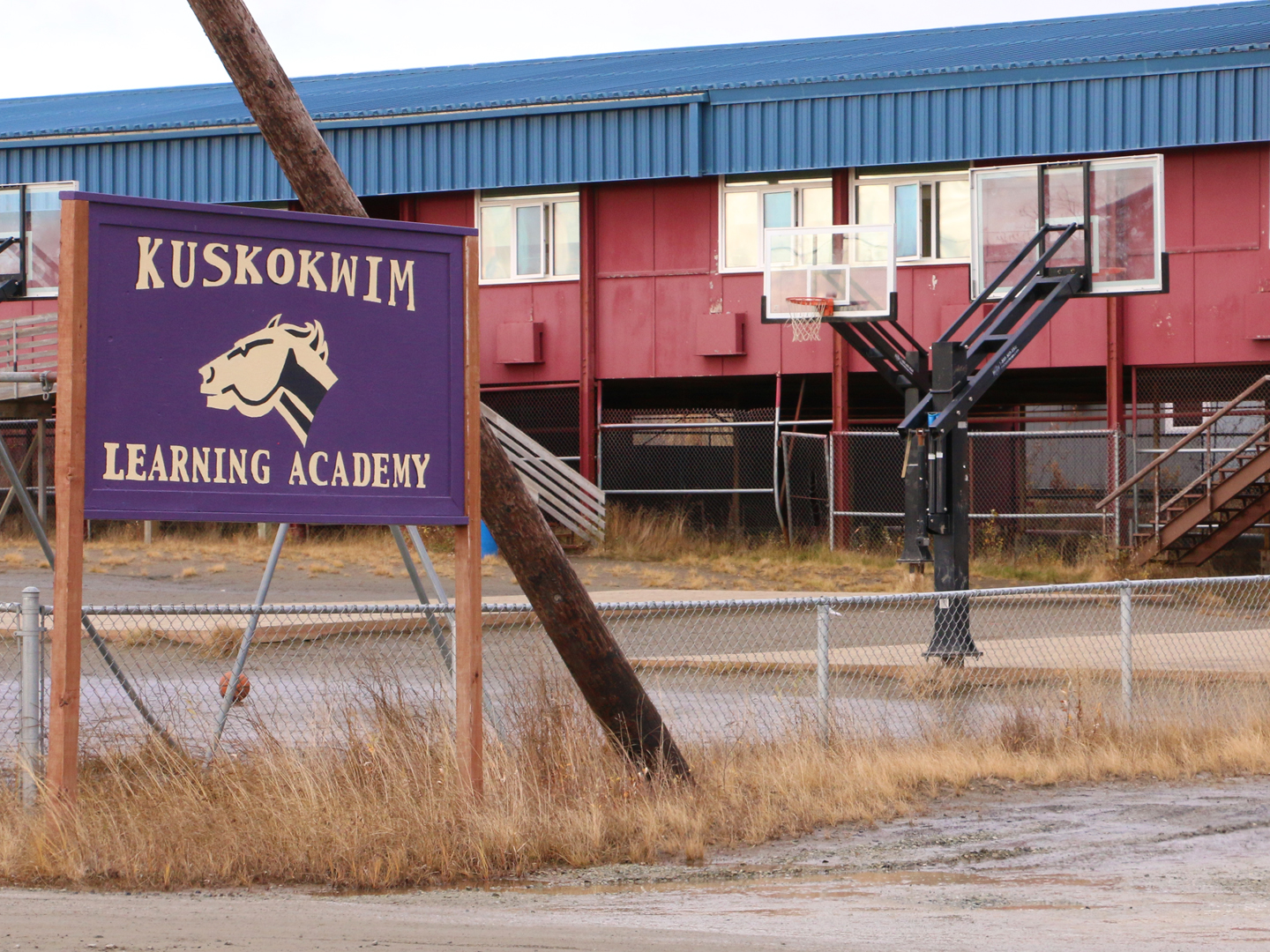
Kuskokwim Learning Academy in Bethel, AK. (Photo by Dean Swope/KYUK)

The ice blocking an essential well for Bethel schools has finally cracked. Officials discovered the frozen well in September and spent almost a month thawing the impasse. Water is now pumping, but the well still isn’t in the clear.

Maintenance crews spent 20 days melting 100 feet of ice, never knowing when the blockage would end. To prevent the school from closing, they began buying hauled water from the city.

James Mikesell is the plant facilities manager for the Lower Kuskokwim School District and oversees the districts’ water.

“We were going down and down every day. But 100 feet is an awful long way. The unknown, all battling the unknown is really the issue here,” said Mikesell.

He does not know why the well froze, but to prevent it from happening again, they have extended about 400 feet of heat tape through the well. Heat tape often runs through sewer lines to prevent freezing.

The well is pumping, but the school is relying on hauled water from the city until they get back results from water samples sent in for testing.

The well feeds two Bethel schools, a set of dorms and a kitchen that prepares all the meals for every school in Bethel. It started showing problems last month. Then the water just stopped.

Maintenance crews thought the well’s pipe had corroded and silt had collapsed through the casing until Mikesell discovered something odd.

“We put some heat down there with some heat tape and melted, and it started going down. I’m going, well sand doesn’t do that; solid ground doesn’t do that,” said Mikesell.

The well had frozen.

Mikesell said no one in the district had seen this problem before, so he and his crew started experimenting with different heating tools and water pumps. The ice melted only a few feet a day, and the deeper they went, the slower it melted.

They had no idea how deep the ice ran.

The blockage started about 100 feet below ground and the well extends about 450 feet.

“So we were just coming up with different methods to do this,” said Mikesell. “You might have been 6 inches away. There’s no way to tell.”

There was another issue. The most efficient tool for thawing a frozen pipe, according to Mikesell, is a high-pressure jetter, a machine that blasts warm water through the well. But the school’s jetter was broken.

The Yukon-Kuskokwim Health Corporation caught wind of the dilemma and offered to loan the school its jetter.

“And no sooner than we had it basically on its way over to the site, we broke through,” said Mikesell. “And the pump just went zoom! It went down, and we go

‘We’re through! We’re done!’”

Mikesell hopes the school will return to well water by Wednesday.

GCI to pay more than $600K for cell tower violations

The newly erected GCI cellular tower on Ptarmigan Street in Bethel. (Photo courtesy of GCI)

General Communications Inc., commonly known as GCI, will have to pay a $620,500 fine for unregistered cellular towers and improper tower lighting in Western Alaska and airports near Fairbanks.

The fee comes after a settlement Tuesday, with the Federal Communications Commission, or FCC.

An investigation by the FCC found that GCI had 118 unregistered cellular communications facilities didn’t properly light three of them, making the towers noncompliant with flight safety regulations. Any tower above 200 feet or potentially interfering with an airport’s flight path, must register with the FCC and comply with aviation standards.

GCI spokesman David Morris says since 2008, GCI has acquired four telephone companies, including Alaska Communications.

“As a result of that acquisition, we started to investigate the towers’ compliance and we found another of them were out of compliance (and) had mostly to do with registering the tower properly and doing some environmental checks,” said Morris.

Morris says GCI and the FCC developed a three-year plan to bring all GCI-owned towers in compliance with FCC regulations.

“What we went and did was an exhaustive inventory of how those towers were represented in the area,” said Morris. “Over the next few years we’ll have to do regular reporting back to the FCC for the compliance document.”

Morris says GCI has about 800 structures in Alaska, says a GCI certifying official will be checking to make sure everything is kept up to code and following state and federal regulations.

The FCC does conduct field checks to make sure cell towers following the rules. The commission announced in July that its Anchorage field office along with 10 other offices across the country will close. This means that in-person regulators will come from out-of-state.

Although there isn’t an exact timeline in place, once the Anchorage office closes, the nearest will be in Portland.


Site notifications
Update notification options
Subscribe to notifications