Southwest

Bethel cop on the run after attempted sexual assault accusation

A former Bethel Police officer has been charged with attempted sexual assault, according to press release from the Attorney General’s office Thursday.

The Office of Special Prosecutions is charging former Police Officer Aaron Fedolfi, 23, with one count of third degree attempted sexual assault by a police officer and one count of third degree official misconduct.

Fedolfi is currently at-large and a warrant has been issued for his arrest.

Fedolfi attempted to sexually assault a person while the individual was in his custody, according to the press release.

In early September, Fedolfi stopped a woman walking down Ridgecrest Drive, according to charging documents. He took her to an area near the Bethel dog pound and attempted to force her to perform oral sex on him.

The woman “told Fedolfi to stop, and asked if he had ‘done this before’ at which point Fedolfi took his hands off her head,” according to charging documents.

The woman was able to run away and eventually reported the crime to the Alaska State Troopers. Fedolfi was one of two officers on duty that night.

After the incident was reported, Fedolfi was placed on administrative leave, according to a BPD press release Thursday evening. While on leave, Fedolfi notified the city of his resignation.

“Since that time the City has had no contact with Mr. Fedolfi other than to process his final paycheck,” according to the release.

A subsequent investigation revealed footage from Fili’s Pizza, a local pizzeria in town. The footage shows that in the early morning of Sept. 12, a BPD vehicle pulled over and stopped near a pedestrian. The pedestrian got in the vehicle and then the car headed in the general direction of the dog pound.

In an initial interview with investigators, Fedolfi said the victim was lying. But when pressed in a second interview, his story changed.

“Fedolfi claimed he had forgotten to tell troopers that he had picked up an intoxicated male,” according to the documents. However, when the interviewer told Fedolfi he had video footage, his story changed again. The video clearly showed the woman getting into his police vehicle.

Fedolfi claimed the woman had been sexual provocative toward him. Fedolfi said he’d lied to investigators about being in contact with her. He denied any sexual assault or attempted sexual assault, saying he sped away from the area so people wouldn’t see her in his car.

He says he later forcibly removed the woman from his vehicle, after she refused to get out. Fedolfi couldn’t explain to the investigator why he hadn’t followed BPD protocol–he didn’t record his interaction with the woman on his personal body camera or over the radio with police dispatch.

“Fedolfi is presumed innocent of these charges unless and until proven guilty beyond a reasonable doubt,” according to the press release.

Police say anyone with information about Fedolfi’s whereabouts should contact the Alaska Bureau of Investigation at (907) 269-5611.

 

New Y-K Delta foster care program struggles to get off the ground

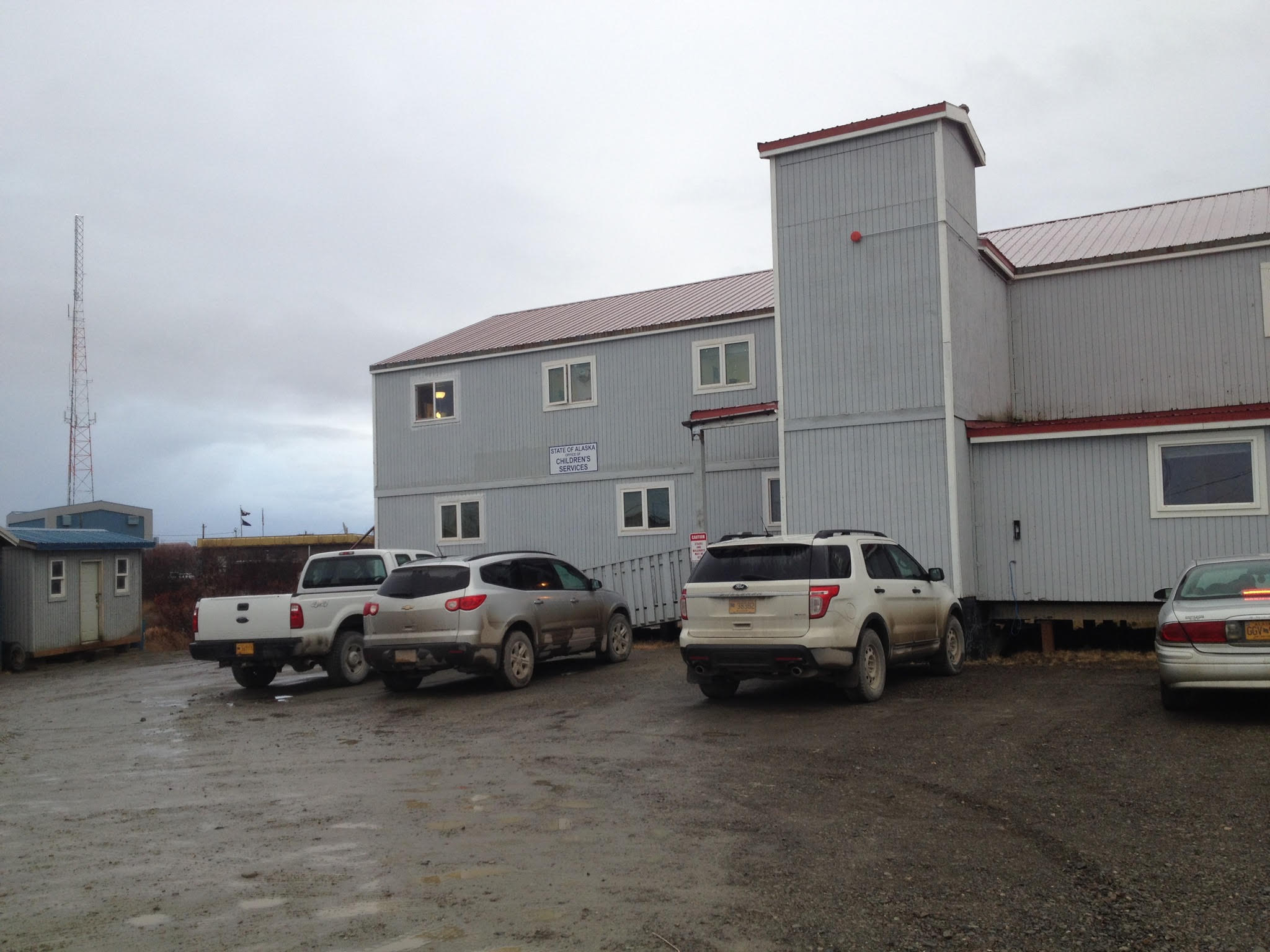
The Office of Children’s Services Building in Bethel. (Photo by Lakeidra Chavis/KYUK)

A new foster care program aimed at helping keep Western Alaska children in their communities is in development. It incorporates therapeutic methods to help fix behavioral issues in the home that might be affecting both the child and parent. But the program is facing problems with one major hiccup — no one has signed up yet.

Now, multiple agency officials are working to raise awareness about the program.

Fennisha Gardner, the protective services manager for the Office of Children’s Services’ Western region, says the goal of bringing therapeutic foster care to this part of the state, is simple: to keep children in the Yukon-Kuskokwim Delta.

“So out of the 56 villages, we would like to have some type of hub of therapeutic foster homes,” said Gardner. “In which case, the child would be able to stay closer to their culture, to their relatives, to their parents.”
There’s just one problem.

“I do not have a “yes,” yet,” said Gardner. “I still need the communities to come together and bring somebody forward,” said Gardner.

Therapeutic foster care carries the basic framework of regular foster care, but it’s designed to offer mental and behavioral health treatment to children who have suffered severe trauma, like abuse. The program also works to improve the behaviors of the parent.

AK Child and Family is the licensing agency for the delta.

Doug White is the agency’s director of community programs, and he says the name ‘foster care’ in the title may be bit misleading.

“They simply need a placement out of their home for a period of time, for the family and children to address any behavioral issues that they might be having,” said White.

Therapeutic foster care parents are trained on mental health issues, solutions to handling them and community resources available to assist the child.

Success in the program is measured by its ability to keep children in their communities, instead of sending them elsewhere for these types of services.

“When that link is broken is broken within the family system, it’s often very difficult to get children back,” said White. “We hear time and time again from families and elders that children leave for treatment and don’t come back for years.”

White says the factors for becoming a successful therapeutic parent are flexibility, openness and understanding. These qualities don’t necessarily equate to a certain income or education level.

But there are some barriers.

Part of the requirement of becoming a therapeutic foster parent is two-month training in Anchorage. However, the agencies are trying to find ways to have the training in a hub, like Bethel.

In general therapeutic foster care is more community-centric. Social workers conduct more house checks, and families interact with health care professionals more, they have to attend treatment-planning sessions, take the child to appointments, and complete daily reports on the child’s behavior.

Currently, OCS and AK Child and Family, among other agencies in the delta, are meeting once a month to discuss ways to increase public awareness.

They’ve focused on foster parents currently in the Delta. But to date, no one has committed to the program.

Yurii Miller, an OCS licensing manager, says reasons for not participating may in part be due to the time commitment needed for training and the amount of paperwork.

Miller acknowledged that part of the challenge is that the program is designed to work best in a bigger city, like Anchorage—a place filled with more resources. But they’ve applied this framework for the program elsewhere–like Nome.

“I will say this much, it’s been done in other communities and it’s been successful,” said Miller. “I think it just takes a lot of planning on behalf of the agency and children services. The resources are there, it’s just a matter of putting them together.”

As of September, there are 191 children in out-of-home foster care in Western Alaska. The number of foster parents in the region is 151, but this number also includes people currently applying to become a foster parent. In Bethel alone that number is 33.

The number of people applying to become foster care parents, in the region has remained steady and is mostly comprised of family members.
In Alaska, there are 43 therapeutic foster parents. But Miller says the biggest barrier in the delta, seems to be the time commitment to becoming one.

Pebble finds friends on US House panel

Proponents of the Pebble mine in southwestern Alaska brought their case to the U.S. House Thursday. Pebble says the Environmental Protection Agency collaborated with mine opponents to restrict the project, in what the company calls a pre-emptive veto because Pebble hasn’t applied for federal permits yet. Pebble got a sympathetic ear from the Republicans on the House Science, Space and Technology Committee.

Pebble CEO Tom Collier waits to testify at a U.S. House hearing. (Photo by Liz Ruskin/APRN)

This hearing wasn’t really about the mine. It was about the process. Specifically, whether the EPA used an objective process to restrict the mine, or whether the agency just went through the motions to reach a predetermined conclusion. Pebble CEO Tom Collier says he was outraged when he read through the stacks of emails between EPA staff and mine opponents.

“Because what I found was collusion between the decision makers and environmental activists. And we can’t allow that in this country,” he said.
Tribes from Bristol Bay say the EPA intervened after they requested help. Collier says the EPA emails show the agency collaborated with the tribes even on that request.

“They launched this process against us because they’d always planned to kill this project, particularly Phil North, and he’s helping draft the petitions that he then said is the reason why he initiated this process.”

North was a Kenai-based EPA biologist who retired and went sailing around the world. Or, as Collier put it, fled the country to dodge subpoenas regarding his work to block Pebble. (A judge has ordered North to testify in Anchorage Nov. 12, in a related lawsuit.)

Collier says the EPA’s pre-emptive process reaches much further than the Antiquities Act, which lets presidents declare national monuments on federal land, precluding development.

“Because now, the administrator of EPA can unilaterally sign a document and withdraw — not just federal land — but withdraw state land and private land and essentially declare it a park, never to be developed,” Collier said.

The Republican leadership of the committee didn’t pretend this hearing would be an open-minded search for the truth. They declared the EPA biased before it started. Here’s the title they gave the hearing: “Examining EPA’s Predetermined Efforts to Block the Pebble Mine.” Republicans put only friendly questions to Collier. For instance, here’s one from Rep. Gary Palmer of Alabama.

“It’s very apparent the playbook is already laid out and has less to do with establishing the actual science … and more to do with appealing to politics and optics to achieve a certain outcome at the EPA,” Palmer said. “Would you agree with that?

“I do agree, congressman,” Collier responded.

The proposed Pebble Mine site looking northwest. (Photo by Jason Sear)
The proposed Pebble Mine site looking northwest. (Photo by Jason Sear/ KDLG)

Democrats, of course, tossed their own softballs for the sole witness against the mine, former state senator Rick Halford. While Collier emphasized process,

Halford spoke passionately about Bristol Bay.

“This is the last, greatest salmon resource left on earth,” he said.

No one from the EPA testified, but former Defense Secretary William Cohen did. He produced a report for Pebble, finding the process unfair, but he didn’t go as far as saying the EPA collaborated with mine opponents. Cohen urged the committee to use its subpoena power to find out more than he could.

Watching the hearing, behind the witnesses, was a contingent from Bristol Bay.

“I just think this whole committee meeting was a sham, coordinated between Pebble Partnership and the Republican House Majority,” said Verner Wilson, a commercial fisherman and a volunteer for United Tribes of Bristol Bay.

He says Pebble should just apply for the permits already, and get its plan out in the open. And Wilson says he sees nothing wrong with the EPA communicating with the tribes.

“Of course a government agency is going to talk with people. They’ve talked with all sides,” he said.

Mine opponents say Pebble should design a project that complies with the EPA’s restrictions — such as losing less than five miles of salmon streams, and less than 1,100 acres of wetlands connected to salmon streams — so that the permit process begin. Collier, though, says they need to get the EPA’s pre-emptive veto lifted before applying for permits.

“Why would you file something that can’t be granted?” he asked.

Gov. Walker to visit Bethel after school fire

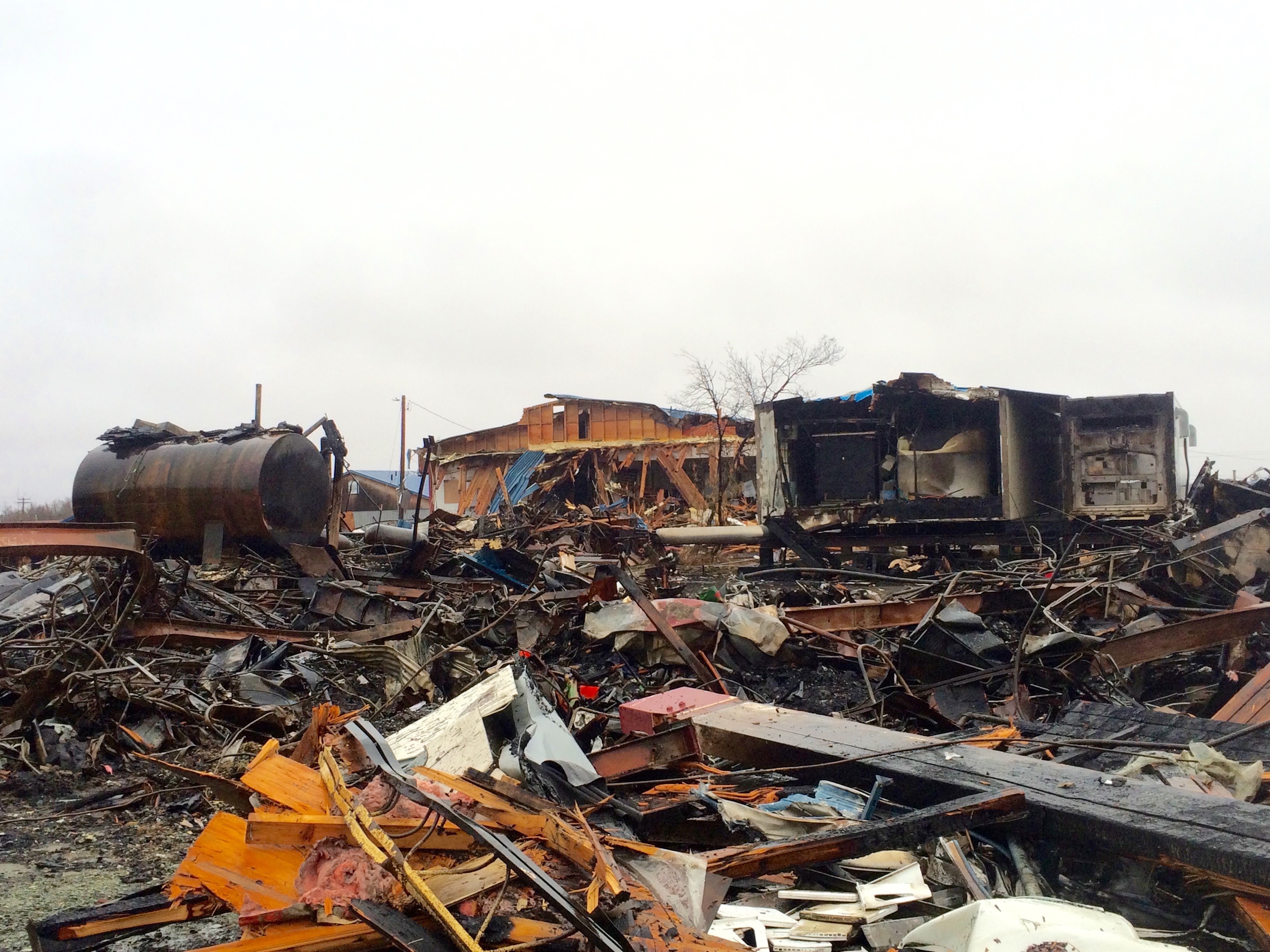
The remains of the Yup’ik immersion school on Wednesday after the Kilbuck campus fire. (Photo by Anna Rose MacArthur/KYUK)

State officials have committed their support to Bethel following a fire at the Kilbuck campus that destroyed one school and damaged another along with a set of dorms.

Gov. Bill Walker, Bethel Rep. Bob Herron and Sen. Lyman Hoffman announced their pledge to the community and Lower Kuskokwim School District in a press release Wednesday. 

The governor is visiting Bethel tomorrow morning to meet with local officials and students and to tour the fire site.

Meanwhile, Herron and Hoffman are standing by, waiting to assist once they receive a list of needs from the community and those affected by the fire.

“The school district, the teachers, the students, the parents of immersion, the community has to figure out– people are willing to help us, but what do we want? And while we’re figuring that out, we have to go through a grieving process,” said Herron.

The officials talked with LKSD leaders Wednesday to discuss the current situation and plans moving forward.

Herron and Hoffman hold personal ties with Kilbuck. Herron’s wife and three children attended the school, and Hoffman graduated from the campus.

The city continues working on its disaster proclamation, asking the governor to declare a state of emergency and to allocate recovery funds.


Rising Temperatures Kick-Start Subarctic Farming In Alaska

A field near harvest time at Meyers Farm in Bethel, Alaska, can now grow crops like cabbage outside in the ground, due to rising temperatures. Daysha Eaton/KYUK
A field near harvest time at Meyers Farm in Bethel, Alaska, can now grow crops like cabbage outside in the ground, due to rising temperatures.
Daysha Eaton/KYUK

We’ve heard a lot about the negative effects of climate change in the arctic and subarctic. But some Alaskans, like farmer Tim Meyers, are seeing warming temperatures as an opportunity.

Now that potato harvest is underway at his Bethel farm, Meyers uses a giant potato washer, like a washing machine for root vegetables, to clean California white potatoes.

They’re some of the only commercially-produced vegetables in this southwestern Alaska region, about the size of Oregon.

Meyers says the warming summers are a big part of his success.

“I hate to say that but I guess I’m taking advantage of the fact that it is getting warmer,” he says.

He says working the tundra — plowing swampy bogs full of silty soil — is tough. But he’s adapted to farming in the sub-arctic, even making his own homemade, fermented fish fertilizer.

At the 15-acre organic farm, which has been operating for more than a decade, Meyers is growing crops like strawberries in greenhouses. But he says as temperatures warm due to climate change, it’s easier to grow things like potatoes, cabbages and kale right in the ground, outside.

“Years ago, it was hard freeze and below zero up to the third week in May,” he says. “We haven’t had any of that this winter.”

Tim Meyers owns and operates Meyers Farm in Bethel, Alaska, where he says climate change seems to be providing a more hospitable environment for growing vegetables. Daysha Eaton/KYUK
Tim Meyers owns and operates Meyers Farm in Bethel, Alaska, where he says climate change seems to be providing a more hospitable environment for growing vegetables.
Daysha Eaton/KYUK

In fact, 2014 ranked as the warmest year on record in Alaska. Rick Thoman, a climatologist with the National Weather Service, says that’s not just a fluke, it’s a trend.

“What the last century of weather observations and climate observations in Alaska are telling us is that over the last couple of decades it’s been significantly warmer over most of Alaska than it was during the middle and later part of the 20th Century,” Thoman says.

He says the long-term average temperature for Bethel for an entire year had been 29 degrees, but in 2014 it was nearly 35 degrees. That’s only six degrees difference, but it’s significant because now it’s right above freezing, which allows more things to grow outside.

Most food is flown into in this town of about 6,000, and it can be expensive. At the grocery store here, a bag of russet potatoes can cost twice as much as outside Alaska.

Food security is real issue here. The region has traditionally relied on subsistence hunting and gathering. But residents are becoming increasingly dependent on expensive imports.

“So that’s gonna be kinda cost prohibitive for people with lower incomes to get good nutrition,” says medical resident Peter Abraham.

Abraham works at the local hospital and specializes in nutrition. He also spends time volunteering at Meyers Farm and says it eliminates the biggest barrier to getting fresh produce onto local dinner tables: transport.

“Things that are shipped from far away are not gonna be fresh when they arrive,” he says.

So he hopes cheaper and fresher produce will be more attractive to residents.

At the Meyers Farm stand, customer and long-time resident Josh Craven, is happy with both the price and the quality.

“It seems like we walk out with more for less, and it’s usually better, it’s fresher” Craven says.

He likes to bring his two young daughters shopping with him, so they can understand where their food comes from.

And farmer Tim Meyers is glad that at least some of the food in Bethel doesn’t have to be flown in from Mexico or elsewhere.

“In my mind, there’s no end to the potential,” he says. “I mean it’s obvious we can grow a tremendous amount of food.”

Meyers says he grew about 100,000 pounds of produce this year. Next year he hopes to double that.

Copyright 2015 KYUK-AM. To see more, visit http://kyuk.org/category/radio/.
Read OriginalArticle – Published NOVEMBER 01, 2015 7:51 AM ET


Fire crews battle Bethel school fire

Update |  1:54 p.m.

Video of the fire from earlier today by Dean Swope at KYUK.

Update | 12:25 p.m.

The fires have calmed, but firefighters and law officials are still working to douse all the flames. The second half of the Kilbuck building is completely destroyed. However, the library, which housed Yup’ik artifacts, wasn’t damaged.

Police have cleared out Fifth Avenue and blocked off the area.

The armory, located next to the building seems to have remained untouched by the flames.

Update | 11:24 a.m.

Bethel Kilbuck school fire
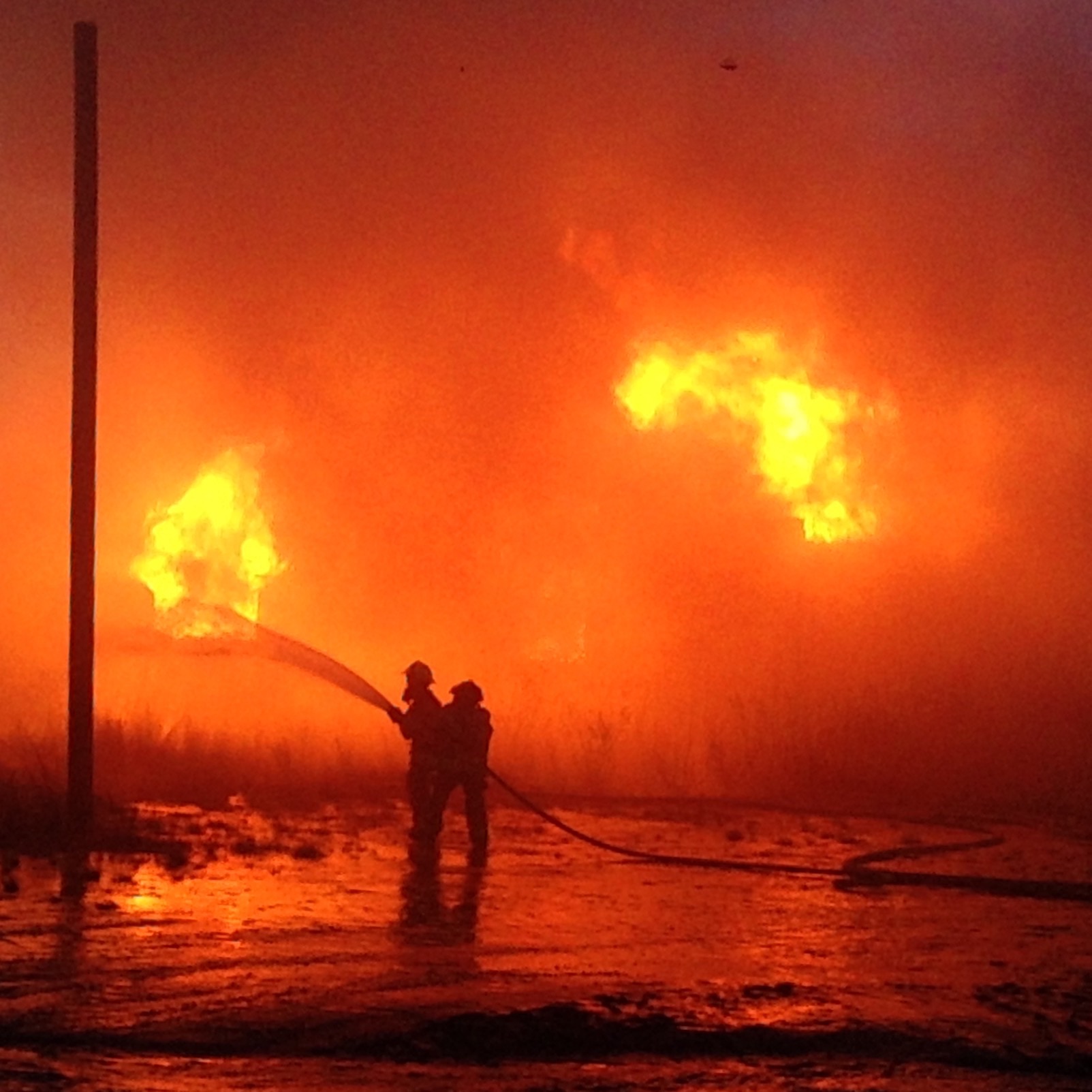
Fire crews battle a fire at Kilbuck school early Tuesday morning. (Photo by Shane Iverson/KYUK)

Fire crews continue battling flames at the Ayaprun Elitnaurviat Yup’ik immersion school and the Kuskokwim Learning Academy. There have been no reports of injury.

Fire hoses are streaming water into the Kilbuck building from multiple directions as thick smoke billows from every door, window, and sections of fallen roof and giant orange flames rise thick above the building.

Excavators have torn through the building, ripping the structure in two, to isolate the fire to one wing of the school and save the library housing Yup’ik artifacts from incinerating, though smoke and water damage is likely.

Backhoes also ripped sections away from the front part of the building to prevent flames from spreading to the adjacent armory.

Water trucks continue pulling in and out of the school, dumping their water and tearing out to gather more to bring back.

Police officers are blocking off the street and maintaining a perimeter as onlookers gather, some staring, some videoing, some crying, as they look on in disbelief.

School has been cancelled for the day and the KLA dorms evacuated. Teachers have been told they will be given more information on what to expect tomorrow by 5 p.m.

According to Bethel police officer Kadri Limani, the fire department received a call at 3:46 a.m. that sewer pipes outside the building were smoking. The fire alarm sounded inside the KLA dorms, and the students, many wearing just their pajamas, evacuated.

The fire department responded immediately and attempted to contain the fire, but it had spread inside the building.

Police spent the morning diverting traffic as children walked to school and parents came to drop their kids off.

Attempts to extinguish the fire are ongoing.

Update | 11:13 a.m.

Firefighters and other officials work to save the southern side of the building. Efforts to calm the fire are still ongoing.

Original post | 7:50 a.m.

School at the Ayaprun Elitnaurviat Yup’ik immersion school and the Kuskokwim Learning Academy is closed today as fire crews battle a fire at the Kilbuck building in Bethel.

Josh Gill with the Lower Kuskokwim School District said no one was injured and the extent of the damage is still being assessed.

Gill said the school district will consult with the Bethel Fire Department and will release further information at later time.

Site notifications
Update notification options
Subscribe to notifications