Community

Gastineau Apartments demolition order appeal tossed

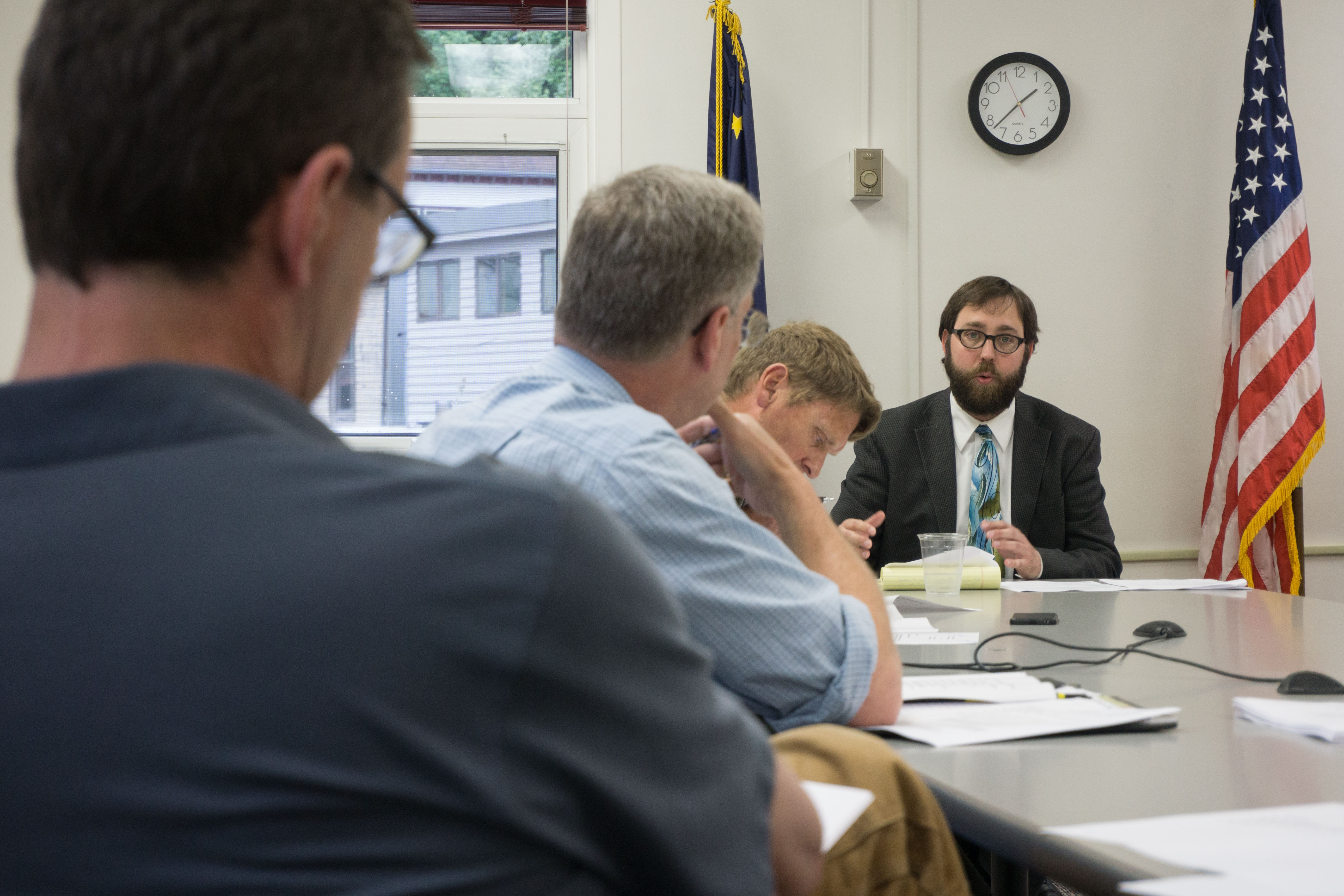
Assistant City Attorney Chris Orman advises the Building Code Board of Appeals. (Photo by Jeremy Hsieh/KTOO)

A municipal board has dismissed an appeal challenging the demolition order for the Gastineau Apartments.

The City & Borough of Juneau had ordered James and Kathleen Barrett to demolish their derelict downtown apartment buildings in a May 28 letter because of dangerous building code violations. The Barretts were required to have applied for demolition and related permits by June 19; that’s the day the city received an appeal from James Barrett.

Friday, Juneau’s Building Code Board of Appeals puzzled over Barrett’s brief, one-page letter.

“It’s almost like he appealed to the wrong … I don’t think this is us,” said board member Brad Austin.

In the letter, James Barrett focuses on the city’s “extremely low” $50,000 appraisal value for the apartments. Barrett suggests that making that value public contributed directly to delays. He asks the city to squelch its public statements about the property that may discourage prospective investors, buyers or demolition contractors. He calls for an investigation of the city’s appraisal and another 6 months for an “independent” appraisal; the city’s valuation was handled by the head of the Sitka-based appraisal firm Horan & Company.

That said, the purview of the Building Code Board of Appeals is, of course, building codes.

“I don’t really see how the appraisal value has anything to do with the building code,” said board member Jeff Wilson.

After about 20 minutes of discussion, the board voted 4-0 to dismiss the appeal, because it didn’t contest building code violations or the validity of the demolition order.

The apartments have been uninhabitable since a November 2012 fire. The city declared the buildings a public nuisance soon after. Several deadlines for repairs or demolition have come and gone. City officials have been considering contracting for the demolition work independently and using a lien to recoup costs.

No one representing the owners attended Friday’s appeal meeting.

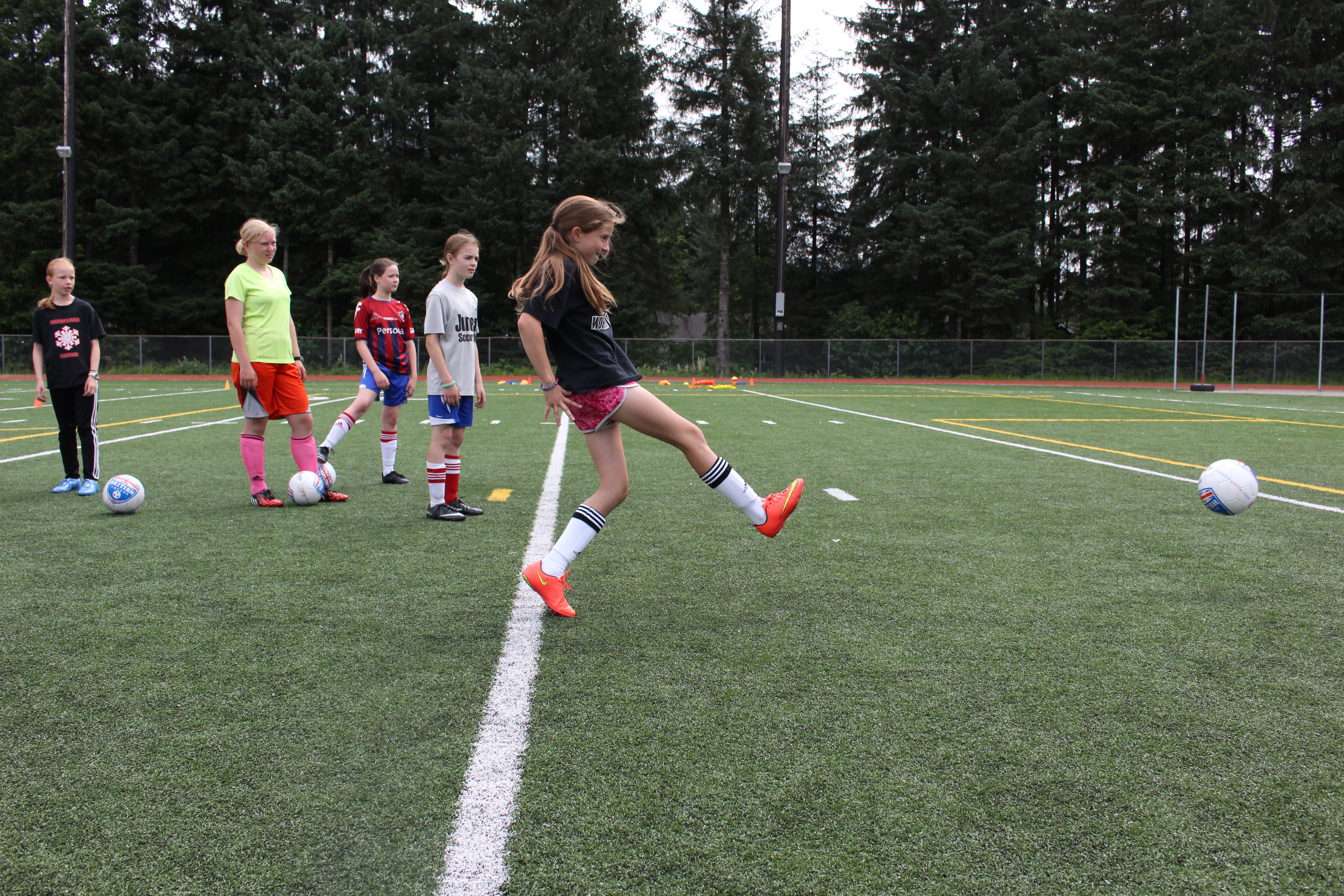
Juneau soccer camp grooms players for the international field

Juneau Soccer Club hosts the coed camp which teaches kids about the global sport. (photo by Elizabeth Jenkins/KTOO)
Juneau Soccer Club hosts the coed camp which teaches kids about the global sport. (Photo by Elizabeth Jenkins/KTOO)

As the U.S. team heads to the Women’s World Cup quarterfinals this weekend, a Juneau soccer camp is teaching kids all about the global sport.

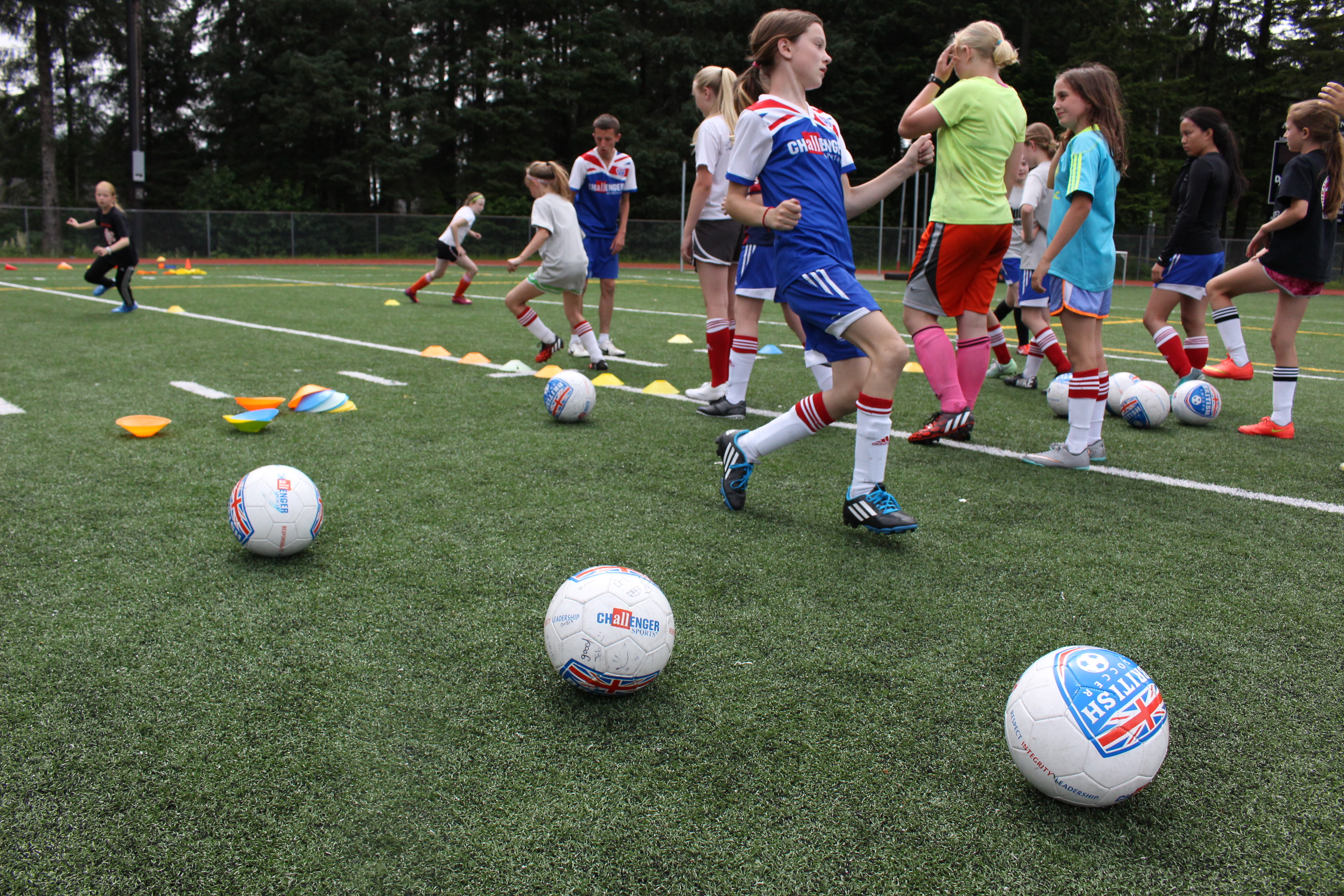
On the turf at Adair-Kennedy Memorial Park, a group of Scots and Brits are teaching 145 kids how soccer–or what they call “football”–is played across the pond. Miley Quigley is part of the 11- to 13-year-old group. She says her favorite thing about the camp is learning new skills.

“I barely knew any tricks before and now I know a lot of tricks because Spider Man taught us,” she says.

“Spider Man” is the nickname for Stephen Paris, a sports coach major from Glasgow, Scotland. He doesn’t play competitively due to an old foot injury, but that doesn’t stop him from teaching the sport. His signature move is called a “rainbow.”

With the kick of his heel, the ball arches over the back of his body.

“Right over the head. I went right over the reporter’s head,” he says.

Coach Paris runs the girls through drills. (Photo by Elizabeth Jenkins/KTOO)

Challenger Sports sends foreign players, like Paris, to different parts of the country to teach regional techniques. Last year, a Brazilian group taught Samba dribbling.

“It’s like the fancy freestyle side of soccer. So like all these flicks you see. You run pass the player. It’s flair,” says Hamza Butt, otherwise known as “coach Hamburger.”

He can be pretty strict on the field, which he says comes from his background playing semi-professional soccer in England. Unlike Samba dribbling, the British style is more buttoned-up, strategic.

“You got to be much more technical,” he says. “Teams want an individual who has everything to his game: passing, dribbling, crossing, shooting.”

Typically, soccer teams are an international patchwork, but in the World Cup, athletes play for their home country. Coach Butt says the kids here at camp are watching.

“For example, Rapinoe, the U.S. winger. Women here in the camp, want to be like Rapinoe,” he says. “Whilst they’re dribbling the ball, they say, ‘It’s Rapinoe! Rapinoe!’  They’re are trying to imitate these players.”

But the young women say it can be tough to find equality on the field, especially when you’re teammates with pre-teen boys. They hurl what they think is the ultimate insult: “You play like a girl.”

“It’s kind of honestly really sexist when they say ‘like a girl,’ cause we’re like, ‘why?'” says camp participant Merry Neuman.

Because these soccer players know what it really means.

“Then you must be doing something really good if it’s like a girl  because we’re way better.”

The last time the U.S. men’s team reached the World Cup quarterfinals was in 2002.

As fires burn, agencies coordinate helicopters to gift cards for relief

Combating the wildfires breaking out across the Alaska involves a mix of local, state, and federal resources. But amid organizational and financial complexities, most of the immediate needs on the ground are quite basic.

A level below ground in the National Guard Armory at Joint Base Elmendorf Richardson, the State’s Emergency Operation Center is a hive of computer monitors, flat-screen TVs, and telephones.

“Our job is not to fight fires,” said Michael O’Hare, Director of the state’s Emergency Management division. “Our job is to make sure the fire-fighters are putting the fires out.”

The Division of Forestry oversees front-line fire fighting–they’re the ones calling in crews of hotshots or phoning into the National Guard for helicopters.

By contrast, the EOC feels a bit like a big tent, with representatives fielding phone calls and connecting folks in the Mat-Su or Kenai Boroughs with things they need right away: cots, blankets, pillows, sanitation kits.”

The Division of Homeland Security and Emergency Management also handles the next phase of the recovery process: Disaster Assistance. That phase started Wednesday, as Borough officials went out with state Troopers to do windshield checks, spotting which properties are damaged. That information will eventually be used by the state in providing funds to homeowners for repairs, and bringing in Federal FEMA money if the destruction is beyond the Borough or state’s ability to pay.

“Natural disasters are always very expensive, particularly in Alaska,” said Bryan Fisher, who, as Incident Manager, is at the nexus for all the agencies and levels of government involved. He and his staff wear red vests so that outside partners can tell who’s on the emergency management team. Surrounded by logistics and complexity, Fisher insists his job is simple: support the local jurisdictions.

At the center of all this is Bryan Fisher, who wears a red vest so that officials from a wide array of outside agencies know he’s part of the emergency management team. Fisher says his job is simple: support the local jurisdictions.

In a complicated crisis situation, just having the room and the know-how to coordinate is key. Emergency managers handling the wildfires are on-call for 12-hour shifts seven days a week. Fisher says having the capacity to navigate all the available resources frees up front-line crews, dealing with everything from fire suppression to evacuations.

“The state of Alaska does not forcibly evacuate anybody, from anywhere,” Fisher said. “If the homeowner or resident chooses not to leave, (firefighters) take information down on who they are, where they are, and next of kin to be able to notify if, god forbid, something should happen.”

Those serious conversations are a huge challenge.

“The firefighter’s primary mission is to save lives and protect property. And having to be a stranger and come in to say ‘we need you to leave now and if you don’t you’re on your own because we have to protect ourselves, and protect all the rest of the property and homeowners in the area where the fire is’ is (a) very, very difficult conversation to have.”

Officials and relief workers are seeing donations come in, but want Alaskans to know that not all charity is equal when it comes to having the best impact.

Relief agencies helping the state manage shelter and aid refer to something called “the disaster within the disaster.” What they mean is that well-meaning Alaskans rush out to donate goods that end up being more of a burden than a help.

“The thing there’s too much of right now is clothing,” said Tom Gemmel, who works with the Red Cross, which is helping take care of the more than 90 evacuees staying at a shelter in Houston. Red Cross and other groups like the Salvation Army connect individuals with particular needs like eyeglasses, medications, and short-term housing. But they do it through gift certificates and deals with hotels–which depend on cash.

If you want to help but don’t feel comfortable opening your wallet, you should still probably keep the green beans and old sheets on the shelf.

“The best thing people can do,” Gemmel explained, “is prepare themselves for disaster, because you’re pretty useless as a disaster volunteer if you’re worried about your own family.”

Once the state begins its damage assessment phase, officials will have a clearer picture of specific needs.

 

Bill to allow Izembek road moves forward

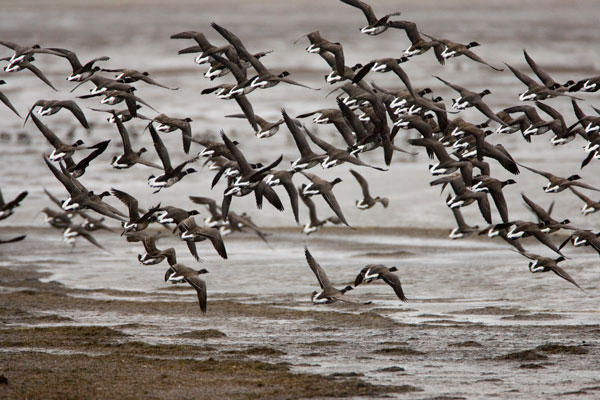
Izembek National Wildlife Refuge (Photo courtesy Ryan Hagerty, USFWS)
Izembek National Wildlife Refuge
(Photo courtesy Ryan Hagerty, USFWS)

This week an Interior bill by Senator Lisa Murkowski moved forward. The bill would allow a land exchange and road construction in the Izembek National Wildlife Refuge, connecting King Cove and Cold Bay. Environmental groups have condemned the proposed road, but King Cove residents say it’s an important health and safety issue.

The legislation was approved Tuesday by the Senate Appropriations Subcommittee chaired by Murkowski, and moved further forward Thursday in the approval process.

This new progress is being received as good news by community leaders in King Cove, according to Della Trumble, a spokesperson for the King Cove Corporation.

“To connect the existing road through the wilderness to roads in Cold Bay is about eight miles. We’ve been fighting for that eight mile access for over thirty years,” Trumble says.

Trumble says the road is crucial in providing access to Cold Bay’s all-weather airport during medical emergencies. The small airstrip in King Cove, residents say, can be dangerous at night or in severe weather.

“Transportation just between the two communities can be frightening. Myself, I’ve watched my daughter’s plan crash-land in the runway here, it’s not something I would like any parent to have to watch or go through,” Trumble says.

Trumble’s daughter and her passengers were alright. But it’s one example of a time when she says a road would have provided safer, more reliable access to Cold Bay.

“We know it’s gonna be an uphill battle, but at least we’re hopeful that we’ll get resolution on this and put it behind us and move forward.”

Based on an environmental impact study completed in 2013, U.S. Interior Secretary Sally Jewell rejected the land swap.

Environmental groups have strongly opposed the road, saying it would damage critical migratory bird habitat and set a precedent for development in wildlife refuges.


Breaking the link between childhood trauma and suicide

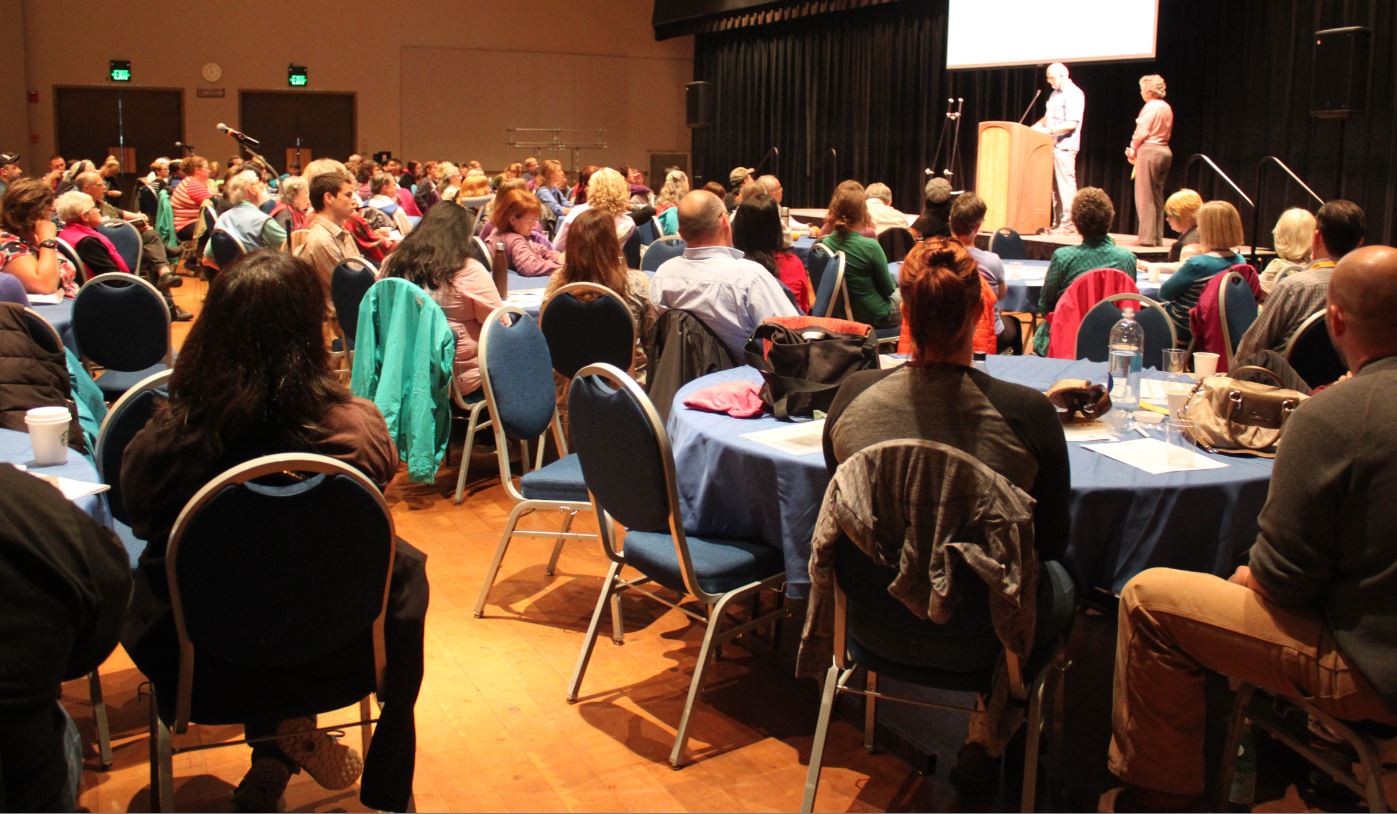
The first day of the conference, "Trauma and Suicide: Breaking the Link," attracted about 185 participants, mostly from Juneau. All the sessions take place at Centennial Hall and continue into Friday. (Photo by Lisa Phu/KTOO)
The first day of the conference, “Trauma and Suicide: Breaking the Link,” attracted about 185 participants, mostly from Juneau. All the sessions take place at Centennial Hall and continue into Friday. (Photo by Lisa Phu/KTOO)

Close to 200 people in Juneau joined forces Thursday to break the link between childhood trauma and suicide. They’re taking part in a two day suicide prevention conference. Day one focused on establishing the trauma-suicide link.

After analyzing data from state surveys on trauma and risky behaviors, Alice Rarig says she was taken aback.

“It shocked me to see that one in five young people think about suicide and that more than half of them have major problems with sadness or feeling alone or not having adults in their lives to talk to,” she says.

Rarig is a retired state health planner and a member of the Juneau Suicide Prevention Coalition. She says she’s also troubled by the amount of youth who’ve experienced bullying, violence, sexual abuse and other traumatic experiences.

(Creative Commons photo by Andreas Levers)

The coalition identified childhood trauma to be a leading factor contributing to suicide in Juneau.

Patrick Sidmore is a planner with the state Department of Health and Social Services. He helped coordinate the Adverse Childhood Experiences study in Alaska. For the past 20 years, the national study has shown that traumatic experiences, like abuse, neglect or growing up with substance abuse, may lead to serious health problems into adulthood.

“In the original study, they looked at suicide attempts and adverse childhood experiences and it had the strongest correlation of any of the items they looked at,” Sidmore says. “For example, 80 percent of suicide attempts can be tied back to adverse childhood experiences. This is the rate similar to lung cancer and cigarette smoking.”

Sidmore says many scientists think adverse childhood experiences actually cause suicide. He says addressing trauma will help prevent suicide.

Shirley Pittz says one of the ways this can be done is examining the quality of relationships for kids. Pittz is an early childhood expert with the state’s Office of Children’s Services.

“What are we doing to support families so that they can have good nurturing relationships with kids? What kind of messages does our community give about the value of children and how we’re supporting kids? All you need is somebody who cares about you and that can get you through a lot, so how can we make sure that every kid has that?” Pittz asks.

The rate of suicide in Juneau is similar to the state’s. There were six suicides in Juneau in 2013, similar numbers in prior years. It peaked in 2007 with nine. The Juneau Suicide Prevention Coalition formed the following year.

Walter Majoros is the coalition’s chair. He’s also the executive director of Juneau Youth Services. He says the number of suicides may have gone down, but “there are a lot of deaths that have occurred in recent years, particularly with people in their 20s, that have been drug overdoses, so we have to look beyond the real numbers to what’s actually happening,” Majoros says. “And so in that sense there are still a lot of deaths that are occurring within our community that maybe aren’t being labeled as suicide, but if you look a little deeper, I think they really are.”

Coalition member Alice Rarig adds the numbers don’t account for suicide attempts or suicidal plans and thoughts.

She says preventing suicide means also preventing other bad things

“We’ll probably reduce the fighting, the bullying, the unsafe sex, the self-harm through alcohol use and substances,” Rarig says.

On day two of the conference, participants will focus on putting their knowledge to work on a community level.

Community weighs in on reconstructing parts of downtown Juneau

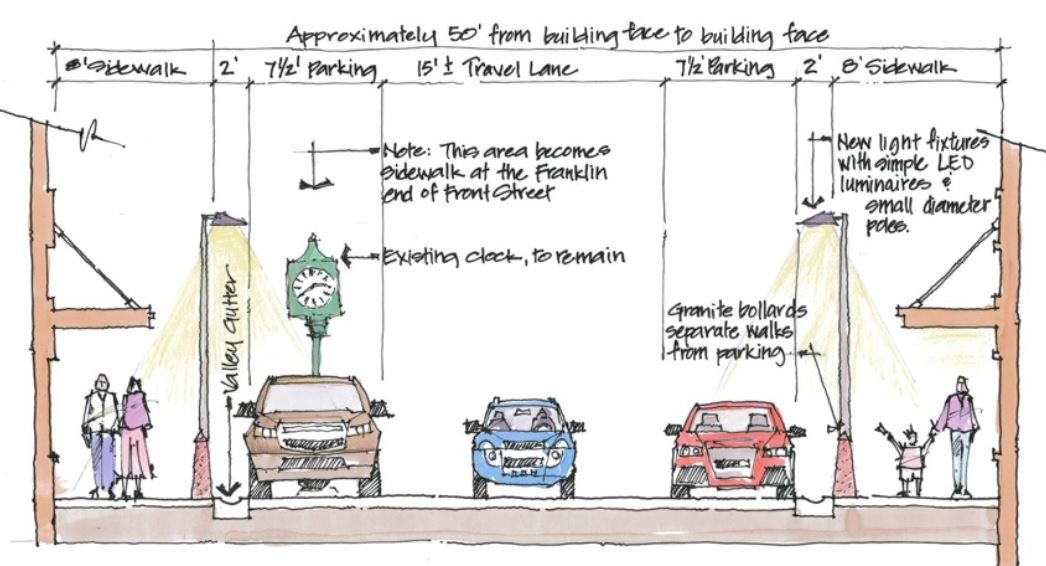
To create a more pedestrian friendly atmosphere, the project team recommended raising parts of the street to be level with the sidewalks. (Image courtesy City and Borough of Juneau)


Imagine more canopies in downtown Juneau. Imagine a bike rack where a parking space used to be. Imagine more art. These were some of the ideas presented by the city’s Franklin and Front Street Reconstruction project team.

Around 80 people were at Centennial Hall Wednesday night to talk about what downtown should look like. The project team presented their vision, and members of the public got to weigh in.

Laura Wallrath was in favor of some proposals, like parking for bicycles and scooters.

Wallrath lives and works downtown and has been riding a scooter since 2007. She rides a mile to and from work every day year-round, except when it snows. She says downtown parking for smaller modes of transportation is lacking.

“My scooter is taking about a sixth of a car and I think that bicycles and scooters should have ample parking,” Wallrath says.

She also liked the idea of wider sidewalks. She says she cringes when she has to drive on South Franklin Street near the tram.

“It’s just this impossible mile to get through downtown. And you just wish that there was an easier way to keep tourists on the sidewalks because tourists have the right-of-way and they’re not thinking about that we’re living here and we’re trying to get from one place to another,” Wallrath says.

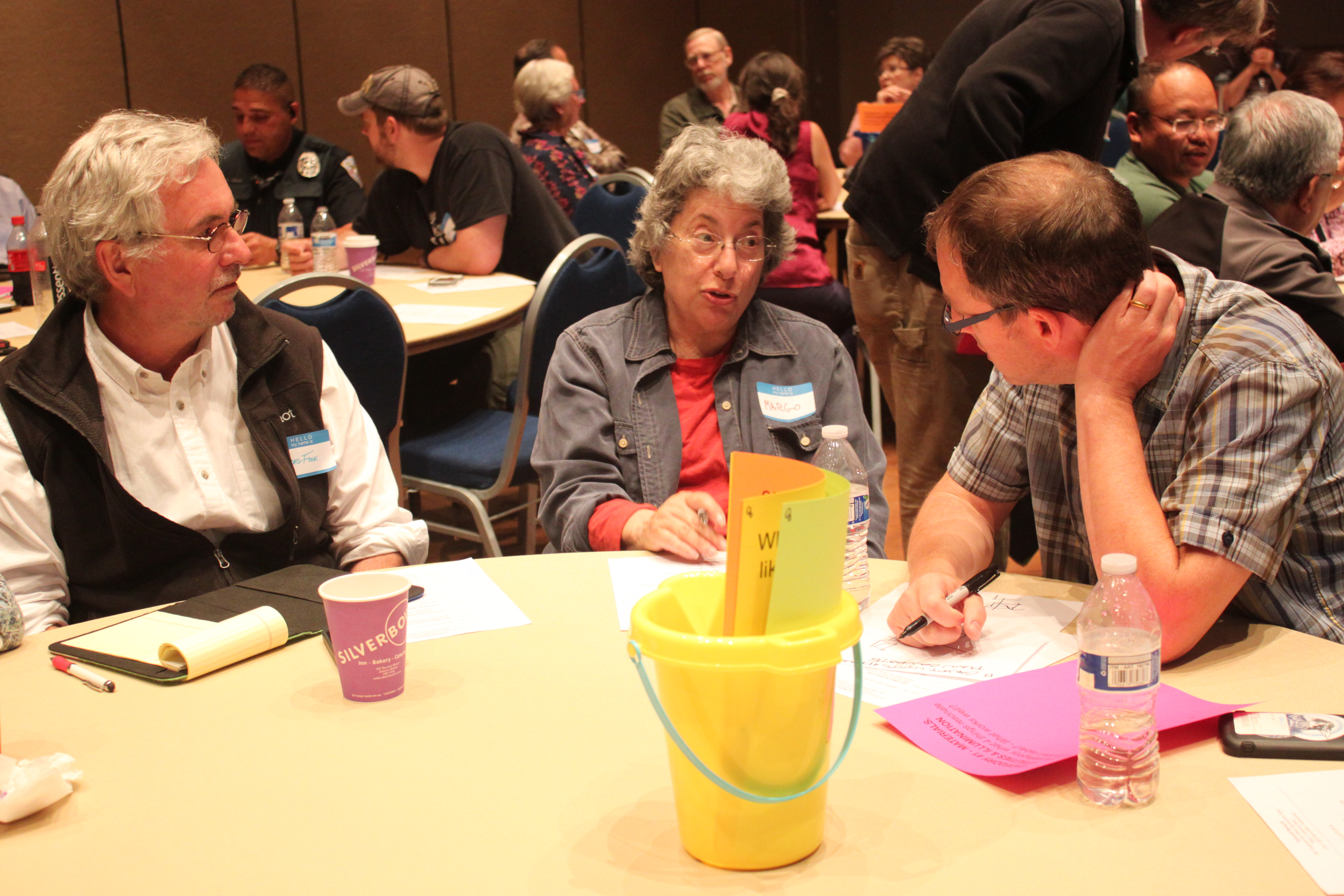
Greg Fisk, Margo Waring and Chris Mertl discuss concepts for improving Franklin and Front streets during a community meeting Wednesday night. (Photo by Lisa Phu/KTOO)

Keli Donnelly works for the small cruise line Un-Cruise Adventures and lives downtown during the tourist season. She liked hearing about adding gateways, physical markers denoting different parts of town.

“Make the gateways subtle, but themed and consistent. I like that idea. I want to bring the people back into the heart of the town. I want the people to be up by the Salts and the Rookeries and the local places. That’s important,” Donnelly says.

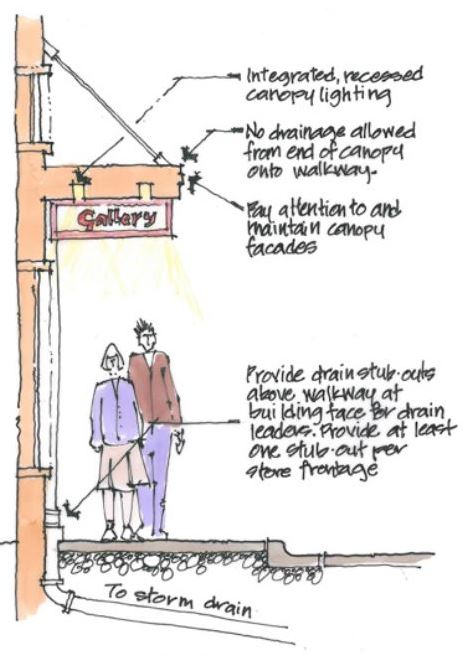
The project team's recommendation of adding more canopies in downtown will be part of a larger discussion engaging private business owners. (Image courtesy City and Borough of Juneau)
The project team’s recommendation of adding more canopies in downtown will be part of a larger discussion engaging private business owners. (Image courtesy City and Borough of Juneau)

But she doesn’t want those gateways to be arches across the street.

“I think that’s tacky” Donnelly says.

The city’s project manager Michele Elfers says she’s received a lot of comments about closing down parts of Franklin or Front streets to motor traffic and making it a pedestrian mall.

“Some of the comments were to do it permanently. Then we got a lot of comments just about special events, hosting festivals,” Elfers says. “It’s probably not feasible to shut them down permanently just because in downtown, we don’t have that many access roads in and out.”

But she says the pedestrian feel could still be accomplished by raising parts of the street to be on the same level as sidewalks.

Greg Fisk doesn’t necessarily like that idea. Fisk owns a small consulting company on Seward Street and is on the board of the Downtown Business Association. He’s a strong proponent of a downtown circulator, possibly a street car.

“The raised street design could cause a problem ‘cause you end up with a bump. It’s pretty hard to put track in the street, if you’re going to go to a street car, over a bump,” Fisk says.

Part of the process is figuring out what the community wants, Elfers says. Throwing out a lot of ideas helps people sort out what they like and don’t like.

“What you communicate to us is what your values are and there’s a cost to everything and there’s impacts and there’s values, and that’s where we are right now, trying to balance that,” Elfers says. “So keep that in mind. We’re kind of at a high overhead view now and we’re slowly getting more specific as we go through the process.”

The city will continue to take public comments on reconstructing Franklin and Front streets. Elfers says the project team will revise recommendations based on them and come out with a final report in July, followed by the design phase.

Site notifications
Update notification options
Subscribe to notifications