Community

“Noah’s Ark” at evacuation site for Willow mushers fleeing Sockeye Fire

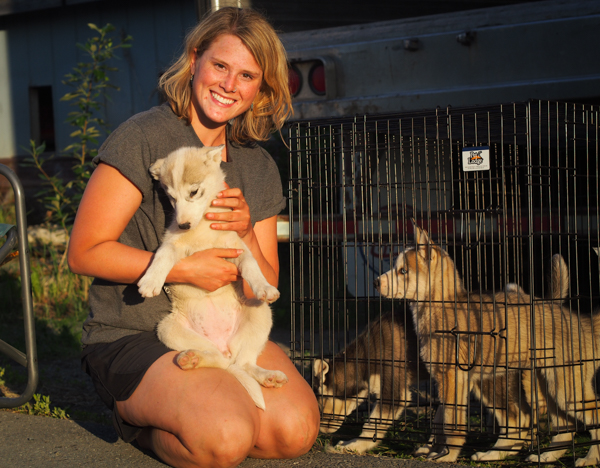
Lisbet Norris with four puppies, part of the hundred dogs her family evacuated from their Willow kennel. In total, around 400 sled dogs were brought to the lot at Underdog Feeds in Wasilla. (Photo by Zachariah Hughes, KSKA)

As the Sockeye Fire continues to burn near Willow, officials are waiting to accurately assess the toll on life and property. Hundreds of animals were evacuated to safe zones across the valley. The coordinated response was part of an emergency management plan that ultimately averted a massive loss of life.

“We can sit in the cab if you don’t mind getting your town-clothes covered in dog hair,” offered veteran Iditarod musher Lisbet Norris on Monday night. Standing in dust-covered sandals with a beer in her hand, Norris had just finished a hasty dinner, and was finally getting a chance to breath after a day-and-a-half of scrambling out of the fire’s path. She evacuated her kennel Sunday afternoon.

“In the event that we lost everything, I wanted to make sure that I would be able to continue to train the dogs,” Norris said, “so I loaded up my sleds and my harnesses and my gear.”

Members of Willow’s tight-knit mushing community mobilized fast, and got hundreds of animals to safety at different sites, includuing the fenced-in lot behind Underdog Feeds in Wasilla, which Norris’s family runs. It fit within an emergency plan hatched just weeks earlier.

“Actually, it was in our last Willow Dog Musher’s meeting,” explained Jamie West, the group’s secretary. Members expected that the low snow levels this year would lead to a terrible fire season. “And it was pretty right on.”

West sat on a cot inside a tent, flanked by two tractor trailers shading a string of dogs, along with several other animals hitched wherever there was space. Her husband hauled blue jugs of water from a spigot in the feed store to keep the animals cool, as temperatures hovered in the 80s.

The couple evacuated a large herd from their home by mile post 65, including baby goats, chickens, two horses, and 15 sled dogs from another family. “It’s like Noah’s Ark,” West said.

The Borough requires kennels to have an emergency plan in place. But mushers camped out in trucks and under tarps donated by Home Depot said it was phone calls and Facebooking with neighbors that sprang everyone into action as the blaze erupted Sunday.

“I got home from work and my dog yard was completely packed up in other people’s dog trucks that had gone there to help,” said Jenny Evans, sitting in the cab of her truck, where she was spending the night, just a few feet from her team.
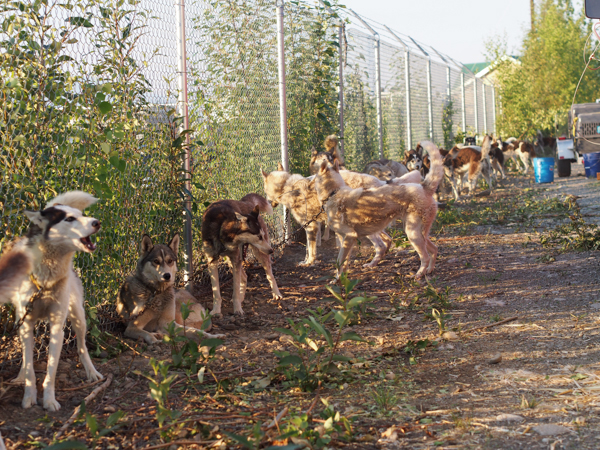
A coordinated emergency plan reassessed just week ago by the Willow Mushers Association helped evacuate hundreds of sled dogs to safety during the rapid spread of the Sockeye fire. (Photo by Zachariah Hughes, KSKA)

Though there have been scattered reports of pets dying in the blaze, the Borough’s Animal Care Manager, Carol Vardeman, said Tuesday the Mat-Su shelter had not seen any injured or loose animal in the days since the fire intensified.

Property damage is harder to pin down. By Monday morning, many in the Underdog lot believed their homes were lost, only to hear afterwards that the fire had spared their property. A disaster declaration by FEMA cites 25 homes burned. The figure helps free up resources to fight the fire, but getting hard numbers will not be possible until locals on the ground can survey which houses and outbuildings have been destroyed.

“While the fire is still raging it’s very difficult to get any type of accurate damage assessment,” said Jeremy Zidek with the state’s Division of Emergency Management. “So the numbers we have now are preliminary.”

With a sleeping-mat rolled out next to her truck, and across from about 30 Siberian Huskies clipped to a fence, Lisbet Norris was mostly concerned with getting her team fed. In the yard they are safe, and comfy enough to suffice.

For Norris, the hardest part is behind her: making the difficult decisions about what else she’d be able to carry out from her family’s compound.

“I went inside and asked Grandma what she would like us to take,” Norris said, “What do you salvage from 94 years of life?”

In this case it was a 60-pound tote filled with precious books, some photos, and a single trophy commemorating her grandmother’s prize-winning dog Bonzo.

“Just nice to hold onto,” Norris said, staring into the enormous metallic bowl.

Norris isn’t sure when she’ll get to go home, but for now she has most of what she needs.

The Willow Dog Musher’s Association is managing cash and credit donations sent to Underdog Feeds to offer assistance to mushers and home-owners affected by the Sockeye fire.
Miners bid farewell to West Beach

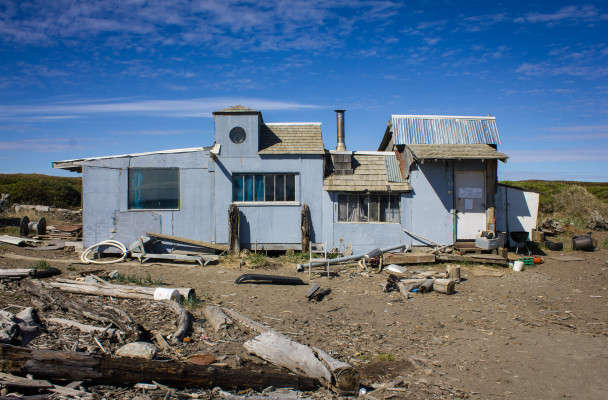
Permanent structures, like the cabin owned by Ian Foster (above), on Nome’s West Beach constitute a hazard and liability according to city officials. (Photo by Francesca Fenzi)

Monday marked the final deadline to vacate one of Nome’s more infamous housing projects.

“If you’re into indoor plumbing, and you’re into nice hot showers after work every day, and you’re into not ever being cold – then living on West Beach is definitely not for you,” said Ian Foster, who has lived in Nome for the past six years.

He spent three of those years living in one of the more comfortable-looking shelters on West Beach, a plywood cabin with propane heaters and two big picture windows. Foster has since upgraded to a place with running water, but says the cabin and its beach-front property — which he leases from Nome Gold Alaska — still holds a special place in his, and Nome’s, history.

“A hundred years ago this beach had 30,000 people on it,” he said. “In tents, much like the shacks that you see right now. Now it’s actually changing. It’s actually coming to an end, this part of current history that we were able to live and experience.”

The impromptu mining camp has existed, in one form or another, for several decades despite shifting land ownership, and varying degrees of approval for would-be tenants. The current property owner, Nome Gold, officially opened the beach — along with another tract of land near the defunct Dredge 6 — for two-year leases in 2013.

“Unfortunately, that area didn’t work out very well,” said Nome Gold general manager Randy Powelson. “Some of the people didn’t behave very well, there were sanitation issues out there, trash storage issues. Pretty much turned into a free for all.”

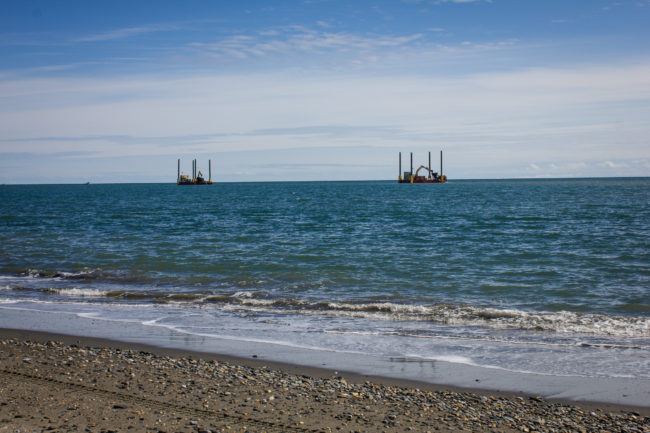
Two dredges mine off the coast of Nome’s West Beach in June 2015. (Photo by Francesca Fenzi)

Powelson said the company’s decision not to renew those leases was three-fold. First, the property was difficult to manage — a seasonal population and lack of identifiable house markers made distinguishing between leaseholders and squatters next to impossible.

Second, he says, Nome Gold plans to make “industrial use” of the area for mining as early as 2017. And third, the beach shelters fall within the city’s flood plane — a point that Nome city manager Josie Bahnke said the Federal Emergency Management Agency (FEMA) was quick to make with city officials during its last inspection.

“Basically, they were built kind of out-of-sight-out-of-mind,” said Bahnke of the cabins on West Beach. “The folks constructing them didn’t follow the city’s building permit [or] flood plain permit.”

Bahnke said FEMA warned the city that semi-permanent structures on West Beach were a liability, and an order trickled down: Get rid of them.

But for beach residents that may be easier said than done. Foster explained the camp on West Beach isn’t simply historic, it provides a crucial alternative for miners too cash-strapped for Nome’s expensive housing market.

“I’m paying a thousand bucks a month for a little studio. And it’s not that big, it’s not that fancy, it’s just a studio, and this isn’t New York. So why am I paying a thousand bucks? That’s just what housing costs up here,” he said.

Powelson acknowledged that Nome’s steep housing prices are a problem, but said that problem “isn’t really Nome Gold’s responsibility to solve.” Instead, he said, it’s going to take a group effort to find workable solutions.

“It’s also going to take the dredging community to, not only police themselves, but take personal responsibility that we wouldn’t be in this mess if there hadn’t been some unfortunate individuals who made it not work for everybody,” Powelson concluded.

Foster agrees that some may have taken advantage of the housing arrangement on West Beach, but he thinks finger pointing is counterproductive.

“If we categorize any population in Nome as partly destructive, therefore all destructive, therefore they shouldn’t be here — that argument is awful,” said Foster, who plans to focus on the positive aspects of West Beach’s legacy.

“West Beach was an awesome, awesome period of my life. It was a type of deliberate living that I was really seeking. And I loved it. And, you know, they can’t take that away. Because that’s experiential. It’s in me. It’s already there; it stuck,” he said.

As for what a move closer to town will do for others in the mining community, Foster laughs: “Hopefully it doesn’t civilize us too much. We’re a wild bunch.”

Online cemetery mapping to ensure Juneau always knows where the bodies are buried

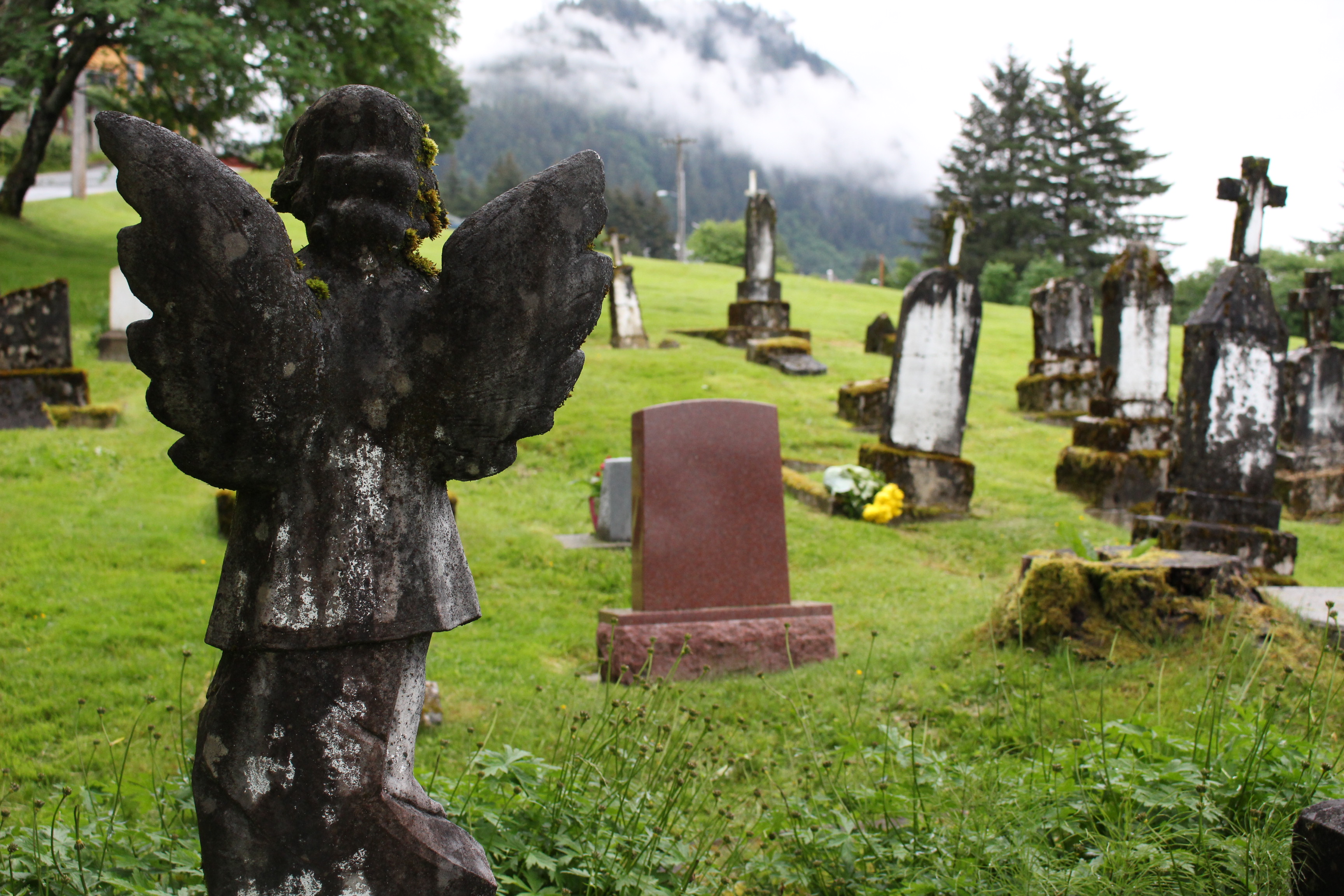
The Evergreen Cemetery is split up into different sections.  This is the "Serbian" part of the grounds. (Photo by Elizabeth Jenkins/KTOO)
The Evergreen Cemetery is split up into different groups. This is the Serbian part of the grounds. (Photo by Elizabeth Jenkins/KTOO)

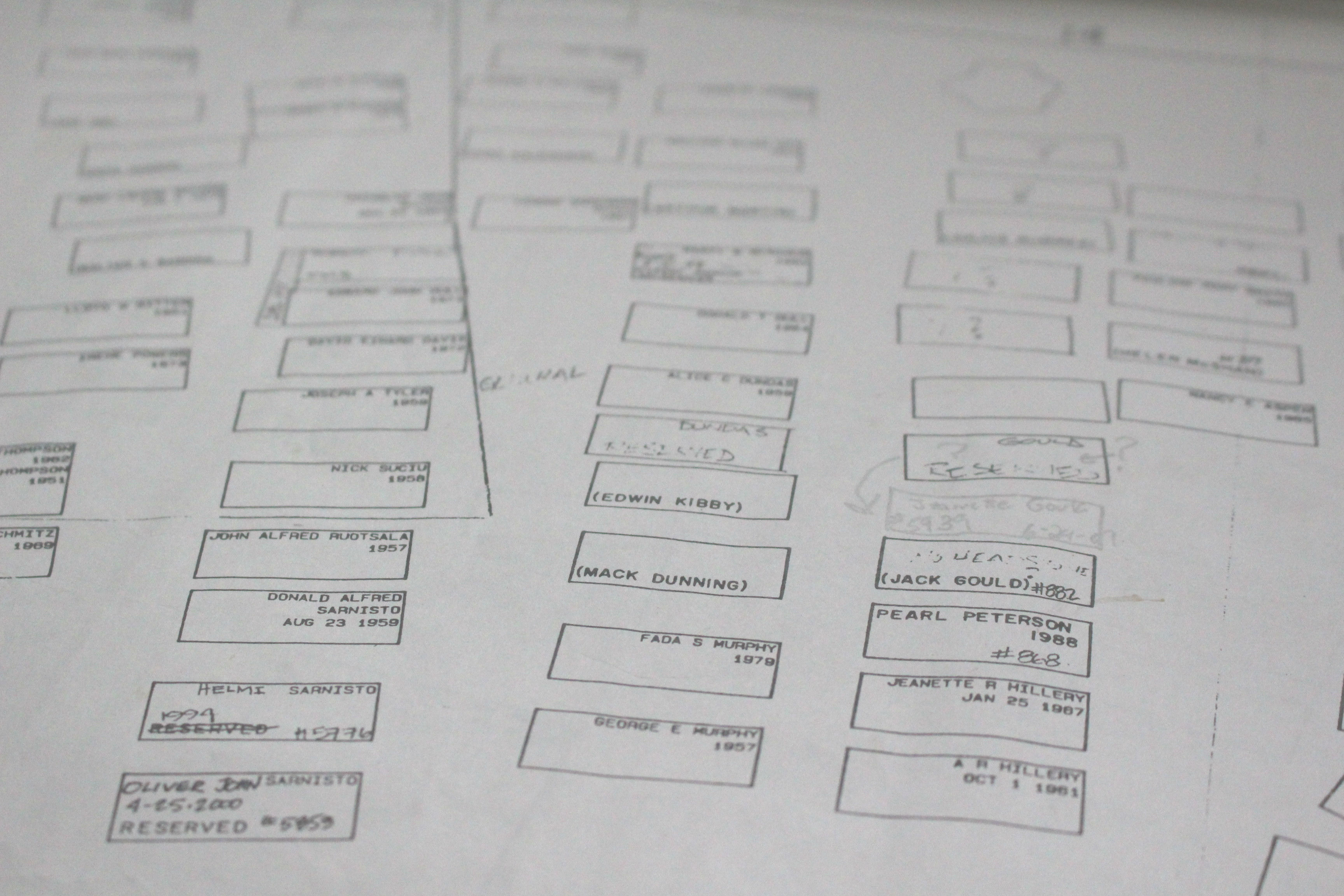
A grease-smudged stack of 25 fading sheets of paper in a storage shed is one of only two copies of who’s buried where in Evergreen Cemetery. All the burials since 1986 are handwritten, but that’s about to change. The City and Borough of Juneau was recently awarded a grant to map its graves digitally.

Ben Patterson has been overseeing the grounds at Evergreen Cemetery for about 12 years. During that time, he’s been able to reflect on where he’d like to spend his final days.

“I definitely don’t want to be put into the ground, I know that,” he says. “I don’t know if that’s because I’ve spent so much time in the cemetery, but I think I’d rather be spread around a little bit.”

Inside the cemetery storage shed, along with gardening tools and a lawnmower, is an invaluable stack papers.

“Basically 25 pages of maps that show all the plots,” Patterson says.

The other known copy is kept in a separate location to avoid both being destroyed in a fire. More than 8,000 people are buried at Evergreen. The cemetery dates back to the 1880s when it was moved from its original spot on Chicken Hill.

“It was staked as a mining claim for gold. So they had to move everyone that was there,” Patterson says.

Some of the rectangular plots look like they were thrown out like dice, some are orderly. Names collected from a 1986 survey are printed inside some of those rectangles.

“All the handwritten notes are just all the burials that happened since then or were discovered since then,” he says. “And that’s basically the only record of the these locations since the 80s.”

One of only two known records of Evergreen Cemetery. (Photo by Elizabeth Jenkins/KTOO)
One of only two known paper records of Evergreen Cemetery. (Photo by Elizabeth Jenkins/KTOO)

It’s not a great system, though Patterson has almost all the grave sites memorized. He can flip through the 25 pages and find people by name, and he can find them on the ground.

“I was just mowing the other day and someone walked up and asked me where a certain person was and I just happened to have just weed whipped around his headstone and they were joking with me that I had all 8,000 graves memorized,” he says.

With the rise in genealogical databases, like Ancestry.com, Patterson says he’s noticed an increase in these requests. Last week alone, he’s located the graves of five different people. A new system will be a big help.
“It is huge. It’s going to mean that’s it’s going to be way easier for people to find everyone in Evergreen,” he says.

The City and Borough of Juneau was awarded a $17,000 grant in federal funds to put a cemetery map online.

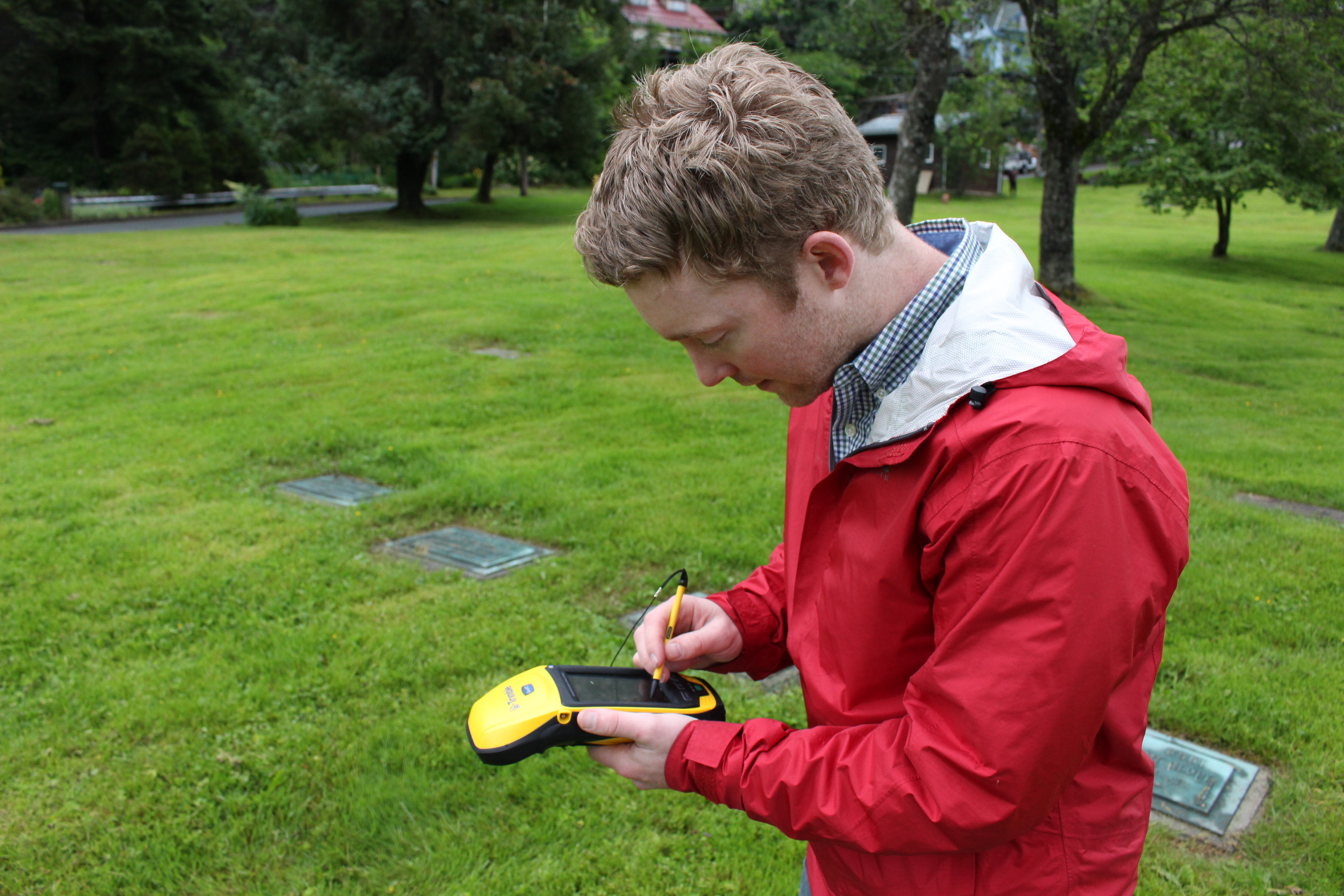
Quinn Tracy is the lead cartographer on the project. (Photo by Elizabeth Jenkins/KTOO)

Outside, city cartographer Quinn Tracy holds a GPS device above the headstone of Joe Juneau to pinpoint the exact geographic location. The device beeps as the site is mapped.

“So when I bring these points into the information geographic names system, I’ll have a point and then name associated with that point,” he says.

Buried at Evergreen are several notable people in Alaska’s history: city co-founders Joe Juneau and Richard Harris, victims of the sinking of the Princess Sophia and civil rights activist Elizabeth Peratrovich.

Tracy only needs two coordinates per grid section to map the entire cemetery–the rest will be overlaid using a digital scan of the 1986 survey. He peels back the moss from a crumbling headstone to uncover a name.

“I don’t know, it’s just kind of sad that some of these you can’t really read,” Tracy says.

Soon family and friends will be able to search for grave sites on the city’s website with the click of a mouse.

“It’ll be similar in concept to Google Maps where you enter an address and it takes you to that location,” he says. “In that case, you’ll enter someone’s name and will take you to their location in Evergreen Cemetery.”

Most of the remaining plots were sold in the 1950s and the site is almost full. Before long, there will be no new burials. Children nearby take turns tumbling down the hill.

Groundskeeper Ben Patterson says he doesn’t mind the historic resting place being treated like a park.

“I don’t find that disrespectful. I think it’s one of the neatest things about our cemetery is that it’s just so peaceful and people like it so much,” Patterson says.

The Evergreen Cemetery map goes online in October.

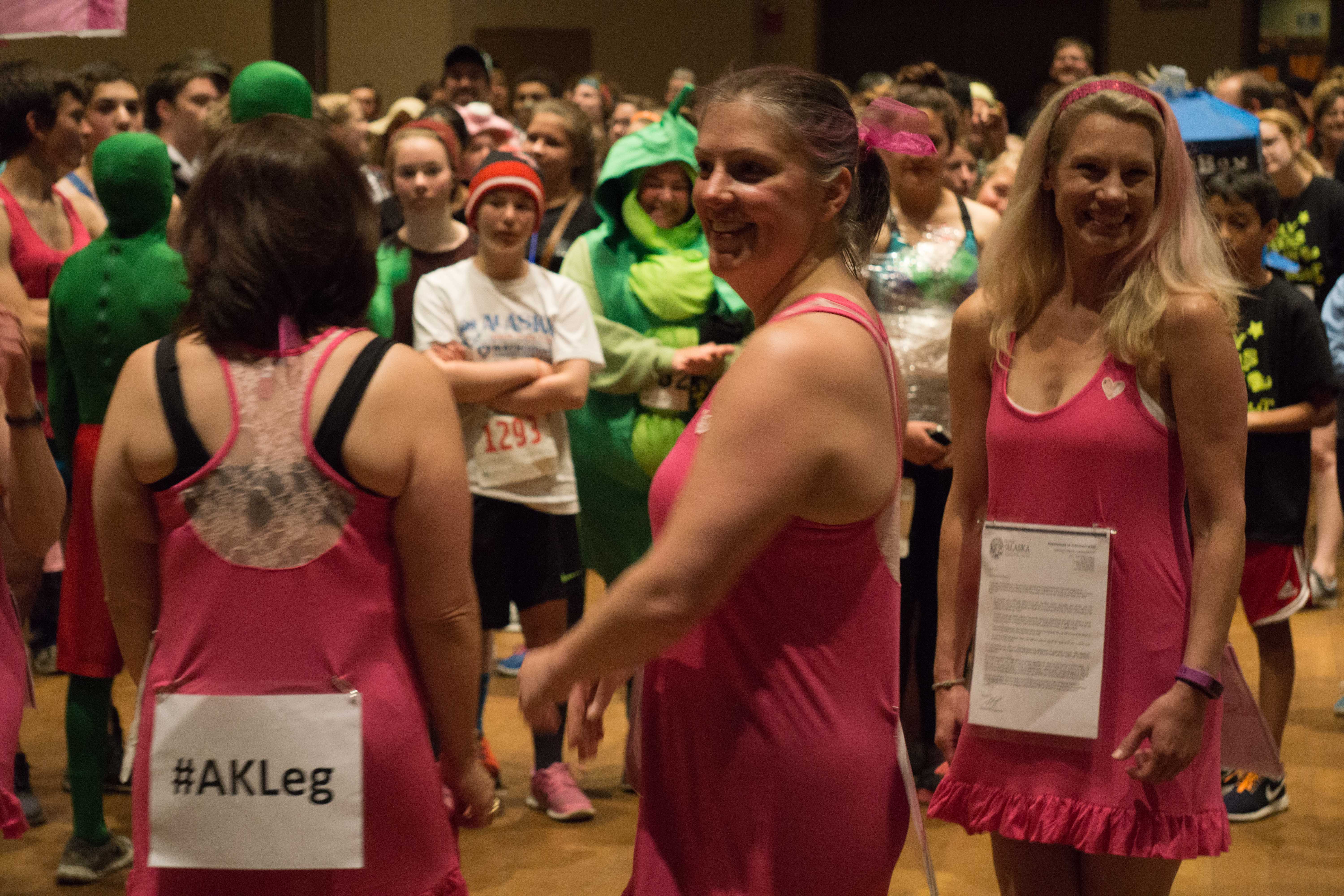
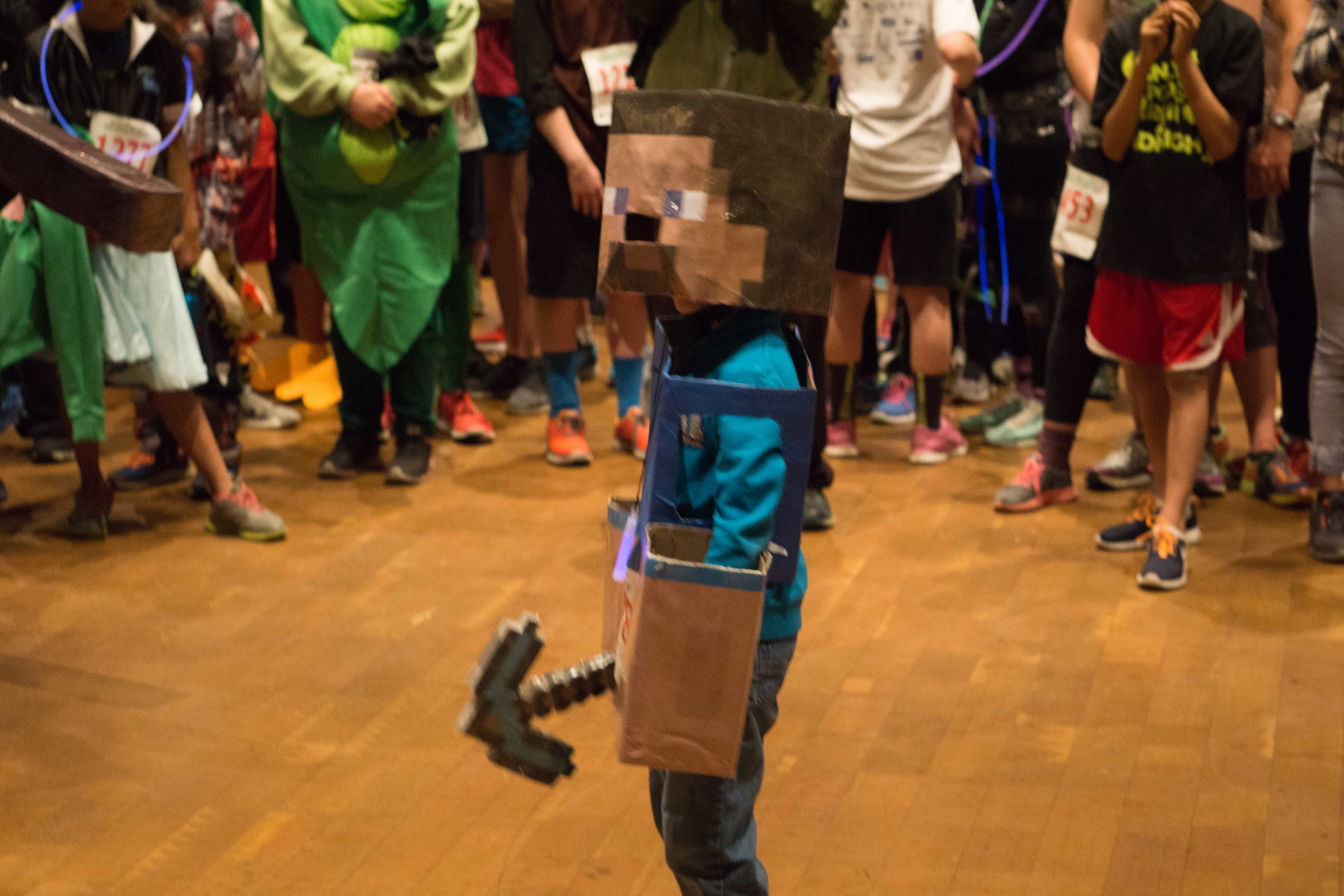
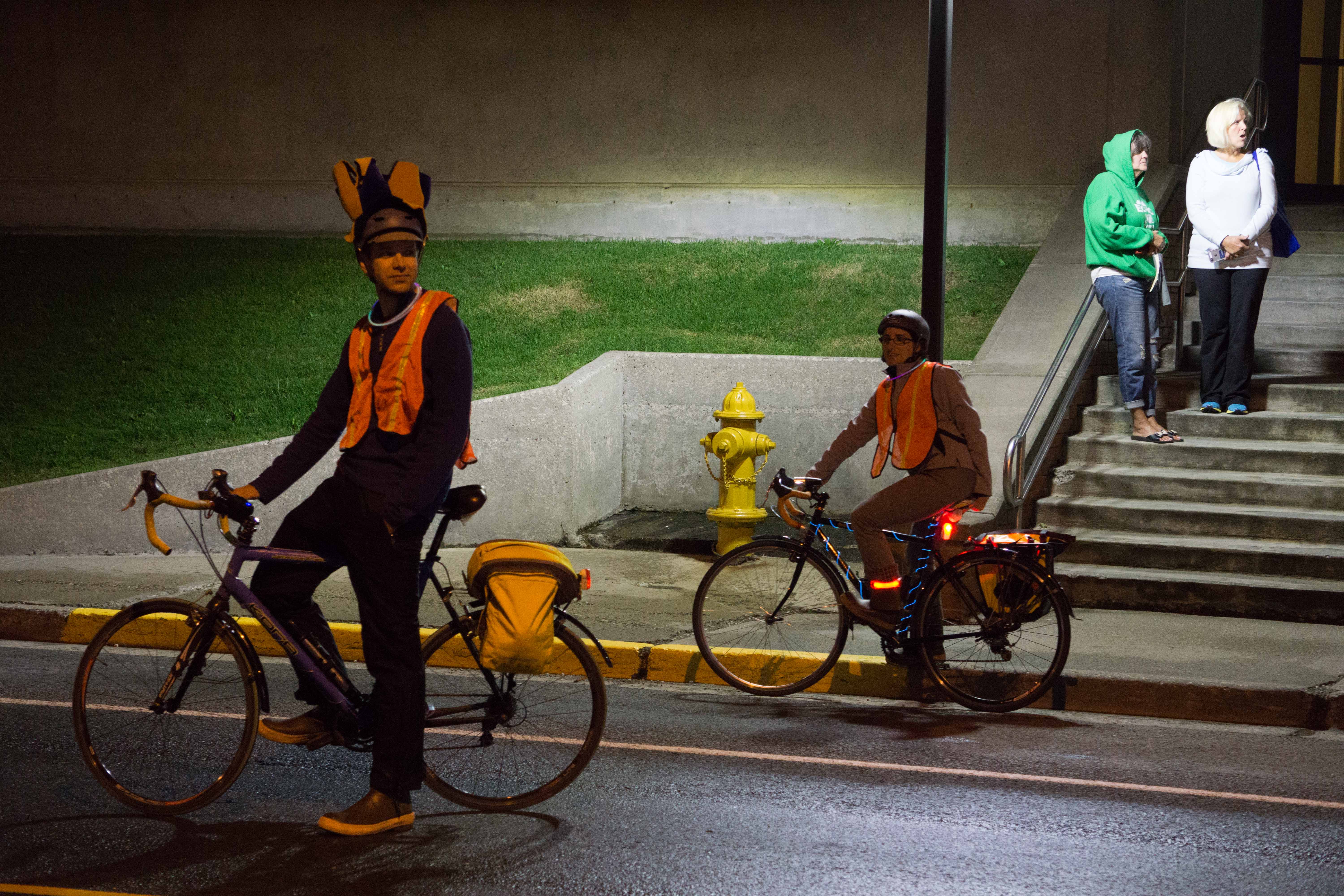
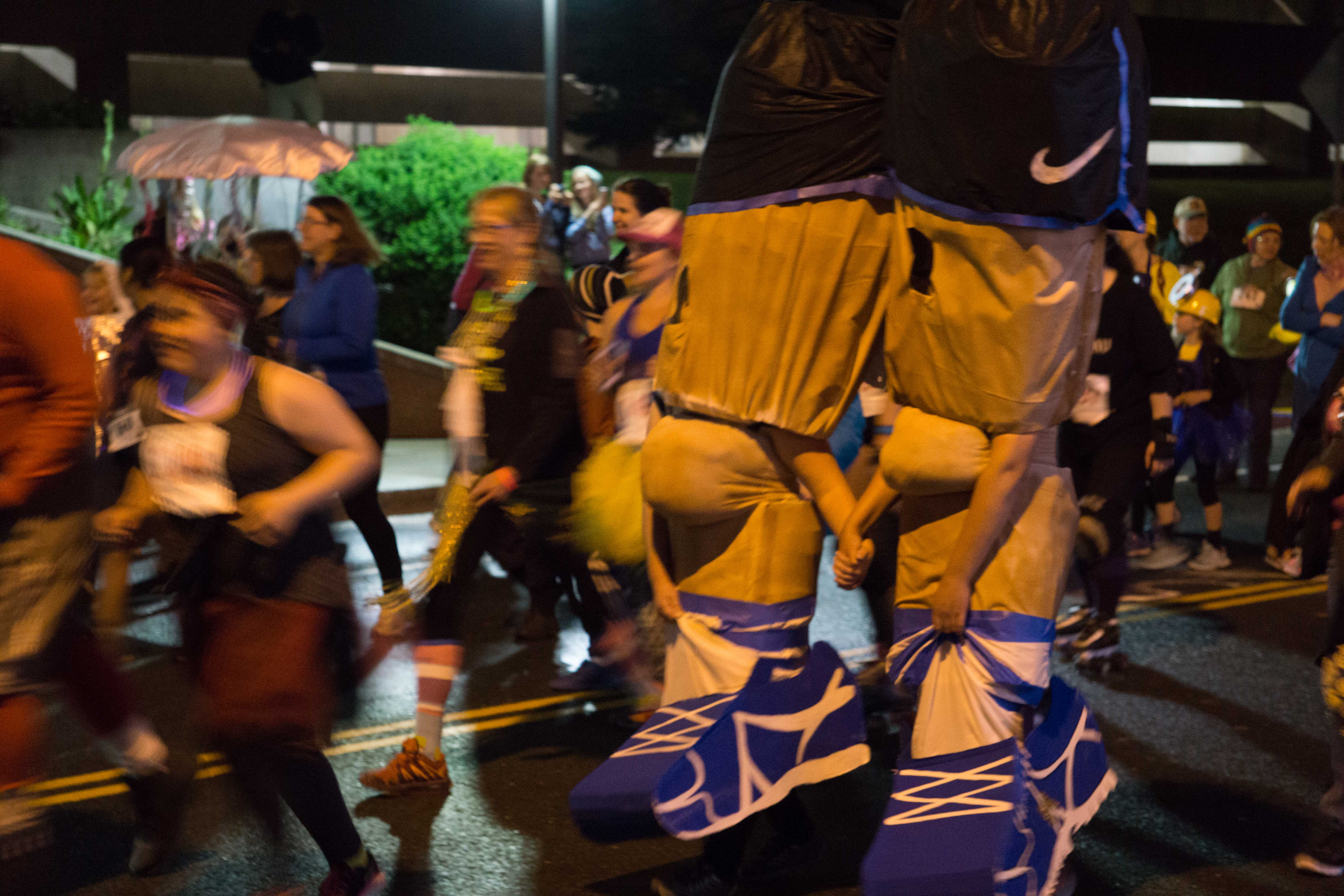
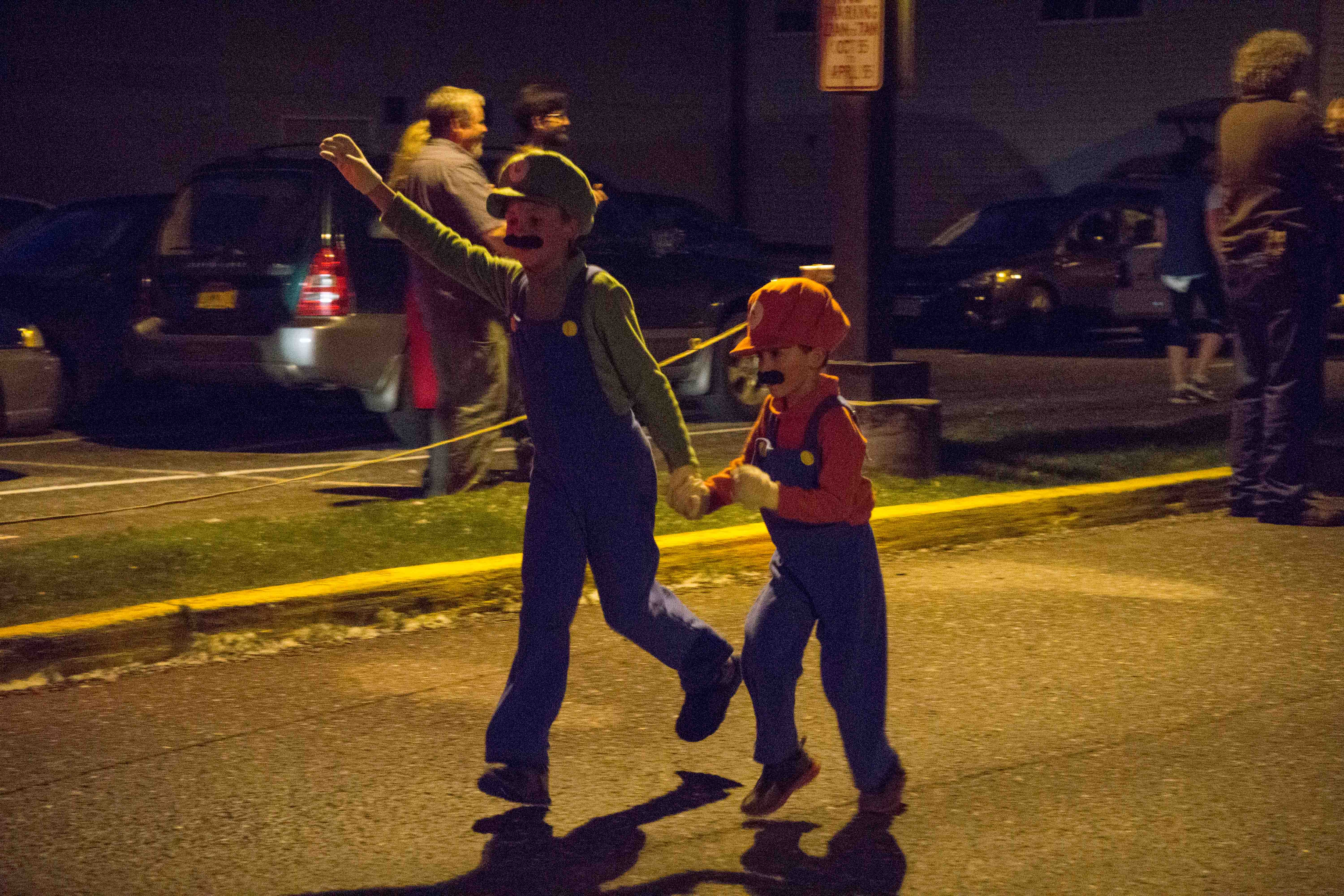
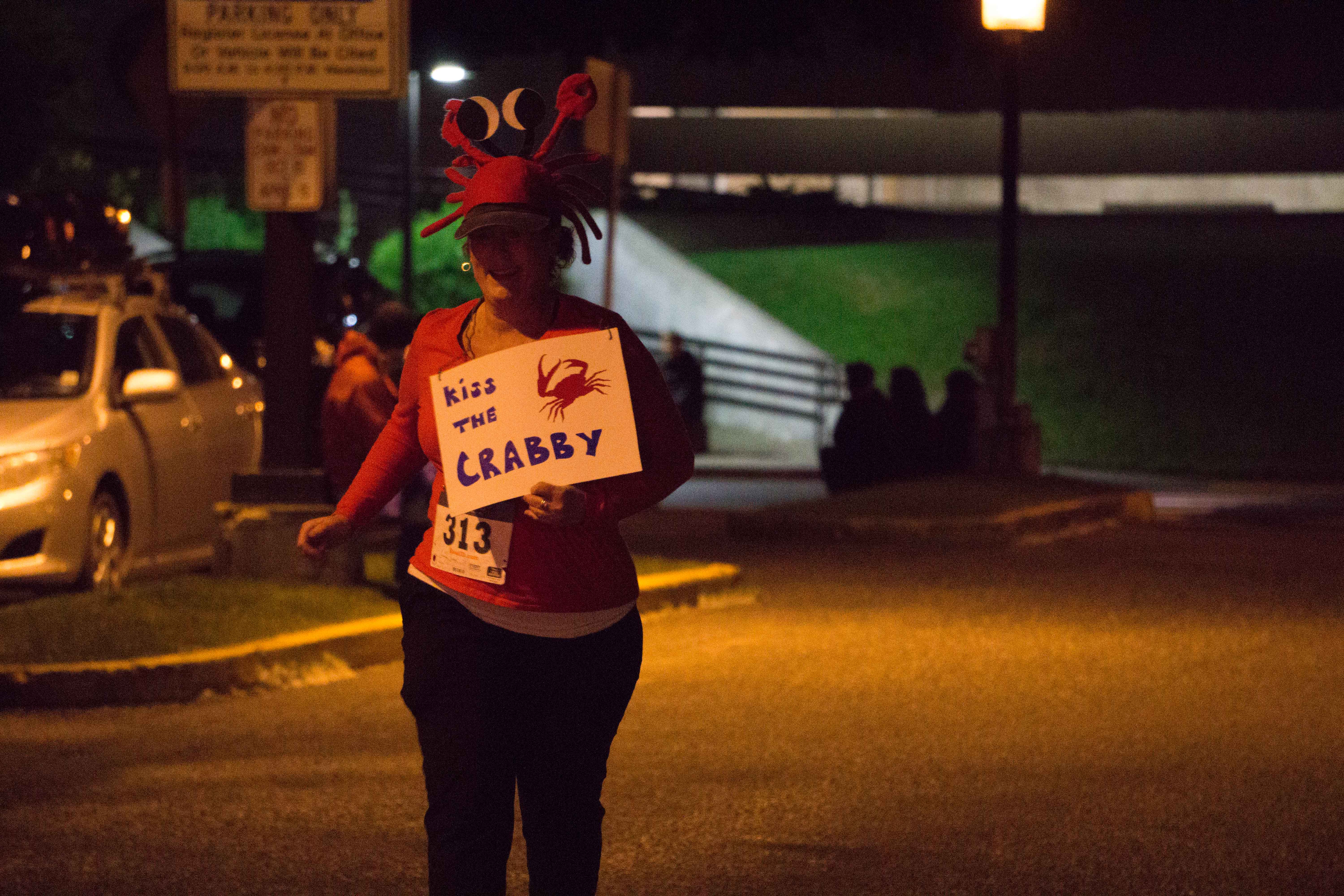
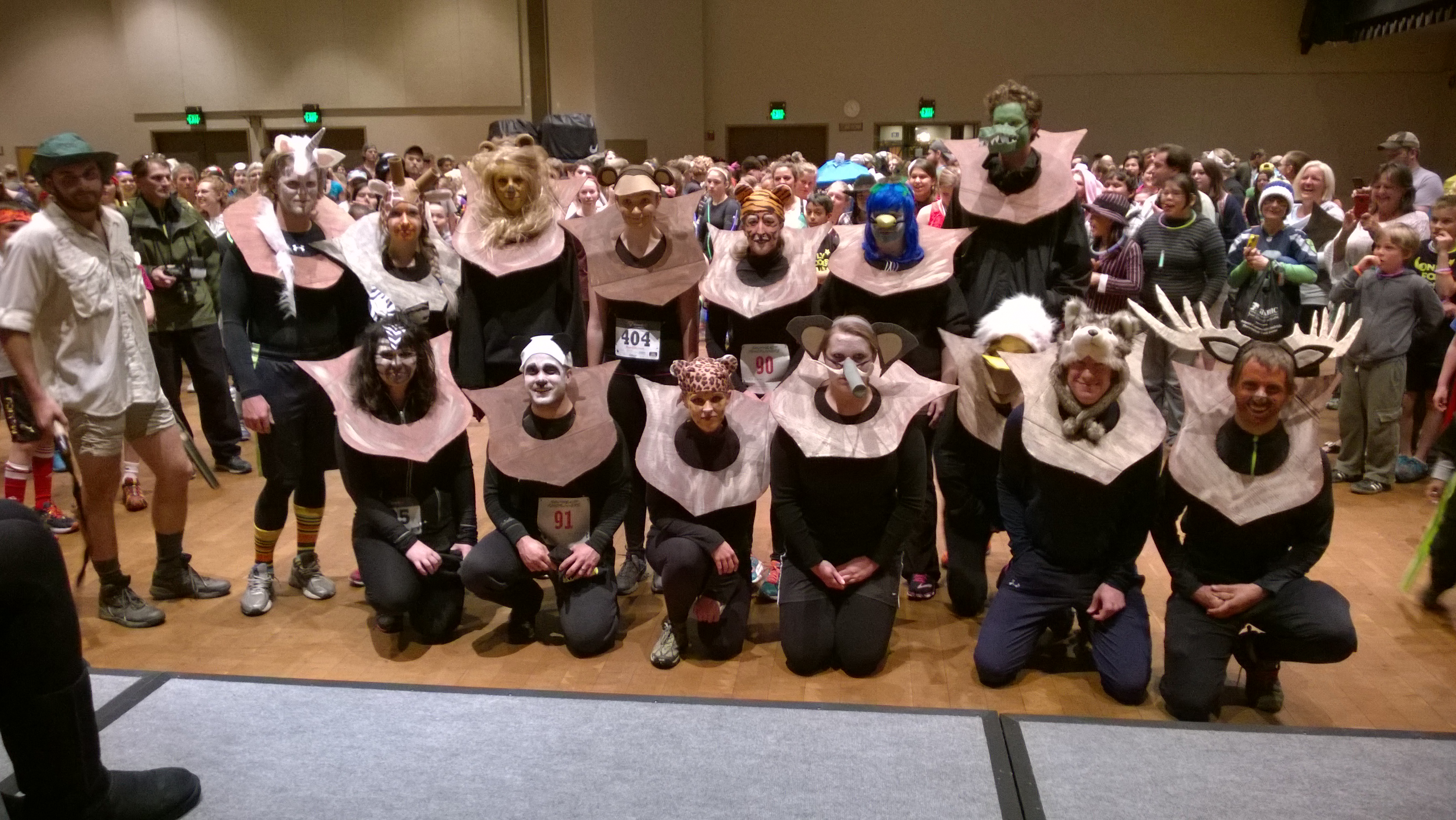
Slideshow: Only Fools Run at Midnight 2015

Photos and more from Saturday’s Only Fools Run at Midnight race.

Check out this silly video out of Ketchikan about the race:

//

Suspect arrested in Juneau man’s assault

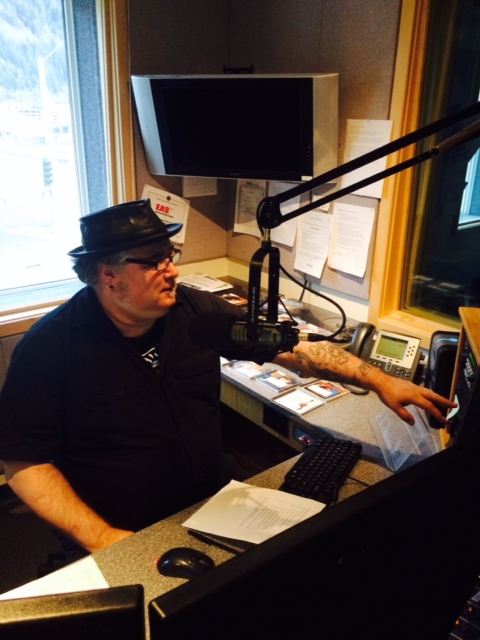
C Scott Fry is the voice behind KRNN’s “Fry’s the Limit” on Saturdays. (Photo by Scott Burton/KRNN)

The Juneau Police Department confirmed in a press release Thursday that an arrest has been made in the assault of a 50 year-old Juneau man.

The victim, C Scott Fry, was found unconscious and badly beaten on Front Street on Saturday morning. Fry is a musician and employee at the Alaskan Hotel & Bar. He was discovered by a JPD officer bleeding from the face and didn’t appear to have a pulse.

CPR was administered by the officer. He was transported to Bartlett Regional Hospital and later, Harborview Medical Center in Seattle. The hospital described his condition as “stable.”

Darrin D. Austin, 31, was charged with second degree assault. JPD describes the investigation as “ongoing.”

Juneau SEARHC opens its doors to non-Natives seeking mental health services

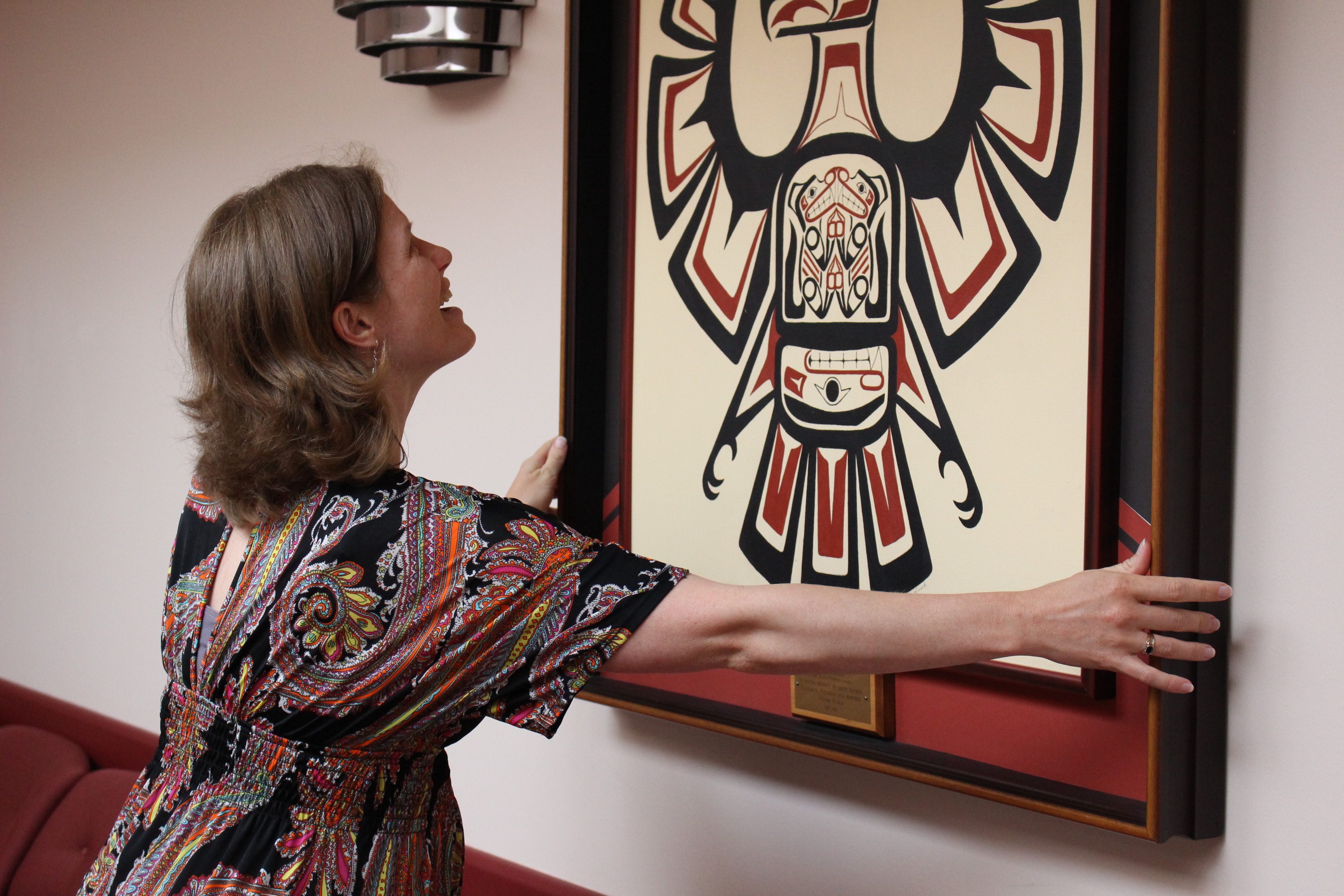
Pyper Powell straightens a picture at SEARHC's new location for behavoiral health services. (Photo by Elizabeth Jenkins/KTOO)
Pyper Powell straightens a picture at SEARHC’s new behavioral health location. (Photo by Elizabeth Jenkins/KTOO)

About 15 new patients are scheduled for behavioral health services at a tribal health consortium in Southeast Alaska. SEARHC recently its practice in Juneau to offer services to non-Native people.

It’s estimated that more than 4,700 people in Juneau suffer from a mental health condition. But if you’re seeking counseling from a private practice, you might have to wait.

“Services in our community are limited and access to them is limited. We just thought it was time to open our doors and make ourselves available to others,” says Pyper Powell, a behavioral health clinician at SEARHC.

She says she’s heard of patients being waitlisted up to a month or longer. So when the behavioral health division moved into a larger building in Juneau, it seemed like the perfect time to expand. Before, the service was only available to Alaska Natives and American Indians.

“And now we’re able to serve anybody that wants to walk through the door.”

That includes non-Natives with health insurance, Medicare and Medicaid coverage. She says they’re working on a sliding scale option for people without insurance. SEARHC is the tribal health care organization serving Alaska Natives in Southeast. It’s funded with federal dollars from the Indian Health Service and grants.

The organization has seen both Native and non-Native people in Sitka for decades.

“We know that it can work,” she says. “We know that it does work and that is a great support for the community.”

Powell hopes, with more people in Juneau, they will be able to expand group therapy.

A therapy room that encourages play for SEARHC's younger patients. (Photo by Elizabeth Jenkins/KTOO)
A therapy room that encourages play for SEARHC’s younger patients. (Photo by Elizabeth Jenkins/KTOO)

“You have a chance to work out your problems in a safe confidential environment with people who maybe remind you of somebody and can give you great feedback rather than jumping in full bore,” she says.

Groups include mental health support and chemical dependency. Some offer art therapy or mindfulness exercises. There’s one for grief management that uses Tlingit storytelling and drumming.

SEARHC’s vice president, Leatha Merculieff, says it’s mutually beneficial to include non-Natives. She’s Aleut from St. Paul Island.

“From an Alaska Native perspective, any type of expansion, it’s great for us as Alaska Native people because it adds additional resources to our services. That’s how we expand,” she says.

SEARHC will also accept patients for one-on-one counseling, but another community behavioral health provider says there’s no need. They already provide similar services without a wait.

“I don’t think we fully realized that there is a perception that so many people didn’t have immediate access to behavioral health services,” says Pamela Watts, the executive director at the Juneau Alliance for Mental Health.

JAMHI provides counseling, among other services, and offers a sliding scale policy for its uninsured clients. Watts says SEARHC is “duplicating” what’s already available.

“When duplication occurs that can draw resources away or clientele away from organizations that are well established,” she says.

SEARHC’s revenue is 20 times larger than JAMHI’s. But something both providers agree on is the lack of psychiatric care in Juneau — particularly for kids. Pyper Powell says that’s one thing SEARHC’s new patients may not receive right away. Alaska Native children already have about a four month wait for that.

“One of the things that we need to make sure that we do is honor the beneficiaries, the Alaska Natives, who would like to receive service as priority when there is a waitlist,” she says.

Powell says there are no immediate plans to hire more staff. SEARHC will reassess in the next few months.


Site notifications
Update notification options
Subscribe to notifications