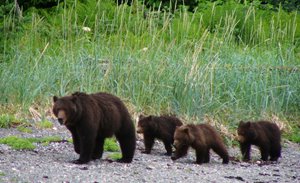
This bear family was seen in May 2013 foraging in the Auke recreation area. Again wildlife officials are asking people not to stop to watch the bears.
State wildlife officials are warning people not to stop and watch bears along the roadside.
A black bear family in the Auke Bay bypass area is beginning to draw a crowd.
Alaska Department of Fish and Game Wildlife Biologist Ryan Scott says a sow and three cubs have been seen near the driveway to Aant’ iyeik Park, and traffic is creating problems for the bears as well as people.
“Lots of vehicles going by, pulling to the side of the road, parking near the road and people getting out of their vehicles and approaching these bears very closely,” he says.
Later in the summer, the bear family moved away from the roadside and into neighborhoods.
“They were a challenge for us as well as the people living in those areas,” he says. “It’s quite possible they were very comfortable around people after having all these visitations and spending time with people on the side of the road.”
He says the bears are drawn by the early mature spring vegetation in the area.
Scott says it’s never a good idea to approach bears, no matter how cute the cubs may be.
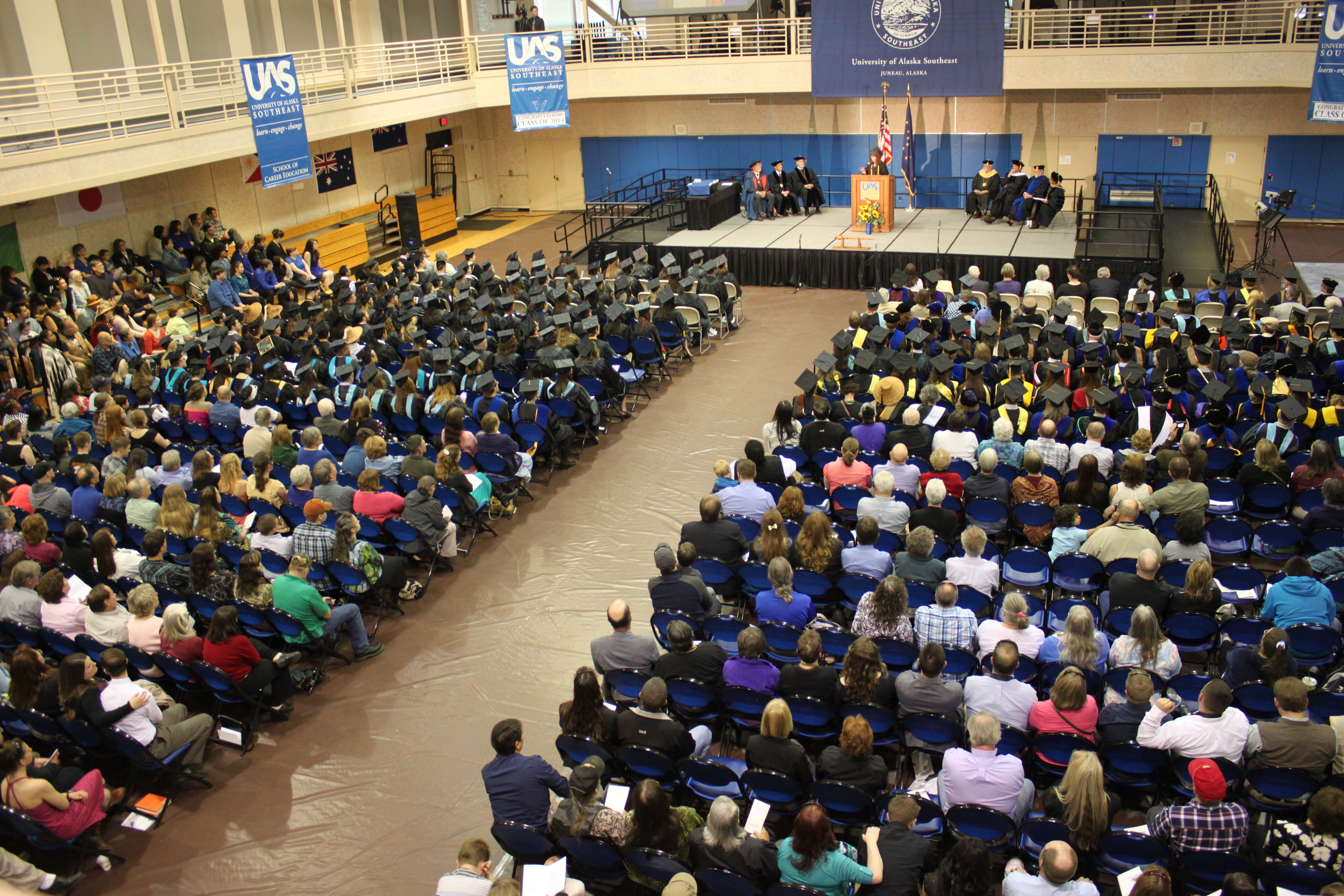
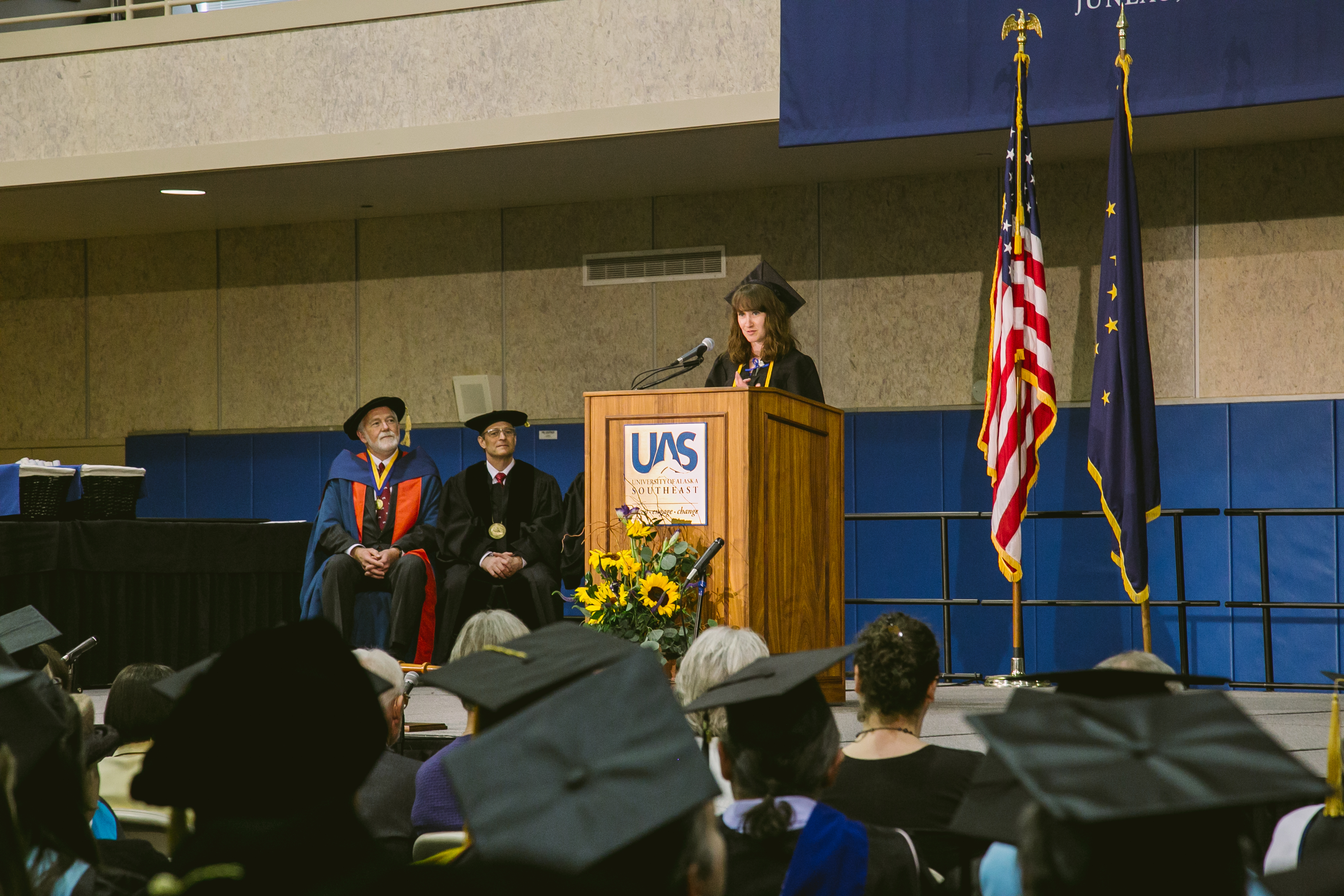
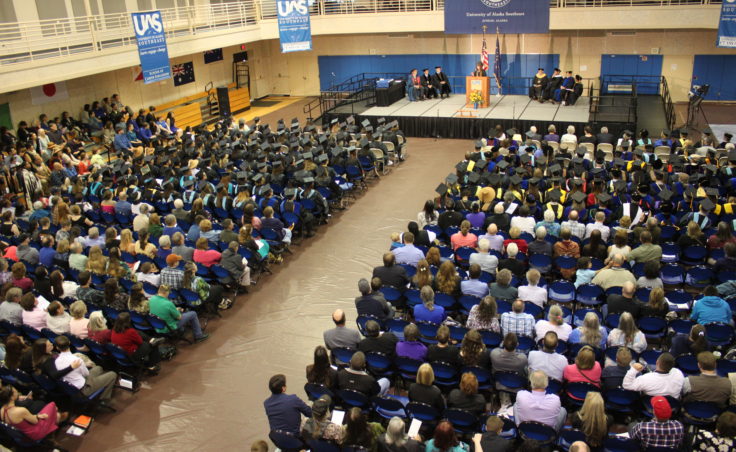
Emily Rose King gave the student commencement speech to a packed audience at the UAS Rec Center May 4. (Photo by Lisa Phu/KTOO)
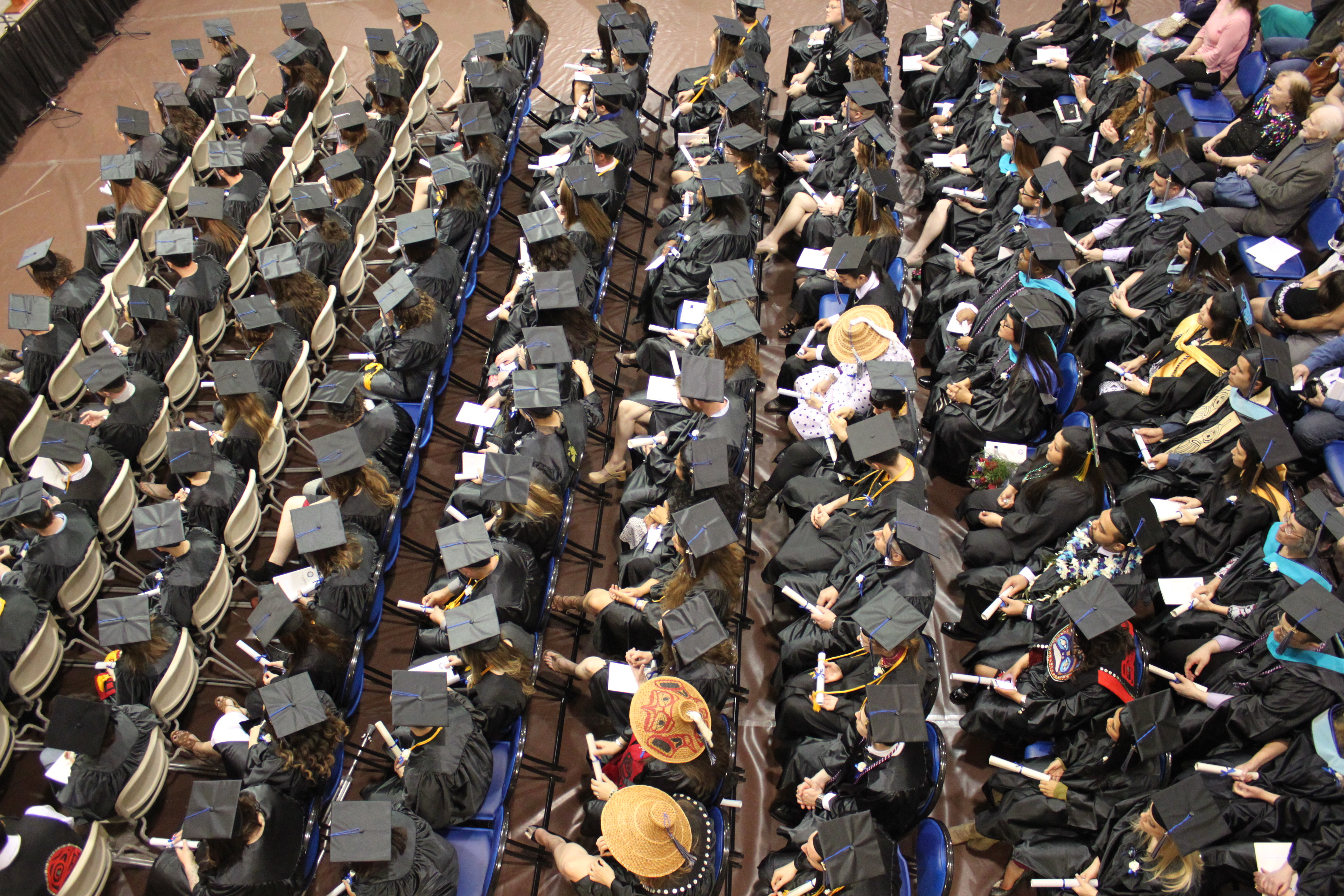
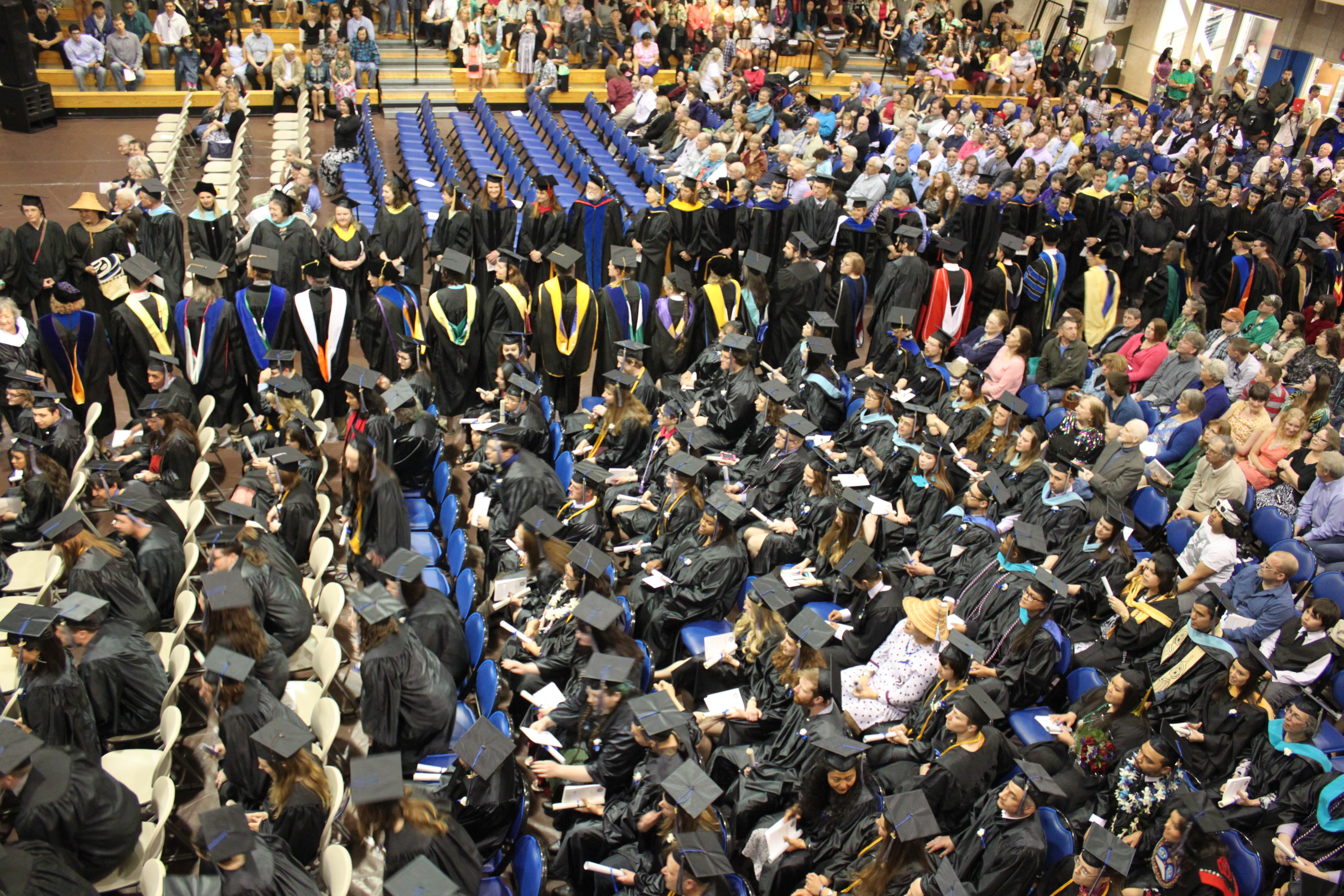
Ninety percent of UAS graduates are from Alaska. (Photo by Lisa Phu/KTOO)
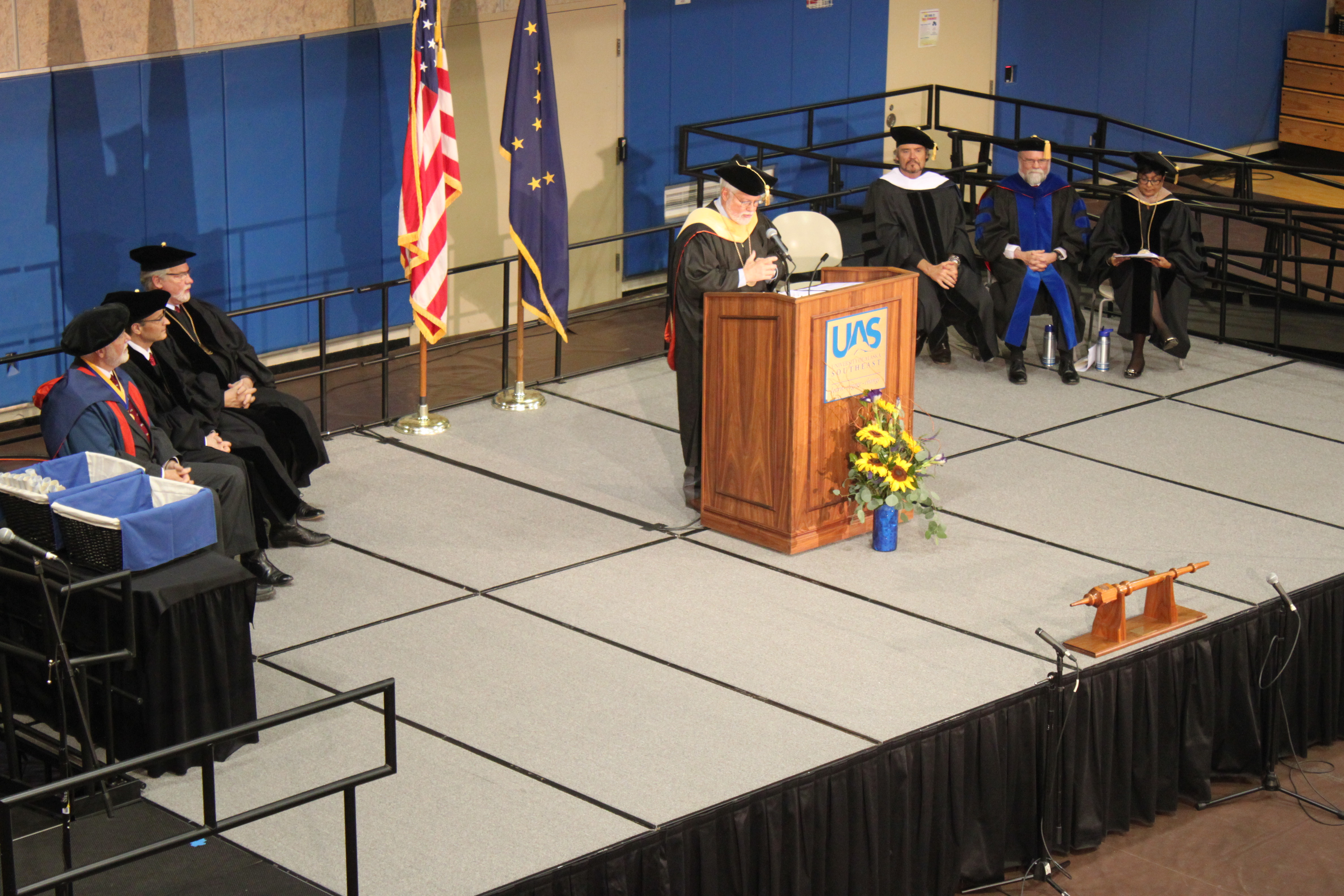
Chancellor John Pugh gave opening remarks at the commencement ceremony. (Photo by Lisa Phu/KTOO)
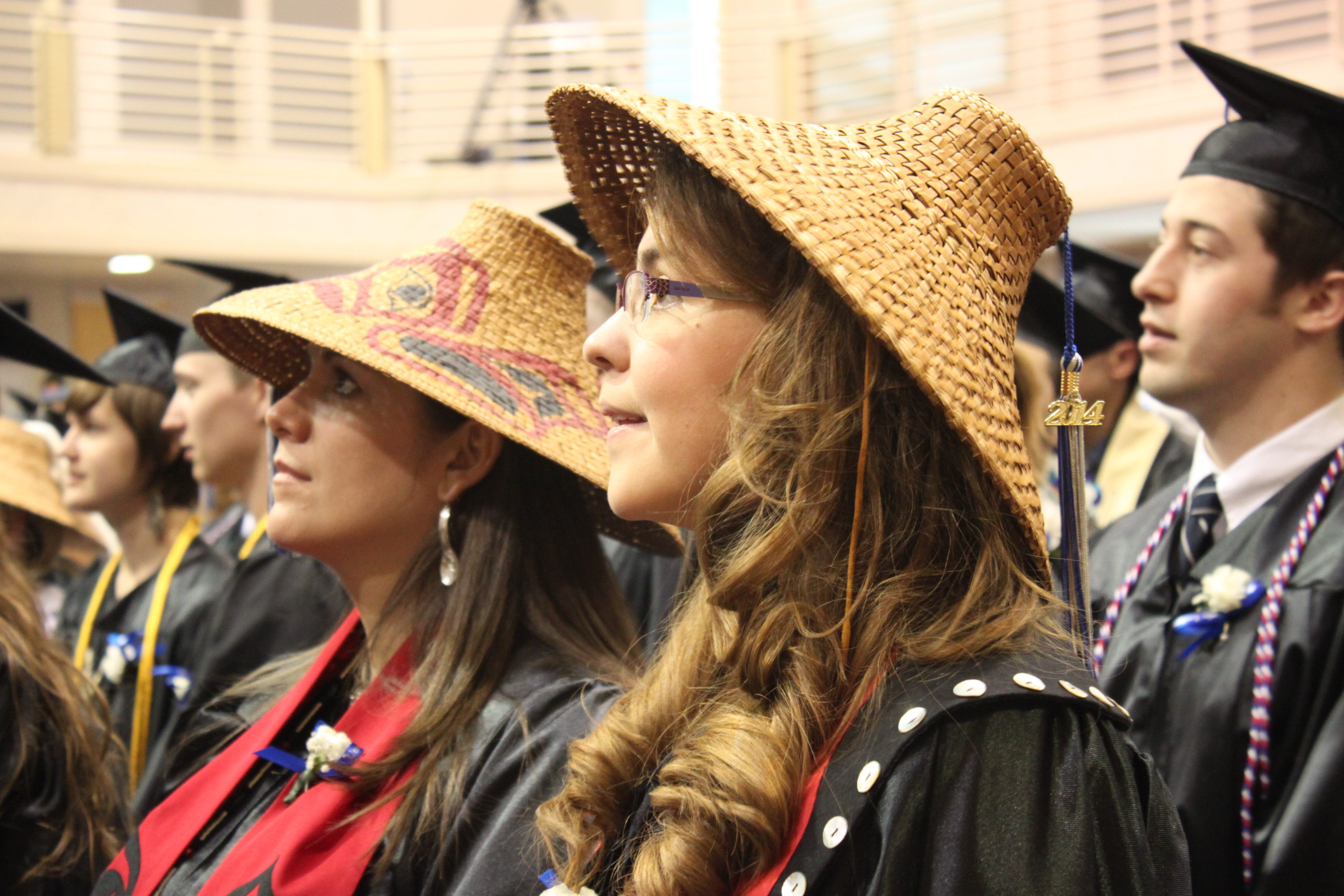
This is first time UAS has had graduates with a Bachelor of Liberal Arts in Alaska Native Languages and Studies. (Photo by Lisa Phu/KTOO)
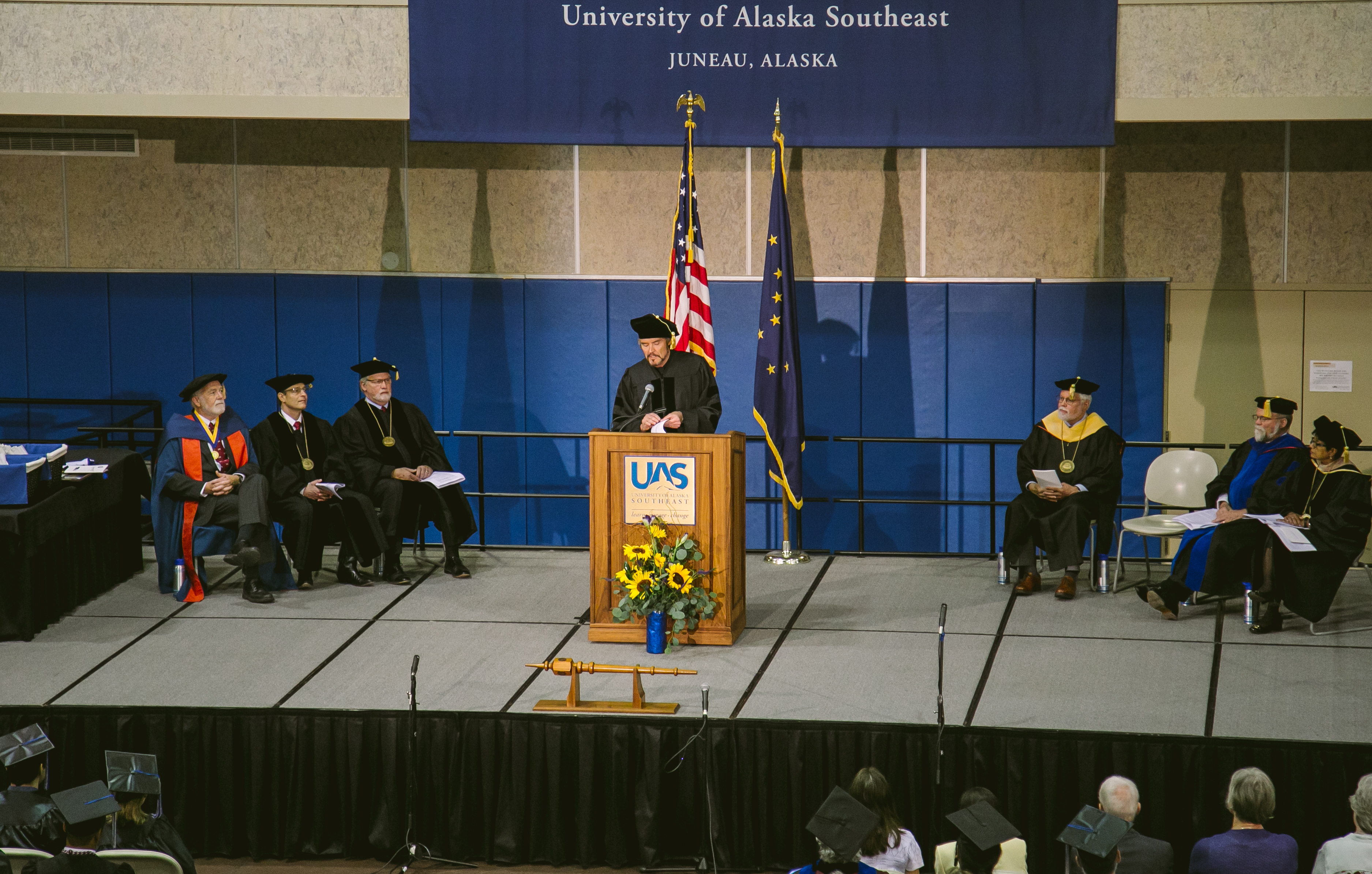
Commencement speaker Dave Hunsaker received an Honorary Doctorate of Humane Letters for his contribution to literary and dramatic arts in Alaska. (Photo by Kjersti Andreassen)
(Photo by Lisa Phu/KTOO)
Student speaker Emily Rose King graduated with a Bachelor of Arts in English with a minor in Spanish. (Photo by Kjersti Andreassen)
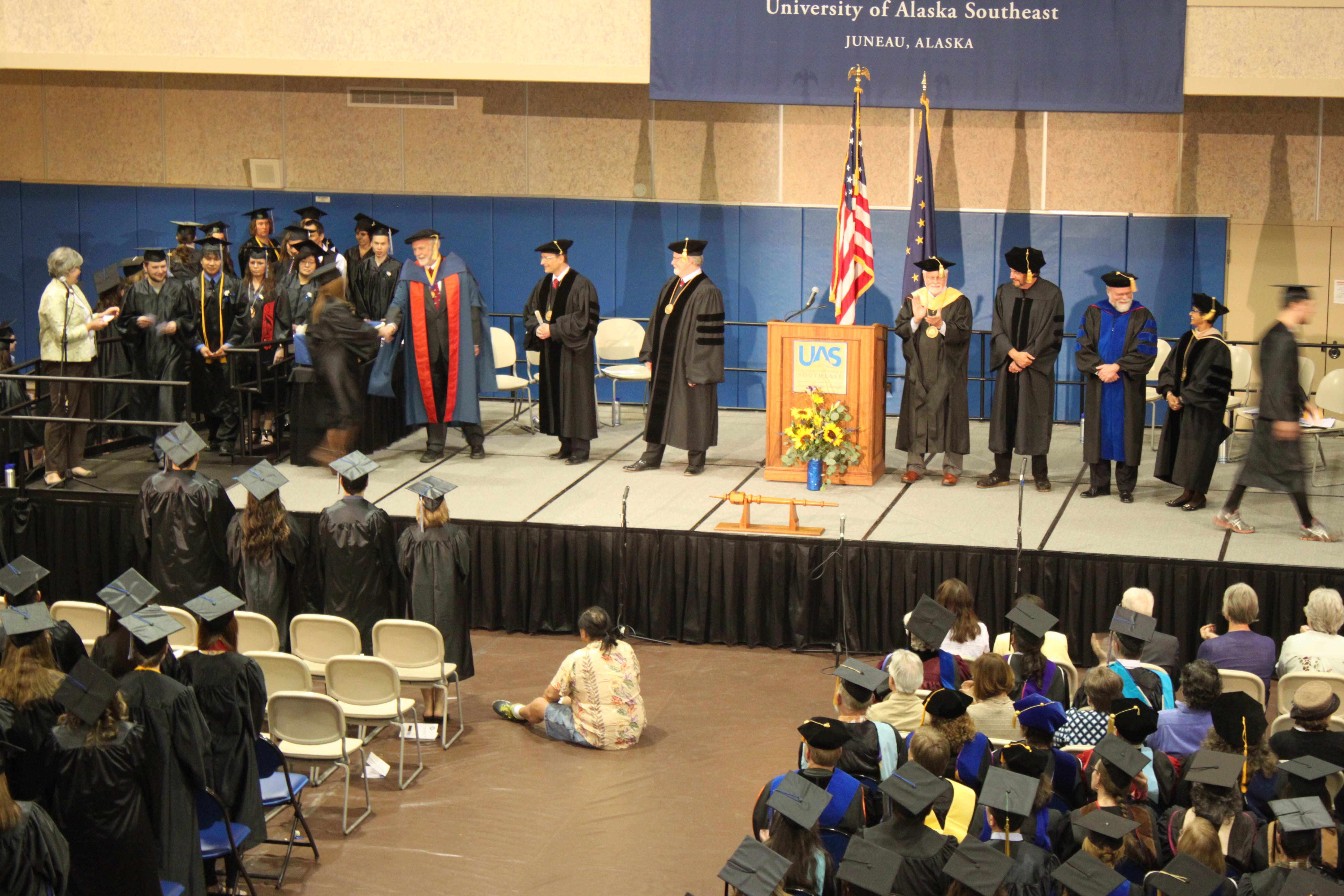
Faculty line the aisle for the closing procession. (Photo by Lisa Phu/KTOO)
Graduates file out of the UAS Rec Center at the end of the commencement ceremony. (Photo by Lisa Phu/KTOO)
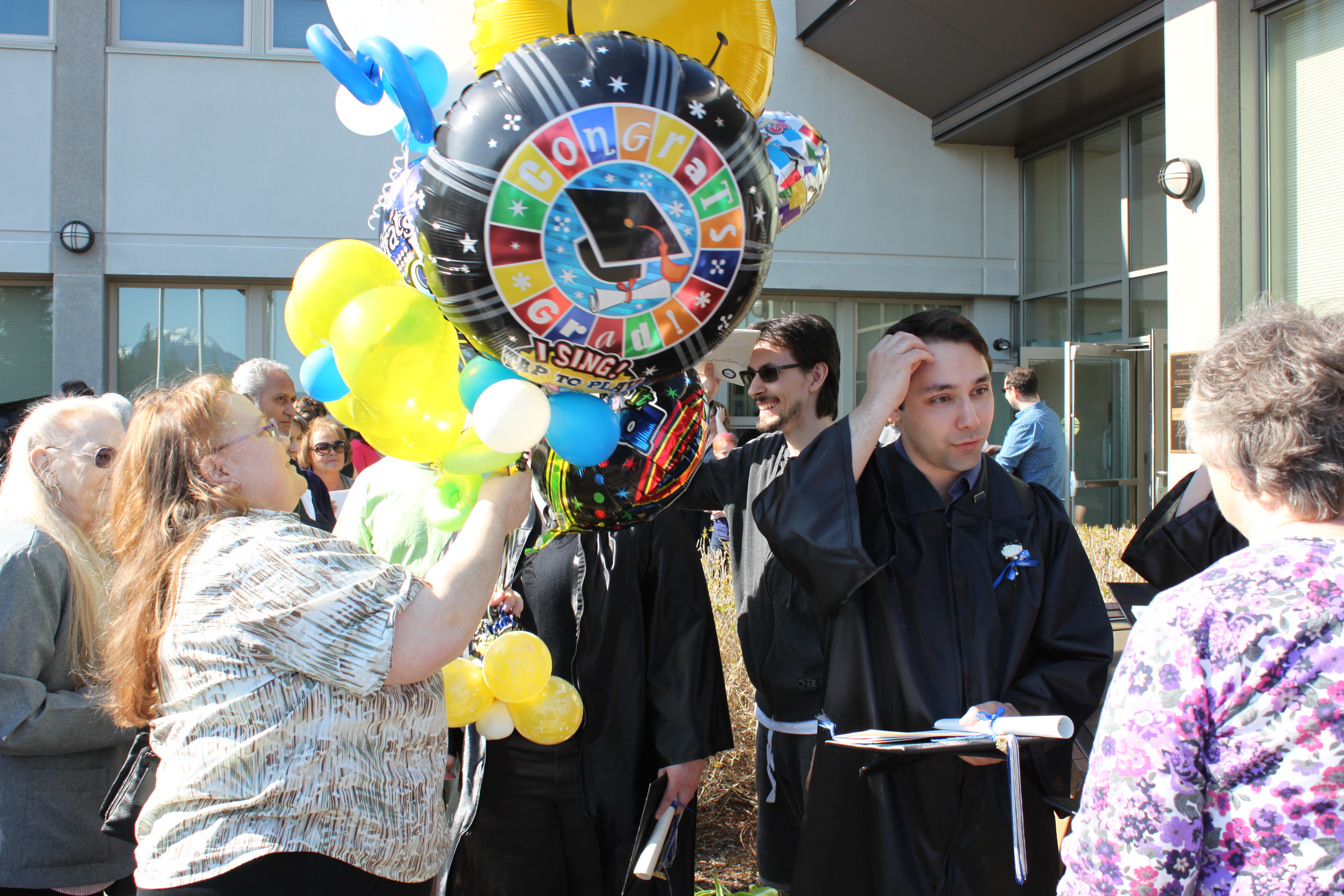
Graduates unite with family and friends outside the UAS Rec Center. (Photo by Lisa Phu/KTOO)
Graduates of the University of Alaska Southeast graduation college education celebration(Photo by Lisa Phu/KTOO)
A record number of University of Alaska Southeast graduates were honored this weekend during commencement ceremonies in Juneau, Ketchikan, and Sitka. Six hundred and eighty-five students received awards including bachelor’s and graduate degrees, occupational endorsements, and certificates.
The Juneau campus held its 43rd annual commencement ceremony Sunday at the UAS Rec Center.
Emily Rose King gave the student commencement speech to a packed audience. She spoke about not being afraid to fail.
“A college degree doesn’t ensure success. But I’m pretty sure that it means you know how to fail. It means that when presented with difficult readings, math problems, lovers, crazy people, you can figure out how to proceed. After we take off these really, really interesting hats, we’re going to have every opportunity to potentially succeed and fail and we should probably take them,” King said.
Juneau playwright and screenwriter Dave Hunsaker received an Honorary Doctorate of Humane Letters for his contribution to literary and dramatic arts in Alaska.
He’s known for the play “Yup’ik Antigone” which toured in Alaska, New York, France and Greece. Hunsaker was adopted by Tlingit elder Austin Hammond, Sr., of Haines into the Luxaax.ádi Clan.
As the commencement speaker, Hunsaker described his connection to the Native community which began as a school music teacher in Tyonek, an Athabascan community on Cook Inlet.
“Since that beginning it has been my extraordinary privilege to be associated in my work and life with the Native people of Alaska and their ancient cultures that are so inextricably tied to this land,” Hunsaker said.
Hunsaker gave this advice to the graduating class of 2014:
“Keep and cherish your identity as an Alaskan always, however you define it, however it has shaped you. It is a proud legacy that we all share. Let it give you stature in the wide world and pride. Congratulations everyone and good luck. Gunalchéesh. Thank you.”
About 90 percent of UAS graduates are from Alaska. Nearly 12 percent are Alaska Native or American Indian. This is first time UAS has had graduates with a Bachelor of Liberal Arts in Alaska Native Languages and Studies.
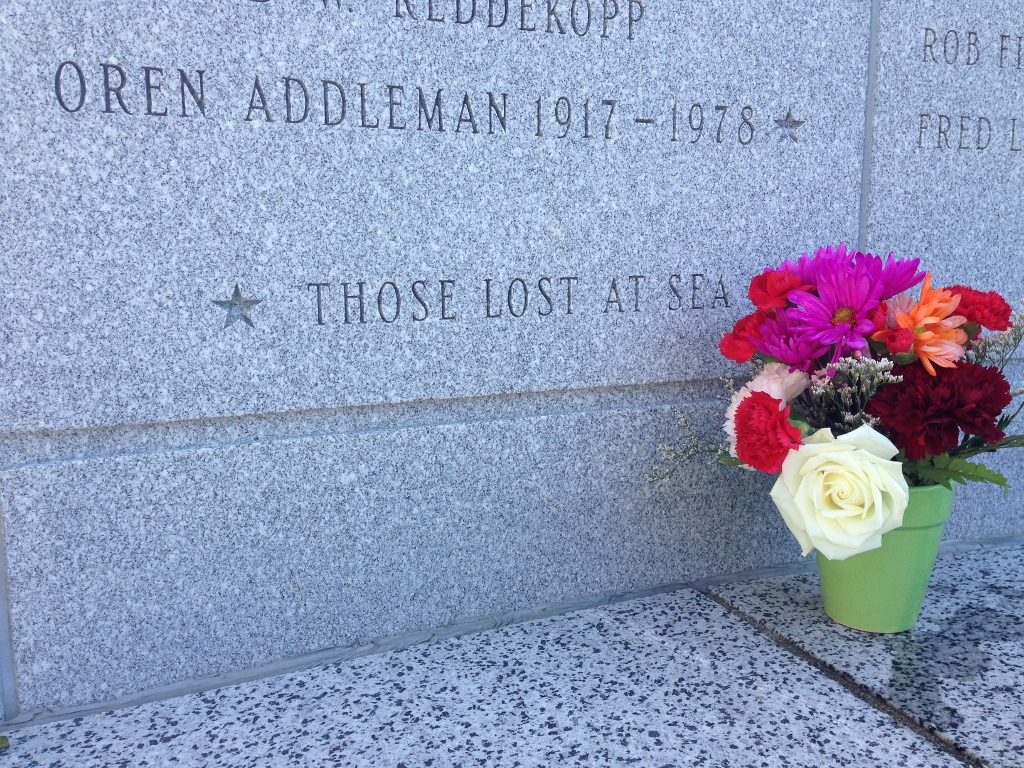
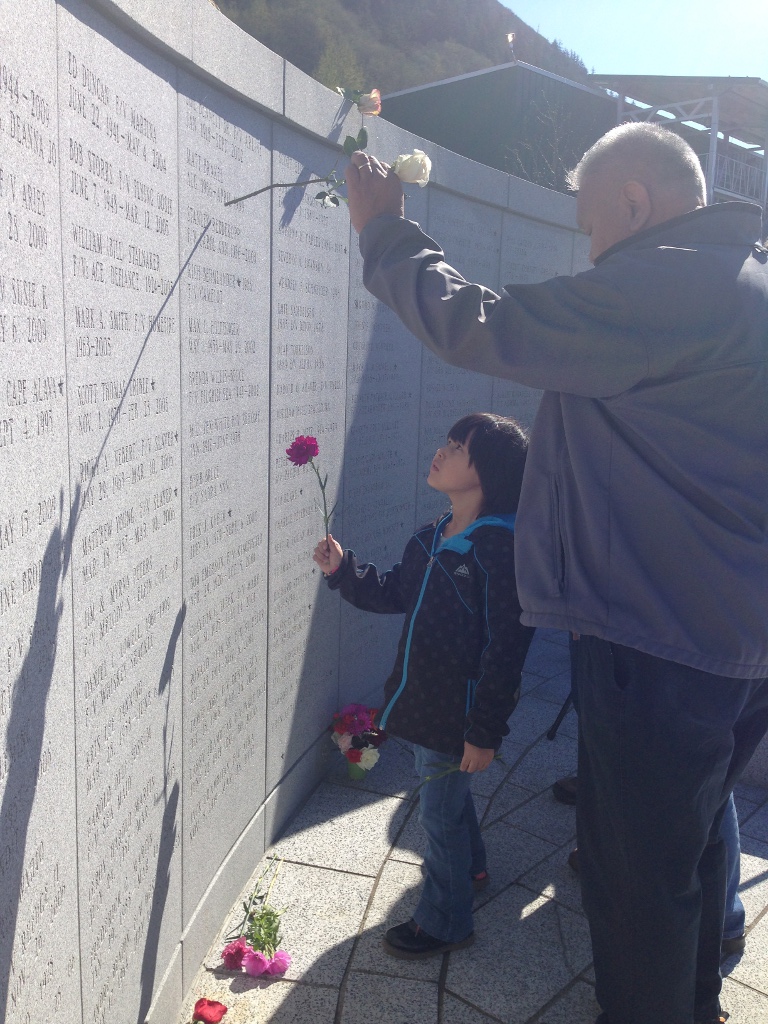
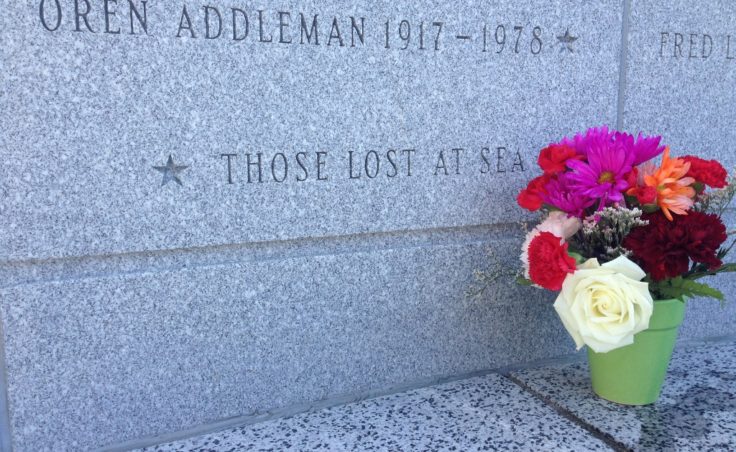
Flowers were placed along the Alaska Commercial Fishermen's Memorial wall. (Photo by Casey Kelly/KTOO)
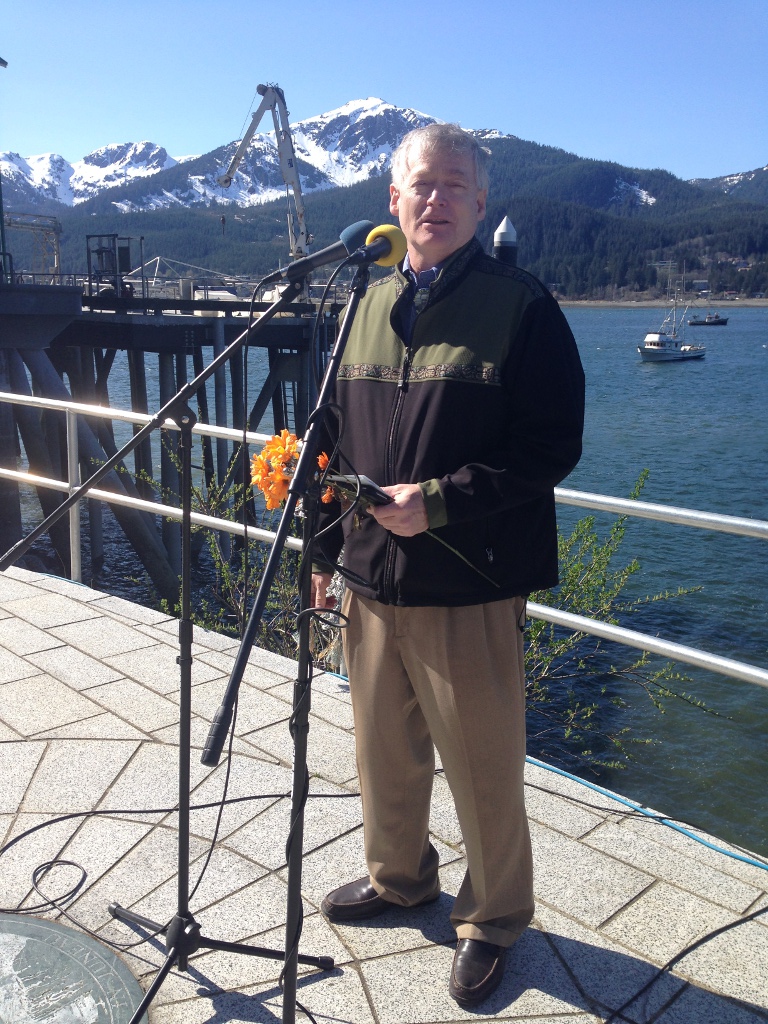
Lt. Gov. Mead Treadwell was the keynote speaker for this year's blessing. (Photo by Casey Kelly/KTOO)
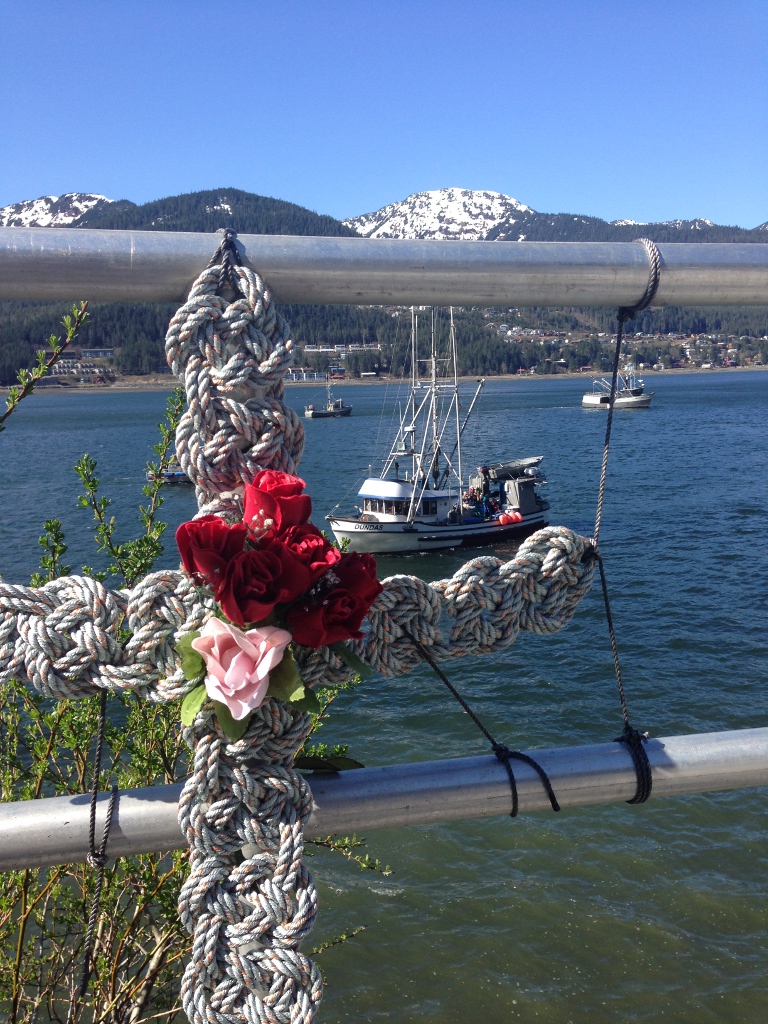
The F/V Dundas was blessed during this year's Juneau Blessing of the Fleet. (Photo by Casey Kelly/KTOO)
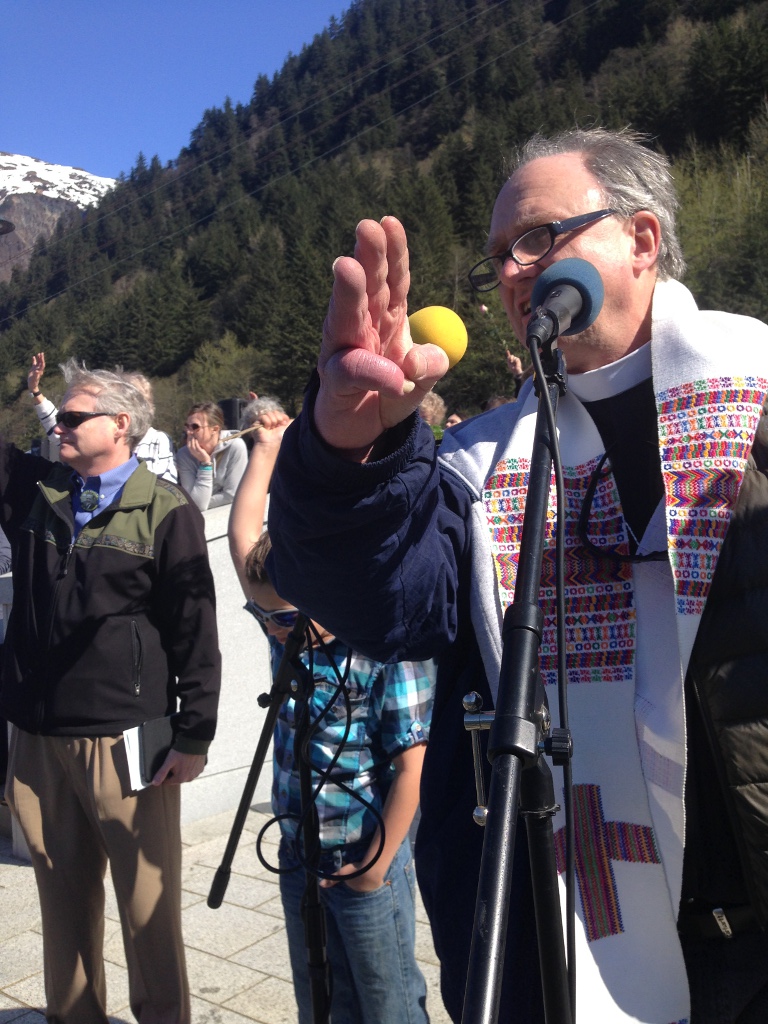
The Rev. Gordon Blue, from Church of the Holy Trinity, blesses boats during this year's Juneau Blessing of the Fleet. (Photo by Casey Kelly/KTOO)
Jerry Bennett and his granddaughter Leila place flowers at the Alaska Commercial Fishermen's Memorial wall during this year's Juneau Blessing of the Fleet. Bennett's father's name, Joe Bennett Sr., is engraved on the wall. (Photo by Casey Kelly/KTOO)
More than a hundred people attended Saturday’s Blessing of the Fleet in Juneau to honor those who work in Alaska’s commercial fishing industry.
Six names were added to the Alaska Commercial Fishermen’s Memorial wall, and eight boats received blessings performed by the Rev. Gordon Blue of the Church of the Holy Trinity. The Alaska Youth Choir and the City of Juneau Pipe Band performed. Lt. Gov. Mead Treadwell was the keynote speaker.
The names added to the fishermen’s memorial wall this year were Daniel Glass, Jim McCormick, James Jensen, Peter Wright, and John and Elizabeth Clauson.
This was the 23rd annual Juneau Blessing of the Fleet. According to a fact sheet handed out with this year’s program, fishermen landed about $23 million worth of seafood in the capital city in 2012. Between fishing boats and processors, the local fishing industry employs more than 1,000 people.
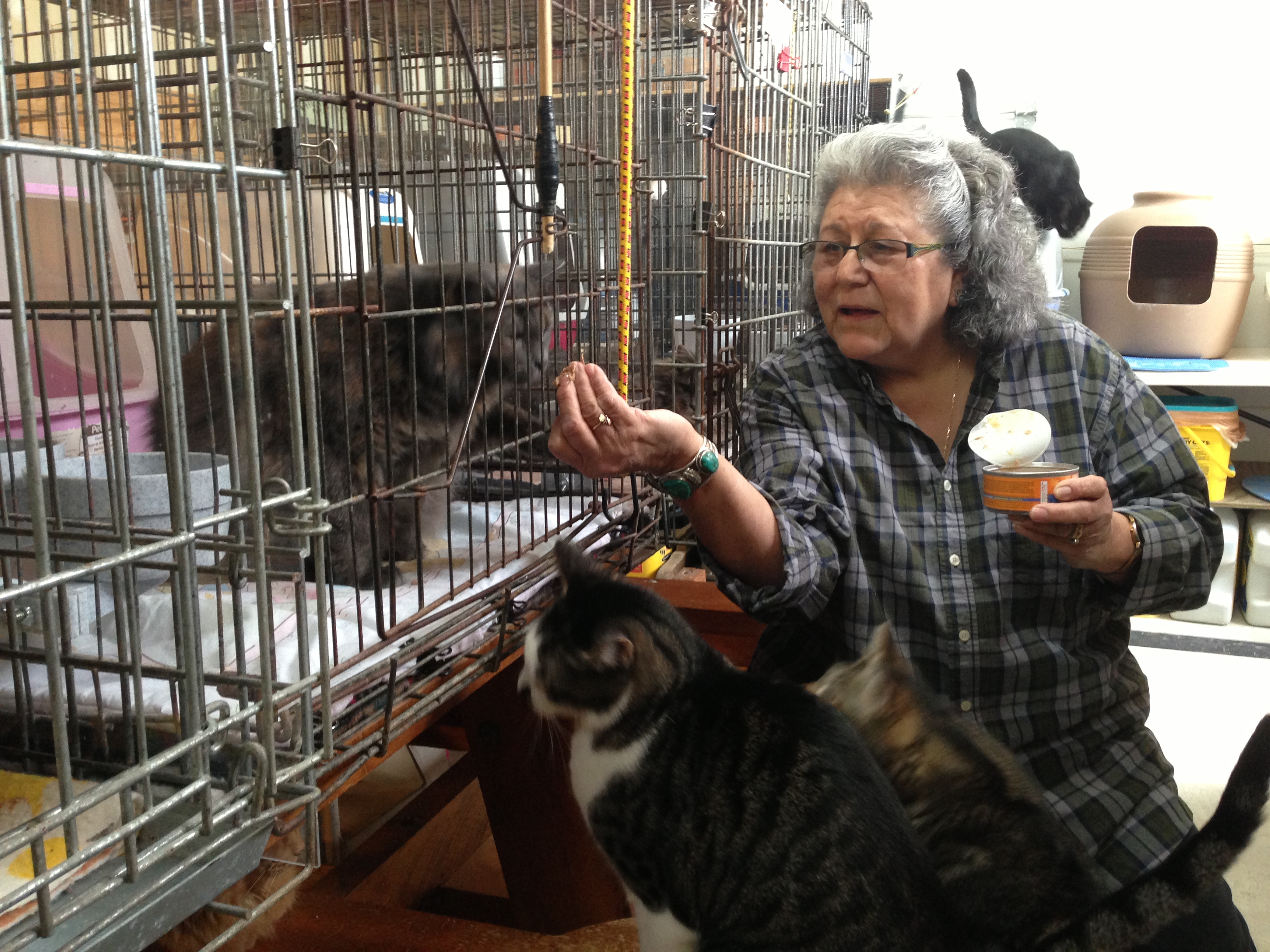
Dolores Klinke feeds cats in her garage at St. Frances Animal Rescue. (Photo by Shady Grove Oliver/KSTK)
Ten years ago, Wrangell was crawling with feral cats. They roamed the streets, getting into trash and nesting in condemned buildings. Now, it’s hard to even find a cat downtown.
That dramatic turnaround is due to the hard work of one woman who noticed the problem and decided to fix it. Dolores Klinke runs the St. Frances Animal Rescue, a non-profit that has saved hundreds of strays.
Dolores Klinke is in her late sixties. She has salt and pepper hair and a big smile. As a kid growing up in New Mexico she had all sorts of pets. Now, she’s Wrangell’s most prominent cat lady.Klinke operates St. Frances out of two shelter locations. One is a forested lot for feral cats and the other is for adoptable cats, housed in her own garage. The first thing you notice when you walk inside is that it’s spotlessly clean and doesn’t smell like cats. That’s surprising as it’s currently home to about 20 rescues that live in kennels and cardboard boxes lining the walls.
Some have been turned over by past owners. Many have been live trapped around town. She works patiently with the wild ones, like Kiki, to get them socialized.
“And at first she was very aggressive but she was scared, you know. She didn’t want to be any place else but her own home. But slowly she’s getting better and better,” says Klinke.
It’s this unflappable faith in these little animals that led Klinke to start St. Frances in 2008.
She says she was disturbed by all of the unwanted cats in Wrangell.
At first, she picked up one or two strays at a time. Then she started rescuing entire stray cat colonies. She never predicted it would turn into a full-blown animal rescue.
“I think I stopped counting at 600 cats that we’ve, you know, handled through the rescue program so, that’s a lot of cats. And that was what? A year and a half ago that I stopped counting. I just don’t have the time…just too busy,” says Klinke.
Once she brings a stray in, she cares for it indefinitely.
Every rescue gets a full lineup of shots and any other medical attention it needs. She’s adamant that each one gets spayed or neutered, preventing accidental pregnancies and litters of stray kittens. Fixing the cats is fixing the problem.
“It seems like it’s been a little over a year that I haven’t had any kittens come in at all. That tells me something. There are no kittens to be found in Wrangell I guess,” says Klinke.
It takes a lot of money to care for all of the rescues. Klinke says she goes through countless bags of kitty litter and cans of wet food. She gets enormous community support. The city chips in $5000 a year. And in 2013, Klinke raised another $14,000 through rummage and bake sales and private donations. But she says it’s still not enough.
“Every 28 days we go through six bags of cat food. We have the other shelter that we have cats that we have relocated. Over there we go through another maybe four bags a month,” says Klinke.
We drive out to the other shelter about five miles out of town.
This gated outdoor colony holds the feral cats that are not socialized enough to be adopted out. Klinke says the cats here often hunt for their own food.
Cats appear left and right when they hear her walking around. She greets each of them by name. One cat, Clown, follows us around. Klinke says she was an especially difficult rescue.
“And the vet was coming into town so we got her ready to go in to get spayed, you know. And I grabbed her and that was the wrong thing to do. Boy, she tore my hands all up and bit. We got her though and took her in, got her fixed and I headed for the emergency room,” says Klinke.
But that antisocial behavior doesn’t keep her from pampering them.
Dolores Klinke truly loves her rescues.
“They’re appreciative. That’s my favorite part of the job, I guess you’d call it. But I love doing it. It’s unconditional love. They don’t ask for anything, you know. They really don’t. They just want food and somebody to love them,” says Klinke.
And that’s why she puts in the countless hours and money, and doesn’t really mind those trips to the emergency room—to give these cats a place to call home.
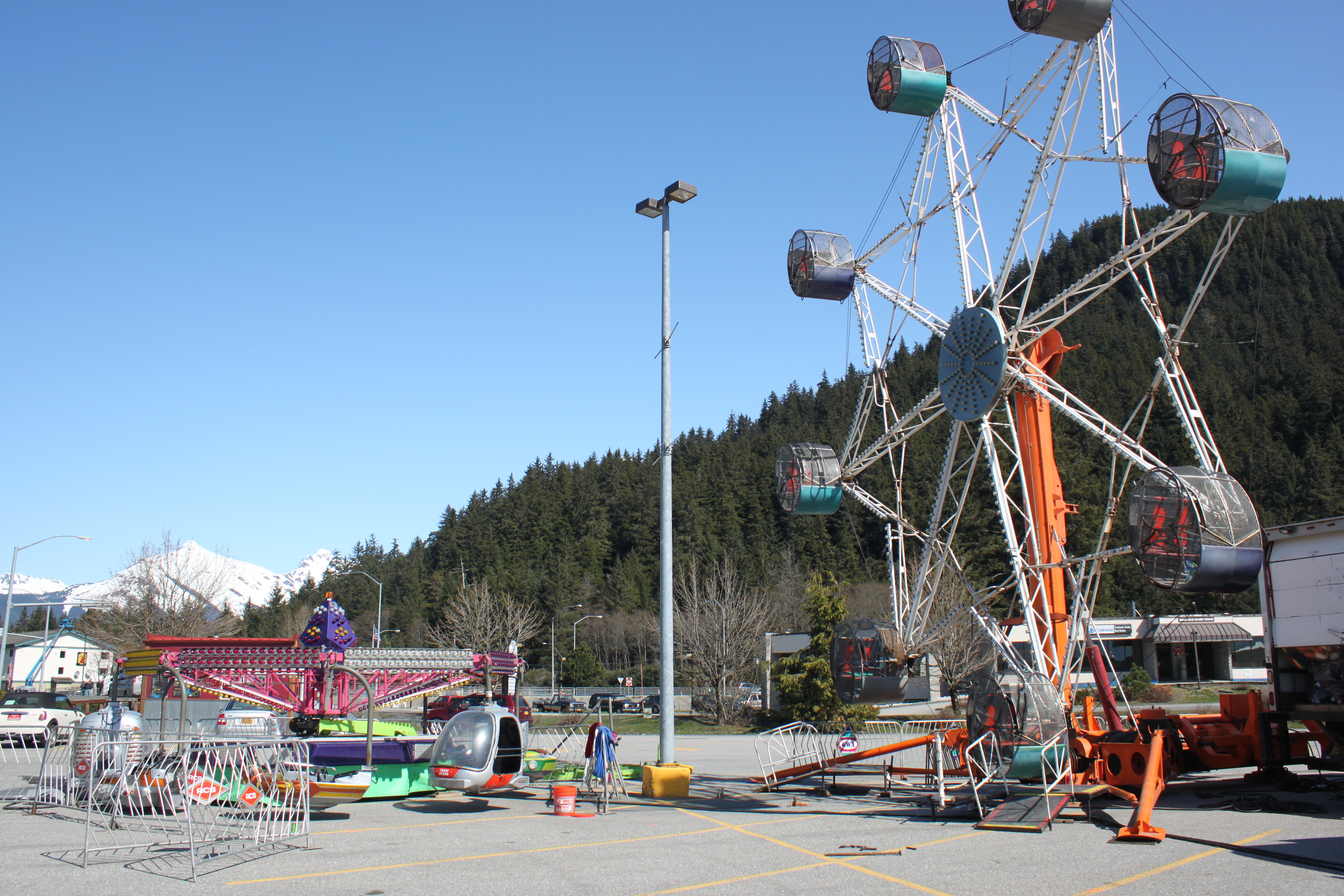
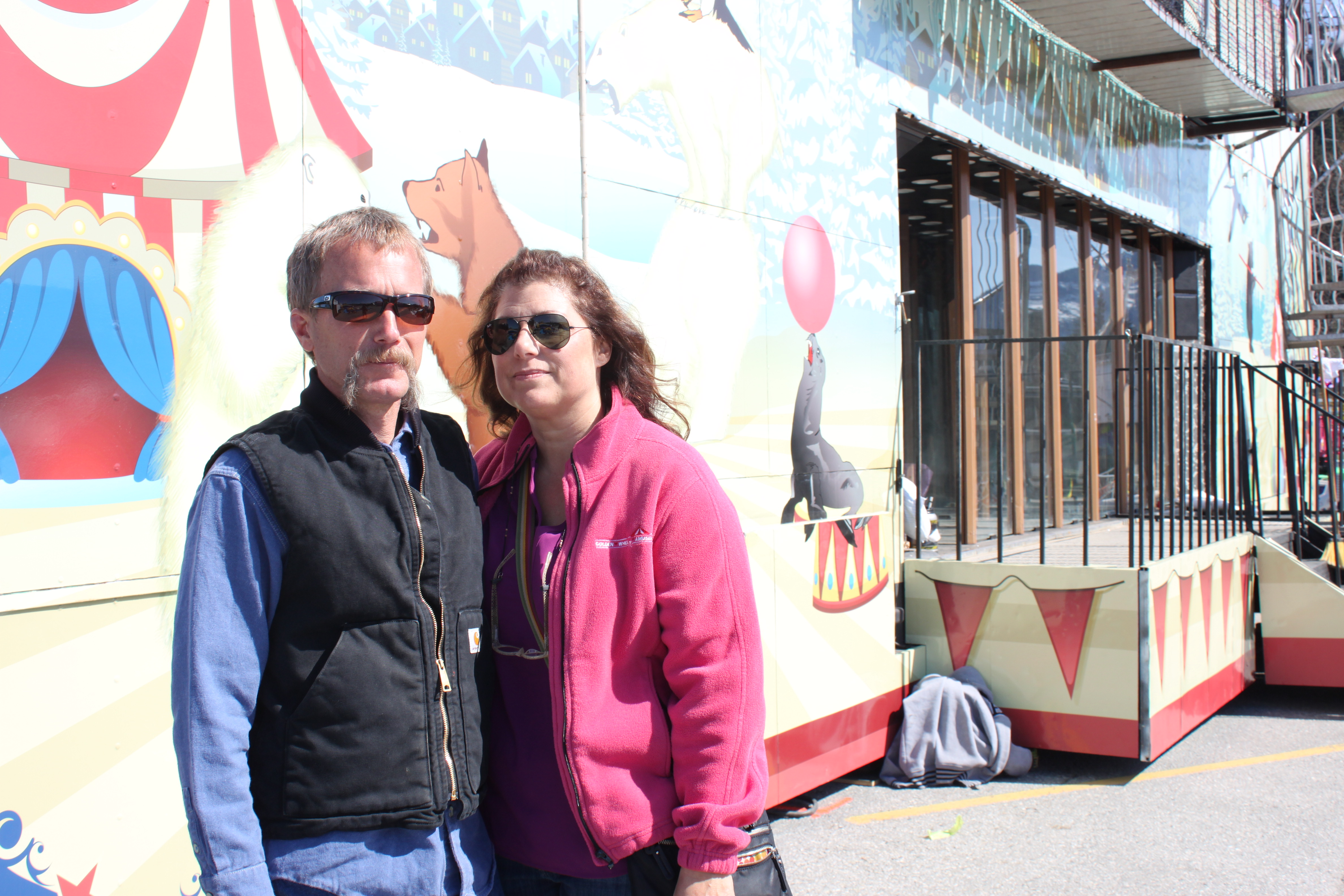
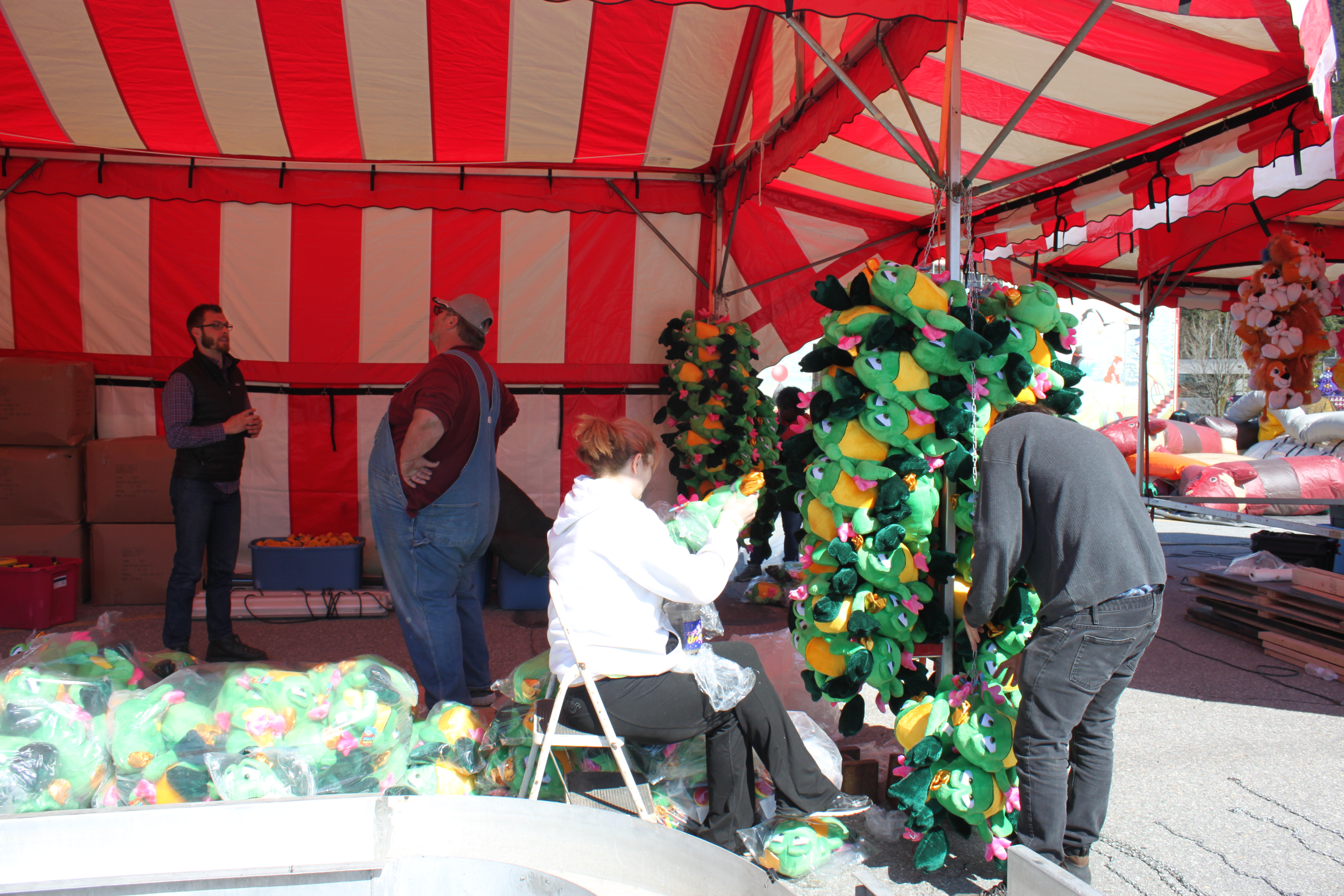
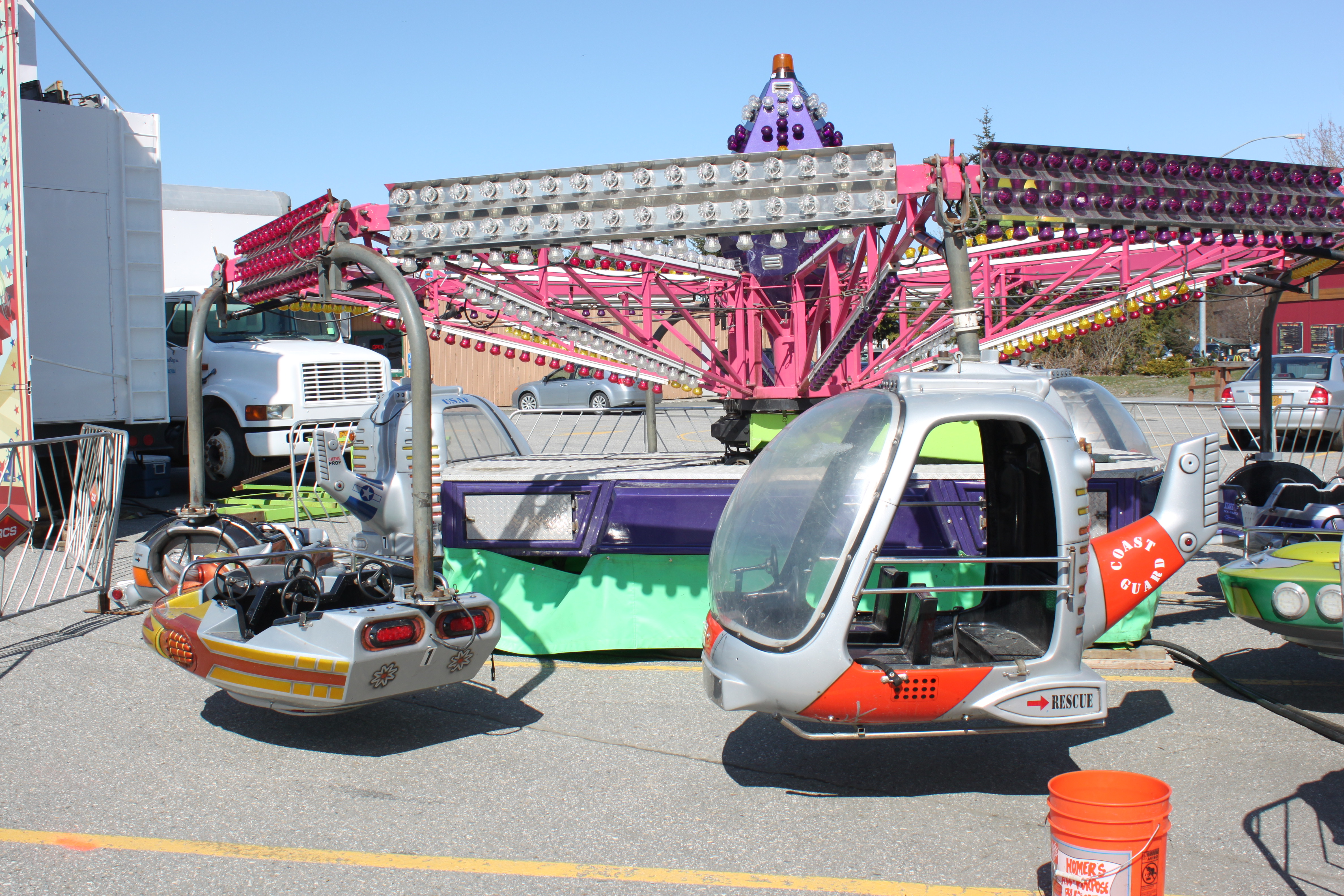
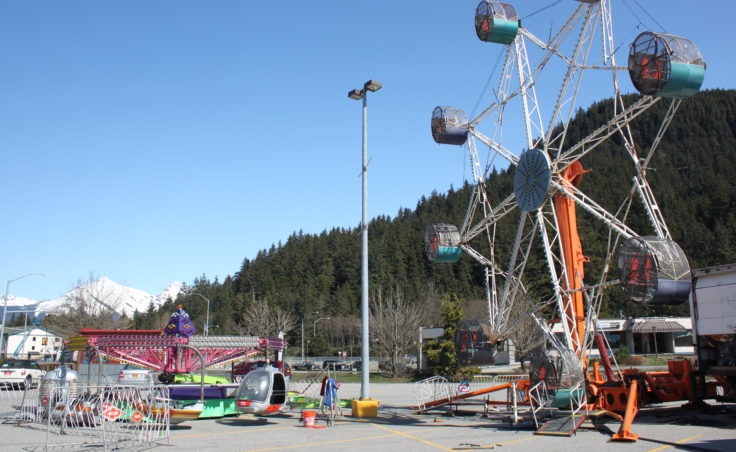
Golden Wheel Amusements brought all the carnival attractions from Chugiak by ferry. (Photo by Lisa Phu/KTOO)
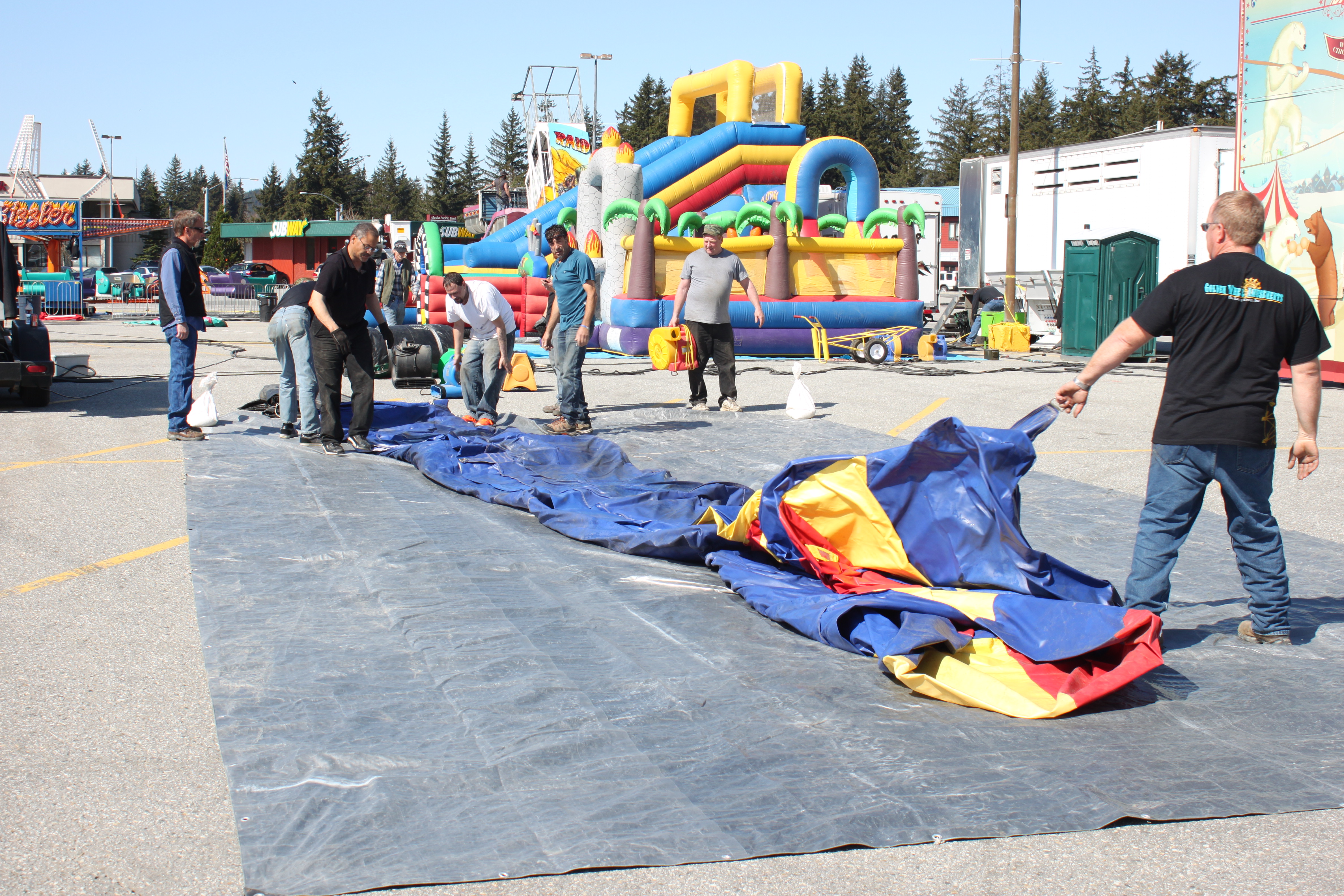
Carnival workers set up an inflatable, which are great for small children. (Photo by Lisa Phu/KTOO)
Golden Wheel Amusements owners Joe and Jacqueline Leavitt (Photo by Lisa Phu/KTOO)
The carnival arrived in Juneau April 29 and set up for opening day May 1. (Photo by Lisa Phu/KTOO)
Since 2000, Golden Wheel Amusements has purchased many new rides and attractions. (Photo by Lisa Phu/KTOO)
For the first time in years, the carnival is back in Juneau. It’s located outside the Nugget Mall and starts Thursday at 2 p.m.
Golden Wheel Amusements out of Chugiak begins its summer season early by bringing the carnival to Southeast Alaska.
Golden Wheel Amusements owner Jacqueline Leavitt expects long lines at the Zipper.
“It is definitely one of the teen favorites. It spins them around and if you’re not kind of used to that, it could get you sick,” Leavitt says laughing.
The Zipper gives a rider three ways to flip over.
“I love that the office is right next to it because people scream on that ride so hard and that is just music to my ears. I love listening to them just scream and scream,” Leavitt says.
The fair offers rides for big and small kids, games and food.
“Footlong corn dogs and funnel cake and cotton candy and candy and caramel apples,” Leavitt says.
Leavitt has been in the carnival business for most of her life. Her mother Claire Morton started Golden Wheel Amusements in 1967. The company’s first event was at Fur Rendezvous, Anchorage’s winter festival, which is still an annual gig for Golden Wheel. Leavitt and her husband started buying the company in 2000.
She says running a traveling carnival is a family affair that includes their three children.
“It’s kind of like ranching and farming. It’s great. You just come to work with your family and I think it’s a very good way to live,” Leavitt says.
It’s been 30 years since Golden Wheel Amusements brought a carnival to Juneau. Leavitt says it’s difficult to plan carnival dates around a ferry schedule. Plus it’s expensive to transport rides, equipment and 50 workers. She says traveling to Southeast by ferry with stops in Juneau, Sitka, and Ketchikan costs about $120,000.
“But we just felt like it was time to come to Southeast and that it was a good thing and that the public and the kids would just really enjoy it,” Leavitt says.
Leavitt’s son Chase Eckert says it’s a novel experience to be in a location that isn’t used to a carnival.
“We’ve had a constant parade of cars around the lot. Everyone’s stopping, taking pictures. Whole families, like vans full of people, come by and you can just see that they’re so excited. We haven’t been here since 1984 and these people don’t even know what a carnival looks like,” Eckert says.
Juneau gets two weekends to enjoy the carnival before it packs up and leaves on the ferry May 11.
The search for the Juneau School District’s new superintendent has begun. The job opening was posted nationally last week and candidates have until May 21 to apply.
Steve Rasmussen, who’s leading the search, collected input from the community last month and says community members want someone with a collaborative leadership style who puts students first.
“Someone that can built trust in the community. Someone that’s visible. Someone that can work with staff, can work with parents, can be and work with legislators, and work with civic leaders,” Rasmussen says.
Rasmussen expects between 30 and 50 applicants for the job.
The advertised salary is $162,000. The current superintendent’s salary is $155,000 a year. Rasmussen and the school board set the amount after comparing what other superintendents make in Alaska.
He says that figure is negotiable.
“It’s the amount that will attract people to take a look at it. We want quality applicants and it’s also compared with those of the lower 48 states, Rasmussen says.
Ray and Associates will present up to 12 candidates to the school board June 2. The board will pick semi-finalists and conduct in-person interviews June 7. Rasmussen anticipates a community meet and greet with the superintendent finalists June 8.
The cost of bringing candidates to Juneau for interviews is outside the search contract.
Superintendent Glenn Gelbrich is leaving the district at the end of June. He cited personal and private reasons when announcing his resignation in March. Gelbrich joined the Juneau school district in 2009.
Close
Update notification options
Subscribe to notifications
Subscribe
Get notifications about news related to the topics you care about. You can unsubscribe anytime.