Community

Club at homeless shelter builds a community of trust and dialogue

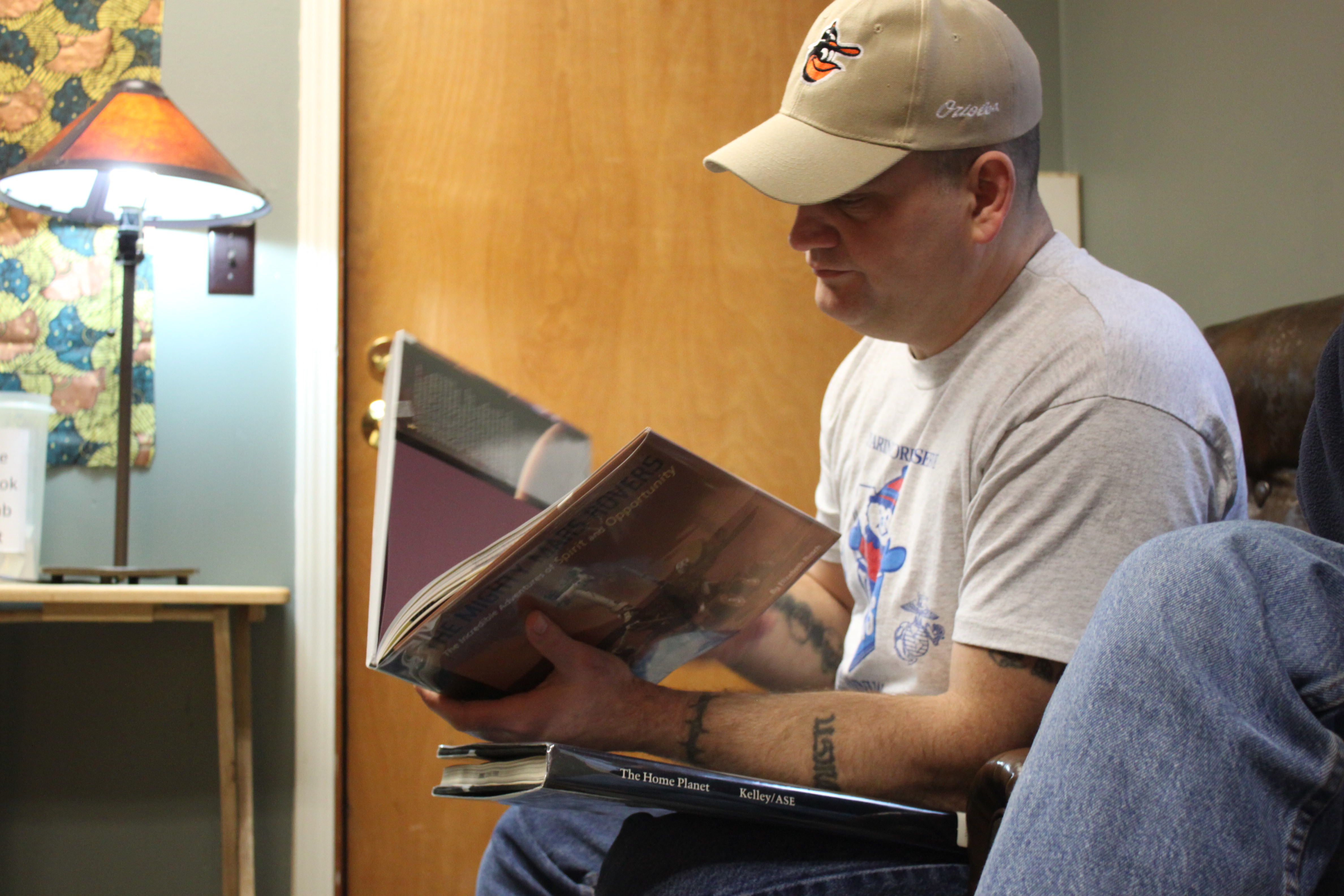
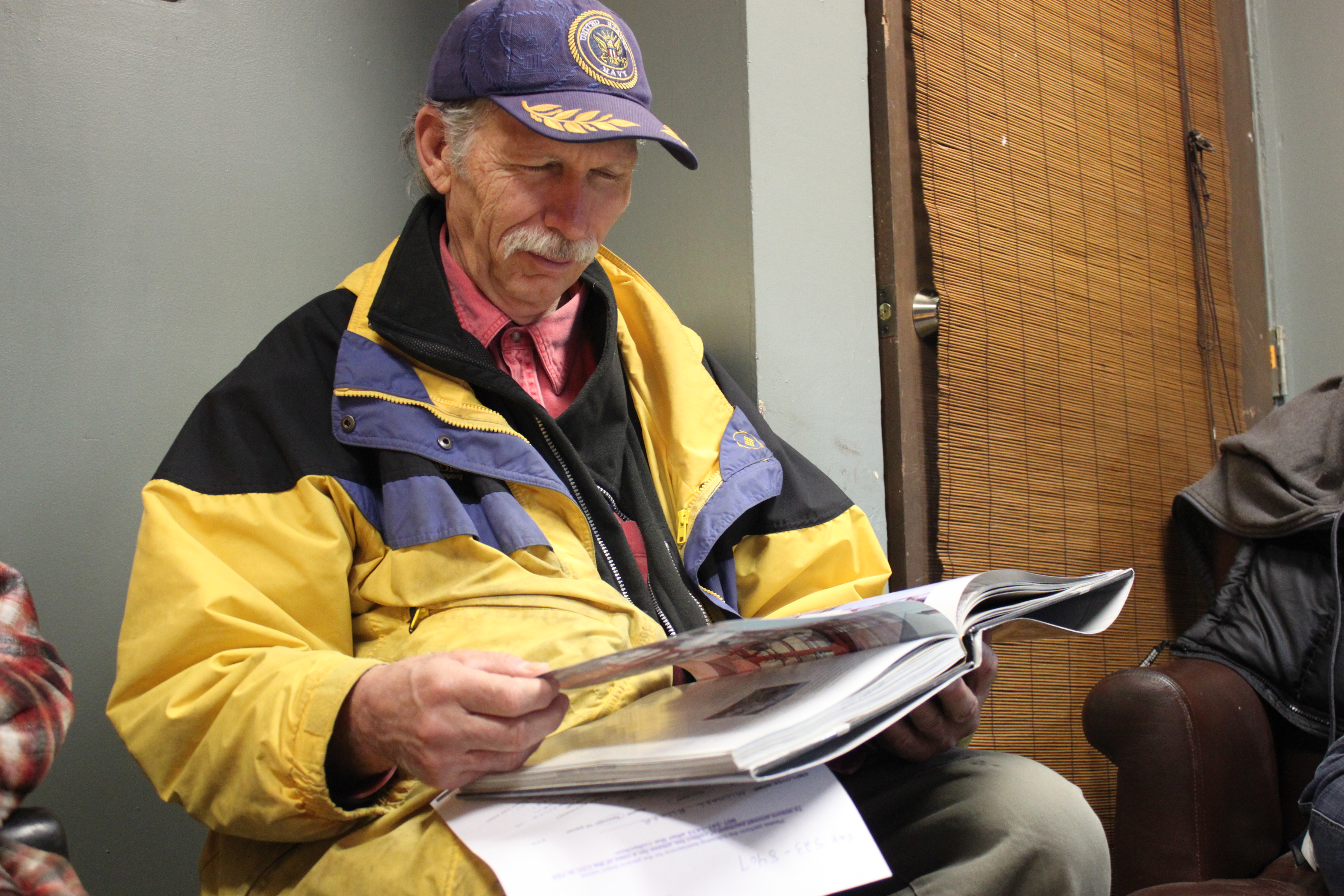
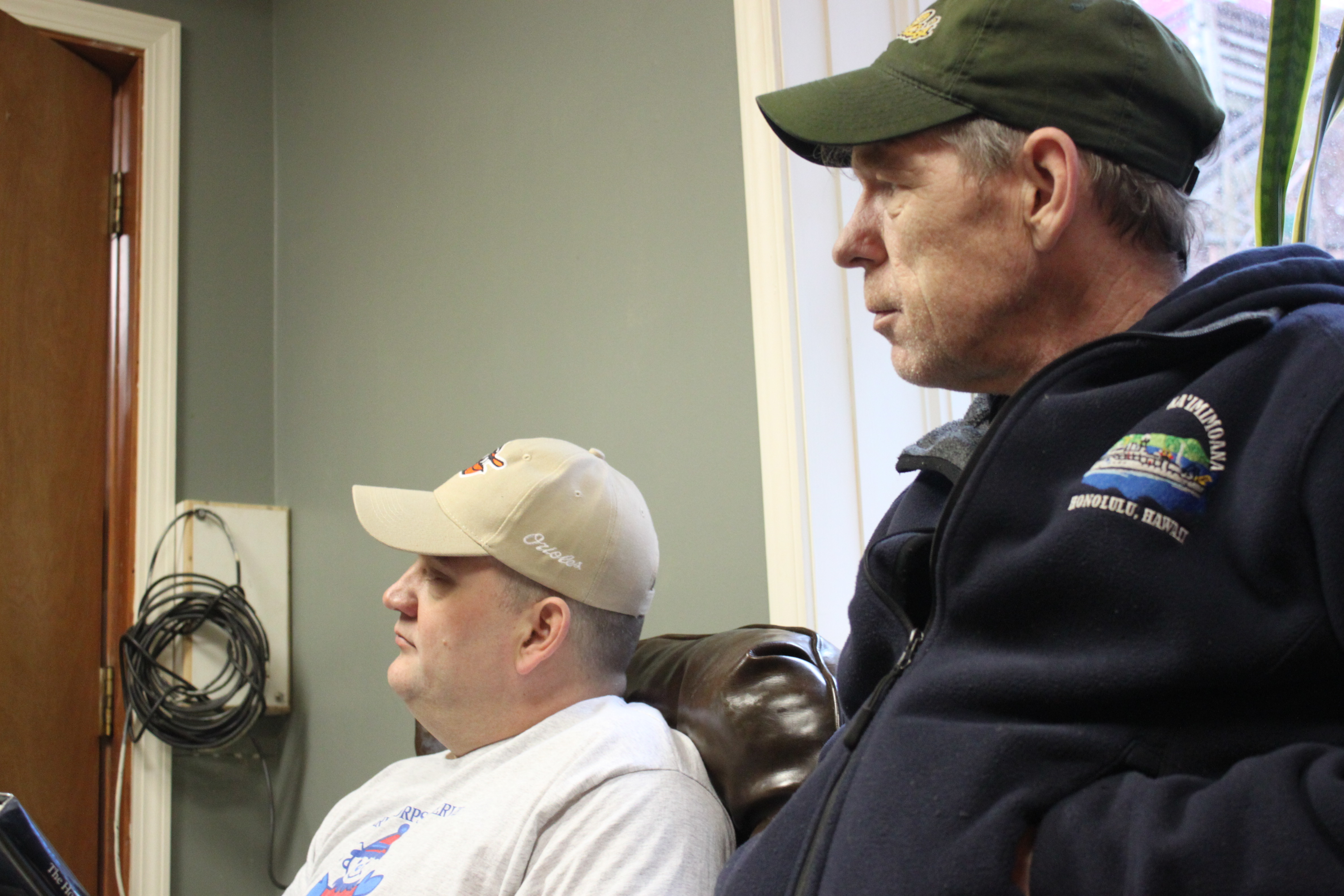
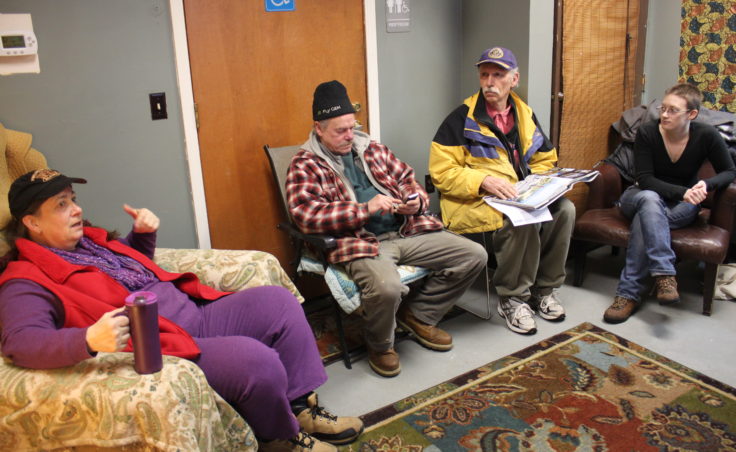
Several people at Juneau’s downtown shelter and soup kitchen The Glory Hole are part of a new club. Every Tuesday, they come together on the second floor of the facility to discuss a different topic. The club is helping to build a different kind of community within the homeless shelter, a community not based on need, but on the exchange of ideas.
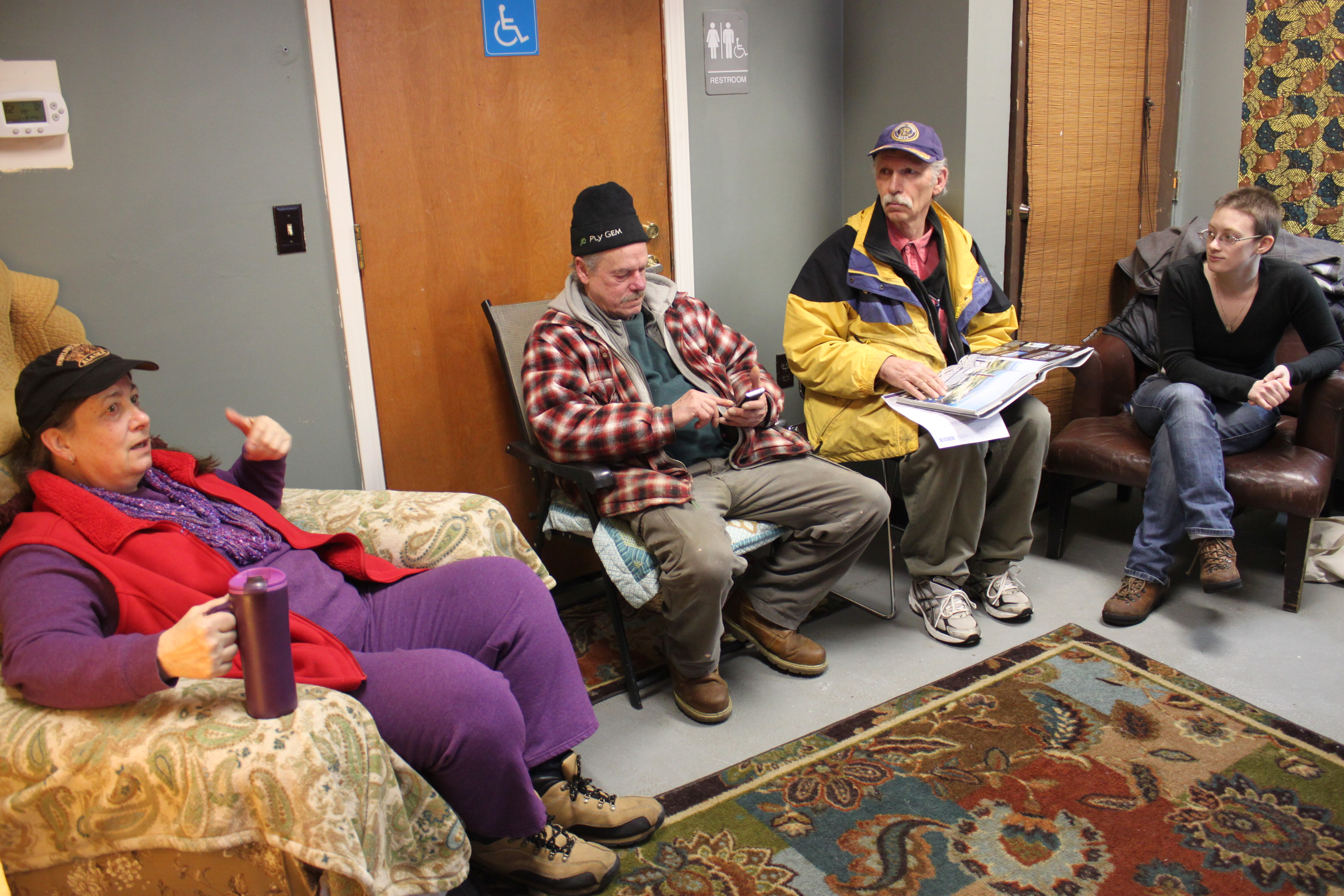
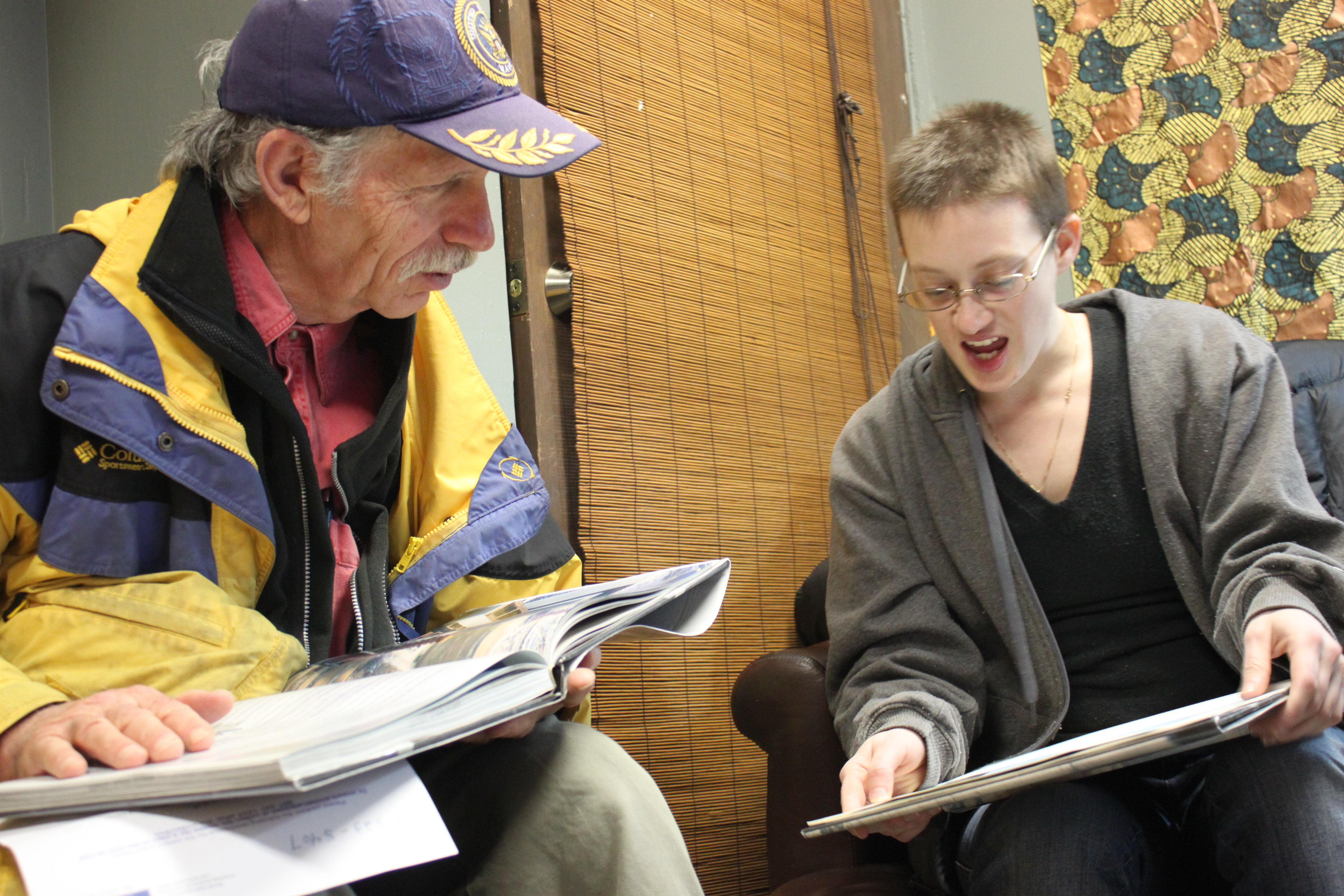
It’s called The Glory Hole Book Club, but it’s really more of a discussion group. Instead of everyone reading the same book, community outreach librarian Andrea Hirsh says there’s a theme that everyone comes prepared to talk about each week.

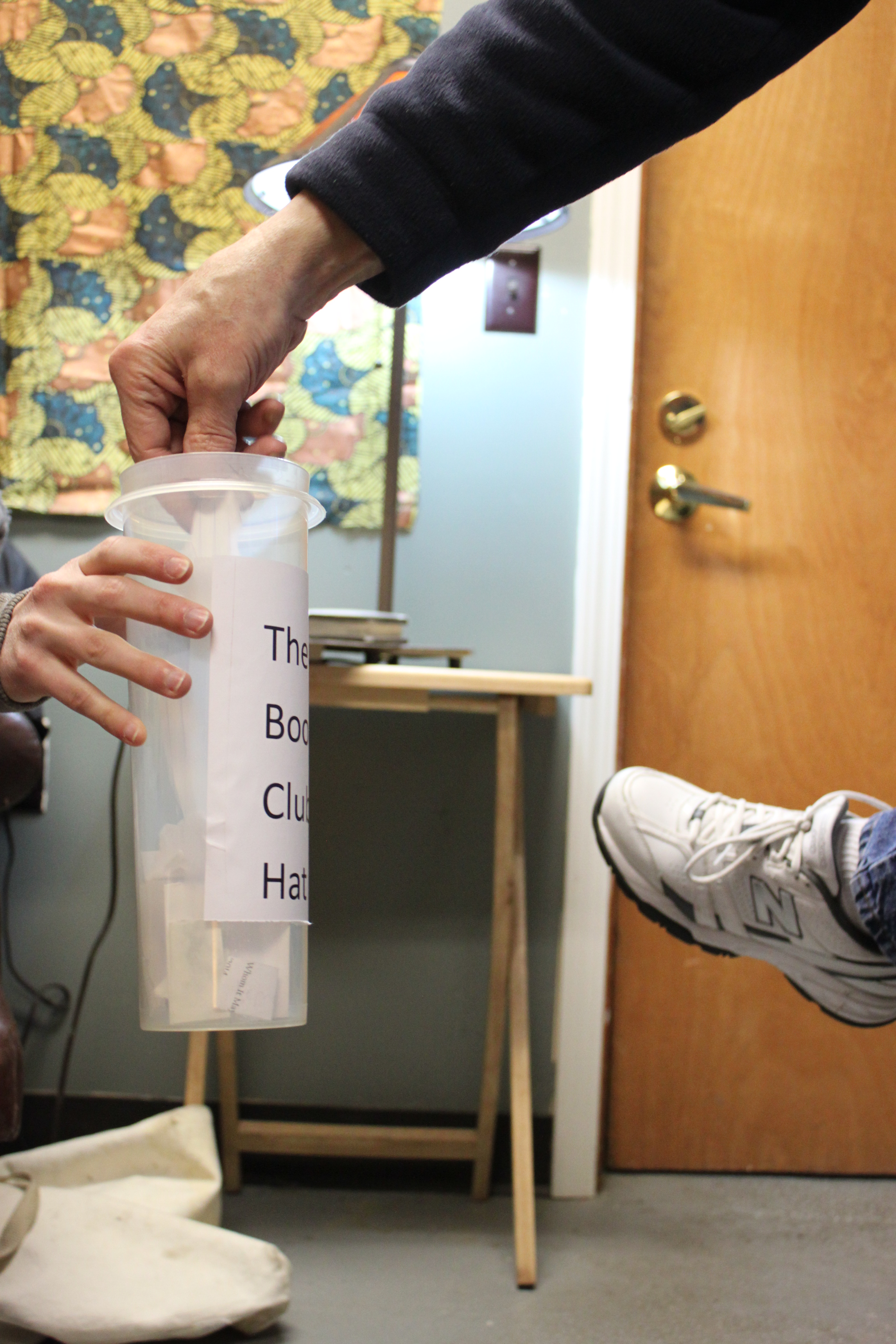
“The first day, everybody who was here wrote down five ideas of stuff that they thought would be so neat to talk about and we threw them in a hat, and then we pulled it out. And it works really well because it makes it open for anybody who wants to come,” Hirsh says.

Topics range from philosophy to fantasy. Hirsh says book club members can relate the topic to an article they may have read or a movie they watched. Oftentimes, group discussions stem from personal experience.

“We pulled, like, agriculture once and I thought, ‘That one is going to be terrible.’ But we talked a lot about animal husbandry and, like, growing crops, and most of the people here have worked in agricultural fields. It was a great topic,” Hirsh says.

Six people, who have come to this club session, sit in a circle of chairs. All eyes are on Hirsh as she holds up the book “Packing for Mars.”

She talks about a test performed on want-to-be astronauts:

“They have, like, eight candidates and they keep them all in one room and they’re monitored 24/7. They have no privacy and they can’t leave each other because they’re simulating, like, what’s going on in the international space station.”

The Glory Hole Book Club was a test as well when the shelter paired up with Juneau Public Libraries to try something new.

“I did not think that The Glory Hole Book Club would be a very successful activity but I think it’s really wonderful for people to have an opportunity to not think about the fact that they’re homeless and that they’re struggling and they need to get out of the situation,” says shelter director Mariya Lovishchuk.

Club member Sheila Higgins was a psychic for 25 years out of Fairbanks and Anchorage. She also spent some time working on the North Slope. When she moved to Juneau in 2012 for a different job, things didn’t work out. She’s lived at the Glory Hole for about a year.

Since the club started in January, Higgins has gone to every session. She says those that attend have become closer.

“I think we get to know each other on a different level. We don’t see ourselves as homeless people here. We just see each other as brother and sister.”

The book club also adds another dimension to The Gory Hole. Most of the action takes place in the day room on the first floor, where all the meals are served.

“That’s kind of their forum down there, the people who run the place. Up here it’s ours, OK? It’s ours. This is our club,” Higgins says.

Club members freely share their opinions and listen. After several weeks of this, Higgins says they’re grown to respect and support one another.

“Nobody’s here because they want to be, you know. We’d all rather be in our own homes living different lives, but as long as we’re here, we’re going do the best we can for each other,” she says.

For Kidd Perez, the book club is also just fun.

“It’s spontaneous for sure and it’s just a tight knit group. We all are acquainted well enough here to just let it go, let it ride. You can comment and say pretty much what you think. It gets kind of crazy sometimes, but that’s part of the fun,” Perez says.

Perez is an auto mechanic. He says he goes where the money is. With summer approaching, he has hopes of moving out of the shelter.

“Could be sometime this month, because the season’s coming around and that means more work for a lot of people this time of year, so we’ll see what happens,” Perez says.

But as long as Perez is at The Glory Hole though, he’ll continue going to the club.

As the session on the space program wraps up, Hirsh holds out “The Book Club Hat.”

“Why don’t you pick out our topic for next week,” she says to club member Mark Trammell.

“Oh wow, psychology,” Trammell announces to the group.

Chatter and laughter break out among club members as they get up to leave, their minds already on next week’s club theme.


City sets deadline for cleanup of Gastineau Apartments

Gastineau Apartments
The Gastineau Apartments in downtown Juneau partially burned in November 2012. The city recently gave the owner until May 1 to install a temporary roof and clean up the garbage inside the building or face legal action. (Photo by Casey Kelly/KTOO)

The owner of a downtown Juneau apartment building that partially burned in 2012 has until May 1 to clean out the place and put up a temporary roof, or face legal action from the City and Borough of Juneau.

In a March 6 letter to Gastineau Apartments owner James Barrett, CBJ Building Official Charlie Ford said “the roof remains in such poor condition that water pours all the way down to the ground floor,” saturating drywall and garbage throughout the vacant complex. According to Ford’s letter, the city sent two previous notices to Barrett, requesting that he address multiple violations of the building code.

Deputy City Manager Rob Steedle says the city has had complaints about a bad smell coming from the building.

“A couple of people have mentioned that they find it objectionable,” Steedle said. “It hasn’t rained lately and it’s been relatively cold, so the odor is not as noticeable now as it has been in the past.”

Last November, about a year after the Gastineau Apartments burned, Barrett received a CBJ building permit to put up heat-shrinked plastic wrap in lieu of an actual roof.

Steedle says the building’s exterior shell is structurally sound. It’s the roof and trash inside the building that has the city concerned.

“If the building owner doesn’t accomplish the needed roof repairs to keep water from draining into the building when it rains, then we can expect that mold problems will persist, that the public will be complaining and we will go to court,” he said.

Steedle said City Attorney Amy Mead would have to decide the appropriate course of action.

The city has precedent for taking a property owner to court to force them to clean up their land. In 2012, the city initiated legal action against Ronald Hohman after several neighbors complained that his West Juneau home and property were a public nuisance. Steedle says the city completed the cleanup of Hohman’s property last year, after a contractor hired by the property owner failed to do the task by an agreed upon deadline.

Attempts to reach Barrett for this story were unsuccessful. Steedle says Barrett’s contact with city officials has been sporadic.

“We are waiting for the May 1 deadline to arrive and then we will attempt to contact him again,” Steedle said.

The Gastineau Apartments burned in early November 2012. An unattended candle was determined to be the probable cause. About 40 people lived in the building, many of them low-income residents.

Members of the Juneau Assembly asked Steedle and City Manager Kim Kiefer for an update on the apartment building’s status at a meeting last month.

Great Alaska Schools wants more of the state funding pie

The group Great Alaska Schools took to the steps of the Capitol on Friday to demand an increase in the state’s education funding formula. The students, parents and business owners at the rally even handed out slices of pie to lawmakers to symbolize their request for a larger cut of the budget.

Inside the building, the state House had planned to take up Gov. Sean Parnell’s omnibus education package, but debate on the floor was delayed.

Mary Hakala of Great Alaska Schools in Juneau said education funding in the state has not kept up with rising costs.

“Schools across the state are facing deep and devastating cuts,” Hakala said. “It’s impacting our kids, our own children, our neighbors, our schools, the state’s future.”

The group wants the legislature to increase the state’s base student allocation about $650 over the next three school years. That’s more than double the current proposal before lawmakers.

The BSA is the amount school districts across the state receive for each enrolled student. It’s been $5,680 per student for the past four years.

Juneau Douglas High School senior Ruby Steedle says flat funding is starting to take a toll.

“This year our college and career advisor was cut from full to half time. The counseling office almost lost another position, and next year we’re losing 20 teachers across the district,” Steedle said, as the crowd booed the cuts. “That means that we have fewer teachers to reach the same number of students, meaning more students will start slipping through the cracks.”

The governor’s omnibus education bill is expected to be heard on the House floor on Monday.

The last run: Remembering Bob Janes & Ron Dippold

Bob Janes and Marina Rae Caparas, a Certified Nurse Aide at the Juneau Pioneers’ Home, during the 25th anniversary party for the home on Nov. 16, 2013. (Photo courtesy of Dick Isett).

Longtime Juneau resident Robert C. Janes, well-known for his love of skiing and the mountains, has died at the age of 92.

Always known as Bob, he passed away on March 21 at the Juneau Pioneers’ Home.

Janes came to Alaska in 1965 with the U.S. Forest Service, in what he thought would be another three-year stint with the agency. Instead, he chose to stay in Juneau and raise his family, all of whom still call the capital city their home.

His family writes in his obituary that Janes grew up on the beaches of California, but embraced the forests and snow of the mountains. When he came to Juneau, he worked to maintain  the 3rd Cabin rope tow and the snowcat  “Oola,” access to the Douglas Ski Bowl.  Janes was then deeply involved in the siting and planning of Eaglecrest, Juneau’s city-owned ski area.

He was a member and historian for the Juneau Ski Club, which supports and promotes ski racing. For decades he was a member of the Juneau Ski Patrol.

It’s only fitting, says son Bill Janes, that his father and another longtime ski patrol member Ron Dippold, who died in January, will be remembered by the Eaglecrest Ski Patrol on April 13, the last day of the season.

“They’re going to pull two empty sleds down, the symbolic last run.  It definitely has to recognize both of them, because they were such institutions with the Juneau Ski Patrol,” Bill Janes says.

He says the ceremonial run will be open to all skiers who want to remember Bob Janes and Ron Dippold.  It will begin at 3 p.m. at the top of Easy Bowl.

Bob Janes will be remembered in a celebration of life on April 20 at 5:30 p.m. at the Juneau Arts and Culture Center.

Christy NaMee Eriksen braids words and music to effect change

Christy NaMee Eriksen (Photo by Daniel Kantak)
(Photo by Daniel Kantak)

Christy NaMee Eriksen may be best known in the Juneau arts community as an organizer of the Woosh Kinaadeiyi open mic and poetry slam. She also teaches poetry and spoken word, or performance poetry, in Juneau schools and community organizations. Eriksen identifies as a writer, multidisciplinary artist, and community activist, and recently combined these passions to produce a CD called “How to tell if a Korean Woman Loves You.” Eriksen is throwing a release party tonight, Friday, which will include live music and performance. KTOO’s Scott Burton spoke with Eriksen to learn about the motivation for her art and the project.


Weigh in on Juneau’s economic future tonight

Jim Calvin of the McDowell Groups says this is the first of many opportunities the community will have to weigh in on Juneau's economic development plan. (Photo by Lisa Phu/KTOO)
Jim Calvin of the McDowell Groups says this is the first of many opportunities the community will have to weigh in on Juneau’s economic development plan. (Photo by Lisa Phu/KTOO)

As the McDowell Group and Sheinberg Associates begin to map out Juneau’s economic future, community engagement is a critical component.

Besides conducting telephone, online and business surveys, the research firms invite the community to an economic plan town hall meeting 7 p.m. Thursday at Centennial Hall.

Jim Calvin of the McDowell group says economic development means many things.

“It certainly is infrastructure development. It’s also business retention, business expansion, business recruitment. It’s labor force development. It’s developing access to capital. It’s–you name it. It’s a broad thing and we want to leave it broad now. We want people to be thinking very big picture, very creatively about what opportunities they might see,” Calvin says.

Besides presenting information on the current state of Juneau’s economy, Barbara Sheinberg says the town hall meeting will feature an interactive poll and participants will see instantaneous results.

“We’ll ask people some question about some of the data just to see how many small businesses do they think there are in Juneau and what do they think is happening with wages here. But also then really ask some bigger picture questions about the economy and where they want to go. And people actually can text, or tweet or go online,” Sheinberg says.

The Juneau Assembly set aside $100,000 for an economic development plan, which is scheduled for completion in December.

Tonight’s economic plan town hall meeting starts at 7 p.m. at Centennial Hall. Bring a mobile device or laptop computer to participate.

Site notifications
Update notification options
Subscribe to notifications