Community

When the earthquake struck, Bob Allen took care of what he could

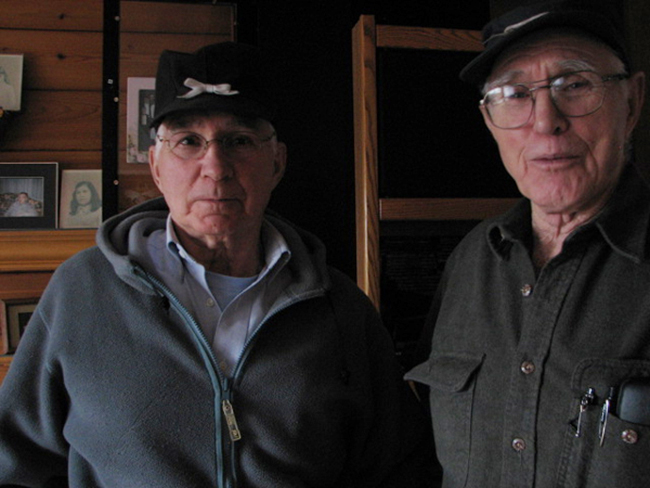
Bob Allen (right) was on a fishing boat south of Kodak Island during Alaska’s 1964 earthquake. While Allen’s brother Jack (left) was a State Trooper in Anchorage. (Photo by Emily Forman/KCAW)

Today marks the 50th anniversary of Alaska’s Good Friday Earthquake – the largest recorded in North America. Many Sitkans have stories from the epicenter.

Bob Allen is known around Southeast now for his family shipbuilding and cruise business, Allen Marine. But five decades ago, he was fishing south of Kodiak Island far from his family when disaster struck. Allen says when you can’t take care of your own, you take care of what you can.

Bob Allen was over 100 miles from home when a magnitude 9.2 earthquake rocked his boat. Of all days, this would be a tough one to be separated from his wife and kids.

Betty and the kids were in Kodiak. And I was on a 104 foot fishing boat. It was about 5 o’clock. Beautiful day. Flat calm, absolutely mirror calm. And the boat just started vibrating. It was just like a giant had a hold of that boat and it was just shaking it just – rattle rattle shake shake shake – terrible vibration.

The violent jostling had damaged the radio. All they could do was listen. Allen could hear what was happening in Kodiak and the report wasn’t good.

How you doing? And he says oh I’m doing OK! He said well where you at? And he says I’m sitting in the schoolyard.

That is, floating over the schoolyard in an 80 foot barge. Just as devastating, but even more deadly than the earthquake itself, was the tsunami that followed.

The schoolyard in Kodiak was pretty far up above the waterline you knew that that town had been underwater by 10 or 15, 20 feet by then.

Bob knew his home wasn’t flooded because it was on a hill above the schoolyard. But, he couldn’t be sure that his house hadn’t collapsed on his family. And the tsunami waves made it too risky to go home.

We were kind of pinned. We couldn’t do anything. When you reach a point where there’s nothing you can do to take care of your own family you just say OK I’ll take care of what I can and somebody else is going to look after mine, I hope.

That night, over the radio, Allen’s crew learned that the village of Kaguyak had been wiped out. It was only eight miles away. Come morning they set out to help.

They were all on the beach. They were right at the head of the bay right where the old village had been. They had no food, they had no blankets, all they had was that one little radio.And we brought out 46 adults and probably 15 children and one body. They were really in shock they really couldn’t think for themselves you’d take them to the table and set them down with a plate in front of them – hotcakes and sugar syrup. We had a big can of sugar syrup going all the time. We left there and headed for Old Harbor because they were wiped out too. And we’re going through hundreds of empty oil barrels, overturned boats, broke-up houses, deep freezers, refrigerators – anything that could float.

By the time they left Old Harbor, they had 96 adults and 35 kids on board. The plan was to transport the survivors to the Kodiak Naval base. Many had taken a few valued possessions along with them. And when they pulled into shore…

It was just like tying up in a river. The tide is still every 25-30 minutes is going from full high to full low.

They were asked to leave these items on the dock while they boarded the buses. When the buses pulled away the water seeped through the dock and Allen said, “everything they had saved floated away.”

At 2:30 a.m. on Sunday, 33 hours since the start of the quake, Allen finally made it home. An armed guard escorted Bob.

That was the worst part of the whole thing for me was coming home and finding my family gone. All there is is a note on the table from Betty saying that they went to Chiniak. 12 people had drowned on those roads because they had got caught on the head of the bay and that tide washed right up in there and drowned them. So I’m panic stricken!

12 frantic hours later Bob finally gets a call that his wife and kids had been evacuated to Chiniak by plane, and were safe.

Allen: After that I got off the boat I quit fishing and went to work construction.
EF: Did you quit because of this experience?
Allen: Well, there were no canneries left, no place left to sell crab anyway.

When you’re growing up in Alaska its kind of a walking disaster area anyway. Everything always gets rebuilt. Its no problem. I don’t think you’re standing up there or waving a flag or anything. There ain’t a lot of glory in this world.
Juneau ranked healthiest community in Alaska, again

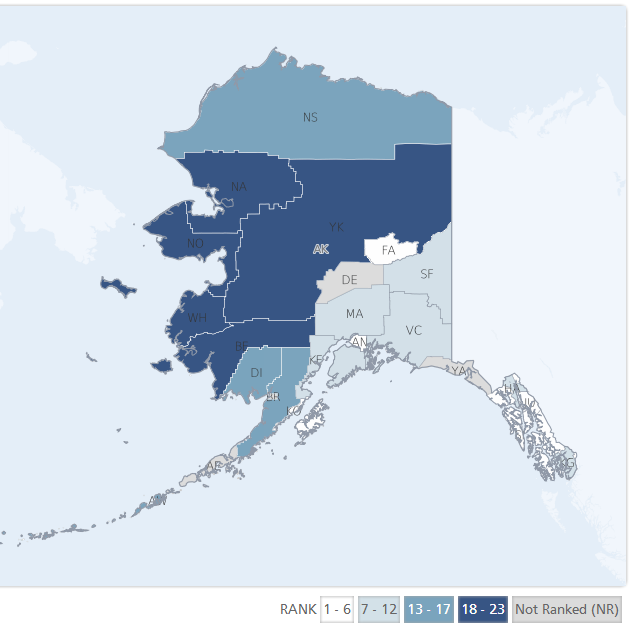
A map ranking the health of the 27 communities in Alaska. (County Health Rankings)
A map ranking the health of the 27 communities in Alaska. (County Health Rankings & Roadmaps)

Juneau is the healthiest community in Alaska, according to a study conducted by the University of Wisconsin.

The fifth annual County Health Rankings & Roadmaps ranks communities based on 31 different metrics, including obesity, health insurance, pollution, longevity and quality of life. It was published last week.

Within Alaska, Juneau ranked healthiest overall. The study broke the state down into 27 communities. The borough excelled in healthy behavior and clinical care. For example, only 18 percent of Juneau adults smoke compared to 36 percent in the Wade Hampton Census Area, the lowest ranked community in Alaska. Juneau was in the nation’s top 10 percent for multiple categories such as access to exercise opportunities, ratio of health care providers and college education.

Juneau ranked third for longevity in Alaska, behind the Fairbanks North Star Borough and Southeast Fairbanks Census Area. Juneau’s quality of life was ranked eighth.

“And so what we hope is that the rankings are a call to action for communities—that they start a conversation about what’s happening within each individual community, what’s going well and what are some challenges,” says Kate Konkle, an associate researcher at the University of Wisconsin Population Health Institute. The institute conducted the study with support from the Robert Wood Johnson Foundation.

Sitka is a finalist for the Robert Wood Johnson Foundation Roadmaps to Health Prize, given to communities developing creative strategies for improving the health of its citizens. In response to a previous year’s data, Sitka created a “food hub” to encourage healthy eating, increase food security and improve access to local produce. Sitka ranked second in Alaska.

The National Council on Alcoholism and Drug Dependence has also ranked Juneau the healthiest community in Alaska.

City wants citizen input on cell tower master plan

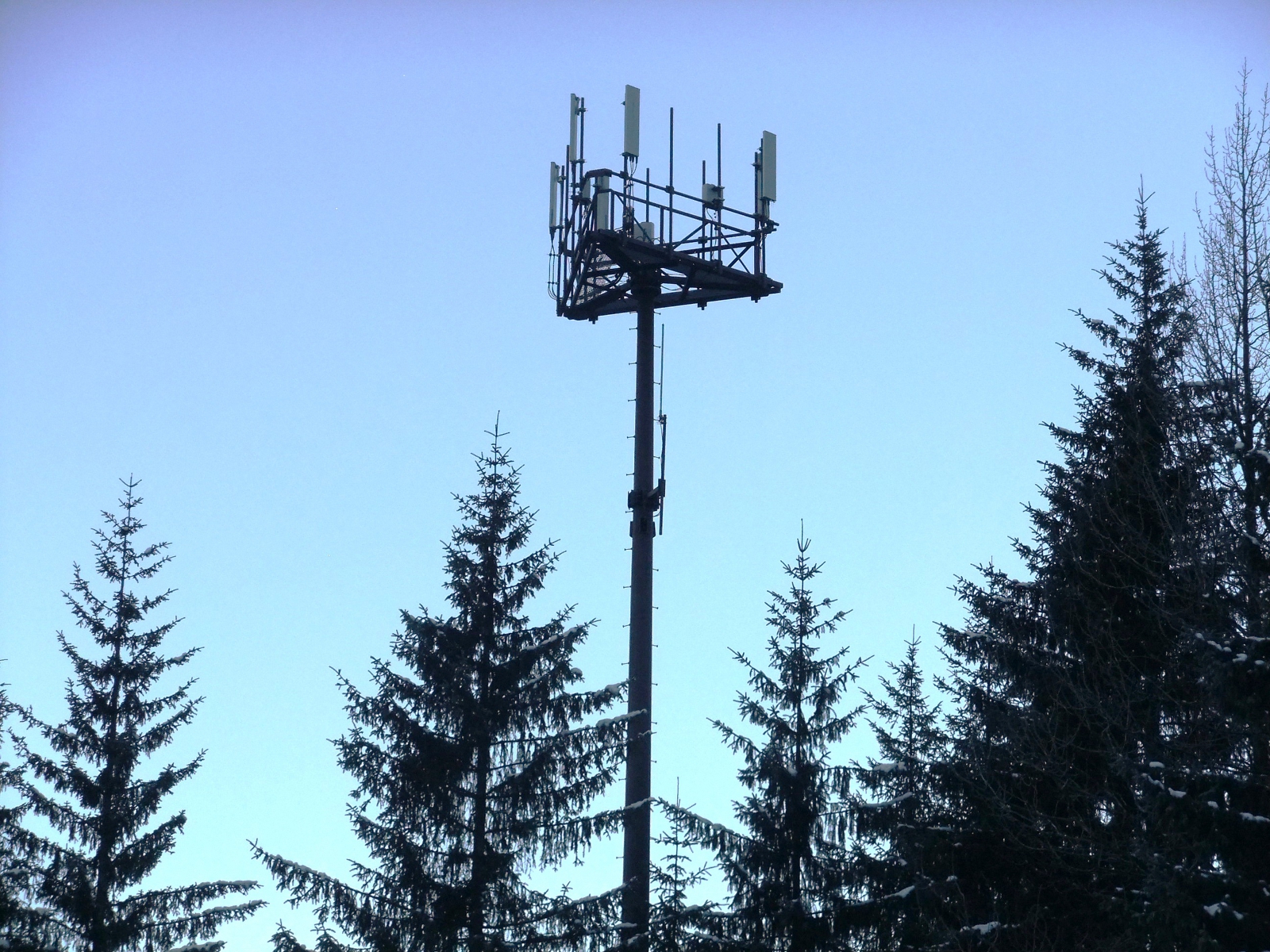
Wireless communication tower in the Mendenhall Valley. (Photo by Rosemarie Alexander/KTOO)

Only 12 Juneau residents showed up for the first neighborhood meeting Thursday night on the CBJ wireless tower master plan. Many of them have been intimately involved in the issue for years.

The city and borough’s Community Development Department has two months to finish the policies that will guide cell tower regulations. That’s when a moratorium on tower permits will expire.

After lots of citizen angst over towers in certain neighborhoods, city officials have said they want to hear from the public.

The process includes a survey that asks for the most to least-preferred tower design, including type of tower, co-location, camouflage and screening, lights, and other ways to harmonize towers within neighborhoods.

Take for example, co-location. City planner Eric Feldt says the city master plan and ordinance will encourage companies to locate their antennas on existing towers.

“So you could have AT&T, Verizon and ACS, instead of a tower for AT&T, a tower for Verizon and a tower for ACS in one location,” Feldt says.

Collocation does have some drawbacks, says Planning Manager Travis Goddard. It requires a certain distance between the antennas so towers are taller.

“Say a 140-foot tower could have an antenna array at 140 feet, 130 feet,  120 feet, 110 feet. So it depends on the type of antenna and the type of structure,” Goddard explains. “If it is the roof of a building, say the federal building, you could have two antennas right next to each other and they won’t change the height of the building.”

The tallest wireless tower in Juneau is 300 feet on North Douglas Highway.

Goddard says the surveys and comments from last night’s meeting will be synthesized and sent to the Planning Commission and Assembly, which will hold several work sessions and public hearings on the master plan and ordinance.

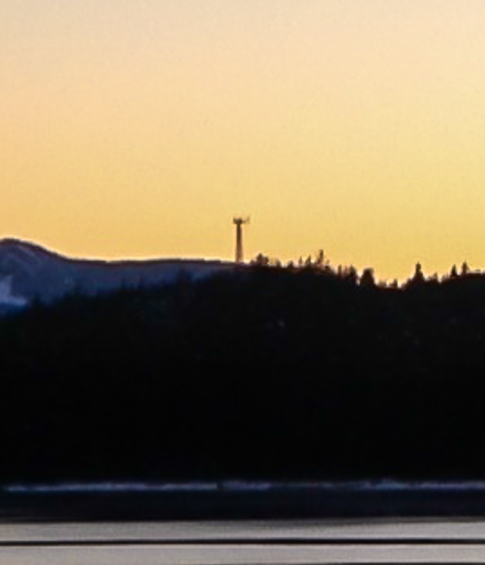
The Spuhn Island cell tower has a constant flashing red light at night and a white strobe during the day. (Photo courtesy Jon Lyman)

North Douglas resident Doug Mertz has been battling the 150-foot Spuhn Island cell tower for more than a year.

Like many residents who see the flashing lights every few seconds, 24-hours a day, Mertz feels they haven’t been heard.  So he’s glad for the survey process, which he calls awkward, but necessary.

“Democracy is messy. The only thing I could ask for in the whole process that would be better is a more open attitude by the city manager’s office. So far, every time we’ve interacted with them on cell tower issues, we’ve gotten animosity and negativism,” he said.

But Mertz says CBJ Community  Development is working hard to reconcile citizens’ various concerns on cell towers.

Patricia Wherry says she’s affected by any tower that goes up in Juneau, no matter where it’s located. She was disappointed so few people came to the meeting. She says she likes the process city planners are using for citizen input.

“I like that they’re trying to explain to us the specifics.  They’re asking us for a gradated opinion. They’re here to answer questions. They’re doing a good job of that; they’re trying,” Wherry says.

 CBJ community planners will hold another neighborhood meeting on March 27th at the University of Alaska Southeast.  Later today (Friday), Goddard says, the survey will be on the city website.

Front Street Community Health Center to serve all

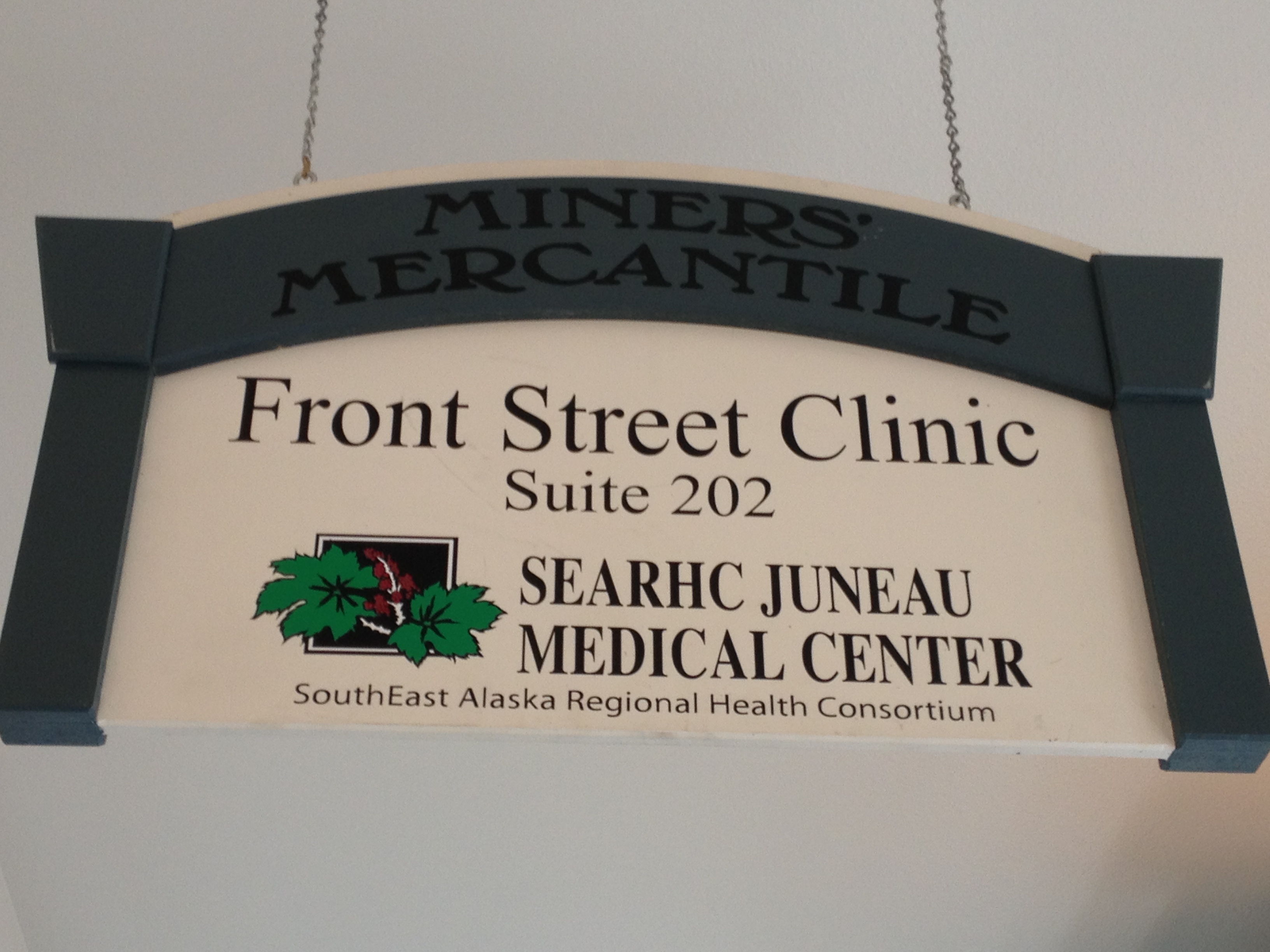
As of May 1, SEARHC will not longer be operating Front Street Clinic. (Photo by Lisa Phu/KTOO)

Front Street Clinic will soon be open to everyone, instead of just serving individuals experiencing homelessness.

The medical, dental and mental health provider will also be renamed the Front Street Community Health Center on May 1.

Mariya Lovishchuk is president of the board taking over management of the clinic.

“If you don’t have insurance, you definitely are eligible to receive services at Front Street on a sliding fee scale. If you have insurance, you should also go to Front Street because the idea is that if we serve people of all sorts of insurances, then those who have insurance can actually support those without insurance somewhat,” Lovishchuk says.

If you’re not a current patient of Front Street Clinic, but are interested in becoming one after April 30, email frontstreethealthcenter@gmail.com.

Southeast Alaska Regional Health Consortium currently manages Front Street Clinic, but decided last September to cut funding due to budgetary constraints. The community raised more than $120,000 to keep the clinic open until the April 30 transition.

Lovishchuk is relieved her patrons still have a place to go for health care needs; she’s also executive director of the downtown shelter and soup kitchen The Glory Hole.

“It’s really nice to say, ‘OK, let me just walk you over three blocks,’ as opposed to saying, ‘Oh yeah, go to the hospital and get a $850 bill for, you know, five minutes of being seen for whatever is wrong with you,’” Lovishchuk says.

Lovishchuk says making Front Street available to everyone is a positive addition to the community. She’s already planning to have her next physical there.

What Alaska Natives need to know about the Affordable Care Act

For most Americans, the deadline to sign up for health insurance under the Affordable Care Act is March 31. For American Indians and Alaska Natives, the process is a little different.

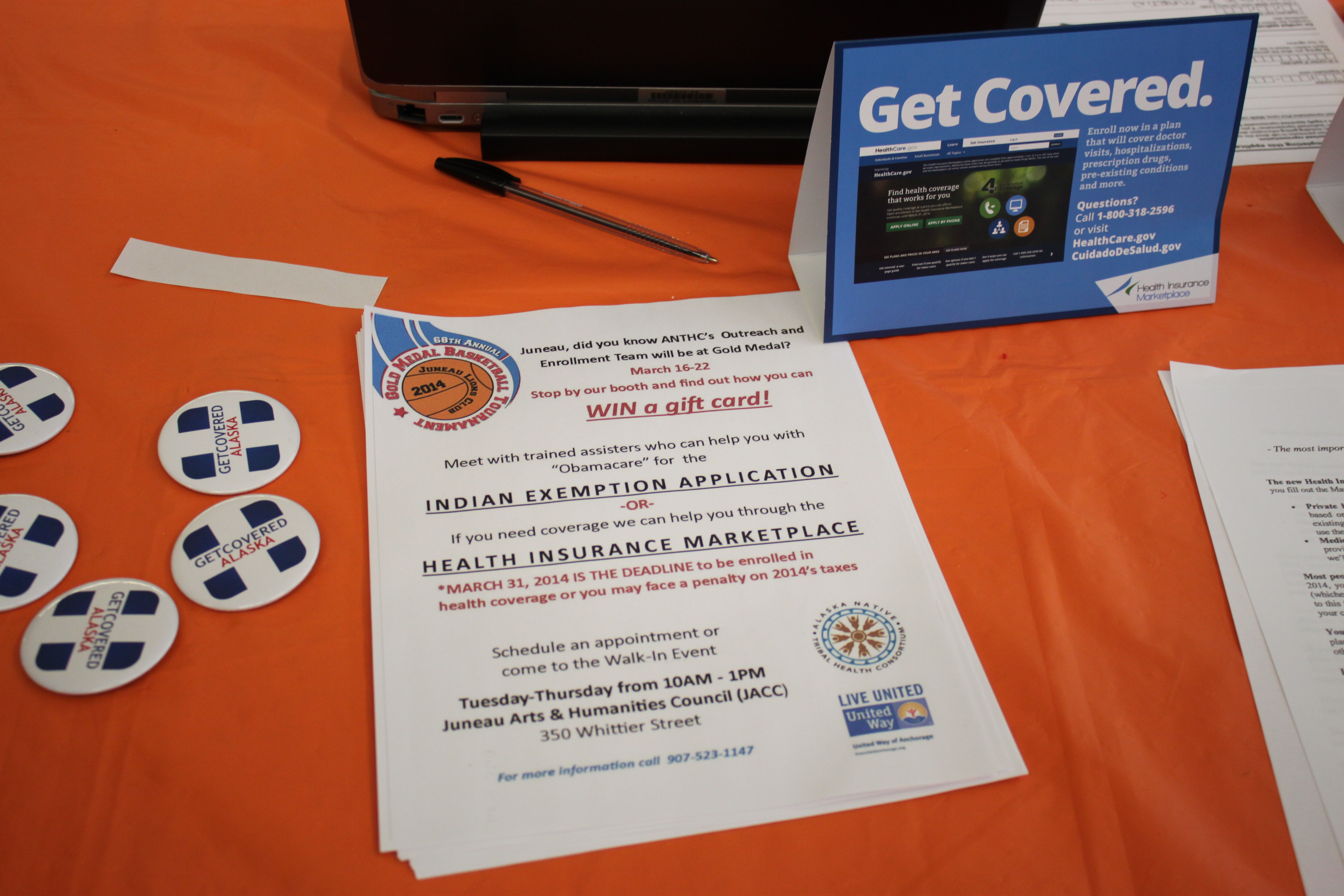
Alaska Native Tribal Health Consortium, United Way, and the Southeast Alaska Regional Health Consortium have teamed up at Juneau’s Gold Medal Basketball Tournament to inform as many Alaska Natives as possible.

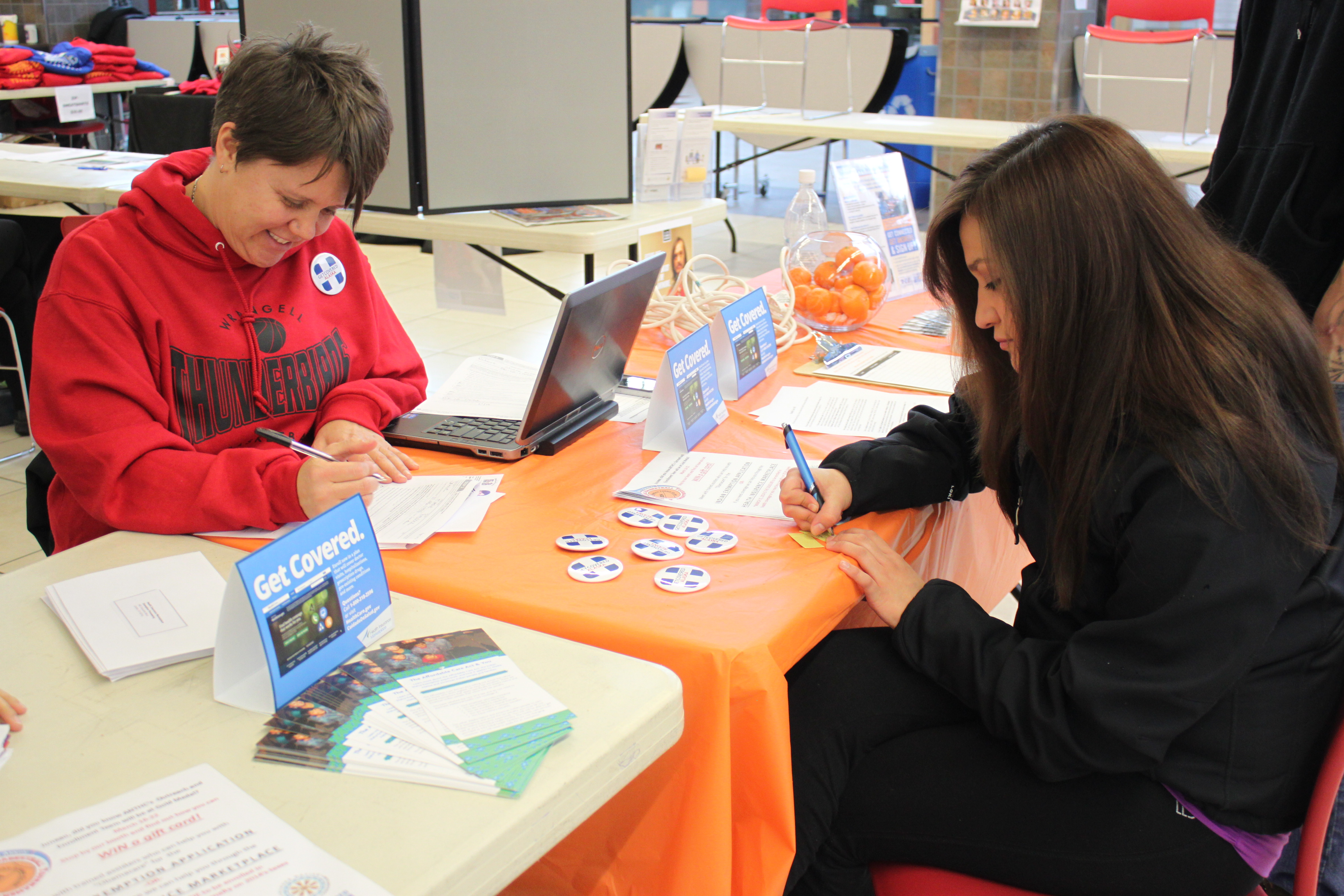
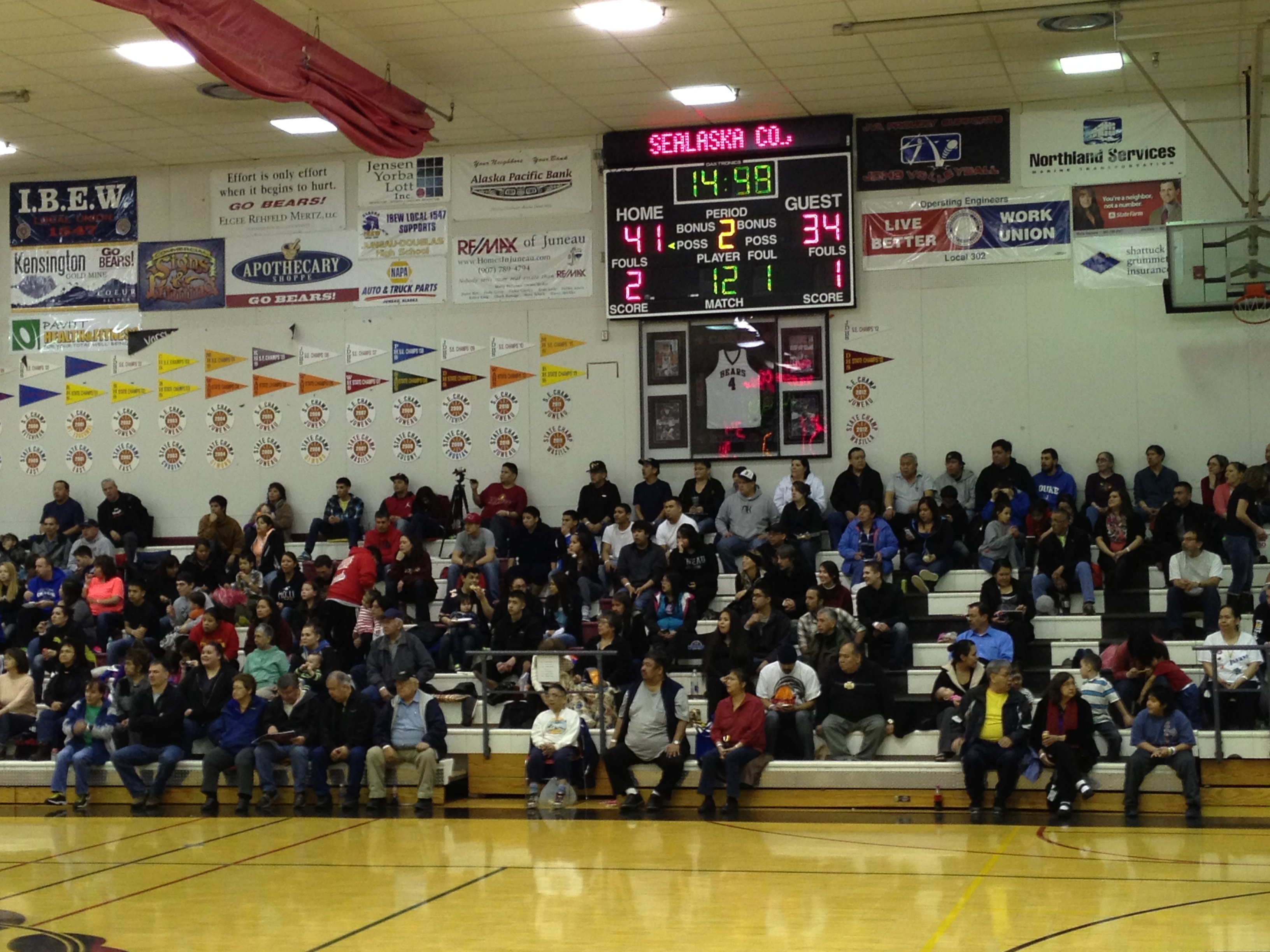
Jamie Paddock traveled from Hoonah to cheer on her hometown team. Attending Gold Medal is an annual tradition.

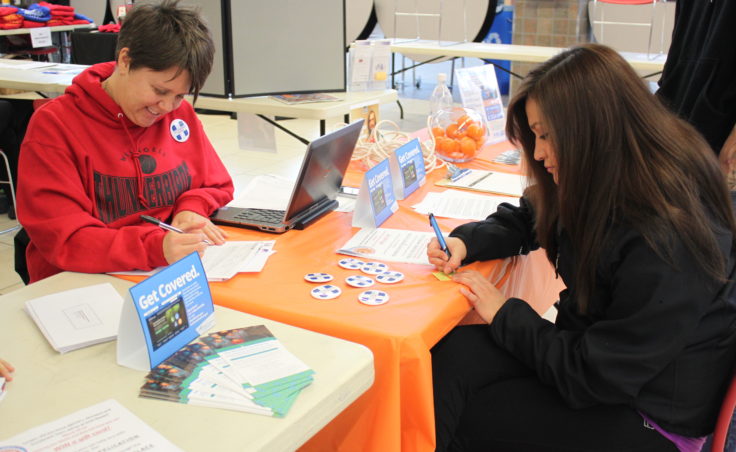
In between games, she visits a health care information table.

“My grandfather told me I might win a gift card if I sign up here,” Paddock says.

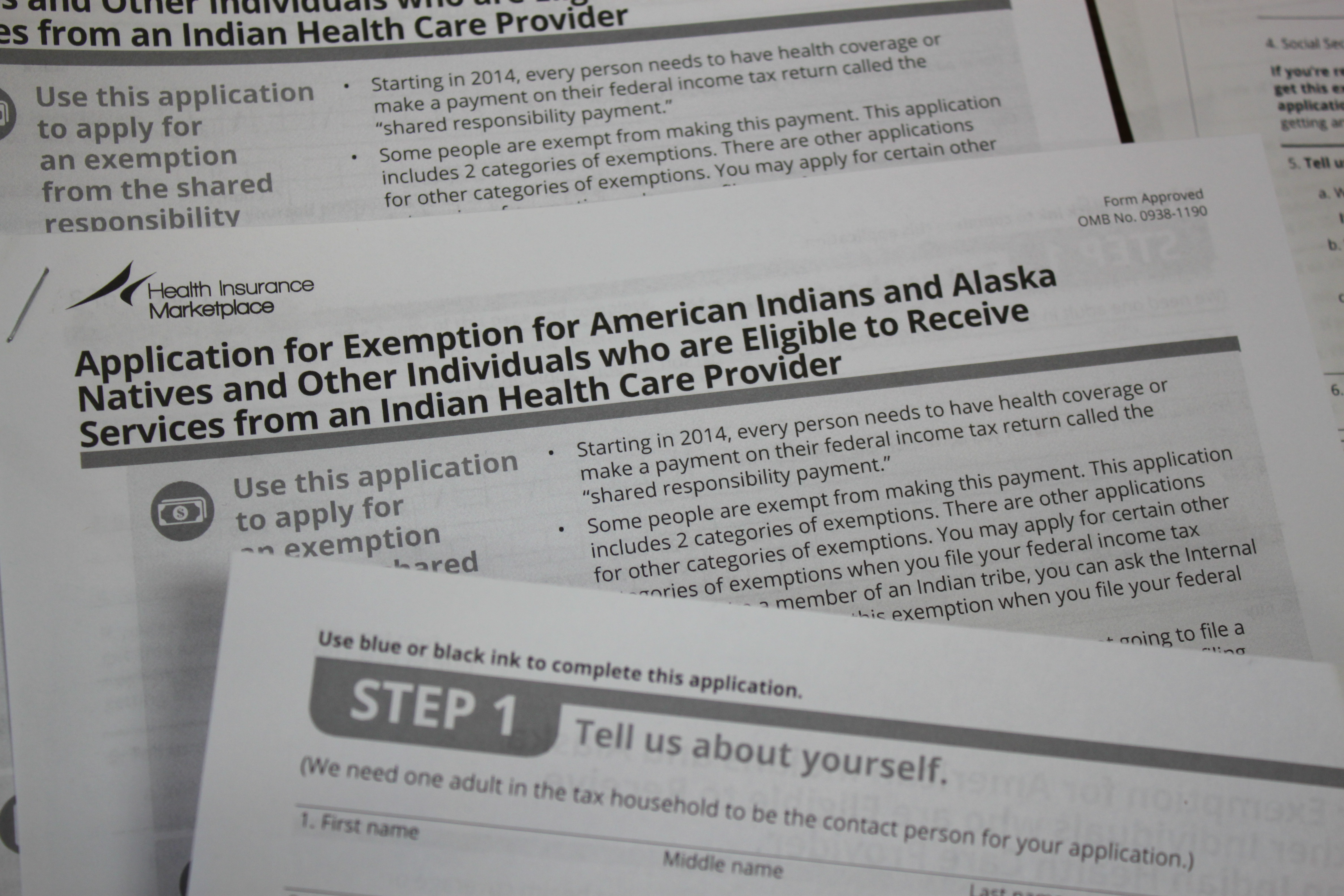
Paddock isn’t actually signing up for anything. She’s filling out an Indian Status Exemption form.

“It’s a little bit of a complicated form even though it’s pretty short. It’s only three pages but there are some tricky questions,” says Monique Martin with the Alaska Native Tribal Health Consortium. “And it just means that if you don’t have health insurance you could face a tax penalty and if you send in that exemption that gives you a lifetime exemption from the requirements of the Affordable Care Act.”

Paddock’s heath care provider is Southeast Alaska Regional Health Consortium, which doesn’t require insurance. But she does have Blue Cross as well as Medicaid.

“We have a very robust tribal health system in the state of Alaska. The exemption is to acknowledge that Alaska Natives and American Indians have access to tribal health and Indian Health Services to get their health care needs met,” Martin says.

Alaska Native Tribal Health Consortium is targeting almost 50,000 Alaska Natives without insurance. They’re the ones who could face a tax penalty.

“The exemption form does not eliminate your ability to get insurance either at healthcare.gov or through an employer. It just covers you in the case that you have a gap in your insurance coverage,” Martin says.

So far, the tribal health consortium has helped fill out more than 2,200 Indian Status Exemption forms. One form can cover an individual or family.

“We’ve also sent out thousands of emails or also we print them up and mail them to people in rural parts of our state,” Martin says.

Only a paper version of the exemption form is available this year. You print it, fill it in, and mail it. Or have it all done at Gold Medal.

“Don’t forget to include a copy of either a tribal enrollment card or some proof that you’re an ANCSA shareholder or a copy of your Certificate of Indian Blood card issued by the Bureau of Indian Affairs. If you don’t, the feds will send you back a letter saying your application is not complete,” Martin explains.

A health care information table will be at Gold Medal through Saturday.

“We’ve been from Barrow to Ketchikan, from Bethel to Fairbanks, Iliamna, Dillingham, Kotzebue, Nome. We’ve been to lots and lots of places to spread the word,” Martin says.

Open enrollment for Alaska Natives interested in getting health insurance is ongoing; there is no deadline.

And Alaska Natives have until the end of the year to submit an Indian Status Exemption form, although if you do it at Gold Medal, you could win a gift card.

Interviews scheduled for Bartlett CEO finalists

Bartlett Regional Hospital entryway
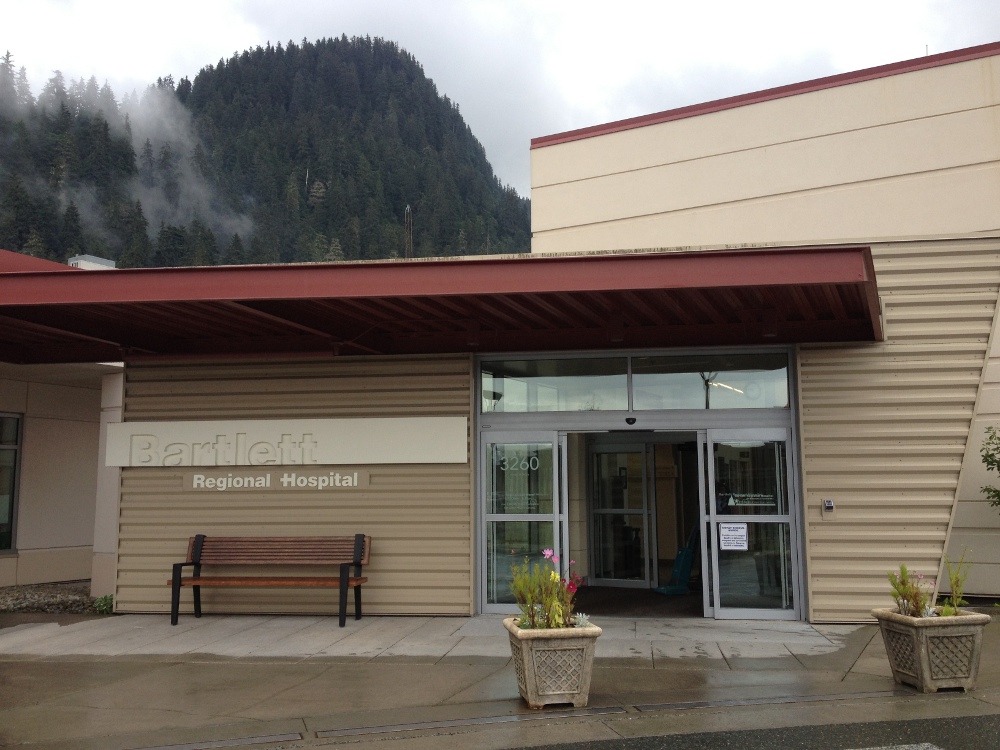
Bartlett Regional Hospital. (Photo by Lisa Phu/KTOO)

The search for a new Bartlett Regional Hospital Chief Executive Officer has been narrowed to five candidates, who will be in Juneau next week for interviews with the hospital board, staff and city officials.

City Human Resources Director Mila Cosgrove says the public will have a chance to meet the finalists during a reception on March 26, from 5 p.m. to 6:30 p.m. in the hospital cafeteria.

The city-owned hospital received 78 applications for the  job. Twenty people were initially interviewed and nine chosen for interviews by a selection committee.

Cosgrove says all five finalists have strong administrative experience.

“One of the candidates is a medical doctor, others have primarily been on the administrative side. We have a candidate here from the community who’s not been in hospital administration but has strong CEO experience,” Cosgrove says. “So we’re really looking forward to meeting them, interacting with them and having some fairly in-depth conversations to sees who’s going to be the best fit for the hospital.”

The finalists are Dr. Paul Franke, Alaska Native Medical Center interim administrator; David Abercrombie, CEO of Madison County Memorial Hospital in Madison, Fla.; Charles Bill, assistant administrator of Physician Development with Centura Health Physician Group in Durango,  Colo.; Joe Cladouhos, CEO of Syringa Hospital and Clinics in Grangeville, Idaho, and formerly of Juneau; and Alaska Pacific Bank CEO Craig Dahl, of Juneau.

Cosgrove hopes the new CEO will be selected by mid-April and on board sometime in May to work with the interim chief executive officer.

“Our current interim CEO Jeff Egbert has been doing a fabulous job in that position and he has committed to staying until the new CEO is here on the ground and transitioned,” Cosgrove says.

Former Bartlett CEO Chris Harff resigned in September, after a personnel investigation into senior management and staff complaints of a hostile work environment.

Site notifications
Update notification options
Subscribe to notifications