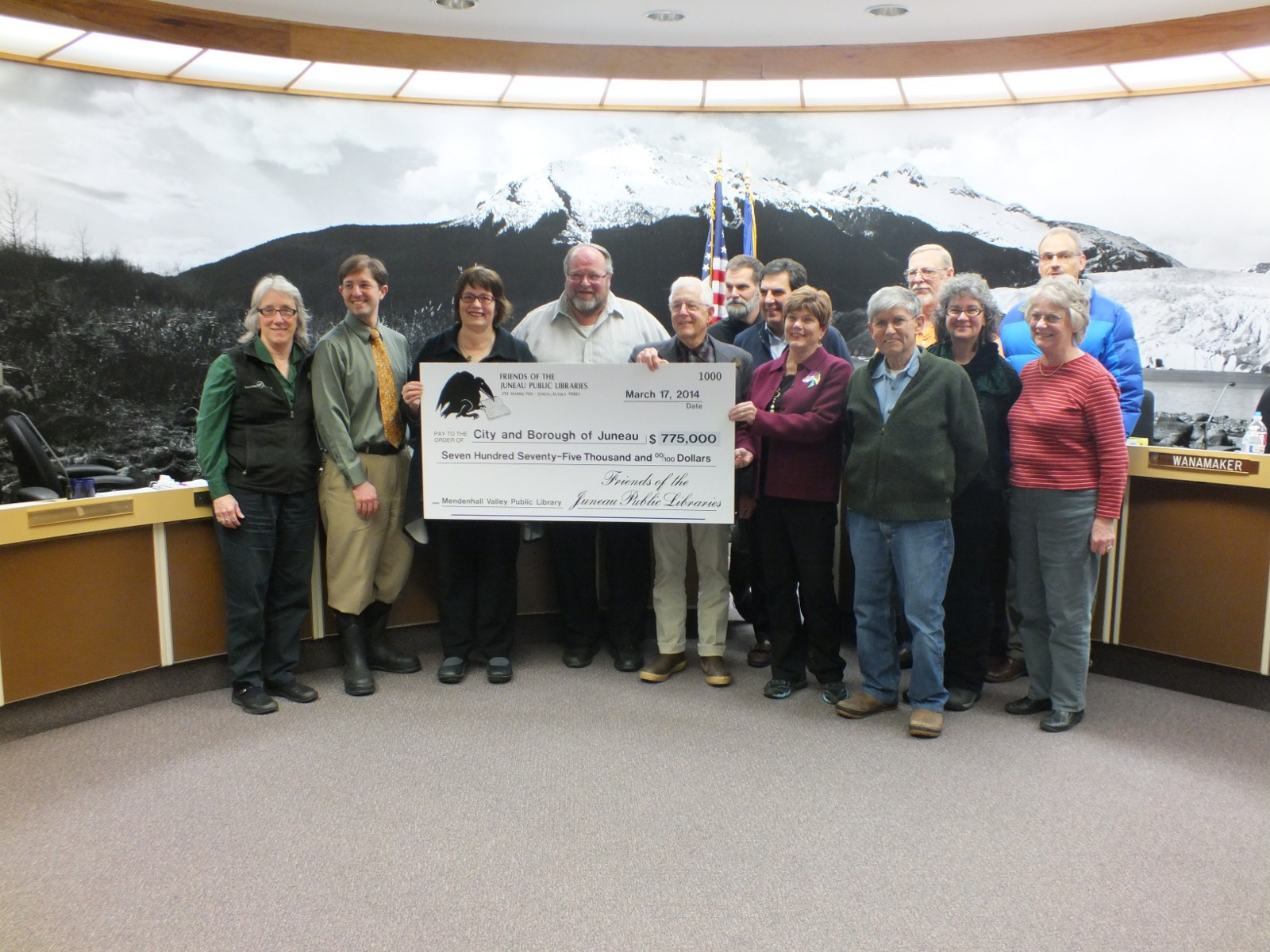
Members of the Juneau Assembly accept an oversize check for $775,000 from Friends of the Juneau Public Libraries. The money will go toward the new Mendenhall Valley library. (Photo by Casey Kelly/KTOO)
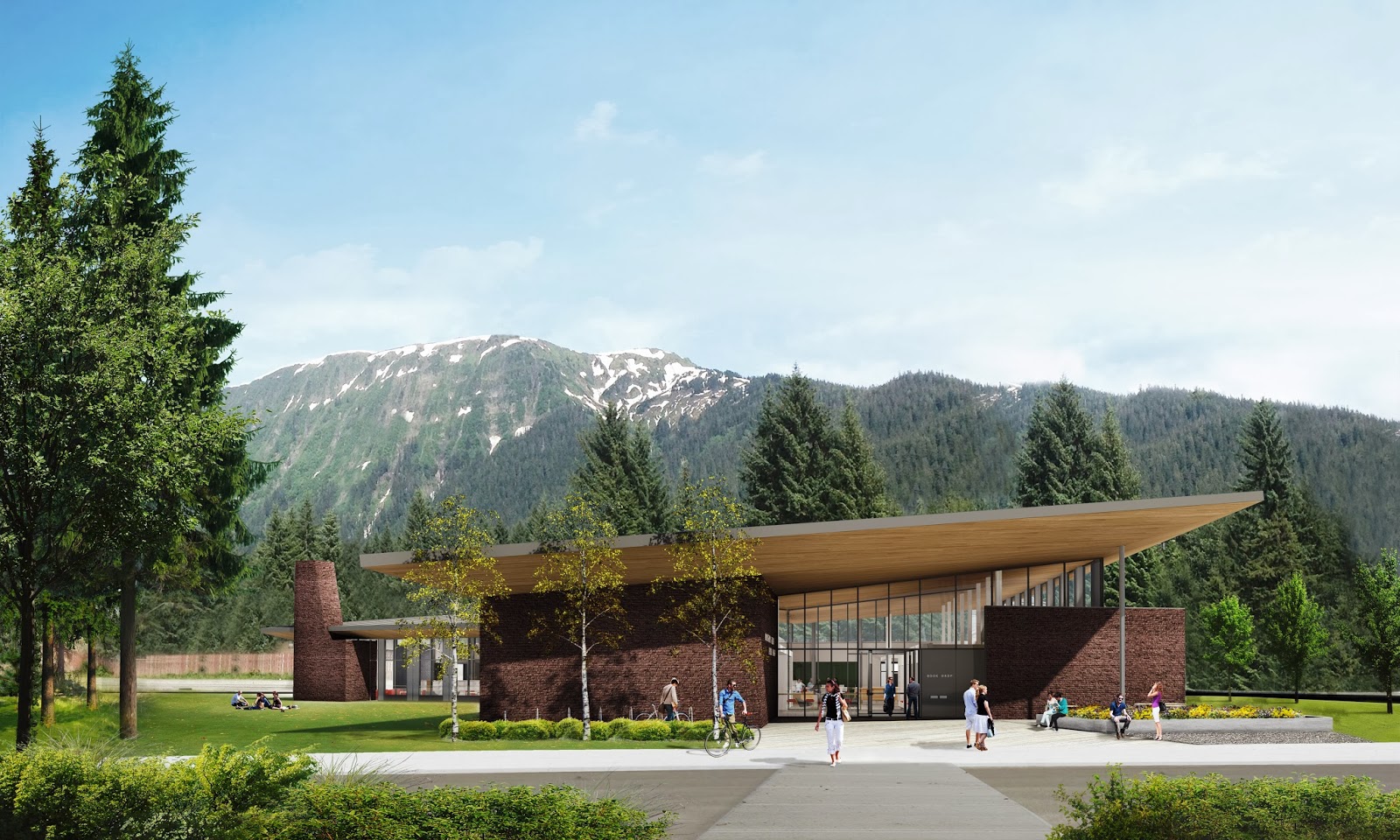
An artist's rendering of the new Mendenhall Valley public library at Dimond Park. Planning and design of the new building are almost complete. (Image courtesy Juneau Public Libraries)
“This is so much fun to give away a million dollars,” said Paul Berans, president of the friends of the libraries board of directors.
The group raised most of the money by selling used books at its Amazing Bookstore.
“Can you imagine how many books at a nickel, a dime, a quarter and a dollar it takes?” Berans asked.
He gave credit to the dozens of volunteers who donate their time at the store and library events.
Planning and design are nearly complete for the new Mendenhall Valley library.
With the $1 million from the friends group, the city will pay for less than half of the nearly $14 million project. In 2012, Juneau voters approved a sales tax measure to provide some of the financing. The rest will come from a $7 million state grant.
The new library will be built at Dimond Park and replace the current branch located in the Mendenhall Mall.
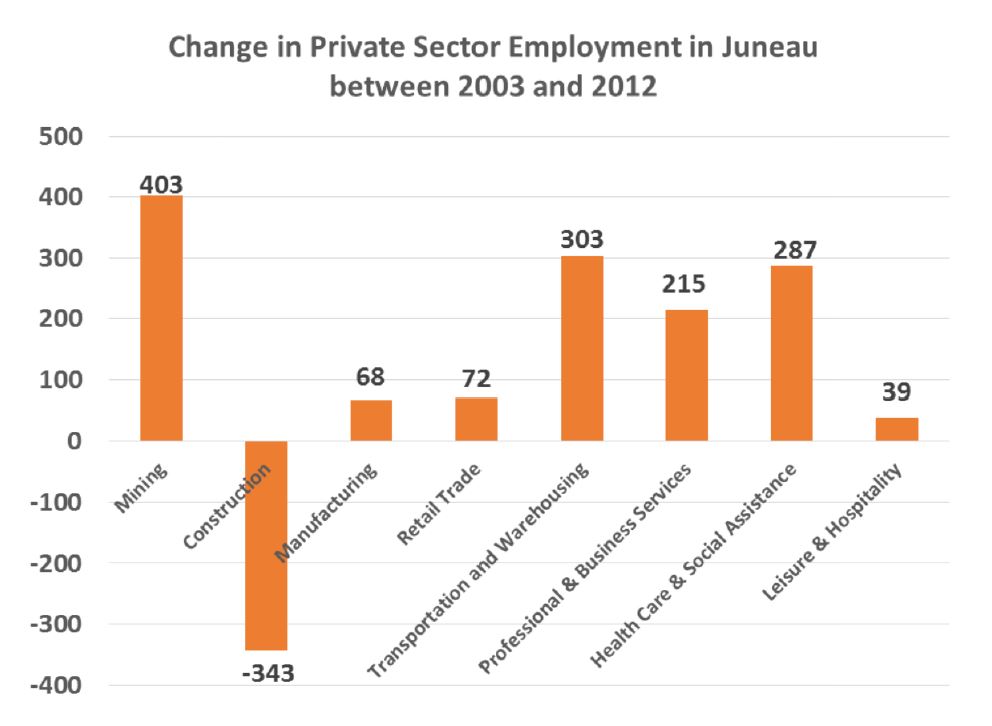
The McDowell Group’s Jim Calvin presented a number of statistics on Juneau’s economy during Thursday’s Juneau of Chamber Roundtable Lunch. (Courtesy of Jim Calvin/McDowell Group)
Where should Juneau be in 10 years? That’s the big question prompting the development of the Juneau Economic Plan, which will lay out the capital city’s economic future. Jim Calvin of the McDowell Group explained during last week’s Chamber of Commerce Roundtable Lunch how he and his team will figure out the answer.
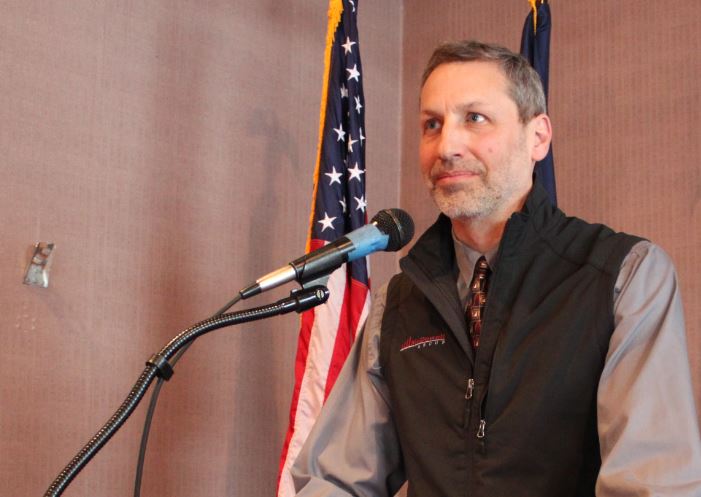
Jim Calvin, economic analyst for the McDowell Group. (Photo by Lisa Phu/KTOO)
Economic analyst Jim Calvin says in order to plan for the future, you need to know where you are today.
“You need to understand what forces are at work, what trends are shaping things as we go forward. We need to understand that left to its own devices, where are we headed? If we don’t try and be proactive, if we don’t try and control to a degree what we can control in our economy, where are we likely to end up?”
Based on preliminary analysis, Calvin says employment has grown less than one percent each year in the last decade. Between 2003 and 2012, Juneau gained 1,300 new private sector jobs, but lost 400 government jobs.
Of those new jobs, a third of them are in mining.
“The lion’s share of growth in the private sector in Juneau over the last decade has been in the mining sector. These are $90,000, $100,000 a year jobs. That’s good news,” Calvin says.
Juneau also gained 300 new jobs in health care, but lost 300 construction jobs. Calvin says there will likely be an uptick in that sector with construction of the State Library, Archives & Museum project and the Walter Soboleff Center.
The local workforce has seen a decline of participation from Juneau residents and a growth of nonresident participation. Numbers show that in the past decade wages to those living outside of Juneau have gone up $70 million.
“Obviously nonresident labor is going to be an important part of our labor force no matter what because we have a fairly significant seasonality in our economy and local residents want to work year-round so they’re less inclined to take seasonal jobs. But still, $70 million of money leaking out of the economy is something we have to look at as we think about long-term economic development planning. What can we do to get more residents to earn some of that income?” Calvin says.
Working with Sheinberg Associates, McDowell Group plans to engage with the community as much as possible when developing the plan.
“We really need to understand what’s important to us as a community. What are we trying to accomplish with this effort? What metrics are we going to use to measure progress. It is important that we start thinking about where we want to be in 10 years,” Calvin says.
Since Juneau has more older people compared to the rest of the state, Calvin says we need to consider the aging population. Ten percent of Juneau residents are age 65 and older. That percentage will double in ten years.
“What can we do as our population ages? What do we need to do in terms of senior services to keep more of that retirement income in the community instead of having it leak out as people go to Arizona or wherever else people decide to retire?” Calvin asks.
And despite having fewer younger people, Calvin says they will reach out through social media for input from the youth as well.
“We’re actually going to be in the high schools doing some student surveys to get a perspective of young people. After all, this really is a lot about the kind of community that we want our kids to grow up in, so we need to hear from young people,” he says.
The Juneau Assembly set aside $100,000 for the economic plan, which is scheduled for completion in December. Assemblyman Loren Jones says it’s critical for the assembly to have an economic road map.
“And then we as a city have to look at what can we do to enhance that, what do we need to be careful about in terms of either our taxing policies or our regulatory policies, and what the community wants us to do. But it also points to what the private sector needs to do in the way of helping us and helping the economy of Juneau,” Jones explains.
For Jones, he wants to see a Juneau where families don’t have to struggle to live, recreate and thrive.
What about you? Where do you want to see Juneau in 10 years?
(Editor’s note: This story has been updated to correct the increase in the amount of wages going to nonresidents. The amount is $70 million, not $7 million.)
Mary Miller, of Juneau, spoke Thursday to Juneau World Affairs Council about her recent experience in Ukraine.
Longtime Juneau resident and Peace Corps volunteer Mary Miller had several months to go on her two-year tour in Ukraine when the organization pulled out volunteers late last month.
Miller was teaching English to what she calls “technically elite students” at Odessa National Academy of Telecommunications.
With a population of about a million people, Odessa is the third largest city in Ukraine and a major shipping port on the Black Sea. It’s about 275 miles south of Kiev, the capital.
Miller said most of the people she met were fluent in Russian and Ukrainian, and many spoke English.
“They may have grown up speaking one language but they know the other, and for the most part I would say the vast majority of the population is bilingual,” she said.
As demonstrations in Kiev grew violent, the Peace Corps volunteers found themselves in a tenuous position.
“We’ve followed it, you know, every day for the last three months, everything that was happening, just as an observer,” she said. “I would have students that would ask me ‘what do think about what is going on up there’ and I would say it’s not important what I think, it’s what do you think. But I would say that I did believe it was a human right for people to be able to express their opinions in a peaceful manner without fear of persecution.”
On Feb. 22 , Peace Corps volunteers in Ukraine were sent home. Miller doesn’t know if or when she will return.
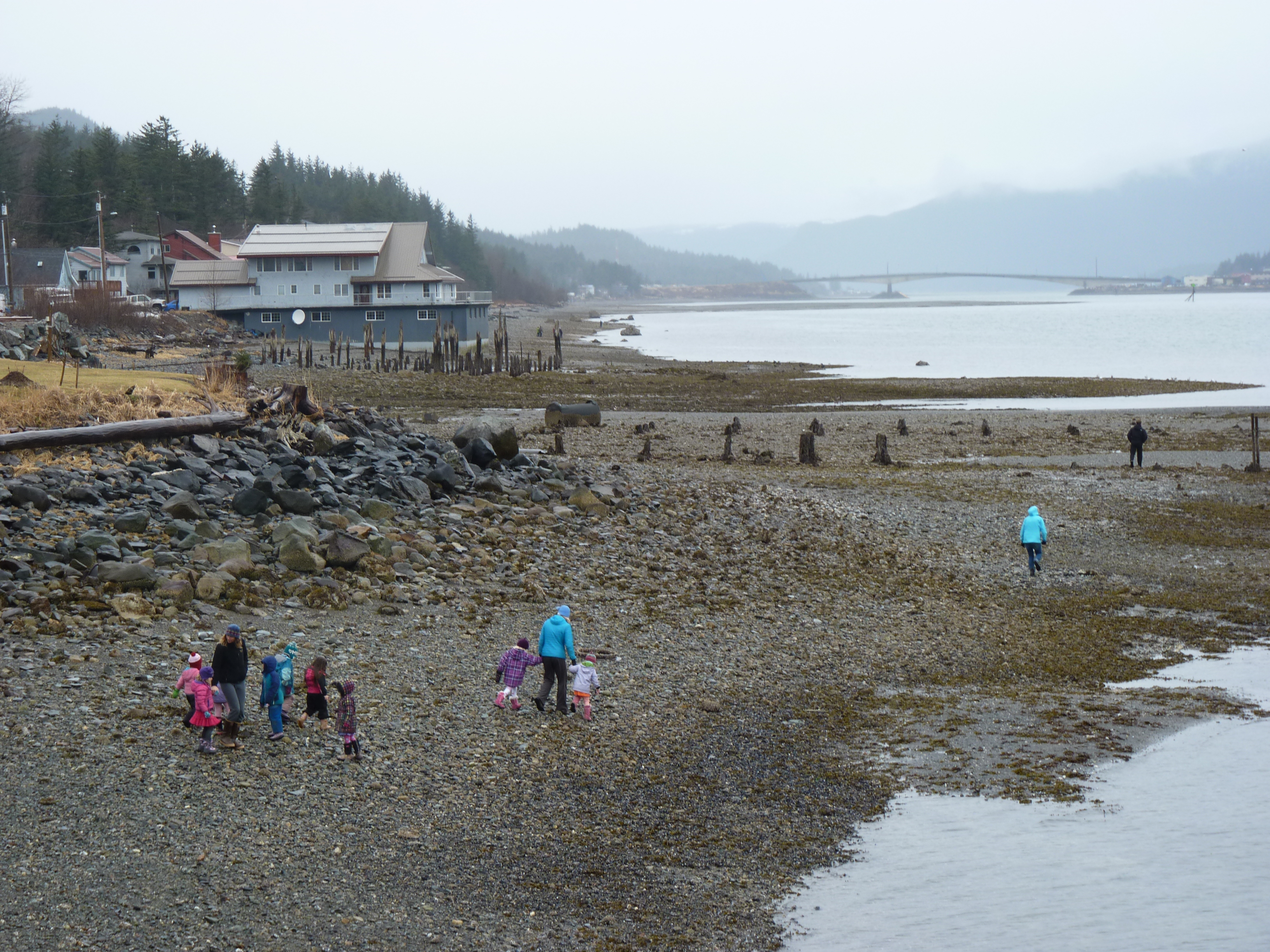
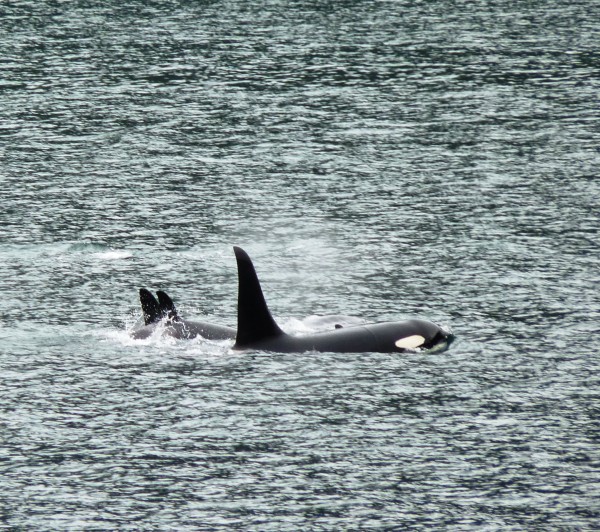
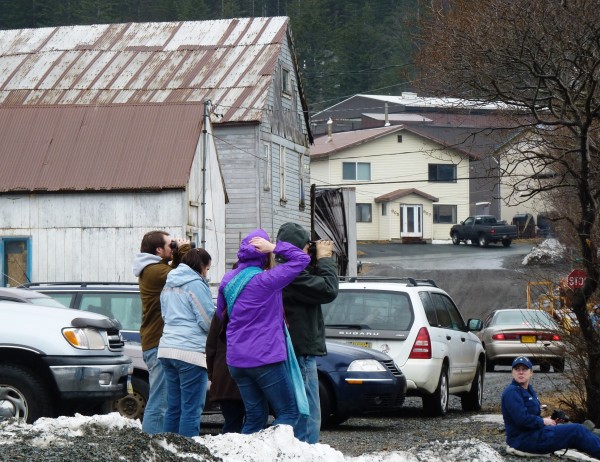
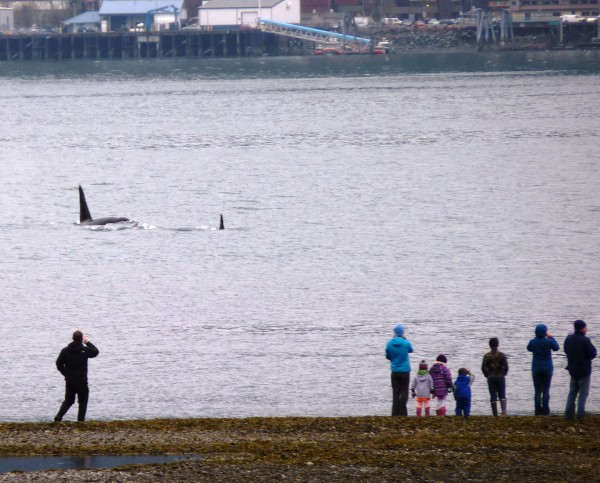
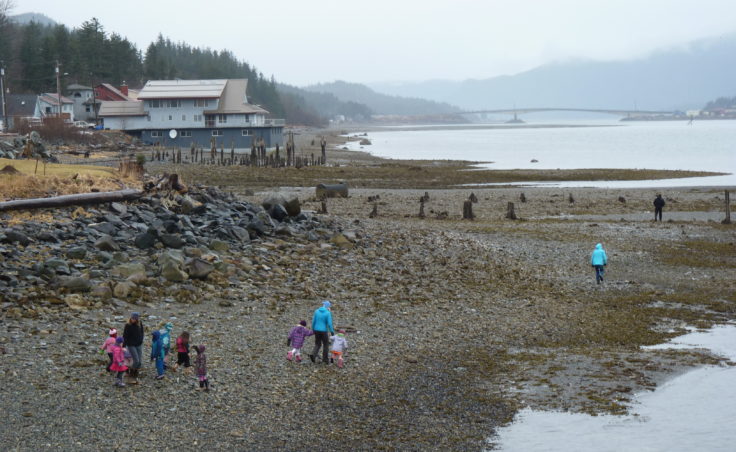
Juneau residents had a nice surprise when a pod of orcas made an appearance in Gastineau Channel Thursday. Dozens of whale watchers, including a nearby preschool class, flocked to beaches and sidewalks to watch the pod swim down the channel.
Preschoolers walk across tidal flats to view an orca pod off Douglas Island Thursday afternoon. (Ed Schoenfeld/CoastAlaska News)
Three members of an orca pod surface in Gastineau Channel Thursday afternoon. (Ed Schoenfeld/CoastAlaska News)
Three members of an orca pod surface in Gastineau Channel Thursday afternoon. (Ed Schoenfeld/CoastAlaska News)
An orca pod surfaces in Gastineau Channel Thursday afternoon. (Ed Schoenfeld/CoastAlaska News)
A small crowd of whale watchers use binoculars to view an orca pod from the Douglas Boat Harbor parking lot. (Ed Schoenfeld/CoastAlaska News)
Families watch an orca pod from the tidal flats below First Street in Douglas Thursday afternoon. (Ed Schoenfeld/CoastAlaska News)
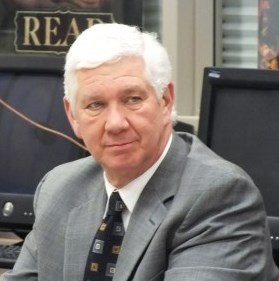
Superintendent Glenn Gelbrich at a recent school budget meeting. (Photo by Casey Kelly/KTOO)
Juneau School District Superintendent Glenn Gelbrich is resigning effective June 30.
Gelbrich was unavailable for comment, but district spokeswoman Kristin Bartlett says he turned in his letter of resignation on Thursday.
“The Board spent a considerable amount of time trying to discourage him from leaving and they expressed their unanimous support for him to stay and continue the work,” Bartlett says in an email.
Gelbrich’s contract ends in 2016. It is not known yet if there will be repercussions for breaking it early. Gelbrich has headed up Juneau schools since 2009.
Bartlett says over the past couple of months the superintendent has discussed with school board leaders the likelihood that he would be leaving.
He finally announced his intention to the full board on Tuesday, March 4, during an executive session on his evaluation, which Bartlett says was positive.
He has said he wants to live closer to family in the Pacific Northwest. At least twice this year, he was a finalist for superintendent positions out of state. He was ultimately passed up for jobs in Idaho and Montana.
(Editor’s note: This story has been updated to correct when the school board held its executive session to evaluate Gelbrich. The evaluation occurred Tuesday, March 4, not Tuesday, March 11.)
"Space Trucker Bruce" movie poster. (Photo courtesy Anton Doiron)
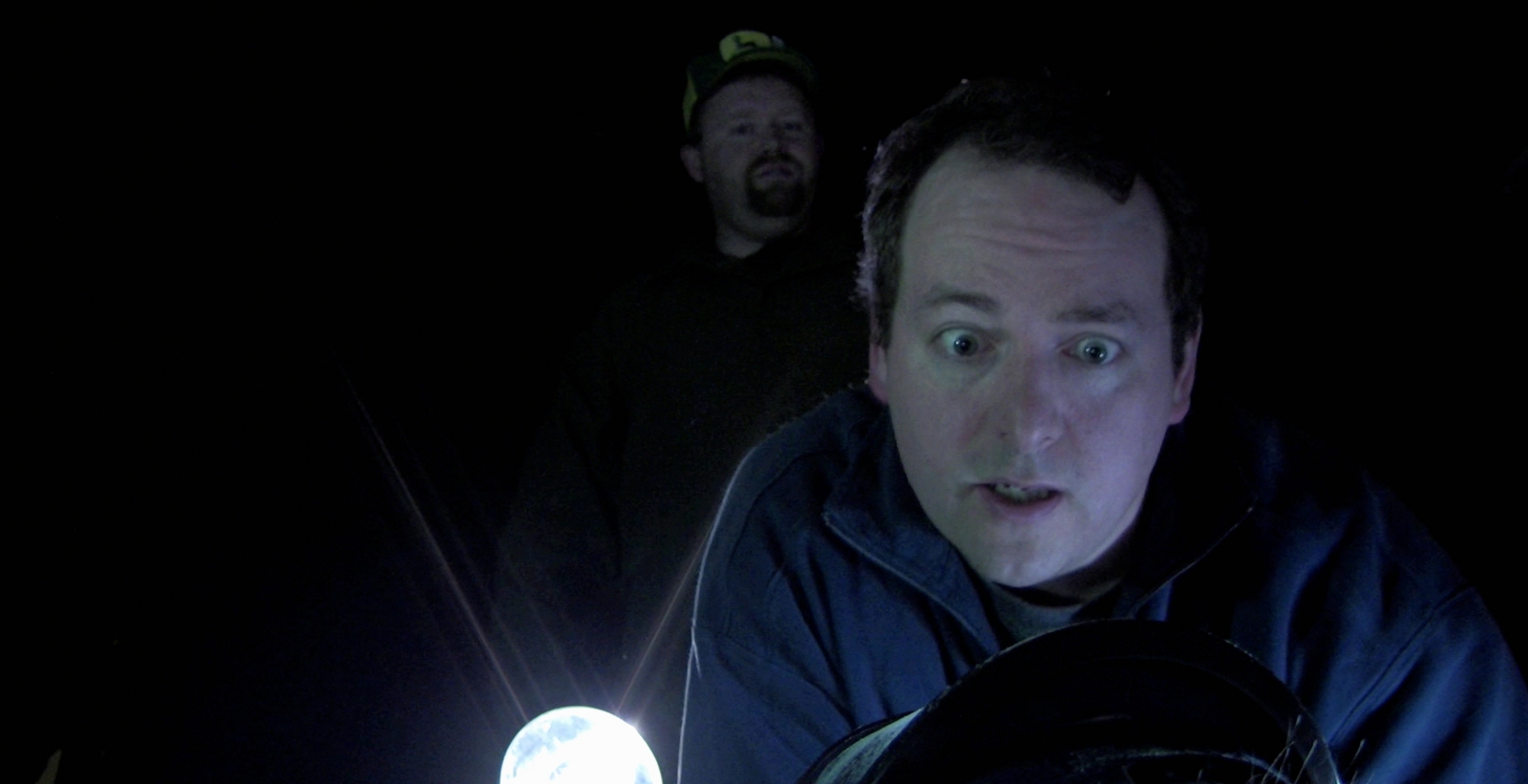
Karl Sears plays Space Trucker Bruce. (Photo courtesy Anton Doiron)
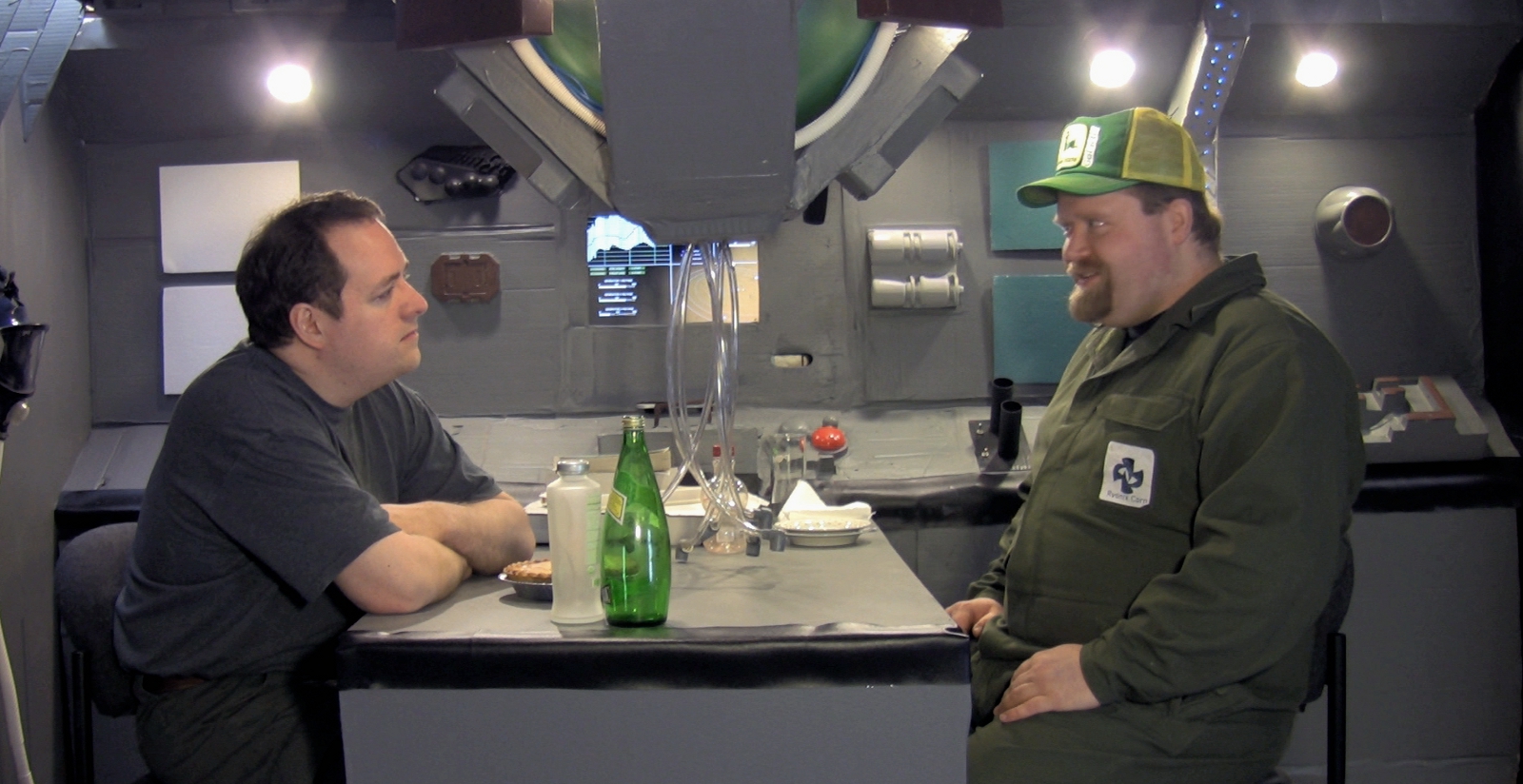
Writer/director Anton Doiron plays Max. (Photo courtesy Anton Doiron)
Bruce helps Max learn to relax. (Photo courtesy Anton Doiron)
The Nessus space shuttle. Writer/director Anton Doiron created the 3D special effects for "Space Trucker Bruce" using a free software program called Blender. (Photo courtesy Anton Doiron)
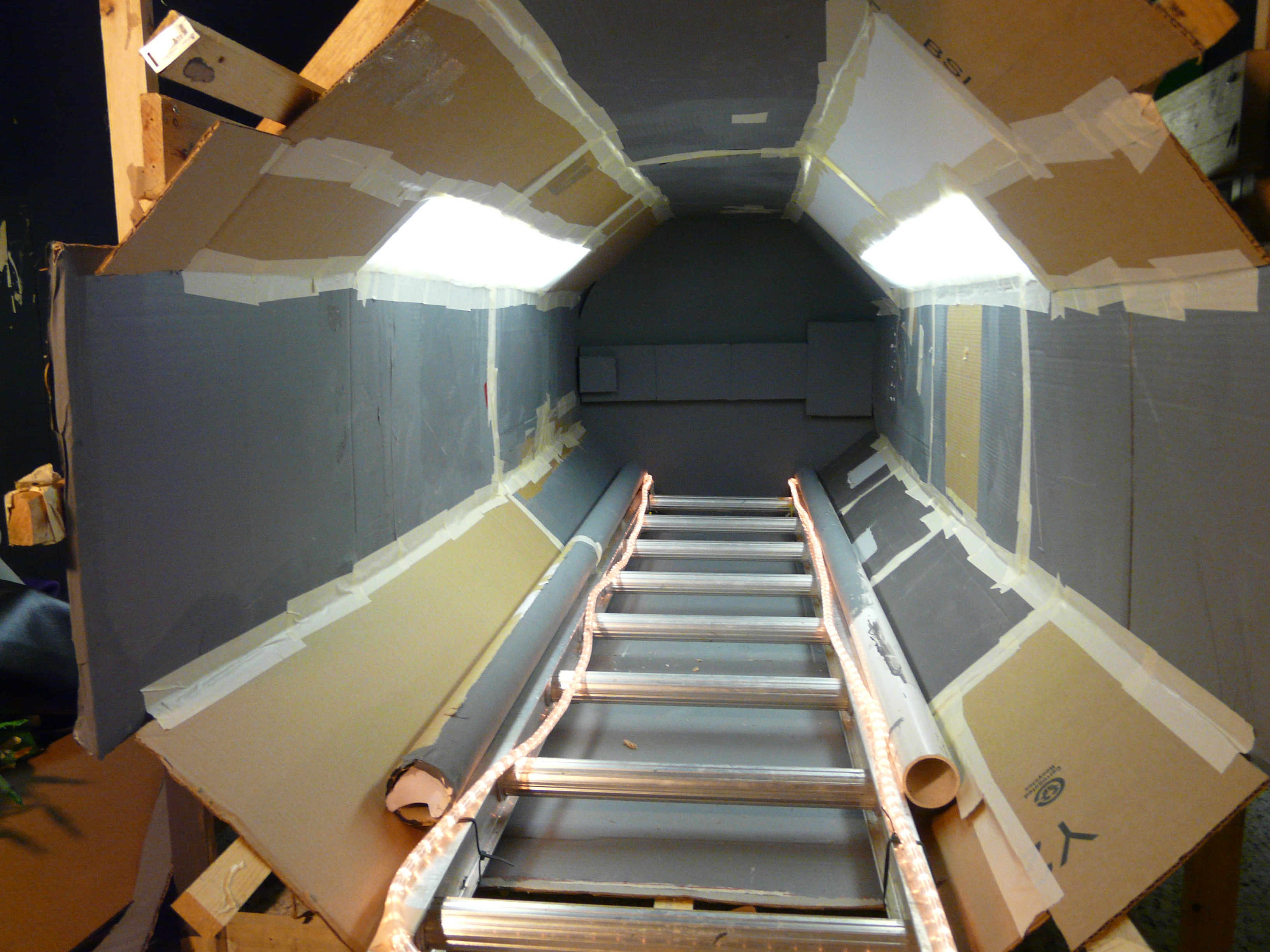
"Space Trucker Bruce" writer/director Anton Doiron built all the sets for the movie at his house. He used a variety of found materials, including scrap wood and cardboard. (Photo courtesy Anton Doiron)
In the not too distant future, a breakthrough in gravity control makes space travel incredibly cheap and wildly popular. The most valuable substance in the universe is hog fat, which is important to the operation of space stations that have sprouted up across the galaxy.
Made in Juneau over six years, the movie premieres Friday at the Gold Town Nickelodeon.
Karl Sears plays the lovably schlubby title character, who works the hog fat supply lines between Earth and Titan Station, orbiting Saturn’s largest moon. Bruce is mostly happy with his job, but gets lonely between hog fat deliveries. He uses Zen meditation to keep himself from going crazy on his ship, the Nessus.
On his way to Titan, Bruce picks up Max, whose shuttle breaks down in the middle of outer space. Bruce helps Max learn to relax. The story takes a sudden turn when Bruce and Max receive a strange transmission, leading to a collision course with a large unidentified object.
The movie also features a talking container of sour cream that craves murder and cocoa beans. There’s a mysterious woman named Jane Doe, found by Bruce floating through space, and Bruce’s love interest, a waitress named Katie who works at the Titan Café.
Anton Doiron plays Max. He also wrote and directed “Space Trucker Bruce.”
“I like science fiction that has a little bit of comedy in it. And in this case, with my budget being what it was and with the set quality and everything, it had to be a comedy,” says Doiron, 41, who grew up in Ketchikan and now works as a computer programmer for the State of Alaska.
“Space Trucker Bruce” started as a short film for the Juneau Underground Motion Picture Society. But Doiron says he wanted to make something longer than the 10-minute JUMP festival films.
“I wrote the original script for it in 2007, and I continuously revised it,” he says. “And when we would go to film a scene, I would look at the dialog and I would make sure that it made sense when spoken aloud. And we’d make little changes to it, and then that’s what we would end up filming.”
Doiron built all the sets for the film at his Mendenhall Valley home. He made Bruce’s sleeping quarters in his son’s bedroom.
“There are eight sets in the movie, the largest one being the 35-foot hallway, which I built in my backyard,” he says.
He gave himself a budget of $30 a week and figures he spent about $10,000 on the project. That includes a high definition video camera, a computer for editing, and promotional materials. He created the 3D special effects using a free software program called Blender.
The actors were friends and co-workers, who worked for free. Amelia Jenkins, who plays Jane Doe, did not have any previous acting experience, but says her day job as a children’s librarian provides plenty of opportunity to ham it up.
“Not an actress, but definitely comfortable acting big and silly,” Jenkins says.
She hasn’t seen the final product, but Jenkins thinks it’s impressive that Doiron completed the film. She looks forward to seeing how he edited scenes shot over almost four years.
“Hair was changing lengths, beards come and go, waistbands expand and shrink,” she says.
Doiron screened a cut of “Space Trucker Bruce” for a group of about 30 people in December, and used their feedback to make some changes. He says making his first feature film was a learning experience.
“It took me six years, but at first I was a little bit flaky and wasn’t working continuously on it,” he says. “At the end I was working on the film every day.”
He’s already started working on his next movie, tentatively called “A Girl, a Yeti, and a Spaceship,” which he hopes to complete in about three years.
“Space Trucker Bruce” premieres Friday at 7 p.m. at the Gold Town Nickelodeon, with an encore showing at 9 p.m. and matinees Saturday and Sunday at 2 p.m. After this weekend, Doiron hopes to make the movie available on-demand at www.spacetruckerbruce.com.
[youtube https://www.youtube.com/watch?v=4zpOzoMiIBo]
“Space Trucker Bruce” theme song “Supply Lines and Deadlines” by Mike Maas
Close
Update notification options
Subscribe to notifications
Subscribe
Get notifications about news related to the topics you care about. You can unsubscribe anytime.