Community

Worl says shamanism still influential in Tlingit culture today

Rosita Worl SHI lecture series shamanism
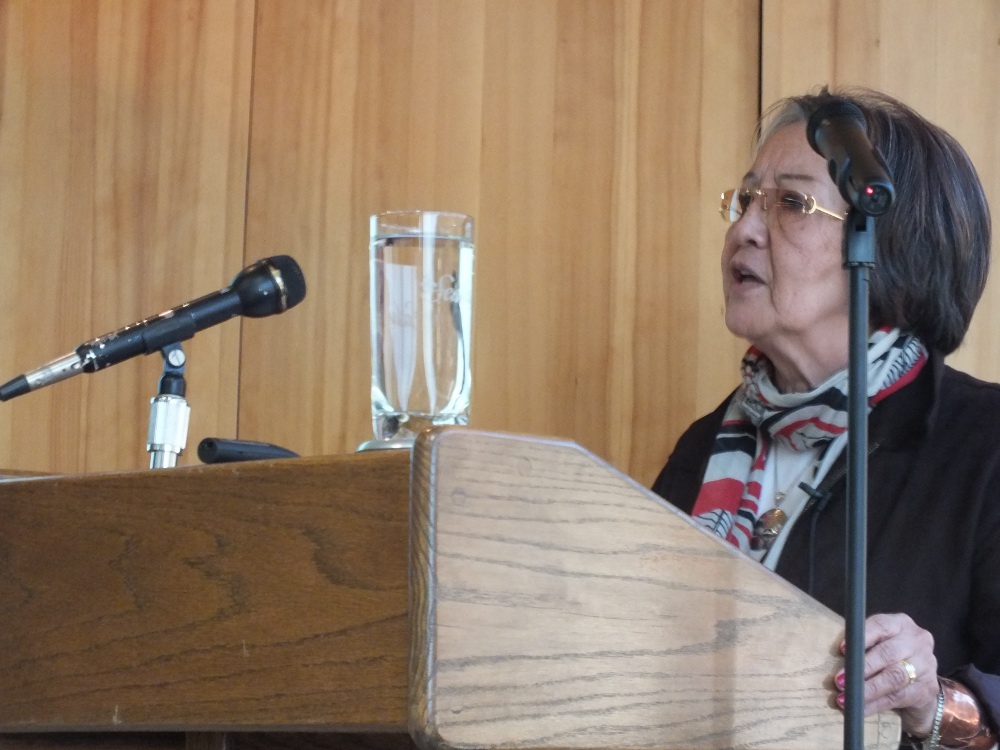
Sealaska Heritage Institute President Rosita Worl gives a talk on Tlingit shamanism as part of SHI’s Native American History Month Lecture Series. Photo by Casey Kelly/KTOO.

The Tlingit people of Southeast Alaska no longer practice shamanism, but elements of it still exist in their culture today.

That’s according to Anthropologist and Sealaska Heritage Institute President Rosita Worl, who spoke Monday as part of SHI’s Native American History Month Lecture Series.

Worl says shamanism used to be a major component of Tlingit life. She says every clan had a shaman before Russian and American colonization largely forced the Tlingit people to abandon their traditional religion.

“Shamanism is generally associated with hunting, fishing and gathering societies that often migrate with seasons to follow their food sources,” says Worl. “To bring food, health and protection from evil, shaman seek connections with animal powers through their rituals.”

Worl says the shaman’s responsibilities included maintaining the well-being of the clan; acting as a military advisor; assuring hunting and fishing success; predicting future events; and curing illnesses. To do that they performed rituals designed to ward off hostile and dangerous spirits, and call upon good spirits to support the clans’ welfare.

Worl says Tlingits believed that great shaman traveled in both the physical and spiritual world, and that spirits chose certain people to be shaman.

“The majority of spirits with which the shaman makes his alliances are animals, animal spirits,” she says. “This reflects a widespread belief by cultures that practice shamanism that animals inhabited the world long before human beings and are essential to people because of the unique knowledge that animals possess.”

She says Tlingit clans last practiced traditional shamanism in the 1950s, but she argues it still pervades the rituals and beliefs of Southeast Alaska Natives today. For instance, Worl says Tlingits – including the late-Reverend Dr. Walter Soboleff – still believe that all objects possess some sort of spiritual essence.

“I’ve had meetings here in this room, where people like our spiritual leader, Dr. Soboleff, has pounded on the table and says, ‘Everything has a spirit! Even this table has a spirit!'” Worl says, pounding her own fist on the podium.

About 15 years ago at a clan conference organized by the heritage institute, Worl says several elders attributed modern social problems, such as alcoholism and suicide, to Tlingit societies being out of balance.

“In our society we have a number of practices to ensure both social and spiritual balance, and they were holding that we were out of spiritual and social balance, and this was the cause of the social illnesses that affect our society,” Worl says.

She says that discussion led to some of SHI’s most successful cultural programs.

Worl says the influence of shamanism on modern Tlingit life is perhaps most evident in the use of sacred objects and regalia in ceremonial acts, including memorial celebrations.

“When our ceremonial and sacred objects are brought out and the spirits are addressed or called upon in the same way as they were in earlier times,” she says.

Worl says many Tlingit elders are reluctant to discuss shamanism, perhaps due to the punishment Native people endured at the hands of colonizers for practicing their religion.

She says its unlikely traditional shamanism will ever be completely revitalized, but some Tlingits are looking at ways to incorporate more of the old practices in modern ceremonies.

The next talk in SHI’s Native American History Month Lecture Series happens Tuesday at noon. Professor Alan Boras of Kenai Peninsula College gives a lecture on “Salmon and Indigenized Orthodoxy on the Nushagak River.” The theme of this year’s series is Native spirituality.
Eaglecrest in Round 16 of Ski Town Throwdown

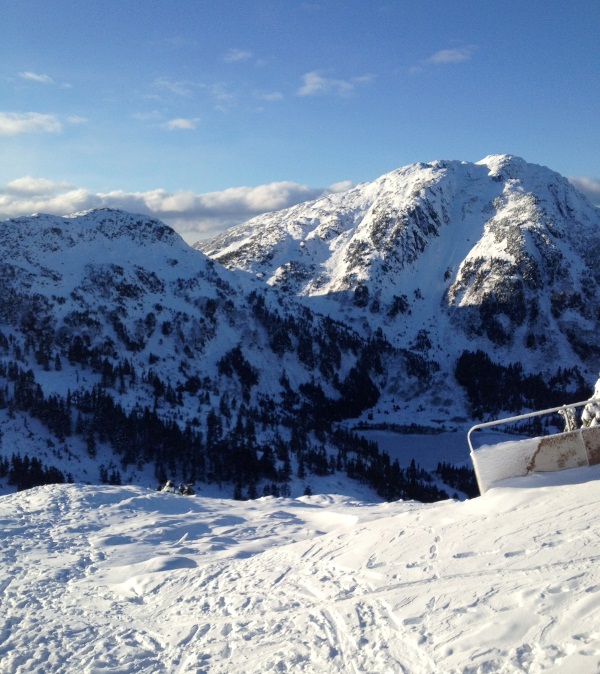
View from top of Ptarmigan on Nov. 17, where snow depth is estimated at 15 inches. Snow is being made on the lower mountain. The guns will move to the base of Ptarmigan later this week. Planned opening is Dec. 7. Photo by Scott Baxter.

Juneau’s Eaglecrest is the Cinderella story in this year’s Powder Magazine Ski Town Throw Down.

That’s according to magazine editors John Davies and John Stifter, as they watched the small ski area amass enough votes to beat Whistler/Blackcomb and Mount Washington resorts in the first two rounds of the competition.

Eaglecrest is now in the Sweet 16 against another British Columbia resort, Red Mountain in Rossland.

While Red Mountain calls itself “the last great, unspoiled resort,” Eaglecrest is even less spoiled.  It’s not a destination resort, but a city-owned ski area with no lift lines and a small mountain feel. Eaglecrest calls itself Alaska’s best-kept secret.

Ski Town Throwdown is patterned after the March Madness basketball championship with six rounds.  The Throwdown began with 64 U.S. and Canada ski areas, 16 in each of four geographic regions.

If Eaglecrest defeats Red Mountain, it will be in the Elite 8 competition.

Voting is Monday and Tuesday on Powder Magazine’s Facebook page.  You can vote once each day.

Beginning at 7 p.m. Tuesday, Eaglecrest will hold a Rock the Vote party at Juneau’s Red Dog Saloon, with Wi-Fi for voting, regular vote updates and, of course, the final count at 11 p.m., Alaska time.


Juneau Pioneers’ Home celebrates 25 years

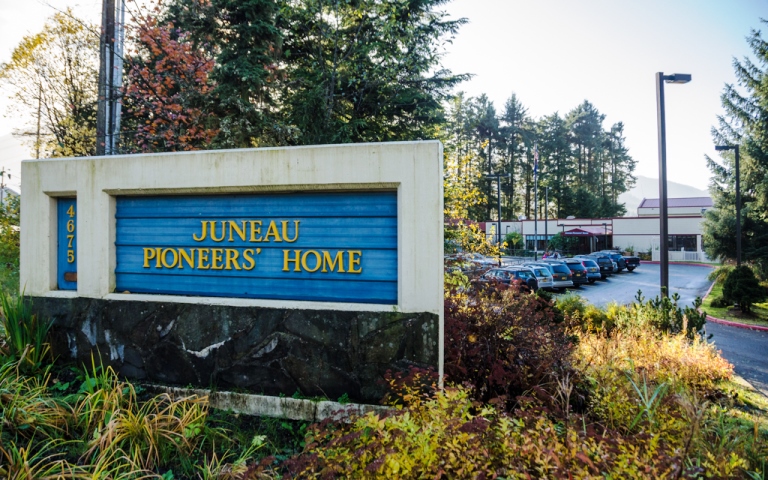
The Juneau Pioneers’ Home opened its doors in July 1988.  It was the last of the six state-operated homes to be built.

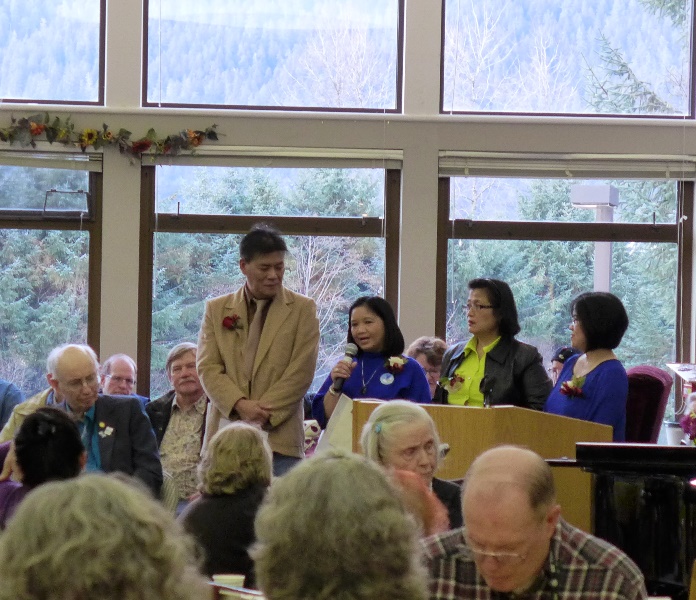
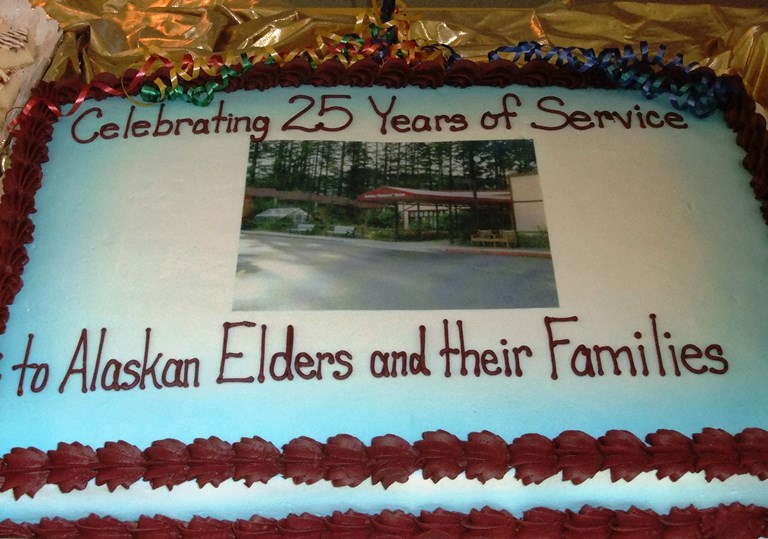
The home celebrated its first 25 years at a party on Saturday, recognizing four staff members for their work.

Fred Abad was a certified nurses’ aide when the home opened with 21 residents. Twenty-five years later, Abad, Tessie Punongbayan, Nelda Reynolds, and Veronica Hermano are still on staff.

Like Punongbayan, they told the crowd assembled Saturday that the elders give them joy and pride in their work.

Fred Abad, Tessie Punongbayan, Nelda Reynolds, Veronica Hermano were recognized for their 25 years of service to the Juneau Pioneers’ Home. Photo by Dick Isett.

Giving the service for our residents, seeing their smile every day, makes me proud  to be working here.  

State Pioneer Home Director Ken Truitt thanked the staff for their service, then turned to the residents:

I think this is a celebration of you and your lives.  We’re honored and we’re humbled that you would choose to live your lives with us. 

The homes provide an intermediate level of care for people who need help with medications, meals, housekeeping and other daily routines, or care related to Alzheimer’s disease or other dementia.

Saturday’s open house showed off a new kitchen for residents who still like to cook as well as  the new grand piano.

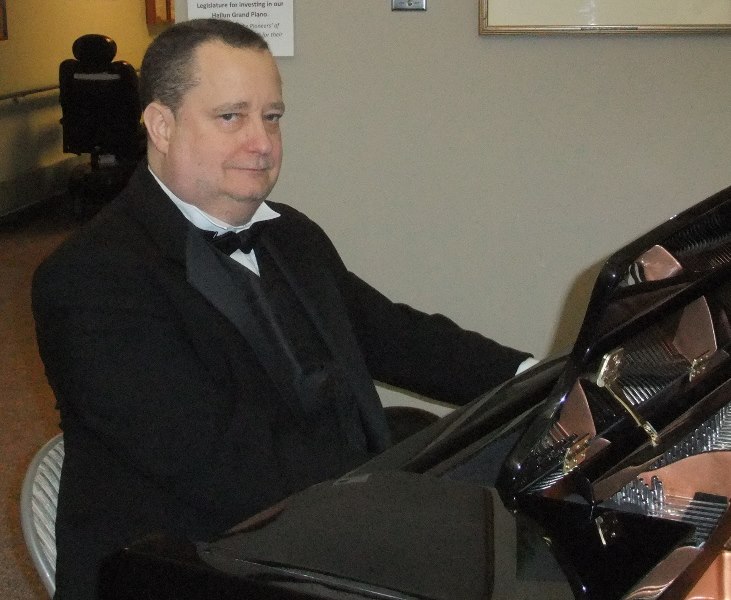
T.J. Duffy is among several volunteers who come to the home each week to play the piano. Duffy organized an effort to replace the old one, donated many years ago by the family of Juneau music pioneer Carol Beery Davis.

“The more I played it the more difficult I realized the piano was to play,” Duffy said. “The Pioneer Home needed a bigger and better piano, because this is a big hall, it’s about two stories tall and it’s about 50 yards long, so it needed a bigger piano and something pretty.”

T. J. Duffy organized the effort to get a new piano for the Juneau Pioneers’ Home. He’s one of several volunteers who play for the residents each week. Photo by Rosemarie Alexander.

Duffy took the request to Rep. Cathy Munoz, who worked with the rest of  Juneau’s legislative delegation for a grant to the local chapter of the Pioneers of Alaska, which gave the money to the Pioneers’ Home for the piano.

The studio grand is an ebony Hailun.  The interior is birds’ eye maple. While it’s beautiful to look at, it also has a lovely sound and a number of special features Duffy thought would benefit the Pioneers’ Home.

“The lid is hydraulic and it won’t come crashing down. It kind of floats down and that’s unique to this brand of piano.  Same with the cover on the keys.  It won’t crash, it won’t hurt anybody, and there’s a lot cats here and people bumping into it,” he said.

Over the last 25 years, 366 Alaskans have called the Juneau Pioneers’ Home their home.

Of those who live there now, the average age  is 86; the oldest person is 99.

Juneau seeks to fill vacancies on various boards and commissions

Juneau City Hall sunny winter day
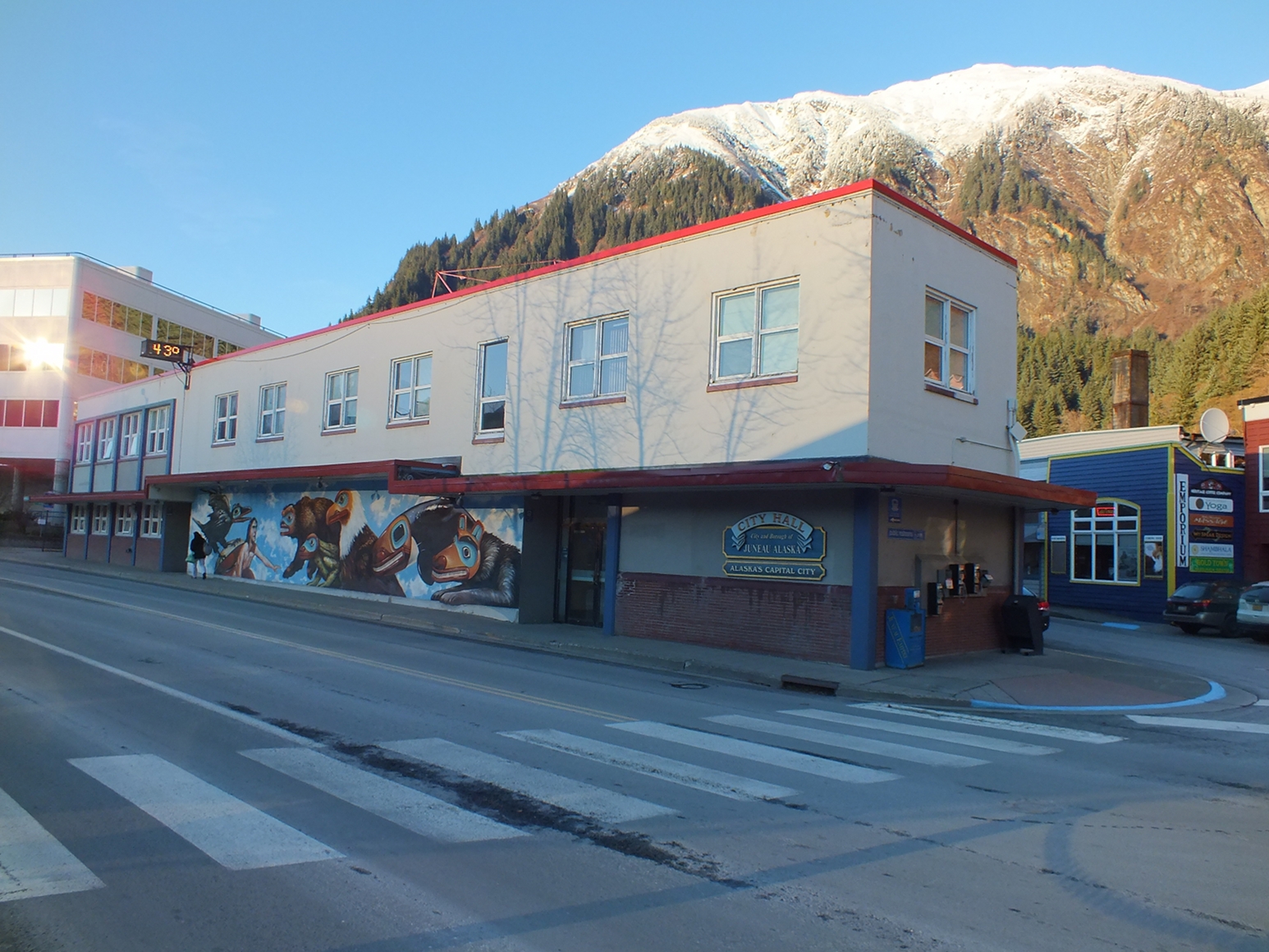
Juneau City Hall. Photo by Casey Kelly/KTOO.

Interested in public service? Dust off your resume. The City and Borough of Juneau is looking for a few good men and women to serve on boards and commissions.

Monday is the deadline to apply for one of four vacancies on the Planning Commission and three open seats on the Bartlett Regional Hospital Board of Directors.

Deputy City Clerk Beth McEwen says serving on a city board can be good experience for people interested in running for elected office.

“It is a great way to get your foot into city government, understand the process people go through, and this is a great way to get your toes wet a little bit in the public realm,” McEwen says.

The Planning Commission and hospital board are delegated certain powers and financial responsibilities by the Juneau Assembly. So McEwen says they have a more rigorous application process.

The deadline to apply for four open seats on the Social Services Advisory Board is also next week, on Wednesday. The SSAB reviews applications for the city’s social service grants and makes recommendations to the Assembly.

“Relative to some of our other boards and commissions it’s not quite as time consuming and it’s very interesting work,” McEwen says.

The vacancies on the Planning Commission, hospital board and SSAB are mostly the result of current members’ terms coming to an end. McEwen says the city is also seeking to fill an opening on the Planning Commission created when former member Marsha Bennett resigned.

In total, the city has vacancies on 20 of its boards or commissions. Applications for most are accepted year round.

To find out more about how to apply, go to the city’s website, juneau.org.

Families in need may have turkey-less Thanksgiving

Juneau’s soup kitchen, Glory Hole, needs more turkeys for their annual Thanksgiving boxes. (Photo by Ruocaled)

Juneau’s soup kitchen still needs more than 140 turkeys for their annual Thanksgiving boxes.

Glory Hole executive director Mariya Lovishchuk says boxes will be given in shifts this year. Currently, the organization only has 14 turkeys, which isn’t enough for the first round of pick-ups on Sunday.

Other needed food items include potatoes, stuffing, cranberry sauce, butter, and canned goods, like corn, fruit, and green beans.

This year, 160 families have signed up for Thanksgiving boxes from Glory Hole. Lovishchuck says this number is slightly higher than last year’s.

“We have a lot of families who are just working parents with kids. They’re trying to clothe their kids, they’re trying to pay rent, they’re trying to pay for utilities, and then once you count up all the stuff in the turkey box, it actually does come out to be a lot of money, and so I think that some folks are just having a really hard time making that happen,” she says.

The second round of Thanksgiving box pick-ups will start on Wednesday.

Turkeys and other food items can be dropped off anytime between 7 am and 9:30 pm at the Glory Hole, which is on 247 South Franklin Street.

Juneau Pioneers’ Home open house on Saturday

The Juneau Pioneers’ Home is 25 years old. The first Alaska Pioneers’ Home opened in Sitka 100 years ago. Photo by Heather Bryant/KTOO.

The Juneau Pioneers’ Home is 25 years old. To celebrate, the community is invited to an open house on Saturday.

The Juneau home opened in 1988 and is one of six in the state-owned system.

The Pioneer Homes are assisted-living centers, not nursing homes. To qualify, Alaskans must be at least 65 and have lived in the state for more than a year.  The average age in the homes is currently 86.

Forty-five residents live in the Juneau home on Glacier Highway, on one of the Twin Lakes. It can be seen from Egan Drive.

Activities Director Judy Neary says Saturday’s open house will celebrate the 25th anniversary and honor its residents.  She says while it may be a state-run facility, it’s a home. 

This is a home and we have been so lucky to serve so many Alaskans that homesteaded, who were brave souls to move up to Juneau and live in Alaska, and their stories are so fantastic.  It’s an honor for us to take care of them.

 Neary says the open house is a chance to meet the residents, hear the new grand piano, and see a newly remodeled section of the home.

 A lot of people haven’t ever come into the Pioneer Home. So I think it’s reassuring for people to see how cozy it is here, how friendly everybody is, how much we really do love each resident that’s here.

The Juneau Pioneers’ Home open house is from 2 to 4 p.m. on Saturday.  The home is located at 4675 Glacier Highway, near the intersection of Vanderbilt Hill Road.


Site notifications
Update notification options
Subscribe to notifications