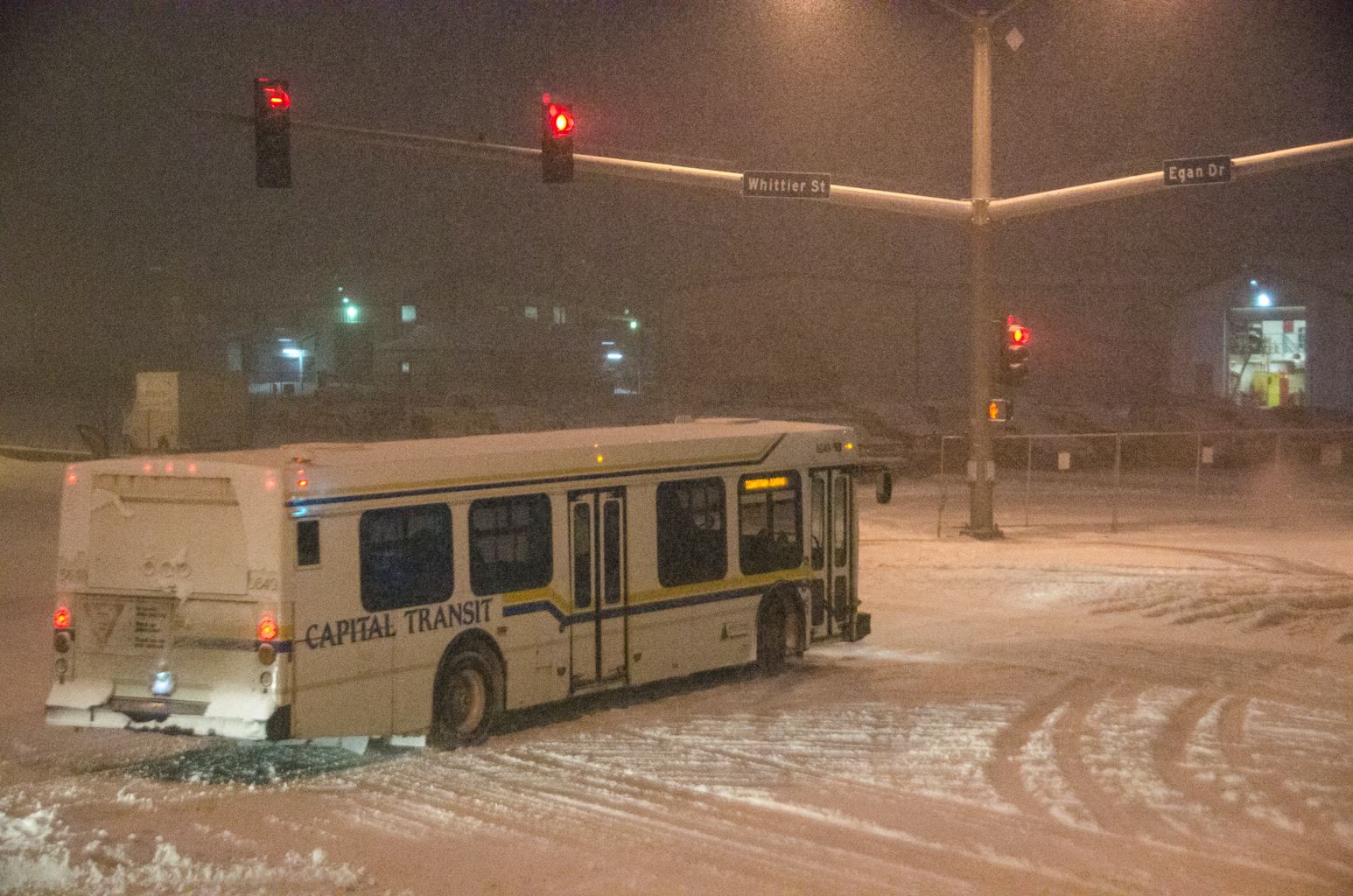
City buses and school buses are using winter routes today. (Photo by Heather Bryant/KTOO)
Juneau is under a winter storm warning from the National Weather Service. The forecast is calling for 10 to 21 inches of snow with gusting winds up to 40 mph.
The weather has prompted changes in bus routes and we’ll keep a running list of those changes here and update them throughout the day as information comes in.
No service on Cordova Street. Please wait for the bus at the Breeze Inn stop.
No service to St Ann’s. Please wait for the bus at the Douglas Post Office stop.
No service on Franklin or 4th street. Please wait for the bus at the Main Street stop.
No service on Davis Avenue and Lemon Creek Road. Please wait for the bus at Glacier Highway.
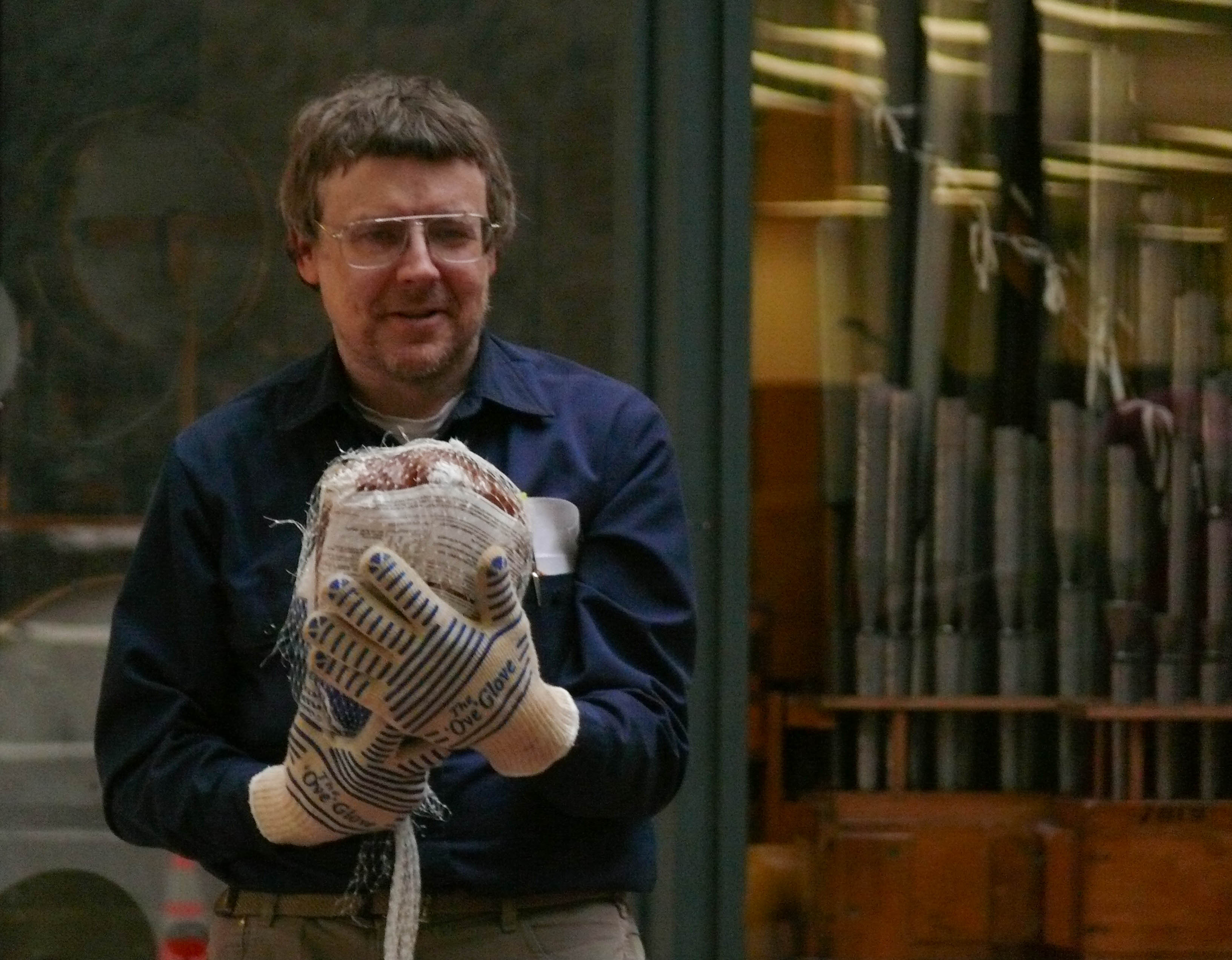
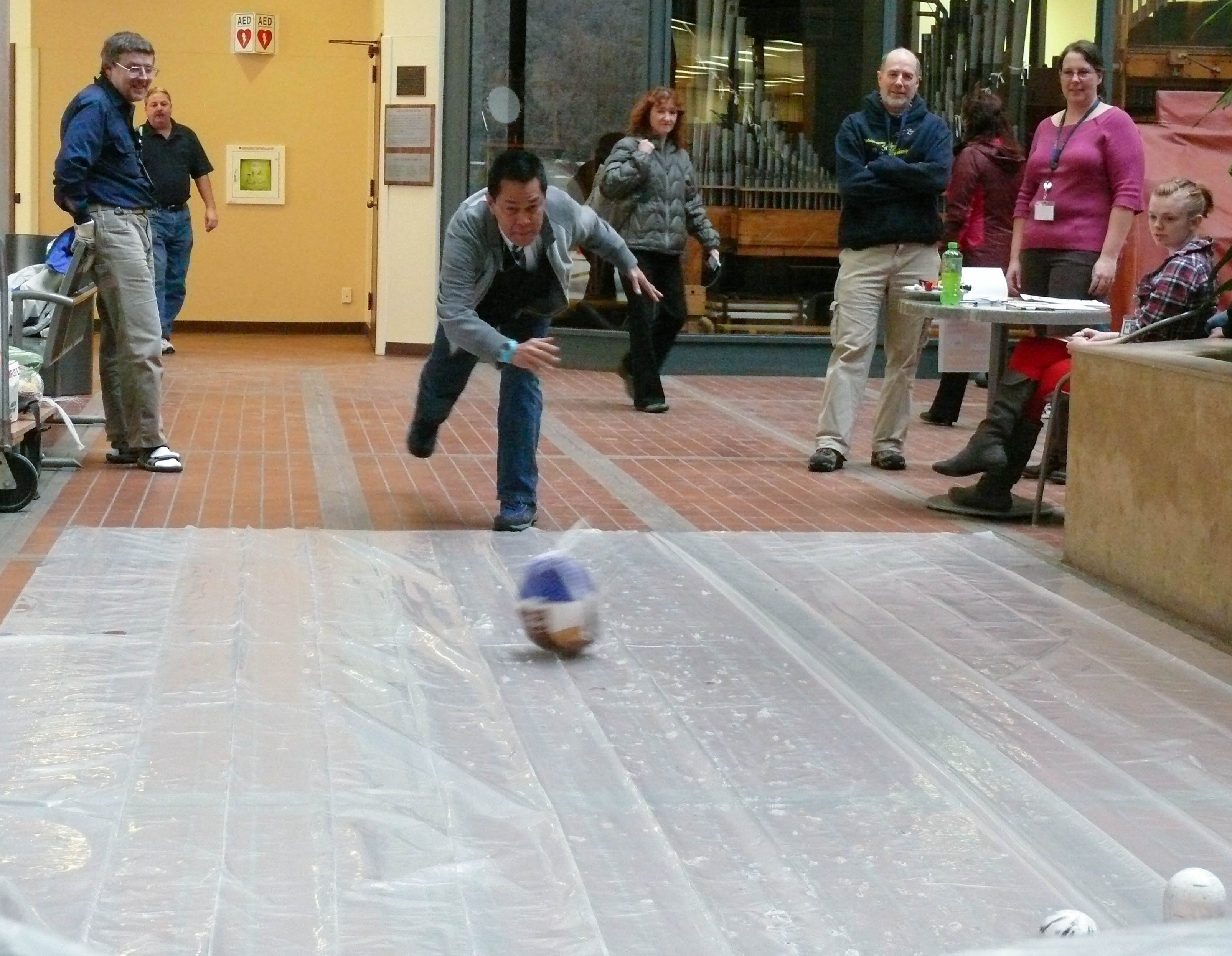
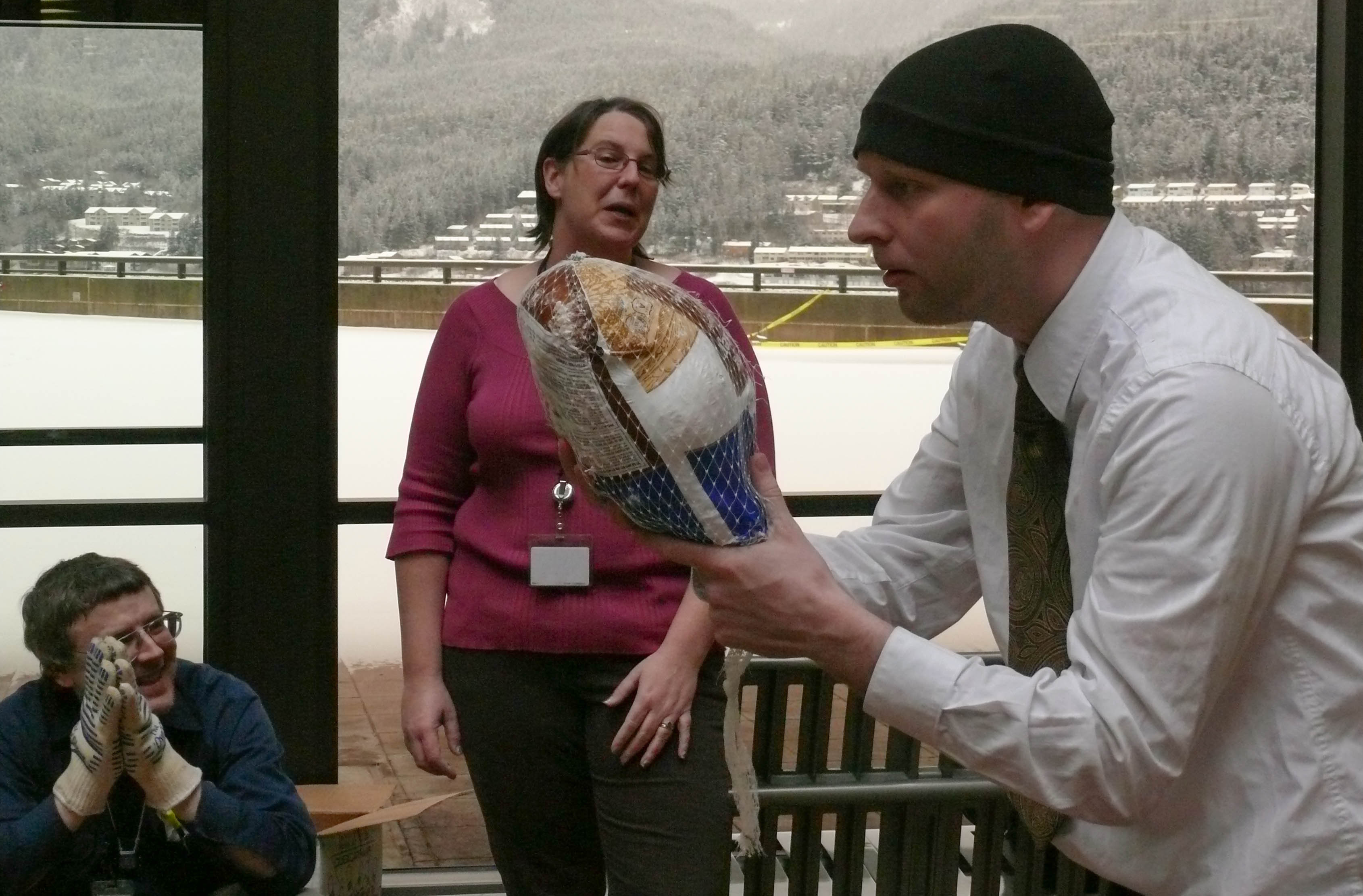
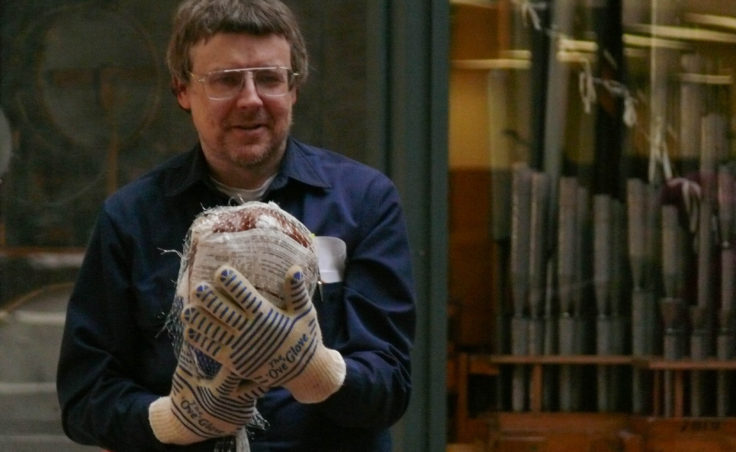
David Brabaw prepares to bowl. He wore two insulated gloves so he could comfortably handle the frozen turkey. (Photo by Jeremy Hsieh/ KTOO)
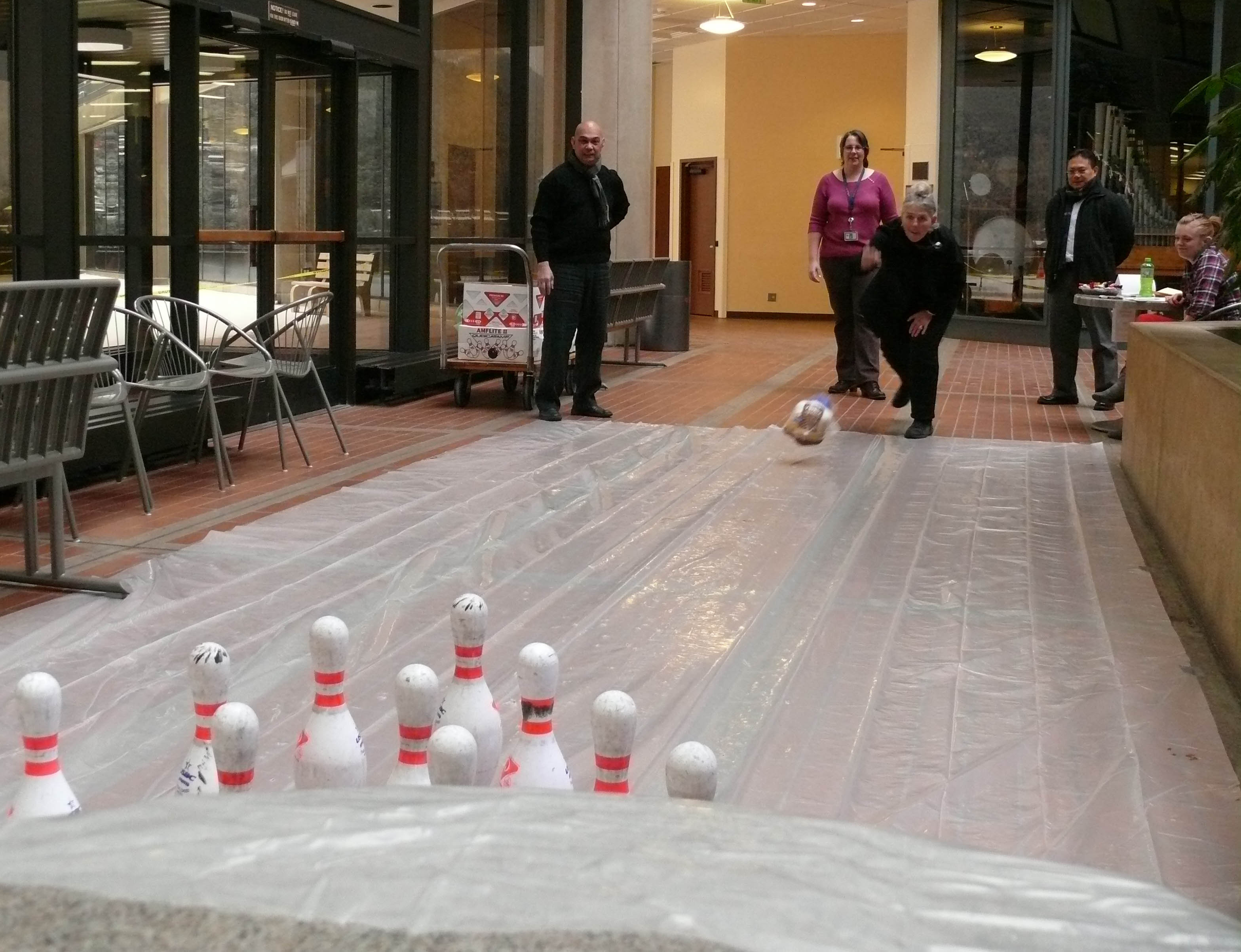
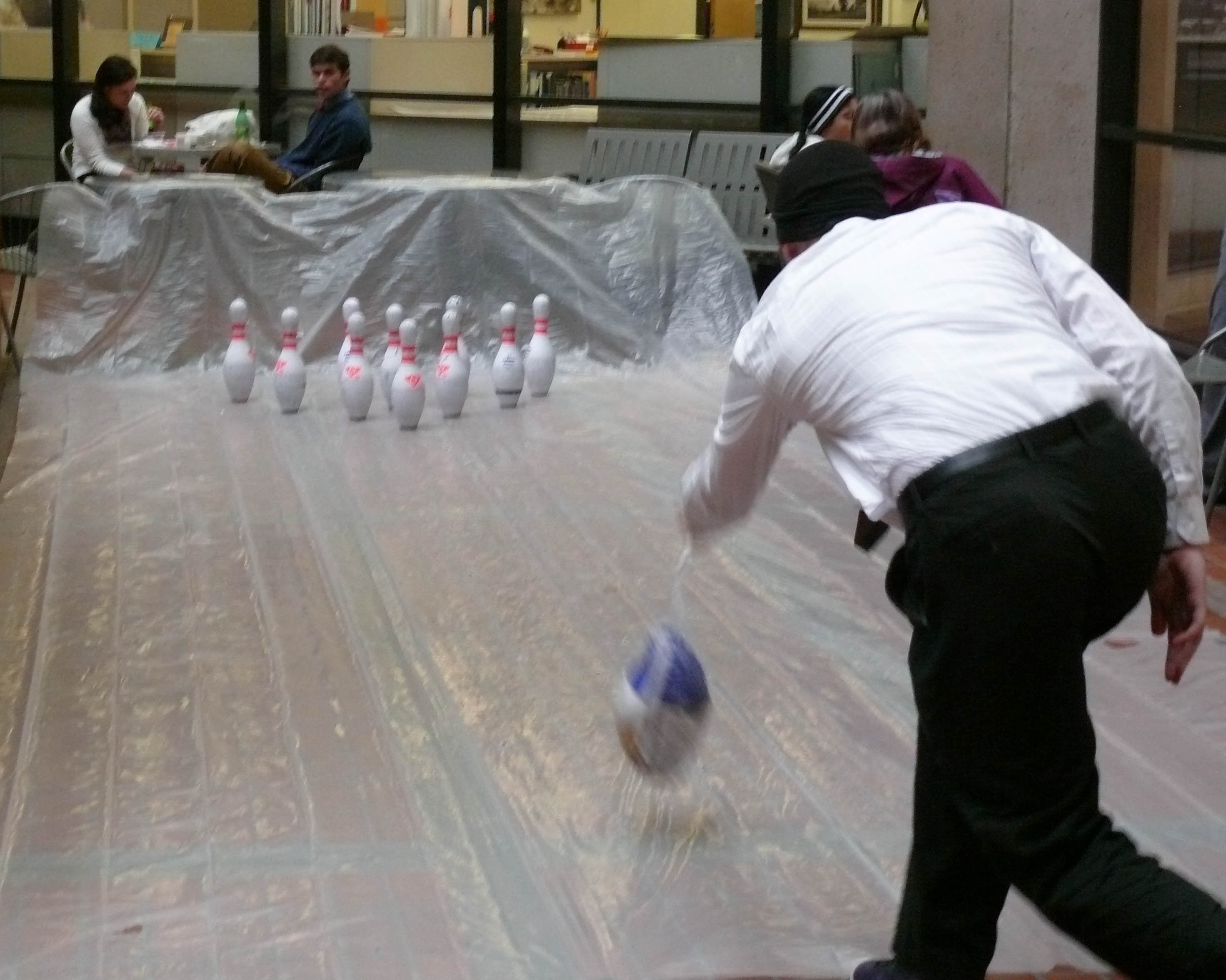
Barbara Pritchett bowls a turkey at Juneau's State Office Building on Wednesday. Pritchett's office, Enterprise Technology Services, organized the turkey bowling fundraiser. (Photo by Jeremy Hsieh/ KTOO)
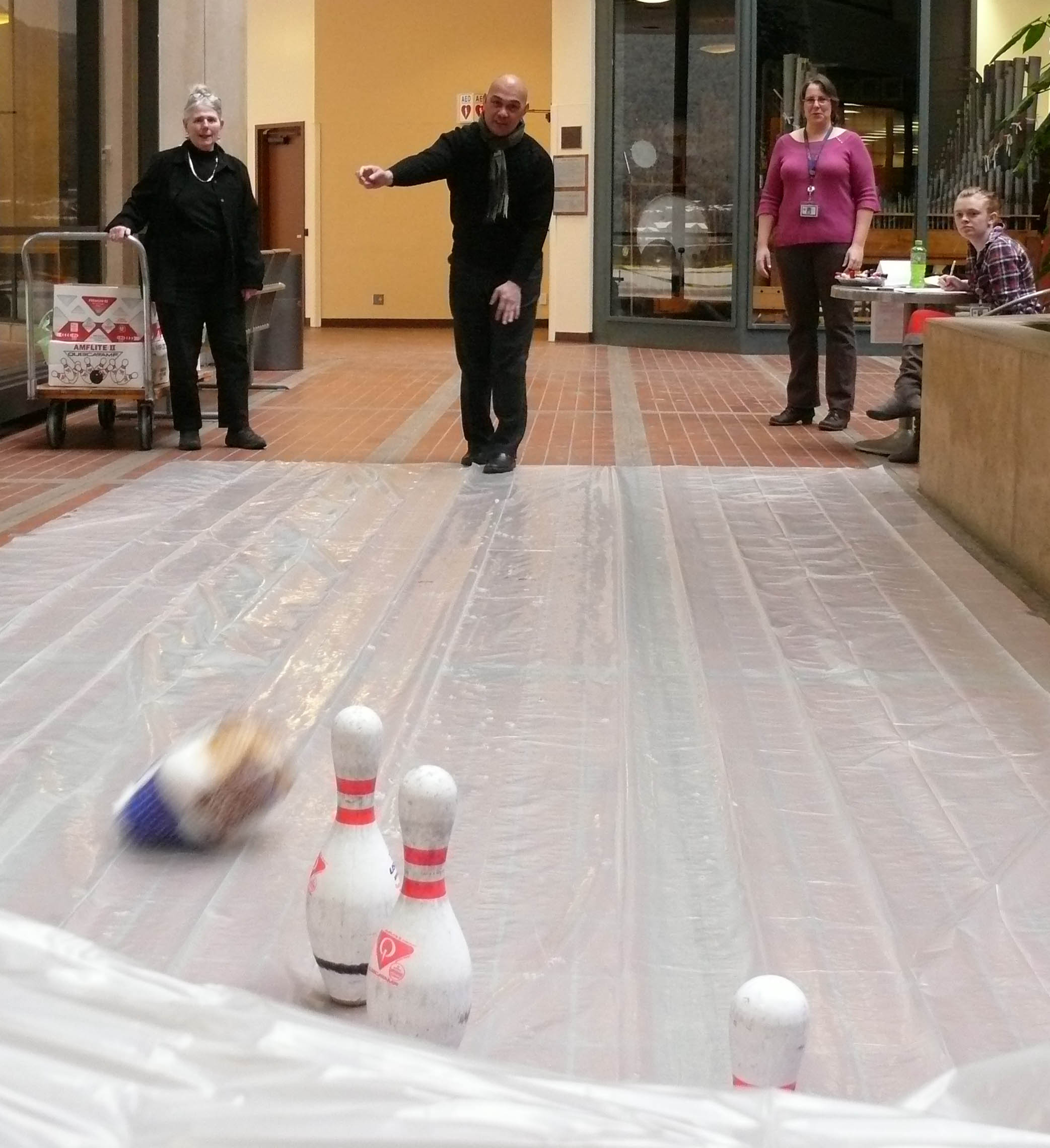
Bong Carandang tries to pick up a spare turkey bowling on Wednesday at the State Office Building. (Photo by Jeremy Hsieh/ KTOO)
Norman Sarabia bowls a turkey down a makeshift lane in the State Office Building. (Photo by Jeremy Hsieh/ KTOO)
An unidentified bowler winds up as David Brabaw and Valleri Collins watch. (Photo by Jeremy Hsieh/ KTOO)
Taku Lanes donated the pins. The lane was made out of a plastic drop cloth and duct tape. (Photo by Jeremy Hsieh/ KTOO)
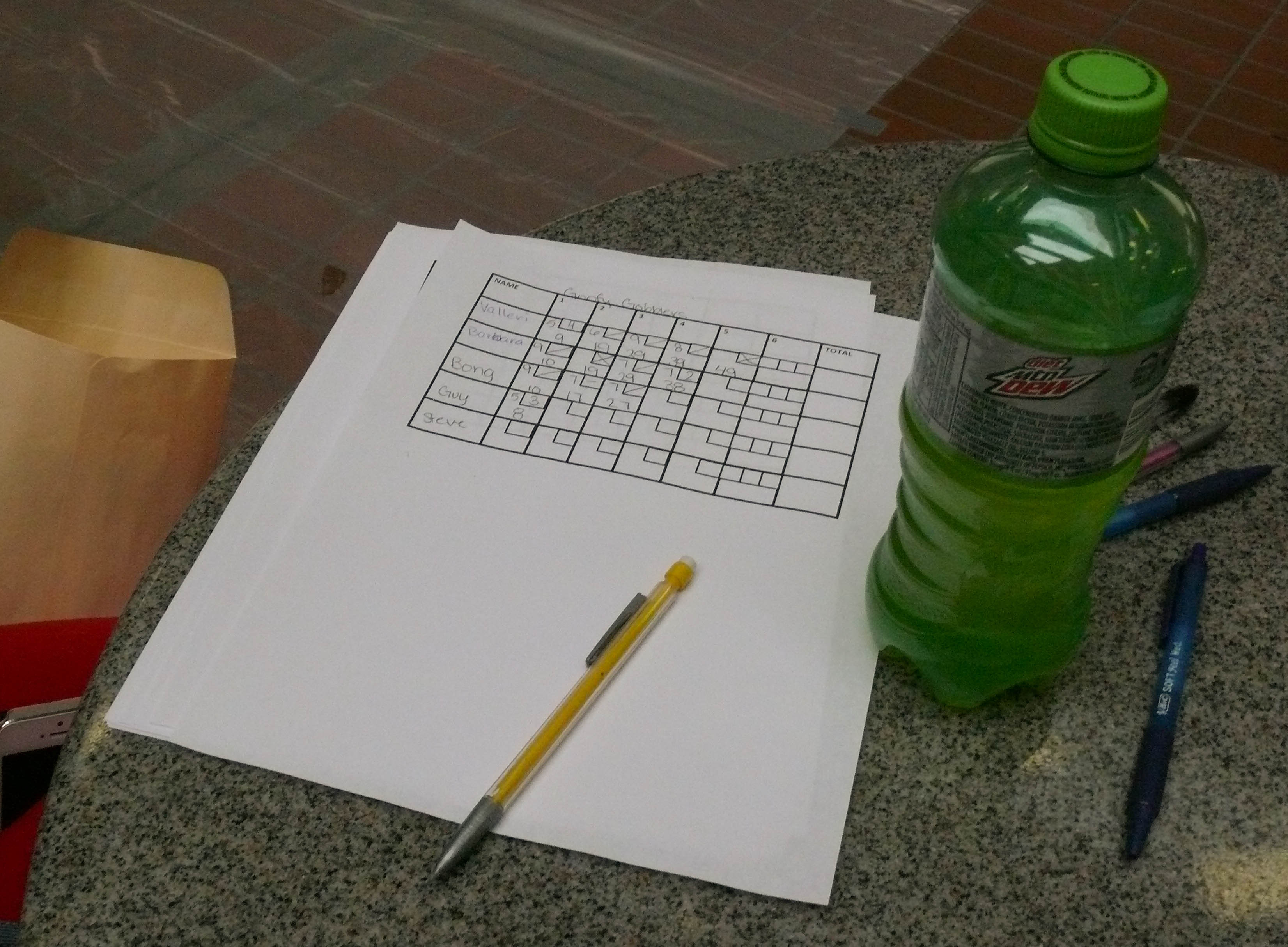
They kept score, but didn't award bonus points for strikes and spares. (Photo by Jeremy Hsieh/ KTOO)
David Brabaw is clutching a frozen, 8-pound turkey in a pair of as-seen-on-TV Ove Gloves. He’s got a bowler’s stance as he eyes the pins at the end of the lane over the bird’s rump.
There’s a hush as bird strikes the pins, then an eruption of cheers as the pins settle, including an ecstatic, guttural “YEAH!” from Brabaw — he got a strike.
Brabaw’s not at a rowdy bowling alley, but on the eighth floor of Juneau’s State Office Building. He was one of a handful of state workers turkey bowling on Wednesday during the lunch hour. That unmistakable sound of bowling pins getting knocked around echoed up several stories of the building.
One makeshift bowling lane with 10 real pins was fashioned out of duct tape and a plastic drop cloth on the tile floor.
“Well, I have 34 right now in the fourth frame, but the last two frames, I’ll get a strike!” said Bong Carandang in the midst of a competitive game. “Or I’m gonna try and get a strike!”
The event was organized by employees of the division of Enterprise Technology Services. They charged $2 a throw, or $5 for a six-frame game. It was a fundraiser for the SHARE Campaign, a charitable giving program for state employees.
The turkey hucking was a spectacle. Folks were watching in the atrium, and several more gawked from interior office windows.
“Turkey bowling, I was very envious of, it sounded like great fun,” said Paula Pawlowski, the SHARE Campaign coordinator for the whole state, though her day job is as executive director of Serve Alaska. Different offices run the SHARE Campaign from year to year.
Turkey bowling was one many novel events state employees across Alaska put together to raise money for charities and nonprofits. Past events included selling chances to throw a pie at IT people, Halloween parties, coffee sales, silent auctions, chili cook-offs and bake sales.
“There are all kinds of creative ways that they’re having fun while giving at the same time,” Pawlowski said.
The SHARE Campaign goal for the year is to raise $415,000. The campaign is about two-thirds of the way there.
Wednesday’s turkey bowling event will kick in another $95, less the cost of the drop cloth. Taku Lanes donated the pins. The two turkeys used were also donated, but were too beat up to be regifted.
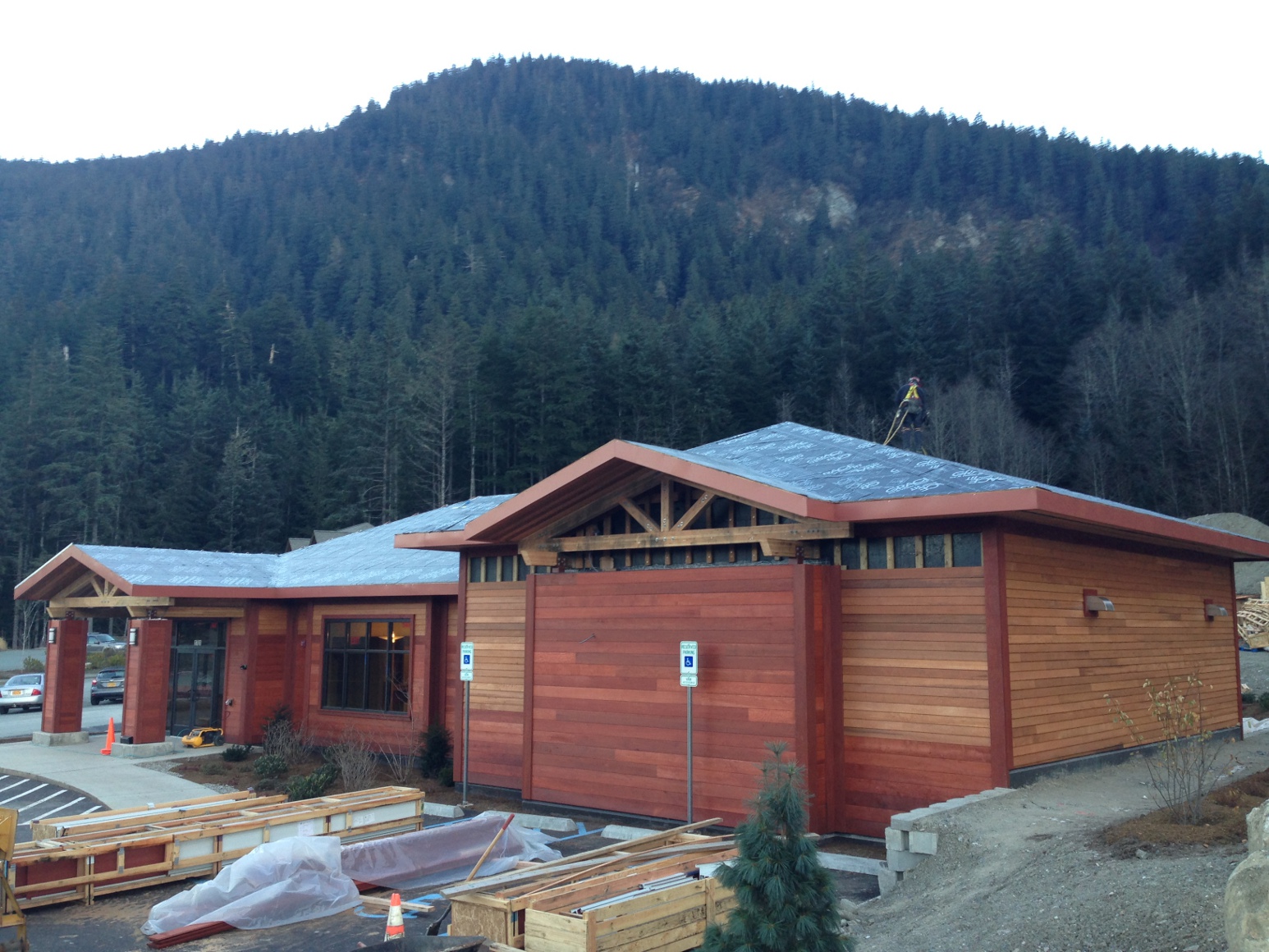
The Southeast Radiation Oncology Center is located on Salmon Creek Lane, near Bartlett Regional Hospital and the Southeast Alaska Regional Health Consortium campus in Juneau. Photo by Casey Kelly/KTOO.
Starting next month cancer patients in Juneau and Southeast Alaska won’t have far to travel for radiation treatment.
The new Southeast Radiation Oncology Center opens December 12th in the Capital City. It’s the first radiation cancer treatment center in the region.
Dr. Eugene Huang arrived in Juneau a week and a half ago, and says so far he loves his new community.
“I love this town,” he says. “Of any place I’ve ever been, the people here are the warmest, most welcoming, most inviting and most friendly people I’ve ever met.”
The 36-year-old Huang is medical director for Southeast Radiation Oncology Center. His wife, their two children, and a pair of Pomeranians will be joining him in the Capital City in about two weeks.
They come to Juneau from Cleveland, where Huang was a radiation oncologist at the world-renowned Cleveland Clinic. Before that he did his residency at the M.D. Anderson Cancer Center in Houston, near where he attended medical school at Baylor University.
Huang says opening a brand new clinic has always been one of his professional dreams.
“To be able to be part of helping to build something, and to bring a service to a community that really needs it,” says Huang.
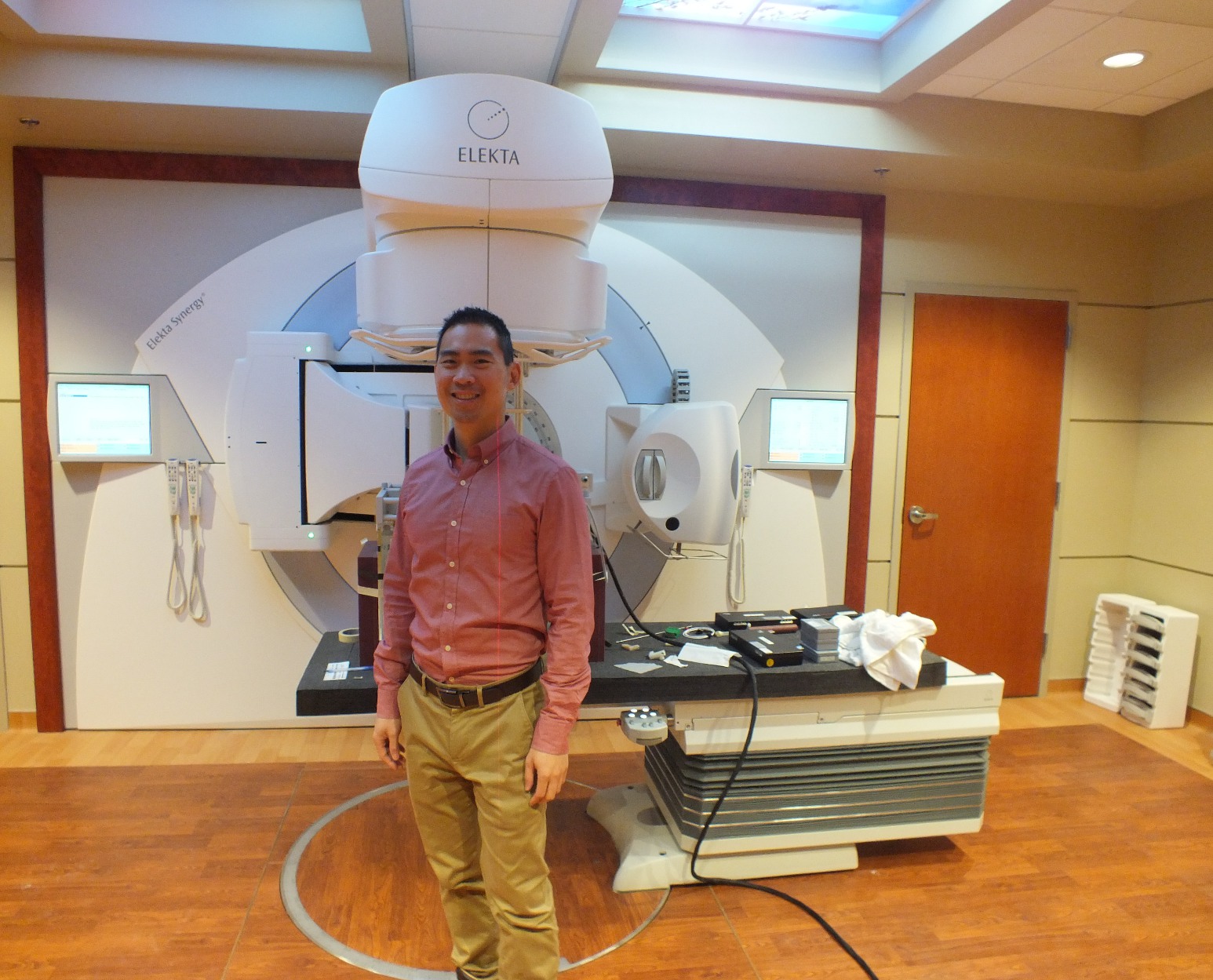
Dr. Eugene Huang is medical director at Southeast Radiation Oncology Center. Photo by Casey Kelly/KTOO.
Radiation has been the missing component from cancer treatment in Juneau. Surgery and chemotherapy are available locally, but patients who need radiation have had to travel to Anchorage, Seattle, or other communities, sometimes for weeks or months at a time.
Once the center opens, Huang says people will be able to have their treatment during the day and sleep in their own bed at night.
“Most patients will be in and out of our doors within 15 minutes,” Huang says.
He’s not sure what the actual demand will be, but says the clinic will have the ability to see 35 to 40 patients per day. Huang says his job will be to act as a kind of care coordinator, working with other medical professionals to develop a treatment plan for each patient.
Both his mother and grandmother had cancer, so he says he knows how important it is to find the right treatment for each individual.
“Obviously as a physician, a lot of times we’re focused on the medical treatment aspect of it,” he says. “But I know from personal experience that that’s only one component of what a patient goes through.”
Nicole Hallingstad is president of the Cancer Connection board of directors. The Juneau nonprofit offers programs and services to help cancer patients, survivors, and their families. She says having a radiation oncology center in Juneau is a game changer.
“Being able to receive radiation in Juneau benefits the patient in so many ways,” Hallingstad says. “We recognize that patients will make choices about where they will receive their health care. But for those who can remain home, or in a region that has a support network for them, is tremendously important.”
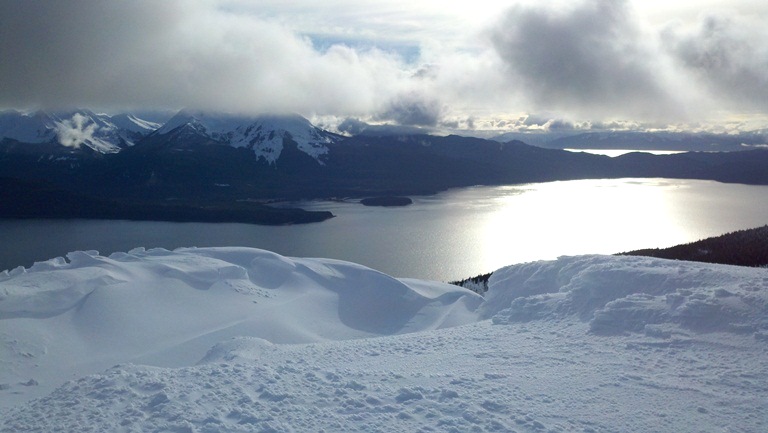
Who can beat this view? Eaglecrest, March 2, 2013. Photo by Rosemarie Alexander / KTOO.
Voting in the Elite 8 Ski Town Throwdown competition ended at 11 p.m. Thursday and Juneau’s Eaglecrest Ski Area beat Revelstoke Mountain Resort by 73 votes.
Eaglecrest is now the Great White North champion and goes on to the Final Four.
Eaglecrest on Tuesday beat Red Mountain Ski Resort by more than 200 votes in the Sweet 16 round of Powder Magazine contest. In the first two rounds, Eaglecrest knocked out two other large British Columbia ski resorts, Whistler/Blackcomb and Mt. Washington.
Eaglecrest Marketing Director Jeffra Clough says the Powder Magazine contest has two more rounds.
“Voting for the Final 4 round will be December 2nd and 3rd and Eaglecrest will be up against the Big East champion, which will be either Mt. Bohemia, Michigan, or Mad River Glen, Vermont,” Clough says.
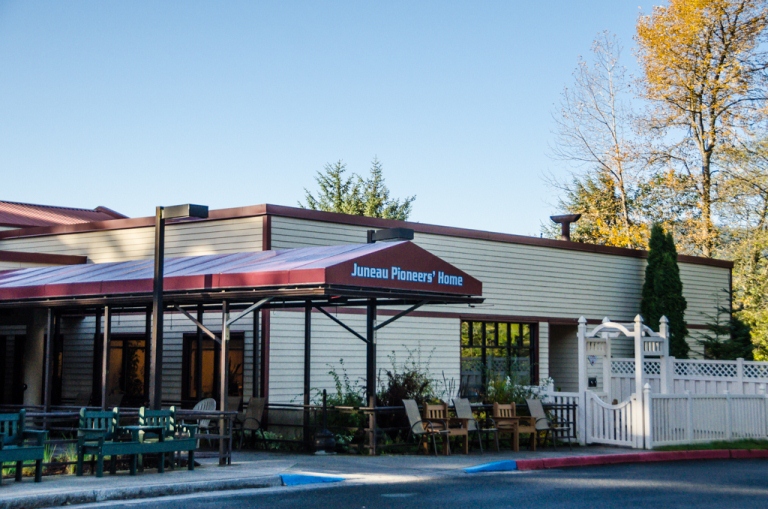
The Pioneer Home is the only assisted living facility for senior citizens in Juneau. Photo by Heather Bryant / KTOO.
The vision for an assisted living center in Juneau is expanding to include a new senior center, independent living and a social service non-profit center on one campus.
First, supporters of the idea are asking the Juneau Assembly to assist in a city-wide survey to quantify senior housing needs.
Previous surveys have indicated a need, but the size of that need is unclear, says Sioux Douglas, co-chair of a task force organized to tackle the issue.
“We want enough data that it tells us what housing and services seniors in Juneau need now and will need in the future. We want to look at the outlying communities, at least in northern Southeast, so that elders who need to come to Juneau for housing and services can do that,” Douglas says.
She says the survey also would answer how big a place to build.
“How many units? How many people? What’s it going to look like? What services do they want the most?”
Douglas hopes the survey will be underway by early next year, since Juneau is behind the curve in planning for what’s being called the “silver tsunami.” People age 65 and over are the fastest growing segment of Alaska’s population.
Planning for that population is one reason Douglas believes the Assembly should help fund the needs assessment, estimated to cost $40,000 to $50,000.
Other groups are interested in the data: An organization called United Human Services would likely co-locate a social service non-profit center on a senior campus.
Joan O’Keefe is Executive Director of SAIL, or Southeast Alaska Independent Living. She says UHS is modeled after other multi-tenant centers in the U.S. and Canada, where non-profits share facilities, such as a board and conference rooms.
SAIL and four other non-profits are currently “proving the model” in a leased space on Hospital Drive.
SAIL is considered an ADRC, or Aging and Disability Resource Center.
“Aging and Disability Resource Centers are part of a federal effort to help people more easily access the long-term services and supports that are available in their communities,” O’Keefe says. “That might include transportation, or assistive technology, or in-home care. ADRCs are designed to connect seniors and people with disabilities and caregivers with long-term services and supports of their choice.”
O’Keefe believes Juneau’s ADRC would logically be located on a senior campus, as well as a non-profit center under the United Human Services umbrella.
Douglas says the vision is to build one campus – typical of centers across the nation – which would include a senior activities center, an assisted living home, apartments for independent seniors, an ADRC, and a center for other non-profits.
NOTE: Updated to correct the last name of Sioux Plummer, her former name, to Sioux Douglas. We regret the error.
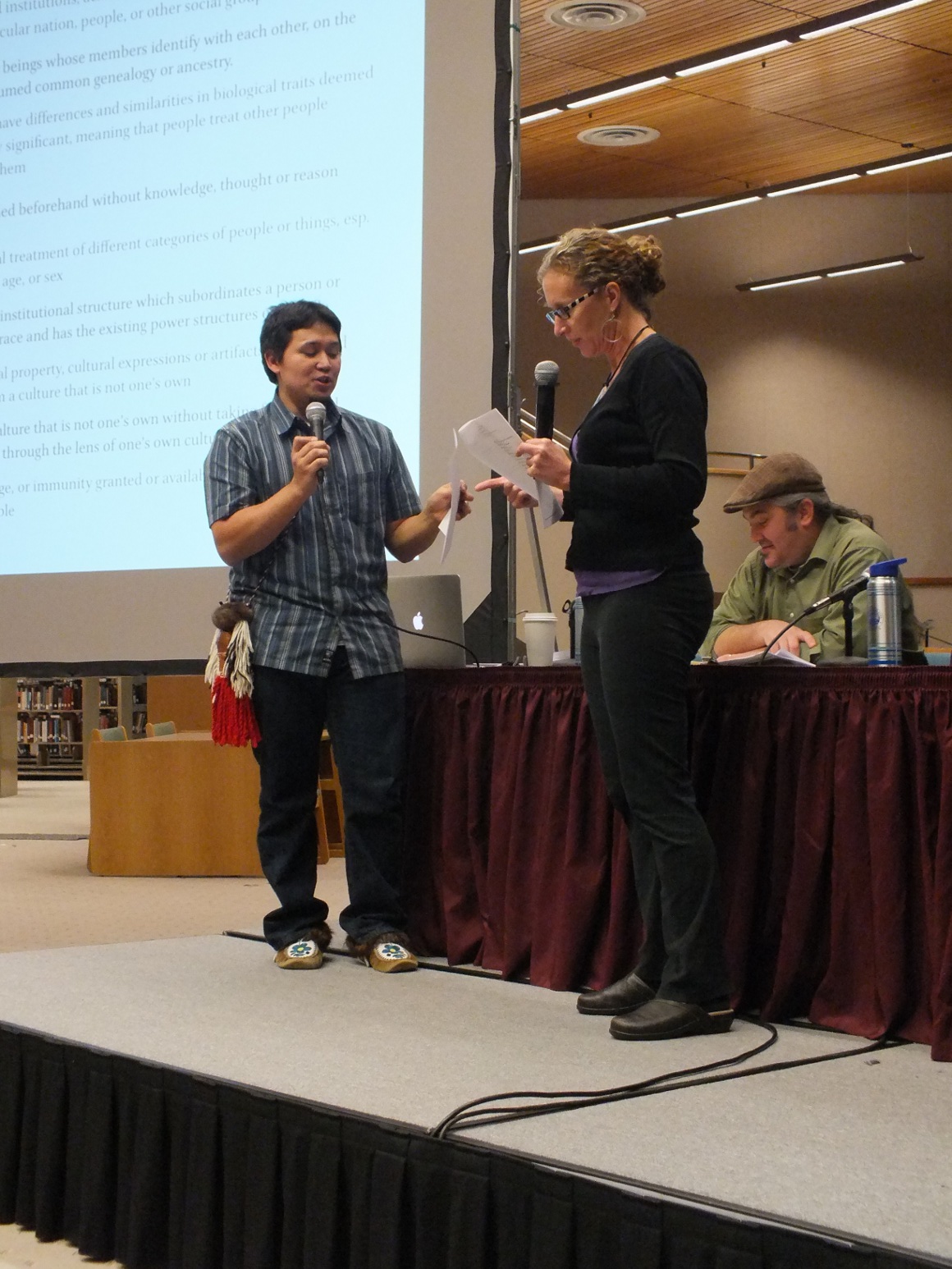
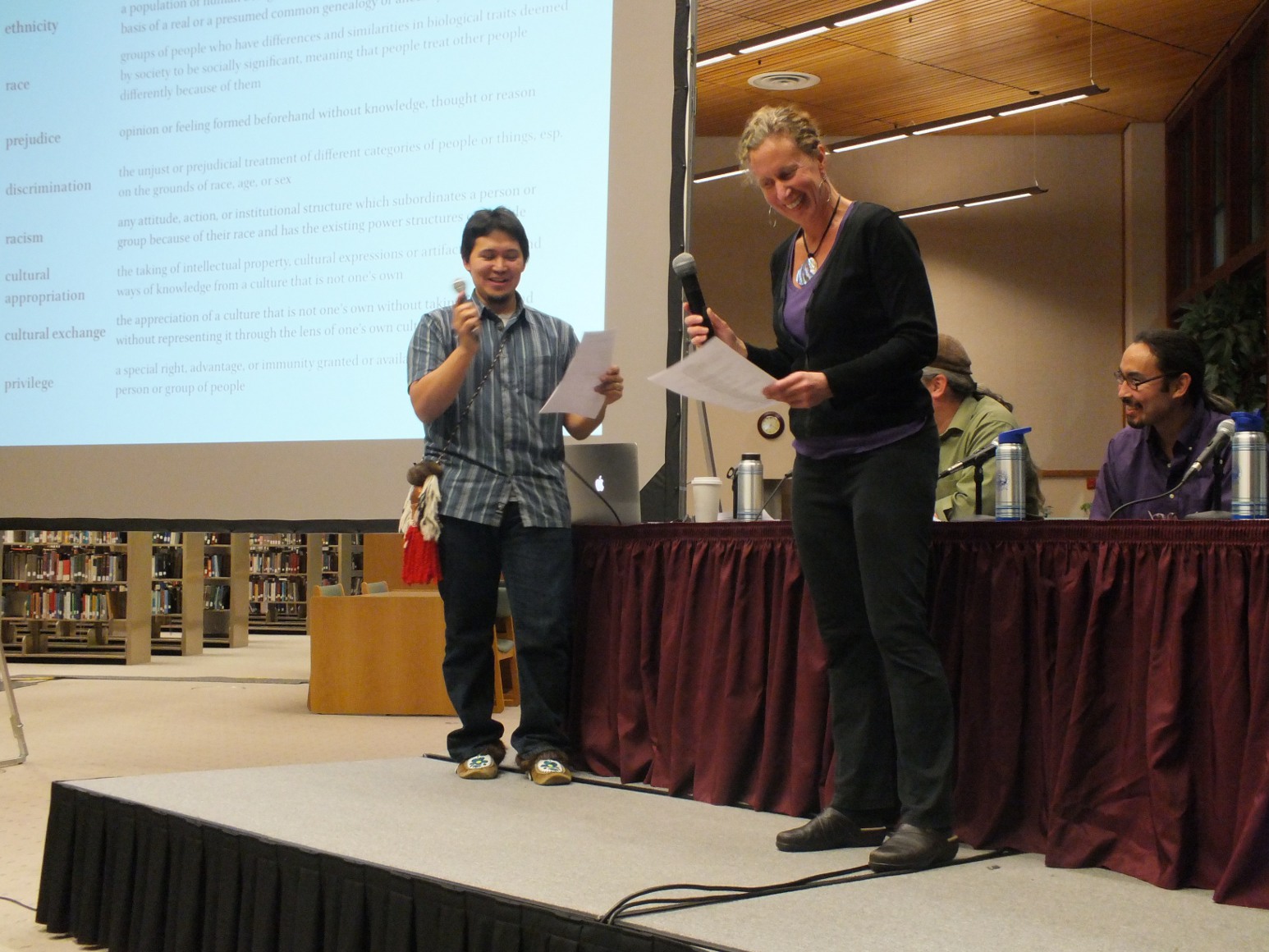
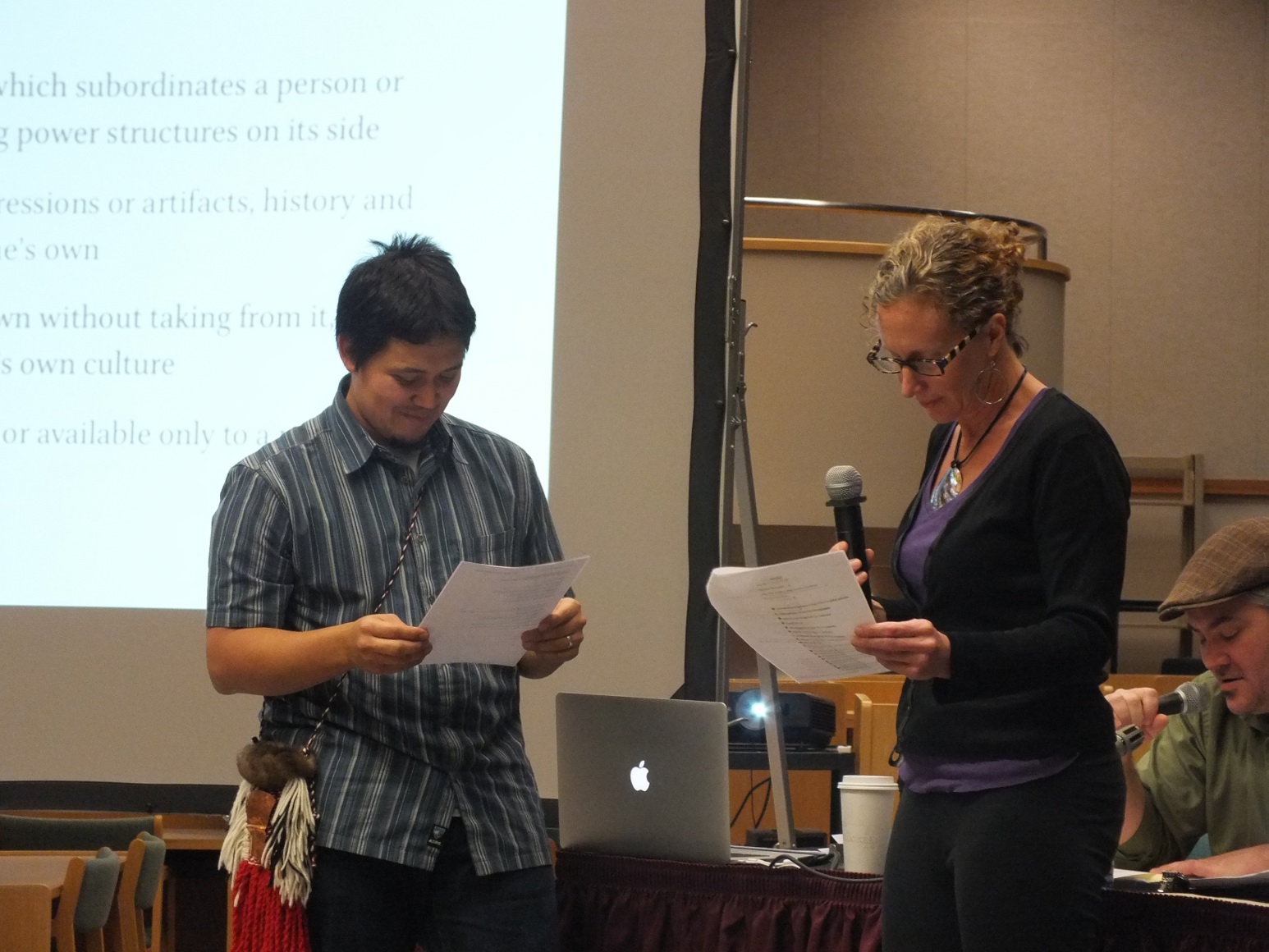
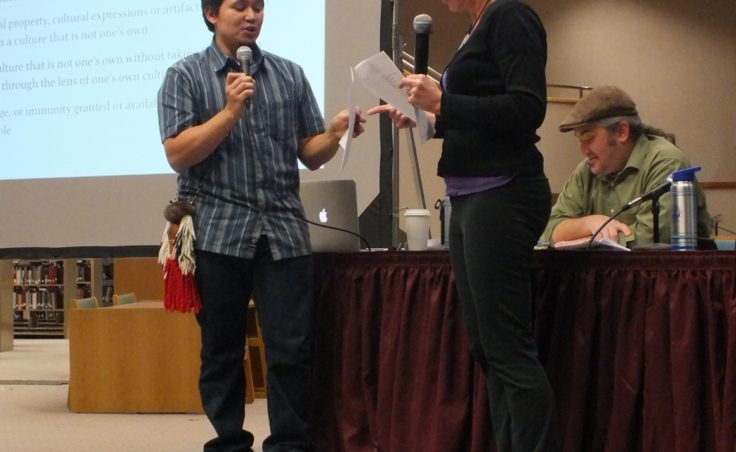
Lance Twitchell and M.K. MacNaughton perform a short skit titled "If Racism Was a Burning Kitchen" by Juneau writer Christy Namee Eriksen. Photo by Casey Kelly/KTOO.
Lance Twitchell and M.K. MacNaughton perform a short skit titled "If Racism Was a Burning Kitchen" by Juneau writer Christy Namee Eriksen. Photo by Casey Kelly/KTOO.
Lance Twitchell and M.K. MacNaughton perform a short skit titled "If Racism Was a Burning Kitchen" by Juneau writer Christy Namee Eriksen. Photo by Casey Kelly/KTOO.
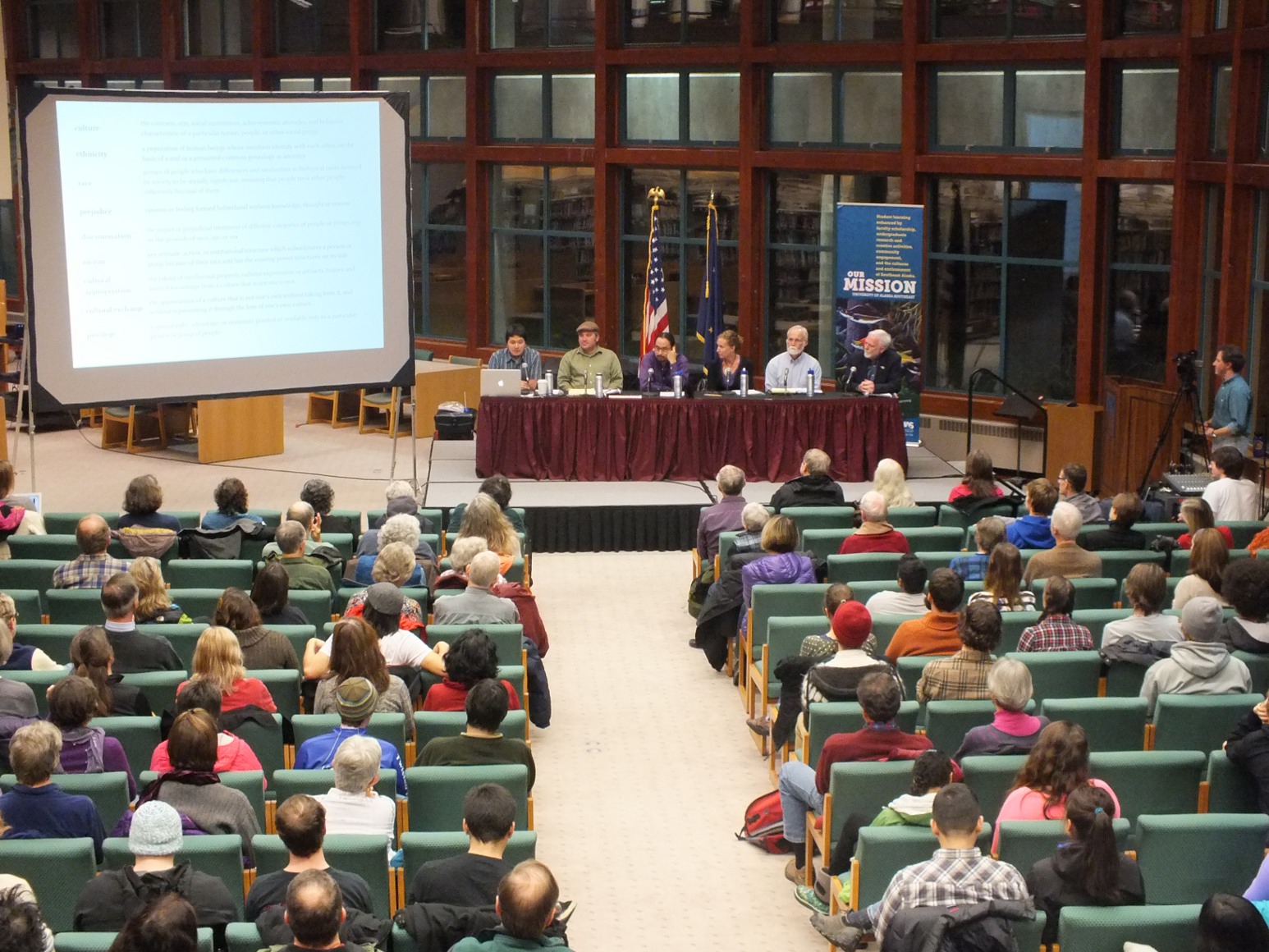
The panel held its discussion as part of the University of Alaska Southeast Evening At Egan Lecture Series. Photo by Casey Kelly/KTOO.
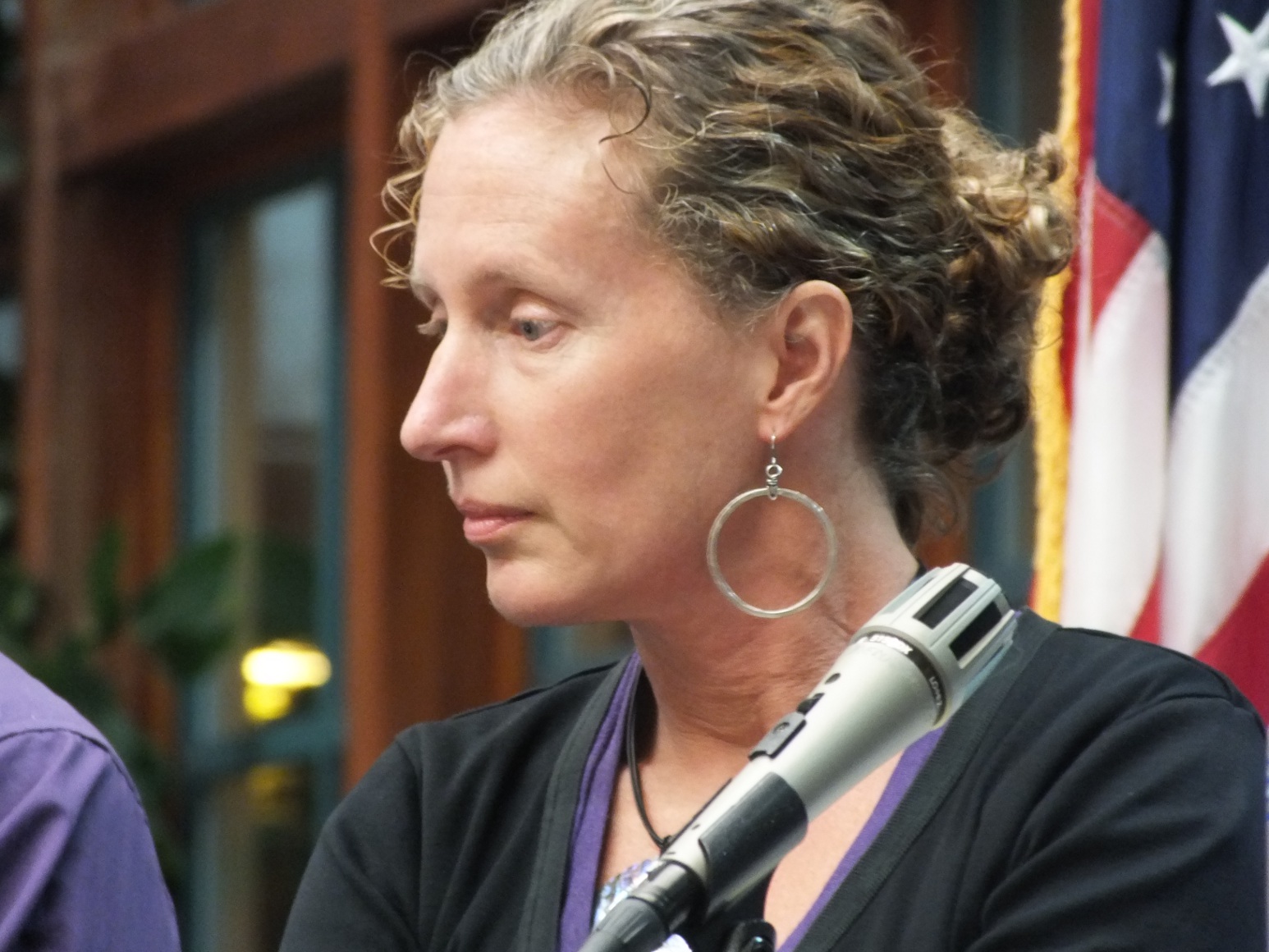
Juneau artist and social justice activist M.K. MacNaughton participates in a panel discussion about racism. Photo by Casey Kelly/KTOO.
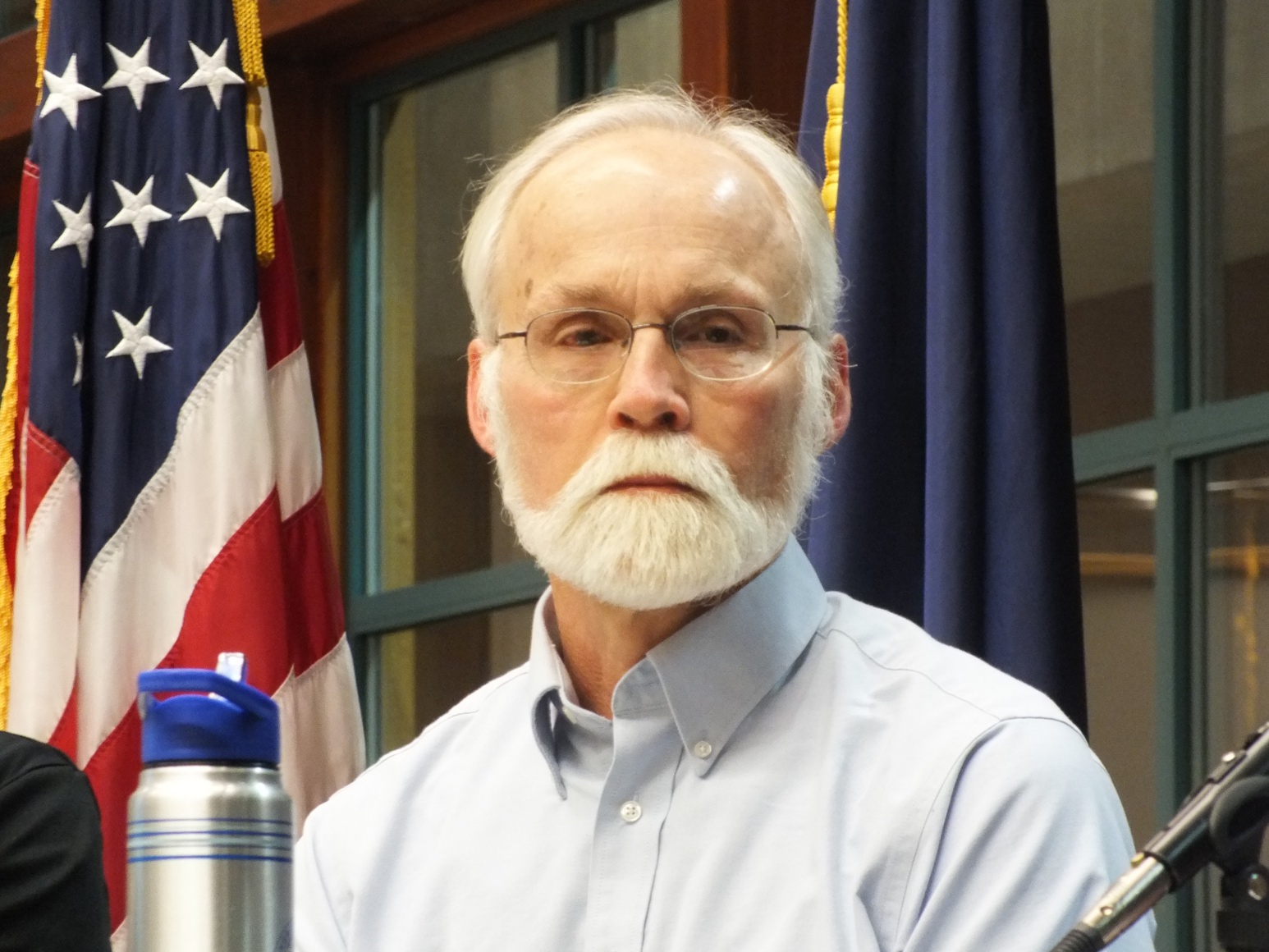
Northern Light United Church Pastor Phil Campbell participates in a panel on racism at the University of Alaska Southeast. Photo by Casey Kelly/KTOO.
A group of Juneau residents are tackling the issue of racism head on.
Their work started earlier this year, and sprang out of the trial of George Zimmerman for killing unarmed Florida teenager Trayvon Martin, as well as a series of local events that had been building up for years.
The group held a panel discussion last Friday at the University of Alaska Southeast called “Deconstructing Racism: Power and Privilege in Our Community.”
UAS Professor Sol Neely started by setting the scene for a short skit by local writer Christy Namee Eriksen: “Act One: “If Racism Was a Burning Kitchen.” An Asian and a Caucasian are standing in a kitchen. The kitchen is on fire.”
Twitchell: “Whoa! Is the kitchen on fire?” MacNaughton: “Are you calling me an arsonist? I am not an arsonist.” Twitchell: “I am literally burning up. I’m pretty sure the kitchen is ON FIRE.” MacNaughton: “I didn’t build this house, I just live here.” Twitchell: “Let’s leave and build a new house.” MacNaughton: “I’m not going anywhere, this is my house.”
Twitchell is a Tlingit speaker and a professor of Alaska Native Languages at UAS. MacNaughton is an artist and social justice activist. They were joined by Neely, Alaska Native storyteller Ishmael Hope, and Northern Light United Church Pastor Phil Campbell.
Twitchell acknowledged many people prefer to avoid talking about race and racism. He said the panel’s discussion was not the beginning of the conversation, nor should it be the end.
“It’s important that this conversation occurs throughout our community on a regular basis,” he said. “So that we can become more aware of the types of things that create oppression.”
Like the Asian character in Eriksen’s play suggesting they leave the burning house and build a new one, the panelists suggested tearing down social systems that create racism. Hope said too often people of color are marginalized.
“And in fact, often get thrown into jail, targeted, not supported for success, put in the area where they are denied access to success, and to power, and to privilege, and any kind of authority,” Hope said.
He pointed to the Alaska Native dropout rate, which is often cited as an example of inherent racism in the education system. According to the National Indian Education Association, Alaska is one of 14 states where the Native American graduation rate is lower than 60 percent.
“There’s something wrong there,” Hope said.
The panelists said an incident last April during the Alaska Folk Festival sparked them to begin talking about racism locally. A group of revelers at the annual bourbon brunch, which is not officially part of Folk Festival, dressed up in Asian-themed garb. Pictures of the event were posted on social media, leading to questions about whether it was racist.
MacNaughton says she found the photos “mildly to wildly offensive.”
“Mostly focused on really sexually demeaning, stereotypical, female images of Asian women,” MacNaughton said.
She decided to speak out after playwright Eriksen was attacked on Facebook for pointing out how the party was offensive. MacNaughton said it can be difficult for white people to admit that something they have done is racist, or to speak out when they witness racism taking place.
“And I don’t mean to pick on other white people,” she said. “I have said racist things naively. I haven’t spoken up every time I’ve heard or seen something racist. Sometimes people take your breath away. Sometimes you just don’t have the words or know how to respond in the moment.”
The Reverend Phil Campbell has taught social justice classes at universities and theology schools. He says white people have work to do when it comes to talking about race.
“We’re not very skilled at understanding ourselves as ‘raced,'” he said. “And therefore, racism is someone else’s problem that we might help with, when, in fact, I would posit it is primarily, in this society, a white problem.”
Toward the end of the discussion an audience member asked the panelists if they were optimistic about the future. Twitchell said he was cautiously optimistic, noting that Alaska Natives still have higher suicide rates, and higher rates of being victims of violent crime than other races.
“But I am optimistic, because we can have these conversations and they occur on a larger level,” said Twitchell.
Sol Neely responded to the question by quoting African American philosopher and activist Cornel West, who said: “I cannot be an optimist but I am a prisoner of hope.”
The conversation about race and racism continues Wednesday at 6:30 p.m. at Northern Light United Church, which has been hosting similar conversations monthly since September.
Close
Update notification options
Subscribe to notifications
Subscribe
Get notifications about news related to the topics you care about. You can unsubscribe anytime.