Community

From Minecraft to real craft

A 3D model created in the video game Minecraft by a Juneau high schooler became a real craft on Saturday.

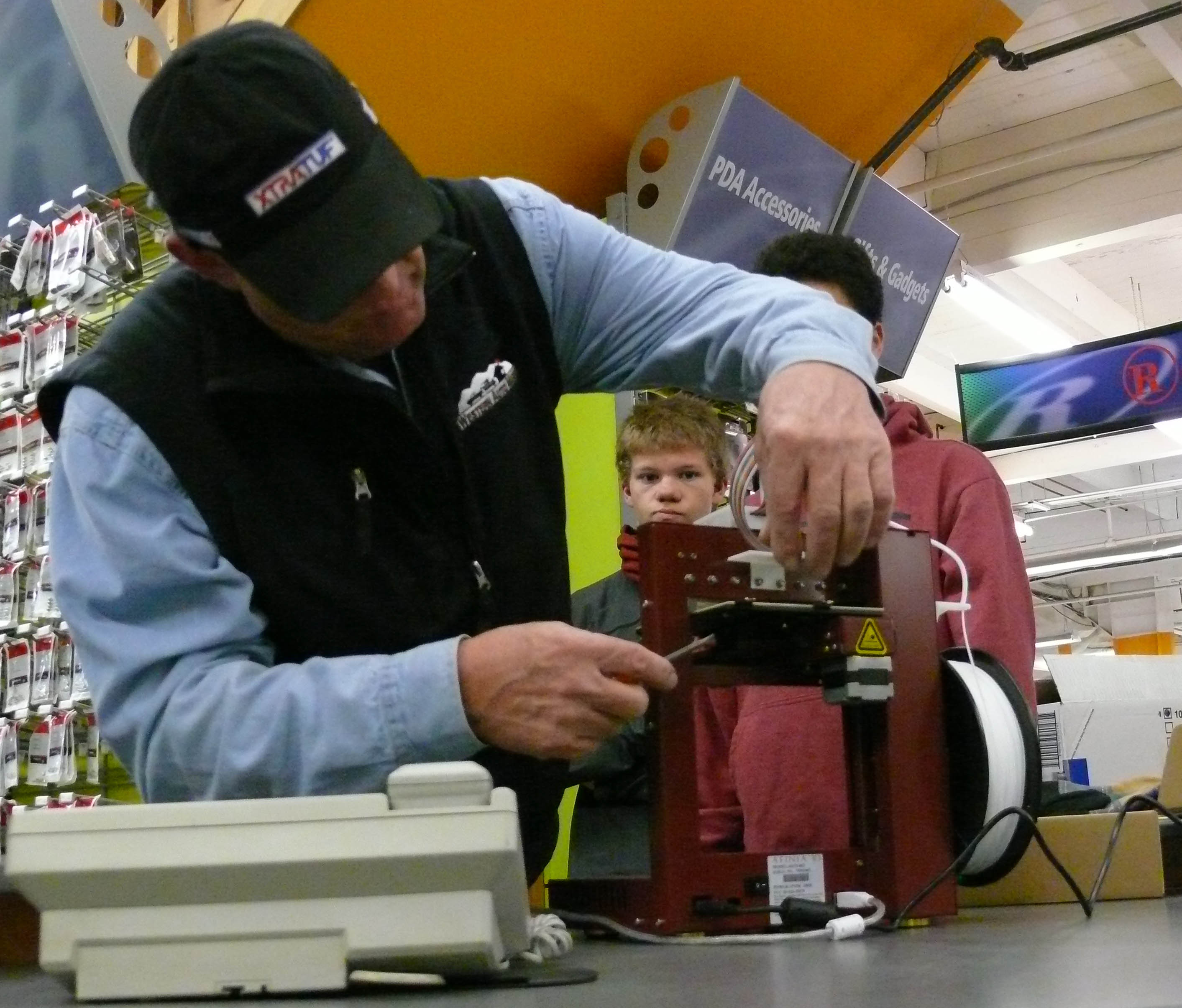
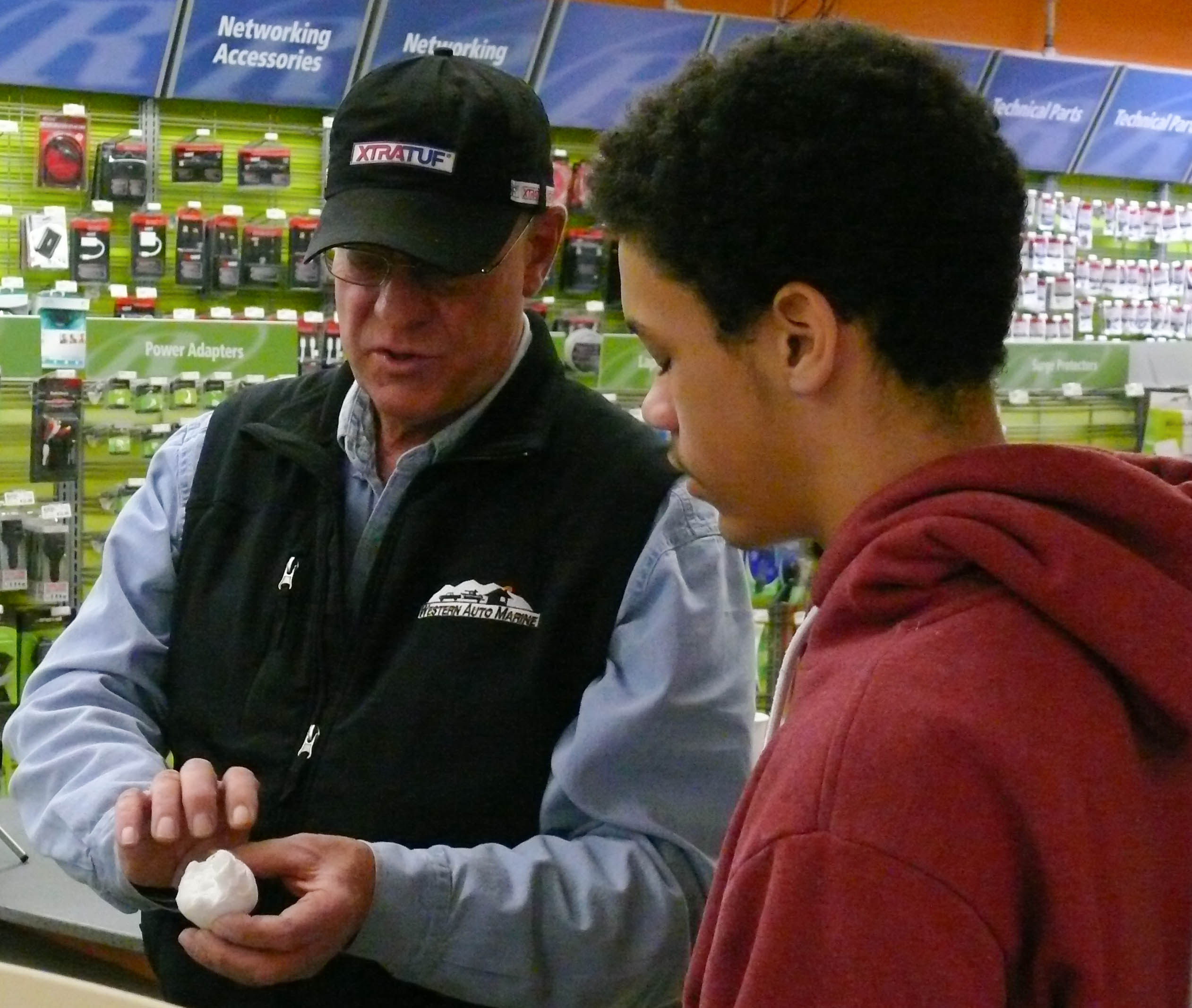
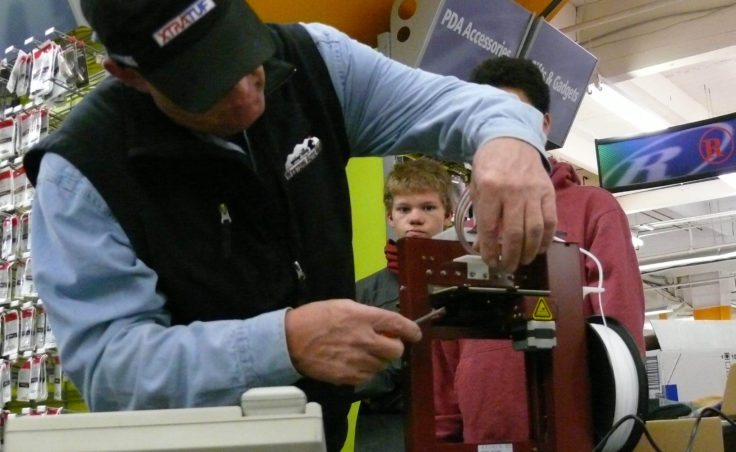
Freshman Caleb Brown is in a digital arts class at Thunder Mountain High School. He was at Western Auto Marine on Saturday morning with a few teachers and classmates watching a new 3D printer build his paperweight-sized sword in a stone out of melted plastic, layer by layer.

“Oh, I think it’s really cool. I just learned a lot about 3D printers over the summer just at my house. And I thought they were cool, and now I have the opportunity to see one and use one with my design, which is pretty cool,” Brown said.

Heather Ridgway is Brown’s digital arts teacher.

“A 3D printer is a great way to kind of pop it off the screen and put it in your hand. And go, oh, OK, this is where I’m going, you know? … You know, it just kind of takes it to another dimension,” she said with a laugh.

A 3D printer could let her incorporate jewelry and product design into her class, she said.

Western Auto is the only brick and mortar retailer in Juneau selling any kind of 3D printer. About three weeks ago, general manager John Weedman added two Afinia H-Series models to his inventory.

“One to show, one to go,” he said.

On Saturday, he was showing.

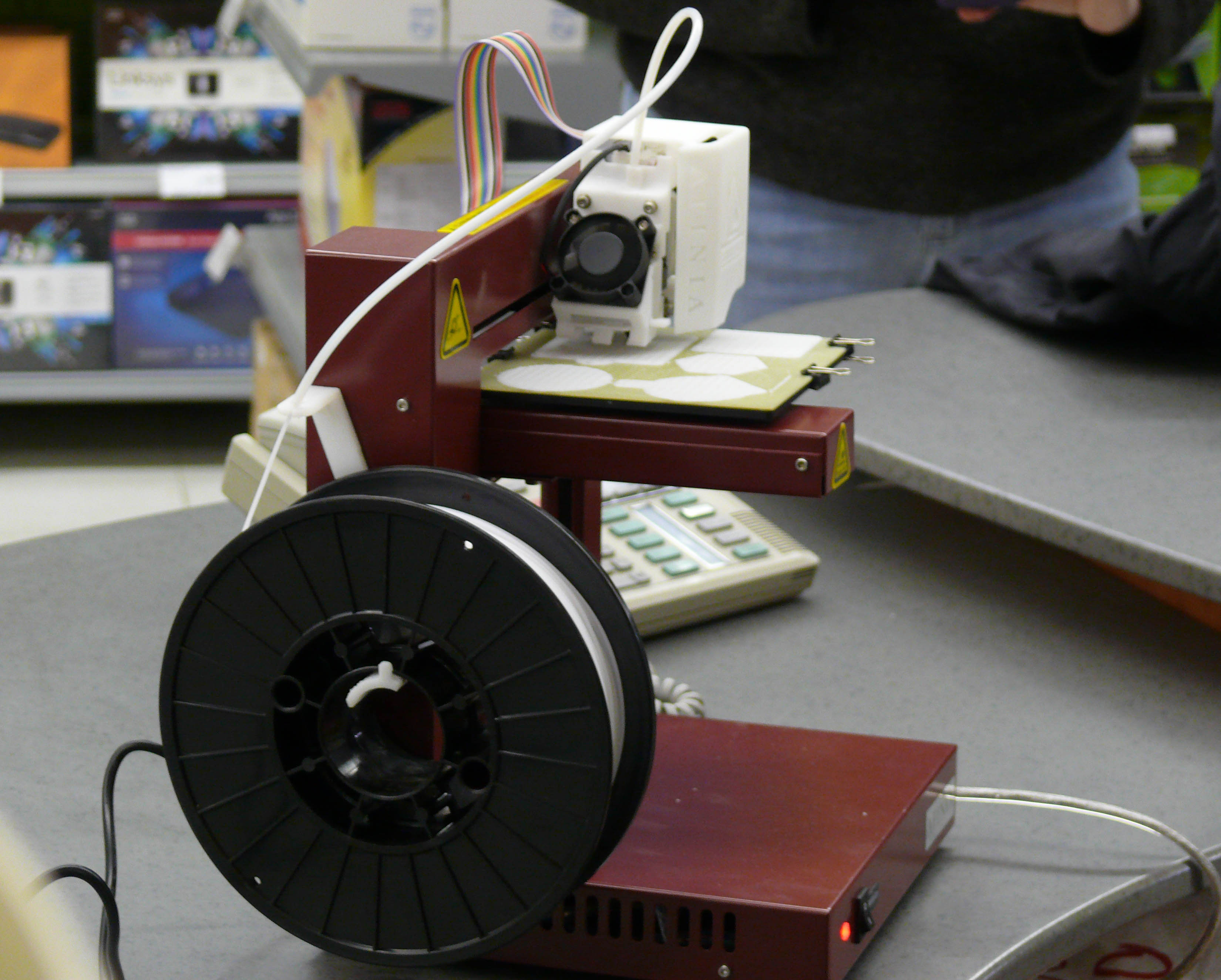
The $1,600 printer he’s selling weighs about 11 pounds and has a sturdy, industrial look with lots of right angles. Like a regular printer, the print head is suspended vertically over a printing surface. The print head only moves side to side and melts plastic filament fed from a spool.

The printing surface is a small platform that moves forward and back, like a sheet of paper fed through a typical printer. The platform also moves vertically to accommodate layering of the plastic material.

The printer can create small objects up to 5 cubic inches designed on home computers from a variety of software. It took several hours on Saturday morning for it to build student-submitted designs.

Weedman wants to sow consumer and educational interest in the technology, which, in recent years, has become much less expensive and much more accessible to hobbyists. After the holidays, he’s giving away his floor model to Thunder Mountain High School.

“It’s like donating fishing rods to Family Fishing Day at Twin Lakes. We want future fishermen,” he said.

With no previous experience, Weedman said had the printer doing its initial run in about four hours. Since then, he’s made luggage tags, a small skull, carabiner-like clips with flexible hinges, and some parts that attach to a mouse trap to make a toy car.

The designs came from the growing online community of do-it-your-selfers who share 3D print models.

Thunder Mountain robotics coach Carol May sees a lot of potential for her club. The rules in robotics competitions limit the off-the-shelf materials that can be used to build robots – but building things from raw materials is OK.

“So a 3D  printer will allow the kids to design a gear or a part or a sprocket or something that they don’t have the right size in the kit and actually print it on the printer and use it,” May said.

Other robotics teams in Southeast are already doing this, May said.

Weedman said he’ll arrange more 3D printer demonstrations as interest warrants.
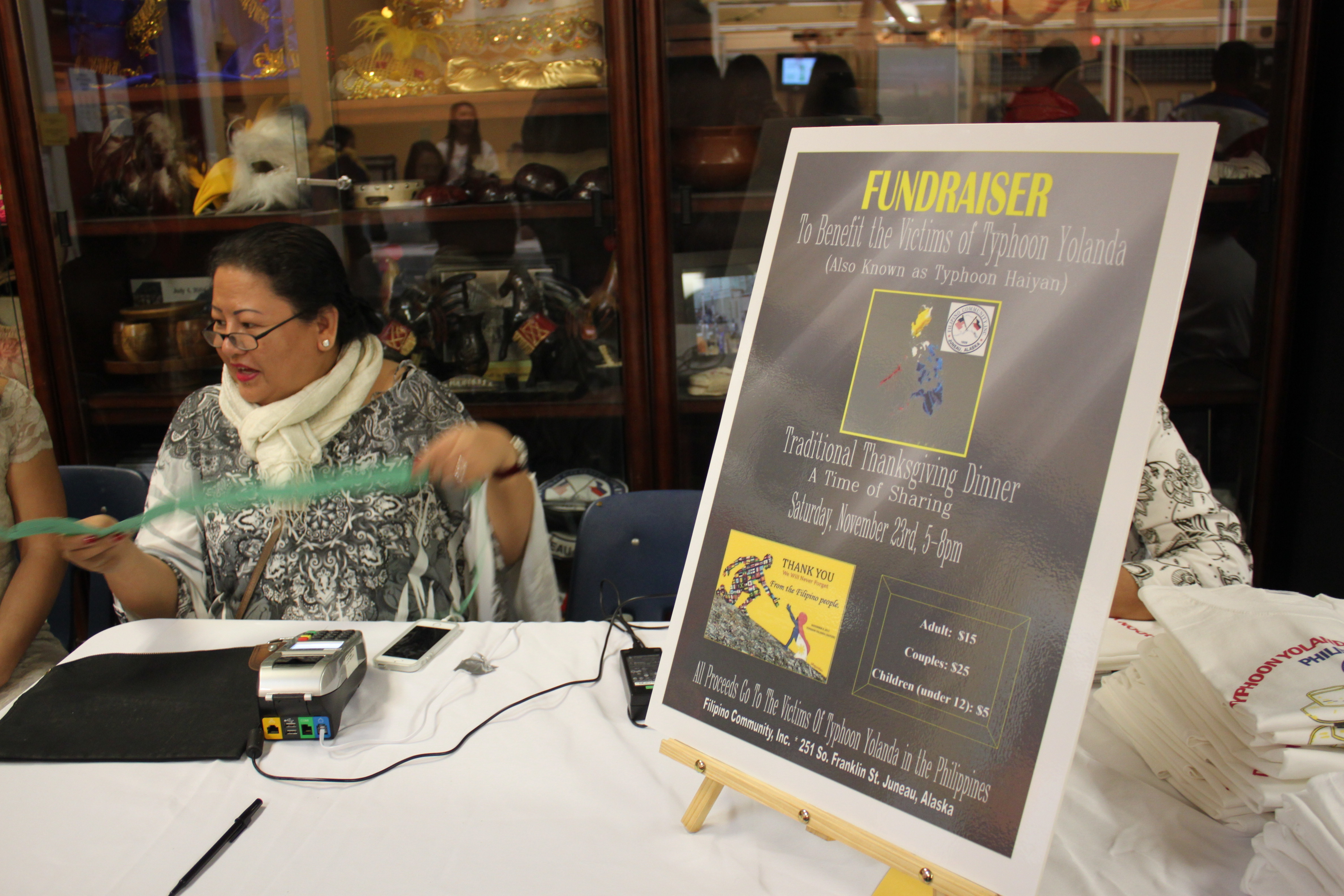
Juneau’s Filipino Community raises $21,000 for typhoon relief

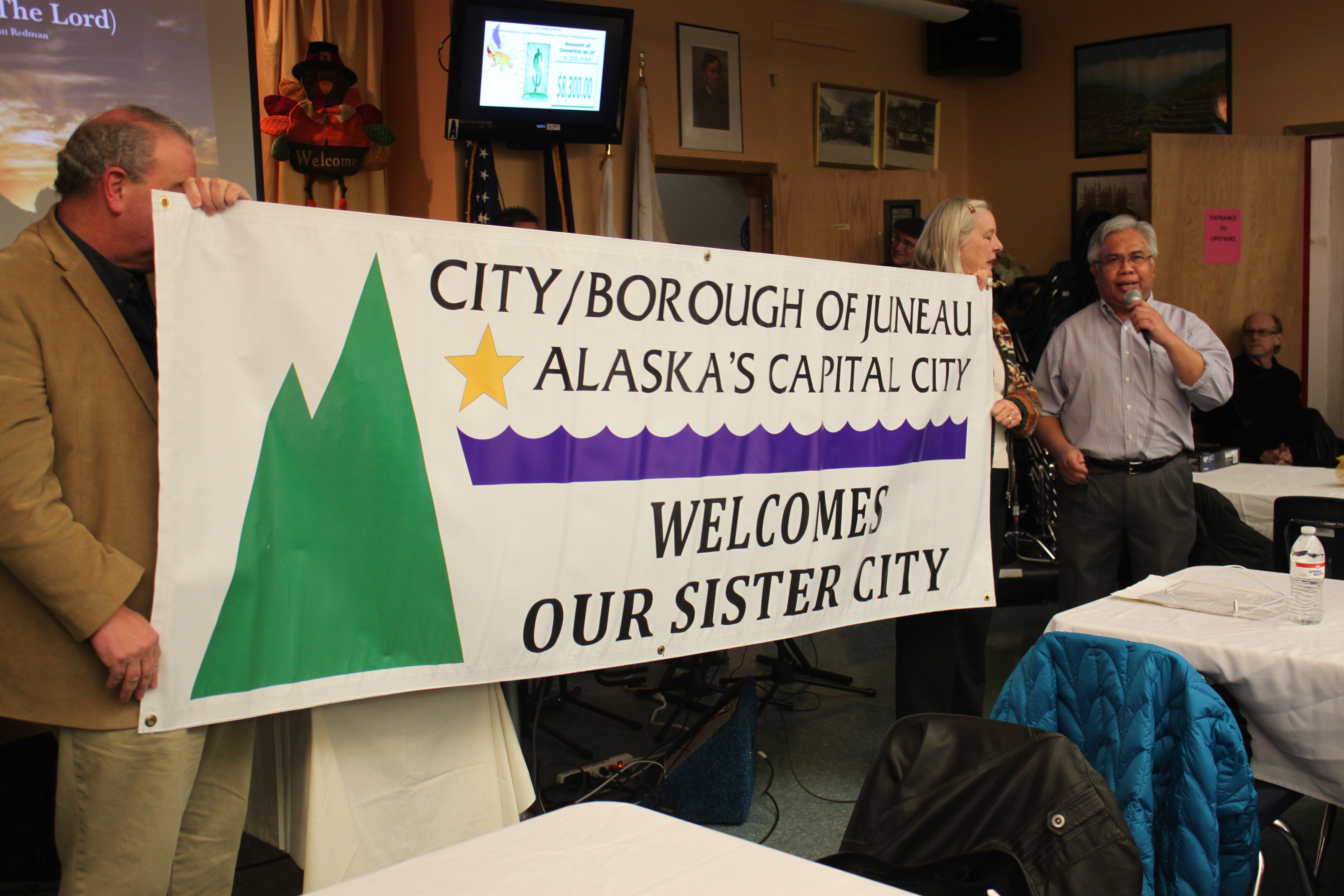
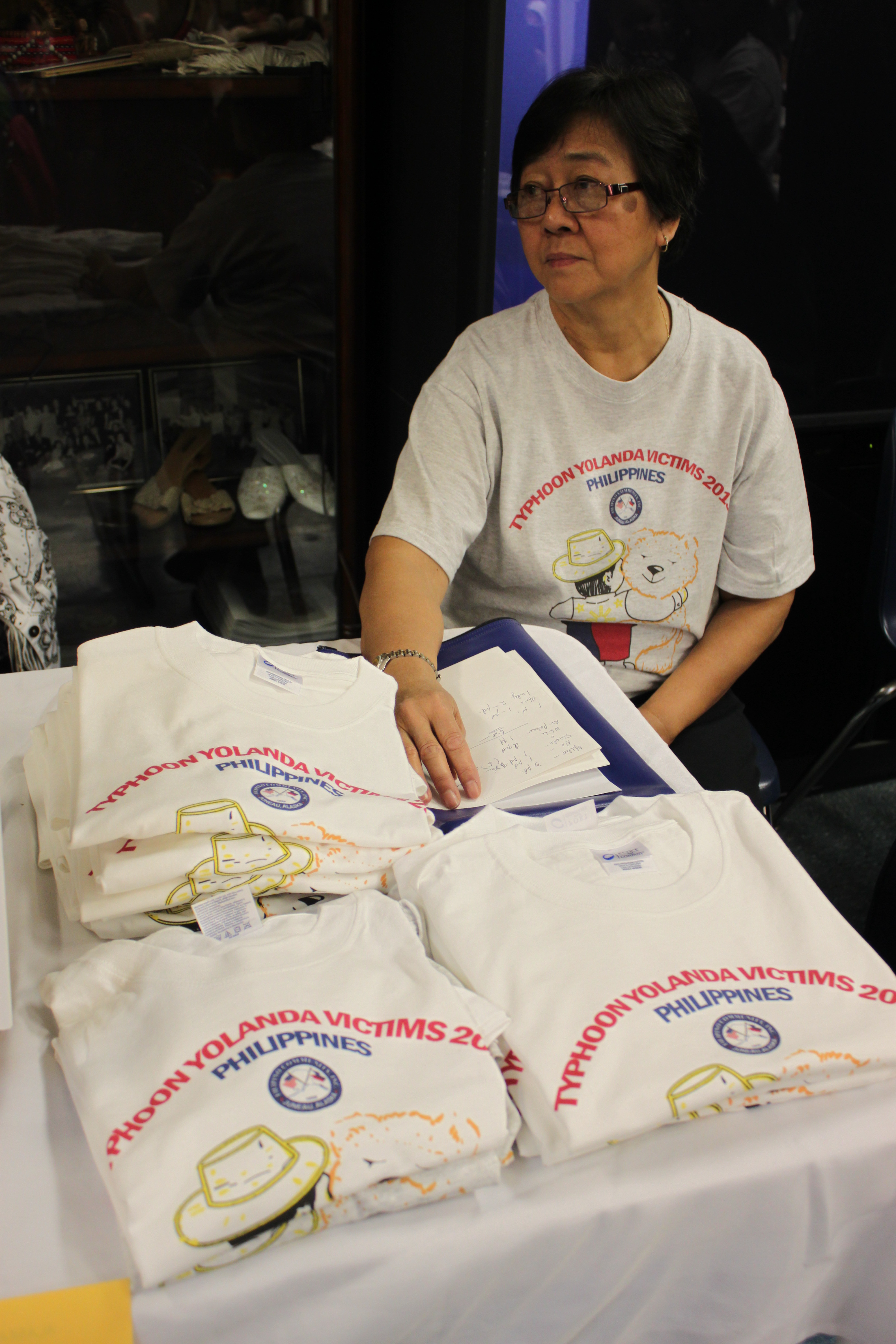
Juneau’s Filipino community will contribute more than $21,000 to the relief effort for victims of Typhoon Haiyan in the Philippines. That’s the amount raised during Saturday’s fundraising dinner.

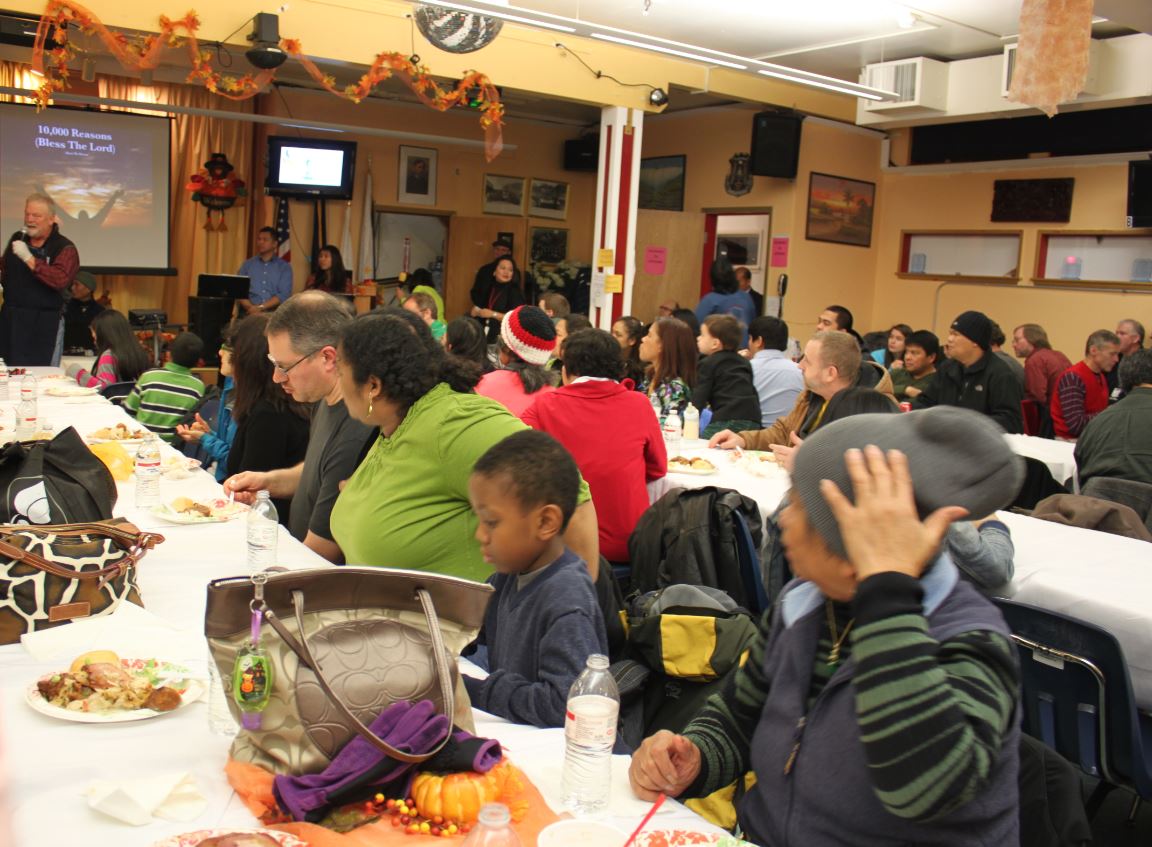
The dinner was scheduled to start at 5 pm but by 4:45, there was already a line of people waiting outside the Filipino Community Hall in downtown Juneau.

By 5:15, the building was packed. “It’s pretty busy,” says Mayden Cristobal, who was selling tickets. “We are swamped. There’s a lot of people and we have a lot of donations.”

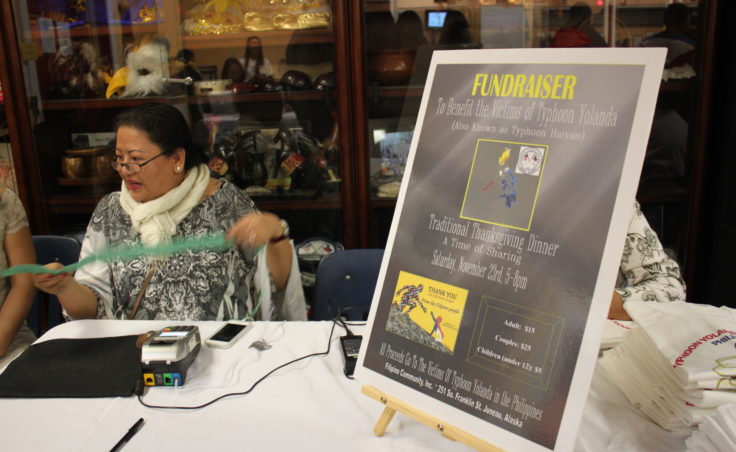
Tickets cost $15 per plate. “Some were paying $50 and some were giving out $100 bill for a $15 plate dinner,” says Dante Reyes, president of Filipino Community, Incorporated.

Shortly after Typhoon Haiyan struck the Philippines November 8th, the non-profit decided to cancel its annual free Thanksgiving Day meal and, instead, hold a fundraising dinner and auction.

State legislators and past and present assembly members stood with members of Filipino Community, Inc to help serve food to about 515 people. The evening brought in more than $21,000. Reyes says some of the gifts were very personal, like Gabriel Kelley’s donation. Reyes says Kelley was raising money for his own trip to France and decided to give half of it to the fundraiser.

“I opened the envelope and I was very, very surprised with the amount. It was a $1,000 check,” describes Reyes. “I am not an emotional person but at the time I am holding back something. Somebody – not a Filipino, not related to a Filipino – instead of having that for himself, he shared it to those who need that big amount of money in the Philippines.”

A portion of the total money raised will go to Juneau’s sister city in the Philippines, Kalibo, which is in Aklan province. “Aklan, too, was damaged by Typhoon Haiyan,” explains Reyes. “It is also on the path of Typhoon Haiyan going out of the Philippines. And it also has devastated not only homes and properties but also some human lives.”

Josielind Ferrer is on the Filipino Community, Inc. board of directors. Ferrar is from the Visayas region, one of the areas hardest hit by Haiyan. Almost every Filipino at the fundraiser was affected in some way by the typhoon.

“We are doing okay,” says Ferrer. “As far as mental, emotional, we are hanging in there. We’re all strong, keeping everybody strong for each other, but with the help of the community – the whole Juneau community – this is definitely giving us more of a boost.”

She says she was overwhelmed by how many people were at the dinner, especially since it was such a last minute event, “but it looks like, just like the Filipino community, Filipinos managed to put it all together and hang in there and like they say, rise up Philippines, and we will do that.”

Reyes says funds will go to a few different organizations, including an international foundation based in the US and Philippines, Catholic Relief Services, and Red Cross.


SEARHC Front Street Clinic soon to be under new management

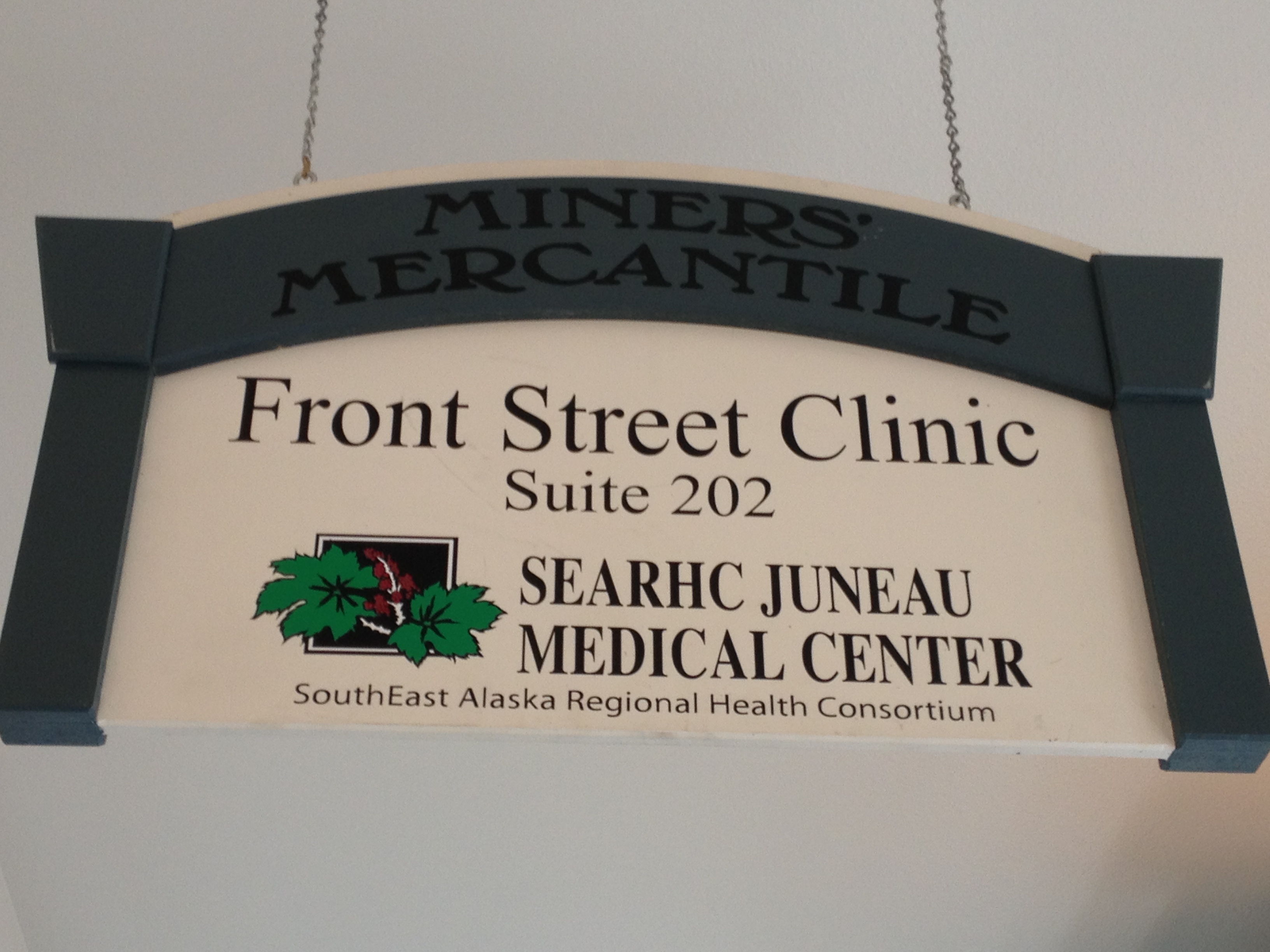
As of May 1, SEARHC will not longer be operating Front Street Clinic. (Photo by Lisa Phu/KTOO)

Southeast Alaska Regional Health Consortium (SEARHC) decided to cut funding to Juneau’s homeless medical center at the end of September due to budgetary constraints.

Front Street Clinic got a six month reprieve when the community was able to raise more than $120,000.

Now, a coalition of local organizations have joined together to keep the clinic open, hopefully, forever.

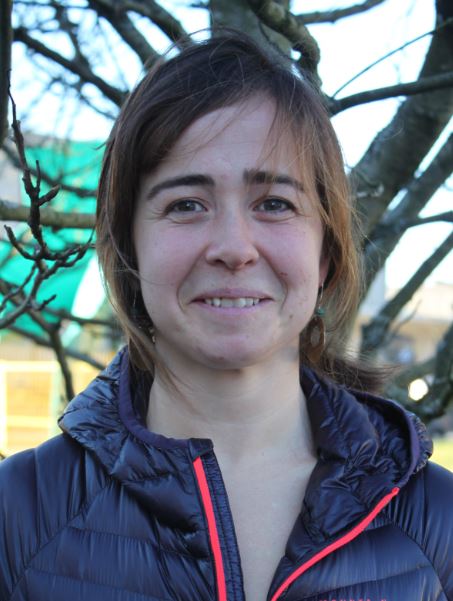
Glory Hole executive director Mariya Lovishchuk is the president of the newly formed Front Street Health Center board of directors. (Photo by Lisa Phu/KTOO)

Front Street Clinic is in the process of becoming its own non-profit organization with a new name – Front Street Health Center. It will still offer the same services – medical, dental, and behavioral health. And it’ll be run by a board of directors from agencies involved in the care of the homeless population.

“I think that all of these agencies just realized that if the Front Street Clinic disappeared, this huge gap would appear that nobody could fill,” says Mariya Lovishchuk, executive director of The Glory Hole, Juneau’s soup kitchen and shelter.

She’s also the president of the newly formed Front Street Health Center board. Other members come from AWARE, Bartlett Regional Hospital, Catholic Community Services, Juneau Alliance for Mental Health, REACH, and St. Vincent de Paul. The board also includes a physician, a public health nurse, and an accountant.

“Because so many entities are coming together, the clinic will be able to function really affordably and in a really sensible manner because the burden is now shared across so many caring and competent organizations,” says Lovishchuk.

Board members are providing resources and services to help run Front Street. For example, Catholic Community Services will take care of Medicaid and Medicare billing, REACH is in charge of janitorial services, and an accountant for Elgee Rehfeld Mertz will do Front Street taxes. “I just feel so grateful to live in a community that has so many dedicated and caring individuals and organizations coming together to ensure that people have access to a very, very basic thing which is primary medical care,” says Lovishchuk.

Board vice president Dr. Carlton Heine was one of several emergency room doctors who donated money when Front Street was in danger of shutting down in October. He says they recognized that if the clinic closed, most of its patients would end up in the ER.

 “We’re very good at heart attacks and broken bones and lacerations. We’re not very good at chronically managing diabetes or hypertension or chronic health care,” Heine explains. “We’re good at acute care, not at chronic ongoing primary care, and the Front Street Clinic does a much better job of providing that kind of service for these patients.”

Dr. Carlton Heine is an emergency medicine physician at Bartlett Regional Hospital. He’s the vice president of the new Front Street board of directors. (Photo by Lisa Phu/KTOO)

Bartlett Regional Hospital will provide laboratory and imaging services for Front Street. If a patient needs an x-ray or blood test, instead of being sent to SEARHC, the patient would go to Bartlett. “Paying a little bit for these appropriate tests ordered through a primary care doctor is certainly a less expensive route for the hospital than having these patients become much sicker, patients in the emergency department with those tests being done through the emergency department, and then potentially sick enough to be admitted to the hospital because they haven’t had the appropriate primary care,” Heine says.

The plan is for Front Street Clinic to become Front Street Health Center when SEARHC gives up management. “Currently SEARHC is operating the clinic through the end of April and we are working very closely with the homeless coalition in Juneau to make – if at all possible – a seamless transition,” explains Dan Neumeister, the organization’s chief financial officer.

Partial funding for Front Street Clinic comes from a $160,000 grant from the U.S. Health Resources and Services Administration, which ends April 30th. The new Front Street Health Center board hopes to secure the same federal grant, as well as pursue other funding sources.

SEARHC operated Front Street at around $600,000 a year. Lovishchuk says the anticipated budget under the new board is 30 percent lower.

Another difference is that more people will be able to access services. Front Street Health Center will still cater to the homeless, but will also be available to low-income people and others in need of medical care.

KTUU and GCI Cable continue talks

Channel 2 News has been carried on KATH and KCST for a decade.

The television station known statewide as Channel 2 will stay on the air in Juneau and Sitka through Dec. 6th, while the station and GCI Cable continue to negotiate carriage terms.

Channel 2 is the Anchorage NBC affiliate, KTUU, seen in Juneau on KATH and in Sitka on KSCT.

It was expected KTUU News would be taken off the Southeast stations Friday night if a deal wasn’t reached.

Now both companies say substantial progress toward a long-term agreement has been made, with the deadline extended to Dec.  6.

The two sides have been negotiating KTUU’s carriage on cable throughout the state since September.  On November 8th, GCI pulled KTUU off cable in 21 rural Alaska communities, from Barrow to Skagway.

We’ve heard from folks from rural Alaska as likely GCI has, who are upset about this, who want their programming back, who really just want to have access to a local news source that they’ve  watched for years and years,”  says KTUU Marketing Director Brad Hillwig.

He says the rural issue is back on the table as the companies look for a comprehensive agreement.

“The two sides are reporting substantial progress in talks on an overall agreement that would resolve issues in rural Alaska, Southeast Alaska and Anchorage for an extended period of time.”

KATH and KSCT television stations have been purchased by GCI. The Federal Communications Commission last month approved the license transfer to the cable company.  At the time, GCI said Sitka and Juneau viewers would not see any changes in the short-term.  But Channel 2 was still negotiating to keep its news on the stations.

If a long-term agreement is not reached, GCI Corporate Services Vice President David Morris says only Channel 2 News would be pulled from the Southeast stations.

He says the financial terms of carrying KTUU on the statewide cable has been one of the main sticking points.

“One of the sticking points also that we have is they’re wanting an exclusive arrangement to be the only NBC provider everywhere in Alaska outside of Juneau and Fairbanks,” Morris says.

If the two sides can reach a comprehensive agreement, Channel 2 News would remain on the Southeast stations, and about 7,000 rural cable subscribers would once again receive Channel 2 News and NBC programming.

Juneau School District warns about uptick in cases of whooping cough

School District
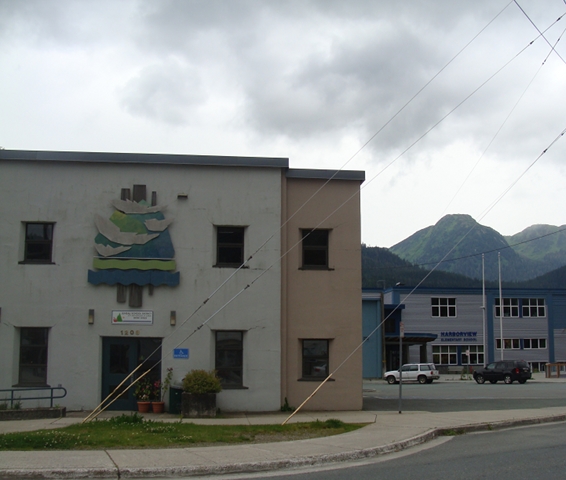
Juneau School District Offices with Harborview Elementary School in the background. File photo.

The Juneau School District is warning parents about recent cases of whooping cough, also known as pertussis, in local schools.

Spokeswoman Kristin Bartlett says letters went home Thursday with students at Juneau Douglas High School, Harborview Elementary, the Marie Drake Building, Gastineau Community School, and the Juneau Community Charter School. She says there have been two confirmed cases and three suspected cases at schools in the downtown area.

“All of them are currently being treated by a physician,” she says. “But because it’s a highly contagious disease, we wanted to make sure that people are aware of it, particularly families where they have infants or small children or if a family member might be pregnant.”

The illness begins with cold-like symptoms and a cough that gradually becomes worse. Within two weeks symptoms include numerous rapid coughing episodes, sometimes followed by a high-pitched whoop, or vomiting. It can be a very serious disease, especially for infants.

April Rezendes is a nurse with the Juneau Public Health Center. She says the best way to avoid whooping cough is to get vaccinated.

“Starting at two months of age kids can get immunized, and its five shots between the ages of two months and the last one is between four and six years. And then a repeat booster shot around 11 or 12,” Rezendes says. “And there’s also now [a vaccine] for adults. So, if you haven’t had a tetanus shot in the last five or six years, it’s included in that now.”

Pertussis spreads through person-to-person contact, most commonly when the infected person coughs or sneezes. For that reason, Rezendes says it’s important for children and adults to stay home when they are infected. If you or your children develop symptoms, Rezendes recommends seeing a doctor immediately.

“The problem is adults will more often just feel like they have a cold, but they can still spread it. And in kids it’s much more severe,” she says.

Bartlett says there were three confirmed cases of whooping cough at Juneau schools in 2008, the last time the district sent out a notice about the illness.

“It’s been awhile, but this is something that we have experienced before,” she says.

At that time, Bartlett says the district and the public health center held free booster shot clinics at schools. She says they’ll continue to monitor the current outbreak and could do something similar if it gets worse.

Original post:

The Juneau School District is warning parents about a few recent cases of whooping cough, also known as Pertussis, in local schools.

An announcement on the district’s website doesn’t say how many cases there have been locally, but says whooping cough has been on the rise in Alaska since 2012.

The illness begins with cold-like symptoms and a cough that gradually becomes worse. Within two weeks symptoms include numerous rapid coughing episodes, sometimes followed by a high-pitched whoop, or vomiting. It can be a very serious disease, especially for infants.

Pertussis spreads when an infected person coughs or sneezes, spreading respiratory droplets to other people.

Vaccination can prevent it from spreading. The Juneau Public Health Center recommends the Tdap vaccine for adults and the DTaP vaccine for children under 7 years old.

If you or your child develop symptoms, the health center recommends seeing a doctor immediately, and staying home from work or school for five days.

Juneau charities missing crucial Thanksgiving ingredient

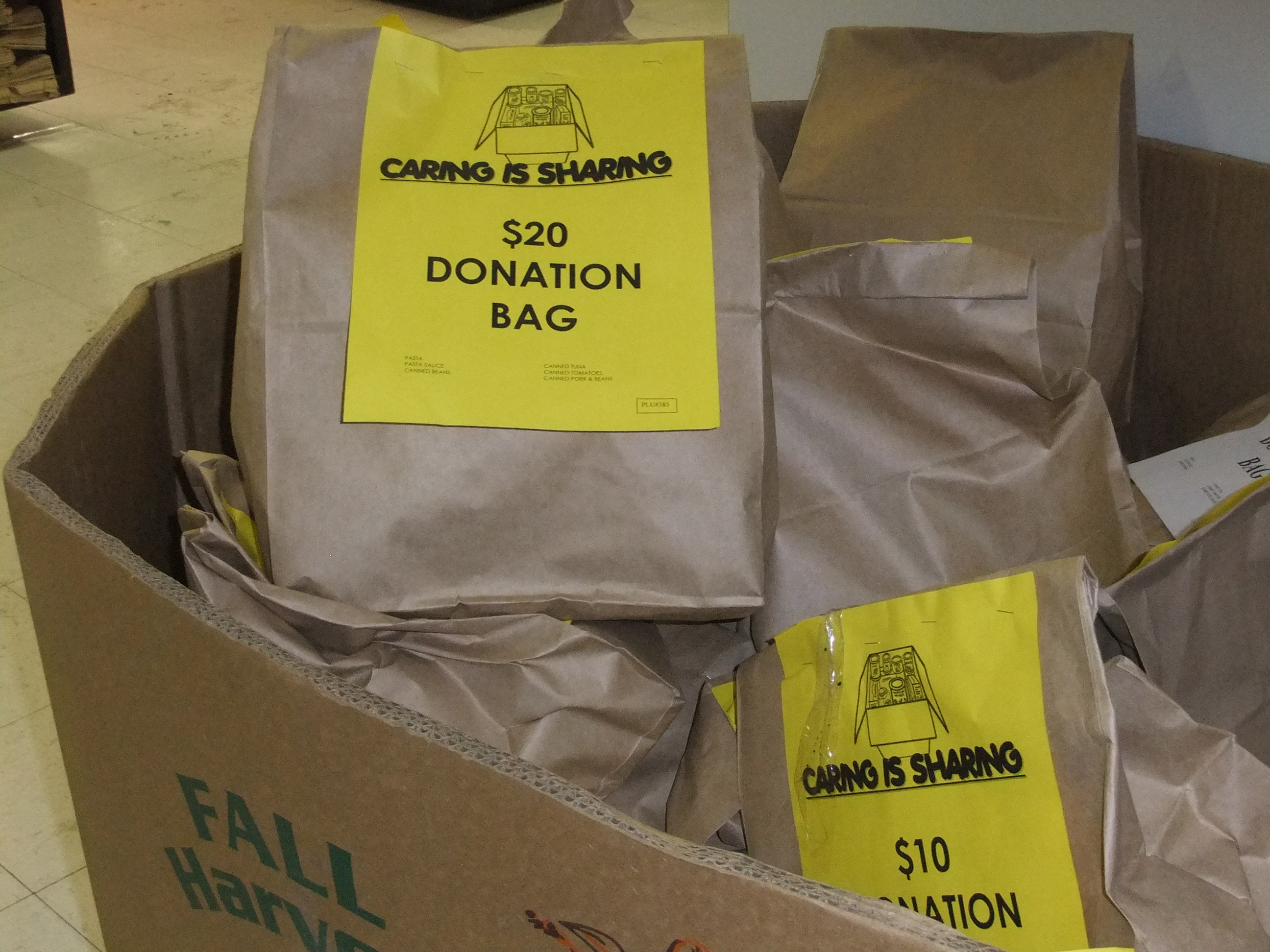
Foodland IGA has sold more than 400 donation bags that go to the Southeast Alaska Food Bank. Friday is the last day to buy one at IGA. (Photo by Rosemarie Alexander/KTOO)

Thanksgiving is less than one week away and Juneau’s charity organizations still need turkeys and other donations.

The Glory Hole, St. Vincent de Paul, and The Salvation Army are relying on community generosity to fill Thanksgiving baskets and boxes, and feed the community.

St. Vincent de Paul is handing out 500 baskets starting Saturday, but still needs items to fill them up.

The organization started the program with 25 baskets. Ten years ago, when Louise Wertheimer began volunteering, they made 200 baskets.

“We didn’t realize that the need was so great in Juneau, and it just grew,” says Wertheimer. “We want to make sure that everyone who needs help, that needs assistance, that we’ve got the food and the turkey to help them, and that’s why we do 500 now.”

Juneau’s soup kitchen The Glory Hole is already giving out Thanksgiving boxes to more than 160 families, and will continue this weekend until Tuesday. Turkeys – large and small – are still needed.

Executive director Mariya Lovishchuk says, while Thanksgiving boxes are not an essential service, they really cheer people up, including Glory Hole patrons.

“It’s just really wonderful to see our patrons contributing to the community by assembling these boxes, by carrying them out, by putting them in people’s cars, by saying, ‘Have a Happy Thanksgiving,’ to people, and then people say, ‘Happy Thanksgiving,’ to them,” she describes.

The Salvation Army plans to feed up to 400 people at The Hangar on the Wharf on Thanksgiving Day. The free meal will be served from 11 to 2:30. Everyone is welcome.

“We’ve had the governor, we’ve had the mayor, we’ve had several legislative representatives. We have people who need a meal, we have people who are homeless, we have people who just simply don’t want to be alone and so they come down just to share a meal and have fellowship, we have people come in and just bring their families,” says coordinator Carol Pitts. “So it is open to anyone living in or visiting Juneau on Thanksgiving.”

Turkeys and other food items can be dropped off at:

  • St. Vincent de Paul
    8617 Teal Street (behind Nugget Mall)
  • The Glory Hole
    247 South Franklin Street
    7 am – 9:30 pm every day
  • The Salvation Army
    439 Willoughby Ave.
    8 am – 5 pm on Saturday
    9 am – 4 pm weekdays

The kitchen needs 45 turkeys for the community meal and Pitts hopes people taking advantage of turkey deals at local grocery stores will help meet the demand. “Sometimes people will already have their turkey but they’re still buying some groceries and so if they take the opportunity of getting that turkey and they don’t need it, then we certainly can use it,” she says.

Another way to help out during the holiday season is by buying a donation bag at a local grocery store. It’s a pre-filled bag of groceries that will go to Southeast Alaska Food Bank.

Safeway has been offering donation bags for three years. According to assistant store manager Matthew Cabrigas, the store usually sells about 400.

“It allows community involvement for the holiday season just to help people who aren’t able to fill their shelves with the necessary items, just for eating really,” says Cabrigas. Donations bags will be at Safeway until the end of the month.

Turkeys and other donations can be dropped off at St. Vincent de Paul, Glory Hole, and the Salvation Army.

Site notifications
Update notification options
Subscribe to notifications