Voting is Monday and Tuesday for the two small mountains, which beat a number of large, well-known resorts in their region to get to the Final 4 of Powder Magazine’s March Madness-style popularity contest.
Juneau’s city-owned ski area became the Great White North champion after getting more votes in various rounds than four major British Columbia resorts; while Mount Bohemia – in Michigan’s Upper Peninsula — just knocked out Mad River Glen, Vermont to become the Big East champion, previously taking down other major eastern ski resorts in the first rounds.
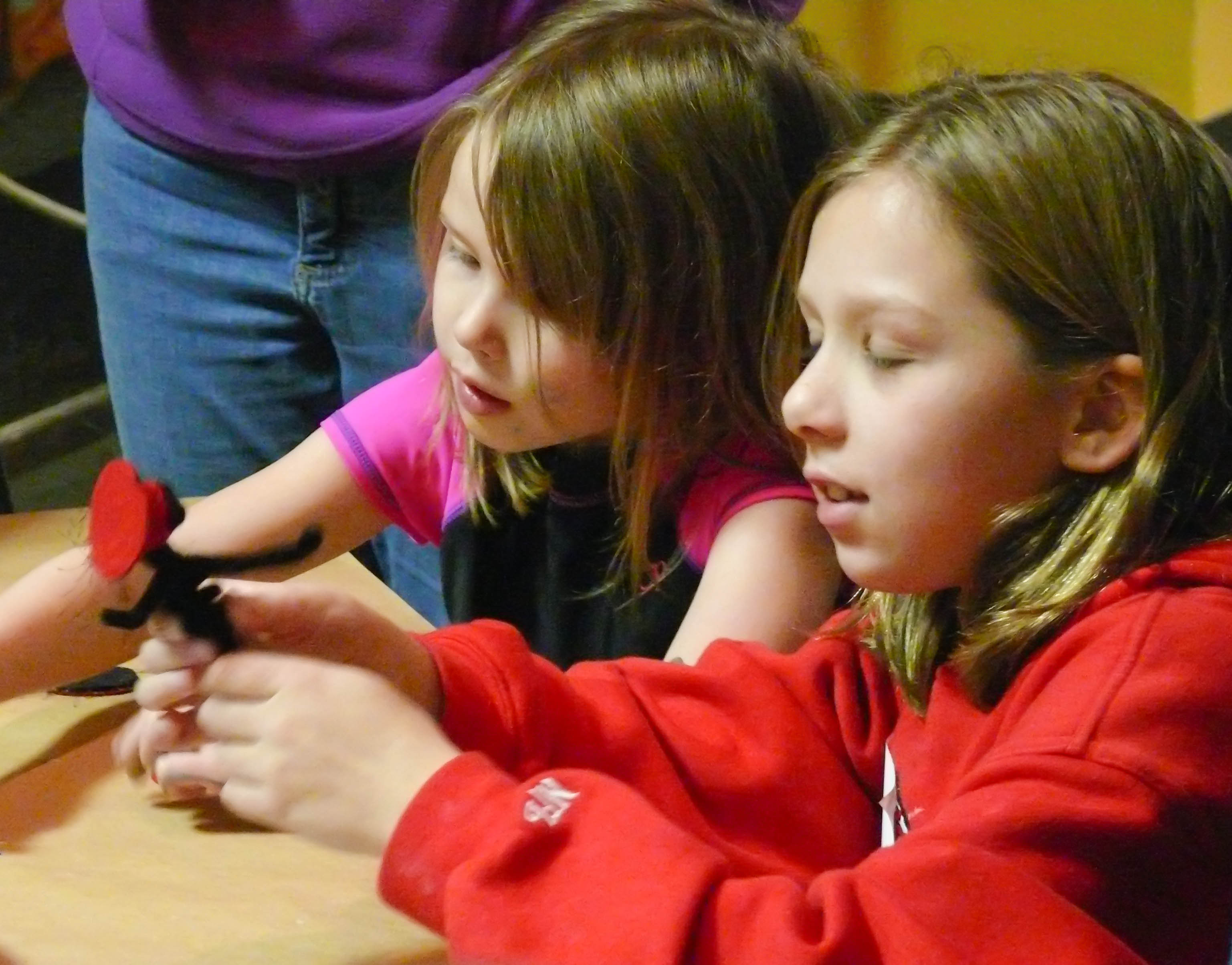
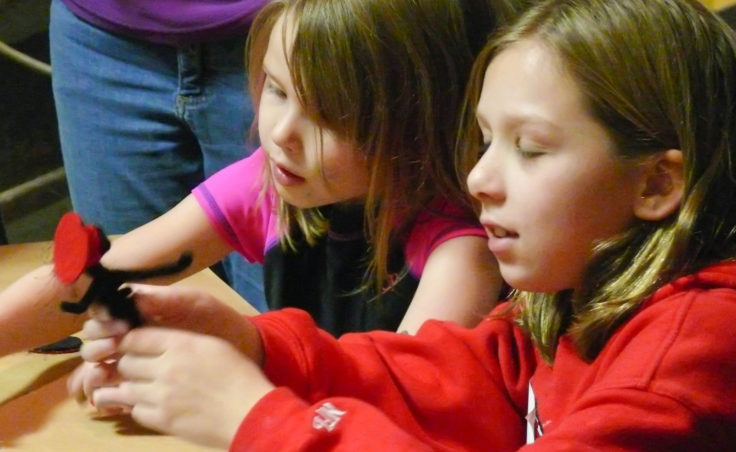
Ginny Potts plays with the action figure she made out of chenille stems. (Photo by Jeremy Hsieh/ KTOO)
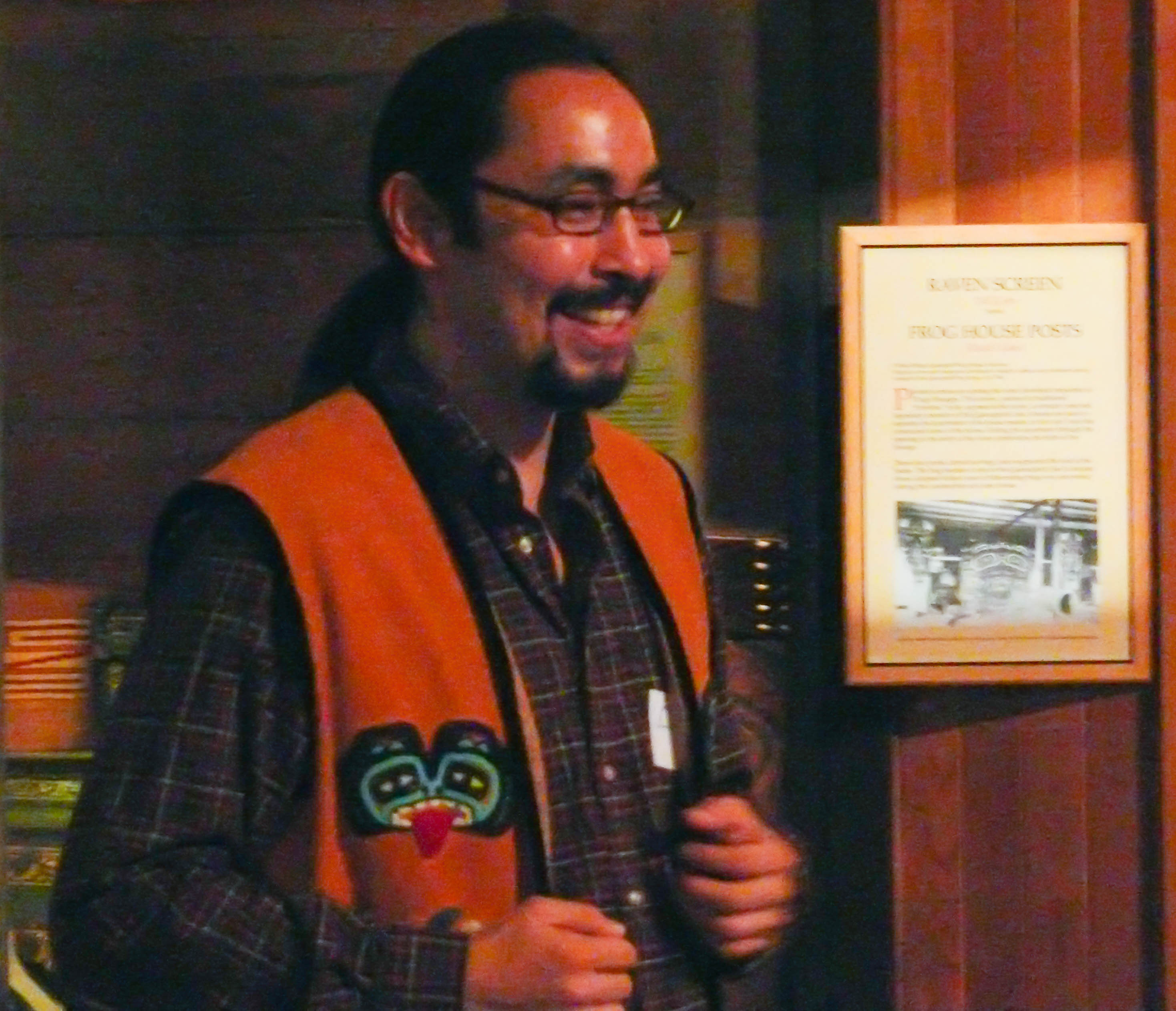
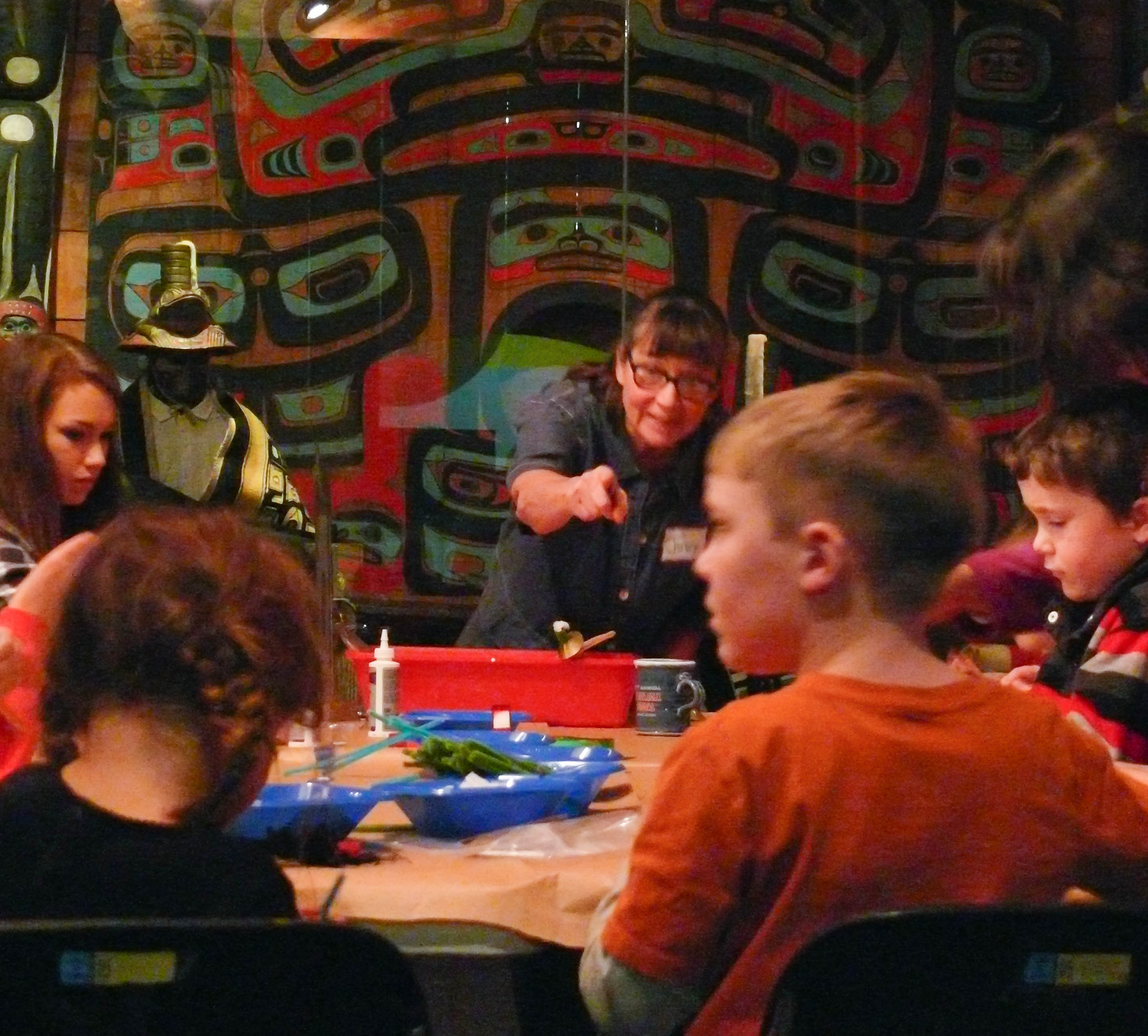
Ishmael Hope tells a Tlingit story about how Raven brought freshwater to the land from the clan house exhibit at the Alaska State Museum. (Photo by Jeremy Hsieh/ KTOO)
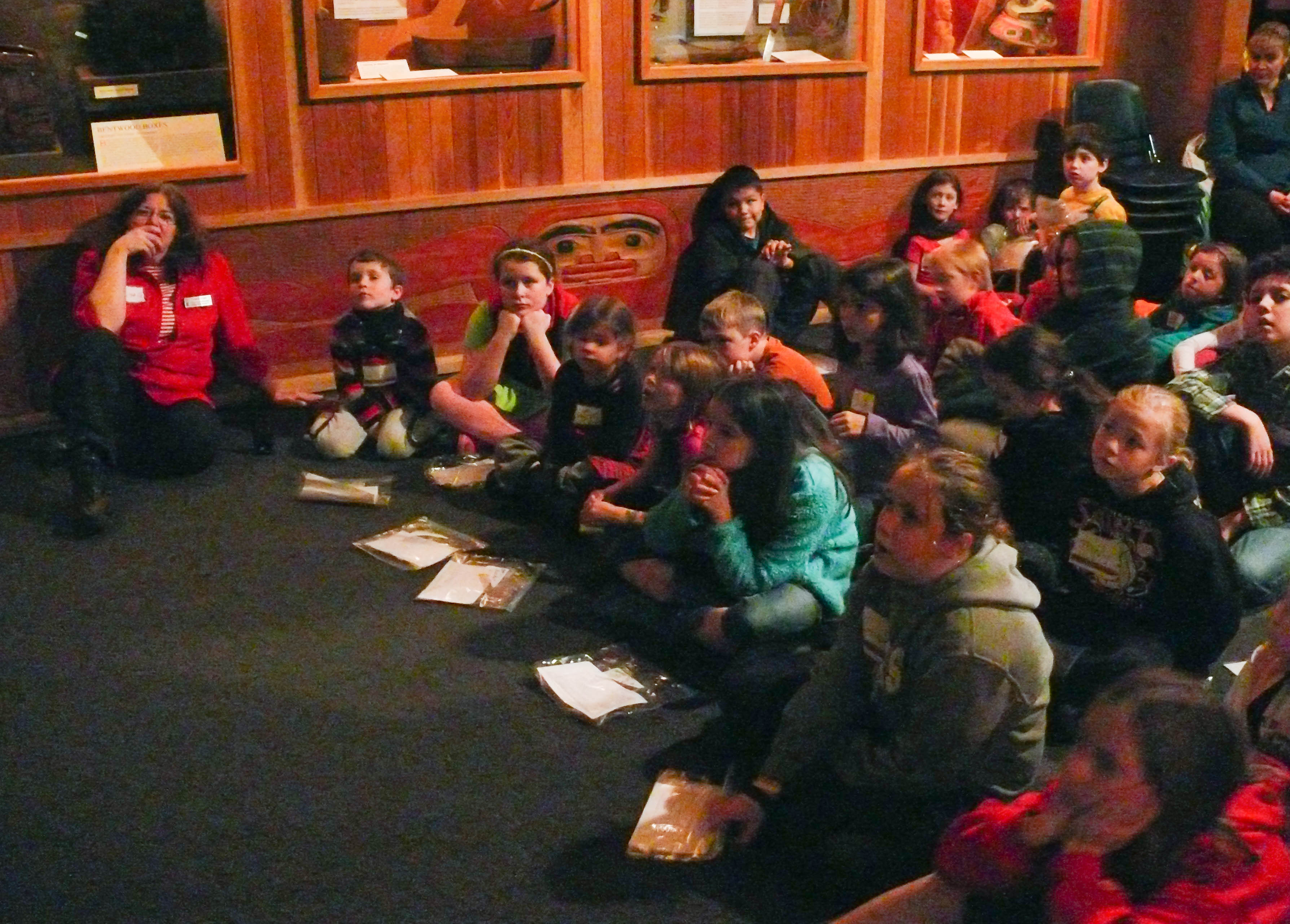
The overbooked Tlingit storytelling and action figure program was for kids in kindergarten and elementary school. (Photo by Jeremy Hsieh/ KTOO)
Volunteer Judy Sherburne led a station where kids put together spruce root hats for their action figures. (Photo by Jeremy Hsieh/ KTOO)
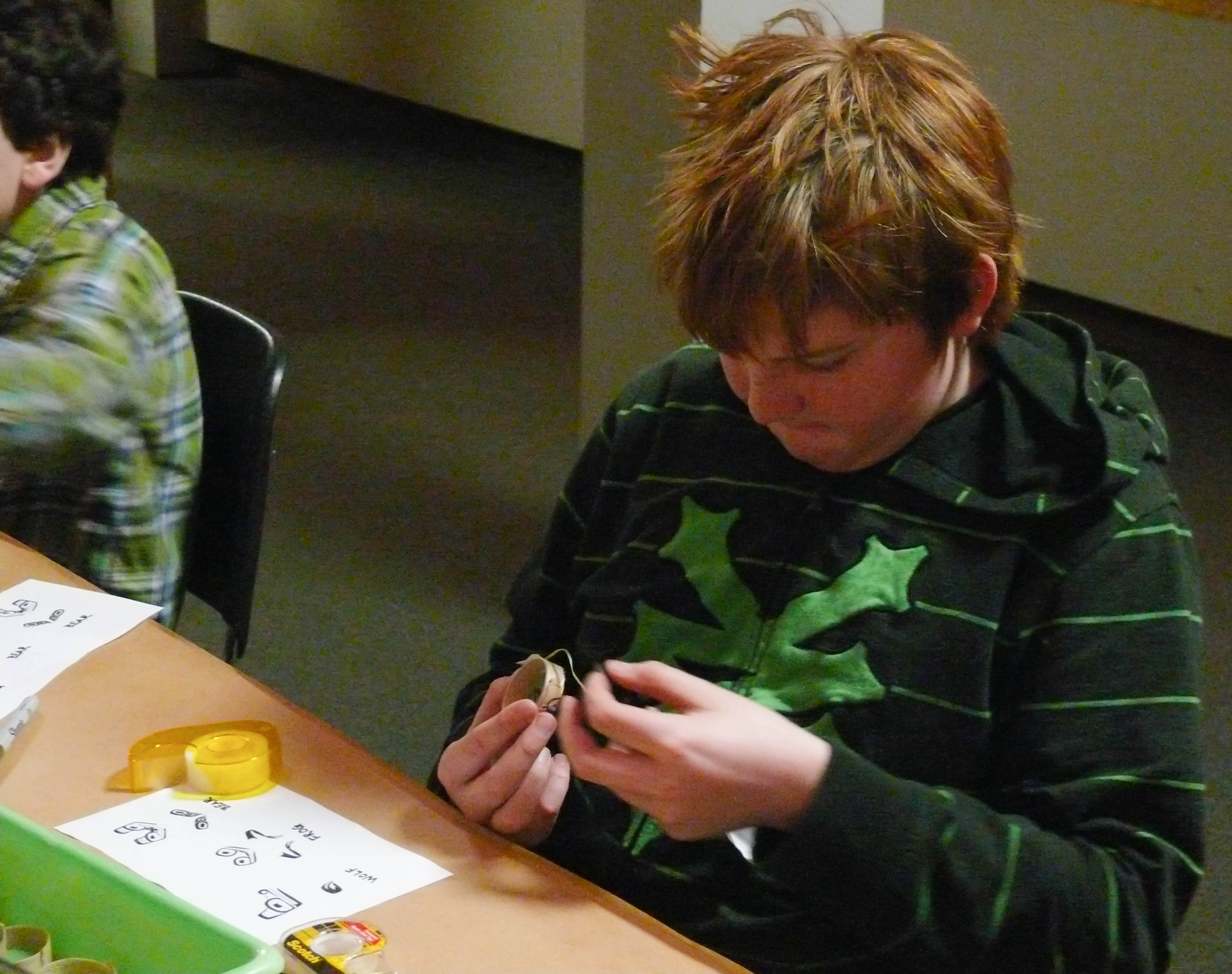
Einar Sharpe assembles a Tlingit-style drum featuring a formline design. (Photo by Jeremy Hsieh/ KTOO)
While many were still shopping Friday, a workshop for kids to make Tlingit-themed action figures was overbooked at the Alaska State Museum.
The free program was part of a series of workshops that the Friends of the Alaska State Museum pays for through a youth activity grant from the City and Borough of Juneau.
There were 50 slots for kindergarten- and elementary school-aged children at the event Friday afternoon.
Surrounded by Tlingit and Haida artifacts in the clan house exhibit of the state museum, Native storyteller Ishmael Hope kicked things off. He told a Tlingit story about how Raven brought freshwater to the land.
Hope said it was an apt setting.
“To have something that relates a little bit to it being inside this beautiful clan house, it’s the at.óow, it’s the sacred objects of the Gaanaxteidí clan, the frog house, Xíxch’i hít. And so I wanted to have some sense of being in that clan house,” he said.
As a storyteller and a listener, Hope said knowing and communicating the words and beats of a story is only part of challenge.
“You need to be in the physical presence of the elder to really, really get it,” he said.
After the story, the kids were off to a series of crafting stations around the museum where they made miniature Tlingit items and regalia.
Trevor Daniels was running a hair dryer over a paper basket about the size of a big toe. He was drying the stain he brushed on earlier that gave it a more natural color.
“There’s glue and coffee mixed in. I got some on my fingers and it’s pretty sticky,” Daniels said.
All of the items were roughly scaled to fit to a man-shaped action figure they made out of fuzzy chenille stems (or pipe cleaners).
Each child left with a 1-gallon Ziploc bag with their own personal action figure and accessories.
Cahal Burnham, 9, ran through the contents of his bag.
“I have a sailor style hat, umm, and a drum with a Native American pattern on it. Raven tail robe, a beaded robe. And I have a dance paddle and that’s about it,” he said.
He said his favorite part was making the action figure itself.
Museum visitor services manager Lisa Golisek coordinated the workshop. She says they’ve been going on for at least 15 years, and the action figures are always very popular. This time around, she had to turn away about 25 kids.
The next workshop is December 27. Pre-registration is required.
Eva Malvich from Bethel's Yupiit Piciryarait Museum takes a break from packing objects at the Alaska State Museum. Photo by Casey Kelly/KTOO.
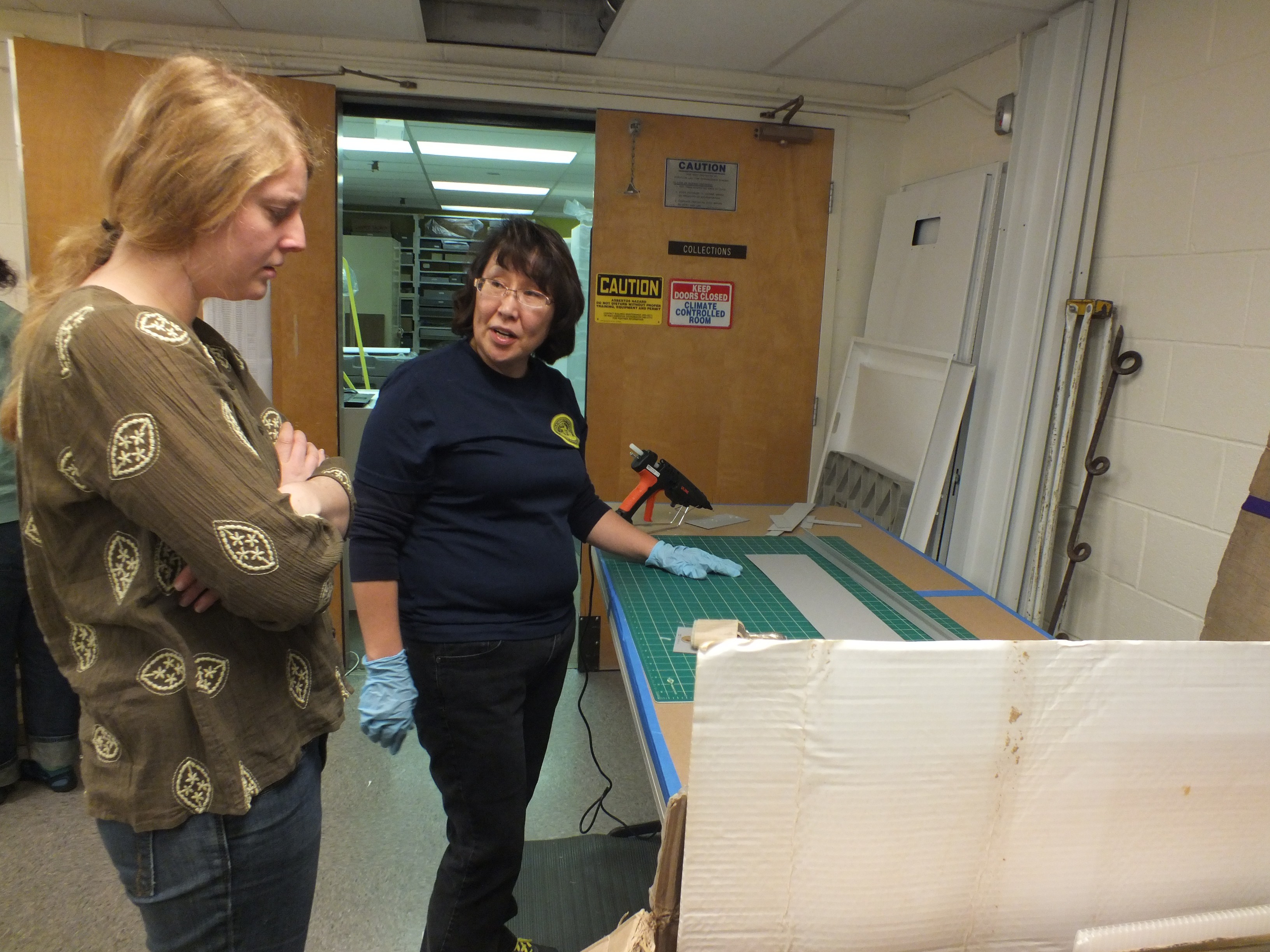
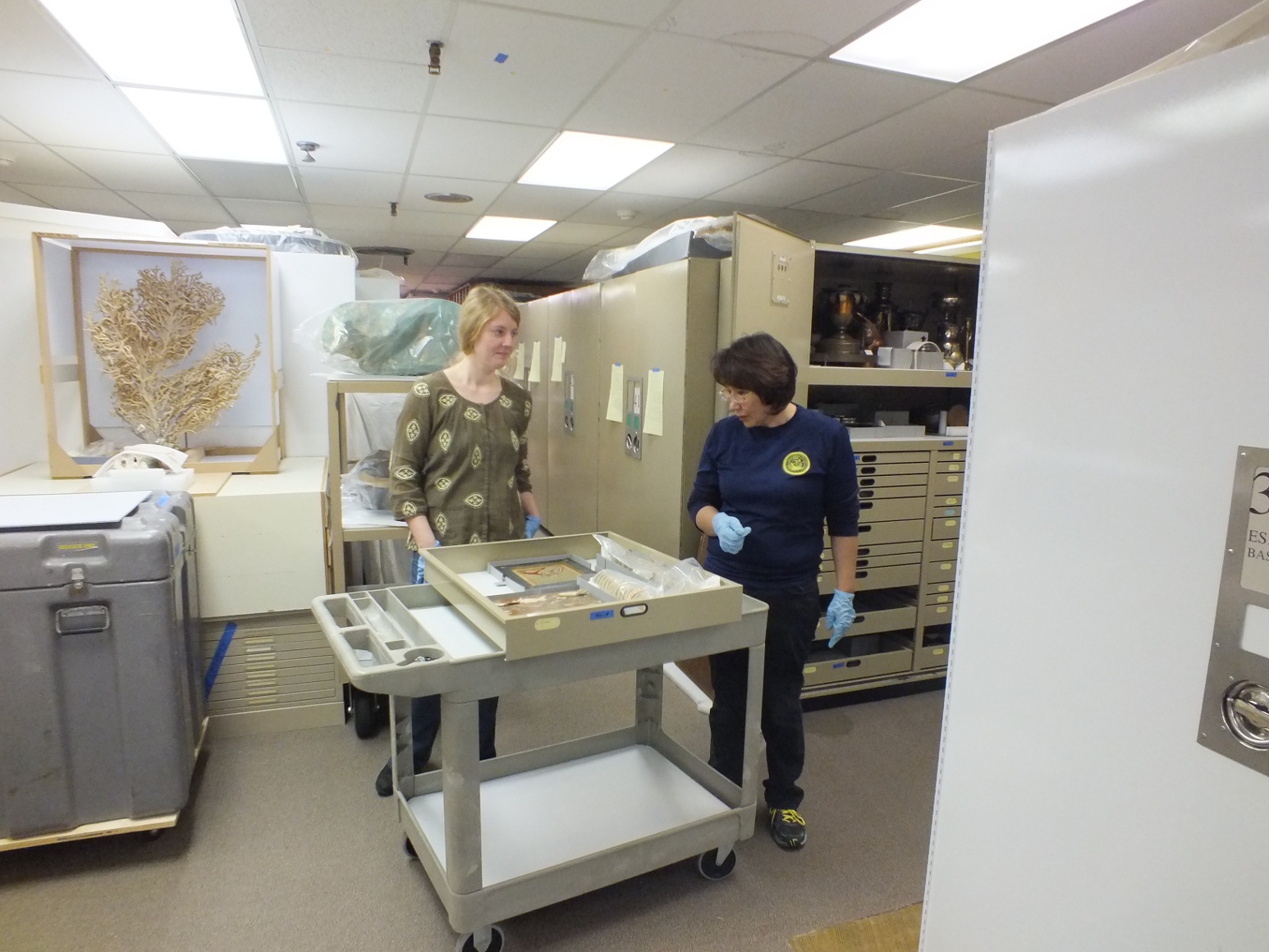
Anjuli Grantham from Kodiak (left) and Eva Malvich from Bethel were the fourth group of XOs - outside museum professionals - to come to Juneau to help with the Alaska State Museum's moving project. Photo by Casey Kelly/KTOO.
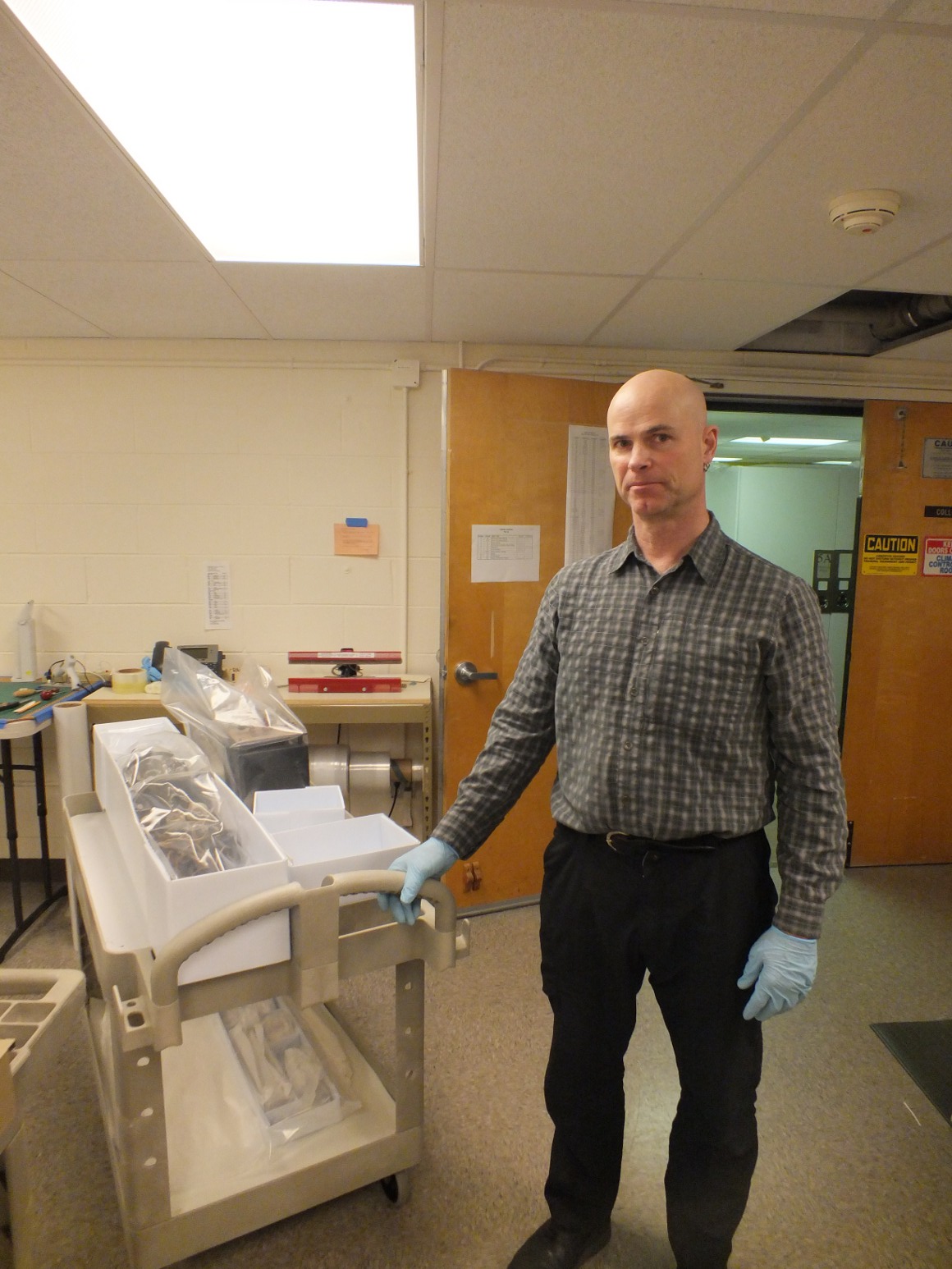
Alaska State Museum Curator of Museum Services Scott Carlee wrote a grant so other Alaska museum professionals could travel to Juneau to help the state museum move. Photo by Casey Kelly/KTOO.
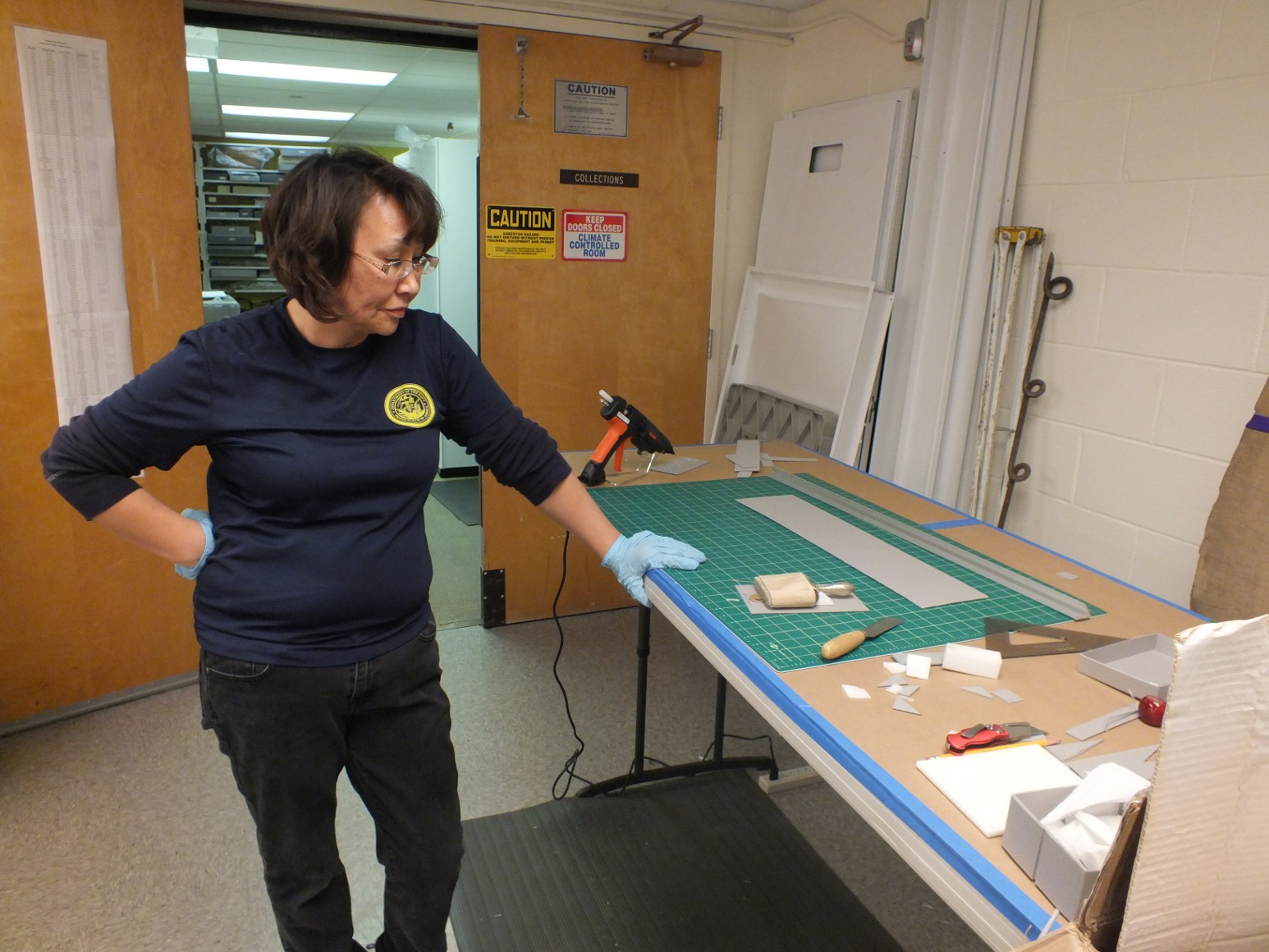
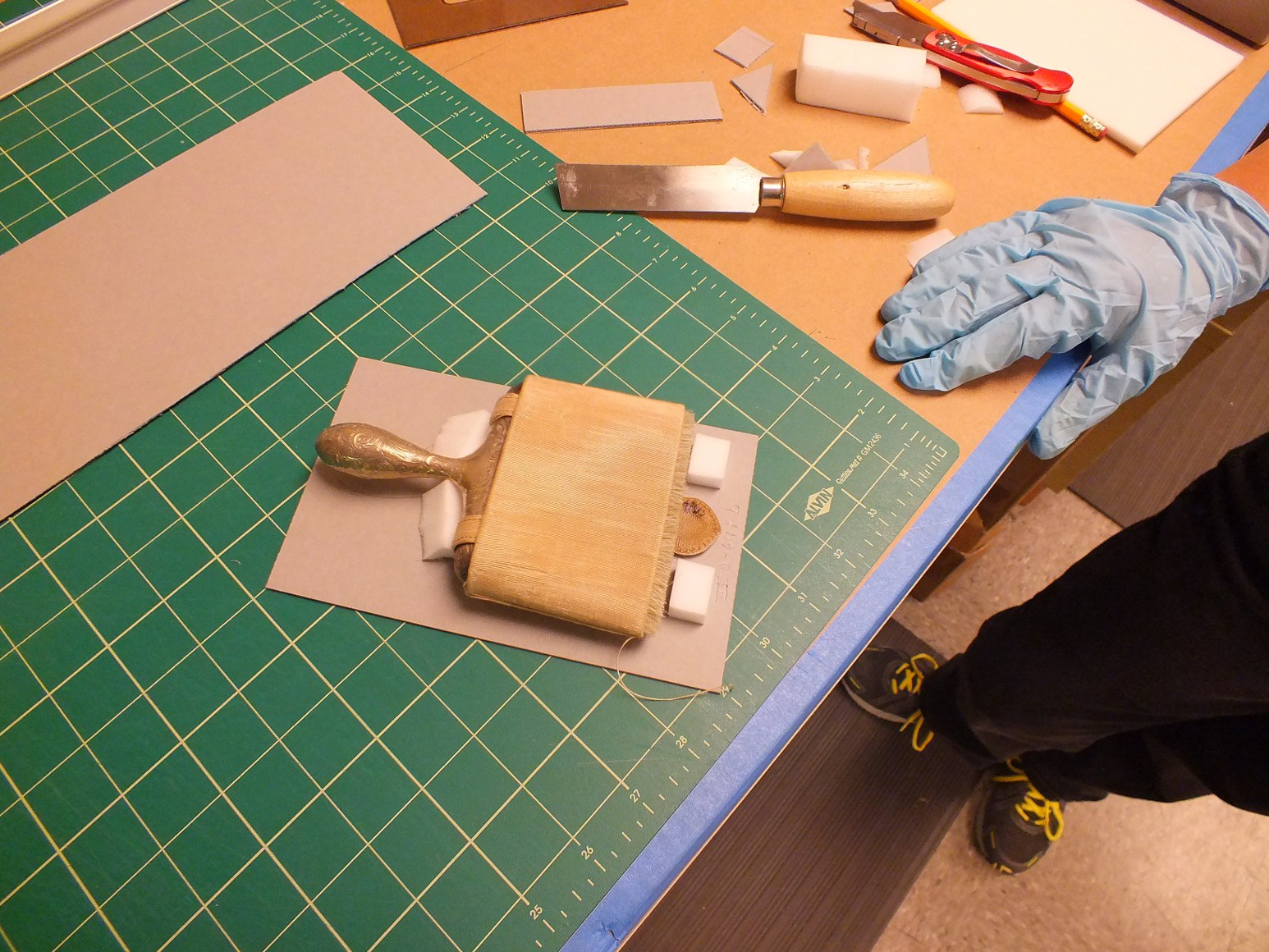
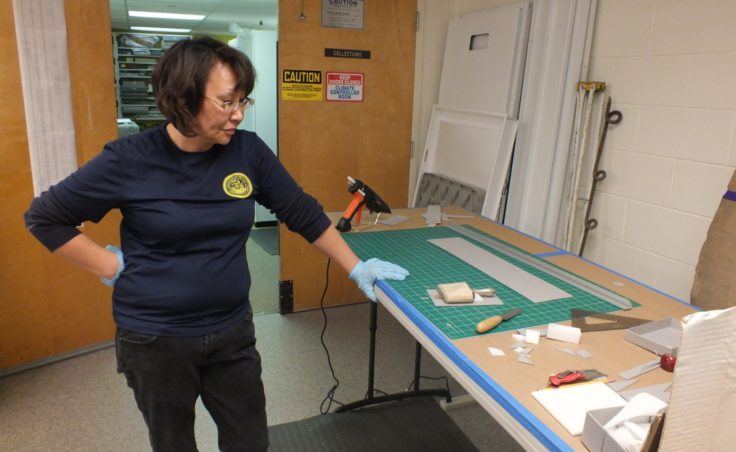
Items like this makeup brush have to be carefully mounted on special cardboard known as blue board. Photo by Casey Kelly/KTOO.
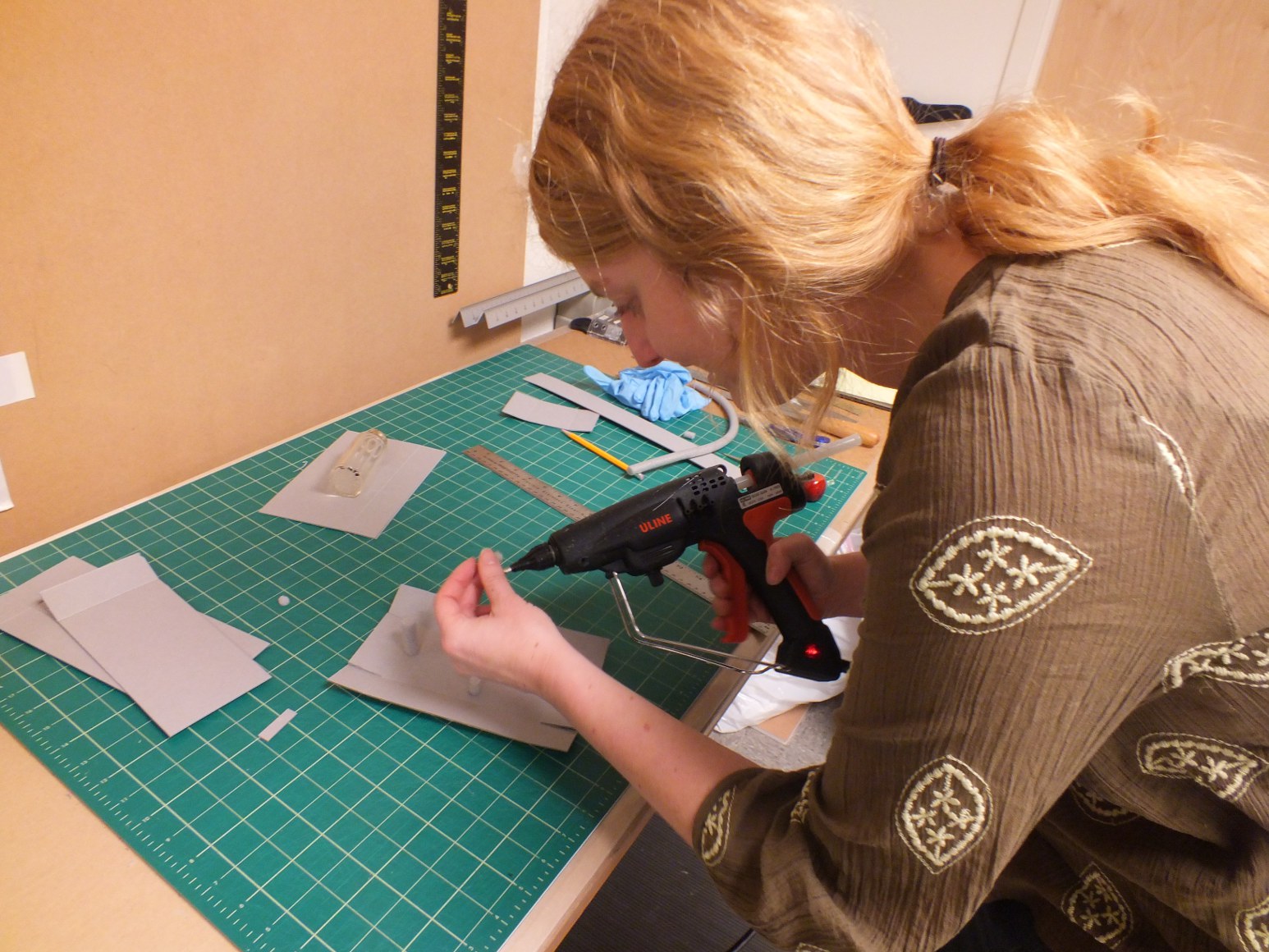
Baranov Museum Curator of Collections Anjuli Grantham uses a glue gun to fasten foam bumpers onto a piece of blue board. Photo by Casey Kelly/KTOO.
Anjuli Grantham from Kodiak's Baranov Museum (left) and Eva Malvich from Bethel's Yupiit Piciryarait Museum put a tray of artifacts back in a cabinet at the Alaska State Museum. Photo by Casey Kelly/KTOO.
The Alaska State Museum in Juneau is getting a lot of help from other Alaska museums ahead of its move to a new facility in 2016.
As the staff works to pack up the more than 32,000 artifacts in its collection, museum professionals from around the state are lending a hand, and learning what it takes to safely store and transport priceless historical objects.
In the basement of the Alaska State Museum, Eva Malvich uses a box cutter to slice a thin piece of gray cardboard into a small rectangle. Mounted on the cardboard, supported by four pieces of foam, is a makeup brush with an ornately carved metal handle. Malvich doesn’t know much about the brush, except that it came from a woman who collected items for her vanity.
“But then, you know, with objects you have to preserve them forever,” she says.
Malvich is director of the tribally owned Yupiit Piciryarait Museum in Bethel. The name means “The people’s way of living.”
“We’re the only museum in the [Yukon Kuskowkwim] Delta,” she proudly declares.
After a career in public administration, Malvich started working at the museum about a year ago. She had no practical experience, so she’s learning the best way to handle and preserve objects. She points to a piece of cardboard, like the one on which she just mounted the makeup brush.
“I used to wonder what the heck this was, because we have boxes of this,” she says. “I used to think, why do I have so much cardboard? Now I know it’s called blue board and it’s useful for making containers for my objects.”
Malvich is learning under the direction of husband and wife team Scott and Ellen Carlee. Ellen is the Alaska State Museum conservator. Scott is curator of museum services. His job is to assist and advise other museums and historical societies throughout the state.
“I help them with projects that they are working on. I help them get grants,” he says. “I actually have a small grant that I can give out to help them do projects. I can do assessments.”
During his travels, Carlee says other Alaska museum professionals wanted to know how the state museum was going to move its collection to a new State Library Archives and Museum building, scheduled to open in 2016. That’s how he got the idea to bring them to Juneau to see the project firsthand.
“I thought, well, it would be really nice to have them help me. But I would feel bad if it was, you know, on their own nickel,” Carlee says. “So I thought we should at least try to pay for their travel expenses. So I wrote this grant to the Institute for Museums and Library Services to help fund this travel down here as a professional development opportunity for these museum professionals throughout Alaska.”
The grant is for $83,000, which the state museum is matching. Carlee says each museum professional will get to visit Juneau twice – once during the packing and planning phase and again during the actual move.
“We’re calling them XOs, because ‘outside museum professionals’ is a little hard to say all the time and to write down,” Carlee says. “So XOs, just, we kind of think of it as like external operative or something. Somebody from the outside is coming in to help us.”
Anjuli Grantham is Curator of Collections at the Baranov Museum in Kodiak. Located inside the Russian American Magazin – a two-story log structure built in 1808 – it houses a treasure trove of colonial Alaska history. The museum’s not moving anytime soon, but Grantham says the staff is redesigning all of its exhibits.
“That’s going to mean that a lot of the objects that are currently in collection storage are going to be on exhibit,” says Grantham. “So, it’s going to require a lot of shuffling of things. It’s a perfect opportunity to implement some of these new solutions.”
Grantham had some experience preserving and caring for objects prior to working for the Baranof Museum. Still, she says the opportunity to learn from the staff at the Alaska State Museum is unique.
“This is what they do,” she says. “They conserve objects and they create these really amazing storage solutions for fragile objects of many different types of materials. It’s kind of like, now I’m here under the tutelage of masters.”
Grantham and Malvich were the fourth group of XOs to visit Juneau as part of the project. The grant is providing travel for 27 museum professionals from 12 Alaska institutions. Carlee says he works with between 60 and 70 museums around the state.
Bill Ruddy passed away this week after a battle with cancer. He was 76 years old.
Ruddy came to Alaska in 1964 to work for the state attorney general’s office, recruited from the Federal Maritime Commission to evaluate Alaska steamship contracts.
He later joined local law firm Robertson, Monagle, Eastaugh and Annis, then in 1986, Ruddy, his wife Kathy Kolkhorst, and Jim Bradley opened Ruddy, Bradley & Kolkhorst law firm.
After the fall of the USSR, Ruddy used his knowledge of Russian language and experience in the Russian Far East to open an American law firm in Vladivostok.
He and his wife Kathy purchased the Princeton Hall in 1978 then renovated the old wooden boat. It was built by Sheldon Jackson College students, lauched just before the attack on Pearl Harbor, and seized by the U.S. Navy. After World War Two, the boat returned to Southeast Alaska and used by the Presbyterian Church to link island villages. Since restoration, the Princeton Hall is a member of the Classic Yacht Association.
Memorial services for Bill Ruddy are Thursday, at 3 p.m. at Chapel by the Lake.
Donations in his name can be made to Multiple Myeloma Research Foundation Inc. and Hospice and Home Care of Juneau.
Fifty-one Alaskans were diagnosed with HIV in 2012, and for more than half, the virus had already developed into AIDS.
Sunday is World AIDS Day, an annual observance to increase awareness and prevention. HIV is immunodeficiency virus, which attacks the immune system and leads to AIDS, or acquired immunodeficiency syndrome. There is no cure, though both can be controlled by medication.
World AIDS Day will be observed in Juneau on Sunday, beginning at 4 p.m. at McPhetre’s Hall, then move to Cathedral Park.
Phoebe Rohrbacher calls it a remembrance and celebration. Rohrbacher is Southeast Services Coordinator for the Four A’s, or Alaskan AIDS Assistance Association.
“It will be an event to remember those who have died in Alaska and worldwide as a result of AIDS, and to remember those who are living with the virus currently.”
Rohrbacher says names of Alaskans who have died of AIDS will be read at the candle light vigil at Cathedral Park.