Community

Juneau teachers win career & technical education awards

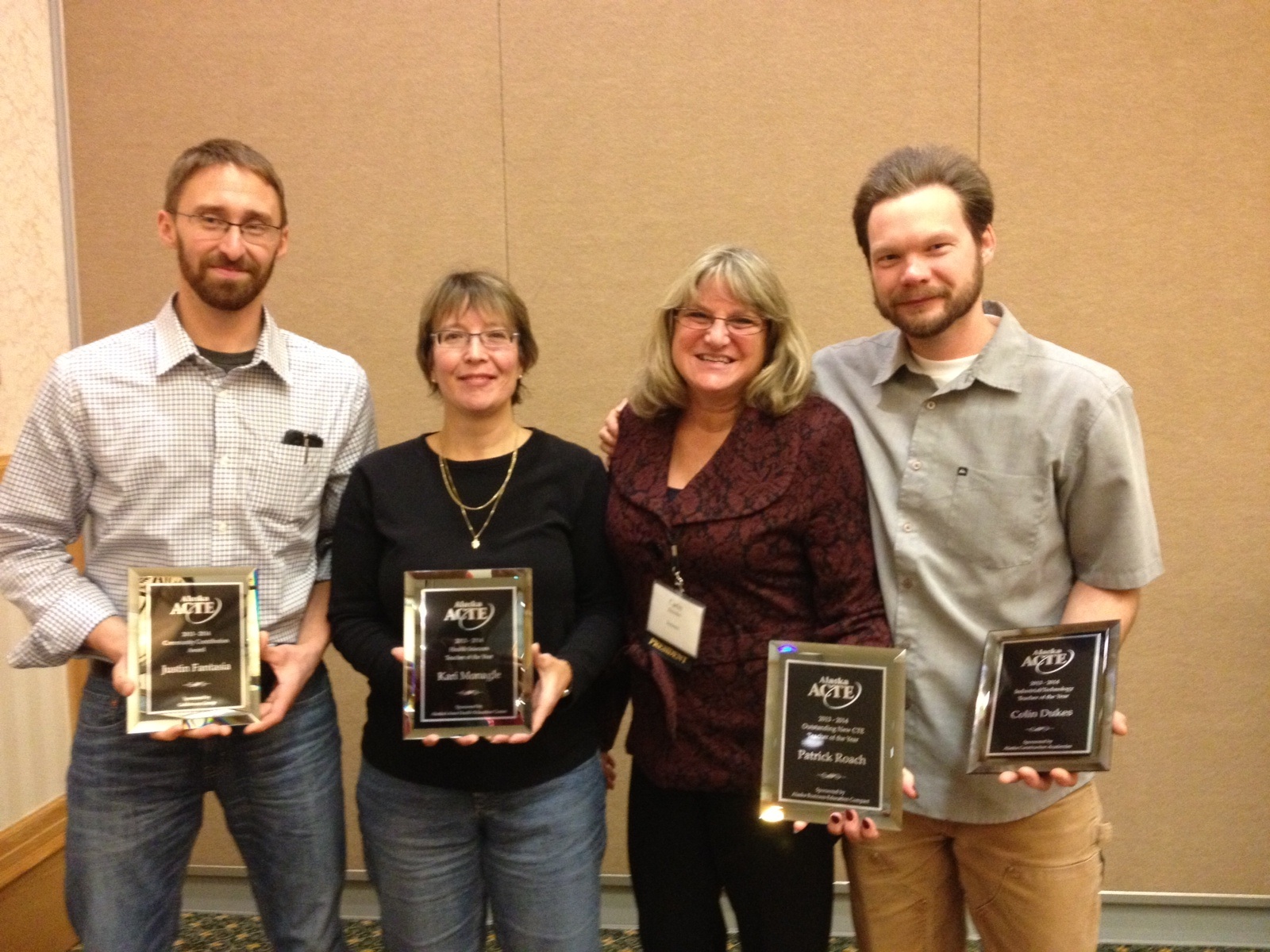
Pictured left to right: Justin Fantasia, Kari Monagle, CTE Coordinator Carin Smolin (holding Patrick Roach’s award), and Colin Dukes. Photo courtesy Juneau School District.

Four Juneau teachers and a community program partner have been recognized by the Alaska Association for Career and Technical Education as 2013 Outstanding Teachers.

The awards came at the association’s annual conference in Anchorage on Oct. 30th , according to Carin Smolin, Career and Technical Education Coordinator for the Juneau School District.

The association’s mission is to strengthen career and technical education and develop an Alaska workforce.

JDHS Health Sciences Teacher Kari Monagle is the Outstanding Health Services Teacher of the Year.

Monagle is a Juneau Douglas High School graduate and has been teaching science there for about 20 years.  Smolin says Monagle helped develop the health sciences curriculum.

“We have alignment with the university so students can earn dual credit with high school and university credits.  We know that health sciences is a high demand occupation in our state along with the country. And she’s been very dedicated and passionate about her work and her teaching, and students just love her as well,” Smolin says.

Colin Dukes has been teaching at JDHS for six years and has earned the Outstanding Industrial/Technology Teacher of the Year award for his classes in wood, construction, house building, and CAD, or computer-aided design.

Smolin calls Dukes’ classes a model of applied learning that incorporate literacy, math, and science skills in meaningful projects.

She reads from a letter supporting Dukes for the award:

“He customizes classroom learning to meet student needs and teams of colleagues to create classroom projects and build student engagement in meaningful learning.”

One of the most popular classes at Thunder Mountain High School is taught by Patrick Roach.  He’s received the Outstanding New CTE Teacher of the Year award for preparing and cooking food, otherwise known as culinary arts.

He’s also been teaching less than three years, an important part of the category for the new CTE teacher award.

Smolin says this is not the first award Roach has received in the short time he’s been teaching.

“This past spring he also was recognized by the state and he won the Alaska 2013 Teacher of the Year by the National Restaurant Association Education Foundation, and he won the Alaska Educators’ Excellence award,” she says.

The Community Contribution award has gone to Justin Fantasia,  a SAGA employee who is construction manager for the JDHS House Build Program.

Fantasia has been working with the program for five years.  Smolin says his award recognizes the connection between a school and a workplace.

“He has been a mentor for students and helps them transition  into the construction field following high school and he engages in class as well as on site with the work,” she says. “He’s truly dedicated to our students.”

The JDHS House Build program currently has a house for sale in the Lemon Creek area and is building another.

The Juneau teachers who won the awards competed with other career and technical education instructors from across the state.  Smolin says the applications are accompanied by letters of support, many from students and former students, and all are reviewed by an impartial committee of business leaders and the association.
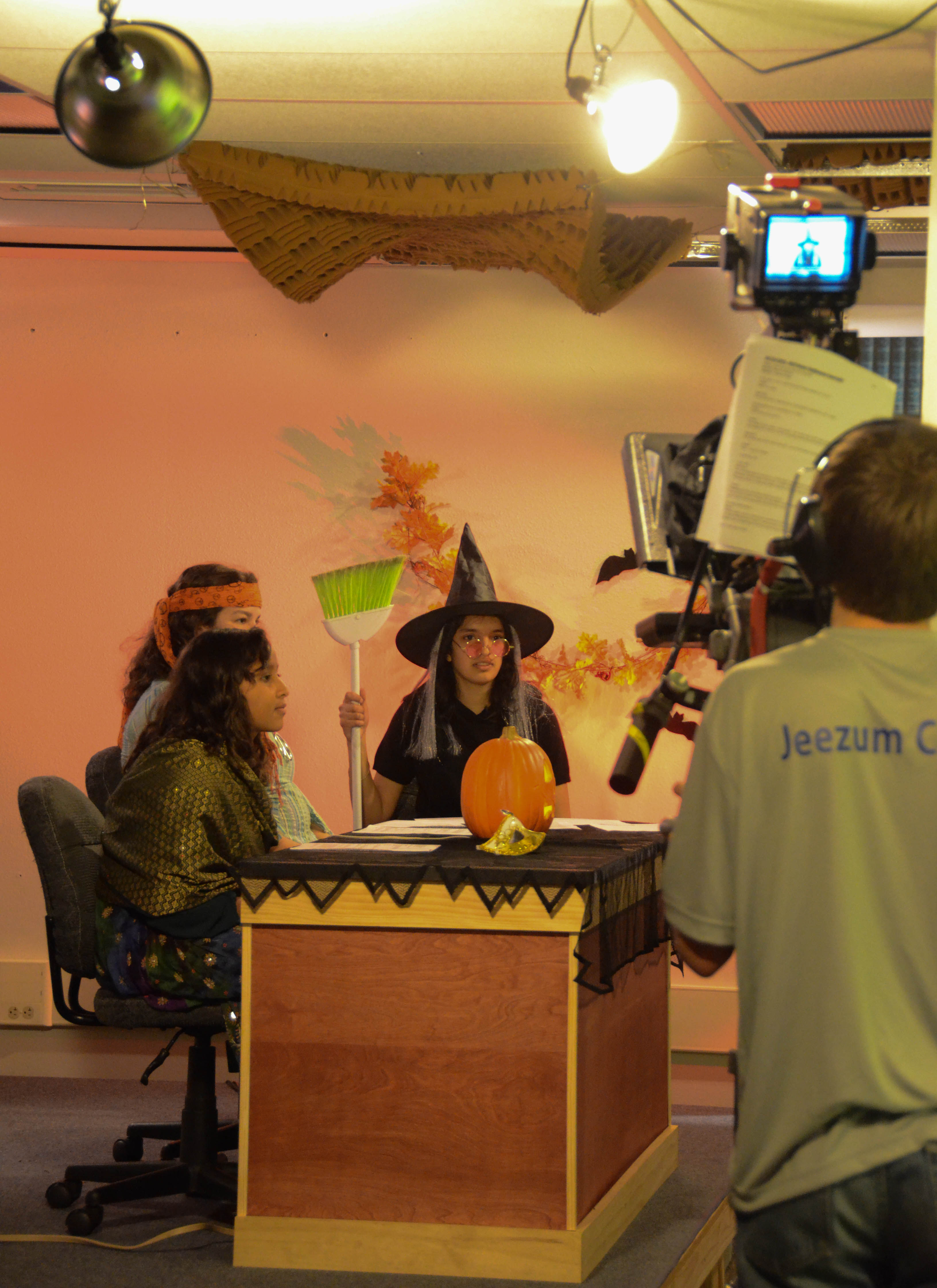
 

Live from JDHS

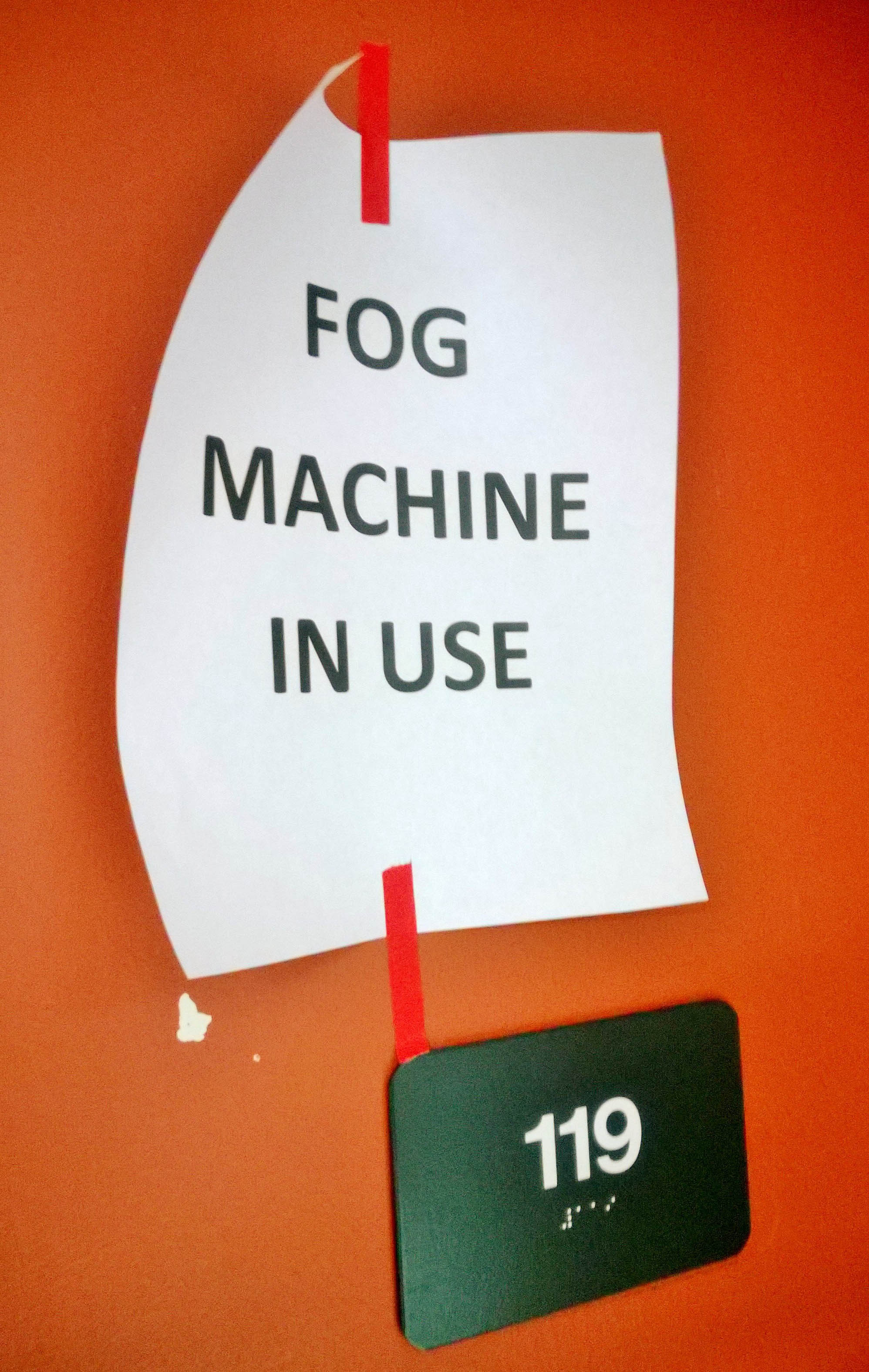
Outside room 119 at Juneau-Douglas High School, a sheet of paper taped to the wall says, “FOG MACHINE IN USE.”

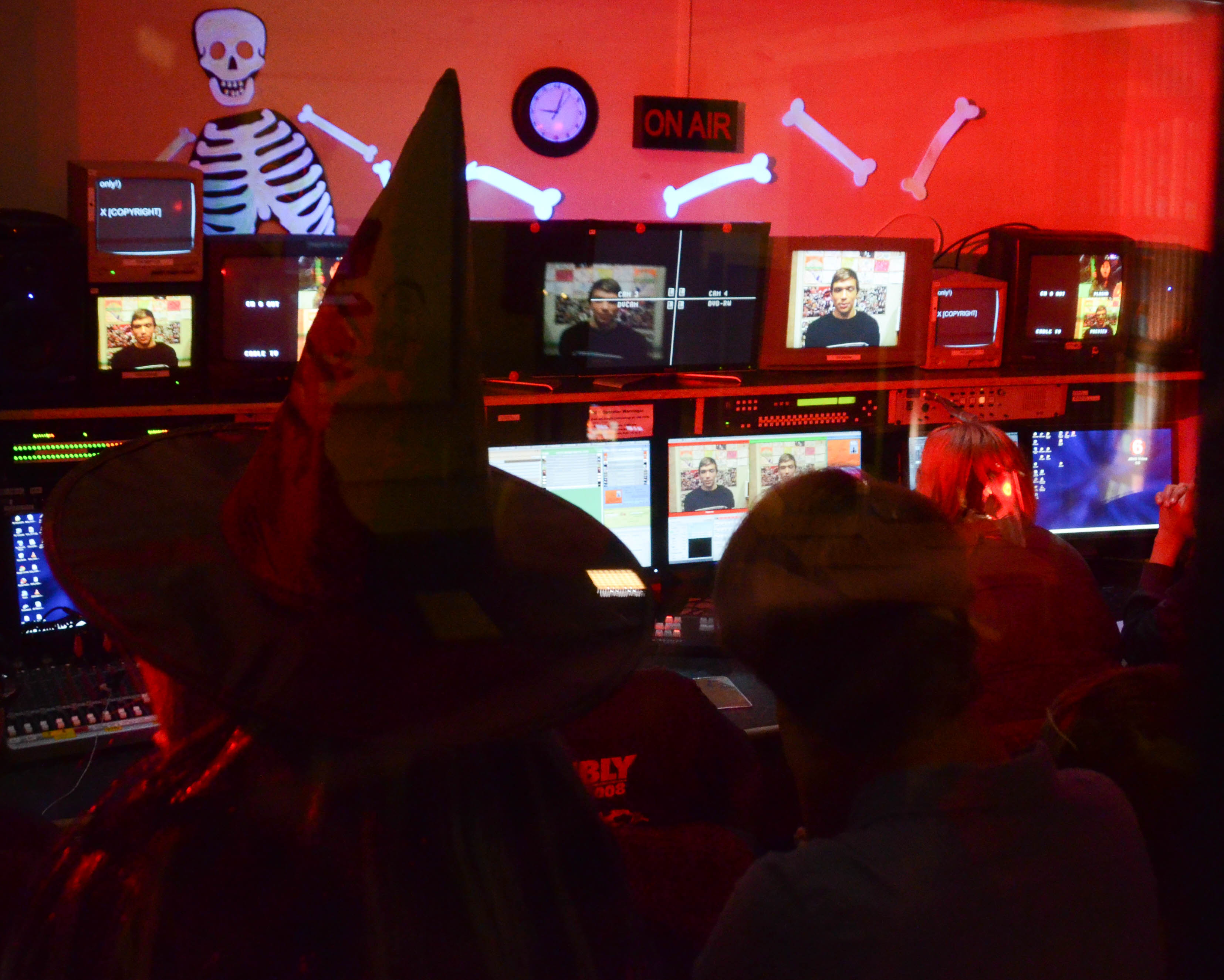
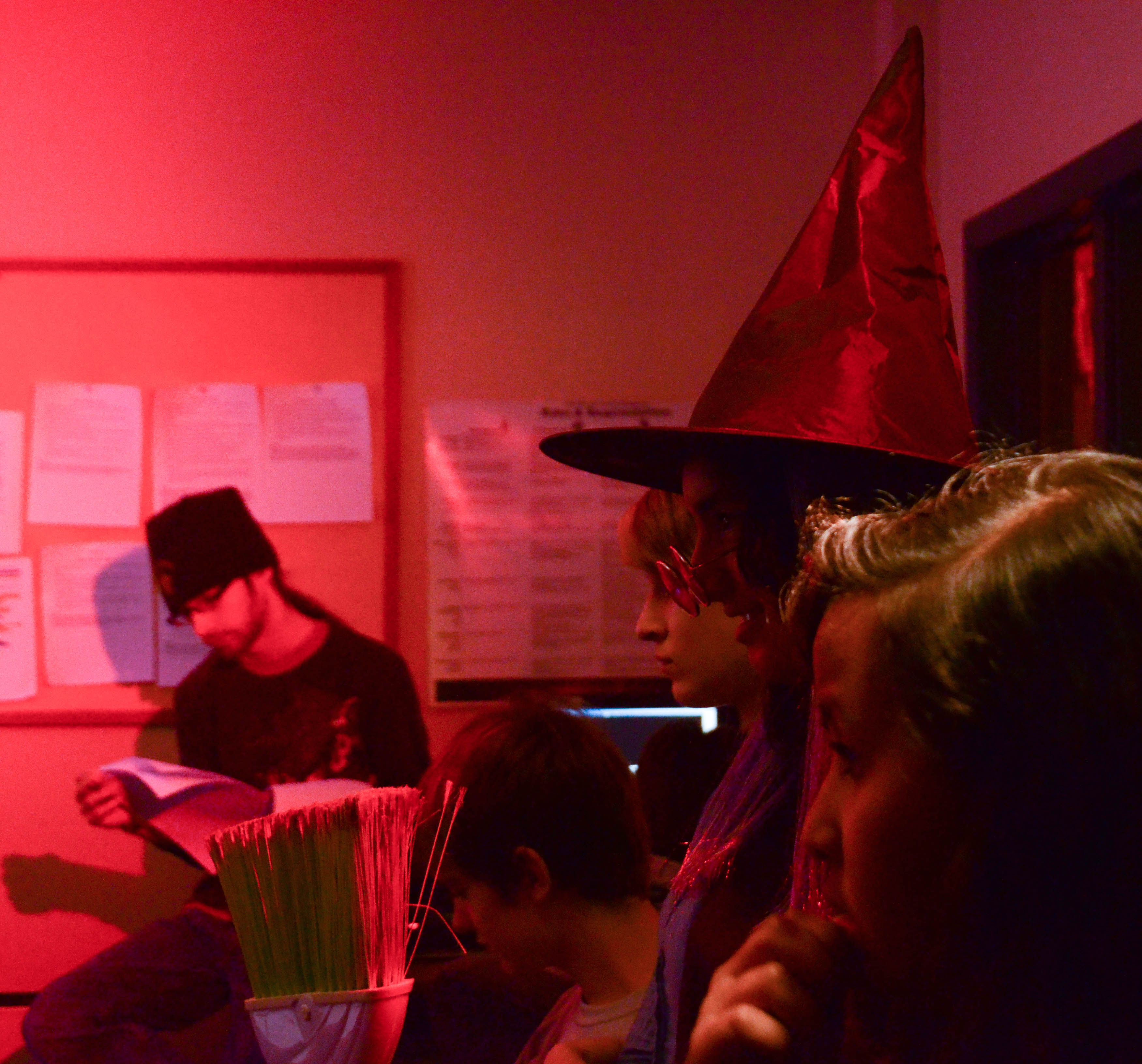
It’s the Friday before Halloween, and the usually no-nonsense control room and JDTV News anchor desk is dressed with spider webs, skeletons, jack-o-lanterns, black lights, and strobes.

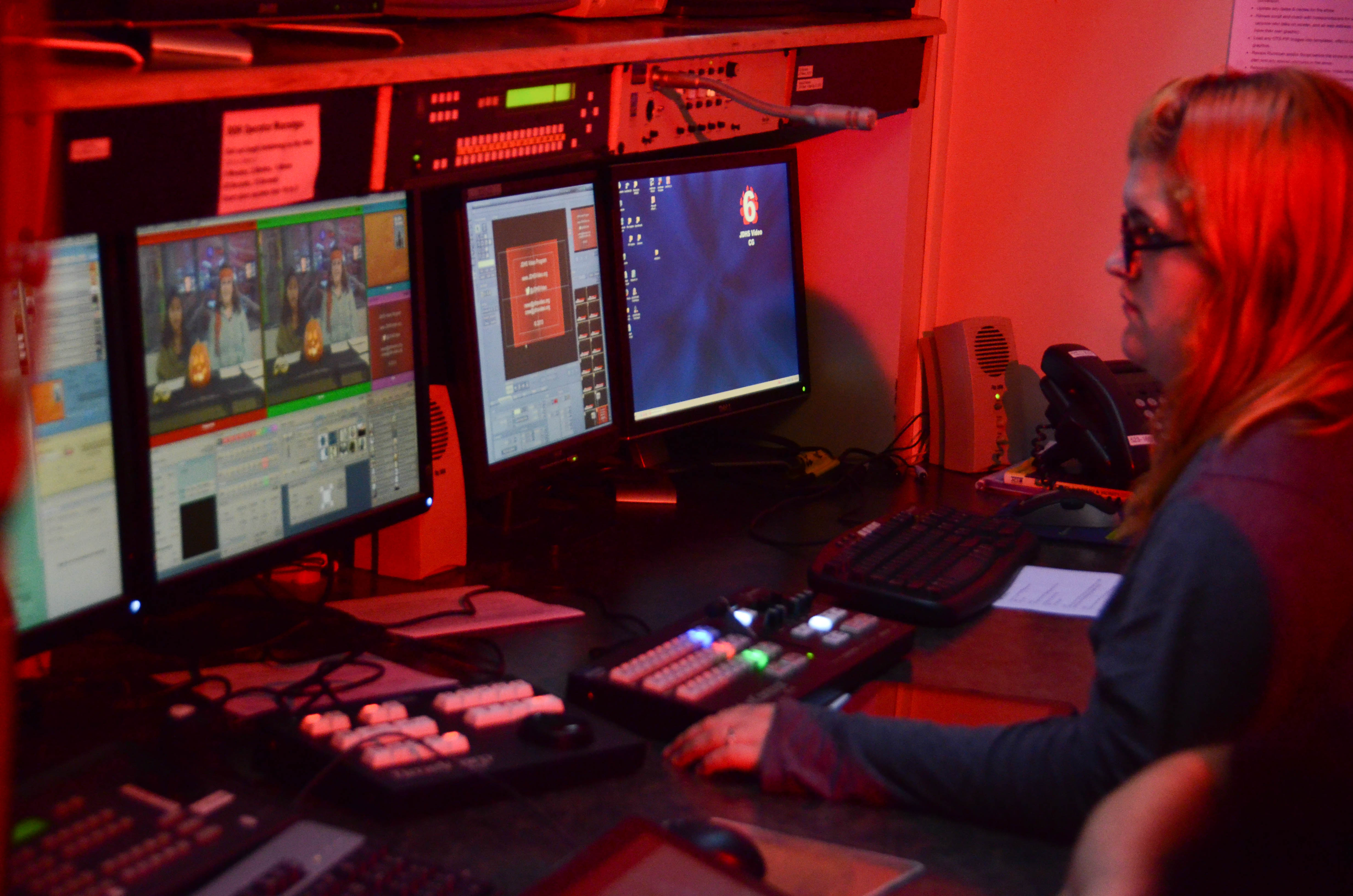
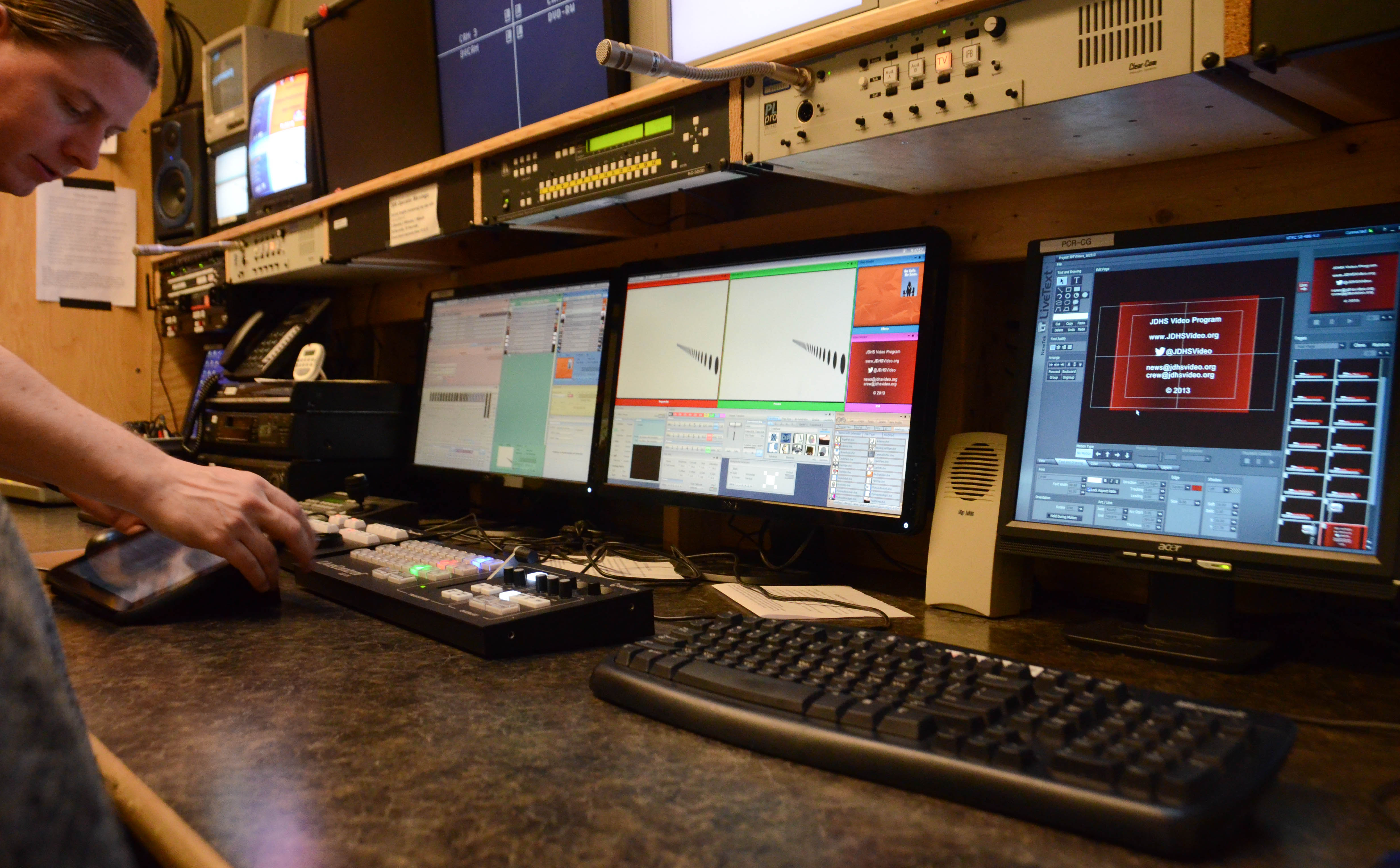
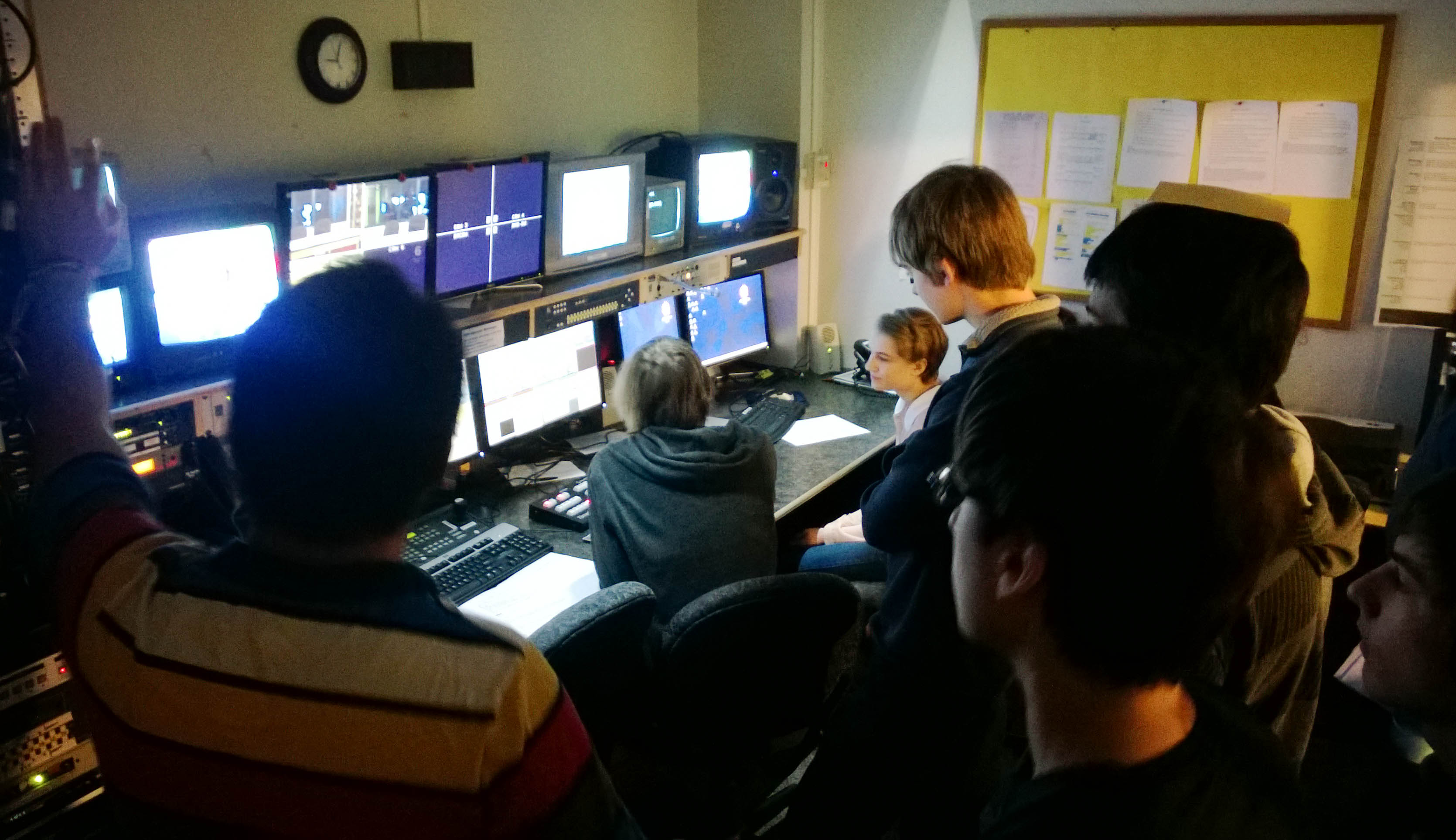
Eleven students put together a live, 10-minute television newscast every week for their video production class. They shoot the video, write the scripts, and edit their stories. On Fridays, they run the studio cameras, a control room full of intimidating buttons, dials and screens, and go on camera as anchors and correspondents.

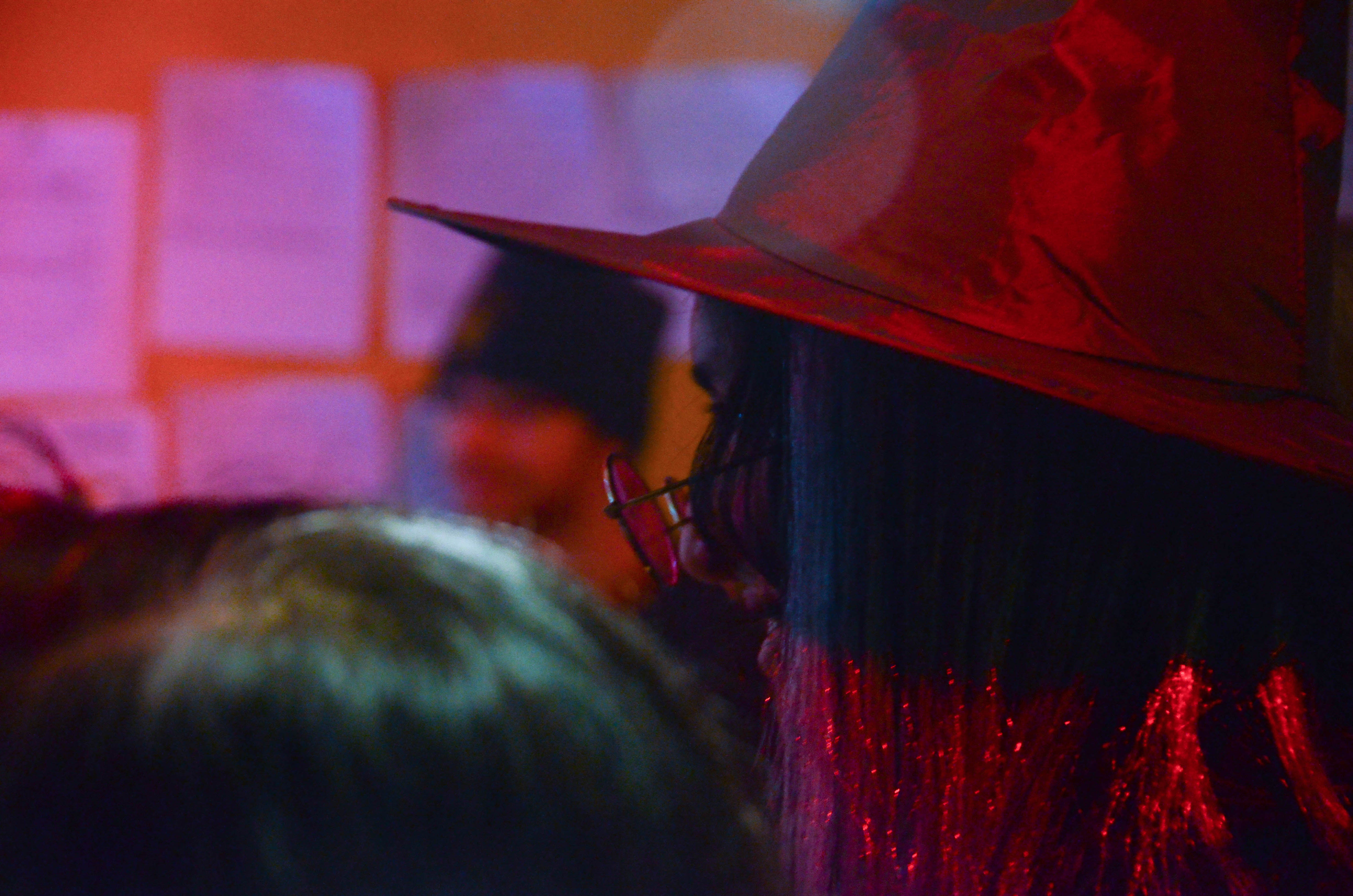
It’s a hectic scene as students – several in costume – distribute last-minute scripts, set mic levels, practice camera moves and load teleprompters.

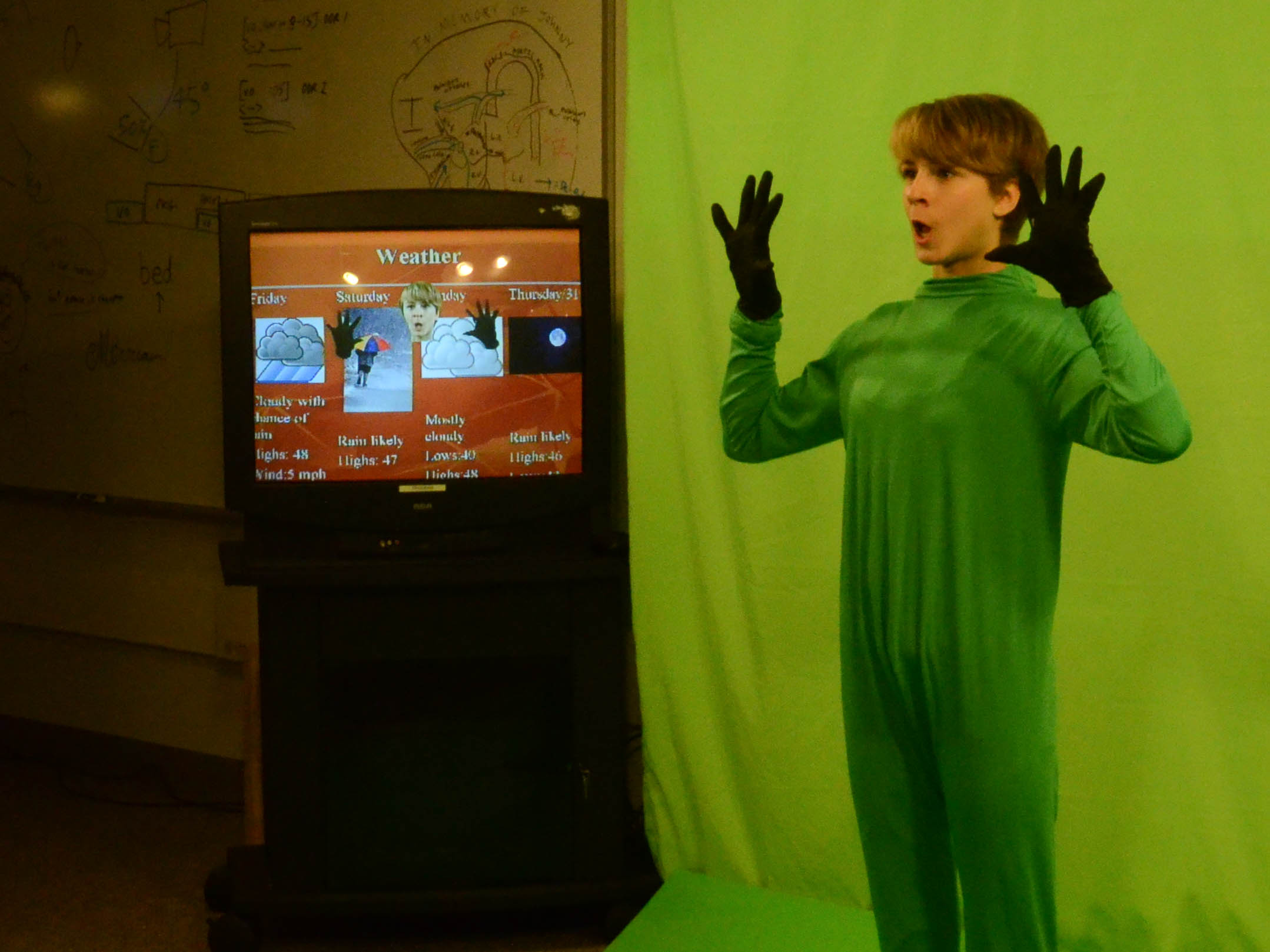
And then there’s freshman Jessie Gregg. She’s in front of a green screen wearing a green bodysuit that covers her from neck to toe. It’s a visual effects gag. Viewers should only see her disembodied head and gloved hands floating over the weather graphics.

The effects test goes well.

“It was a little weird not to see my body when I like, looked on the screen, but it was – it’s a pretty cool effect,” Gregg says.

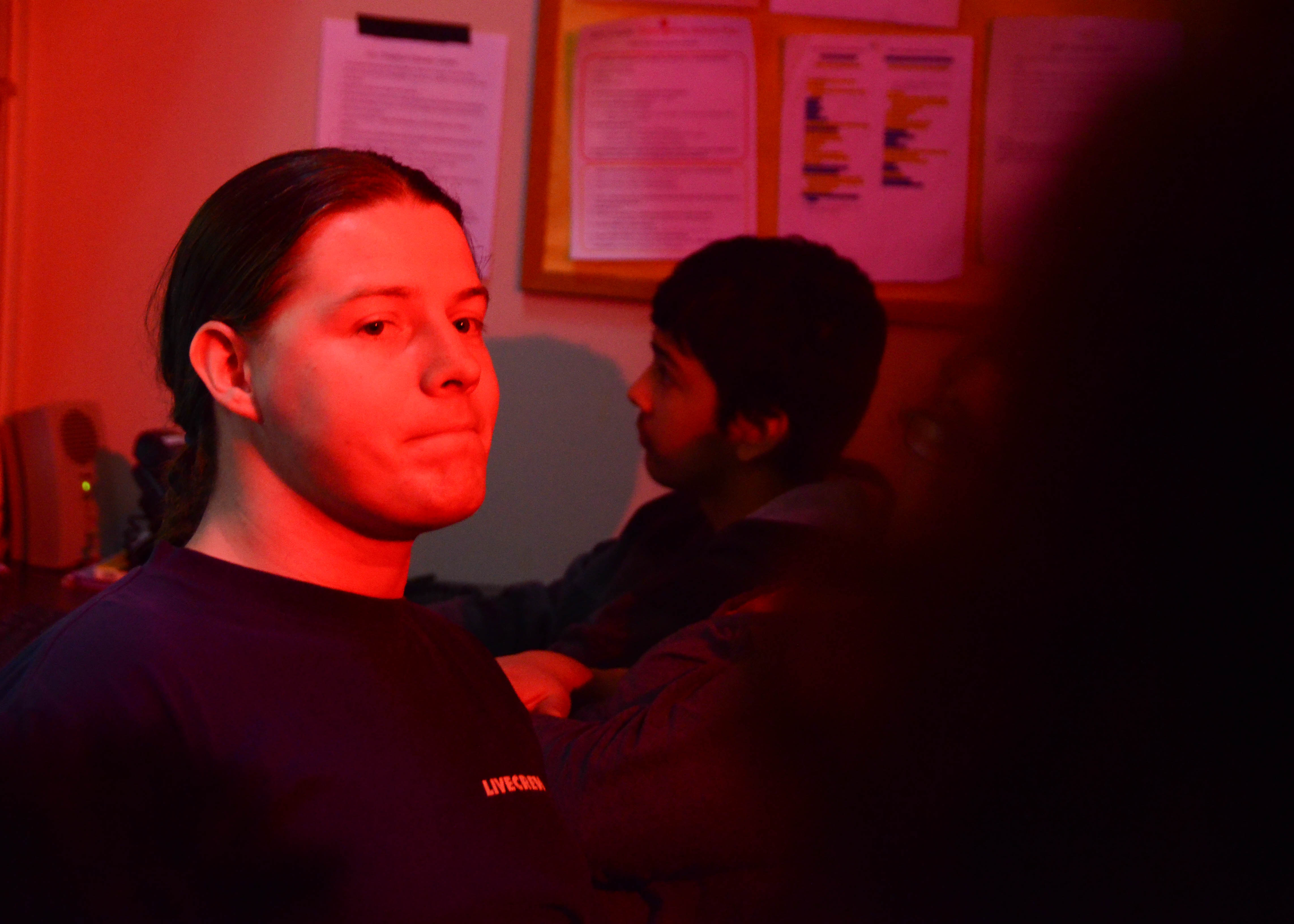
Mikko Wilson runs the class and directs the newscasts. It’s one of several part-time TV gigs he has, including with public television’s 360 North.

Mikko (and he goes by his first name with the kids, too) is busy, but there’s another idle observer in the studio. Carin Smolin manages the school district’s career and technical education programs, which includes Mikko’s contract.

“Mikko’s doing a great job. He’s been doing this for several years with us. And we’ve, we’ve got a full studio here, and people need to know about it,” Smolin says.

Much of the gear the class uses was donated by KTOO.

Then, from the anchor desk freshman Jade Kalk belts out, “Ready for rehearsal!” Smolin takes her leave.

The rehearsal gets under way and the first few minutes go smoothly. Gregg begins her weather routine:

“Thanks guys, and now for the weather. You may have noticed a teensie-bit of rain –“

But Mikko interrupts her midsentence on the squawk box.

“OK, bit of bad news. We need to stop our rehearsal there, we have 25 seconds to air,” he says, then ticks off a very fast, but intelligible series of instructions to the students sitting next to him in the control room and his two camera operators in the studio on headsets.

“Reset to the top please, black on air, first graphics ready. Ready two. Make sure you have the right script loaded. Ten seconds to air. We are recording. Quiet please.”

But there’s an equipment problem, and resetting takes more time than they have. The flurry of chatter and activity in the control room continues while dead air stretches on.

Eventually, Mikko begins counting down.

“Ready? We’re gonna go in 5, 4, 3, 2, 1 — take all.”

[youtube https://www.youtube.com/watch?v=RIXq6H7SowE]

The program opens with Kalk dressed as a gypsy and ninth grader Mirriam Meredith as a hippie at the anchor desk.

“Welcome to a very spooky episode of JDTV News,” Meredith says before the first scripted gag of the show. Kalk and Meredith say, “DUN DUN DUUUN!” as Keegan Brown on camera zooms in dramatically.

About 10 minutes later, the newscast winds down. There’s usually a burst of chatter after getting the all clear, but today the reaction is muted. There are a lot of deep sighs.

Mikko calls everyone into the control room.

The broadcast started almost half a minute late and went too long for the 10-minute slot on local cable channel 6. Viewers saw black at the beginning, and the show cut off before the end.

“How did we end up with black?” Brown asks.

“Prompter had a problem,” Mikko says. “And we cannot go without the prompter at the start of the show. K? What caused that problem? We weren’t ready. The script was not ready by deadline. The deadline for the script is before class on shoot day.”

They continue through the debrief identifying more problems. The students get a lesson in responsibility and consequences. Individual problems pile on and affect the whole team.

And the fog machine? They never fired it up.

The bell rings, and the students set aside their television responsibilities for the weekend – Mikko, too. He’ll be out of town next week, so the next show is truly a test.

One week later

A week passes with Mikko out of town. In his absence, Calvin Zuelow is directing. It’s his third year taking the class, which is an elective.

The scripts were closer to being on time. They got through the rehearsal with enough time to make some script changes. And even though a key piece of equipment crashed a few minutes before air, everything came together to hit their live slot on time.

“It worked OK, there were a few technical problems, but there’s always technical problems,” Zuelow says. “You can’t really always foresee those.”

Correction: An earlier version of this story misidentified the camera operator performing a dramatic zoom as Kyle Short. It was Keegan Brown.

BRH interim CEO on board


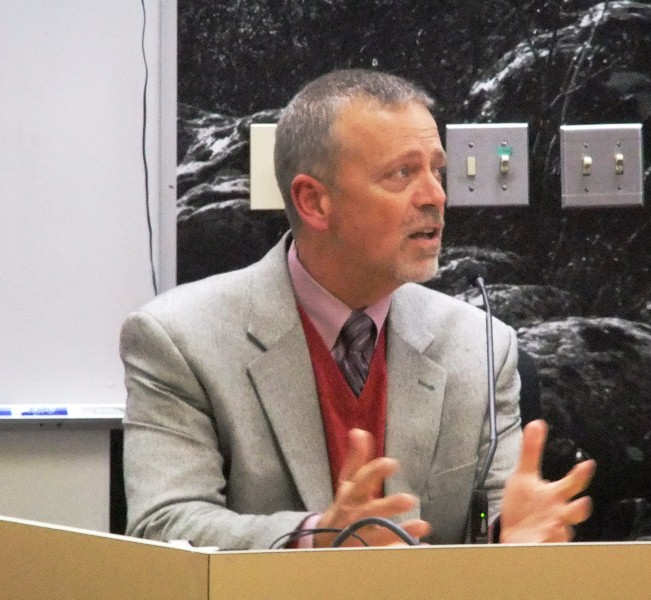
Bartlett Regional Hospital interim CEO speaks to the Juneau Assembly on Monday. Photo by Rosemarie Alexander.

Bartlett Regional Hospital interim CEO says the hospital will easily keep moving forward while the board looks for a permanent head.

Jeff Egbert has been in Juneau just a week and told the Assembly Monday night  he’s still in “learning mode.”

He was hired late last month after CEO Chris Harff suddenly resigned, following allegations of a hostile work environment created by senior management. The hospital personnel director also resigned, and CBJ human resources director Mila Cosgrove stepped in.

Egbert comes from Arizona, where he has been CEO of mid-size and larger hospitals, including others that have been in turmoil.

 When I interviewed with Mila and the board the discussion was to come, keep the hospital moving forward while they find a permanent CEO. And I think that will be an easy task,  because the hospital isn’t standing still, it is moving forward and progressing very nicely.  Just with the right direction and help in some key areas I think you’ve got a lot you can be proud of currently in that hospital.

The city-owned hospital has been going through change for at least three years, when some personnel started voicing concern about a “culture of fear.”  Then long-time manager Quorum Health Resources was replaced with a CEO hired by the board of directors.  Harff was in the  job for only 13 months, and now Egbert is interim CEO.

Egbert says he understands the issues and is comfortable in working in what he calls “turn-around hospitals.”

It’s not the toughest hospital I’ve come to from a culture or a financial perspective.  The good news is the hospital is operating profitably currently.  You just have some challengers with leadership and employee relations.

Egbert describes Bartlett as wanting for leadership, wanting for trust and more open communication.

Board president Linda Thomas has said the board would like to hire a permanent CEO within six months.


Memorial for Beverly Ward is Wednesday

A memorial service will be held Wednesday for long-time Juneau resident Beverly Ward, who died suddenly last week.  She was 67.

Ward came to Alaska in 1968, when she accepted a teaching job in Ketchikan.  Like many transplants, she planned to stay for a year and wound up making Alaska her home.

Over the years, Ward taught school, worked for Alyeska Pipeline Service, and ARCO Alaska as government affairs representative in Juneau.  While traveling the state for the pipeline company, she met and married Robert Ward, who became  lieutenant governor under Terry Miller, and later state transportation commissioner. Bob Ward died in 1997.

Beverly Ward remarried Brian Reeve in 2011.

She was involved in several organizations, including Juneau Rotary, Capital City Republican Women, the Glory Hole, and Catholic Community Services.

She is survived by her husband, a brother, stepchildren and grandchildren in Arizona, Oregon, and Juneau.

Services will be held Wednesday at Chapel by the Lake at 1:30 p.m.


Smoke detector saves lives

A smoke detector saved two sleeping Juneau residents early Tuesday morning, when their mobile home caught on fire.

According to Capital City Fire and Rescue, the 15-foot by 30-foot older trailer on Thunder Mountain Road is a total loss.  The structure was valued at $22,000.

Fire Marshal Sven Pearson says the call came in about 5 a.m.  He says no one was injured and the un-named occupants have the smoke alarm to thank.

They had been sleeping at the time. They heard a smoke alarm, that’s actually what got them out of bed. And as soon as they got out of bed they realized there was a wall of fire alongside  their  hallway when they exited the structure.  It was burning on the inside.  The area of origin was actually a propane hot water heater.

Pearson says the Red Cross was notified to find housing for the occupants,  who quickly left the scene.

He says the fire is a good reminder to all Juneau residents to check their smoke alarms.

Remember to have them both inside as well as outside the bedroom, because if the bedroom door is closed you will not hear the smoke alarm that’s on the other side, so it’s good to have one on both sides.

Make sure batteries are in the smoke alarms.

Volunteers and staff continue to give life to the Shrine

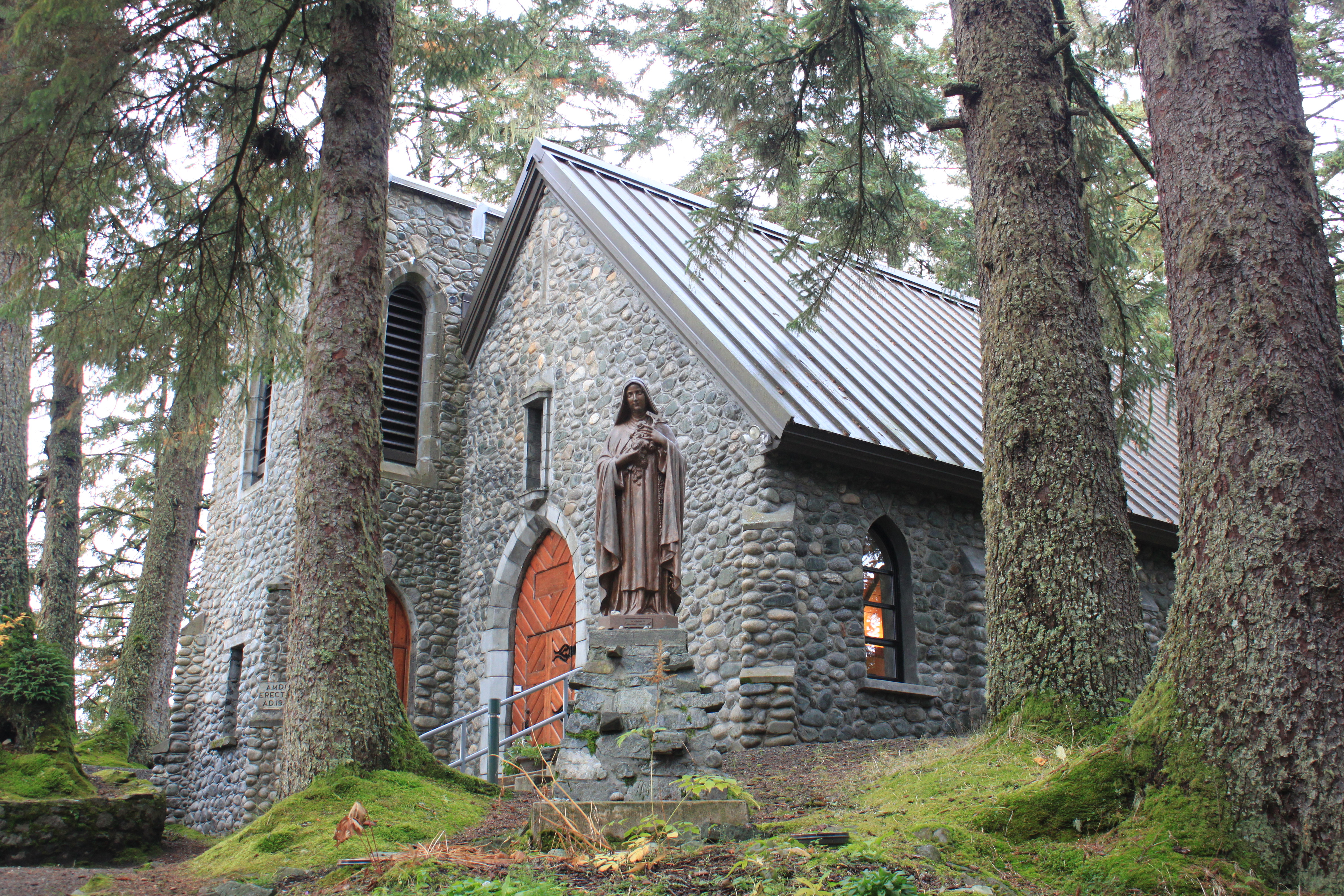
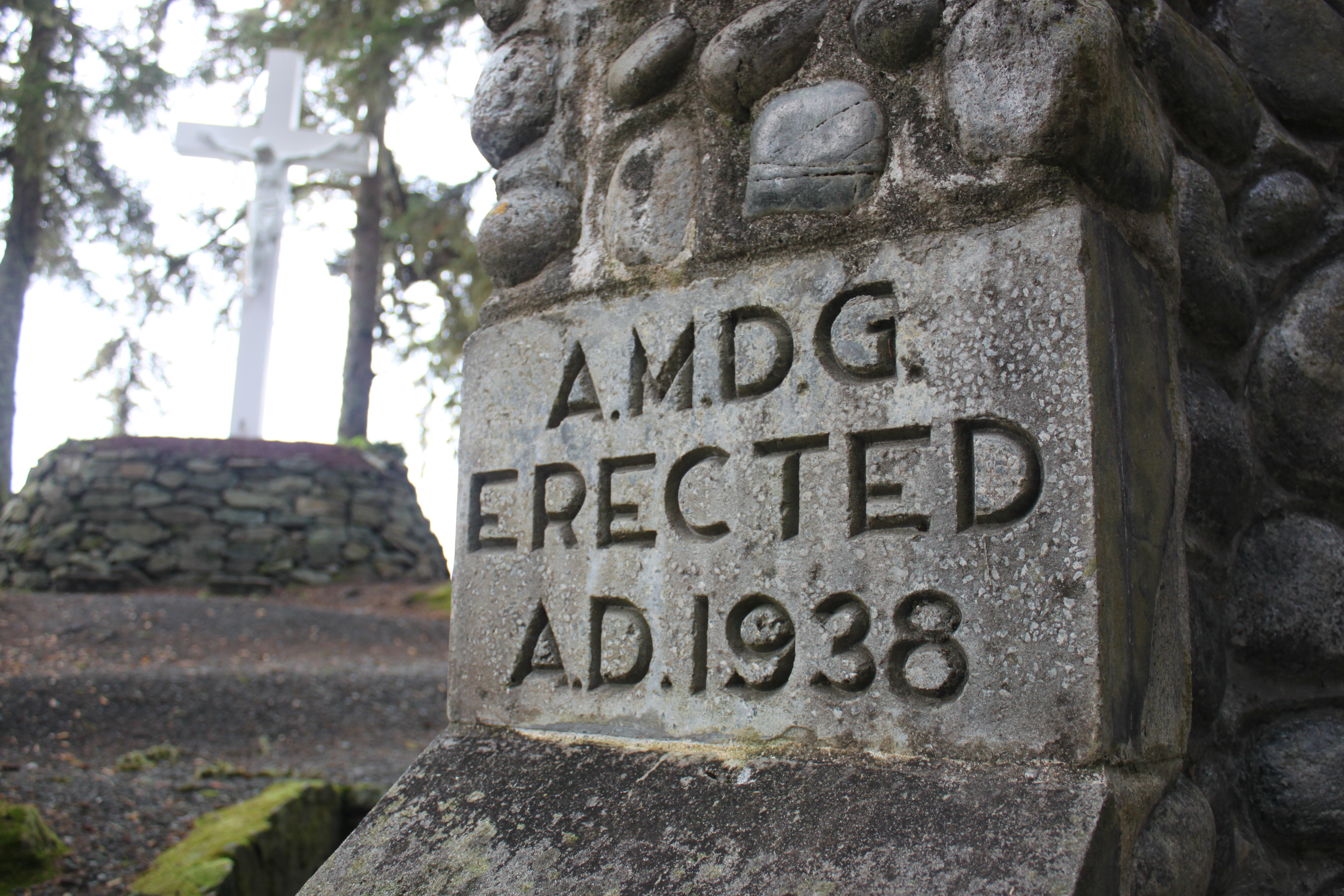
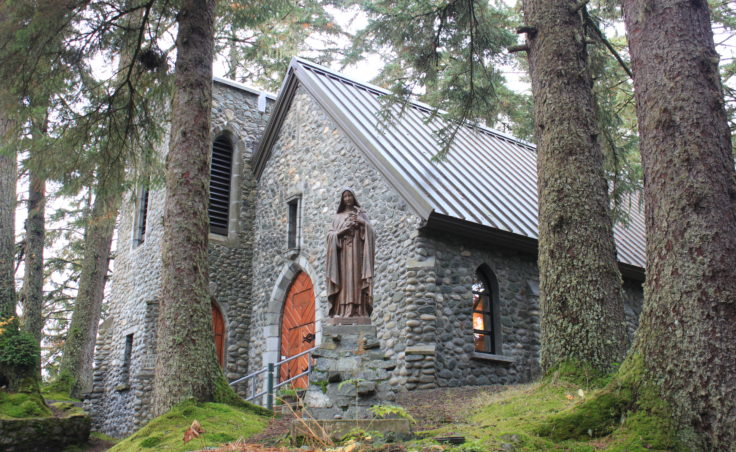
The Shrine of St. Therese has gone through various stages of use and deterioration in its 75-year history. It even closed in 1985 but a small group of Juneau residents gave it another life. Since then, the Shrine has remained open to the public for various activities while undergoing small and large renovations.

The Shrine has only survived and thrived through the hard work of Shrine staff, the generosity of volunteers, and the spirit of St. Therese.

The Shrine of St. Therese is rooted in community support.

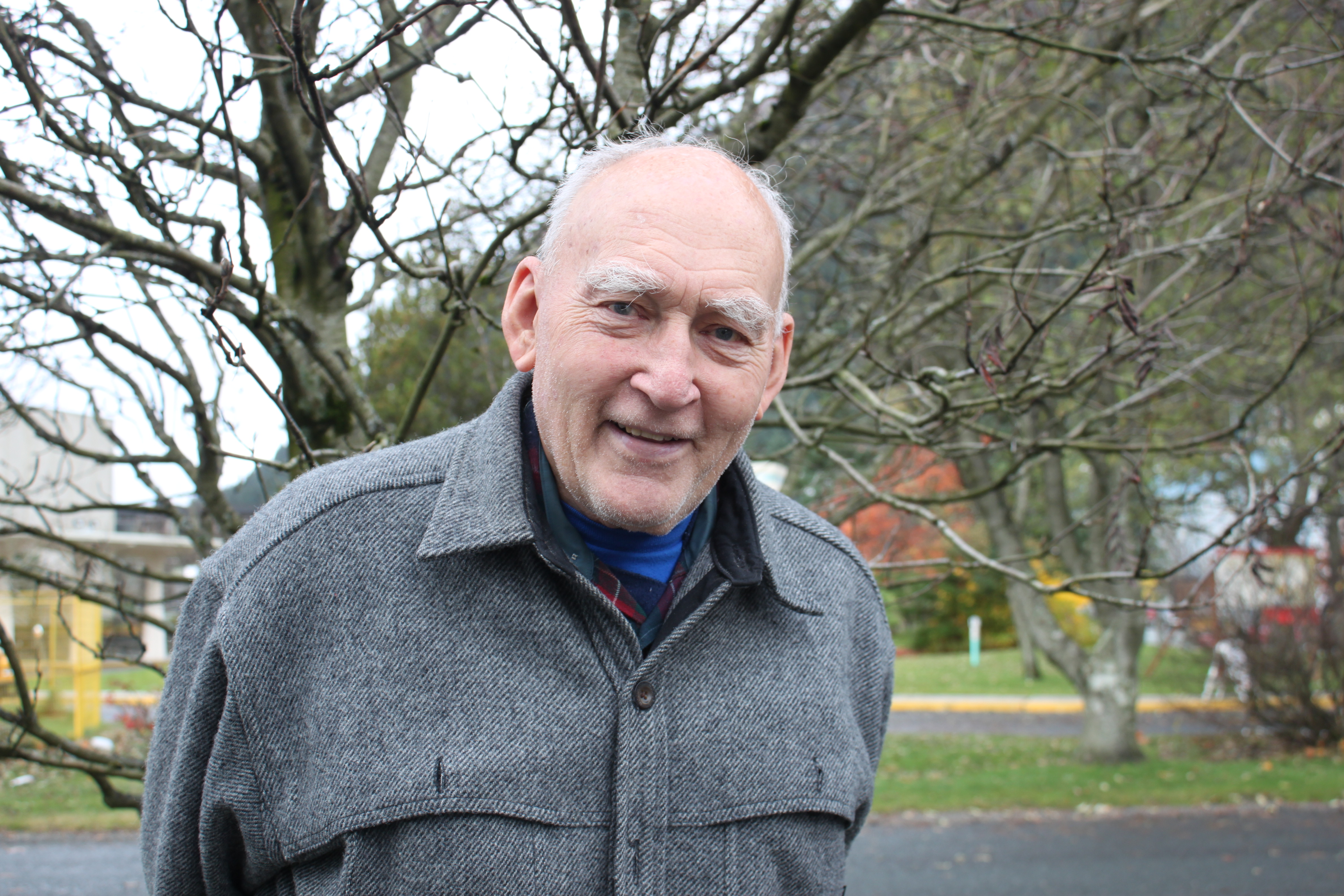
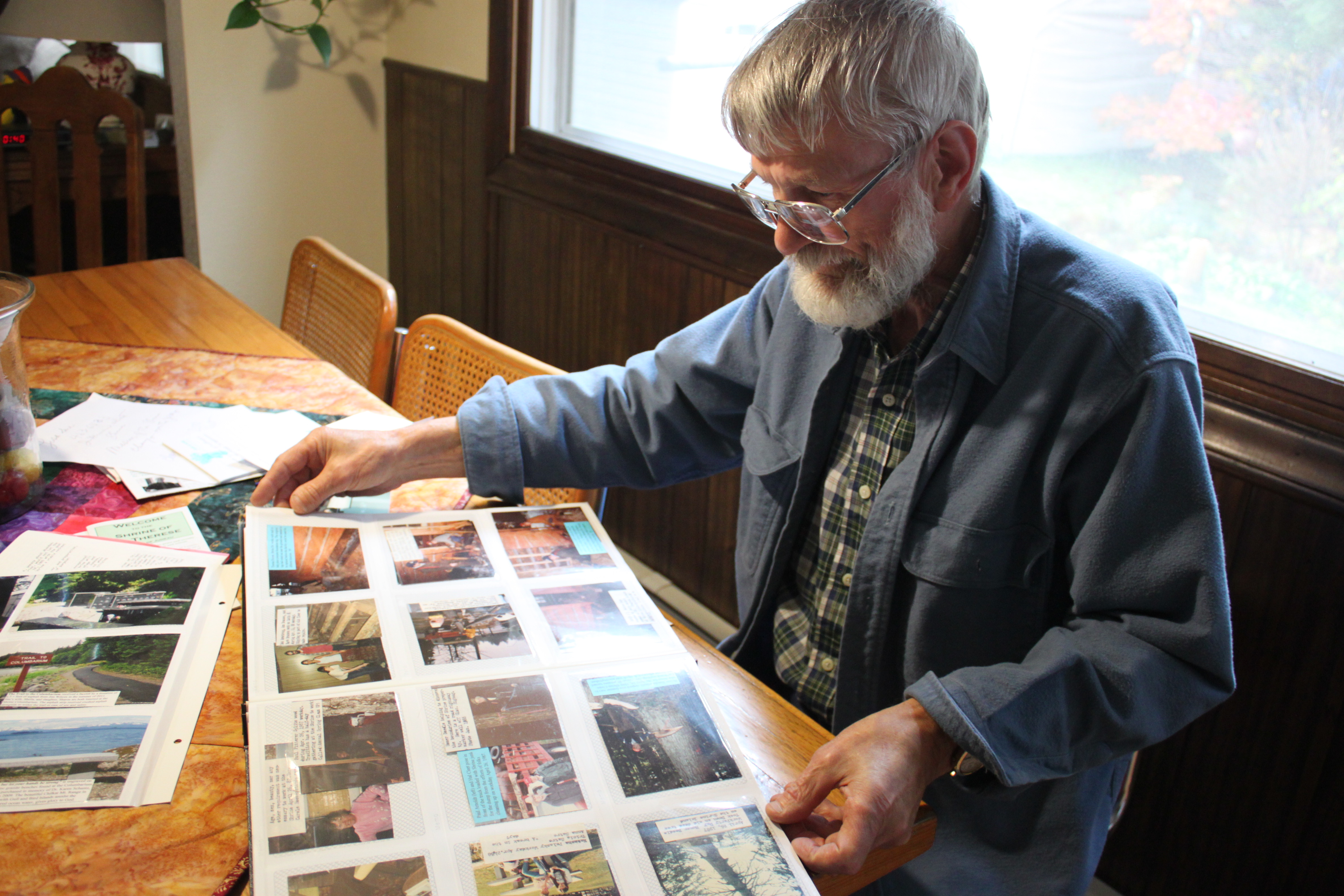
Shortly after the cornerstone of the chapel was laid 75 years ago, 83-year-old Albert Shaw attended summer camp at the Shrine. “I remember we helped get the rocks for the causeway, throw them in the dump truck,” he says.

Help came from other groups as well.

“During the depression, during the 30s, fellows would show up here and go up to the church looking for a handout and Father LaVasseur would say, ‘I’ve got something for you to do,’ and ship them out to the Shrine and put them to work,” Shaw recalls.

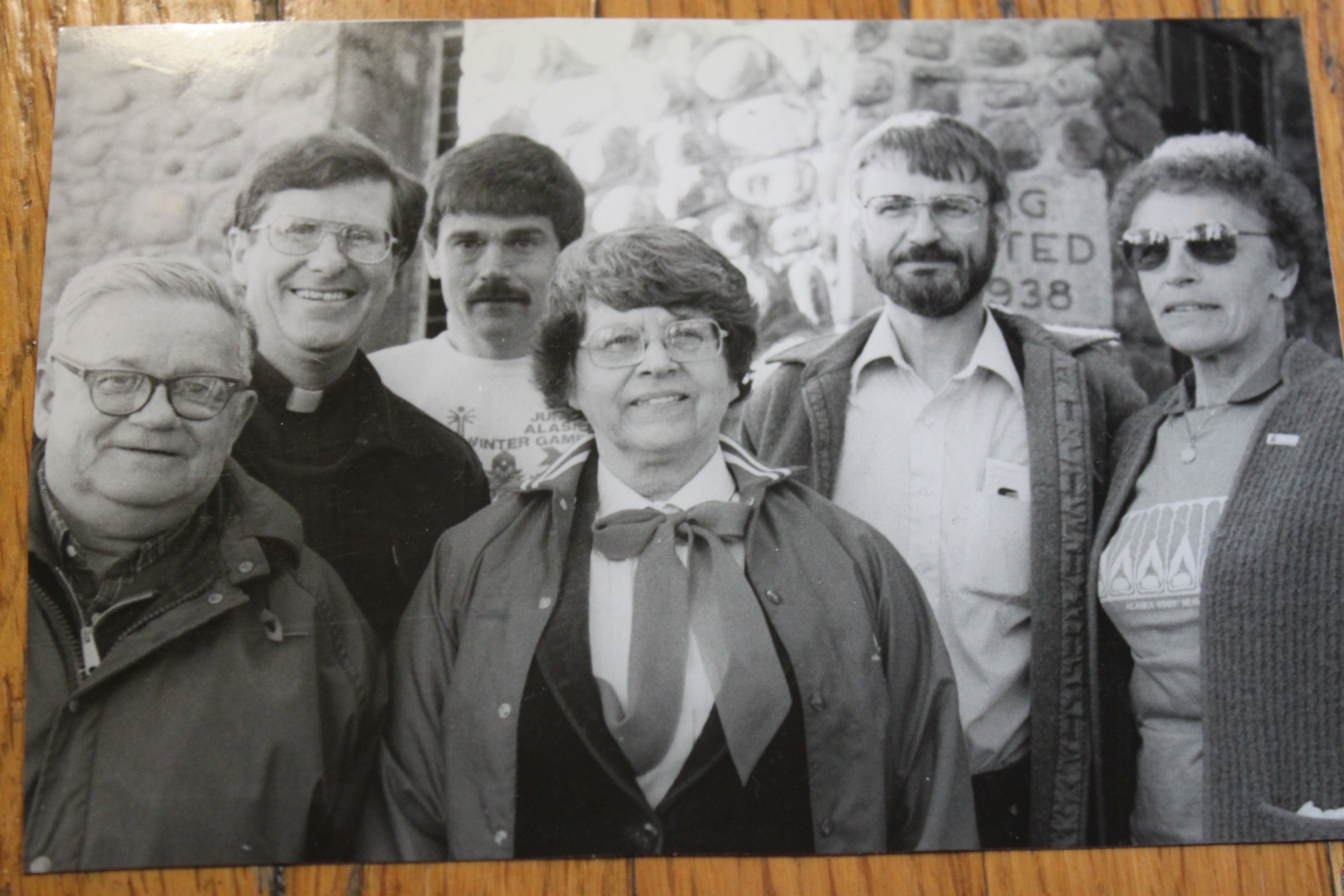
Over the decades, the Shrine has gone through cycles of high use and deterioration, until 1985 when Thomas Fitterer got involved.

“It was basically closed down for use. There were many buildings that were falling apart. It was in a real slump. It really needed a lot of love and tender care,” he remembers.

Fitterer says he had an inner calling to help the Shrine, “The diocese was even talking about possibly selling it because it was such an expense, but God had another plan.”

Fitterer along with a small group of Juneau residents were passionate about getting the Shrine back to being a place of spiritual retreat.

A board of directors formed in 1986 and Fitterer and his wife Mary were asked to be Shrine directors. “When we took it over, it was in the red,” he says.

With the help of a dedicated board and other volunteers, the Shrine slowly got back on its feet. Within ten years, the Shrine was bringing in its own money.

Throughout his 25-year career as Shrine director, Fitterer says his main job was figuring out how to bring about new infrastructure and new facilities, “A lot of times it was just getting out of the way and allowing the people who had the gifts to bring them forth.”

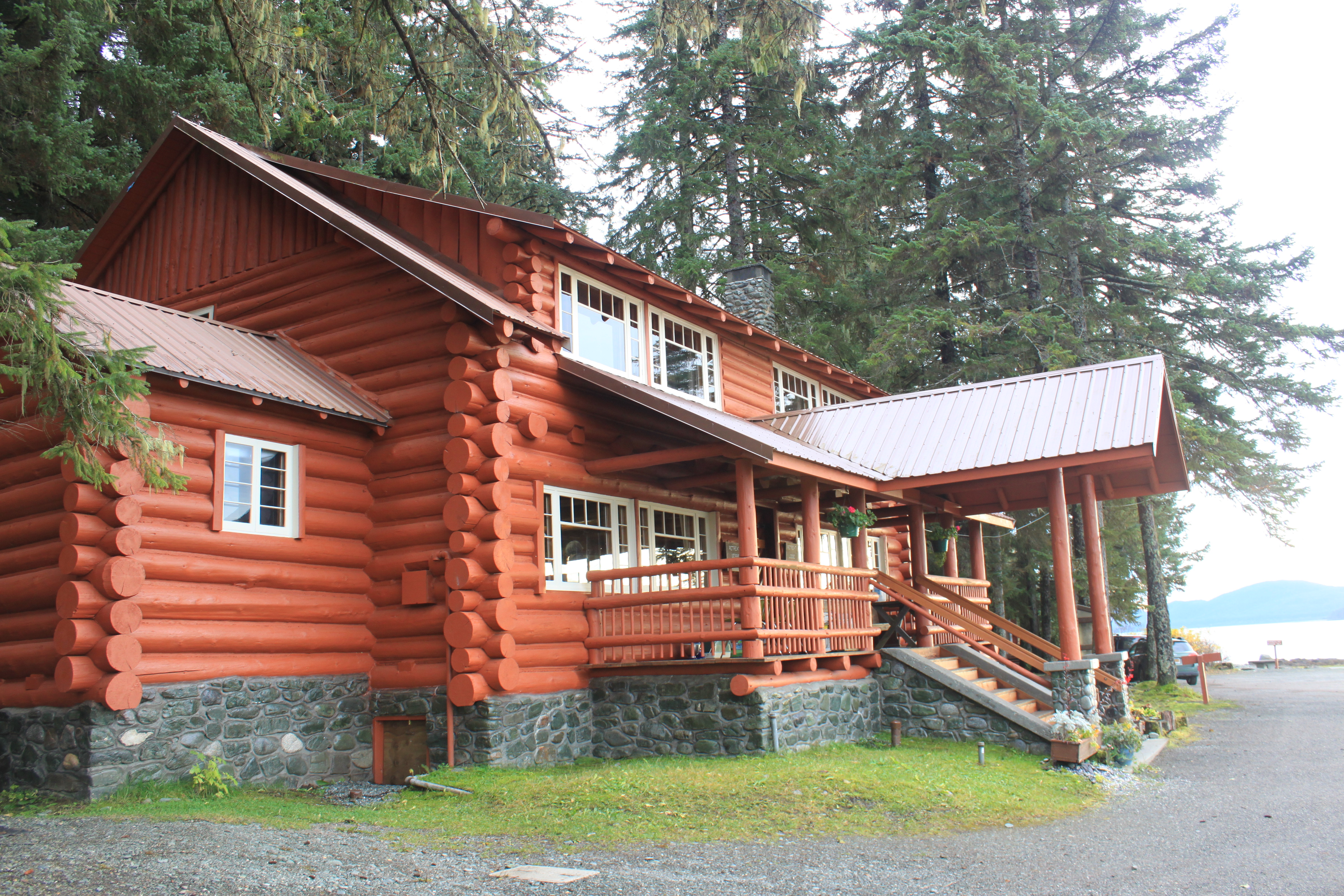
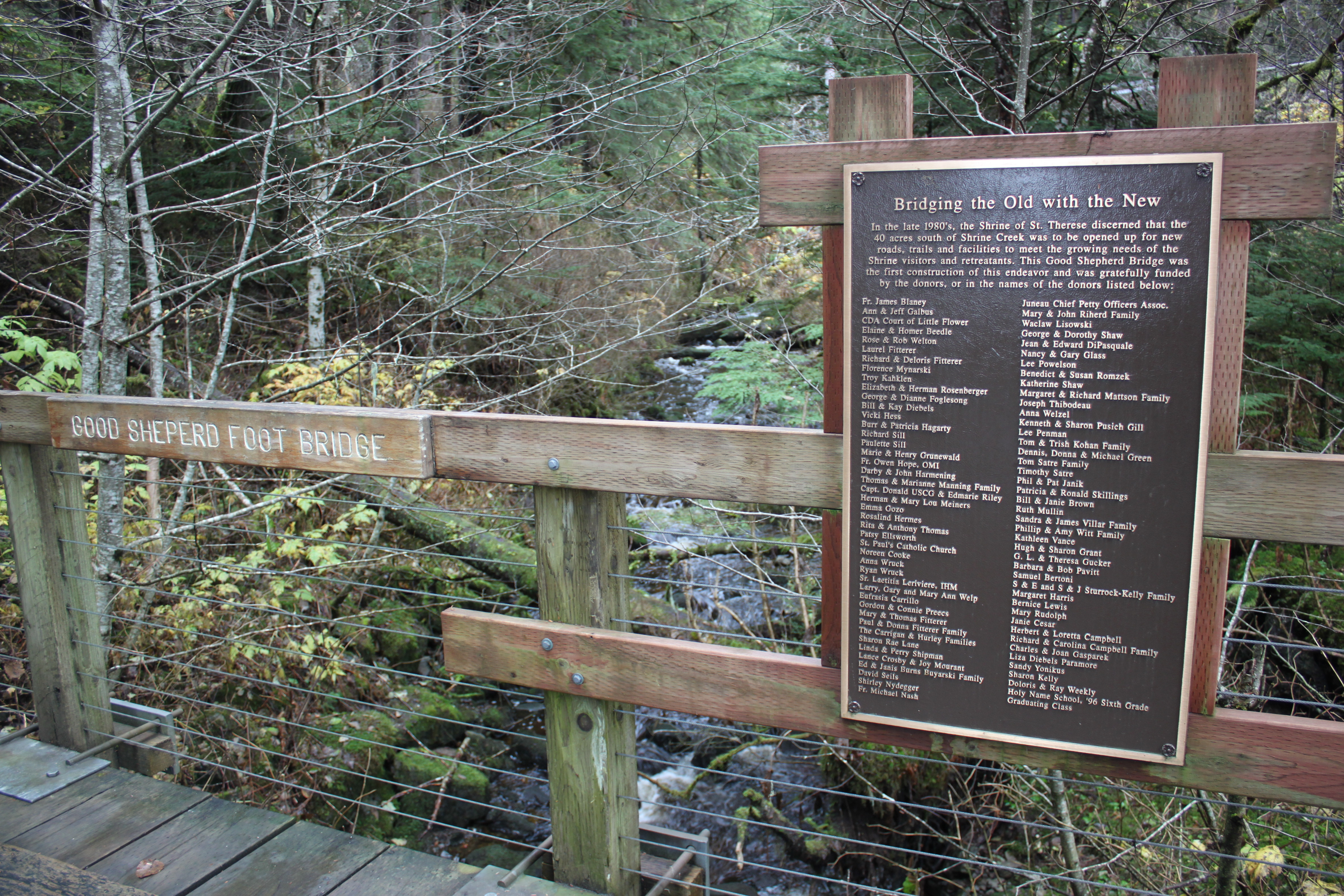
Improvements included a new road, a bridge, a new water system, new sculptures of the Stations of the Cross, the Columbarium, and the construction of the Jubilee and Little Flower retreat cabins.

“So often I would scratch my head and say, ‘Lord how are we going to do that?’ and somehow or another I could ask somebody or somebody would volunteer,” say Fitterer.

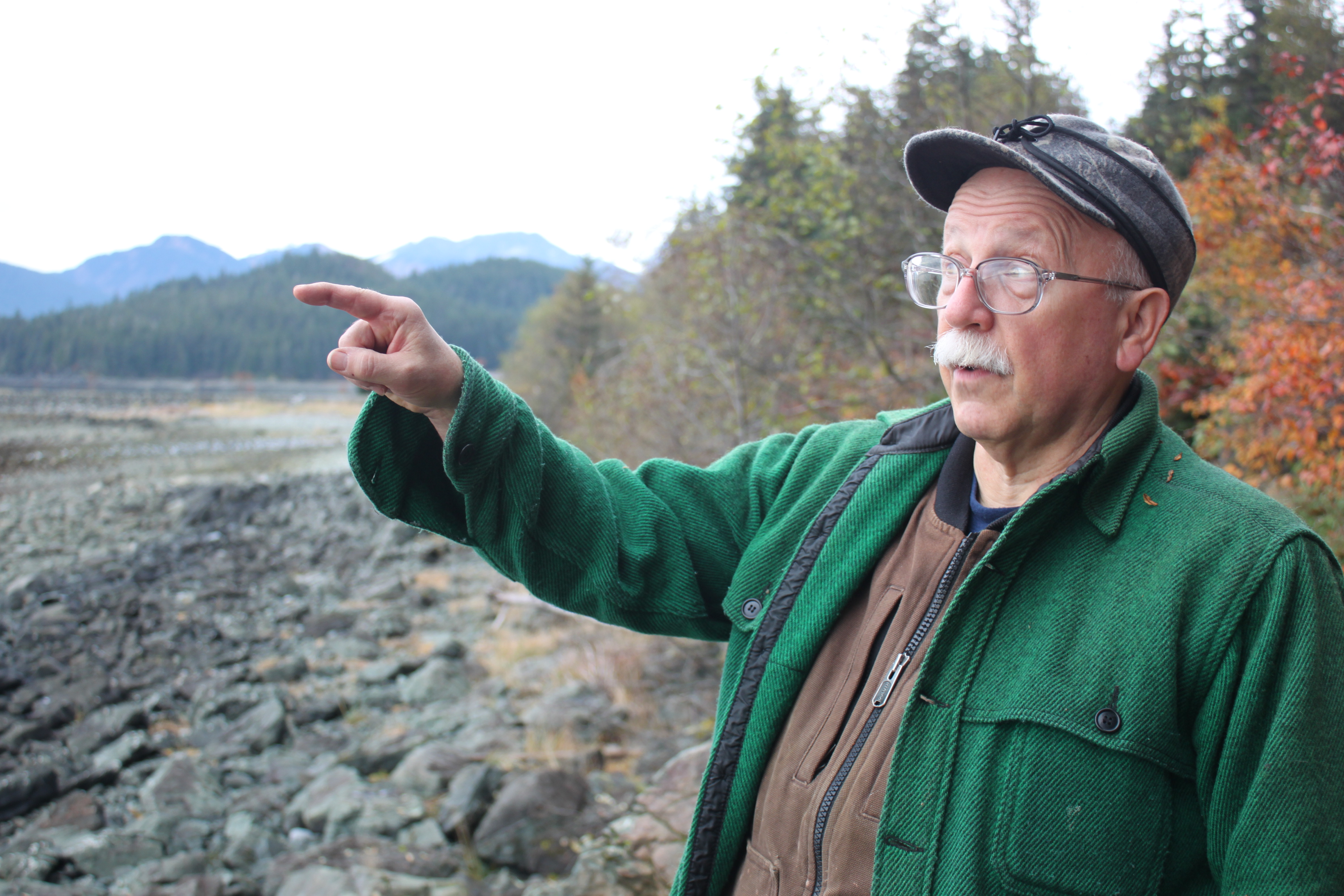
In recent years, that somebody has often been Sam Bertoni. Almost every day for the past 13 years, Bertoni is volunteering at the Shrine doing one job or another.

“We have our own water system, our own septic system, so that takes some attention. Minor carpentry work and electrical work and plumbing work and plowing,” lists Bertoni. “We do our own plowing and sanding, so pretty much, it’s kind of like a little village.”

Bertoni’s hours depend on what project he’s working on.

“I’ve never spent a night here in 13 years, but I’ve been out here in the middle of the night thawing out pipes,” Bertoni says.

The Shrine has a couple dozen volunteers throughout the year. If there’s a bigger project, more will show up. Past work days have brought out more than a hundred people.

The Shrine is named after St. Therese. Born and raised in France, St. Therese became a nun when she was only 15. In 1897, at the age of 24, she died of tuberculosis. Alaska Bishop Joseph Crimont knew her family and when she was canonized, he declared St. Therese Queen and Patroness of Alaska.

St. Therese is also called ‘The Little Flower’ because she knew the importance of small contributions.

Diocese of Juneau Bishop Edward Burns says that’s like the Shrine’s history.

“[St. Therese] spoke in her journal about how even a small smile to a passerby means so much. It’s a connection. So with the little things that we offer, it helps transform society,” says Bishop Burns.

Now, Shrine director Deirdre Darr is introducing the Shrine to a younger generation.

“The whole history of the Shrine is just everyday people in Juneau and outside of Juneau who have just loved it and I think it’d be great to introduce it to another generation so that they can start to step in and take over for those who are getting older who have been loving and caring for the Shrine,” Darr says.

At times, Darr is overwhelmed with being in charge of the Shrine’s future, but knows she’s not alone.

“We can’t forget that we’re not the ones ultimately who are responsible, that hopefully there will be some divine inspiration to help us figure out what the future will be,” she says.

The combination of divine inspiration and human ingenuity is likely to guarantee the Shrine will be around for decades to come.

Site notifications
Update notification options
Subscribe to notifications