Community

CBJ rate study explained

Juneau has approximately $275 million invested in its water and sewer system, and some of the pipes and plants are very old.

Every ten years, the city conducts a detailed study of the system; one is now underway.

As Rosemarie Alexander reports, this year’s study is different, because it reaches out to the public.
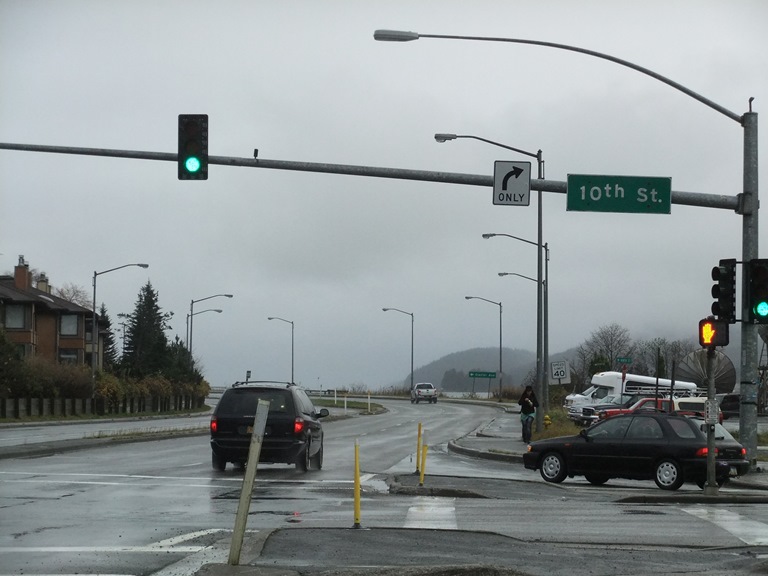
10th Street-Egan
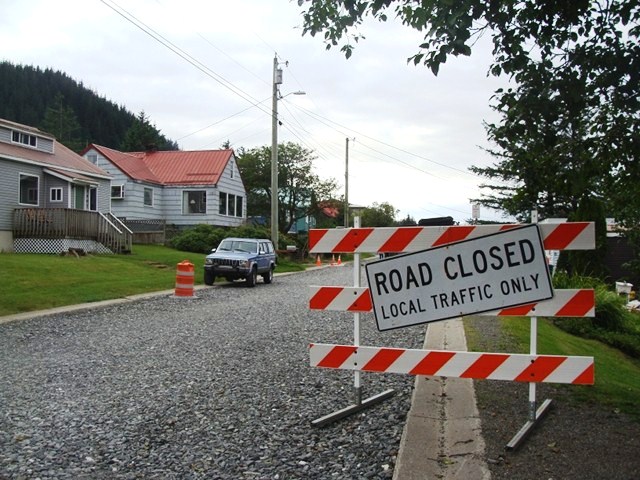
The state Transportation Department will repave Juneau’s Egan Drive from 10th Street to Main Street next year, a good time to replace city utility lines. Photo by Rosemarie Alexander/KTOO.

CBJ Public Works Director Kirk Duncan says cities all over the nation have a similar problem:

 EPA estimates there’s about 4 trillion dollars’ worth of improvements needed for the water and wastewater systems.

Juneau has two major water sources and about 180 miles of water mains.

 In a town our size, we would have about one reservoir for 31,00 people.  We have eight.

Juneau also has three wastewater treatment plants.

 A town our size would normally have one treatment plant, but because of our long linear nature, we have three treatment plants.  We have 46 lift stations that support those treatment plants.

Last year the Twin Lakes lift station needed a rebuild, “and that cost a  million dollars to update that system,” Duncan said.

In the next year, Duncan expects $4.5 million in water and wastewater projects, “and we generate 13 and a half million dollars a year.”

A lot of upgrades to Juneau’s water and sewer are coming due, but  Duncan said the city doesn’t have a good plan.  Asset management is part of the utility study.

Public meetings

Duncan and consultant Karyn Johnson explained the rate study Thursday to three different audiences – the Chamber of Commerce, Juneau’s top 50 water and sewer users, and the rest of the public.

He said the study will result in a new rate model to take the system to 2024.

“The rate model is intended to make sure that we generate enough money to cover our operating expenses as well as make needed changes to the system,” he said.

The last study was done in 2003.  As the main consultant then and now,  Johnson, of FCS Group, is intimately familiar with Juneau’s water and sewer system.

Johnson said a successful rate study first defines the revenue needed to operate and maintain each utility.  The second phase is a cost of service analysis.

“How you would take those costs of each utility and allocate them to the different types of customers you have on your system, whether they be residential, commercial, industrial and so forth,” she said.

Then different types of customers are grouped together based on how they use water and sewer.  Finally, the rate design will answer these questions: How much revenue is required from each customer class?  How will it be collected?

Johnson said the study will be done about May.  Then it will go to CBJ leaders and finally to the Assembly.

Sticking with a plan

The last utility study resulted in a series of rate increases stretched out over a number of years.  But Johnson said there wasn’t the political will to implement the entire recommended rate hike.

“So it represents about a 32 percent difference in what was proposed versus what was implemented for water,” she said.
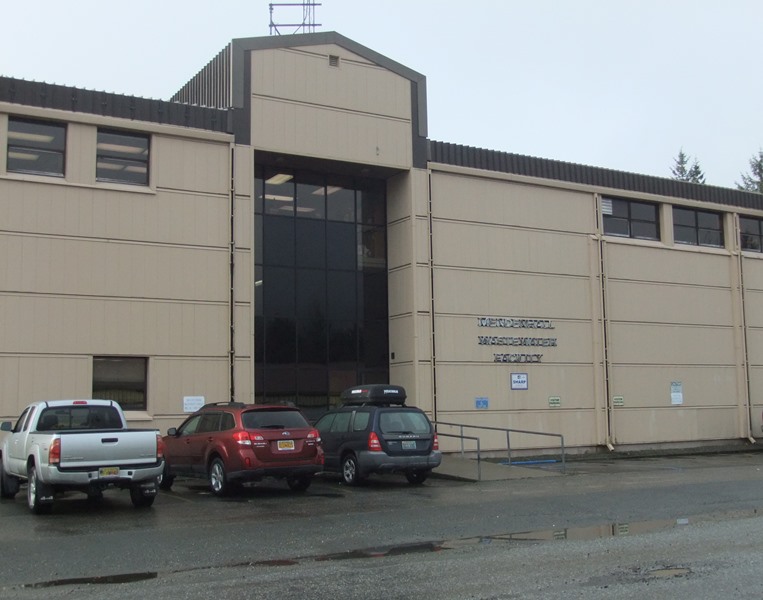
Mendenhall treatment plant
The Mendenhall Wastewater Treatment plant is the second-largest user of electricity in the city and borough. Like all parts of the water and sewer system, it needs constant maintenance. Photo by Rosemarie Alexander/KTOO.

Sewer rate increases went the same way, so the city collected about 30 percent less revenue than the study proposed.

Johnson said an annual rate adjustment would avoid that problem.

But generating enough revenue to operate, maintain and update the utility system  won’t all fall on customers.

“Your rate revenues typically pay for your operating type expenditures, whereas capital can be paid for with grants as they’re available, with debt financing , with other outside sources, general fund supplements as needed,” she explained.

The utility study also will look at how Juneau’s rate policies compare to those in similar cities around the nation and some in Alaska.

In December, Duncan and Johnson will hold more meetings to explain the amount of revenue the water and sewer systems will need for the next ten years.  In February, they expect to be able to tell residents how that will impact their rates.

(Disclosure: CBJ Public Works Director Kirk Duncan is also a member of the KTOO Board of Directors)
Dog owners, trappers come together for “Sharing Juneau’s Trails” presentation

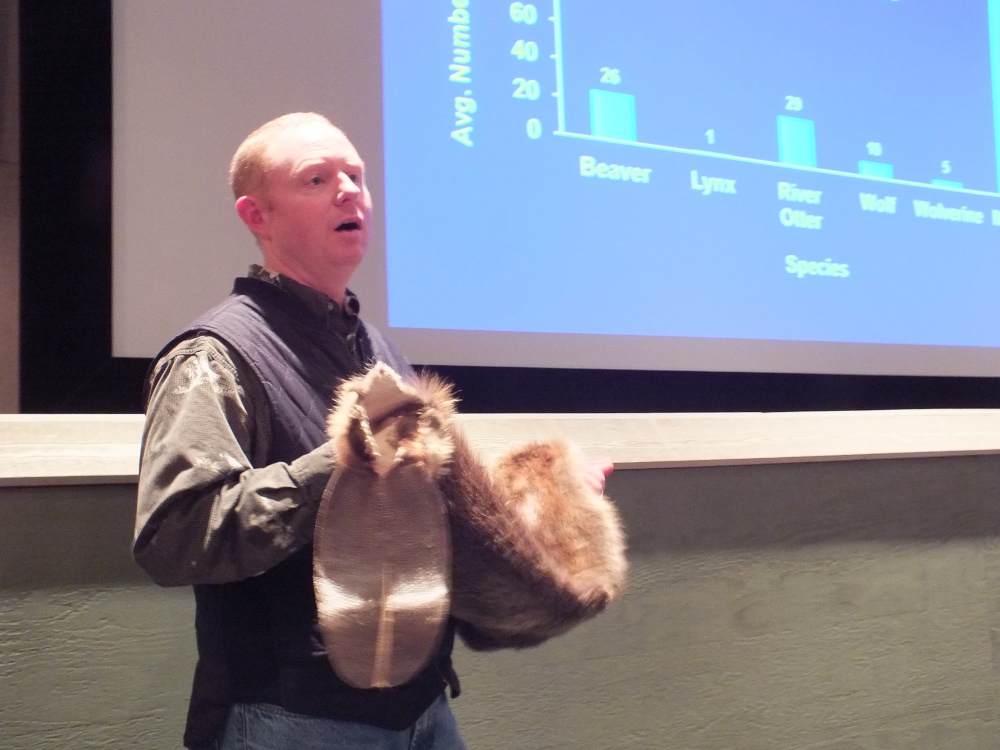
Ryan Scott ADFG trapping presentation
Alaska Department of Fish & Game Area Wildlife Management Biologist Ryan Scott holds up a beaver pelt during a presentation Wednesday on sharing the trails around Juneau with trappers. Photo by Casey Kelly/KTOO.

Hikers, skiers, mountain bikers and snowmobilers are just some of the outdoor enthusiasts peacefully coexisting on Juneau trails every day.

Many trail users like to bring their dogs along for a hike, ski or ride. That sets up a potential conflict with an often overlooked user group in Juneau: Trappers.

The Alaska Department of Fish and Game and the Alaska Trappers Association this week held a community discussion at the Mendenhall Glacier Visitors Center to help dog owners understand trapping, and hopefully alleviate some concerns.

Fish & Game publishes a small booklet every year with the latest state and local trapping regulations. You should really know about three:

1.) The city of Juneau prohibits trapping within a half mile of any road.
2.) The federal government does not allow trapping within the Mendenhall Glacier Recreation Area.
3.) No trapping is allowed within 50 yards of a marked trail.

“It’s important that we all recognize that we all have some responsibility in this,” says Ryan Scott, Area Wildlife Management Biologist with the Alaska Department of Fish and Game.

Scott says trapping regulations in Juneau came about in 1987 when the Taku Conservation Society successfully petitioned the Alaska Board of Game to limit trapping to at least a quarter mile from all marked trails. That restriction was in place until 2008, when trappers asked for the 50 yard limit.

“The intent was to get younger people out there and give them an opportunity,” Scott says. “The compromise that was reached, with a lot of discussion locally – there was a lot of input from the community of Juneau – was that we would go with, you had to be 50 yards off a trail and then you could start trapping. But they had to be off the ground.”

Those traps are primarily to catch marten and other small furbearing animals, and are often hung from posts or trees. Larger traps for wolves, bears, and other animals that can be set on the ground, where a dog could encounter them, must be at least a quarter mile from a trail.

“As a dog owner, I’m conscious of how far I let my dog run, especially during the trapping season,” Scott says. “Trapping season is open for some species already locally. The majority of them will open December 1st and then run through mid-February and some on in to April.”


(Video courtesy Alaska Trappers Association and Alaska Dept. of Fish and Game)

In 2008, a basset hound named Bubba was killed in a Conibear trap that had been legally set along the Eagle River Trail. Scott believes the incident was the impetus for the 2008 compromise, and improved regulations.

“A terrible thing happened,” he says. “But it also at the same time brought a whole bunch of people together, and I think that’s how we got to where we are.”

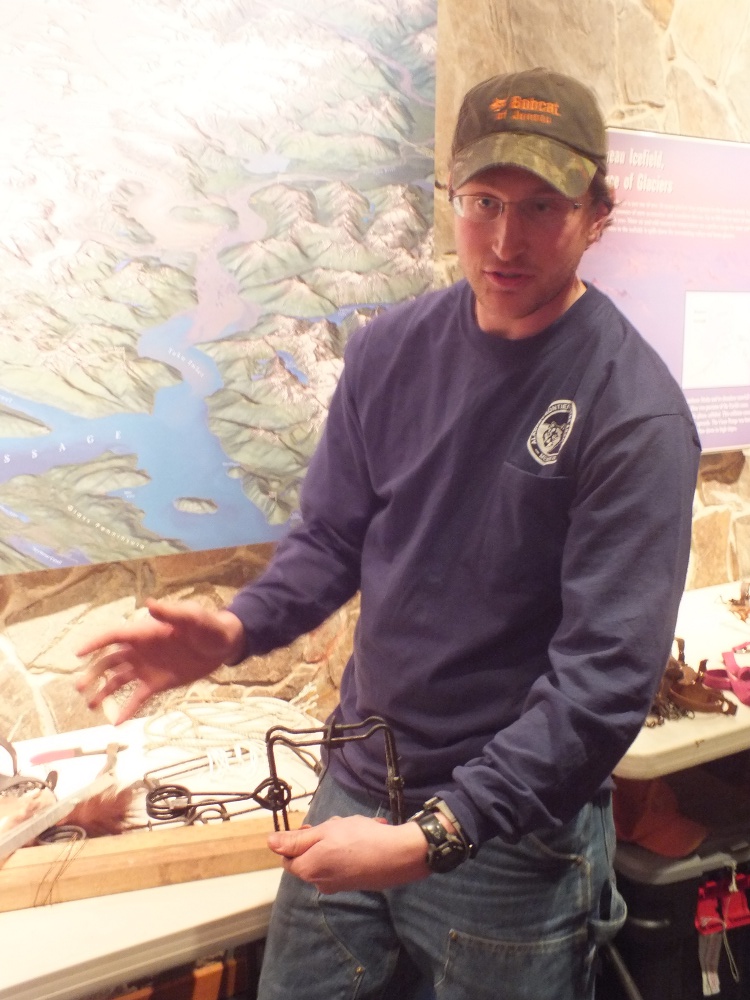
Local trappers say the incident also prompted them to increase outreach, and some were on hand at Wednesday’s presentation to demonstrate their gear. Jesse Ross with the Alaska Trappers Association triggered one of the smaller traps on his hand.

Jesse Ross ATA trapping presentation
Jesse Ross, a member of the Alaska Trappers Association, demonstrates how to use a trap. Photo by Casey Kelly/KTOO.

Ross has been trapping in the Juneau area for the past four years. It’s an activity he enjoys, because he says it connects him to the outdoors.

“It’s also a game in a sense, in that I have to outsmart the animal in order to catch it,” Ross says. “Whatever that critter is I’m targeting. It’s not easy like just going to the grocery store and grabbing something off the shelf.”

Ross says non-trappers should familiarize themselves with the telltale signs of trapping. He says trappers often attach flags or signs to nearby trees, alerting others to the presence of a trap line. A snowshoe trail leading off a main trail is another indication.

For the most part, Ross says he traps in areas where there’s not a lot of human traffic. A couple years ago, his yellow lab got his foot caught in a wolf trap. Fortunately, it only snared his paw, and because it was a trap with an offset jaw it didn’t do much damage.

“It was a very emotional experience,” he says. “Thankfully he wasn’t hurt. I was able to release him and he recovered within 20-30 minutes.”

George Utermohle is president of the Grateful Dogs of Juneau, a nonprofit that advocates for responsible dog ownership. He says every dog owner should know the risks of walking a dog on a particular trail, whether it’s trapping, wild animal encounters or something else.

“Trappers, dog owners, skiers, everybody, we’re all out there using the public trails and areas simultaneously,” Utermohle says. “We need to watch out for each other. It’s everyone’s responsibility to take care of themselves and make sure they are not posing a hazard to other people.”

Fish & Game estimates about 24 trappers operate in the Juneau area, most of them recreationally. The department last hosted a community presentation on sharing trails with trappers after the 2008 incident that killed Bubba the basset hound. Scott says he would turn it into an annual event, if there’s enough interest. The department also is working on a pamphlet that shows how to release a pet from a trap or snare. It will be available on Fish & Game’s website soon.

Elton Engstrom Jr. dies

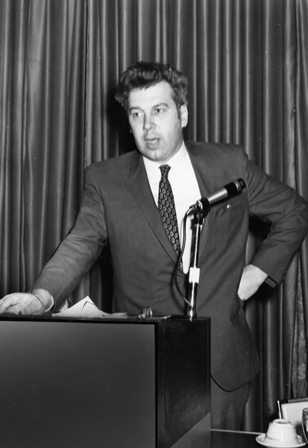
Elton Engstrom, Jr. Courtesy Alaska Legislature.

Services are pending for former Juneau legislator Elton Engstrom, Jr., who has died at the age of 78.

Engstrom represented Juneau as a Republican in the legislature from 1965 to 1971.

Politics were in his blood, so to speak, as both his mother and father, Thelma and Elton Engstrom, Sr., were elected to the Alaska Territorial Legislature. In the early 1960s, Engstrom, Sr.  served in the new state’s senate.

The younger Engstrom was a lawyer who served from 1965 to 1967 in the Alaska State House, and from 1967 to 1971 in the  State Senate.

The state was just recovering from the 1964 earthquake that struck Southcentral.  Then in 1967, it was the Fairbanks flood. But it was also a heady time with the discovery of oil in Prudhoe Bay.

Engstrom’s daughter Cathy Munoz has followed in her father’s footsteps and represents Juneau in the Alaska State House.  Her office writes that as a youth Engstrom  worked with his father,  a fish buyer at Juneau Cold Storage, then went into the business and bought fish until 1985.

Engstrom also managed property that he owned, collected books and was an avid writer and known for his columns in the Juneau Empire.  He and his son Allan authored Alexander Baranov and a Pacific Empire,  a book about the first governor of the Russian-America Company.

Elton Engstrom, Jr. died Wednesday at his Juneau home on Chicken Ridge.   He is survived by his wife Sally, his brother Allan, sons Elton and Allan, daughter Cathy Engstrom Muñoz, son-in-law Juan Muñoz, and grandchildren Mercedes and Matthew Muñoz and Katya and Aliosha Engstrom.


Prospects for off-road vehicle park still fuzzy

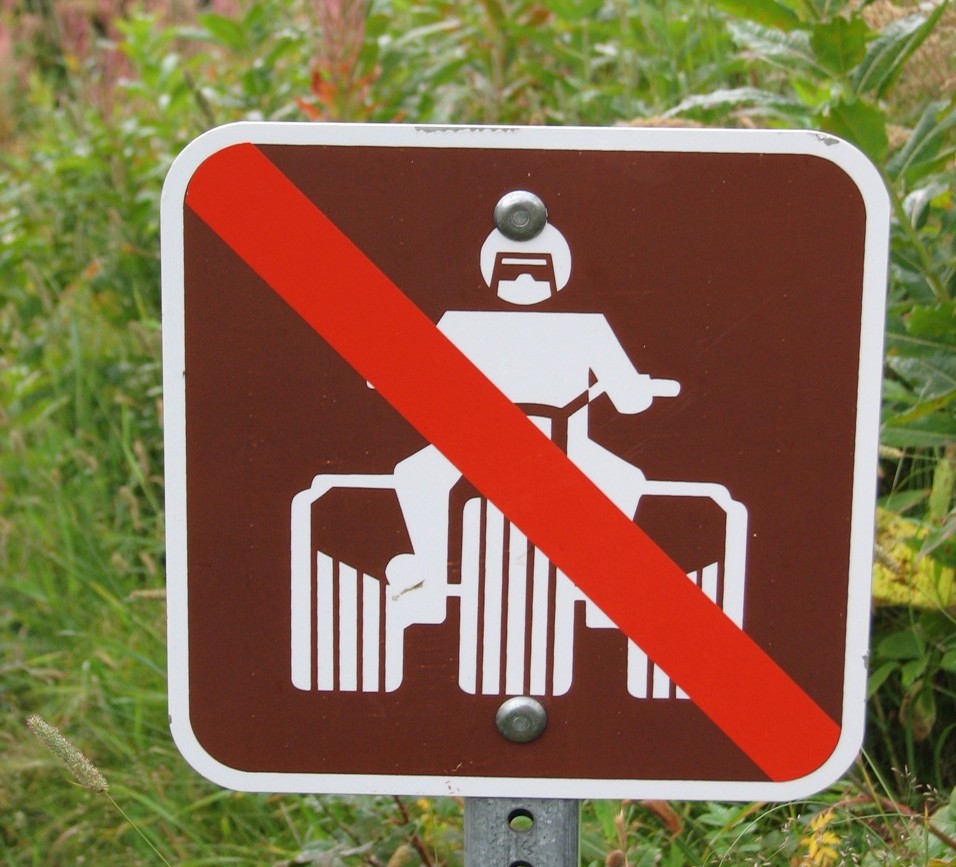
(Photo by Michael Grosch/ Flickr Creative Commons)

The possibility of building a park in Juneau specifically for off-road vehicles is still fuzzy.

City Engineering Director Rorie Watt on Tuesday presented four possible sites to the Parks and Recreation Advisory Committee. The two most appealing sites for both homeowners concerned about noise and ATV and motocross enthusiasts were out the road.

The two sites are next to each other near Echo Cove. The city owns one site at Mile 35. Goldbelt Inc. owns the other one. It’s a quarry that’s already popular with enthusiasts – who trespass.

Developing the city-owned site comes with a hefty price tag estimated at $3 to $12 million. That would be an extraordinary expense, Watt said.

“I don’t think in the ordinary city budgeting process, three to $12 million is at all likely. The funds are just not available easily for that scale of a project.”

The park at Mile 35 would also likely facilitate and exacerbate trespassing issues at Goldbelt’s quarry nearby, Watt said. And Goldbelt is already suffering from public safety and property issues spilling over from the city’s Echo Cove boat launch.

Watt said it’s unclear if the Native corporation is amenable to making a deal for public access to its land. If it were, the city estimates the cost of developing the site into an off-road vehicle park at less than $250,000.

After Watt’s presentation, the advisory committee heard public testimony on the park proposals. There were two camps: North Douglas residents in opposition to an off-road vehicle park specifically at the city’s Fish Creek quarry, and riding enthusiasts in support of any site.

“I think you guys need to keep in mind that we might seem like a small voice because everybody is very vocal about their trail walking, and their snowshoeing and their berry picking,” said Mendenhall Valley resident and rider Red Langel. “They have the opportunity to do that anywhere in Juneau. We don’t have the opportunity to do our stuff, really, legally, anywhere.”

Sixteen people testified in total. Seven were riding enthusiasts, nine voiced North Douglas noise concerns.

The advisory committee will take up the issue and hear public comment again at its Dec. 3 meeting.

Update: Eaglecrest wins round two

At 12:30 p.m. Pacific time, Powder Magazine’s count showed 4,024 votes for Eaglecrest, and 3,894 votes for Mount Washington, B.C.  Voting stopped at midnight.  That means Juneau’s ski area moves on to the Sweet 16 in the Ski Town Throwdown.

Original story:

Beautiful Day at Eaglecrest. Photo by Rosemarie Alexander

It’s time for the second round of Ski Town Throwdown.  Juneau’s ski area is paired with British Columbia’s Mount Washington, a ski resort on Vancouver Island.

In the first round of the Powder Magazine competition, Eaglecrest beat Whistler/Blackcomb Ski Resort near Vancouver, B.C.

Second round voting is Thursday only.  If Eaglecrest gets more votes than Mount Washington, it will be entered in the Sweet 16.  The Powder Magazine contest is a bit like March Madness basketball, with U.S. and Canadian ski areas lumped into four regions, battling from Sweet 16 to Elite 8, Final 4 and at the end  the Great White North champion will go against the Big East.

Eaglecrest is in the Great White North region.  Voting ends at 11 p.m. Alaska time.  Vote on the Powder Magazine or Eaglecrest Facebook pages.


CBJ rate study meetings begin Wednesday

A corroded water main running beneath 2nd Street in Douglas cost the City and Borough of Juneau $375,000 to replace in 2012. (Photo by Casey Kelly/KTOO)

How much will Juneau water and sewer rates have to increase to cover the costs of replacing old pipes?

That’s the question at the heart of a CBJ rate study, which is also the topic of a series of public meetings getting underway Thursday.

Public Works Director Kirk Duncan says the city has a lot of old infrastructure that’s wearing out and will need to be replaced.

“Lot of things (were) put in the ground in the 80s and they’re coming due.  Some pipes have a hundred years, some pipes have 25 years,” Duncan says.

“The Juneau-Douglas Treatment Plant is in need of a pretty major overhaul as is the Mendenhall Treatment Plant.  And then we still have the water filtration issue that we’re talking about at Salmon Creek.  So there’s just a need for lots of money.”

The CBJ Public Works Department and project consultant will lay out the problem and rate study process at three meetings Wednesday, beginning with the Chamber of Commerce.

The top 50 water and wastewater users have been invited to hear study details from 2 to 4 p.m., followed by a public meeting at 7 p.m., both in Assembly chambers at city hall.

“And the idea here is just why are we doing this and what are we doing? That’s the first set of meetings.  The second set of meetings in December is ‘OK, this is what we estimate we’ll need in the next ten years.’ And then in February, ‘this is how we can structure the rates’ and use passenger fee money, 1percent sales tax, special revenue bonds, and all kinds of different things. So the February meeting is what it’s really going to do the rates.” 

The city reviews its water and sewer rates every ten years, the last one in 2003.  Not surprisingly, that study resulted in a rate increase.  Most residential customers now pay a flat rate for water and sewer of $90.53 per month.


Site notifications
Update notification options
Subscribe to notifications