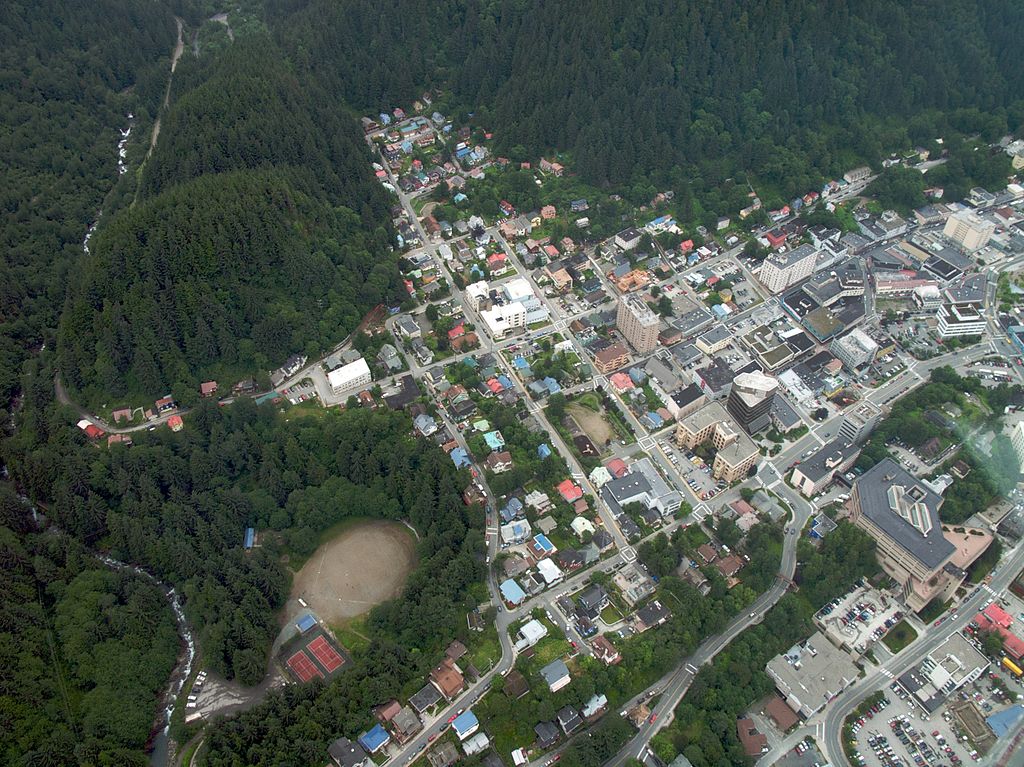
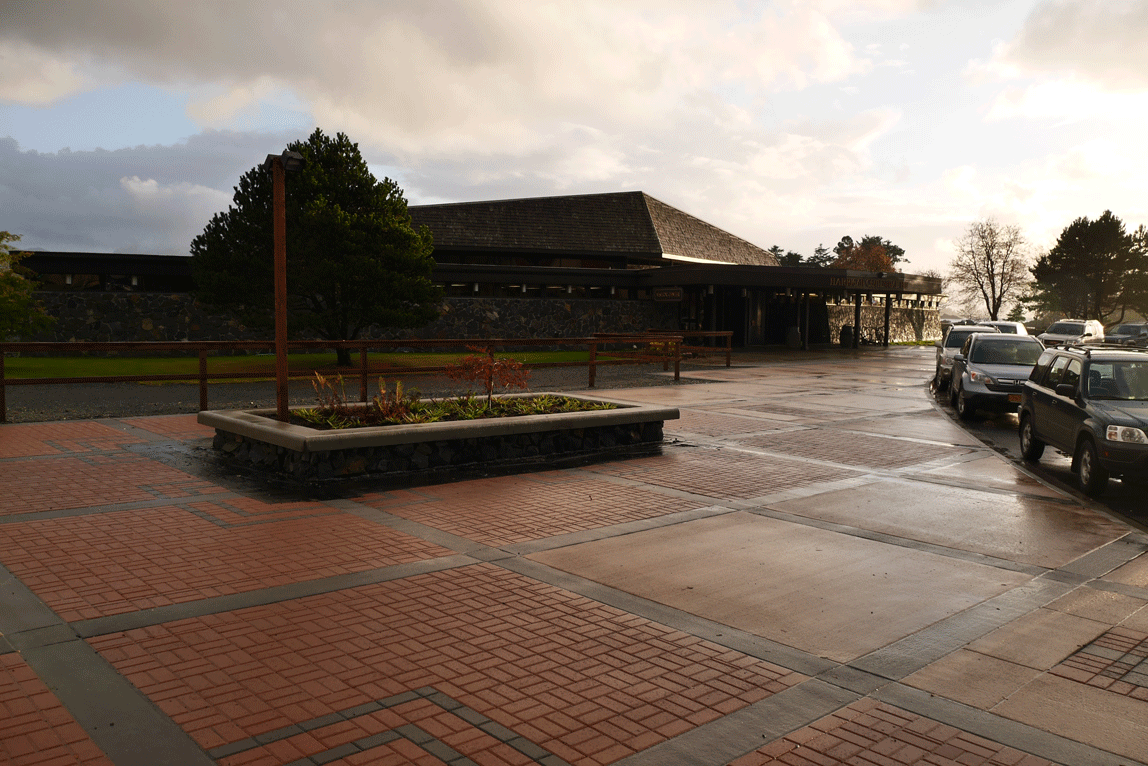
Downtown Juneau. (Photo by Sam Beebe/Flickr Creative Commons)
The Juneau Assembly Monday night put its final approval on the Comprehensive Plan for development over the next 20 years, with the clear message that it wants more input at the beginning of the process.
The Assembly has adopted the 2013 update to the 2008 long-range plan. The revisions have been in the works for more than two years. After public meetings throughout the borough and lots of fieldwork, city staff turned the changes over to the Planning Commission, which did more work then held a public hearing and passed the plan in May.
It was August before the Assembly first reviewed the draft. Assembly member Carlton Smith said that’s way too late:
“It’s unfortunate in my view that the Assembly in this process is at the very end of the process. And I really would like to see with the new update that the Assembly possibly meet with the (Planning) Commission on the front end so that we could possibly give that direction.”
The document is more than 300 pages long. Assembly members said it should be condensed so it’d be more workable.
On a motion from Mary Becker, the panel voted 5 to 4 to delete some references that take the plan out 20 years to 2033.
“That’s a long time,” Becker said. “I know we can make changes, but it’s still a long time.”
Becker also called for an update once the city completes a Juneau economic development plan the Assembly wants.
City Attorney Amy Mead said the Assembly can initiate a change to the Comprehensive Plan any time, but the Planning Commission must be involved.
CBJ Community Development Director Hal Hart said the Assembly will be brought into the process sooner next time or when it initiates a review:
“Communication is the name of the game so we have to have good communication especially between the Planning Commission and the Assembly, but also between other groups and the Assembly and Planning Commission as well.”
The Comprehensive Plan update reorganizes some chapters, fixes errors found in the 2008 document, and updates sections on housing, economic development, energy, transportation, land-use maps, and utilities.
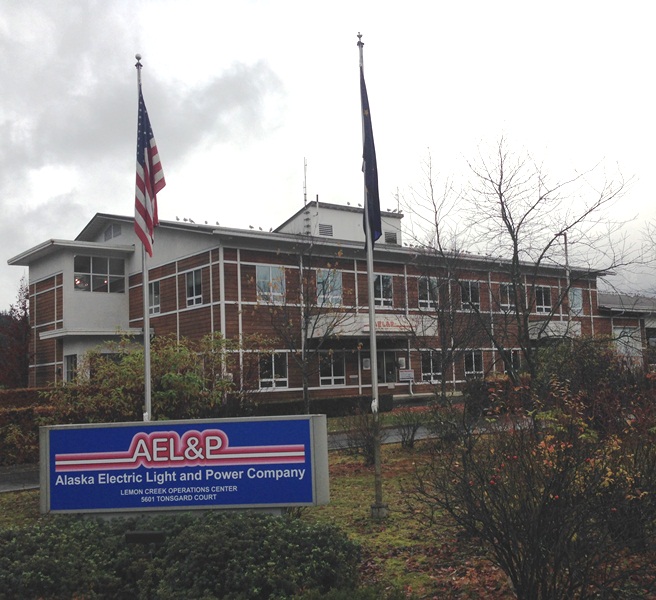
AEL&P headquarters in Lemon Creek. Photo by Casey Kelly/KTOO.
The parent company of Juneau electric utility Alaska Electric Light & Power has agreed to merge with Spokane, Washington-based Avista Corporation.
Alaska Energy and Resources Company will join Avista subsidiary Avista Utilities by July 2014, pending the approval of state and federal regulators, as well as AERC shareholders.
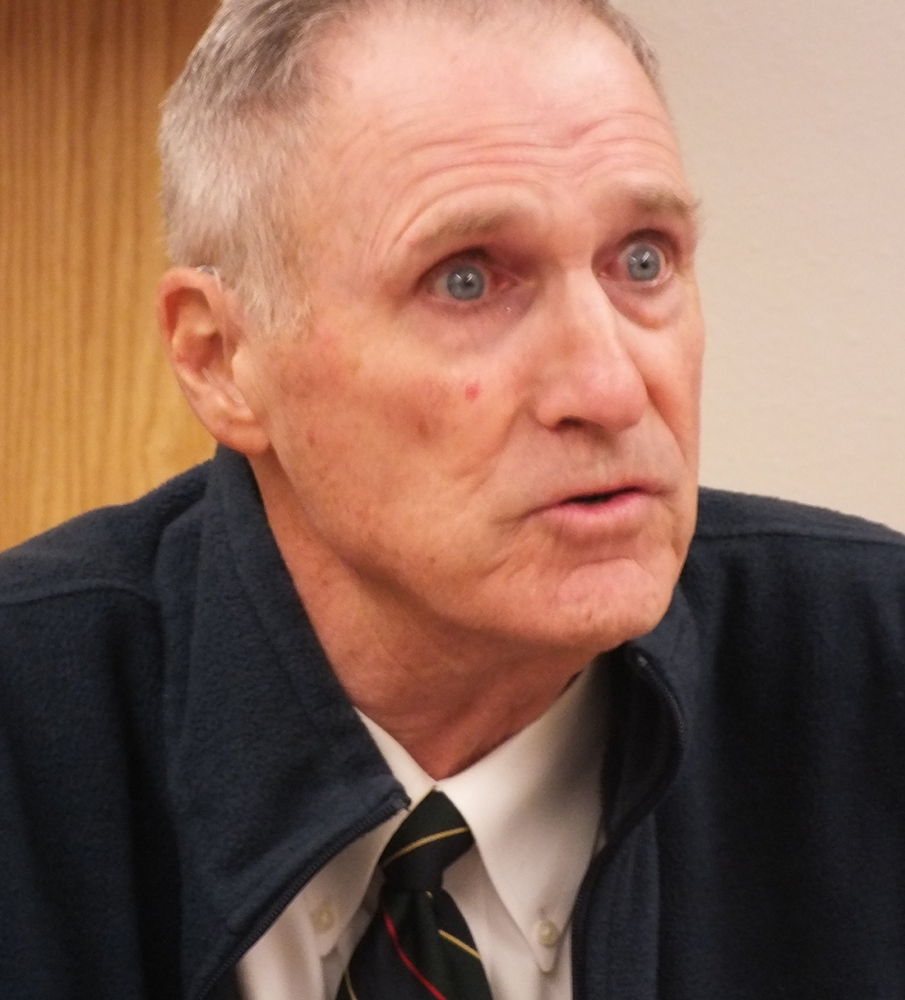
Bill Corbus and his family have owned a piece of Alaska Electric Light & Power almost from the day the company was founded. His grandfather and a great uncle bought into the utility in 1896, when it was only two years old. His father, William Corbus, was the longest serving company president from 1949 until 1987.
Bill started working for AEL&P in 1970 and went on to serve eight years as president and CEO in two separate stints. Even after he retired in 2002, Corbus and his family remained the majority owners of Alaska Energy and Resources, AEL&P’s parent company.
But Corbus says they’ve reached “a turn in the road” and now is the time to sell.
“I’m 76 years old,” Corbus says. “There is no Corbus family member here to continue to be involved with the company at the board of directors level or as part of the employment team.”
Corbus says there would be inheritance tax obligations if the company is not sold before he dies. He also says several AERC shareholders are looking to sell their stock, and the company wants new sources of capital for future projects to provide energy to its nearly 16,000 customers.
He says AERC wanted a buyer that would focus on three things: Providing reliable and competitively priced electric service; being a good corporate citizen in Juneau; and taking care of AEL&P’s employees.
Corbus says the company had other suitors, but in the end, “the management team and the board of directors decided that Avista was in our case by far the best match.”
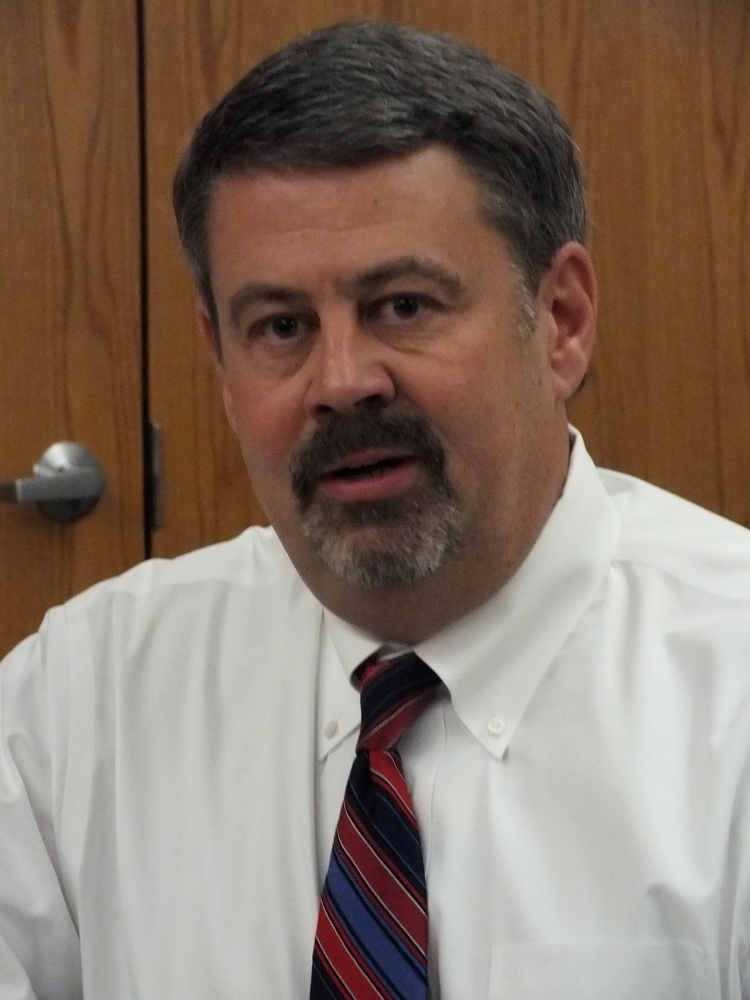
Dennis Vermillion is President of Avista Utilities. The company will acquire the parent company of Juneau’s Alaska Electric Light and Power for $170 million in a deal announced Monday. Photo by Casey Kelly/KTOO.
Current AEL&P President and CEO Tim McLeod says the two companies have a number of similarities.
“Other than they being much bigger than we are, we felt like we are very similar in corporate values and corporate culture,” McLeod says.
Dennis Vermillion, President of Avista Utilities, sees that too. The company was founded in Spokane in 1889 as part of an effort to build a power station on the Spokane River.
“We’re very much like AEL&P in that we started, really, in a very small community over a hundred years ago, with a foundation of hydroelectric energy,” Vermillion says.
Today Avista serves more than 600,000 customers with electricity and natural gas in Washington, Idaho, Oregon and Montana. Vermillion says Avista sees an excellent growth opportunity in AEL&P.
“A big deal for us, it fits nicely from a strategic perspective in what we’re trying to do,” says Vermillion. “And that is grow our utility business and diversify our energy assets.”
And while he admits it won’t happen for several years, he says there also could be opportunities to grow Avista’s natural gas business in Juneau and beyond.
“There’s been a lot of discussion about CNG, compressed natural gas, and LNG, liquefied natural gas,” he says. “And Tim and I and others have talked about that, and it’s something that we look forward to rolling up our sleeves on and exploring what the opportunities might be, not only for the Juneau area, but all of Southeast Alaska.”
Bill Corbus’ family has been involved with AEL&P almost since the company was founded. The Juneau utility will merge with Spokane, WA based Avista Corporation in a deal announced Monday. Photo by Casey Kelly/KTOO.
Vermillion says the proposed re-opening of the AJ Mine did not play into the company’s decision to pursue the merger. Another Alaska Energy and Resources subsidiary – AJT Mining Properties – is a part owner, along with the City and Borough of Juneau, of the old mine near downtown.
“We’re a utility company. That’s what we do. We think we’re pretty good at it,” says Vermillion. “And we know there’s a very well-run and good utility company in Juneau, and that’s really what the impetus of this transaction is for us.”
In the immediate future, both parties say there should be no noticeable changes at AEL&P. The company’s headquarters will remain in Juneau, and Avista has promised to retain all of its 60 full time employees for at least two years after the transaction closes.
As for Corbus, he plans to stay on until the ownership transition is complete. And at the very end of Monday’s press conference announcing the deal, he said he has plans for his share of the Avista stock.
“It is my intention to sign over 90 percent of my new Avista shares to the Juneau Community Foundation,” Corbus says.
The community foundation helps donors direct charitable funds to nonprofits in Juneau. It named Corbus Philanthropist of the Year in 2012 for his many years of community giving.
Corbus says he’s not sure how much this gift will total until the sale is complete, but guesses it will be somewhere north of $40 million dollars.
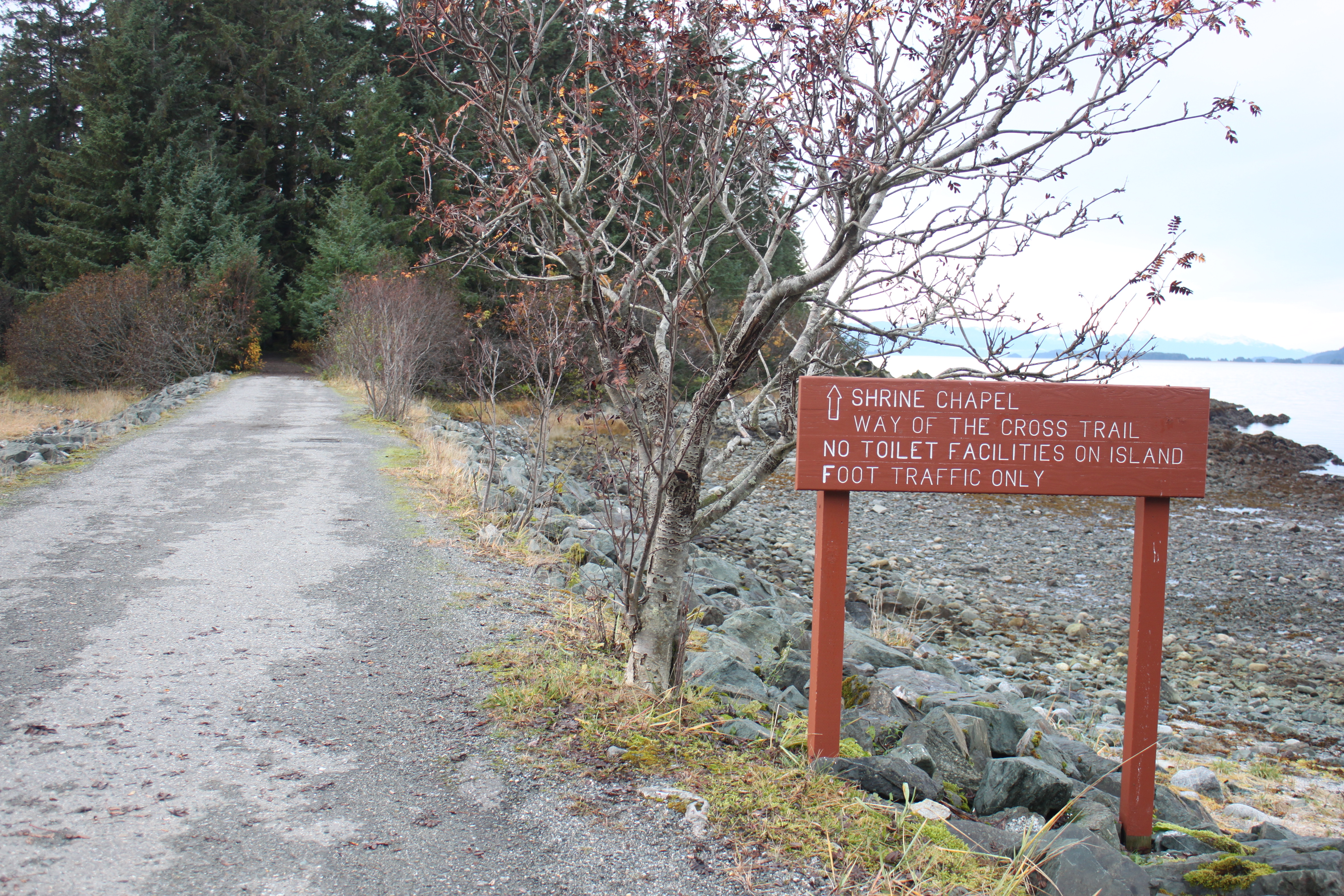
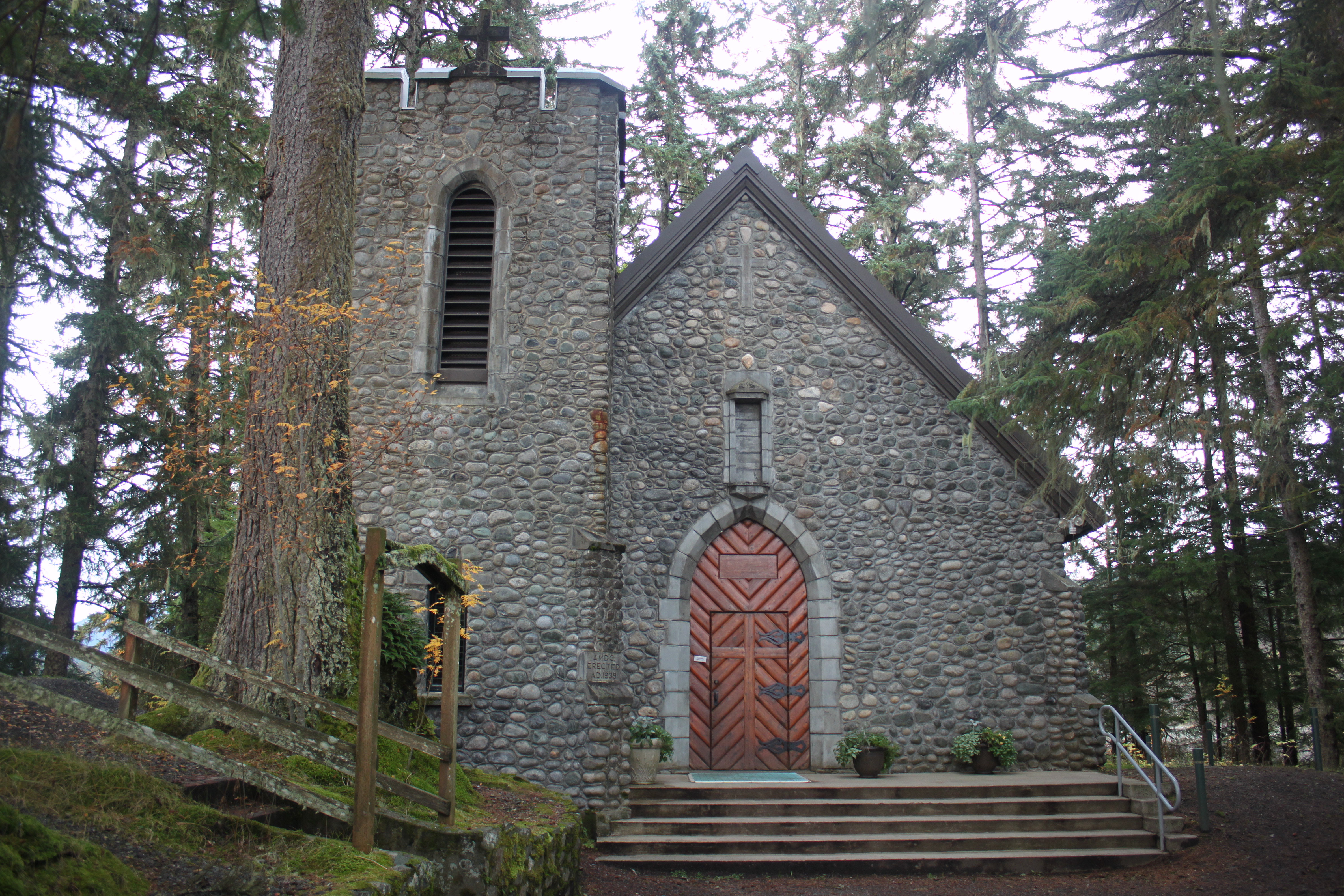
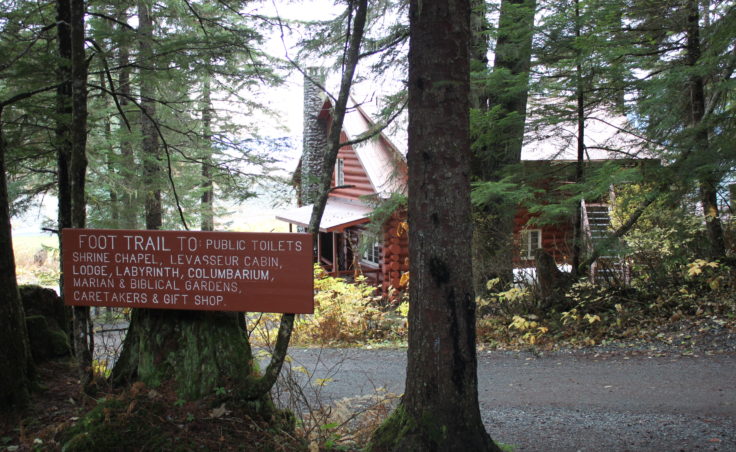
Entrance to the Shrine of St. Therese. (Photo by Lisa Phu/KTOO)
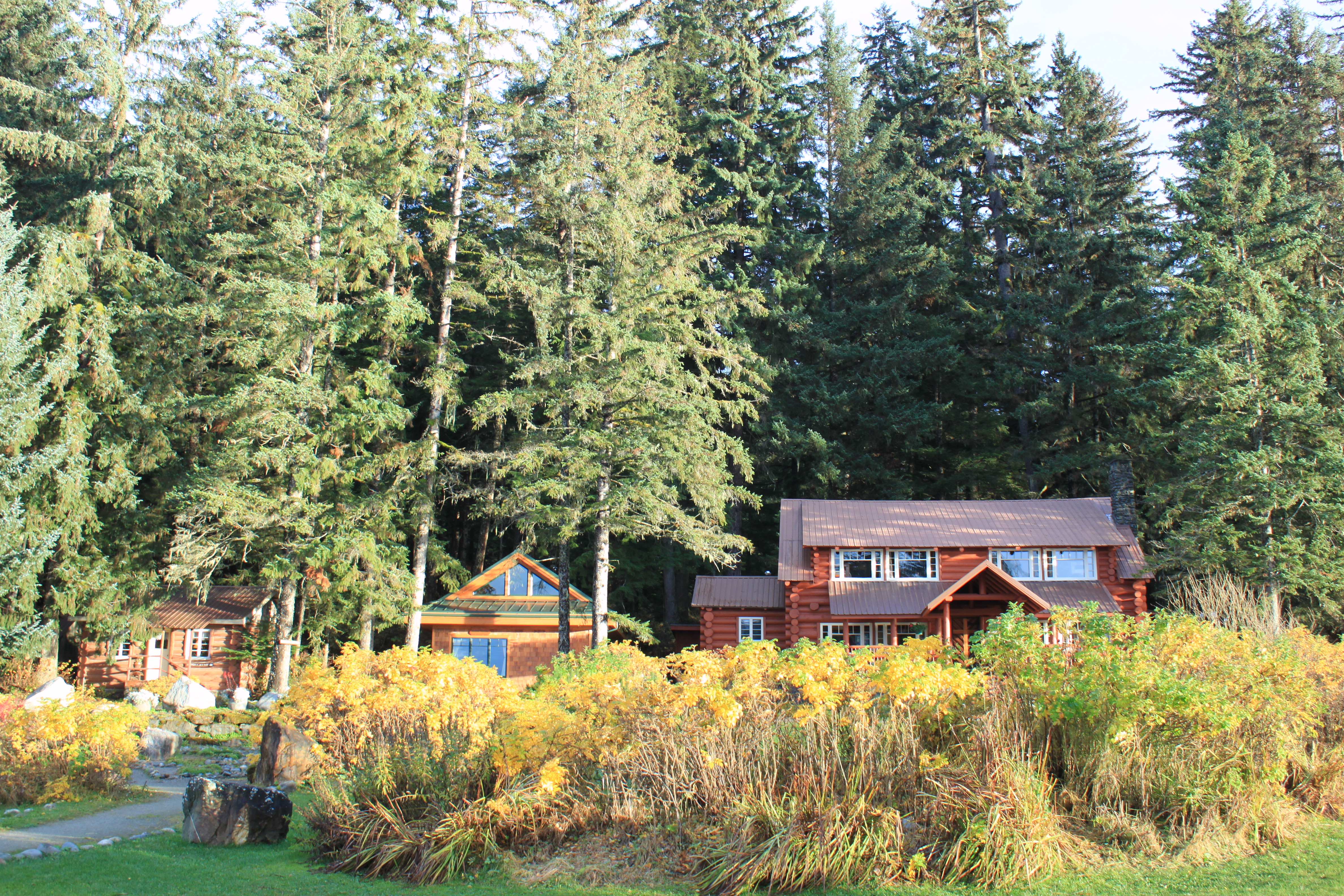
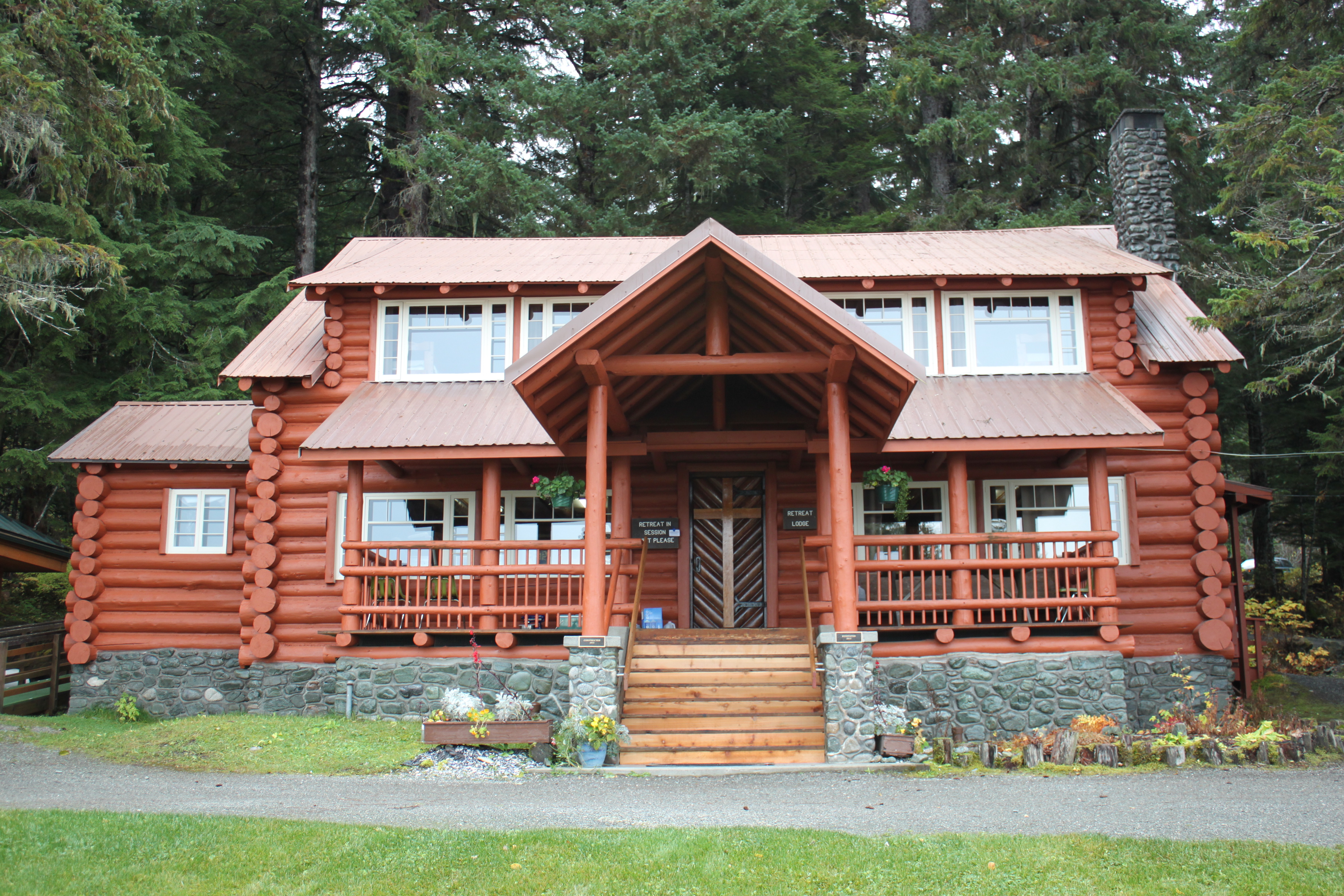
The Post Office Cabin and the Shrine Lodge are two of the cabins that can be rented. The Lodge can sleep 22 individuals in beds. (Photo by Lisa Phu/KTOO)
The Shrine Lodge was originally constructed in the 1930s and renovated this past summer. (Photo by Lisa Phu/KTOO)
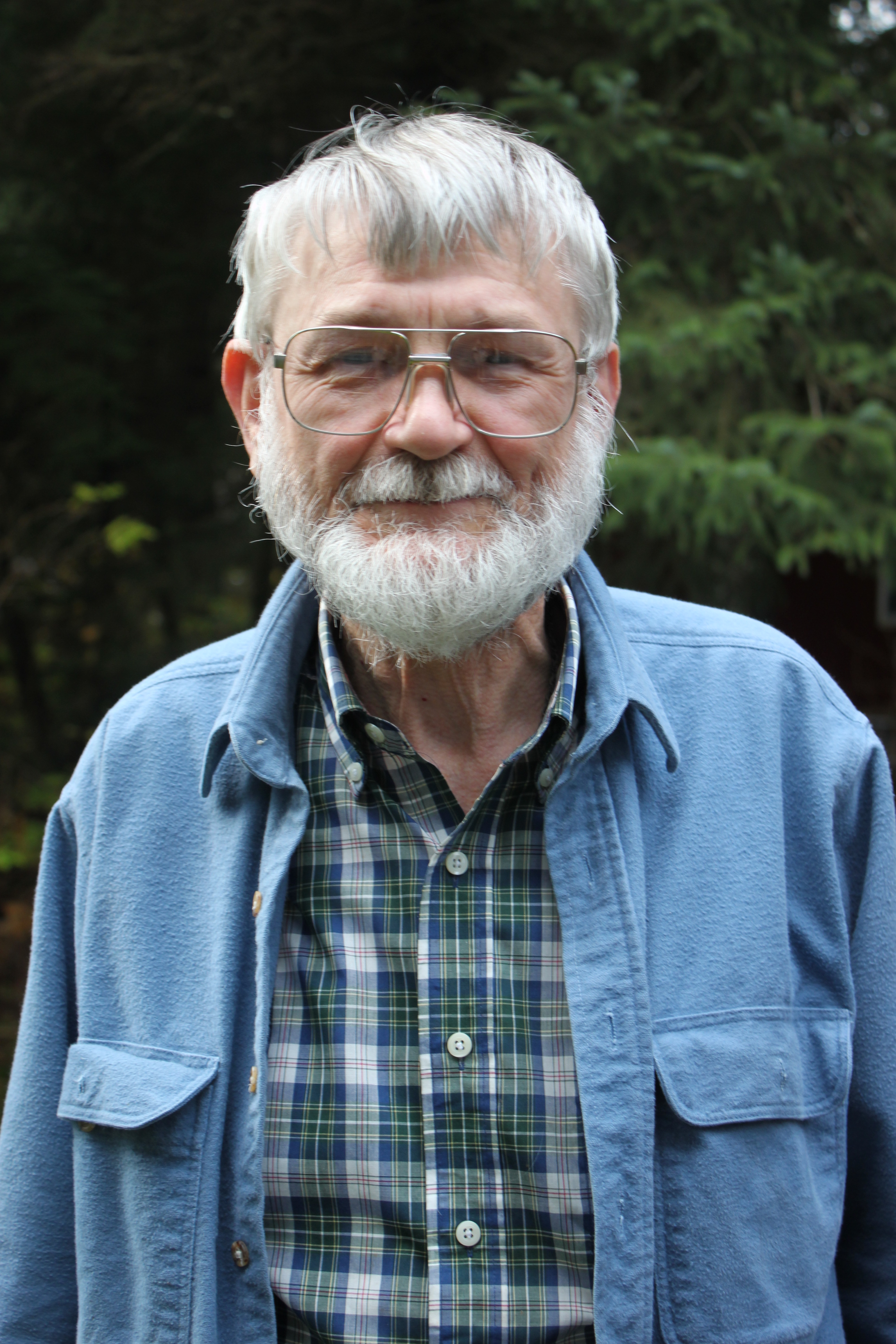
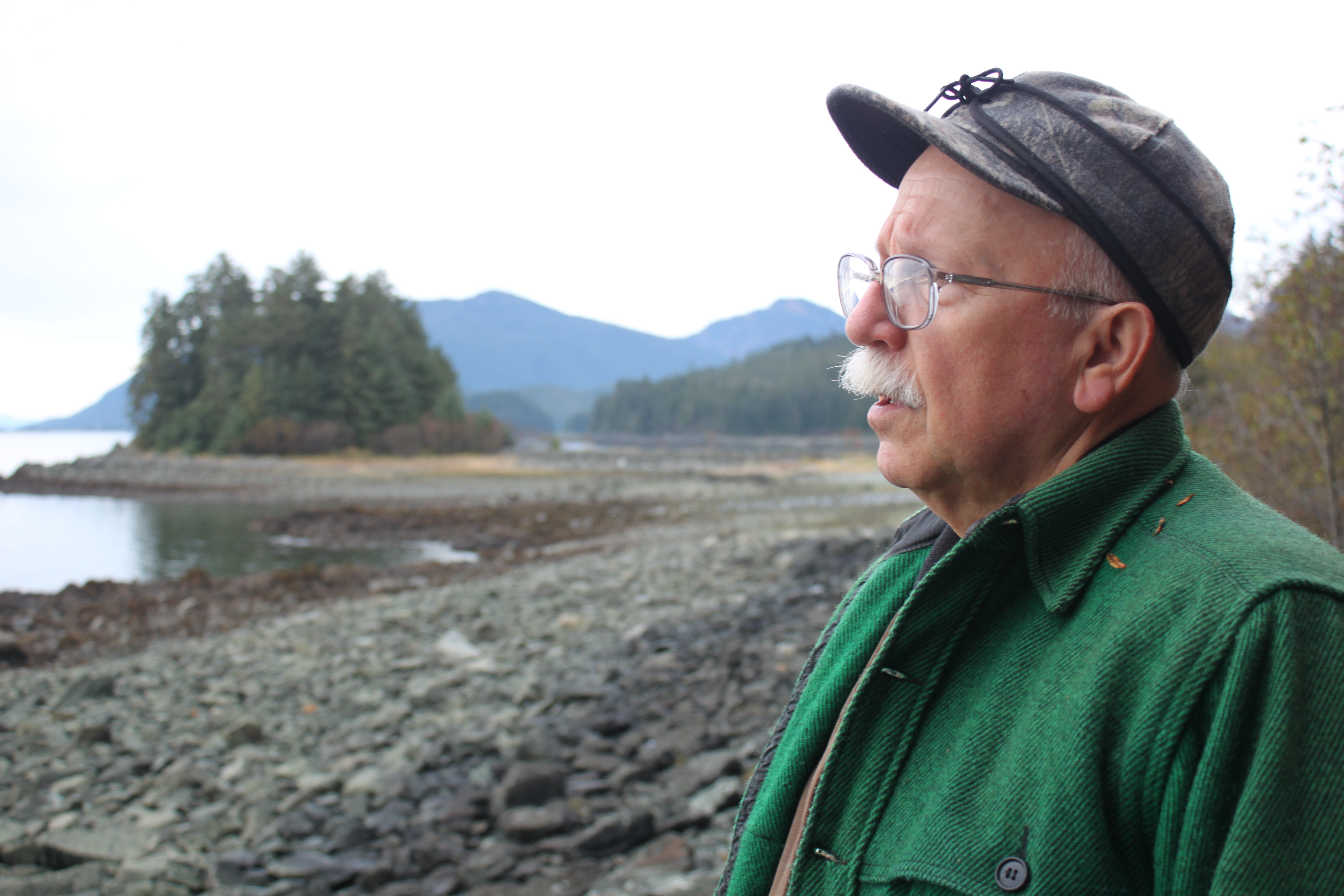
Thomas Fitterer became the director of the Shrine in 1986 and retired in 2009. Of the Shrine, he says, "It's a place to be renewed in spirit." (Photo by Lisa Phu/KTOO)
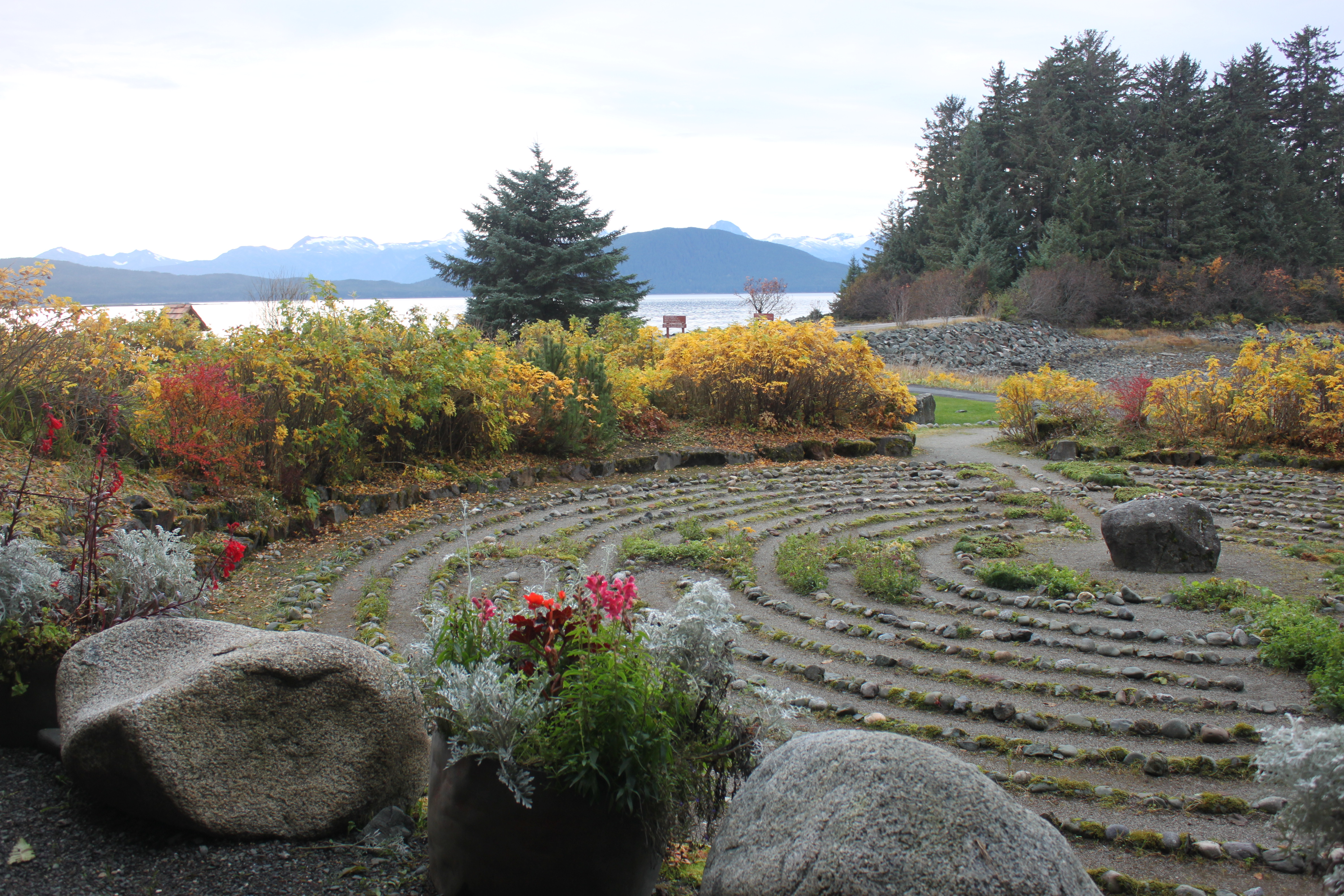
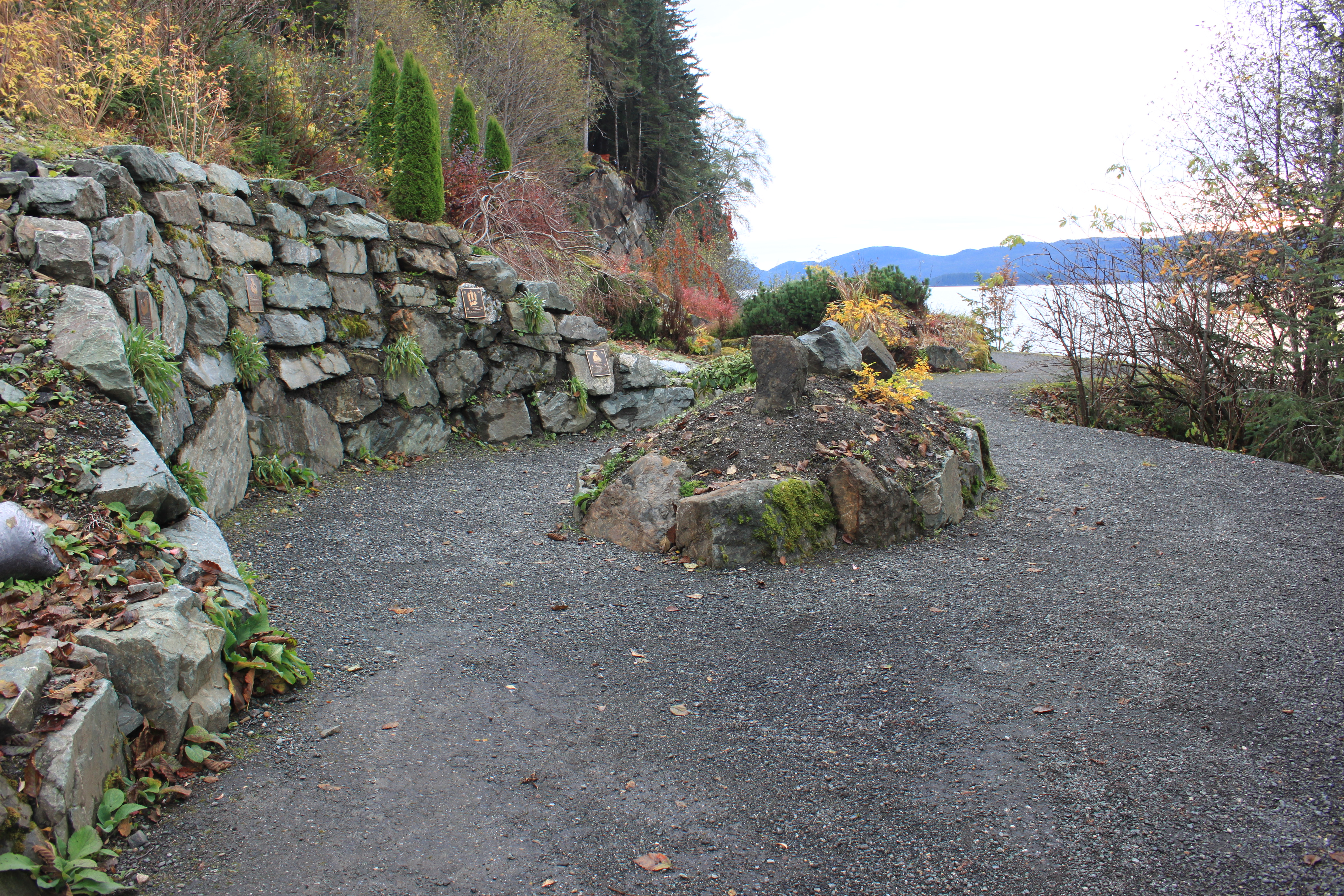
The Merciful Love Labyrinth allows people to contemplate and let go of problems. (Photo by Lisa Phu/KTOO)
Sam Bertoni has been a Shrine volunteer for 14 years. (Photo by Lisa Phu/KTOO)
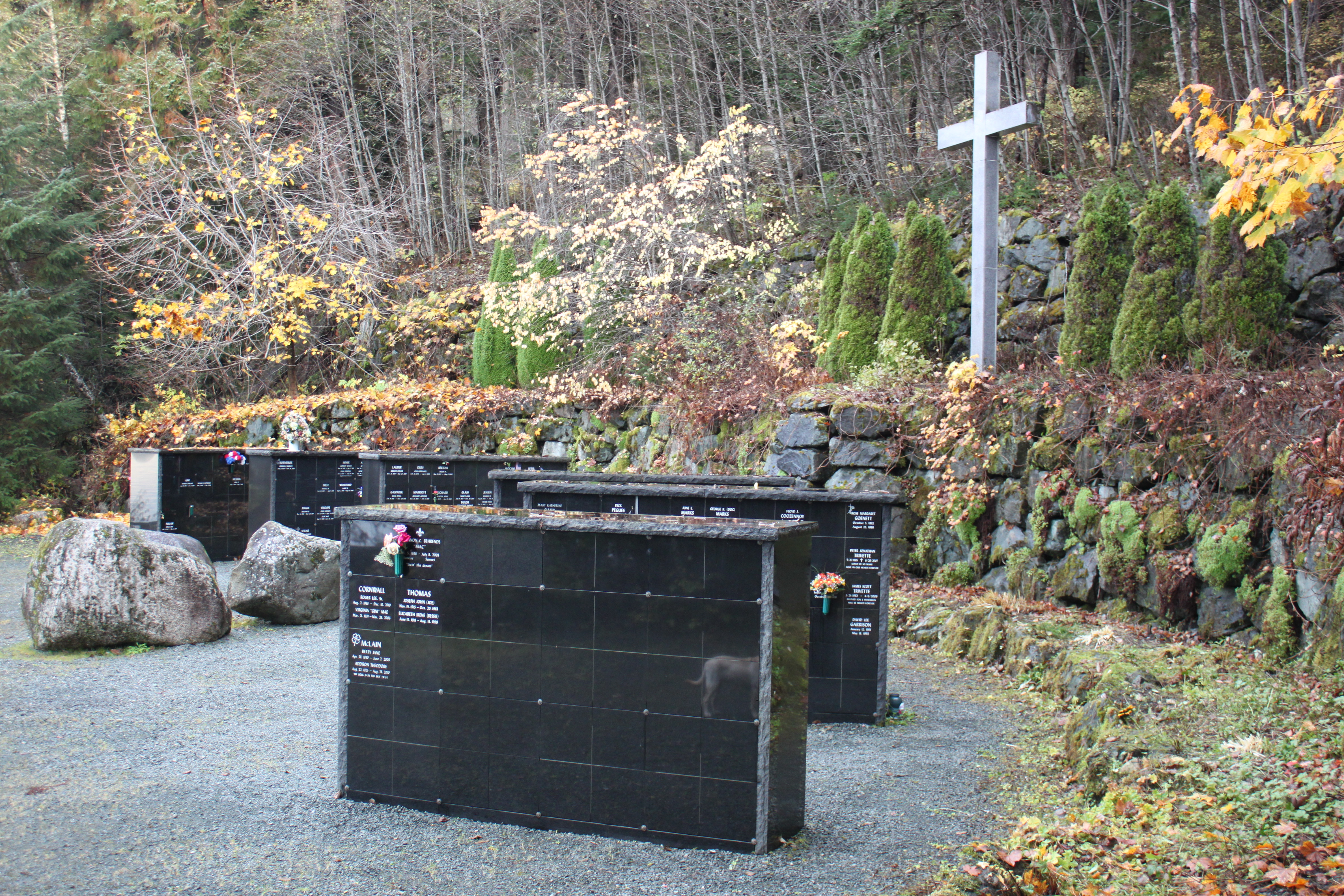
The columbarium was constructed on Shrine property in 1998. (Photo by Lisa Phu/KTOO)
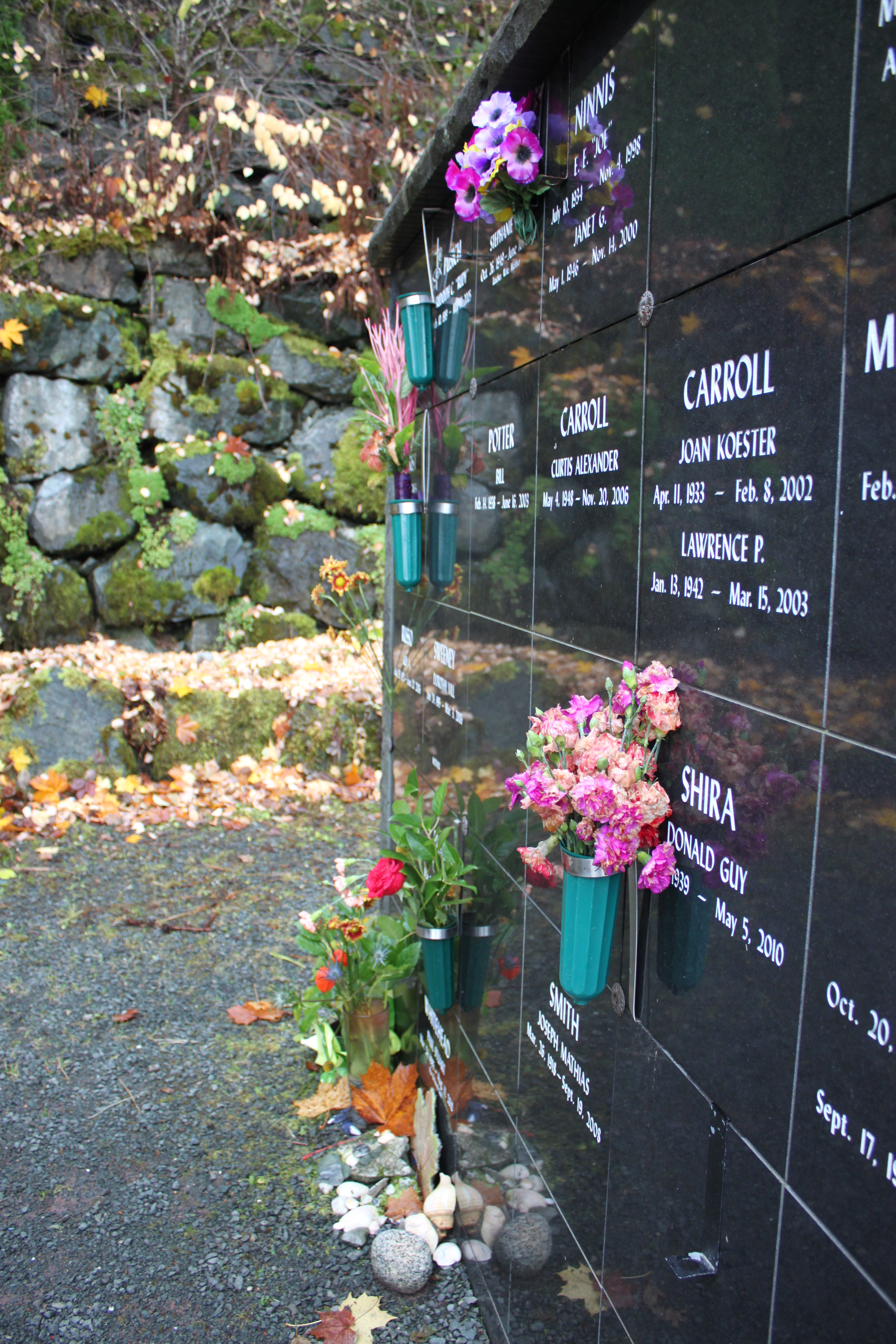
Shrine volunteer Sam Bertoni says people visit the columbarium all the time, "I know people that come out here on a regular basis every week to put flowers or to communicate with their loved ones." (Photo by Lisa Phu/KTOO)
The causeway leads to Shrine Island, formerly known as Crow Island. (Photo by Lisa Phu/KTOO)
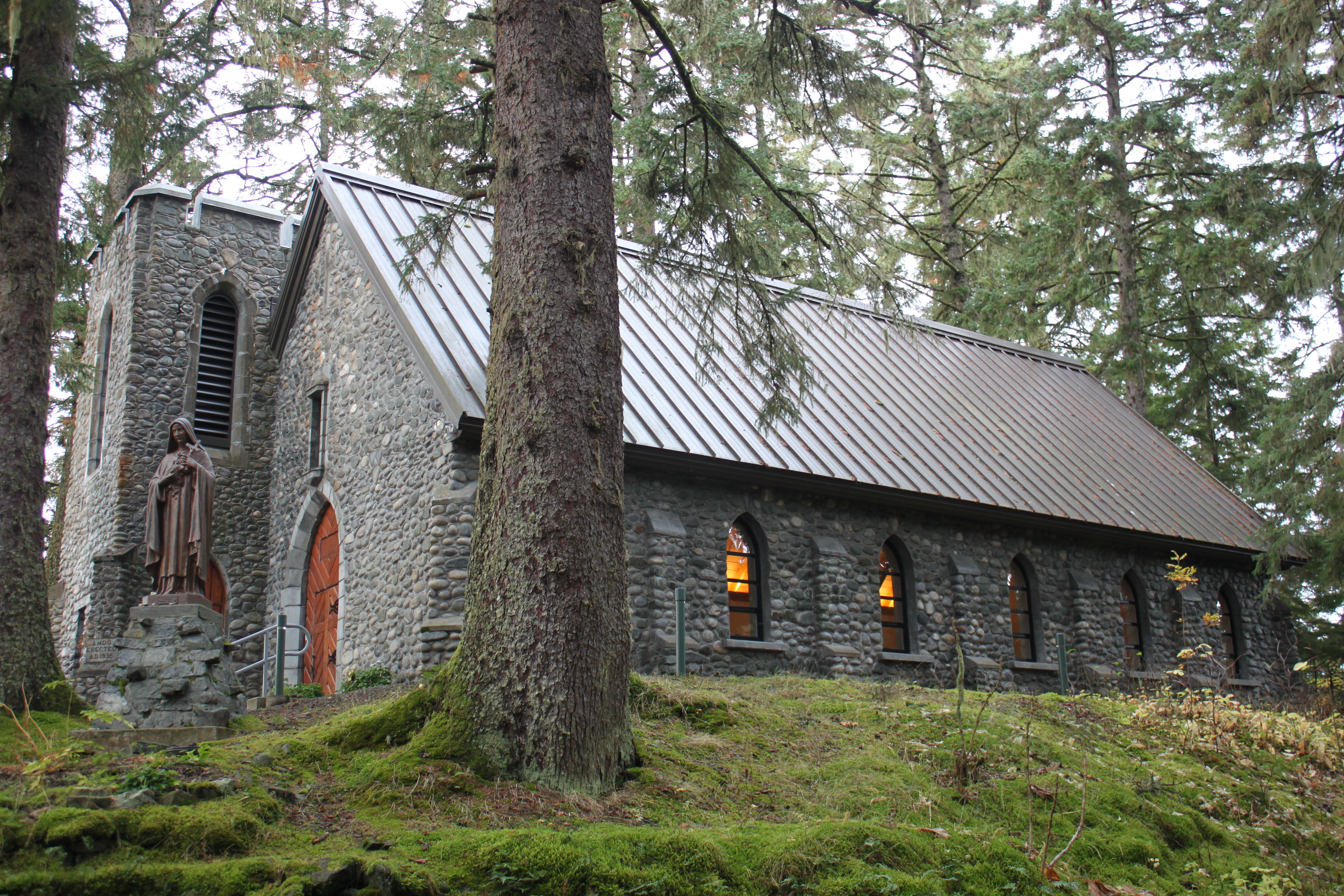
Bishop Joseph Crimont and Bishop Michael Kenny are buried in a crypt under the Shrine of St. Therese Chapel. (Photo by Lisa Phu/KTOO)
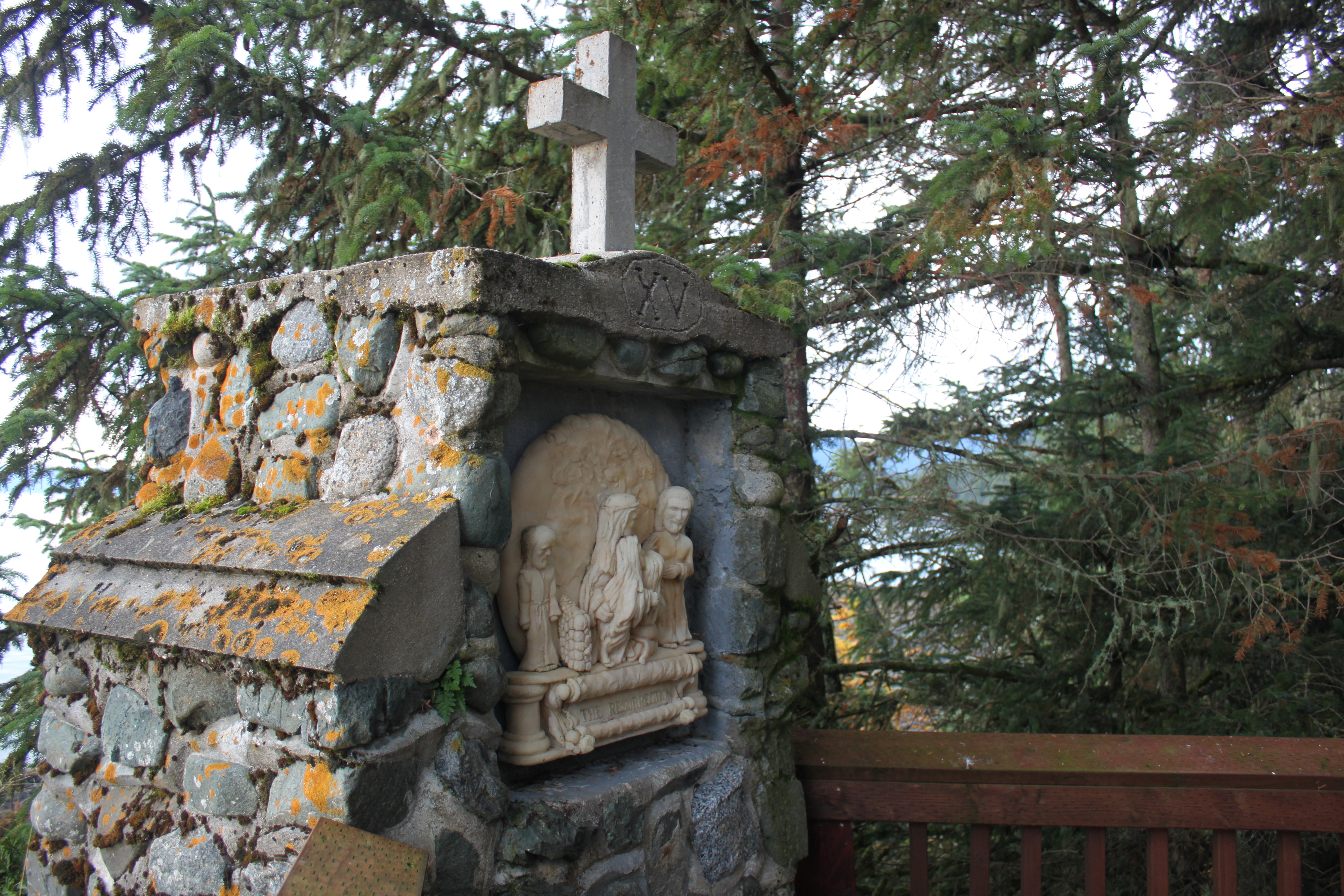
The Stations of the Cross surround the chapel. Each station depicts a scene of Christ’s final hours on earth and the resurrection. (Photo by Lisa Phu/KTOO)
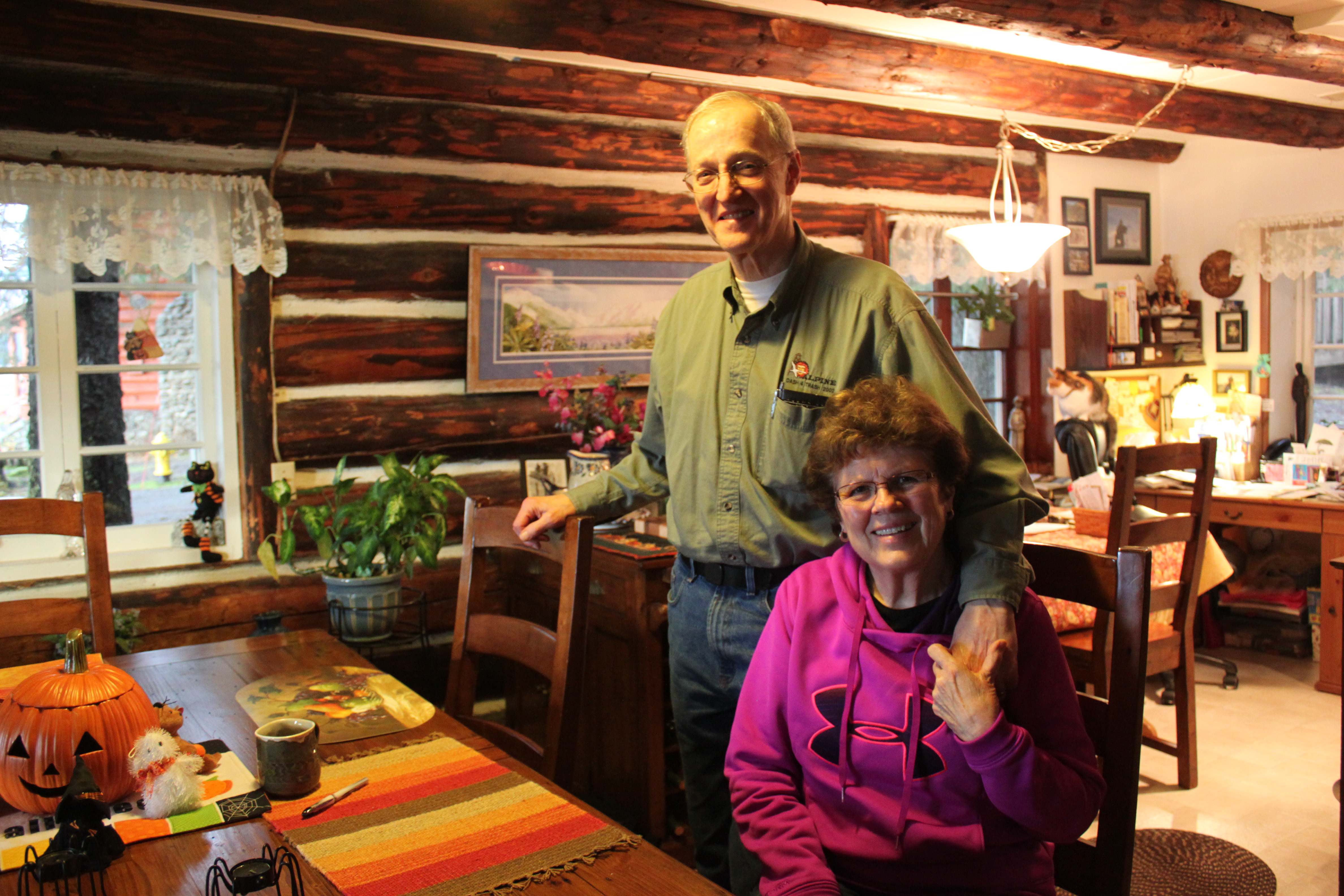
Jack and Jeanne Jordan are the caretakers of the Shrine of St. Therese. (Photo by Lisa Phu/KTOO)
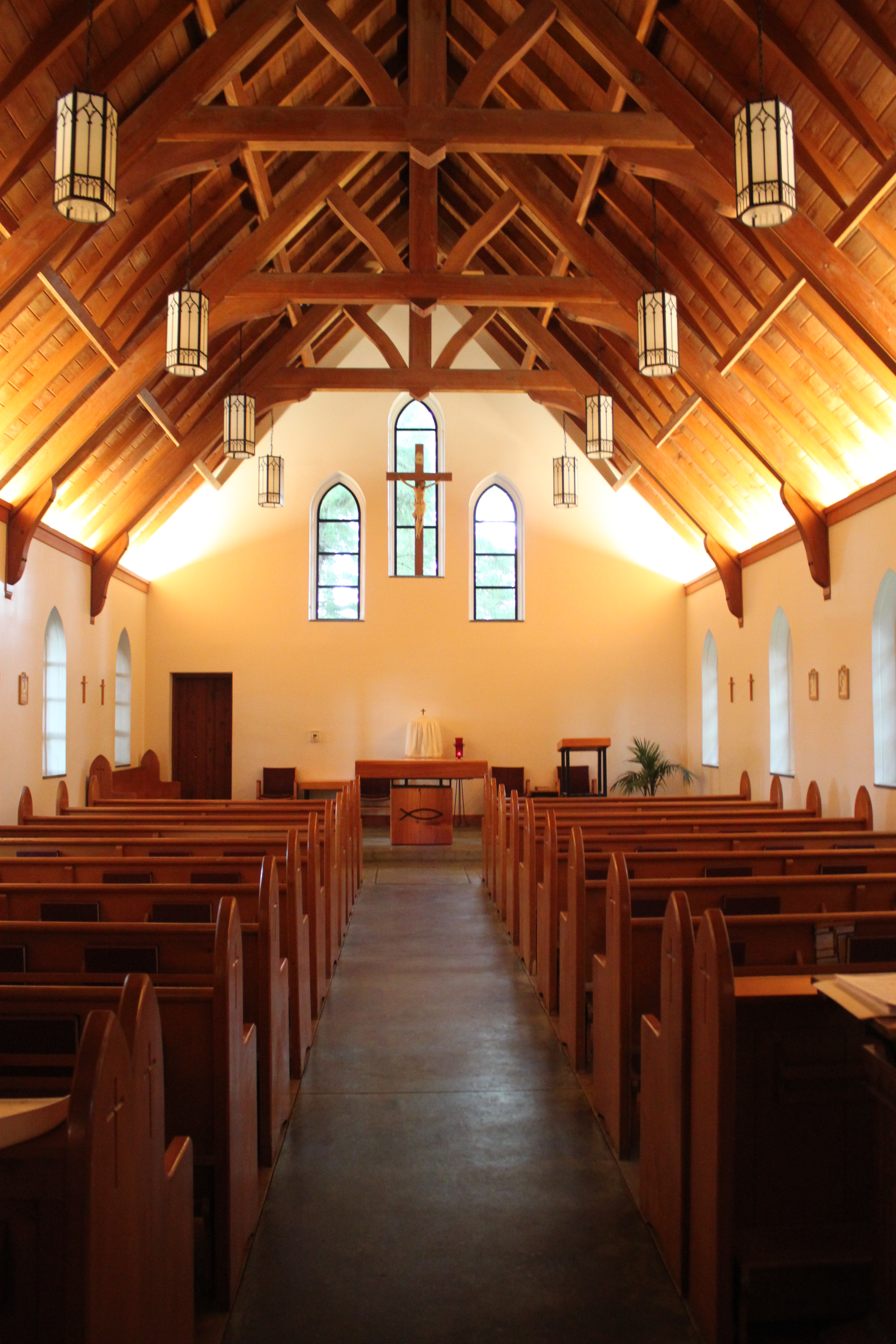
Church services are offered at the Shrine of St. Therese Chapel during the summer. (Photo by Lisa Phu/KTOO)
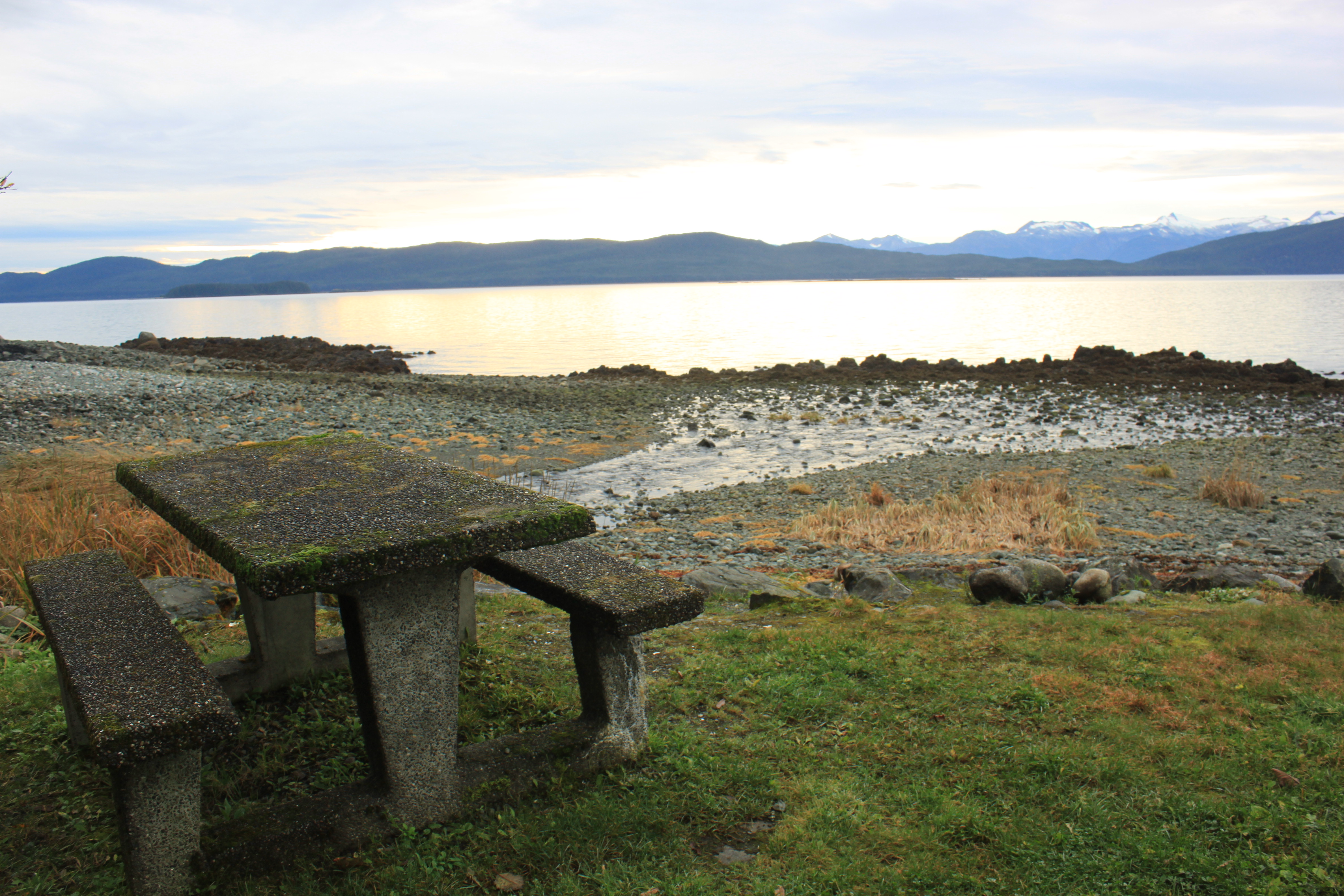
The Shrine offers beautiful views of Lynn Canal and the Chilkat Mountains. (Photo by Lisa Phu/KTOO)
The Good Shepherd Rosary and Grotto Trail is a nice walking path. (Photo by Lisa Phu/KTOO)
Inside the Shrine of St. Therese Chapel. (Photo by Lisa Phu/KTOO)
The Shrine of St. Therese kicked off a year-long 75th anniversary celebration on Saturday. The cornerstone of the chapel was laid and blessed by Alaska Bishop Joseph Crimont on October 30, 1938.
The Shrine was originally built as a place to inspire devotion to God. At the time, there were no other spiritual retreat houses in Alaska and Father William LeVasseur saw the need to build one.
But throughout its 75 year life, the Shrine has welcomed people of all beliefs. Residents of Juneau, Southeast Alaskans, and visitors go to the Shrine for all kinds of reasons.
As you drive out Glacier Highway from downtown Juneau, you eventually start winding along the coast with intermittent views of the Chilkat Mountains. Past Tee Harbor, you start driving up. Soon, you descend through a hemlock forest.
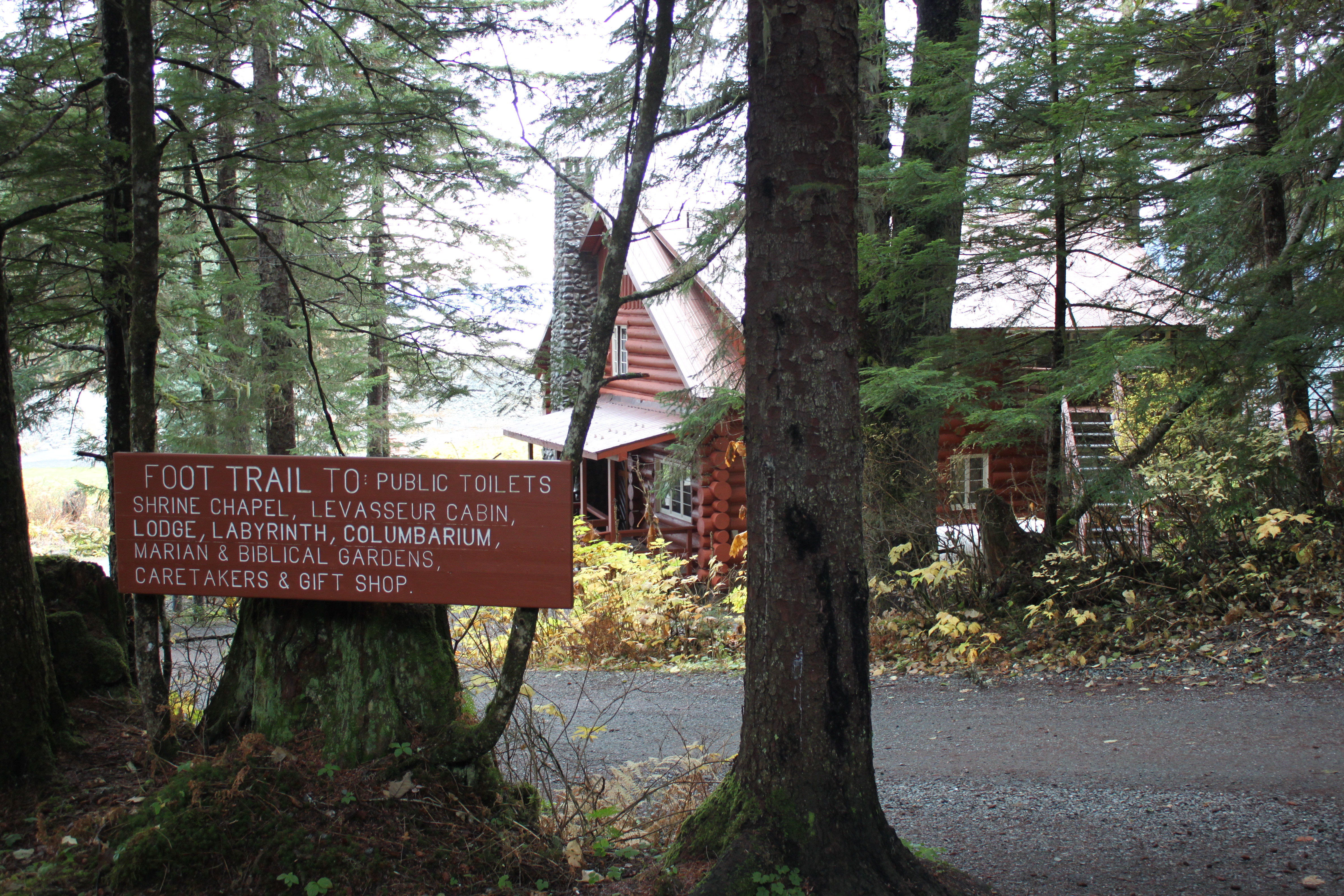
Turn left at mile 23 and find “a lot of trees, streams. As you walk down, you see log structures, you see the ocean,” describes Thomas Fitterer, director of the Shrine of St. Therese for almost 25 years. “You see a causeway. On the other side of the causeway is an island, Shrine Island. So you walk over to Shrine Island and suddenly you see a church made out of rock.”
Surrounding the church are the Stations of the Cross, each station depicting a scene of Christ’s final hours on earth and the resurrection.
“Then you look out and the ocean waves are hitting against the rocks, so you have God and nature so prevalent there that you cannot help but be influenced – whether you’re a believer or non-believer – somehow or another, one is touched by the peace, by the gift of natural beauty, and by the spirit,” Fitterer says.
From the beginning, the Shrine has been a place where everyone is welcome, even in the 1940s, Fitterer says, when religious groups tended to stay separate.
“Back then even, people of all denominations or no denomination felt comfortable coming to the Shrine and that’s been the flavor ever since and that’s something that I would never want to see lost,” he says.
The Shrine was built as a place to hold religious retreats, escape normal activities and be with God through prayer and reflection. It’s still a place to retreat, but in many different ways.
“The good thing about the Shrine,” Fitterer says, “is you can do everything from have a picnic on the beach to fish to rock climb to rock find to walk the labyrinth. It fulfills the needs of so many people in so many ways.”
The Shrine has always been seen as a place to escape this busy world full of distractions. “You’ve got your iPhone and you’ve got your tweets and you’ve got whatever else, a lot of people just get caught up into that pattern,” says Fitterer.
Over the years, visitors have told Fitterer about how much they enjoy being at the Shrine. People have talked of experiencing miracles and feeling close to God, even when they didn’t have one.
Fitterer recalls one visitor who have traveled all over the world, but felt a special presence at the Shrine, “She just could feel it, and she said I’ve never seen and felt a more beautiful place on earth.”
At the Shrine, volunteer Sam Bertoni walks to the outdoor columbarium where the ashes of his mother and another 200 individuals are laid to rest.
“Some people come and visit all the time,” says Bertoni. “I know people that come out here on a regular basis every week to put flowers or to communicate with their loved ones. Some folks come out here many times a week.”
A semi-circle of six black granite walls, each about seven feet tall and 11 feet long face the ocean.
“And it’s a fantastic view. You know I can’t afford beachfront in this life, but maybe in the next life,” Bertoni laughs.
The Shrine offers church services during the summer and other holidays throughout the year. Bertoni remembers one Easter service. “There must have been 100 people and there must have been 150 sea lions out here yelping because of the killer whales, and there was so much commotion, you couldn’t even talk. It was like a hundred dogs barking. It was really something,” Bertoni says.
Over the decades, the Shrine has grown beyond the original structures of the chapel, lodge, caretaker’s house, and the post office. It now offers five separate rental cabins which are used regularly for day use, overnights, weekends, and longer stays.
Caretakers Jack and Jeanne Jordan are in charge of the daily happenings at the Shrine. Besides being used by the Catholic Diocese of Juneau, the units are rented out by many other groups.
“We have other churches, the state of Alaska, the school district, the Coast Guard, different businesses utilize it, we have yoga groups sometimes, women’s retreats and sewing groups, scrapbooking groups, anniversary celebrations, birthday celebrations, family reunions,” says Jeanne Jordan.
It could be as simple as wanting a quiet place to walk around or as complicated as pondering the meaning of life. Jordan says people in search of something often visit the Shrine of St. Therese and find what they’re looking for.
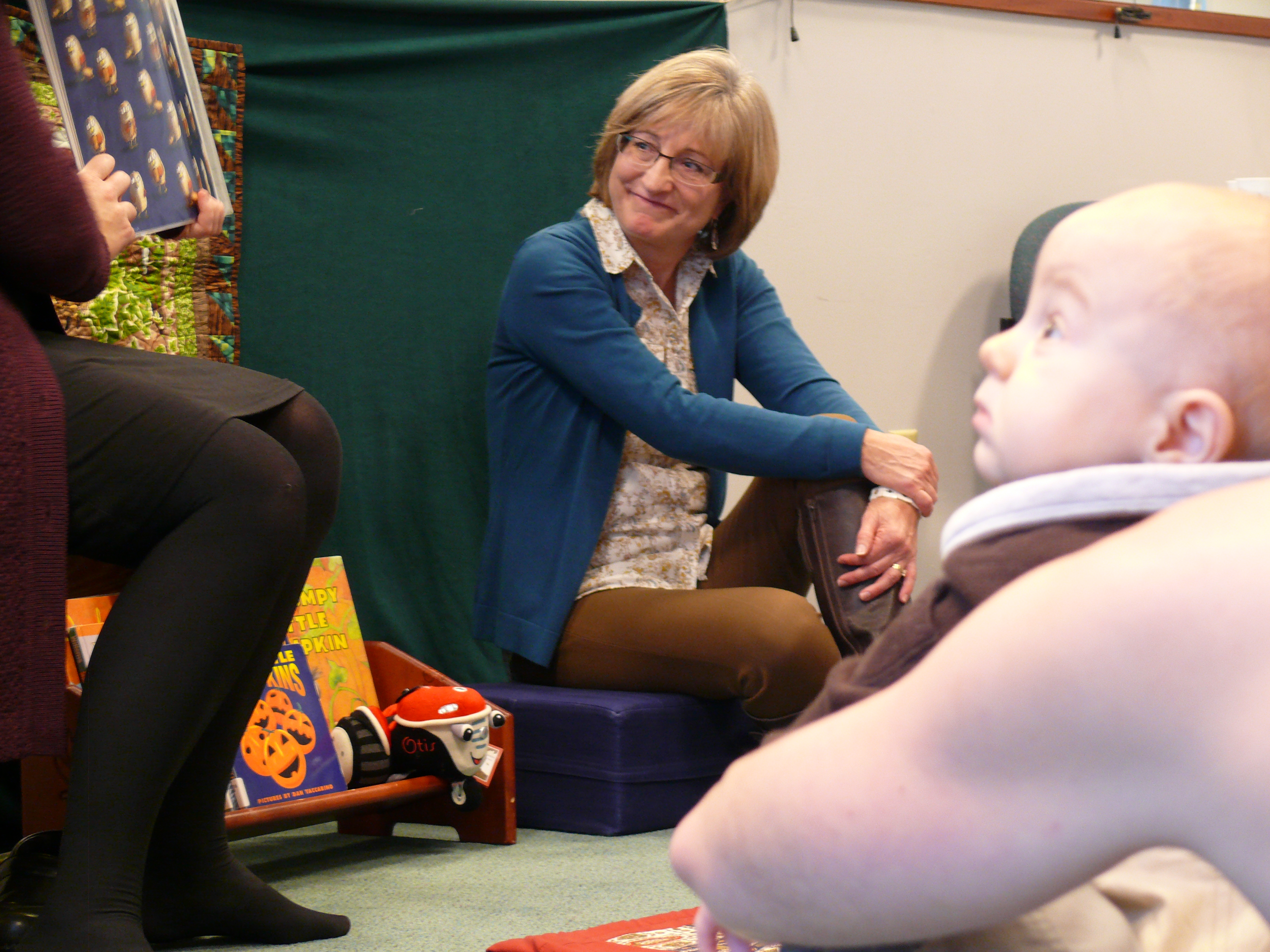
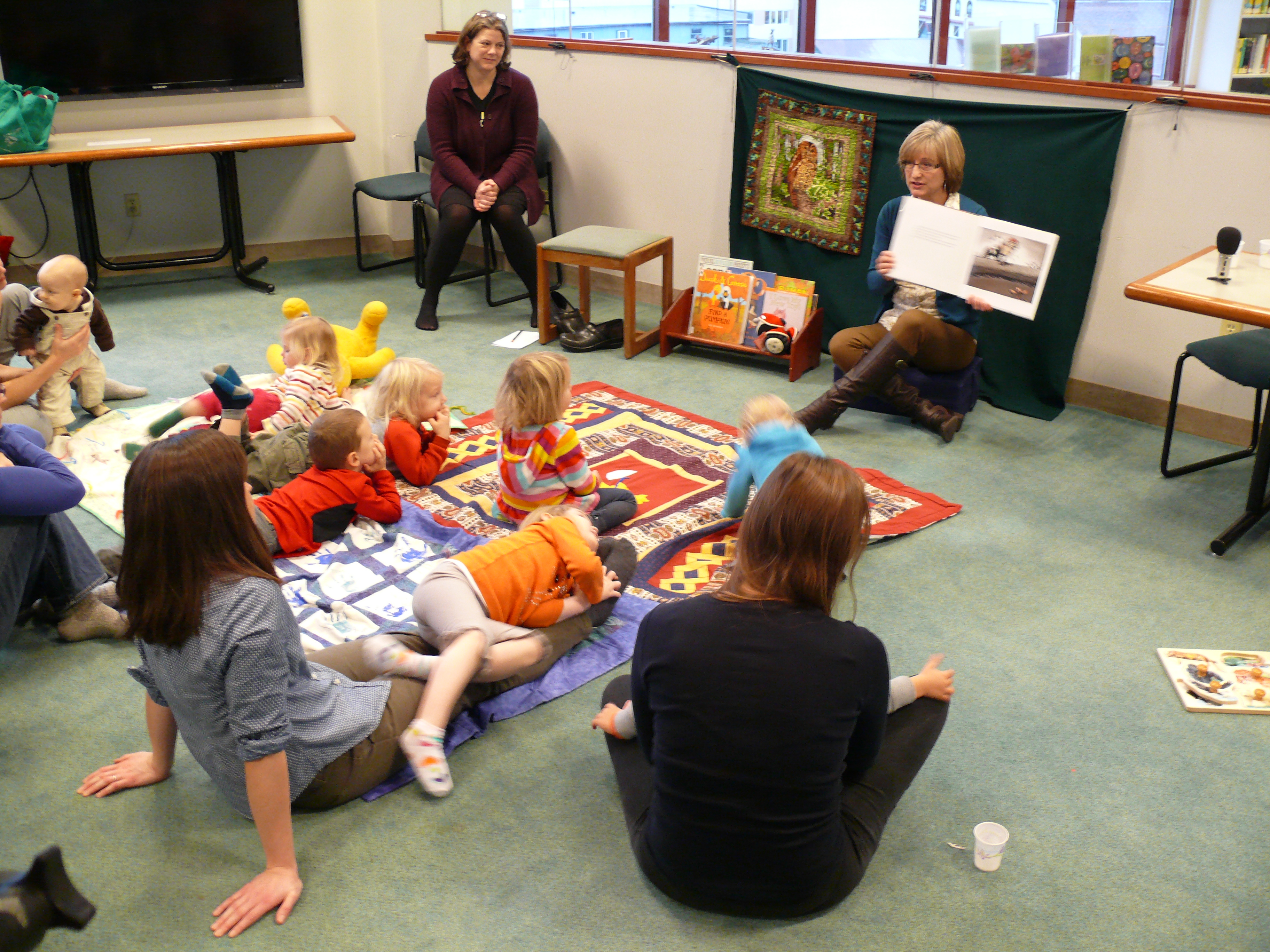
First Lady Sandy Parnell with a future reader in the foreground.
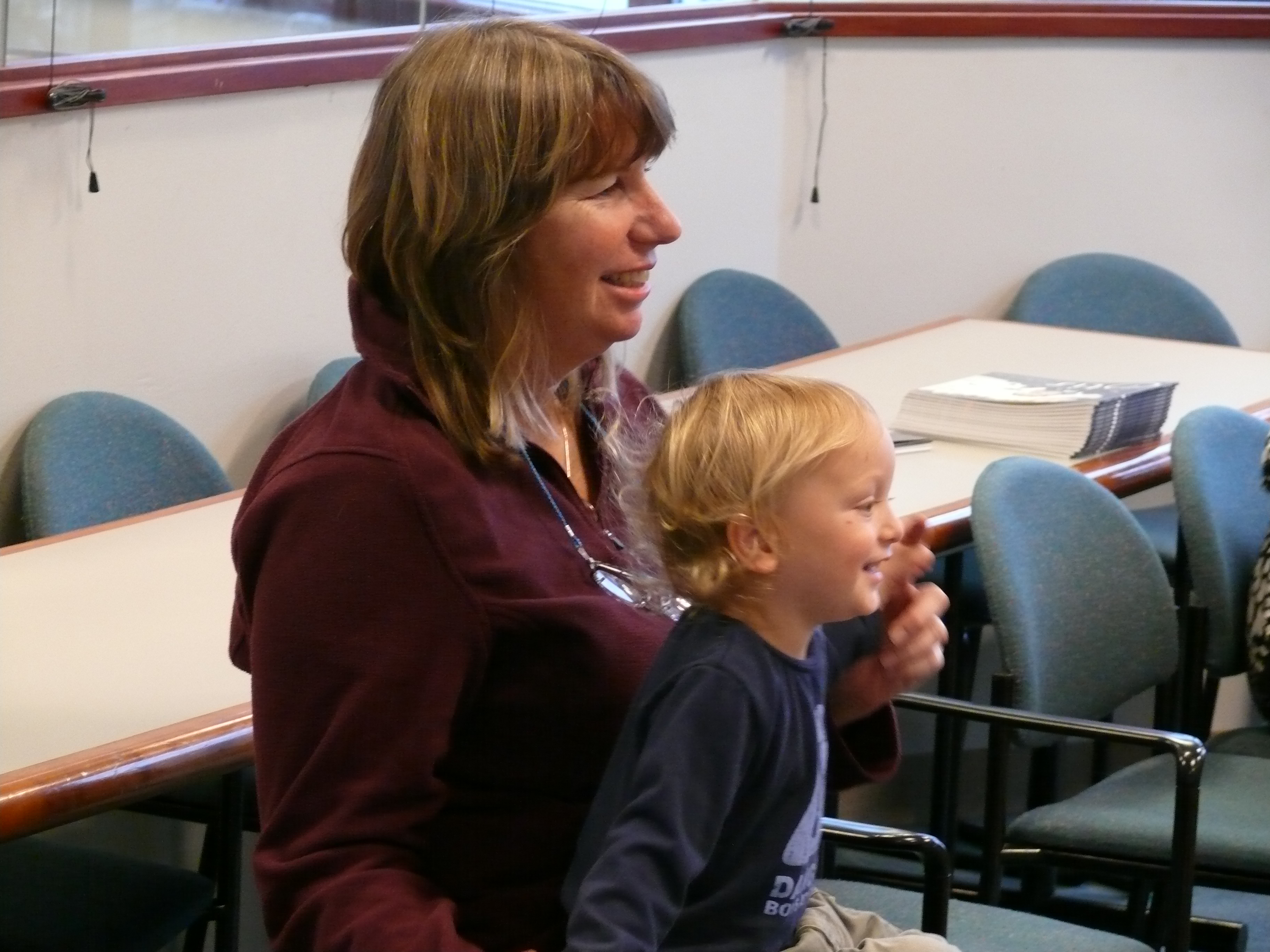
JPL's Programs Coordinator Beth Weigel, Sandy Parnell, and some story-time appreciators.
Mrs. Parnell reading from Lauren Long's "Otis".
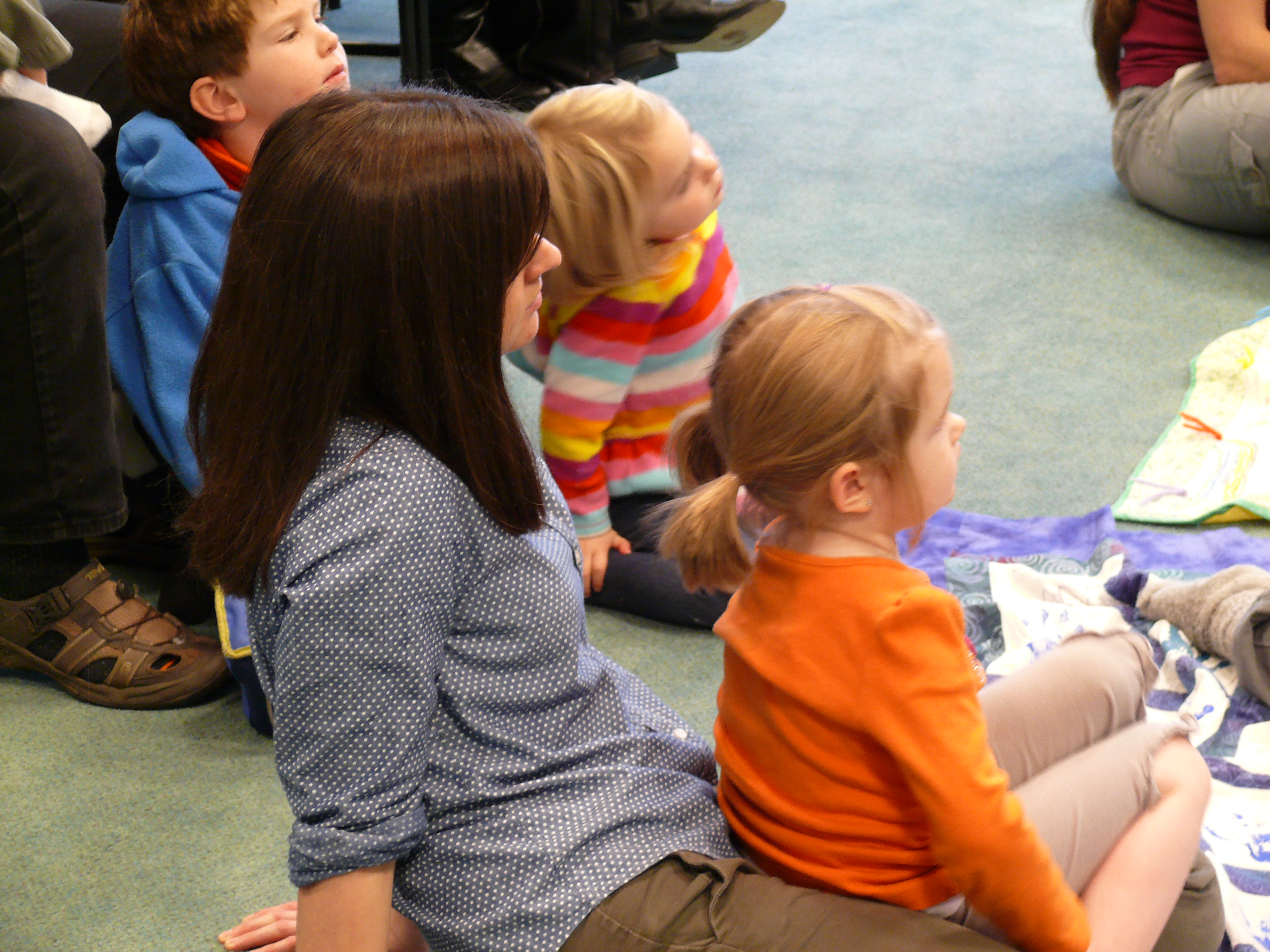
Attentive attendees.
Neighborhood Kids' Rosanne Schmitz and one of her participants.
It's never too early to read to our children.
Reading is important for family and community.
Wednesday morning's group.
Alaska's First Lady, Sandy Parnell, reading at Juneau's downtown public library on October 30th, 2013.
What do Dolly Parton, the Juneau Public Library, and Alaska’s First Lady Sandy Parnell have in common? Children’s Books, and lots of them. On Wednesday morning, library programs coordinator Beth Weigel and Mrs. Parnell read to an attentive group of kids at the downtown Library.
First ever Sitka WhaleFest FilmFest at Centennial Hall.
For the past few weeks, as part of the Scientists in Schools program, kids in Sitka have been conducting all sorts of science experiments with the scientists who will be presenting at Whalefest.
Remember that moment when you were first hooked on science? For me it was because of something very much like the kids in the schools of Sitka have been experiencing for the past few weeks. I was in 5th grade when my teacher, Mrs. Hughes, brought in cow’s eyeballs, brains and lungs for the class to dissect. I remember it was messy, kind of gross and well, just really cool.
Whalefest is a wonderfully multi-disciplinary showing of all things whales. In addition to the science symposiums, there is music, art, food, drink, a fun run/walk, and new this year — a film festival.
Ellen Chenoweth, the curator of the first WhaleFest FilmFest, relayed what each filmmaker said hooked them on science as she introduced each film. The films were between 2 and 8 minutes long and topics ranged from research on salmon, steelheads, and giant pacific octopus to whale entanglement avoidance and necropsies.
Below is a compilation of some of the shorts shown at the Film Festival. Use your mouse to navigate around, click on the video pieces and zoom in and out on the different sections below.
When asked about how she came to the idea of making a film festival part of WhaleFest this year, Chenoweth had this to say.
When you go to a scientific talk everybody loves to see videos, everybody loves to hear clips of sounds of animals and things like that, so it’s definitely becoming more common and more appreciated in presentations ‘cause scientists are people too and we enjoy being entertained and seeing things visually and hearing them as well as looking at graphs and being told what happened.
And was it a tough sell to get it into the WhaleFest or how did that go?
No, it was an easy sell, it was almost too easy, I said hey I have this idea and then Lisa said yes, and Maddison said yes, Jan said yes and then I had to actually make it happen.
About 150 people showed up for the festival and It was a great showing of scientific research happening around the state. There’s sure to be a lot more good science, art and entertainment this coming weekend. I’ll be tweeting some of the action with the hash tag #sitkawhalefest2013 so you can follow along.
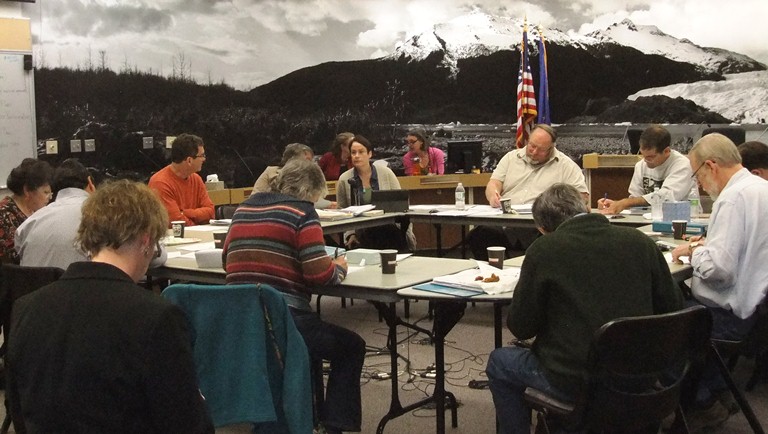
Assembly members met Wednesday to set goals for 2013/2014. CBJ department heads look on, since city staff must make the goals happen. Photo by Rosemarie Alexander.
Resolving Juneau’s solid waste problems tops the list of the Assembly’s goals for the next year.
In a 3 and a half hour retreat Wednesday morning, the nine-member panel prioritized a list of 16 issues the city and borough should tackle.
Some, like housing, economic development, and parking, have been on previous Assembly’s lists.
Mayor Merrill Sanford says the key is moving them off the list and into reality.
“Maybe we can get caught up on a few here and get beyond and get into new goals, you know, starting next year. But this gives us a priority list to go by,” Sanford says.
During the meeting, Assembly member Randy Wanamaker reminded his colleagues that the fewer goals the better because so many are already on the list.
A number of the issues considered priorities are in progress, including measures for creating more housing in Juneau.
Close
Update notification options
Subscribe to notifications
Subscribe
Get notifications about news related to the topics you care about. You can unsubscribe anytime.