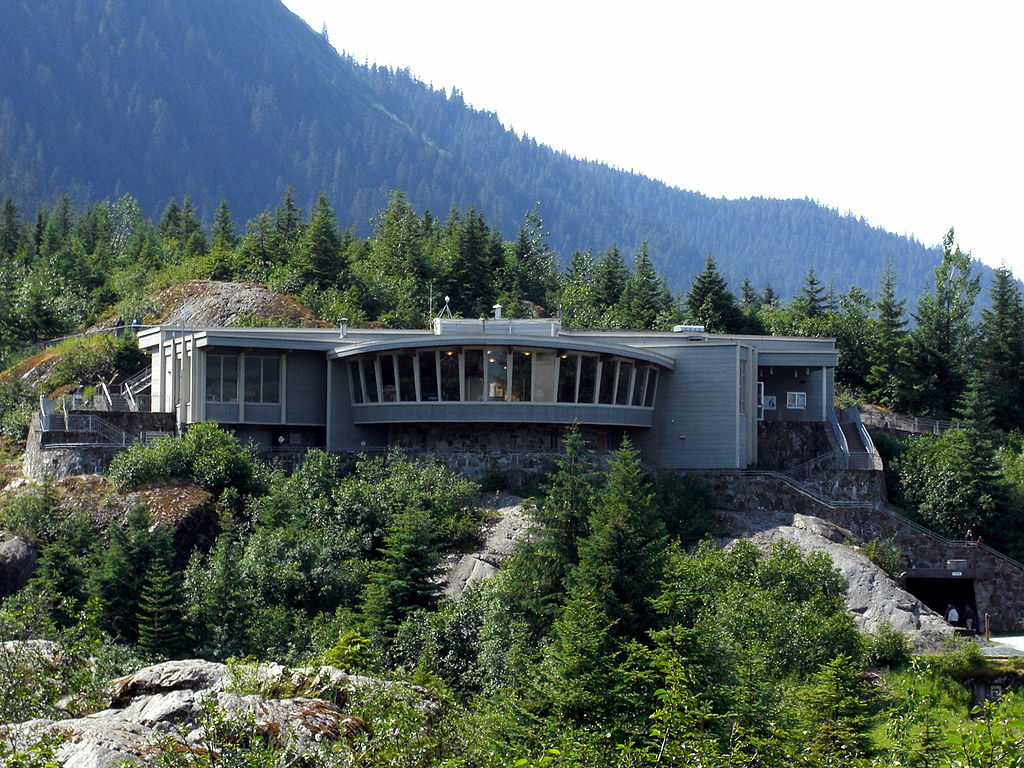
The Mendenhall Visitor Center will also be closed. (Photo by Reywas92/Wikimedia Commons)
The shutdown of the U.S. government is the first in nearly 20 years.
In Alaska, there are five major impacts:
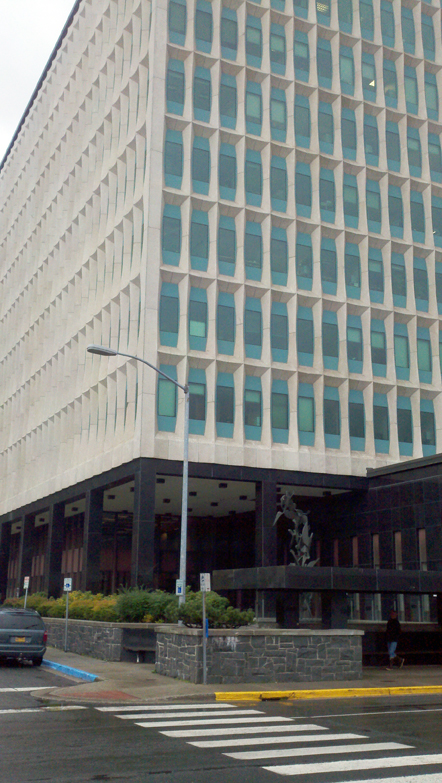
All post offices remain open, including the office in Juneau’s downtown federal building. Many of the U.S. government offices in the federal building will be partially or completely shut down and employees furloughed until Congress passes a budget. (Photo by Rosemaria Alexander/KTOO)
First, any federal employee who isn’t considered essential will be put on furlough until Congress passes a budget. And as a state with a lot of government workers, that’s a big deal for Alaska. About 13,000 of them could get sent home without a paycheck.
Second, members of the military will continue to serve and earn money, but it won’t be business as usual. Medical treatment facilities are expected to be scaled back, and maintenance work that isn’t directly tied to military operations and deployments could be put on hold. The U.S. Coast Guard will continue its core mission, including search and rescue, law enforcement, and environmental protection. The major impact of the shutdown will fall on civilian contractors and civilian employees.
Number three also has a military bent: One in ten Alaskans is a veteran. And while they should still receive benefits, their claims could be processed at a much slower rate. It also could take more time to get new veterans their pension and educational benefits.
Four: National Parks and visitors centers will be closed. In Juneau, that means the Mendenhall Glacier Visitors Center, which is already on winter hours, so the public may not notice much change.
The fifth major impact falls on poor women and children. They could see benefits reduced especially if a shutdown goes on for more than a few days. The WIC program, which provides food, would run out of money and it would be up to the state to keep it going. Head Start programs could also close down, leaving low-income kids without pre-school instruction and their parents without daycare while they’re at work.
Here’s what won’t change. Food stamps, unemployment benefits, and social security will still be paid out. The post office will remain open, and so will airports. And members of Congress will still continue to meet, since they — of course — count as essential staff.
Juneau has 13 polling places. If you don’t know where to vote, call the Polling Station Locator at 1-888-383-8683, or click on the link in this story.
Tuesday is Election Day in Juneau.
The polls are open between 7 o’clock this morning and 8 o’clock tonight.
Once the polls close, city hall Assembly chambers will become Election Central, a place for candidates and the public to watch returns come in. KTOO also will provide live election returns on radio or click here.
Two school board and three Assembly seats are up for election.
Juneau has 16 precincts. If you don’t know your polling place, you can access the Polling Station Locator online or call 888-383-8683.
City Clerk Laurie Sica says it’s also possible to cast a question ballot at a different polling place.
“People don’t have to vote in their own poll. They can vote at any poll on Election Day if they’re willing to vote the question ballot and those get reviewed,” Sica says. “As long as they’re a registered voter within the city and borough of Juneau, their ballot counts. Sometimes it’s just for the sake of convenience. It’s easier to get to a poll close to where they work.”
Absentee and question ballots will be counted on Friday. The Canvas Board will meet next Tuesday to certify the election.
In Barrow at the top of the world, receding sea ice is reshaping life. University of Alaska Fairbanks freshman Nelson Kanuk thinks the state is obligated to combat atmospheric climate change. He argues the atmosphere is a public trust to be preserved for future generations, like clean water or navigable waterways.
Kanuk sued the state last year when he was a senior at Mt. Edgecumbe High School in Sitka. The lower court dismissed the case, but on Thursday the Alaska Supreme Court is taking it up on appeal. As part of the educational outreach program Supreme Court LIVE, the courtroom will be Barrow High School’s auditorium. The case is Kanuk v. the Alaska Department of Natural Resources.
Nelson Kanuk at Mt. Edgecumbe High School in December 2012. Now a college freshman at the University of Alaska Fairbanks, Kanuk is studying criminal justice. (Photo by Ed Ronco/ KCAW)
School officials and local attorneys have been helping students cram on the justice system, the case, even court etiquette and how to dress.
Local lawyers’ take
Robert Campbell spent Monday briefing Barrow High School students on Nelson Kanuk’s climate change case.
Campbell graduated from Barrow High in 1989 and said he’s the only private practice lawyer north of the Arctic Circle, and one of about five lawyers in the area; they’ve been discussing the case.
“Generally, the consensus is, is that the court’s going to find it to be a political question and not answer it, that there’s just not a real easy solution for the court to implement,” Campbell said.
Whether climate change is a “political question” is one of three issues the Alaska Supreme Court’s decision hinges on.
“There’s a general scientific consensus, but there’s not a political consensus. And without a political consensus, it sometimes, courts are not real comfortable jumping in and wading into those arenas, unless they absolutely have to. And there’s no sense that they have to, absolutely have to, so they’ll probably go ahead and reserve that for the individual state legislatures to, to enact. And that’s probably what’s going to happen.”
Campbell said the students he spoke with had almost universal concern about climate change, and felt the government should be at least somewhat responsible.
The apparent effects of climate change are stark in Barrow. Campbell said where historically there’d been sea ice, there was briefly open water this past winter.
“I mean, that was something I’ve never, ever seen in, in the 20 plus years or whatever I’ve spent up here,” he said.
“The biggest challenge, frankly, is how in the world are we going to manage all those cell phones?” Principal Bev Gillaspie said.
Her auditorium can hold 285 people. Between students, staffers, and guests, it’ll be standing room only.
“Everyone who goes into that facility will be wanded,” she said. “We figure it will take us about an hour just to get everybody through security, and into the seats so that we can begin the process of hearing the court case.”
State troopers and local police, about a dozen altogether, will handle security.
The plaintiffs’ attorney, Brad DeNoble, said Barrow is a fitting choice.
“You know, it’s interesting cause, Barrow has, gosh, of all places, Barrow is being hit one of the hardest with climate change,” DeNoble said. “You know, they’ve got a very vested interest in, in, in the outcome of this.”
The case itself hinges on three questions:
Does the state have an obligation to protect the atmosphere?
Does the judicial system even have jurisdiction, or is this exclusively the domain of the legislative and executive branches of government?
And, do Kanuk and fellow plaintiffs have standing? That is, a personal interest and injury that the court can address?
Kanuk plans to be there. He said he was surprised the court agreed to hear his appeal after courts elsewhere dismissed similar cases. The Oregon-based nonprofit Our Children’s Trust helped Kanuk and other young people file suit in at least nine states and against the federal government.
Kanuk is optimistic something positive will come of this.
“Well, (I’m) keeping my fingers crossed,” he said. “And, hopefully that we get moving forward with forming some kind of climate reaction policy, both at, you know, the state legislative level and also the federal level as well.”
Assistant Attorney General Seth Beausang, who’s arguing against DeNoble, says he’s confident.
“This case is a novelty, and I think, I think the plaintiffs even make that, you know, clear in their briefs, as well,” Beausang said.
Gavel Alaska is tentatively planning to provide a live webcast of the Supreme Court’s hearing beginning at 12:30 p.m. Thursday at 360north.org. This story was updated with the sidebar.
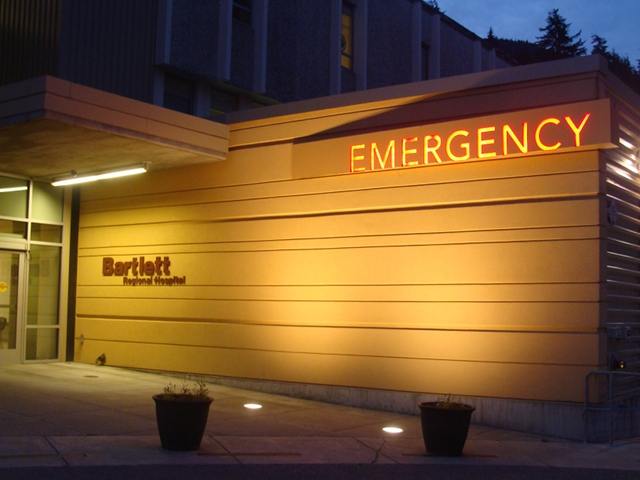
Bartlett Regional Hospital’s board of directors has a timeline for hiring a new Chief Executive Officer.
Hospital Spokesman Jim Strader says the board hopes to hire an interim CEO by the end of October. He says the goal is to make a permanent hire by June 30, 2014, following a nationwide search.
Current CEO Chris Harff last week announced she would be stepping down after just thirteen months on the job, saying her skills and expertise are not a good fit for the hospital. She was the first permanent CEO hired after the hospital board cut ties with Bartlett’s longtime management company, Quorum Health Resources.
The board held a special meeting Monday night to discuss the timeline for replacing Harff. Strader says a three-member search committee will meet with Juneau Human Resources Director Mila Cosgrove as soon as today (Tuesday) to put together a position description. Cosgrove is taking over personnel duties for the community-owned hospital, following the recent resignation of Bartlett’s HR Director Norma Adams.
Strader says the search committee will be led by board member Dr. Alex Malter.
Absentee and early voting is still available on Monday at city hall downtown and the Mendenhall Mall in the valley.
Juneau voters go to the polls Tuesday to elect three Assembly and two school board members.
Polls open at 7 a.m. and will be open until 8 p.m.
Absentee and early voting began two weeks ago, but with no ballot issues and only one contested race, early voting has been slow, according to City Clerk Laurie Sica.
“Last year we reviewed about 1,000 absentee ballots from the voting stations and I don’t think we are up to 500 at both places right now,” Sica says.
Early and absentee ballots can still be cast Monday at city hall downtown and at the Mendenhall Mall in the valley.
Sica has already taken ballots to shut ins at the Juneau Pioneers Home and Wildflower Court nursing home. She says if registered Juneau voters cannot get to the polls Tuesday they can ask a relative or friend to bring them a ballot.
“It’s hard for us to get around to everybody, but if people know somebody who wants to vote and are just not able to get out to the poll, we can provide them with an absentee ballot to take to them. It’s called personal representative voting,” she says.
The personal representative must pick up the ballot from the city clerk’s office.
Only the areawide Assembly seat is challenged in this municipal election. Candidates for the district one and district two Assembly seats are unopposed as are the two school board seats. All are three-year terms.
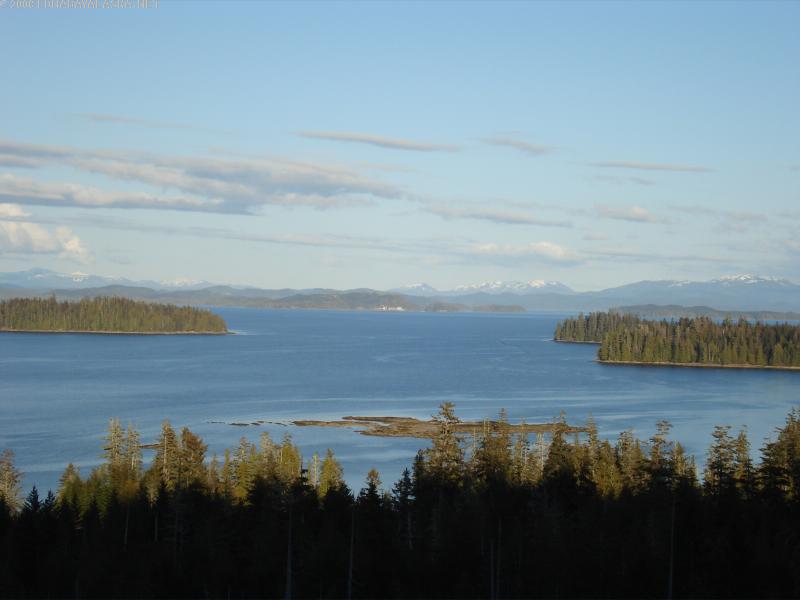
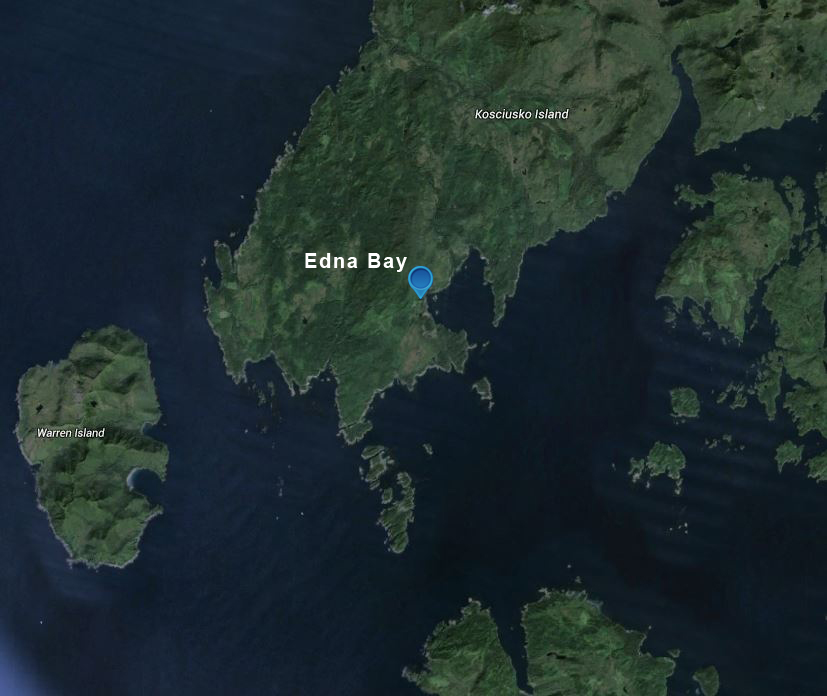
The proposed new City of Edna Bay would include about 23 square miles of land, and about four-and-a-half square miles of tidelands and submerged land. That area includes state, federal and privately owned property on Kosciusko Island off northwest Prince of Wales.
The petitioners are Lee and Doris Greif, and they say incorporating will help their community move forward with needed infrastructure projects, and attract new residents. Right now, about 50 people live there year round.
Doris Greif said one big problem is with Edna Bay’s roads.
“When the state set up lots out here, they didn’t include the road, and so everybody that has a lot owns half the road,” she said.
Those roads are in need of repairs, but without a single entity in charge, that work can be difficult to arrange. As a city, Edna Bay would be able to take ownership of its roads and bridges, and make the needed improvements.
Greif said the community’s dock also is in disrepair, and the state was on the verge of condemning it. If Edna Bay incorporates, she said the state has offered to help with repairs.
“And then, we don’t have any fuel out here,” she added. “We have to go get it in 55-gallon drums. It’s very difficult, especially in the winter, sometimes you can’t go. We’re going to hopefully put in a tank farm for fuel, and make life a little easier out here.”
Edna Bay
Edna Bay is about a half-hour boat ride from Naukati on Prince of Wales Island. Greif said the town has many older residents, and the school there is running low on students. Many of those who live there would like to attract more families with children, and she hopes that improvements to the community will help encourage more people to move there.
“We’re just a small community. We all get along pretty good,” she said. “We’re just looking for growth. There’s a lot of lots available out here available, and houses. We’d love to see more community.”
Greif said Edna Bay’s economy is primarily fishing and the island’s two sawmills. She said most residents support the idea of incorporating Edna Bay, but a few have objected to the notion of expanding.
“We’re having that meeting on the 10th here with the Local Boundary Commission so people can ask questions,” she said. “There’s been a lot of rumors going around, and hopefully we’ll get that all out in the open. We’re just all excited about it. Most of us.”
A public hearing on the Edna Bay incorporation petition is scheduled for 6 p.m. Oct. 10 at the Edna Bay School.
In addition to the public hearing, the Local Boundary Commission will accept written comments on the petition through Nov. 20.
Comments can be sent to:
Mail: Local Boundary Commission staff, 550 West Seventh Avenue, Suite 1640, Anchorage AK 99501-3510