A Guardian Flight turboprop prepares to take off from Skagway’s airport last summer. The company is taking over all medevacs for the SouthEast Alaska Regional Health Consortium. (Image courtesy Guardian Flight on Facebook)
Guardian Flight takes over all SouthEast Alaska Regional Health Consortium medevacs on Tuesday, Oct. 1.
Guardian, based in Utah, already covers night service for the Sitka-based medical provider. SEARHC operated its own medevacs 12 hours a day up until now.
SEARHC Chief Operating Officer Dan Neumeister says a contract signed last week puts Guardian in charge of all medical evacuations.
“Guardian will be responsible for providing services wherever our clinics are. So at Angoon, (if) you need to fly out on a float plane, they’ll be responsible for either providing their own float plane or subcontracting out and getting a plane, putting their people on it and going to get our patients,” he says.
SEARHC laid off the nurses who staffed their own medevacs.
Guardian is Alaska’s largest medical evacuation operation, with bases in eight cities, including Sitka.
Neumeister says turning all medevacs over to Guardian will be simpler and more efficient.
“We had tried to perform the services ourselves part of each day. And we found that that was not as effective, even though we had very dedicated employees providing the service,” he says.
SEARHC has cut several programs this year to save money.
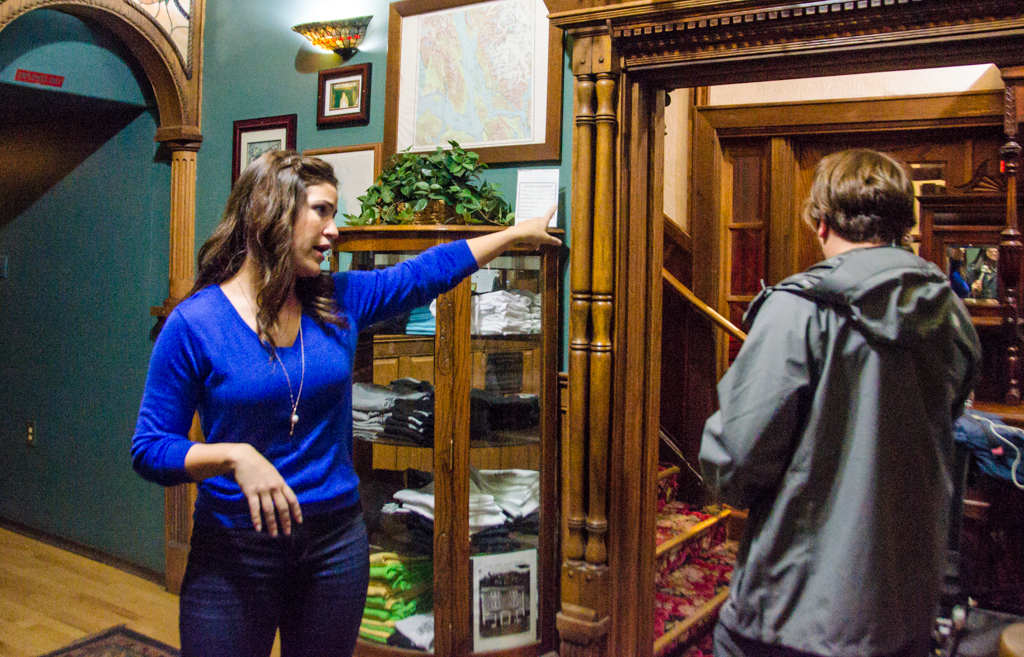
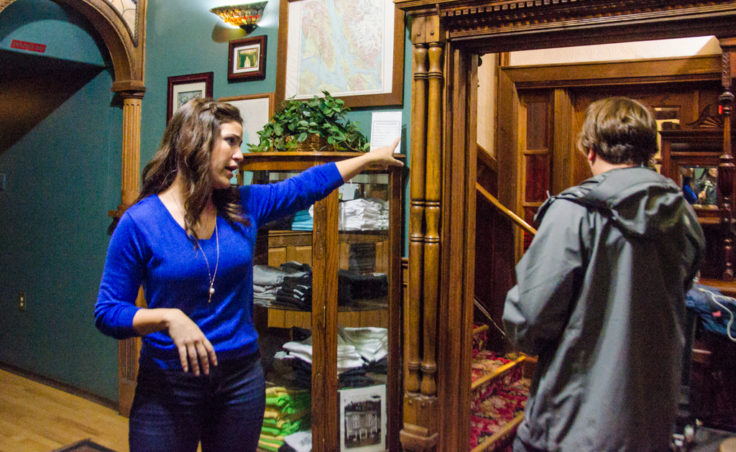
Hotel Impossible designer Blanche Garcia in the lobby of the Alaskan Hotel on the third day of shooting. (Photo by Heather Bryant/KTOO)
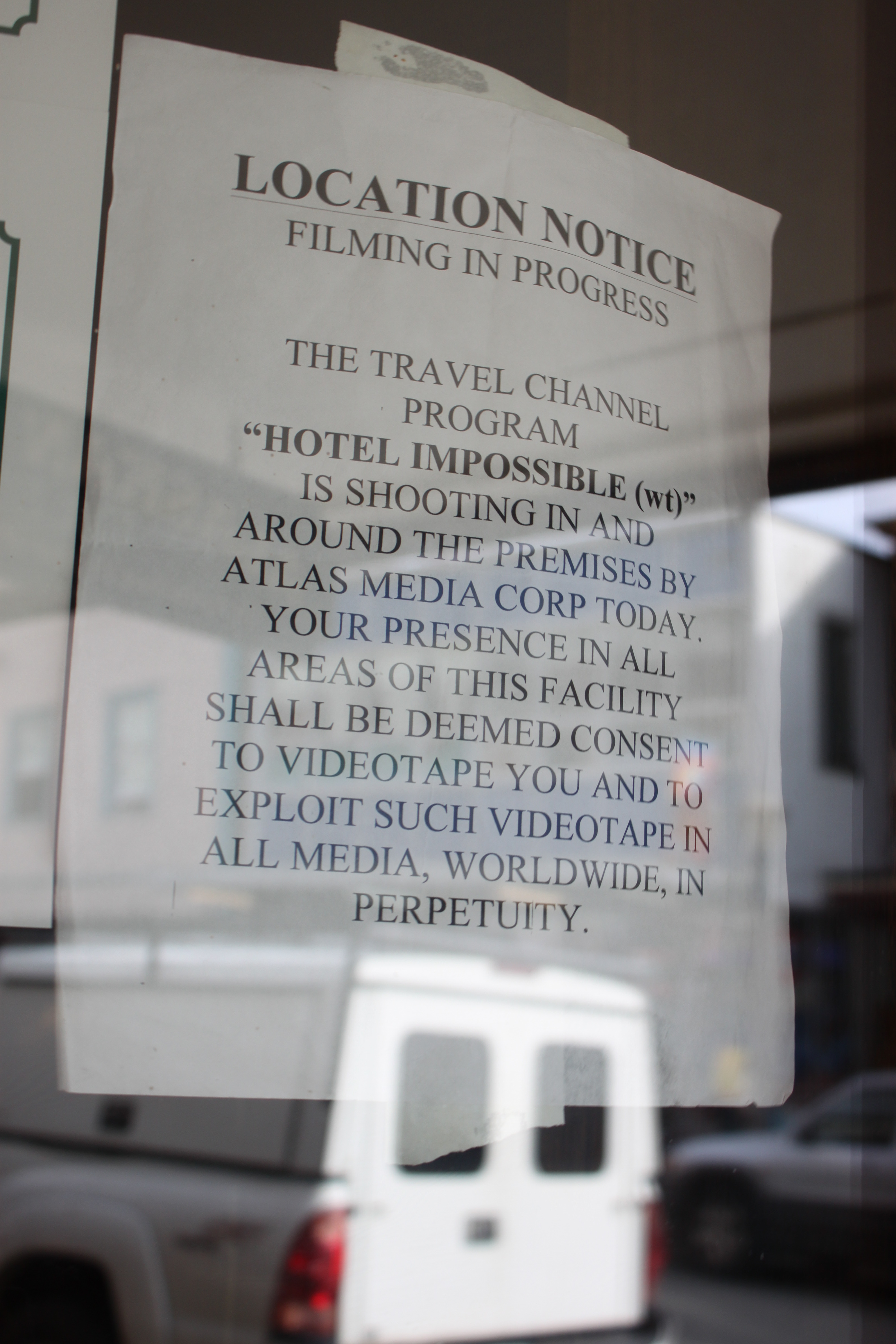
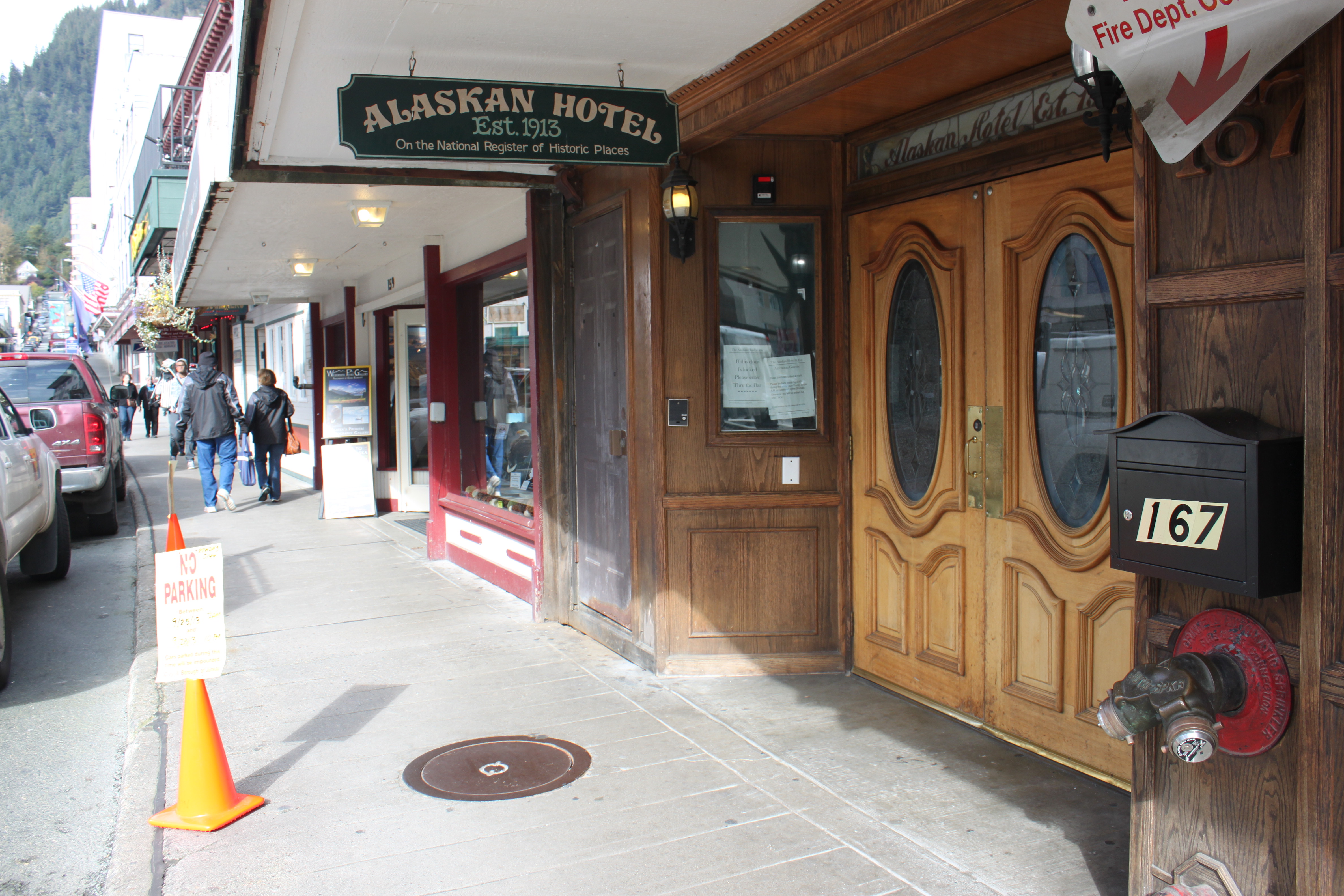
This sign was posted on the window of the Alaska Hotel last week. (Photo by Lisa Phu/KTOO)
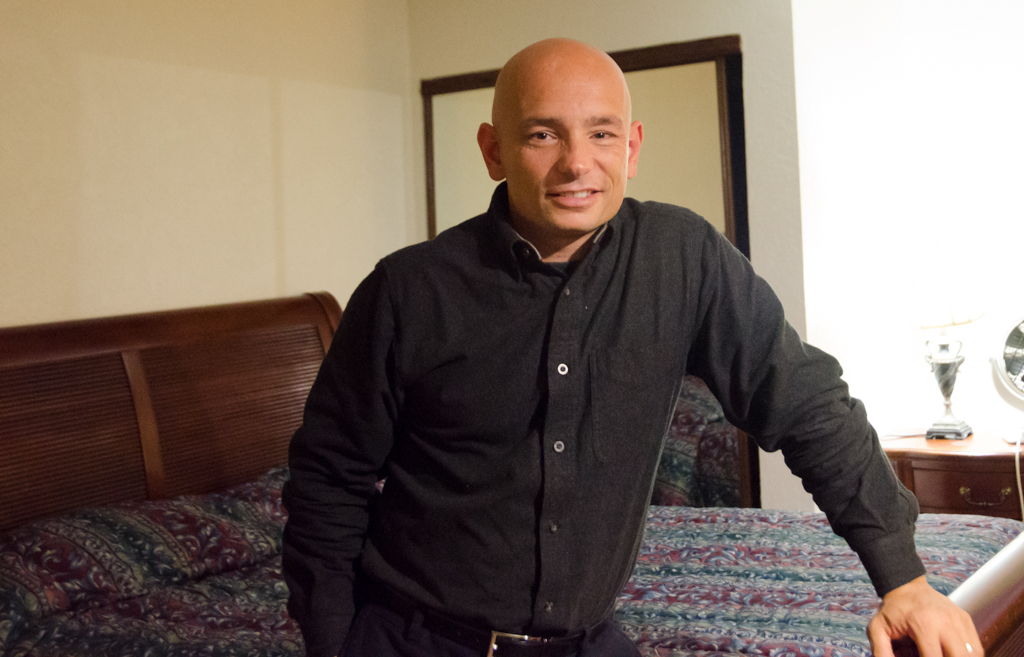
Hotel Impossible host Anthony Melchiorri has managed several hotels, including the New York Plaza. (Photo by Heather Bryant/KTOO)
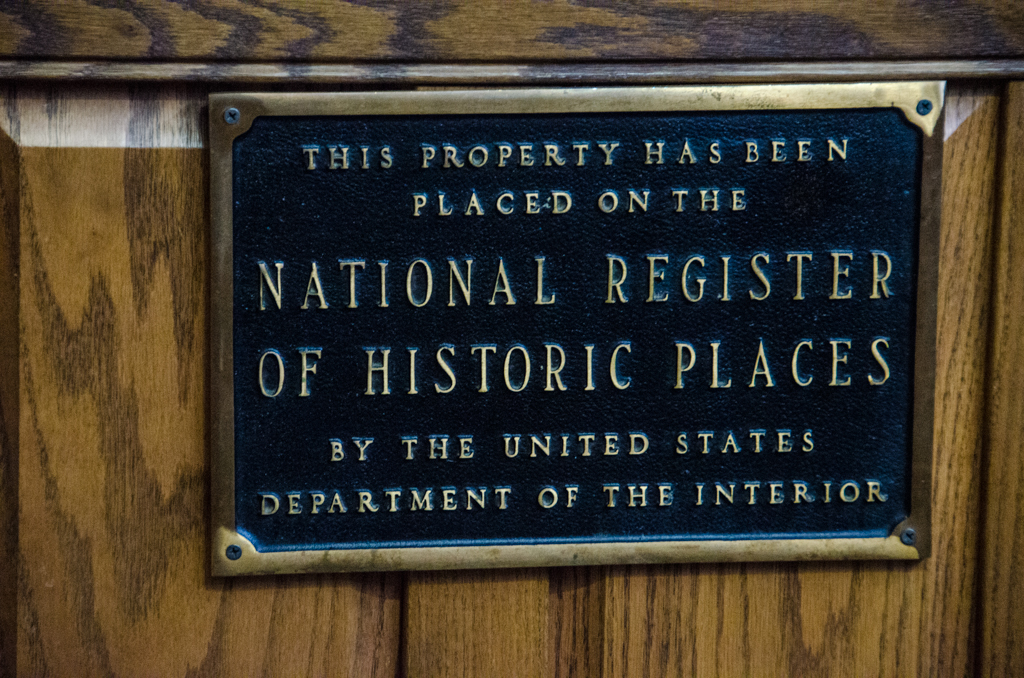
The Alaskan Hotel and Bar was placed on the National Register of Historic Places in 1978. (Photo by Heather Bryant/KTOO)
Hotel Impossible wrapped up filming at the Alaskan Hotel on Saturday. (Photo by Lisa Phu/KTOO)
Hotel Impossible hired local contractor Stopher Construction to help out with the makeover. (Photo by Lisa Phu/KTOO)
Travel Channel’s reality show Hotel Impossible wrapped up filming at Juneau’s famed Alaskan Hotel this weekend.
KTOO caught up with the show’s host and designer during their third day of shooting.
Anthony Melchiorri is the host of Hotel Impossible.
“If people are looking for this hotel to be restored, to come into the lobby and see it completely redone, and just, ‘Oh my god,’ that’s not going to happen,” he says.
Most TV viewers want to see the ‘before’ and ‘after’ effect of a hotel makeover, but Melchiorri says his job is more about what’s not as obvious.
“My show is not about renovation. My show is about repositioning hotels and really giving them the plans to move forward. I’m more interested in the infrastructure of the operations and how people communicate and deal with each other. My job is to reengage the spirit of the hotel,” explains Melchiorri.
The Alaskan Hotel in downtown Juneau opened one-hundred-years ago and is the oldest operating hotel in the state. Owners Bettye Adams bought the hotel in 1977 with her husband Mike; it was placed on the National Register of Historic Places in 1978.
“I think of the hotel as beyond wood and nails. It is organic, it is a process, it’s a state of mind, it’s a historic museum, it’s a family,” says Bettye Adams.
Adams remembers the phone call that got her on Hotel Impossible.
“The first thing that the fellow said, ‘Well, how would you like an hour on the Travel Channel on national television?’ and I went, ‘Hmmm, let me think about that – yes,'” she says laughing.
After she accepted the offer in August, Adams says she watched episodes of the show and got nervous about being humiliated on television. By the third day of shooting, Adams was over it.
“You just have to decide that they’re going to stomp on your ego and let it go,” she says.
That same day, Melchiorri says he was about to have a nervous breakdown.
“Every single time I take over a hotel on this show, I feel like I’m going to throw up. People think this is fake. Ask anyone I dealt with today if this is a fake show. I isolate myself. I don’t speak to anyone unless the cameras are rolling and I don’t know what they’re going to say or what I’m going to say.”
Outside of television, Melchiorri is a hotel consultant. He’s managed numerous hotels, including the New York Plaza, and was senior vice president of a hotel management company.
When asked what he thinks is a challenge for the Alaskan, “The bar is loud, and when you have 45 rooms sitting on top of a bar, that’s like a bear wrestling a fish, the bear always wins, so that’s a problem,” Melchiorri says.
On the positive side, Hotel Impossible designer Blanche Garcia says the hotel’s historic value is a strength.
“As a designer, you get a lot of inspiration, so I, of course, would not put a New York SoHo loft in here, whatever I did, or put grass on the walls or things like that, so you’re working apropos to the area,” she says.
Will the beloved Alaskan bar be part of the makeover? Nope, says hotel owner Adams.
“I think the bar would stand up and just resist. No, it’s not going to change,” Adams says.
The episode at the Alaskan Hotel will kick off Hotel Impossible’s fourth season which will air sometime next year.
The cruise ship Norwegian Pearl sails south through Chatham Strait Sept. 26 on its final voyage of the season. (Ed Schoenfeld/CoastAlaska News)
This year’s Alaska cruise-ship season has ended. Close to a million passengers sailed through Southeast this summer, with many traveling on to points north and west.
It was a good summer pretty much everywhere in Southeast Alaska. So, we all should have good memories of the season. Right?
Wrong.
“Our days are usually better on the crummy days, believe it or not,” says Thyes Shaub, a jewelry designer who’s part of the Juneau Artist Gallery.
Thyes Shaub shows some of her jewelry at the Juneau Artist Gallery, a cooperative store in the capital city’s tourist district. (Ed Schoenfeld/CoastAlaska News)
The retired lobbyist is one of about two dozen painters, carvers, print-makers, photographers and potters who run the store as a co-operative.
Her family is also in the flight-seeing business, so she knows warm and sunny skies bring in more of those customers. But when it rains, it’s better in the gallery.
“So they’re wandering around town. And all the shops in the downtown area kind of benefit ‘cause they’ve got money to burn,” she says.
The gallery is one of hundreds of businesses around Alaska catering to summer tourists.
They include gift shops, bus tours, salmon bakes, photo safaris and Gold Rush shows.
“I would say for the 30,000 to 40,000 Alaskans like myself that depend on the visitor industry for our livelihood, it was a good season,” says John Binkley, whose family run paddlewheel riverboat and gold-mine tours out of Fairbanks.
“We finally pulled back from a low point here a few years ago to the million-visitor mark on the cruise side. And although we’re not quite back to where the peak was, we’re headed in that direction now,” he says. (Read a report from the start of the season.)
I think everybody’s into the new economy. It’s the new norm and if we’re going to go on vacation we might as well just go and do it,” says Jeannie McFarland, vice president of the Prince of Wales Island Chamber of Commerce. She and her husband also own McFarland’s Floatel, a lodge near Thorne Bay.
“We have a ton of returning people and they bring their friends and their friends’ friends and, of course, it makes our business survive,” she says.
Small-town lodges and other off-the-beaten-path attractions cater mostly to independent travelers. Most larger businesses depend on those aboard cruise ships.
This year’s projected million-passenger mark was expected to be the best since 2009, before politics and the recession brought them down.
Binkley says a couple of late-season factors made the total lower.
“We lost a few ports of call due to weather. And also there were some mechanical problems with one of the ships and a couple of the actual cruises were cancelled near the end of the season,” he says.
But still, it was a good year. And that’s part of a trend.
The Mt. Juneau Trading Post is one of the older gift shops in Juneau’s downtown tourist district. (Ed Schoenfeld/CoastAlaska News)
“Between 2010 and 2012, visitor industry employment increased by 7 percent in Southeast Alaska. That’s 400 jobs,” says Meilani Schijvens of Sheinberg Associates, who authored a recent regional economic report.
She says next season will be a bit different.
“In 2014, the number of cruise ship passengers visiting the region actually might be slightly lower than it is this year by 23,000 passengers. And that’s because two Princess ships will be redeployed and replaced by a very small amount of less capacity,” she says.
Binkley says the ship shuffle comes as lines try to avoid new, stronger federal air-pollution regulations along the U.S. coast.
“They’ve been working under the assumption that the emission control area, which requires them to burn very expensive fuel, would be in effect. And that influenced their decisions to move ships to other locations,” he says.
Carnival and some other cruise lines have won waivers from those rules in exchange for installing new emissions control equipment.
But that happened after schedules were set. So any change won’t hit Alaska til 2015.
Some in the industry expect more growth in future years, pushing numbers to new highs above the million-passenger mark. A question is: how much will tourists be willing to spend?
“We definitely noticed that trend of people spending less money and being careful and watching for things that are on sale,” says Juneau Artist Gallery member Thyes Shaub.
“I think that maybe a few more people are spending a little bit more. But I think they’re still being pretty careful with their money. We’re still seeing a lot of people that come and pay cash. I think that people decide this is the amount I’m going to spend on my trip and when that’s gone out of my little satchel, I’m done,” she says.
The large cruise lines sailed 28 ships to Alaska ports this year, one more than in 2012. Together, they made close to 500 separate voyages.
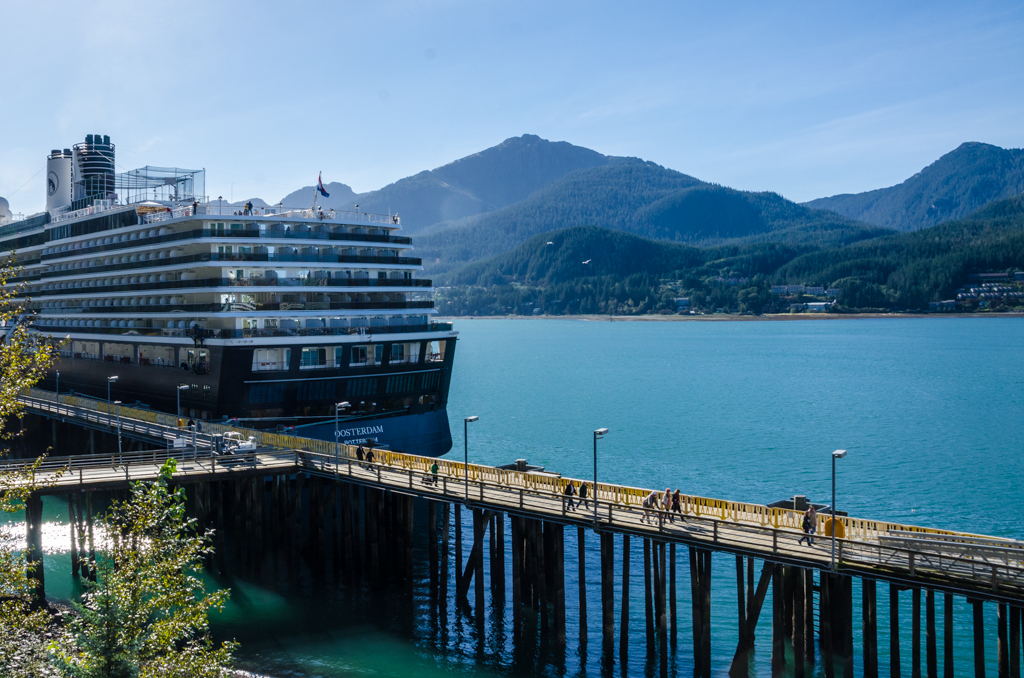
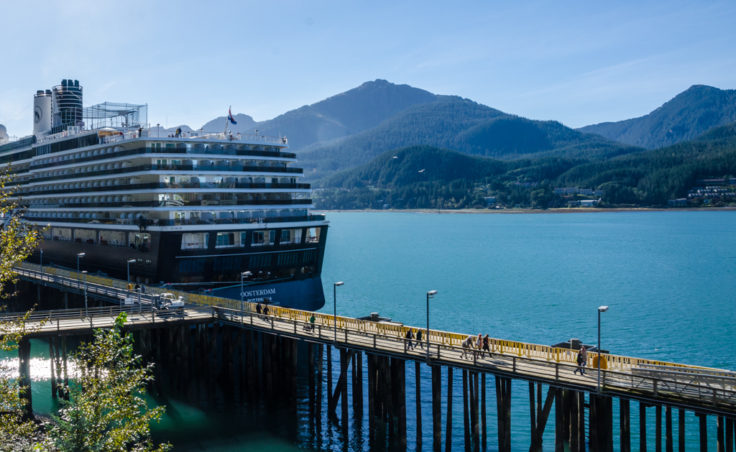
The Oosterdam is the last scheduled cruise ship of the season. (Photo by Heather Bryant/KTOO)
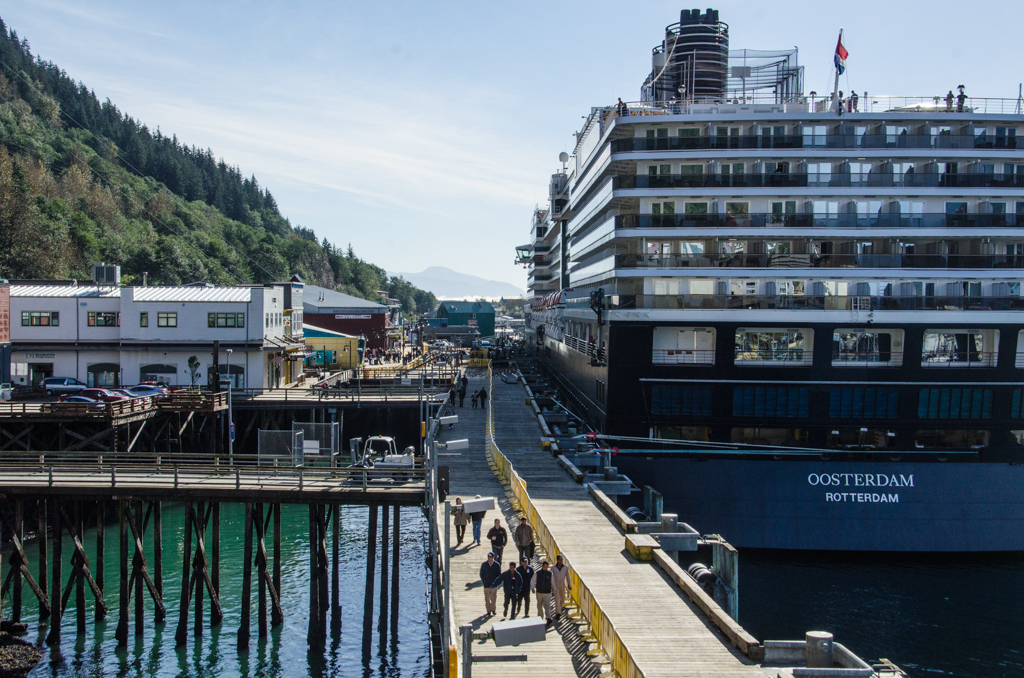
The last few crowds of tourists will start to disappear after the ships leave today. (Photo by Heather Bryant/KTOO)
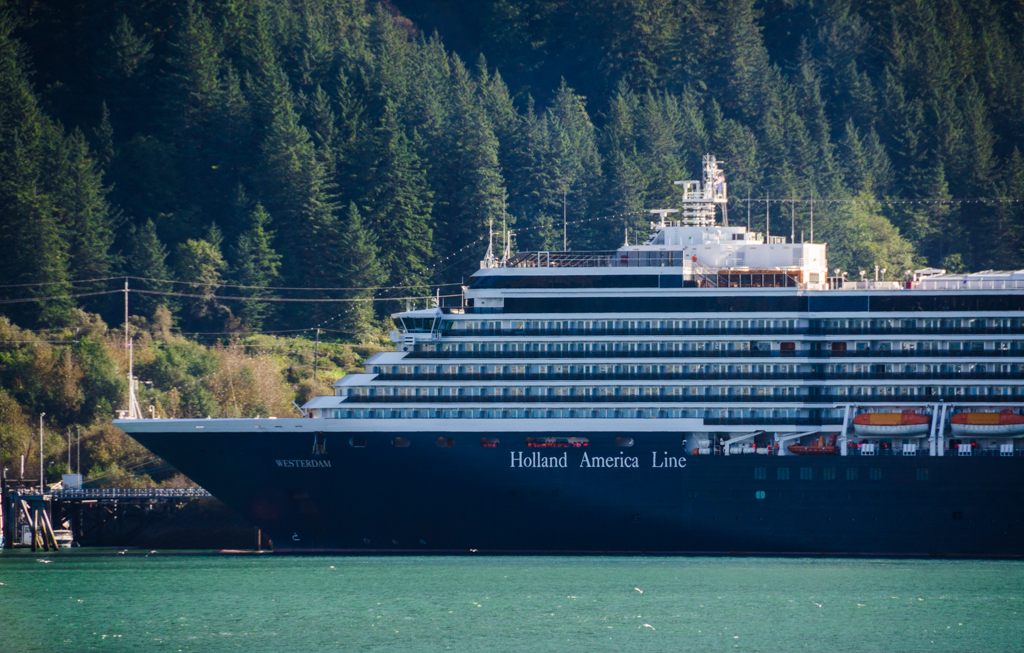
The Westerdam made an unscheduled stop in Juneau after cancelling other port calls due to bad weather. (Photo by Heather Bryant/KTOO)
The last cruise ships of Juneau’s tourist season sailed away Wednesday.
Cruise ships made more than 550 visits to Juneau this year.
Though final numbers aren’t in, Juneau Convention and Visitors Bureau CEO Nancy Woizeschke says just under a million passengers visited the capital city this summer.
“At the beginning of the season we were hoping to break the million passenger mark for the large cruise ships and that was a little optimistic. And then with the cancelling of multiple Celebrity Millennium stops, I think we won’t be passing that particular mark this year,” Woizeschke says.
In August, multiple mechanical problems sidelined the Millennium in both Seward and Ketchikan, forcing cancellation of several voyages.
Several new ships called on Juneau this summer, including the 1,041-foot Celebrity Solstice, which Woizeschke says is the largest cruise ship to sail Alaska waters.
She says based on hotel occupancy rates, the number of independent travelers to Juneau this summer may be high.
“We think that’s a good indicator of lots of independent travelers coming and spending multiple nights here,” she says. “And then we’ve had a lot of smaller cruise ships, for instance the Un-Cruise Adventures came to port for the first time this year. Lot of those folks, because they depart and come back here, have the opportunity to spend a couple of days in Juneau on either side of their trip.”
Holland America’s Oosterdam and Westerdam were the last two ships in port Wednesday. The Westerdam was not expected, but bad weather earlier this week forced it to revise its schedule.
The first cruise ship of 2014 will sail into Juneau on May 1st.
If you’re an average Alaskan, odds are you fly the SeaTac-based company’s jets frequently, or at least from time to time. (Yes, SeaTac is the name of a city, not just an airport.)
Maybe you’ve memorized your town’s flight schedule. But did you know all this?:
1) Two-thirds of Alaskans belong to the Alaska Airlines Mileage Plan.
2) We earned 530 million miles this summer during a double-mileage promotion, the equivalent of 21,000 roundtrip saver tickets.
3) Half of us are members of the airline’s Club 49 plan, which offers additional discounts, including checked-luggage deals, for Alaskans.
4) The airline has nearly 1,700 in-state employees.
5) 275 staffers are in Southeast.
6) The mileage and Club 49 plans have saved Alaskans $10.7 million so far this year.
7) $8 million of that is from the two-free-checked-bags program for travel in and out of the state.
And here’s one you may have heard of, but decided to forget:
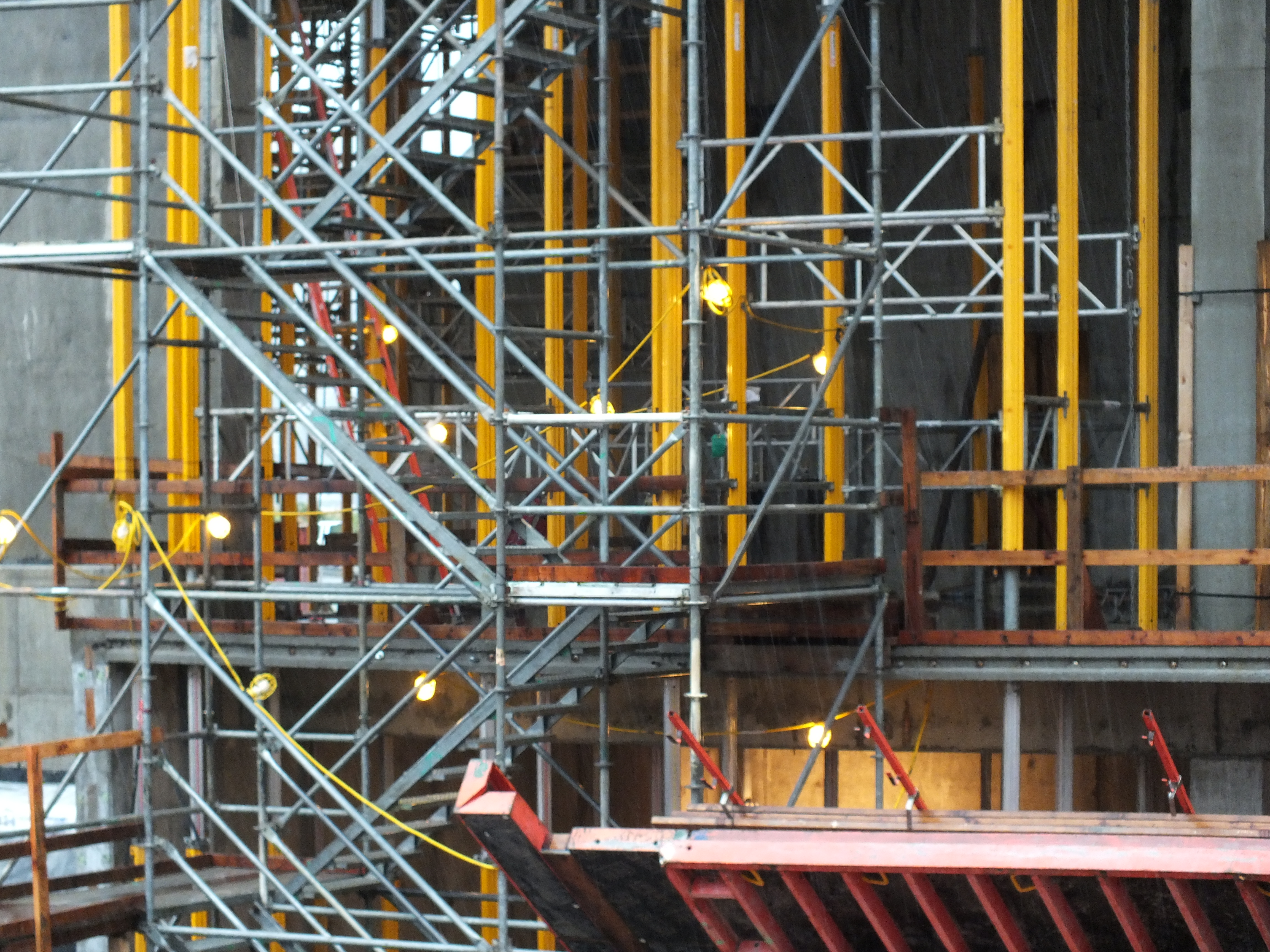
A view of the interior scaffolding and temporary supports for the State Libraries, Archives, and Museum (SLAM) project that is being built behind the current Alaska State Museum. Photo by Matt Miller/KTOO News
Astute observers of the State Library, Archives, and Museum project in downtown Juneau may have just noticed that the structure is now being built higher, much higher than this summer’s construction efforts.
“The community is going to start seeing that second floor wall section go on, which is as tall as the first floor,” said Bob Banghart, Deputy Director of the Division of Archives, Libraries, and Museums.
So, people are going to start paying attention. This is really a large building.”
Banghart has a suggestion for estimating the expected size of SLAM:
If you look at the crane, you look at the cab where the operator sits, count down three sections of the crane frame, that’s the approximate height of the building.”
On Wednesday, a pumping vehicle with an articulated boom pipe reached into the interior of the structure to pour concrete for the second floor slab as a chain of cement trucks came and went from the construction site.
Concrete form panels are already being erected to extend the walls even further up for the vault that will become the main storage area for artifacts.
The first of the current Alaska State Museum’s permanent exhibits on the second floor will be dismantled and packed up starting on October 7th. That will continue through February 28th when the Museum closes to the public.
Once (the current Alaska State Museum) is empty, it will be removed. Then they will add the other two-thirds of the construction project.”
The current Alaska State Museum includes about 24,000 square feet of space. By comparison, the new SLAM structure will be nearly 116,000 square feet. The parking lot will add another 64,000 square feet of space.
We’re pretty much on-schedule, on-budget, where we hope to be.”
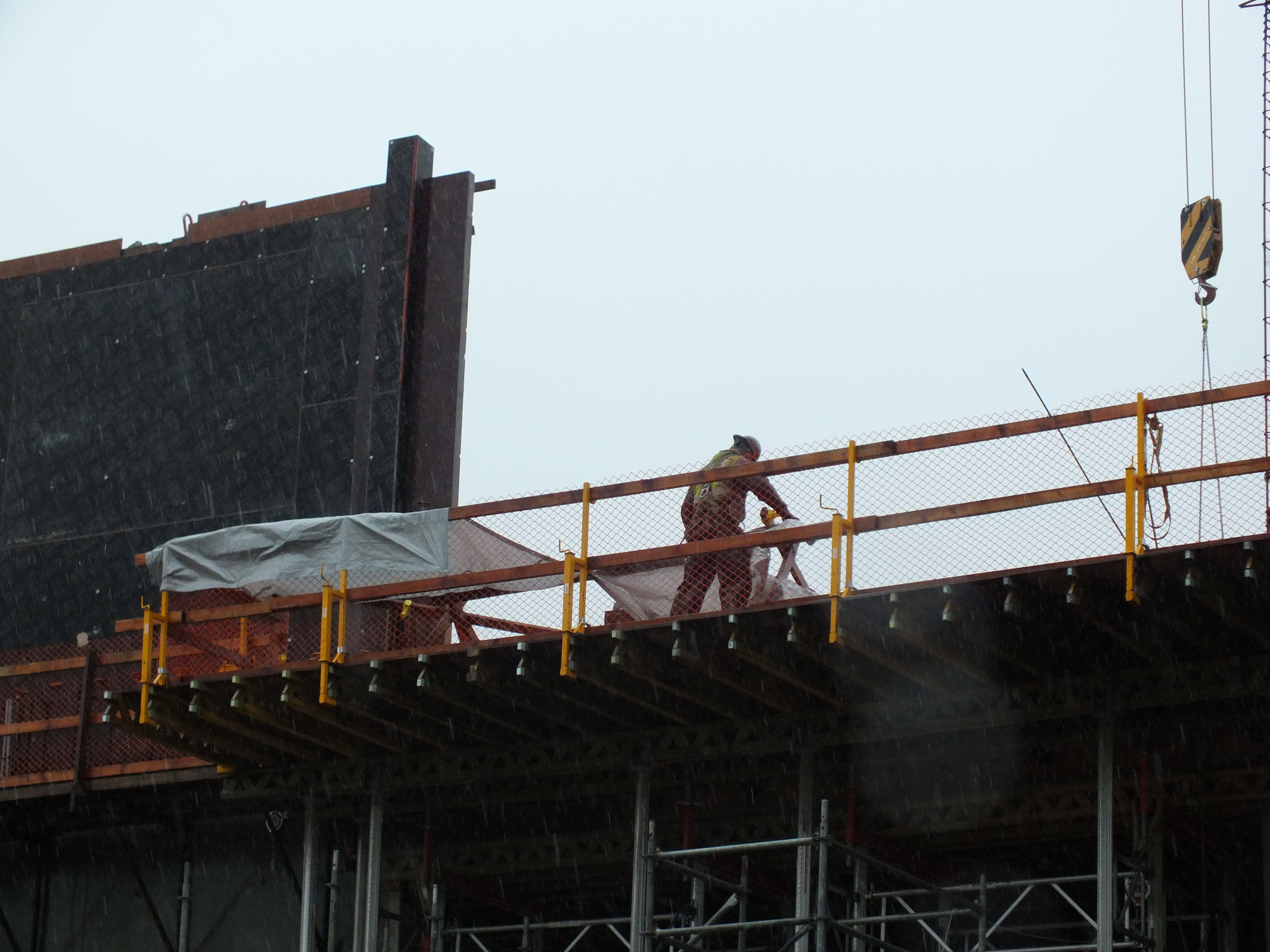
A construction worker at the current top of the State Libraries, Archives, and Museum (SLAM) project spreads out a cover to protect equipment and materials from the blowing rain on Friday morning. A newly-installed concrete form panel can be seen at the left. Photo by Matt Miller/KTOO News
Meanwhile, the Eagle Tree will return in the new structure. Banghart suggests that patrons and community members were very adamant about continuing with that exhibit.
Also planned for installation in the new building or on the grounds will be Science on the Sphere, the sculpture Nimbus in a restored form, and — hopefully — two of the current museum’s distinctive exterior side panels with the Pacific Northwest Native formline design. Banghart said that the recovery of two complete panels may be difficult.
We’ll have more on the project coming up next week on KTOO’s Morning Edition.
Close
Update notification options
Subscribe to notifications
Subscribe
Get notifications about news related to the topics you care about. You can unsubscribe anytime.