Business

Airport seeks public input on concession program

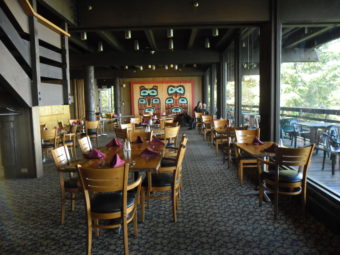
The Juneau International Airport
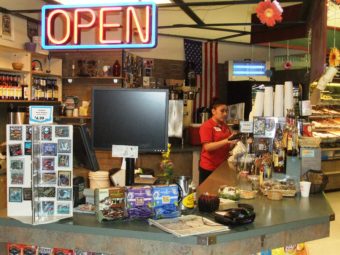
The airport is hoping to start design work for a substantial remodel soon, but first wants to hear what Juneau residents want for concessions. (Photo by Heather Bryant/KTOO)

The Juneau Airport is conducting an online survey to find out what food, beverage, and retail services Juneau residents want. Airport architect Catherine Fritz says this is a crucial step before the airport moves forward with designing an upcoming remodel.

“We just want to encourage people to go online, take that survey, give us your thoughts, or send a quick email, or give us a phone call and talk to us more about their airport. This airport is owned by the city and borough of Juneau. It belongs to the people of Juneau and those are the customers we’re trying to serve.”

Currently, the airport has one retail shop, Hummingbird Hollow. Food and beverage services include a restaurant, bar, and coffee shop run by ESS out of Anchorage, a contract that expires at the end of this year. Those spaces occupy 8,000 square feet, or 9 percent of the whole building.

“It’s just not how airport food and beverage concessions are run in this day and age. So we’re trying to find a model that will work better for a concessionaire, for someone who wants to run that business, as well as still serve the travelers and the Juneau public,” Fritz says.

Fritz expects a future food and beverage program to be substantially different than what it is now, and hopes it will lead to more activity and an increase in revenue.

Another change the airport is looking into is offering more “real” food in the area after security. Right now the only option in the secure area is food and beverages from vending machines.

The effort to find out what airport users and Juneau residents want started in June. As of last week, 250 online surveys were completed, but Fritz hopes that number will increase.

An estimated 1 million people use the Juneau Airport each year.

Sealaska sells off share in plastics venture

The Sealaska building in Juneau.
Sealaska’s headquarters building in Juneau. (Photo by Heather Bryant/KTOO)

Southeast’s regional Native corporation is out of the plastics business.

Sealaska sold its share of factories in Alabama, Iowa and Guadalajara, Mexico, on Monday.

Nypro Incorporated bought out Sealaska’s share of their Nypro Kánaak partnership. The purchase price was not revealed.

President and CEO Chris McNeil Jr. says it’s part of a larger effort to narrow investments.

“This particular operation has had a spotty performance over the years. But now all three operations have been profitable. When you have a company that has increasing profitability, that’s generally the time to sell if you have the opportunity to sell,” he says.

Nypro was recently purchased by Jabil, a huge multinational corporation with 60 plants in 33 countries. McNeil says that was also a factor in the sale.

He says a few tribal members interned at Nypro. But the factories were too far away to benefit most shareholders.

Sealaska’s board and management are considering new areas of investment in Alaska and the Pacific Northwest, where most of its 22,000 shareholders live.

“We’re also looking for something that is more constant with our Native values, including the concept of sustainability,” he says.

Sealaska sold its global logistics subsidiary earlier this year, giving the same reasons.

McNeil says the corporation has not chosen a company or industry to replace the plastics business.

He says the sale will not have a large financial impact on shareholder dividends.

“This will become less gross revenues. But of course the revenue and income from the sale itself earns income during the time we’re holding money for reinvestment,” he says.

Sealaska’s plastics venture began in the late 1990s with a subsidiary called TriQuest Precision Plastics, which had a plant in Vancouver, Washington.

Changes in the market led the factory to close. Sealaska then combined assets with Nypro to form the partnership. It made bleach containers, filtered water bottles and other products.


Organizers to start collecting signatures for Alaska minimum wage initiative

Seth Harris
Minimum wage is a priority issue for Acting U.S. Secretary of Labor Seth Harris. (Photo courtesy U.S. Department of Labor)

A statewide initiative to increase the minimum wage will launch informally on the Fourth of July in Juneau.

Initiative organizer Ed Flanagan says he will begin collecting signatures in the capital city on Thursday.  Petition booklets were printed by the state Division of Elections and released Monday. Flanagan says the organized effort will start in earnest next week in Juneau, Anchorage and Fairbanks then move statewide.

Supporters have a year to collect 30,000 signatures of qualified Alaska voters.

Flanagan is one of three former state Labor Department commissioners spearheading the initiative to increase minimum wage from $7.75 to $9.75 an hour by 2016, when it would be annually adjusted for inflation.

Alaska is one of 19 states and the District of Columbia with a wage greater than the federal floor of $7.25.

“That shows there is a lot of enthusiasm out there for raising the wage of these lowest paid workers in our society,” says Acting U.S. Secretary of Labor Seth Harris.

He has been stumping the U.S. for the Obama administration, which hopes to convince Congress to raise the federal minimum wage from $7.25 to $9.00 an hour.

Harris says initiatives like Alaska’s are a good indication the U.S. public believes it’s time to increase the wage.

Legislation has been introduced in both the U.S. House and U.S. Senate, but President Obama’s plan has not yet come up.  Earlier this year the House voted against a proposal to raise the wage to $10 an hour.

Harris says he’s heard poignant stories all over the country from people trying to make it on minimum wage jobs, but he hasn’t been to Alaska.  Instead, he called KTOO to talk about it.

“I don’t have a trip to Alaska planned right now but I can tell you there are 18-thousand Alaskans who would benefit from this increase in the minimum wage. And I can tell you I suspect the stories that I would hear there are very much like the stories I’ve heard in the Lower 48,” like folks who work two and three jobs and can never catch up, he says.

Harris says initiatives like Alaska’s encourage him in his campaign to get Congress to take up the federal increase.

If the Alaska initiative gets on the ballot next year and voters approve it, the state’s minimum wage would always be higher than the federal wage.  The proposal calls for Alaska’s minimum wage to remain at least $1 higher than the federal minimum wage.

At $9.19 an hour, Washington state has the highest minimum wage in the country. Oregon is second, at $8.95  per hour.  Both rates are adjusted annually for inflation.

Update: Nankervis fishing boat ticketed by AWT

The son of a CBJ Assemblymember has been ticketed for failing to show a commercial fishing vessel license for his father’s boat.

Ian Nankervis, 24, was issued the notice of violation just before noon on June 16th, Father’s Day, near Benjamin Island.

Alaska Wildlife Trooper Aaron Frenzel wrote that Nankervis had “No 2013 CFEC vessel license.”

The strict liability violation carries a $200 fine plus a $10 surcharge. As a minor offense with an optional court appearance, Nankervis could elect to just pay the fine online.

According to records from the Commercial Fisheries Entry Commission and Alaska Public Offices Commission, Ian Nankervis holds a Southeast salmon drift net permit, but leases the 34-foot fishing vessel Pisces from his father Jerry Nankervis. The first-term Assemblymember is a former Juneau Police captain who has been spending his retirement working as a deckhand for his son.

CFEC records also appear to indicate that the elder Nankervis’ vessel permit for the Pisces is current and valid for 2013. So, it’s unclear why the citation was issued. Jerry Nankervis and Trooper Aaron Frenzel have not yet responded to KTOO’s inquiries about the alleged violation.

Update June 21, 2013, 11:35 a.m.

Jerry Nankervis said that it was “my fault” and he was prepared to repay his son $210 to cover the cost of the ticket. Nankervis said he forgot that he acquired the permit in December and set aside the license sticker until the weather was better to put it on the boat. He described searching for the paperwork when Trooper Frenzel boarded his boat on Sunday.

The citation was essentially a ‘fix-it ticket’ and Nankervis said no fine will have to be paid after they showed proof of the vessel permit. He added that it was particularly embarrassing for both him and his son since neither have previously received anything more than a parking ticket.

Update: Sealaska lands bill passes Senate committee

Sen. Lisa Murkowski speaks in Sitka earlier this year.

Alaska Senator Lisa Murkowski’s version of the Sealaska lands bill has passed out of its only committee of referral.

That’s a major step toward a Senate floor vote.

But there’s no guarantee it will move any further in Congress. Its best chance is as part of a package of lands legislation. Read details of the bill.

Murkowski told the Senate Energy and Natural Resources Committee today that it’s the result of years of negotiations.

“And I recognize it has created tensions within our communities. But we have worked aggressively and tirelessly with all of the stakeholders, not just Sealaska and their shareholders,” she says.

The bill is co-sponsored by Alaska Senator Mark Begich. A similar measure by Alaska Representative Don Young passed out of the House Natural Resources Committee earlier this month.

The Southeast Alaska Conservation Council has endorsed the legislation as a reasonable compromise.

But other critics – including environmentalsportsmen’s and small-community groups – continue to oppose the bill. They say Sealaska wants to trade marginal acreage it can already claim for the most valuable timberlands in the Tongass National Forest.

Andi Burgess is rainforest program director for the Alaska Wilderness League. Her group is particularly concerned about an area on the south end of Prince of Wales Island.

“One of the most productive salmon streams in the Tongass is in Keete Inlet. It’s an area identified by Audubon and Trout Unlimited scientists as being one of the most high-value watersheds,” Burgess says.

The bill would allow the regional Native corporation to choose about 68,000 acres of timberlands from within the Tongass.

Around another 1,600 acres would be transferred for renewable energy and ecotourism development or preservation as cemetery and historic sites.

The total, a little more than 70,000 acres, is less than the 85,000 Sealaska has said it’s entitled to.

Murkowski points to acreage that would gain new protections under the bill.

“It will help the Sealaska region’s timber industry grow, while at the same time we’re working to protect more than 150,000 acres of habitat for fisheries and wildlife,” she says.

Juneau-based Sealaska has about 22,000 shareholders. More than half live outside Southeast, but have family ties to the area.

Point Baker resident Don Hernandez issued this statement in response to the legislative action:

“There is a lot of heartache out here right now. We find it hard to believe that a Senate committee would support a bill that so unfairly benefits a special interest. Murkowski and Begich are touting all the ‘compromises’ that were made, but the only thing that was compromised was their duty to look out for the public interest over the special interest of Sealaska Corp. The bottom line, after all the deal making, is that some of the best forestland on the the Tongass will be clearcut and will never be the same, and no amount of conservation protections written into the bill will change that. One of those watersheds is near and dear to our communities and it will be a tremendous loss if this bill were to pass the full Senate.”

Sealaska bill passes Senate committee

Alaska Senator Lisa Murkowski’s version of the Sealaska lands bill has passed out of its only committee of referral.

The legislation, co-sponsored by Alaska Senator Mark Begich, was one of a dozen measures marked up this morning during an Energy and Natural Resources Committee hearing.

The bill allows the regional Native corporation to choose about 70 thousand acres of mostly timberlands from the Tongass National Forest.

There’s no guarantee it will move any further in Congress. Its best chance is as part of a lands legislation package.

A similar bill sponsored by Alaska Representative Don Young was marked up last week in the House Natural Resources Committee.

Sealaska already has rights to chose more acreage in the Tongass. But it says logging those lands could damage watersheds and hurt fish and wildlife.

Critics say Sealaska wants to trade marginal acreage for the most valuable timberlands. They also say logging those areas would also hurt fish and wildlife, as well as damage nearby residents’ livelihoods.

Site notifications
Update notification options
Subscribe to notifications