Energy & Mining

Indigenous nation to get $7,250-per-person payments as a mine advances upstream of Alaska

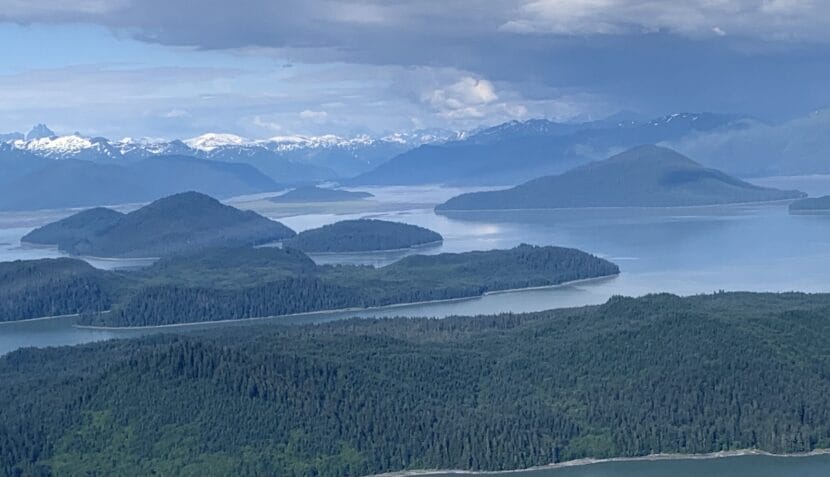
The Stikine River Flats area in the Tongass National Forest is viewed from a helicopter on July 19, 2021. The Stikine River flows from British Columbia to Southeast Alaska. It is one of the major transboundary rivers impacted by mines in British Columbia. Alaska tribes and communities are seeking some new protection to avoid downstream impacts. (Photo by Alicia Stearns/U.S. Forest Service)

This story is co-published by the Wrangell Sentinel and Northern Journal.

An Indigenous community is locked in a debate about the pros and cons of a major new mine on their traditional lands — and a big cash payment promised by the developer.

There is strong support, and fierce opposition. A lot of money to be made, and a wild river to protect. The community faces a pivotal choice.

Though this story sounds like it could be unfolding in rural Alaska, a version of it has actually been playing out just across the border with Canada, in northwest British Columbia. Still, it has implications for the Alaskans who live downstream from the proposed mine site.

In a referendum after weeks of heated debate, members of the Tahltan Nation earlier this month voted overwhelmingly to approve a deal with a Canadian mining company that hopes to revive a huge gold and silver mine, called Eskay Creek, which stopped producing in 2008. The project is located above the Unuk River, which flows into Alaska near Ketchikan.

The Tahltans’ backing is a major step forward for the project, and it comes as the Canada and B.C. governments intensify efforts to build more mines in the name of national security and economic growth. Several of the projects are near the border with Alaska, where state and federal elected officials are separately pushing mines that could help wean the U.S. off a foreign supply of minerals used in energy, electronics and weapons.

Just one day after the Tahltan vote, Canada’s federal government announced that it had approved a merger between two multinational mining firms with a condition that calls for advancing two other proposed mines in Tahltan territory. Both projects sit above tributaries of the Stikine River, a major, salmon-bearing waterway that straddles Canada and the U.S. and empties into the ocean near the small Southeast Alaska town of Wrangell.

Louie Wagner Jr., a Tsimshian and Tlingit resident of Metlakatla, a Native community at the southern tip of Alaska’s panhandle, said he’s concerned about the health of the Unuk River and its future with mines in its watershed.

Wagner and his family have fished and hunted moose along the Unuk for generations.

“That little river cannot handle it,” Wagner said in a recent phone interview. The Unuk is notable, he added, for its abundance of eulachon, a small, oily fish also known as hooligan that’s a staple for Indigenous communities in Southeast Alaska.

Though rarely discussed in Alaska circles, the Tahltan Nation’s approach to mining has major implications for the industry’s future in the transboundary region. A top U.S. Department of Interior official visited the region last year to learn more about models for how Indigenous nations can partner with mining companies.

There are more than a dozen early-stage mining projects in Tahltan territory, many above rivers that flow into Alaska. And the Eskay Creek vote could serve as a preview of future deals between the Tahltan government and the for-profit mining companies promoting development.

For months, members of the First Nation debated whether to approve a deal, known as an impact benefit agreement, that Tahltan elected leaders had negotiated with Vancouver-based Skeena Resources, the company pushing Eskay Creek.
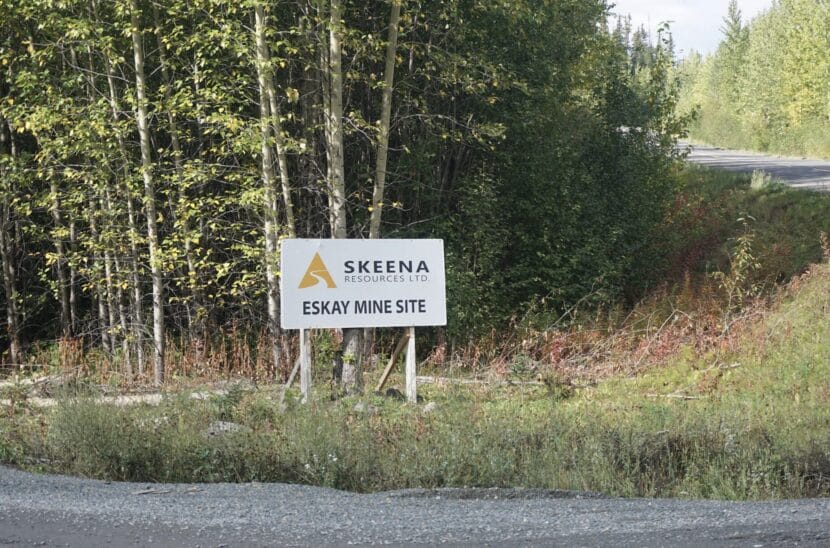
The Eskay Creek mine is accessible off British Columbia’s Stewart-Cassiar Highway. (Photo by Max Graham/Northern Journal)

The specifics of the agreement have not been made public. But Tahltan officials have said it guarantees benefits worth more than $1 billion over the life of the mine, mostly in cash but also in contracts and wages.

The deal also calls for an upfront payment from Skeena, intended to be distributed to individual Tahltan members — to the tune of $7,250 each, according to Tahltan officials. And the agreement reportedly gives the First Nation government some environmental oversight over the mine.

The nation backed the deal with support from more than 77% of the roughly 1,750 Tahltans who voted, according to the Tahltan Central Government. Payments are expected to go out to members in 2026.

“Tahltan Central Government is not standing on the sidelines,” Tahltan president Kerry Carlick said in a statement after the vote.  “We are embedding ourselves directly into the governance of environmental protection.”

Tahltan leaders have long worked to navigate political tensions between an expanding mining industry and efforts to protect traditional lands and wildlife.

The Tahltan government has entered into a number of agreements with mining companies. But it also has opposed efforts to mine coal and drill for natural gas near the headwaters of major rivers in the region.

And some Tahltan members have been outspoken critics of the Eskay Creek project and the company promoting it.

In the leadup to the recent vote, arguments erupted on social media, and relationships among community members grew strained, some Eskay Creek opponents said in interviews.

“This is causing internal conflicts,” said Tamara Quock, a Tahltan member who lives in northern B.C. some 350 miles east of the mine site.

Quock said she thinks the promise of the direct payments “enticed” some people to vote in favor of the agreement. Debate over the project, she added, grew more intense after that condition was added to the deal.

Quock said she feels Skeena is “using the Tahltan people” to generate its own profits.

She and other critics have voiced concerns about a perceived lack of transparency and potential conflicts of interest within the First Nation’s government. They also say they are worried about possible environmental impacts from the project, which would involve digging two open pits and storing millions of tons of mining waste above the Unuk River.

Skeena didn’t respond to requests for comment.

Alaska Native leaders, fishermen and environmental advocates who live downstream, in Southeast Alaska, for years have expressed concerns about Eskay Creek and other proposed mines in the region, saying they don’t trust Canadian regulators to safeguard Alaskan interests.

“You can’t cut these watersheds in half and expect to adequately protect them,” said Guy Archibald, executive director of the tribally led Southeast Alaska Indigenous Transboundary Commission. “Right now they’re cutting the baby in half and ignoring the effects on the Alaska side of the border.”

The commission last month filed a legal challenge in B.C. court, asserting that regulators had failed to consult Alaska tribes on several proposed mines in the region, including Eskay Creek.

Meanwhile, after a major spill last year at a Canadian gold mine in the Yukon River watershed, Alaska’s congressional delegation called for more oversight of Canadian mines near transboundary rivers like the Unuk and Stikine. The statement from the delegation — which has strongly supported mine development in Alaska — called for “binding protections, financial assurances, and strong transboundary governance.”

“As British Columbia seeks to advance numerous mines just upstream from Alaska, we are still asking them to fully remediate legacy sites and firmly commit to binding protections for Alaska interests,” Joe Plesha, a spokesperson for U.S. Sen. Lisa Murkowski, said in a recent statement. “Senator Murkowski is actively considering new ways to make our B.C. neighbors take Alaskans’ concerns seriously.”

U.S. Sen. Lisa Murkowski’s office says she’s pushing the British Columbia provincial government on protections for Alaska interests as Canada advances mining projects in transboundary watersheds. (Photo by Nathaniel Herz/Northern Journal)

Ottawa and B.C.’s provincial government, meanwhile, are funding new infrastructure projects and prioritizing permitting for energy and resource development projects, including Eskay Creek and the expansion of a huge copper and gold mine in the Stikine watershed, called Red Chris.

Canadian officials say existing regulations are geared to minimize impacts in the shared watersheds. Major projects undergo thorough environmental assessments before they’re approved, a spokesperson with the B.C. agency that leads those reviews, the Environmental Assessment Office, said in an email.

“Making sure large-scale projects are properly assessed is critical to making sure development is sustainable — to ensure good jobs and economic growth while also protecting the environment and wildlife, and keeping communities healthy and safe,” said the spokesperson, Sarah Plank.

Tahltan officials declined an interview request and did not respond to questions about Alaskans’ concerns or the First Nation’s agreement with Skeena.

Supporters of Eskay Creek say it could be transformational for the Tahltan Nation. Among proponents of the deal is Chad Norman Day, a former Tahltan president who has worked in the mining industry and now runs a consulting firm that does mining-related business.

“The benefits which flow to the Tahltan Nation from here will empower the people and territory unlike anything we have ever seen,” Day said in a statement after the vote.

Many Tahltan people work in mining, and the First Nation already generates revenue from Red Chris and another large operating mine, Brucejack, which started producing gold in 2017.

In 2019, Tahltan citizens voted in favor of an agreement with a different mining company pushing another, much bigger proposed mine partially in the Unuk watershed, called KSM. The outcome of that vote was nearly identical to the recent Eskay one, with about the same percentage in favor.

The first nation also, in the past five years, has entered into two joint decisionmaking agreements with the B.C. government for regulatory reviews of mining projects, including Eskay Creek.

Before it can start producing, Eskay Creek needs an environmental approval from the provincial government. A decision is expected early next year.
Alaska Gov. Dunleavy says he’ll propose a property tax break for planned gas pipeline

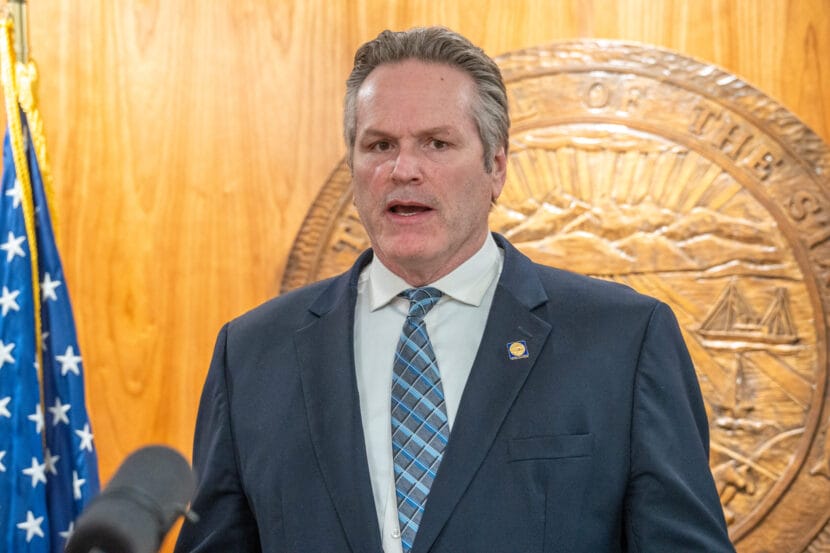
Gov. Mike Dunleavy speaks to reporters during a news conference on Feb. 7, 2024. (Eric Stone/Alaska Public Media)

Gov. Mike Dunleavy is eyeing a property tax break for the long-planned Alaska LNG project. The Republican governor said he plans to propose a two-mill property tax for the 800-mile natural gas pipeline and associated infrastructure, a 90% lower rate than the state typically charges in property tax for oil and gas infrastructure.

Dunleavy described his plans in an interview with the Anchorage Daily News. The Republican governor’s spokesperson confirmed the governor’s plans but declined to make Dunleavy or another member of the administration available for an interview.

The state shares a portion of the property tax revenue it collects with local governments, and some local leaders are raising concerns about Dunleavy’s proposal.

“We can’t subsidize that project,” said Kenai Peninsula Borough Mayor Peter Micciche. “We at least have to cover our costs.”

Micciche said he expected the project would be a boon for the state and his region, bringing thousands of jobs to the Kenai Peninsula. But a low property tax rate for the project would essentially push some of the project’s cost onto local taxpayers, he said.

“We’re going to have impacts on our schools. We’re going to have impacts on emergency services, for sure,” he said. “We’re likely going to be the agencies they turn to for their emergency response plans, like all the other oil and gas facilities do.”

Plans for a North Slope gas pipeline and Southcentral export terminal have been in the works for decades but have taken new life in the second Trump administration. The state turned the project over to a private developer, Glenfarne, which has put out a steady stream of announcements about agreements with potential customers, investors and suppliers. But the project has plenty of skeptics, who argue the project last estimated to cost $44 billion would be too expensive to make financial sense.

A consulting firm contracted by the state Legislature to examine the project, GaffneyCline, told lawmakers last month they may need to make a variety of changes to help the pipeline become a reality, including to property taxes.

In a statement, Glenfarne spokeperson Tim Fitzpatrick said the developer had not seen the specifics of Dunleavy’s proposal and couldn’t offer an opinion.

Micciche said he’s open to tax breaks that would support a pipeline, but he said local governments need to be involved in determining what exactly those might be.

At least so far, he said, that hasn’t happened.

“There is a deal to be had here, but it has to be born from facts, real math, local impact data,” Micciche said. “It has to be transparently and fairly negotiated between all involved in good faith.”

In an email, Dunleavy’s spokesperson, Jeff Turner, said the bill hasn’t been drafted, so it was premature to say the proposal was developed without their input. He said the deal was better than nothing.

“Right now, the state collects no property tax at all because the LNG pipeline does not exist,” he wrote.

Fairbanks Rep. Maxine Dibert, a Democrat who co-chairs the state House Resources Committee, says she plans to discuss Dunleavy’s bill with local officials. But she says she plans to focus much of her attention on a separate bill that would require the project to include a smaller lateral pipeline to supply Fairbanks with gas to cut energy costs.

“For me, that is a line in the sand, that it needs to be guaranteed part of the project,” she said.

Republican Sen. Jesse Bjorkman, who represents the central Kenai Peninsula, says he’s on the fence about Dunleavy’s proposal. He said he’d like to learn more about the project’s finances to determine what’s necessary. But in any case, he said, it would make little sense to cut the project a break on property taxes after Glenfarne makes a final investment decision, or FID.

“If they’re gonna have an FID decision in January next month, then that cake is already baked, like the financials are already in place.

Glenfarne declined to say whether it would reach FID before the legislative session begins Jan. 20, but said it continues to work toward making the pipeline a reality. The company has previously said it expected a decision by the end of 2025.

“Glenfarne is rapidly progressing toward a final investment decision, as seen through our progress with numerous Asian commercial announcements and strategic partner agreements. We expect additional announcements in the next several weeks,” Fitzpatrick said. “Our overall project schedule, including completing the pipeline in 2028 and delivering first gas to Alaskans in 2029 is proceeding on schedule.”

U.S. Department of Energy lab, active in Alaska, drops ‘renewable’ from name

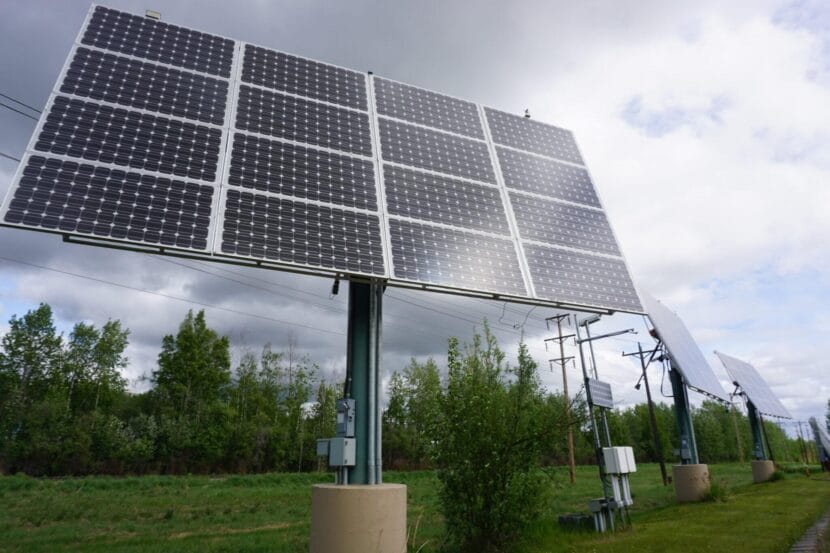
Solar panels at the Cold Climate Housing Research Center campus in Fairbanks are seen on June 5, 2025. The Cold Climate House Research Center, which became part of the National Renewable Energy Labortory system in 2020, is focused on designing sustainable and energy efficient housing that is resilient to climate change in the far north.
Solar panels at the Cold Climate Housing Research Center campus in Fairbanks are seen on June 5, 2025. The Cold Climate House Research Center, which became part of the National Renewable Energy Labortory system in 2020, is focused on designing sustainable and energy efficient housing that is resilient to climate change in the far north. (Yereth Rosen/Alaska Beacon)

The federal government research organization that has been devoted for half a century to renewable energy development has had the word “renewable” stripped from its name.

The Trump administration, which broadly opposes renewable energy projects, changed the name of the Colorado-based National Renewable Energy Laboratory to “National Laboratory of the Rockies.”

The U.S. Department of Energy announced the name change on Monday, effective immediately.

“The energy crisis we face today is unlike the crisis that gave rise to NREL,” Assistant Secretary of Energy Audrey Robertson said in a statement. “We are no longer picking and choosing energy sources. Our highest priority is to invest in the scientific capabilities that will restore American manufacturing, drive down costs, and help this country meet its soaring energy demand. The National Laboratory of the Rockies will play a vital role in those efforts.”

NREL has a prominent presence in Alaska. The agency in 2020 joined into a partnership with the Cold Climate Housing Research Center at the University of Alaska Fairbanks. The UAF facility is one of four NREL centers; two campuses are in Colorado and there is an office in Washington, D.C.

Jud Virden, the laboratory’s director, said the new name “embraces a broader applied energy mission entrusted to us by the Department of Energy to deliver a more affordable and secure energy future for all,” according to the statement.

However, the name change is a troubling sign to one Alaska organization involved in projects promoting renewable energy and energy affordability.

“Removing ‘Renewable’ and ‘Energy’ from NREL’s name raises concerns. Renewables are key to affordable, secure energy and deliver long-term economic benefits, especially for rural communities,” Bridget Shaughnessy Smith, communications director for the Alaska Public Interest Research Group, a non-profit consumer advocacy group, said by email.

“While it’s not yet clear if this name change signals a broad mission shift, any refocus cannot come at the expense of renewable energy or by prioritizing already well-funded fossil fuel industries. Remote microgrid communities in Alaska are working with NREL to innovate toward affordable, reliable energy, and this name change must not disrupt that critical work,” Shaughnessy Smith continued.

NREL’s history started in 1974, when the organization was established as the Solar Energy Research Institute. In 1991, President George H.W. Bush elevated it to national lab status and changed the name to the National Renewable Energy Laboratory.

The Cold Climate Housing Research Center was established in 1999 with a mission of improving housing and building conditions in Alaska’s extreme climate. The center has focused on renewable energy, along with energy efficiency, structural integrity for buildings on permafrost, indoor air quality and designs that are sustainable in the far north. The center headquarters is the world’s farthest-north building with a platinum rating, the highest possible, bestowed by the U.S. Green Building Council Leadership in Energy and Environmental Design.

The NREL-Cold Climate Housing Research Center partnership has participated in numerous recent energy and environmental innovations, including the development of non-plastic housing insulation made from a fungi-wood pulp blend.

The NREL name change adds to a list of government agencies and geographic sites changed by the Trump administration this year to align with the president’s agenda.

On the day he was inaugurated for his second term, President Trump issued an executive order directing that the Gulf of Mexico be renamed “Gulf of America” and that Denali, North America’s tallest peak, revert to its previous federal name, Mount McKinley.

The Denali name comes from the traditional name for the Alaska peak used by the Koyukon people, the region’s Indigenous residents. The name, which translates to “the high one,” has been the official state of Alaska name since the 1970s. The McKinley name, for former president and Ohioan William McKinley, has been widely panned in Alaska, and state lawmakers passed a resolution asking for the Denali name to be restored for federal government use.

In September, Trump issued an executive order directing that the U.S Department of Defense be renamed “Department of War.” That resurrected a department name that was dropped in 1947.

Ten years after Alaska-B.C. mining agreement, environmental group says state is falling short

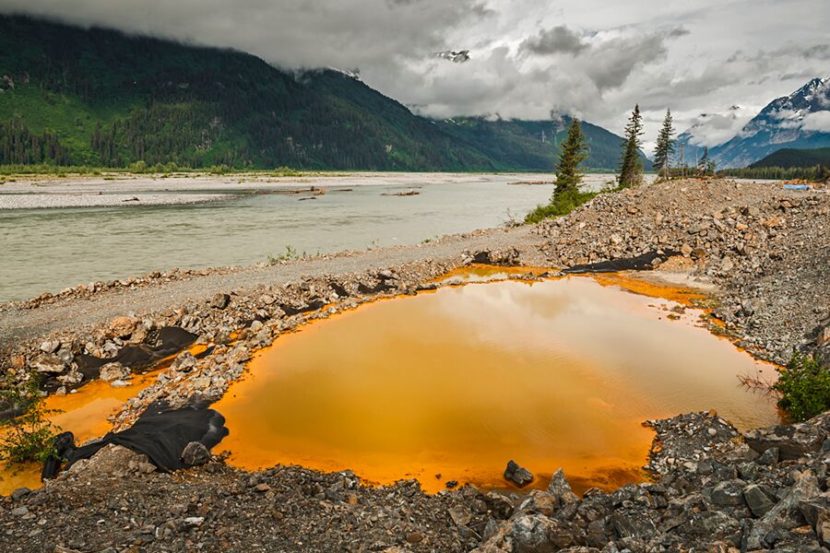
Acid drainage from the Tulsequah Chief Mine, discolors a leaking containment pond next to the Tulsequah River in British Columbia in 2013. (Photo courtesy Chris Miller/Trout Unlimited)

Ten years ago, the state of Alaska signed an agreement with British Columbia that sought to give Alaskans a say in the development of mines upstream of Southeast Alaska. Environmental advocates say Gov. Mike Dunleavy’s administration has walked away from key pillars of that agreement — but state officials say they remain committed to keeping cross-border rivers clean.

It’s a boom time for mines in British Columbia. There are a few reasons for that — the rise of renewable energy and the growing importance of microchips, and, of course, President Trump’s trade war. Provincial leaders have fast-tracked a variety of resource development projects — including some proposed mines upstream of communities in Southeast Alaska.

“The majority of this region is staked with mining claims,” said Breanna Walker with the group Salmon Beyond Borders, which has campaigned for stricter limits on mines near rivers that cross into Southeast Alaska.

Ten years ago, Gov. Bill Walker signed an agreement with the premier of British Columbia that he said would give Alaskans a greater voice in the future of B.C. mines. It led to the creation of a working group where senior officials from Alaska and B.C. would meet twice a year to discuss mining and the environment.

Breanna Walker says that was a reason for optimism — but she says in the years since, the Dunleavy administration has failed to live up to its commitments.

She pointed to a variety of issues, including the Dunleavy administration’s decision to discontinue water quality monitoring on cross-border rivers in 2021. Walker said she’d also like to see the meetings between provincial and state leaders include other stakeholders, like Alaska tribes and fishermen.

Additionally, Walker said the Dunleavy administration has failed to keep up the pressure on B.C. to clean up the Tulsequah Chief Mine upstream of Juneau that’s been polluting the Taku River for decades. And she said the state has failed to keep Alaskans informed about other mining activity and pollution upstream of Southeast — despite a portion of the agreement that says Alaskans should be notified.

Walker points in particular to pollution at a mine near Hyder, at the state’s southeastern tip.

“Alaskans learned about that pollution through the media. They did not learn about that from the state or from the province of British Columbia,” she said. “That’s a clear example, in my opinion, of how the state is abdicating the responsibility that they have to Alaskans.”

The Dunleavy administration disagrees. State officials point to webpages maintained by the state and B.C. detailing the ongoing work between the two governments. And they say the water quality monitoring that ended in 2021 duplicated similar efforts at the federal level.

Sam Dapcevich of the state Department of Environmental Conservation said the state has continued to advocate for Alaskans’ interests at working group meetings.

“DEC is fully engaged and working with our B.C. counterparts on activity awareness and status of projects,” he said.

Just last month, at the most recent cross-border meeting, Dapcevich said the Alaska delegation asked for an update on the cleanup of the Tulsequah Chief Mine. And in response, the company working on cleanup is planning to hold a public webinar on Wednesday.

“I just want people to understand that our agencies are deeply involved between the two governments, advocating for cleanup, and we’re using shared science to protect these rivers,” he said.

Dapcevich said the state remains committed to ensuring Alaskans’ voices aren’t lost in the process.

Pebble Mine, halted by EPA order, gets support from national development groups

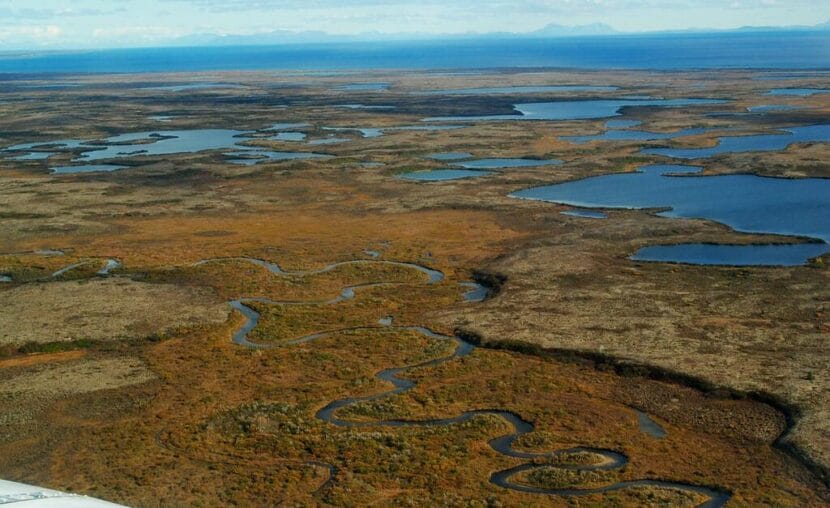
Kaskanak Creek in the Bristol Bay’s Kvichak watershed is seen from the air on Sept. 27, 2011. The Kvichak watershed would be damaged by the Pebble mine project, the Environmental Protection Agency has determined.
(Environmental Protection Agency)

Developers’ efforts to overturn the cancellation of a vast gold and copper mine planned for southwest Alaska are getting a boost from national mining and pro-business groups, including the U.S. Chamber of Commerce.

On Nov. 24 and Nov. 25, the Chamber and the National Mining Association filed separate friend-of-the-court briefs in the lawsuit brought by the developers of the proposed Pebble Mine against the Environmental Protection Agency, which vetoed the mine.

Neither group has intervened in the case against the EPA, but the briefs represent the groups’ support for the proposed mine and offer legal arguments that Judge Sharon Gleason could consider as she debates whether to move the project forward.

In 2023, the EPA invoked a rarely used “veto” clause of the Clean Water Act to say that there was no way that the proposed Pebble Mine could be developed without significant harm to the environment. The large mineral deposit is located at the headwaters of Bristol Bay, the most abundant sockeye salmon fishery in the world.

The administration of Gov. Mike Dunleavy, which supports the project, and the proposed mine’s developers, filed separate lawsuits in federal court to overturn the rejection, as did two Native corporations that work as contractors for the developers. Those cases have since been combined.

The U.S. Supreme Court declined to hear the case directly, which has left the issue in front of Judge Sharon Gleason in the U.S. District Court for the District of Alaska.

Another lawsuit filed by the state claims that if the veto is upheld, the federal government will owe Alaska $700 billion, the state’s estimate for the value of the mine if built as planned. That case has been put on hold until the District Court rules.

In July, the administration of President Donald Trump indicated that it might try to settle the suit and withdraw the veto. If that occurs, it could come before Jan. 2, when the EPA is slated to file a written response to the plaintiffs’ motions for summary judgment.

If the EPA continues to fight the case, the last written arguments are scheduled to be finished by the end of February. Any oral argument would take place afterward.

If the federal government drops the case, it doesn’t mean a free path for Pebble: Several environmental organizations, fishing groups, tribal organizations and Bristol Bay locals have also intervened in the case and intend to fight in court.

The Alaska Legislature is also expected to consider a bill that would block both Pebble and any successor projects that might emerge.

In its brief, the National Mining Association — joined by the American Exploration and Mining Association and the Alaska Miners Association — call the EPA’s veto “overly broad” and say that if it is upheld, the act “will almost certainly chill investment in domestic mining activities” because other proposed mines could also be subject to a veto.

The Chamber of Commerce, which has backed the Pebble Mine project since at least 2022, said that if the veto is upheld, it has the potential of encouraging other vetoes, which would “disrupt important industries in which many of the Chamber’s members participate.”

This mineral exploration site near Haines has had 3 owners in the last year. Is that normal?

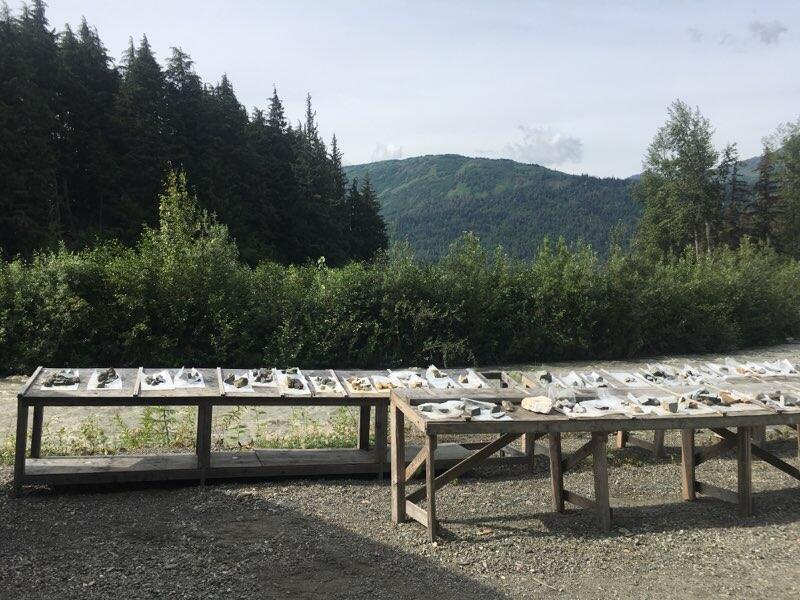
Core rock samples at the Palmer Project.
Core rock samples at the Palmer Project. (Claire Stremple/KHNS)

A controversial mineral exploration project north of Haines has changed hands twice in the last year. That included earlier this month, when Vizsla Copper purchased the Palmer Project in exchange for $15 million of its company stock.

Steve Masterman currently serves as deputy director of the Alaska Critical Minerals Collaborative at the University of Alaska Fairbanks. Before that, he was the state geologist.

The Alaska Desk’s Avery Ellfeldt caught up with Masterman to discuss what’s been happening with the project, which has been under exploration by Constantine Mining since 2006. He said projects like this can move quickly or take decades to become mines, for a lot of different reasons.

This transcript has been edited for length and clarity.

Steve Masterman: Well, it’s all across the spectrum. You know, some of them go pretty quickly, like Fort Knox and Pogo went pretty quickly in a relative sense, and then other ones take many decades. Donlin is another example. And some of them never become mines, even though they look very promising for a long while, for various reasons. Could be economic reasons, could be environmental reasons, could be social reasons. Could be all of the above.

Avery Ellfeldt: The project has changed hands a few times in the last year or so. Could you speak to whether that’s a pretty normal progression in terms of these exploration projects changing hands pretty frequently?

Steve Masterman: I think it is fairly common. I mean, this has happened to this one several times. You see other properties, the Nickel Platinum Group property in the Alaska Range, has changed hands several times. The Johnson property on the Alaska Peninsula — sorry, Cook Inlet — has changed hands several times. So it does happen. And, you know, I think if the project is more compelling, it happens less.

Avery Ellfeldt: My other question would be do these types of transactions necessarily mean anything about a project’s viability or economic feasibility? Anything else you’d add there?

Steve Masterman: There’s reasons that people back out, obviously. And I don’t know what the reasons are that the latest groups backed out of the Palmer Project, but they had a reason. Sometimes those reasons are that they’re not a good fit for the company at its current stage. So it might not speak necessarily to the project itself. It might in some cases have a lot more to do with the corporation and how their overall business is being managed and their portfolio of projects.

Avery Ellfeldt: Could you walk me through why projects like these are attractive from an investor point of view, given that they operate over such long timelines and so many never come to fruition?

Steve Masterman: It’s a risk and reward equation. These are riskier investments, that’s for sure. And so investors have to look at it pretty critically and analytically to see whether they think it’s worth rolling the dice on, essentially.

Avery Ellfeldt: They’ve kind of cited the Trump administration’s orientation toward mining in Alaska as a potential boon for the project. I’m curious if you could speak to that, whether the current administration’s mindset or approach could actually benefit a project that’s at this stage of exploration?

Steve Masterman: The current administration definitely has a pro-development stance. I think that’s pretty obvious. So they’re going to be leaning favorably toward mineral development projects. But whether this thing gets to that point within this administration is an open question. And I would guess, in three years, they’re not going to be ready to apply for permits. So whatever will happen, in a permanent sense, will probably happen in a future administration.

Avery Ellfeldt: One of the local tribes, the Chilkat Indian Village, has made it pretty clear that they’re not in support of this and that the new owner won’t be able to receive social license or community support. Would you say that’s pretty common with exploration projects in Alaska, specifically?

Steve Masterman: I think it’s common with mineral development projects globally. The problem the industry has is its perception. And I think the industry is working hard to change that perception, but it takes a while.

Site notifications
Update notification options
Subscribe to notifications