Energy & Mining

Juneau’s sole electricity provider appeals state approval for second one

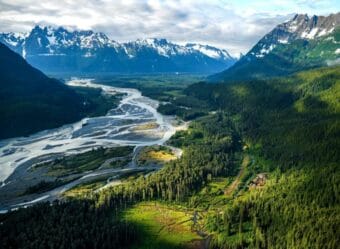
The proposed hydroelectric project is planned for Lower Sweetheart Lake. Photo courtesy of Google Earth.
The proposed hydroelectric project is planned for Lower Sweetheart Lake. (Photo courtesy of Google Earth)

Listen to this story: 

Juneau’s sole electricity provider, Alaska Electric Light & Power, is appealing the Regulatory Commission of Alaska’s decision to approve Juneau Hydropower as a new public utility. Last week, AEL&P requested that the Superior Court of Alaska consolidate two separate cases involving disputes between the hydroelectric companies.

The appeal follows more than a decade of disputes between AEL&P and Juneau Hydropower — a company that plans to increase the borough’s hydroelectric capacity by nearly 20%. The company plans to shuttle power to rural parts of Juneau in the next few years through its Sweetheart Lake Hydroelectric project. This summer, the commission ordered AEL&P to facilitate Juneau Hydropower’s connection with its existing electricity infrastructure and the two utilities hashed out agreements to make that happen.

Alec Mesdag, the CEO of AEL&P, disputes the commission’s decision to exempt Juneau Hydropower from a requirement to have at least 10 customers when it certified the company as a public utility. The company has one contracted customer: Coeur’s Kensington Mine.

Mesdag also has outstanding complaints about the agreements the commission ordered AEL&P to sign, which he hopes the Superior Court will help resolve. Namely, AEL&P is required to reserve 8.5 megawatts of transfer capacity in its system, even before Juneau Hydropower is up and running, without compensation. 

Mesdag said he worries he could incur additional costs if, in the meantime, AEL&P’s existing customers increase their power use enough to eat into that reserve. 

“Do I have to build upgrades to ensure that we can, you know, transfer another eight-and-a-half megawatts on top of that?” he said. 

But once operating, he says Juneau Hydropower has to pay AEL&P $1.2 million per year for using the system.  

Mesdag also disagrees with the commission’s decision to approve of Juneau Hydropower’s design of the interconnection point, where electricity generated at Sweetheart Lake will join AEL&P’s Snettisham power line to Juneau. 

“It is a bad precedent that any entity who disputes the utility’s position on what creates a safe and reliable interconnection that protects its customers can simply insist that their project will die if the commission does not order the utility to accommodate their every wish,” Mesdag said.

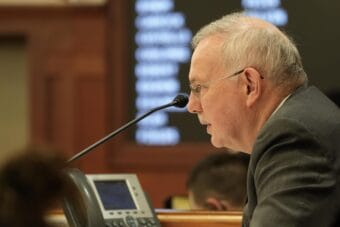
Duff Mitchell, the managing director at Juneau Hydropower, said the appeal is “frivolous.” The two utilities spent more than a week in hearings before five commissioners, who decided to approve Juneau Hydropower’s public utility certificate and the Sweetheart Lake project plan.  

“Basically, their case is, you know, we got our butt kicked in the hockey game five to zero, and now we’re a sore loser and we’re blaming the ref,” Mitchell said.

He called AEL&P’s disputes mere “quibbles” and said he’s “charging forward” with financing and building the new hydroelectric plant at Sweetheart Lake. 

“We’re proceeding with the lawful order we have, and we’re moving on to put this project into construction,” Mitchell said. “We’re bringing the power for Juneau’s prosperity.”

Mitchell said he plans to break ground next year. According to Juneau Hydropower’s Federal Energy Regulatory Commission license restrictions and commission certificate, construction must begin by September 8, 2026, and be completed three years later. 

The Regulatory Commission of Alaska declined to comment.

Correction: A previous version of this article incorrectly stated that the cases were already consolidated.

New offshore drilling plan opens almost all federal water off Alaska

map showing Alaska and zones of the ocean around it with various dates
This map shows offshore areas the Trump administration wants to open for potential oil and gas leases. (Bureau of Ocean Energy Management)

WASHINGTON — The Trump administration proposes to open nearly all of the oceans off Alaska to potential oil and gas drilling.

The draft offshore leasing plan includes the Bering Sea, the Gulf of Alaska and other areas important to the fishing industry. It’s part of a national proposal that includes the entire coast of California, where drilling is fiercely unpopular.

“By moving forward with the development of a robust, forward-thinking leasing plan, we are ensuring that America’s offshore industry stays strong, our workers stay employed, and our nation remains energy dominant for decades to come,” Interior Secretary Doug Burgum said in an emailed announcement.

The top Democrat on the U.S. House Natural Resources Committee, Rep. Jared Huffman of California, pledged to fight, in court and in Congress. Huffman said it doesn’t make sense for Alaska either.

“I just think it’s incredibly reckless,” he said. “I mean, we know what the seafood economy means to the state of Alaska.”

The plan goes beyond what Alaska advocates of offshore development have favored in the past. In 2018, Alaska’s all-Republican delegation to Congress praised an offshore plan that included lease sales in Cook Inlet and the Chukchi and Beaufort seas. But they asked the first Trump administration to remove the Bering Sea and the Gulf from consideration.

The plan released Thursday is a “first analysis,” with two more planned before final approval. If it survives, the first lease sale would be in the Beaufort.

It’s not clear oil companies would be interested. Shell spent 10 years and $7 billion trying to drill there before giving up on offshore Arctic exploration.

30,000 messages urge British Columbia to address transboundary mining

Red Chris Mine’s tailings waste facility and open pit in the headwaters of the Iskut River, a major tributary of the salmon-bearing Stikine River. (Photo courtesy of Colin Arisman)

Southeast Alaska tribes and environmental groups have delivered nearly 30,000 messages to British Columbia lawmakers about transboundary mining.

Earthjustice, the international conservation organization Re:wild and the tribal commission said the letters encourage British Columbia to pause mining developments in the headwaters of the Stikine, Unuk and Taku Rivers that drain into Southeast Alaska.

The Southeast Alaska Indigenous Transboundary Commission represents 14 tribal nations downstream from the mines. Executive Director Guy Archibald said it wasn’t just Alaskans who sent the letters.

“It was people from all over the country and all over the world that recognize that Southeast Alaska is a very unique and valuable place in the world for climate protections, for cultural protections and diversity,” he said.

The environmental groups urged British Columbia officials to freeze “mining activity in this region until SEITC member tribes are given free, prior and informed consent.”

They said the messages point to growing concern over mining in the region. This includes at least eight proposed and operating mines that threaten the transboundary watersheds.

Four mines in the Stikine River watershed

Archibald said there’s many active explorations going on with mines in British Columbia and eight is just the minimum. There are four mines the groups are concerned about in the Stikine River alone. They are Red ChrisGalore Creek, Schaft Creek and Red Mountain Mines.

“These mines pose a significant risk to the Stikine River, and so far, they’ve been permitted without any adequate consultation with the Southeast tribes,” he said.

Previous studies have shown that minimal regulation of mines leads to polluted watersheds. This affects where people who survive on subsistence food can hunt and fish.

British Columbia say they take their obligations ‘very seriously’

The Inter-American Commission on Human Rights agreed in 2023 that British Columbia may be violating fundamental human rights.

The British Columbia Environmental Assessment Office wrote in an email that they take their obligations “very seriously – including with tribes in the U.S.” They said they will continue to fulfill their constitutional obligations by consulting with U.S. tribes when mining practices impact aboriginal rights under the Canadian Constitution. Currently, the office said seven mines are permitted in the transboundary area.

This includes two fully operational mines — Premier Mine and Brucejack Mine — and five permitted for exploration or that have limited construction — Eskay Creek Mine, KSM Mine, Skip Mine, Scottie Gold and Galore Creek.

A mineral exploration project near Haines has changed hands again

A broad, calm river on a foggy autumn day, with bare trees lining the far shore.
The Chilkat River, outside Haines, in November, 2025. (Avery Ellfeldt/KHNS)

A controversial mineral exploration project near Haines is again changing hands, just one year after the last shakeup.

Vizsla Copper Corp. said Thursday that it’s purchasing the Palmer Project from American Pacific Mining Corp. The project is a zinc, copper, gold, silver and barite exploration site that sits about 14 miles upstream from the Native village of Klukwan.

The new owner said it prides itself on its commitment to working with communities to earn local support – and that it will take the same approach in the Chilkat Valley.

“For us it’s a very straightforward job: Win community and First Nations and government support. And get in and drill some spectacular holes come summer next year,” Vizsla CEO Craig Parry said in a pre-recorded video posted on Thursday.

But as one local tribe sees it, that’s not in the cards.

“I seriously do not believe there is any opportunity to gain community support,” Chilkat Indian Village President Kimberley Strong said in an interview following the announcement.

The deal means Vizsla will acquire 100% of the project along with the project’s long-time local operator, Constantine Metal Resources. Vizsla noted in a statement that it will need to raise $25 million from investors to move forward with exploration.

American Pacific, for its part, will walk away with $15 million in Vizsla stock rather than cash.

The company could also net an additional $15 million, in either cash or shares, on two conditions. First, Vizsla would have to find that the project could yield a certain quantity of minerals. Second, the project would have to become a commercial mine.

American Pacific has been involved in the project since 2022 and became its sole owner at this time last year when DOWA Metals and Mining sold its majority stake. Then, this spring, American Pacific confirmed that it, too, planned to step back from Palmer.

The America Pacific Mining and Vizsla lauded the project as an exciting prospect, particularly amid the Trump administration’s embrace of mining in Alaska and the surging demand for critical minerals.

“The U.S. administration aside, you’ve seen a complete 180 degree turnaround from governments around the world,” Parry said.

He said that’s happening as countries recognize that the global transition away from fossil-based energy – and toward greener technology – will require these minerals.

Still, he emphasized that the project, which has been under exploration for nearly two decades, has a long road ahead.

“It’s crucial to highlight that this is a long way from being a mining project,” Parry said. “And there’s a lot of stages you have to go through to get there, so we’re many, many years away from that.”

The project has long fueled local debate over what a mine would mean for the Chilkat Valley. While some say it would boost the local economy, others contend it’s not worth risking impacts to the Chilkat watershed.

Parry, of Vizsla, acknowledged that the mining industry needs to do a better job of seeking and acting on community feedback. But he says his company has made that a priority, including on its Panuco Project, a silver and gold exploration site in Western Mexico.

“We’ve demonstrated that not only do we listen, but we act on what we hear from communities and First Nations groups and look to work in partnership with those guys,” he said.

The Chilkat Indian Village of Klukwan has opposed the project out of concern that it would contaminate the Chilkat River, which supports runs of all five species of pacific salmon.

Strong, the tribe’s president, said that concern will stand regardless of ownership. She is skeptical about any mining companies that claim to prioritize engagement with tribes, particularly given her experiences with the companies that have already had a hand in the local project.

“The moment we sit down with them, it’s considered engaging with the tribe,” she said. “They’ll come and listen, but they’ll still do whatever they want.”

Federal agency designates Alaska’s Donlin gold mine for fast-track permitting

The proposed Donlin mine could be one of the biggest in the world — if completed.
The proposed Donlin mine could be one of the biggest in the world — if completed. (Katie Basile/KYUK)

The long-planned Donlin Gold mine in Southwest Alaska is the latest Alaska project to gain the support of a federal agency seeking to streamline permitting.

The Federal Permitting Improvement Steering Council announced in late October that it had added the massive proposed open-pit mine to a list of projects covered by an obscure Obama-era law meant to speed development, the Fixing America’s Surface Transportation Act. It’s part of a larger push by the Trump administration to expand resource development in Alaska and around the country.

In an interview, Donlin Gold’s environmental and permitting manager, Enric Fernandez, said the designation will likely not accelerate the mine’s timeline. But the so-called FAST-41 designation gives the company more confidence that it’ll be able to move toward a final investment decision in 2027, he said.

“What the program is going to provide is more certainty on the permitting schedule, you know, and also, you know, accountability for the agencies and transparency on the process,” Fernandez said.

The designation does not allow the mine to skip any steps in the lengthy process to make the mine a reality, he said. Work will begin soon on an updated environmental analysis ordered by a federal court to evaluate the possible impacts of a large spill of mine waste, or tailings, he said.

The project has been in the works for years — the company submitted its first federal permit back in 2012, Fernandez said. The head of the Federal Permitting Council, Emily Domenech, said in an interview that the designation was in line with the Trump administration’s resource development and national security goals.

“Up until this administration, the average time to complete a mine to get through the full federal permitting process was just shy of 30 years, which is just completely unacceptable and makes it impossible for us to really effectively compete with China and other adversaries looking to develop critical minerals around the world,” she said.

The project is controversial. Mine tailings would be stored approximately 10 miles from the Kuskokwim River near the village of Crooked Creek, upstream from communities that depend on the river’s salmon for their food supply. More than a dozen tribal governments and a regional tribal consortium, the Association of Village Council Presidents, have opposed the mine, and some have challenged it in court citing the potential for contamination.

“This insensitive federal action is particularly inappropriate while our region’s Tribes are waiting on the mine’s federal permitting agencies to address flaws identified by a federal court and, more importantly, responding to the humanitarian crisis following the hit our region took from Typhoon Halong,” the Mother Kuskokwim Tribal Coalition said in a statement. “A rushed permitting process threatens to override critical environmental protections and silence Yukon-Kuskokwim communities who depend on healthy rivers for survival.”

Some other tribal groups have backed it — notably, the Calista Corp. which owns the resources the mine would target. The company says it would generate royalties for the Native corporation and its shareholders across the region and Alaska Native corporation shareholders across the state, and improve the region’s economy.

Environmental groups have also opposed the mine. Lindsey Bloom with the group SalmonState said in an interview the fast-track designation was inappropriate for a gold mine.

“Gold is not a critical mineral,” she said. “There’s plenty of it already, and … whether or not we develop Donlin will have no effect on our national security.”

Bloom said she saw the designation as an effort to make the project more attractive to investors.

Juneau Hydropower plans to start building Sweetheart Lake hydroelectric facility next year

Independent hydropower entrepreneur Duff Mitchell participates in public comment at a Regulatory Commission of Alaska meeting at Centennial Hall in Juneau on Tuesday, Feb. 27, 2018. Mitchell is the managing director of Juneau Hydropower Inc.
Duff Mitchell participates in public comment at a Regulatory Commission of Alaska meeting at Centennial Hall in Juneau on Tuesday, Feb. 27, 2018. Mitchell is the managing director of Juneau Hydropower Inc. (Photo by Jeremy Hsieh/KTOO)

Listen to this story:

The City and Borough of Juneau’s planning commission approved Juneau Hydropower’s permit to build its Sweetheart Lake hydroelectric project at a meeting on Tuesday night.

Duff Mitchell is the managing director of Juneau Hydropower. He said in an interview that this is one of the last permits the new utility needed before breaking ground.

“This is very strong momentum for us, for us meeting our timeline of being in construction next year,” Mitchell said.

It’s been a long time coming. Mitchell started the process more than 15 years ago. 

The proposed Sweetheart Lake hydroelectric project would grow Juneau’s hydropower capacity by 19.8 megawatts. That’s enough to increase the borough’s electricity by around 20%. It would bring renewable energy to rural parts of Juneau — including Coeur’s Kensington Mine, which burns roughly 4.5 million gallons of diesel per year. 

Mitchell said at the meeting that getting the mine on renewable power benefits Juneau. 

“We got mines that want lower-cost power,” he said. “Those mines create not only the jobs, but they also pay our schools through the property tax, and so extending the lives of those mines through lowering their cost of power helps our community.”

He said the project will also provide the capital city with energy security and room to expand industries. 

An aerial photo of a lake surrounded by snowy mountains
Sweetheart Lake south of Juneau, seen from the air in 2017, will be the site of a new hydroelectric project supplying the Kensington mine and other Juneau-area customers. (Photo by Robert Johnson/Provided by Juneau Hydropower)

Next steps

Mitchell estimates it will cost $270 million to build.

“So the fun part starts now, which is completing our financing,” he said.

He said that he’s seeking a loan through the U.S. Department of Agriculture’s Rural Utility Service that could finance 75% of the project, if approved. He’s also pursuing investment tax credits, which can be sold for cash and could finance a portion of the project.

To shuttle power to Kensington Mine, the company must build several pieces of major infrastructure. Mitchell said the company will start by digging a tunnel that starts near the outlet of Sweetheart Creek at Gilbert Bay and runs up to Lower Sweetheart Lake, around 35 miles southeast of downtown Juneau. 

“We will drive equipment and man and gear and everything else up there to build the intakes, to build the dam, to build the diversion tunnel, and all of the equipment and everything that we need to operate Sweetheart Dam in the Sweetheart Lake,” he said.

Then, he plans to use the tunnel to convey water to the turbines that generate electricity. The company plans to install substations, transmission lines and submarine cables simultaneously. He also plans to build a battery energy storage system to serve as a backup power source if an avalanche or other interruption cuts electricity. It would be charged by surplus hydropower.

Juneau Hydropower is contracting with Ameresco, a company that builds energy infrastructure, and David Burlingame, an electrical engineer with companies based in Anchorage, to design and construct it. Mitchell said around 200 workers will be needed to build it, and he would prefer to use local labor. 

Energy needs

Juneau Hydropower’s only contracted customer so far is Kensington Mine. But Mitchell has a “build it and they will come” mentality, so he’s confident that more customers will emerge. 

“So every interruptible customer is an unmet demand they can be burned onto diesel,” he said at the meeting. “For every dock that’s not electrified, that is an unmet demand.”

Mitchell said he could also supply power to the proposed ferry terminal at Cascade Point, if that comes to fruition, and to any cell service company that wants to bring to life the dead zones at the northern end of the borough.

But Juneau Hydropower and Alaska Electric Light & Power each have their own service territories where they are allowed to sell electricity. To electrify a cruise ship dock, mine, or other customer within AEL&P’s territory, Juneau Hydropower would have to enter into an agreement with the utility and sell them the energy. 

The only commissioner, out of eight, who voted no to approving the conditional use permit was Nina Keller. She said she isn’t sure there is demand for more hydropower.

“I just am not convinced that where we are now, and looking at any forecasts that we have seen that recently came out with where Juneau is going in terms of population, I just don’t see the need, as (of) like today, for it,” she said.

The permit that the city issued has two conditions. First, the company needs to submit photo proof of a barrier to block sound and light from the powerhouse near Sweetheart Creek to protect local wildlife and recreational users. Second, the company needs to get a flood zone development permit. Mitchell said he’s confident he will fulfill both requirements. 

He said Juneau Hydropower could start offering electricity as early as 2028. 

Correction: a photo caption has been updated to remove a former funder that is no longer part of the project. 

Site notifications
Update notification options
Subscribe to notifications