Fisheries

Slow fall chum run leaves Yukon smokehouses empty

A smokehouse and fishrack in Emmonak. (Photo courtesy of Alaska Department of Fish and Game)

Slow fall chum runs have kept subsistence fisherman from being too active on the Yukon River this past week, but as Chinook continue crossing the border, officials say their numbers are well above escapement goals.

“As far as I know, everybody’s smokehouse is empty, waiting for fall chum,” said Fred Huntington in Galena.

It was a sentiment echoed by many calling into the weekly teleconference for fishermen and managers along the Yukon last week. That wait has been going on for two weeks now—ever since fall chum officially started running around July 18, creating a midseason lull for many fishermen between summer and fall chum runs. Bonnie Borba, the fall chum research biologist for the Alaska Department of Fish and Game, said the first pulse of fall chum would be making its way upriver by the end of July and into the first week of August.

In all, the fall chum run on the Yukon is expected at between 700,000 to 800,000 fish. It’s a moderately-sized run that Fish and Game’s Jeff Estensen said may be slow, but they are on their way.

“[Fall chum] certainly will be getting there,” he told callers. “They’re making their way up. I did get a chance to talk to a fisherman in Holy Cross a couple of days ago; he mentioned there are definitely signs … so by all accounts it seems like we have a pulse of fish going upriver.”

The fall chum run should be enough for escapement, subsistence and commercial needs, Estensen said; already, commercial harvesters in the lower river have caught nearly 27,000 fall chum.

But Huntington pressed managers to loosen gear restrictions for mid and upper-river fisherman who are still trying to meet their subsistence needs. Right now, he said, he has to travel downriver to Koyukuk to catch the fish he needs.

“It would be helpful to us, because (of the) price of fuel here, and the lack of fish in our smokehouses, it would help quite a bit if we were able to just go out here with our 5 gallons of gas that we could possibly have [Districts] 4B and C open for drifting,” he asked. “Get our 10 fish or whatever we want to get, rather than going to Koyukuk and trying to get a hundred.”

While fall chum slowly move upriver, the Chinook continue moving into spawning grounds in Canada. As of last week, nearly 65,000 kings have now crossed the border. Stephanie Schmidt, the summer season manager for Fish and Game who oversaw the king salmon run, said beating the upper-limit escapement goal of 55,000 fish is a victory for everyone involved.

“This run is still well below average, well below what we used to see a couple of decades ago,” she began. “However, thanks to the tremendous conservation efforts on behalf of fishermen up and down the river, we’ve been able to achieve escapement goals on all of our Alaska drainage projects so far. And we’ve now achieved the upper end of the escapement at the border. And thanks for working to make sure these fish get on the spawning grounds so we can try and rebuild this run for the future.”

Company promoting genetically engineered salmon reports net losses for first half of 2015

The biotech company’s CEO says they are spending on marketing and preparation for field trials of the genetically modified salmon product in foreign countries.

The biotech company AquaBounty reported a net loss in the first half of 2015. The company is working to expand the market for genetically engineered fish. (Image courtesy of  AquaBounty Technologies)
The biotech company AquaBounty reported a net loss in the first half of 2015. The company is working to expand the market for genetically engineered fish. (Image courtesy of AquaBounty Technologies)

AquaBounty Technologies released a consolidated financial statement reporting a net loss of $3.5 million for the first half of 2015.

The company raised about $3 million through the sale of shares to its major investor, which will provide funding through early next year. The balance of cash on hand was reported to be $4.7 million. CEO Ron Stotish says they are spending heavily on marketing efforts and preparations for field trials of the product in foreign markets.

The biotech company has developed a genetically modified salmon that can be farmed to market size in half the time of conventional wild or farmed salmon. AquaBounty has applied for approval to market and sell the product and believes it will receive Food and Drug Administration approval later this year.

AquaBounty says their product will fill a need for more fish protein which the company believes will come more from aquaculture than from wild fisheries in the future. Many major retailers have said they will not stock the product if it is approved. Alaska Senator Lisa Murkowski is pushing through legislation to require that AquaAdvantage salmon, which she calls “Frankenfish,” will have labeling indicating it is a genetically modified food product.

Americans Are On The Hook For Seafood Consumption

Trout is one type of fish high in omega-3s that nutritionists say Americans should eat more often. Flickr
Trout is one type of fish high in omega-3s that nutritionists say Americans should eat more often.
Flickr

Whether it’s a clam bake, a salmon steak or a fried shrimp po’ boy, Americans have strong traditions of eating fish.

But the majority of us aren’t eating as much as we should to be healthy.

The 2010 Dietary Guidelines for Americans recommend eating two servings of seafood weekly, or eight ounces of both fish and shellfish. But approximately 80 to 90 percent of U.S. consumers don’t get that much, according to a study by scientists at the U.S. Department of Agriculture’s Agricultural Research Service.

The study, published in the journal Nutrients in December, pulls data from the National Health and Nutrition Examination Survey and the What We Eat in America Survey that polled 15,407 U.S. adults from the year 2005 to 2010. It found that the groups eating the least seafood were women, people from 19 to 30 years old and people of lower income and education levels.

Fish and shellfish are full of nutrients such as protein and vitamin B-6 and B-12. But it especially shines when it comes to omega-3 fatty acids: EPA and DHA. Omega-3s are good for brain and eye development, and also boost heart health in all age groups. With two servings a week, you can usually get at least 1,750 milligrams of EPA and DHA. The fish with the most omega-3s? Salmon, mackerel, herring, sardines, anchovies, trout and tuna.

So why aren’t we not eating enough?

Lisa Jahns, lead study author and nutritionist with the USDA, says it’s unclear. But, she says, the media tends convey the risks rather than benefits for farmed fish and seafood, even though studies show that the benefits of omega-3s far outweigh the risks of mercury, as The Salt has reported. So people may have been scared off by fish.

Rima Kleiner, registered dietician at the National Fisheries Institute, an industry group, points out another common misunderstanding.

“There’s a perception that seafood is expensive, it’s a restaurant type of food,” she says. “Or people will say, ‘I’ll order seafood when I’m going out to eat because I don’t know what to do with it when I’m home.’ ”

Would eating a hearty eight-ounce fish fillet fill the weekly seafood quota?

It’s fine, Jahns says, but it’s better to spread it into two servings because the absorption of the omega-3s are improved if ingested over time.

Kleiner adds there are many other ways to incorporate seafood into meals. Replacing some of the chicken or red meat with it once in a while is a good way to start, Kleiner says. Try throwing in a can of tuna or anchovies when you’re making spaghetti or slap a piece of salmon on the grill – that’s two servings right there, she adds.

Copyright 2015 NPR. To see more, visit http://www.npr.org/.
Read Original Article – Published AUGUST 06, 2015 6:48 PM ET

Four Western Alaska communities to receive large halibut donation after dismal walrus harvest

Four communities affected by this spring’s poor walrus harvest will soon receive 10,000 pounds of halibut from a nonprofit that supplies seafood to hunger-relief efforts.

Nearly 200 boxes of the fish were delivered to Nome July 29, according to Kawerak senior planner Donna James. She said the delivery is being sorted and will soon be distributed to Diomede, Gambell, Savoonga and Wales.

The halibut comes as a donation from SeaShare, a nonprofit based in Washington state. All four communities declared states of economic disaster after a spring harvest that Vera Metcalf called significantly worse than usual.

Metcalf is director of the Eskimo Walrus Commission and has worked with the communities through the food shortage. She said the commission reached out to the State of Alaska and the governor’s office for help through Rep. Neal Foster and Sen. Donny Olson

“Their staff (was) really good about following up with our concerns, making sure the communities were aware that the State of Alaska and Walker’s administration were aware of the situation,” Metcalf said.

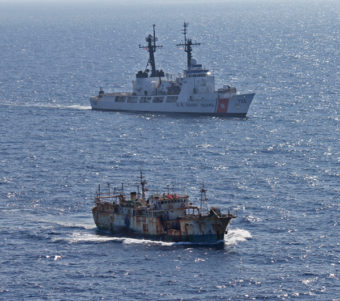
The U.S. Coast Guard brought the frozen halibut to Nome free of charge, and James said Kawerak is working with Bering Air, Erickson Helicopters and Ravn Alaska to organize free freight delivery to the four communities.

Although the donation is good news, Metcalf said it’s only a temporary solution as climate change makes hunting more difficult.

“In the event that another disaster is declared, what do we do? And how do we move forward? We need to come up with a long-term plan,” she said.

For now, Metcalf said the donation will be a big help, even if it doesn’t completely solve the food shortages.

“I know it won’t fill the nutritional value that a walrus or other marine mammals provide, but it’s there and it’ll be put to good use,” she said.

The halibut will ship out as soon Kawerak can coordinate delivery with the different airlines. Kawerak will then distribute the fish equally to households in each community.

Do Fish Names Encourage Fishy Business?

Sea bass, pollock, striped bass and other fish species are seen for sale at the Harbor Fish Market in Portland, Maine. Ryan Kellman for NPR
Sea bass, pollock, striped bass and other fish species are seen for sale at the Harbor Fish Market in Portland, Maine.
Ryan Kellman for NPR

Order a rockfish at a restaurant in Maryland, and you’ll likely get a striped bass. Place the same order in California, and you could end up with a vermilion rockfish, a Pacific Ocean perch or one of dozens of other fish species on your plate.

This jumble of names is perfectly legal. But it’s confusing to diners — and it can hamper efforts to combat illegal fishing and seafood fraud, says the ocean conservation group Oceana.

Under current Food and Drug Administration rules, a single fish species can go by multiple names from the time it’s caught to the time it ends up on your plate. Conversely, lots of different fish legally can be sold under a single name.

For example, that “grouper” on a menu could be one of 64 different species. It could be a fish known by the common name sand perch (scientific name: Diplectrum formosum), which is plentiful. Or it could be a goliath grouper, a critically endangered species. The FDA says all can be sold under the acceptable market name “grouper.”

Oceana wants the entire supply chain — from boat to plate — to ditch the FDA’s list of “acceptable market names” for seafood. Instead, it wants the FDA to require that a species’ Latin scientific name or common name be used in all cases.

Oceana says more precise labeling of seafood — the kind it calls for in its One Name, One Fish report — will go a long way toward protecting vulnerable or endangered species and deterring illegal fishing. And it says it will help to put a stop to seafood fraud — an issue the nonprofit group has been working on since 2011.

“It’s another tool to help with enforcement,” says Oceana senior campaign director Beth Lowell. “People have a right to know about the food they eat. It shouldn’t be that hard to find out what fish I’m eating without having to do a DNA test or ask the server, who has to ask the manager, who has to ask the distributor.”

Jeremy Sewall is the chef and owner of the Boston-area seafood restaurants Row 34 and Island Creek Oyster Bar. He orders all his fish whole so that he knows exactly what species he’s getting. He says he’s all for accurate labeling and transparency in the seafood world.

“We work hard to find out where our fish is from and are extremely happy to share it with our consumers,” he says. But the idea of using only a fish’s common name or scientific name on menus “only adds confusion to an incredibly confusing industry,” he says.

For instance, Sewall notes that he often serves local hake. But there are several local hake species. Does he change the scientific name listed on the menu each night, depending on what the catch of the day is? Requiring that kind of constant updating would be ridiculous, he says, not to mention a nightmare to manage.

But if guests do ask for specifics on their seafood supper, he says, his staff are always eager and able to answer.

For example, “if we’re serving snapper for ceviche or crudo, we buy genuine American red snapper from the Gulf of Mexico and adjacent Atlantic waters. We try to trace it back to where it comes from, and we label it as American red snapper,” he says.

Snapper is one of the species on Oceana’s hot list. It calls out the FDA for allowing 56 species — everything from mullet snapper to Colorado snapper to golden snapper — to be sold simply as “snapper.” It’s not only that so many different fish species can be called “snapper”; according to Oceana’s sampling of retail outlets, many fish sold as “snapper” are something else entirely. Oceana’s sampling in 2013 found that, in all, one-third of the seafood sold at the retail level did not match its label.

“People should be able to know what they’re buying. If they’re buying a snapper, they should get a snapper,” says Oceana’s Lowell.

The FDA’s own testing at the wholesale level has found fish fraud to be less prevalent but still problematic: A report released by the FDA in 2014 found that 15 percent of seafood products at the wholesale level were mislabeled.

Some in the fishing industry are backing Oceana’s call for “one name, one fish.” That includes Tri-Marine, a Washington-state based global tuna supplier, and the Southern Shrimp Alliance, an industry group. Both groups submitted comments in favor of specific labeling to President Obama’s task force on illegal fishing and seafood. The shrimp group notes that farmed shrimp — which could have come from countries where antibiotics are widely used — are often mislabeled as Gulf shrimp.

But Gavin Gibbons, a spokesman for the National Fisheries Institute, the seafood industry trade group, says creating a “one name, one fish” rule “will have zero effect.” He says most fish fraud occurs not because of name confusion, but because of intentional deceit. He says what’s really needed is better enforcement through DNA testing, which the FDA is now ramping up.

Even if the seafood industry were in agreement behind the “one name, one fish” policy, it’s not clear most consumers would care. Although many chefs like Sewall are willing to go the extra mile to make sure guests know the snapper is the real deal, the fact is, the effort often goes unnoticed by customers.

“The reality is, they’re not interested,” says Sewall. “They’re hungry.”


Clare Leschin-Hoar is a journalist based in San Diego who covers food policy and sustainability issues.

Copyright 2015 NPR. To see more, visit http://www.npr.org/.
Read Original Article – Published JULY 30, 2015 7:03 AM ET
Do Fish Names Encourage Fishy Business?

Dead fish, wildlife in Aleutians may be victims of toxic algae outbreak

Melissa Good with UAF Alaska Sea Grant collects a sample from a Steller’s sea lion carcass by Unalaska’s Summer Bay. (Photo by John Ryan/KUCB)

Scientists have been receiving reports of dead and dying mammals, birds and small fish in the Aleutian Islands.  They think the killer might be toxic algae proliferating in unusually warm ocean waters.

“All the signs are that we’re having a major harmful algal bloom event,” Bruce Wright with the Aleutian Pribilof Islands Association said.

Wright said it could be the algae that cause paralytic shellfish poisoning; the algae that generate domoic acid are another possible culprit.

Melissa Good with University of Alaska Fairbanks has been looking for the microscopic green suspects around Unalaska.

“They’re a suspected cause for some of the mass deaths we’ve been seeing–the 10 fin whales that were spotted dead off of Kodiak Island; I know Adak has seen a lot of dead birds, King Cove, I believe [birds in] False Pass have been washing up. We don’t know the cause of that yet either,” Good said. “In the past, we’ve seen incidences where sand lance, a little plankton-eating fish, was accumulating these high toxins from these algae in their system. The birds were eating sand lance, these small forage fish, and were dying. No one that I know of is sure what happened.”

This week, Good has been taking water samples around Unalaska and shipping them off to labs for full analysis. Even just looking in her microscope on the desk in her office on Thursday, she found large numbers of the domoic acid algae in one of her recent water samples.

She’s also sampled the stomach and flesh of a Steller’s sea lion that washed up dead recently on Unalaska’s Summer Bay, north of the town landfill.

“I didn’t see anything external that looked like a cause of death.  Sometimes, there’s gunshot wounds, ship strikes. Those things can be very obvious,” she said after looking over the 10-foot carcass on Thursday.

She thinks toxic algae might have killed this sea lion. One that washed up dead last year near here had very high levels of PSP.

In addition to the stomach, scientists sometimes study fluids in the eye for algal toxins and the whiskers. But eagles had already gotten to the eyes, and someone, Good presumed an Alaska Native with permission to use part of the protected species for materials to decorate a traditional bentwood hat, had removed the whiskers.

Melissa Good with UAF Alaska Sea Grant points out domoic acid-generating “pseudo nitzschia” algae. (Photo by John Ryan/KUCB)

Standing next to the fresh carcass, Good said people in the Aleutians should be wary of eating clams or mussels right now.

“We just don’t know if they’re going to be toxic or not,” she said. “You’re taking a lot of risks there.”

Unlike bivalves (such as mussels and clams), crabs don’t retain the toxins in their meat, but in their digestive tracts. Scientists warn people to remove the dark viscera from crab before cooking it.

Shellfish in King Cove and False Pass recently have tested for twice the level of toxins that the U.S. Food and Drug Administration says is safe.

Potentially harmful algae are always present in seawater, but it’s only when they bloom into dense concentrations that they can cause much harm to the things that eat them.

One of the largest harmful algal blooms ever recorded has been taking place this year from California up through British Columbia.  Officials in three states have closed beaches to razor clamming and other types of shellfish harvesting.

Researchers think the West Coast bloom, and recent events in Alaska, are related to unusually warm water temperatures.

“We are seeing large blooms throughout Alaska, of different species,” Good said. “When you get warmer water temperatures, they became more prolific, they bloom. You’re getting a high concentration of algae.”

Good says paralytic shellfish poisoning appears to be getting more common in the Aleutians due to increasing water temperatures.

She’s waiting for results on her samples for more conclusive answers. She and Bruce Wright both ask anyone noticing sick or dead predators in the Aleutians to report them. And if you see dead sand lance fish, put a half dozen in a zip-lock bag, freeze it and send it to them.

Site notifications
Update notification options
Subscribe to notifications