Housing

A year after Sitka made space for tiny homes, no one is building them

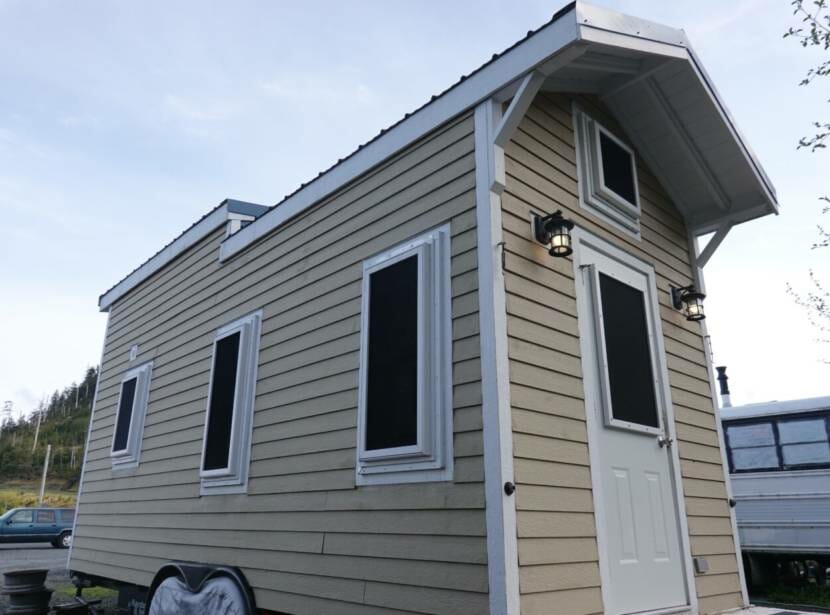
Stephanie Kruse and her husband paid a company in British Columbia to build their roughly 8.5 x 20 foot tiny home. Living in it allowed them to save money for travel and a down payment on a traditional house. (Erin McKinstry/KCAW)

Tiny homes have gained traction in recent years as an affordable housing alternative, but building them legally poses challenges in many communities. Last year, Sitka became one of the first cities in the country to introduce a set of tiny home friendly code changes. But a year after passing the groundbreaking ordinance, no one is building them.

A few years back, Stephanie Kruse and her husband decided they were sick of renting.

They moved around a lot for Kruse’s job, so buying a house wasn’t a great option. Besides, with Southeast Alaska’s high rental rates, they weren’t saving enough for a down payment.

“It’s hard to put away money when you’re paying so much in rent. And you know, at the end of the year, you don’t get anything back from that besides having had a place to live,” Kruse said. “So for us, we wanted to do something that would allow us to build some equity with that 1200 plus dollars a month we were paying in rent and housing costs.”

They looked at manufactured homes and RVs, but ultimately settled on a tiny house on wheels.

“We preferred the tiny house for a lot of reasons. One of them for sure is that a tiny house holds its value a lot better than an RV because it’s built with more traditional construction materials that are meant to withstand the weather. And then also, you know, they’re whimsical and fun and interesting,” Kruse said.

With beige siding and a blue metal roof, the roughly 170-square-foot house looks like a mini single-family home. Kruse and her husband took out an RV loan and paid a company in British Columbia to build it. They moved it to Juneau on the ferry and parked it on a shared lot.

When Kruse’s job brought them to Sitka, the tiny house came with them. Even with their loan payment and the cost to rent a spot at a local RV park, Kruse said they were paying a couple hundred dollars less a month than if they were renting.

“I think the kind of ruling concept for people who do small homes or tiny homes is a small house for a big life. If you can reduce your housing expenses and kind of minimize that in your life, but still make it a pleasant place to be,” Kruse said. “And that gives you the ability to kind of put your funding towards the things that you are really passionate about in your life.”

For Kruse and her husband, that meant a trip to Japan and saving to buy a regular house. And when they sold the tiny house and left Sitka for the Pacific Northwest, that’s exactly what they did.

“I think it’s a really great stepping stone to home ownership like it was for us,” she said.

Stephanie Kruse inside her tiny home. (courtesy Stephanie Kruse)

But even though rent in Sitka is high, and home ownership can be cost-prohibitive, people in Sitka aren’t following in Kruse’s footsteps. That’s despite changes to the city’s building and zoning codes a little over a year ago to make tiny homes easier to build. Pat Swedeen is Sitka’s Building Official.

“There’s definitely been a few individuals who have been interested in it. We’ve also had actually a couple of companies think about maybe trying to go that route,” Sitka building official Pat Swedeen said. “Thus far we haven’t had anybody actually begin that proper process of permitting and constructing a tiny home.”

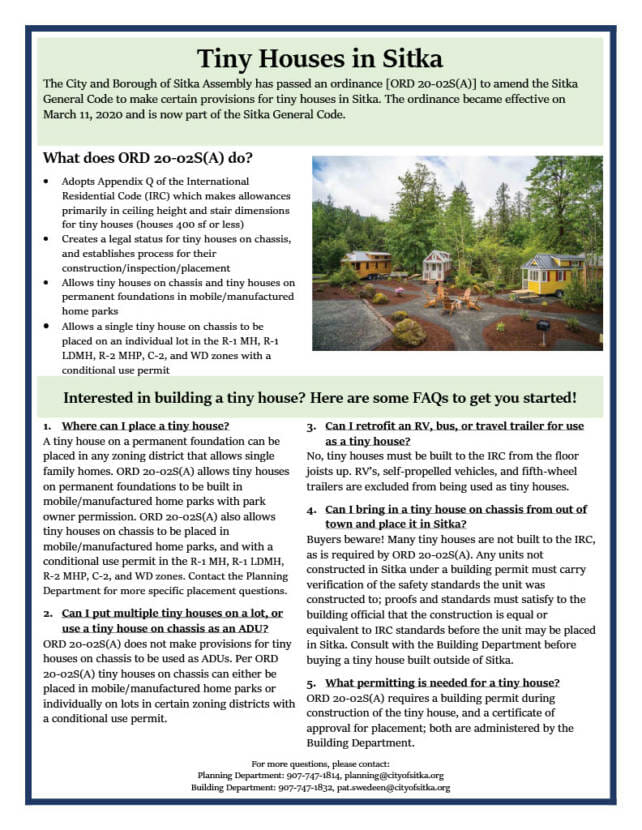
Sitka didn’t have a minimum house size even before the changes, but meeting building standards for small structures was a challenge. So Sitka adopted a set of international regulations to make it easier to build houses under 400 square feet, allowing for things like ladders and lower ceilings.

It also addressed a legal grey area for tiny homes on wheels. Before last March, Sitka considered them RVs like almost any other place in the country. And legally, you can’t live in an RV year-round in Sitka.

Now tiny homes have their own designation. They’re allowed in trailer courts, and there are some zones where they can be placed on lots by themselves, with planning commission approval.
“The two main barriers in most places are zoning and building codes,” Tiny Home Industry Association communications director Alexis Stephens said.

She said Sitka’s changes are a big step in the right direction. Sitka is one of just a few across the country to update their zoning regulations to be more tiny home friendly.

“The progress is really picking up but to put that into context, there’s almost 90,000 municipalities in the United States, having more than a dozen embracing tiny homes, still leaves quite a bit of work to do,” Stephens said.

And even with the regulations changes, Swedeen says there are still barriers like the cost of construction.

“Per square foot, a tiny home isn’t really super affordable. You know, since it’s small, it’s not like the cost of building a 2500 square foot house. But you know, you still need to have cooking appliances, you still need to have heating appliances, you still need to have bathing facilities and a toilet and things like that,” Swedeen says.

Financing and land availability are also big hurdles. Tiny homes on wheels aren’t allowed as accessory dwelling units in Sitka, so you can’t just buy one and park it in someone’s yard.

Jennifer Younger bought Kruse’s tiny home as an affordable option for her son. Much like Kruse, it allowed him to save money to buy his own house. Now, they’re looking to sell, but Younger said land availability has stopped a lot of buyers.

“We’ve had several people very interested and check it out, and it’s a beautifully built little home, but people just don’t have property to put it on,” she said.

Even though tiny homes haven’t taken off, Sitka Conservation Society Sustainable Communities’ Chandler O’Connell said she isn’t discouraged. SCS partnered with a Sitka High School construction class to build their own tiny house a few years ago. Their efforts to sell it sparked a community conversation, which contributed to the eventual code changes.

“And I think our learning from past code changes is it takes a while for that information to get out there. It takes a while for people to understand the implications and think about how they want to implement that in their own building decisions. I’m excited to see how it can shape Sitka’s housing market over the next few years,” she said.

O’Connell says she sees tiny homes as one affordable housing option of many. They won’t work for everyone, but it’s about getting more tools in Sitka’s housing toolbelt.

Throughout April and May, KCAW News will be publishing stories about affordable housing solutions every Friday as part of its “Building Solutions” series.
As lumber prices climb, Alaskans increasingly mill their own

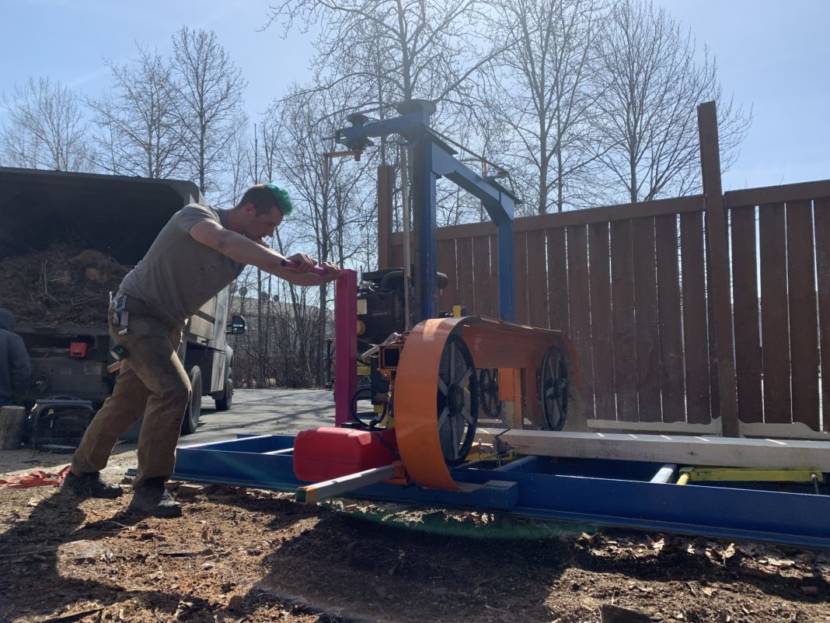
Hans Dow spends a Saturday afternoon milling more than 50 2x10s for garden boxes he’ll install in his South Anchorage backyard this summer. (Emily Schwing)

The price of lumber has more than doubled over the last year, and economists warn it may be a lasting trend. That’s why Alaskans like Hans Dow are getting crafty: buying or even building their own sawmills.

“I was like, well, I want a sawmill. I can make a lot of stuff with it. I also need to learn how to weld,” Dow said as he hefted a 9-foot log onto the deck of his hand-built sawmill, which sits in the corner of his South Anchorage backyard.

Dow spent the winter in his garage building the sawmill. It was his brother who really urged him to take on the project, Dow said.

“He was working on his house and we were kind of joking like, ‘Man, lumber is really expensive. We could probably build a sawmill or buy a sawmill and make our own siding and probably break even or come out ahead.’ And then I started to do the math. And I was like, ‘Oh yeah, it would be cheaper,’” he said.

The price of lumber is soaring for several reasons: When the coronavirus forced nationwide lockdowns, people stuck at home found projects to stay busy. Demand for lumber went up, but commercial sawmills were still locked down. Now, producers are scrambling to catch up. To top it off, record-low interest rates have driven lots of new home construction.

Dow spent about three weeks and $3,000 collecting the parts and pieces to assemble his mill. His aim was to build garden boxes for his wife this summer, and he estimated he’d need at least 42 2-by-10 inch boards to do it.

If he were to buy the lumber, it would cost him at least $2,000. But for Dow, spruce logs are free. He picks them up from Paul’s Tree Service, where he works as a crane operator. The company removes problem trees and beetle-infested spruce throughout the city.

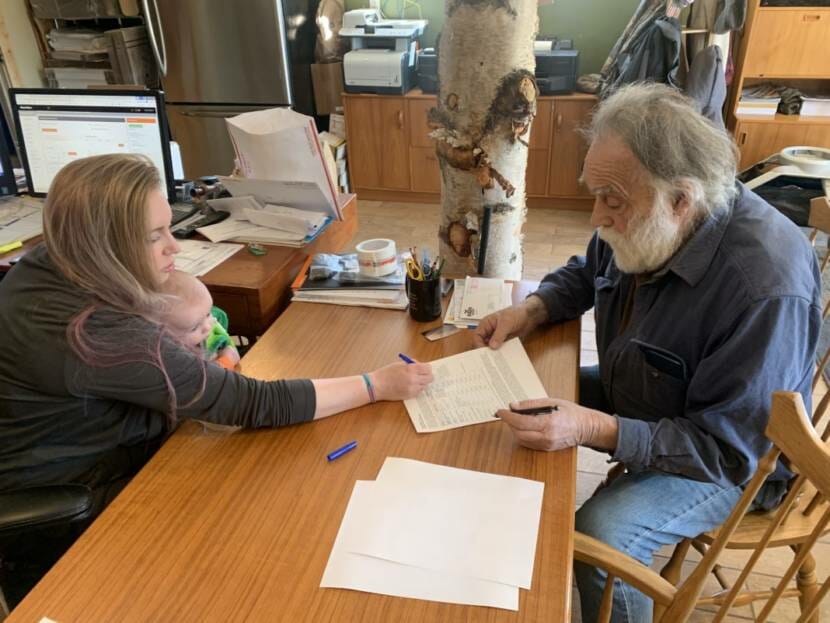
Kate Sebring walks Willow homeowner Phil Hudson through the paperwork to purchase a portable sawmill. He ordered in February, and doesn’t expect it to arrive until July. (Emily Schwing)

Phil Hudson, 71, is a retired commercial radio host who’s worked with wood for decades. Hudson lives on 40 acres in Willow, and when he built his house 20 years ago, he said it cost him $3,500. He said he’s been planning on more floor space for years.

“I’m adding a 16-by-24 addition,” Hudson explained. “And then there’s a couple other little bump outs off that. I’m about tripling my floor area.”

If he purchased the lumber he needed to frame the addition walls last year, he might have paid more than $6 per board. This year, those same 2-by-6 inch boards cost at least $15. And depending on the type of wood and whether they’ve been pressure treated, the price can climb above $64.

“You can’t pay these kind of prices,” he said. “It’s like going to the grocery store and spending two hundred dollars and leaving with one bag of groceries.”

Hudson traveled to Anchorage to pick up his brand new portable sawmill sent from Portland. With shipping and an extra box of blades, the mill set Hudson back around $10,000.

But Hudson has a plan to recoup the costs. Hudson has acres of standing deadwood on his property, thanks to spruce beetles which have affected more than 1.1 million acres of forest in Southcentral since 2015. After he cuts down the wildfire hazards and finishes his own building projects, he said he wants to use the mill to make some extra money.

“As this goes on, I’ll make a few bucks in the future by building a kiln, and kiln-drying birch,” he said. “People like the birch and that live edge on the birch and that sort of thing.”

He can mill that, he said.

“What the hell — I don’t know how many years I have left, so I might as well do something that’s entertaining,” he said.

Hudson purchased his mill from Wood-Mizer, an Indiana-based company that manufactures tools for processing lumber, including small, portable sawmills. The company’s cheapest mill is just over $3,000, and prices rise to nearly $60,000. To say they’re selling fast is an understatement.

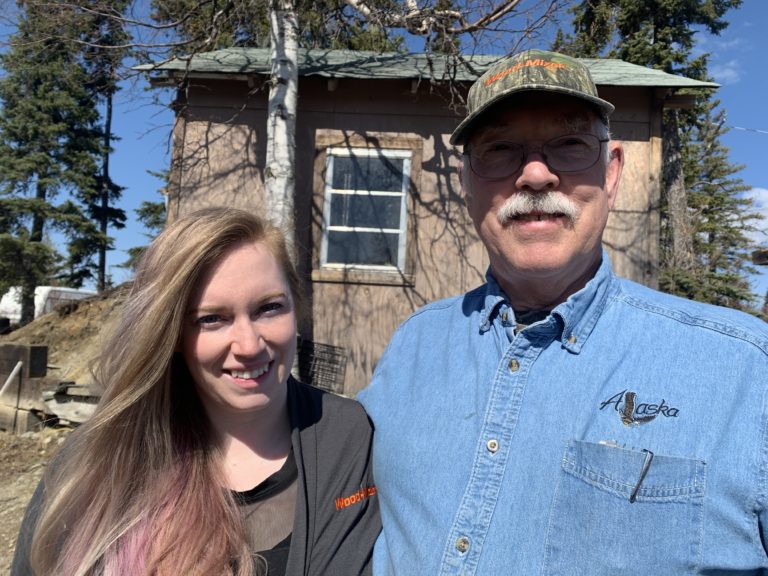
Kate Sebring quit her job at JBER last year to help her father, Parker Rittgers, handle the increase in demand for portable sawmills in Alaska. The two work together as sales representatives for Indiana-based Wood Mizer from a home office in Anchorage’s Hillside neighborhood. (Emily Schwing)

“The lead time is 44 to 59 weeks right now for a sawmill,” said Kate Sebring, an Alaska-based sales representative for Wood-Mizer. Other sawmill manufacturers are telling customers the same thing, she said.

Sebring quit her job at JBER last year to work with her father, Parker Rittgers, who originally became a sales rep for Wood-Mizer as a retirement hobby.

“I’ve been retired for ten years, so now I’m not working 40 hours a week,” Rittgers said. “I’m working 50 or 60 hours. I worked until about 10:30 p.m. last night. I was just bushed.”

A year and half ago, Rittgers said he was taking orders for one sawmill a week. Now, he and his daughter take deposits for three or four sawmills a day.

In Alaska, business doesn’t just come from the road system. Don Morgan was also at the Wood-Mizer office last month, shopping for a sawmill. He took the two hour flight from Aniak, a village of about 500 people in Southwest Alaska, to put his order in.

“I’m changing my shop into a house, so now I need a shop,” he said.

If he were to order the lumber he needs for his project, just shipping the boards to the village would cost at least $2,000. Nevertheless, he balked a little at the $10,000 price tag for the mill he came to consider.

“But I don’t know … We had a lot of trouble with building houses and getting material,” he said.

Aniak sits east of Bethel on the Kuskokwim River, where there are plenty of trees. Morgan can tow his mill with a snowmachine or a four-wheeler and find the wood he needs.

According to Kate Sebring, Wood-Mizer has shipped dozens of sawmills to villages across the state. Even with the shipping costs of the mill, many Alaskans are convinced milling their own lumber is more affordable than buying it.

Coast Guard scuttles Juneau’s troublesome tugboat Lumberman

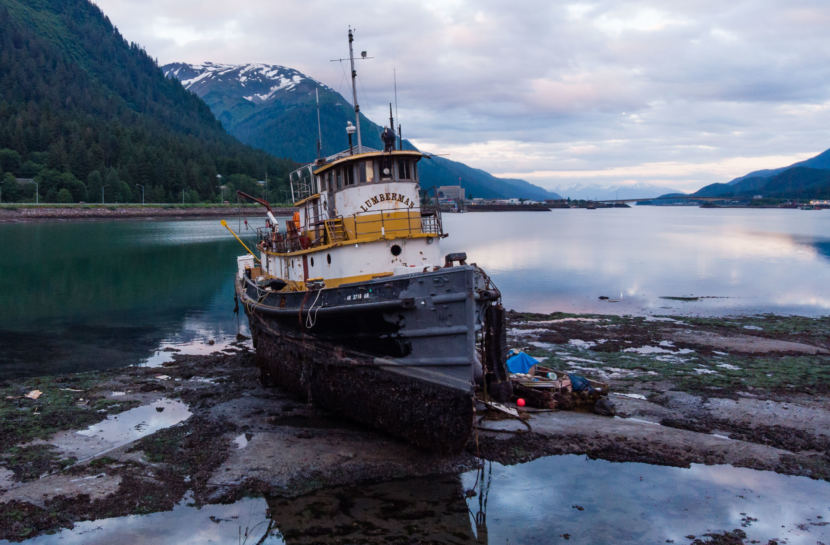
The tugboat Lumberman sitting in Gastineau Channel at low tide on June 15, 2018 (David Purdy/KTOO)

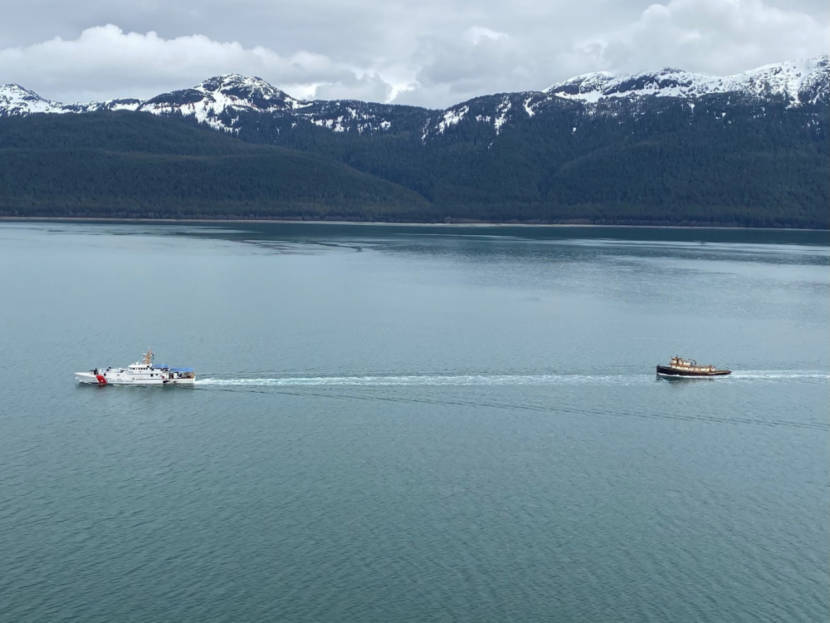
It was a foggy Sunday morning when the 80-year-old tugboat left Gastineau Channel. A Coast Guard cutter towed the Lumberman out for her last trip to sea.

The black-and-yellow tugboat had long been a familiar sight in Juneau’s inland waters. She arrived in the late 1990s from Puget Sound and changed hands several times, decaying over the years to become a rustic liveaboard that skirted local laws.

“We had a dispute with the owner at the time that he couldn’t be there. He claimed that he was on state lands and had the right to be there,” Juneau’s Port Director Carl Uchytil told CoastAlaska.

Anchored on city-owned tidelands outside the harbor, the Lumberman sat in a jurisdictional no man’s land that was out of reach of local officials.

The M/V Lumberman in 2017, with various vessels attached. (Courtesy of Dave Borg/Juneau Docks & Harbors)

The vintage tug could often be seen from Juneau’s main highway with a collection of skiffs moored to her rusting hull. It became a magnet for people unable to find shelter in a community that’s long struggled with a lack of affordable housing.

Of course, there was that unfortunate accident where two people perished going out to the Lumberman,” Uchytil said, referring to a December 2017 accident when a skiff carrying five people and a dog overturned while heading out to the tugboat. Two men were never found.

The city later moved to condemn the 192-ton vessel after she broke her anchor chain and drifted off state-owned tidelands.

But then came the question of whose responsibility it was. The owner was long out of the picture. The state didn’t want her. The Coast Guard didn’t consider her a navigation hazard. And scrapping her would have cost too much, so she sat for more than a year — abandoned — tied to a city dock.

“This is just the typical poster child of what a derelict vessel is,” Uchytil said, “where people aren’t responsible with their vessels, passing them from one person down to another.”

To date, the city’s Docks and Harbors spent about $160,000 to clean and prep and ultimately scuttle the ship. The Coast Guard spent close to $70,000 to remove hazardous materials.

Still, nobody really wanted to sink her. Juneau’s Docks & Harbors even appealed to the public for ideas for what could be done with the hulking beauty.

Uchytil says the community had a range of pie-in-the-sky ideas, from converting it into a beachfront fish-and-chips stand to a community flower garden.

“There was never an organization that said, ‘I’ll take it over, I have some funding, I will do this,’” he said.

That was three years ago. In all that time it would remain the city’s problem. Then last fall, federal regulators issued a permit green-lighting sinking the ship in about 8,400 feet of water.

The plan called for her to be towed about 55 miles west of Cross Sound. Uchytil worked with a salvage firm to rig the tugboat with remotely opening valves that could flood the 107-foot tug at a flick of a switch.

We had consulted with a naval architect to make sure that the vessel would indeed flood and sink in that proposed spot,” he said.


The derelict tugboat Lumberman is towed by a crew aboard the Coast Guard Cutter John McCormick, a 154-foot Sentinel–class vessel, to a position 54 miles west of Cross Sound, Alaska, on May 2, 2021. (courtesy U.S. Coast Guard)

A salvage crew headed out early on Sunday. At first, everything went according to plan. But Coast Guard Chief Petty Officer Kip Wadlow says that the flooded vessel didn’t completely sink. Her bow continued to bob up and down, protruding from the water’s surface.

And then the John McCormick, a 154-foot fast response Coast Guard cutter, used its 25 mm deck gun to complete the sinking,” Wadlow said.

Within 15 seconds, the waters of the Pacific closed over the ship as she sank to the ocean floor — an inglorious end to the saga of the Lumberman.

In recent years, Juneau’s Assembly has since tightened up its anchoring rules on city-owned tidelands. And the Legislature passed a legislation requiring boats to be titled to tighten up the chain of ownership.

All in the name of cracking down on derelicts and sparing them the notoriety of becoming a public nuisance, like the 80-year-old Lumberman tug boat.

Is Alaska’s pandemic housing market burning out or getting hotter?

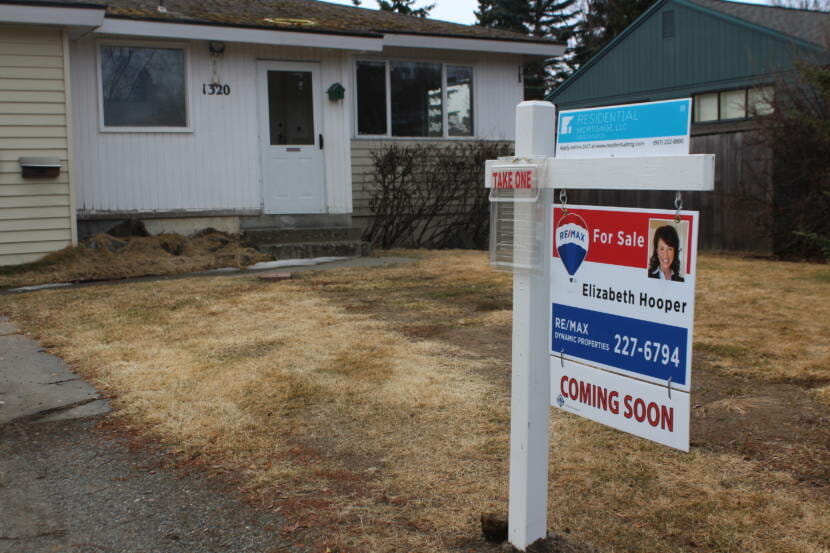
A house for sale in Anchorage’s South Addition neighborhood in May 2020 (Lex Treinen/Alaska Public Media)

For many Alaskans, trying to buy a house this year has been an exercise in frustration. It’s a seller’s market; homes are going fast and at high prices. If you’re looking for a place to settle in Alaska, should you even try to buy a house right now? Experts say there isn’t one straightforward answer.

Alaska Public Media’s Casey Grove is one of those Alaskans who’ve been having a hard time buying a house in Anchorage. He says the process is emotionally draining.

“You are going to be literally invested in this house and then it doesn’t work out because the market is so tight that people are bidding way above what your offer is going to be, or offering cash,” Grove said.

Grove and his wife have looked at a lot of homes and made offers on two. For one, they offered $35,000 more than the asking price. And even that wasn’t enough.

“Somebody came in and made an offer to pay $350,000, $360,000, not totally sure — cash,” Grove said. “So an offer above ours, and they just had that money.”

There were 14 other offers on that house. The other house they bid on had 21 offers.

Those high prices are in line with state trends. Alaska Department of Labor economist Rob Kreiger said that in surveying lenders the department noted a 6.4% increase in 2020 average home sale prices compared to the year before.

Nolan Klouda is Executive Director of the Center for Economic Development at the University of Alaska Anchorage.

“It’s always hard to actually time the market right, as far as ‘If I buy a house now, is it going to be cheaper than it will be in six months?’ Those kinds of decisions are always really tough to make, even for experts,” said Klouda.

For instance, no one predicted the 2020 pandemic would create the seller’s market we’re seeing now. Klouda says supply was down and demand was up.

“A lot of it also had to do with the low interest rates, too,” said Klouda. “So all of that sort of combined to make this really strange market where prices went really quite high and it was a very hot market.”

And while Alaska saw record job loss in 2020, some Alaskans actually had more money to spend: Overall, personal income increased in the state.

But just because both demand and prices are high doesn’t mean Alaska is in a housing bubble. And while can be hard to know you’re in a bubble until it pops, Klouda says, there are none of the classic warning signs right now — lots of new construction or risky lending.

State Department of Labor economist Neal Fried agrees. Alaska’s housing market doesn’t have the makings of a bubble right now, he says, and he’s not expecting a crash.

“That doesn’t mean the value of homes couldn’t go down,” said Fried. “I’m not going to try to even guess that. And that sales might go down. But it’s not going to be — we just are not in the environment, sort of the bubbly environment, or sort of the potential boom/bust environment.”

By comparison, Fried points to the housing crash the state did see in the 1980s.

“That was our last, and probably only housing bust Alaska and Anchorage has ever really experienced,” said Fried.

A big difference in the 80s, Fried says, was development. The number of homes being built eventually exceeded demand.

“There were just brand new, empty houses that probably took 10 years to absorb that incredible inventory that we had,” said Fried. “We have very little inventory right now.”

Despite high demand for homes, building activity is really low right now.

“Aggregate statewide level, building activity in 2020 was at its lowest level that we’ve seen,” said Kreiger. “That’s been the trend, probably for the last seven years, building activity has been on a slow decline to its current level.”

Both Fried and Klouda say it’s impossible to know exactly where the market is headed, but both also say they would buy a house in this market if they needed one. Klouda says he expects to see interest rates increase which could slow rising home prices. And there are other factors at play too, such as the state economy.

“If confidence in our in-state economy got worse or if we saw more of an economic downturn or prolonged economic downturn because of oil being at lower prices in the future or concerns about state government, then those are things that could impact our housing prices in a negative way,” said Klouda.

So, should you buy a house in Alaska right now? That’s something Casey Grove is thinking a lot about.

“That’s one of the biggest, hardest questions I guess, is this the right time to do this? And I don’t know,” said Grove.

He’s not giving up yet, but is considering the possibility of renting a while longer.

Chilkoot Indian Association gets federal funds to help Haines homeowners fix disaster damage

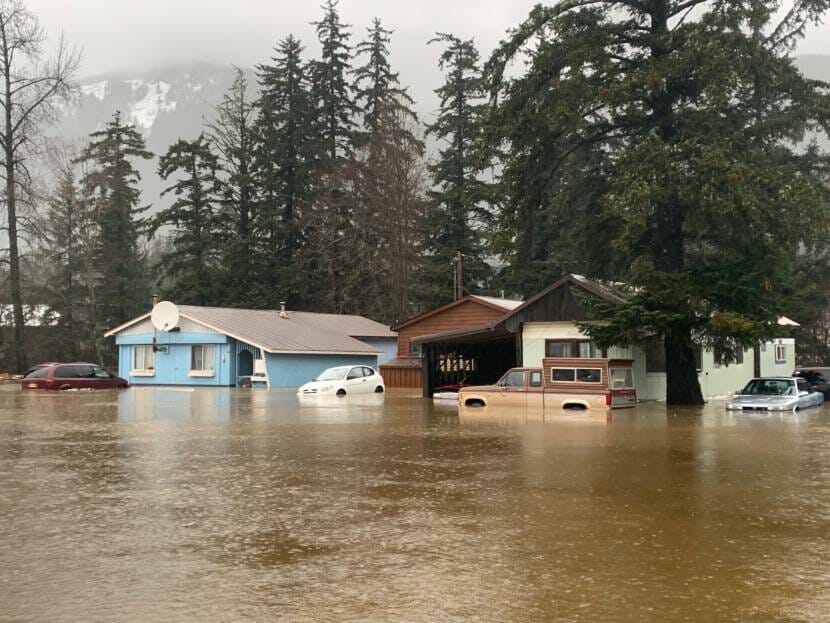
A neighborhood near downtown Haines flooded Wednesday morning, Dec. 2, 2020. (Henry Leasia/KHNS)

The Chilkoot Indian Association has received relief funds from the Department of Housing and Urban Development to help Haines homeowners fix damage from the December 2020 floods and landslides.

The disastrous weather event saw over 10 inches of rainfall in a two-day period in the Haines borough, compounded by 96 inches of snowfall over six days. The cumulative effect was catastrophic.

On Tuesday, the Chilkoot Indian Association announced that they had received disaster funds from HUD to help homeowners.

“Anybody who has had an issue with their property, their driveways, flood damage, any debris that needs to be cleared up, also redirecting any floodwaters that that keep occurring because of the heavy rain and everything — we’re here to help with that, too,” Chilkoot Indian Association housing coordinator Aliza Tompkins said.

She said the service is open to all Haines residents, but the program cannot reimburse repair work that’s already been done. According to Tompkins, after a homeowner’s application is approved, the association will send their in-house crew to do the work.

“They’ll be coming by and actually taking pictures, assessing the damage and documenting all the damage that’s been done,” Tompkins said. “And from there, we have to do what’s called an environmental review, which is kind of a lengthy, lengthy process to make sure that the environment will not be damaged. And from there, then the crew will go out and fix what we need to fix.”

She said repair timelines will depend on the damage and whether stores in the area have the necessary supplies. But she also said this is the right time to get started.

“Now that spring is hit, now that everything is thawing, and the snow is going away, this is the best time to actually assess the damage that we can fix as we go,” Tompkins said.

Interested homeowners can pick up an application at the Chilkoot Indian Association office, download one from their website or facebook page or call 766-2323.

Cabins and granny flats could make Sitka’s housing more affordable. Advocates want to make them easier to build.

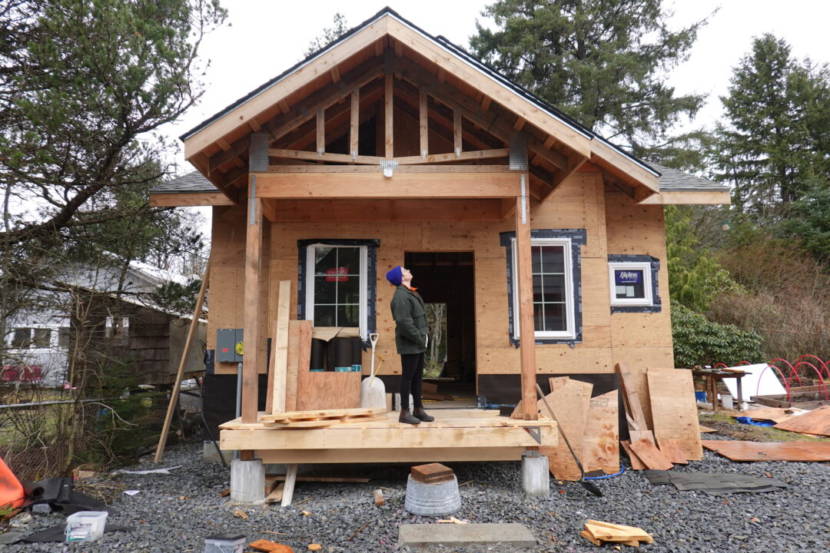
Adrienne Wilber stands in front of her half-finished home in the corner of her parent’s lot. “In our town, there is not a house that I could buy without serious financial investment from either other family members or other people,” she said. (Erin McKinstry/KCAW)

Whether you rent or buy, housing in Sitka is expensive — median home values and rent prices are consistently among the highest in the state. So some Sitkans are adding cabins and mother-in-law apartments to their properties to help pay their mortgages and expand Sitka’s tight rental market. Affordable housing advocates want the city to make so-called accessory dwelling units, or ADUs, easier to build.

Before the pandemic, 31-year-old Adrienne Wilber worked as a mate and crewmember, traveling the world aboard a nonprofit sailing ship and returning to her hometown of Sitka a few months out of the year. That’s where she was last March when she found out her entire work season was cancelled.

“I knew that if I didn’t have anything to occupy my time, the like already pretty intense mental strains of the pandemic would just be way worse for me. So I needed something,” she said.

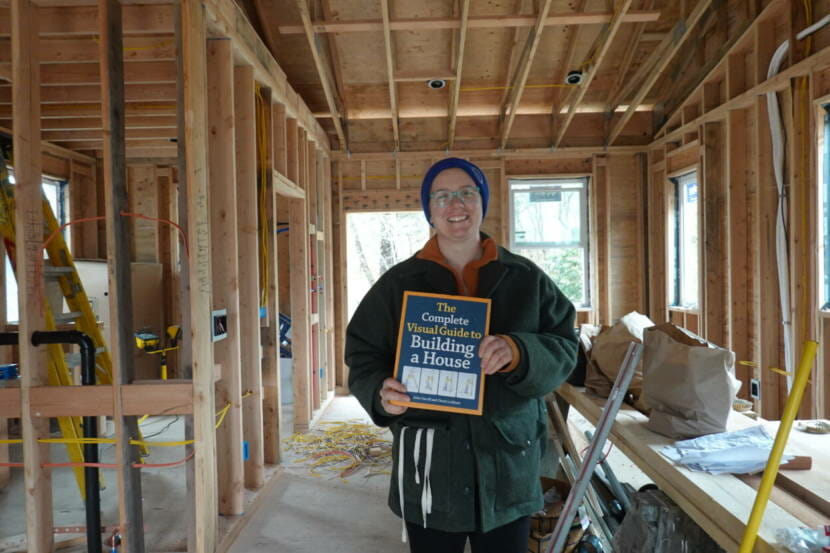
Wilber’s “pandemic project” is a small cottage in the corner of her parent’s property. It’s the first house she’s ever built. The walls and the roof are up but the inside of the 600 square foot studio still needs work.

Adrienne Wilber holds up a beginner’s guide to building inside her half-finished roughly 600-square-foot ADU. (Erin McKinstry/KCAW)

Before Wilber started this project, she’d never heard of an accessory dwelling unit. She learned from the city planning department that ADU is a catchall term for a small but complete living space added to an existing house or built on the same lot.

Now she’s an ADU advocate. She says she’d never be able to buy a home in Sitka on her nonprofit salary. And she thinks if more homeowners added them, it could help some of her friends who’ve struggled to find affordable, long-term housing solutions in a place where buildable land is limited.

“Just think, if every house on this block could fit another individual or two people living there in their own house. Maybe you still have a landlord, maybe you still have a relationship with the people who’s land you are living on, but it does provide more options, and people need more options,” she said.

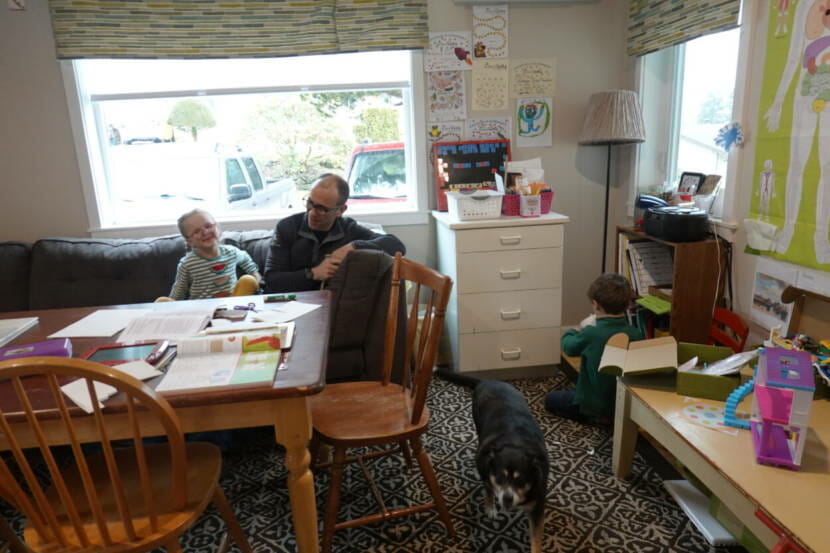
ADUs can also help homeowners. Aaron Routon and his wife tacked a second story apartment onto their house when they were building a downstairs addition. Routon said the income from renting it to a friend helps him and his wife afford things like after school activities for his three kids.

“It’s really big for us, as far as the income it generates,” Routon said. “It really allows us the freedom and flexibility to go south and see family there. It also takes some of the pressure off a tighter budget.”

Aaron Routon and his wife added added a 500-square-foot upstairs apartment, which they rent to a friend. The extra income helps pay for travel and after school activities for their kids. (Erin McKinstry/KCAW)

It’s not just Sitkans who are turning to ADUs to help address housing affordability. Anchorage revised their regulations in 2018 to make them easier to buildAnd Juneau started a $6,000 grant program in 2017 for homeowners who want to add one to their properties. More than 30 people have taken advantage of the program since.

Jeannette Lee works on housing issues in Alaska for the Sightline Institute, a public policy think tank. She said many cities are turning to ADUs as a way to increase population density while still preserving the character of a neighborhood.

“If you create a better … regulatory environment for ADUs, what happens is homeowners can benefit because ADUs increase property values. But if they’re turned into rentals, then you create better conditions in the rental market by providing more choice, more competition,” Lee said.

Lee said cities could do more to encourage ADUs by reducing parking requirements, allowing them in more zones, and streamlining the permitting process.

Sitka’s current ADU policy was created in 2013 and revised in 2015 to make it less restrictive. Right now, they’re allowed outright in many parts of the city as long as they meet a set of 14 conditions, which include things like parking and design requirements.

But there are still some zones where they’re not allowed at all and others where homeowners are required to get planning commission approval no matter what through a conditional use permit process. And there are no tax breaks or incentive programs to help defray the high cost of construction.

Sitka resident and District 35 Representative Jonathan Kreiss-Tomkins has long been a proponent of ADUs to address affordable housing. He thinks Sitka could look to other cities to update their policy.

“Basically my view is like, if Sitka wants to be serious about affordable housing and more housing, it can’t just nibble around the edges at public policy. It needs to like commit itself to a solution,” he said. “So I mean like having a much more aggressive ADU policy than currently exists.”

Sitka’s planning commission has identified allowing ADUs by right in more zones as a top priority in addressing affordable housing issues, along with reducing minimum lot sizes and encouraging denser development.

But at a recent meeting, commissioners said they wanted to make the process more restrictive by requiring anyone who wants to build an ADU to get a conditional use permit. That way neighbors have a chance to weigh in with things like parking and noise concerns in every case.

Twenty-eight-year-old Katie Riley was the lone member opposed. She said she sees a lot of community support for ADUs, and as a young person in Sitka, affordable housing is a major concern.

“So that, to me, just doesn’t seem like the right direction,” she said. “If we are trying to encourage creative solutions, making the process harder for people to pursue those solutions.”

Whether city policy is actually hurting or helping ADU construction is unknown. Neither the planning or building department keep records of how many ADUs are built each year. Since 2013, 11 have been approved by the planning commission, but that doesn’t include anyone who didn’t need approval through the conditional use permit process.

Wilber, who’s building the cottage in her parent’s yard, said she wasn’t deterred by the process. She had support from friends and family, and the time to put in her own labor. But she knows that isn’t the case for everyone. She sees ADUs as just one piece of Sitka’s affordable housing solution.

“It is a powerful tool as part of what would need to be a multi, multi-part plan.”

When she’ll finish her cottage or whether she’ll move in permanently is yet to be determined. But, she said, it’s nice to have options and to learn a new skill along the way.

Throughout April and May, KCAW News will be bringing you stories about affordable housing solutions every Friday as part of its “Building Solutions” series

Site notifications
Update notification options
Subscribe to notifications