Housing

Seward considers using $1M donation from Norwegian Cruise Line for child care, affordable housing

The Norwegian Bliss prepares to leave Juneau on June 5, 2018.
The Norwegian Bliss prepares to leave Juneau on June 5, 2018. (Photo by Adelyn Baxter/KTOO)

What would you do if you suddenly came into $1 million?

It’s a question Seward’s asked itself after getting a hefty donation from Norwegian Cruise Line Holdings to make up for some of its economic losses related to the pandemic. In May, the cruise line announced it was donating $10 million across six Alaska port towns: Ketchikan, Juneau, Hoonah, Sitka, Skagway and Seward.

The donation doesn’t come with any strings or a timeline. Chamber of Commerce Director Jason Bickling said that’s created a unique opportunity for the city to reflect on what it needs.

“It’s kind of an interesting thing,” he said. “Like, what do you do with $1 million?”

The city council brainstormed where it might send the money at a work session Monday night. Ultimately, it asked the administration to look into splitting the money in two — half for a developer reimbursement program to create more affordable housing locally, and half for creating more child care in the area.

Child care came up a lot at the meeting. There are few licensed child care operators in the city.

One operator told the council she’s been at full capacity from the day she opened in 2012. The director of AVTEC said the lack of child care is a barrier for students with kids.

“Every business in town, almost, is hurting for employees,” said council member Sharyl Seese. “There are so many of them that have to stay home with their children. That is why we in Seward do not have things open.”

It’s a problem statewide, too. Economists say insufficient child care is part of what’s keeping the workforce from rebounding in Alaska.

The portion of the donation that would go to childcare would support Happy Youth Programs and Educational Resources, or HYPER, a local group that’s looking to fill the childcare gap in Seward. HYPER said Seward has a childcare center that’s stood vacant for years but could be functioning in no time if it had money to open it up.

Some council members said they worried about putting a one-time donation toward childcare and not following up on recurring expenses, like utilities. Terry said HYPER could leverage the $500,000 as it looks for more funding elsewhere.

Assistant City Manager Stephen Sowell said businesses report a lack of child care and affordable housing as the biggest barriers to staffing. And he said that’s the kind of problem Norwegian’s donation was supposed to address.

“The goal was to do something big and impactful,” he said.

The council also considered putting money toward beautification projects and sidewalk repairs. Terry said the idea to split the money in two is not a final decision — the city administration and council both will have more discussions on the matter.

In Bethel, a B&B dispute points to larger housing problems

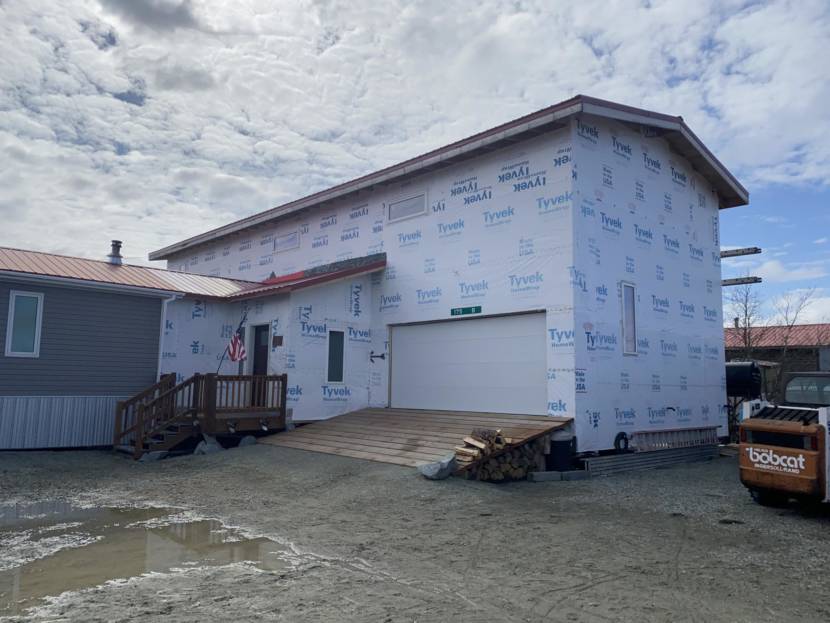
The Hackneys’ short-term rental addition in Blueberry Subdivision that is at the center of a dispute between the Hackneys and the City of Bethel. (Greg Kim/KYUK)

Short-term rentals, also known as bed-and-breakfasts, provide thousands of dollars in tax revenue to the City of Bethel. They also house many of the town’s transient workers. But the city says some of those rentals are operating illegally because they’re in residential districts.

The city recently shut down one short-term rental, saying it was built without permission and in a residential district. But KYUK has identified about 10 others in residential districts — pointing to a broader housing problem in the Yukon-Kuskokwim hub community.

The story begins with a complaint. In June 2019, four neighbors wrote to the city saying that a couple was building an apartment or hotel in a residential area, the Blueberry Subdivision. The neighbors called the building “an atrocity” that violated city codes for the residential subdivision. In planning commission hearings, some neighbors said that the structure was too big and would attract undesired traffic.

While this was happening, Bethel fired its city planner. The new city planner, Ted Meyer, found the building under dispute was permitted for a garage or a shop attached to a house. That wasn’t what he found.

Instead, Meyer found a large two-story building attached to a house. The building had a kitchen on the first floor and four bedrooms — each with its own bathroom — on the second floor. As he was leaving, Meyer said he saw a van full of people entering the property. He concluded that the owners were operating a bed and breakfast that they didn’t have a permit to build.

The building is owned by Dan and Dawn Hackney. Dan Hackney admits that he neglected to include the plans for the bedrooms on his site plan permit.

“I didn’t write two stories on the drawing. My mistake,” Hackney said.

But Hackney said he clearly stated his intentions to build a second story with bedrooms to use as a B&B to the previous city planner, Betsy Jumper. He had owned another home in Blueberry Subdivision that had a two-story rental unit as well, which he said that Jumper referenced in her verbal approval of the new structure.

“And she goes, ‘Oh shoot, Dan, that looks just like what you had across the street.’ I said, ‘Exactly.’ And she says, ‘No problem,’” Hackney said.

So the Hackneys say they assumed they verbal agreement with the city when they spent over $365,000 to build their B&B. Then, Betsy Jumper was fired and Ted Meyer became the new city planner.

According to Meyer, the written record is the only one that matters. He sent a letter to the Hackneys telling them that they had violated multiple city codes. First by building a structure they weren’t permitted for, and then by operating a short-term rental in a residential district. He said that the Hackneys would have to either convert the structure to a code-compliant building or demolish the entire second story.

The Hackneys hired an attorney and appealed the order. In a quasi-judicial hearing in November 2019, the Hackneys’ lawyer and the city’s attorney made their case to the city planning commission.

When the attorney representing the city, Mary Pinkel, questioned former city planner Betsy Jumper in that hearing, she initially testified that she had never given the Hackneys permission to build a two-story addition to their house. But when the Hackneys’ attorney Jared Karr cross-examined her, her story changed.

“You’re testifying that you never told Mr. Hackney he had approval to build a second story in his addition?” Karr asked Jumper.

“No, I don’t believe so,” Jumper said.

“You don’t believe so?” Karr asked.

“I don’t recall,” Jumper said.

“You don’t recall? Could you have told him it was okay to build a second story?” Karr asked.

“I could have,” Jumper said.

“I’m gonna object on relevancy. The issue is whether she gave written consent,” Pinkel said. The planning commission agreed with the city’s attorney, cutting off Karr’s line of questioning, and the alleged verbal agreement was not included as evidence in the case.

The Hackneys appealed again, sending the case to the city’s Board of Adjustment, which is formed of city council members. Council members agreed with the planning commission, and once again the Hackneys’ appeal was denied.

Since then, 18 residents of Bethel have written letters to the planning commission urging it to allow the Hackneys to reopen their B&B. Cynthia Randolph, who runs The Shindig Inn, a B&B also located in Blueberry Subdivision, wrote to the city saying that it was unfairly targeting the Hackneys.

“They should take it away from everybody, right? Shut them all down if that’s what they’re gonna do, not just single this one out,” Randolph said.

According to the city’s land use map, residential districts in Bethel include the subdivisions Blueberry, Larson, Uivik, much of Hoffman, Tundra Ridge, Bethel Heights, City Sub, and Schwalbe.

Some residents say that shutting down the short-term rentals in residential districts would be a bad idea. Devon Jeppesen is a nurse at the Yukon-Kuskokwim Health Corporation who helps find temporary housing for new and transient employees in Bethel. YKHC has its own housing units for this purpose, but Jeppesen said they sometimes fill up, so the city could start losing essential services if it starts shutting down B&B’s.

“If we have nowhere to put people, then they’re not going to come up and work for us. And then we can’t provide patient care,” Jeppesen said.

The number of health care workers who need temporary housing in Bethel has grown in recent years. Scott Cox, another YKHC employee, opened his own short-term rental, The Igloo, in 2018, around when the Yukon-Kuskokwim Health Corporation was finishing its expansion of the hospital in Bethel. Cox said that with the expansion, YKHC was trying to hire more nurses, medical providers, and other staff. Cox opened his B&B to try to remedy that housing shortage for workers.

YKHC spokesperson Mary Horgan confirmed that the health corporation uses B&B’s at times. She added that usage has likely increased in the past decade with the hospital’s growth.

Several short-term rental owners that KYUK talked to said they primarily house employees from YKHC, the State of Alaska, construction companies, the City of Bethel, TSA and sport hunters.

Owning short-term rentals is also an avenue to home ownership in Bethel, where housing costs are high. Carrie Lambert is a teacher and owner of Cranberry Cottage, a B&B located one street over from the Hackneys’ property. She said she was only able to purchase her home in Blueberry Subdivision because the bank gave her a larger loan due to it being a rental property.

Some B&B owners in residential districts want to know why, if their businesses are illegal, the city is issuing them business licenses and accepting their taxes. The Hackneys showed KYUK their business license and taxes they paid to the city when they were operating their B&B. Lambert and Randolph, who operate B&B’s in the same subdivision as the Hackneys did, also said they had business licenses and paid taxes to the city. The city administration did not respond to KYUK’s emails about accepting taxes from short-term rentals that it says are operating illegally.

The dispute with the Hackneys is driving the city to reconsider its laws for short-term rentals. Planning Commission Chair Kathy Hanson said that the city is working on drafting an ordinance that would make short-term rentals in residential districts legal to operate as long as they obtain the city’s written permission. Hanson said that the ordinance would limit the size and number of short-term rentals in a subdivision, although those numbers have not yet been finalized. It’s not clear whether the ordinance would allow the Hackneys’ four-room B&B. Once a final version of the ordinance is drafted, it would be introduced to city council for a vote.

In the meantime, the Hackneys appealed their case again, sending it to the Superior Court for the State of Alaska. In February 2021, a state superior court judge ruled that former city planner Betsy Jumper’s admission that she quote “could have” granted verbal permission to the Hackneys to build a second story was substantial evidence that should have been considered in the city’s earlier hearing and that the Hackneys’ attorney should not have been cut off from questioning Jumper further.

The state court is sending the Hackneys’ case back to the city for another hearing to consider additional witness testimony. That hearing has not yet been scheduled.


For one Sitkan, a dream of debt-free home ownership came in the form of a trailer

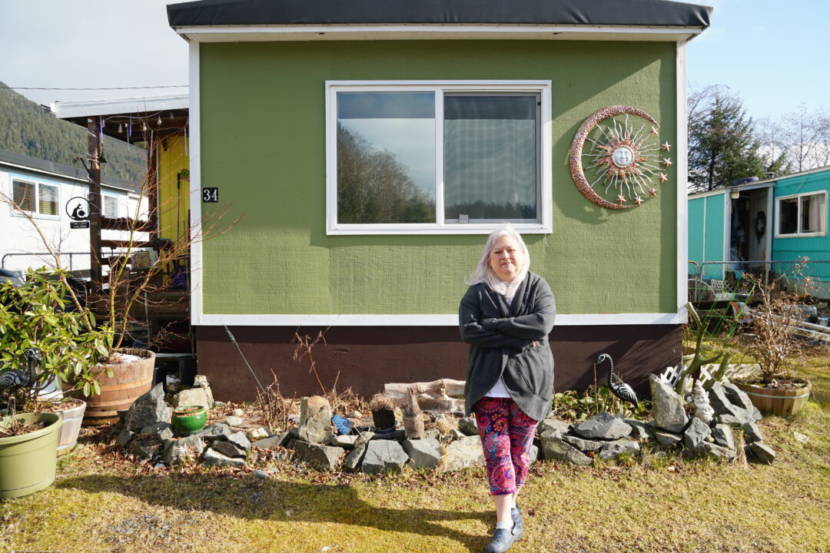
Sitkan Robin Schmid stands in front of her renovated trailer home. She paid $75,000 for it, around a fifth of what she would’ve paid for a house that still needed a lot of work. (Erin McKinstry/KCAW)

When people think of trailer homes, many envision shoddy construction and unhealthy living conditions. But in places like Sitka where construction costs are high and land availability is low, they’re an important affordable housing alternative.

For one Sitkan, renovating a trailer provided a path to debt-free home ownership, and this resident is not the only one looking beyond the stigma of trailer living.

Robin Schmid’s black and white border collie Lady greets me at the door of her olive green trailer home. The mouth of the Indian River spills into Sitka Sound outside her kitchen window.

It’s not just the scenery that’s inviting. Inside, the nearly 900-square-foot home looks like any modern apartment or house. It’s bright and tidy, with hardwood cabinets and new appliances.

“I’ve had a lot of people come over, and they’re just absolutely stunned when they come in,” she said.

Schmid hasn’t always lived in a trailer. She used to own a big house with land in Wasilla, and it had a big mortgage to go with it.

But a few years back after a divorce, she decided to make a change toward a simpler life. She was old enough to withdraw some of her retirement, and she started asking herself where she wanted to live and what she wanted to do next.

“And I just kept coming back to the idea that being self-employed was the only thing that really worked for me after being an attorney for over 25 years, and the place that I really wanted to live was Sitka. I really wanted to come back to Sitka,” Schmid said. “And I wondered how I could possibly afford to do that.”

When Schmid lived in Sitka before, she’d rented, but it was tricky to find a place that could accommodate her teenage son, her dog and cats. She looked at buying a house, but even places that needed a lot of work were out of her price range. Then she got a call from a friend asking if she’d be interested in a trailer that a local contractor wanted to sell.

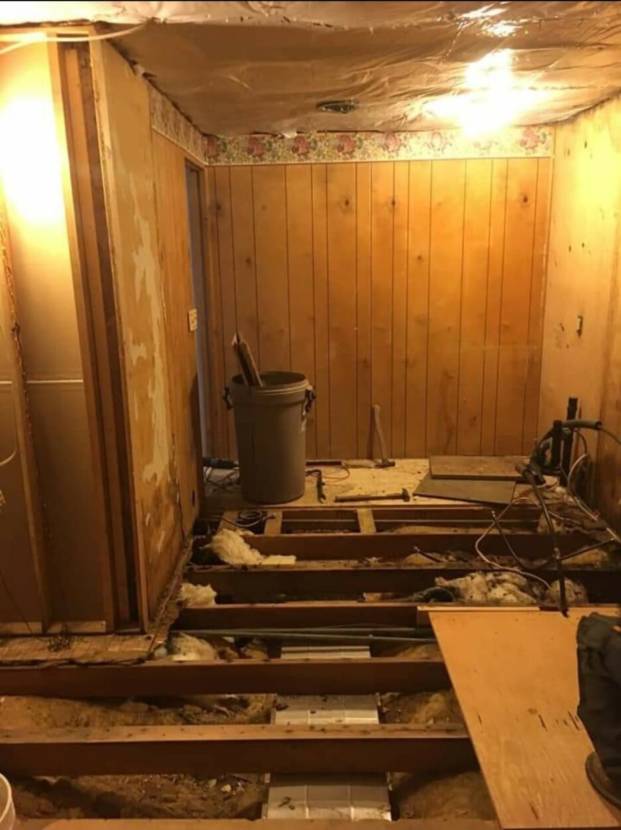
“And we did a walk-through and the place was — whew,” she said. “It’s 1984, and there was the paneling. So it was really, really ugly. And I said I only want the place if you gut it to the studs. I mean new floor, new ceiling, new walls. I said I don’t want to see any paneling anywhere.”

Robin Schmid’s trailer under renovation (Photo provided by Robin Schmid)

Finding a bank to finance the trailer renovation was a challenge, so they drew up their own contract and payment plan. He replaced everything from the windows to the countertops, and the fully renovated trailer cost Schmid just $75,000. That’s around a fifth of what she would’ve paid for a house that still needed a lot of work.

She does have to pay a couple hundred dollars a month to rent the lot in the trailer court, but she said that’s nothing compared to a mortgage. Besides, she said, owning land comes with extra responsibilities like maintaining the road or dealing with the electrical meter, and she doesn’t mind having neighbors close by.

And the smaller space isn’t a problem either, as long as she stays organized. She even runs her legal practice out of her home.

“It’s comfortable enough that if I want to stay here, retire here and die here, I think I could that,” she said.

But despite Schmid’s success story, everyone from her plumber to her father has voiced skepticism. She thinks there’s a stigma against trailers that doesn’t exist for other affordable housing alternatives like tiny homes.

“There’s been the belief always is that trailers don’t last,” Schmid said.

Robin Schmid and her dog Lady share the couch in her nearly 900-square-foot home. “There’s all kinds of unique storage ideas for trailers specifically that give you more space. And what I’d rather have is less junk, so I’m constantly trying to get rid of stuff,” Schmid said. (Erin McKinstry/KCAW)

Although many of Sitka’s trailers are shoddy and unhealthy, especially those built prior to 1976 when the Department of Housing and Urban Development introduced construction standards, Sitka Building Official Pat Swedeen said many people are pleasantly surprised at the quality of new manufactured homes.

“They’re not built like they used to be. They’re built with much thicker walls. They have insulation equal to what a typical stick-build home,” Swedeen said. “I think that’s an avenue that isn’t getting enough attention in my mind when it comes to really trying to talk about affordable housing.”

Developer Jeremy Twaddle owns Mountain View Estates. He’s slowly expanded the trailer court since he bought it nine years ago. He barges the manufactured homes from down south, installs them on a permanent foundation, and sells them move-in ready.

Even with the cost to ship the home and rent the lot, he said the price per square foot is about half of what someone would pay for a regular house in Sitka. And people have noticed. The remaining spaces are already promised to buyers, and the trailers haven’t even arrived yet.

“I’d say in the last year, there’s been a real uptick in this type of housing I think due to the affordability. And not only in Sitka, but kind of nationwide, the manufactured home builders are backed up about nine months in construction right now,” Twaddle said.

Jeremy Twaddle owns Mountain View Estates, a manufactured home park or trailer court off Sawmill Creek Road. (Erin McKinstry/KCAW)

He said getting a loan to buy a trailer can be a challenge, but in Sitka, ALPS Federal Credit Union offers financing.

A bigger hurdle is land. There’s not a lot ripe for development in Sitka anyway, and because of zoning restrictions, the space for trailer courts is even more limited. He said if the land was there, he’d keep bringing in manufactured homes because, as a lifelong Sitkan, he sees the need for affordable housing and the gap that trailers can fill.

“And I don’t think it’s a one-size-fits-all-type scenario,” Twaddle said. “I remember people always had manufactured homes and that’s what they lived in until they could pay that down and take that chunk and put it in on a stick-built home and work their way up from there. Just wanting people to stay in Sitka and succeed and not get run out of town because there’s only rental options or the homes are just too expensive.”

For Schmid, that’s exactly what her trailer provides: a way to stay in a place that she loves and the freedom to live her life the way she wants.

“I feel like I’ve gotten my life back without the debt hanging over my head,” Schmid said. “It’s about freedom to me.”

If she ever decides to move, she thinks she could get her money out of her renovated trailer and then some. But if not, she said, she’s gotten her living out of it.

This story is part of KCAW’s special series on affordable housing called “Building Solutions.”

Juneau’s liveaboards dodge fee increase, but harbor board says rate hikes are coming

Erika Judson and Mike Riley usually live on the Bailey Bay at Statter Harbor. They were against the proposed rate hikes for harbor residents. (Pablo Arauz Peña/KTOO)

Juneau’s Docks & Harbors board has been considering a residence fee hike, but residents of the harbors say that would make it difficult for them to get by. The proposal failed to pass in a vote by the Docks & Harbors board Wednesday, but board members say rate increases are still coming.

Erika Judson and Mike Riley are commercial fishermen who usually live on their boat. Judson says she was born and raised on the water, and living at the harbor is just common sense.

“It’s so much more affordable than an apartment,” Judson said. “You know, you rent a studio apartment for 1,000 bucks a month when you could pay a couple hundred bucks and live on a boat and enjoy the simple life and not have the stressors of, ‘Can I can I afford this?'”

Recently, Riley and Judson have been staying with family to care for Riley’s mom. When they live on the harbor, they pay a monthly residence surcharge of $69 per month along with moorage and service fees. Altogether, they pay about $312 a month to live at Statter Harbor.

About 140 people live in Juneau’s harbors. Juneau’s Docks & Harbors board proposal would have hiked their fees by 100%. 

Riley says many of his neighbors are folks who, like him, just want to live a simple life. Many are elders who just can’t afford to live anywhere else.

“I believe that to a point it’s, I think, it’d be city-sanctioned gentrification,” Riley said. “They’re trying to get this place for tourists. Doubling liveaboard fee with a bunch of people that I know that actually are liveaboards that are pensioners — it’ll break them.”

Another issue for Riley and Judson is the facilities and public services. They have basic bathroom facilities and sewage pumps, but they’re not always available. 

Security is also a problem. Riley says while there’s not a lot of crime in Statter Harbor, there is some.

“I’ve seen boats on fire on purpose,” he said. “I’ve seen people fighting. I had thousands of dollars and fishing equipment sold off my boat in the 15 – 20 minute period.”

The Docks & Harbors board voted against raising residence fees after extensive public comment against the hike.

But Port Director Carl Uchytil says Juneau’s harbor system still has financial needs to meet. The last time rates for liveaboards were raised was in 2008.

“The bottom line is that we’ve got to remain solvent,” he said. “And the asks of our harbor patrons — not just liveaboards but all harbor patrons — is growing, and our ability to fund with rates that haven’t changed in over a dozen years needs to be addressed.”

On top of the lack of funds, Uchytil says Docks & Harbors hasn’t seen any steady income since October 2019, before the COVID-19 pandemic. The lost tourism season in 2020 had a severe impact on the harbor system, which he says left it right on the cusp of a negative fund balance.

Uchytil says Docks & Harbors needs money to pay for various infrastructure projects, including rebuilding the north end of Aurora Harbor and expanding the North Douglas Boat Lodge, along with paying off a leased property between Aurora and Harris harbors.

He says regardless of the rate hikes being voted down, Juneau’s docks and harbors have growing funding needs.

“The Docks & Harbors board will deliberately look at our fees and look to see what’s appropriate to increase, and they’ll be looking at probably the oldest fees or the fees that haven’t been touched first, and try to adjust appropriately,” he said.

As for the charge of gentrification in Juneau’s harbors, Uchytil says that’s not the intention of the board.

“We’re not targeting a group for the purpose of moving them out,” he said. “We’re looking at opportunities to adjust fees that have not been adjusted in a long time to serve the community without a burden on sales or property tax.”

Uchytil says he can’t say where the fees will increase, but — one way or another — someone has to help pay the bills.

Editor’s note: After the original publication of this story, KTOO learned Mike Riley and Erika Judson are not registered residents at Statter Harbor. They have lived in the harbor in the past three years and plan to register with Docks & Harbors to continue living there. Information clarifying Riley’s and Judson’s current living arrangements has been added to this story.

Pandemic rent relief program received applications for about 1 in every 10 Alaskans

Juneau's Willoughby District on June 25, 2019.
Juneau’s Willoughby District on June 25, 2019. (David Purdy/KTOO)

About one out of every 10 Alaskans were in a household that applied for a massive pandemic rent relief program earlier this year.

Since the application period for the federally funded program closed in early March, a small army of nonprofit housing and tribal employees have been processing some 25,000 income-qualified applications to cover up to a year of rent and utilities.

Daniel Delfino directs the planning and program development department at the Alaska Housing Finance Corp., which is administering the program.

They anticipated a lot of applications after a different relief program was swamped last year, so they built their paperwork and review process with speed in mind. Delfino said they even used stopwatch tests to gauge how quickly workers could process different versions of the paperwork.

From the administrative side, that’s worked out well. But it’s a little different from applicants’ perspective.

“Well, uh, it’s a mix,” he said. “So the folks that have received money, I think in large part are happy. The folks that are still waiting for money, it’s no consolation to them that we’re one of the fastest states in the country to get the money out the door if they can’t pay their rent or their utility bill.”

Of the 25,257 applications that cleared the initial income and documentation hurdles, about 60% remain to be processed.

The program is getting about 600 to 800 calls a day, Delfino said, mostly from people checking their status. A status checker on their website is also getting about 800 unique user visits a day.

That includes Karla Pineda.

“It looks like it’s a little slow, because I think I’ve been waiting for, like, three months already,” Pineda said.

She’s a single mom who’s come to Juneau seasonally for about 9 years. Last year, she made Juneau her home year-round.

She said getting this help will be a big deal for her. She’s been able to make her rent by working for a company cleaning homes, and as an on-call assistant aide at the Juneau Pioneer Home, but she can’t really save money.

“As you know in Juneau, it’s not that cheap,” Pineda said. “The rentals are expensive, especially if you want to live in a secure place, especially with a kid, it’s not easy to find.”

There’s a big bucket of federal cash available for the program, about $242 million. That figure represents a combination of AHFC’s share, pooled with similar funds for the Municipality of Anchorage and 148 tribal entities that AHFC is administering the program for. The bucket is so big, state housing officials think it’s enough to pay rent for everyone eligible for a year.

Here’s a quick look at the numbers so far. In Juneau, AHFC says about $1.2 million has been paid out on behalf of 586 Juneau households. Another 901 Juneau applications remain in the queue. Statewide, about $26 million has been paid out so far on behalf of more than 10,000 households.

“That’s what’s happening right now,” Delfino said. “We’re trying to wipe out every past due balance that people have that they walked into the application queue with.”

After overdue bills are taken care of, landlords and utility companies will start getting checks for three months at a time going forward for up to a year.

“I’m not anticipating a challenge exhausting that money,” Delfino said. “We received a massive response. It’s, I believe, over 10% of our state are represented in the households that applied to this program, that’s 78,000 and change.”

And there’s even more federal funding destined for the program that could extend the benefits to up to 18 months.

“Right now, we’re just trying to make sure that we get the first round of money out to the people who haven’t received their first payment yet,” Delfino said. “That’s our big priority, it’s just making sure that we get through the queue first.”

Money for the second phase is pending in the state operating budget bill.

As renters struggle to find long-term housing in Sitka, the number of short-term rentals grows

After KCAW’s interview with Victoria Compton, she found a pet-friendly rental, but it took several months of searching. (Erin McKinstry/KCAW)

Victoria Compton has been apartment hunting for months. Her landlords sold their house, and she has to find a new place to live soon. The 23-year-old lifelong Sitkan has a steady job with the Southeast Alaska Regional Health Consortium, and she’s not even looking for her dream home — just a place to call her own.

“At this point, a roof over our head that we can afford,” Compton said. “A dishwasher would be nice, but we’ll take what we can get. And at this point, if it will take us and the dogs, that’s all that matters to us.”

Compton has two dogs. Finding a dog-friendly apartment in Sitka is particularly challenging.

“It’s just really hard,” she said. “Overall, the community is usually like, pretty resourceful and helpful. But when it comes to housing, it’s definitely a ‘you’re on your own’ kind of deal.”

Compton has seen some seasonal or short-term rentals advertised on Facebook, and a few people have reached out to offer her temporary housing. But she doesn’t see that as an option unless things get really desperate. She’s looking for a long-term solution.

“There’s so many homes that are seasonal,” she said. “I know that is something that other people are trying to get the city to look into and see how problematic seasonal rentals can be. And it’s not like you want to, you know, attack the people who do seasonal rentals, but highlight how much of a problem it is when it comes to the benefits of the community.”

According to city code, a short-term rental is any property rented for 14 consecutive days or less. Anything from a stand-alone house to mother-in-law apartments or a single room in someone’s home can qualify as a short-term rental in Sitka. They’ve gained popularity over the last decade as online rental marketplaces like Airbnb and VRBO have exploded.

City policies around them vary. In a few residential areas, they’re not allowed at all. In others, homeowners must seek planning commission approval through a conditional permit process. Just like hotels, they’re required to pay bed taxes to the city. And in commercial and downtown districts, they don’t need a permit, which means the city has no good way of tracking exactly how many there are.

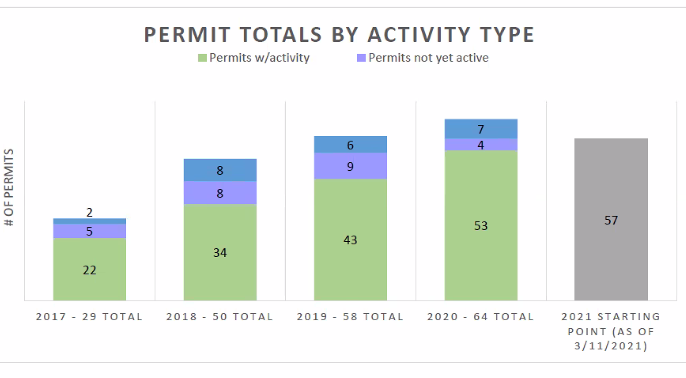
Sitka has tried to curb the short-term rental market before. In 2005, three years before Airbnb was founded, the Sitka Assembly issued a moratorium on new short-term rental permits in residential zones, in an effort to “protect the availability of affordable housing in Sitka.” It was lifted in 2007. And in the last three years, the number of known active short-term rentals has more than doubled, from 22 in 2017 to 53 in 2020.

The number of conditional use permits for short-term rentals in residential areas grew from 22 active in 2019 to 53 active in 2020, according to a report issued by the city’s planning department in March of this year.

Tim Riley owns several short-term and long-term rentals in Sitka. The biggest pro? The return is greater on a short-term rental. And despite the narrative about wild Airbnb parties, Riley said short-term rentals see less wear-and-tear and any damage is usually covered with the credit card on file.

“Down south we hear about these, you know, somebody rented a house on Airbnb and 700 kids came and had a party. And they’ve made movies about it, the house ends up in flames and stuff, there’s a fleet of police cars and stuff,” Riley said. “We don’t see that too often up here.”

On the other hand, with a long-term rental, the landlord doesn’t have to worry about fluctuations in the tourism economy.

“When you sign a lease for a year with somebody, or when you sign a lease with a Coast Guard for three years, that’s a guaranteed income stream for three years, you don’t have to worry about it,” Riley said. “All you have to do is make sure they leave the lights on and keep the heat going.”

Sitka’s rainforest environment is rough on housing, and property is expensive to maintain.

“I don’t want to put in gold plated toilets. But at the same time, if I’m going to go to all the trouble to rehab one of my units, and pour that kind of money into them, I need to charge more rent,” he said. “And sometimes the rent that I need to charge is more than people are willing to pay on a long-term basis, but I can get it on a short-term basis.”

Riley also said he’s had such high turnover in an apartment building he co-owns that they’re considering converting a couple of them into short-term rentals.

And that checks out with recent trends. While short-term rentals have doubled in Sitka, it’s still not clear how much that increase has affected the long-term rental market. In fact, in the last year, more long-term rentals have gone vacant. According to a report issued in March by the Department of Labor, the amount of vacant rentals in Sitka has increased to around 13.8%, the second-highest rental vacancy rate in the state. But more vacancy does not equal more accessibility. When the average wage is factored in, rent in Sitka is considered the least affordable of any area in the state.

Other cities that have experienced a surge in short-term rentals have developed stronger regulations in response. Some cities limit the amount of permits per host, and others require that a short-term rental must be the host’s primary residence.

At a Sitka Planning Commission meeting on May 5, around a dozen residents called for the commission to follow suit.  Commissioner Katie Riley, who is also the daughter of Tim Riley, voiced support for two possible policy changes: requiring short-term rentals be the primary residence of the host and voiding the permits when the property is sold.

“I don’t want to get to a situation where, you know, we have too many, and it’s like, oh, my gosh, what happened? I’d rather have a discussion about how to sensibly regulate these in a way that, you know, provides flexibility, but also addresses the concerns that people have raised,” she said. “Before we get to a point where Sitka is not a secret anymore.”

While the Planning Commission didn’t take any action that night, it did direct the Planning Department to develop a survey seeking community feedback on short-term rentals. Victoria Compton hopes the city will make some changes to its policies to keep renters from being pushed out. Just like the many visitors who rent Airbnbs to experience the mountains, ocean and fresh air, she loves everything about living in Sitka.

“I still have close family friends who I consider family that are here. And a lot of people I know are here and so many connections and memories. And then my grandparents are buried here,” she said. “Everything’s just here.”

And soon she hopes to find a home here too.

Site notifications
Update notification options
Subscribe to notifications