Economy

This mineral exploration site near Haines has had 3 owners in the last year. Is that normal?

Core rock samples at the Palmer Project.
Core rock samples at the Palmer Project. (Claire Stremple/KHNS)

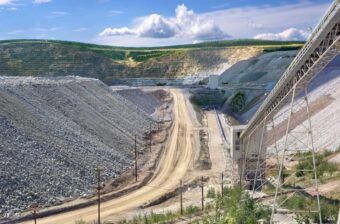
A controversial mineral exploration project north of Haines has changed hands twice in the last year. That included earlier this month, when Vizsla Copper purchased the Palmer Project in exchange for $15 million of its company stock.

Steve Masterman currently serves as deputy director of the Alaska Critical Minerals Collaborative at the University of Alaska Fairbanks. Before that, he was the state geologist.

The Alaska Desk’s Avery Ellfeldt caught up with Masterman to discuss what’s been happening with the project, which has been under exploration by Constantine Mining since 2006. He said projects like this can move quickly or take decades to become mines, for a lot of different reasons.

This transcript has been edited for length and clarity.

Steve Masterman: Well, it’s all across the spectrum. You know, some of them go pretty quickly, like Fort Knox and Pogo went pretty quickly in a relative sense, and then other ones take many decades. Donlin is another example. And some of them never become mines, even though they look very promising for a long while, for various reasons. Could be economic reasons, could be environmental reasons, could be social reasons. Could be all of the above.

Avery Ellfeldt: The project has changed hands a few times in the last year or so. Could you speak to whether that’s a pretty normal progression in terms of these exploration projects changing hands pretty frequently?

Steve Masterman: I think it is fairly common. I mean, this has happened to this one several times. You see other properties, the Nickel Platinum Group property in the Alaska Range, has changed hands several times. The Johnson property on the Alaska Peninsula — sorry, Cook Inlet — has changed hands several times. So it does happen. And, you know, I think if the project is more compelling, it happens less.

Avery Ellfeldt: My other question would be do these types of transactions necessarily mean anything about a project’s viability or economic feasibility? Anything else you’d add there?

Steve Masterman: There’s reasons that people back out, obviously. And I don’t know what the reasons are that the latest groups backed out of the Palmer Project, but they had a reason. Sometimes those reasons are that they’re not a good fit for the company at its current stage. So it might not speak necessarily to the project itself. It might in some cases have a lot more to do with the corporation and how their overall business is being managed and their portfolio of projects.

Avery Ellfeldt: Could you walk me through why projects like these are attractive from an investor point of view, given that they operate over such long timelines and so many never come to fruition?

Steve Masterman: It’s a risk and reward equation. These are riskier investments, that’s for sure. And so investors have to look at it pretty critically and analytically to see whether they think it’s worth rolling the dice on, essentially.

Avery Ellfeldt: They’ve kind of cited the Trump administration’s orientation toward mining in Alaska as a potential boon for the project. I’m curious if you could speak to that, whether the current administration’s mindset or approach could actually benefit a project that’s at this stage of exploration?

Steve Masterman: The current administration definitely has a pro-development stance. I think that’s pretty obvious. So they’re going to be leaning favorably toward mineral development projects. But whether this thing gets to that point within this administration is an open question. And I would guess, in three years, they’re not going to be ready to apply for permits. So whatever will happen, in a permanent sense, will probably happen in a future administration.

Avery Ellfeldt: One of the local tribes, the Chilkat Indian Village, has made it pretty clear that they’re not in support of this and that the new owner won’t be able to receive social license or community support. Would you say that’s pretty common with exploration projects in Alaska, specifically?

Steve Masterman: I think it’s common with mineral development projects globally. The problem the industry has is its perception. And I think the industry is working hard to change that perception, but it takes a while.

State says ‘no-build’ option still possible for proposed Cascade Point terminal as first comment period closes

Glacier Highway leading toward Cascade Point on Saturday, July 26, 2025. (Photo by Clarise Larson/KTOO)

UPDATE, Dec. 1:

The comment period has been extended to Friday, Jan. 9, 2026. 

Original story:

The comment period for the first phase of construction of a new ferry terminal north of Juneau ends this Friday. 

The state’s proposed Cascade Point Ferry Terminal is slated to be located just beyond where the road ends in Juneau on land owned by Goldbelt Incorporated, a local Alaska Native corporation.

The Alaska Department of Transportation and Public Facilities began soliciting public comment for the first phase of construction in late October. 

Shannon McCarthy, DOT’s communications director, said the current public comment period is only for the first stage of the project and is not the end of public input for the overall project. She said a no-build option is still on the table, even though DOT has already signed a $28 million contract for the first phase of construction.

“We have been talking about this project for a long time, and it really does fit in with kind of the philosophy of shorter ferry trips, longer roads, so that we can really have that operational efficiency,” McCarthy said. 

This is a concept design drawing of a new ferry terminal facility in Juneau at Cascade Point. (Alaska Department of Transportation and Public Facilities)

The first stage would develop the access road to the site and a staging area for future construction. According to DOT, construction could begin as soon as next summer.

The Cascade Point terminal would be Juneau’s second ferry terminal, located about 30 miles north of Juneau’s already existing terminal in Auke Bay. 

Under the Dunleavy Administration, the state has been pushing for the project for several years, saying it would benefit travelers by reducing operating costs and travel time between Juneau, Haines and Skagway. A Canadian mining company also wants to develop an off-site ore terminal at the site in partnership with Goldbelt. 

DOT recently released an economic analysis of the terminal that portrayed it as having more pros than cons, despite criticism from regional officials, conservation groups and members of the Alaska Marine Highway Oversight Board. City officials in Haines and Skagway have also openly opposed the project. The Juneau Assembly hasn’t taken a stance on the project. 

“This is really a part of a larger strategy to really reinvest in the marine highway infrastructure,” McCarthy said. 

Written and emailed comments must be submitted by this Friday. McCarthy said the public comment period for the second stage of the project is slated to open in the coming months.

Alaska Marine Lines barge continues south after taking on water off British Columbia

Alaska Marine Lines freight sits at a facility in Thorne Bay.
Alaska Marine Lines freight sits at a facility in Thorne Bay. (Hunter Morrison/KRBD)

An Alaska Marine Lines barge that was taking on water off the coast of British Columbia has continued its journey south to Seattle.

The barge was spotted floating lower than normal last week near Bella Bella, about 260 miles south of Ketchikan, on its way from Alaska.

According to an email from Alaska Marine Lines Director of Marketing Ryan Dixon, the barge was damaged during transit but was “secure” and “not sinking.”

Dixon said the barge was not carrying groceries or supplies for Southeast Alaska that could cause supply chain disruptions for the region. The barge also did not contain bulk cargo or petroleum products, according to the email.

On Tuesday, the company announced that a second barge was sent to offload some of its cargo. As of Sunday, both were en route to Seattle.

Alaska’s commercial salmon harvest rebounds after ultra-low harvest last year

Salmon returning from the ocean attempt to jump Brooks Falls in Katmai National Park and Preserve’s Brooks River on July 12, 2018. Alaska’s commercial salmon harvest this year was nearly twice as big as last year’s small harvest. (Photo by Russ Taylor/National Park Service)

Alaska commercial fishers caught much more salmon in 2025 than they did last year, but the money they earned was modest, according to the statewide harvest report.

The state commercial salmon haul totaled 194.8 million fish, the 12th largest since 1985, according to the Alaska Department of Fish and Game’s preliminary annual summary, released this month.

Measured in pounds, the 2025 harvest was about average compared to the last 40 years the agency has been keeping an all-species record, the Fish and Game summary said.

But the amount of money paid to harvesters delivering their fish – known as ex-vessel value – was the 13th lowest since 1975, when adjusted for inflation. This year’s total was $541 million, the department said.

This year’s totals represent a big improvement from last year, when only 101.2 million salmon were harvested. It was the third lowest haul since 1985 and the ex-vessel value was $304 million, the third lowest since 1975 when adjusted for inflation. In weight, the 2024 harvest totaled 450 million pounds, the lowest on record.

Alaska salmon, particularly Chinook, have been shrinking in size over the past decades, a trend that scientists attribute to a variety of factors, including climate change and ocean conditions.

This year, sockeye salmon accounted for the most value among Alaska’s five salmon species, continuing the long-term pattern in the industry. A little over a quarter of the landed fish were sockeye, but they made up 58% of the value, according to the Department of Fish and Game’s summary.

Pink salmon, the most plentiful and cheapest of the Alaska species, made up 61% of the total fish harvested and 21% of the total ex-value. The pink salmon harvest was about 14% less than expected at the start of the season, the department said.

At the other end of the volume spectrum, the statewide Chinook harvest, which accounted for only 181,892 of the 194.8 million total, was 26% higher than predicted in the preseason forecast, the department said.

Chum salmon accounted for 10% of the harvest and coho accounted for 1%, the department said.

The harvest totals are preliminary and subject to revision as more information is received, the department said.

Juneau’s sole electricity provider appeals state approval for second one

The proposed hydroelectric project is planned for Lower Sweetheart Lake. Photo courtesy of Google Earth.
The proposed hydroelectric project is planned for Lower Sweetheart Lake. (Photo courtesy of Google Earth)

Listen to this story: 

Juneau’s sole electricity provider, Alaska Electric Light & Power, is appealing the Regulatory Commission of Alaska’s decision to approve Juneau Hydropower as a new public utility. Last week, AEL&P requested that the Superior Court of Alaska consolidate two separate cases involving disputes between the hydroelectric companies.

The appeal follows more than a decade of disputes between AEL&P and Juneau Hydropower — a company that plans to increase the borough’s hydroelectric capacity by nearly 20%. The company plans to shuttle power to rural parts of Juneau in the next few years through its Sweetheart Lake Hydroelectric project. This summer, the commission ordered AEL&P to facilitate Juneau Hydropower’s connection with its existing electricity infrastructure and the two utilities hashed out agreements to make that happen.

Alec Mesdag, the CEO of AEL&P, disputes the commission’s decision to exempt Juneau Hydropower from a requirement to have at least 10 customers when it certified the company as a public utility. The company has one contracted customer: Coeur’s Kensington Mine.

Mesdag also has outstanding complaints about the agreements the commission ordered AEL&P to sign, which he hopes the Superior Court will help resolve. Namely, AEL&P is required to reserve 8.5 megawatts of transfer capacity in its system, even before Juneau Hydropower is up and running, without compensation. 

Mesdag said he worries he could incur additional costs if, in the meantime, AEL&P’s existing customers increase their power use enough to eat into that reserve. 

“Do I have to build upgrades to ensure that we can, you know, transfer another eight-and-a-half megawatts on top of that?” he said. 

But once operating, he says Juneau Hydropower has to pay AEL&P $1.2 million per year for using the system.  

Mesdag also disagrees with the commission’s decision to approve of Juneau Hydropower’s design of the interconnection point, where electricity generated at Sweetheart Lake will join AEL&P’s Snettisham power line to Juneau. 

“It is a bad precedent that any entity who disputes the utility’s position on what creates a safe and reliable interconnection that protects its customers can simply insist that their project will die if the commission does not order the utility to accommodate their every wish,” Mesdag said.

Duff Mitchell, the managing director at Juneau Hydropower, said the appeal is “frivolous.” The two utilities spent more than a week in hearings before five commissioners, who decided to approve Juneau Hydropower’s public utility certificate and the Sweetheart Lake project plan.  

“Basically, their case is, you know, we got our butt kicked in the hockey game five to zero, and now we’re a sore loser and we’re blaming the ref,” Mitchell said.

He called AEL&P’s disputes mere “quibbles” and said he’s “charging forward” with financing and building the new hydroelectric plant at Sweetheart Lake. 

“We’re proceeding with the lawful order we have, and we’re moving on to put this project into construction,” Mitchell said. “We’re bringing the power for Juneau’s prosperity.”

Mitchell said he plans to break ground next year. According to Juneau Hydropower’s Federal Energy Regulatory Commission license restrictions and commission certificate, construction must begin by September 8, 2026, and be completed three years later. 

The Regulatory Commission of Alaska declined to comment.

Correction: A previous version of this article incorrectly stated that the cases were already consolidated.

That figure you’ve heard on how much food Alaska imports? It’s not real.

A stack of shipping containers
Shipping containers in Wrangell. (Photo by Sage Smiley / KSTK)

When people talk about Alaska’s reliance on imported food, they nearly always cite the same number: 95%.

The figure has been around for decades – appearing again and again in executive orders, media reports, state-commissioned analyses and speeches. But food systems experts can’t trace the number back to a verifiable, data backed source – or crunch it themselves.

“I think it is a very useful thing to just note that it is made up,” said Rachel Lord, policy director at the Alaska Food Policy Council, a Homer based nonprofit.

That’s not to say the figure is totally off base. It’s well established by now that the vast majority of food Alaskans purchase is imported from elsewhere. And Lord is among those who have said 95% is a reasonable ballpark estimate.

But uncertainty around the figure underscores the complex nature of tracking whether Alaska is becoming less dependent on imports over time – even as the Dunleavy administration seeks to push the state in that direction.

“How do we know if we’re succeeding, if we don’t actually have any metrics?” said Lord, who also spoke to the challenge in a recent High Country News article.

Glaring red flags

So where did the 95% figure come from? A web of reports and academic papers point in a few different directions.

A 2023 report prepared for Dunleavy, for instance, says the figure hasn’t been “substantiated, nor updated” since a journal mention in 1987. Another paper, published in 2010, says it dates back to the 1970s – and also nods to uncertainty around its precision.

“In 1977 it was estimated that 95 percent of food in Alaska is imported, despite our seemingly large number of avid gardeners, hunters, and fishers,” the paper says. “This figure has been used by many sources since then but research to verify it only began recently.”

A third report, published in 2014, attributes the statistic to speeches made by two different people, one in 1977 – and the other in 1998.

Original source aside, the figure has a few glaring red flags, said Mike Jones, a food systems economist at the University of Alaska Anchorage.

“Our biggest warning with something like this 95% statistic is that there are no units attached,” he said. “Is it 95% of the dollars we spend on food? Is it 95% of the weight of the food we have? Is it 95% of the calories of the food that we have?”

On top of that, it’s almost never framed consistently. In many instances, people will say 95% of Alaska’s total food supply is imported. But that doesn’t account for the significant role that hunting, fishing, farming and foraging play in local food systems.

“It’s [95% of] purchased food,” Lord said. “In rural Alaska, and a lot of communities, a huge amount of food eaten is subsistence, wild foods.”

Still, the figure abounds. As recently as March of this year, the Dunleavy administration included it in a video caption on Facebook, in which the governor announced his plan to create a Department of Agriculture.

“Alaska imports 95% of its food, but we don’t have to,” the caption reads. 

A data challenge

As Jones sees it, the figure seems to have been repeated so often, for so long, it’s become conventional wisdom. But he’s not convinced it should stay that way.

“I think we search for numbers in describing the scope of a problem. And it’s appropriate to look for numbers,” he said. “I think if we’re using a number, then it’s important that it definitely comes from a verifiable source.”

So why isn’t there a verifiable source? The short answer is that it’s a complex math problem that’s made more difficult by major data gaps around both imports, and locally sourced food.

The point of doing that math would be to pinpoint a figure that would help track progress over time. But for the time being, Jones said, it might be better to rely on adjectives, as opposed to percentages.

“I tried very hard to use publicly available, particularly federal statistics, to be able to infer that for the state. And I found it to be a very, very difficult exercise.”

A spokesperson for the governor’s office nodded to Dunleavy’s plan to create an agriculture department as a potential solution.

“An additional benefit of the Department is that it will be able to facilitate collecting more detailed data that will allow for more precise, Alaska-specific food system measurements moving forward,” Deputy Press Secretary Grant Robinson wrote in an email.

Lord, of the Alaska Food Policy Council, said her organization is working on a grant-funded database with the same goal.

Lessons from Vermont

The challenge isn’t isolated to Alaska. David Conner is an economist with the University of Vermont who led the state’s efforts to count local food.

Conner and his team relied on some of the same datasets Jones has worked with. But he also built on that data by reaching out to grocery stores, schools, hospitals, distributors and more to get a sense of how much local food they purchased in the previous year.

From there, the researchers did their best to avoid counting any sale twice, and asked important questions like – is beer food?

“We have a fairly vibrant local brewery scene,” Conner said. “Do we count that?”

There’s also the reality that many agricultural products aren’t ultimately consumed by humans – or consumed locally. Like hay, which is used for livestock. The same is true in Alaska, where hatchery activity and floraculture – namely, peonies – make up for a substantial chunk of the agricultural production.

Back in Vermont, the researchers ultimately estimated that the state had likely surpassed its own goal to ensure local food accounts for 10% of total consumption.

Still, they wrote, “local food consumption estimates such as ours should not be taken at face value to the large data gaps.”

It all underscores that Alaska isn’t alone in importing the vast majority of its purchased food. That’s the case given that different areas are better suited to different crops – and that the U.S. food system hinges on long and winding supply chains. It’s true even in states with booming agriculture sectors.

“In many, many cases, food-producing regions are also the most food insecure, because the food is grown for export markets, not for local consumption,” Conner said.

Jones, with the University of Alaska, said it’s a good thing that Alaskans can access foods grown really far away. It’s necessary from both a nutrition and financial standpoint.

“I’m sure you could grow a mango in a Conex in Alaska. But nobody is trying to buy a $100 mango,” he said.

Still, many states think very hard about boosting local food production – and for good reason, Jones and Conner said. Doing so is good for the planet and yields fresher food.

“Maybe more importantly, when you buy locally grown food, the money tends to circulate more times in the economy and generate more wealth and more income before it leaves,” Conner said. “So it can really be an instrument of economic development.

Site notifications
Update notification options
Subscribe to notifications