Economy

What does a North Slope ‘renaissance’ mean for Alaska’s state budget?

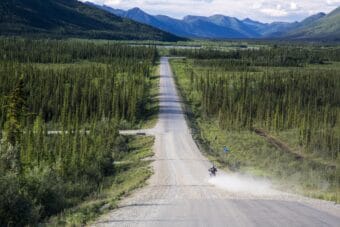
The Trans-Alaska Pipeline runs alongside the Dalton Highway near the Toolik Field Station on June 9, 2017, in the North Slope Borough. (Photo by Rashah McChesney/Alaska's Energy Desk)
The trans-Alaska Pipeline runs alongside the Dalton Highway near the Toolik Field Station on June 9, 2017, in the North Slope Borough. (Photo by Rashah McChesney/Alaska’s Energy Desk)

Industry leaders say a “renaissance” is underway on the North Slope. Major projects are well on their way to production, and oil companies say they’re planning to expand even further, helping to reverse a long-running decline in production in the Arctic.

Construction is well underway on high-profile oil development projects like ConocoPhillips’ Willow and Santos and Repsol’s Pikka. Both of those stand to substantially boost the amount of oil flowing south.

At the Alaska Oil and Gas Association’s annual conference last month, ConocoPhillips’ Donald Allan said Willow remains on track to start production in 2029.

“It’s a super exciting time for Alaska,” he said. “We have big projects happening right now. We have a whole new play ramping up, and there’s more to come with our exploration season and future projects.”

Meanwhile, Santos VP of Business Development Peter Laliberte shared the news that the Pikka project is running months ahead of schedule and is more than 90% complete. It’s on track to produce its first barrel of oil in the first quarter of next year, he said.

“Once we start up, we’ll ramp up about mid-year,” he said. “We’ll ramp up to 80,000 barrels a day, and by then, we’re going to be looking on for the next project.”

An additional 80,000 barrels a day would boost North Slope production by nearly 20% from where it is right now.

What does that mean for the state’s economy — and the state’s stretched budget?

“I look at it as all positive,” said Sitka Republican state Sen. Bert Stedman, one of the top budgeters in the state Legislature. “Quite frankly, this is just the beginning. There’s going to be probably a decade of build-out going on on the Slope.”

It’s a boon for the economy, he said, and a welcome source of relief for the state budget. Pikka — which, importantly, is on state-owned land, and thus generates more state revenue than projects on federal land — is likely to yield more than $200 million for the state in its first year, according to an analysis from the state revenue department.

That’s a significant, though not life-changing, chunk of change for the state, Stedman said. For comparison, the education funding boost lawmakers approved this session cost about $170 million.

“It’s not going to be, you know, you’re in euphoria because you have massive surpluses in your budget or anything like that, but it’s definitely positive,” he said. “You want to take multiple steps like this forward, then they all add up to definitely helping the state balance its budget.”

Higher-than-expected oil prices are also providing a lift to the budget, he said.

Sen. Bill Wielechowski, an Anchorage Democrat, said the surge in North Slope activity is, indeed, good news. But not as good as it could be.

“Absolutely, $200 million, of course, happy to see it. It will help the budget,” he said. “But when you compare it to what other jurisdictions are getting, it is nowhere near what we should be getting.”

He pointed to oil-producing states like Texas and North Dakota, which have substantially higher tax and royalty rates than Alaska. Of course, the fact that most of Alaska’s oil comes from the remote North Slope, where costs are high, complicates the picture.

“We can’t even afford to fund our schools. We’ve got schools falling in the ocean. We’ve got communities that still have honey buckets. We can’t maintain our roads, we can’t plow our roads,” he said. “We have colossally mismanaged our oil wealth in the state of Alaska.”

Wielechowski said lawmakers should make changes to the state’s tax and royalty system to take advantage of the surge in activity. For one thing, he said he’d like to prevent companies from deducting investments on federal land — like Willow — from the state taxes they owe on other projects. State revenue officials recently cut the state’s projected income from Willow by half.

“Why should we subsidize that?” he said. “Why should the state of Alaska be subsidizing hundreds of millions to billions of dollars for production, for exploration costs, drilling costs, for which we get zero royalties, for which we get very little in production taxes?”

Wielechowski has backed a number of bills that would stiffen the state’s oil and gas taxes, though they have yet to advance to a final vote.

Juneau could lose the power to claim its electricity is 100% renewable if AIDEA sells local energy credits

A tower and avalanche diversion wall on the Snettisham transmission line. (Photo courtesy of Mike Janes/AEL&P)

Listen to this story:

Juneau might lose its ability to say that its electricity is created entirely by renewable hydropower if the Alaska Industrial Development and Export Authority, or AIDEA, prevails in a lawsuit over the ownership and sale of renewable energy credits created by the Snettisham Hydroelectric Project, which currently supplies two-thirds of Juneau’s electricity.

Renewable energy credits, known as RECs, are much like carbon credits. Utilities that burn fossil fuels can buy them to say they’re powered by renewable energy, allowing them to claim carbon emissions reductions.

But, once sold, the utility that generates the renewable power — in this case Alaska Electric Light & Power, or AEL&P — could no longer claim it produces entirely renewable energy. The City & Borough of Juneau, along with businesses and nonprofits that use this power, would lose the claim too.

Randy Ruaro, the executive director at AIDEA, said selling the credits is a way for the state to make money.

“Frankly, it was an oversight, I guess, by previous AIDEA staff and employees to recognize that this opportunity was out there,” he said. “But once it came to our attention, we’re obligated to take steps to create and generate revenue for AIDEA and for the state of Alaska treasury.”

Exactly how much revenue the agency could make is unclear. On the open market, RECs are priced at anywhere from $1 to $700 per megawatt hour. Snettisham produces roughly 281,000 megawatt hours annually and AEL&P estimates the credits would sell for between $281,000 and $421,500.

Although the dispute comes down to who gets to say what — in essence, a matter of reputation — the impact of selling the credits could be financially detrimental for those who use the claim in Juneau.

Steve Behnke is a founding board member of Alaska Heat Smart, a nonprofit that installs heat pumps in homes across coastal Alaska. He also leads Renewable Juneau, a nonprofit that advocates for clean energy.

“Renewable Juneau and Alaska Heat Smart have created the Alaska Carbon Reduction Fund, which raises money by saying that we’re using this nice clean hydroelectricity, a renewable resource, to put heat pumps in low-income Juneau homes, saving them 50% on their heating bills, and demonstrating a reduction in carbon emissions,” he said.

He says the fund relies on individuals and companies contributing to offset their carbon emissions.

Alaska Heat Smart is also rolling out a program to install 6,000 heat pumps funded by a $38.6 million dollar federal grant. Behnke said that if AIDEA is allowed to sell the credits outside of Juneau, then local nonprofits would lose their claim to renewable power, making them less competitive in seeking grants that score project applications based on clean energy.

Robert Barr, Juneau’s deputy city manager, echoed Behnke’s concern.

“I certainly understand (AIDEA) wanting to bolster their bottom line, but in this case, they’re doing that at our expense, and that is certainly frustrating,” Barr said.

Barr called the sales proposal short-sighted and said AIDEA didn’t consult with the city before starting the process.

Greens Creek Mine, the largest silver mine in the country that’s located near Juneau on Admiralty Island, runs partially on surplus hydropower supplied by Snettisham through an agreement with AEL&P. Hecla, the company that owns the mine, claimed a 38% decrease in greenhouse gas emissions between 2019 and 2024. Last week, Hecla filed a complaint against AIDEA, asking the Regulatory Commission of Alaska to determine that AIDEA doesn’t own the renewable energy credits and therefore can’t sell them.

On Thursday, AEL&P filed a lawsuit against AIDEA alleging the same thing. Although AIDEA owns the Snettisham Hydroelectric Project, it long ago sold the power generation rights to AEL&P.

In the court filing, AEL&P asserts that any renewable energy credits created at Snettisham should belong to the utility, not AIDEA.

Most states have laws governing how renewable energy credits are created, traced and transferred. The Alaska Legislature considered a bill a few years ago that would have done that, but it didn’t make it out of committee, leaving it unclear how renewable energy credits work here.

Alec Mesdag, the CEO of AEL&P, said the utility looked into the credits a while ago and decided not to pursue selling them.

“It’s been something that has just provided substantially more value than what we would obtain by selling the RECs to someone who doesn’t live here at all,” he said.

Mesdag said the credits make more sense for energy grids that have a mix of power generation. Utilities buy and sell them to meet renewable portfolio standards set by state laws — but Alaska doesn’t have one of those laws either.

Now it’s up to the Alaska Superior Court to decide whether Juneau’s only operating electric utility owns the renewable energy credits that until now, local businesses and nonprofits believed they could claim. The court issued a temporary restraining order on Friday preventing the sale of RECs until the issue can be discussed in court. A hearing will be held Sept. 18.

Correction: This story has been updated to better distinguish between two separate heat pump installation programs. 

Car buyers and dealers in Alaska face limited options with new EV shipping restrictions

Lonnie Khmelev stands before a row of electric vehicles at his Juneau dealership. He’ll continue selling EV’s but may have to do so through a ferry— limited at two at a time. (Photo courtesy Olena Kot)

Listen to this story:

Lonnie Khmelev owns Affordable Auto Sales in Juneau, and until last week, he got all of his EVs shipped through Alaska Marine Lines. That’s true for all of the car dealerships in Juneau. Khmelev currently has 50 cars on the lot and nearly half are EVs.

“I would say we sell probably about 40% EV,” he said.

But AML stopped shipping electric vehicles to Alaska at the beginning of September due to the fire risk posed by lithium ion batteries. This came after two other major shipping companies Matson and Tote Maritime suspended their EV shipments to the state for the same reason.

Khmelev said he’ll probably ship EVs on the ferry, which has a limit of two at a time.

“I do think that we’re going to continue selling EVs, and we’ll find ways to get them here and ship them out if need be,” he said. “I’m staying positive on that.”

Because his operation is small, Khmelev said getting just a few cars in per week is plenty.

But down the road at the Juneau Auto Mall, the largest dealership in town, Manager Kody Richardson is less optimistic.

“Without a detailed workaround to get cars here, it will definitely affect our ability to grow EV sales in Southeast Alaska,” he said.

Richardson said EVs have made up less than 5% of the company’s sales so far this year, but even that demand may be hard to keep up with.

AML didn’t agree to an interview for this story, spokesperson Ryan Dixon wrote in an email that the company still ships hybrid vehicles that don’t plug in, and will reassess its ability to safely ship EVs and plug-in hybrids as industry standards and safety procedures improve.

The decision came after a cargo ship carrying electric, hybrid and standard vehicles caught fire and burned for days before sinking off the coast of Adak in June. All Twenty-two crewmembers evacuated on a lifeboat and were rescued by another vessel.

Steve Behnke leads Renewable Juneau, a nonprofit that advocates for clean energy. He said he hears the shipping companies’ safety concerns, but “as we understand it, the circumstances are just totally different in terms of the shipping that AML is doing,” he said. “They’re using open barges. They’re not cramming a bunch of vehicles down in the hold of a cargo ship.”

Behnke said EVs make good sense for Alaska’s capital city, which runs on relatively cheap hydroelectric power, has a small network of roads and a moderate climate that isn’t rough on the car batteries.

“Juneau is a Goldilocks zone for EVs,” he said.

It’s unclear if car dealerships are facing the same problem in the rest of the state. A handful of dealerships in Anchorage didn’t respond to interview requests for this story. But anecdotally, it may be harder to buy an EV in the state’s largest city. Anchorage resident Maggie Miller ran into roadblocks when she explored buying one in August.

Miller’s teenage son totaled the family’s 2013 Toyota Highlander while learning to drive.

“We had been intending to buy an EV next fall when he turned 16,” she said. “So when this total happened, we were like, well, maybe we should go ahead and get the EV.”

The Millers called Continental Subaru to see about the Solterra. That’s when they heard that the dealership can’t get them because shipping companies won’t transport EVs to Alaska anymore.

Miller said she was surprised.

“I was really disappointed, because I just understood this was something we were trying to do as a country,” she said. “We were trying to make a change and it’s something that we totally can support.”

Miller’s often shuttling her two kids and nephews to their sports and other activities, and needed a car to replace the totaled one. So she ended up just buying another gas-powered Highlander.

“It’s just a bummer that there’s…improvements in technology, but there are all these barriers to taking the steps to do the right thing,” she said.

Miller said that she hopes dealerships can find a way to get EVs to Anchorage, either with additional charging stations on the Alcan Highway or a change in shipping policy.

ConocoPhillips plans large layoffs, potentially slowing or reversing Alaska’s oilfield jobs growth

The ConocoPhillips Alaska Inc. building in Anchorage is seen on June 28, 2023.
The ConocoPhillips Alaska Inc. building in Anchorage is seen on June 28, 2023. (Yereth Rosen/Alaska Beacon)

The top oil-producing company in Alaska is planning significant layoffs, it announced last week.

In a series of statements, the oil giant ConocoPhillips said it will be firing between 20% and 25% of its global workforce of about 13,000 people. That would mean between 2,600 and 3,250 layoffs worldwide.

“We are always looking at how we can be more efficient with the resources we have. As part of this process, we have informed employees that a 20% to 25% reduction in our global workforce, which includes employees and contractors, is anticipated. The majority of these reductions will take place in 2025,” said Rebecca Boys, director of external affairs for ConocoPhillips Alaska, on Thursday.

Boys declined to say how many people the company employs in Alaska, but prior documents published by the company say that it has “about 1,000 people in Alaska,” and of those, about 80% live in the state.

Altogether, the oil and gas industry employed 8,800 people in Alaska as of July, according to state statistics. If ConocoPhillips were to lay off a quarter of its Alaska workforce, it likely would reverse an upward trend for the oil and gas industry here.

Since bottoming out at 6,100 people in November 2020, during the COVID-19 pandemic emergency, the number of people employed by the oil and gas industry rose throughout President Joe Biden’s administration.

ConocoPhillips produces the most oil of any company operating on the North Slope and holds the second-most oil and gas lease area in the state.

According to state data, ConocoPhillips leases about 490,000 acres of Alaska land and water for oil and gas drilling. That’s behind only privately owned Hilcorp, whose holdings exceed 500,000 acres.

ConocoPhillips is developing the large Willow project in the National Petroleum Reserve-Alaska, which is expected to begin producing oil in 2029.

According to the Alaska Division of Oil and Gas, ConocoPhillips is also planning to drill four exploration wells in other parts of the reserve this winter.

On its production side, ConocoPhillips was planning to drill 12 new production wells this year and next from the Kuparuk oilfield west of Prudhoe Bay.

International relay persists despite broken ferry, troubled international relations

A wave of the Klondike Road Relay begins on Sept. 5. (Photo courtesy of Jaime Bricker)

Last year, the Klondike Road Relay got off to a late start when a tour bus crash delayed the race, forcing participants to skip the first few legs. This year, the event celebrated its biggest gathering, despite broken infrastructure and ongoing political tension.

Half party, half grueling mountain run, the 109-mile race stretches from downtown Skagway up the Klondike Highway, all the way to Whitehorse, Yukon. It retraces the steps of the gold miners, except these participants wear wild costumes, flashing safety lights and followed by support vehicles. One of those vehicles this year was an open trailer outfitted with a working hot tub.

Julia Frost from Juneau almost missed this year’s event. It was her first time running the relay. A mechanical issue on the Alaska Marine Highway System made the long journey even more challenging.

“The LeConte broke down so our three cars that we had booked could not come,” Frost said. “So we scrambled yesterday and found one rental car and one Turo for an obscene amount of money. But we were coming, we were doing this.”

So, how much did that broken down ferry cost Frost’s team?

“The Turo was $1,300 and the rental was like $1,200 — a lot,” Frost said. “I mean, we’re sharing it with 10 people, whatever. You know, it’s the whole experience.”

Angene Johnson from Anchorage didn’t so much want the Klondike Road Relay experience as much as her husband didn’t want to run two of the ten legs. The couple flew to Juneau and made it to Skagway before the ferry mishap. But Johnson worried about how they’d get home to their two children if the vessel wasn’t restored.

“We have not had any official communication yet, but we’re trying to start making some backup plans, just in case it’s not functional,” she said. “We have a number of potential worst case scenarios.”

Johnson’s teammate, Aaron Cravez, was less concerned.

“We got plenty of beer, so we’re good,” he said.

For Yukoner Kirsten Madsen, the race was about restoring a relationship.

“I definitely had some qualms,” she said. “As we were driving, I said this is the first time I’ve crossed the border since Trump’s election. And there have been other things that we didn’t do so far this summer because of that. But this race and the kind of friendly feelings we have about Skagway made it an exception for me.”

Madsen was part of team Tiger Fire.

“We’ve got some tiger ears and a bow tie and a tail that’s affixed in a weird, not quite accurate location, but it’ll work,” she said.

Race coordinator Ryan Sikkes says this is the biggest race ever at 2,000 entries sold. One team had to cancel because of the broken ferry.

How will Trump’s “One Big Beautiful Bill” impact Alaskans? It’s hard to say.

The Trans-Alaska Pipeline winds through the landscape, seen here at pipeline mile 709.7 along the Richardson Highway south of Copper Center, Alaska on August 13, 2024. (Eric Stone/Alaska Public Media)

President Donald Trump’s One Big Beautiful Bill Act that passed in July will likely have sprawling impacts to Alaska, from oil and gas production to a tax cut for whaling captains. But because of the way the nearly one thousand page bill was written, it’s hard to make specific predictions.

Some elements, like changes to Medicaid, don’t take effect until 2027.

Alaska Public Media’s Ava White spoke with Kevin Berry, a professor and chair of the economics department at the University of Alaska Anchorage. He says those dates may be far out, but that doesn’t necessarily minimize the impacts.

This interview has been lightly edited for clarity and length.

Kevin Berry: To the extent that the current law stays current law and doesn’t change, it just delays the impact for these things. In some cases, though, it gives the state a chance to prepare or remove some of those impacts.

So for instance, when we talk about the impacts to SNAP – from the requirement for states to basically pay a penalty for payment mistakes, the delay in the implementation of that gives the state the opportunity to reduce those error rates, and if we show a good faith effort, avoid some of those impacts.

Now the state has a high error rate for SNAP payments, and it depends on whether or not we can actually do those things over time. To the extent that we can’t, we’re just delaying the impacts.

I think that one open question is that a lot of the provisions in the bill that kick in later can potentially change over time. To the extent that that law stays the way that it is right now, we can make projections of what the bill looks like, but some of these things that, you know, are going to come into effect in the next couple of years may change in response. There could be political will to change impacts to different programs or different rules or dates that things kick in. And so it makes it really hard, I think, to forecast exactly what this is going to look like in 10 years.

We can really only look at a lot of these baselines as what’s under current law, but we’ve seen very recently that current law can change dramatically, very quickly. So I think it’s worth keeping in mind that there’s room to sort of discover and discuss and advocate around impacts from the bill that are really important.

Ava White: Many economists in the state talk about how Alaska’s economy, it sits on a three legged stool. One is gas and petroleum, one’s other industries, and one is the federal government. What does our stool look like now, and will it continue to – I don’t know if teeter is the right word, but shift?

KB: The three legged stool analogy comes from my now retired colleague, Scott Goldsmith at ISER. And I’ll say first, there’s a pretty regular conversation amongst the economists in the Department of Economics and the Institute of Social and Economic Research about updating that report and making sure that we still have exactly a three legged stool. None of us expect that it’s changed dramatically, though.

These new developments potentially mean the oil sector is stronger into the future, and to the extent that that economic activity filters through the rest of the economy, our other sectors may perform better too.

To the extent that the federal government is 1/3 of our economy, I think that there’s questions about the increase in the budget deficit, and whether or not that’s filled with spending cuts or tax increases in the future, or more borrowing as well, and it’s unclear what the strategy will be to deal with the deficit in the long run.

AW: How do you think the impacts of the Big Beautiful Bill are changing the way people think about their own money and how they spend it? Or will it change?

KB: When I think about what’s possibly going to happen, I most often think about what happened when we initially passed these tax cuts in 2017. We’ve got a few years of data afterwards that should be able to give us an idea of the impact of the bill.

But unfortunately, it’s really hard to do that, because yes, the aggregate demand effects should have kicked in in the first two years, so between 2017 and 2019 we should see an effect – those seem like they’re modest in the economic literature, that there’s not huge impacts necessarily to aggregate demand. But the other big, key part of the bill is how it more generously treats investment by businesses.

Investment is when firms buy things like plants and equipment and basically the capacity to make more stuff in the future. Now, those effects are obviously not going to all happen in the first year, and so the more generous expensing provisions are supposed to kick in over a decade or even longer.

Unfortunately, we don’t have any good data to tell what happened with the tax cuts and job acts the last time around, because covid happened and the economy got really, really weird. And so all those effects are kind of mixed in with, you know, shutdowns and end dates and impacts from the disease on human behavior and everything else that happened 2020 on. And so we don’t really know what those provisions are going to do over time.

AW: What are some of the impacts that we can expect to see right away, or that maybe we are already seeing?

KB: On the natural resource side, we’re already seeing lease sales being prepared, and so we’ll get an idea of the amount of interest there is to develop those leases. And that process, of course, it starts immediately, but it takes a long time. Which is why, if you’re looking at the bill and you wonder, ‘why do the royalties change in 2034?’ Well, new developments are going to take a while anyway. So that’s less of a thing to worry about.

I could see potentially some of those indirect impacts from work requirements on Medicaid working through the system and potentially impacting Alaska. And this is all, of course, secondary to the tax cuts, which we’ll see immediately. So for instance, a lot of medical providers don’t operate in just one state, and a lot of insurance companies don’t operate and want just one state. So to the extent that other people lose Medicare medical coverage in the lower 48 that may lead to the amount of uncompensated care, and then that can indirectly get placed in the rates that are charged to consumers in Alaska to make up for the cost of care in the lower 48 that’s no longer being compensated. It’s hard to tell how quickly healthcare companies would be pricing those into their prices they charge Alaskans, but that could begin earlier.

I think the biggest impact is going to be the impact on aggregate demand. We need to remember, this is a big tax cut. The intention is, on some level, to stimulate the economy. The effects from that stimulus are supposed to show up in the first year. So the 1% increased economic growth from higher aggregate demand happens basically in the first year, and then sort of peters out over time as people adjust to lower tax rates. So that effect we would expect to see early on, and that would, of course, shrink over time.

Site notifications
Update notification options
Subscribe to notifications