Tourism

Cruise line officials object to Juneau’s plan for marine passenger fees

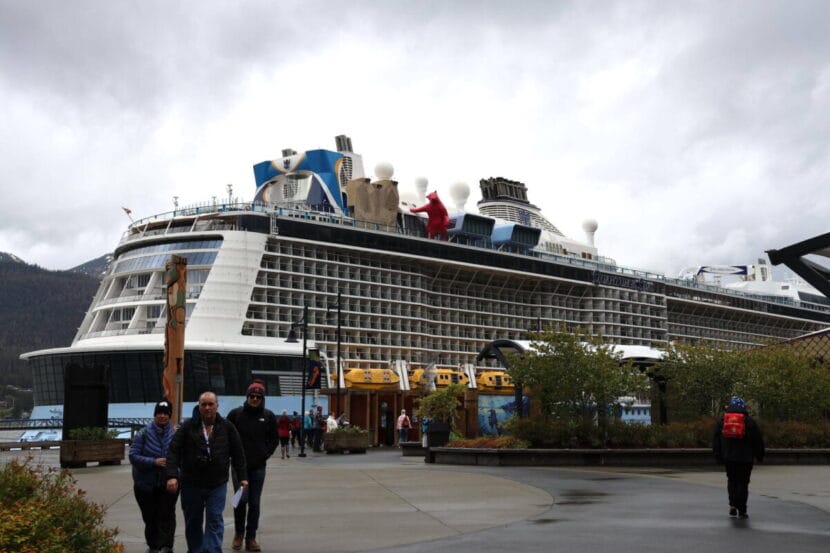
Cruise ship passengers walk around in downtown Juneau in May, 2023. (Clarise Larson/for the Juneau Empire)

Each year, the city collects a fee from each cruise ship passenger that comes to town. Those fees — expected to add up to more than $20 million this year — fund projects that serve visitors and ease the impacts of tourism. 

But this year, some of those projects could be in jeopardy. Last week, cruise line officials sent a letter to the city saying that nine of its proposed projects — including public Wi-Fi downtown and increased bus service to the Mendenhall Valley — don’t meet the terms of a 2019 settlement agreement that determines what the fees can pay for. 

The letter from Cruise Lines International Association Alaska, known as CLIA Alaska, said those projects “do not meet the necessary criteria set forth by either the law or the Settlement Agreement.”

But, at an Assembly finance meeting this weekend, Juneau Tourism Manager Alix Pierce said she recommends the Assembly move forward with funding the projects despite the objections.

“We talk a lot about collaboration with CLIA, and sometimes you need to have hard discussions. This is one of them,” she said. “But this feedback came late. It came outside of the established process, and I would recommend that the Assembly just move forward with its budget cycle.”

In 2019, Juneau and CLIA Alaska came to a settlement agreement after a three-year legal fight over marine passenger fees and how Juneau spends the money it collects from cruise ship passengers.

From that settlement, CLIA Alaska agreed to not to object to how the city spends the fee going forward, but both parties would meet annually to discuss those plans. And both parties also agreed to continue working together and to settle future disagreements outside of court.

Pierce said CLIA Alaska’s recent letter was sent far too late in the process outlined in the settlement agreement. She said the objections did not come up during the city’s annual meeting with the group earlier this year — and that the city had already built its proposed budget assuming that these projects could be funded.

“CLIA’s aware of that timeline,” Pierce said. “And we had a meeting where we discussed the budget. And then, very late in the process, they came forward with this letter that does not follow the timeline of our process.”

The Assembly will have the final say about whether the projects will be put into its budget for next year. They could consider the objections made by CLIA Alaska and take the projects out if they want to.

City Manager Katie Koester said it’s possible that the group could pursue another lawsuit if the Assembly does go through with funding the projects. But she said she’s not concerned with that possibility yet. 

CLIA Aalaska did not answer specific questions about their objections. But in an emailed response, spokesperson Renee Reeve says she’s confident the organization and the city will come to a resolution.

Pierce said she hopes to establish a better process with CLIA Alaska for next year. The Assembly will finalize its budget in the coming months.
Juneau had a record-breaking cruise season last year. This year should be about the same.

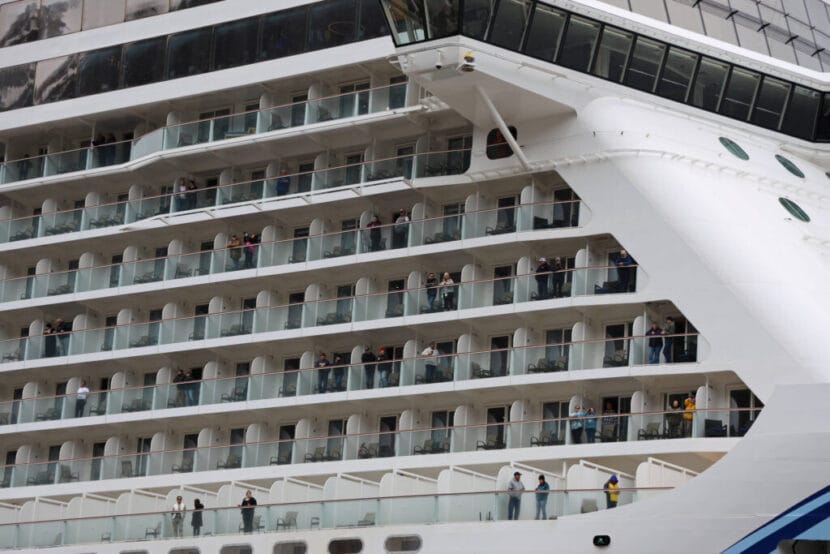
Passengers of the Norwegian Bliss look out across downtown Juneau as they wait to unboard the first cruise ship in April 2023. (Clarise Larson/for the Juneau Empire)

Juneau’s 2024 cruise ship tourism season is just around the corner as the first ship of the year — the Norwegian Bliss — is slated to arrive early Tuesday morning.

Last year, the capital city saw its busiest season ever — welcoming more than 1.6 million passengers. On the busiest days, Juneau welcomed upwards of 21,000 cruise visitors. 

Juneau Tourism Manager Alix Pierce said this year likely won’t top last year’s record-breaking season. She expects to see about the same number of visitors.

“I think it will run a lot more smoothly, and things will be better,” she said. “Generally, our tour operators know what to expect. They know what kind of volume to expect, and they’re gearing up and getting ready.”

In a survey conducted last fall, about 64% of Juneau residents said they wanted to keep the local tourism volume about the same or reduce it slightly. 

But some major problems did crop up during 2023’s record season — things like heavy downtown congestion, the Mendenhall Glacier reaching its tour capacity and business owners saying it was just hard to keep up.

One big change this year for controlling the traffic will be a new limit of five large ships per day. 

During a tourism panel on Thursday, Cruise Lines International Association Alaska spokesperson Renee Reeve said that agreement with the city will be key to flattening growth in the coming years.

“I think what that shows is industry’s commitment and CBJs commitment to making this place somewhere that visitors want to visit, and somewhere that the residents want to live,” she said.

A limit on the number of ships does not necessarily mean fewer passengers. But an even bigger change could be coming in 2026. Pierce said the city is in the early stages of negotiating with cruise lines to limit the number of passengers that come off their ships each day. 

“The best thing that we can come up with are daily passenger caps to keep our numbers relatively flat or decrease a little bit,” she said. “I’m looking forward to seeing some of these things come to fruition, and then seeing how it feels in terms of passenger volume, and numbers and what that means for us as a destination.”

Last season, cruise ship passengers spent a total of $320 million in Juneau, according to a report that came out last fall. To support that business, it’s estimated that more than 3,000 people in Juneau worked jobs that were directly related to tourism. 

Local tour operators faced a tough situation after they sold out on bus trips to the Mendenhall Glacier halfway through the season, which meant more tourists stayed downtown.

This year, the city plans to send extra buses to follow the city buses that carry people out to the glacier to handle the overflow. Pierce said local operators are also trying to balance their permits over the season to reduce congestion on buses and downtown.

“They’re offering more city tours that go to other sites where you can see the glacier from elsewhere. So they’re trying to pick up that volume in different ways,” she said.

In April, about one-to-three ships will port in Juneau per week before ramping up to three-to-five ships per day by the latter half of May. Ships will continue to port in Juneau nearly every day before winding down in late October. 

And as tourism kicks up for the summer, residents can send in complaints and concerns to the city’s tourism hotline.

Marine passenger fee proposal could help Juneau tourism businesses cut greenhouse gas emissions

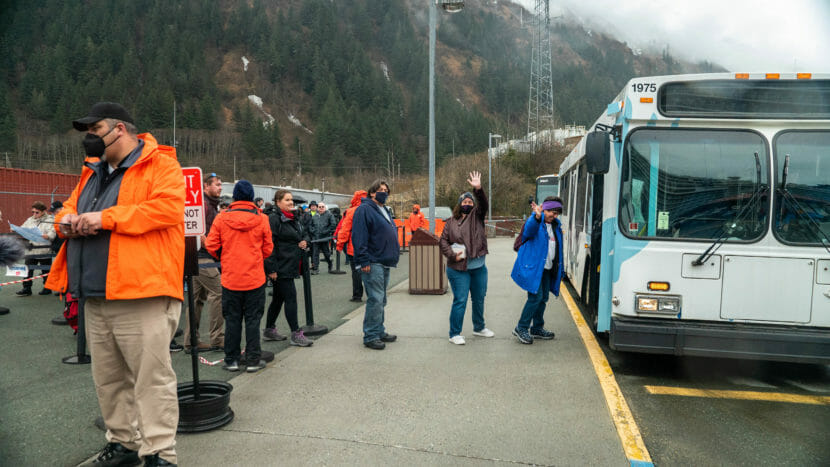
Passengers  from the Natural Bliss Norwegian Cruise board a tour bus in April 2022. (Photo by Paige Sparks/KTOO)

Juneau may soon establish a new fund to help the city’s tourism businesses swap out polluting fossil fuel for cleaner forms of energy in their planes, buses and boats.

The proposal would set aside $1 million collected via marine passenger fees to fund a new clean energy loan and incentive program. It’s a small fraction of the $21.5 million in revenue expected from 1.6 million cruise ship visitors this summer. 

According to city tourism manager Alix Pierce, the visitor industry generates a lot of Juneau’s greenhouse gas emissions, which contribute to human-caused climate change. She’s heard from residents and business owners who want to cut down on pollution, but she says they still need incentives to speed the transition to cleaner power. 

“What I keep hearing consistently is that operators are interested, and that it’s just cost prohibitive,” Pierce said. 

Public businesses or governments are often eligible for money that helps them to cut down on fossil fuels. Juneau, for instance, received funding from the Federal Transit Administration to buy electric buses. 

But private tourism businesses are usually excluded from those grant programs. Bob Janes, owner of the whale watching and hiking company Gastineau Guiding, has about 30 diesel buses he’d like to replace. But he says it’s hard for small tourism companies to scale up.

“We can dabble here and there in the market, but until we really go into it full speed ahead, the impact is not much,” Janes said. “Well, full speed ahead is a lot of money. But this grant program would hopefully make that possible for us.”

Pierce says there’s a precedent for a loan and incentive program like this. In the early 2000s, the city established a fund that helped companies buy quieter engines for their float planes. The new clean energy program uses that as a model. 

At this stage, what qualifies as clean energy is unclear. But Pierce says the bottom line is, it’s something that would cut down on greenhouse gas emissions. She says that could extend to hybrid power or even things like biodiesel. 

Holland America and Princess Cruises in Juneau have used biodiesel developed from cooking oil to supplement the fossil fuel that powers some of their tour buses. They claim that it can cut emissions by 10%. 

Even energy efficiency projects may qualify under the definitions of clean energy. 

“I don’t want to unnecessarily limit operators,” Pierce said. “Maybe a smaller operator that wants to replace a dirty old school bus with just a brand new clean diesel bus — that’s a really big move in terms of emissions reduction.”

But Janes hopes the program will eventually push the local tourism industry toward net-zero emissions through electrification, which would tap into the city’s renewable hydropower supply.

“If I live long enough to see our fleet converted to electric, both on our boats, and with our buses, I will be the happiest person in the world,” he said.

The city is also considering using $5 million dollars of marine passenger fees for electrification of cruise ship docks. Renewable shore power is already available at the South Franklin Dock, which is privately owned by Princess Cruises. But Juneau has long-considered the installation of similar technology at two city-owned docks.  

Though both funding proposals are in their preliminary stages, they’ll be up for debate as city budget discussions begin this weekend.

City and cruise lines agree to conceptual cruise visitor limits in Juneau

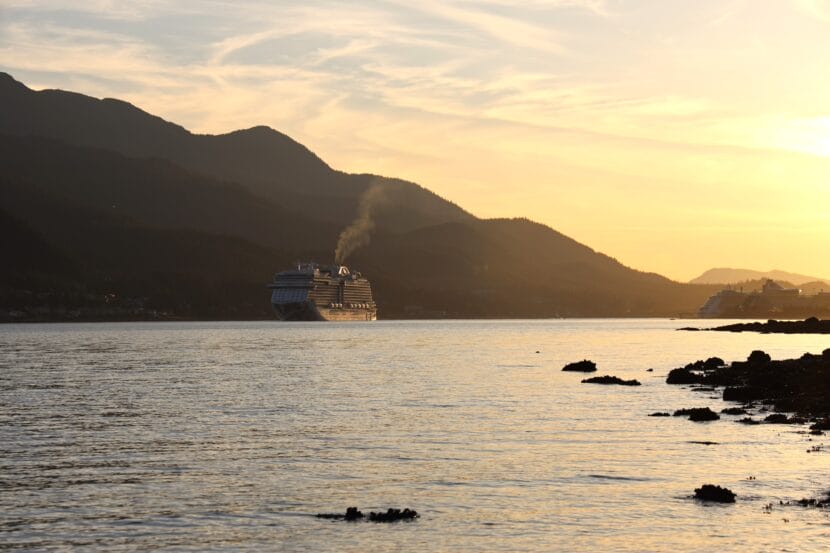
A cruise ship departs Juneau in July, 2023. (Clarise Larson/KTOO)

The City and Borough of Juneau has negotiated a conceptual agreement with cruise lines that could limit the number of daily passengers that come off their ships and into Juneau. 

At an Assembly meeting Monday night, City Tourism Manager Alix Pierce said the agreement is still far from final. If approved, the limits would go into effect during the 2026 season.

“We do not have a preliminary agreement on an MOA with specific numbers yet but we have agreed to the concept of a daily limit MOA, which is an important step in the right direction,” she said. 

Last season, a record 1.6 million cruise ship passengers visited Juneau. Next Tuesday, the arrival of the Norwegian Bliss will mark the start of the 2024 season. 

This year will be Juneau’s first with a limit of five large ships per day, but the overall number of passengers is expected to remain about the same.

Pierce said when the city and cruise lines met last week to negotiate the future limits, they did not settle on a specific number for the daily limit. But, she said it would likely be a decrease from the status quo and would make Saturdays the least trafficked day of the week.   

“They knew this conversation was coming, they knew this was the purpose of the meeting and we had asked them to come ready to discuss daily limits and the issues and challenges around that,” she said. 

She said the city is also in discussion with cruise lines about addressing the challenges with hot berthing – when one ship leaves and another takes its place later that day – and downtown congestion. 

This isn’t the first attempt to limit the number of cruise ship passengers visiting Southeast communities. Last summer, city officials in Sitka denied a citizen’s petition to put a visitor cap on the ballot. And in 2021, Juneau resident Karla Hart proposed a ballot initiative to set a ship size limit, no-ship days and no-ship hours. That initiative  didn’t get enough signatures to go to voters.

On-site consumption pot shop slated for Juneau gets OK from city

Pre-rolled marijuana joints at the Alaskan Kush Company on Wednesday, March 13, 2024. (Clarise Larson/KTOO)

A new marijuana business in the Mendenhall Valley where customers can smoke or consume edibles on site received the greenlight from the Juneau Planning Commission Tuesday night. 

The plans for the business, Alaska Vibes, have been long in the making — so long that this was actually the second time the commission granted approval after its previous permit expired. 

Speaking on behalf of the business, Director of Operations Tara Smith says that the process of opening an area for people to enjoy marijuana products is taking much longer than anticipated.

“With this business, it’s not like we can just open up a restaurant — we have to deal with the legal side of everything and that’s where we get out roadblocks and our timelines can get pushed back because of some of those things,” she said. 

In 2019, Alaska approved on-site consumption laws allowing customers to smoke marijuana and consume edibles at cannabis retailers that have permits for it. So far, only a few permits have been approved across the state. 

To offer on-site consumption, the state requires the area to have a separate ventilation system or be outdoors, and only products purchased on site can be consumed. Juneau also has additional requirements like ensuring the odor doesn’t leave the premises.

The recently approved permit allows for a retail and cultivation facility and outdoor consumption area. The business will be located in the Valley near Pavitt’s gym and will be a sister location to the downtown Alaskan Kush Company. 

State law prohibits cannabis products from being consumed in public areas, and tourists aren’t allowed to take them aboard a cruise ship. Smith says having an area for people to enjoy their products will allow the business to tap into the tourism industry. They plan to shuttle visitors from downtown to the store.

“Tourists want a place to go, our locals want a place to hang out. It’s cool, it’s fun and it gets us out of the bars,” she said

Smith says the retail area of the business will open first, followed by the outdoor consumption patio and cultivation area, but the timeline of when that will happen is still up in the air. The business will still need approval from the state Marijuana Control Board before it can open its onsite consumption area. 

New Tongass forest plan will focus on climate change, tourism boom in Southeast

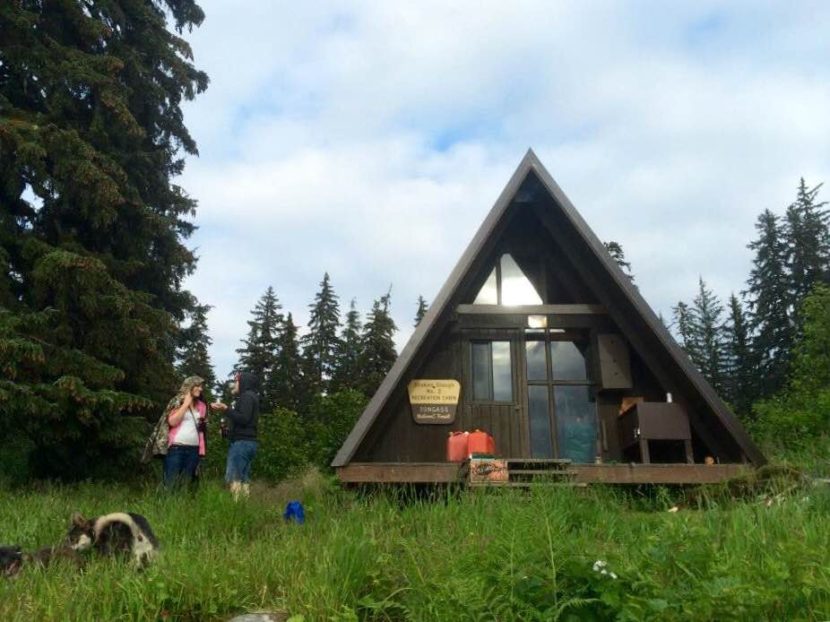
Campers arrive at the Shakes Slough U.S. Forest Service cabin on the Tongass National Forest. (Photo by Katarina Sostaric/KSTK)

It’s been nearly three decades since the U.S. Forest Service released their first management plan for the Tongass National Forest. 

During a presentation at the Juneau Economic Development Council’s Innovation Summit last week, Southeast Alaska’s Deputy Forester Chad VanOrmer said it’s time for an update. The development of a new Tongass forest plan will inform the agency’s management decisions for the next 15 to 20 years. 

“The Forest Plan is really kind of a compass, is how I like to look at it,” VanOrmer said. “It gives a direction on our desired future outcomes.”

The existing management plan was developed in 1997. Since then, there have been some amendments concerning timber management and the transition from old growth to young growth logging. But otherwise, the original plan has remained largely untouched.

In many ways, it fails to keep up with the modern-day opportunities and challenges in the Tongass.

For instance, when VanOrmer started his Forest Service career on Prince of Wales Island — just a few years after the original 1997 plan came out — there were only about 500,000 cruise ship passengers visiting the Tongass region annually. 

“I call it the ‘Field of Dreams,’ because we were doing a lot of ‘build it and they will come,’” he said. “So we were investing a lot of money in building trails and cabins and all sorts of recreation infrastructure for a tourism and recreation industry that was yet to actually arrive.” 

Now the tourism boom has arrived in full force, with 1.7 million cruise ship visitors last year. And the number of tour guiding businesses in the forest has more than doubled, from 68 in 2000 to at least 177 today.

Time has also revealed new threats that will shape the Tongass and the communities that rely on it. VanOrmer said climate resilience planning will be a priority in the new plan.

“In 1997, climate change wasn’t even a thought in the  forest plan – it wasn’t even really contemplated,” he said. “And here we are today where it’s really frontline, headline news and we have a forest plan currently that doesn’t really prepare ourselves for it.”

To make a plan that works for the present day, the agency wants to strengthen relationships with community organizers and tribal governments.

VanOrmer said the introduction of the Southeast Sustainability Strategy in 2021 set a precedent for that by sending millions in funding to tribal and Indigenous organizations for sustainable development projects — things like forest restoration, trail work and Indigenous cultural education projects.

A lot of that work has already begun. 

“We have multiple crews that are working, doing stewardship on the landscape. But they aren’t Forest Service crews,” VanOrmer said. “They’re local tribal crews, they’re other youth crews, they are other scientists coming to the table and really wanting to roll up their sleeves and expand the capacity and scope and breadth of the work here on the National Forest. “

VanOrmer said the new Tongass Forest Management Plan will set the foundation up for more projects like that. 

The Forest Service will spend the next year hosting workshops around Southeast Alaska to gather input on the next version of the plan. It will likely take two to three more years to develop a final version.

Site notifications
Update notification options
Subscribe to notifications