
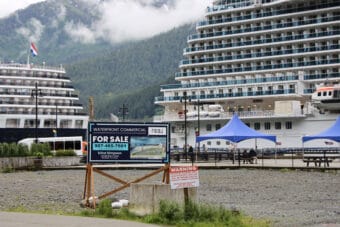
The project would sit on a 1-acre empty lot next to the downtown library and parking garage and includes three large interactive theaters/rides, a retail store and some office space.
Tourism
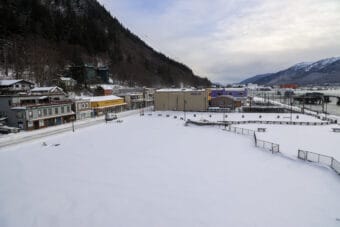
Is this empty gravel lot about to become downtown Juneau’s newest tourist attraction?
The development would include three large interactive theaters/rides, a retail store and some office space.
‘Can you survive another crisis?’ New documentary chronicles pandemic in Skagway
The film, by a former resident, looks at what happened when the town’s economy essentially shut down for nearly two years.
Some countries are cutting this source of marine pollution. Will Alaska do the same?
State Sen. Jesse Kiehl says he’s drafting legislation to address water pollution from cruise ships that use scrubbers to clean their exhaust.
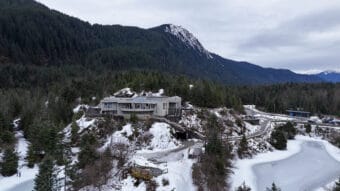
Federal lawsuit could scrap Mendenhall Glacier Visitor Center improvement plan
After a federal court ruled that the U.S. Forest Service’s plan violated a procedural law, the Juneau resident who filed the suit is asking the court to squash it.
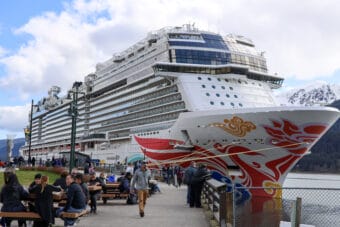
City now accepting ideas for how Juneau spends marine passenger fees
Last year, the funding paid for things like free public Wi-Fi downtown and increased bus service to the Mendenhall Valley.