Transportation

Snow storms make transportation tricky for all, and worse for people with disabilities

A man with a shovel, digging a truck out of deep snow
Palmer residents help Amber Rose dig out her car on Tuesday. The car had been parked near the Palmer Depot from Friday until Tuesday and at one point had a snow drift up to the passenger side window. (Matthew Faubion/Alaska Public Media)

Anchorage residents have faced a series of snow storms this week, and navigating streets and sidewalks in the city has been challenging, if not impossible.

Many sidewalks are covered in several inches of snow. The city has intermittently suspended its People Mover public bus service. And AnchorRIDES, which serves people with disabilities and mobility challenges, has been reduced to essential trips only, such as dialysis or other medical appointments.

Ian Casey is CEO of the Arc of Anchorage, an organization that serves Alaskans with developmental disabilities and behavioral health issues. He says a lot of the community members they serve don’t have their own vehicles.

“When People Mover is closed, or AnchorRIDES is not operating, then they basically don’t have any transportation choices,” Casey said. “And folks that use wheelchairs or other mobility aids, even if buses are running, they wouldn’t be able to necessarily get out of their apartments or houses or down the sidewalks to a bus stop.”

Casey said people often have to choose whether to stay home or to get help from friends, family, or organizations. And he said people without strong networks may have to cancel appointments or go without necessities like prescriptions.

The Arc of Anchorage has been helping the people they serve with transportation when they can, but they have few vehicles that can get through heavy snow. So, staff also use personal vehicles to transport people to medical appointments or to their jobs. But, Casey said, not everyone has a strong community that can help during storms, so it’s important to check in on neighbors.

“There’s people that don’t get services from agencies like ours that have mobility issues, and may need something from the store if you’re able to get out,” Casey said. “So,even if you aren’t aware that your neighbors have mobility issues, it’s still good to check in on each other.”

And Casey said these kinds of storms, especially when drawn out, affect mental health.

“If you’re not able to get to your activities or your groups or whatever you participate in as a member of the community, that can lead to isolation,” Casey said. “And isolation, especially coming out of the pandemic, I think that we all learned that isolation is not good for mental health.”

Alaskans who need help getting essentials or essential transport during storms can call their closest Access Alaska office for a referral.

A flight expert’s hot take on holiday travel: ‘Don’t do it’

Photograph by Reet Talreja/Unsplash; Collage by Kaz Fantone/NPR

It’s stressful to fly around the holidays. Airports are packed, tickets are expensive and bad weather can cause significant flight delays and cancellations.

So, if you have to travel, is there an optimal time to do so? Scott Keyes, founder of the travel site Going.com (formerly known as Scott’s Cheap Flights), shares his recommendations, including days to avoid and the best time of day to fly.

Don’t travel around Thanksgiving and Christmas

“It’s one of the worst times to travel,” he says, due to flight disruptions, crowds at the airport and ticket prices. “My secret, best advice for travel over the holidays is: if at all possible, just don’t do it.”

If you have to fly for the holidays, do it on the day itself

“You just see far fewer people traveling then,” says Keyes. “And with fewer people, you can see lower fares and fewer disruptions,” including delays and cancellations. So think about booking tickets to depart or arrive on Thanksgiving Day, Christmas Day, New Year’s Eve or New Year’s Day.

Avoid peak travel days

For a lot of folks, the whole point of traveling during this time of year is to be with family on the actual holiday, says Keyes. “So the busiest and most crowded times [to travel] are going to be in the few days leading up to the holiday. Think Tuesday and Wednesday before Thanksgiving and December 21st, 22nd and 23rd around Christmas.”

A travel delay that stretches out over a few days, like a snowstorm, can quickly ruin a trip, he adds. “That’s when you’re going to have the most competition with other travelers” for a limited amount of seats if you’re trying to rebook a flight.

To avoid this situation, Keyes recommends flying a few days before or after these peak travel times. So instead of flying on the Tuesday before Thanksgiving, you might consider traveling a few days earlier.

Travel in January — the 8th, to be precise

If you can wait, travel in January, says Keyes. You will probably have a much better flight experience.

Keyes even has a preferred date for that month: Jan. 8, he adds. “It’s my favorite date of the entire year. I circle that date on the calendar because whereas flight prices really get inflated over the Christmas-New Year period, around Jan. 8, they just fall off a cliff from the most expensive time of the entire year to the absolute cheapest.”

Ticket prices, while “extremely volatile,” can drop 75-80%, he says. For example, a nonstop, roundtrip ticket from Los Angeles to Tokyo from Dec. 22-29 costs $1,996, according to Google Flights. But if you took that trip from Jan. 10-17, the fare dips to $427 — a nearly 80% discount. And while a nonstop, roundtrip ticket from New York City to Miami from Dec. 24-Jan. 1 costs $608, it’s only $138 from Jan. 9-16 — a 77% discount.

Take an early and direct flight

“There are two types of flights that have the highest odds of getting you to where you’re going on time or at least without a major delay: early morning flights and nonstop flights,” says Keyes.

According to the U.S. Department of Transportation’s Air Travel Consumer Report for October, flights between 6-7 a.m. had a nearly 90% on-time departure rate, versus 64% for flights between 5-11 p.m.

With morning flights, “your plane [has been] at the airport overnight. It’s sitting there and ready to go when you get there in the morning,” he says. Afternoon flights, on the other hand, depend on planes that are flying in from somewhere else and may be subject to delays.

Direct flights have the advantage of not having layovers. “If you take a connecting flight that gets delayed an hour and a half but you only had a one-hour layover, all of a sudden you’ve missed your connecting flight and you have to get rebooked” — not an easy feat during the holiday season.

Prepare yourself for potential flight disruptions that may keep you at the airport. Keyes likes to pack “noise-canceling headphones and a little snack box, because frankly, airport food is not very memorable,” he says. And he likes to download a few books and movies to his iPad — “just in case I’m having to hang out at the airport longer than expected.”


The audio was produced by Clare Marie Schneider. The digital story was edited by Malaka Gharib. The visual producer is Kaz Fantone.

Want more Life Kit? Subscribe to our weekly newsletter and get expert advice on topics like money, relationships, health and more. Click here to subscribe now.

Copyright 2023 NPR. To see more, visit https://www.npr.org.

Ferry officials seek input for longterm planning

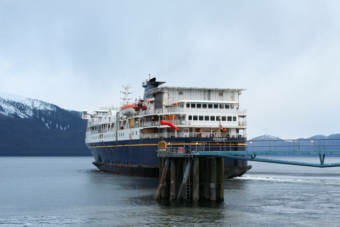
Alaska Marine Highway System ferry Malaspina plies the waters of Lynn Canal in route from Haines to Juneau in Southeast Alaska, August 15, 2012. (Photo by Kelli Berkinshaw/KTOO)
Alaska Marine Highway System ferry Malaspina plies the waters of Lynn Canal en route from Haines to Juneau in Southeast Alaska, August 15, 2012. (Photo by Kelli Burkinshaw/KTOO)

The Alaska Marine Highway System has too many old ships, and too few people to operate them. In a virtual open house Tuesday, ferry officials kicked off a 20-year plan for rebuilding and modernizing Alaska’s Marine Highway.

Marine director Craig Tornga summarized ongoing issues facing the state’s ferry system, including difficulty with crew recruitment and retention.

“All summer long, we’ve had a few no-sail days across the fleet due to crew shortage just because we didn’t have enough personnel to meet the manning requirements of our certificate of inspection from the Coast Guard,” Tornga said. “So that continues to plague us.”

Aging vessels are another problem for the ferry system, which currently operates five vessels over 45 years old. In August, the ferry system released an interim plan outlining capital and operations improvements through 2026. The plan includes building three new vessels, including one to replace the 59-year-old Tustumena and a hybrid or electric vessel to replace the Lituya.

“These reliability issues are due to age, and they’re not going to improve for us until we build replacement vessels,” Tornga said.

Tornga said that the trajectory of the 60-year-old Matanuska is still in question.

“Since I’ve joined, we’ve held meetings for the Coast Guard, and we don’t have a determination yet to the extent of the upgrades to retain SOLAS until we know the condition and the safety of the hull,” Tornga said.

Consultant Kristen Kissinger, who is working with the ferry system on the long-range plan, emphasized that data and recommendations from communities will guide this stage of the planning process.

“Really having a database of just all the information about what kinds of things are present in a community, what a community might need, what are the gaps, what’s missing, and what that means for how they use ferry service,” she said.

She pointed attendees of the open house to an online survey open through Nov. 7 and encouraged them to attend an Alaska Marine Highway Operations Board meeting, as well as to submit written comments.

Work to develop the long-range plan will continue through mid-2024, and ferry users are encouraged to share input throughout the process.

FBI: ‘I am not okay,’ off-duty Alaska Airlines pilot said before trying to turn off jet’s engines

An Alaska Airlines plane, like this one operated by Horizon Air, had to divert to Portland, Ore. on Sunday after an off-duty pilot tried to turn off the engines in flight. (Ted S. Warren/AP)

An off-duty Alaska Airlines pilot now faces federal charges for interfering with the crew of a flight that had divert Sunday to Portland, Ore. after he allegedly attempted to switch off the plane’s engines in mid-air.

The flight, operated by Horizon Airlines, had taken off from Everett, Wash. around 5 pm Sunday evening and was headed to San Francisco. The Embraer 175 jet had more than 80 passengers and crew on board.

The off-duty pilot, Joseph David Emerson, was traveling in the flight deck jump seat sitting behind the pilot and first officer. According to a federal affidavit, the crew said Emerson gave “zero indication of anything wrong” during the initial stages of the flight.

They said he was chatting about the weather and various types of airplanes. At some point as the jet moved south over Oregon, the first officer observed Emerson throw his headset across the cockpit and exclaim, “I am not okay.”

That’s when the pilots say Emerson grabbed the two red engine shutoff handles. The affidavit says the pilot grabbed Emerson’s wrist and they “physically engaged” for an estimated 25-30 seconds and then Emerson “quickly settled down.”

The pilot asked Emerson to leave the cockpit and he then walked to the back of the airplane. Emerson allegedly told a flight attendant, “You need to cuff me right now or it’s going to be bad.” The attendant cuffed his wrists and during the descent into Portland, according to the FBI, and he “turned towards an emergency exit door and tried to grab the handle.”

In an interview with an FBI agent, another flight attendant said she heard Emerson say “I messed everything up” and that “he tried to kill everybody.”

During an interrogation, Emerson told the FBI that he had a “nervous breakdown” and had not slept in 40 hours. He said he’d felt dehydrated and tired. He told the agent that he pulled both emergency shut off handles because “I thought I was dreaming and I just wanna wake up.”

The FBI agent says Emerson denied taking any medication, although they did talk about the use psychedelic mushrooms. Emerson said “it was his first time taking mushrooms,” according to the FBI affidavit — though it was not immediately clear if he was actually under the influence of mushrooms during the flight.

Emerson allegedly told the FBI that he had become depressed about six months prior.

Even before these latest details became public, the incident was renewing concerns across the aviation industry about the mental health of pilots, and whether they are getting the kind of treatment they need.

Many pilots are wary of seeking treatment for mental issues, aviation experts say, because they are concerned that they could be grounded by federal regulators if they do.

“Pilots are wired to deal with situations and get the job done,” says Dennis Tajer, a veteran pilot and a spokesman for the Allied Pilots Association, which represents over 15,000 pilots at American Airlines.

Tajer says pilots have a lot invested in their training and careers, and are afraid of losing it.

“You think that your job is at stake, the income for your family is at stake,” Tajer said. “If I don’t have the mental fitness to get this done, I’m going to be grounded, lose my job, lose my home. And these are all awfulizing thoughts that the pilots go through that stop them from getting the care that they need if they need it.”

The stigma around seeking mental health care has diminished over time, Tajer says, but it has not gone away completely.

Federal regulators are clearly aware of the issue. The leaders of the Federal Aviation Administration have urged pilots to come forward and get treatment if they need it, saying they will not automatically lose their medical clearance to fly as a result.

“Even if you need to take medication to stay well, you may be able to get a special issuance from my office,” says Susan Northrup, who oversees the pilot medical certification process at the FAA, in a video posted on the agency’s web site.

“The most important thing is that you receive treatment early so that you can get better,” Northrup says. “We don’t want you to get worse because you’re afraid of losing your medical certificate.”

Emerson has been flying for Alaska Airlines for 10 years and has been a pilot since 2001.

In addition to the federal charge, he also faces 83 state counts of attempted murder, among other charges, including reckless endangerment and endangering an aircraft.

Copyright 2023 NPR. To see more, visit https://www.npr.org.

With new hires on board, Capital Transit restores service to suspended Juneau bus routes

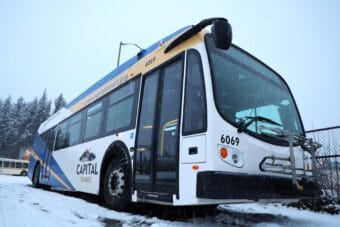
A Capital Transit bus bound for the Mendenhall Valley parks at the downtown transit center. (Katie Anastas/KTOO)

Juneau residents can once again take a Capital Transit bus to the airport, University of Alaska Southeast and social service providers on Teal Street on weekdays.

Capital Transit suspended the routes in Dec. 2022 because of a driver shortage. Now, both routes are running on weekdays and at peak hours only, pausing service in the late morning and early afternoon.

Capital Transit Superintendent Rich Ross said driver recruitment picked up over the summer, when the city switched to an online application system. Last winter, they were short eight or nine drivers. Since then, they’ve hired five drivers. They also hired another maintenance worker.

“We have a fleet of 18 buses, and I’d say on average this summer, probably five of them were broken down at a time,” Ross said.

Hiring the maintenance staffer brought that down to two or three, Ross said. Capital Transit is still looking to hire a mechanic and a service technician.

The city resumed service on routes 5 and 6 on Monday. Route 5, the University Connector, runs from the Valley Transit Center to Auke Bay and UAS. Route 6, the Riverside/Airport Connector, has stops at the airport, Nugget Mall and Teal Street.

Additionally, routes 1 and 4 will start earlier in the morning. Route 1 serves downtown and Douglas, and route 4 serves the Mendenhall Valley. 

“Every time we add in earlier service, we get more people riding than we had initially expected, so it seems like there was some unmet demand there,” said Matthew Carpenter, Capital Transit’s lead operator.

The earlier service on route 4 will allow people to get to Bartlett Regional Hospital before 7 a.m.  The first route 4 bus will leave the Valley Transit Center at 6 a.m. and get to the hospital by 6:45 a.m., according to the new schedule.

“We had gotten feedback that there were people trying to get to the hospital early in the morning before 7 a.m. for some shifts that start there early in the morning,” Ross said.

Updated schedules are on Capital Transit’s website.

An off-duty pilot tried to shut down a plane’s engines in flight, Alaska Airlines says

An Alaska Airlines Embraer 175 jet, similar to this one, was forced to make an unexpected landing Sunday night after an off-duty pilot who was riding in the cockpit allegedly attempted to disable the aircraft’s engines. (Ted S. Warren/AP)

An Alaska Airlines flight was forced to make an unexpected landing Sunday night after an off-duty pilot who was riding in the cockpit allegedly attempted to disable the aircraft’s engines.

“I’ll just give you a heads-up. We’ve got the guy that tried to shut the engines down out of the cockpit,” one of the pilots said to air traffic controllers in audio posted by LiveATC.net. “It doesn’t seem like he’s causing any issue at the back. I think he’s subdued.”

The flight, which was operated by Horizon Airlines, took off from Everett, Wash. around 5 pm Sunday evening. The Embraer 175 jet had to be diverted from San Francisco to Portland, Ore. where it landed safely.

In a statement, Alaska Airlines described the incident as “a credible security threat related to an off-duty Alaska Airlines pilot who was traveling in the flight deck jump seat.”

“The jump seat occupant unsuccessfully attempted to disrupt the operation of the engines,” according to the statement, before “the crew secured the aircraft without incident. ”

It’s routine for off-duty pilots, flight attendants and other airline staff to catch a ride in the jump seat behind the pilot and first officer.

The off-duty pilot was arrested after the plane landed at Portland International Airport. Authorities there have identified him as Joseph David Emerson. He’s now facing 83 counts of attempted murder, among other charges, including reckless endangerment and endangering an aircraft.

The Federal Aviation Administration said it is supporting law enforcement investigations into the incident.

“All passengers on board were able to travel on a later flight,” Alaska Airlines said. “We are grateful for the professional handling of the situation by the Horizon flight crew and appreciate our guests’ calm and patience throughout this event.”

Copyright 2023 NPR. To see more, visit https://www.npr.org.

Site notifications
Update notification options
Subscribe to notifications