Transportation

Shuttle ferry design report due by end of February

The state is expected to release a design concept report for the new Alaska Marine Highway ferries by the end of this month.

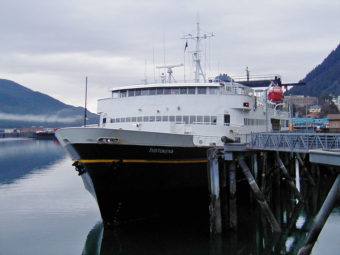
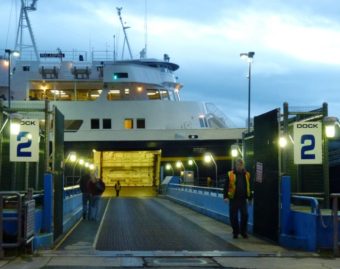
The Department of Transportation and Public Facilities wants to build two shuttle-type ships to serve Lynn Canal as part of the revamped Alaska-class ferry project. The previous plan called for a single 350-foot ferry. But the department said in December that the project had gone over the $120 million budget.

DOT Spokesman Jeremy Woodrow says public release of the new design has been delayed while the department expands the report to address scrutiny and feedback received since the new direction was announced.

“It’s not quite ready,” Woodrow said. “Because of the public testimony that was taken in the Legislature and the MTAB [Marine Transportation Advisory Board] meeting last month, we have opted to incorporate a larger document to answer a lot of the questions and concerns that the public had during that testimony and the meetings.”

DOT commissioner Pat Kemp told the joint Alaska House and Senate Transportation Committees last month that he believes the two, 280-foot shuttle ferries can be built for about $49.5 million each. He also said he thinks the public will be pleased with the design when it is released.

Woodrow says the plan will now likely be out within the month. It also will be available online.

“We’ll definitely post it online so that anyone can go download it and read it themselves,” he said.

While Kemp blamed extensive public input for causing the previous plan to balloon over budget, he promised the new shuttle ferry design will undergo a full public vetting as well.

Kemp talks Alaska Class Ferry, Juneau Access in confirmation hearing

Pat Kemp. (Photo courtesy of the Alaska Department of Transportation)

The joint Alaska House and Senate Transportation Committees Tuesday sent the name of Governor Sean Parnell’s pick for Transportation Commissioner, Pat Kemp, to the full legislature for confirmation.

A career DOT employee, Kemp was appointed to the top job in late December after serving as acting Commissioner since October. During his confirmation hearing he faced questions about recent changes to the Alaska Class Ferry project as well as the proposed Juneau Access road.

The administration has been criticized for the governor’s sudden decision to change the Alaska Class Project from one large 350-foot ferry to two smaller shuttle boats.

Residents of small Southeast communities are concerned the Alaska Marine Highway System won’t be able to provide reliable service with the lighter boats. But Kemp promised lawmakers a full public vetting of the new ferry design.

“People are going to like this vessel. I’m guaranteeing it,” Kemp said. “It’s going to be good, it’s going to offer more capacity, it’s going to be cheaper to operate and it’s going to be within the budget we have before us now.”

Sitka Democratic Representative Jonathan Kreiss-Tomkins asked Kemp about the administration’s failure to discuss project changes with the state’s Marine Transportation Advisory Board.

Kemp, who’s a highway engineer, admitted he didn’t fully understand the board’s role in providing input to the department.

“I met most of them for the first time a week or two ago, I guess, here in Juneau,” said Kemp. “They had a board meeting. And I understand the sensitivities a little bit better with the board.”

Parnell and Kemp have cited Alaska Class cost overruns as the driving force behind the design change. Originally budgeted at about $120 million, recent estimates grew to more than $150 million.

Kreiss-Tomkins asked how the administration could be certain that two shuttle ferries will be cheaper to build and maintain than one large 350-foot boat.

“The cost of a boat is not linear to its length,” Kemp said.

“When we worked with the third floor, with the governor’s office, on what to do with this over-budget project, the governor was an advocate of chopping length,” he said. “Well, we found that you could chop only so much, and pretty soon we found out you did need an engine, you did need a propulsion system, you did need the amenities.”

Kemp said he believes the two 280-foot shuttle ferries can be built for about $49.5 million dollars each.

“With the type of ferries we’re looking at now, with the simple roll on-roll off, the interior might look similar to a fast ferry, with the car deck,” he said. “They’re on, they’re off. It’s a lot simpler design. And that design also leads to lower operating costs.”

Anchorage Democratic Senator Hollis French asked how the shuttle ferries relate to the Juneau Access project. The commissioner said a new court-ordered Environmental Impact Statement for the proposed road north of Juneau will include analysis of a ferry-only option. But the administration believes a road is still the best alternative.

“It’s the largest community in the nation not connected by a road,” Kemp said. “So there were significant studies, and you take the demand to travel, the flexibility, these other issues and you marry it up and the road actually came out ahead economically-wise.”

French later got Kemp to admit the shuttle ferries would be ideal for transporting cars and people between Haines and the Katzehin River, where the proposed Juneau Access road would end.

Governor Parnell included $10 million in his proposed budget for ongoing work on the project. The revised EIS is due in March or April.

Kemp is the first Alaska-born Transportation Commissioner. He’s also the first to work completely through the department’s ranks.

The House and Senate Transportation Committees voted unanimously to forward his name to the full Legislature for confirmation.

Bill would lessen cruise ship discharge standards

This poster illustrating cruise ship wastewater was displayed at a Sept. 20, 2012, science panel open house.

The Parnell Administration wants to change another part of the 2006 cruise ship initiative.

The voter-approved measure required strict new standards for wastewater discharges.

Bills introduced this session at the governor’s request would effectively allow more chemicals and minerals to be released into the water. Backers say the levels would still be safe.

Senate Bill 29 had its first hearing Wednesday before the Senate Resources Committee.

Environmental Conservation Commissioner Larry Hartig told the panel the bill would allow a more practical approach to controlling pollution.

“It recognizes that it’s really difficult, if not impossible, for many dischargers to meet the water quality standards at the point of discharge,” Hartig says. “So they allow a limited area of mixing the treated effluent … with the receiving water at the edge of the mixing zone. “

The industry has asked state officials to make such a change. Cruise lines say strong new standards that start in 2015 are impossible to meet.

Hartig says wastewater-control measures would remain in effect under the legislation.

“It can’t bioaccumulate, it can’t have toxic effects, it can’t affect anadromous fish that would be going through that area, it can’t affect that water body’s ability to produce aquatic life in the future. It just goes on and on about the things it can’t do,” Hartig says

The committee took no testimony, but the measure has opposition.

“I think the bill is unnecessary,” says Chip Thoma, president of Responsible Cruising in Alaska, which backed the 2006 initiative standards.

“And the reason is because the cruise ships and DEC have made such great improvements in the last few years in lessening the effects of some of their discharge problems,” Thomas says

Thoma and Hartig both agree it’s important to remove copper from cruise-ship wastewater. That’s because, among other things, it affects salmon behavior.

Thoma says copper-removal is an example of how new technology can reduce pollution.

“These are older ships that were all piped with copper. The new ships are all flex-piped with plastic. It’s an incredible revolution. Just in the last few years, we’ve eliminated the copper problem on the new ships,” he says.

An appointed science panel has been investigating technological solutions for about two years. Hartig says it hasn’t found economically-viable equipment.

The Senate Resources Committee will hold another hearing Friday afternoon where it will take public comments on the bill. An identical bill will be heard that day in the House Resources Committee.

The Legislature has already rolled back one part of the cruise ship initiative.

At the administration’s request, it reduced head taxes that fund local tourism projects by more than 50 percent. It did not change a portion of the tax that funds onboard environmental monitors.

Transportation Committees question DOT Commissioner on decision to scrap Alaska Class Ferry project

A drawing of the proposed Alaska Class Ferry from Elliott Bay Design Group.

A design concept report for a new Alaska Marine Highway shuttle ferry is expected in the next couple of weeks. That’s DOT-speak for a description of the proposed vessels to replace the Alaska Class Ferry.

State Department of Transportation and Public Facilities Commissioner Pat Kemp told lawmakers Thursday the Alaska Class Ferry actually started life as a shuttle boat about 2006.

“It had morphed into a vessel somewhat bigger than the Aurora class ferry. It was at 350 feet, it was almost a Taku-size ferry but it did not have staterooms. It had crew staterooms but it did not have passenger staterooms.”

Kemp took the hot seat in a hearing before the House and Senate Transportation Committees.

Legislators wanted to find out why Governor Sean Parnell recently pulled the plug on the so-called Alaska Class Ferry, which is so far into the planning process that a construction contract was to be awarded in July.

Kemp blamed public involvement for the growing ship. He was not with the department then, but between 2008 and 2010, a DOT steering committee held a number of public hearings in communities on ferry routes to hear what the public wanted in its ferry system.

Captain John Falvey is AMHS General Manager. He says Marine Highway officials were responding to the public.

“It slowly but surely got more costly than the 120 million dollars that we had started with from the very, very beginning.”

Kemp was appointed acting DOT commissioner in August, and Gov. Parnell asked him to take a look at the project. By then it was estimated the proposed ship could cost $150-million to $170-million. Kemp said he was directed to find a replacement.

Recently named commissioner, Kemp said he favors heavy sea-worthy shuttles that he called roll-on / roll-off, with cars loading from the ends of the vessels, instead of the side.

The governor’s announcement that the Alaska Class Ferry project had been scrapped sent a big wave throughout Marine Highway communities as well as the Marine Transportation Advisory Board. The MTAB was created in statute to represent ferry system towns and work closely with department officials. But Kemp did not talk directly with the committee.

House Transportation Chair Peggy Wilson of Wrangell pulled out a legislative legal opinion that said Kemp should have notified MTAB that DOT was planning to abandon the Alaska Class Ferry project.

“Since the MTAB has its power set in statute and the Marine Highway operations have continued to improve during that time I would hope that the department will continue to seek council from the MTAB committee and at least have that communication going back and forth with them.”

Kemp did say he recently sent a letter to MTAB members about the decision.

He told lawmakers he expected consultants to have a concept for the proposed shuttle ferry soon, but it may be November before there is an actual design.

New international flight rules in effect

Booking an international flight soon?  Make it one ticket or be prepared to schlep your own luggage.

New airline baggage rules go into effect Tuesday, courtesy of the U.S. Department of Transportation.

The Separate Ticket Itinerary requires international passengers who have booked flights on individual airlines to claim their baggage and take it to the next airline.

Marianne Lindsey, of Alaska Airlines’ corporate communications, says it will be an inconvenience for those who have not purchased a single ticket.

“For example, if they’re flying Juneau to Seattle and then Seattle to Hong Kong and they’re on two separate tickets, purchased separately, they would need to, as they get off the plane in Seattle, claim their baggage and recheck it on the international carrier, paying the international carrier’s bag fees, and go back through security,” Lindsey says.

Travel writers warn that if the first flight is late and you miss your connection, the second airline could treat you as a no-show. That could mean having to buy a new ticket at a higher fare than the original ticket.

The new rule does not affect a single ticket for an international flight, or domestic flights. Lindsey says Alaska Airlines will continue to check bags for passengers traveling on separate tickets within the United States.


Wilson: Endow road, ferry, airport, harbor projects

Southeast Rep. Peggy Wilson will try to change the way transportation projects are funded this session. The Wrangell Republican also wants to come up with a system to improve rural hospitals.

Wilson says the state has fallen behind on improving its transportation infrastructure.

“No matter what’s going on in our economy, we have to maintain our roads and … we should be building new ones. And we aren’t doing a very good job of doing that,” Wilson says.

Wrangell Rep. Peggy Wilson poses at her Capitol office Jan. 8, 2013. Her district includes Ketchikan and parts of Prince of Wales Island. Photo by Ed Schoenfeld/CoastAlaska.

She’s spent several years pushing legislation that would create a transportation endowment fund. It’s passed the House, but not the Senate.

Along with roads, it would fund ferries, harbors and airports. Her priorities include deferred maintenance and roads to natural resources.

“I would like to seed it with one to two billion dollars to begin with. So that we have an endowment that will be there and then we could just use the interest as it grows,” Wilson says. (Hear an earlier report on Wilson’s 2010 Transportation Endowment legislation.)

Continued funding would come from license-plate fees, fuel taxes, vehicle registrations and similar revenue streams.

Wilson wants the transportation endowment to be managed by Alaska’s Permanent Fund. She says it would be overseen by an appointed board or commission.

“And I would like to see a group of people that are non-partisan that would look at what’s best for the state as a whole. And stop the partisan-type thinking, ‘Well, I want it for my district’,” Wilson says.

She’ll face opposition.

Sitka Sen. Bert Stedman, who represents Wilson’s district in the Legislature’s upper chamber, calls the endowment “a dumb idea.” (Hear a report on Stedman’s priorities.)

“I couldn’t think of anything worse to do to hinder our development as far as roads or transportation systems, dealing with the marine highway or anything dealing with DOT, than to create an endowment and turn it over to a bunch of folks who are unelected, basically dominated by the Railbelt,” he says.

Wilson says putting the right people on the fund’s board would take care of that problem.

The Wrangell Republican will try to move the endowment forward through the House Transportation Committee, which she chairs.

She also wants to work with marine highway officials to cut expenses. She wants new ships to have interchangeable parts, and she has some other ideas.

“We have to make sure that our ferry system will run economically [and] that we will have as few workers on it as we can. I know that’s controversial, but we have to realize that the two biggest expenses on our ferry system are the staffing and the fuel,” she says.

The committee will also review Gov. Sean Parnell’s decision to change plans for the next line of ferries. And, there’s the forced resignation of ferry chief Mike Neussl.

Wilson says the governor and other top officials should run such changes through the state Marine Transportation Advisory Board before they become final. The panel only heard after the decisions were made.

She sponsored the legislation that created the board.

“The reason that I put it out to begin with is because we wanted the people of the state to have a say in it, and not just one person,” she says.

Wilson, who serves as House majority whip, is a retired nurse.

She plans to sponsor a bill providing matching grants for rural hospitals. One is in Ketchikan, which is trying to upgrade operating rooms.

“Right now it’s very difficult for them, because it’s pretty ancient. And any surgeon they try to recruit is going to look at it and say, ‘Golly, I want something a lot more modern than that.’ And I think that’s happening all across the state,” she says.

Wilson voted for the controversial oil tax and incentive legislation that passed last year’s House, but not the Senate.

She says she still supports the idea, but worries about some of the details.

“If we do all these tax credit things, how much money is actually going to be coming into the state. We have to be careful there. We don’t want to do so many tax credits that we’re putting the state in jeopardy,” she says.

Redistricting moved Ketchikan and some Prince of Wales Island communities into Wilson’s election boundaries. But it took away Sitka and Petersburg.

She’s cosponsoring legislation requested by the POW-based Southeast Islands School District. It would allow a trial four-day-a-week schedule, which she says would improve attendance and save money.

Site notifications
Update notification options
Subscribe to notifications