Gardentalk

Gardentalk – Pruning blueberries, holly and junipers, and first aid for split tree branches

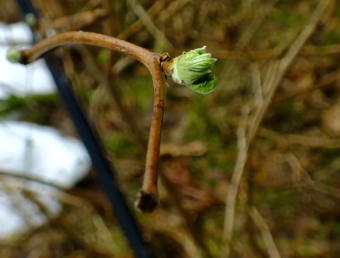
Raspberry and blueberry plants are just starting to bud in a North Douglas yard in this photo taken late April 2020. (Photo by Matt Miller/KTOO)

Last week’s segment on pruning sparked a flood of additional questions from listeners.

So Master Gardener Ed Buyarski tried to answer as many as he could in this week’s question-and-answer lightning segment.

Buyarski’s answers are summarized below. Listen to the segment for more details.

Louise writes: “How and when to prune my blueberries?”

And Carolyn writes: “I have blueberry bushes. Do they need to be pruned? If so, how much?”

Buyarski said you don’t need to do a lot of pruning blueberries if production is good. Any pruning now will remove flower buds that are just emerging. But if the plants are too tall, then it might be worth it to selectively prune or trim the tops of plants. Just remember that it will stimulate more side growth in upcoming years.

Connie writes: “I recently bought a house with severely overgrown holly bushes. I need to trim the width back quite a bit. Not pruned in 15 years.”

As an evergreen, Buyarski said you can prune back holly almost anytime. He also suggests waiting until late fall or just before Christmas, so that you can use holly branches in holiday decorations or swap with a local florist.

Dominic writes: “When is the proper time to trim and shape my junipers and small pines?”

Buyarski said you could prune junipers anytime, except in the middle of winter. Small pines can be pruned over the next few weeks as new growth emerges. It may also stimulate more side growth later.

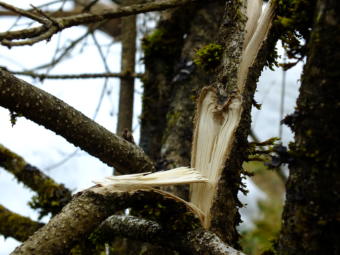
Lerenda writes: “Is it ok to use gardening tape on a tree that has a split branch? Or do you advise cutting it back? The branch has healthy growth.”

Buyarski said it depends on the split. If the branch is partially torn and peeled away, then the branch may be taped together with its weight supported by a strap or rope to the trunk. If it is a severe split, then future health of the branch would be affected.

“She may want to cut the branch back so it isn’t trying to keep as much of it alive,” he said.

There are many more questions recently submitted by listeners. Buyarski will answer them in upcoming segment.


Do you have a garden question for Ed? Fill out the form below, and he’ll answer your question in an upcoming segment.

Listen to past episodes and subscribe to the podcast on the “Gardentalk” page, so you’ll never have to worry about missing Thursday’s live radio broadcasts.

Gardentalk – How and when to prune your plants, trees and berry bushes

Lilac
Ouch. This lilac needs emergency pruning now. At least 10 branches on this plant were broken or split by a heavy winter snow load. In this picture taken on April 15, most of the snow in this Douglas Island yard is still present. (Photo by Matt Miller/KTOO)

Almost all of last winter’s snow has melted in most of Juneau’s yards and gardens, and it likely has revealed a mess that will have to be cleaned up before gardeners start their spring planting.

In this week’s edition of Gardentalk, Master Gardener Ed Buyarski encourages us to clean up all the dead vegetation before the slugs return in full force.

“They’ll be waiting underneath there,” Buyarski said. “So, let’s get started on the cleanup and pruning right now.”

Buyarski said the immediate priority is to prune out all the dead branches from any plant, tree or bush.

“Unless this is a big wildlife tree that you want woodpeckers to work on,” Buyarski said.

He recommends making clean cuts back to green, live wood with sharp tools.

Pruning can also help with shaping a fruit tree or berry bush, as well as enhancing ventilation and allowing sunlight to reach interior branches.

But he cautions against pruning too much at once from a shrub or tree, since it can stimulate extra growth. Buyarski recommends spreading out any extensive pruning over several years.

For rhododendrons and the roughed-up lilac pictured above, Buyarski said it’s a good idea to save the shape-pruning until after the plants start flowering.

He does not recommend using paint or tar on any cuts, since that will just trap and seal fungus spores into the wood.

For raspberry plants, don’t forget to remove last year’s fruiting branches. And you can always dig up new sprouts of 1-2 feet tall to transplant and expand your berry patch.


Do you have a garden question for Ed? Fill out the form below, and he’ll answer your question in an upcoming segment.

Listen to past episodes and subscribe to the podcast on the “Gardentalk” page, so you’ll never have to worry about missing Thursday’s live radio broadcasts.

Gardentalk – Taste-testing your garden soil

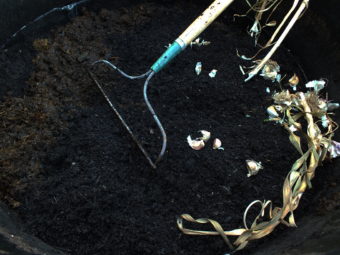
Layers of horse manure and soil are being spread out in this Douglas Island planter as various varieties of garlic are broken up into single cloves before planting.
Layers of horse manure and soil are being spread out in this Douglas Island planter as various varieties of garlic are broken up into single cloves before planting. This soil was not taste tested, either before or after the addition of horse manure. (Photo by Matt Miller/KTOO)

As gardeners clean up their old garden beds and build new planters, they may be thinking about where they can get good soil before they start planting. It’s not like you can just go online and order topsoil.
In this week’s edition of Gardentalk, listener Mistee writes:

Hello! I have a question for Ed. I am wondering where he recommends getting good quality, topsoil for starting a raised garden bed.

Yum! Master Gardener Ed Buyarski prepares to taste some topsoil that he’ll be using in his garden this season. He’ll mix in the horse manure after he fills in his garden plots. (Photo courtesy Ed Buyarski)

Master Gardener Ed Buyarski said there are several places in Juneau that provide topsoil for yards and gardens, including:

  • Duran Construction
  • Glacier State Contractors
  • SJS Construction, Bruce Griggs

Buyarski suggests that Juneau gardeners inspect what they have before having a dump truck deliver a load of topsoil in their driveway.

He said price per yard plus delivery fee is normal. So he recommends that gardeners figure out how much they may need. Plan on soil about 8 to 12 inches deep with more organic matter for garden beds, and expect more sandy soil about 3 to 4 inches deep for lawns.

And always expect to add an organic amendment and fertilizer before the soil can be used for growing flowers and vegetables.

Buyarski said he knows some landscapers and hard-core gardeners who actually taste the soil before deciding whether it’s suitable for their project. They can sometimes determine if the soil is too acidic or alkaline just by taste.

Just don’t chew and swallow.

“You do want to spit it out,” Buyarski said. “Kind of like tasting wine.”

A more conventional and practical testing method includes grabbing a handful and checking for sand, gravel, wood chunks and sawdust.

“To feel, to squeeze, to rub between your fingers,” said Buyarski.

Finally, a reminder that a free virtual garden conference is being planned for this spring. That’s after the March event in Juneau was canceled because of the coronavirus pandemic. You can sign up and find more details at the Southeast Alaska Master Gardeners Association website.


Do you have a garden question for Ed? Fill out the form below, and he’ll answer your question in an upcoming segment.

Listen to past episodes and subscribe to the podcast on the “Gardentalk” page, so you’ll never have to worry about missing Thursday’s live radio broadcasts.

Gardentalk – Ready, set, start your seeds!

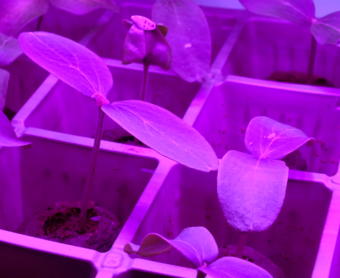
Cucumber and pumpkin seed starts as seen under a LED grow light.
Cucumber and pumpkin seed starts as seen under a LED grow light. (Photo by Matt Miller/KTOO)

Many veteran gardeners likely have already started their favorite vegetable seeds indoors. It’s still too chilly and the risk of frost is still too great to plant any seeds outside.

In this segment of Gardentalk that was originally recorded March 17 and aired April 2, Master Gardener Ed Buyarski explains that it’s still a great time to start herbs, which may take a while to germinate and grow into a decent size for planting outside. It would also be a good time to start onions, shallots, celery and parsley.

“Just because they are so slow,” Buyarski said. “Read the seed packets which tell folks how long — six weeks or eight weeks — before the frost-free date that people may want to wait to put their plants out.”

For those thinking about growing their other vegetables and produce this summer, Buyarski said potatoes are easy to grow in Alaska and usually produce a lot of food.

Other relatively easy vegetables to grow in Alaska include carrots, beets, cabbage, cauliflower, and all sorts of greens – like lettuce, swiss chard, kale and mustard greens.

Gardentalk – Season finale on cleanup and the last of the veggies

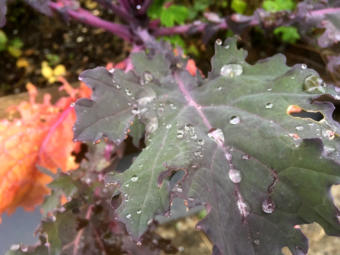
Kale is still growing in KTOO's Agricultural Test Station and Garden of Science! in Ocotber 2019.
Kale is still growing in KTOO’s Agricultural Test Station and Garden of Science! in October 2019. (Photo by Matt Miller/KTOO)

The fall equinox is a full month in the rear view mirror, and this season’s first frosts have already iced up Juneau. So is the growing season done and dusted?

No, not really, said Master Gardener Ed Buyarski in the season finale of “Gardentalk.”

Buyarski said he is still growing Brussels sprouts, parsnips, kale, turnip greens and cabbage. He plans on leaving those vegetables in the ground for another few weeks.

Beets, carrots and parsnips actually benefit from being left in the ground during the early fall.

“They are increasing in their sugar content at this point with the cool weather,” Buyarski said.

Listen to the Oct. 17 edition of “Gardentalk.”


It’s a good idea for gardeners to clean up their gardens and flower beds so that slugs are discouraged from laying eggs and establishing an end-of-season beachhead in the yard.

Much of the old, wilted and dead vegetable plants can be thrown into the compost bin.

Use either seaweed or spruce and hemlock boughs to cover perennials and protect them from this winter’s freezing temperatures.

Seaweed can also be mixed into the soil to provide extra winter nutrients.

Buyarski reminds gardeners that this year’s annual Garlic Lover’s Potluck is Saturday, Oct. 26, 5-7 p.m. at the Northern Light United Church.

And for those gardeners planning way ahead into the new year, the Southeast Alaska Garden Conference, which will feature presentations and workshops, will be held at Juneau’s Centennial Hall on March 20-22, 2020.

It’s never too early to get ready for the next growing season. Visit the “Gardentalk” homepage to listen to past episodes.

Gardentalk – Bring your begonias, dahlias and fuchsias in for the winter

Dahlia (Photo by Matt Miller/KTOO)
An award-winning dahlia flower as shown during a community garden harvest fair in Juneau. (Photo by Matt Miller/KTOO)

Master Gardener Ed Buyarski says it’s time to get your begonias, dahlias and fuchsias inside a cool, but not a freezing place.

Tuesday morning’s record low temperature of 23 degrees at the Juneau International Airport may be Mother Nature’s way of saying more cold snaps and frosty mornings are not that far off.

Buyarski recommends snapping off begonia stems and then putting the whole pot into the garage so the plant will dry out for a while. Later, he’ll take the begonia tubers out of the soil and store them for the winter in cardboard boxes or paper bags in an area which will remain at 50 degrees.

For dahlias, cut the stems about two inches above the soil. Pull them out of the pots, wash off the soil, and then let the tubers dry out.

Strip all the leaves off fuchsias and apply a soap spray to eradicate any aphids still hiding in the soil. Store the pots in a cooler space, like a root cellar or crawl space. Check on them at least once a month and water them occasionally so they don’t dry out completely.

Buyarski also answered more questions from listeners.

“Can you suggest plants that could provide year-round privacy on a very small condominium deck?” writes Michele.

Buyarski recommends an arborvitae or an upright yew. As winter approaches, he suggests insulating plastic pots with bubble wrap or flexible foam wrapping. Covering the plants with burlap will help protect them from cold, drying winds and repeated freeze-thaw action.

“Do you know where I can buy plants and flowers that isn’t a retail shop” writes Shawn.

Buyarski said Juneau area growers (like himself) have important local knowledge and can make recommendations for specific micro-climates around Juneau. He recommends checking out Glacier Gardens, Landscape Alaska and Sunny Slope Farm on Douglas Island.

Listen to the October 10th edition about begonias, dahlias, and fuschias:

Site notifications
Update notification options
Subscribe to notifications