Gardentalk

Gardentalk – Harvest potential exploders before the big rain

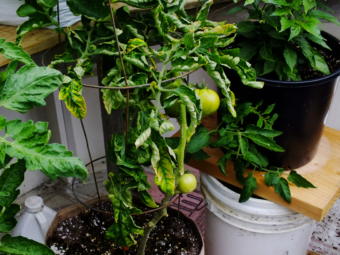
In this picture taken in early June 2019, tomatoes, peppers, and other vegetables thrive in the scratch-built geodesic greenhouse that Tom Lafollette made at the Annex Creek Hydroelectric Facility in Taku Inlet.
In this picture taken in early June 2019, tomatoes, peppers and other vegetables thrive in the scratch-built geodesic greenhouse that Tom Lafollette at the Annex Creek Hydroelectric Facility in Taku Inlet. (Photo by Matt Miller/KTOO)

As Juneau transitions from hot and dry weather to relatively cool rain showers, gardeners are being urged to do a little picking before their potential harvest gets ruined.

Master Gardener Ed Buyarski said cherries and cabbage can burst or explode if the tree or plant takes in too much water. He recommends that you harvest as many ripe cherries and cabbage as you can before they split apart and become inedible.

“What happens, particularly after a dry spell, is that those cherries will explode,” Buyarski said. “Then they get moldy and rotten.”

Buyarski said cabbage heads can also crack open because of the sudden growth. Some varieties of potatoes may also split or crack. He also recommends using a trellis to support blooming delphiniums, which may accumulate water in the flowers and collapse after a rainfall.

Buyarski also said the tussock moth or woolly bear caterpillar has reappeared in the Juneau area. He recommends that you squish them before they feed on all your leaves. But some people should be careful if their skin reacts with the caterpillar hairs.

Listen to the July 11 edition of “Gardentalk.”


Buyarski also answered another question from a listener.

“I have a dwarf rhodie that won’t bloom,” Sam writes. “I give it acid fertilizer and compost each spring and fall. What am I doing wrong? Thank you.”

Buyarski said it sounds like Sam is feeding the rhododendron properly, but he doesn’t know if the plant is in the sun or shade.

“The dwarf rhodies particularly need full sun to bloom, compared to the big ones which may get 4-6 feet tall and can tolerate some shade,” Buyarski said. “That’s the one thing I can think of that may be inhibiting blooming.”

Do you have a garden question for Ed? Fill out the form below, and he’ll answer your question in an upcoming segment.

Listen to past episodes and subscribe to the podcast on the “Gardentalk” page, so you’ll never have to worry about missing Thursday’s live radio broadcasts.

Gardentalk – Ed answers your questions on gardening and yard care

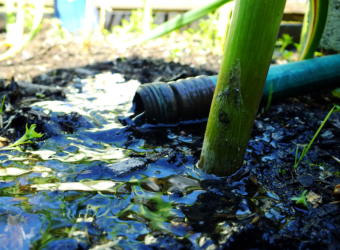
Thirsty garlic in a North Douglas garden get a much-needed drink.
Thirsty garlic in a North Douglas garden get a much-needed drink. (Photo by Matt Miller/KTOO)

The warm, sunny weather experienced by Juneau residents this week is a gardener’s dream.

But the current drought conditions also means gardeners should make sure that their garden vegetables and other outdoor plants don’t dry out.

“It’s amazing,” said Master Gardener Ed Buyarski. “Eighty-one degrees at my house in the shade yesterday.”

This season, he’s growing sweet corn, a very non-traditional Alaska crop.

In this week’s edition of Gardentalk, Buyarski reminds Juneau area gardeners to make sure everything is getting enough water.

“Definitely got to be watering hanging baskets,” Buyarski said. “I’m doing those everyday now, and stuff in the greenhouse.” Tomatoes, cucumbers, squash, and other tall and reaching plants also need regular watering.

He suggests adding a light dose of fertilizer to the water to keep those vegetables growing and flowers blooming.

Buyarski also answered some listeners’ questions that were recently sent into KTOO’s Gardentalk page.


“I’ve got a crabapple tree that leafed out nicely, before any of the buds could bloom they rotted, and now the leaves have moldy black spots,” wrote Jane.

Buyarski said it could either be a fungus or more severe damage to the stem or roots.

A solution of baking soda mixed with water and sprayed on the leaves could get rid of the fungus.

Buyarski recommends that Jane scratch through the bark to make sure it is still green underneath. If it is no longer green, then it could be a sign that the tree is dying.


Close up view of horsetail which has invaded a North Douglas yard.
Close up view of horsetail which has invaded a North Douglas yard. (Photo by Matt Miller/KTOO)

“Is there a way to get rid of horsetail?” asks Michele. “It’s taking over a raspberry patch and creeping into a vegetable garden.”

Buyarski said a heavy fabric, sometimes called roadbuilder’s fabric, can prevent the small rhizomes or root fragments from resprouting. The herbicide Roundup is sometimes only marginally effective in controlling horsetail. The most practical method of getting rid of horsetail is simply picking it all out by hand.

Otherwise, he jokes that the best method of controlling the persistent and resilient plant may be “four inches of concrete, lots of rebar, and hope it doesn’t grow back.”


Shirley wants to know the best care for hydrangea. “Soil, sun, water?” she asks.

Buyarski said choosing the right variety, like hydrangea paniculata, is key. Plant in an area with full sun, good drainage, and shelter from coldest north winds.


Listen to the June 27th edition of Gardentalk:

Buyarski also says tickets are still on sale for the Southeast Alaska Master Gardener Association‘s Summer Garden Tour on Saturday, June 29, from 11 a.m. to 4 p.m.

See the poster below for additional details and contact information, and click on the link above to buy tickets.

Gardentalk – Preparing your picked peonies for a perfect, prolonged presentation

Peonies
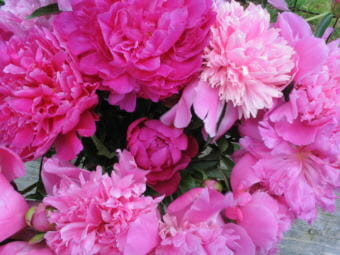
Peonies (Creative Commons photo by Samantha Forsberg)

Are your peonies getting ready to bloom? If you want to enjoy them longer indoors, then don’t wait to pick them until they blossom.

Peonies from Brad Fluetsch’s home garden. (Photo by Elizabeth Jenkins/KTOO)

Master Gardener Ed Buyarski recommends harvesting the flowers early if you gently squeeze the unopened buds and they feel soft like a marshmallow. Cut them with about 12 inches of stem. In a vase of warm water, the opening blooms could last a week or more.

For display later, Buyarski suggests putting them loosely in a plastic bag with a damp paper towel around the stems before putting them in the refrigerator. They may be able to last for a few weeks. When you pull them out of the fridge, trim off the bottom inch of stem before putting them in water.

Listen to the June 20 segment about peonies and bark mulch for rhododendrons:


Buyarski also answered a question from listener Sam, who asked the following:

Can rhododendrons tolerate bark as a mulch?

The short answer is yes: Rhododendrons can tolerate bark as a mulch. Buyarski said the shallow-rooted rhodies actually like the bark’s acidity when it breaks down and decomposes. He recommends a 1-inch to 2-inch layer that will keep the moisture in and the roots cool.

Do you have a garden question for Ed? Fill out the form below, and he’ll answer your question in an upcoming segment.

Listen to past episodes and subscribe to the podcast on the “Gardentalk” page, so you’ll never have to worry about missing Thursday’s live radio broadcasts.

Gardentalk – Why a mulch is useful for your yard and garden

SLAM trees
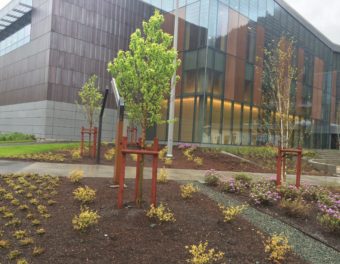
Landscapers for the newly-constructed Father Andrew P. Kashevaroff Library, Archives and Museum Building have staked freshly-planted trees and spread mulch around the planting area in this photo from May 2016. (Photo by Matt Miller/KTOO)

Master Gardener Ed Buyarski explains that a mulch or a non-living ground cover can inhibit weed growth, conserve moisture and provide a more aesthetically-pleasing surface than just bare soil between your trees and shrubs.
Listen to the June 13 segment about mulching:


Buyarski recommends a first layer of a heavy-duty, woven, porous landscaping fabric. That can be topped with bark, woods chips or gravel. He also uses a lot of cardboard as the first layer, which adds nutrients when it slowly breaks down into the soil after a year or two.

Do you have a garden question for Ed? Fill out the form below, and he’ll answer your question in an upcoming segment.

Listen to past episodes and subscribe to the podcast on the “Gardentalk” page, so you’ll never have to worry about missing Thursday’s live radio broadcasts.

Gardentalk – Summer’s second planting season now underway

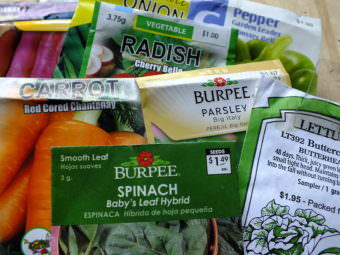
Seed packets can be purchased in local stores or online.
Seed packets can be purchased in local stores or online. (Photo by Matt Miller/KTOO)

Now that we’ve finished with the first spring harvest of garden vegetables, we can get started on a second summer crop.

Master Gardener Ed Buyarski said it’s way too late to plant tomatoes, peppers and eggplant.

Seed packet
Instructions on back of seed packet. (Photo by Matt Miller/KTOO)

But it’s certainly not too late for a second crop of peas, carrots, beets, swiss chard, lettuce and kale. Gardeners can start planting again as soon as their first crop is harvested.

“We have nice, warm soil,” Buyarski said. “The seeds that we are planting will germinate quickly.”

He recommends looking at the seed packets to determine how long each vegetable will take from planting to harvest.

As mentioned in an earlier segment on spring planting, Buyarski still advises to wait before planting your second crop of spinach and radishes. Otherwise, they will bolt during the upcoming longer daylight hours.

Listen to the June 6 segment about summer planting:


Do you have a garden question for Ed? Fill out the form below, and he’ll answer your question in an upcoming segment.

Listen to past episodes and subscribe to the podcast on the “Gardentalk” page, so you’ll never have to worry about missing Thursday’s live radio broadcasts.

Gardentalk – Preparing for early vegetable and garlic scape harvest

Super close-up view of pollen and a very small, winged visitor which have landed on garlic planted in a North Douglas garden. (Photo by Matt Miller/KTOO)
Super close-up view of pollen and a very small, winged visitor, which has landed on garlic planted in a North Douglas garden. (Photo by Matt Miller/KTOO)

In this week’s edition of “Gardentalk,” a heads-up about harvesting the first, early crop of spinach, arugula, mustard greens and radishes. Master Gardener Ed Buyarski said those cool weather plants may be early this season and could start bolting soon with the longer daylight hours.

Buyarski also recommends gardeners start harvesting their kale and spinach that was planted late last summer and left in the ground over the winter.

And don’t forget to feed your other vegetable plants.

Listen to the May 30 segment about garlic and early vegetable harvest:


“We can give them a little boost to keep them going if we’ve had a lot of rainfall,” said Buyarski, who admits that it’s not the case with this year’s dry conditions. But Buyarski said if your vegetables start turning a little yellowish-green, then it may be a sign they still need a nutrient supplement, like liquid fertilizer or homemade weed juice.

Garlic scape is all curled up in a North Douglas garden.
This garlic scape is all curled up in a North Douglas garden in this picture taken in 2017. (Photo by Matt Miller/KTOO)

For garden vegetables, he recommends a balanced, commercial liquid fertilizer, like 4-4-4 or 4-6-2 with a little more phosphorous. Leafy greens may prefer more nitrogen than root crops, which is reflected in the higher first number.

If you use a granular fertilizer instead of a liquid, apply it just before it rains or before you water your garden.

“You should be watering it in,” Buyarski said.

Buyarski said he’s already harvested some green garlic. He’s looking forward to harvesting scapes in the next few weeks.

A garlic scape will have a small, bulbous form that will grow about midway up (see picture right above) as it begins to curl or loop on itself. Each scape can be pinched off and made into a spicy pesto or chimichurri, and Buyarski said harvesting the scape will also allow the garlic to devote more energy to bulb growth in July.

Do you have a garden question for Ed? Fill out the form below, and he’ll answer your question in an upcoming segment.

Listen to past episodes and subscribe to the podcast on the “Gardentalk” page, so you’ll never have to worry about missing Thursday’s live radio broadcasts.

Site notifications
Update notification options
Subscribe to notifications