Gardentalk

Gardentalk – Here’s your early-season, pre-planting checklist

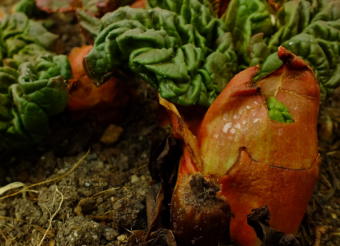
Close up view of rhubarb sprouting in KTOO's Agricultural Test Station and Garden of Science! in April 2019.
Close-up view of rhubarb sprouting in KTOO’s Agricultural Test Station and Garden of Science! in April 2019. (Photo by Matt Miller/KTOO)

Yay, gardening season is here!

Master Gardener Ed Buyarski runs down the list of things to do in this season’s first edition of “Gardentalk,” which airs on KTOO’s “Morning Edition” every Thursday morning during the spring and summer.

In this week’s segment, Buyarski encourages us to finish with the clean-up of messy greenhouses and garden beds that we started last fall.
 
Remove all the weeds, slugs and debris that you can find. Also, now would be the perfect time to mix in some fertilizer, horse manure or compost into your soil or garden planters.

“It will help it break down the soil more quickly and will really help stimulate the worm population, which is very beneficial to releasing the nutrients for the plants that we want,” Buyarski said.

Use clear plastic to help warm up the soil before you start planting, but make sure the plastic is raised up above the soil a few inches. Don’t let it rest directly on the soil.

If you still have snow in a semi-shaded garden area, then spread wood ashes or sand over the area to accelerate melting.

Buyarski will be starting tomato plants indoors this weekend. But he said if your garden soil is already warm enough, then you can directly plant kale, mustard and spinach into the ground right now. Cover those planted seeds with clear plastic, but remove that plastic before the seedlings get cooked in this spring’s warm and sunny weather.

Finally, did you plant garlic last fall and cover with plastic to protect them from snow and rain? If so, you can start removing that plastic as the bulbs emerge from the soil.

Do you have a garden question for Ed? Fill out the form below, and he’ll answer your question in an upcoming segment.

Listen to past episodes and subscribe to the podcast on the “Gardentalk” page, so you’ll never have to worry about missing Thursday’s live radio broadcasts.


Gardentalk – Season finale on fall clean up of yard and garden, bringing in perennials

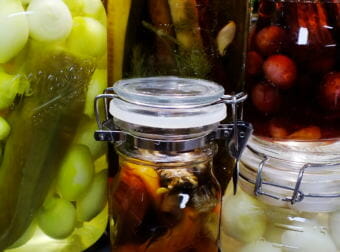
Homegrown onions, cucumbers, peppers, and mushrooms get pickled in a North Douglas kitchen.
Homegrown onions, cucumbers, peppers, and mushrooms get pickled in a North Douglas kitchen. (Photo by Matt Miller)

In the final edition of Gardentalk for the 2018 season, Master Gardener Ed Buyarski recommends clearing our garden of harvested and dying plants that will provide a good habitat for slugs laying eggs this fall.

Horse manure, seaweed, and the tops of almost all dead and dying plants can go into the compost pile, except for cabbage family roots, which may be infested with root maggots.

Add some fresh compost or another soil amendment to your freshly cleaned garden beds and then cover with tarps or plastic. That will protect the soil from the fall rains and allow worms and beneficial microorganisms to grow and thrive.

“So, in the springtime whenever the days start getting longer, we can start gardening a few weeks earlier,” Buyarski said.

Listen to the October 11 edition of Gardentalk:

And, don’t forget to bring in your begonias, dahlias and fuchsias from outside and store them in a dark, dry place like a root cellar or corner of the garage. Be sure to check the fuchsias on a regular basis throughout the winter so that they don’t dry out. They may need a few waterings over the winter to keep the roots from getting too dry.

Finally, everyone is invited to bring a recipe or dish to the annual Garlic Lovers Potluck at the Canvass, Oct. 21 from 4 p.m. to 7 p.m.

Gardentalk – How to check for fruit ripeness

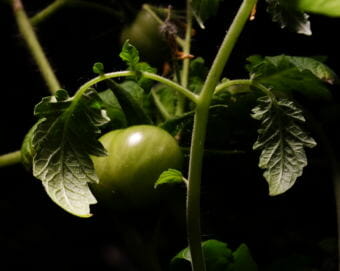
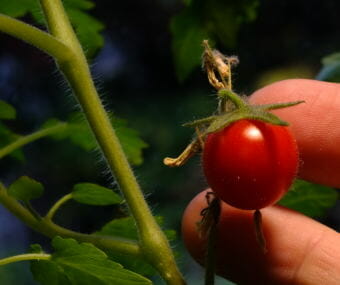
Pair of cherry tomatoes grown indoors remain green in early October 2018.
Pair of cherry tomatoes grown indoors remain green in early October 2018. (Photo by Matt Miller/KTOO)

In a recent edition of Gardentalk, Master Gardener Ed Buyarski said some fruits and vegetables may ripen slowly with lack of sun and cooler temperatures. He explained how to check the ripeness of kiwi, apples, pears and tomatoes.
Listen to the Sept. 13 edition of Gardentalk:

Kiwis typically fall off the plant when they are ripe. Since kiwis ripen very quickly, Buyarski recommends being vigilant and checking the fruit often for softness.

Apples have been ripening for several weeks, but it largely depends on variety. He recommends checking apples on your particular tree for taste.

For those gardeners who have plum and pear trees, Buyarski also suggests checking for softness and taste. But most pears can be picked now and will continue to ripen off the tree.

As for tomatoes, Buyarski recommends doing a little research on your plants since they are so many different varieties of tomatoes.

“Some of them will soften a little and certainly they change color,” Buyarski said. “But there are tomatoes which are green when they are ripe.”

And, no matter the variety or their stage of ripeness, Buyarski said homegrown tomatoes will always taste better than the so-called “ripe tomatoes” usually found in the grocery store.

Gardentalk – It’s sugar time for veggies

The first, late-planted cherry tomato ripens in a North Douglas kitchen in early October 2018.
The first, late-planted cherry tomato ripens in a North Douglas kitchen in early October 2018. (Photo by Matt Miller/KTOO)

Southeast Alaska gardeners may be worried about the recent rainfall and imminent cold temperatures affecting their still unharvested vegetables. But gardeners can take precautions against their crop getting deluged, and an occasional overnight frost may actually enhance vegetables’ taste.

“The season isn’t over,” said master gardener Ed Buyarski. “The sugar content of lots of our plants, especially root vegetables, are increasing.”

Listen to the Oct. 4 edition of Gardentalk:

In recent editions of Gardentalk, Buyarski recommended covering recently planted garlic or unharvested potatoes so they don’t start rotting as the fall rains intensify.

“Sometimes it makes it easier for mice, voles and rats to get in underneath those covers and find a great home to eat these tasty root vegetables,” Buyarski said.

He recommends regularly checking for rodents hiding under the plastic.

For other vegetables and fruits like greenhouse tomatoes or apples, sunshine and cool, dry weather will actually boost the sugar content.

“The plants may be killed (from a series of frosts), but the tomatoes can hang on,” Buyarski said.

Carrots, kale, beets and Brussels sprouts will also taste better if you can wait for a later harvest. Buyarski said carrots can be harvested well into November as long as the ground is covered and insulated against freezing.

Buyarski said he just planted a new crop of spinach in his greenhouse, which should be ready for harvest in the early spring. Parsnips planted this summer will actually last through the winter and be ready for harvest next spring.

Gardentalk – Gotta get that garlic growing in the ground

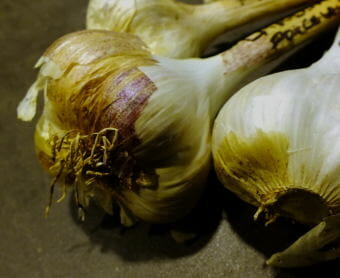
Close-up view of hardneck garlic which awaits planting day in a North Douglas garden.
Close-up view of hardneck garlic which awaits planting in a North Douglas garden. (Photo by Matt Miller/KTOO)

KTOO listener Carole P. writes: “This fall is so unusually warm. When should I plant the garlic?”

Master Gardener Ed Buyarski said he’ll actually be planting garlic this weekend, even if it stays mild for the next few months. But he said anytime before the ground freezes in October is ideal.

First, he suggests seed hardneck garlic — not the typical California softneck garlic found in grocery stores — as the best type for Alaska gardens.

Gently break the garlic bulbs into individual cloves, and set aside the small cloves for cooking instead of planting.

Plant the biggest cloves in rich, well-drained soil in a sunny location. They should be planted about 2 inches deep and 6 to 8 inches apart with each clove’s pointy end up.

“It is a fairly heavy feeder,” Buyarski said. “Working in compost and organic fertilizer into the soil before planting really is an important item.”

Gently cover the cloves with soil and then add a layer of compost or seaweed. Adding a layer of plastic on top will prevent the soil from becoming too wet during the fall rains.

Ideally, Buyarski said garlic should not sprout in December or January. That’s too soon.

Adding mulch and then covering with spruce or hemlock boughs may provide enough ground insulation to prevent the ground from repeated freezing and thawing, and keep the garlic on schedule for sprouting in March or April.

Listen to the Sept. 28 edition of Gardentalk about garlic planting:

Listeners have also asked for links to seasonally-sensitive episodes of Gardentalk that recently aired. Click on the link to bring up the page for that particular segment.

Gardentalk – How to treat your freshly harvested potatoes with TLC

Gardentalk – How to protect your veggies from the coming frost

Gardentalk – How to collect your own flower and vegetable seeds

Gardentalk – Great Alaska Slug Hunt: Fight back against invading mollusks

Gardentalk – How to treat your freshly harvested potatoes with TLC

A North Douglas gardener robs his potato plants for some fingerlings for dinner.
A North Douglas gardener robs his potato plants for some fingerlings for dinner. (Photo by Matt Miller/KTOO)

There’s a wrong way and a right way to harvest potatoes. The wrong way would be blindly digging into a potato mound with a shovel. The right way includes carefully reaching underneath the potato plant and gently pulling out each potato by hand.

Master Gardener Ed Buyarski explained during a recent edition of Gardentalk that he handles fresh potatoes very gently during harvest.

“Don’t toss them, dump them, drop them into a bucket because they can crack very easily,” Buyarski said. “We don’t want to crack them because that can let bacteria or fungi into the potatoes to start them rotting.”

Buyarski suggests immediately eating any potatoes that may be scabby or damaged. Save the good potatoes for long-term storage.

First, he recommends against thoroughly washing or scrubbing those potatoes. That could damage the thin and fragile potato skin.

Some gardeners avoid washing off any of the dirt. But Buyarski says he usually does a very light washing and then places them in trays or crates in a cool place so the skins can thicken and toughen up as they dry.

He will then cover them with blankets, cardboard or newspapers. If light hits the potatoes while they are curing, then they’ll turn green and bitter, and become mildly poisonous.

What if your potato plants are already turning yellow and dying back, but you’re still not ready to harvest?

Buyarski suggests cutting back the vines and covering the potato mound with a tarp or heavy plastic. The thin and fragile potato skins will toughen and cure in dry soil. Potatoes will begin to rot if they are left in damp soil.

Listen to the September 20 edition of Gardentalk about potato harvesting and curing:

Site notifications
Update notification options
Subscribe to notifications