Gardentalk

Gardentalk – Here’s your primer on picking peonies

Peonies
Peonies (Creative Commons photo by Samantha Forsberg)

If you have ever attended a wedding recently, then you’ve probably seen bouquets or arrangements of peony flowers.

The long-lived plants are popular in the commercial floral industry because of their fragrance and big, beautiful flowers.

Alaska gardeners love growing them because of their ability to endure long, cold winters in northern temperate climates.

In the week’s edition of Gardentalk, Master Gardener Ed Buyarski reminds us that local herbaceous peonies are now blooming with white, pink and red flowers.

For those wishing to take part in the peony parade, Buyarski suggests ordering peony roots now before planting in late September and October.

Peonies are available in single, semi-double or double-flower varieties which specify the number of petals for each flower.

“From literally just five petals — like the single roses — on through the semi-doubles which might have 10, 15, even 20 petals,” Buyarski said.

Peonies bloom either in early, mid- or late season.

Herbaceous peonies either die back or need to be trimmed in the fall before they regrow in the spring. A different type, woody tree peonies, are more like shrubs and do not die back.

“So, there are some incredible choices,” Buyarski said.

When your peony roots or tubers arrive, Buyarski says be careful not to plant them deeper than 1- to  2-inches or they may never flower.

Listen to the July 20 edition of Gardentalk about selecting peony varieties:

This set of peony roots or tubers with new buds must be split up before planting. You might need a hatchet. (Photo courtesy of Ed Buyarski)

Gardentalk — Trim a little now for a bigger harvest later

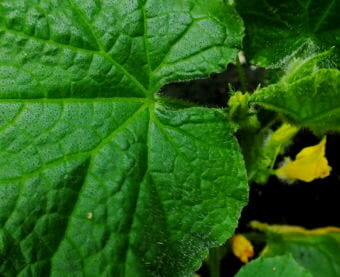
Cucumber flowers fade and shrink for the night in a North Douglas greenhouse.
Cucumber flowers fade and shrink for the night in a North Douglas greenhouse. (Photo by Matt Miller/KTOO)

In this week’s edition of Gardentalk, Master Gardener Ed Buyarski explains that trimming a few side shoots from our greenhouse tomato and cucumber plants can enhance development of their vegetables over the rest of the season.

Buyarski recommends erecting a trellis, tomato cages or other form of support that will allow the plants to grow upward.

“Because those plants will grow lots and lots of side shoots off the main vine, we need to prune some of those out so that the plant will put its energy into growing more tomatoes, more cucumber fruits,” Buyarski said.

“And, (it will) allow better ventilation, better airflow around the plants so we don’t have the mold and mildew infections that are so common with our normally moist conditions,” he said.

For indeterminate tomato plants which may grow 6 feet or more until killed by frost, Buyarski recommends pruning the plant’s side shoots so there is no more than one extra stem off of the main stem.

For determinate or bush tomatoes which are limited to 3 feet in height, he suggests leaving three or four stems instead.

For cucumbers, Buyarski recommends trimming the side shoots and leaving no more than two or three shoots off the main stem.

Listen to the July 13 segment of Gardentalk about trimming cucumbers and tomatoes:

Got a gardening question for Ed? Go to this page and ask away! We’ll try to answer your question in an upcoming segment.

Gardentalk – How to juice your garden with weeds

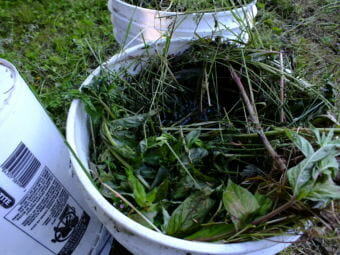
It's not stinky yet. Fresh weed tea brews in a North Douglas garden.
It’s not stinky yet. Fresh weed tea brews in a North Douglas garden. (Photo by Matt Miller/KTOO)

In this week’s edition of Gardentalk, master gardener Ed Buyarski describes how he makes weed juice or weed tea to feed our garden vegetables.

  • Fill a 5-gallon bucket about two-thirds full with weeds you just pulled, add a handful or two of fresh seaweed, and then top off the bucket with water.
  • Let sit for a few weeks until the liquid at the bottom of the bucket turns into a disgusting, stinky brown syrup.
  • Remove the weeds and seaweed and any chunks or solids that settle out. Don’t forget any weed seeds that may float to the surface.
  • Dilute the slimy liquid about 4 to 1 with water before applying it to your garden vegetables.

Buyarski says the liquid contains essential nutrients like nitrogen, phosphorous and potassium that were picked up by the weeds.

He says use grass clippings in your tea sparingly because they are usually very high in nitrogen content. Buyarski also cautions against using grass clippings or weeds in which weed-and-feed or a herbicide was recently applied.

Listen to the July 6 edition of Gardentalk about weed tea:

Buyarski has already embarked on another round of planting for late summer crops of broccoli, cabbage, rutabaga, kale, and lettuce. He will wait until late July before planting additional crops of spinach and radish.

Gardentalk – Go big with garlic and deadhead those scapes

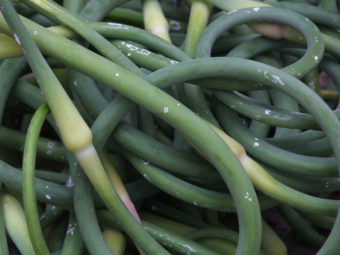
Garlic scape is all curled up in a North Douglas garden.
It’s too late. This garlic scape from last season is all curled up in a North Douglas garden. (Photo by Matt Miller/KTOO)

In this week’s edition of Gardentalk, Master Gardener Ed Buyarski suggests a little mid-season garlic maintenance to enhance the size of our bulbs at harvest time.

Buyarski explains that a garlic’s scape or long center stem usually grows with a bulbous section designed to help with the plant’s propagation. But those scapes consume a significant amount of energy as they grow. Buyarski suggests trimming off the scape before it starts curling so the garlic plant can devote more energy to bulb development.

Listen to the June 29 segment of Gardentalk:

And, don’t just chuck those trimmed garlic scapes into your compost pile. Buyarski says there plenty of recipes to make a garlic scape chimmichurri or pesto.

Recently harvested garlic scapes. (Photo by Matt Miller/KTOO)

Gardentalk – Green thumb Ed answers your questions

Tomato
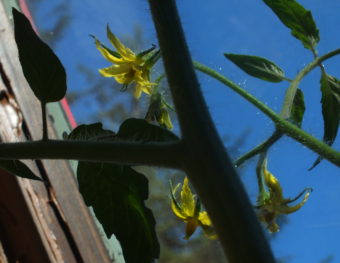
Tomato flowers blossom in a North Douglas greenhouse. (Photo by Matt Miller/KTOO)

During the current warm and dry spell, Master Gardener Ed Buyarski issues his usual advice to vent your greenhouses and water your plants.

In this week’s edition of Gardentalk, Buyarski described how the temperature in his greenhouse recently pegged the gauge at above 120 degrees. And, his greenhouse is covered by clear single-layer plastic sheeting, not double-paned windows which can more effectively retain heat.

He suggests leaving the doors and vents open to ventilate your greenhouse in warm or humid weather.

Buyarski also described how one local gardener started watering her hanging tomato plants twice a day because they dried out so quickly in Juneau’s recent 70-85 degree temperatures.

Also, a reminder that the Southeast Master Gardeners Garden Tour will be from 11 a.m. to 4 p.m. Saturday, June 23. Seven gardens will be on display.

You can find a map and more information about tickets at this page.

Listener questions on garden bed covers and rhodies –

Buyarski answered a few questions submitted by local gardeners.

John wrote: “I have beds (4×16) and salvage single-pane storm windows (metal frames). Building covers, leave lots of vent to dry or little to hold heat?”

Buyarski recommends John consider the plants that he wants to grow before constructing the framework to hold the windows.

They will work better than clear single-layer visqueen to warm up the plants and the soil, but Buyarski said designing options for adequate air flow and ventilation is essential to prevent fungus development during high humidity.

“Whether that be screens on the ends or if he can somehow put hinges on the windows to lift one up on each end to let the hot air out while also still shedding rainfall,” Buyarski said.

Julie wrote: “We live in Gustavus and think that our Rhododendrons are beyond help. The leaves are covered in rust-colored spots.”

Buyarski said it sounds like a fungus.

“Certain rhododendrons get those brown fungus spots,” he said. “It is a variety issue, unfortunately.”

Buyarski suggests Julie research rhododendron spots, fungicide treatments and fungus-resistant rhododendrons if she has internet access.

He recommends that Julie do not use the usual fungicide treatment of a baking soda spray since the sweetness can have an adverse affect on rhododendrons.

It’s also essential that any old, dropped leaves be cleaned up and removed.

A layer of sand or spruce needles placed under the rhododendron will prevent more fungus spores from splashing up to new leaves on the plant.

Listen to the June 21 edition of Gardentalk:

You have a gardening question of your own? Go to this page, fill out the form on the right, and we’ll try to answer your question on the air.

Gardentalk – Is it dead yet? Some plants may still cling to life

This cucumber plant suffered from severe sunburn and windburn damage because it wasn't properly hardened off before it was planted outdoors. Overnight temperatures also hovered just a few degrees above freezing. But new growth suggests that this plant is on the rebound.
This cucumber plant suffered from severe sunburn and windburn damage because it wasn’t properly hardened off before it was planted outdoors. Overnight temperatures also hovered just a few degrees above freezing. But new growth suggests that this plant is on the rebound. (Photo by Matt Miller/KTOO)

Like a plague-infected character in a Monty Python movie, some of your plants and trees may look sickly and sad while proclaiming that they’re not dead yet.

Branches of recently planted shrubs and trees may droop if they’re suffering from moisture stress. Inadequate snow cover that would normally protect the ground during a severe freeze can kill a plant’s roots, which affects how much moisture it takes up during the spring.

Leaves of greenhouse plants and vegetables may also wilt or shrivel if they don’t get enough water.

Tender vegetable starts may turn yellow-white and die if they suffer from cold shock or if they were planted outside before overnight temperatures warmed up enough. They may also become discolored if they get sunburned or windburned before they are hardened off properly.

Master Gardener Ed Buyarski says it’s possible to check whether your vegetables and trees will last the rest of the season or if they should just be replaced.

  • Check for new growth. Some leaves may be brown or falling off. But if the plant is still leafing out or shows evidence of new budding, then it may have a chance.
  • Do the knife or thumbnail scratch test for larger plants, shrubs and trees. Some shrubs and trees may appear green at the top. But if they appear brown under the bark at the base, then it’s likely dead.
Listen to the June 14 edition of Gardentalk:

This okra plant dropped many of its leaves after it was transported to a new environment. But abundant new growth at the base suggests that it is far from dead.
This okra plant dropped many of its leaves after it was transported to a new environment. But abundant new growth at the base suggests that it is far from dead. (Photo by Matt Miller/KTOO)
Site notifications
Update notification options
Subscribe to notifications