Outdoors

Garden Talk: Jensen-Olson Arboretum previews upcoming events for Alaska Native Plant Month

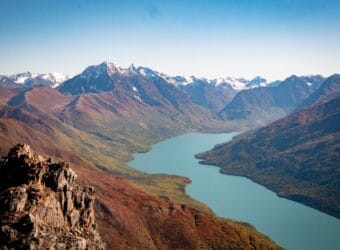
The view from Jensen-Olson Arboretum in Juneau. (Photo courtesy of the Jensen-Olson Arboretum).

Spring is in bloom at Juneau’s Jensen-Olson Arboretum.

Ginger Hudson manages the arboretum, a city-owned garden located out the road just pass the Shrine of St. Therese. She spoke with KTOO’s Garden Talk about spring planting and upcoming events at the arboretum for Alaska Native Plant Month.

“In the Lower 48, Native Plant Month is in April,” Hudson said. “And as everybody knows, our gardens are still waking up.”

Alaska Native Plant Month takes place in May and was established last year to recognize the importance of native species and encourage Alaskans to plant them in their gardens.

On Sunday, the arboretum will host a free native plant walk at 11 a.m. that anyone can join.

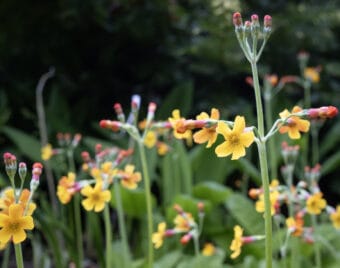
The arboretum is home to a nationally-accredited primrose collection. There are more than 170 varieties of primroses on the property today. Hudson says they’re in prime bloom at the moment, so now is the time to see them.

“If you can make it out earlier, the primroses are in prime spectacular color right now,” she said. “But they do bloom from April until frost. There is always some kind of primula growing.”

You can also stop by next Saturday for Public Gardens Day and Primula Day, when the garden will hold a plant sale and host tours.

Hudson also shared recommendations for native plants to grow in local gardens, including flowering and fruit-producing varieties.

Find a full list of future events online at friendsjoarboretum.org/events.

New study says social media drives visitation in National Parks, especially in Alaska

Brooks Falls at Katmai National Park and Preserve (Brian Venua/KMXT)

More and more, National Parks are using social media to boost visitor numbers and amplify their conservation efforts. A new study found that it’s working- with the help of everyday visitors. Parks with high social media exposure saw a significant increase in visitor traffic, and that effect was especially noticeable in Alaska.

Casey Wichman is the author of the study and an associate professor of economics at Georgia Tech in Atlanta. He said visitation rates for National Parks across the country have been on the rise and he wanted to see if it was driven by social media. He called the study a passion project.

“This stemmed from casual interest in recreation issues on public lands, which allowed me to think about this as a serious research project,” he said.

Wichman’s study compared social media exposure and visitor numbers for more than 60 National Parks before and after social media began gaining ground in 2010.

Parks with high baseline visitation exhibit smaller increases in visitation relative to parks with low baseline visitation. Alaska’s parks surged by almost 80%. (Casey Wichman)

The study found parks with high social media exposure experienced up to 22% more visitors than parks with lower social media exposure. Visitation at parks in Alaska surged by almost 80% over that same period.

“I think it’s pretty interesting that social media does appear to be influential for parks that are fairly remote for the average American,” said Wichman.

Wichman said the visitor numbers in Alaska are much lower overall compared to  many parks in the lower 48. He said that’s partly why the increases from social media look so dramatic for Alaska Parks – an increase of a few thousand visitors can make a big difference.

But Wichman said he thinks more people are visiting parks in Alaska for a simple reason- because they’re learning they exist through social media. And he doesn’t think it’s just the National Park accounts driving that trend.

He said when someone in a social network posts an incredible picture from a National Park, it can inspire others to make the trip. Wichman said a park’s location plays a critical role in determining how many people visit.

“Seeing the landscapes and the wildlife, I think, is one benefit people get. But increasingly, I think people also really enjoy posting about their visit on social media so they can share that more easily with their friends, or essentially anyone else in their social media network,” he said.

The study shows all parks in Alaska saw more visitors except for Katmai National Park and Preserve near King Salmon. Despite having strong social media exposure, the study shows the park is down about 8% in visitors, or about 4500 people.

Wichman said Katmai is hard to get to, you have to fly or take a boat, and that likely contributes to the slight decrease in visitation. He thinks fans are substituting in-person visits with online engagement.

“Maybe people really enjoy watching bears from their computers or phones, rather than actually being there with them,” he said.

In 2014, Katmai started ‘Fat Bear Week,’ a competition between the preserve’s chubbiest brown bears. Since then, public information officer and education program manager Matt Johnson said visitor numbers at Brooks Camp have increased, despite a slight dip in overall visitation to the park.

The Brooks Camp Campground opened reservations in January. Within 15 minutes, Johnson said all 60 campsites were booked through mid-September.

“It used to be that you could get a [camp]site anytime,” said Johnson.

Johnson’s role includes curating posts for social media. He said he looks for photographs that speak for themselves and share the park’s mission: to conserve scenery, natural and historic objects, as well as the wildlife.

Two bears vying for a prime fishing spot near Brooks Falls. (Brian Venua/KMXT)

Their social media management team looks a little different during Fat Bear Week. He said several regional and national partners are involved, like explore.org.

“Now it’s such a big deal that there are more people from the National Park Service involved in the process.”

Johnson said Katmai is looking for ways to help spread their conservation efforts to a wider audience that might not visit in-person or don’t use social media. In 2012, the park established live bear cameras which have been popular, Johnson said.

Johnson said in the park’s history, there’s never been more than 100,000 visitors in a year. He said relatively low visitor numbers to Alaska National Parks are part of what makes them unique. He hopes visitation numbers keep increasing, but he said it’s not something the park is focused on.

“We’d like to see an increase,” he said. “Katmai has small numbers compared to other parks.”

Study author Casey Wichman hasn’t visited any National Parks in Alaska, but said they’re on his bucket list.

U.S. Forest Service considers higher fees for new Alaska cabins

Petersburg resident, Brian Richards, stands outside of West Point Cabin located on the north side of Kupreanof Island on May 4, 2024. (Photo by Ola Richards)

The U.S. Forest Service is planning to build a few dozen new cabins in the Tongass and Chugach National Forests in the coming years. The agency is proposing higher fees – $75 a night – to help keep up with the increased cost of maintenance.

Life-long Petersburg resident Brian Richards and his wife stay at Forest Service cabins every summer. The 40-year-old said they reserve several cabins that they travel to by boat.

“It’s like a bucket list,” Richards said. “We want to use them all. I’d say we prefer cabins by lakes or rivers, you know, water, it just kind of adds another element.”

The couple sees their cabin stays as good for their mental health. Richards calls it “natural therapy” that helps them reconnect.

“The more we get out there and walk around and look at the trees and listen to the birds and just, you know, disconnect from civilization, I think it’s just incredibly beneficial,” he said.

Richards is excited to see more cabins coming to the area. The Forest Service plans two new cabins in the Tongass this year at El Capitan Interpretive Site and Mendenhall Campground, and four next year at Herbert Glacier in Juneau, Woodpecker Cove near Petersburg, Little Lake near Wrangell and Perseverance Lake near Ketchikan – they’re mostly on the road system for increased accessibility. Similarly, there are six new cabins scheduled for the Chugach, with half built this year at Porcupine Campground in Hope, Meridian Lake near Seward and McKinley Lake near Cordova, and half next year at Granite Creek and Turnagain Pass. That means the Forest Service needs to set the nightly fees for the cabins soon. The agency is required to have fees set six months before they charge them.

“It can be tricky,” said John Suomala, the recreation program manager for the Tongass.

Suomala helps set the cabin fees. He uses a cost analysis that looks at several factors such as local economies and what similar cabins are going for.

“Part of it too is just, you know, local expertise, from the districts, people that live in these communities,” said Suomala. “Just kind of thinking about, you know, what are the prices within these communities now and what do you think your neighbors are willing to pay.”

The nightly fees for staying at a Forest Service cabin in Alaska mostly range from $35 to $75. All of the new cabins are proposed for $75 a night except for two – one near Ketchikan is $65 and one at Juneau’s Mendenhall campground is $125 because it has electricity and nearby showers.

The new cabins are just a fraction of what’s available to the public. The Tongass has 142 cabins just in Southeast. Most are remote and get visitors less than 10 nights a year. Last year, it cost the Forest Service $700,000 to maintain them. The nightly fees covered about $500,000.

Suomala said the popular, more accessible cabins help subsidize the remote ones – and that’s their hope with the new cabins coming on board. But ultimately, he said, the public will help set the price.

“We want feedback to, you know, to get an idea, like are we way off here?” Suomala said. “Do you think it should be higher? Do you think it should be lower? We can’t raise the fee based on feedback from the public but we can lower it.”

As for Richards, he said $75 a night won’t be a deal breaker for him and his wife, Ola.

“Because, it’s worth it for us,” he said. “I guess my concern is for a lower-income family. I would hate to think that someone wouldn’t stay at a cabin because they can’t afford it. I think that’s a real shame.”

The deadline for public comments on the proposed cabin fees is July 2. People can comment in person, online, by phone, email or snail mail.

Garden Talk: Good pruning technique can help your trees and bushes reach their potential

A cherry tree in blossom by the stairs behind Fireweed Place in Juneau on April 24, 2024. Buyarski says the cherry trees downtown are “severely, really thick,” and that pruning would help a lot. (Will Mader/KTOO)

If you’ve taken a walk outside in Juneau lately, you’ve probably noticed the smell of growing things. Maybe you’ve also noticed the budding and blooming trees and bushes.

Master Gardener Ed Buyarski says proper pruning techniques can help your trees reach their full potential. He says to start with some basic rules.

“First, take out any deadwood. The deadwood doesn’t do the tree any good,” he said. “This winter, with some of the heavy snow we had, there’s been a lot of broken branches. So trim those off neat and clean.”

He says that for apple and cherry trees, the goal is to create a “slightly open center,” without branches rubbing each other.

“We want to open the tree enough so the sun gets through to the flowers and the fruit and the leaves,” he said. “They even talk about, well, “A robin should be able to fly through your tree without hitting its wings.”

He also says that it’s important not to prune too much in the spring because that will only lead to more pruning.

“So you don’t want to take too much off. They say 20% maybe, at most,” he said. “If you stimulate too much new growth, that means you have to do more pruning. It’s kind of a vicious circle, this time of year.”

He says that’s not true for pruning later in the year, though.

“There’s actually a time from mid-June to mid-July for pruning, which is going to slow down the growth,” he said. “Because most of the energy in the tree is up in the branches and trunk.”

Buyarski says not to leave stubs, not to seal your pruning cuts with paint or anything rubbery, and not to fill cracks in the trunk.

“That is not beneficial,” he said. “But cleaning tools in between, especially moving from tree to tree, if you have a little container with some 10% bleach solution, you can dip your pruning tools into that or paint them with it so that you’re not transferring diseases from one tree to another.”

Buyarski also emphasized the importance of using clean and sharp tools, fertilizing the trees, and reducing competition from weeds and grass around the roots.

Garden Talk: Transplanting starts and seeding potatoes

Parsley and flower starts in the process of being hardened off on April 22, 2024. (Photo courtesy of Christina Castellanos/Snowshoe Hollow Farm)

With all of this spring sunshine warming the earth, Master Gardener Ed Buyarski says it’s time to think about starting seeds and transplanting. But before you put your seedlings in the ground, you’ll have to get them ready.

“Hardening them off is slowly getting them used to outdoor conditions,” he said.

Buyarski says it’s best to start taking your seedlings outside when it’s cloudy – or at least put them in the shade.

“And only doing this for a short time like an hour the first day and then two hours tomorrow and then three or four hours the next day,” he said. “You’re gradually getting them used to longer time periods outdoors.”

Once you’re ready to put them in the ground, Buyarski says you can use a horticultural fabric like Reemay or Agribon to help your transplants prosper.

“It provides a little bit of shade, a little bit of frost protection, and holds a few degrees of heat,” he said. “But the rainwater can still go through, the air goes through, some light goes through.”

And as far as seed potatoes go? It may not be as simple as grabbing your winter root cellar rejects, unless you grew those yourself.

“I do not recommend using regular eating potatoes from the grocery store for that purpose,” he said. “Eating potatoes do not have the same inspections for diseases and stuff.”

Buyarski said that if you don’t have your own, you should try to buy certified seed potatoes instead.

Garden Talk: Why silverweed is ‘a beloved plant all throughout the Pacific Northwest’

Silverweed in bloom. (Courtesy of Khalil English)

For this week’s Garden Talk, KTOO’s Chloe Pleznac spoke with Khalil English about his research on silverweed, a seemingly inconspicuous plant with deep roots in Pacific Northwest history. English spoke about silverweed’s importance as a food source across the North — and about where it grows in Juneau.

Listen:

This transcript has been lightly edited for clarity and length.

Khalil English: Silverweed first came into my life, I believe, through a book that I got from Professor Daniel Monteith called Haa Atxaayí Haa Kusteeyíx Sitee. It means, “Our food is our Lingít way of life.” And there are some plant foods in there that I had never heard of before, and one of them was tséit or silverweed. And that kind of just grew into something huge. I looked into some of the Lingít uses and how it’s harvested here, and then found, oh my gosh, it’s a beloved plant all throughout the Pacific Northwest and even circumboreal. It’s all around the North, and even in Europe, in Scotland, and Norway, etc. People have loved silverweed. So it ended up becoming a little bit of a self-history search, as well. 

Chloe Pleznac: Can you tell me a little bit more about what some of those traditional uses are and how this plant fits into the history of all the indigenous cultures along the Pacific Northwest Coast? And even the circumpolar north, as you were saying.

Khalil English: A lot of the information that I have been able to learn comes from the Kwakwa̱ka̱ʼwakw, which are just the northern tip of Vancouver Island and a little bit on the mainland. And that’s where the temperate rainforest, it’s just non-stop, summer and winter rain. So we have these huge estuarine river systems, and people would bioengineer the salt marsh. So according to sources from the Kwakwa̱ka̱ʼwakw, there was not a single patch of saltmarsh that wasn’t owned and tended by someone. So it was a very intensively managed crop. There was a lot of food that people got from it. It was very important ceremonially, there was actually a taboo, at least in this area, for not eating the silverweed until, I think it was at least, around December, which has a little bit to do with getting the roots to taste sweeter. And then as far as Scotland, there’s sadly not as much information, but there is still a lot of love. In some of the few stories I could find. There was a little Gaelic phrase that I learned that I’ll share that kind of highlights some of the feelings around it. And it’s, brisgean beannaichte an Earraich, seachdamh aran a’ Ghàidheil. It means “blessed silverweed of spring, seventh bread of Gales.” And so along with millet and rye and wheat, silverweed was very important. And so people, when they were given their allotments for fishing, etc, silverweed patches were a part of that, at least in Scotland. And then when the potato famine happened, people actually returned to eating silverweed.

Chloe Pleznac: Do you know why it kind of has become a little disenfranchised? Why is it not known as well as these other food sources? 

Khalil English: I think it depends on where we’re looking. So, for silverweed in the British Isles, from what I’ve garnered, it’s the fact that it was mostly a food that poor people ate. That’s why it wasn’t recorded so much. When we’re looking at the Pacific Northwest, then we’re dealing with a little bit more of that kind of direct intention to remove people from their food and remove people from the land. So of course, where silverweed grows, is the easiest land to develop. It’s the easiest land to put cows on. And so people were removed from their silverweed fields. There’s quite a few disheartening stories of people kind of giving up on those fields and walking away.

Chloe Pleznac: Where can people in Juneau typically find silverweed and respectfully harvest it? 

Khalil English: Silverweed is abundant. There are actually quite a few subspecies of silverweed. So Pacific silverweed is what I’ve mostly been focusing on. They have the biggest roots and they’re going to be mostly along the oceanside. But even for folks in interior Alaska, or I don’t know, in Utah, there is still silverweed. It prefers more salty grounds. So for us, that’s right on the oceanside, could be at the edge of some lake, down further South. More direct places in Juneau might be Fish Creek. The Mendenhall Wetlands would be the most ideal spot, but of course, I don’t know how safe it is to eat anything out of there given the airport and the waste management system. But pretty much anywhere. Like Sandy Beach, all the edges are covered in silverweed. Any beach, right under that beach rye, that really grayish blue grass that is very thick? Silverweed is right there.

Chloe Pleznac: What time of year is the best time to keep an eye out for this? You were saying culturally, there’s a bit of connection at different times of the year for harvesting, perhaps?

Khalil English: For our area, what I’ve read is mostly people would harvest in the spring. And then what I’ve read for down in Vancouver, people mostly harvested in the fall. But I think it’s a little interchangeable. What they’re going for is once the plant starts growing actively, once you can see anything above ground, the roots are very, very astringent. They become really bitter. There’s a lot of tannins. So, when you harvest either at the very beginning of spring or in the fall, those tannins have reduced a lot. Then when you dry them and store them cold, the tannin content is further reduced. So, in wintertime, you got to kind of familiarize yourself with habitat, and then you can go and look for their dried leaves. They persist pretty well and are easy to recognize. And then you just dig in. 

One last thing I’ll share, and this was a little more of my focus, is something I’ve loved about silverweed, is it really highlights the relationship that people can and have for many thousands of years had with the earth. I think, too often when we’re talking about environmental topics, it becomes really depressing, and we kind of demonize ourselves. But, to me, this really highlights like, oh, we have a place we also are attending the earth as well. And by tending these wild systems, they can become more productive. We can take advantage of it and so can the rest of the wildlife. But in today’s world, of course, it’s a little harder to go out and say start bioengineering our salt marsh here. So, people can bring them into their gardens. They’re very adaptable.

Site notifications
Update notification options
Subscribe to notifications