Local Government

Juneau releases hazard mitigation project list for public comment

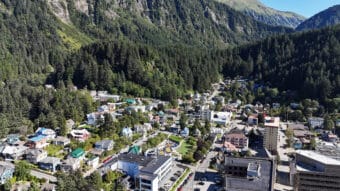
Downtown Juneau on Monday, June 9, 2025. (Photo by Clarise Larson/KTOO)

Juneau officials released a list of potential hazard mitigation projects for public review on Thursday, July 10. 

The city and the Central Council of the Tlingit & Haida Indian Tribes of Alaska are considering more than a hundred projects to reduce risks in the Juneau area. Officials came up with some of the project ideas, while others were pulled together from past hazard mitigation plans, a public survey and even Facebook posts. 

Projects that officials choose will go into an updated plan to make the city eligible for federal disaster funding. 

Potential projects range from plans to increase affordable housing to elevating buildings in flood zones. One idea is to explore a federal buyout program for homes in high-hazard areas. Another is to regulate new construction in severe hazard zones. 

Other ideas include renovating buildings to handle earthquakes, installing landslide and avalanche monitoring equipment and encouraging electric utilities to bury power lines. 

The city’s last hazard mitigation plan expired in 2017. The update must be finished by October for the city to qualify for a federal grant to fight glacial outburst floods in Mendenhall Valley. 

Officials said the full draft hazard mitigation plan will be published next week. 

The public comment period closes July 25. Residents can submit comments via email to laura.young@fairweather.com

Proposed seasonal sales tax would take advantage of Juneau’s summer tourism

Cruise ship tourists visit shops in downtown Juneau on Wednesday, July 10, 2025. (Photo by Clarise Larson/KTOO)

The Juneau Assembly is moving forward with a plan to ask voters this fall whether to implement a new seasonal sales tax system next year. 

The proposed change is meant to capitalize on the 1.7 million cruise ship visitors that come to town each summer. The new structure would raise sales taxes in the summer months and lower them in the winter. 

Assembly members voted at a finance committee meeting on Wednesday to take public comment on the proposal later this month before deciding whether to put it on the October municipal ballot. 

Assembly member Alicia Hughes-Skandijs said she thinks the idea will be well-received by many in the community.

“In what is an increasingly seasonal economy, it makes sense to capture maximum yield when you have all these folks in town,” she said. 

Seasonal tax structures aren’t uncommon in tourism towns in the state. Other Southeast Alaska towns like Ketchikan, Sitka and Skagway have similar seasonal tax structures in place already.

Right now, Juneau levies a 5% local sales tax. That’s made up of both permanent and temporary taxes that help pay for general government costs, some specific voter-approved projects and community priorities. 

But if voters approve the proposed seasonal sales tax system, consumers would instead pay a 7.5% tax in the summer from April through September and a 3.5% tax in the winter from October through March. 

Members decided on Wednesday to remove a part of the original proposal that would have used the additional revenue from the new system to offset the cost of removing local sales tax on food and utilities. That’s because it would have basically mirrored another ballot measure that’s going before voters this fall.

Earlier this month, an advocacy group called the Affordable Juneau Coalition successfully gathered enough signatures to put two questions on the local ballot this fall. Both aim to lower the cost of living for residents, including whether to remove local sales tax on food and utilities.

Homeowners along Mendenhall River may pay less in property taxes following annual flooding

Home in the Mendenhall Valley on Wednesday, April 2, 2025. (Photo by Clarise Larson/KTOO)

Property tax bills are starting to arrive in Juneau residents’ mailboxes this week.

Last month, the Juneau Assembly passed a municipal budget that increased the property tax rate. Property tax bills for most Juneau residents are expected to go up – but not for everyone. 

The average residential property value rose by less than 1% this year. But many homes in  Mendenhall Valley near the river saw a decline in their assessed values after last August’s glacial outburst flood. 

City Finance Director Angie Flick said assessed homes near the Mendenhall River saw a roughly 20% drop in value. 

“We would anticipate that those homes in those areas would sell for a lesser value because of the risk of flooding, just because they experienced it last year,” she said.  

Property tax bills are calculated by multiplying the mill rate by a property’s value. The Assembly voted to increase the property tax rate, but it’s not enough to pay for city spending next year. That means the city will dip into savings to fill the gap.

Flick said bills can vary from property owner to property owner for a variety of reasons, like the location. 

“There’s always pockets of communities that have more drastic changes — it’s the beauty of the law of averages,” she said. “But in general, they should be pretty close to last year, probably slightly higher.”

Although the average property assessment went up only slightly this year, high housing costs continue to be a barrier to homeownership in Juneau.

According to a study by the Alaska Department of Labor and Workforce Development, Juneau has had the highest average sale price for a single-family home in the state for the past two years. 

The deadline to petition an assessment passed earlier this spring. Property tax bills must be received or postmarked to the city on or before Sept. 30.

Haines Assembly agrees to move towards smaller Lutak Dock plan

Failed steel beams between the cells at Lutak Dock, March 2025. (Photo provided by Haines Borough)

The Haines Borough Assembly all agreed for once about plans for the Lutak Dock.

In a rare unanimous vote, the Assembly directed the interim borough manager to come back to their next meeting with a new contract that includes a smaller, less expensive dock. If approved, the agreement would also end litigation between the borough and the dock contractor.

After years of setbacks and frustration, Haines might be closer to having a new freight dock.

Interim Borough Manager Alekka Fullerton presented a modified concept proposal at the last borough assembly meeting to replace the deteriorating Lutak Dock.

“This concept will look familiar to you since it’s very close to the option 1B which was developed by R&M in 2017,” she said. “The main difference is that it’s a bit smaller. The dock will be a little bit smaller, and incorporates only the most essential elements.”

Fullerton said the new plan preserves the roll-on/roll-off function and fuel transfer operations. Depending on how far the money stretches, at least five cells will be encapsulated.

“After the seismic survey is complete and the required ground improvements are evaluated, it may be that the final design will allow us to include encapsulation of seven cells instead of five … we won’t know that until we finish the seismic design,” Fullerton said.

The guaranteed maximum price (GMP) for the project is $25,400,000.

Harbor Master Henry Pollan answered concerns about losing uplands.

“We will lose a fair amount of our uplands,” he said. “My conservative estimates, it’ll be roughly 20 to 30% of our usable uplands will be ceded in this design. The other options were like 60 to 75% of our usable uplands. So this is the best case scenario that we can put together.”

Fullerton added it’s possible that at a later date, uplands could be reclaimed in a phase two build that is not yet funded.

The last approved design is still in environmental review. Fullerton said she did not believe the replacement design would need a new environmental review, but it might require a seismic study.

If the contract is approved, Fullerton said Turnagain Marine Construction will complete a 35-65% concept plan, which would be submitted to the U.S. Department of Transportation, Maritime Administration so that work on the grant agreement can continue. In the meantime, Fullerton said she will take the new plan to Port & Harbors, Planning & Commission and a Town Hall.

Assembly member Gabe Thomas thought the new concept was a good landing spot for a community that has bitterly argued over the best way to replace the infrastructure.

“This feels like it’s a kind of a medium compromise,” he said. “So hopefully we can just get the community behind it, and let’s get this thing built. Let’s stop fighting over it. There’s no mine.”

And it’s not just community members that have been fighting. Turnagain Marine sued the municipality after the company bought nearly $10 million in steel that the borough says the construction company was not authorized to purchase. The agreement would “release both parties from any claims related to any events prior to the execution of this change order.”

The roll call vote to bring forward a new contract was unusually verbose.

“Just on the record, I am going to compromise and I am going to say yes,” Assembly member Craig Loomis said.

And here’s Assembly member Cheryl Stickler: “Yes, yes, yes!”

Borough Clerk Mike Denker joked that there were a total of nine yes votes. There were in fact, six yes votes. The Assembly will see a contract at their July 8 meeting.

Juneau’s controversial landslide maps make a comeback in latest draft risk assessment

A landslide on Gastineau Avenue in Juneau on July 14, 2024. (Photo by Clarise Larson/KTOO)

Juneau officials are updating the local hazard mitigation plan to make the city eligible for federal disaster funding.

The update must be finished by October in order to qualify for a federal grant to fight glacial outburst floods in Mendenhall Valley. The more than 300-page draft risk assessment covers everything from severe weather to cybersecurity. But at a public meeting on Monday, people wanted to talk about one thing: landslides.

That’s because the draft includes landslide maps made in 2022 that the public rejected and the Juneau Assembly did not adopt. The maps made it into the draft because the Federal Emergency Management Agency requires that the plan uses the best available data.

Laura Young is the business manager at Fairweather Science, the contractor creating the assessment. She said that landslides are mentioned in all of the public comments she’s received so far.

“What we’re trying to do is make sure that we’re providing the information, but we’re not providing it in a way that causes harm or is political in any way,” Young said. 

The draft landslide hazard map, edited to remove severity ratings, presented at a public meeting on June 30, 2025. (Image courtesy of Fairweather Science)

Residents have described how the landslide maps have affected their property values, even though the city didn’t formally adopt them. 

Larry Fanning lives on Starr Hill, a neighborhood hemmed in by steep mountains. He said his neighbor had to significantly drop the price of their home when they sold it.

“Unfortunately, there’s unintended consequences to publishing these maps in the hazard mitigation plan, because the appraisers are going to use that data to determine property values,” Fanning said. “So my recommendation would be to go more generic.”

Since the city hasn’t adopted the maps, they can’t be used to impose land-use restrictions on property owners. But because they are publicly available, the maps can be used by assessors, lenders, insurers and buyers to the potential financial detriment of owners.

In response to the public feedback, Young said she’s removed the controversial hazard severity labels from the risk assessment — so now the draft simply shows that the downtown area deals with landslides. 

The city and the Central Council of the Tlingit & Haida Indian Tribes of Alaska, which is working with the city on the assessment, plan to share a list of potential hazard mitigation projects for public comment this week. 

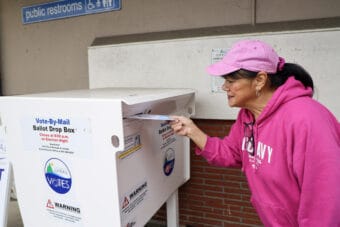
Measures aimed at lowering cost of living will appear on Juneau ballot this fall

Members of the Affordable Juneau Coalition advocacy group collect signatures for three ballot petitions near Costco on Tuesday, May 28, 2025. (Photo by Clarise Larson/KTOO)

Two proposed ballot initiatives received enough public support to appear in Juneau’s municipal election this fall. Voters will be asked whether to place a limit on the city’s property tax rate and remove local sales tax on food and utilities. 

Angela Rodell is a member of the advocacy group behind the ballot initiatives called the Affordable Juneau Coalition. She said the goal of the two propositions is to lower the cost of living for residents in Alaska’s capital. 

“I look at it as ‘How do we get some money back to people so that they can feel like they’re getting a little bit of relief?’” she said. 

The advocacy group gathered more than 2,700 signatures for each proposition within the city clerk’s office’s extended deadline. It also sought signatures for a third petition to make in-person voting the default again in Juneau’s local elections. Rodell said it didn’t quite get enough signatures.

The city’s current local sales tax on food and utilities brings in a combined $10 to $12 million in revenue each year. If the ballot proposition to remove those taxes is approved by voters, city leaders say the city would likely have to reduce its spending or slash some services to make up the gap. 

The proposed cap on the city’s property tax rate would also significantly reduce the city’s income. Property taxes make up roughly 40% of the city’s general fund revenue.

Rodell, who unsuccessfully ran for mayor last election, said she hopes the proposed property tax limit will push Assembly members to make tough decisions and focus city spending on community needs versus wants.  

“What we’re asking the city to do is to continue to be really thoughtful about how and where and when they collect tax and spend that tax to keep Juneau affordable,” she said. 

The Assembly is also currently considering a separate proposal that would exempt food and utilities from sales tax by putting into place a new seasonal sales tax system. Members have until later this month to take public testimony and decide whether to put that question on the ballot for voters.

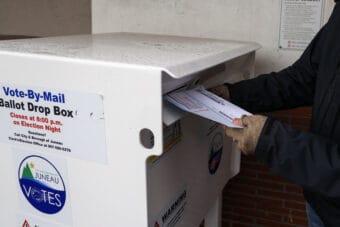
Voting in this year’s municipal election ends on Tuesday, Oct. 7.

Site notifications
Update notification options
Subscribe to notifications