Federal Government

Mary Peltola enters Alaska U.S. Senate race

a woman talks into a microphone at a podium on stage
Mary Peltola, then Alaska’s U.S. representative, at the Alaska Federation of Natives convention in Anchorage in 2023. (Matt Faubion/Alaska Public Media)

WASHINGTON — Democrat Mary Peltola announced Monday that she’s running for U.S. Senate, taking on Republican incumbent Sen. Dan Sullivan.

Peltola served one partial and one full term in the U.S. House, becoming the first Alaska Native person elected to Congress. She then narrowly lost her seat in 2024.

Her announcement Monday came with a video portraying her salmon-centered family life on the Kuskokwim River. She repeats her previous campaign slogan: “Fish, family, freedom.” She also hearkens back to Alaska senators who served in less partisan times.

“Ted Stevens often said, ‘To hell with politics. Put Alaska first,'” Peltola says on the video. “It’s about time Alaskans teach the rest of the country what Alaska first and, really, America first looks like.”

(Peltola modified Stevens’s oft-repeated quote. The late senator’s catchphrase was actually “To hell with politics. Just do what’s right for Alaska.”)

Nationally, Democrats believe that with Peltola on the ballot, Alaska presents one of their best hopes of flipping a seat. Political analyst and statistician Nate Silver said in a social media post last week that Democrats still have an uphill battle to win back the Senate majority but that Peltola’s candidacy moves their chances in Alaska from a long-shot to plausible.

Sullivan has already raised $6 million this election cycle. He has President Trump’s endorsement and maintains a strong alignment with Trump.

But, in what Democrats took to be a sign that he’s feeling the political heat, Sullivan last month unexpectedly voted to extend health insurance subsidies. He’s also touting a new bill that targets one of Peltola’s primary issues: Bycatch, or the accidental catch of salmon by the pollock fleet.

For U.S. Sen. Lisa Murkowski, Peltola’s candidacy presents a dilemma. They’re both moderates, and Murkowski endorsed Peltola in the past, despite their party differences. The senator declined to pick a side when a reporter asked before Christmas. But Thursday Murkowski said she’d made a decision: She’s endorsing her Republican colleague.

“We’ve had a pretty solid team here in the Senate for the past 12 years, so we want to figure out how we’re going to keep in the majority,” she said. “And Dan delivers that.”

Both sides are expected to pour tens of millions of dollars into the race.

Sullivan’s last race in 2020 was one of the most expensive elections in state history, with spending by the campaigns and outside groups totaling more than $57 million.

Sullivan was outspent but beat independent candidate Al Gross by a substantial margin.

Peltola lost her House seat to Republican Nick Begich. After ranked ballots were tallied in 2024, she had almost 49% of the vote to his 51%. (The rankings had little impact on the final result in that race. Before voters’ second- and third- choices were counted, Begich’s lead was slightly smaller.)

Sullivan and Peltola will face off first in a nonpartisan primary in August. The top four candidates will advance to a ranked-choice ballot in November.

Alaska’s Rep. Nick Begich votes against 3-year extension of federal health care subsidies

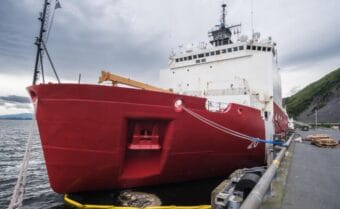
Rep. Nick Begich, R-Alaska, speaks during the commissioning ceremony for the Coast Guard icebreaker Storis on Sunday, Aug. 10, 2025, in Juneau, Alaska.
Rep. Nick Begich, R-Alaska, speaks during the commissioning ceremony for the Coast Guard icebreaker Storis on Sunday, Aug. 10, 2025, in Juneau, Alaska. (James Brooks/Alaska Beacon)

The U.S. House of Representatives voted 230-196 on Thursday to extend Affordable Care Act subsidies for three years and reverse massive cost increases that went into effect with the new year.

The reversal must still be approved by the U.S. Senate and President Donald Trump before becoming effective.

Alaska’s lone member of the House, Republican Rep. Nick Begich III, voted against the extension, as did 195 other Republicans.

Seventeen Republicans voted for the extension of subsidies that were enacted during the COVID-19 pandemic emergency, joining all of the chamber’s Democrats.

The House’s Republican leaders opposed the extension, but a handful of Republicans signed a petition in December to force a vote.

Begich did not sign that petition, and on Wednesday, he joined other Republicans in an unsuccessful procedural vote intended to block Thursday’s decision.

In a written statement explaining his vote on Thursday, Begich said extending subsidies would not fix the problems he sees with the Affordable Care Act, commonly known as Obamacare. “The health insurance system created by Democrats under Obamacare has proven completely unaffordable for the American healthcare customer,” the statement said. “An extension of Obamacare COVID subsidies does not fix what is broken.”

He said he would like to see reforms to the Affordable Care Act, without which he said the extension “has no credible pathway forward in the Senate.”

In December, Begich voted in favor of a Republican-proposed alternative to the extension. That alternative, which focuses on drug costs, would not stop or reverse the new cost increases and has thus far been rejected by the Senate.

The Congressional Budget Office reported that the alternative would reduce health insurance premiums for insured Americans but would also reduce the number of Americans who are insured.

“I remain committed to working on reforms that lower costs, expand access, and improve outcomes for all Americans,” Begich said in his statement. “Temporary extensions without meaningful reform are not the solution. Real reform that puts patients first is.”

In December, Alaska’s two U.S. Senators, Lisa Murkowski and Dan Sullivan — both Republicans — joined Senate Democrats in an unsuccessful attempt to advance a condition-free extension similar to the one passed by the House on Thursday.

That was a change in position for Sullivan, who had previously opposed extensions that were not coupled with changes to the Affordable Care Act.

Begich and Sullivan are each up for election this fall. Sullivan does not have a Democratic Party-backed opponent yet, but former U.S. House Rep. Mary Peltola is widely expected to enter the race this month.

Begich is being opposed by Anchorage pastor Matt Schultz. Alaska Democratic Party Chair Eric Croft said by email that Thursday’s vote will be a campaign issue in the fall.

“After allowing lifesaving ACA tax credits to expire on December 31, Nick Begich doubled down on his betrayal of Alaska families and blocked the extension of these credits,” he wrote. “We cannot afford these health care price hikes, and we won’t forget about Nick Begich’s betrayal this November.”

Landslide bill puts new focus on atmospheric rivers like those that triggered deadly Alaska events

The deadly landslide that crashed through the outskirts of Wrangell on the night of Nov. 20, 2023, is seen from the air on the following day. The landslide killed six people and blocked a major road, the Zimovia Highway. The slide was triggered by heavy rain carried north by an atmospheric river.
The deadly landslide that crashed through the outskirts of Wrangell on the night of Nov. 20, 2023, is seen from the air on the following day. The landslide killed six people and blocked a major road, the Zimovia Highway. The slide was triggered by heavy rain carried north by an atmospheric river. (Alaska Department of Transportation and Public Facilities)

Future assessments of U.S. landslide hazards could include the study of risks posed by atmospheric rivers, which caused extreme precipitation that was linked to recent deadly slides in Southeast Alaska.

The added focus on atmospheric rivers is one of the main updates in a bill that would reauthorize the National Landslide Preparedness Act. The bill, sponsored by U.S. Sen. Lisa Murkowski, R-Alaska, passed the U.S. Senate on Monday and is now to be considered by the U.S. House.

The initial National Landslide Preparedness Act was signed into law five years ago. That bill broadened the National Landslide Hazards Program led by the U.S. Geological Survey and established a multiagency system to coordinate landslide preparedness and response.

Atmospheric rivers are long and transitory bands of moisture and heat, likened to rivers in the sky. They carry that moisture northward from more southern latitudes, and they can dump vast amounts of rain for several hours or even days.

“You can very rapidly saturate soils in the right conditions,” said Rick Thoman, a scientist with the Alaska Center for Climate Assessment and Preparedness at the University of Alaska Fairbanks.

When such large amounts of warm southern moisture hit the steep mountainous regions of Southeast Alaska, they can cause sudden downhill flows, Thoman said.

“It’s really that intense amount of rain that atmospheric rivers deliver that’s the link to landslides,” he said.

Numerous landslides in the United States have been triggered by atmospheric rivers’ extreme precipitation. Those events include the 2023 slide in Wrangell that killed six people, the 2020 slide in Haines that killed two people and the 2015 slide in Sitka that killed three people.

The National Landslide Preparedness Act Reauthorization Act passed the Senate by unanimous consent. It is co-sponsored by U.S. Sen. Maria Cantwell, D-Washington, whose state was the site of the 2014 Oso landslide that killed 43 people.

Extreme precipitation events from atmospheric rivers are tied to shallow-seated landslides such as the deadly events that struck Southeast Alaska in recent years. Other types of Alaska landslides are caused by more deep-seated slope failures triggered by glacial retreat, permafrost thaw or a combination of those forces.

Also passed on Monday by unanimous consent in the Senate was another Murkowski-sponsored and disaster-focused bill, the National Earthquake Hazards Reduction Program Reauthorization Act. That bill, co-sponsored by U.S. Sen. Alex Padilla, D-California, supports the federal program that maintains earthquake measurement resources and equipment and equipment and early warning systems.

“Earthquakes and landslides are active threats that have taken lives and damaged property across Alaska in recent years,” Murkowski said in a statement issued Tuesday. “Our passage of these bills puts us on track to ensure that federal agencies have the resources they need to help keep communities safe both back home and around the country. I thank my colleagues for working cooperatively to pass these measures and urge the House to take them up and send them to the President as soon as possible.”

Trump hasn’t provided legal basis for military action in Venezuela, Murkowski says

The U.S. Capitol building.
The U.S. Capitol building. (Photo by Liz Ruskin/Alaska Public Media)

U.S. Sen. Lisa Murkowski struck a note of skepticism in her reaction to Saturday’s military operation ousting Venezuelan leader Nicholas Maduro.

“While I am hopeful that this morning’s actions have made the world a safer place,” Murkowski wrote in a social media post Saturday, “the manner in which the United States conducts military operations, as well as the authority under which these operations take place, is important.”

She said the Trump administration hasn’t given Congress enough information to evaluate the legal basis for it.

Murkowski is among a handful of Republicans in Congress to raise questions or doubts about the operation. In November, she was one of only two GOP senators who voted to support a measure that would have blocked military action in Venezuela without the approval of Congress.

Sen. Dan Sullivan’s response was more in line with the majority of congressional Republicans. He issued a statement praising President Trump and commending the military for its skill and courage. Sullivan’s post did not directly address Trump’s pronouncement that the U.S. would temporarily “run” Venezuela, but it did reference “painful and difficult lessons learned” from the U.S. invasion of Iraq in 2003. That invasion rid a country of its dictator but enmeshed the United States in an eight-year war.

Alaska Congressman Nick Begich also praised Saturday’s military action in Caracas, calling it a “flawless execution of American power and capability.”

Negotiations underway to keep Aleutian seismic stations online

tsunami sign
A tsunami evacuation sign in Unalaska. (Kanesia McGlashan-Price/KUCB)

The Alaska Earthquake Center is in negotiations with the National Oceanic and Atmospheric Administration to restore funding for nine seismic stations.

In late September, NOAA advised the center it would no longer fund its real-time seismic data flow to the National Tsunami Warning Center, a service the federal organization had been funding for decades.

In a statement in mid-December, a NOAA spokesperson said the federal government was working on a “potential funding mechanism” to maintain the stations. A spokesperson for the Alaska Earthquake Center said they expect to have the funding by mid-January.

Dave Snider, tsunami warning coordinator at the National Tsunami Warning Center in Palmer, said scientists can make better decisions faster with more seismic stations. He said the speed of earthquake detection is key to tsunami detection.

“We are built for speed, so we have to do that part very quickly,” he said. “Our aim is to get that first message out within five minutes of detecting the earthquake.”

Several of the stations listed to go dark are in the Aleutians, a region where large earthquakes are very common as the Pacific plate slides beneath the North American plate.

Snider said the Aleutian seismic stations matter most for nearby coastal communities, where every minute counts when detecting a tsunami.

“For a really strong nearby quake, if there’s one that’s happening right along your coastline, it could be immediate,” said Snider.

He said how quickly a tsunami could hit a community depends on the earthquake’s strength, depth and exact location.

Snider said losing the nine seismic stations in the Aleutians could delay earthquake detection by up to a minute.

“Earthquake signals travel out and away from that epicenter really quickly,” he said. “So even if there’s, you know, one sensor is out in your community, there’s going to be another one behind it and another one behind that.”

One of the nine seismic stations at risk of shutting down is in Unalaska, a city of more than 4,000 people, that sits right along the coast, facing the Bering Sea.

Ben Knowles, Unalaska’s fire chief and director of emergency services, said funding is always an issue.

“We want good funding for these agencies that help communities like ours with early warning and early detection that’s extremely important for us,” he said.

When a large earthquake strikes near the Aleutian region, Knowles said, there’s a whole process that follows.

“The National Tsunami Warning Center has an entire center of people that are dedicated to monitoring these things,” he said. “We also partner with places like the Alaska Volcano Observatory, the Alaska Earthquake Center, the National Weather Service, and so they all work hand in hand.”

If there is a tsunami threat, Knowles said the city alerts residents through the Nixle system, social media and if necessary, sound sirens. KUCB also broadcasts emergency information on 89.7 FM and KUCB.org.

Alerts are also notified on the FEMA app, at tsunami.gov and through NOAA weather radio.

Whether the Aleutians seismic stations stay on or not, Snider is confident his team can keep communities safe. But the more seismic stations, the merrier.

“There’s always room for more data,” he said. “And any scientist would never disagree with that.”

In the meantime, the University of Alaska Fairbanks is temporarily funding the stations, so that earthquakes in the island region are detected quickly.

Alaska could see up to $1.36 billion for rural health over the next 5 years

The U.S. Capitol in Washington, D.C., on Thursday, April 18, 2024. (Photo by Jennifer Shutt/States Newsroom)

Alaska was awarded more federal money than any state besides Texas for a federal rural health initiative, the Centers for Medicare & Medicaid Services announced on Monday.

The money will come from the Rural Health Transformation Fund, a $50 billion program set up as part of the One Big Beautiful Bill Act and intended to counteract the effects of its sweeping Medicaid cuts in rural areas.

Alaska’s congressional delegation and state officials lauded the federal investment, which will be upwards of $272 million in Alaska in 2026.

At a Wednesday news conference in Anchorage, Sen. Dan Sullivan, R-Alaska, said the $1.36 billion the state is slated to receive over the next five years is the biggest investment from the federal government to Alaska’s health care system in state history.

“This is a generational opportunity for our state,” he said.

Heidi Hedberg, commissioner of the state’s health department said a major goal is to rework the state’s “fragmented” health system.

She said the agency will release more information about its plan for the money in the coming days, but pointed to the state’s application to the program, which outlines six priorities: maternal and child health, access to services, preventative care, a strengthened workforce, financial sustainability and updated technology and data systems.

Emily Ricci, the agency’s deputy commissioner, said that core to the state’s application was the question of how to support services that already exist in the state.

“Part of our focus was making sure that the tribal communities could see some of the ways that they want to sustain their programs and evolve or build their programs out further into something that provides more access and sustainable costs,” she said. “So I would say that those opportunities are written in each one of the initiatives.”

She did not immediately supply specific examples.

The state’s application also commits to adherence to several policies favored by the Trump administration, including a pledge to join licensure compacts and prohibit the use of federal Supplemental Nutrition Assistance Program funds to buy soda pop by 2027.

Several of those commitments require the approval of the state’s legislature or medical board.

Hedberg said her agency will work with those decision makers to follow through on the commitments the state made in its application.

In a virtual meeting with reporters after the state’s news conference, Sen. Lisa Murkowski, R-Alaska, challenged the state administration and legislators to take on the question of rebuilding the state’s health care system as a major issue.

In response to a reporter’s question, she said she was worried about the reliability of the funding because the state could fail to make the most of the opportunity or because the federal government could pause or cancel the funding.

“I know that we’re going into an election year next year. I know that the Permanent Fund always takes up space. I know we’re going to be talking about the gas line,” she said. “But we must, we must absolutely be talking about this health care opportunity that we have in front of us now.”

Site notifications
Update notification options
Subscribe to notifications