State Government

Dunleavy fills 2 Mat-Su Republican vacancies in state House

the Alaska State Capitol
The Alaska State Capitol doors on June 16, 2021. (Andrew Kitchenman/KTOO & Alaska Public Media)

Gov. Mike Dunleavy has chosen two Mat-Su Republicans to fill vacant state House seats.

In a statement Wednesday, Dunleavy announced the appointment of Wasilla resident Steve St. Clair and Sutton resident Garret Nelson to the state House of Representatives.

Both seats were vacated when George Rauscher of Sutton and Cathy Tilton of Wasilla were chosen by the governor to fill two vacancies in the Senate. Republican Senators Mike Shower and Shelley Hughes both vacated their seats to focus on gubernatorial campaigns: Shower for lieutenant governor and Hughes for governor.

Nelson will replace Rauscher as representative of House District 29. He’s currently the chair of the Sutton community council and has lived in the area for seven years, according to the governor’s statement. St. Clair will fill Tilton’s seat representing House District 26. Officials with the governor’s office said St. Clair is a retired military police officer who’s lived in Wasilla for 15 years.

Both Nelson and St. Clair will have to be approved by a majority of House Republicans in order to be confirmed. Alaska’s next legislative session begins on Jan. 20 of next year.

State to overhaul Southeast’s 20-year transportation plan

A small tent pitched on the deck of a ferry, with coastal mountains in the background.
The Alaska Marine Highway System’s mainliner, the Columbia, during its weekly sailing from Washington state to Skagway in early 2025. (Avery Ellfeldt/KHNS)

The state is in the early stages of crafting a new plan to guide decisions about Southeast Alaska transit for the next two decades.

The Alaska Department of Transportation and Public Facilities aims to draft a plan for Southeast by the end of summer 2026 and finalize it by this time next year. The document will cover all communities from Yakutat to Metlakatla.

Jill Melcher, DOT’s Southcoast planning chief, said the new version would mark the first complete overhaul in more than 20 years.

“The last adopted plan was in 2004 and an unofficial update was done in 2014 that captured changes over 10 years,” she said. “Our region has changed significantly since 2014, and it’s time for an update.”

Agency staff say that in the early stages, a handful of themes have already emerged. They range from ferry reliability to resiliency amid climate change.

Now the state is asking for public input, both via email and during town halls.

During two virtual open houses this week, residents raised a long list of specific projects and broader issues – many revolving around more reliable ferry service and the Cascade Point ferry terminal project.

Mike Jackson, in Kake, raised sporadic ferry service in his community. He said the state has said Kake rarely gets ferries, in part because the terminal can’t accommodate larger ships. He said there’s been talk about updating the terminal with new catwalks to change that.

“So that is one of the things we talked about doing here,” Jackson said. “But if there’s a way to better serve Kake somehow, we sure would appreciate it.”

Participants also talked about the need for float plane dock maintenance and more airport parking. One raised the need for restoring ferry service from Ketchikan to Prince Rupert, British Columbia – an idea the state is studying now.

Haines local Patty Brown asked about the state’s ongoing study of what it would cost to build a road on the west side of the Lynn Canal that would, at least in theory, better connect Haines and Skagway to Juneau. She wanted to know how that might be incorporated into the 20-year plan.

Southcoast Region Director Christopher Goins replied that the study would wrap up in January.

“Based on that, we’ll look at the data, work with this team and depending on what we see from leadership, include or not include that moving forward,” Goins said.

But it was a related project that kept coming up during the town hall: the Cascade Point ferry terminal. The state says building a new terminal north of Juneau would cut costs and ease travel between Haines, Skagway and the capital city.

The idea has drawn fire from residents in all three communities, who say the state should prioritize improving ferry service instead.

When Wendy Anderson of Skagway made that point in the town hall’s virtual chat, Goins responded that the agency does believe the terminal would reduce travel times. But he stressed that Cascade Point would not replace the Auke Bay terminal for most passengers.

“There will be mainline service that continues up once a week,” Goins said. “What is moving would be the trips to Haines and Skagway from Cascade Point.”

At least two other comments came in regarding Cascade Point. One dubbed the planned terminal a “shameful waste of taxpayer dollars” that would be “harmful” to the general public.

The other asked about the funding that has already been allocated to the project – and whether more will be set aside soon. Goins responded that the state currently has a design-build contract and is carrying out the required public comment and environmental processes.

“If we ultimately can’t make it through that process for various reasons, then the project would not go forward, and the second part of that contract would not be fulfilled. Plain and simple,” Goins said.

Agency staff and contractors thanked participants for their insight and encouraged the public to keep them coming. Comments can be submitted at SEATP@DOWL.com.

A Kodiak couple faces possible deportation due to a voter registration error by the state

The ferry terminal at Pier 1 in Kodiak is seen on July 14, 2021.
The ferry terminal at Pier 1 in Kodiak is seen on July 14, 2021. (James Brooks/Alaska Beacon)

A years-old mistake by the Alaska Department of Motor Vehicles voter registration program has endangered the citizenship of two prominent Kodiak residents and could cause them to be deported, according to a newly filed lawsuit in Alaska’s federal court.

The suit, filed Thursday by Eva Benedelova and Pavel Benedela in the U.S. District Court for the District of Alaska, says U.S. Citizenship and Immigration Services canceled their citizenship oath ceremony because they were erroneously registered to vote in Alaska when they updated their driver’s licenses in 2022.

USCIS is overdue on a decision about their citizenship, the suit claims, and it asks a judge to order final action.

Attorney Margaret Stock, who is representing the couple, said there’s a bigger issue at stake: Many more Alaskans may unknowingly be facing the same problem.

According to a timeline provided by the Alaska Division of Elections, between 2022 and 2024, “less than 50” Alaskans, “mostly non citizens,” were “being registered to vote through DMV online transactions such as address updates, license renewals, etc.” despite stating that they were not U.S. citizens and did not want to register to vote.

The Division of Elections admitted the error involving the Kodiak couple, apologized, and wrote a letter saying that Benedelova and Benedela did nothing wrong. The couple never voted and immediately canceled their voter registration when they discovered the problem.

Alaska Senate President Gary Stevens, R-Kodiak, and Rep. Louise Stutes, R-Kodiak, submitted a letter of support for the couple. The office of U.S. Sen. Dan Sullivan, R-Alaska, has also been working on the case and advocating for the couple. The couple’s employer, North Pacific Seafoods, backs them too.

“The errors in 2022 and 2024 were committed by the Alaska DMV, not by these upstanding individuals,” wrote Dave Hambleton, President of North Pacific Seafoods.

Despite that support and extensive documentation about the error, USCIS sent a letter to Pavel Benedela on Dec. 5 stating that the federal agency is seeking further evidence and that “false claims to U.S. citizenship and voting violations … even renders an alien deportable.”

The couple have two children who have grown up in the United States, Stock said. If either one of them becomes a citizen, the children will, too. If they don’t, all could be deported.

“It’s an insane situation,” Stock said. “It shouldn’t be happening. It’s not right. It’s unjust. The state’s at fault, and they shouldn’t be punishing these folks because of errors made by State of Alaska employees.”

According to the complaint, the delay in the Kodiak couple’s citizenship application appears to be due in part to a federal policy implemented by USCIS in May 2025 that requires the agency’s headquarters to approve all matters where an applicant has been registered to vote in the United States.

“By the way, blanket policies like that are unlawful,” Stock said.

According to a timeline of events provided by the Alaska Division of Elections, the errors affecting the Kodiak couple and an unknown number of other Alaskans took place at the DMV between 2022 and 2024.

Alaska law allows people who update their driver’s licenses — or get new ones — to automatically register themselves to vote.

It’s supposed to be an opt-in process, but in 2022, an update to DMV’s system “cause(d) online transactions with DMV to automatically opt-in people who don’t select either yes or no,” an act that sent voter registrations to the Division of Elections, the division’s timeline states.

In the case of Benedelova and Benedela, someone along the process — likely a state employee — filled out the voter registration form in their name, copying their signatures without their knowledge or consent.

“I confirm that Mr. Benedela and Mrs. Benedelova did not specify on any DOE document that they are U.S. citizens,” wrote elections supervisor Ryan Wilson on Dec. 12. “Additionally, your signatures on the voter registration forms are a digital copy of which neither of you was aware of its use.”

Stock said that while Benedela and Benedelova are the only people who have come forward publicly about the issue, she is aware of others in the same position.

“I can tell you that I know other people the same things happen to, so it’s not just a one-off with these two people,” she said.

Stock said that in her career, she’s seen many examples of people mistakenly registered to vote because of a lack of understanding about what a citizen is, but this case is something different.

“The creepy thing is that the registration form says you’re not allowed to use an electronic signature on it, but the state’s been doing that anyway. … We have a copy of their voter registration form, and the state created that on their own, without the immigrants’ knowledge, and submitted it and checked off that they were US citizens. Some employee of the state is really doing bad things, basically,” Stock said.

A spokesperson for the Alaska Department of Administration, which oversees the DMV, did not answer questions by the deadline for this article on Friday.

The Division of Elections, which has been examining the issues for years, provided detailed documentation and explanations, as well as an apology it sent the couple.

According to its timeline of events, Benedelova was registered to vote through the DMV process in September 2022.

The division became aware of noncitizens being registered to vote by the DMV in 2023 or 2024 and worked with the DMV to reword their forms and change the process so people who opted out did not have their information sent to the division.

An additional question was also added to the process: “Are you a U.S. Citizen?”

Despite those changes, the effects of the erroneous process appear to be lingering. This summer, the U.S. Department of Justice asked Alaska and other states to provide copies of their voter rolls in order to identify noncitizens who may have illegally participated in state or local elections.

The data provided by the division and obtained by the Beacon via a public records request included an inactive voters list with 541 people whose records were tagged as “NC” for non-citizen.

Among those 541 people were Benedelova and Benedela, who had canceled their registrations in 2024 immediately after learning they had been erroneously registered.

At the time the record was released, the director of the Division of Elections said to treat it cautiously because some people might have been erroneously labeled.

“When we have gone in there and looked and contacted them, we have found that usually it was a mistake,” she said.

Alaska Department of Corrections reports record-tying 18 deaths in custody this year

Goose Creek Correctional Center is seen in fall. (Photo courtesy of Alaska Department of Corrections)

The Alaska Department of Corrections has reported 18 people have died in custody of the state’s prisons and jails so far this year – on par with the state’s highest death count in 2022. Advocates and lawmakers say the number is “devastating” and “preventable,” and are calling for the reinstatement of an independent oversight body to investigate.

The count now brings the total in-custody deaths reported by DOC since 2020 to 84, an increasing number in recent years with at least 15 deaths reported in 2024 and 10 deaths in 2023.

“It’s devastating, it’s preventable, and it’s unacceptable that there haven’t been any changes made to reduce deaths in custody,” said Megan Edge, director of integrated justice with the ACLU of Alaska in an interview.

DOC officials, through a spokesperson, declined to comment on the number of the deaths.

The ACLU is calling for the reinstatement of an independent oversight body to investigate the circumstances of in-custody deaths and reduce risks, Edge said.

The state created a special internal investigative unit in DOC in 2016, following a 2015 report that widespread failures and dysfunction within the system led to at least six in-custody deaths. But the unit was dissolved in 2018 during budget cuts under the Dunleavy administration.

Betsy Holley, a spokesperson for DOC, declined an interview but said by email Wednesday that the agency has no plans to resurrect that unit.

“The unit was eliminated, reducing duplicative functions, reducing costs and moving to a more transparent investigative process,” she said.

The Alaska State Troopers, with the Alaska Department of Public Safety, investigate death incidents, not DOC, she said. “DPS is the investigative agency assigned to review incidents and because they are not affiliated with DOC, investigations are conducted independently, ensuring neutrality and objectivity,” Holley said.

Rep. Andrew Gray, D-Anchorage, and chair of the House Judiciary Committee, said he will look into the process of creating such a system in the next legislative session. He said it should be external and independent from DOC. “There’s just no doubt that the way we currently have it, which is that there’s not really any organized official oversight happening, it’s just unacceptable,” he said.

Gray said he would like to see an independent unit created to investigate DOC deaths, so that details and reports can be verified, and best practices are in use.

“We can’t verify that they are following the correct protocols, that there are ways of reporting warning signs, or assessing folks who are at risk. We have no way of knowing,” he said. “And when we have a death toll that’s high, we have a right to question if there are mistakes being made, and we are questioning whether mistakes have been made.”

The ACLU is also calling for changes in Alaska law to allow more people who are elderly and with terminal illnesses to be released on medical and geriatric parole, which Gray said his office would be pursuing in the next legislative session starting in January.

At least 18 reported deaths by DOC in 2025, one more by the ACLU

Most recently, DOC reported the death of Kane Huff, 46, on Dec. 15 in Goose Creek Correctional Center, bringing the state’s total in-custody deaths for this year to 18 people.

DOC releases limited information on the causes and circumstances around in-custody deaths. But the department included a note when it announced eight of this year’s deaths — nearly half of them, including Kane’s — saying in the case of an “expected death” the Alaska State Troopers and State Medical Examiner’s office are notified. That office determines the cause of death.

Alaska’s prison population is aging, with an estimated 21% being 55 and older, according to DOC data. DOC officials testified to the Alaska State Legislature earlier this year that more in custody deaths were due to “natural causes,” including acute and chronic disease and illness — or 68% of deaths since 2016.

Over half of this year’s in-custody deaths, or ten people, were over the age of 60. The oldest was Keith Landers, at 94 years old, who died on Nov. 24, and the youngest was Christopher Ligons, 30 years old who died on June 28.

At least four of the deaths have been ruled suicides, according to Alaska State Troopers, news reports and investigation by the ACLU of Alaska. One was Aaron Merritt, who died on Nov. 26 and was a Kenai church member, as reported by KDLL Public Radio.

Seven people died this year while under arrest and awaiting trial – one person in custody for less than a day – and two people were convicted and awaiting sentencing.

At least two in-custody deaths followed violent altercations. Jeffrey Foreman, 53, died on Jul. 11 after being restrained by correctional officers after a fight with a cellmate in the Anchorage Correctional Complex, according to Alaska Public Media.

Not on the DOC list this year is William Farmer, 36, who died in an Anchorage hospital on Jan. 6, after an assault by a cellmate in the Anchorage Correctional Complex. The case involved mental health issues and DOC failed to release the cellmate who was found incompetent to stand trial. Both families have questioned why the two men were placed in the same cell, according to reporting by the Anchorage Daily News.

DOC has said the case was not reported as an in-custody death because Farmer was released on bail after he was hospitalized. The ACLU has criticized DOC for a pattern of releasing inmates who are hospitalized or dying.

DOC attributes more deaths to natural causes

DOC medical and correctional officials testified to the Legislature earlier this year that more in-custody deaths were due to natural causes, like chronic disease and illness, whereas in previous years more deaths were attributed to drug overdoses.

Alaska’s Chief Medical Officer, Dr. Robert Lawrence, who previously served as the chief medical officer for DOC from 2013 to 2024, said in an interview last year that the state’s inmate population has higher needs for care than the state’s population as a whole.

“Prisons are not just warehouses where we put people. These are neighborhoods within the larger community. And one of the things that we recognize about this unique neighborhood that is a correctional institution is that it tends to have a concentrating effect, meaning that any of the issues that we’re dealing with in the community get concentrated within this prison environment,” he said.

ACLU’s Edge said the increasing physical and mental health care needs of inmates is well known, and DOC should be doing more to provide adequate care.

“It’s not new and is not unique. People in prison are some of the often sickest people in our society and in Alaska especially, because we have such limited resources for physical and mental health care and substance use treatment,” Edge said. “Often the response in our communities is to incarcerate people. If people are homeless, they are taken to jail. People with mental illness are often put in jail. People experiencing substance use disorder are put in jail.”

She pointed to the state of Alaska’s legal obligation to provide people with health care while they’re in custody, including access to mental health care resources and treatment.

“We hear stories from people who are experiencing suicidal ideation and thrown into solitary confinement, stripped of their clothing and placed in a suicide smock till they say they feel better,” she said. “That’s not mental health care.”

On average, 4,500 people are incarcerated in Alaska’s jails and prisons each year, either awaiting trial or sentencing, or serving criminal sentences. That average population has been steady over the last decade. Edge pointed out that the death rate is growing, while the overall population is not.

“Our death numbers continue to rise and stay disproportionately high for the amount of people that we actually have incarcerated,” she said.

Deaths prompt legal action

The ACLU filed a federal class-action lawsuit in May challenging DOC’s health care system as inadequate and inhumane, which includes an investigation and documentation of a variety of cases where inmates’ failed to be treated, resulting in deteriorating health conditions.

The civil rights group is also part of two wrongful death lawsuits, one for Lewis Jordan Jr. who suffered an untreated ear infection while incarcerated at Goose Creek Correctional Center in 2023 that developed into fatal meningitis.

The lawsuit claims “deliberate indifference” from DOC, and that Jordan’s death was preventable. The families of James Rider and Mark Cook Jr., who died in pretrial custody in 2022 and 2023, have also filed lawsuits seeking restitution and damages.

Expanding opportunities for medical and geriatric parole

For the elderly and those with severe or terminal illnesses, Gray said he would like to see Alaska move toward a compassionate release program, which would also be a cost saving measure for the state.

“I think people kind of know this intuitively. Folks in their sixties and seventies need to see the doctor more than folks in their twenties and thirties, and so if we’re incarcerating a large population of folks who are older, they’re going to require a lot more health care, and that health care is more expensive,” Gray said.

The cost to the state for incarceration is estimated to be $202 per person per day in Alaska, compared to an estimated $13 per day on parole.

“It is extraordinarily expensive. We cannot afford to be running basically nursing homes in our prisons,” Gray said. “We have a mechanism in Alaska for those folks who are very, very, very unlikely to be able to commit any more crimes, let’s get them out of our system. Let’s get them back to their families.”

Alaska has a special medical and geriatric parole to release those who are elderly and with a terminal illness, and have been found to no longer pose a risk to the public.

But that system is not currently being used – the Alaska Parole Board has not granted anyone medical or geriatric release in the last five years, since 2020.

Edge said due to restrictions in the current law for those convicted of unclassified felonies – like first-degree murder and sexual assault – people may not be eligible for parole. It would require the legislature to take action to change the law.

“So it’s really inaccessible for the people that actually need it,” Edge said. “I’m thinking of one person in particular who was wheelchair bound, blind and in his eighties. And his family, his children, had a plan to take care of him, and he could not get out. He was denied discretionary parole, and was ineligible for geriatric and special medical parole because he was convicted of an unclassified felony.”

Deaths reported by DOC in 2025:

Pedro George Rubke, 78

Reginald Eugene Childers, Jr., 42

Nathaniel David Leask, 49

Marcias Zoritas Reinhold, 83

Lena Lola Lynn, 63

Alvin Lynn Archa Jr., 62

Carl K Thompson, 68

Christopher Ligons, 30

Jeffrey Daniel Foreman, 53

Mattfi Abruska, 78

Robert Ahvik, 62

Joshua Paul Keeling, 35

Kurt Charles Malutin, 37

Barry John McCormack, 74

Donald Scott Hotch Sr., 78

Keith Landers, 93

Aaron Scott Merritt, 45

Kane William Huff, 46

Alaska Gov. Dunleavy says he’ll propose a property tax break for planned gas pipeline

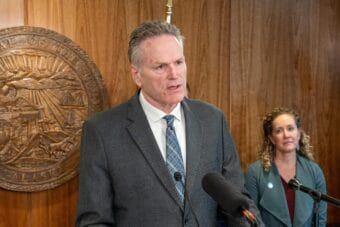
Gov. Mike Dunleavy speaks to reporters during a news conference on Feb. 7, 2024. (Eric Stone/Alaska Public Media)

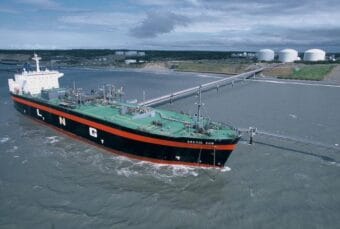
Gov. Mike Dunleavy is eyeing a property tax break for the long-planned Alaska LNG project. The Republican governor said he plans to propose a two-mill property tax for the 800-mile natural gas pipeline and associated infrastructure, a 90% lower rate than the state typically charges in property tax for oil and gas infrastructure.

Dunleavy described his plans in an interview with the Anchorage Daily News. The Republican governor’s spokesperson confirmed the governor’s plans but declined to make Dunleavy or another member of the administration available for an interview.

The state shares a portion of the property tax revenue it collects with local governments, and some local leaders are raising concerns about Dunleavy’s proposal.

“We can’t subsidize that project,” said Kenai Peninsula Borough Mayor Peter Micciche. “We at least have to cover our costs.”

Micciche said he expected the project would be a boon for the state and his region, bringing thousands of jobs to the Kenai Peninsula. But a low property tax rate for the project would essentially push some of the project’s cost onto local taxpayers, he said.

“We’re going to have impacts on our schools. We’re going to have impacts on emergency services, for sure,” he said. “We’re likely going to be the agencies they turn to for their emergency response plans, like all the other oil and gas facilities do.”

Plans for a North Slope gas pipeline and Southcentral export terminal have been in the works for decades but have taken new life in the second Trump administration. The state turned the project over to a private developer, Glenfarne, which has put out a steady stream of announcements about agreements with potential customers, investors and suppliers. But the project has plenty of skeptics, who argue the project last estimated to cost $44 billion would be too expensive to make financial sense.

A consulting firm contracted by the state Legislature to examine the project, GaffneyCline, told lawmakers last month they may need to make a variety of changes to help the pipeline become a reality, including to property taxes.

In a statement, Glenfarne spokeperson Tim Fitzpatrick said the developer had not seen the specifics of Dunleavy’s proposal and couldn’t offer an opinion.

Micciche said he’s open to tax breaks that would support a pipeline, but he said local governments need to be involved in determining what exactly those might be.

At least so far, he said, that hasn’t happened.

“There is a deal to be had here, but it has to be born from facts, real math, local impact data,” Micciche said. “It has to be transparently and fairly negotiated between all involved in good faith.”

In an email, Dunleavy’s spokesperson, Jeff Turner, said the bill hasn’t been drafted, so it was premature to say the proposal was developed without their input. He said the deal was better than nothing.

“Right now, the state collects no property tax at all because the LNG pipeline does not exist,” he wrote.

Fairbanks Rep. Maxine Dibert, a Democrat who co-chairs the state House Resources Committee, says she plans to discuss Dunleavy’s bill with local officials. But she says she plans to focus much of her attention on a separate bill that would require the project to include a smaller lateral pipeline to supply Fairbanks with gas to cut energy costs.

“For me, that is a line in the sand, that it needs to be guaranteed part of the project,” she said.

Republican Sen. Jesse Bjorkman, who represents the central Kenai Peninsula, says he’s on the fence about Dunleavy’s proposal. He said he’d like to learn more about the project’s finances to determine what’s necessary. But in any case, he said, it would make little sense to cut the project a break on property taxes after Glenfarne makes a final investment decision, or FID.

“If they’re gonna have an FID decision in January next month, then that cake is already baked, like the financials are already in place.

Glenfarne declined to say whether it would reach FID before the legislative session begins Jan. 20, but said it continues to work toward making the pipeline a reality. The company has previously said it expected a decision by the end of 2025.

“Glenfarne is rapidly progressing toward a final investment decision, as seen through our progress with numerous Asian commercial announcements and strategic partner agreements. We expect additional announcements in the next several weeks,” Fitzpatrick said. “Our overall project schedule, including completing the pipeline in 2028 and delivering first gas to Alaskans in 2029 is proceeding on schedule.”

Former state medical board member dies in house fire after arrest for child sexual abuse images

Flashing lights atop a law enforcement vehicle. (Valerie Lake/Alaska Public Media)

Alaska State Troopers said in a bulletin Monday that Dr. Ryan McDonough died in a weekend fire at his home in Wasilla.

At the time of the fire, McDonough — a cardiologist formerly with Mat-Su Regional Medical Center — was on $50,000 bail after being arrested on Dec. 11 and accused of owning child sexual abuse images.

The alleged crimes, and the bail posted by McDonough’s wife, were reported by the Anchorage Daily News on Friday, a day after the medical center fired him.

The fatal fire at McDonough’s home took place Saturday; McDonough was initially listed as missing after the fire, but firefighters found human remains at the site, and preliminary testing later identified McDonough’s body.

The cause of the fire remains under investigation, and the other people who lived at the home were unharmed.

Alaska Gov. Mike Dunleavy appointed McDonough to the state medical board in August. That month, he joined other members of the medical board in voting to impose restrictions on medical care for transgender youth in the state and to recommend that Alaska lawmakers end legal access to abortion in the late stages of pregnancy.

McDonough subsequently appeared to drop off the board; he attended its August and September meetings but was absent from its October and November ones, public records show.

Because of absences and unfilled seats, the board — which regulates doctors and other medical professionals in Alaska — has had problems finding a quorum needed to do business.

McDonough’s name was removed from the board’s roster in November. A spokesperson for Dunleavy told the Anchorage Daily News that the governor’s office found out about McDonough’s alleged crimes on Friday and was not aware of any investigations at the time of his appointment.

According to an affidavit submitted in Palmer courts by a Department of Homeland Security officer, the online file storage company Dropbox sent a tip to the National Center for Missing and Exploited Children on July 31.

That tip led to the investigation of a Dropbox account linked to McDonough that contained a video of a child being sexually abused. A second tip followed another video on Aug. 10.

The Anchorage Police Department, in charge of investigating tips like those received by the National Center, obtained a search warrant for McDonough’s Dropbox, GCI and Google accounts. Subsequent searches found additional suspect videos, and McDonough’s computer was seized during a search warrant on Dec. 11, shortly before his arrest.

The Alaska Beacon typically publishes copies of court affidavits but is not doing so in this case because of their graphic contents and because they describe acts of sexual violence against children.

McDonough’s next court appearance was scheduled for Jan. 31.

Site notifications
Update notification options
Subscribe to notifications