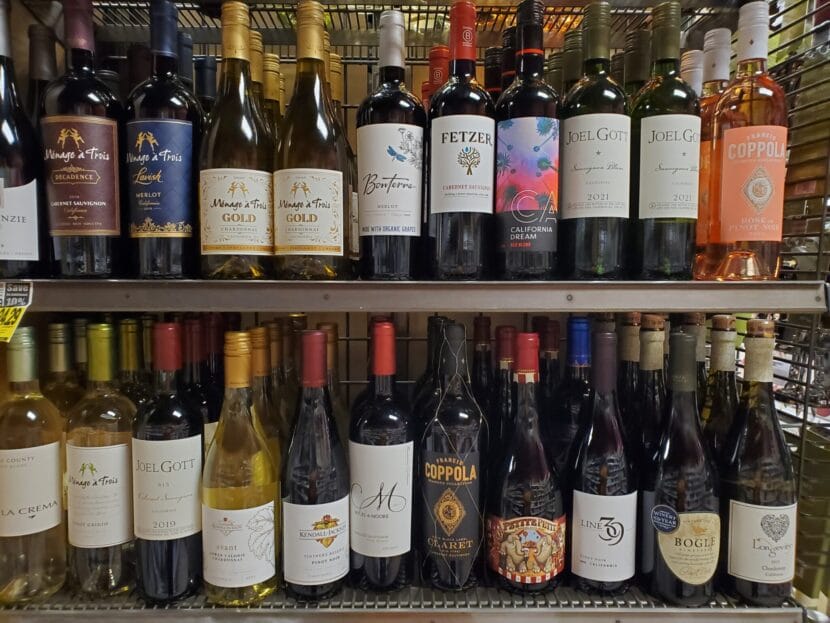
Bottles of wine line shelves at a Fred Meyer grocery store in Anchorage on June 29, 2022. A bill pending in the Alaska Legislature would require posted warnings about the links between alcohol consumption and cancer. (Yereth Rosen/Alaska Beacon)
The link between alcohol and cancer has been established by medical professionals since the 1980s. But public awareness of that link is low.
A bill pending in the Alaska Legislature aims to change that.
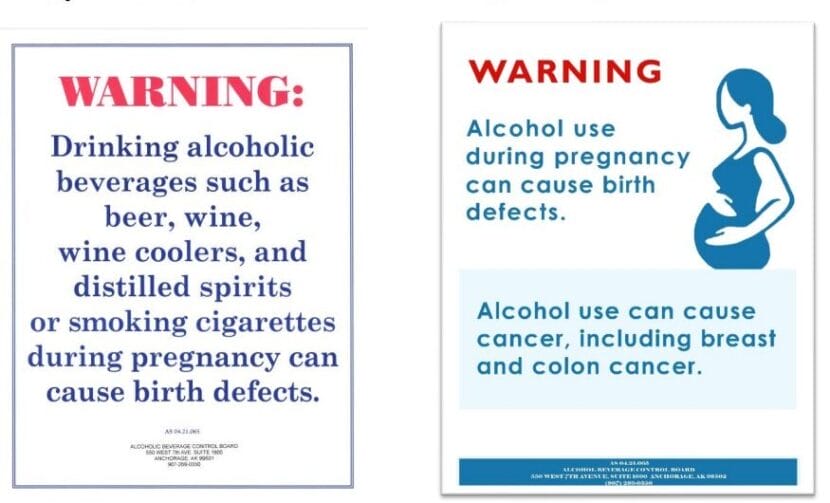
The measure, House Bill 298, would require businesses that sell alcoholic beverages post signs warning of the cancer link. The cancer message, as proposed by the bill, would augment the currently required message warning that consumption of alcohol during pregnancy can cause birth defects.
The bill has no sponsors from the Republican-dominated House majority, and there is no Senate version. The prime sponsor, Rep. Andrew Gray, D-Anchorage, said he had minimal expectations about its fate when he introduced it in January. “When we filed it, we expected to not get a hearing at all,” he said. To at least raise awareness about the alcohol-cancer link, he said, he issued a press release.
Then, as he describes it, something surprising happened: The bill started to move. “Lo and behold, we got a hearing,” Gray said. It got another hearing and advanced from the House Health and Social Services Committee to the House Labor and Commerce Committee.
Gray and his aide David Song discussed the public-awareness gap during a hearing on Monday in the second committee.
“Alcohol-related cancers affect tens of thousands of Americans each year. Despite the longstanding medical fact that alcohol increases cancer risk, there has not been an accompanying change in public perception about the risks associated with alcohol consumption,” Gray told the committee.
A 2020 survey by the National Institutes of Health found that 10% of respondents believed that wine drinking lowers cancer risks, which is false, Song told the committee. The cancer link for beer, wine and liquor consumption was acknowledged by only 24.9%, 20.3% and 31.2% of survey respondents respectively, he said. In contrast, about 90% of Americans say tobacco use causes cancer, a message imparted in warning labels required on tobacco products, he said.
“So, in other words, the warning labels that connect a product with cancer do work in terms of increasing public awareness,” Song said.
Along with tobacco use and obesity, alcohol use is one of the main cancer risk factors over which people have some control. The American Cancer Society links alcohol use to numerous types of cancer.
The bill introduced by Rep. Andrew Gray, D-Anchorage, would replace the sign on the left, which is required by state law, with the new design on the right. Gray titled his bill the Alcoholic Beverages and Cancer Act. (Graphic provided by Alaska Legislature)
A recent study published in the medical journal The Lancet that evaluated global cancer statistics ranked alcohol use as the No. 2 modifiable cancer risk.
Warning signs about the alcohol-cancer link are required in a few places. One is the Yukon Territory in Canada, Thomas Gremillion, director of food policy at the Consumer Federation of America, told the committee. His organization favors a national rule requiring such signs as well as state efforts such as this bill, he said.
But there is also skepticism about the idea.
House Majority Leader Dan Saddler, R-Eagle River, at a House Health and Social Services Committee hearing on March 12, said he has philosophical problems with the bill.
“The question that comes to my mind is: How much obligation does the state have to inform people of the risks of legal activities?” Saddler said.
The same arguments about alcohol’s cancer-related risk warnings could be made for injury-warning signs on bikes, cars, private airplanes or roller skates, Saddler said, presenting questions about whether there is a threshold for such warning requirements.
“They are good-intentioned. But the road to, say, a ‘cotton-wool’ state could be paved with good intentions,” he said, using a term for bandages used over-protectively.
Gray said a constituent of his, a breast cancer survivor, brought up another concern: Although only a light drinker, he said, she worried that she and others might be blamed for bringing their cancers on themselves.
Those objections notwithstanding, Gray said the bill might attract support from majority members. “I think there’s a chance that we could get it to the floor,” he said. If not, its substance could be added to a different bill, he said.
An amendment passed in the House Health and Social Services Committee that seemed to simplify the measure may have created a hurdle, however. The amendment changed the on-site requirement from three signs, as currently is in law, to two. Instead of requiring two separate signs warning against minors’ unlawful entry and use of alcohol, the bill as amended would combine warnings about minors into a single sign.
Replacing just one set of signs – the point-of-sale warning about health effects — would have cost under $10,000, too little to warrant a fiscal note describing costs to the state, Gray said. But replacing two types of signs, along with the need to mail new signs to remote sites, brings the estimated cost to around $25,000, Joan Wilson, executive director of the Alaska Alcohol and Marijuana Control Office, said at Monday’s hearing.
That is enough to justify a fiscal note and, according to legislative rules, consideration by the House Finance Committee, Gray said.
“If I wanted this to go to the floor, I’d want to avoid Finance, which means I’d want a zero fiscal note,” he said.
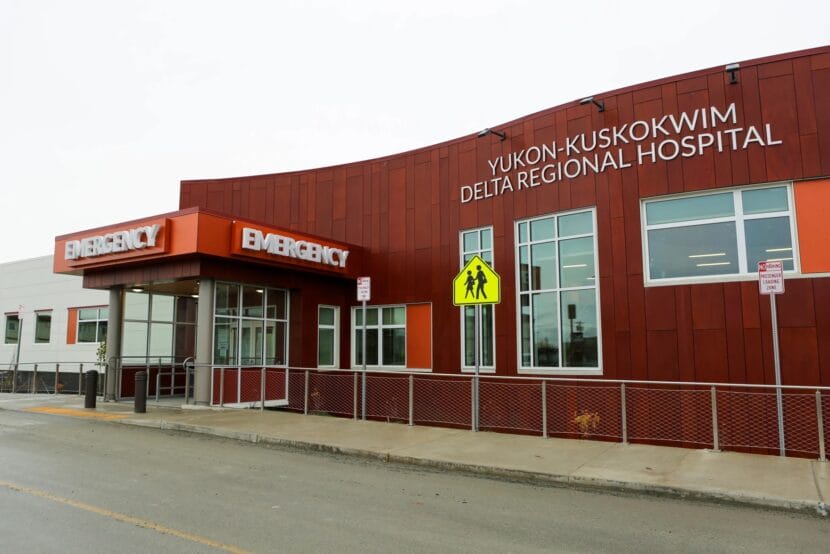
The Yukon-Kuskokwim Delta Regional Hospital in Bethel. (Elyssa Loughlin/KYUK)
Two major Alaska tribal health care providers have filed suit against the federal government, saying it owes them tens of millions of dollars in unreimbursed funds.
The suits from the Southeast Alaska Regional Health Consortium and the Yukon-Kuskokwim Health Corp. were filed Thursday and Friday respectively in Alaska’s U.S. District Court. Both name the U.S. Department of Health and Human Services and its secretary, Xavier Becerra, as defendants.
In the YKHC complaint, the corporation’s legal counsel says Becerra and his department owe nearly $26 million in unpaid contract support costs dating back to fiscal year 2016. According to the complaint, those costs may include things like indirect administrative or overhead costs, and costs associated with financial management or other recurring expenses like worker’s compensation insurance.
The SEARHC lawsuit, filed on the last day the consortium could litigate its eight-year-old dispute, seeks $8 million in unpaid costs from DHHS. The expenses were incurred by both tribal health care providers for billing third-party private insurance, Medicare and Medicaid.
In the suit, SEARHC argues that DHHS’s Indian Health Service failed to account for the indirect costs of managing “third-party revenues” — the payments SEARHC receives from those parties — when it reimbursed for expenses in 2016. Although SEARHC is primarily funded by the health service under an agreement called the Alaska Tribal Health Compact, the lawsuit argues that the federal government is obligated to pay “full contract support costs,” including the expenses in billing third parties.
SEARHC’s brief cites a number of U.S. Supreme Court rulings as justification for its claim, but DHHS sees things differently. In a letter to SEARHC CEO Charles Clement in 2023 rejecting the claim, the department wrote that IHS paid SEARHC almost $59 million in 2016, including over $3 million for contract support costs and $17 million for indirect contract support costs. It states: “Nothing in the parties’ compact or Funding Agreement includes an agreement that Contract Support Costs include any expenditures other than the amount identified in the compact.”
The department goes on to say that SEARHC supplied no evidence or documentation that it is owed an additional $8 million for the costs it incurred for billing third parties.
SEARHC and YKHC are represented by the Anchorage law firm of Sonosky, Chambers, Sachse, Miller & Monkman. Becerra has 60 days to reply to both suits.
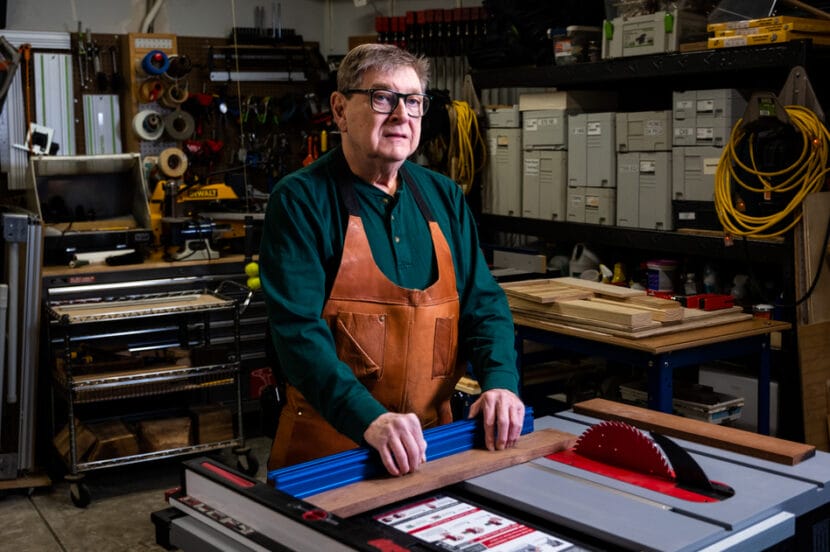
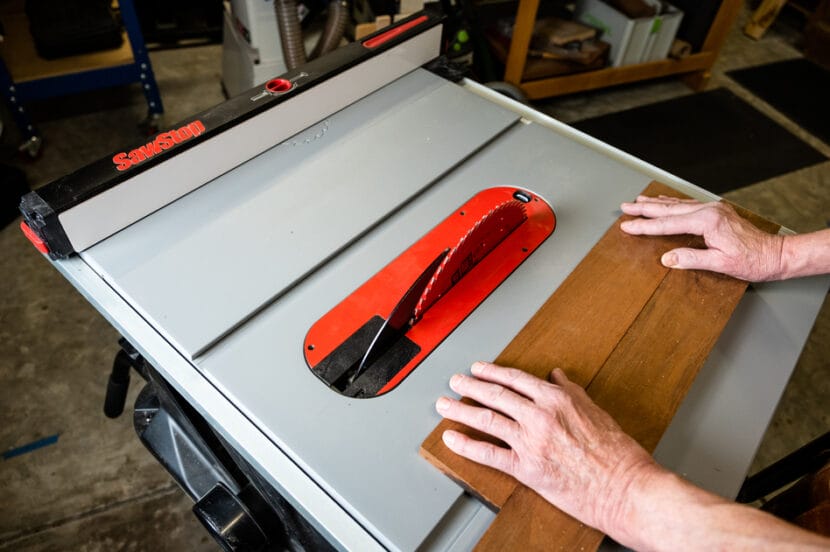
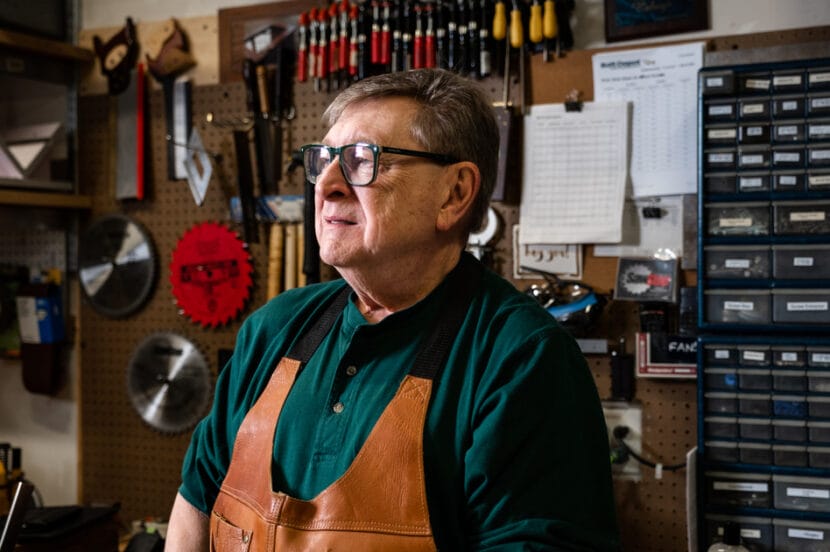
Tom Noffsinger stands in his garage workshop, where he uses a SawStop table saw for woodworking at his home in Raleigh, North Carolina. About 20 years ago, Noffsinger had a table saw accident and almost lost his thumb. (Cornell Watson for NPR)
One day about 20 years ago, Tom Noffsinger experienced every woodworker’s worst nightmare: One final cut on his table saw before knocking off for the day turned into a trip to the emergency room. It was afternoon, and he’d been in his shop since morning.
“I was a little tired. I should’ve quit,” Noffsinger says. “I ran my hand right into the blade and nearly cut my thumb off.”
Table saws are widely considered the most dangerous power tool, and approximately 30,000 blade-contact injuries require medical treatment each year in the United States. About 4,000 result in amputations that can be career-ending for some professional carpenters and contractors. The Consumer Product Safety Commission says that when a person is hospitalized, the societal cost per table saw injury exceeds $500,000 when you also factor in loss of income and pain and suffering.
Noffsinger was lucky by comparison. Although he needed 14 stitches, doctors at a hospital near his home in Raleigh, N.C., were able to save his thumb. Reconstructive surgery followed. Even so, all these years later, he says he still has recurring pain.
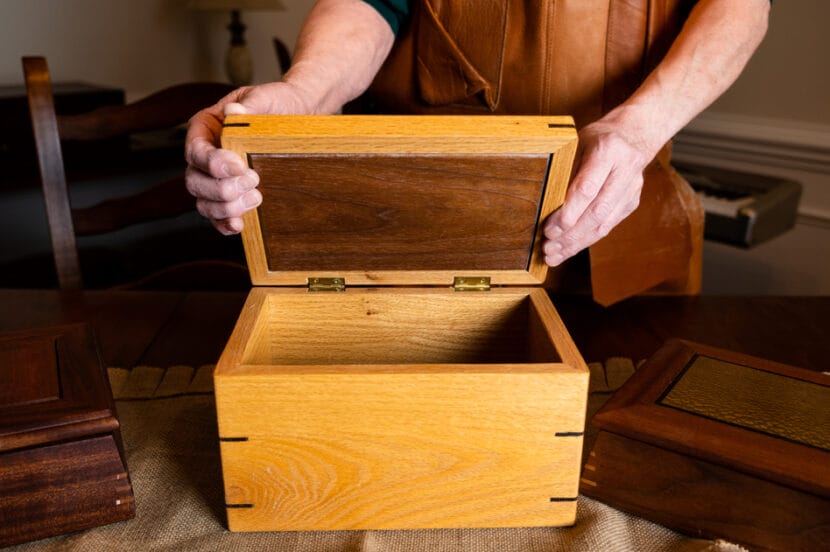
Noffsinger opens a wooden box that he made using a SawStop table saw, which uses technology to prevent serious injury. (Cornell Watson for NPR)
Woodworking has been a nearly lifelong passion for Noffsinger, and he was no stranger to power tools. Back before his accident, he’d seen a demonstration of a new and much safer type of table saw at a local woodworking store. Marketed under the name SawStop, it was designed to stop and retract the spinning blade within a few milliseconds of making contact with flesh — fast enough to turn a potentially life-changing injury into little more than a scratch. Noffsinger’s table saw wasn’t equipped with the high-tech safety feature because manufacturers aren’t required to include it.
But that may be about to change. The federal Consumer Product Safety Commission (CPSC) appears poised to mandate a SawStop-type safety brake on all new table saws sold in the United States. The move would follow years of failed efforts and false starts by the agency to impose such a standard.
Manufacturers have consistently fought a new rule, saying it would raise the price of table saws for consumers. Safety advocates liken it to air bags in cars and argue that the benefits outweigh the costs.
Over the years, Republicans on the commission have sided with the power tool industry in opposing further regulations. But with new Biden administration appointees, proponents on the commission appear to have a majority. In October, the CPSC voted to move forward on the mandate, which is expected to get approval later this year.
“We’ve got a [proposed] rule that is designed to prevent tens of thousands of medically treated table saw injuries per year,” says CPSC Commissioner Richard Trumka Jr. “That’s something that I very much support.”
Proponents say a new standard is long overdue
Former acting CPSC Chairman Robert Adler says a standard requiring a blade brake “is long, long overdue.” An average of more than 10 people per day in the U.S. suffer amputations on these types of saws, and “that is staggering when you think about it,” he says. “I’m so thrilled to see it’s very likely to occur now.”
Adler, who was appointed by President Barack Obama in 2009 and served on the commission for 12 years, is a veteran of the fight for a new table saw safety standard. He calls the failure to require this type of feature on saws “the greatest single frustration I felt” while on the commission. He says that’s because table saws are far and away the most dangerous tool that most Americans ever buy.
SawStop’s competitors are represented by the Power Tool Institute, the trade group that includes big power-tool makers such as Bosch, DeWalt and Milwaukee, as well as lesser-known brands. The group maintains that the new safety rule would be an overreach.
“Small manufacturers may go out of business,” Susan Orenga, the Power Tool Institute’s executive manager, said at a public hearing on the new rule in February. Requiring the safety brake would raise the cost of table saws too much, she said. “Sales of table saws will decrease, resulting in unemployment, and the government could be creating a monopoly.”
The industry has long maintained that since SawStop owns patents surrounding the safety technology, the company would unduly benefit from such a government-imposed standard. But at the same hearing where Orenga spoke, SawStop pledged to allow manufacturers to produce safer saws regardless of those patents.
Table saw safety comes at a price
Exactly how much the safety brake would add to the price of a saw is unclear. An entry-level SawStop retails for $899. A comparable saw without the safety technology goes for several hundred dollars less.
But with the economies of scale enjoyed by larger competitors, the price difference could be narrower down the road.
SawStops retail for hundreds of dollars more than the competition, depending on the manufacturer and the type of table saw. Unlike less expensive brands sold in big-box stores, SawStops are at the premium end of the market. (Cornell Watson for NPR)
Since SawStop came onto the market in 2004, tens of thousands of the company’s table saws have been sold in the U.S., and the company estimates that this has saved tens of thousands of professional and hobbyist woodworkers from injury.
The key to the SawStop is its active injury mitigation (AIM) system, which sends a small electrical charge through the saw blade, and because skin is conductive, the system senses whether the blade is touched. Basically, wood doesn’t conduct electricity, but people do. When a hand comes in contact with the blade on a SawStop, this triggers a brake to stop the blade from spinning. This occurs so quickly that there’s not enough time for a serious injury.
Sally Greenberg, executive director of the National Consumers League, has been interested in table saw safety since first hearing about the SawStop technology on NPR in 2004. Like Adler, she has been frustrated by the slow progress on a new safety standard.
“This is a category of product that could be made in this case 100% safe, but because of industry foot-dragging and resistance and lobbying power in Congress and with agencies, you have a situation of two steps forward, one step back,” she says.
Until recently, SawStop competitors were largely prevented from developing AIM-type technology by a web of patents now owned by German-based TTS Tooltechnic Systems, which bought SawStop in 2017. But 20 years after the first SawStop was sold, most of those patents have now expired.
SawStop vows to free up a key patent for rivals
However, one key patent — the “840” patent — is not set to expire until 2033. To stave off potential competitors, it describes the AIM technology very broadly. In a surprise move at February’s CPSC hearing, TTS Tooltechnic Systems North America CEO Matt Howard announced that the company would “dedicate the 840 patent to the public” if a new safety standard were adopted. Howard says that this would free up rivals to pursue their own safety devices or simply copy SawStop’s. At the hearing, he challenged them “to get in the game.”
Howard’s concession follows years of bad blood between SawStop and the larger power tool companies. Before starting SawStop, the inventor of its technology, Steve Gass — himself a patent attorney — tried to interest manufacturers in licensing his idea. He got no takers. And years later, when Bosch Power Tools began selling a saw with its own version of an injury-mitigation system, SawStop won a patent-infringement suit against the company. TTS subsequently agreed to let Bosch sell the saw, but Bosch never reintroduced it to the U.S. market.
That lawsuit, however, has been cited by the industry to buttress its claim that any move to develop similar safety features would be aggressively met by SawStop and TTS.
There are other industry objections as well. Orenga notes that manufacturers already comply with a voluntary standard requiring blade guards and anti-kickback features designed to prevent a blade from catching a piece of wood and throwing it violently back at the operator.
“Flimsy, poorly functioning guards” don’t help
But according to the CPSC, it’s common for table saw users to “remove modular blade guards,” often for reasons of “improved visibility” — in other words, because they can’t easily see the cut they are trying to make.
As a result, the CPSC says, it has seen no discernible change in the number of blade-contact injuries since the industry adopted a voluntary requirement for improved blade guards and other safety features in 2010. In short, the voluntary standard “doesn’t adequately reduce the risk of injury,” Trumka says, which is why the commission is pursuing a mandatory standard.
Jim Hamilton, who hosts a popular woodworking channel on YouTube, says most table saw injuries could be prevented if woodworkers consistently used a blade guard. “Sadly, a culture has developed around many power tools, including table saws, that suggests safety devices are unnecessary or obstructive,” he says, noting that even “veteran workers, including those who have worked at the highest levels of their trade, are seriously injured every day.”
The situation is made worse, Hamilton says, by manufacturers including “flimsy, poorly functioning guards” that actually encourage users to remove them.
Table saws cause a “vaporizing” type of injury
Richard Bodor, a San Diego-based plastic surgeon, is all too familiar with the kind of catastrophic hand injuries that saw blades can cause.
The one he remembers most vividly occurred about 25 years ago, before SawStops were on the market. While he was operating one night to replant an amputated finger, the emergency room called about another “four-finger replant” being referred from Bodor’s colleague — a senior surgeon and mentor. At first, Bodor thought his colleague was simply inquiring about another patient. He soon realized it was the surgeon himself who was injured.
That surgeon had been operating a table saw when his glove caught the saw blade and pulled in his hand. Bodor says the injured surgeon was surprisingly calm during pre-op, as the two discussed the complicated procedure to reconstruct the man’s mangled hand.
Referring to each of his shredded fingers, the injured surgeon applied his own expertise to the reconstruction. “‘I think this finger is going to make it. Now, I’m a little worried about this guy. However, I think this small one might be toast,'” Bodor said, recalling their conversation.
After a long recovery, Bodor said, the man eventually was able to resume surgeries. But these types of saw injuries are especially challenging and difficult to repair, he says. Unlike a clean amputation from a sharp cooking knife, he explains, a table saw blade actually obliterates the tissue. “It’s a vaporizing type of injury,” he says, adding that replantation typically requires hours of meticulous microsurgery.
But not everyone is convinced that a new safety standard alone will prevent such devastating injuries. Dale Juntunen owns a contracting firm in Deer River, Minn., that has been building homes for more than 40 years. “In all the years I’ve been in business, we’ve never had anybody get hurt” on a table saw, he says.
“If it’s mandated, you’re going to have people hanging on to their old saws forever,” Juntunen says. “And, you know, that’s when I’d say there will be more injuries on an old saw.”
Noffsinger purchased a SawStop when he returned from the hospital after his table saw injury, and he has been using it ever since. (Cornell Watson for NPR)
Noffsinger, the North Carolina hobbyist woodworker, says even though he was injured, he’s not sure mandating new safety technology on all saws is the best idea.
Still, when he returned home from the emergency room after nearly severing his thumb on a saw blade, he was met by his wife, “hands on her hips,” he says. “She said, ‘You will buy that SawStop thing.’ So that’s what I did.”
Copyright 2024 NPR. To see more, visit https://www.npr.org.
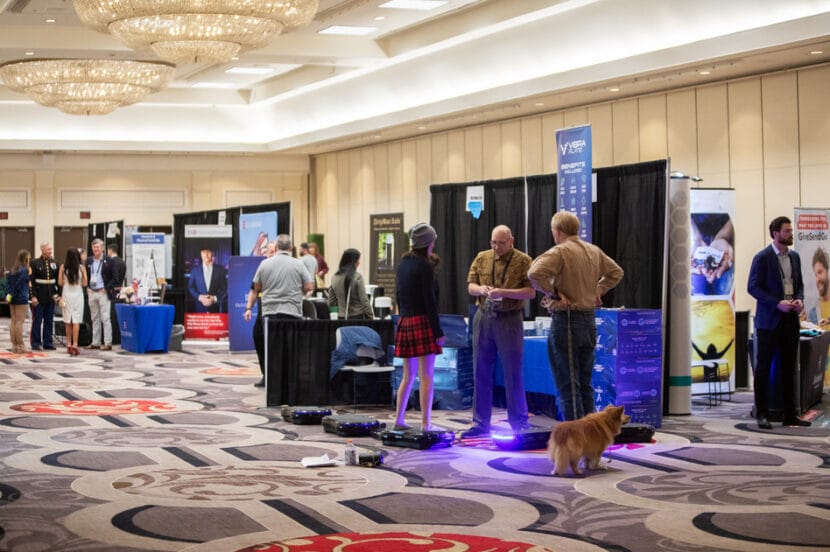
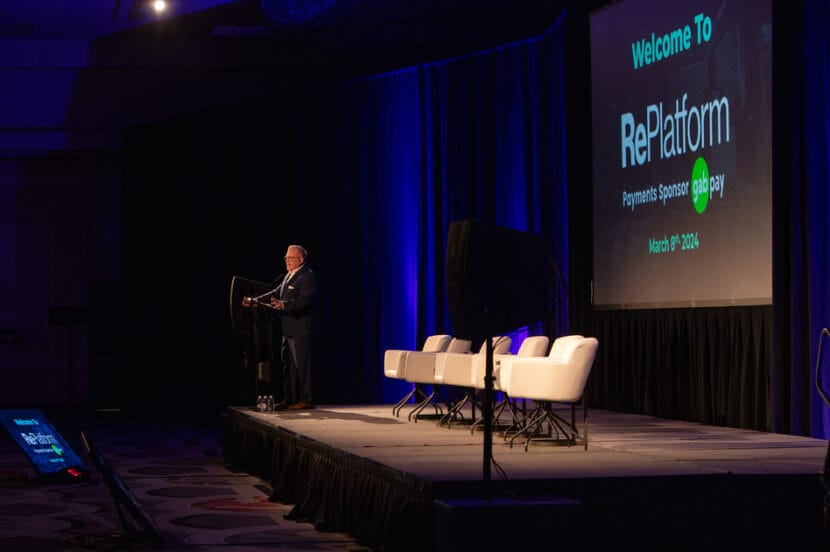
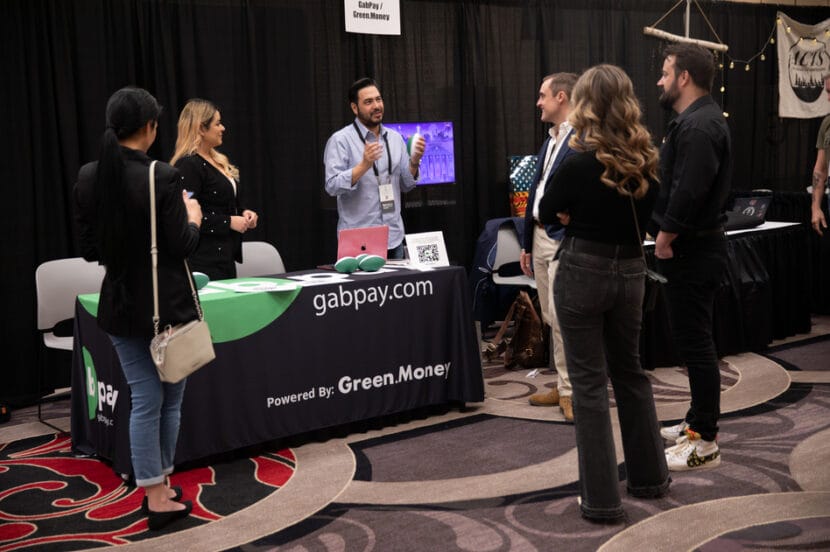
Attendees visit booths at the RePlatform conference in Las Vegas in March. The conference crowd was a hybrid of anti-vaccine activists, supporters of former President Donald Trump and Christian conservatives. (Krystal Ramirez for NPR)
Entrepreneurs and influencers from across a spectrum of conspiracist and religious communities gathered in Las Vegas in March to discuss building an “uncancellable” future together.
But the conference almost didn’t happen. A few weeks before the RePlatform conference was scheduled to begin, the event organizers lost access to their money from ticket sales. Their payment processor, Stripe, had frozen their account.
“Stripe just said, well, we’re going to hold 70%. And what they do is they say, we’ll give it back to you after the show,” speaker Dan Eddy told the audience from the Vegas stage.
Conveniently for everyone involved, Eddy is the chief operating officer of an alternative payment processor, GabPay. It’s a third-party company that works with the social media platform Gab.
“We’ll process for you. No problems, no questions asked. We’ll do it,” Eddy described telling the event organizers.
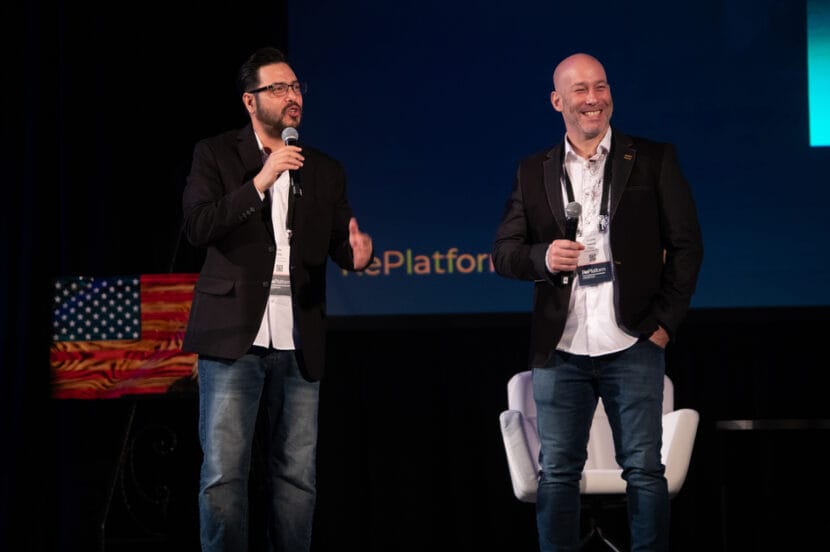
Dan Eddy (left), the chief operating officer of alternative payment processor GabPay, and Lonnie Passoff, who runs a payment processing company that works with the social media platform Gab, speak at the RePlatform conference in Las Vegas last month. (Krystal Ramirez for NPR)
For people in the business of opposing vaccination or unwelcome election results, mistrust of big financial institutions and tech companies is common. Increasingly, they can find alternatives being built by a community with a head start in developing the tools of the so-called freedom economy: the far right.
“Leave all these woke corporations behind”
At RePlatform in Las Vegas, GabPay got to be the hero. But it’s also possible that the company was part of why Stripe froze the conference’s money in the first place. A few weeks earlier, a news story by Mother Jones about the event highlighted a promotional appearance that GabPay’s executives had made on far-right conspiracy theorist Stew Peters’ streaming show.
GabPay founder Lonnie Passoff’s interview with Peters included an exchange where the two sarcastically dismissed the idea that antisemitic conspiracy theories are hate speech.
The company also recently began processing payments for the prominent white nationalist website VDARE. But the audience at the RePlatform event in Vegas didn’t hear any of this from the GabPay speakers. The crowd was a hybrid of anti-vaccine activists, supporters of former President Donald Trump and Christian conservatives. Most were entrepreneurs in these movements, looking for ways to build what they call the “freedom economy.”
Chris Widener, founder of the Red Referral Network, speaks at the RePlatform conference. (Krystal Ramirez for NPR)
“We are here together because we are people who have either been canceled or we really understand what is going on in America today as it relates to cancelization,” conference emcee Chris Widener told the crowd.
While many of the event’s panels delivered familiar complaints about “woke” culture and media, speakers from businesses sponsoring the event leaned into pitches aimed at drawing the audience away from the conveniences offered by large banks, financial institutions and tech providers.
“Leave Amazon, leave GoDaddy, leave all these woke corporations behind and start spending money with organizations that have your best interests in mind,” said Megan Greene of Patmos, a web-hosting company named after the Greek island that the Christian apostle John is said to have been exiled to.
It’s hard to say just how large the market of conservative-focused businesses is. One recent report from a conservative shopping app estimated that there are at least 80,000 American small businesses in what it calls the “freedom economy,” from coffee sellers and razor companies to dating apps and plumbers. Some of these businesses aren’t small: At one point, pillow salesman turned pro-Trump conspiracy theorist Mike Lindell’s MyPillow company had almost $300 million in revenue.
A matter of survival
In some religious communities, building a parallel society is an old idea, according to Amarnath Amarasingam, a professor of religion at Queen’s University in Ontario. One example is fundamentalist Christians after the Scopes Monkey Trial in 1925.
“They got destroyed in kind of the media sphere. They were depicted as this kind of backwater, Bible-thumping dummies,” he said. “They retreated from the public, and they created a kind of network, a kind of parallel society, their own publishing houses, their own media, their own magazines, newsletters and so on.”
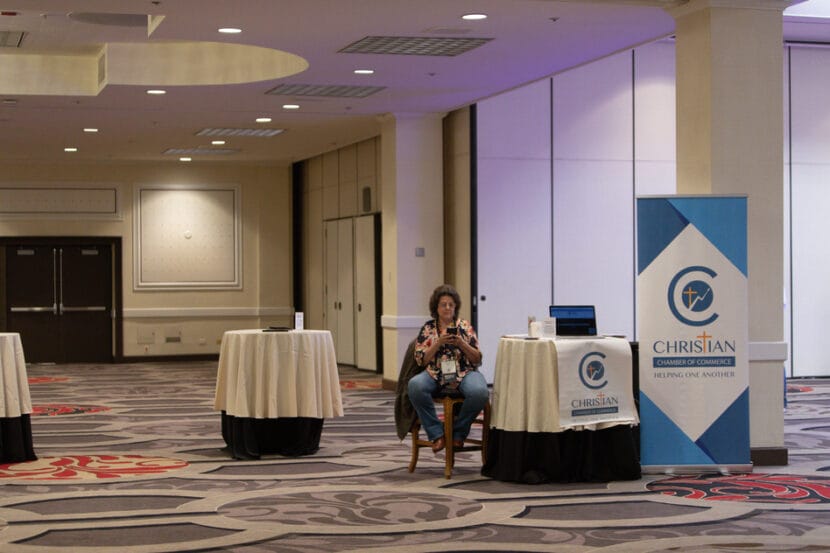
A woman sits at the Christian Chamber of Commerce booth at the RePlatform conference. (Krystal Ramirez for NPR)
But the entrepreneurs gathered in Vegas represent a broader fusion of communities reacting to years of COVID-19, stolen election narratives and transgender visibility, he said. A shared, embattled subculture.
“They feel like they’re on the outs,” said Amarasingam. “They believe that the governments are against them, intellectuals are against them, that science is moving in the opposite direction, that science education is moving in the opposite direction. So they just see a lot of trends that they feel are against traditional Christian values, family values.”
And adding in a spoonful of current-day conspiracism helps to frame the building of a separate, untainted economy as a matter of survival.
“Tragedy in the real world”
The situation that the conference itself faced with Stripe was a fitting, if muddy, illustration of a concern often referred to as “debanking.” The power that financial organizations have to freeze or shut down accounts is real. And while figures on the right have often framed debanking as political persecution, it’s nearly impossible to know how often it happens. That’s because banks and payment processors rarely spell out their reasons, according to Jessica Davis, who runs Insight Threat Intelligence.
Stripe, for instance, did not comment on what happened with the conference, citing customer privacy.
In many cases, Davis said, people are cut off over mundane, technical violations, such as someone using their account the wrong way.
“But there is social capital to be gained by a lot of these people who are claiming that they have their accounts closed,” she added.
On the other hand, there is another category of very high-profile examples, in which extremists have lost access to payment services or social media accounts after violent events.
“The bulk of it happens as a response to some tragedy in the real world,” said Megan Squire, a computer and data scientist tracking extremism with the Southern Poverty Law Center.
White nationalists, neo-Nazis and members of the alt-right clashed with counterprotesters during the Unite the Right rally in 2017. One aftermath of that event was that some far-right groups lost access to financial and technology platforms. (Chip Somodevilla/Getty Images)
She said waves of debanking and deplatforming have followed violent episodes like the deadly Unite the Right white nationalist rally in Charlottesville, Va., in 2017 and a number of mass shootings explicitly motivated by hate. Another big wave came after the Jan. 6, 2021, Capitol riot. Squire said that for years, she has watched some far-right extremists experiment with building infrastructure to get around these bans.
“They’ll talk about how we need this payment [platform]. … We need to make our own web-hosting companies. We need to make our own social media. We need to make our own domain registrars. We need to make our own computers,” she said.
Building those tools is a huge challenge, requiring planning, technical skill, money and, crucially, finding a sustainable customer base. Squire says GabPay is one of many such experiments, born out of necessity. It’s part of a dream that the founder of Gab has been promoting for years.
Attendees visit booths at the RePlatform conference in Las Vegas in March. The conference crowd was a hybrid of anti-vaccine activists, supporters of former President Donald Trump and Christian conservatives. (Krystal Ramirez for NPR)
“The broadest audience possible”
Gab is a glitch-prone alternative to X, formerly Twitter, that launched in 2016 in response to perceived anti-conservative censorship at major social media companies. It bans pornography but otherwise brands itself as a free-speech absolutist space by explicitly allowing hate speech that other mainstream platforms prohibit.
One of Gab’s most notable active users was the man who shot and killed 11 people and wounded six at a Pittsburgh synagogue in 2018. The platform’s founder, Andrew Torba, has said he doesn’t hate Jews but has also said they have no place in what he calls his conservative Christian movement.
“And it’s really thanks to the folks on Gab that I became aware of these issues: issues like [the] Jewish Question, issues like Zionist power and Zionist Occupied Government,” Torba said on an episode of his podcast in November 2023.
“‘The Jewish Question’ is literally a Nazi term,” said religion professor Amarasingam, “about what to do with the Jewish population in areas controlled by the Third Reich.”
Asked for comment, Torba responded, “Christ is King” to NPR in a post on X. The phrase is a common, uncontroversial expression of faith for many Christians, but in recent years it has also become popular among the far right and conspiracists. Torba says he uses it as a regular signoff on his emails after learning that his doing so offended Jonathan Greenblatt at the Anti-Defamation League.
Onstage at the RePlatform event in Las Vegas, GabPay’s Eddy described Gab and Torba as “all about being First Amendment. And, yes, they have a Christian slant because the guy that built it is a Christian. So he goes out and says, ‘I’m a Christian. I think you should have Christian values.'” He added, “Whether you agree with that or not is inconsequential to the fact that he can say it and so can you.”
NPR spoke with several banks and other organizations at the conference about Gab and GabPay’s background. But as brands there to promote free speech absolutism, none wanted to be seen as unwilling to engage or do business with them.
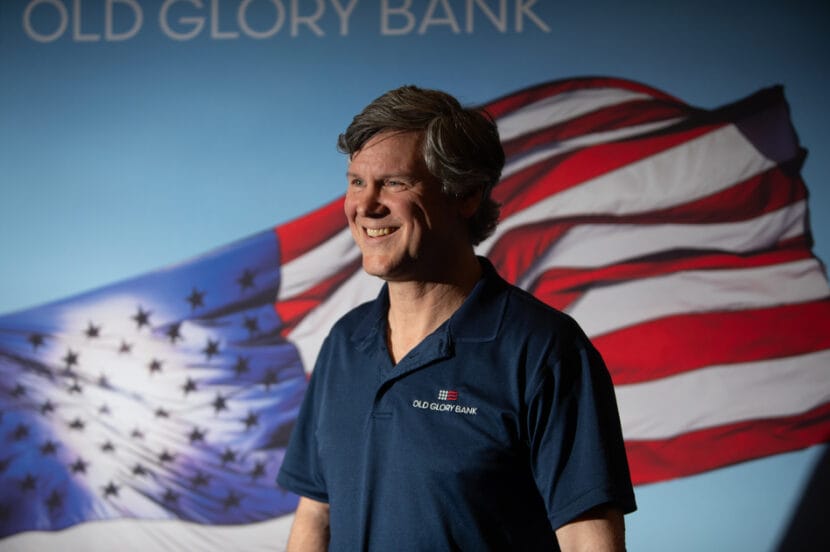
Eric Ohlhausen, chief strategy officer at Old Glory Bank, stands in front of his company’s sign at the RePlatform conference. (Krystal Ramirez for NPR)
Eric Ohlhausen, with the conservative Old Glory Bank, said his company will do business with anyone operating legally.
“Our whole premise is one to not censor, and there might be organizations who promote policies that maybe, personally, I don’t adhere to, but we really welcome all as customers,” said Ohlhausen.
Ashton Cohen is the creative manager of the conservative media nonprofit PragerU. (Krystal Ramirez for NPR)
“My mother was pushed out of her country because she was Jewish, because she was persecuted for being a Jew in Iran. And the very people who support that regime today and that mindset today are on the left,” said Cohen.
Anti-vaccine activist Steve Kirsch helped organize the RePlatform conference. (Krystal Ramirez for NPR)
Wealthy anti-vaccine activist Steve Kirsch, who helped organize the RePlatform conference, said in a written statement: “I don’t support racism and never have. People are dying, and lives are on the line. We want to reach the broadest audience possible.”
Within each of these movements, the benefits of supporting each other appear to outweigh any reputational risks. There was a clear message at RePlatform: So long as you’re not breaking laws, let’s do business.
Copyright 2024 NPR. To see more, visit https://www.npr.org.
A northern red-backed vole scampers through a forested area of the Kenai Peninsula. Voles and other small mammals are the likely reservoirs of Alaskapox virus, a recently identified and much more rare relative of the monkeypox virus. (Photo by Colin Canturbury/U.S. Fish and Wildlife Service)
The viral, rash-causing and headline-grabbing disease that was first diagnosed in Fairbanks in 2015 is getting a new name: borealpox.
Known up to now as Alaskapox, the disease is caused by a virus in the orthopox family that includes smallpox and other pox viruses.
There are only seven known cases to date, six in Fairbanks that resulted in relatively mild effects that resolved on their own and one on the Kenai Peninsula that led to the death of an elderly man whose immune system was weakened after treatments for cancer.
News of the name change came from Katherine Newell, a U.S. Centers for Disease Control and Prevention epidemiology field officer working at the Alaska Department of Health, who spoke at a conference hosted by the Alaska Native Tribal Health Consortium.
“We are changing the name of Alaskapox virus to borealpox virus, which is what it will now be known as from now on,” Newell said in a presentation Tuesday at the Alaska Tribal Conference on Environmental Management held in Anchorage.
There are two reasons for the name change, which is already shown on the Alaska Department of Health’s website and is expected to be made official in coming weeks by the CDC and the World Health Organization, she said.
One reason is scientific. While the discovery is new and the only cases found to date have been in Alaska, there is mounting evidence that the virus has been circulating in populations of small mammals for decades — and is expected to be in boreal regions beyond Alaska.
“While we’re only had cases to date in Fairbanks and now in Kenai, it’s likely that this virus probably is endemic throughout most of the state, if not the state, and also into Canada and potentially other regions as well,” Newell said.
The fatal Kenai case, which elevated Alaskapox from a scientific curiosity into a more serious issue, provided some key evidence about the wider range. The virus identified there was different genetically from the virus found in the Fairbanks area, indicating wider geographic dispersal over a longer timeframe.
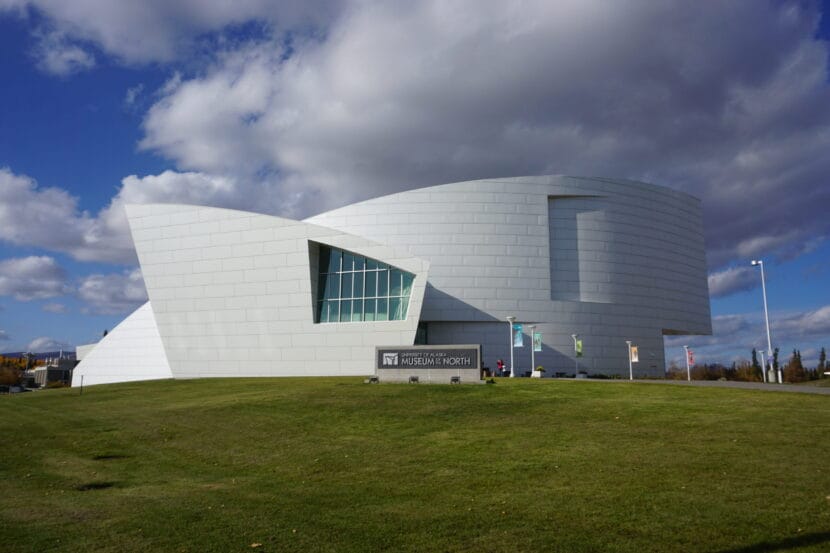
Other evidence comes from the vast collection of northern animals kept at the University of Alaska Museum of the North.
Several of the museum’s northern red-backed vole specimens, including one collected more than 25 years ago from Denali National Park and Preserve, tested positive for the virus, said Link Olson, the museum’s curator of mammals and a former biology professor at the University of Alaska Fairbanks.
The Univesity of Alaska Museum of the North is seen on Sept. 18, 2022. Several red-backed voles in the museum’s vast collection of specimens have tested positive for the borealpox virus, also known as the Alaskapox virus. (Yereth Rosen/Alaska Beacon)
“It’s been circulating for a while. How long is a while? No one knows,” said Olson, who was a coauthor of the scientific study that first described Alaskapox and the 2015 human case.
The second reason to change the name to borealpox is more philosophical. The WHO in 2015 took a stance against naming newly discovered human diseases after geographic areas to avoid unfair stigmas.
Geographic disease names can be inaccurate. That was famously the case for the influenza pandemic that killed an estimated 50 million people starting in 1918. Despite being first diagnosed in Kansas, that disease came to be known as the “Spanish flu.”
Some geographic disease names are already too entrenched to change, Newell said. Some examples are Ebola, first discovered near the Ebola River in the Democratic Republic of Congo; West Nile virus, which first emerged in the West Nile district of Uganda; and Lyme disease, discovered in and around Lyme, Connecticut.
But the discovery and naming of Alaskapox and the virus that causes it is new enough that a name change can be made effectively, Newell said.
The WHO’s 2015 recommendations also advised against using animal names for newly discovered human diseases. Thus the disease originally known as monkeypox, to which Alaskapox is related, has now been officially renamed mpox.
For the Alaskapox/borealpox virus, red-backed voles and other small mammals scurrying around the forest appear to be the reservoir. But it took a few years to pin that down.
In 2015, after the first case was identified, Olson and Aren Gunderson, manager of the museum’s mammal collection, trapped some small mammals on the woodsy property where the patient had been living. None of the trapped animals tested positive for the virus.
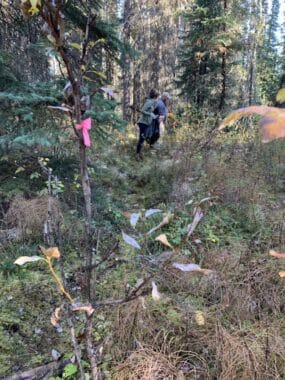
In 2020 and 2021, after additional cases were identified, Olson, Newell and others fanned out into the woods in the Fairbanks area, where they trapped hundreds of small mammals of different species and tested them. Of the nearly 400 animals trapped and tested, 16% had antibodies showing past exposure to the virus and 5% had active infections of it, according to information presented by Newell at a CDC conference last year.
Northern red-backed voles dominated that group that tested positive, which made sense, Olson said.
Found in almost all of the state, they are extremely abundant — “one of Alaska’s most ubiquitous and common species,” according to the Alaska Department of Fish and Game’s species profile – so a lot of them wound up in the traps the scientists used to detect virus presence in small mammals. They also have very short lifespans, generally no more than 12 months, so they might not have time to overcome any viral infections they acquire, leaving those viruses still active when the animals are tested.
There is no evidence that Alaskapox/borealpox has harmed the animals it infected, Newell said. Among the hundreds of small mammals trapped, there was not even a single lesion, she said.
Katherine Newell and a colleague walk in September 2021 through the Fairbanks-area boreal forest, where they have set up traps for small mammals suspected of carrying the novel Alaskapox virus. It is being renamed borealpox. (Dr. Florence Whitehill/U.S. Centers for Disease Control and Prevention)
As for potential harm to people, the virus was considered to pose little threat, at least until the fatal Kenai Peninsula case occurred.
In the six Fairbanks North Star Borough cases, initial signs of infection were lesions that resembled spider bites, she said. In those Fairbanks-area cases, all among otherwise healthy people, symptoms included fatigue, swollen lymph nodes and fever – possibly uncomfortable, but not dangerous. All the Fairbanks patients recovered, some within a few days, though the skin lesions took longer to heal completely, according to state information.
In the aftermath of the fatal case, the Alaska Division of Health’s epidemiology section issued a set of recommendations that include extra precautions for people with compromised immune systems. State epidemiologists are also urging more public awareness, prompt reporting of any suspected cases and careful behavior around wild animals.
There is no evidence that the virus can spread between people. Pet dogs and cats that mingle with or prey on infected wild animals are considered possible transmitters. The Fairbanks-area patients owned pets, and the Kenai Peninsula man who eventually succumbed to the virus had been caring for a stray cat before his symptoms emerged, state health officials have noted.
Much more investigation is planned, including an expedition this summer to the Kenai Peninsula to trap and test animals there, Newell said. More discoveries of the virus are expected, she said.
“Until we had our fatal case in January of this year, people probably weren’t looking for it much,” Newell said.
Many questions remain unanswered. Among them: What other animal species, including bigger and longer-lived species, are carrying the Alaskapox/borealpox virus? Is there a reason why infections are just now showing up in people – or were there human cases in the past that went undiagnosed? How widespread is the virus in space, time and across various animal species?
Olson, who has just sent 100 specimen samples up to 20 years old to the CDC for testing, suspects that investigation into the last question will reveal much wider reach than originally believed.
“We should have never called it ‘Alaskapox,’” he said. And though he had advocated for the borealpox name from the start, even that may wind up being obsolete, he said. “I’ll go on record predicting it’s probably not going to be limited to the boreal region.”
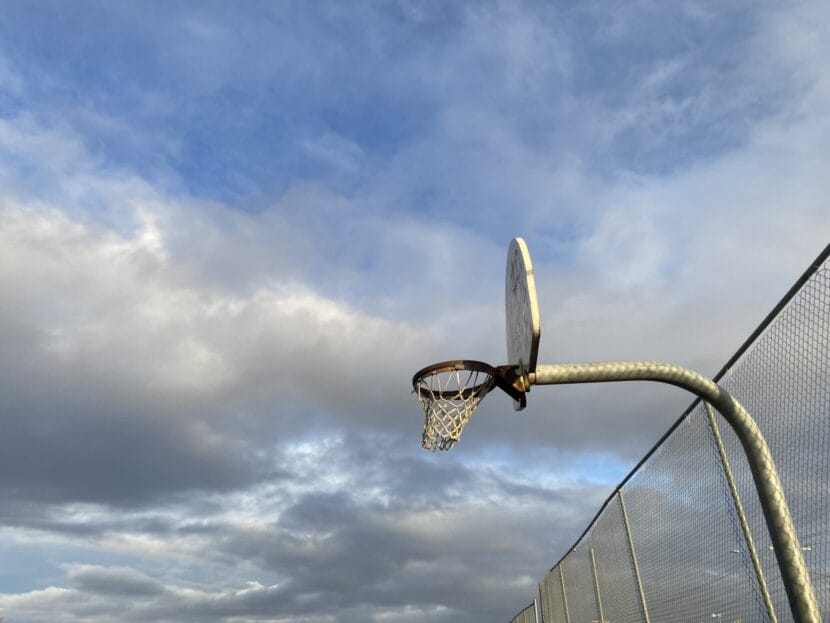
An outdoor basketball hoop is seen in Bethel in October 2022. A bill advanced in the House Education Committee on Wednesday would expand limitations for trans girls on sports teams. (Claire Stremple)
“I guess we’ll have to go do this again,” Starla Miller said as the committee room cleared.
She was one of dozens of Alaskans who had just testified against a bill that would expand the state’s restrictions on transgender girls’ participation in girls sports. Despite significant opposition, the House Education Committee narrowly voted to advance it.
House Bill 183 is one of five bills currently under consideration by lawmakers that would limit the rights of transgender youth in Alaska. They are part of a broader national trend.
In the last five years, the number of bills that would limit the rights of transgender people in the United States has surged — from a few dozen per year to hundreds.
House Republicans and Gov. Mike Dunleavy have led that effort in Alaska, which has focused on the rights of trans youth in the state’s schools.
So far none of the legislation has become law.
Student sports teams
This year, there are two House bills that would limit Alaska students’ sports participation to teams that match their sex at birth. Twenty-four states have passed such laws.
The governor’s appointees on the state’s Board of Education and Early Development passed a resolution last year that bars transgender girls from participating on high school girls sports teams, after a 2022 proposal to do so failed in the Legislature.
Now, House Bill 183, sponsored by Rep. Jamie Allard, R-Eagle River, and House Bill 27, sponsored by Rep. Tom McKay, R-Anchorage, seek to expand that restriction to all school sports teams, including for elementary-aged children.
Allard is the co-chair of the House Education Committee, and her bill had its first hearings there this month. McKay’s similar bill has not yet been heard in committee; he is a co-sponsor of Allard’s bill.
Allard said her bill will protect the rights of women to play sports under Title IX, the federal law barring sex discrimination in education. The legislation calls trans women and girls “biological males.”
“If forced to physically compete against biological males, women will be disadvantaged once again. If men can compete as better versions of women, all of our progress for equality is dead,” Allard told the committee.
She invited testimony from Riley Gaines, a University of Kentucky student who was among the women who competed against Lia Thomas, a trans woman who won a national title in swimming in 2022. Gaines is well-known for speaking out against trans women in women’s sports.
Larry Whitmore, a retired teacher and coach from Anchorage and another invited testifier, said he had seen girls lose track and field medals to trans girls and did not think it was fair. He said when trans girls win, it is a “cancer” — “It’s going to spread through women’s sports and destroy them,” he said.
Opponents of the legislation say it would deny equal opportunity to play to trans girls, and reiterated that the bill addresses school-aged children.
Dr. Lindsey Banning, the parent of a trans child, said the bill was “hurtful” and that she would rather see the state address issues like eating disorders, concussions and abuse.
“We’re talking about enshrining discrimination into law to ensure that trans kids can’t play games with their friends and be part of a team,” she said. “Alaskans rejected this idea repeatedly since it was first introduced in 2021, but I guess you want us to do that again.”
Another parent of a trans child, Rebecca Bernard, said that there is a funding crisis in education, not a crisis of LGBTQ youth.
“It’s painful to come and testify these hearings over and over again,” she said. “The vast majority of people who are testifying on these bills targeting trans kids are opposed to the bills, and yet they keep coming.”
Margaret Bergerud, an attorney for the Legislature, advised that the bill may be open to a legal challenge under the equal protection clause of the 14th Amendment, which has been used to decide prominent civil rights cases.
“I think it is likely that, at least under the federal Constitution, this bill does not pass constitutional muster for equal protection,” she said.
Bathrooms and pronouns
Another proposal would prohibit transgender people from using bathrooms that match their gender identity in schools. Ten states have passed laws that do so in the last decade.
Rep. Ben Carpenter, R-Nikiski, sponsored House Bill 382, which would limit bathroom use to the gender assigned to students at birth and require teachers to alert the parents of a student who decides to change their gender pronouns. Advocates for trans rights say this kind of requirement can prevent trans youth from coming out if they think their parents will not approve of their gender identity.
The bill has other provisions, like a requirement that schools be supervised by new committees of parents that would select the principals and that they establish a “teachers bill of rights.”
Randy Griffith of Fairbanks supported the bill and said parents should be notified if their child switches gender pronouns, but did not think teachers should be required to tell parents if a student is considering it.
“The teacher should be just understanding and kind of neutral and listen a little bit,” he said.
Carole Bookless, a Juneau teacher, said she learned how to think about trans students from her kindergarten students.
“I learned that at a very young age, a boy might feel he’s really a girl or a girl may feel she’s really a boy. I’ve seen it with my own eyes. The kindergarteners saw it too. They just shrug and accept it. If they can do it, so can we,” she said. “My suggestion is Alaska move in the direction of providing a non-gendered bathroom. And similarly non-gender change room in every school.”
The bill is in a similar vein as legislation Dunleavy proposed last year that would require parents to sign off on any pronoun changes for their child.
House Bill 105 is awaiting a hearing in the House Judiciary Committee; its companion, Senate Bill 96, has yet to be scheduled.
Protecting trans rights
The state government does not recognize equal rights for LGBTQ people in many areas of state law in Alaska. The state’s Commission on Human Rights reversed most of the equal rights protections it previously had for sexual orientation and gender identity in 2022 on the advice of Attorney General Treg Taylor.
A proposal from Rep. Jennie Armstrong, an Anchorage Democrat and a member of the House minority caucus, would reinstate recognition of those rights.
The legislation would prohibit discrimination based on sexual orientation and gender identity in the state. She says it would put Alaska in line with a 2020 Supreme Court ruling that prohibits such discrimination in employment.
If passed, the protections could reverse legislation that limits LGBTQ rights in public schools, because it includes protections for government services and accommodations.
The bill is co-sponsored by 14 members of the House minority caucus and three rural majority-caucus members: Reps. Neal Foster, D-Nome; CJ McCormick, D-Bethel; and Bryce Edgmon, I-Dillingham.
House Bill 99 divided the Republican-led House in an 18-22 vote when Armstrong attempted to have the bill bypass the largely conservative-leaning House Judiciary Committee last year. It has yet to be scheduled.
Armstrong said her office recently resubmitted a request for a hearing in that committee.
“This bill would return to the status quo,” she said on Wednesday. “It would put an end to legalized discrimination in our state.”

9(MDEwMjQ0ODM1MDEzNDk4MTEzNjU3NTRhYg004))

9(MDEwMjQ0ODM1MDEzNDk4MTEzNjU3NTRhYg004))